Skip to content
  • Home
  • Subscribe / donate
  • Events calendar
  • News
    • Local
    • National
    • Israel
    • World
    • עניין בחדשות
      A roundup of news in Canada and further afield, in Hebrew.
  • Opinion
    • From the JI
    • Op-Ed
  • Arts & Culture
    • Performing Arts
    • Music
    • Books
    • Visual Arts
    • TV & Film
  • Life
    • Celebrating the Holidays
    • Travel
    • The Daily Snooze
      Cartoons by Jacob Samuel
    • Mystery Photo
      Help the JI and JMABC fill in the gaps in our archives.
  • Community Links
    • Organizations, Etc.
    • Other News Sources & Blogs
    • Business Directory
  • FAQ
  • JI Chai Celebration
  • JI@88! video

Recent Posts

  • Story of Israel’s north
  • Sheltering in train stations
  • Teach critical thinking
  • Learning to bridge divides
  • Supporting Iranian community
  • Art dismantles systems
  • Beth Tikvah celebrates 50th
  • What is Jewish music?
  • Celebrate joy of music
  • Women share experiences 
  • Raising funds for Survivors
  • Call for digital literacy
  • The hidden hand of hate
  • Tarot as spiritual ritual
  • Students create fancy meal
  • Encouraging young voices
  • Rose’s Angels delivers
  • Living life to its fullest
  • Drawing on his roots
  • Panama City welcoming
  • Pesach cleaning
  • On the wings of griffon vultures
  • Vast recipe & story collection
  • A word, please …
  • מארק קרני לא ממתין לטראמפ
  • On war and antisemitism
  • Jews shine in Canucks colours
  • Moment of opportunity
  • Shooting response
  • BC budget fails seniors
  • Ritual is what makes life holy
  • Dogs help war veterans live again
  • Remain vital and outspoken
  • An urgent play to see
  • Pop-up exhibit popular
  • An invite to join JWest

Archives

Follow @JewishIndie
image - The CJN - Visit Us Banner - 300x600 - 101625

Author: Rebeca Kuropatwa

Research into psychedelics

Research into psychedelics

Jordan Sloshower (photo from Jordan Sloshower)

The use of psychoactive plants and mushrooms for sacramental and religious purposes has been widespread throughout the world’s cultures for centuries. More recently, in the 1950s and 1960s, academic centres investigated the potential therapeutic uses of psychedelic compounds – primarily lysergic acid diethylamide (LSD) – to treat forms of mental illness and addictions. After producing thousands of papers, the field came to a halt in the 1970s, due to the “war on drugs” and the classification of psychedelic drugs as a Schedule 1 drug in the United States. Nonetheless, the past 10 years have seen a resurgence of interest in the field of psychedelic science.

In the last decade, research has resumed at prominent universities, such as Johns Hopkins University, University of California-Los Angeles and New York University, where clinical trials have examined the use of psilocybin (the psychoactive component of “magic mushrooms”) to treat cancer-related end-of-life anxiety, as well as addiction to alcohol and tobacco. And, a recently formed group at Yale University – the Yale Psychedelic Science Group (YPSG) – is exploring the science behind such research.

YPSG was formed with the aim of reviewing and discussing academic research in the psychedelic sciences via examining academic articles and papers, as well as hosting leading scholars in this field from across the country. The group is working to host an interdisciplinary forum in which clinicians and scholars from across Yale can learn about and discuss the reemerging field of psychedelic science and therapeutics.

One of the leaders of this resurgence is Winnipeg-born and -raised Jewish community member Jordan Sloshower, who is currently a second-year resident physician in Yale’s psychiatry program.

“I first thought I was going to do infectious disease, which is a more typical path for someone like myself interested in global health,” Sloshower told the Independent. “But I found that, clinically, I was most interested in interpersonal relationships, so social dynamics and psychiatry was feeling like a better fit.

“What actually happened was I was able to go do a psychiatry elective in Peru – both in Lima and in a smaller city in the mountains – and, for six weeks, I got to interact with different aspects of their mental health care system there. It was really my first exposure to what we call ‘global mental health,’ and I learned that this is actually a very vibrant field.”

Sloshower found that mental health was a hugely underserved area, with not only a lack of access to care, but with human rights abuses. With a lot of work needing to be done in the field, he decided to combine his interest in global health with his clinical interest in psychiatry. This led to his working in Nepal’s mental health system as well, at the end of medical school.

Regarding the field of psychedelic science, Sloshower dates its inception back to when Albert Hoffman synthesized LSD.

“Now, the way I think of it is as a broad interdisciplinary study of how these molecules act biologically, socially and economically,” he said. “I think there are also political, arts and anthropological angles. I think the term psychedelic still brings up thoughts of art and music from the ’60s. It’s a broad term.”

According to Sloshower, the term psychedelic means “minds manifesting,” which some refer to as “hallucinogen.” In context, this refers to compounds that cause perceptual alteration.

The province of Saskatchewan, as it happens, was one of the leaders investigating LSD for the treatment of alcoholism and cancer-related anxiety. In Europe, psychedelic drugs were used for psychotherapy. Thousands of papers were published on this until, Sloshower said, “things got shut down when psychedelic drugs were classified as illegal drugs.”

Psychedelic drugs went from being perceived as potential wonder drugs to something awful, and then just disappeared. Then, about 10 years ago, Dr. Rick Strassman in New Mexico did a study looking at dimethyltryptamine, a psychedelic drug found in many species of plants as well as in our own bodies.

“There’s a huge need for new treatments that work rapidly in a sustained way, and we need treatments that are not toxic,” said Sloshower. “So, it makes a lot of sense that we should look at these drugs, which actually have safety profiles that were demonstrated to be excellent back in the original wave of research and, increasingly, in controlled settings.

“There have been several trials using psilocybin, which is the active ingredient in magic mushrooms to treat cancer-related anxiety, which, again, picks up from the ’60s. There’s been a promising study with psilocybin to treat alcohol and nicotine dependence.”

While Sloshower said he is not an expert in the matter, he was willing to explain the basics of how these compounds work on the brain. He said that psychedelic drugs activate a subtype of serotonin receptor in the brain and that “serotonin is one of the key neurotransmitters in mood, attention and a range of different things.”

He said, “Typical antidepressants usually act on the serotonin system as well. One potential mechanism of how psychedelics exert peculiar effects on thought and perception is by interrupting something called ‘the default mode network,’ which is kind of like a neural correlate of the ego. It’s a network of neurons that fire together in your baseline consciousness when you’re doing self-referential thinking. In people with depression who have a lot of ruminant thoughts, you see an increased activation of the default mode network and, with both the use of psychedelics and mindfulness practice, you actually see a decrease in activation of the default mode network.”

Among the speakers YPSG has hosted is a speaker from Johns Hopkins who discussed his work using psilocybin to treat tobacco addiction. Another expert, from NYU, was part of the trial done on psilocybin for cancer-related end-of-life anxiety. The results from both studies look promising.

Sloshower anticipates that some Canadian universities will soon become more interested in researching psychedelics. “Actually, the Canadian medical journal, I noticed on the front cover a few months ago, had psychedelics on it,” he said.

When asked about any possible connection between psychedelics and the increased interest in medical marijuana, Sloshower said they are not explicitly connected, although both are part of a search for new therapeutic approaches.

“From my point of view, it’s not so much a matter of the drugs (antidepressants) being overused as much as it is that the drugs don’t work as much as we’d like,” he said. “In a lot of cases, we don’t have great treatment. In depression, for instance, the medications either work partially, take a long time to start working or have a lot of side effects.

“In these cases, the treatments we have aren’t really adequate. We need new ones. We don’t really have good drugs for substance use disorders either. Actually, something that’s been interesting with psychedelic drugs is that the model being proposed, unlike typical antidepressants, is based on a very limited number of drug exposures over a very short period of time.”

The proposed model includes providing treatment in clinics only, with people requiring only one or a handful of drug-therapy sessions linked with psychotherapy, as studies have shown both rapid-acting and prolonged effects of psychedelics.

As for the cancer anxiety research, it has shown improvement in patients’ mood six months after having received a single dose of psilocybin.

“That’s why I think there’s a lot of interest,” said Sloshower. “I don’t think it’s going to be a miracle, but another tool we’d have alongside other treatments we already have.”

Rebeca Kuropatwa is a Winnipeg freelance writer.

Format ImagePosted on May 20, 2016May 18, 2016Author Rebeca KuropatwaCategories WorldTags antidepressants, anxiety, cancer, depression, psilocybin, psychedelic, Sloshower

Improving celiac care

Following several months of research, discussions and consultations, the Canadian Celiac Association (CCA) is celebrating 2016 Celiac Disease Awareness Month with the unveiling of a detailed algorithm to be distributed to all family doctors across Canada. With awareness and understanding of celiac disease varying greatly within the medical community, the result until now has been a hodgepodge of treatment and follow-up plans that leads to confusion and, in many cases, continued illness and suffering.

The new best practices algorithm, developed by the CCA’s Professional Advisory Council, aims to bridge this gap by clearly outlining the diagnosis and follow-up regimen for a Canadian with celiac disease.

“We hear it all too often,” said Anne Wraggett, CCA president. “Some doctors give the patient their diagnosis and simply send them on their way. Others recognize the need to monitor vitamin and mineral absorption levels, watch out for bone density problems, and be aware of the connection between celiac disease and other serious disorders such as type 1 diabetes and thyroid disease.”

“This is all about creating a standardized regimen, based as much as possible on evidence-based medicine,” added Sue Newell, operations manager for CCA. “We hope that this will lead to a consistent approach among all medical doctors, naturopathic doctors, gastroenterologists and other medical professionals. We need everyone ‘singing from the same songbook’ on this, so those diagnosed with celiac disease get the support they need.”

Celiac disease is an autoimmune disorder in which the absorptive surface of the small intestine is damaged by gluten, a protein found in wheat, rye and barley. As a result, the body is unable to absorb nutrients such as carbohydrates, fats, proteins, vitamins and minerals, which are necessary for good health. An estimated one percent of Canadians are affected by celiac disease and an estimated additional five percent of Canadians suffer from non-celiac gluten sensitivity, which is an intolerance rather than an autoimmune disease but nevertheless requires a gluten-free diet.

Symptoms of celiac disease can include gastrointestinal distress, migraines, fatigue, extremely itchy skin rashes and more, or there may be no overt symptoms at all. For celiacs to continue to ingest gluten puts them at risk of serious associated medical conditions, such as non-Hodgkin’s lymphoma, infertility and malnutrition.

Medical professionals, patients and others can download the best practices algorithm from the CCA website (celiac.ca), which also contains up-to-date scientific information and details of CCA’s programs to support all Canadians with celiac disease or gluten sensitivity.


Posted on May 20, 2016July 2, 2020Author Canadian Celiac AssociationCategories NationalTags celiac, gluten, health

Outside play is vital for kids

As children, most of us at least once created a space of our own built of cushions, sheets, cardboard, branches, tables, almost anything – a space of our own that mimicked the house in which or near which it was built. This is a cross-cultural phenomenon that serves to help children establish their identities, according to David Sobel.

Sobel is a faculty member in the education department at Antioch University in New England. The author of Children’s Special Places: Exploring the Role of Forts, Dens and Bush Houses in Middle Childhood, he teaches conceptual development in science education, a course called the Ecology of Imagination Childhood.

“I’m teaching upcoming teachers in a master’s program, so folks with undergrad degrees, most of whom have done other stuff and are coming back,” he said. “The first thing that is interesting [about kids building their own spaces] is that this is a fairly cross-cultural phenomenon. Not necessarily all children do it, but a lot of children do it in different cultures and settings around the world. They tend to do it between the ages of 6 and 12, therefore, it suggests this is some sort of genetically determined behavior that serves some kind of survival value.”

According to Sobel, there are a couple of different goals achieved through this practice. One is that they are creating another world or a home away from home. Young kids will do this inside the house. As they get to the ages of 5, 6 or 7, they start to do it outside, but near the house.

book cover - Children’s Special Places: Exploring the Role of Forts, Dens and Bush Houses in Middle Childhood“They will gradually do it further away from the house, as a home they’ve created rather than that their parents have created, and it’s a way for them to establish themselves as unique individuals out in the world,” he said. “So, it has the function of identity creation … a special place or den, as a chrysalis out of which a butterfly will emerge. The butterfly is the self of the child that will emerge around the ages of 12 or 13.”


Sobel believes the behavior is instinctual, not a culturally transmitted one, though he admitted he has not yet unequivocally eliminated cultural influence as a variable in the cases he has observed. The behavior, Sobel thinks, is a mechanism to increase bonding with the natural or physical world.

“The theoretical model of Joseph Chilton Pearce, who wrote about the magical child, says that children are moving around [age] 6 or 7 from the family matrix, from being bound and held in the family, to moving out to the earth matrix, the physical world matrix,” he explained. “Kids are establishing a relationship with the natural world. It’s becoming a safe place for them, a source of energy, from the perspective of developing a healthy relationship with the natural world, eventually an environmental citizenship. Creating a home in the world that’s often made of natural materials gives them a sense of safety in a place that can feel a little scary or dangerous.”

Sobel contends that, in many cases, kids are discouraged from creating this sort of space or are not given access to the appropriate materials to do so, making it into less of a phenomenon and more of a function of parental and cultural permission or restriction.

“It’s good for parents to recognize it as a healthy behavior,” he said. “So, if kids show the impulse, it’s good to encourage it rather than discourage it. Also, in the natural play areas, there’s the theory of loose parts, which essentially says that what children want in a play landscape is a variety of loose parts or pieces that they can disassemble and assemble to create their own places.

“It’s great for parents to provide loose parts or for city parks to provide loose parts, so kids can construct things – branches, sand, stone and cardboard boxes – to encourage the creation of kid places.”

Sobel understands the hesitation of parents and public stewards to provide such tools, seeing them as accidents waiting to happen, but he thinks it is appropriate to allow a moderate amount of risk while also eliminating the most dangerous hazards.

“You want to encourage safe tool use,” he said. “So, if kids are going to be using pocket knives, make sure they know how to use them correctly, and you take them away when they don’t abide by those rules. With my son, as an example, when he was 7 or 8, I came home and found little fire scars on the concrete floor in the barn, which is our garage. He was interested in building little fires. In the barn, this was not a good idea, so I constructed a fire ring for him and made him a fire kit with matches and appropriate things. I told him he could build fires if he wanted to, but only here … that he has to respect the impulse, but also limit [it] … giving it some structure.”

Sobel suggested reading children’s literature that includes stories about the creation of such spaces as a great way to lead to positive building behavior.

He added that, while the impulse is fine indoors at the beginning, it eventually wants to be outdoors. When doing it outdoors, he advised becoming aware of the city’s zoning laws, as there will be areas in which the construction of subsidiary or outlying sheds, buildings or forts is not permitted. Another modern-day complication, he added, is “the digitalization of kids lives.” The time “not just for fort building, but any kind of natural play experiences outside, is getting eroded because of the lure of digital entertainment. But also, parents feel like digital entertainment is safer than the woods or exploring the neighborhood.

“With all this digitalization, kids are less likely to have an interior sense of balance, they are more overweight and they are having more vision problems as a function of not exercising certain kinds of motor development in their eyes,” he said. “The sedentary lifestyle is unhealthy for children.

“Place creation is part and parcel with having kids with more physically active lifestyles. It’s important for kids to understand the motor diversity of outdoor natural play, as opposed to just having them involved in a sport, which tends to limit motor skills to certain kinds of behaviors.”

According to Sobel, there is a vein of Jewish theology that can be drawn upon which supports nurturing our relationship with the natural world. He is helping organize a conference of Jewish early childhood programs in the New York area, where topics such as nature preschools and forest kindergartens for the Jewish early childhood community will be discussed.

He also said that there is a vibrant nature-based education community in Victoria and Vancouver, giving the example of educator Dr. Enid Elliot at Camosun College in Victoria.

Rebeca Kuropatwa is a Winnipeg freelance writer.

Posted on May 20, 2016May 18, 2016Author Rebeca KuropatwaCategories BooksTags children, play, Sobel
Couples need to talk about sex

Couples need to talk about sex

Doreen Seidler-Feller, PhD, is a clinical psychologist who has decided to focus her practice, in part, on the underserved population of Orthodox Jews. (photo from Doreen Seidler-Feller)

While sex is vital to our existence, it remains a topic many people are not comfortable discussing. Yet it is critical that we at least feel comfortable talking about it in private with our partners. It is even more fulfilling if we are able to enjoy the act of it with them, too.

Unfortunately, some newlywed Jewish Orthodox couples find themselves unable to consummate their marriages in an enjoyable way, due to a lack of sexual education and some misguided sexual advice from their peers. Enter sex therapist Doreen Seidler-Feller, PhD, a Los Angeles-based clinical psychologist who has decided to focus her practice, in part, on the underserved population of Orthodox Jews.

“I’m the last resort for everyone in this area,” Seidler-Feller told the Independent. “Nobody likes to come and face the situation in which they need to talk about something as intimate as their sexuality and their relations with their partners.”

Since people often only go to Seidler-Feller after they have exhausted all the options they can think of to solve the difficulties by themselves, she sees more complicated cases.

“It’s rare that I see a man alone,” she said. “It’s more likely that I’d see a man together with his wife, presenting as a couple, or that I’d see women alone. The reason for this is that, frequently, the problem is identified as theirs [the woman’s]. If it is an issue of painful intercourse or the involuntary contracture of the vaginal musculature that denies entry to the man … any sort of pain condition inside the vaginal vault or inability to tolerate intercourse … it makes sense that she would present alone.”

As treatment progresses, Seidler-Feller brings her patient’s partner into the process, as there is always some bridging required to bring the couple back into harmony and aid in their sexual choreography. Sometimes, the partner, too, may have a problem undiscovered until that point. In that case, his individual problem becomes addressable.

“The issue that causes the greatest anxiety is the inability to consummate marriage – a pain condition and an inability to tolerate insertion are conditions most likely to bring them into treatment,” she said. “These conditions not only deny the couple the opportunity for the mitzvah pru u’rvu [being fruitful and multiplying]. They deny them the opportunity for pleasure, the sensations of adulthood, and related normalcy.”

According to Seidler-Feller, the next most likely causes for seeking treatment are if the man has erection or ejaculation control difficulties, while the least likely cause is a woman being unable to achieve orgasm.

The majority of Orthodox couples and individuals Seidler-Feller sees are between the ages of 21 and 35.

“People, usually women, also sometimes want to come to me to talk about something in their past that they haven’t been able to talk to anyone about, that may be relevant to their sexual dysfunction,” said Seidler-Feller. “In that case, my being a stranger to her – not necessarily part of her community – is a plus, not a minus. That is because usually it enables the patient to maintain a certain kind of anonymity. At the same time, it enables her to raise the question of to what extent an experience of either subtle or outright sexual abuse might be relevant to her sexual difficulty.”

Since the work is so intimate, Seidler-Feller works strictly in person – not over the phone or electronically – partially to challenge the taboo around frank sexual discussion in the Orthodox world. Also, because of the inhibition that exists around both the language and activity involved in human sexuality, one-on-one discussions are most useful.

In a world where oblique language supplies the vocabulary, Seidler-Feller is not a fan of maintaining the status quo. One of her objectives is to train couples to be completely open with each other, to say what they mean and mean what they say.

“They can deal with the rest of the world in euphemism and indirection, that’s fine,” she said, “but I don’t want them, with one another, to talk in euphemistic and inhibited language, as it may lead to difficulties and misunderstandings.”

On the other hand, Seidler-Feller does not advocate the use of clinical or vulgar language. Her intention is simply to help a couple speak clearly to each other, so they can effectively express their desires.

“Once the dysfunction is behind them, they are left with a world of possibilities about how to enact their sexual relationship,” said Seidler-Feller. “Some find, at that stage, that they want to have a more ample, open and variable sexual relationship. For that to be realized, they need to be strong internally and know what they feel and want. This way, they can refer to their experience clearly and can effectively achieve their wishes.”

Seidler-Feller’s treatment is short-term behavior-oriented psychotherapy and involves focused discussion, not actual activity of any sort in a session. Her patients are given a series of exercises designed for them, specifically based on what their diagnostic assessment reveals and what are their halachic (Jewish law), cultural and value considerations. The exercises, which the couple completes in the privacy of their home, are the subject of each session. Usually, the person who has the dysfunction begins by doing self-directed exercises. Later, the couple performs partner exercises together.

“Over the course of the week, I expect my patients to do the exercises three or four times, and journal,” said Seidler-Feller. “Then, they bring back their journals or good memories, as the case may be, and we talk about what they did over the course of the week. And, I put in my two cents about how to enlarge it or differently shape it.”

In this broad way, Seidler-Feller approaches numerous issues wherein primary medical causes have been ruled out or are limited in their effects.

Seidler-Feller would like to see a standardized curriculum in Orthodox day schools.

“I’d like to see Orthodox day schools become more courageous, to face the fact that we live in a modern world where people of all kinds get their sexual information and values from all sorts of places,” she said. “It’s still true that most get information from their peers, which is variable, and, even when the information is good, is never enough.

“A sexual ethic involving a modern Jewish approach to sexual values must be developed to have a chance of captivating the imagination of both young Orthodox men and women, as well as the non-Orthodox. Otherwise, we condemn our young to the values either of the street or the Kitzur Shulchan Aruch [Code of Jewish Law].”

Seidler-Feller sees talking about problems surrounding sex, and giving young people especially a way to think about sex as something that is spiritually and emotionally enriching, is critical. She also thinks it will reduce a lot of personal anguish and marital tension.

“I’d like to see public forums in the Orthodox world, where people like me are invited into synagogues, panels or programs, offering the opportunity to talk about responsible human sexuality in the Jewish context, Orthodox context, in a straightforward, unapologetic way,” said Seidler-Feller. “This could help rabbis in the institutions that have failed us, to the extent that they consider all public discussion on sexuality as somehow immodest and prohibited. My dream is that when they come to the chuppah [marriage canopy] and to the world of marriage beyond, couples are truly prepared.”

Rebeca Kuropatwa is a Winnipeg freelance writer.

Format ImagePosted on May 20, 2016May 18, 2016Author Rebeca KuropatwaCategories WorldTags counseling, mental health, Orthodox, sex
An aerobic experience

An aerobic experience

Daniel Brenner’s klezmer aerobics workout and performance was inspired by the Klezmorims. (photo from Daniel Brenner)

Rabbi Daniel Brenner – who grew up in the small Jewish community of Charlotte, N.C. – has come up with an aerobic workout set to klezmer music.

Brenner graduated from the Reconstruction Rabbinical College which, at the time, was led by Rabbi Art Green. He began performing in 1987 with the late comic legend Chris Farley at the Ark Improvisational Theatre, and has been doing theatre ever since.

In rabbinical school, Brenner created the one-man-show Faster, Rabbi, Drill! Drill!, which won an All Out Arts New York playwriting award (2000). He also wrote a series of Chassidic folktales/plays for Philadelphia’s Theatre Ariel and has had a play produced by New York’s Vital Theatre, in addition to producing a handful of Purim shpiels. Today, he performs regularly with the band Midnight Nosh, on guitar, and lives with his wife Lisa and their three children in Montclair, N.J.

“Growing up, my home was a place that other people came to experience Judaism,” Brenner told the Independent. “There were no other Jewish families on my street, so my home was a site where many non-Jewish people experienced Judaism for the first time.”

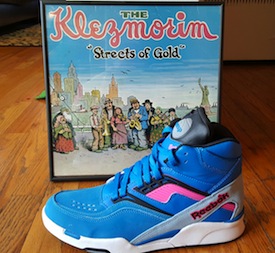
photo - A big part of Daniel Brenner’s inspiration came from the Klezmorim’s Streets of Gold
A big part of Daniel Brenner’s inspiration came from the Klezmorim’s Streets of Gold. (photo from Daniel Brenner)

Brenner’s love of music came early on, as he listened to a mix of Shlomo Carlebach and contemporary American folk. In the 1980s, Brenner’s parents went to a Klezmorim concert and came home with their record Streets of Gold.

“I was ecstatic listening to the music,” said Brenner. “I couldn’t believe that we had music that had so much soul. As a kid, I was enthralled with Michael Jackson – music you can dance to. But, when I heard the Klezmorim, I was like, this music is just as good for dance. I loved it.”

While working out and listening to klezmer, Brenner thought of how amazing it would be to lead a class using this music. Originally, he thought of pairing it with Zumba, but then decided that klezmer aerobics would be the best fit.

As he worked on the idea, he realized this could be more than just another class. “I really tried to think of what story it wants to tell,” he said. “That really helped me get to the place where it was a full narrative, and a full show about the relationship between someone in the 1980s and someone in the 1880s.

“I thought about it in terms of the two great shifts in human past civilization, recent history – the shift away from agricultural, industrial, rural to urban that happened in the 1880s, and then also the 1980s, the shift between the industrial era and the digital era. I wanted the story that I told to be about that shift.”

Brenner started researching moves that would reflect, as closely as possible, the 1880 dance fashion. He discovered Steven Lee Weintraub, who teaches Jewish traditional dance, and engaged him in private lessons. Brenner videotaped these lessons and practised intensely to get a good handle on the movements and to effectively incorporate them into his repertoire.

“I told my beloved, I told her, keep in mind that I want to do this over the next decade, so she understands I’m definitely thinking long-term about what I want to do with the project,” he explained. “My goal really will be to work together with local klezmer bands in various places around the world to create an experience for people – to perform a show as a way to not only teach dance and tell the story, but as a way to connect people to the local klezmer scene who may not experience it otherwise.”

Brenner has created ’80s Klezmer Aerobics, a family-friendly, interactive dance-storytelling workout wherein “the 1880s meets the 1980s.” In the show, Brenner plays an aerobics instructor and leads an audience-participation workout, as he tells the story of a dancer, Levi, and his apprentice. The audience learns the traditional Old Badchen dances that Levi learns and creates when he runs off to Warsaw.

“I feel that the fun ’80s Klezmer Aerobics and the experience is going to be a draw for a lot of people,” he said. “Then, I also feel like giving people the opportunity to hear live klezmer music is a rare thing. In anyway I can, I want to help people dig the stuff I dug when I was a boy in N.C., putting that record on for the first time.”

In addition to the family-friendly version, Brenner has been considering splitting the experience into two parts – one as a matinée for the family and one in the evening, attracting a different crowd.

Since being performed last November, there have been a few shows in different venues so far. Brenner is working with some Canadian friends to create shows in Canada, having received a few inquiries about it from Jewish community centres.

“I’ve also heard from New York, Atlanta and North Carolina,” he said. “I hope to take it around the Jewish world.”

For more information, visit klezmeraerobics.com or check out Klezmer Aerobics’ Facebook page. There are also videos available on YouTube.

Rebeca Kuropatwa is a Winnipeg freelance writer.

Format ImagePosted on May 20, 2016May 18, 2016Author Rebeca KuropatwaCategories Performing ArtsTags aerobics, Brenner, exercise, interactive theatre, klezmer
This week’s cartoon … May 20/16

This week’s cartoon … May 20/16

For more cartoons, visit thedailysnooze.com.

Format ImagePosted on May 20, 2016May 18, 2016Author Jacob SamuelCategories The Daily SnoozeTags Moby Dick, thedailysnooze.com
האם יש שכירות בחינם?

האם יש שכירות בחינם?

בתקופה האחרונה מתפרסמות מודעות מסוג חדש להשכרת חדרים ודירות משותפות בוונקובר, באתר האינטרנט עם לוח המודעות המקוון קרייגליסט. (צילום: theprovince.com)

האם יש שכירות בחינם?
לא בדיוק – השוכרת תאלץ “לענג” את המשכיר

בתקופה האחרונה מתפרסמות מודעות מסוג חדש להשכרת חדרים ודירות משותפות בוונקובר, באתר האינטרנט עם לוח המודעות המקוון קרייגליסט. המשכירים מטבע הדברים גברים מציעים להשכיר חדרים או דירות ללא תשלום. הם מבקשים לקבל “רק” קצת מאסג’ים או עינוגים אחרים מהשוכרות. במילים אחרות סקס במקום דמי שכירות.

לדברי פרופסור למשפטים באוניברסיטת יו.בי.סי, ג’נין בנאדט, הגברים המשכירים מנצלים את המצב הקשה בו השוכרות נמצאות, כיוון שמחירי השכירות בוונקובר מרקיעי שחקים וקשה מאוד למצוא חדרים או דירות להשכרה במצב השוק כיום. בנאדט: “לא מדובר במערכת יחסים בין בני זוג שחולקים דירה במשותף. שכירות תמורת סקס היא אקט לא חוקי והמשכירים יכולים להסתבך גם עם חוקי זכויות האדם והטרדות מיניות”. דוברת הארגון לסיוע לנאנסות ומקלט לנשים בוונקובר, סמנתה ריי, מוסיפה כי הגברים משתמשים בטקטיקה חדשה של מסחר בשכירות, עבור קבלת שירותי מין כדי לנצל נשים. ריי: “הגברים משתמשים בכוחם ומנצלים את הייאוש הכלכלי של הנשים בעיר. נשים צעירות ומהגרות יכולות בקלות ליפול בפח של המשכירים”.

לעומת זאת טוען דובר משטרת ונקובר, בריאן מונטגיו כי לאור צורת הניסוח המודעות, אין בהן משום עבירה על החוק. מונטיגו מציע לנשים להתעלם ממודעות שמציעות שכירות חינם תמורת שירותים מפוקפקים ואל להן לקחת סיכונים מיותרים.

האם יש גזענות בעבודה?
קורות חיים אנונימיים צפויים להגביר את שוויון ההזדמנויות בתעסוקה

קנדה נחשבת למדינה ליברלית ומכניסת אורחים כלפי זרים שמהגרים אליה ועבור פליטים שנקלטים בה. אך מתחת לפני השטח מתברר שכמו במדינות מערב אחרות, גם בקנדה המתקדמת אין בדיוק שוויון הזדמנויות בתעסוקה לכל האזרחים, ללא קשר למוצאם. לפי נתונים ממשלתיים המיעוטים בקנדה מהווים למעלה מ20% מהאוכלוסיה, אך לעומת זאת הם מקווים בקושי 14% ממצבת העובדים בשירות המדינה. מחקרים שונים שנערכו בארה”ב ובקנדה מצביעים על כך שלמועמדים לעבודה ששמותיהם אינם אנגלו-סקסים, יש סיכוי קטן יותר להיות מועסקים.

לאור זאת חבר פרלמנט מטעם המפלגה הליברלית, אחמד חוסיין, טוען שהגיע הזמן שקנדה תאמץ מדיניות חדשה בתחום התעסוקה, לפחות במגזר הציבורי, שבו יקלטו עובדים לפי כישוריהם באמצעות קורות חיים אנונימיים, ועל ידי כך תקטן תופעת האפלייה.

התזמורת הסימפונית של טורונטו אימצה לפני שנים את המדיניות לקלוט נגנים חדשים באופן אנונימי. המועמדים לתזמורת נבחנים בזמן שהבוחנים לא רואים את פניהם, לא יודעים מה מינם ומה שמם. כתוצאה מכך כיום לפחות 50 מהנגנים בתזמורת הם נשים, ורבים שייכים לבני המיעוטים. לאחרונה מספר בתי ספר בקנדה אימצו מדיניות דומה בוגע לבדיקת מבחנים ועבודות של התלמידים, שמוגשים ללא שם לבוחנים.

החיפושיות בהתכתבות
קורס באוניברסיטה על סיפור הצלחתה של הלהקה הבריטית

הביטלס ממשיכים להצליח גם באוניברסיטה של מחוז נובה סקוטיה. 66 סטודנטים נרשמו לקורס חדש בתחום המוסיקה שעוסק בסיפור הצלחתה של הלהקה הבריטית. לאור הפופולריות של הקורס הוא יתקיים שוב גם בשנה הבאה.

פרופסור למוסיקה באוניברסיטה קווין ברנקורסט, מעביר את הקורס המעניין שעוסק בחיי הלהקה ובתקופה בה היא פעלה. הסטודנטים יבחנו כיצד הביטלס נולדה ובתוך תקופה קצרה הצליחה בצורה אדירה והפכה להיות הלהקה המשפיעה ביותר בהיסטוריה של המוסיקה והתרבות בכלל. הקורס כולל צפייה בסרטים, וידאו קליפים וראיונות עם הביטלס. ברנקורסט מציין כי אף אחד לא היה מצליח לכתוב את סיפור הצלחתה של הביטלס שהיה כל כך בלתי צפוי, וזה לבד הופך את הקורס לכל כך מעניין.

Format ImagePosted on May 18, 2016May 18, 2016Author Roni RachmaniCategories עניין בחדשותTags anonymous CVs, Beatles, Craigslist, employment, Queen's University, racism, rentals for sex, Vancouver, באוניברסיטה קווין, גזענות, החיפושיות, ונקובר, קורות חיים אנונימיים, קרייגליסט, שכירות תמורת סקס, תעסוקה
VHEC marks anniversaries

VHEC marks anniversaries

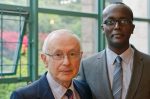
Robbie Waisman, left, and Éloge Butera will be the keynote speakers on May 26. (photo from Vancouver Holocaust Education Centre)

At a first-in-a-decade gala dinner this month, the Vancouver Holocaust Education Centre will mark three significant anniversaries.

“It’s more than 40 years since the first Holocaust symposium for high school students at the University of B.C.,” said Nina Krieger, VHEC’s executive director. “It is more than 30 years since survivors of the Holocaust formed the Vancouver Holocaust Centre Society for Remembrance and Education with the vision of creating a permanent legacy in the form of a teaching museum. And it is now just over 20 years since the doors to the Vancouver Holocaust Education Centre opened.”

Krieger said it seemed like an appropriate time to invite the community to celebrate the achievements of the past, learn about the diverse programs in which the centre is currently engaged and also the ambitious plans for the future. The event, titled Looking Back … Moving Forward, takes place May 26, 5:30 p.m., at Congregation Beth Israel.

“As an organization, we are at a turning point,” she said. “What started as a small Holocaust museum on the edge of the continent has grown into an institution that is renowned in its field for innovative, impactful pedagogy, exhibits, programs and collections.”

Thanks to a grant from Citizenship and Immigration Canada and a legacy gift from the estate of Edwina and Paul Heller, she said, the centre is digitizing its artifacts and archival collections, including one of the earliest extensive collections of audiovisual survivor testimonies.

“When Dr. Rob Krell began interviewing survivors on videotape in the 1970s, he was among the first to do so in North America,” Krieger said. “The collection now includes more than 200 testimonies, which have been shared with other archives, including Yale University’s Fortunoff Video Archive for Holocaust Testimonies, and are currently catalogued into a new VHEC system that will support access to these first-person accounts of the Holocaust.

“With these digitization projects, we are going to be able to reach exponentially more scholars, students and members of the general public in Vancouver, in Canada and around the world,” she continued. “The impact we can have on Holocaust studies will be enormously increased. More importantly, thousands more people will be able to access our impressive collections. Furthermore, thanks to a related project in which we are developing complementary pedagogical materials, educators worldwide will be able to access multimedia teaching resources at age-appropriate levels to share this history in impactful ways.”

Krieger said Looking Back … Moving Forward will introduce attendees to the power of firsthand eyewitness testimony. The keynote speakers will be Robbie Waisman, a survivor of the Holocaust, and Éloge Butera, a survivor of the Rwandan genocide. Their stories of survival are examples of the kinds of VHEC programs that reach more than 25,000 B.C. students annually.

The event is also intended as an opportunity for attendees to learn about the breadth of VHEC programming.

“People are often surprised at the diversity of the programs and services we deliver,” Krieger said.

Earlier this month, the 41st annual Symposium on the Holocaust at UBC brought about 1,000 students from across Metro Vancouver to the university for two days of meetings with Holocaust survivors and historians. In addition to this annual event, VHEC now delivers similar “satellite” programs in 10 school districts and sends outreach speakers to schools all year round. Teachers’ conferences, learning resources and hands-on Discovery Kits help teachers educate about the Holocaust at age-appropriate levels. School groups and the general public visit VHEC to experience locally and internationally developed exhibits. Survivors access services including financial, medical and social supports. Scholars and other researchers use Western Canada’s largest collections of Holocaust-related materials. Four annual commemorative events – International Holocaust Remembrance Day, Yom Hashoah, the High Holidays cemetery service and the Kristallnacht Commemorative Lecture – provide opportunities for both mourning and learning.

“We hope that attendees of Looking Back … Moving Forward will come away with a deeper appreciation of the work we are doing,” Krieger said. “And with our deep appreciation that everything we accomplish is due to the support of people who understand the value of what we are doing.”

The event is co-chaired by Mariette Doduck, Shoshana Lewis and Helen Heacock Rivers. Honorary chairs are the four past presidents of the organization: Waisman, Krell, Rita Akselrod and Jody Dales. For tickets, visit vhec.org.

Pat Johnson is communications and development consultant at Vancouver Holocaust Education Centre, as well as a member of the Independent’s editorial board.

Format ImagePosted on May 13, 2016May 11, 2016Author Pat JohnsonCategories LocalTags genocide, Holocaust, Nina Krieger, Rwanda, VHEC
JFSA lunch raises $266K

JFSA lunch raises $266K

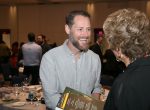
Hootsuite’s Ryan Holmes speaks to an attendee at the Innovators Lunch on May 4. (photo by Sandra Steier)

More than 550 people at the Jewish Family Service Agency’s Innovators Lunch on May 4 raised more than $266,000 for the important services JFSA provides.

Starting the event at the Hyatt Regency, featuring Hoosuite founder and chief executive officer Ryan Holmes, was Beth Israel Rabbi Jonathan Infeld who, before the motzi, said a few words about volunteer Elayne Shapray, whose funeral had been that morning. Incoming JFSA board chair Karen James also spoke about Shapray’s contributions, noting that she had been “honored with the highest volunteer award from JFSA, the Paula Lenga Award, for her quiet strength and years of support.”

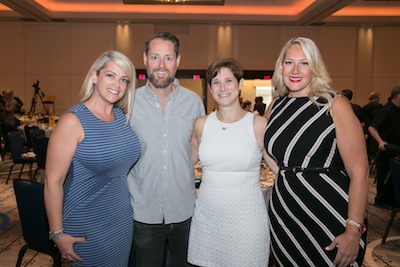
photo - Innovators Lunch committee members, left to right, Shannon Ezekiel, Hillary Cooper and committee chair Sherri Wise with keynote speaker Ryan Holmes, CEO and founder of Hootsuite
Innovators Lunch committee members, left to right, Shannon Ezekiel, Hillary Cooper and committee chair Sherri Wise with keynote speaker Ryan Holmes, CEO and founder of Hootsuite. (photo by Sandra Steier)

When event chair Dr. Sherri Wise took to the podium, she thanked everyone involved in making the lunch possible, including her co-chairs, Shannon Ezekiel and Hillary Cooper. Richard Fruchter, senior management consultant at JFSA, added his thanks and, after a video about JFSA’s impact, introduced Dr. Neil Pollock who, with his wife Michelle, matched all new and increased donations to the lunch up to $20,000.

Pollock spoke about his family’s involvement with JFSA. In particular, he spoke about Dorita Flasker, who came to Vancouver from South America as a senior, having had all her wealth expropriated by her home country’s government. In the years since JFSA connected them, she and the Pollocks have become family, and they all recently celebrated her 80th birthday together.

Shay Keil of Keil Investment Group of ScotiaMcLeod, one of the lunch’s co-presenting sponsors, introduced the keynote speaker. Holmes founded Hootsuite in 2008, said Keil, taking the company from a small startup “to a global leader in social media with over 13 million users, including 800 of the Fortune 1000 companies.”

“My parents were both teachers – they left teaching in the ’70s to get back to the land, to become farmers,” said Holmes. “They bought a hobby farm. I grew up with goats, chickens … kerosene lamps, a water well in the Okanagan Valley.”

He discovered computers – “magical things” – at the library. The librarian noticed his enthusiasm and suggested he enter a schoolwide programming contest. Two months later, he won the contest – the prize, an Apple IIc computer, which had to be connected to the family car’s battery, as their home had no electricity.

His first business was a paintball company he started in high school. He went to university to study business, but dropped out and opened a pizza place, which he ran for a couple of years. After selling the restaurant, he moved to Vancouver, bought a computer and started learning how to build HTML websites. He got a job at a dot-com that crashed about six months later, so founded his own agency, Invoke. He continued to learn his craft and eventually hired employees. They had customers to whom they would provide computing services and they built a number of products, such as product-management and e-commerce systems.

“Around 2008, we started to do marketing on social media for our customers,” he said. “What we realized very quickly was that there weren’t very many tools out there to manage social media…. We needed a tool to help manage multiple team members and multiple social networks all from one place, and that was the aha moment for Hootsuite.”

Soon thereafter, Hootsuite was launched. Investors were found about a year later – “Remember, this was at a point when people were asking, ‘Is Twitter just a fad?’ ‘Is Facebook just the next MySpace or the next Friendster, is it going to be obsolete in a year?’ People didn’t know if social media was relevant and was here to stay.”

Hootsuite – which has about 800 employees – is headquartered in Vancouver, but has offices around the world. “We send 28 million messages a week and these messages reach three billion users across the planet every week.” Among those users have been the Arab Spring and Occupy Wall Street movements, and the White House.

“We’re in an era of unimagined disruption,” he said, pointing to three trends driving it: social (sharing videos, for example, which can go viral), a more collaborative economy (businesses like Uber) and mobile.

“Sixty percent of people who complain on Twitter expect a response within one hour,” said Holmes. “So, if you’re a brand, if you’re a business, and you’re not there … it’s like you don’t have a website, like you don’t have a telephone…. The thing about social is there is an implied contract: you’re naked and transparent….” If customers do not get a response, “they’re going to talk about it over and over again and, so, you’re going to be brought into the open as a business.”

Holmes compared various communications technologies. “The telephone took 75 years to reach 50 million users, radio 38, television 13, LinkedIn six-and-a-half, Twitter four, Facebook three, Instagram 1.7. Adoption is happening quicker and quicker.”

He then talked a bit about Snapchat, and showed the audience how to use it.

About the next big thing, he hopes that, like “the PayPal mafia” – “a group of alum … [who are] driving a lot of the innovation that’s happening in Silicon Valley” – there will be a “maple syrup mafia.”

“I would love to see the alum of Hootsuite go on to create the next 10 Hootsuites within Vancouver and more within Canada,” he said.

Already, the B.C. technology sector employs more people than the mining, oil and gas, and forestry sectors combined. To create an even better ecosystem for innovation, he said, there are three key requirements: capital (money to build companies), environment (places for people to live and work) and talent (education and immigration, as there currently is a lack of supply).

“There is huge opportunity for people who want to head into this industry,” he said, predicting an increasing demand for these types of jobs.

During the question-and-answer period, Holmes responded to concerns about privacy – he believes the good aspects of technology outweigh the bad; housing – a problem for every business, he said, putting the onus on the government to increase supply, create more diverse product (not just 500-square-foot living spaces) and implement policies to control demand; and corporate responsibility, which he thinks will become more of an issue. To him, the lack of what once were basic skills – such as writing – is simply the evolution of language, the next steps being the keyboard and more voice-activated technology.

Format ImagePosted on May 13, 2016May 11, 2016Author Cynthia RamsayCategories LocalTags Hootsuite, Innovators Lunch, Jewish Family Service Agency, JFSA, Ryan Holmes, Snapchat, tikkun olam
Courage’s two records

Courage’s two records

Lorne Segal, chair, Courage to Come Back Awards. (photo by Cynthia Ramsay)

In its chai year, the Courage to Come Back Awards had a record night on May 5 at the Vancouver Convention Centre, with more than 1,500 guests and more than $1.43 million raised for Coast Mental Health.

In his address, Courage to Come Back chair Lorne Segal pondered the question of why the event is so popular. “Because,” he said, “at these awards, like nowhere else, we feel the extraordinary power of the ordinary spirit and the deep humanity so often lacking in our daily lives.”

He said, “We all shed a tear tonight and, whether it was a tear of joy, of hope, of love, it was not because we wanted to, but because we needed to. You see, we need to know that, even against the worst hand we could be dealt in life, we too can triumph. Because our six heroes tonight could do it, so can we.

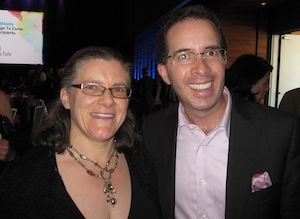
photo - Cynthia Ramsay, publisher of the Jewish Independent, and Shay Keil of Keil Investment Group of ScotiaMcLeod
Cynthia Ramsay, publisher of the Jewish Independent, and Shay Keil of Keil Investment Group of ScotiaMcLeod. (photo from Cynthia Ramsay)

“Each of us came into this room for a different reason, but we will all leave with our nourished souls tied together by one common thread: the unshakeable belief that, by seeing the very best in others – courage, faith, hope, endurance – we will somehow find the strength to face our own fears and achieve our greatest dreams. And for that, we need to thank our six superstars who are symbols of the possibilities which lie within us all.”

This year’s six honorees were Christy Campbell (in the physical rehabilitation category), Jemal Damtawe (addiction), Meredith Graham (social adversity), Dr. Barbara Harris, (mental health), Coltyn Liu (youth) and Tom Teranishi (medical). Since 1999, Courage to Come Back has now honored 103 individuals who have had the “courage to overcome serious adversity, change their lives for the better and move forward to help others do the same.”

Co-hosting the gala evening were Randene Neill and Kevin Evans, while Howard Blank emceed the fundraising portion of the proceedings. In his comments, Blank noted that Coast Mental Health helps an average of 12 clients a day and that its programs address three main pillars: housing, employment and support services.

The largest donation of the evening came from B.C. taxpayers, as Minister of Health Terry Lake donated $100,000 from the province on behalf of Premier Christy Clark and Minister of Finance Mike de Jong. The largest private donation came from Joseph and Rosalie Segal, who contributed $50,000. Many other individuals and companies made donations, several citing the Segal family as their example of what it means to give back to community.

There was no shortage of role models for giving that night, with the six honorees leading the way. There were many meaningful takeaways, including Liu’s statement: “Mom’s lesson: don’t feed the negative monster inside; rather, fight with a belief in yourself and for a reality you want.” And Graham’s reminder that, “sometimes, you can give what you didn’t get.”

“What part will you play,” she asked the crowd, “to change lives today?”

Format ImagePosted on May 13, 2016May 11, 2016Author Cynthia RamsayCategories LocalTags Courage to Come Back, mental health, Segal, tikkun olam

Posts pagination

Previous page Page 1 … Page 508 Page 509 Page 510 … Page 661 Next page
Proudly powered by WordPress