Skip to content
  • Home
  • Subscribe / donate
  • Events calendar
  • News
    • Local
    • National
    • Israel
    • World
    • עניין בחדשות
      A roundup of news in Canada and further afield, in Hebrew.
  • Opinion
    • From the JI
    • Op-Ed
  • Arts & Culture
    • Performing Arts
    • Music
    • Books
    • Visual Arts
    • TV & Film
  • Life
    • Celebrating the Holidays
    • Travel
    • The Daily Snooze
      Cartoons by Jacob Samuel
    • Mystery Photo
      Help the JI and JMABC fill in the gaps in our archives.
  • Community Links
    • Organizations, Etc.
    • Other News Sources & Blogs
    • Business Directory
  • FAQ
  • JI Chai Celebration
  • JI@88! video

Recent Posts

  • Zionism wins big in Vegas
  • Different but connected
  • Survival not passive
  • Musical celebration of Israel
  • Shoppe celebrates 25 years
  • Human “book” event
  • Reclaiming Jewish stories
  • Bema presents Perseverance
  • CSS honours Bellas z”l
  • Sheba Promise here May 7
  • Reflections from Be’eri
  • New law a desecration
  • Resilient joy in tough times
  • Rescue dog brings joy
  • Art chosen for new museum
  • Reminder of hope, resilience
  • The national food of Israel?
  • Story of Israel’s north
  • Sheltering in train stations
  • Teach critical thinking
  • Learning to bridge divides
  • Supporting Iranian community
  • Art dismantles systems
  • Beth Tikvah celebrates 50th
  • What is Jewish music?
  • Celebrate joy of music
  • Women share experiences 
  • Raising funds for Survivors
  • Call for digital literacy
  • The hidden hand of hate
  • Tarot as spiritual ritual
  • Students create fancy meal
  • Encouraging young voices
  • Rose’s Angels delivers
  • Living life to its fullest
  • Drawing on his roots

Archives

Follow @JewishIndie
image - The CJN - Visit Us Banner - 300x600 - 101625

Author: Dvora Waysman

The strength of family circle

There is a wise Jewish saying: “A little hurt from a kin is worse than a big hurt from a stranger.” (Zohar, Genesis 151b) Why is that? Strangers come and go in our lives. Some remain to become friends, others are barely remembered and, as we move on in life, we leave them behind. But family – that’s a different story.

The closest bonds we will ever form are with our parents and our siblings. They know us intimately and, even with all our faults, they still love us. (Though, admittedly, not everyone is so lucky to have a loving family.)

Next comes the extended family – cousins, aunts, uncles, et al. Some of them we just tolerate, often in an amused way, because families are like fudge – mostly sweet with a few nuts! But we do care about them because they are kin.

Within our own close family circle, we are proud of each other’s accomplishments and boast of them. We hurt when a family member is unhappy. We celebrate birthdays and anniversaries, and we try to be together for important Jewish holidays. That is what family should mean.

I’ve always loved the description of her family by the late Erma Bombeck: “We were a strange little band of characters trudging through life sharing diseases and toothpaste, coveting one another’s desserts, hiding shampoo, borrowing money, locking each other out of our rooms, inflicting pain and kissing to heal it in the same instant, loving, laughing, defending, and trying to figure out the common thread that bound us all together.” I think most families can relate to this warm-hearted description.

When there is a break in a family circle, it can be unbearable. It’s not just a matter of location, for, these days, communication has never been easier and we can connect with family wherever they live. But, when there is a misunderstanding and angry words are exchanged, it can be heartbreaking. We feel as though we have a deep fracture in our very being and life will never be the same again if the family member we once loved is lost to us.

Teenagers are known to be rebellious and that is considered normal. It is necessary for them to become independent, to break away from the sheltering family structure. It can be very hurtful for parents to see them break away, but if they were nourished with your morals and standards of ethical behavior in their childhood, and educated with love, they won’t stray too far. Siblings may have very different ideas from each other as adults, but no one – not even a spouse – can have the same kind of bond, with its childhood memories, shared experiences, old family jokes. It is special.

When strangers hurt you, you may become disappointed or angry, but it doesn’t tear at the fabric of your being. You are not obsessed by it and whatever has happened, you know that you will get over it in time.

It is not the same with families. When there is a break between parents and children or brothers and sisters, it colors every aspect of your life, for the family is your haven, your soft resting-place. When there is a break, your emotional security is gone. We need to feel ourselves one in a world of kinfolk, persons of variety in age and temperament, yet allied to us by an indissoluble bond, which nature has welded before we are even born. A family quarrel does not just leave aches or wounds; it is more like splits in the skin that won’t heal because there’s not enough material. Author Dodie Smith described her family as “that dear octopus from whose tentacles we never quite escape, nor, in our inmost hearts, ever quite wish to.”

So, cherish your family while you still have them. Other things may change us, but we start and end with the family, which is one of G-d’s masterpieces. Having a place to go is your home. Having someone to love is your family. Having both is a blessing.

Dvora Waysman is a Jerusalem-based author. She can be contacted at [email protected] or through her blog at dvorawaysman.com.
 

Posted on November 11, 2016November 11, 2016Author Dvora WaysmanCategories Op-EdTags family

Theatre arts support

Langara College Foundation’s Langara Studio 58 Legacy Fund campaign reached and exceeded its original $250,000 goal, raising more than $273,000 in support of theatre arts at Langara. Most than 538 individual donors contributed to the success of the campaign, among them 219 Studio 58 alumni and 55 present and former faculty, directors and designers.

“The response from our Studio 58 community was amazing,” said Moira Gookstetter, executive director, Langara College Foundation. “We are humbled by their generosity. With their support, we raised over $136,729, which, when matched by the college, will create an endowment of $273,458.

“We are especially thankful for our volunteer campaign chairs Jane Heyman and Joey Lespérance. They are the real heroes of this campaign. Their enthusiasm, dedication and tireless support have helped to create a foundation that will launch Studio 58 into the future.”

Established to celebrate the 50th anniversary of Langara’s Theatre Arts at Studio 58 program, the Legacy Fund’s mandate is to support the expansion and scope of the program’s productions, training and learning opportunities.

“The remarkable success of the Studio 58 Legacy Fund campaign will mean future generations of students will have access to working on productions beyond the normal scope of Studio 58, will be offered special workshops, and will have the possibility to mentor with professionals,” said Kathryn Shaw, Studio 58 artistic director. “The Legacy Fund will allow Theatre Arts at Studio 58 to remain a leading force in theatre training in Canada. All of this could not have been possible without our caring and generous donors and supporters.”

Langara College’s Studio 58 provides practical, hands-on training for students looking for careers in professional theatre. It offers two streams – acting and production.

Posted on November 11, 2016November 11, 2016Author Studio 58Categories Performing ArtsTags fundraising, Langara College, Studio 58
Getting through menopause

Getting through menopause

Harriet Berkal unveils the secrets of menopause. Berkal began the support group Menopause Matters after experiencing a lack of help when she went through that stage of life. (photo by Manny Berkal-Sarbit)

Medical advocate Harriet Berkal recalls eagerly anticipating going through menopause, imagining it to be a fabulous life stage without having a period every 28 days or so.

“Now, if I could go back and have my periods and not go through this other nonsense, I would say, give me my periods back,” Berkal told the Independent.

Berkal works as an executive financial consultant for Sarbit Advisory Services in Winnipeg and has been struggling with menopause-related issues for the past seven years. She has leaned from experience that there is next to no help out there for dealing with the effects of menopause, and this has led her to take matters into her own hands and create a support group.

“One problem with this issue of menopause is, if you complain to a physician about something like weight gain, a symptom of menopause, they bundle everything you say after that behind that carriage,” said Berkal. “So, my GP missed the fact that I had a thyroid condition, because it was thrown into menopause – the same way that people get thrown into the irritable bowel syndrome (IBS) or the fibromyalgia hole … where anything you complain about is automatically assumed to be related to that, when it might not actually be.”

Menopause symptoms for many women include hot flashes, night sweats, migraine headaches, bladder infections, gastroesophageal reflux disease, lost libido, and painful intercourse. There are also some very rare reactions, such as feeling as though you have bugs crawling all over you, and emotional depression or anxiety, which are also related to hormonal fluctuations.

While typically menopause begins in one’s 50s, it can start in one’s 40s, where the cycles become more erratic, and, in some cases, even earlier, from induced conditions via cancer treatments, for example.

As Berkal searched for solutions, she decided to share the information she gathered with other women undergoing menopause. She approached Winnipeg’s Jewish Child and Family Services (JCFS) about starting up a learning and support group.

The idea was welcomed and the group was called Menopause Matters. Some 20 women meet once a week for five weeks to learn about different approaches to dealing with menopause symptoms and management.

“Most of the primary group are those in the throes of menopause and who aren’t functioning well,” said Berkal. “We had about 18 at last week’s meeting. It was an emotional meeting. There were some people who were extremely – not just frustrated with the system, but at the end of their rope. They don’t know who to turn to, what to do. We provide them, each week, with a different speaker and go through the whole gamut of solutions from traditional to non-traditional.”

Some education is provided by the clinic Vitality Integrated Medicine, which is run by a former pharmacist. Participants are informed about drug interactions, different kinds of tests to help determine actual lacks in their systems, and three different kinds of estrogen. According to Berkal, what often happens is that menopause-affected women consult their doctors and are told they need estrogen, and then they just take whichever one is prescribed.

Recently, Menopause Matters participants had a guest speaker who is an acupuncturist discussing stress control and how it affects hormones, and various acupuncture relaxation techniques that could help. “She brought needles and tried them out on some people,” said Berkal. “People were appreciative of that approach.”

Another scheduled guest speaker at the time of Berkal’s interview with the Independent was gynecologist Dr. Maggie Morris. She was to speak “about mainstream methods for dealing with things like Premarin estrogen application.”

Berkal’s personal experience with conventional medicine in general is that its practitioners are uncooperative from the moment she mentions that other approaches will be presented.

“The pharmacies have these ready-made solutions,” she said. “They aren’t one-size-fits-all solutions in my mind. We’re trying to provide people with a range of different solutions and methods to cope with this. One solution doesn’t do everything. You don’t want to mask symptoms. You want to get to the root. Everyone’s jockeying for position here and everyone has different approaches, so you should try figuring out what system fits you the best.”

Another speaker booked to address the support group is to talk about the importance of exercise, while another will highlight a treatment called Mona Lisa Touch, which involves the use of a laser inserted into the vagina to stimulate vaginal collagen production.

“It rejuvenates the tissue in the vagina without hormones, so you can get increased libido and increased moisture,” explained Berkal. “It helps create a better balance of health in the vagina.

“Many women get bladder infections, because the bladder and the vagina are closely linked. And, if you don’t have the right environment in the vagina, which is decreased because of menopause, you can end up with UTIs [urinary tract infections] … which I had probably 10 of last year before I started treatment.”

When Berkal underwent menopause, she said, “It was a pretty extreme and exacerbated reaction. Mood swings are a very big issue. Last week, there were several women in the group who said, ‘Does anyone feel like they’re going crazy?’ Almost everyone raised their hand.

“Hormones are so powerful. When they are working great, that’s great. When they are depleted, you are left with a shell of a body, susceptible to bone loss, memory fog, you think you’re getting the early stages of Alzheimer’s … but really, you’re not.”

Berkal believes that integrated medicine is the right direction and, in fact, integrated clinics are popping up in many places.

“But, the fact that I couldn’t find a menopause support group was mind-boggling,” said Berkal. “I approached the Mature Women’s Clinic at the Victoria Hospital and asked if they would start a support group. They said ‘no.’

“Why would they not want to help women in need? Yet, when the pharmaceutical companies sponsor a forum for one of their gynecologists to speak, they get thousands of women to come down who are in dire need of help … but they are only giving one approach.”

Shelley Levit, a social worker at JCFS, was very receptive to the integrated approach Berkal described, and the concept of letting women choose for themselves what they want to pursue.

Berkal hosted a Menopause Matters free, five-week support group from Sept. 15 to Oct. 13, via JCFS.

“We call it ‘the Sisterhood of Sharing,’” said Berkal. “Sharing is deeply required in order to feel camaraderie and kinship with these other women who really have no one else to talk to. It wasn’t intended to be targeted at Jewish women specifically. It’s like cancer – not specific to any ethnicity.”

Berkal wants to see if the group would be receptive to having partners and spouses join, so they can be present and hear from other women.

Rebeca Kuropatwa is a Winnipeg freelance writer.

Format ImagePosted on November 11, 2016November 11, 2016Author Rebeca KuropatwaCategories NationalTags health, menopause, Winnipeg
Making a life in Israel

Making a life in Israel

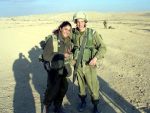
Emily Rose and Aviv Eisenstat in the Israel Defence Forces’ officer’s training school in 2008. (photo from Emily Rose)

When Emily Rose, 28, moved to Israel almost 10 years ago, her plan was to serve in the Israel Defence Forces and then return to Winnipeg. It didn’t happen quite as planned.

Rose was born in Odessa, Tex., and grew up in Winnipeg. Taking a similar road as many Jewish kids in the city, Rose studied at Gray Academy of Jewish Education (GAJE).

“The Winnipeg Jewish community is truly saturated with role models for social justice and it had a major impact on me growing up,” said Rose. “I grew up watching my aunt, Faye Rosenberg, who works for our Jewish community, help bring hundreds of Jews to Winnipeg from Argentina, where they suffered from antisemitism, and watching my best friend’s dad work tirelessly in court to help victims of residential schools receive compensation from the government.

“Winnipeg is an incredibly Zionist and supportive community,” she added. “The longer I am away, the more I appreciate what a wonderful community it really is.”

When Rose was 14, she went to Israel on a Jewish Federation of Winnipeg Partnership 2000 (or Gesher Chai) trip, which sent 10 high school students from GAJE to their sister school, Danziger, in Kiryat Shmona.

She fell in love with the city and the people. “My host family had three sisters and I was thrilled because, up until then, I only had big brothers. And, I remember writing to my mom, ‘Now I have three sisters!’ on the first night. I realized at that point that all my new friends in Israel would be going to the army soon and I remember thinking I had the responsibility to do that as well.”

This is what led Rose to move to Israel at the age of 18, starting with a mechina (a pre-military program) in her first year there.

She lived in Sde Boker in southern Israel and volunteered as an English teacher’s aide in an unrecognized Bedouin village. “Can you think of anything more polar opposite to a very cold Winnipeg, Man., than the middle of the Negev Desert?” she quipped.

“Your first year in Israel is always the most challenging, I think. There were a lot of tears. I was the only foreigner in the program, so I had to learn Hebrew very quickly. But, the program itself was also very intense, because we had classes every day and political tours and hikes every month.”

Something Rose was especially thrilled about in Israel was getting to sleep outside. As a child, she eagerly anticipated going to summer camp for canoe trips and sleeping under the stars.

“When you see the stars in the Negev, you really think it’s got to be the best seat in the house,” said Rose. “And, that first year, my roommate used to wonder why I’d always drag my sleeping bag out of our room to sleep outside.”

The next year, Rose joined the IDF as a lone soldier and served as a combat fitness officer. She recalled that some of her trainees used to call her “M&M,” as she was “hard on the outside, but sweet on the inside (and very small).”

She added, “My first job was training infantry soldiers on a combat training base where I worked with a unique battalion of Druze soldiers. The soldiers I worked with spoke Arabic. This really sparked my interest in the language, which is why I studied Modern Standard Arabic (MSA) in school.”

Today, Rose serves in reserve duty in Jerusalem’s Homefront Command. Her job is to communicate with the civilian population in Jerusalem during times of emergency.

A few years after her IDF service, Rose volunteered at the Michael Levin Centre for Lone Soldiers, which helps soldiers before, during and after their service. At the centre, the first thing she was asked to do was to tell those thinking about joining the IDF “don’t.”

Rose explained, “If we couldn’t convince them not to, then we’d help them as much as we possibly could. Nobody told me not to join the IDF, but also no one would have been able to convince me not to. And, the day I joined, I remember I wasn’t nervous – I just knew it was the right decision.

“I also didn’t plan on staying. I thought I’d serve for two years and then return to Canada. Here I am, almost 10 years later.”

After the army, Rose took Middle Eastern studies (along with MSA) at Hebrew University of Jerusalem. She still lives in Jerusalem, where she recently started writing for the Times of Israel.

Just prior to that, she was an editor at Israel National News, where, she said, she mostly wrote the breaking news but also covered longer form stories. “A few weeks ago,” she said, “I broke a story with exclusive footage of a former Australian minister who got caught in a firefight clash between Kurdish forces and ISIS in Iraq.

“The plight of the Kurdish people is an issue that is very close to my heart. I jumped at the chance to write about it. I’m also so proud to say I come from Winnipeg, [as] our Jewish community sponsors Operation Ezra, bringing Yazidi refugees safely to Canada.”

When on leave from the army a few years back, Rose returned to GAJE to speak to the students. When she visited Winnipeg this past summer, some community women stopped to say hello to her and her mom. “One of them told me that her grandson was going to be a lone solider, an IDF paratrooper, this fall … and she said that I’d spoken to him when he was in high school,” said Rose. “That was very nice, like coming full circle.”

Currently, Rose is working on a short story collection, a novel and three plays.

Her first play was presented at the JCC Berney Theatre in Winnipeg in 2006, the year she graduated high school. Called Radyo, it is about a group of high school kids in Kiryat Shmona who run their local high school radio station during the Second Intifada.

“The second play is a children’s musical I wrote called Don’t Touch the Glutch, which was performed as a part of the Next Wave of Musicals Festival in Montreal and then at the Centaur Theatre children’s series in 2013. It’s about a boy who gets lost in the zoo on a school field trip and discovers that the zoo has a whole host of strange creatures that only come out at night. My brother wrote the music and lyrics and I wrote the book. The show has an anti-bullying theme, because it’s a topic we both feel very strongly about.”

When asked about her feelings about Israel, Rose quoted Rabbi Abraham Isaac Kook: “The truly righteous do not complain about evil, but rather add justice; they do not complain about heresy, but rather add faith; they do not complain about ignorance, but rather add wisdom.”

She added, “Israel is in everything I write, in some form or another, and, though I may not always succeed, I try my best to contribute justice, faith and wisdom with my words.

“For now, I love reporting the news as it happens. Israelis, and those who care about Israel, want to stay informed and I feel privileged to be working with a team that is very committed to keeping our readers updated at all times.”

Rebeca Kuropatwa is a Winnipeg freelance writer.

Format ImagePosted on November 11, 2016November 11, 2016Author Rebeca KuropatwaCategories IsraelTags aliyah, IDF, Israel, journalism, Winnipeg
Unique rabbinical road

Unique rabbinical road

Sandra Lawson is studying at Reconstructionist Rabbinical College. (photo from Sandra Lawson)

Sandra Lawson, an African-American lesbian who converted to Judaism after being raised in a secular home, is now studying to be a rabbi at Reconstructionist Rabbinical College, in Wyncote, Penn.

Born in St. Louis, Mo., Lawson’s dad was in the military, so the family moved around a lot, though mainly stayed in the Midwest. Her dad was a military recruiter and career counselor.

“My dad was raised a Christian, but I really had no religious upbringing when I was a child,” Lawson told the Independent. “I knew about Jesus, and we would occasionally get invited to church, but there really was no religion in our house.

“On my mom’s side, we had a back story of an ancestor who was Jewish. Like folklore, it really meant very little to me until I started on this Jewish path myself.”

This path began when Lawson was an undergraduate student and needed another class to graduate. The only course available at the time was one on the Hebrew Bible, which Christians refer to as the Old Testament. The teacher was a Christian academic from Kenya.

“When I got to the class, the teacher told everyone they needed to get a Bible for the class,” said Lawson. “But, he said to not get a King James version, as, he said, it’s a bad translation.

“This class opened my mind a little bit to the Bible as a piece of literature. He made the Bible acceptable for me. It wasn’t a book to be feared. Years later, I have a Jewish girlfriend and her sister invites me for Shabbat dinner. I thought, I like this. It’s really cool. I shared with my girlfriend at the time that an early ancestor was Jewish, but that I know nothing about Judaism.”

From that first Shabbat dinner, Lawson went to her girlfriend’s family home every Friday night.

“They weren’t Orthodox,” said Lawson. “They were just a modern family that would stop everything for Shabbat. It was really cool. I loved the ritual. I loved how open the family was. I loved how they accepted and treated me.”

Around this time, Lawson met Rabbi Joshua Lesser of the Reconstructionist Congregation Bet Haverim in Atlanta. Lesser hired Lawson as his personal trainer and, over the course of the two or three years she worked in that capacity, their friendship evolved and he invited her to his shul.

“I was hesitant,” admitted Lawson. “I shared with him the story of my great-grandfather. Eventually, I did go and I fell in love with the community – not necessarily Judaism, at the time – but I loved the community. That’s how I got interested.

“I started going to services regularly. The community has straight people, gay people and kids but, mostly, it is a space where I felt like I could be myself – something I’d never experienced before in a religious community.”

Lawson went on to learn more about Judaism and, in 2003, she told Lesser she was thinking about converting. In the conversion classes she took, the teacher helped her see a broader view of Judaism.

“I loved the class,” said Lawson. “I loved learning about the Jewish calendar and reading the Bible again, as a piece of literature. I loved learning about Jewish history.”

After about a year of studies, the class was over. And, on Oct. 13, 2006 – the day before her 35th birthday – she converted to Judaism.

Lesser asked Lawson to be a congregational representative on the board for the gay members of the synagogue. A year later, when gay marriage was a hot topic in the presidential election debate, Lawson took her stance a bit further.

“It was sort of funny, because I didn’t know anyone in my gay life who was even thinking about trying to change marriage laws,” she said. “We were all just happy that we could be legally gay. Josh [Lesser] asked if I wanted to join the gay and lesbian task force, as they were coming to Atlanta to do some training. I was like, sure. And he’s like, the good thing about it is, they need more diversity. They need more black and brown voices on these issues.”

Lawson later joined a clergy-based group working on the issue. This group, according to Lawson, was all over the map as far as sexual orientation and most everything. But, what they did agree on was that the state had no business legislating what you did behind your own closed doors.

“The more I started to do volunteer work, the more I realized I wanted to have a more powerful effect, more ability to effect change … that I would need the title of rabbi … and here we are today, as I work on becoming one,” said Lawson.

“Obviously, I’m different. There aren’t a lot of rabbis that look like me. I think being on the edge of the fringes of Judaism allows me to be more flexible or more creative in the things I do.”

One of the required classes that Lawson took last year was on entrepreneurship and thinking outside of the box. During that time, she was approached by the Jewish owner of a local vegan café she went to often, asking if she would be willing to lead services at the café on Friday evenings.

“I went back to class and told my teacher about it,” said Lawson. “I wrote it up as a grant … so I had the grant to lead services at this Lansdale café (outside Philadelphia).”

They have been running services at the café for months now. Every Friday, Lawson shows up with two vegan challot and grape juice. Arnold (the café owner) sets up the place and invites friends and customers to stay for the service.

“Every time, we’ve had at least a minyan,” said Lawson. “It’s been a lot of fun. People can show up as they are, with their sandals, their shorts. We sing. We do a little Torah and welcome the Shabbat.

“People come because they want to see what’s happening in the café … I think it was last week, Arnold had a flautist there, and people came to hear this guy play the flute. Also, I think, in May, there was a couple there who were not Jewish, but they had been taking a Christian class on Judaism. The class was finished, they saw this service and came to learn more about Judaism.”

Next on Lawson’s mind is leading services outside. “I don’t know how I’m going to pull it off yet,” she said. “Right now, I’m in this stage of trying to get a lot of buzz around different ways that people can do Shabbat.

“My dream, I don’t know when it will happen, is to have a Shabbat morning service in the future, in a park. I’m someone who, I see God in nature a lot. To be running in the woods, when the sun is coming up, is the best way for me to pray in the morning. I know a lot of people could connect their Judaism to nature. I haven’t quite figured it out yet, but I hope to.”

Lawson is set to graduate rabbinical school in 2018.

Rebeca Kuropatwa is a Winnipeg freelance writer.

Format ImagePosted on November 11, 2016November 11, 2016Author Rebeca KuropatwaCategories WorldTags Jewish life, Judaism, Reconstructionist, spirituality
Feeling at home in Ecuador

Feeling at home in Ecuador

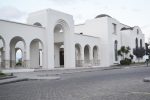
The Jewish Community Centre of Quito is a magnificent building containing two synagogues, its architecture reminiscent of Old Jerusalem. (photo by Lauren Kramer)

It was Friday night in Quito, Ecuador, and, as dusk fell, my husband and I approached the Jewish Community Centre, a magnificent one-hectare complex whose light stone walls and graceful architectural arches are reminiscent of Jerusalem. We joined the community for Kabbalat Shabbat, singing the same Ashkenazi tunes we knew so well from Vancouver as an impassioned, young Brazilian rabbi led the service. With us was Pedro Steiner, a member of the Ecuadorian Jewish community who’d graciously offered to pick us up from our hotel and drive us to and from the synagogue that night.

I admit, it had felt odd sending out an email requesting hospitality over Shabbat a few weeks prior. But, as the melody of L’Cha Dodi washed over the large synagogue, its domed roof meticulously hand-painted and inscribed with the words of the Shema, I figured it was well worth it. We were 4,000 miles from home, but we felt very much closer in the warm embrace of Quito’s Jewish centre.

Our host was a first-generation Ecuadorian whose Czech and Austrian parents had arrived in the country just before the Second World War. They were among 4,000 European Jews who found refuge from the Holocaust in Ecuador, granted entry permits on the proviso that they work in agriculture. Most of those Jews had been merchants, industrialists and businessmen and, while they were grateful to escape the war, most had no interest in pursuing an agrarian lifestyle. After the rich culture they knew in Europe, Ecuador seemed small and culturally impoverished. Perhaps that’s why at least half of those new immigrants left by 1950 for lives in Israel, America, Argentina and Chile.

Steiner’s parents opted to stay. “My dad bought a book on agronomy and read it while on the ship to Ecuador,” he recalled. “After arriving, he found work on a farm south of the city and, by 1955, he’d established a small dairy factory in Quito.” Years later, he sent his son to college in the United States and Pedro spent a decade there with his wife before the two returned to Quito to raise their children.

There are some 600 Jewish families remaining in the city. “I realized that, in coming back to Quito in the 1970s, we were delaying the decision to move for another generation,” Steiner reflected.

Until the early 1970s, most Jews in Quito sent their children to American School, a liberal institution created by Galo Plaza Lasso, one of the country’s past presidents. Then a student at the school won a prize for his review of Mein Kampf and the Jewish community, insulted this could happen, determined it was time to establish a new school. In 1973, Collegio Alberto Einstein was founded with “an atmosphere of Jewishness.” The K-12 school, ranked among the top educational institutions in Ecuador, offers classes in Jewish studies but “it’s not a religious school,” Steiner emphasized. Of the 700 students at Alberto Einstein, only 10% are Jewish.

That’s where Steiner’s kids were educated. And, firmly committed to building Jewish life in Quito, Steiner helped obtain the funding and donations necessary to build the Jewish Community Centre in 2000. He proudly toured us around the impressive site. With a ballroom, conference rooms, two synagogues, a kosher kitchen, a swimming pool, large sports grounds and rooms for Jewish youth movements and Hebrew classes, the JCC is an enviable facility. “But it’s underutilized,” Steiner said, his voice tinged with regret.

Days before Steiner picked us up from our Quito hotel, we had spent time in the Ecuadorian highlands two hours north, at Hacienda Zuleta, the family home of the late Lasso. Built in the 1600s, the expansive property is set in a bucolic valley surrounded by the Andes Mountains. Cows bellowed gently outside our bedroom window, a fireplace lit the 17th-century paintings on the ancient stone walls at night and hot soups with traditional Ecuadorian dishes warmed our bellies at meal times.

photo - Fernando Polanco, grandson of the late Ecuadorian president Galo Plaza Lasso, holds a Tanach given to his grandfather on a diplomatic visit to Israel in the 1970s
Fernando Polanco, grandson of the late Ecuadorian president Galo Plaza Lasso, holds a Tanach given to his grandfather on a diplomatic visit to Israel in the 1970s. (photo by Lauren Kramer)

The Lasso family library contains more than 1,000 books but, minutes after arriving, we’d extracted the only one of Jewish significance: a Tanach inscribed and given to Galo by a chief rabbi when he visited Israel in the 1970s. In another book documenting his political legacy, we found a photograph of Golda Meir welcoming him to the country. “My grandfather was loved by the Jewish community of Ecuador because he helped Jews relocate to Latin America,” said Fernando Polanco, Galo’s grandson, who now runs the Lasso family home.

Hacienda Zuleta hosts visitors for overnight stays, horseback rides into the mountains and bike excursions on its cobbled roads. During our stay, we explored the organic vegetable garden, toured the cheese factory, cycled past the dairy farm with its herd of 500 cows and marveled at the size of caged condors at a rehabilitation project to help protect this critically endangered bird. Most of these are initiatives Galo put into place.

In the ornate Lasso hacienda, we perused portraits of a family that helped shape Ecuador, marveling at Galo’s generosity of spirit. This was a man who helped shape the policies that welcomed Jews to the country, and who divided up his own 50,000-acre fertile estate, giving parcels to the Zuleta locals who lived and worked there.

“My grandfather’s clear vision, environmental responsibility and social consciousness back in the 1940s made him one of Ecuador’s best presidents,” said Fernando, beaming with pride. “Zuleta was his trial and error, his conscience.”

If you go: Adventure Life, a company specializing in travel in Ecuador, coordinates itineraries throughout the country, including Quito city tours, highland hacienda adventures, Galapagos island cruises and visits to the jungle (adventure-life.com or 1-800-344-6118).

Lauren Kramer, an award-winning writer and editor, lives in Richmond. To read her work online, visit laurenkramer.net. This article was originally published in Canadian Jewish News.

Format ImagePosted on November 11, 2016November 11, 2016Author Lauren KramerCategories TravelTags Ecuador, Jewish life, Judaism, Quito
Mystery photo … Nov. 11/16

Mystery photo … Nov. 11/16

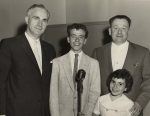
B’nai B’rith, 1960. (photo from JWB fonds, JMABC L.12160)

If you know someone in this photo, please help the JI fill the gaps of its predecessor’s (the Jewish Western Bulletin’s) collection at the Jewish Museum and Archives of B.C. by contacting [email protected] or 604-257-5199. To find out who has been identified in the photos, visit jewishmuseum.ca/blog.

Format ImagePosted on November 11, 2016January 17, 2017Author JI and JMABCCategories Mystery PhotoTags B'nai B'rith, JMABC
This week’s cartoon … Nov. 11/16

This week’s cartoon … Nov. 11/16

For more cartoons, visit thedailysnooze.com.

Format ImagePosted on November 11, 2016November 11, 2016Author Jacob SamuelCategories The Daily SnoozeTags pigeons, restaurants, thedailysnooze.com
Ancient coins found

Ancient coins found

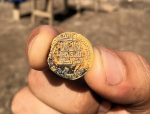
A 1,200-year-old gold coin fonud at Kfar Kama. (photo by Israel Antiquities Authority via Ashernet)

Two teenage students from the lower Galilee, Dor Yogev and Ella Dicks, who were participating in an Israel Antiquities Authority dig in nearby Kfar Kama, found some ancient coins. Included in the find was a 1,200-year-old gold coin inscribed in Arabic and mentioning the name of Muhammad and monotheism. The find shows that the people who lived at the location were there at the early Islamic period in the 7th and 8th centuries. The location of the dig, Kfar Kama, is the home of the Circassian community. The Circassians are a Sunni Muslim community closely allied with Israel; they participate fully in Israeli life, including their young men serving in the Israel Defence Forces.

Format ImagePosted on November 11, 2016November 11, 2016Author Edgar AsherCategories IsraelTags antiquities, archeology, IAA, Islam, Kfar Kama, monotheism
מגפת הפנטניל

מגפת הפנטניל

מגפת הפנטניל: חמש מאות חמישים וחמישה תושבים מתו בבריטיש קולומביה בתשעה חודשים. (צילום: Crohnie via Wikimedia Commons)

מצב חירום הוכרז במערכת הבריאות של מחוז בריטיש קולומביה לאור מגפת הפנטניל, הסם הקטלני שהורג מדי יום בממוצע שני מכורים במחוז. מספר המתים בבריטיש קולומביה מהסם, בתשעת החודשים הראשונים של השנה הגיע כבר לחמש מאות חמישים וחמישה. לעומת זאת בכל שנת 2015 מתו מהסם בסך הכל חמש מאות ושמונה איש. כוחות ההצלה והמשטרה מסתובבים באזורים בהם מרוכזים נרקומנים שברובם הומלסים, ובידיהם ערכות חירום להציל ממוות משתמשי יתר בפנטניל. להדגמת חומרת המצב: ביום אחד באחד החודשים האחרונים, בתוך כעשרים דקות הגיעו לחדר המיון באותו בית חולים באזור העיר דלתה, שמונה מכורים במצב קריטי ביותר כתוצאה מהשימוש בסם.

הפנטניל שנחשב לזול ונגיש הרבה יותר מהרואין והוא אף חזק פי חמישים ממנו, התחיל להגיע לשוק בקנדה ובארצות הברית לפני כארבע שנים. הוא מיוצר בעיקר בסין ומשם מגיע למעבדות בבתים פרטיים ברחבי בריטיש קולומביה. הסם מורכב ממשכך הכאבים החזק פנטניל (שהוא אופיואיד סינתטי) בתוספת חומרים שטבעם עדיין לא ידוע. ישנן שתי סיבות עיקרתיות לסכנת המוות מהשימוש בפנטניל. הראשונה – סוחרי הסמים מוכרים אותו כהירואין והמשתמשים מזריקים חומר רב כהרגלם (כי הם כאמור חושבים שמדובר בהירואין) ופשוט מתים ממנת יתר. השנייה – הסם מעורבב בחומרים רעילים והדרך על המות קצרה מצד המשתמש.

כידוע הזמר האמריקני פרינס מת משימוש בפנטניל. כעת המשטרה מנהלת חקירה מורכבת כדי לבדוק האם פרינס ידע מראש באיזה כדורים נגד כאבים הוא השתמש. או שהודבקה תווית לא נכונה על הבקבוק שהשתמש בו שהיה מלא בפנטניל.

מדד התיירות הרפואית: קנדה במקום הראשון ואילו ישראל במוקם השלישי והמכובד

קנדה ממומקמת במקום הראשון ואילו ישראל נמצאת לא הרחק אחריה במקום השלישי והמכובד, במדד התיירות הרפואית לשנת 2016, המתפרסם על ידי המרכז הבינלאומי למחקר רפואי (איי.איץ’.אר.סיי) שמושבו בפלורידה. המדד שמורכב משלושים וארבעה קריטריונים שונים כולל ארבעים ואחת מדינות.

עשר הראשונות במדד התירות הרפואית העולמי: ראשונה כאמור קנדה, שנייה בריטניה, שלישית כאמור ישראל, רביעית סינגפור, חמישית הודו, שישית גרמניה, שביעית צרפת, שמינית דרום קוריאה, תשיעית איטליה ועשירית למרבית הפלא קולומביה.

בחלוקה לפי אזורים: חמש עשרה מדינות מהמזרח התיכון ואפריקה (מהוות כשלושים ושבעה אחוז מסך התיירות הרפואית בעולם), תשע מדינות מאירופה (מהוות עשרים ושלושה אחוז מסך התיירות הרפואית בעולם), תשע מדינות מצפון ודרום אמריקה (מהוות עשרים ושניים אחוז מסך התיירות הרפואית בעולם) ושמונה מדינות באסיה (מהוות למעלה משמונה עשר אחוז מסך התיירות הרפואית בעולם).

המרכז הבינלאומי למחקר רפואי מצא עוד נתונים מעניינים לגבי התיירות הרפואית בעולם. חמישים ואחד אחוז הם נשים ואילו ארבעים ותשעה אחוז גברים. למעלה מחמישים ושניים אחוז הם נשואים, כשלושים ושניים אחוז רווקים ואילו כשישה עשר אחוז גרושים. למעלה משישים ושישה אחוז לבנים, כארבעה עשר אחוז שחורים, כשניים עשר אחוז לטינים וכשבעה אחוז אינדיאנים.

גם בשנתיים הקודמות (2014 ו-2015) ישראל מוקמה במקום השלישי. לישראל מגיעים כיום למעלה משלושים אלף תיירים בשנה לקבלת טיפולים רפואיים (שכוללים ניתוחים מוסבכים וטיפולים מורכבים). ובנוסף מגיעים לארץ למעלה משישים אלף תיירים להחלמה ומנוחה (בעיקר לאזור המרחצאות של ים המלח).

בהתאם לנתוני המרכז הבינלאומי למחקר רפואי, מדי שנה גדל מספר החולים שנוסעים לקבל טיפולים רפואיים במדינות אחרות ברחבי העולם. עם זאת אין מספרים מדוייקים של התופעה בקרב המדינות השונות והמדד מתבסס בעיקר על נתונים סטטיסטיים.

Format ImagePosted on November 9, 2016November 8, 2016Author Roni RachmaniCategories עניין בחדשותTags Canada, fentanyl, Israel, medical tourism, התיירות הרפואית, ישראל, פנטניל, קנדה

Posts pagination

Previous page Page 1 … Page 479 Page 480 Page 481 … Page 663 Next page
Proudly powered by WordPress