Skip to content
  • Home
  • Subscribe / donate
  • Events calendar
  • News
    • Local
    • National
    • Israel
    • World
    • עניין בחדשות
      A roundup of news in Canada and further afield, in Hebrew.
  • Opinion
    • From the JI
    • Op-Ed
  • Arts & Culture
    • Performing Arts
    • Music
    • Books
    • Visual Arts
    • TV & Film
  • Life
    • Celebrating the Holidays
    • Travel
    • The Daily Snooze
      Cartoons by Jacob Samuel
    • Mystery Photo
      Help the JI and JMABC fill in the gaps in our archives.
  • Community Links
    • Organizations, Etc.
    • Other News Sources & Blogs
    • Business Directory
  • FAQ
  • JI Chai Celebration
  • JI@88! video

Recent Posts

  • Story of Israel’s north
  • Sheltering in train stations
  • Teach critical thinking
  • Learning to bridge divides
  • Supporting Iranian community
  • Art dismantles systems
  • Beth Tikvah celebrates 50th
  • What is Jewish music?
  • Celebrate joy of music
  • Women share experiences 
  • Raising funds for Survivors
  • Call for digital literacy
  • The hidden hand of hate
  • Tarot as spiritual ritual
  • Students create fancy meal
  • Encouraging young voices
  • Rose’s Angels delivers
  • Living life to its fullest
  • Drawing on his roots
  • Panama City welcoming
  • Pesach cleaning
  • On the wings of griffon vultures
  • Vast recipe & story collection
  • A word, please …
  • מארק קרני לא ממתין לטראמפ
  • On war and antisemitism
  • Jews shine in Canucks colours
  • Moment of opportunity
  • Shooting response
  • BC budget fails seniors
  • Ritual is what makes life holy
  • Dogs help war veterans live again
  • Remain vital and outspoken
  • An urgent play to see
  • Pop-up exhibit popular
  • An invite to join JWest

Archives

Follow @JewishIndie
image - The CJN - Visit Us Banner - 300x600 - 101625

Images

Keeping the ballet dancing

Keeping the ballet dancing

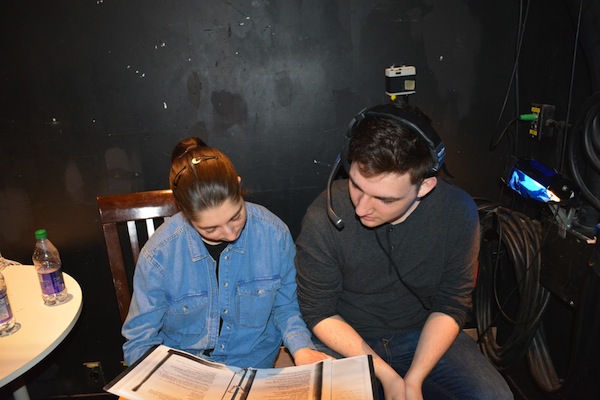
Sam Steinfeld works with Royal Winnipeg Ballet apprentice Jesse Petrie. He is traveling with the ballet on their current tour, which arrives in Vancouver April 7. (photo by Amy Simoes)

The Royal Winnipeg Ballet is currently making its way across Western Canada and will present the Vancouver première of Going Home Star – Truth and Reconciliation at Queen Elizabeth Theatre April 7-9.

Commissioned by RWB, with support from the Truth and Reconciliation Commission, Going Home Star was first performed in Winnipeg in 2014, as part of RWB’s 75th season. Conceived by RWB artistic director André Lewis and the late Cree elder Mary Richard, the ballet was created by novelist Joseph Boyden, choreographer Mark Godden and composer Christos Hatzis. It features the music of Inuk throat singer Tanya Tagaq, and Steve Wood and the Northern Cree Singers.

Traveling with the ballet is physiotherapist Sam Steinfeld, who spoke to the Independent during the company’s bus ride to Brandon, Man., the tour’s first stop.
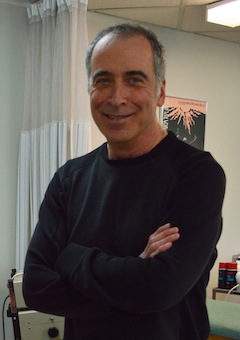
photo - Sam Steinfeld
Sam Steinfeld (photo by Amy Simoes)

Born and raised in Winnipeg, Steinfeld graduated from the University of Manitoba. He did a science degree and considered doing a master’s in physiology but, between the poor job prospects for science grads at the time and a friend who was finishing up his training in physiotherapy, Steinfeld decided to change his path.

After his training, he worked in a hospital setting for several years before going into private practice. He has been a consultant to professional sport teams in Winnipeg, including the Jets and the Fury, and, in 1998, he started working with RWB. He also teaches for the Neuro Orthopedic Institute, which is based in Australia.

Steinfeld has been a physiotherapist for more than 35 years. “Every day’s a little different,” he said. “There are always new challenges, especially working in an environment like this, with the ballet and going on tour. It’s one thing when you’re working, say, in your clinic or at home and in the ballet’s clinic, things are a little more predictable. But, when you’re on the road, you never know what you’re going to encounter … that, for me, keeps it interesting. Certainly working with different people, too, the different dancers we’ve had over the years, different clients. Everybody brings their own way of managing and dealing with their injuries, and you have to be able to adapt and work with those people and find ways to get them going again.”

It’s never the same, he said. “Treating two ankle sprains doesn’t necessarily mean you approach them in the same way, for instance, just because of the individual or what the individual’s going to have to do.”

There are two physiotherapists who work with RWB – the other is Kevin Dyck – and the two split up the tours, said Steinfeld. When in Winnipeg, Steinfeld is at the ballet’s clinic Tuesday and Thursday afternoons and evenings, and Dyck works the other hours Monday to Friday. For shows in the city, they try to divide the time at the concert hall evenly.

“We’re looking after not just the company, but we look after the professional division students of the RWB school,” explained Steinfeld. “I’m treating the recreational division students, as well, and we look after all the administrative staff, the teachers, the stage crew that works for us. We’re responsible for all those people.”

Dancers don’t generally get injured during a performance, he said. “Most of the injuries we see are overuse things and, usually, with some modification of activity, some treatment, we can keep them going. Our main thing is to make sure they’re going to be safe and we work closely with the ballet masters and artistic director. If we feel somebody can still perform but perhaps in a lesser role, or modify their choreography somewhat, they’re good at adapting things for the dancer and are able sometimes to keep somebody in. But there are always situations where somebody just can’t do it, period, because of the nature of their injury or the severity of it. Then we have to work around that, and that sometimes means somebody else picking up an extra part or, if we’re on the road, bringing somebody from Winnipeg out to meet us and take over that part.”

Every physical activity stresses the body in a unique way. When he started working with the ballet, he said, “it became quickly apparent that I was working with artistic athletes and I had to learn more about dance and the technique and what’s involved and how they work because, in order to make decisions about whether it’s safe for someone with an injury to return, I have to understand what it is they’re doing.”

Compared to hockey or soccer, for example, dancers – and especially those who do pointe work – have more “forefoot and ankle problems that you don’t normally see, say, in a hockey player who wears a skate,” said Steinfeld. A foot doesn’t move much inside of a skate. However, he said, “you look at a dancer in a pointe shoe and the load they’re putting on their foot, and the very different way they load their foot, right through their toes, for instance, when they’re on pointe, is unique…. So, we’ll see more things like stress fractures in the foot, metatarsal stress fractures or mid-foot stress fractures, certainly more mid-foot and forefoot sprains and that sort of thing that you don’t often see in something like hockey. You might see them in soccer, though, with the amount of running.”

Steinfeld is the son of Holocaust survivors who came to Canada three years after the war. He has two older brothers.

“My parents set an amazing example in terms of their ability to overcome adversities, how they dealt with other people and … how they still had a lot of positive feelings towards other people. I think that helped me in terms of my development as a person and, ultimately, as a caregiver, in … having a little more empathy with people when they’re in trouble and understanding that, with hard work and perseverance, you can overcome a lot of adversities…. The courage they showed in starting a life anew after everything they’d been through, I think it all trickled down to myself, my brothers. I’m quite proud of that as far as my Jewish upbringing.”

Working with the ballet was never in his career plans, he said. “I actually went in there to replace the therapist who was ill and I was only supposed to work for about four or six weeks there, till this person came back. It turned out, unfortunately, they weren’t able to return to work, so the ballet said to me, do you want to carry on with us and I said OK, and here I am, 18 years later.”

Steinfeld said he is fortunate to have understanding colleagues and that the other physiotherapists in his practice help absorb his caseload when he travels with the ballet. He also voiced appreciation for his family’s tolerance of his absences and their support of his work. “I’ve been a lucky guy, I think, to have had this opportunity,” he said.

Steinfeld’s wife, Karen, is also a physiotherapist – she specializes in hands and the upper extremities, and he’ll sometimes confer with her. Their two daughters are now adults, the oldest is a cardiac surgery resident in Winnipeg and the youngest is a lawyer in Ottawa.

***

Going Home Star is at Queen E April 7-9, at 8 p.m., with pre-show talks at 7 p.m. Ticket are $29 to $89 and can be purchased from ticketmaster.ca or 1-855-985-ARTS (2787).

Format ImagePosted on March 25, 2016March 24, 2016Author Cynthia RamsayCategories Performing ArtsTags Going Home Star, Royal Winnipeg Ballet, Steinfeld, Truth and Reconciliation Commission
From Kaifeng to Kotel

From Kaifeng to Kotel

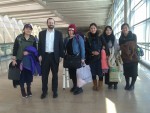
Shavei Israel founder and chair Michael Freund greeted the five women from Kaifeng – left to right, Gao Yichen, Li Chengjin, Li Yuan, Yue Ting and Li Jing – at Ben-Gurion Airport on Feb. 29. (photo by Laura Ben-David courtesy of Shavei Israel)

Last month, five women from the ancient Chinese Jewish community of Kaifeng arrived in Israel to fulfil their dreams of making aliyah, thanks to the Jerusalem-based nonprofit Shavei Israel.

The women – Gao Yichen (“Weiwei”), Yue Ting, Li Jing, Li Yuan and Li Chengjin (“Lulu”) – have been studying Hebrew and Judaism for several years in Kaifeng. Upon arrival in Israel, they were greeted by Shavei Israel chair Michael Freund, who took them straight from Ben-Gurion Airport to the Western Wall (Kotel) so they could thank God for helping them return to the land of their ancestors.

“Kaifeng’s Jewish descendants are a living link between China and the Jewish people,” said Freund, who succeeded in obtaining the requisite permission to bring the Chinese Jews on aliyah after several years of struggling with the Israeli bureaucracy.

“After centuries of assimilation, a growing number of the Kaifeng Jews in recent years have begun seeking to return to their roots and embrace their Jewish identity,” Freund said, adding that, “These five young women are determined to rejoin the Jewish people and become proud citizens of the Jewish state, and we are delighted to help them realize their dreams.”

Believed to have been founded by Iraqi or Persian Jewish merchants in the eighth or ninth century, Kaifeng’s Jewish community built a large synagogue in 1163, which was renovated throughout the years. At its peak, during the Ming Dynasty (1368-1644), the Kaifeng Jewish community may have numbered up to 5,000 people, but widespread intermarriage and assimilation, and the death of the community’s last rabbi, brought about its decline by the early 19th century. Today, the community claims between 500 to 1,000 members.

Despite the pressure to assimilate, many Kaifeng Jews sought to preserve their Jewish identity and pass it down to their descendants, who continue to observe Jewish customs. Today, the community is experiencing a revived interest in its roots, and Shavei Israel has been providing support while helping some immigrate to Israel.

“Being part of the Jewish people is an honor, because of the heritage and wisdom,” said Li Jing, who on a brief previous visit to Israel put a note of prayer in the Kotel asking to return and live in Israel. “Now, my prayer has been answered,” she said.

The last time Shavei Israel was able to bring a group of Chinese Jews from Kaifeng on aliyah was in October 2009, when seven young men from the community arrived in the Jewish state. The organization has brought a total of 19 members of the Kaifeng Jewish community to Israel.

The five women plan to continue their Jewish studies at Jerusalem’s Midreshet Nishmat – The Jeanie Schottenstein Centre for Advanced Torah Study for Women, with the support of Shavei Israel, which will also cover their living expenses and support them as they prepare to undergo formal conversion by Israel’s Chief Rabbinate. Upon completion of the conversion process, they will receive Israeli citizenship.

Shavei Israel is currently active in nine countries and provides assistance to a variety of different communities such as the Bnei Menashe of India, the Bnei Anousim (referred to as the derogatory “Marranos” by historians) in Spain, Portugal and South America, the Subbotnik Jews of Russia, the Jewish community of Kaifeng in China, descendants of Jews living in Poland, and others. For more information, visit shavei.org.

Format ImagePosted on March 25, 2016March 24, 2016Author Shavei IsraelCategories WorldTags aliyah, China, Israel, Kaifeng, Midreshet Nishmat
Trump at what cost?

Trump at what cost?

“I didn’t come here tonight to pander to you about Israel,” Donald Trump told the AIPAC conference Monday evening, before proceeding to do exactly that.

In his unique rhetorical way, Trump ticked off every box on the AIPAC agenda, and then some. He also ticked off a number of rabbis and other delegates who condemned and protested his presence at the event. Trump’s history of making statements that are sexist and racist, his sluggishness at disavowing the support of neo-Nazis and Ku Klux Klanners, his making fun of a disabled reporter and a litany of other offences convinced some AIPAC attendees that Trump should be either disinvited or boycotted.

They were wrong, because this was an opportunity for Trump to clarify or otherwise explain his behaviors. Of course, he didn’t, which was an opportunity missed. Trump came on – uncharacteristically – with a prepared text distributed in advance to media. What he read was a fulsome reversal of his statement just days earlier that he would be neutral between Israel and the Palestinians.

Trump’s repeated invocation of the term “believe me” is almost a verbal tic and it belies a tendency to express the unbelievable.

“Nobody respects women more than I do,” Trump told CNN Monday night. If we were to believe him, women would be among the only people Trump seems to respect. When any individual criticizes him, Trump lashes out with the most juvenile, personal and insulting terms, not least repeatedly referring to his fellow Republicans Cruz and Rubio as “Lying Ted” and “Little Marco.”

Within days, Trump pivoted from “neutrality” to a no-holds-barred defence of Israel that would make Binyamin Netanyahu (whom Trump calls “Bibby”) blush. The response he received from the AIPAC crowd verged on enthusiastic. Yet his conversion to Zionism may reflect little more than some good advice, a comparatively competent speechwriter and the ability to unabashedly pander.

Trump promised to dismantle the nuclear deal with Iran and he trashed the United Nations. “When I’m president, believe me, I will veto any attempt by the UN to impose its will on the Jewish state,” he said.

He condemned the Palestinian incitement of children to hate Israel and Jews. “In Palestinian textbooks and mosques, you’ve got a culture of hatred that has been fomenting there for years,” he said.

He promised to move the American embassy to Jerusalem.

In what amounted to his first significant expression of foreign policy, Trump waded in deep. He wants to reduce American commitments to NATO, specifically citing NATO’s obligation to defend Ukraine. What he doesn’t understand or doesn’t care about is that the United States and Britain made a deal with Ukraine – then the world’s third-largest nuclear power – to eliminate its arsenal in exchange for a promise of protection. Global reaction to Russian aggression betrayed that promise and Trump wants to rub salt in the wound.

This is an example of Trump’s lack of awareness on international affairs. Yet it is unlikely to hurt him with supporters, who forgive his every error and offence and who sometimes seem to idealize a world free of non-Americans.

On CNN after the speech, Trump was asked about the expressions of support he has received from neo-Nazis, Ku Klux Klanners and antisemites. “I don’t want their support,” he said, adding: “I don’t need their support.”

Trump is indeed creaming his opponents in the primaries, and it may be a minor rhetorical thing, but would he take their support if he did need it?

Asked by Wolf Blitzer whether he would condemn violence by his supporters, Trump replied, “Of course I would, 100%, but … I have no control over the people.” Then he went on to note that “these people” have been disenfranchised – they lost their jobs and earn less money now than they did 12 years ago, as though this justified violence.

Had Trump’s AIPAC speech occurred in a vacuum – if he had just landed from the proverbial Mars and not for months been spouting hatred toward Muslims, Mexicans, women and anyone who opposes him – the speech might have deserved the applause it received.

Instead, his words were diametrically opposed to what he has said in the past and, even if they weren’t, they are coming from an individual who has done egregious harm to social relations and human decency in public discourse. Even if Trump said everything Jewish people and other friends of Israel wanted to hear, this would not detract from the other things he has said and the other people – including every Muslim in the world – he has deliberately and maliciously affronted.

“I’m going to be great for Israel,” Trump declared, and maybe he would be. But at what cost to the social fabric of his country and the place of the United States in the world?

“When I say something, I mean it, I mean it,” he crowed, despite his blatant reversals. “Believe me, believe me.”

Format ImagePosted on March 25, 2016March 24, 2016Author The Editorial BoardCategories From the JITags AIPAC, elections, Israel, Trump
Okanagan happenings

Okanagan happenings

In costume and while enjoying treats, children in the Okanagan Jewish community learn about Purim. (photo from Okanagan Jewish Community Association)

Many children were part of the Okanagan Jewish community’s recent Purim celebrations. First, the children – dressed in costumes – participated in a half-hour Hebrew class with teacher Nir Light, where he shared the Megillah and translated the Purim story. Then, everyone went to the sanctuary with noisemakers to listen to the Megillah (a kid-friendly version) and partake in the mishloach manot (Purim baskets).

A potluck dinner was followed by services led by Rabbi Shaul Osadchey of Calgary’s Congregation Beth Tzedec. Kaddish was said for Irmgard Reimer, a longtime and very involved member of the Okanagan Jewish community, who passed away recently and will be dearly missed. The rabbi also acknowledged Sam Larry, who was a member of the community for many years and led services from time to time, as Debbie Larry recently donated two chairs for the synagogue in Sam’s memory.

In other news, 100 students from Okanagan Mission Secondary came to visit the OJC Centre on March 8 for a Talk & Tour session. OJCC religious committee chair Evan Orloff, a retired teacher, addressed the students and answered their questions. The OJCC has various schools that visit throughout the year, some every year. The next tour – on April 7 – will be with a group of Mount Boucherie Secondary students, with the talk given by OJC member Steven Finkleman, who has been one of the community’s main presenters.

The annual OJC Passover seder is being planned for April 22 at Summerhill Winery. For more information on the OJC, visit ojcc.ca.

Format ImagePosted on March 25, 2016July 2, 2020Author Okanagan Jewish Community CentreCategories LocalTags Debbie Larry, Nir Light, Okanagan, Purim, Shaul Osadchey
Reduce, reuse, recycle

Reduce, reuse, recycle

Prize winner Irene Behrmann, left, and speaker Ranka Burzan. (photo by Binny Goldman)

On March 3, 75 people attended the Jewish Seniors Alliance Snider Foundation Empowerment Series workshop Don’t Agonize, Organize/Downsize, led by author and professional organizer Ranka Burzan, founder of Solutions Organizing Simple.

Rev. Dr. Steven Epperson of the Unitarian Church of Vancouver welcomed those gathered at JSA’s headquarters, telling the crowd he enjoyed having a Jewish organization as part of his community’s centre. He shared that, over the years, he has dealt personally and professionally with life-changing events in his church members’ lives: marriages, births, health setbacks, deaths. He said these difficult times are especially hard if no plans have been made in advance for the transitions.

JSA president Marilyn Berger pointed to her walker when introducing Burzan, and said this reflected her home, too, as the walker held a coffee cup, papers and other items. Berger spoke of Burzan’s work to assist people with the physical and emotional demands of transition and change, and said she looked forward to learning some pointers that would help her and others.

When Burzan asked the crowd how many of them were organized, a few hands went up. When she asked how many of them would like to be organized, everyone’s hands shot into the air. According to her, time is wasted searching for things like keys, scissors, staples, papers, which leads to time spent being overwhelmed with frustration and not able to start the task we set out to do.

Change is very difficult and we are afraid of it, she said. We procrastinate, we stress, we start but do not finish tasks, we hold onto things given to us, because of guilt.

Quoting Gandhi – “You must be the change you want to see” – Burzan illustrated that it is up to us to initiate change, and proceeded to give tips on how to do so.

She said, ask yourself these questions: Do I like where I live and with whom? Do I like what I am doing in my job? Do I need this item or do I just want it around emotionally?

Then – listen to your answers.

We only use 20% of what we own, she said. The other 80% we keep, just in case – our children, grandchildren, friends or neighbors may want it. Some people rent storage to keep those “just in case” items, she said.

Commit five to 15 minutes of time, she continued, recommending that people set a kitchen timer and stay with the planned task until the time has elapsed.

Simple tools – such as boxes, bags, tape, markers – gathered before the task is started will aid in its accomplishment. She advised people to start with a small area to sort, like a junk drawer or purse. This will give the boost of confidence needed to carry it and other tasks through to completion.

To show how simple it can be to discard things within a planned five-minute period, Burzan had someone pass around a small wastebasket into which she asked people to toss any unwanted item from a purse or pocket. Serge Haber wryly remarked he would prefer a truck sent to his house to help him get rid of items there rather than a tiny wastebasket, which caused a ripple of understanding laughter in the audience. And, indeed, the wastebasket rapidly filled up and its contents were tossed – proving that it can be quite easy to throw something away: a theatre stub, an old gum wrapper, a cash receipt.

Burzan said the benefits of organizing are multiple: higher productivity, less stress, more free time to enjoy socializing or working; feeling the pleasure of knowing that others might be benefiting from your accumulated clutter, that the discarded “trash” might be treasure for someone else.

Clutter is a barrier to life, she said, and it creates guilt. We keep things because of emotional attachment. We start projects – scrapbooks, for example – that go untended. But if, after three months we have not completed a project, it should be discarded, she said.

So, ask yourself what’s holding you back. Start organizing when your energy level is highest during the day. Consider what would you take with you in the event of a fire. Ask for help – from family and positive-thinking friends who can help you reach your goal. Burzan pointed to her friend and assistant, Mara Lees, without whom she said she could not accomplish as much in her own day.

After Burzan’s talk, Empowerment Series chair Gyda Chud highlighted the lecture’s key points and thanked the speaker. She then invited the crowd to enjoy bite-size noshes while mulling over which bite-size portions of change they will attempt at home.

Complementing the workshop session was a talk by archivist Alysa Routtenberg of the Jewish Museum and Archives of British Columbia, who spoke of the JMABC’s work in collecting hundreds of thousands of items documenting the history of Jews and Jewish life in the province. The JMABC provides material for research, mounts exhibitions and stores family memories. Routtenberg asked attendees to not throw away their personal family treasures before checking with the JMABC (604-257-5199 or [email protected]), as there may be items that would enrich their collection, such as letters, photographs, pins and medals.

To those planning to promptly put to use what they had learned at Burzan’s session, this was a most welcome request. We walked away with our minds full of ideas, knowing that we needed to start now, before we procrastinated, so that we could reduce, reuse and recycle and see the results – a rewarding experience.

A raffle basket donated by Burzan containing her cleaning tips, tools and one of her books was won by Irene Behrmann. Karon Shear, Rita Propp and volunteers Bev Cooper, Jackie Weiler and Jennifer Propp contributed to the event’s success, and Stan Shear filmed it. The video can be viewed and more information about JSA can be found at jsalliance.org.

Binny Goldman is a member of the Jewish Seniors Alliance of Greater Vancouver board.

Format ImagePosted on March 25, 2016March 24, 2016Author Binny GoldmanCategories LocalTags archives, downsizing, JMABC, JSA, organizing, Ranka Burzan
Little Shop fills the Rothstein

Little Shop fills the Rothstein

The full cast of King David Players’ Little Shop of Horrors. (all photos from King David High School)

On March 16 and 17, the Rothstein Theatre was alive with music and a giant flesh-eating plant, as the King David Players presented this year’s theatre production, Little Shop of Horrors. Featuring a cast of students from every grade, the actors and musicians brought to life the dark comedy/musical. They played to full houses both nights.

Teachers Aron Rosenberg, Johnny Seguin and Anna-Mae Wiesenthal created the production, which involved 50 students, as well as other staff, parents and community supporters.

“When deciding what play to explore this year, we were looking for a musical that was light and fun and that was not too heavily based around social commentary (as is my usual inclination),” said Rosenberg in his director’s note. “I looked through a list of musicals and, remembering childhood evenings watching Little Shop of Horrors with Rick Moranis, Steve Martin and Bill Murray, I sent an e-mail to the administration ensuring it would be an appropriate choice.”

On closer look, the musical wasn’t that light.

“Three of the most problematic characters are Mushnik – the caricature of a greedy Jewish merchant – Audrey – the caricature of a helpless victim in an abusive relationship – and Orin – Audrey’s abusive boyfriend, and a caricature of a dentist with a self-acknowledged appetite for causing pain,” noted Rosenberg. “Perhaps this play’s innocuous reputation comes from an outdated attitude that treated ethnic stereotypes as playful, sexual violence as bland and dentists as inevitably painful. However, in 2016, our modern sensibilities force this play to take on a new life. The dark and irreverent humor of the play remains but, along with it, our cast has worked to uncover a respectful and critical look at the struggles of ethnic shop-owners in low-income neighborhoods, the horrors of domestic abuse and the ridiculousness of gender-inequity in relationships (not to mention the reality that dentists are no longer painful … usually).

“With all the creative commitment and hard work from our cast, crew and community, we are left with something not unlike our original goal…. The plot may not be light but the musical numbers are. And, as for social commentary and all this hullabaloo about the self-destructiveness of greed and power, you can take it or leave it. However, if you leave it, don’t be surprised when a giant human-eating plant comes a-knocking….”

photo - Seymour (Daniel Shuchat) and Audrey (Sydney Freedman)
Seymour (Daniel Shuchat) and Audrey (Sydney Freedman).
photo - Audrey II, played by Alisa Bressler and Hannah Marliss
Audrey II, played by Alisa Bressler and Hannah Marliss.
photo - Stage managers Rachel Pekeles and Matty Flader
Stage managers Rachel Pekeles and Matty Flader.


Format ImagePosted on March 25, 2016March 24, 2016Author King David High SchoolCategories Performing ArtsTags Aron Rosenberg, KDHS, Little Shop
On becoming a great leader

On becoming a great leader

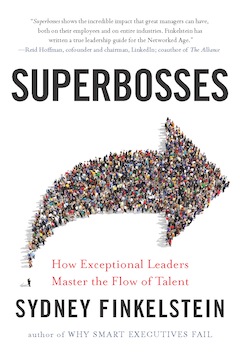
Sydney Finkelstein’s most recent book is Superbosses. (photo from Penguin/Random House Canada)

While the target audience for Sydney Finkelstein’s newest book, Superbosses: How Exceptional Bosses Master the Flow of Talent, is businesspeople, it is clear that his ideas carry well into many aspects of life, not just work, and not just business.

Finkelstein, who is a professor at the Tuck School of Business at Dartmouth College in Hanover, N.H., is originally from Montreal. He has authored 21 books and more than 80 academic articles.

“Pretty early on, I was interested in why people did what they did and in people who seem to have a lot of power and influence in society,” said Finkelstein. “I was actually very interested, and still am, in not just business leaders, but political leaders.”

Ten years ago, Finkelstein struck a note with his book Why Smart Executives Fail, and he was invited to give keynote speeches and to consult for several companies.

“Everybody pretty much had the same question, which was how to avoid getting into my sequel,” he said. “In the book, I talked about a lot of things you could do to avoid falling into the trap that led to failure but, over time, I came to realize that there was something else more important – the ability to generate and regenerate talent on a continuous basis. That’s the only way to survive and thrive in the long-term.”

After coming to this realization, Finkelstein set out to learn who possessed this ability. This is what led him to learn of those he came to call “superbosses.”

cover - SuperbossesThe Jewish Independent spoke with Finkelstein around the time of his March 8 talk and book signing at Concordia University in Montreal.


“The big difference was the ‘why smart executives fail’ leaders look at people around them – other managers and team members – as people to be used and exploited for their own purposes…. They didn’t really appreciate the fact that the people around them – team members – are actually probably the most important part of what you are doing, because they help you get better.”

Superbosses, on the other hand, wholly prioritized the idea of having great teams and great organizations of great people, understanding that this is the best way to succeed, he said. “The WSEF leaders didn’t understand that. So, that’s a gigantic difference in mindset – thinking about other people and what role they can play.

“Then, when you look at the details of how they run their businesses, there are many, many differences – from how they identify talent, to how they motivate people, how they develop teams, the role of vision and [of] inspiration.”

While most leaders, good or bad, carry with them a certain amount of ego due to their previous endeavors’ successes, Finkelstein said superbosses find ways to put that ego aside.

“This may be the best first thing for people to work on – having a degree of humility about yourself, your own accomplishments and your own personality even,” he said. “Humility doesn’t mean you’re afraid to take on challenges. It means you understand that there are other people who play a role and that you can’t let your ego run away with things.

“By the same token, listening is one of the most important managerial skills I’ve ever seen – the ability to really listen, to understand, not to critique. A lot of people are listening to find a flaw in their argument or to justify a point of view they already have. I’m talking about listening that’s designed to learn something. That’s a tremendous skill and mindset.”

Another important skill Finkelstein advised honing is open-mindedness, ranked highly with its close cousin, curiosity. These are attributes he regularly discusses with boards of directors and management teams.

“You need to have that curiosity about life, about what you’re doing,” he said. “When you have curiosity, you’re asking why a lot. Kids do that, but when we’re older, we don’t do that so much. You learn so much more by doing that.”

Courage is on the list, too – the kind of courage that challenges convention, and the ability to raise your voice when something is not going the way you think it should. “This doesn’t mean you’re going to win the argument or get your way,” said Finkelstein. “It’s about trying to improve the eventual outcome or situation you’re in.

“Many people often remain silent. They just nod their heads. As a result, they’re not engaged in what’s going on. Later, they spend their time complaining and back-biting, rather than being part of the solution. Sometimes, of course, managers or leaders create an environment where, if you challenge, you get punished, so it can be difficult, but I think courage is a critical factor.”

The next item on the list is accountability – recognizing you need to be responsible for your own actions and behavior, as well as instilling a sense of accountability in others.

“I think, by the way, that most people prefer not to be held personally accountable,” said Finkelstein. “I don’t think people should assume people would automatically be accountable. I think people enjoy it when it happens, but they don’t automatically do it. This is particularly relevant in volunteer organizations.

“Being a teacher, a nurturer of talent, is something anyone can do, no matter what their job is,” he continued. “You don’t have to be a famous CEO. You can be an average person doing whatever you’re doing. But, if you spend some time and energy acting to help others get better, often through teaching, sharing and listening … I think that’s a giant differentiator and extremely meaningful in people’s lives. If you have an impact in helping other people, it makes you feel good, too.

“Younger people, earlier in their career, who are ambitious, have high expectations, want to accomplish great things. How do you find people to work with, to work for? I talk a little about that in the book, but I also think that trying to work for someone who is more like a superboss, rather than less like one, is a great way to learn, develop and accelerate your career.”

As the book’s subtitle suggests, Finkelstein sees managing the flow of talent as one of the most important things for superbosses to do, and he segments this aspect into three categories.

“One is finding good people,” he said. “Everyone needs to hire when you’re growing, you need to hire and find people…. That’s the first stage in this flow of talent.

“The second stage, which not everyone engages in, is developing that talent, helping them get better. That’s managing the flow of that talent in a team/organization for a number of years.

“The third stage is managing the flow of talent sometimes even outside your own region, division or role in the company. Very few managers, leaders or bosses think a lot about … how they should manage people out of the organization. I’m talking about good and very good performers.

“The typical assumption among most leaders is to keep those people forever,” he said. “But, those who work for superbosses, people that really enhance their skills or have this vision, they won’t be satisfied with that small piece of pie. They want a bigger role themselves so, in fact, many of them will end up wanting to leave anyways. Managing the flow of talent should also consider this kind of radical or counterintuitive idea – managing people out of the company itself.”

Finkelstein said, “The best people know they will move around, look for those opportunities. If you know that will happen, the questions become how can you take advantage of that, how can you be strategic in that, how can you create a win-win out of that situation?’ That’s what superbosses do. They make a spinout business. One example from the book is the Hospital Corporation of America (HCA). The CEO used to create big opportunities for senior executives who were going to leave anyways. He would create a spinout company in a mental health clinic, surgical centre or what have you. That former team member would be given the opportunity to be CEO of that spinout business but, because you’re doing the spinout, you get to participate in a financial sense.”

To see where you sit on the superbosses scale, Finkelstein invites readers to visit superbosses.com and take a 10-12 question quiz.

“The quiz is because people find it interesting to see how they rank,” he said. “The book can help them get better.”

Rebeca Kuropatwa is a Winnipeg freelance writer.

Format ImagePosted on March 25, 2016March 24, 2016Author Rebeca KuropatwaCategories BooksTags business, Finkelstein, leadership, superbosses
Oakridge reenvisioned

Oakridge reenvisioned

The goal is to start construction of the new Oakridge Centre and surrounding area in 2017. (photo from oakridge2025.ca)

At a public hearing in March 2014, Vancouver City Council approved Ivanhoé Cambridge’s proposal for a mixed-use redevelopment of the Oakridge Centre site at 41st Avenue and Cambie Street in Vancouver. The project would urbanize a 1950s-era shopping centre on a significantly underused transit-served site and deliver on a number of objectives for the neighborhood identified by the City of Vancouver and also contained in its larger policy objectives.

Since the public hearing, the project team has continued to refine the design of the redevelopment, while determining the best way to phase its construction. The focus of these efforts has always been to ensure uninterrupted operation of Oakridge Centre as the social and economic hub of the Oakridge neighborhood, and to minimize impacts on the retail tenants and the 2,500 full- and part-time employees who work at the site. There has also been an objective to reduce the length of the construction schedule.

The team was also tasked with finding efficiencies in the design of the parkade that could reduce the depth of excavation in order to minimize intrusions into the large aquifer beneath the site. Working within the aquifer would entail costly and unconventional construction techniques that the project team recommended be avoided. Finally, the design team was challenged to continue to improve the functionality and accessibility of the proposed nine-acre rooftop park and to look at optimizing the location of the 70,000-square-foot Oakridge civic centre on the site.

The project team concluded that maintaining uninterrupted operation of most of the shopping centre throughout construction would require a longer construction schedule. It further determined that minimizing intrusions into the aquifer would require a reduction in the parking supply for the project and, therefore, a decrease in density. Taken together, these conclusions suggested that a modification of the original plan would produce a better result.

While this work was underway, Target, one of the centre’s anchor tenants, announced its departure from Canada. The retail component of the project was designed around a two-level mall with several two-level anchor tenants. Therefore, with only one two-level anchor tenant remaining in the project, the centre’s merchandising plan and layout needed to be reworked.

As a result, Ivanhoé Cambridge is now proceeding with modifications to the plan that would produce a slightly smaller project completed over a shorter time and with reduced impact on tenants, employees, the community and the environment.

To facilitate this process, Ivanhoé Cambridge has retained architectural firm Benoy (benoy.com), based in London, England, to be its lead design architect. Despite the reduced project size, there will be no change to the public-benefits strategy previously agreed to with the city, and the site’s potential for significant residential density at a major transit hub will be realized.

Ivanhoé Cambridge recently began discussions with the City of Vancouver planning department to look at options for modifications to the approved plan that will meet and exceed the design and planning objectives that were achieved in the 2014 rezoning. The nature of the refinements will likely require amendments to the 2014 rezoning, which Ivanhoé Cambridge will pursue in 2016 with a goal of starting construction in 2017.

Ivanhoé Cambridge and its residential partner Westbank remain committed to creating a mixed-use, transit-oriented, amenity-rich project that will establish a new development standard in Vancouver.


Format ImagePosted on March 25, 2016March 24, 2016Author Ivanhoé CambridgeCategories LocalTags Benoy, Ivanhoé Cambridge, Oakridge, Westbank
Researching Oakridge

Researching Oakridge

The Jewish Museum and Archives of British Columbia is currently researching an exhibit on the Jewish community in the Oakridge area. (photo from Gail Dodek Wenner)

Oakridge was for many years the heart of the Vancouver Jewish community. First opened for development in the 1940s, the new residential neighborhood was attractive to young families seeking suburban living only a short drive from downtown.

Many Jewish families had previously made their homes in Strathcona, Mount Pleasant and Fairview. With the economic boom of the postwar era, many achieved financial success and, with it, the opportunity to move to the comfort of Oakridge. Jewish community institutions followed, most notably with the construction of the new Jewish Community Centre, which opened in 1962.

photo - Growing up in Oakridge
Growing up in Oakridge. (photo from Gail Dodek Wenner)

Today, the neighborhood still holds a warm place in the hearts of many. For this reason, the Jewish Museum and Archives of British Columbia has been working to develop an online exhibit celebrating the heyday of Jewish Oakridge. Making use of numerous oral history interviews, this exhibit will share the recollections of community members, and aim to provide a comprehensive picture of this era in our community’s history. A new series of interviews are currently underway, filling in gaps in previous research.

Under the supervision of the JMABC’s exhibition development team, made up of coordinator of programs and development Michael Schwartz and archivist Alysa Routtenberg, two volunteers are undertaking this series of interviews.

Junie Chow has volunteered for the JMABC for almost a year now, and recently produced the online exhibit Letters Home. Drawing upon the Seidelman Family fonds, the exhibit shares the letters written by Pte. Joseph Seidelman to his family at home in Vancouver as he fought on the frontlines of Vimy Ridge and Passchendaele during the First World War.

photo - The wedding of Sandy Belogus and Mark Rogen
The wedding of Sandy Belogus and Mark Rogen. (photo from Sandy Rogen)

The second volunteer, Josh Friedman, brings to the project his training as a recent alumnus of Indiana University graduating with a BA in Jewish studies and political science. New to Vancouver, Friedman is excited about discovering how the Jewish community in Oakridge reflected similar and different perspectives to trends in North American Jewry during the 1940s-1960s.

Listening to earlier rounds of interviews, essential themes have appeared. These include the initial motivations for moving to Oakridge, the overwhelming sense of community among residents, and even the eventual reasons for moving out of the neighborhood. However, through this process, new questions have also emerged and are guiding the ongoing research. For instance, how did the local community react and respond to world events affecting Israel and international Jewry? Acknowledging that Oakridge is a multi-ethnic neighborhood, the team is seeking insight into the types of relationships that existed between non-Jewish and Jewish neighbors. All of the results will be shared in the forthcoming exhibit.

Currently online are the exhibits Letters Home and New Ways of Living: Jewish Architects in Vancouver, 1955 to 1975 (see jewishindependent.ca/the-west-coast-style). As well, the JMABC has launched On These Shores: Jewish Pioneers of Early Victoria, which traces the early foundation of the Victoria

Jewish community from their arrival in 1858 to the establishment of Congregation Emanu-El in 1863, and Sacred Sites: Dishonor and Healing, which reflects on Victoria citizens’ response to the desecration of the Jewish cemetery there in 2011, and places this incident in context among other similar events elsewhere. Sacred Sites was produced through a partnership between the JMABC and the University of Victoria.

To visit all the online exhibits, go to jewishmuseum.ca/exhibit.

Format ImagePosted on March 25, 2016March 24, 2016Author Jewish Museum and Archives of British ColumbiaCategories LocalTags archives, Dodek Wenner, JMABC, Oakridge, Rogen, Seidelman
The move from 11th to 41st

The move from 11th to 41st

The Jewish Community Centre at 41st Avenue and Oak Street, November 1962. (photo from JWB fonds, JMABC L.11512)

It’s hard to believe that, in the 1950s, the Oakridge area was considered a ways out of town. In going through the minutes of the Jewish Community Council of Vancouver from 1954, one can see the initial attempts by the council to find a new Jewish community centre building – which at the time was on Oak Street at 11th Avenue – that would be as conveniently located. They considered exchanging space with the Peretz School, which was on Broadway, and buying the land on which Vancouver Talmud Torah stood, on Oak at 26th. However, they soon started examining the prospect of buying land from Canadian Pacific Railway, south of 41st. The following snippets of meeting minutes from 1954-1962 allow readers to fast forward through the development process and the establishment of the JCC where it is currently located.

image - Jewish Community Council minutes 1954-62 re: move of JCC from 11th to 41st

Format ImagePosted on March 25, 2016March 24, 2016Author Cynthia RamsayCategories LocalTags history, JCCGV, Jewish Community Centre, Oakridge

Posts pagination

Previous page Page 1 … Page 388 Page 389 Page 390 … Page 489 Next page
Proudly powered by WordPress