
Skip to content
  • Home
  • Subscribe / donate
  • Events calendar
  • News
    • Local
    • National
    • Israel
    • World
    • עניין בחדשות
      A roundup of news in Canada and further afield, in Hebrew.
  • Opinion
    • From the JI
    • Op-Ed
  • Arts & Culture
    • Performing Arts
    • Music
    • Books
    • Visual Arts
    • TV & Film
  • Life
    • Celebrating the Holidays
    • Travel
    • The Daily Snooze
      Cartoons by Jacob Samuel
    • Mystery Photo
      Help the JI and JMABC fill in the gaps in our archives.
  • Community Links
    • Organizations, Etc.
    • Other News Sources & Blogs
    • Business Directory
  • FAQ
  • JI Chai Celebration
  • JI@88! video

Recent Posts

  • Sharing her testimony
  • Fall fight takes leap forward
  • The balancing of rights
  • Multiple Tony n’ Tina roles
  • Stories of trauma, resilience
  • Celebrate our culture
  • A responsibility to help
  • What wellness means at JCC
  • Together in mourning
  • Downhill after Trump?
  • Birth control even easier now
  • Eco-Sisters mentorship
  • Unexpected discoveries
  • Study’s results hopeful
  • Bad behaviour affects us all
  • Thankful for the police
  • UBC needs a wake-up call
  • Recalling a shining star
  • Sleep well …
  • BGU fosters startup culture
  • Photography and glass
  • Is it the end of an era?
  • Taking life a step at a time
  • Nakba exhibit biased
  • Film festival starts next week
  • Musical with heart and soul
  • Rabbi marks 13 years
  • Keeper of VTT’s history
  • Gala fêtes Infeld’s 20th
  • Building JWest together
  • Challah Mom comes to Vancouver
  • What to do about media bias
  • Education offers hope
  • Remembrance – a moral act
  • What makes us human
  • המלחמות של נתניהו וטראמפ

Archives

Follow @JewishIndie
image - The CJN - Visit Us Banner - 300x600 - 101625

Tag: Zionism

Zionism’s meaning in Diaspora

After the attacks in Copenhagen, like after the violence and vandalisms that have rocked the French Jewish community, Israel’s Prime Minister Binyamin Netanyahu is urging the Jews of Europe to come to Israel as violence against Jews and Jewish institutions increases across that troubled continent.

This call for a new mass aliyah is being met with opposition by European leaders – including Jewish leaders. In Copenhagen, more than 30,000 people, led by their prime minister, commemorated the victims of the terror attacks. Copenhagen’s chief rabbi, Jair Melchior, told the Associated Press, “People from Denmark move to Israel because they love Israel, because of Zionism. But not because of terrorism. If the way we deal with terror is to run somewhere else, we should all run to a deserted island.”

Coincidentally, in preparation for our upcoming 85th anniversary issue, we were perusing old copies of this newspaper recently. We came across a commentary from July 1948 titled “Zionism should be wound up.” The author argued that the motive for Zionism – the creation of a Jewish state – had been realized and so the global enterprise should be concluded: even as Israel was literally fighting for its survival in the ongoing War of Independence, and so soon after the Holocaust.

Zionism had been a divisive force in the Diaspora Jewish community, including here in Canada. There were pro- and anti-Zionist Jews of left, right and centre politics, and of Orthodox and secular persuasion and everything in between. Some arguments against Zionism as a movement relied on religious foundations, contending that the ingathering of the exiles would coincide with the messianic era. Other arguments were emphatically secular with the left holding, for example, that it was incumbent upon Jews to remain where they are and fight for a better world for all, rather than retrenching to nationalistic or religious-based separations.

Reading the editorial from 1948, one particular sticking point was that community fundraising efforts had been overwhelmingly allocated to the Zionist effort. Now that the goal had been achieved, the author argued, it was time to redirect fundraising and spending inward, to individual Diaspora communities and to resurrect the “kehilla pattern” of community building and security, with each community taking care of its own needs.

Despite the writer’s conclusion, as successive wars and decades of terrorism confronted Israel, Zionism was not shelved. It morphed into a different type of movement. No longer mobilizing for the creation of a Jewish homeland, it became the overseas support group for the country. After 1967, when “the occupation” altered perceptions of Israel at home and abroad, Zionism again became a divisive cause. But for those two decades, the Jewish people were probably as united as they have ever been in support of Israel.

The lesson of the second half of the 20th century proved the lesson of the first half. Close to a million Jews across the Middle East and North Africa were forced, driven or encouraged by various means to leave their homelands. The difference for these people was that there was now a place where Jews control the immigration policy. Had such a place existed in the 1930s, the impact of the Holocaust may have been massively reduced. Nitpickers will contend that it was the creation of the state of Israel itself that led to the expulsion of Jews from the Arab world, but this equivalency, whatever its merits, does not distract from the underlying point: Jews have often lacked security and permanence in places where they are a permanent minority.

However, being a majority is no assurance of safety. Despite Netanyahu’s invitation, all is not nirvana for the Jews of Israel. Violence and terrorism are not unknown, and life is challenging in different ways than in Europe. It also needs mentioning that everything Netanyahu says and does right now must be seen through the prism of political expediency as the Israeli elections approach.

Nevertheless, these events raise a very serious question: What does Zionism mean today for people in the Diaspora?

There are probably more answers than there are Jews and, in a way, this is the question we grapple with, in one way or another, in these pages every week. But this conclusion may be safe to draw: it is not quite time for Zionism to wind up its affairs.

Posted on February 20, 2015February 20, 2015Author The Editorial BoardCategories From the JITags antisemitism, Binyamin Netanyahu, Copenhagen, Israel, Jair Melchior, terrorism, Zionism1 Comment on Zionism’s meaning in Diaspora

Open Hillel raises questions

On the issue of Jewish belonging, I have always pushed for as wide a tent as is necessary to accommodate the range of Jewish experience. Inclusion, rather than ideational boundaries, has been my watchword.

But now, since the Open Hillel conference held at Harvard in October – which billed itself as helping create a “Jewish community that all Jews can feel included in, not just those who pass a political litmus test” – I’ve been feeling a little bit more prescriptive around what values should matter, especially around the centrality of Israel to Jewish life.

On one hand, I’m instinctively positively predisposed to a movement like Open Hillel. Previous reports of a Hillel student board member stating he was forced to step down because he sought to host a Palestinian solidarity activist speaker following the screening of a Palestinian documentary give me chills. And I find Hillel’s guidelines about rejecting speakers who hold Israel to a “double standard” frustratingly enigmatic. There is good conceptual reason to hold Israel, a democracy, to a different standard than Syria, for example. And there is an understandable reason to “single out” Israel when we, as Diaspora Jews, devote more emotional, financial and political resources to the Jewish state than to almost any other.

But, now, my doubts. First was LGBTQ and Palestine solidarity activist Sarah Schulman’s Facebook remarks about the conference. In her post, she railed against the “bullshit of LGBT Birthright,” accusing it of being a forum for “pinkwashing.” I’m partly sympathetic to the pinkwashing charge, awareness of which Schulman herself helped propel in a 2011 New York Times op-ed. There is much to be criticized in Israel’s hasbarah efforts, especially in light of the government’s apathy towards the morally corrosive occupation. But there is a gap: Where is the desired opportunity among Open Hillel activists and participants like Schulman to encourage a deep and textured cultural and political engagement with Israel? Birthright may not be the answer. But what is?

Echoing my thoughts were Steven M. Cohen’s reflections, also posted publicly on Facebook. There, Cohen praised the Open Hillel conference for opening up a much-needed debate on Israeli policies, including criticism of the occupation, but he lamented the apparent “abjuring of the primacy of Jewish or Israel attachment” among participants.

And then came an essay by Holly Bicerano in the Times of Israel, where she criticizes Hillel International’s “Vision for Israel,” which states that “Hillel desires that students are able to articulate why Israel plays an important role in their personal Jewish identities and how Israel continues to influence Jewish conversations, global Jewish peoplehood and the world.”

Bicerano is concerned that, “This particular vision is predicated on the supposition that having a Jewish state must be an integral part of every deserving Jew’s identity.”

My personal, liberal variant of Zionism abhors the occupation, desires to redress political inequalities among the state’s ethnic groups, and opposes the general trend towards illiberal legislation in the Knesset. But, at the very least, I see an important role for Israel’s existence in the life of the Jewish people. While theological commitments are subject to the debates of rationalists, Israel helps secure a sense of peoplehood. Where Jews now speak the languages of their host societies, Israel’s Hebrew revival reminds us of our shared heritage. Where Diaspora Jews must negotiate a minority identity within a majority culture, Israel enables a sense of collective Jewish autonomy.

It follows that were I to find myself in the position of coordinating a campus-based, non-denominational Jewish organization such as Hillel, I would surely encourage students’ right to wrestle with, criticize and protest the policies of Israel. But I would rue the day that the notion of Israel as a component of collective Jewish identity was simply left at the curb.

So, I support the diversity of political views around Israel that were given an airing at the Open Zion conference and I welcome a much-needed, on-the-record conversation about the indignities of the occupation. But if, like Cohen, I am troubled that some of the Open Hillel proponents reject the relevance of sensitive and textured Jewish cultural and political engagement with Israel writ large, what am I to conclude about the fledgling movement?

What I conclude is that we must encourage more Open Hillel gatherings to be held. We must convene discussion not only among the converted. In the marketplace of ideas and attachments, we must realize that the most compelling identity markers will win. Therefore, we must seek to understand how, if Israel is so central to the Jewish identity of so many, it is precisely not this way to so many others. And, if it happens to be decades of Israeli settlements and occupation that have helped push younger Jews away, we must double down – as if we needed a further reason – to do something about those policies too.

Mira Sucharov is an associate professor of political science at Carleton University. She blogs at Haaretz and the Jewish Daily Forward. A version of this article was originally published on haartez.com.
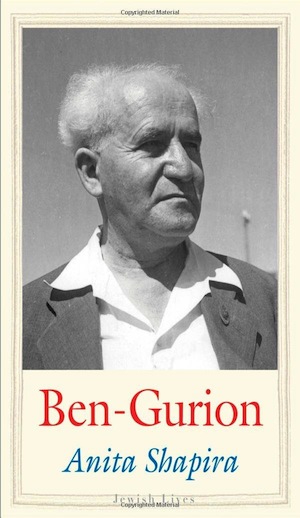
Posted on January 9, 2015January 8, 2015Author Mira SucharovCategories Op-EdTags free speech, Israel, Open Hillel, Zionism1 Comment on Open Hillel raises questions
Facts: A well-crafted crafted play

Facts: A well-crafted crafted play

Left to right, Jerry Wasserman, James Gill and Mehdi Darvish star in United Players’ production of Facts. (photo by Doug Williams)

United Players is set to present Canadian Jewish playwright Arthur Milner’s provocative political drama Facts, loosely based on the true story of the 1992 murder of an American archeologist in the West Bank and the joint Israeli/Palestinian police investigation that followed.

The play has been produced in Ontario and the United Kingdom and was translated into Arabic for a tour of various West Bank cities in 2012. The United Players’ production marks the play’s Western Canadian première, with Jerry Wasserman as Yossi, the hot-headed Israeli detective; Mehdi Darvish as Khalid, Yossi’s Palestinian counterpart; and James Gill as Danny, the fervent settler accused of the murder. Adam Henderson helms this production as it navigates its way through some rough waters, exploring not only the Israeli-Palestinian conflict but also the religious-secular divide between Jews within Israel. The action takes place in a cramped, hot interrogation room in the West Bank and, as the story unfolds, it is revealed that the archeologist was unearthing facts that brought into question some accepted historical beliefs fundamental to Judaism.

The Jewish Independent sat down with Wasserman, Henderson and Darvish one morning before a rehearsal.

Wasserman – who is also a theatre critic and head of the theatre and film department at the University of British Columbia – described himself as an American Jew brought up by liberal Jewish thinkers. He said his research and immersion into this play angered him, but made him see the Middle East conflict in a new light. “This play really presses a lot of emotional buttons for me,” he said. “It digs down through layers into very specific details of [the] lives of people and, through this complexity, we see things more clearly.”

As to his character, Wasserman said, “Yossi’s father was a Zionist who had a dream of a state which has been compromised by the new wave of radical settlers who he sees as having a medieval way of thinking…. This has changed the state of Israel that Yossi loves. The real conflict in this story is not between Yossi and Khalid, but between Yossi and Danny.

“Because Yossi operates at a high emotional temperature, I had to find the proper rhythms and the right places to come up and go down so that I did not peak too early. There were many challenges, but it was infinitely fascinating. You don’t get too many chances to play a role like this.”

The heart of the story is the investigation, as the two detectives sift through various pieces of evidence and theories on the murder.

“I have acted in over 100 police dramas, both television and cinema, and I have to say that this, by far, is the most complex, sophisticated and confusing ones I have ever been involved in,” said Wasserman. “The research has been very detailed and the play is very accurate, re: police investigation and techniques. It is a tremendous intellectual puzzle. The evidence is circumstantial and we never find the smoking gun. The dialogue is an emotional mine field that we, as actors, all have to move through.”

Police dramas often feature a good cop/bad cop relationship. As to whether or not audiences will get to see that dynamic, Wasserman said, “Yossi tries to act the good cop but he is the bad cop by nature. He has lots of emotional buttons to press. The great thing about this play is that everyone’s buttons get pressed. Everyone has a turn to make impassioned monologues and everyone gets to lay his emotional/political cards on the table.”

Gill finds his role of Danny an interesting challenge. “While so much of his absolutist approach to his faith and his politics is antithetical to my own liberalism, nonetheless, being a Jew gives me an empathy for where his faith and politics are grounded,” he said in an email. “That gives me a starting point from which I can start to encompass the character.”

He sees the essence of the play as “the way in which these three men both conform to and transcend their stereotypes. We start with the ‘facts’ of an Israeli, a Palestinian and a settler and, on one level, each of these men is true to those simplistic profiles, but we discover that each of them is much more complicated.”

For Darvish, his involvement in the play also gave him new insights into the conflict. “I came to understand the Israeli position from an emotional perspective better as a result of working on this play,” he said, “but I also see more deeply the Palestinian position. I see the characters often acting like children throwing tantrums instead of sitting down and logically dealing with the situation. It saddens me because right now I do not see a resolution to the dilemma.”

Henderson said he enjoys working with a small cast and a modern-day setting, which contains no idiosyncrasies as to period or language. With an all-male cast, the action is testosterone driven and reflective of the politics of the Middle East, he said.

Henderson expressed surprise that more Canadians do not know about Milner, whose work he has come to appreciate more during the course of his research and preparation for this production.

“Milner has taken a very sensitive subject and effected meticulous research to create a platform to encourage serious dialogue,” he said. “His position is Socratic – he wants to encourage discussion versus making a point and this is brought home by his equivocal ending.”

Henderson acknowledged that the play is likely to be controversial but stressed that, “the key to theatre is that it is a thought experiment where we can do dangerous things with no consequences except people might have their perspectives broadened. If that is what happens in this play, then we will have accomplished something.”

He added, “As the news media move toward ‘infotainment,’ and the sound bites become faster and shallower, the longer form of theatre allows us to look a little deeper at things. For me, it is critical to protect ourselves from merely having our prejudices reinforced. Theatre was invented as a public forum, and we need to gather, to discuss, now more than ever.”

As to why Vancouverites should see the play, Henderson said, “It is an unusually well-crafted play. It is funny, witty, challenging and surprising, and you won’t find anything like it on television. Also, this is a great opportunity to dress up, go out and mingle with community and exercise the soul. Parking is easy and you come out after the show by the beautiful Jericho Beach with something new to talk about.”

Facts is at Jericho Arts Centre from Nov. 7-30. As an added feature, there will be a reading of Masada, Milner’s companion piece to Facts, after every Friday performance. Milner will be in Vancouver the week of Nov. 11 and will be attending performances during that time. For tickets and more information, visit unitedplayers.com.

Tova Kornfeld is a Vancouver freelance writer and lawyer.

Format ImagePosted on October 31, 2014November 6, 2014Author Tova KornfeldCategories Performing ArtsTags Arthur Milner, Israel, James Gill, Jerry Wasserman, Mehdi Darvish, Palestinians, United Players, Zionism

Posts pagination

Previous page Page 1 … Page 3 Page 4
Proudly powered by WordPress