Jewish Federation of Greater Vancouver and the local Jewish community recently hosted Ethiopian-Israeli students Mazal Menashe and Ahuva Tsegaye. (photo by Cynthia Ramsay)
Every second year, the Jewish Federation of Greater Vancouver hosts two Ethiopian students from the Interdisciplinary Centre in Herzliya. This allows the students to come to Canada and intern in their chosen fields, giving them not only the educational experience but an advantage in finding work after graduation. The students also act as ambassadors for Israel while in the community and interacting with various local groups.
This year, Federation hosted Mazal Menashe and Ahuva Tsegaye. While in Vancouver for the month-long internship, the students stayed with host families Sam and Sandra Reich in Richmond and Ben and Nancy Goldberg in Vancouver; they spoke at synagogues, churches and schools.
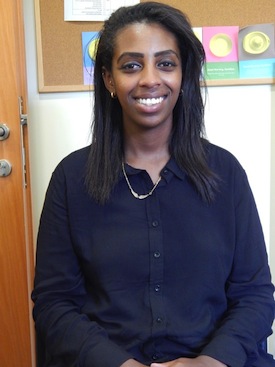
Mazal Menashe (photo from JFGV)
In 1991, when Operation Solomon airlifted 14,325 Ethiopian Jews to Israel in 36 hours, Menashe and Tsegaye were babies. Tsegaye’s mother, who was a midwife, gave birth to her alone on the way to Addis Ababa for the airlift, on the outskirts of Gondar. Menashe, granddaughter of Qes (Ethiopian for rabbi) Menasse Zimru, was born in Addis Ababa while her mother and father awaited the Israelis.
Menashe and Tsegaye both grew up in Israel, overcoming poverty and occasional racism to become successful young women.
Upon arriving in Israel, Tsegaye’s family lived first in Jerusalem, then Haifa, then Kfar Hahoresh in the north and, finally, Migdal Haemek, where they still live today. Her mother is a homemaker, and her father, who works for the city as a street cleaner, is now semi-retired.
Menashe’s family first moved to an absorption centre in Mabu’im in the south, near Beersheva. They lived there for a year before moving to Netivot, where they stayed until Menashe was 6, and then to Ashdod, where they live today. Her mother is a caregiver for the elderly and her father works in a factory.
Both Menashe and Tsegaye served in the Israel Defence Forces.
Menashe was drafted to the IDF in 2010, and completed training in the Logistics Corps as an outstanding soldier. After serving in the Paratroopers Brigade for two months, she was asked to go into officers’ training, which she did, becoming responsible for a company of 150 soldiers. When she was released from the army after five years, it was with the rank of lieutenant.
Tsegaye served for six and a half years, the only member of her family to become an officer. She served in an air traffic control unit in the air force as an instructional officer, and completed her service with the rank of captain.
“Serving in the IDF was the most empowering experience of my life,” said Tsegaye. Menashe agreed.
Ahuva Tsegaye (photo from JFGV)
Menashe and Tsegaye didn’t meet in the IDF, but rather at the Interdisciplinary Centre, where they are both enrolled. In August, Jewish Federation brought them to Vancouver to work as interns in their respective fields: Menashe in law and Tsegaye in organizational psychology.
“We feel so blessed, so appreciative for what the Jewish Federation has done for us,” said Tsegaye. “And we are very grateful to have the platform to be advocates for Israel abroad.”
Both Menashe and Tsegaye have faced many challenges to get where they are now. Ethiopians in Israel face racism, poverty and challenges related to cultural and linguistic integration. The two students were both present at the mass protests that took place in Tel Aviv and Jerusalem last year calling for an end to racism and police brutality against Ethiopian-Israelis.
Menashe and Tsegaye broadcast strength and optimism. “We cannot wait for other people to save us,” they agreed. “We are not waiting for a savior, we will work hard and make the change ourselves.”
The power to shape their own lives, and their optimism about their ability to make the lives they want, are recurring themes in Menashe and Tsegaye’s conversation. This is fitting for members of the generation that is changing the realities of Ethiopian-Israeli life in Israel. “Our generation is entering the professional classes,” noted Menashe. “We are making a new future for Ethiopian-Israelis.”
Tsegaye added that the younger generation of Ethiopian-Israelis gives her hope. She told of going to a kindergarten where a nephew is enrolled and seeing a black doll. “I had never seen a black doll before in my entire life,” she said. “The younger Ethiopian-Israelis are much more integrated. They see themselves as Israelis.”
For community members wanting to support Jewish Federation programs such as this one, the annual campaign runs to Nov. 30. For more information, visit jewishvancouver.com.
Matthew Gindinis a freelance journalist, writer and lecturer. He writes regularly for the Forward and All That Is Interesting, and has been published in Religion Dispatches, Situate Magazine, Tikkun and elsewhere. He can be found on Medium and Twitter.
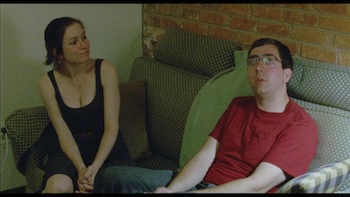
הסרט ‘מעברלהריםוהגבעות‘ מספרעלאישצבאשהשתחררלאחרעשריםושבעשניםשלשירות, וחוזרלביתוומשפחתושממנההיהרחוקכלאותןשנים. (צילום: מפסטיבלהסרטיםהבינלאומישלונקובר)
ארבעה סרטים ישראלים משתתפים בפסטיבל הסרטים הבינלאומי של ונקובר שיפתח השבוע
שוב יצוג מכובד לקונלוע הישראלי בפסטיבל הסרטים הבינלאומי של ונקובר, שנחשב לאחד מאירועי הקולנוע החשובים ביותר של צפון אמריקה. ארבעה סרטים של יוצרים ישראלים ישתתפו בפסטיבל הסרטים הבינלאומי של ונקובר, השלושים וחמישה בספר, שיפתח השבוע.
הסרט הראשון הוא ‘בין הגדרות’ (באורך 85 דקות) של הבמאי אבי מוגרבי, בשיתוף פעולה עם הבמאי חן אלון. מדובר בקופרודוקציה ישראלית-צרפתית. הסרט הדוקומנטרי מתעד סדנת תיאטרון של מבקשי מקלט בישראל שהגיעו מאריתריאה וסודן. הזרים כלואים במתקן חולות. הסרט בוחן את מעמדם הקשה של מבקשי המקלט בישראל. וכן דן בסוגיות הכואבות: מדוע הם החליטו לעזוב את מולדתם, אי הסדרת מעמדם כפליטים בישראל וכן יחסי הגולמין והקשרים בין הישראלים עצמם לפליטים. בסרט משולבות טכניקות יוצאות דופן ששייכות לעולם התיאטרון. הסרט יוקרן פעמיים בפסטיבל: ביום שלישי (ה-30 בחודש) באחת אחר הצהריים וכן ביום ראשון (ה-2 באוקטובר) ב-6.30 בערב.
הסרט השני הוא ‘מעבר להרים והגבעות’ (באורך 90 דקות) של הבמאי ערן קולירין, עם המפיק אילון רצ’קובסקי. מדובר בקופרודוקציה ישראלית-גרמנית. הסרט שמתרחש בירושלים, מספר על איש צבא שהשתחרר לאחר עשרים ושבע שנים של שירות, וחוזר לביתו ומשפחתו שממנה היה רחוק כל אותן שנים. הוא מגלה שמאוד קשה לו להסתגל בחזרה לחיים בישראל (שמחוץ לצבא). איש הצבא לשעבר מצטרף לחברה שעוסקת בשיווק ערכות לדיאטה, דבר שמסבך מאוד את היחסים עם משפחתו. כך הוא מגלה עד כמה הוא עצמו רחוק מהחיים מודרניים שנעים כיום סביב חומריות וכסף. הסרט יוקרן פעמיים בפסטיבל: ביום חמישי (ה-6 באוקטובר) בשעה 10:45 בבוקר וכן ביום ראשון (ה-9 באוקטובר) בשעה 9.15 בערב.
הסרט השלישי הוא ‘ג’אנקשן 48’ (באורך 97 דקות) של הבמאי השנוי במחלוקת אודי אלוני. מדובר בקופרודוקציה ישראלית-גרמנית-אמריקנית. הסרט עוסק בשני צעירים אמנים ערביים שגדלים בגטו הפלסטיני של לוד, העיר הענייה ורבת הפשע שידועה כאחד ממרכזי הסחר בסמים הגדולים שיש בישראל. קשר אהבה העמוק ביניהם והמוסיקה שהם יוצרים, משמשים ככלי נשק להילחם בדיכוי שמפעילה החברה הישראלית מצד אחד, ובלחצים שמפעילה החברה הערבית השמרנית מהצד האחר. סרט יוצא דופן זה מתאר את הדור החדש של הערבים בישראל ומחוצה לה, שמחפש חיים נורמליים ומודרניים באמצעות אהבה ומוסיקה. הסרט יוקרן פעמיים בפסטיבל: ביום ראשון (ה-9 באוקטובר) בשעה 9.30 בערב וכן ביום שלישי (ה-11 באוקטובר) בשעה 11.30 בבוקר.
הסרט הרביעי הוא ‘ויטה אקטיבה’ (באורך 125 דקות) של הבמאי ערן אושפיז. מדובר בקופרודוקציה ישראלית-קנדית. הסרט הדוקומנטרי הוא ביוגרפיה אינטלקטואלית אישית של הפילוסופית היהודייה ילידת גרמניה, חנה ארנדט. הפילוסופית הגרמניה ידועה לאור המושג שטבעה “הבנלאיות של הרוע”, כאשר אפיינה את הרוע הנאצי באמצעות דמותו של הצורר אדולף אייכמן. הסרט עוקב אחר חייה של ארנדט והקשר עם הפילוסופיה שלה. משלובים בו חומרי ארכיון נדירים בהם קטעים של משפט אייכמן שלא הושמעו עד כה. מדהים עד כמה האמירות החשובות שלה שלה מתאימות גם למציאות חיינו היום. הסרט יוקרן פעמיים בפסטיבל: ביום שבת (ה-1 באוקטובר) בשעה אחת בצהריים וכן ביום רביעי (ה-5 באוקטובר) בשעה 9.15 בערב.
פסטיבל הסרטים הבינלאומי של ונקובר יפתח ביום חמישי השבוע (ה-29 בחודש), ויימשך במשך כשישה עשר ימים עד יום שישי (ה-14 באוקטובר). הסרטים יוקרנו בשישה בתי קולנוע ואולמות תיאטרון שונים ברחבי ונקובר. הפסטיבל יתמקד בנושאים יוצאי דופן רבים ושונים בהם: סרטים מהודו, איראן, אפריקה, המזרח התיכון, סיפורים איסלמיים וזכויות האזרח.
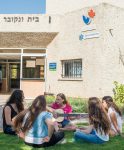
Beit Vancouver is a centre for youth at risk in Kiryat Shmona. (photo from Jewish Federation of Greater Vancouver)
The Etzbah HaGalil, or Galilee Panhandle, is the northernmost part of Israel, a “finger” of land extending into Syria and Lebanon, with its southeastern border also touching on Jordan. Militarily and geopolitically vulnerable, Etzbah HaGalil is also far removed from any urban centres, rendering it somewhat cut off from Israel’s economic and cultural heartlands, as well as its government infrastructures. For all of these reasons, young people growing up in Kiryat Shmona, one of the Etzbah’s major towns, face particular challenges.
Add to the above the fact that many immigrants are drawn to the Etzbah by cheaper housing. As in any other country, newcomers to Israel have a particular need for social services and community institutions to help them integrate into society and flourish. Yet those are the very things that have been hard to find in the Etzbah. Enter Beit Vancouver, a centre for youth at risk in Kiryat Shmona.
Originally built by the British Jewish community campaign (United Jewish Israel Appeal) in the early 1980s and held by the Israeli Housing Ministry, the youth centre that would eventually become Beit Vancouver was built near a major public high school in Kiryat Shmona. Inadequate operating support left it deserted for many years and the centre was in need of rescue in 2004 when the Partnership2Gether Coast-to-Coast steering committee identified it as a high-priority project in the region. P2G is a partnership between Jewish Federation of Greater Vancouver and five other Jewish communities across Canada, and the steering committee includes representatives from the Canadian and Israeli communities in the partnership.
In 2005, three Vancouver-based families (the Diamond, Heller and Libin families) visited the region and donated funds for the renovation and renewal of operations at the centre. Beit Vancouver was scheduled to open July 11, 2006, but that day turned out to be the first day of the Second Lebanon War, which delayed the centre’s opening until September 2006.
The initial operating years of Beit Vancouver were strong, with rapid growth. An infusion of funds from the Israel Emergency Campaign beyond the initial commitments from the core funders helped.
Juvenile delinquency dropped dramatically in the region and, in 2008, the centre was singled out for national recognition for excellence in providing services to youth.
Unfortunately, 2009 saw both a reduction in funding and changes in staff that led to a decline in the centre’s effectiveness. A visit by Vancouver Federation staff in 2009 inspired a strong intervention with the city administration to force attention to the state of the program and building. Three core partners – Vancouver Jewish Federation, Kiryat Shmona and the Rashi Foundation – each committed to a revitalization of Beit Vancouver, with ongoing operating funding at a sufficient level.
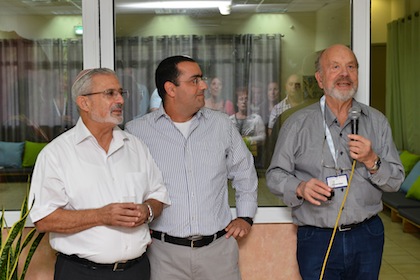
At the launch of the Friends of Beit Vancouver recognition wall on a mission led by Anita and Arnold Silber, Arnold Silber addresses the audience. He is joined by, left to right, Nissim Malka, mayor of Kiryat Shmona, and Eran David from Jewish Federation of Greater Vancouver’s Israel office. (photo from Federation)
The centre reopened in March 2010 and the level and quality of programming has grown steadily. When a financial crisis in Kiryat Shmona caused the closure of all other community centres in the city, Beit Vancouver stayed open, providing full-scale services to hundreds of youth on a daily basis.
“This centre is really essential for the youth of Kiryat Shmona,” said Ezra Shanken, Vancouver Jewish Federation chief executive officer. “The community is lacking many things we take for granted. There is no movie theatre in Kiryat Shmona. It is incredibly important that the youth there have somewhere to go.”
And, not only that, but the Beit Vancouver building has been used for emergency housing and relief for Israeli children in communities under attack. For example, when under fire from Gaza, children from Sderot were bused to Beit Vancouver.
Federation currently funds three programs at Beit Vancouver: Net@, Merkaz Ma’ase and Youth Futures. Krembo’s Wings is under review to be funded for 2017.
Net@ is an education program that helps high school students achieve high-level computer skills. The program has produced 5,000 graduates and is the only one of its kind in the region that integrates Muslim, Jewish and Christian youth in joint activities.
Merkaz Ma’ase is a leadership program for young adults designed to deliver equal opportunities and social mobility. It engages at-risk youth in a year of volunteer service after they graduate high school and before they begin their army service.
Youth Futures is a community-based intervention that aims to help children in junior high who are notably at risk for failure or withdrawal. Children are referred to Youth Futures by teachers, social workers and others who observe their need for help, shown by poor attendance, failing grades and behavioral problems. The child is paired with a trustee who acts as a bridge between the child, the family, the school and the public system.
Lastly, Krembo’s Wings provides weekly social activities for young people living with any type of motor, cognitive or sensory disability. The program helps these children become part of community life.
Shanken encourages Vancouver Jews to make Beit Vancouver part of their Israel trip. “Having a place that bears our name creates a bridge that can connect our communities,” he said.
Vancouverites can designate donations for Beit Vancouver through the Federation’s annual campaign, which was launched last week. For more information, visit jewishvancouver.com.
Matthew Gindinis a Vancouver freelance writer and journalist. He blogs on spirituality and social justice at seeking her voice (hashkata.com) and has been published in the Forward, Tikkun, Elephant Journal and elsewhere.
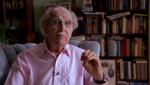
Dr. Peter Gary discusses A 20th Century Passion, which is set to première in Jerusalem Oct. 17, in a documentary-in-the-making by Hilary Pryor and David Malysheff. (screenshot from a20thcenturypassion.org/documentary)
For most of his life, Dr. Peter Gary never spoke of the three years he spent in Majdanek, Dachau and Bergen-Belsen from the ages of 17-21, or that he and his mother were shot and left for dead on Christmas Eve, 1941. Yet, in 1993, after immigrating to Canada and British Columbia, he founded the Victoria Holocaust Remembrance and Education Society and began to lecture in schools up and down Vancouver Island and in coastal British Columbia. Over the years, he has spoken to more than 65,000 children and youth, college and university students – imparting his message that you can’t live with hate, you can only die with hate.
A 20th Century Passion is an oratorio Gary has composed that depicts the story of the Holocaust and the years preceding and following it, from the end of the First World War through the Nuremburg trials. It is a huge piece – the score alone is 587 pages – that requires a full orchestra, an adult and a children’s choir as well as four soloists plus the conductor. That’s more than 100 people involved in the performance, which is set to première Oct. 17 in Jerusalem – if there is enough to finance the rehearsals, logistics and everything else needed to bring it to life.
Gary’s wife, Judy Estrin, talks about the fundraising project in a video at gofundme.com/20thcenturypassion. She and others involved in the project are asking that people give today. Instead of a latte, give to the music. Challenge your friends to give. If each of the 65,000-plus students who heard Gary’s message over the last 25 years gave $2 to $5, the concert would be funded, a documentary made – Hilary Pryor, executive producer, and David Malysheff, documentarian, have already more than 14 hours of film “in the can” – and there would be funds to donate to help the dwindling number of survivors left.
Gary, a classically trained composer, wrote both the score and the libretto of A 20th Century Passion in the 1970s as a remembrance of the children murdered by the Nazis. The piece has never been performed. (For more on the work and a planned concert in British Columbia that was canceled, see jewishindependent.ca/holocaust-survivor-peter-garys-oratorio.)
In his talks to high school students, Gary speaks about hate, about bullying, about the Holocaust. He leaves them with a message: stamp out hate. This message is more important than ever, as the horrors visited upon Gary and his family are being repeated.
Here is an excerpt from the libretto of A 20th Century Passion by Gary:
Why do you hate me so much? What have I done to you? – You really haven’t, but you are a Jew! For this alone you have to hate…. Why don’t you see me as human, awake? You must have some feeling, So many of us, not knowing – just killing…. Whether it’s many that I kill or few Matters so little, since you are a Jew! Look at our women, they’re mothers like yours; Our whimpering children, the frightened old…. Don’t you have young ones, or fathers who…. Oh yes we have them, but none of them Jew! Our leader decided for all you to die! We are the masters and do as told…. Being big, strong and hardened and bold…. Look how I’m smiling the same smile you have, Whenever I’m bleeding my blood is the same red. I’m speaking the same voice, Our hands are the same…. I told you, you fool Jew, I told you in vain…. You are not worthy, not human, that’s that! I pity you man – When you finish killing – you too are dead.
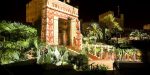
A scene from Migdal David’s The Night Spectacular: the Queen of Sheba with her entourage. (photo by Amit Geron)
While growing up in the United States, my friends and I never seemed to tire of asking each other, “Who is the Lincoln Memorial named after?” and “Who is buried in Grant’s Tomb?” The point of asking these silly questions seemed to be their obvious answers. When you grow up, however, you learn that the truth is not always so clear. Take, for example, Jerusalem’s Tower of David, also called David’s Citadel. King David, for whom it is apparently named, had nothing to do with the tower or any other part of this historic structure.
The tower is actually part of a medieval fortress that contains architectural additions from later periods. It is located near Jerusalem’s Jaffa Gate, which is the most trafficked entrance to the Old City. The tower is so well-recognized, it appears emblematically in countless Jerusalem paintings and photographs.
Early Byzantine Church fathers misinterpreted Josephus Flavius’ writings, ascribing the Tower of Phasael, from King Herod’s time, to King David. To further complicate the issue, Muslims also associated the Herodian tower with King David. They named their mihrab (prayer niche) Nabi Daud, David the Prophet. Later still, 19th-century Western Christians labeled the Turkish minaret added to the Mamluk mosque the Tower of David. This wrong name is what the tower is still called.
Tower of David Museum’s mission, in contrast, has evolved over time and various administrations. When the museum first opened in 1989, the aim was to present Jerusalem in all the years of its existence. Today, that is still a large part of the museum’s objective, but staff now creatively focus on familiarizing the public with the building complex’s amazing and lengthy physical presence. No easy job in an historic structure bound by preservation guidelines, in a city that has supreme importance to several of the world’s major religions and dates back to the second millennium BCE.
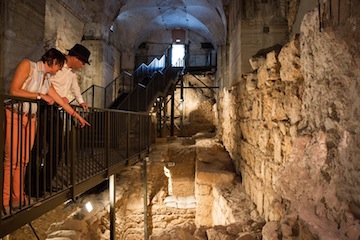
One of the new must-see additions is the Kishle. The discovery of the Kishle – when the Turkish Ottomans built a prison there in the mid-1800s, the Kishle referred to soldiers’ barracks – was accidental, but the follow-up to this archeological find has been careful and meticulous. What has recently been opened to the public is a continuous cut-away, or time line, of Jerusalem. The excavations reveal Jerusalem from as early as the sixth century BCE. It likewise shows walls from the time of King Herod – some of Herod’s huge building stones from the last quarter of the first century BCE are also still in place to the right of the museum’s main entrance by Omar Ibn El-Khattab Square – as well as evidence from the Middle Ages. Of particular importance is the discovery of a wall from the First Temple period, which adds to our knowledge about the city wall’s ancient route. Walking outdoors to the Kishle exhibit is an adventure in and of itself, as visitors traverse a dry moat that surrounds the Citadel. Also outdoors are finds going all the way back to the Second Temple period.
Excavations of the Kishle. (photo by Oded Antman)
The museum makes an effort to present Jerusalem from a variety of angles. Take, for example, the current temporary exhibit, Camera Man. In this wonderful photo display, we are able to see Jerusalem over 50 critical years of existence, a time in which its rulers switched hands three times, from Turkish rule to British rule to state of Israel rule. But the beauty of this show is that it zeroes in not on the wheeler-dealers of these various administrations, but rather on the daily life of the average Jerusalemite.
Relatedly, the museum seeks ongoing public involvement. Hence, it has taken two rather bold steps: it has taken part of the Camera Man exhibit out of the museum complex, mounting some of the photos in the centre of town, in close proximity to busy Machane Yehuda Market. A second significant step – that dynamically changes the exhibit, even as it is being shown – relates to the museum’s invitation to Jerusalem residents to send photos from their own family albums. Thus, with this participation, the exhibit is frequently being updated.
But the museum has not limited itself to just presenting Jerusalem’s history through photography. In the past year, it has gone digital in a big way. Families with elementary school-age children may now pay a small additional fee to tour the museum with enhanced iPad technology. In the Hebrew version of the award-winning Swipe the Citadel – an English version is in the pipeline – the family joins in the search for an archeologist’s young missing daughter. The virtual family and the real visiting family travel through the museum’s many old stone corridors looking for the girl. At the end of the adventure, virtual father and child are reunited, and visitors have been exposed to Jerusalem’s long and amazing history. There are currently six other apps for improving the on-the-grounds museum experience, including a digital detective game to discover who built the tower. A preview of what is available can be seen at tod.org.il/en/todigital.
The museum is always thinking of new ways to reach families. With this in mind, it has started hosting a new outreach program that allows families with children with special needs to participate as a family unit. The whole family attends and each member of the family engages to the extent to which he or she can. The museum already has a quiet room and a time-out room, and has been consulting with specialists to further develop meaningful family experiences.
While the Night Spectacular is an established program for Jerusalem tourists, readers might not know that there have been incredible outdoor evening concerts in the museum complex. These concerts have varied, from large events of hundreds of people listening to classical music, to smaller events of international liturgical music.
In the past, Tower of David Museum has hosted some incredible events for Jerusalem’s ethnically diverse population. For example, in 2000, Washington state artist and craftsman Dale Chihuly put this question to the people of Israel: “What’s incredibly hard to make, but all too easy to break?” Through his installation at the museum, Chihuly showed there is more than one way to solve this riddle, but his simple, yet thoughtful, answer was: “glass and peace.” The artist has donated some of his work to the museum.
While there may be a question about the museum’s name, there is no question you have to check it out the next time you are in Jerusalem.
Deborah Rubin Fieldsis an Israel-based features writer. She is also the author of Take a Peek Inside: A Child’s Guide to Radiology Exams, published in English, Hebrew and Arabic.
Salt print of Adolphe Crémieux, December 1856, by Nadar (1820-1910), from the J. Paul Getty Museum. (photo from Wikimedia Commons)
While Jerusalem’s French connection thankfully lacks the violence and crime of the 1971 movie by the same name, both the film and real-life “French” Jerusalem have one thing in common: both expose us to off-the-beaten-track sites. Take a look at what you’ll find in Jerusalem.
The Israel Museum (11 Ruppin Blvd.) has amazingly reassembled an original 18th-century French salon called the Rothschild Room. (All that’s missing is the fancily dressed smart-set listening to a book or music recital.) It also has an impressive collection of French impressionist and post- impressionist painters, such as Pierre-Auguste Renoir, Camille Pissarro, Edgar Degas,
Alfred Sisley, Claude Monet, Paul Cézanne, Paul Gauguin and Henri de Toulouse-Lautrec, as well as works by earlier French artists such as François Boucher.
Speaking of paintings, 120 years ago, Count Marie Paul Amédée de Piellat painted Crusader-related images on the wall of what is today known as Jerusalem’s French Hospice, a non-denominational facility for the terminally ill. Painted in fresco-style, they were recently uncovered during a routine repair.
First built some 130 years ago as St. Louis Hospital – after the same King Louis IX who was responsible for broadening the Inquisition and burning Talmuds – it stands at 2 Shivtei Yisrael St. Around the corner from the hospice is the Romain Gary French Institute of Jerusalem, which promotes French culture by means of French-language courses, a French-language library and a media and entertainment space.
Romain Gary was a Second World War pilot, French diplomat and filmmaker, but was best known for his prolific writing. He won literary prizes using various pen names. Born to Jewish parents, his mother had him baptized a Catholic. Oddly, he had a large menorah at the foot of his bed when he shot himself dead.
Jerusalem’s Ratisbonne Monastery – built in the late 1880s, in Rehavia, 26 Shmuel HaNagid St. – is named after two French Jewish brothers who converted to Catholicism and made it their mission to have Jewish children follow in their “way.” Just before Israel declared statehood, 60 children from Kfar Etzion were safely evacuated to the monastery before the kibbutz fell. Most of the kibbutz defenders, however, were killed in the fighting. During the period in which the Jordanians blocked Hebrew University’s Mt. Scopus campus, the Ratisbonne Monastery served as the school’s law faculty.
Today, the monastery is an international theological school for those studying for the Catholic priesthood.
Several Jerusalem streets are named after French personalities who were either themselves Jewish or had connections to Jews. Centrally located Emile Botta Street is named after the French consul in Jerusalem during the Ottoman rule. The 90-year-old Pontifical Biblical Institute stands on this street. This facility has been in the news lately, as an Egyptian mummy belonging to the institute is currently on exhibit at the Israel Museum.
Emile Zola Street in the German Colony honors the outspoken journalist who defended Captain Alfred Dreyfus’ innocence. In a Jan. 13, 1898, letter (J’accuse!) to the French president, Zola publicly charged the French government and army with suppressing the true story behind Dreyfus’ arrest. Zola himself paid a high price for his bravery; he fled to Britain to avoid prison, only to die there suddenly and suspiciously from carbon monoxide poisoning.
Located near Emile Zola Street is Adolphe Crémieux Street. Crémieux was a Jewish lawyer, statesman, staunch defender of human rights (both of Jews and slaves) and the founder, in 1860, of the Alliance Israélite Universelle; four years later, he served as its president. Unfortunately, the Alliance vocational school no longer stands, but you can still see approximately where the gate was on Jaffa Road, in front of the site’s successor, the Clal Building.
Crémieux did much to better the conditions of the Jews in France. In 1827, he advocated the repeal of the Oath More Judaico, a piece of stigmatizing legislation left over from pre-revolutionary France. Crémieux apparently brought about the abolition of the oath when he defended Rabbi Lazard Isidor. The rabbi – who went on to become France’s chief rabbi – had refused to take the antisemitic oath and was charged with contempt of court. Crémieux got him acquitted. On March 3, 1846, the French Supreme Court finally declared the oath illegal.
Crémieux was likewise involved in defending Saratov (Russia) Jews facing charges of blood libel. For his instrumental assistance in bringing about the end to slavery in the French colonies, Crémieux was nicknamed the “French Abraham Lincoln.”
In recent years, Crémieux Street drew significant attention when police investigated former prime minister Ehud Olmert for the suggested favorable terms he received on the purchase of a home on this street, in exchange for help rendered to the contractor who sold it to him. The National Fraud Unit ultimately advised that there was not enough evidence to proceed with criminal charges against Olmert in the “Crémieux Street affair.”
Frederic Chopin Street is named for the well-known, Polish-born, French composer and pianist. Probably not coincidentally, this Talbiya street is the site of the Jerusalem Centre for the Performing Arts. Six halls serve as regular venues for music and dance concerts, dramatic performances and films.
Located in an ultra-Orthodox neighborhood, Estori Haparhi Street is named after the first topographer of the land of Israel. Haparhi’s family lived in Provence, but was expelled from France, along with the rest of the medieval Jewish population. Following this expulsion, he made aliyah and frequently preached the necessity of settling in the Holy Land. While making his living as a doctor, he wrote a book citing the biblical and halachic borders of Israel. He claimed that the Arabic names of numerous towns and villages reflected their Jewish textual names.
Speaking of medieval France, the Jerusalem municipality named three Mekor Baruch neighborhood streets after medieval Jewish scholars, Rashi and his two grandsons, the Rashbam and Rabenu Tam.
Neve Yaakov’s Gamzon Street recognizes the French resistance work of Robert Gamzon. In wartorn France, he set up an underground for issuing false identities to children and young adults. With these papers, they were able to escape France. Gamzon went on to fight in Israel’s War of Independence and to do research at the Weizmann Institute.
Talpiot’s Marie-Pierre Koenig Street commemorates the bravery and leadership of the French general who headed the Free France forces in the Second World War and took part in the D-Day landing. During the war, Koenig let members of the Jewish Brigade fly the blue and white flag, in defiance of British orders banning such action. Even after becoming the French minister of defence, Koenig remained an advocate of the new state of Israel.
For a general understanding of how the Holocaust affected French Jewry – including the critical assistance provided by French Jewish underground workers – plan a physical, or at least a virtual, visit to Yad Vashem (yadvashem.org). France’s recognition of Jewish defence was short-lived, however. Following the Six Day War, France embargoed its Mirage fighter jet. This forced Israel to develop the Kfir jet, and a street named HaKfir reflects Israel’s decision to go blue and white.
Deborah Rubin Fieldsis an Israel-based features writer. She is also the author of Take a Peek Inside: A Child’s Guide to Radiology Exams, published in English, Hebrew and Arabic.
In writing Zahav: A World of Israeli Cooking (Houghton Mifflin Harcourt, 2015) with Steven Cook, Michael Solomonov hopes to share with other cooks “some of the magic” found in Israel.
Israeli-born Solomonov grew up from the age of 2 to 15 in Pittsburgh, then the family returned to Israel. After awhile, when his Bulgarian father and American mother divorced, he returned to the United States, eventually learning to be a chef, graduating from culinary school in 2001. He returned to Israel, where his brother had grown up and was on leave from the army; sadly, his brother was killed soon after, and Solomonov once again left the country.
Returning to Pittsburgh, Solomonov met Cook and, in 2005, became chef of their first restaurant, Marigold Kitchen. In 2008, Solomonov and Cook opened the restaurant Zahav in Philadelphia. They also co-own restaurants Percy Street Barbeque, Federal Donuts, Dizengoff and Abe Fisher, all in Philadelphia. In 2011, Solomonov was awarded the James Beard Award for best chef mid-Atlantic.
After the death of his brother, as he and Cook worked together at Marigold Kitchen, Solomonov writes, “I began to see cooking as a powerful way to honor David’s memory. I could expose people to a side of Israel that had nothing to do with politics and didn’t ever make the evening papers.”
This was the inspiration for Zahav, which opened in May 2008, as well as the cookbook Zahav, whose style is unique.
The nine chapters include one on tahini, which has 34 recipes, including seared chicken livers with caramelized onion tahini and tahini shortbread cookies. There are 20 salad recipes, showing that vegetables are everything, including Israeli pickles and spicy fennel salad. There is a chapter on smaller dishes, with recipes for items like fried cauliflower with herbed labneh. The soup chapter has 16 recipes from around the world, such as celery root soup. The next chapter – “Grandmother’s Borekas, Tradition Was My Teacher” – has 20 recipes, such as fried leek patties. “Live Fire, As Close to Magic as I’ll Come” has 16 recipes, like Bulgarian kebabs and pomegranate-glazed salmon, including mujadara. Then there’s the chapter called “Ben-Gurion’s Rice,” with 11 different recipes. “Mesibah, It’s Party Time” has seven recipes, such as whole fish in grape leaves, and “Milk & Honey is a Glimpse of the Divine” has 17 recipes, including konafi and carrot basboosa.
After an introductory essay in each chapter, there are the recipes, and each is also introduced, with casual (and fun-to-read) remarks and easy-to-follow instructions. There are also sidebars with fascinating information about such things as sumac, date molasses, freekah and rose water.
There is no doubt that this book has “a world of Israeli cooking,” and the recipes below reflect that idea.
CHICKPEA BRITTLE makes three cups
2 cups cooked or canned chickpeas, rinsed 1 tbsp canola oil 3/4 cup packed light brown sugar 3 tbsp butter 3 tbsp heavy cream
Preheat the oven to 350˚F. Line a baking sheet with parchment paper and set aside.
Toss the chickpeas with the oil, transfer to another baking sheet, and roast until crisp, 25 to 30 minutes.
Combine the brown sugar, butter and cream in a saucepan over medium heat. Cook, stirring, until the mixture darkens in color slightly and large, lava-like bubbles cover the surface, about 10 minutes. Add the chickpeas and stir to combine.
Working quickly and using a rubber spatula, spread the mixture out in an even layer on the prepared baking sheet. Let cool to room temperature. Break into two-inch pieces to serve. The brittle will keep a week in a sealed container.
ROASTED OKRA serves six
6 cups small whole okra 5 tbsp olive oil 1/3 cup basic tomato sauce 1 tbsp lemon juice 1/2 tsp grated dried lime 1/2 tsp kosher salt handful cilantro leaves, chopped
Preheat the oven to 400˚F. Toss the okra with two tablespoons olive oil and arrange on a baking sheet. Bake until the okra turns brown, about 25 minutes. Transfer to a bowl and toss the okra with the remaining three tablespoons of olive oil and the tomato sauce, lemon juice, dried lime and salt. Top with the cilantro. Serve hot or chilled.
GLUTEN-FREE CHOCOLATE ALMOND SITUATION
8 tbsp (1 stick) unsalted butter, softened 1 cup sugar big pinch salt 2 scant cups chopped dark chocolate (at least 60% cacao), melted and cooled slightly 4 large eggs, lightly beaten 1/2 cup almond flour
Preheat the oven to 375˚F, with a rack in the middle. Oil a nine-inch round or square cake pan. Line the bottom with a round of parchment paper, and oil the parchment.
Combine the butter, sugar and salt in a mixer or other bowl. Beat on medium high until pale and fluffy, about two minutes. Add melted chocolate and mix just until combined. Scrape down the sides and mix for another few seconds. With the mixer on low speed, add eggs, one at a time, beating until each one is incorporated before adding the next. Scrape down the sides of the bowl, then add almond flour. Mix on low until just incorporated, about 10 seconds.
Pour batter into prepared pan and smooth top with spatula. Bake until a toothpick inserted into the centre comes out clean, about 25 minutes. Let cool in pan for 10 minutes before turning out onto a rack to cool completely.
Sybil Kaplanis a journalist, foreign correspondent, lecturer, food writer and book reviewer who lives in Jerusalem. She also does the restaurant features for janglo.net and leads walks in English in Jerusalem’s market.
Prime Minister Binyamin Netanyahu kisses Adel Banita’s 2-year old son on the forehead in Hadassah Hospital on Oct. 5, 2015. Netanyahu was visiting Banita, who was stabbed by a Palestinian terrorist in Jerusalem’s Old City. Her husband, Aharon, 22, died later of his injuries. (photo from Ashernet)
The Jewish year 5776 could be probably best described as a year of diplomacy and terror. Despite the toll of death and misery being inflicted by radical Islamic terror groups around the world, Israel this past year has been relatively quiet in so much as it has not had an outright war with its neighbors. Terror, however, has been present, with the knife and automobile being the weapons of choice to inflict fear and mayhem on the long-suffering citizens of Israel.
Radicalized, mostly young, Arab terrorists have been responsible for murdering or seriously injuring innocent men, women and children by stabbings or ramming their vehicles into groups of people, usually standing at bus stops or hitchhiking posts. Death and injury have also been caused by throwing large stones at passing cars in the West Bank. In several instances, firearms have been used by terrorists to kill people enjoying an evening out. On Aug. 17, a terrorist from the West Bank shot dead four people and injured a further six individuals at a restaurant in Tel Aviv. Perhaps the most outrageous attack was the murder of 13-year-old Hallel-Yaffe Ariel as she slept in her bed in her home in Kiryat Arba on June 30.
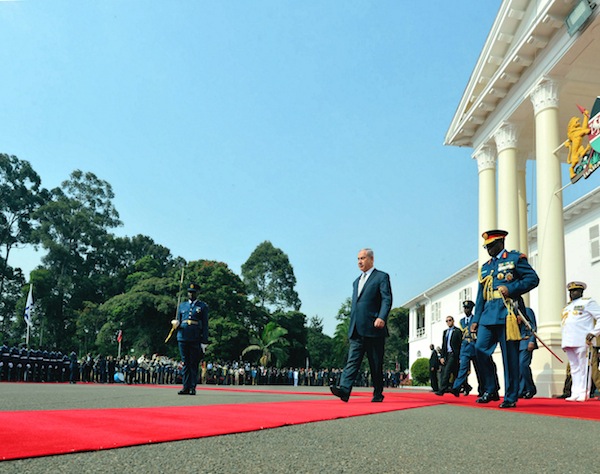
The year has been marked by intensive diplomatic activity, particularly as far as the African continent is concerned. Major countries, such as Kenya, Uganda, Ethiopia and Rwanda, played host to Prime Minister Binyamin Netanyahu this past summer. Their leaders have also visited Israel and trade agreements were signed. One African leader said the visit of the Israeli prime minister to Africa was to “reset Africa’s diplomatic relations with Israel.” Many African countries are anxious to use Israeli technology for water management and agricultural development. It is also worth noting that many African nations have also been victims of radical Islamic terrorism.
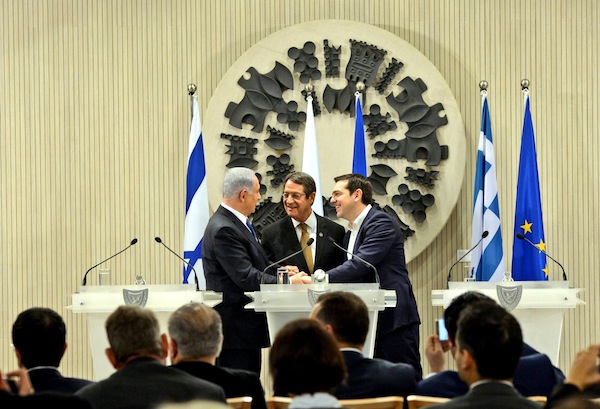
Israel’s Mediterranean neighbors were not forgotten this past year. Mutual interests of both energy and security have brought Greece, Israel and Cyprus closer. Greece and Israel have conducted military exercises in each other’s country, and the three countries are working together to maximize the natural gas deposits that have been discovered in the eastern Mediterranean.
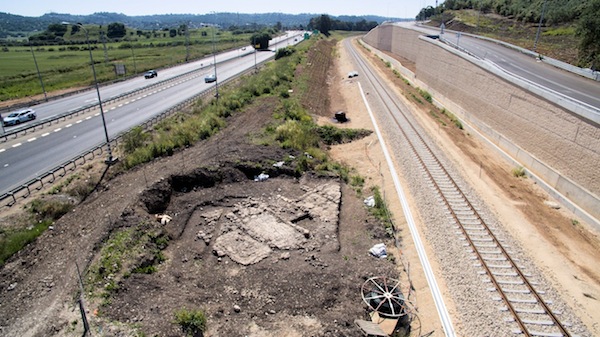
Despite the tensions in the Middle East, beneath the surface, much is happening between Israel and its neighbor Jordan. Perhaps the most significant long-term change is the soon-to-be-completed Jezreel Valley railway project. Apart from the advantage for Israelis living in the north and working in the Haifa area, the new rail link will enable Jordanians to have a Mediterranean trade outlet, via Haifa. The only link to the sea for Jordan at present is at Aqaba on the Red Sea.
Another project between Israel and Jordan concerns the rapid evaporation of the Dead Sea. Already the lowest point on earth, the sea level is getting lower every year. Also, the annual replacement of water from rivers in the north does not reach the Dead Sea. This river water is being used for agriculture and domestic purposes. In principle, the two countries have agreed to build a water feed from the Gulf of Eilat to the Dead Sea. On the way, the flow of water would power generators to produce electricity.
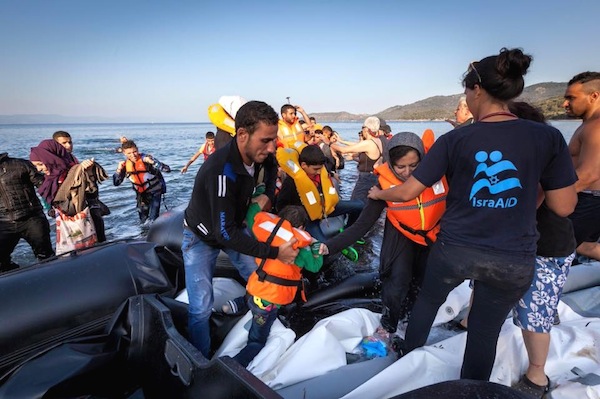
As regards her other neighbors in the region, the terrible humanitarian crises being played out in Syria and Libya have once again demonstrated that Israel will never turn her back on those in need. As thousands of refugees have been pouring onto some Greek islands via Turkey to escape the unrelenting wars in the Middle East and North Africa, Israel’s aid organizations and medical teams have been on hand to offer help and expertise.
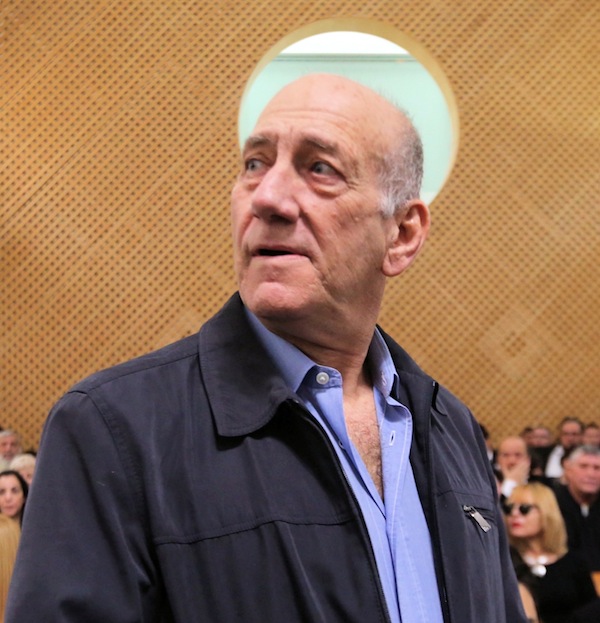
Among other happenings during the year, another state-of-the-art submarine was delivered during the summer from a German shipyard to augment Israel’s submarine fleet. And, finally, former prime minister Ehud Olmert was sent to prison after being found guilty of corruption and bribery. The positive side of this? The rule of law is the same in Israel for all of its citizens.
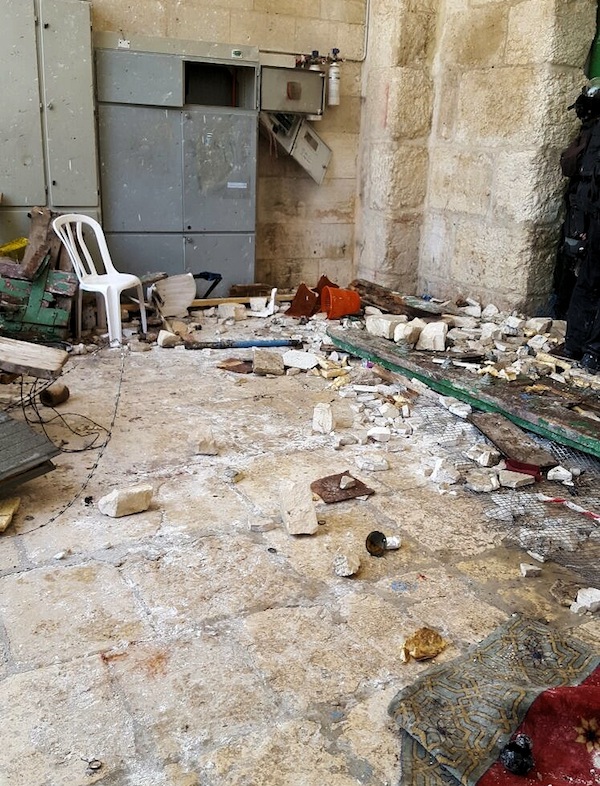
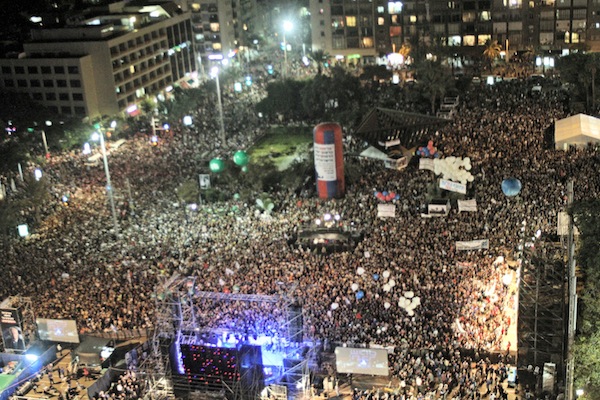
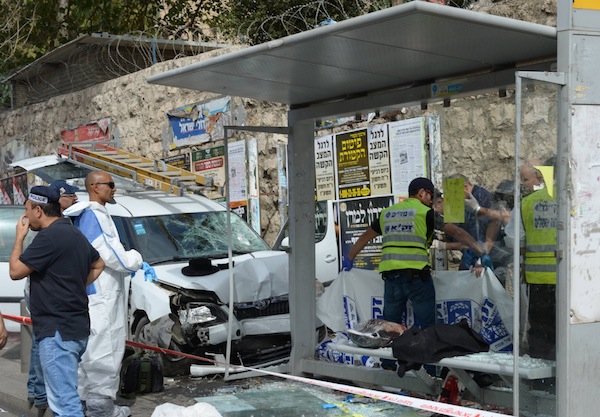
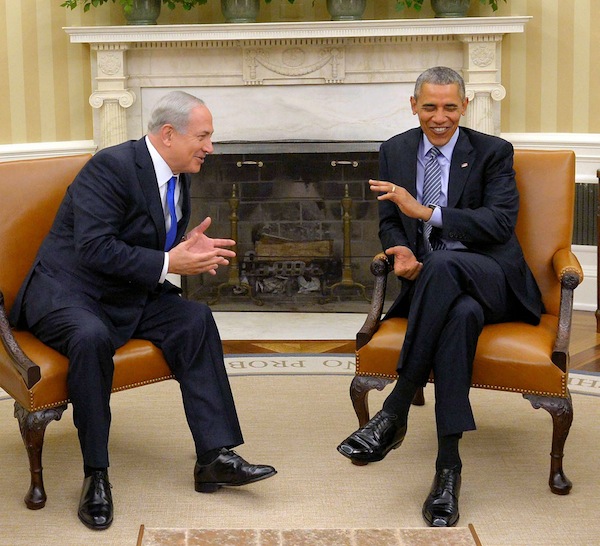
Medical and rescue teams from IsraAID attend to Syrian refugees who have just landed in a rubber boat on the Greek island of Lesbos after the perilous crossing from Turkey. (photo from Ashernet)The entrance to Al-Aqsa Mosque on the Temple Mount in Jerusalem after rioters tried to prevent police from arresting Arab stone-throwers. (photo from Ashernet)In Tel Aviv in October 2015, thousands of Israelis came together to remember the 20th anniversary of the assassination of Yitzhak Rabin, who was murdered by Yigal Amir in this square. (photo from Ashernet)A bus stop in Jerusalem’s Malkei Yisrael Street after a terrorist drove his car into the stop, killing one man, and then got out of his vehicle to stab others at random. (photo from Ashernet)Prime Minister Binyamin Netanyahu and President Barack Obama in Washington, D.C. (photo from Ashernet)Prime Minister Binyamin Netanyahu looks through the periscope of the latest submarine to be delivered to the Israeli navy by the German government. (photo from Ashernet)Prime Minister Binyamin Netanyahu, left, Cypriot President Nicos Anastasiades, centre, and Greek Prime Minister Alexis Tsipras at a meeting in Nicosia to cement trilateral relations. (photo from Ashernet)Prime Minister Binyamin Netanyahu, left, Cypriot President Nicos Anastasiades, centre, and Greek Prime Minister Alexis Tsipras at a meeting in Nicosia to cement trilateral relations. (photo from Ashernet)The Tamar gas rig in the Mediterranean, off the Israeli coast. (photo from Ashernet)Prime Minister Binyamin Netanyahu outside Government House in Kenya, stepping out to inspect the honor guard. (photo from Ashernet)The almost-complete Jezreel Valley railway that goes from Haifa to the Jordanian border. (photo from Ashernet)Goods from Turkey enter the Shalom Crossing into Gaza with goods from Turkey. Recently, Turkey and Israel resumed normal diplomatic relations for the first time since the 2010 Mavi Mamara affair. (photo from Ashernet)
Soon after he discovered he was Jewish, Csánad Szegedi reached out to Rabbi Boruch Oberlander. Szegedi’s transformation from virulent antisemite to Orthodox Jew is the topic of the documentary Keep Quiet. (photo from Gábor Máté/AJH Films & Passion Pictures)
While this year’s Vancouver International Film Festival holds much that will be of interest to Jewish Independent readers, the list is short when it comes to specifically Israeli or Jewish-related films that will appeal.
Perhaps surprisingly, the Israeli films are harsh critiques of Israel. Beyond the Mountains and Hills (Israel/Germany) is about a dysfunctional family (a metaphor for the country), Junction 48 (Israel/Germany/United States) is about an Arab-Israeli rapper who faces racism, among other Israeli-inflicted ills; Between Fences (Israel/France) is a documentary about Israel’s internment of African refugees at the Holot Detention Centre and Vita Activa: The Spirit of Hannah Arendt (Israel/Canada) is about Hannah Arendt, who, among other things, was critical of Jewish leadership during the Holocaust and did not approve of the state of Israel as it was founded.
Among the other film offerings is Keep Quiet (United Kingdom/Hungary), a documentary about Csánad Szegedi, the staunch antisemite who helped found Hungary’s far-right party Jobbik and its Hungarian Guard, which has since been banned. As a member of the European Parliament, he continued to foment hatred until a fellow nationalist and racist outed him as being Jewish – his grandmother had not been the adopted daughter of the Klein family, as she told him, but their daughter. The documentary includes interviews Szegedi did with his grandmother (about her imprisonment in Auschwitz, and other matters) and a conversation with his mother, who also found out later in life that she was Jewish. He asks both women about his increasing embrace of antisemitism over the years, why didn’t you stop me? Their responses are thought-provoking and sad.
Keep Quiet does not accept Szegedi’s transformation unquestioningly and gives speaking time to the doubters, as well as the cautious believers, such as Rabbi Boruch Oberlander, head of the Orthodox Rabbinical Council in Budapest. Oberlander has supported and taught Szegedi since the former antisemite contacted the rabbi for help. The event that ends the film is Szegedi’s attempt in 2013 to speak in Montreal about his Jewish journey – he wasn’t allowed to stay in the country. Before being put on the next plane home, however, Szegedi recorded a lecture, which was played at the event, with Oberlander fielding the hostility it wrought in some attendees. In Oberlander’s view, we must love every Jew, no matter how wicked. Of his choice to help Szegedi, he says, “I pray that I shouldn’t be disappointed.” Even Szegedi is unsure as to whether he would ever turn his back on Judaism – maybe, he admits, but not likely.
The way in which the filmmakers present Szegedi’s story is informative and balanced, and viewers get a sense of the man and his deeds, as well as about Hungary and how a political party as racist as Jobbik can find success there.
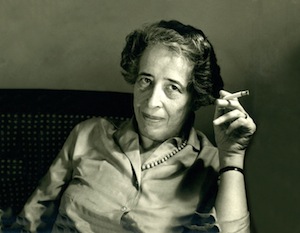
Hannah Arendt (photo from the Hannah Arendt private archive via Zeitgeist Films)
Vita Activa also does a good job of including both fans and critics of Arendt’s work, but mainly uses Arendt’s own words to explain her thoughts and analyses. The film uses as its foundation the Adolph Eichmann trial, about which Arendt wrote Eichmann in Jerusalem: A Report on the Banality of Evil (1963), describing Eichmann as “a typical functionary,” and thus an example of the “banality of evil.” (Viewers should be warned that there are many disturbing Holocaust-related images in this film.)
“Eichmann was quite intelligent but he had that dumbness,” she tells an interviewer in one of the clips included in the documentary. “It was that dumbness that was so infuriating, and that was what I meant by ‘banality.’ It has no depth; it isn’t demonic. It’s simply the unwillingness to ever imagine what others are going through.”
Another of Arendt’s theories – about refugees – remains relevant. With no rights, refugees are considered “superfluous” by a regime, she argued, and denationalization and xenophobia become a powerful weapon of totalitarian politics.
In Keep Quiet, a political journalist describes Hungary as a “part of the world where history has been manipulated” and the effects that such manipulation has upon generations. Arendt broadens that view beyond Europe, saying, “It has been characteristic of our history of consciousness that its worst crimes have been committed in the name of some kind of necessity or in the name of a mythological future.”
In addition to her early work, Vita Activa touches upon Arendt’s personal life, which offers some further understanding of the philosopher, who was seen by many to lack empathy. In one interview, she talks about how Auschwitz shouldn’t have happened, how she could handle everything else but that. Yet, she criticized the Jewish leadership who cooperated with the Nazis – the councils and kapos – and hypothesized that, if there had been no such leadership, there would have been chaos and suffering and deaths but not six million. One professor interviewed for the documentary calls Arendt’s comments “irresponsible,” another says they showed her complete ignorance of history, yet another says she regretted her remarks later in life.
The film also notes Arendt’s change from supporting Zionism to condemning elements within it. Among other things, she said, “A home that my neighbor does not recognize is not a home. A Jewish national home that is not recognized by and not respected by its neighboring people is not a home, but an illusion, until it becomes a battlefield.” And she pointed to tendencies within Zionism that she considered “plain racist chauvinism” that do “not differ from other master race theories.”
The documentary also covers Arendt’s 1951 Book of Thoughts, in which she contemplates the nature of forgiveness, revenge, reconciliation. For her, the latter doesn’t forgive or accept, but judges. When you take on the burden of what someone else did, she believed, you don’t accept the blame or absolve the other of the blame, but take upon yourself the injustice that occurred in reality. “It’s a decision,” she said, “to be a partner in the accountability, not at all a partner to the guilt.”
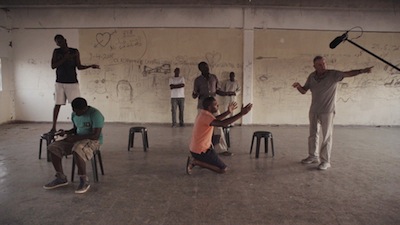
A “theatre of the oppressed” workshop at the Holot Detention Centre in Israel. (photo from Vancouver International Film Festival)
Reconciliation and forgiveness don’t enter the picture in either the documentary Between Fences or the fictional (but based on a real person) Junction 48. They each highlight important, even vital, issues in Israeli society, but do so in such a condemnatory, predictable way that anyone but the choir won’t be able to sit through these films.
Without much context, Between Fences looks at the poor situation in which asylum seekers from Eritrea and Sudan find themselves when they reach the safety of Israel. In many countries, these asylum seekers face problems, but viewers wouldn’t know that from this documentary, nor would they begin to understand the atrocities being committed in their homelands. However, they will learn how Israel doesn’t recognize their refugee status and makes every effort to send them back, how racist Israelis are towards these newcomers and a host of other problems with Israel and its people. Not one government official or Israeli is interviewed, although some Israelis participate in the “theatre of the oppressed” workshops in Holot on which the film focuses. In addition to leaving many questions unanswered, the film also begins and ends confusingly and is slow-paced.
Bias also makes Junction 48 almost unwatchable for anyone who would like to see the Israeli-Palestinian conflict resolved, so that both peoples’ rights and safety are ensured. From the second sentence of the opening, the perspective is made clear: “The Israeli city of Lod is the Palestinian city of Lyd, which once sat on the main railway junction. In 1948, tens of thousands of Palestinians were exiled from Lyd in order to resettle the town with Jews….”
Samar Qupty and Tamer Nafar in Junction 48. (photo from VIFF)
We then meet Kareem, an aspiring young rapper, whose parents are worried about his involvement with drug dealers and his future in general. His friends not only deal and take drugs, but visit prostitutes and dabble in other criminal activity. Nonetheless, every Israeli they encounter is the real bad guy, from the police to other rappers to the government, which is knocking down one of their homes to build a coexistence museum. Oh, the irony.
The only entertaining and thought-provoking aspect of this film is the music by lead actor and film co-writer Tamer Nafar, which is available online.
In the end, the Jewish Independent chose to sponsor what a VIFF programmer called a “classic Jewish comedy,” though, having seen a screener of the film, the Jewish aspect is hard to discern. While much lighter (and non-political) fare than the other offerings, it has much to say – or show, really, as the dialogue is minimal – about social awkwardness and a lack of direction in life. The protagonist, Mike, works at a pizza place in New Jersey and has the energy level of a slug and the magnetism of zinc. Yet, somehow, he has friends, albeit not great ones.
Short Stay is one of those films that moves apace with its main character, so slowly and in all different directions, as Mike both physically wanders the streets and mentally wanders to destinations unknown. Viewers don’t gain insight into what motivates Mike, who seems unperturbed by his lack of career, social skills, direction and future, but they root for him, empathize with what must be his loneliness.
The social awkwardness of the protagonist of Short Stay, Mike, is obvious in his exchanges with others. (photo from VIFF)
Short Stay director Ted Fendt best describes the acting of the nonprofessional cast, many (all?) of whom are his friends. “The film contains a range of performance styles from the fairly natural (Marta and Meg), to Mark and Dan’s B movie ‘villains,’ who might have stepped out of an Ulmer or Moullet film, to the quasi-Bressonian, unaffected manner Mike delivers his lines.” And therein is a Jewish link, Edgar G. Ulmer.
Another Jewish filmmaker – Vancouver’s Ben Ratner – will be premièring his short film, Ganjy, at this year’s festival. About a former boxer suffering from dementia pugilistica, who is in desperate need of help when three friends visit, Ganjy was inspired in part by Muhammad Ali. Its creators are looking to fundraise enough to take the film to other festivals, as well as contribute to the Muhammad Ali Parkinson Centre. For more information, visit indiegogo.com/projects/ganjy-film#.
For more information about and the full schedule of films playing at VIFF, visit viff.org.
Note: This article has been edited so that it is clear Hannah Arendt was speaking of tendencies within Zionism that she considered “plain racist chauvinism” that do “not differ from other master race theories,” and not condemning Zionism as a whole.
Gidi Grinstein (photo from Jewish Federation of Greater Vancouver)
When Gidi Grinstein finished his army service in Israel in 1995, he wanted to “make a contribution to the most dramatic issues of our time.” And it wasn’t long before he began making tracks in that quest, about which he will talk at Jewish Federation of Greater Vancouver’s annual campaign launch on Sept. 22.
Grinstein, now 44, coordinated Israel’s negotiations with the Palestinians, serving as secretary for the Israeli delegation at the Camp David Summit at the tender age of 29, while serving in the office of prime minister Ehud Barak from 1999 to2001. “They called me on Friday afternoon,” Grinstein recalled. “And they said, ‘The first meeting is tomorrow night. If you come, you have the job.’ It took me about three seconds to think about it.”
Grinstein had a close-up view of the strengths and weaknesses of the inner workings of the government. After the conclusion of the negotiations, he received a Wexner fellowship and spent a year at Harvard University’s Kennedy School of Government, thinking about how to move Israel forward through the many challenges that it faces. As he told Israel21c, “There is a systemic problem deriving from the gap between the complexity of the emerging challenges facing the country and the weakness of the tools of governance to meet those challenges.”
Grinstein concluded that tackling this problem “would have to come from the outside” and, after his year at Harvard, he set out to create a nongovernmental body to address Israel’s most pressing problems.
“Governments in general are weak when it comes to innovation,” Grinstein told the Independent, “so NGOs experiment and explore, try new methods; when there is rightness, the government takes them on.”
Grinstein said Reut (meaning “clear vision”), the organization he founded with two others, aims “to help communities drive their own long-term development and create a vision for the next 10 years.”
Reut does this by mobilizing economic potential, key institutions, the municipal and central government and entrepreneurs. “Reut is a platform for social innovation that aims at what I call ‘inclusive prosperity,’” said Grinstein, “prosperity that includes Jews and Arabs, the wealthy and the poor, everyone. Only inclusive prosperity will bring Israel forward into its future as what it is meant to be.”
Grinstein said Reut exists “to create integrative models to tackle big problems, problems with no market or government solutions, problems where solutions don’t exist or cannot be afforded.”
He pointed out that “the state of Israel does not have a specific unit of people dedicated to long-term well-being of its people, as if that will just take care of itself!”
Grinstein said, in Israel’s early years, it led the world in societal innovation but, in recent decades, it has focused on technological innovation without a corresponding degree of societal innovation, leading to an imbalance. He told Haaretz last year that technological innovation benefits far fewer people than societal innovation. “It creates social gaps,” he said, adding that “Israel has gone from being one of the most egalitarian countries in the world to one of the least.”
Grinstein laid out his vision for Israel in his 2015 book Flexigidity: The Secret of Jewish Adaptability and the Challenge and Opportunity Facing Israel. He views Israel’s role as both a light unto the nations and a key agent of the historical vision and special role of the Jewish people, with concerns that need to transcend a narrow focus on economic and security concerns, as important as those issues are.
Reut’s projects include Firewall Israel, a web platform designed to support every Jewish and pro-Israel community in the world in their local fight against boycott, divestment and sanction challenges; TOM (Tikkun Olam Makers), which addresses neglected societal problems faced by people with disabilities, the elderly and underprivileged, by creating affordable options for them; and the Leapfrog Centre, which offers consulting and training to municipalities, based on knowledge developed through Reut’s efforts in the city of Tzfat (since 2011) and in the Western Galilee (since 2010).
Grinstein will be joined at the Sept. 22 campaign launch, FEDtalks, by Randi Zuckerberg, author, radio host and founder of Zuckerberg Media; Alison Lebovitz, One Clip at a Time co-founder; and journalist Terry Glavin. For tickets and more information, visit jewishvancouver.com/fedtalks2016.
Matthew Gindinis a Vancouver freelance writer and journalist. He blogs on spirituality and social justice at seeking her voice (hashkata.com) and has been published in the Forward, Tikkun, Elephant Journal and elsewhere.