Luxury in Jerusalem

Merom Yerushalayim’s new condominiums. (photo by Gil Zohar)

Having recently acquired Toronto’s troubled 65-storey Trump International Hotel and Tower, now rebranded as the St. Regis Toronto, Joseph Waldman – one of the principals of the city’s Rothner Highgates Group – has set his sights on Jerusalem.

The Antwerp-born developer and his partner, Ricky Rothner, are looking to Merom Yerushalayim (Jerusalem Heights), a project of 218 luxury condominiums located on Malchei Israel Street at the highest point in central Jerusalem.

Notwithstanding that the Holy City is awash with unsold luxury apartments and unfinished high-end towers, Waldman and Rothner, together with their Jerusalem partner Shmuel Narkiss, have found a niche market. They’re targeting Charedim, a segment of Israeli society stereotypically characterized as having low economic status. With only 34 of the 172 units in Phase I left unsold and the unit owners occupying their homes since Passover, the Merom Yerushalayim project has succeeded beyond expectations.

Prices start at NIS 35,000 ($12,500 Cdn) per square metre. Who are the purchasers of these more than $1 million homes? They’re equally divided between North Americans and Europeans with a smattering of Israelis, said Merom Yerushalayim’s sales manager Yehuda Eagle, who fluently banters with clients in Hebrew, Yiddish and English.

Designed by Jerusalem’s Braidman Agmon Architects, the project adds seven residential buildings to five historic buildings, which are being preserved and given new functions. The derelict Schneller Orphanage, with its distinctive Bavarian onion-dome cupola, is slated to become a museum of Jewish heritage. Another 19th-century structure will be refurbished as a synagogue and a third as a yeshivah for teenage boys.

Of the seven new residential buildings, five have been completed. Two are eight floors high. Three were built to a height of five storeys, pending a zoning-density change to permit an additional three levels. The housing blocs are clustered together and nearly four-fifths of the historic compound has been set aside as green space. Parking is underground.

Waldman hedges about the schedule of the final two buildings. While a huge hole has been excavated for them, construction will depend on sales, he said.

Acknowledging that he will keep a condominium for his family’s use, Waldman told the Jewish Independent, “Try not to write about me. I’m a simple guy. I don’t want kavod [honour].”
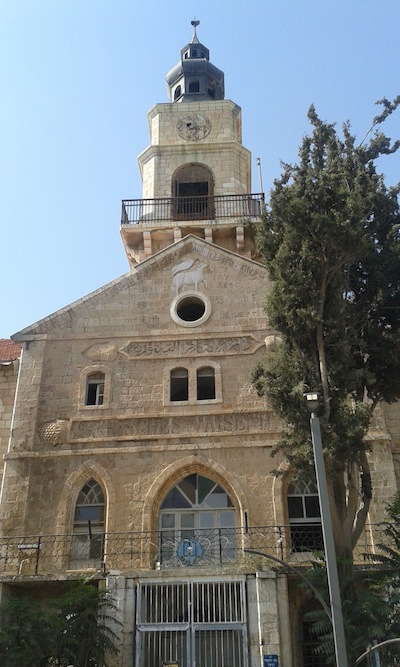
photo - The Schneller Orphanage is slated to become a museum of Jewish heritage
The Schneller Orphanage is slated to become a museum of Jewish heritage. (photo by Gil Zohar)

The Schneller Compound has a storied past. In 1860, Johann Ludwig Schneller (1820–1896), a Lutheran missionary from Basel, Switzerland, established the orphanage for nine survivors of the Druze massacre of 10,000 Maronite Christians in the mountains of Lebanon. By the next year, the orphanage had taken in 40 boys, and soon also began accepting girls. For eight decades, the Syrisches Waisenhaus (Syrian Orphanage) flourished, expanding to include an institution for the blind and a vocational school. It provided both academic and vocational training to orphaned boys and girls from Palestine, Syria, Egypt, Ethiopia, Armenia, Turkey, Russia, Iran and Germany. By the end of the 1800s, it had become the largest compound outside of the Old City.

During the Second World War, British Mandate officials interned and deported the orphanage’s German staff. The sprawling site was turned into the largest Allied ammunition dump in the Middle East. In March 1948, with Britain quitting Palestine, the base was seized by the Zionist military organization Haganah. Following statehood, and until 2008, it served as an Israel Defence Forces camp.

When the Israeli army redeployed to bases in the Negev, the state-owned property was put up for sale by the Israel Lands Authority and ultimately purchased by the Rothner Highgates Group. Before construction could begin, the Israel Antiquities Authority (IAA) carried out salvage digs – and archeologists discovered a winepress and bathhouse that served Rome’s 10th Legion Fretensis.

While Charedim have opposed other archeological digs, these excavations were carried out without incident.

“This is an excellent example of many years of cooperation and deep and close ties with the Charedi community,” said IAA Jerusalem district archeologist Amit Re’em. “The general public is used to hearing of the clashes between the archeologists and the Orthodox community around the issue of the graves, but is unaware of the joint work done on a daily basis and the interest expressed by the ultra-Orthodox sector. The Israel Antiquities Authority is working to instil our ancient cultural heritage in this population, as it does with other sectors.”

Respecting Merom Yerushalayim’s Charedi character, the project’s marketing wing, Sun-Chen, sends out a weekly Hebrew-language commentary on the Torah portion. Rothner Highgates’ promotional video depicts preparations for Shabbat and, towards the end of the advertisement, it says that the development is “20 minutes from the Kotel, three minutes from Geula. Close to the centre, close to the heart. Merom Yerushalayim. The best of two worlds.” It also describes it as “country living in the heart of Yerushalayim.”

Luxury competition

In 2011, Montreal billionaire Rabbi Hershey Friedman and a group of Canadian investors bought the heavily-indebted Azorim Investment Development and Construction Co. Azorim recently completed Boutique HaNevi’im on the Street of the Prophets near downtown Jerusalem. The seven-storey project includes 87 luxury apartments and a boutique hotel. The promotional video features Friedman standing on the roof terrace looking out over the golden Dome of the Rock citing, “If I forget thee, O Jerusalem, let my right hand wither.” (Psalms 137:5)

Gil Zohar is a journalist based in Jerusalem.



Shibli: a model Israeli town

Ruth Wasserman Lande is one of the four speakers at FEDtalks, the kickoff event of the Jewish Federation of Greater Vancouver’s annual campaign, on Sept. 13. (photo from Ruth Wasserman Lande)

In her “day job,” Ruth Wasserman Lande is deputy director-general of the Federation of Local Authorities in Israel, a position in which, among other things, she seeks out the best practices of municipal governments around the world and shares them with cities and towns in Israel. As a “volunteer, extracurricular” side gig, she is involved in a pilot project that could have massive implications for Israel’s cohesion, security, economic and social advancement and the place of minorities within the country.

She and a group of volunteers – many of them, like her, alumni of the Wexner Foundation’s Israel fellowship at Harvard University’s Kennedy School of Government – are turning a disadvantaged Bedouin village in the north of Israel into a model community that can be replicated across the country.

Improving the economic conditions and the integration of non-Jewish citizens into the Zionist project is crucial for Israel’s future, Wasserman Lande said in a telephone interview with the Jewish Independent, and the Bedouin population is critical to this undertaking. She will speak about the project and its potential impacts at FEDtalks, the kickoff event of the Jewish Federation of Greater Vancouver’s annual campaign, next month.

The town of Shibli Um El-Ghanem has a population of 6,700, all of whom are Muslim Bedouins and many of whom serve in the Israel Defence Forces or alternative civil service. Bedouins in the country’s north have a long history as “exemplary citizens,” going back to service in the War of Independence, she said.

“The potential impact of the 180,000 Bedouins in the north is far larger than their absolute number, and the country’s strategic alliance with them since the establishment of the state has been, and remains, key to its national security interests,” Wasserman Lande has written. The pilot project will “serve as a positive example to others in the village who do not serve in the IDF, as well as other minorities, who find themselves in the crossroads between different vectors which threaten to draw them away from moderate integration into Israeli society.”

Wasserman Lande notes that Egypt’s poor treatment of its Bedouin population is to blame for some of the anti-government unrest in Sinai, while Israel’s comparative success in integrating Bedouins has dissuaded many in that community from becoming attracted to extremist movements. Success in this pilot project is integral, she contends, to cementing Bedouin allegiance to Israel and providing an example to other minority communities.

The project is a multi-pronged effort to identify and address challenges and opportunities within the town. It includes the establishment of a centre for scientific excellence, as well as a regional centre of United Hatzalah, the first aid brigade created and run by Charedi Jews, which is often first on the scene at emergencies, providing basic medical care until the arrival of Magen David Adom. It also includes the creation of a Bedouin Heritage Visitors Centre, which will represent northern Bedouin culture and heritage.

A regional industrial park serving Jewish and Arab communities in the Lower Galilee is intended to provide opportunities for employment and growth.

In analyzing the untapped assets of the town, Wasserman Lande and her team identified tourism as a potential source of economic growth. Shibli is located at the base of Mount Tabor, which is home to two important churches – one Catholic and one Orthodox Christian – and is located in a place of immense natural beauty. The churches attract 500,000 pilgrims a year, but the area has done little to maximize the economic potential of these visitors. When the model is replicated in other towns, she said, economic assets unique to each place will be identified.

Shibli was selected to test the model because it ticked many boxes, one of which was the cooperation of the local authorities, including a mayor who is a dual Canadian-Israeli citizen. It is also notable that the town is on Israel’s demographic and geographic periphery and is socioeconomically disadvantaged.

While there are tangible components to the project, there are also capacity-building aspects that target less visible obstacles to the success of communities like Shibli. The central government, through its various ministries, allocates significant financial resources to local communities, but some are better than others at doing the administrative work required to access funding and use it efficiently. While public aid may be available, Wasserman Lande said, obtaining it often depends on “being able to speak to the right people, open the right doors, do the right follow-up.” Successful use of funds also depends on confronting nepotism and a lack of transparency in some communities. Part of the project is to develop skills in local leadership.

Wasserman Lande sees the entire undertaking as a Zionistic one.

“The vision is Zionistic, my drive and incentive is Zionistic,” she said. “I’m thinking, what is good for my country? It is very important for my country strategically that this particular population is aligned with its interests.”

If successful, the project will advance the Zionist project within Israel and abroad, she said.

“That will create, if it’s a success story, a model formulation for other minorities,” said Wasserman Lande. “It will also be a flagship against BDS [the movement to boycott, divest from and sanction Israel] across the world as a beautiful, successful model formulation in a completely Muslim village. In a little bit of a later stage it can even serve as a potential bridge – a people bridge – between Israel and the Saudi Arabian Bedouins, Egyptian Bedouins … but we are not there yet. Furthermore, it will empower and enhance the Bedouins themselves, first and foremost those that live in that particular village.… That is something very, very special.”

Prior to beginning this project and her position as deputy director-general of the municipal authority, Wasserman Lande was an advisor to the late former president of Israel, Shimon Peres. From him, Wasserman Lande learned something that she said has served her well in this undertaking.

“I will say only one thing [about Peres]: he didn’t think that anything was impossible,” she said. “It was an inspiration for me. That’s really the driving force behind this whole project because I can definitely say from the bottom of my heart that it is very challenging.”

Wasserman Lande will be one of four speakers at FEDtalks on Sept. 13 – for tickets, visit jewishvancouver.com/fedtalks2017. The Independent has invited all four speakers to be featured in advance of the event. Next week: Rabbi Joseph Telushkin.

IDF colonel visits Vancouver

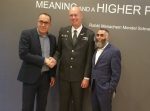
Left to right: Ilan Pilo, Jewish National Fund, Pacific Region; Col. Adam Susman, Israel Defence Forces defence attaché to Canada; and Rabbi Shmulik Yeshayahu of the Ohel Yaakov Community Kollel. (photo from Community Kollel)

While acknowledging that the situation in the Middle East is constantly changing, Col. Adam Susman told those gathered at the Ohel Yaakov Community Kollel on July 18 that the biggest threat to Israel is Iran, “as it has been for years.”

Susman, who is the Ottawa-based Israel Defence Forces (IDF) defence attaché to Canada, was in Vancouver at the invitation of the Jewish National Fund of Canada, Pacific Region.

Born in the United Kingdom, Susman moved to Moshav Sde Nitzan in southern Israel at the age of 3, according to JNF’s website. He joined the IDF’s Givati Brigade in 1987 and became a battalion commander after serving as head of the anti-ballistic and training branches. In 2005, he was appointed commander of Hanegev infantry brigade and chief of staff of the Sinai division, protecting Israel’s southern border. In 2009, he became commander of the Dan district in Home Front Command, working to ensure the safety of civilians in the metro Tel Aviv area. Prior to his appointment as the defence attaché to Canada in 2014, Susman was head of the International Military Cooperation Department of the IDF General Staff.

Rabbi Shmulik Yeshayahu of the Community Kollel was the emcee of the Vancouver event. “It is fitting to have this meeting during the weekly Torah portion of Matot-Masei,” he said in his opening comments. “In this parashah, a portion of the Jewish people stays behind on the way to the Holy Land, preferring to farm on the other side of the Jordan River rather than go in and fight for the land. They stayed there while the rest of the tribes fought and, later, they joined them. In Judaism, we have great respect for those who risk their lives to protect other people, and especially our homeland.”

Before introducing Susman to those gathered, Ilan Pilo, executive director and Jerusalem emissary of JNF Canada, Pacific Region, presented a brief video about JNF’s activities throughout Israeli history. He then invited the president of Royal Canadian Legion’s Shalom Branch, Ralph Jackson, to speak. Jackson, who introduced himself as “the only Jew in the Scots Guards during World War Two,” presented a donation of $5,000 to Susman for Beit Halochem, a nonprofit that cares for disabled Israeli veterans.

Leonard Shapiro, Shalom Branch vice-president, noted how the branch was formed during a time of great prejudice, when Jews needed their own veterans organization. “It has been a long time now since we’ve gone to war, however, thank God. We don’t get many new members. If anyone here would like to join and support our organization and activities, you don’t have to have been in the army, you just need to be over 18 and not have committed any horrible crimes. Little ones, OK,” he joked.

Susman shared a bit about himself and his experience in the Givati Brigade, which was the most highly decorated brigade in the 2014 conflict, a fact no doubt known to the many IDF veterans in the audience.

Susman is one of 16 Israeli attachés around the world – a small number that, he said, was due to Israel never having been part of a military coalition with another country. He outlined the ties between the Israeli and Canadian militaries, the chief threats to Israel today and the IDF’s response.

“There is cooperation between the IDF and the Canadian military strategically and practically,” he said. “The relations between the IDF and the Canadian military are good.”

Asked if the change of Canada’s federal government to the Liberals from the Conservatives had had any effect on that relationship, Susman said it had not.

Turning to the situation in Israel’s own region, he emphasized the lack of stability.

“The Middle East is an interesting neighbourhood, always changing – what I tell you today may not be true tomorrow,” he said.

“The biggest threat is Iran, as it has been for years,” he continued. “[Mahmoud] Ahmadinejad took every opportunity to say that Israel should disappear from the map of the world. The main threat they’ve posed has been building Hezbollah – without Iran, it would be a small organization. In recent years, Hezbollah has been fighting in Syria and they’ve lost a lot of people, but they’ve also gained a lot of operational experience. They have also steadily increased in rocket capabilities and can now reach Eilat.”

Susman said that Syria had previously been a big threat to Israel, but that’s no longer the case, due to its civil war and ISIS, as well as the reduction of the country’s chemical weapons by Western countries.

Hamas in Gaza is the next biggest threat, he said, noting that it is also supported by Iran. “They only exist to fight,” he said. “They are not building up Gazans as they claim. A good example is the tunnel found during 2014 Protective Edge, kilometres of resources that could [have been used] for clinics and schools. Gaza is a piece of cheese, there is 80 metres between the top and the water table, dotted with tunnels. That’s a major challenge.

“The Sinai is also a security problem,” he added. “Nobody controls it, and so everybody is in there. There was no Egyptian military following the peace agreement, so that’s the result. The MFO (Multinational Force and Observers) was created to survey the Sinai and, by the way, there are many Canadians in it.

“Some people say the IDF is a military that has a country,” quipped Susman. “We are strong, and we are good at finding solutions.”

Susman cited Iron Dome as an example. The IDF initially divided Israel into 157 zones with two missile interceptors for each missile. That was successful, he said, but each missile cost $70,000 so that intercepting one fired missile cost $140,000. Therefore, the IDF sought improvements. Israel was divided into 254 zones, he said, and each one had only one missile interceptor per fired missile. This system has a 90% success rate stopping missiles, which is still not good enough in Susman’s view. “We will improve yet further,” he said.

During the question-and-answer period, an audience member commented, “You said Iran is the biggest threat against Israel but you didn’t say what Israel is doing against Iran.”

“That’s right,” replied Susman without further explanation, eliciting laughter from the crowd.

The evening ended with the singing of “Am Yisrael Chai,” led by Yeshayahu.

Matthew Gindin is a freelance journalist, writer and lecturer. He writes regularly for the Forward and All That Is Interesting, and has been published in Religion Dispatches, Situate Magazine, Tikkun and elsewhere. He can be found on Medium and Twitter.

Israel’s human capital

Some of the attendees at the July 16 event, left to right: Daniel Wosk, Julia Goudkova, Shai Josopov, Sigal Kleynerman and Daniel Milner. (photo from CFHU Vancouver)

Israel’s best “natural resource” is its people. On July 16, at the Jewish Community Centre of Greater Vancouver, four speakers, representing diverse segments of Israeli society, gave TED Talk-style presentations before a sold-out crowd at the Jerusalem: City of Gold and Tech event. The common denominator of the speakers was their connection to Hebrew University of Jerusalem.

Presented by Canadian Friends of Hebrew University (CFHU) in conjunction with the Jerusalem Foundation and the JCCGV, the evening presented the many ways in which Israel is using its human capital to leverage its place in the world and continue to be the innovative nation for which it has become renowned.

Lior Schillat is the head of the Jerusalem Institute for Policy Research (JIPR), an organization that collects data on multiple aspects of Jerusalem. Although statistics don’t tell the whole story, the data collected by Schillat’s institute shed a great deal of light on how people in Jerusalem live, work and play. He explained that the city is constantly faced with a power struggle between three groups with very different worldviews: ultra-Orthodox Jews, Arabs and “the general public.” These groups have not only diverse needs and interests but also huge variances in almost every part of daily life. JIPR attempts to use the data they collect to influence lawmakers to try to minimize conflicts and use the city’s diversity to empower everyone, said Schillat, “instead of the zero-sum game we used to play, where we win and the others lose. We want to turn Jerusalem into a win-win for everyone.”

Schillat’s optimism was shared by the second presenter, Maya Halevy, director of the Bloomfield Museum of Science in Jerusalem. Although her goal is to promote an interest in and love of science, her ultimate objective is to ensure that Israel has a workforce equipped for the future. She explained the programs in STEM (science, technology, engineering and math) that her museum provides to all segments of Jerusalem’s population.

“We need to make connections with families and students,” she said. “Over 200,000 Arab and ultra-Orthodox visitors use our museum. We serve all communities with STEM literacy.”

Halevy said that, while it is easier to attract ultra-Orthodox families to the museum, Arab families as a whole stay away but they send their children through school programs. Her message, similar to Schillat’s, was that Israel will thrive when all segments of the population are educated and have equal chances to be successful.

Meanwhile, Yonatan Avraham is living his dream of becoming a physicist and an entrepreneur. He is an example of someone who is thriving because of the education he is receiving at Hebrew U. He is also the beneficiary of Toronto philanthropist Seymour Schulich’s scholarship program. Avraham expressed his gratitude regarding the place where he is studying.

“I am at the intersection of three unique resources that are ecosystems for innovation: the academic knowledge at Hebrew U, Jerusalem as a municipality supportive of start-up companies and a young, dynamic student atmosphere,” he said. “The combination has produced many innovators who are able to take their ideas to market and grow the Israeli economy.”

Helping smart people turn their ideas into companies that make money is how the final speaker of the night fit in. Tamir Huberman serves in several capacities at Yissum, Hebrew U’s technology transfer company. He works with researchers who are constantly asking the question, “How can I make this better?” What “this” is depends on the scientist, he said, but, with Israeli chutzpah, tachlis (getting to the point quickly), problem-solving ability and the pressure of existential threats fueling the process, Huberman explained that Israel is producing many great companies. Yissum is the exclusive owner of all intellectual property produced at Hebrew U and has created 120 spin-off companies since its creation in 1964. Profitable for the university, Yissum helps monetize the brain-power Halevy nurtures, Schillat influences and Avraham exemplifies.

Commemorating Yom Hazikaron

Left to right, Canadian Defence Attaché Col. Tony Lovett, Canadian Ambassador to Israel Deborah Lyons and Israel Defence Forces Widows and Orphans chief executive officer Yuval Lipkin light a memorial candle. (photo from IDFWO)

Canadian Ambassador to Israel Deborah Lyons, who attended a memorial lighting at Israel Defence Forces Widows and Orphans’ (IDFWO’s) office in Givat Shmuel to commemorate Yom Hazikaron, said, “Having had the opportunity to learn about the IDFWO and attend the bar and bat mitzvah in Jerusalem early after my arrival in Israel last year, I was, and remain, very impressed by the number of programs provided to support the widows and orphans of Israel’s fallen soldiers.”

The connection between Canada and IDFWO is at many levels. Every year, Canadian families open their homes to IDFWO orphans as they visit Toronto as part of the B’nai Mitzvah North America trip. And, as part of Toronto’s Bnei Akiva Schools’ effort to experience the Holy Land from a variety of perspectives, IDFWO organized for them to meet with the Israel Air Force at Sde Dov airport, where the pilots spoke about IDF orphans and the price they paid to protect the state of Israel.

For more information on IDFWO, visit idfwo.org/eng.

Bridging STEM gender gap

LeadWith’s leadership team at one of the organization’s events, left to right: co-founders Shira Weinberg and Dalit Heldenberg and managing director Aviv Ziv. (photo by Hadas Eldar Photography)

STEM-related women’s groups are popping up all over the world – and Israel is no exception. In fact, the country is a leader in this area.

Shira Weinberg and Dalit Heldenberg co-started LeadWith, a group for women like them – women interested in STEM (science, technology, engineering and math) and seeking camaraderie.

Weinberg, a senior product manager at Microsoft, started out as a software developer while in the Israel Defence Forces’ marine core, and then worked and studied as a software engineer for five years. She’s been with Microsoft for nine years, first as an engineer and then as a product manager.

“As a woman in the industry, I always felt like there aren’t many women,” said Weinberg. “At the beginning, I got used to it and I figured that’s how it is in this area and that’s OK. But, after a few years in the industry, I realized it doesn’t have to be like that.

“That’s one of the reasons I started LeadWith, and I’m also doing some other stuff related to promoting girls and women in the tech industry.”

Raised by a father who worked in the industry in Herzliya, Weinberg was much more familiar with computers than were most of her friends. She went into computer science in high school, which paved the way to her position in the IDF.

Like Weinberg, Heldenberg also started her career as a software engineer. “As a kid, I was always attracted to computers more than the others,” said Heldenberg. “I knew that this is what I wanted to learn, computer science.”

Both young women feel strongly that there is no reason the gender gap should be as big as it is today.

“As you look higher and higher in management positions, there are fewer women,” said Weinberg. “This is something we want to change. And this is one of the main reasons I wanted to lead this change.”

Heldenberg added, “Even when I studied computer science, I’d always see too few women in this field. When I was learning high school physics and when I studied computer science, I was always missing women. We want to see more women wanting to be in management roles.”

Weinberg and Heldenberg understand that, in order to create this change, they need to provide mentorship to other women. They now have bi-monthly get-togethers that include networking and education sessions.

“We found a lot of demand from women for these kinds of events,” said Heldenberg. “At the first event, we weren’t sure how many women would come. We planned for about 50, but ended up with 200 attendees.

“We are currently doing three types of activities. One, the meet-ups, where we usually have 100 to 200 women come.

“We also have the mentoring program, where we hold events also every two months. The mentoring events are smaller in terms of size, but we have our team of mentors all volunteering and joining in for the events. We hold sessions of one-on-one mentoring conversations for around 30 minutes…. For each mentoring event, we have about 25 mentees.”

The third activity is an accelerator program for women entrepreneurs who are at the end stages of launching their start-up. In the first program, they had 13 entrepreneurs. It involved nine full days of sessions over nine weeks, with each day focused on different tools relevant to entrepreneurs.

“At the end, we had a big demo day with important people in the industry,” said Heldenberg.

With more than 1,600 people now involved with LeadWith, it is clear that they are filling a previous void and that their approach is working.

“At the events, we put a lot of focus on networking,” said Weinberg. “We usually have a short networking session before the main session begins. We make sure every woman will talk with one or two women she hasn’t met before … that really helps them know more women in the industry and creates more conversations.

“Always after these kinds of events, you hear good stories about things that happen because of the networking and the new connections. Of course, you get to know other women in the industry.

“Also, at the time when a woman wants to change roles, she can draw upon the extensive connections she has gained at our events. You can never know what will come out of this kind of connection. We always hear great stories.”

LeadWith’s focus is both on connecting women who are already in the industry, as well as those who studied computer science or technology but, for one reason or another, did not go on to work in the field. The organization hopes to draw these latter women back into the field.

“A month ago, we did a hackathon in collaboration with another organization, called Cyber Girls,” which brings computer science to those around 16 and 17-years old, said Weinberg. “They brought the girls and we brought the women, and we divided into teams that included both women from the industry and the girls. It was a few hours. There were multiple teams. Each team had a big mission and a lot of tasks along the way – quizzes and such – to figure out solutions that involve writing code.

“What was amazing was that each team in this hackathon was … 10 teenaged girls and a woman from our community, and the quizzes they had to do were really tough. The young girls were very ambitious, they couldn’t get the answers from us. It was really good to see that. They are very smart.”

LeadWith is a nonprofit organization and volunteers are an integral part in whatever they do, said Heldenberg. “We get some help in posting events in certain offices, [donations of] snacks and drinks for events, those kinds of things, from Microsoft, Google and Wix.”

Both Heldenberg and Weinberg think there are multiple reasons for the lack of women in STEM fields, from how children are raised, the educational system and society as a whole. They also are concerned that, if they spread themselves too thin, they will achieve less. As such, they have opted to focus, for now, on industry women in their 20s to 40s. For more information, visit leadwith.org.

Rebeca Kuropatwa is a Winnipeg freelance writer.

NCSY at Sheba centre

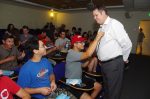
Dr. Amit Segev gets his heart checked out by one of the participants in NCSY Canada’s Jewish Journeys summer program. Segev gave all the teens a stethoscope to commemorate their visit to Sheba Medical Centre. (photo from SMC)

More than 30 teenage participants from NCSY Canada’s Jewish Journeys summer program were recently treated to a VIP tour of Sheba Medical Centre’s Olga and Lev Leviev Heart Centre.

Dr. Amit Segev, director of Sheba Medical Centre’s cardiac division, showed the group a short presentation of how the heart can malfunction and what doctors can do to save patient’s lives in such instances. As there is nothing like a dose of reality to enhance the experience, Segev showed the teens a live view of a medical procedure being performed on a patient suffering from a heart malfunction.

As a token of appreciation for their visit – and perhaps spur their interest in a future medical career – Segev gave each participant a Sheba Medical Centre stethoscope.

פורום הישראלים בקנדה של תפוז

פורום הישראלים בקנדה של אתר תפוז מכיל כבר ארבעה עשר אלף עוקבים. בהודעה של הנהלת הפורום נאמר בין היתר כי: פרום לקהילת הישראלים בקנדה הוא בית לישראלים הגרים במדינה השנייה בגודלה בעולם, למי שמעוניין לדעת על החיים כאן, ולאלו שבדרך. זה המקום ליצירת קשרים ומתן מידע לישראלים הרבים החיים ברחבי קנדה, עבודה, מגורים מסעדות ושאר הבילויים. הבמה פתוחה לכל נושא שמעניין את הישראלים.

לתפוז פורום נוסף בנושא ישראלים וקנדה והוא מתמקד באלה שעוברים לקנדה. לפורום זה יש כבר עשרת אלפים עוקבים. הוא משמש למתן סיוע הדדי ומקצועי, לאלו שמתחילים או נמצאים בהליך המעבר לקנדה. ובמקביל של אלה שכבר גרים כאן “ויש להם סבלנות”, רצון או אינטרס לעזור למי שמעוניין לעבור לקנדה. מטבע הדברים נושאי פורום זה מתמקדים בעיקר בהגירה, עבודה, לימודים, ניהול עסקים וגידול משפחה.

להערכת הפורומים של תפוז כמאה אלף ישראלים גרים כיום בקנדה. מרביתם כצפוי גרים באזור מטרו טורנטו וברחבי הפרובינציה הגדולה והעשירה של קנדה – אונטריו. אחריה בפרובינציה השנייה בגדולה בקנדה – מונטריאול. לפי הערכת ארגון הגג של הפדרציות היהודיות של קנדה, במדינה חיים כיום למעלה מארבע מאות אלף יהודים. מדובר אפוא בריכוז היהודים השלישי או רביעי בגודלו בעולם (מחוץ לישראל כמובן) אחרי ארה”ב, רוסיה וצרפת. יתכן שכיום מספר היהודים בקנדה אף משתווה לאלה של רוסיה וצרפת.

בחזרה לפורומים של הישראלים בקנדה. הנושאים המרכזיים העולים לדיון בפורום הישראלים בקנדה, במהלך בחודשים האחרונים הם: מערכת החינוך הציבורית הנחשבת למהטובות בעולם, חיפוש עבודה, האם ישראל יותר מושחתת מקנדה, שאלות בנוגע למיסוי לעצמאים, המלצות באיזה בנק לפתוח חשבון, מהן הדרכים להעברת כסף מישראל לקנדה, המיסים על רכישת בית או דירה בפעם הראשונה, ויזות עבודה, המלצות על חברות הובלה, רשיונות נהיגה, תחום האוכל, מבחן האזרחות בדרך לקבל אזרחות, השקעות בישראל של ישראלים שגרים בקנדה, רופאים ישראלים שעובדים בקנדה, מציאת יועצי מס, שיתוף פעולה בינלאומי של רשויות המיסים בקנדה וישראל, יועצי הגירה, טיסות מוזלות, היכן רוכשים ספרים משומשים בעברית, כמה זמן לוקח לקבל את הדרכון הקנדי המיוחל, שינויים בנושא הזכאות להגר לקנדה, האם אזרח קנדי שחיי תקופה ארוכה בקנדה מחויב להפוך לתושב, האם להשאיר את קרן הפנסיה בישראל ועוד.

הנושאים המרכזיים שעולים לדיון בפורום של תפוז שמיועד לישראלים שעוברים לקנדה הם: ויזות לזכאים, זכויות לתושבים כשעוברים ממחוז למחוז, ויזות לסטודנטים, שאלות למהגרים ותיקים, רכישת בית מיד עם המעבר, איזה תארים אקדמיים תקפים בקנדה, הגירה לעובדים עצמאים, כיצד אפשר לבדוק מראש מהי רשימת הניקוד לצורכי הגירה, העברת כספים בין ישראל וקנדה, המלצות על עורכי דין להגירה, תשלומי פנסיה בישראל למי שגרים בקנדה, יוקר המחייה כאן, זמן הטפול בבקשה להתקבל ללימודים, משפחה בקנדה, פעוטונים בקנדה, שאלות בנוגע לסיכויי ההגירה, אישורי בדיקות רפואיות ואישור משטרה לספונסרשיפ, האם ניתן להחזיק ביותר משתי אזרחויות בקנדה, מה דרוש במעבר לקנדה, האם אפשר לבקש כרטיס פי.אר אם יש כבר אישורי עבודה וכמה זמן ההליך לוקח, מערכת הבריאות בקנדה, ויזת סטודנט, חיי הייטק בקנדה, לימודים בקולג’ או אוניברסיטה בקנדה, ביטוח בריאות לסטודנטים בקנדה, לימודים לתואר שני בקנדה, תרגום מסמכים לאנגלית באישור נוטריון, המרת שקלים ודולרים אמריקנים לדולר קנדי, מורה ללימוד אנגלית לבחינה בהליך ההגירה, כיצד שולחים מטענים לקנדה, מה עדיף קנדה או ארה”ב, מסלול מזורז לאישור עבודה ועוד.

טרנד חדש

טרנד חדש: גידול משמעותי במספר המהגרים מישראל לקנדה. (צילום: DrRandomFactor)

מספר מבקשי המקלט יוצאי אפריקה שעזבו את ישראל ועברו לקנדה עלה משמעותית מתחילת שנה זו (2017), לעומת שנת 2016. זאת לפי נתוני רשות האוכלוסין וההגירה של ישראל. כך מפרסם עיתון הארץ.

בהתאם לנתוני הרשות בחלק הראשון של שנת 2017 היגרו לקנדה מישראל קרוב לאלף אפריקאים. רובם המוחלט (כתשעים אחוז) הם יוצאי אריתראה והשאר מסודן (כשישה אחוזים) וממדינות נוספות (גם כן כשישה אחוזים). זאת לעומת כתשע מאות יוצאי שתי המדינות שעזבו את ישראל ועברו לקנדה בכל שנת 2016.

המהגרים מישראל לקנדה מקבלים כאן מעמד חוקי במסגרת התוכניות לקליטת פליטים. ממשלת קנדה מעניקה להם תושבות קבע מיד עם נחיתתם באחד משדות התעופה הבינלאומיים המקומיים, כולל זכויות סוציאליות מלאות וכן גם ביטוח בריאות (מדובר ביתרון משמעותי על פני מי שמהגר לארה”ב). לאחר שלוש שנים מלאות של מגורים בקנדה מהגרים אלה יכולים להתחיל בהליך לקבל בקשה לקבלת אזרחות מקומית קבועה.

כיום קנדה היא יעד מספר אחד של מבקשי מקלט שמבקשים להגר מישראל לאחת ממדינות המערב. אחריה במרחק רב נמצאות: הולנד, שוודיה, ארה”ב ונורבגיה. בסך הכל במחצית השנה הראשונה של 2017 כאלף שלוש מאות יוצאי אפריקה עברו מישראל לאחת ממדינות המערב. לעומת זאת יש ירידה במספר יוצאי אפריקה שחוזרים לגור בארצות המוצא שלהם.

קנדה הפכה ליעד מספר אחד למהגרים האפריקאים בשל מדיניותה הנוחה לאפשר להם להגיע לכאן, להיקלט ולקבל עזרה ואף להשתקע במדינה באופן קבוע. בין התנאים לקבלת המהגרים שמציבה ממשלת קנדה כיום: 1. מתברר שהמהגר לא יכול לחזור יותר לארצו 2. המהגר עובר בדיקות רפואיות מלאות 3. המהגר מפקיד עשרים וחמישה אלף שקל ערבות שיבטיחו כי הוא יוכל להתקיים בקנדה בשנה הראשונה (גם אם לא ימצא עבודה). 4. הגוף שמסייע להמהגר להיקלט מחוייב לדאוג לצרכים הבסיסיים שלו בשנה הראשונה.

לעומת קנדה מספר מבקשי המקלט בישראל ירד משמעותית בחמש השנים האחרונות, מאז 2012 – שהיתה שנת שיא במספר המהגרים האפריקאיים שהגיעו לארץ (מספרם נאמד אז בלמעלה מחמישים ושישה אלף איש). כיום חיים בישראל לפי הערכה באופן מורשה כשלושים ושמונה אלף מהגרים אפריקאים. ממשלת ישראל לוחצת בשנים האחרונות על המהגרים אלה לעזוב את המדינה ולחזור לארצם. מי שעוזב מקבל מענק מיוחד מהמדינה בגובה שלושת וחמש מאות דולר. ישראל כידוע מקשיחה את החוקים והתקנות נגד אזרחי היבשת השחורה בשנים האחרונות.

הקלות בוצעו בהסכמי היצוא והיבוא בין ישראל וקנדה

ישראל וקנדה חתמו לאחרונה על הסכם חדש להכרה הדדית בין התוכנית “גורם כלכלי מאושר” שמפעיל המכס בישראל, לבין תוכנית מקבילה שמפעילה רשות המכס הקנדית ונקראת “שותפים בהגנה”. על פי ההסכם החדש גורמים מאושרים ישראלים, מדובר מלמעלה ממאה גופים שעומדים בקריטריונים פיננסיים, בקריטריונים ביטחוניים ובתנאי החוק (בהם יצואנים, יבואנים, סוכני מכס, שמלחים בינלאומיים, נמלים ימיים, מסופים לוגיסטיים ועוד), שיזכו להקלות בהליכי כניסת טובין ושחרור הסחורות שלהם בקנדה. בנוסף מטעניהם יזכו לסיכון נמוך ובידוק דבר שיגרום לחסכון משמעותי הן בזמן והן בכסף. במקביל גורמים מאושרים קנדיים יזכו אף להקלות דומות בדומה לגורמים הישראליים.

יצוין כי זה ההסכם הרביעי שמדינת ישראל חותמת מאז שנת 2011 בתחום הקלות ביצוא וביבוא. לישראל יש כבר הסכמים דומים עם שלוש המדינות הבאות: ארה”ב, דרום קוריאה וטייוואן. מנהל המכס הישראלי נמצא בימים אלה בהליכים מתקדמים לחתום על הסכמים דומים עם מדינות נוספות בהן סין.

Getting closer look at Jupiter

This JunoCam image highlights Oval BA. (photo from nasa.gov)

The U.S. National Aeronautics and Space Administration (NASA) recently released the first findings of the Juno research spacecraft, which entered Jupiter’s atmosphere last year.

The Weizmann Institute of Science’s Dr. Yohai Kaspi is a senior member of the Juno mission team. The reason why this research is so important, he said, is because it will allow us to better understand how the solar system was formed.

“To do that, we really need to understand Jupiter and how it was formed because, then, we can understand earth, in sequence,” said Kaspi.

photo - Dr. Yohai Kaspi of the Weizmann Institute of Science
Dr. Yohai Kaspi of the Weizmann Institute of Science. (photo from WIS)

For Kaspi, the fascination with space came at the early age of 7, when his dad shared some pictures of the Voyager I and II and took him stargazing. His interest grew from there, including when he was navigating in the Negev while in the Israel Defence Forces.

“My hobby growing up was competitive sailing,” said Kaspi. “That drew my interest into meteorology and understanding why the wind blows the way it does. Growing up in Nahariya, which borders Lebanon … all kinds of stuff [are] coming from Lebanon – currents, trash. It was very obvious where the wind or current was coming from and that connected to sailing.”

Kaspi studied math and physics at Hebrew University before heading to the United States, seeking adventure and a doctorate at Massachusetts Institute of Technology. Soon after, he was recruited to be a professor at the Weizmann Institute of Science.

While at MIT, Kaspi became connected to the Juno mission, developing instruments to help measure atmospheric conditions on Jupiter.

“I was interested in space and the weather,” said Kaspi. “I studied meteorology, as it kind of brings them together … [with] planetary science. We have planets, which resemble earth in some aspects, but we don’t understand their features and circulation.”

While Jupiter is by far the biggest planet in the solar system (11 times the diameter of earth) and has the greatest mass (300 times that of earth), it is a gas planet (i.e. it has no liquid or solid parts). Kaspi has studied Jupiter’s different weather zones and deltas.

“I developed a theory for understanding how deeply they extend,” said Kaspi. “When you look at Jupiter, you have this red and white belt, or zone. That’s all at the cloud level, so it condensates at the same temperature. But, we have no information what’s happening underneath them. What we needed was a global way to survey what was happening underneath the cloud layer. And that’s exactly what Juno is.

“During my PhD, I developed a new method to relate between the gravity field of the planet and the flows underneath this cloud layer. To understand Jupiter, we need to understand what’s happening in its interior.”

Kaspi has been involved with Juno since 2008, along with 30 to 40 other scientists who form the core of the mission, developing and designing the experiments, and interpreting the data.

photo - This enhanced colour view of Jupiter’s south pole was created by citizen scientist Gabriel Fiset using data from the JunoCam on NASA’s Juno spacecraft
This enhanced colour view of Jupiter’s south pole was created by citizen scientist Gabriel Fiset using data from the JunoCam on NASA’s Juno spacecraft. (photo from nasa.gov)

“We’re trying to deduce the depths of the flows from the gravity measurements of the planet,” explained Kaspi. “The purpose is to see what’s happening inside the planet. It has nine instruments and each one probes in different ways what is happening in the planet’s interior.

“One is a gravity instrument…. We send a beam from the spacecraft to earth. The beam travels 800 million kilometres and reaches earth. A desert in California captures that beam.

“We try to see the accelerations and decelerations of the spacecraft around the planet … trying to understand … the flow field and the gravity field of Jupiter.”

It was only when we first saw earth from space that we were able to understand the changing atmospheric conditions that are part of what is largely considered part of climate change, said Kaspi.

“We’d be able to understand how the solar system was formed, including earth,” he said of one of the project’s possible results. “For example, it’s really important for us to know if there’s a core inside Jupiter. A planet with a big or small core would have a different effect on the gravity field. When we measure the gravity field, we can deduce what’s happening deep inside the planet, which would lead us to different theories of how the solar system was formed.

“The connection to earth is we see the objects of Jupiter’s atmospheres … we don’t understand their strengths, how wide they are and how deep they are. We don’t have theories for that. If you want to have a good understanding of objects on earth, you have to look at the sister planet.”

The data-collecting portion of the Juno mission will come to a close at the end of this year. After 10 years of research and six orbits, the data will be analyzed to determine the direction of the mission going forward.

“We have already a lot of good data and we’re reaching a point where we can have significant results for understanding the structure, depths and composition of the atmosphere, but it’s a process,” said Kaspi. “Basically, we have one measurement every 53 days. So, every 53 days, I get my stuff and go to the U.S. and stay there for a week, analyzing the data and analyzing it for the rest of the 45 days, and then go back.”

Regardless of the results, Kaspi will continue the work he is doing at the Weizmann Institute on climate change and working on an instrument that will be sent to Jupiter on board the 2022 spacecraft being built by the European Space Agency.

“It will be the first Israeli instrument that will go beyond earth’s orbit,” said Kaspi. “That’s exciting. So, we’re involved in that and a variety of projects, trying to achieve fundamental understanding.”

As far as space exploration for the purpose of finding another planet fit for human dwelling, Kaspi said, “I’m just going to say that, if there is life in the solar system, it might be in the moons of Jupiter … because they have liquid water, a deep ocean, tens to hundreds of kilometres deep. Maybe there is life there.”

The public can follow the Juno mission on Facebook at facebook.com/nasajuno.

Rebeca Kuropatwa is a Winnipeg freelance writer.