Not a voice for peace

The American organization Jewish Voice for Peace claims as its mission the achievement of “a lasting peace for Palestinians and Jewish Israelis based on equality, human rights and freedom.”

As anyone living in 2017 knows, words are occasionally empty vessels, and can at times even express the opposite of what they appear to convey. JVP’s mission is an example.

The JVP website equivocates on whether a one-state or two-state solution is desirable for Israelis and Palestinians. “We support any solution that is consistent with the full rights of both Palestinians and Israeli Jews, whether one binational state, two states, or some other solution. It is up to Israelis and Palestinians to reach a mutually agreed upon solution,” it reads. But a new campaign by the organization is making waves – and showing JVP’s true aims.

The group is calling on young Jews to reject the offer of a free trip to Israel through Birthright. The campaign’s hashtag – #ReturnTheBirthright – underscores JVP’s nonchalance about Jewish self-determination.

Posters for the campaign ask: “How was your trip to Israel? The 5,149,742 Palestinian refugees are curious.”

We could split hairs about the number 5,149,742. Palestinian refugees are defined unlike any other refugees in the world. Thanks to the perpetual Palestinian statelessness created and maintained by the Arab world since 1947-48, and a United Nations definition that makes refugee status an inherited Palestinian birthright, the number of Palestinian “refugees” grows larger by the year.

Explaining the campaign, the group’s website says, “we must acknowledge that the modern state of Israel is predicated on the ongoing erasure of Palestinians. Taking a Birthright trip today means playing an active role in helping the state promote Jewish ‘return’ while rejecting the Palestinian right of return. It is not enough to accept this offer from the Israeli government and maintain a critical perspective while on the trip. We reject the offer of a free trip to a state that does not represent us, a trip that is only ‘free’ because it has been paid for by the dispossession of Palestinians. And, as we reject this, we commit to promoting the right to return of Palestinian refugees.… There are other ways for us to strengthen our Jewish identities, in community with those who share our values. Israel is not our Birthright.”

The campaign invites young Jews to sign a promise declaring: “We are Birthright-eligible Jews between the ages of 18 and 26. We pledge that we will not go on a Birthright trip because it is fundamentally unjust that we are given a free trip to Israel, while Palestinian refugees are barred from returning to their homes.”

There is a host of problems with JVP’s approach. Almost everyone acknowledges that a final agreement between Israelis and Palestinians will include some accommodation for Palestinian refugees. But even top Palestinian officials have acknowledged this is likely to be some sort of compensation or exchange, not a literal and complete right of return that would effectively eliminate Israel’s Jewish majority. By demanding precisely that – a complete and literal right of return for Palestinians, ignoring all the nuance, history, practicalities and implications of such a move – JVP is calling for an end to Israel, despite talk about wanting Israelis and Palestinians to reach a mutually agreed upon solution.

Moreover, if “a lasting peace for Palestinians and Jewish Israelis based on equality, human rights and freedom” is JVP’s genuine objective, they are going about it all wrong. The inevitable outcome of the right of return that is endorsed by JVP would be a Palestinian-majority region between the Jordan and the Mediterranean.

There is plenty to criticize in Israel’s approach to Palestinians, particularly by the current government. But, by polarizing the discussion, encouraging Palestinians to expect complete victory without compromise, groups like JVP make things worse, not better.

When both sides compromise and acknowledge that the other has rights, the potential for peaceful coexistence will emerge. Campaigns that deny the Jewish people’s right to sovereignty in their indigenous homeland do not advance a resolution to Palestinian statelessness; they prolong it.

In the meantime, as Jewish university students return to classes this month, we encourage them to travel to Israel, whether on Birthright or another program, and take the opportunity to open their eyes to the world, to look at it critically and refuse entreaties to bury their heads in the sand.

Volunteer to tutor students

Chabad Richmond is looking for seniors to teach English to Israelis. (photo from chabadrichmond.com)

Want to make a difference in the lives of Israeli teens? Consider Israel Connect, a volunteer program where Vancouver retirees engage via Zoom (it’s like Skype) with Israeli high school students who want to sharpen their English conversation and reading skills. The program, which starts after the High Holidays, is sponsored by Chabad Richmond.

“We are looking for retirees, seniors or adults with time available for volunteering. Volunteers do not have to be teachers, and the curriculum will be provided,” said Vancouver coordinator Shelley Civkin. “We’re looking for Jewish adults who are fluent English speakers, have basic computer skills and own a computer with a camera.” Volunteers can tutor from home – it will entail a half hour per week – and technical support will be available if needed. Volunteers will be trained in how to download and use Zoom.

“This is a meaningful way for community members to support Israel in a practical way,” said Rabbi Yechiel Baitelman of Chabad Richmond. “You’ll be doing a mitzvah, while investing in Israel and its young people.”

Time preferences of volunteers will be coordinated beforehand, but sessions will likely take place in the morning between 8 and 10 a.m. The Chabad Richmond Israel Connect program is asking for a one-year commitment from volunteers.

“English proficiency is crucial to Israeli students, since it accounts for a third of their entrance exam marks for university,” said Baitelman. “Partnering with the Israeli Ministry of Education, the Israel Connect program targets teens from the most disadvantaged neighbourhoods in Israel. The tutoring sessions are vital to students’ upward mobility in terms of education and jobs, which is why this program is so important.”

“Past volunteers really enjoyed helping their Israeli students, and made great connections with them. The students’ marks on their English exams prove that this kind of one-on-one tutoring makes a significant difference in their lives,” said Civkin.

For more information, contact Civkin at 604-732-6330 or civie1956@gmail.com.

Fighting for peace, or to win?

We need to redefine our “opponents.” In the news, it’s whites against blacks, Palestinians against Israelis. But we don’t have to accept these categories. In Pittsburgh, you can find black and white, Jewish and Arab Steelers fans united against the New England Patriots. (photo by Bernard Gagnon)

The past several weeks have been difficult, but also very easy. Difficult, because it feels like civilization could be spiraling into an irreversible Armageddon of hate, violence and destruction. Easy, because I feel like I know where I stand. I have moral clarity. The neo-Nazis marching down the streets yelling anti-black, antisemitic chants reminiscent of 1930s Nazi Germany are wrong. The people who counter-protest for equality, shouting that hate will not prevail – they’re right. They’re the good guys. The “bad guys” think they’re superior; they think it’s OK to disparage others because of their race or the colour of their skin. “We” believe in the dignity of every human being. Simple.

Until recently, when I had one of those moments of disconcerting humility. I saw a Facebook post of Trump Tower surrounded by big, white garbage bins. The caption read something like, “As usual, Trump surrounded by white trash.”

I am mortified to say that my initial reaction was to chuckle. The joke tickled the funny bone of my youth, growing up in small town New Jersey, where the “white trash” used to make fun of us and “we” would look down on them. But I felt horrible for my reaction, and was forced to ask myself, am I really so much different than those I am quick to blame?

I was similarly disturbed when I saw a video of counter-protesters in Charlottesville screaming at the white supremacists marching. They chanted, “You lost, we won. Go home!” Their argument being – our military defeat ended your right to be in public? Is that what we think? If so, when we “lost” and Donald Trump “won,” should we have conceded, packed it up and stayed home?

Of course not. Defeat makes us dig in our heels and fight back harder. When “we” do it, it’s right, but when “they” do it, they’re a bunch of cry-babies.

This summer, I had the tremendous privilege of participating in a four-day retreat with Pathways, a program sponsored by the American embassy that brings together Arab and Jewish English teachers in Israel to teach them “negotiating skills.” The program was powerful, intense, optimistic, and hopelessly depressing.

I was somewhat familiar with Pathways prior to the retreat because they’d done a workshop at my school with our 10th graders. Our students met with Arab kids from Nazareth, engaging in exercises that stretched their ability to think outside the box, and beyond themselves. They learned how to listen, cooperate and confront challenges with a variety of new and different tools.

One tiny example is when the students were paired to arm-wrestle. The challenge was for each kid to “bring the other’s hand to the table as many times as you can.” Intuitively, the kids begin to wrestle, but one clever boy said to his partner, wait, if we work together, letting each other win, we can both do much better than if we actually fight. The point being – you don’t have to lose in order for me to win. In fact, when we help each other, we both win more.

So, when, at our teachers’ retreat, we were divided in pairs and given the task to play a two-dimensional Connect Four game, I was prepared. Each of us was given a different set of instructions that we were not permitted to share with our opponent. This meant, of course, that we were playing by different rules. The challenge to both of us was to get “as many points as you can.”

My secret paper instructed me to get as many XOXO combinations as possible. I quickly figured out from his strategy that he was going for XXXX. Great. If we could have spoken and I could have explained to him the idea, we would have designed the board to maximize our mutual success. There was nothing that required us to get more points than the other person, only to maximize our own. However, we were not allowed to discuss, and my opponent was out to win. He didn’t understand that I had different rules. He thought he was clobbering me.

In our first round, I was happy to let him take his wins and I took mine. It looked to me like we were neck and neck. But, somewhere in the middle of the second round, his smug attitude was getting to me and I wanted not just to win, but to take him down. I started to block him, and I was scoring big, and he had no idea. It was fun.

When we got to the end and they revealed all the instructions and asked us to tally our points, we were both in for a surprise. It turned out that not only did we have a different set of rules, but I received more points per row than he did. The game was totally and illogically stacked in my favour. It would have been nearly impossible for him to win, even if he had all the information from the start.

It was an interesting exercise, but my partner didn’t really get it, not even after it was over. He protested that it was unfair – that I had all the advantages. And, while it was a game, I felt uncomfortable with this Arab person not understanding why I, the Israeli, had all the advantages and he never stood a chance. A little too close to home. And it was a bit depressing that my partner couldn’t understand that the whole point of the exercise was that it didn’t matter who had more points. It was never about winning and losing.

Sadly, it reminded me of another moment at the retreat, when I was seated by a different Arab man. He told me he lives in Abu Tor, a mixed Arab and Jewish neighbourhood on the border of East Jerusalem. Without thinking, I blurted out, “Hey! My best friend just moved to Abu Tor!” As the words came out of my mouth, I realized that many Arabs are not so happy that Jews are moving to Abu Tor. Indeed, he replied, “Yes, well, I’m sure her area is much nicer than mine because many more resources are invested in the Jewish section than where I live.”

I could have countered with the fact that most Jerusalem Arabs reject citizenship, or that they teach their children to hate us, but the truth is that I just wanted to cry. Because, basically, he was right. Why should he live in the same municipality as my friend and get inferior services? At the same time, why do I have to fear getting stabbed or blown up when I walk down the street? These two questions do not justify each other, they exacerbate each other.

With the “game” stacked unfairly on both sides, how are we supposed to learn to cooperate? We both wanted to; that’s why we were there. But we had to work extra hard to change the rules. And, if we couldn’t figure it out at a retreat where we were all there because we wanted to learn to live together, then what hope did we have out there, where everything is about who is right and who should go away.

From where do we get this need to win? When my kids were 6, 4 and 2, they had an amusing game. When we’d go from the house to the car or from the car to the house, the two older kids would race. They’d run howling and laughing, until they reached their destination, whereupon one would scream, “I win!” and the other would burst out crying. Then the little guy would come hauling up the back announcing proudly, “I lose! I’m the rotten egg!”

When do we go from the stage of enjoying the game and laughing simply because others are laughing, to needing to win and watch our opponents cry?

I’ve always hated competitive games. I happen to be pretty good at many of them and I come from a very competitive family, so I can easily get swept up in the challenge of winning. But I hate when I beat another person and it makes them sad. With my kids, it was often hard to balance the honesty and integrity of playing my best with the desire to see their pride when they win. Fortunately, today my kids can beat me at almost anything, but watching them try to clobber each other is painful.

Still, thanks to Pathways, I discovered an unexpected positive side to this not-always-pleasant phenomenon. When the Arab students came to our school, the kids from both schools were very nervous. What would they talk about? What would they do together? How would they get along with people who they had grown up to believe were their “enemy”?

In one of the first activities of the morning, they divided the kids into groups by table. Every table was mixed, with both Jews and Arabs. To start, they had to make a paper chain of things that everyone at the table had in common. They would write one thing on each piece of paper and attach them together, while everyone had one hand tied behind their back. The kids were laughing, joking, learning about each other and cooperating. By the end, each table felt a strong sense of solidarity. “Table 6 rules!” And “Table 3, we’re taking you down!” could be heard across the room. In less than an hour, having a longer chain than Table 3 had become much more important than who controlled the Temple Mount. It was beautiful. And scary – are we fighting about obstacles to peace, or are we locked in a cycle of violence because we can’t bear to lose?

So, how do we “win”? In Israel, we’ve tried with military might – if they see how much stronger we are, they might just admit defeat and back off. They’ve tried with terror – if we don’t feel safe walking our own streets, maybe we’ll give in, pack up and leave. But these strategies don’t seem to be working. Humans are not wired to accept defeat.

The problem is, as we learned in Charlottesville and as we see here in Israel every day, we can’t win by causing our opponents to lose. To win, we need to rethink the rules and reconsider our objectives.

We also need to redefine our “opponents.” In the news, it’s whites against blacks, Palestinians against Israelis. But we don’t have to accept these categories. In Pittsburgh, you can find black and white, Jewish and Arab Steelers fans united against the New England Patriots. And, at the supermarket, it’s everyone against the jerk in the express line with more than 10 items, who we all want to clobber, regardless of race or religion. And, sometimes, admit it, we’re the jerk in that line.

God knows that none of His children are perfect, but He loves us all just the same. If God is anything like me (and I was created in His image), what could possibly please Him more than if His children could create a new game – a game in which everybody wins?

So, as we enter the last part of Elul, a month of self-reflection, let’s try to shake up the rules – to question what we know and what we think we want. Let’s convert some of our anger into curiosity. Let’s turn a few of our screaming chants into invitations. Not because we’re wrong to be angry or to protest, but because, if we can find each other’s humanity, perhaps we can change the game entirely.

Emily Singer is a teacher, social worker and freelance writer. Singer and her husband, Ross, were rebbetzin and rabbi of Vancouver’s Shaarey Tefilah congregation until 2004. The Singers spent two years in Jerusalem and then moved to Baltimore, Md., where Ross was rabbi at Congregation Beth Tfiloh and Emily taught Judaic studies at Beth Tfiloh High School, until they moved to Israel in 2010. They have four children.


שישה סרטים ישראלים בפסטיבל של טורונטו

“מונטנה” סרט הביכורים של הבימאית והתסריטאית לימור שמילה (שהייתה עד כה מלהקת מוכרת של סרטים). (צילום: tiff.net/tiff/montana)

ישראל נמצאת במקום מכובד בעולם מבחינת היצירה הקולנועית. זאת לאור העובדה שלא פחות משישה סרטים ישראלים ישתתפו השנה בפסטיבל הסרטים הבינלאומי של טורונטו, שחשב לשני בחשיבותו בעולם הקולנוע אחרי פסטיבל קאן. כידוע מדי שנה כוכבים ויוצרים רבים בתחום הקולנוע מגיעים לאירועי פסטיבל הסרטים של טורונטו.

להלן מידע בדבר שלושה מבין הסרטים הישראלים שיוקרנו בפסטיבל היוקרתי. במסגרת דיסקברי המשבצת המוקדשת ליוצרי העתיד של הקולנוע העולמי, שמומלץ לעקוב אחרי עבודתם, יוקרנו שני סרטים ישראלים. הראשון “מונטנה” סרט הביכורים של הבימאית והתסריטאית לימור שמילה (שהייתה עד כה מלהקת מוכרת של סרטים), שעוקבת אחרי צעירה החוזרת לבית ילדותה בעכו ממנו ברחה לאחר היעדרות ארוכה, לאור מות סבה. הצעירה מתאהבת במורה שהיא גם אמא, אותה היא פוגשת בזמן תקופת האבל ומתנהל קשר רומנטי אינטימי בין השתיים. כך גם מתגלה הסוד הקשה שגרם לצעירה לעזוב את עכו. “מונטנה” הוקרן כבר בפסטיבל הסרטים של חיפה. בסרט משתתפים בין היתר: נעה בירון, נטע שפיגלמן, חוה אורטמן ואבי מלכה. השני הוא “פיגומים” (קופרודוקציה ישראלית-פולנית) סרט הביכורים של הבימאי והתסריטאי מתן יאיר, שעוסק בקשר בין אב קשה ודומיננטי לבנו, תוך שהוא מצפה שהבן יחליף אותו בעבודתו על הפיגומים. הנער רואה חיים אחרים וטובים יותר לאחר שמגיע לבית הספר בו הוא לומד (בכיתה של תלמידים בעייתיים), מורה לספרות רגיש במיוחד לתלמידיו. “פיגומים” הוקרן כבר בהצלחה במסגרת הלא רשמית של פסטיבל קאן, וכן זכה בפרס התחרות הישראלית של פסטיבל הסרטים של ירושלים. בסרט משתתפים בין היתר: עמי סמולרצ’יק ואשר לקס.

במסגרת תצוגה מיוחדת יוקרן הסרט המדובר “פוקסטרוט” (קופרודוקציה ישראלית-גרמנית) של הבימאי והתסריטאי שמואל מעוז. הסרט עוסק בסיפורה של משפחה שנמצאת בקשר רחוק עם בנם החייל. האב בטעות גרם למותו של בנו למרות שלא התכוון לכך. הסרט יתחרה בפרס אריה הזהב של פסטיבל הקולנוע של ונציה. משתתפים בו בין היתר: ליאור אשכנזי, שרה אדלר ויונתן שיראי. מטבעה שרת החינוך, התרבות והספורט של ישראל, מירי רגב, ניצלה את ההזדמנות לבקר את הסרט במקום לתמוך ביוצריו, דבר המתבקש מתפקידה. רגב אמרה בין היתר את הדברים הבאים: “זוהי בושה וחרפה שהסרט “פוקסטרוט” של שמוליק מעוז ישתתף בפסטיבלי קולנוע נחשבים כפסטיבל טורונטו ופסטיבל ונציה. הדעת אינה סובלת, שסרטים המבאישים את שמו הטוב של צה”ל, הם אלו שנתמכים על ידי קרן הקולנוע הישראלי, הנתמכת על ידי המדינה, והם אלה שנבחרים להיות חלון הראווה של הקולנוע הישראלי בחו”ל”. בהקשר זה טענה רגב כי הסרט פוגע בשמו הטוב של צה”ל, בין היתר בשל סצנה הכלולה בו, כאשר קבוצת חיילים הנמצאת במחסום מפגינה אלימות קשה כלפי פלסטינים.

פסטיבל הסרטים של טורונטו נערך מדי שנה מאז 1976, במהלך חודש ספטמבר והוא נחשב לגדול בעולם. האירוע נמשך עשרה ימים ובמהלכו מוקרנים קרוב לארבע מאות סרטים. השנה יפתח הפסטיבל הארבעים ושתיים במספר ביום חמישי השבוע (השבעה בחודש) ויימשך עד ה-17 בחודש. על נותני החסות של האירוע נמנים: ויזה, רויאל בנק אוף קנדה, אייר פראנס, סינפלקס, סאן לייף פננשיאל, חברת התעופה דלתא, נשיונל בנק, פיצ’ה נובה, היץ’.אס.בי.סי, בריקס, אקורה רכב, מק קפה ובל. אירועי הפסטיבל בטורונטו מביאים להכנסה של כמאה ותשעים מיליון דולר לעסקים שונים בעיר ובקנדה בכלל. בין אורחי האירוע השנה: הלן מירן, אנג’לינה ג’ולי, גאל גרסיה ברנאל וחאווייר ברדם.

Recalling our history

An architectural rendering of the proposed Jewish Legion Centennial Pavilion to be built in Windsor, N.S. (image from MacKay-Lyons Sweetapple Architects Ltd.)

David Ben-Gurion and Yitzhak Ben-Zvi will be among more than 1,000 men remembered when the 100th anniversary of the Jewish Legion is commemorated next year in Windsor, N.S.

These two prominent Jewish community leaders, who became the first prime minister and second president of the state of Israel, respectively, were part of the legion, which was approved by the British War Office as a Jewish military contingent for active duty during the First World War. Ben-Gurion and Ben-Zvi, as members of the training squad, earned 50 cents a day and slept in a bell tent on Nova Scotia earth.

photo - David Ben-Gurion, taken in Windsor, N.S., in 1918
David Ben-Gurion, taken in Windsor, N.S., in 1918. (photo from West Hants Historical Society)

Jewish recruits from across Canada and the United States assembled at the Imperial Recruits Depot, located at Windsor’s Fort Edward, in 1918. Fort Edward served as a basic training centre and point of departure for all North American recruits of the Jewish Legion. Once their training was complete, they went to England, where they joined other Jewish battalions for the last phases of the campaign against the Ottoman Turks. This Jewish fighting force, which included the 38th, 39th, 40th and 42nd battalions of the Royal Fusiliers, would become known as the Jewish Legion.

In a letter to Windsor’s mayor in 1966, Ben-Gurion wrote, “In Windsor, one of the great dreams of my life, to serve as a soldier in a Jewish unit to fight for the liberation of Israel, became a reality. I will never forget Windsor, where I received my first training as a soldier and where I became a corporal.”

The Jewish Legion Centennial Society, chaired by former Atlantic Jewish Council executive director Jon Goldberg and guided by Sara Beanlands, principal of Boreas Heritage Consulting Inc., is commemorating the centennial of the training of the Jewish Legion in Windsor. In conjunction with the town of Windsor, West Hants Historical Society and the Atlantic Jewish Council, events are planned for the town in May and September of 2018. As well, a distinct earthworks Centennial Pavilion will be built, with considerable private funding, near Fort Edward. Names of the more than 1,000 North American Jewish trainees will be listed on a Wall of Honour at the pavilion.

To donate to the Centennial Pavilion or for further information, contact Goldberg at jongoldberg46@gmail.com or 1-902-221-2174. For historical information or to include a name of a Jewish Legion soldier, contact Sara Beanlands at sbeanlands@boreasheritage.ca or 1-902-483-7999.

An Israeli internet hit

Renny Grinshpan’s videos have gained quite an audience. (photo from Renny Grinshpan)

Born and raised in Toronto, Renny Grinshpan is the daughter of an Israeli-born dad and a Toronto-born mom. Her sister, Eden, works as a host on the food scene in Canada and the United States and recently hosted Top Chef Canada. For her part, Grinshpan is a bit of a celebrity herself – in Israel.

After finishing high school in Toronto, Grinshpan moved to New York City, where she studied history at New York University before heading to Columbia University to pursue her master’s in journalism. After six years in New York, she moved to Tel Aviv to be with her Israeli partner, Hadar Amar, and they still live there. This past June, the couple was married.

“Hadar and I met through a mutual friend at a bar in Tel Aviv,” she said. “We now live together in Tel Aviv. He works in strategic consulting.”

Grinshpan has been in Tel Aviv for about three years. “When I came here,” she said, “I worked as a content writer for Tross Creative House for a year. My boss there, Yaniv Tross, encouraged me to quit and start on-camera work, so I did. He cast me in my first video – a crowdfunding video for a start-up product that works against period cramps (Livia). Since then, I’ve been working as a freelance host, content creator and actor.”

Grinshpan became known in Israel’s comedy scene for her role on HaIsraeliot (the Israeli Girls), a Facebook page with female Israeli comedians, including Leah Lev and Meital Avni.

“I don’t do live shows,” said Grinshpan. “I tried stand-up comedy and realized it’s the scariest thing ever … and I am no adrenaline junkie!”

In her Facebook videos, Grinshpan delves into different aspects of Israeli culture from a Canadian perspective. As a relatively new olah (immigrant), these observations come naturally for her.

“I think my main audience is Israeli women,” she said. “It makes sense to me that Israelis are my biggest audience, because I think everyone enjoys hearing about themselves the most, especially from an outsider’s perspective.”

Grinshpan gained experience in video during her journalism studies at Columbia, where she focused on video journalism and learned how to film, edit and build a narrative visually.

“I made several short documentary-style videos that year and the year following,” she said. “When I worked at Tross, I got experience writing creatively for the first time – writing scripts for product and crowdfunding videos for start-ups.

“When I started freelancing after Tross, I worked not only as an actor and host, but also continued working as a content writer and videographer behind the scenes. I also worked as a model and voiceover actor – anything to earn a living in the creative video realm!”

Grinshpan has spent some time as a visitor in Vancouver and had much good to say about the experience. “I love Vancouver!” she said. “Thank you for giving me some of the best times!

“Being a tourist in Vancouver made me feel like I’m really athletic, which could not be farther from the truth! I found that, in touring the city, I was biking through Stanley Park (it’s a forest!), hiking up a waterfall in North Van, trying out long-boarding for the first time and canoeing again (like in my childhood). I was so active just by being there, which, again, is not reflective of my standard state.”

Looking ahead, Grinshpan said she dreams of co-hosting a food and travel talk show across Israel or Canada with her big sister one day.

To follow or see more of Grinshpan, visit facebook.com/heyitsrenny or check out youtube.com/watch?v=d9pPtsFplaI and youtube.com/watch?v=nYKvpVlOVmU.

Rebeca Kuropatwa is a Winnipeg freelance writer.

Miraculous discovery

(photo from Israel Antiquities Authority via Ashernet)

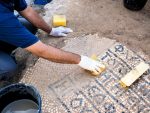
A 1,500-year-old mosaic floor, with a Greek inscription, was discovered this summer following groundwork for a communications cable infrastructure near the Damascus Gate in the Old City of Jerusalem. David Gellman, the director of the excavation on behalf of the Israel  Authority, said, “The fact that the inscription survived is an archeological miracle…. We were about to close the excavation when, all of a sudden, a corner of the mosaic inscription peeked out between the pipes and cables. Amazingly, it had not been damaged.” Hebrew University in Jerusalem’s Dr. Leah Di Segni deciphered the inscription, which “commemorates the founding of the building by Constantine, the priest. The inscription names the emperor Flavius Justinian. It seems that the building was used as a hostel for pilgrims.”


לישראלים בקנדה

כשמכניסים את המושג “ישראלים בקנדה” למנוע החיפוש של גוגל מקבלים מגוון רחב ומפורט, על אודות הישראלים כאן, מעשיהם והקשר בינם ולבין ישראל, קנדה ויהדות.

להלן חלק מתוצאות החיפוש בגוגל של המושג “ישראלים בקנדה” לפי הסדר שנקבע על ידי מנוע החיפוש:

(פורסם ב-19 באוגוסט 2017) “ביל ניגש, חשבנו שאנו מתים”: הישראלים שפגשו את הקלינטונים. בני הזוג גלעד מרמת גן ציינו 25 שנות נישואים בקנדה, ומצאו את עצמם באותו מלון עם ביל, הילרי והבת צ’לסי קלינטון.

(פורסם ב-15 באוגוסט 2017) “חוקרים ישראלים פיתחו אי.אל שמסוגלת להציע פתרונות יצרתיים”: המחקר, שבוצע בשת”פ של האוניברסיטה העברית עם קרנגי מלון מפנסילבניה, נערך בידי ד”ר דפנה שחף. היא מספרת שיכולת זיהוי הקשרים מקדמת את האנושות לעבר בינה מלאכותית בעלת דמיון ויכולת אלתור. החוקרים הציגו את הפיתוח שלהם בכנס קי.די.די 2017, הכנס החשוב ביותר בתחום שנערך בקנדה (הליפקס) לפני כשבועיים.

(פורסם ב-16 באוגוסט 2017): “בתו של השגריר עשתה עליה. גאים בבת שלנו”: טליה פרידמן, בתו של שגריר ארה”ב בישראל, דיוויד פרידמן, הייתה בן 233 העולים החדשים מצפון אמריקה שהגיעו לישראל אתמול במטוס שכולו עולים, ע”י ארגון ‘נפש בנפש’. העולים החדשים הגיעו מ-19 מדינות בארה”ב, ומשני מחוזות שונים בקנדה.

(פורסם ב-30 ביולי 2017): “טוב ליהודים. חוק הלאום החדש נכון ונחוץ, אך הקישור שלו לדמוקרטיה שגוי”. החוק חשוב לא כדי להודיע לעולם שהמדינה שהזו שלנו, אלא דווקא כדי לקבוע שהיא איננה רק של היהודים בישראל, אלא של העם היהודי כולו ברחבי העולם. של אלה שחיים כאן, ושל אלה שחיים בארגנטינה, בארבייג’אן, בקנדה ובכל מקום גלות אחר.

(פורסם ב-19 באוגוסט 2017): “אני חייבת להסביר את הסכנה שבאסלאם, כי חייתי שם”. סנדרה סולומון נולדה ברמאללה למשפחה של פעילי טרור, ספגה שנאה לישראל ולמדה להעריץ מחבלים. היום, בחזית ההסברה היא לא מצליחה להבין איך מדינת ישראל מוותרת על כבודה וזכויותיה. בעלה קיבל עבודה בקנדה, והגיש בקשה להתאזרח שם.

(פורסם ב-11 בדצמבר 2015): “לקרוא ולקנא? ישראלים מצליחים בקנדה”. שלומית שטייר עברה עם משפחתה לקנדה במסגרת רילוקיישן שהיה אמור להמשך כשנתיים – אך בינתיים עברו כבר תשע שנים. דן גולוב נסע לפני כשש שנים לוונקובר כדי לעבוד קצת בעגלות, וכיום הוא הבעלים של חנות גדולה בוונקובר. אין נראים החיים של ישראלים שעברו לעבוד ולחיות במדינה השנייה בגודלה בעולם.

(פורסם ב-30 בינואר 2017): “מכללה בקנדה לסטודנט ישראלי, לא מקבלים ישראלים”. מחרימים: מכללה קנדית בשם בית הספר איילנד לאמנויות הבנייה שנמצא באי גבריולה השוכן בבריטש קולומביה, דחתה את בקשתו של סטודנט ישראלי ללמוד במוסד בגלל הסכסוך הישראלי-פלסתיני ובגלל ההתנחלויות הבלתי חוקיות.

(פורסם ב-12 באוגוסט 2017): “חוקרים ישראלים גילו כיצד בויתה החיטה הקדמונית”. המחקר גילה את המוטציות שאחראיות לתכונה החשובה בשינוי, והיא היכולת למנוע את התפזרות הזרעים ברוח, ובכך לשמור על היבול. המחקר בוצע עם חברה ישראלית אן.אר.גן מנס ציונה, ועם מעבדות מובילות בגרמניה, באיטליה, בקנדה, בישראל ובארה”ב.

(פורסם ב-24 באוקטובר 2016): “ישראלים נתקעו בקנדה. טרטרו אותנו, הפסדנו את החג בבית”. שדה התעופה בטורונטו שותק חלקית בשל רוחות עזות ונוסעים שלא הספיקו להגיע בזמן ממונטריאול בטיסה ארצה נתקעו במשך מספר כמה ימים. הם מותחים ביקורת על היחס של חברת התעופה (אייר קנדה) כאשר אף אחד לא נתן להם תשובות. הם נאלצו להגיע כל יום לשדה ולא נמצא פתרון.

Notary services here

Until recently, Israeli families with children in British Columbia were required to travel to Toronto to renew or extend their children’s Israeli passports. The Israeli Consulate in Toronto is now collaborating with three local notaries public – one each in Vancouver, Calgary and Winnipeg. In Vancouver, Adam Brosgall, owner and principal lawyer at Brosgall Legal, has been approved by the Israeli Consulate General in Toronto to be the notary public in British Columbia to assist Israeli citizens who wish to renew or extend their under-18 children’s travel documents.

Brosgall will notarize the parents’ signatures on their children’s passport renewal or extension forms and identify the minors appearing before him, with their updated passport photos, and sign the back of the photos.

Parents wishing to use the notary public’s services must arrange a meeting and come together with their child and the following documents: forms for renewal/extension of a passport, filled in but unsigned (the parents will both sign in front of the notary public); birth certificate of the minor with the names of both parents; photocopies of the parents’ passports; and two recent five-by-five-centimetre passport photos of the child.

Both parents must come to the meeting with the notary public, along with the child, and the notary public’s service comes at a fee. After the notarization, the signed forms and the children’s photographs must be sent by mail to the Consulate General in Toronto. Only requests signed by Brosgall (in Vancouver) will be approved by the consulate.

Those who choose not to appear before the notary public may continue to travel to the consulate in person to renew/extend their children’s passports.

For more information and to book an appointment, email to adam@brosgall.com or call 604-685-ADAM (2326).

Hockey career recognized

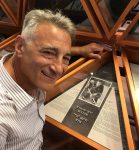
Jeff Buller at the induction ceremony for his father, the late Hy Buller, into the International Jewish Sports Hall of Fame in Netanya, Israel. (photo by Diane Buller)

These remarks were delivered on July 4 as part of the International Jewish Sports Hall of Fame induction ceremony at the Wingate Institute, in Netanya, Israel, for my late uncle, Hy Buller, who played for the New York Rangers hockey team from 1950 to 1954.

Ihave a photo hanging in my office of a curious little boy playing outdoors – a photo of me at 3 years old. In this photo, I’m proudly wearing a New York Rangers cardigan sweater, a loving gift from my Uncle Hy.

My Uncle Hy died in 1968, when I was still a teenager and, for much of my youth, he and his family lived in Cleveland, far from my hometown of Vancouver. I really got to know him best while penning an article about him for The Scribe, the journal of the Jewish Museum and Archives of British Columbia. This article, aptly titled “A mensch on defence,” was published in 2002.

In writing “A mensch on defence,” I reconnected with Hy’s three sons, Bob, Bruce and Jeff, who provided valuable information about their father. My cousins also put me in touch with legendary hockey players who had shared the ice with Hy: “Mr. Hockey” Gordie Howe, “Terrible” Ted Lindsay and goalie Johnny Bower. Each had warm memories of Hy and spoke highly of his abilities.

Winters in Saskatoon were devoted to hockey. Like many boys his age, Hy spent most of his time outside of school hours vying to be king of the ice on his uncle’s vacant lot, flooded and frozen each year.

A natural athlete, Hy quickly rose up the ranks and caught the eye of local coaches and scouts. When it was too warm for hockey, Hy never stopped moving, and was active year-round in football, baseball, basketball, golf, swimming and track and field, earning many awards.

In the 1940s and 1950s, there were only six teams in the National Hockey League. Most of the players on these teams came from the Canadian Prairies, with the majority coming from the small towns of Saskatchewan. From the time they were old enough to hold a hockey stick, youngsters in these hinterlands developed a fierce love for the game and a burning desire to be one of the 120 favoured players that made up the six NHL teams.

After an illustrious eight-year stint in the American Hockey League, Hy was traded to the New York Rangers at the close of the 1950-51 season, where he played with distinction until retirement in 1954.

A newspaper commented that, in street clothes, Hy Buller, with his mild, scholarly appearance, glasses and receding hairline, looked like someone who spent a lot of time in a library and knew from which end to read a book. But, once on ice with a hockey stick in his hand, something happened to Hy – a kind of Clark Kent into Superman transformation in which he changed from a studious-appearing bookworm to a formidable, hard-checking defenceman who seemed to be everywhere at once. He was admired not only for his solid plays but also for his good sportsmanship.

Hy’s type of playing in many respects resembled the kind of hockey played in Europe, depending more on clever stick-handling and skating than on the rough-and-tumble brand played in North America. His style and ability earned him the admiration of his fellow players.

I’m honoured to be accepting this award on behalf of my uncle and my family, 23 of whom have traveled from far and wide to share in this special moment. It’s a tribute to how well loved and respected he was that so many have journeyed to be here. I’d specifically like to note Hy’s sons Jeff and Bob, who have come with their wives, Diane and Sandie, and children.

On behalf of the family, I’m pleased to express our gratitude to the International Jewish Sports Hall of Fame for their induction of Hy Buller. My sincerest thanks.

To read David Schwartz’s 2002 article “A mensch on defence,” visit jewishmuseum.ca/publication/scribe-volume-22-mensch-defense. For more information on Hy Buller, visit en.wikipedia.org/wiki/hy_buller.