Tracking down haters

Israel’s Ministry of the Diaspora recently announced what it calls the most advanced system of its kind in the world to track antisemitic content on social media.

The Anti-Semitism Cyber Monitoring System, or ACMS, can find relevant posts that are antisemitic (using the definition devised by the International Holocaust Remembrance Alliance) on Facebook and Twitter in English, French, German, Arabic. It can see who posted and shared the comments. Other languages and social media platforms are expected to be added to the system as it progresses.

In a month-long trial run, the system identified 409,000 antisemitic posts by 30,000 individuals. Whether the system can or cannot catch every instance of antisemitism online is less significant than the fact that it is a tool to identify trends. In the trial, the system identified the world’s “most antisemitic cities” as Santiago, Chile; Dnipro, Ukraine; and Bucharest, Romania. Western cities that topped the online antisemitism list were Paris and London.

This is relevant research. It would be useful to know where Vancouver or Canada falls in such a ranking. That kind of information could help our community work with governments and other agencies to address the topic and devote resources to education and countering hatred.

But information is power. And power can corrupt. There is a difference between accumulating information that is (or can be) anonymized to allow for research into the topic. It is also fair to use such a system to identify individuals who should be reported to authorities for investigation for potential contravention of hate laws or for exhibiting potential for violence. But the words from Israel’s Diaspora Affairs Ministry Naftali Bennett were not reassuring. According to the Times of Israel, Bennett said the system would expose online antisemites “for all to see.”

“The time has come to put a mirror in front of our haters and expose the ugly face of modern antisemitism,” Bennett went on. “From now on, we’ll know who every antisemitic inciter is.”

Anyone who has spent time online and confronted the sorts of nastiness that exists there might find a sort of satisfaction at the idea that some of the people who are purveying the worst Jew-hatred will no longer get off scot-free. But let’s take a step back.

It is one thing for an intelligence agency – or a responsible nongovernmental organization such as the Southern Poverty Law Centre – to accumulate information like this for the purposes of research, monitoring dangers and notifying appropriate authorities. It would be quite another if, as Bennett seems to suggest, a government (or other agency) were to make public an online database of people who express offensive or racist comments online.

There is a website called Canary Mission, which, according to its self-definition, “documents people and groups that promote hatred of the USA, Israel and Jews on North American college campuses.”

The site is a compendium of individuals who have made comments online or been seen at events of various types and includes links to their LinkedIn, Facebook, Twitter and other social media pages.

Some of the comments Canary Mission has assembled are indeed disturbing. “I swear if [a] Jew gets within 5 feet from me at the protest and says a word, straight murder,” one person wrote. “Ima kill a jew in a month,” wrote another.

There is also no doubt that, among these people, most of whom are university students, are some who have been drawn into anti-Israel movements and have made, as many of us do, occasional untoward comments on social media. It may be fine to call these comments out, but it is not acceptable to assemble in one place a group of people who vary widely – from those who should be reported to authorities for posing a danger to society to some who are probably legitimately attempting to make a peaceful political statement, however misguided we may think that message is.

This approach encourages vigilantism. It is the sort of tactic that has been used in the past by anti-abortion terrorists who have murdered or attempted to murder healthcare providers, including one right here in Vancouver who was shot through a window in his home.

Consider – and there is absolutely no reason to view this as far-fetched – that a website was set up to aggregate information about you, your parents, your children and anyone else you know who has traveled to Israel, donated to Zionist causes or attended pro-Israel events. There are a lot of irrational people in the world and a project like this could help them act out in potentially catastrophic ways.

Again, there is value and importance in accumulating this information. It should be shared with relevant authorities, including the universities, police, FBI, CSIS and so forth. But we should not be encouraging the public dissemination of this material. It is an extremely hazardous game.

 

Abbas more isolated

U.S. President Donald Trump with Palestinian Authority President Mahmoud Abbas at the Presidential Palace, Bethlehem, May 2017. (photo by the White House)

Mahmoud Abbas has had enough. Thirteen years into his four-year term as elected leader of the Palestinian people, he has nothing of substance to show for his efforts and his friends are abandoning him.

On Sunday, his frustration was on full display during a two-and-a-half-hour speech.

Things have been building up lately for Abbas and his Fatah faction and, at a meeting of the Palestinian Central Council, he finally let loose.

Naturally, he focused on Israel, which he declared a European colonialist enterprise and denied Jewish connection to the land.

“Israel is a colonialist project that has nothing to do with Jews,” Abbas said. “The Jews were used as a tool under the concept of the Promised Land – call it whatever you want. Everything has been made up.”

Abbas, who has a doctorate in history, has taken a creative approach the discipline from the start, when his dissertation discounted the number of Jews murdered by the Nazis and contended that European Jews were collaborators in their own genocide in order to advance the cause of Zionism.

Of course, Abbas also railed against the U.S. president for his announced intention to move the American embassy to Jerusalem. Abbas accused Donald Trump of destroying the prospects for peace.

Yekhreb Beitak,” Abbas said in the general direction of Trump. According to the Associated Press, the curse literally translates as “may your house be demolished.”

“In colloquial Palestinian Arabic,” AP explained, “the phrase can have different connotations, from a harsh to a casual insult, but its use in a widely watched speech seemed jarring – and could exacerbate his already fragile relationship with an American president who is particularly averse to criticism.”

If the U.S. president is a notorious hothead, that’s exactly how Abbas appeared Sunday, but certainly not without reason.

What must hurt more than anything is that Abbas now sees those who have been the Palestinians’ historic allies softening their resolve. As a New York Times investigation earlier this month indicated, while Arab leaders from Egypt to Saudi Arabia were making appropriate noises in public about Trump’s Jerusalem gambit, behind the scenes they are giving every indication that they won’t expend political energy on the matter.

The irony is clear – and for Abbas and his allies it must be especially painful.

The welfare of Palestinians has never been a genuine priority for the Arab world, even as they have propelled the Palestinian cause to the top of the global agenda, paralyzing the United Nations in the process. For Arab leaders, Palestinians have always been little more than a battering ram with which to land blow after blow against the Zionist entity. Palestinian life under Israeli occupation and autocratic leaders is filled with small and large indignities.

Now that geopolitics suggests Israel is not so much the regional threat that Iran poses, the Palestinians, once a useful weapon for the Arabs in their 70-year confrontation with Israel, are being cast aside.

Abbas’s obvious frustration Sunday suggests there may finally be a change afoot to the status quo that has been unsatisfactory for Israelis and even more so for Palestinians. What the future looks like for the Palestinians – and for their relations with Israel – remains unclear.

***

Note: The headline of this editorial has been changed. In the Jan. 19 newspaper, the piece ran as “Abbas rightly irked,” which misled some readers to think that we agreed with Mahmoud Abbas’s remarks. We in no way condone his abandonment of historical fact, his inhumane accusation that Jews were complicit in the Holocaust or the many other false and immoral statements in his two-and-a-half-hour diatribe.

Pondering a hospitable Zion

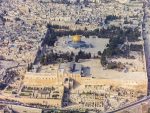
Jerusalem (photo by Andrew Shiva via Wikipedia)

Hospitality is culture itself and not simply one ethic amongst others. (Jacques Derrida, On Cosmopolitanism)

One of the late French-Jewish philosopher Jacques Derrida’s most famous short works is his On Cosmopolitanism, in which he discusses the problem of refugees. Cosmopolitanism is a word first coined in ancient Greece by wandering, homeless philosophers and popularized by the Stoics. It refers to the idea that the whole world (cosmos) is my city, or community (polis). It is the idea of an international or, better, transnational humanity and citizenship. Cosmopolitanism became popular again during the European enlightenment and slowly had a growing influence on international law and modern ethical sensibilities, including the sense that countries have a duty of hospitality, of offering refuge even to peoples of other nationalities.

This same ethical idea occurs in Derrida’s own Jewish tradition, where “love the stranger” is a commandment uttered many more times than “love your neighbour” and where Isaiah the prophet urged Israeli kings to give shelter to refugees of war.

In On Cosmopolitanism, which was based on a speech Derrida gave to the International Parliament of Writers on the subject of refugees, Derrida discusses the nature of hospitality and the contradiction at its heart. Hospitality involves welcoming guests into your home, in sharing resources and shelter, yet, to do so, it must remain “a home.” Should all boundaries of the home dissolve in unconditional welcome then the possibility of hospitality itself will also be obliterated. Derrida’s insight mitigates against a naive or utopian call for the obliteration of borders or the indiscriminate welcome of refugees.

In this thought of Derrida we see a tragic conflict at the heart of modern Zionism. Do we want a hospitable Zionism? Is the house the Jews built in Israel for Jews alone? Yet if the doors are flung wide, what will happen to “our Jewish home”?

There is much anxiety to protect our “home,” of that we can be sure. An extensive security wall, checkpoints, and airport border guards who are masters of interrogation. When we press Israel to become more hospitable – to African asylum seekers, to displaced Palestinians – we hear a chorus of voices arise: if we let them in, if we include them, the demographics will dissolve our home!

And we so badly want a home. Wandering for 2,000 years, we were homeless, exiled, a tolerated or cursed minority. Finally, we returned to our ancient home and, amid controversy with others who had come to live there and also claim it as home, built walls to protect it.  We now again had a home, and we have chanted this word to ourselves over and over again, “home, home,” for the last 70 years.

Yet what good is a home that does not extend hospitality? Sure, we airlifted Ethiopians, we opened our arms to Russians, and so on and so forth. Yet they were us, our family. True hospitality, though, as it says in our own foundational text, is given to the stranger. The other.

Unconditional welcome is not the only way to destroy a home. What good is a home that offers no hospitality? Is a home that offers no hospitality even a home at all?

Israel is in the process of deporting the 60,000 African refugees who arrived before the building of a barrier wall with the Sinai to prevent more entering. As Russel Neiss wrote in the Forward, “For years, in actions held to be illegal multiple times by Israel’s Supreme Court, the Israeli government has arrested and placed these refugees in a detention centre in the Negev and forcefully deported them to other African nations in exchange for money or favourable terms for weapons contracts and military training.”

Twenty thousand refugees, most from Sudan and Eritrea, have already been deported or left of their own accord, and the government has ordered the rest to leave, with a small financial gift and plane tickets paid, or be jailed.

According to Derrida, hospitality is both a duty and a defining feature of a real home. The feeling that an inhospitable Israel is not really a home, I fear, is growing and will continue to grow among Israelis and Jews. Maintaining the feeling that Israel is a Jewish home only will require an unremitting focus on perceived and real threats to Jews in Israel and abroad. It will reinforce the unhealthy sense of home as a shelter from others, rather than fostering the healthy sense of home, one that is open to sheltering others.

The result may be that we have a very well guarded home. But, for those of us who perceive the lack of hospitality on offer, it begins to feel like no home at all. The opposite of Derrida’s formula – “in order for there to be hospitality, there must be a home” (a formula that is surely true and needs due respect) – is “in order for their to be a home, there must be hospitality.”

Jews, being a transnational people for so many years, became, in two senses, a “cosmopolitan people.” One was that fact of transnationality; the other stemmed from the involvement of Jews in socialist political movements, which problematized nationalism, as well as our involvement in activism aimed at the liberalization of immigration laws. It was all of this, seemingly, which coalesced to give birth to the use of “cosmopolitan” as an antisemitic code word for “Jew.”

I don’t think “cosmopolitan” is an insult, but rather a very high compliment. When an antisemite calls Jews “cosmopolitan,” I hear it as a calling, not a calling out. Israel will not truly be our Jewish home until it embodies the highest cosmopolitanism of the Jewish spirit, which can be read in the Torah’s call – millennia ago – to love the stranger and refugee.

Matthew Gindin is a freelance journalist, writer and lecturer. He writes regularly for the Forward and All That Is Interesting, and has been published in Religion Dispatches, Situate Magazine, Tikkun and elsewhere. He can be found on Medium and Twitter.

Let’s hear it for camp!

(photo from teenlife.com/summer-program/urj-camp-kalsman)

Going to camp was a rite of passage when I was growing up. Everybody went to camp. In my day, it was the B’nai B’rith camp that all Jewish kids went to, in Sandy Hook, past Winnipeg Beach.

I don’t recall much detail of my really young days as a camper, but we never missed a summer. As small kids, we went with our mothers. It all had to do with getting away from the oppressive summer heat and time at the beach, wading and swimming, sunning on a blanket, playing the games on the boardwalk. I would have an ice cream cone every day, even though, back then, all you could get were vanilla and strawberry flavours. There may have been chocolate, too.

I enrolled in Young Judaea in my early teens. In the heady days leading up to and after Israel declared its independence, movements of every political stripe in Israel had a youth group and camps in Canada and in the United States.

At camp, we built our Jewish consciousness and reinforced our Jewish identity. We were part of larger society, of course, but the one that was becoming central to our lives was the Jewish one, and the camp experience strengthened all that. Everything around our activities focused on our life as Jews, intellectually and emotionally, in our developing teen years. It was easy to pick out the future leaders – assertive, confident, basing their arguments on material accepted as fact. That was the stuff we brought forward into our adult years, colouring what we would become and the messages we would transmit to our children.

Aliyah to Israel was an enormous focus of the Zionist camps I associated with. This possibility, went the argument, was why we had to study our history, our customs, our holidays. We were building a new kind of Jew, unapologetic for his striving nature, determined to never again be a victim. History’s lessons were clear and we had to take heed and take our future into our own hands. The camps I attended were the educational vehicle.

In those days, we pretended we were chalutzim (pioneers), so we went out into the bush and made like we were going to live off the land. We built lean-tos to sleep under, chopped down trees, built things, learned how to make a campfire even without matches, and engaged in marches, canoeing, the whole megillah.

The years I spent as a camper – learning to be a scout, learning to create things with my hands, to develop myself physically, to compete for excellence – we were modeling the new Jew. We were not content with just being students, we knew we could do that – we were going to be doers. We were building pride in ourselves and in our accomplishments.

In turn, I became one of the leaders trying to transmit the messages I had absorbed to others. The young people I grew up with at camp worked in their own communities in the same way. All across the country and across the United States, we were a network fighting assimilation, building loyalty to Israel and a consciousness of being Jewish and the values it represented.

One of the best experiences I had was when I was invited to be a Camp Shalom program director in Gravenhurst, Ont. I spent six months preparing programs and then threw them all out on my second day on the job. I spent the next two months preparing different programs on the fly, built around Jewish holidays or events in Jewish history. We organized camper teams, choosing names, uniforms and cheers, and had athletic competitions, colour wars, talent competition skits, swimming competitions or just fun at the beach. I don’t know about the campers, but I had a great time exploring my creative capacities. We set up a pattern that was followed for years at that camp.

Some of us became community leaders. A few of us even got to Israel, at least for a time. Many of the associations we made have withstood the test of time. Some of the best friendships I have today are ones I made in those years. A good number of marriages came out of those experiences, including one of my own.

What a wonderful institution camps are, whatever their nature! Bringing kids into a healthful environment with responsible supervision, living lives completely different from what they are accustomed to, meeting people they would not normally meet, exposing them to alternative behavioural norms, has to be good. And getting away from the city into a natural environment, who has to be convinced that that is a good thing? Let’s hear it for camp days. Rah, rah, rah!

Max Roytenberg is a Vancouver-based poet, writer and blogger. His book Hero in My Own Eyes: Tripping a Life Fantastic is available from Amazon and other online booksellers.

Beit Ruth supports at-risk girls

Beit Ruth Village (photo by Poole)

When boys are hurting, are at-risk or are vulnerable and abused, they act out. They join gangs, skip school and get into fights,” Danielle Burenstein, executive director of Beit Ruth, told the Independent. “But, when girls are hurt or abused, they disappear and become transparent; they hurt themselves. When the system identifies a girl who is at risk, it’s normally because she has disappeared from the school system, is living on the streets or tries to commit suicide.”

Beit Ruth, in the northern part of Israel, was founded by Susan and Michael Ashner, a philanthropic couple from New York who, in 2003, were in Israel to visit a project they were supporting – a program that was educating vulnerable boys. During this visit, Burenstein said, “Susan asked something that would change both of their lives forever: ‘What happens to their [the boys’] sisters? Where are the programs for the sisters?’ The answer, pretty much, was there is really no need for those programs for the girls, because we don’t have those issues with the girls.”

Nevertheless, said Burenstein, Susan Ashner researched more about the status of at-risk and vulnerable girls in Israel, and determined “that there was a need for programs and services in Israel for those girls.” Beit Ruth began as a hostel in Rishon LeZion in 2006, which housed 13 at-risk girls between the ages of 13 and 18. By 2014, a new location had started operating on the outskirts of Afula, in a gated village setting. Today, Beit Ruth Village in Afula houses 45 girls in three houses.

Recently, a new school building was completed. Next on the list of capital projects are two more homes that will allow the village to take in 30 more girls. Following this, the plan is to add five more homes, giving the village and school the capacity to help 150 girls.

“Beit Ruth is a long-term residential village for at-risk and vulnerable girls,” said Burenstein. “It is a learning, healing and caring community that embraces the whole child, emotionally, socially and academically. It gives girls who have been removed from their homes by the Ministry of Welfare – due to incidents of severe neglect or abuse … and, when I say abuse, I mean emotional, physical or sexual; in many cases, it is incest – it gives these girls a chance…. Most, for the first time in their lives, have the chance to receive therapy for this abuse.”

Beit Ruth also “gives them the chance to get a high school education and life skills, so they can be prepared for life outside the village.”

Walking into the village, she said, is “like walking into a gated community in Vancouver. There are homes, with between 12 to 15 girls living in each home. They are not dormitories. They are decorated like homes.”

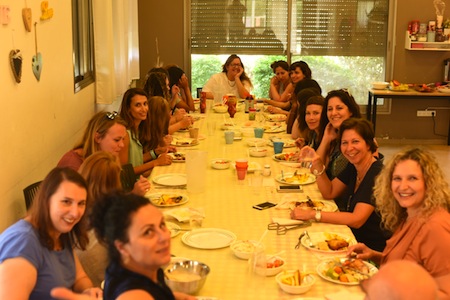
photo - Lunchtime in one of the residential houses at Beit Ruth Village
Lunchtime in one of the residential houses at Beit Ruth Village. (photo by Meir Azoulay)

Each house has a kitchen with a dining room, where the girls cook together, eat together, and have chores and responsibilities, and a living room. They have a bedroom they share with three other girls, and they can decorate it however they wish.

“We’re recreating that security and foundation that any child needs to have in order to be a successful human being,” said Burenstein. “I mean, to be able to have trust and respect, communication skills and a desire to learn, like most kids have.

“When our girls come to us in the village, I can tell you that, if you were to visit as an outsider, you’d probably be able to point out which girls have just come to us … because they are a shell of what a child should look like at that age – withdrawn, many sitting in a corner. You can tell that they are scared. They won’t make eye contact with you. They speak in a low voice.

“In a matter of weeks or few short months, you’ll see them start to smile, hang out with the other girls, talk with staff, engage, listen … some will laugh out loud.”

The girls who come to Beit Ruth have to choose to do so themselves, and they can choose to leave at any time. The purpose of the village gate is to keep out unwanted visitors, not to lock the girls in.

“The girls need to commit to the hard work it takes to overcome their trauma, to face their trauma through therapy, to listen to the values we instil in the village, which are all about teamwork, respect and trust,” said Burenstein.

Something that makes Beit Ruth unique are its guiding principles, one of which is creating the atmosphere of a home life – the kind of support a family should give a young child. Another guiding principle is therapy, which helps each girl face her own personal trauma, with the goal of overcoming it.

There are also enrichment programs, such as therapeutic art or music, sports and physical activities, all of which are mindfully selected and designed to help a young girl find her voice, passions and skills, to forge communication skills, trust and respect.

Many girls come to Beit Ruth with big gaps in their education. Some don’t know how to read or write at 13 or 15 years of age.

“When you’re hungry, when you’re scared, or when you’re in an abusive situation, school is not what you’re focusing on,” said Burenstein. “So, our girls are given the opportunity to have a high school education and we help instil a love of learning and curiosity that most kids have.”

Once at the village, each girl gets the support she uniquely needs. Beit Ruth does not go with one-size-fits-all programs, as each child comes with her own trauma, past and capabilities.

Beit Ruth’s educational programs, which were developed for the village, are trickling down into use by Israel’s Ministry of Education, to other schools around the country, and into hospitals.

“Each girl has her own journey to take,” said Burenstein. “It’s really hands-on for each one of the girls. They know it’s a place they can call home. They know this is a place where they are safe. They know this is a place that, no matter what … and, trust me, they try to test us … they know that we’re here for them and that we’re not giving up on them. That comes across loud and clear.”

Rebeca Kuropatwa is a Winnipeg freelance writer.

Plan is inhumane

Prime Minister Binyamin Netanyahu takes off for Kenya on a trip last year. (photo by Haim Zach/GPO via Ashernet)

Recent years have seen a mass migration of people from Africa and the Middle East, primarily to Europe. Images of rickety boats filled with migrants and bodies washing up on European shores jolted the world’s conscience.

To be more accurate, these images jolted some people’s consciences. Others, like far-right political parties in Europe, have been more concerned with preventing migrants from entering their countries than they have been with the dangers the migrants face at home or in transit.

Israel’s experience has been somewhat different. Beginning even before the peak of the migration, thousands of east African migrants traveled to Israel, crossing the Sinai border with Egypt and entering Israel illegally. In some cases, migrants, many of them asylum-seekers, paid Bedouins to transport them across the border into Israel. The once-porous border has been secured and Israel’s attention has now turned to how to deal with those who entered the country illegally.

Some have been held in a facility called Holot, in the Negev, which the government describes as an “open-stay centre.” It is run by the prison authority and, while “residents” are free to leave during the day, they cannot work and if they miss an evening curfew they can be jailed.

There are an estimated 27,500 Eritreans and 7,800 Sudanese in Israel. The Israeli government department responsible says that 1,420 of these people are being held in detention facilities.

Migrants say they came to Israel to escape conflict or persecution, but the Israeli government characterizes them as economic migrants and refers to them as “infiltrators.” Prime Minister Binyamin Netanyahu has also suggested that African migrants threaten the Jewish nature of the country.

Thousands of migrants have already voluntarily left Israel, apparently not seeing a future there, despite arriving filled with the promise that life there might be free and prosperous.

Now, Netanyahu has announced a crackdown that puts the fate of the remaining tens of thousands in doubt. The government had already announced plans to deport migrants, a plan that Israel’s high court approved last summer, on the condition that safeguards were in place in third countries that would accept the expelled people. Rwanda has accepted several thousand African people from Israel.

Some who have returned to their home countries have been tortured or placed in solitary confinement. And reports say that others who have left continue their journeys through successive countries, many of them with an eye to eventually making it to Europe. Libya has been the departure point for many Africans setting off for Europe. For around 2,000, it has also been the last sign of land before drowning. In Libya, also, migrants are being sold in contemporary slave markets. Others are sexually assaulted or coerced into forced labour.

Irrespective of all of this, Netanyahu announced last week that the remaining migrants would be given the equivalent of about $3,500 US and sent packing. Those who do not leave will be imprisoned, the prime minister promises.

The choice is not necessarily obvious for everyone. One migrant told the New York Times recently: “If it’s between going back to Africa or to jail in Israel, I’ll go to jail.”

The government’s plan is inhumane.

We have plenty of sympathy for the need to maintain Israel’s Jewish character, but the assessment that 40,000 Africans present a serious threat to that demographic necessity – even generations down the line – is not credible.

A country that absorbed one million migrants from Russia in the course of a few years (albeit imperfectly) and whose entire history has been one of absorbing migrants, can do better than this for 40,000 Africans.

It is also startling to see the Jewish state behaving in such a callous way to migrants. Eve if some – or all – of these migrants were “economic” migrants rather than fleeing persecution and conflict, this would still not be an acceptable strategy. Jewish history should imbue Israel with more sensitivity to the humanity of migrants of any colour or origin. Even if the sensitivity to the migrants’ humanity were not genuine, Israel should at least be sensitive to the appearance created by their inhumanity toward the migrants.

In this space, we have always maintained that Israel has the right to determine its policies and directions first based on their self-determined needs, not on whether it makes it easier or more difficult for overseas Zionists to make our case. But does the Netanyahu government absolutely need to behave in ways so blatantly and unnecessarily nasty?

Games with capital

Last week, U.S. President Donald Trump recognized Jerusalem as the capital of Israel. There are a number of issues to unpack in his (un)diplomatic announcement.

First, rioting by Palestinians and others around the Middle East, as well as potentially related attacks on Jewish institutions in Sweden, are acts of violence that deserve to be condemned, with no excuses or legitimation.

Second, as for the president’s decision, we can leave aside partisanship from the mix. Former presidents Bill Clinton, George W. Bush and Barack Obama have all made effectively the same statement: Jerusalem is the undivided capital of Israel.

But we need to separate the ethical from the pragmatic. For whatever else it is – home to holy sites of three religions, a multicultural, multifaith, multilingual metropolis – it is Israel’s capital. Tel Aviv may be the economic heart of the country and the first modern Jewish city, but it has always been toward Jerusalem that the national aspirations of the Jewish people have been directed. But, the fate of Jerusalem is considered one of the core issues to be addressed in any permanent peace agreement that results in a two-state solution. Whether or not recognizing Jerusalem as Israel’s capital is the morally right action, the pragmatic truth is that the president’s move was not inspired by a desire to do right.

The most charitable thing we can say about the president’s Jerusalem decision is that he kept his promise to evangelical Christian voters. He was unequivocal before the election on this issue and, unlike those who came before, he appears to be following through. The same can be said on many other fronts where conventional observers assumed a cooler head would prevail once the weight of the office descended on the showman. The provocations around immigrants, the racism, the assaults on even members of his own party – none of these has eased since he moved into the White House. While Congress has ensured the president has so far passed no legislation of consequence – though a sweeping and irresponsible tax bill is on the horizon – the president has behaved just as he did when he was a candidate, esteem for the office, personal dignity and respect for others be damned.

Again, there may be disagreement on whether moving the embassy is a good thing, a bad thing, ill-timed or overdue. But let us not pretend that the president was moved by any ethical, theological or political morality. This was just the latest in a succession of provocative actions through which the president thumbs his nose at anyone with a modicum of nuance, diplomacy or sense of the larger geopolitical reality.

Trump likes to stir things up and this time he did it using Jerusalem. This is no favour to the Jewish people or Israel. We may, in fact, suffer its consequences alongside many in the Palestinian territories who may lose their lives in riots and skirmishes precipitated by this thoughtless edict. All of us are just the tools in another of his childish, and very dangerous, games.

Helping Save a Child’s Heart

Left to right, panelists Dr. Tommy Gerschman, Dr. Thuso David and Randi Weiss at the screening of A Heartbeat Away in Vancouver on Nov. 2. (photo by Cynthia Ramsay)

More than 4,400 children from 55 countries in the developing world have received life-saving heart surgeries because of the efforts of volunteers associated with Save a Child’s Heart Foundation. Thousands more have been saved by doctors trained by the organization’s volunteers.

The Israel-based organization is aiming to expand its reach in British Columbia. A screening of the film A Heartbeat Away in Vancouver on Nov. 2 shared the anxious, sometimes tragic and often uplifting stories faced by medical volunteers associated with the agency.

Marni Brinder Byk, executive director of Save a Child’s Heart Canada, introduced the film and moderated a panel discussion afterward. She explained that when Vancouverite Lana Pulver joined the national board of the organization, it presented an opportunity for more on-the-ground activities in the city.

Save a Child’s Heart (SACH) has another strong Vancouver connection. Vancouverite Randi Weiss recently moved back after spending several years in Israel, where she served as a full-time volunteer with SACH.

The foundation is committed to saving children’s lives by improving the quality and accessibility of cardiac care. Israeli medical experts, and some from other countries, provide free, life-saving surgeries to children from developing countries and also train surgeons and medical teams from those countries, helping them build their own skills.

Entirely as volunteers, SACH doctors travel to Africa, Asia, Eastern Europe and other parts of the Middle East to assess potential candidates. A few less urgent cases are treated on the spot, while more serious cases are transported to Israel, where the child and a parent can spend weeks or months during surgery and recovery. A new home, accommodating 61 patients, family members and medical staff, recently opened near the Wolfson Medical Centre in Holon, where the Save a Child’s Heart medical facilities are based.

The film depicted the heartbreaking choices doctors are forced to make during their trips abroad, as young patients whose cases are simply too advanced for an encouraging prognosis have to be rejected. But the film also follows the story of Julius, a kindergarten-age boy from Tanzania, as he travels to Israel and gets a fresh lease on life after a harrowingly complicated surgical procedure.

Weiss said that about half the kids SACH treats are from the Palestinian Authority or other places in the Middle East. About 40% are from African countries, including Ethiopia and Tanzania, she said, while others come from Romania, Moldova and wherever there is a need not being met.

Weiss was joined on the panel after the film’s screening by Dr. Thuso David, a pediatrician from Botswana who arrived in Vancouver in early August to continue his training at B.C. Children’s Hospital. He noted that, in many African countries, there are few medical specialists, so a complex medical issue like congenital or acquired heart disease is rarely treated.

Dr. Tommy Gerschman, another Vancouverite, was also on the panel. He volunteered as a medical intern for SACH in Israel a decade ago.

Save a Child’s Heart Canada was founded in Toronto in 1999 by the late A. Ephraim “Eph” Diamond. Brinder Byk said that SACH’s annual budget is about $6 million US, about one-sixth of which is provided by Save a Child’s Heart Canada. The Canadian contingent has also stepped up in a big way to help fund a new wing at the Wolfson Medical Centre designated especially for SACH’s use.

“We have a lot to be proud of as Canadians, that we will be helping that many more children and training that many more doctors,” said Brinder Byk. “The children of Israel are also going to benefit because, if they live in the catchment area of the Wolfson Medical Centre, they will be able to use their services as well.”

Help share aliyah story

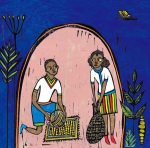
An illustration from Yerus Goes to Jerusalem. (photo from Sid Tafler)

The Ethiopian aliyah to Israel inspired people around the world when it was first revealed in the 1980s. Today, there are 125,000 first-, second- and third-generation Israelis from Ethiopia.

The story of the courage and determination of the community to return to Eretz Yisrael after 2,000 years of isolation from the rest of the Jewish world is told in the beautiful children’s book Yerus Goes to Jerusalem. About a young girl’s experience making the difficult journey from her village in Ethiopia, the award-winning book, written in Hebrew and illustrated by Ethiopian artist Moran Yogev, is well known to thousands of Israeli students and their parents. A new crowdfunding campaign will translate it into English, to make it accessible to Jewish schoolchildren everywhere, so they can share in the triumph of the Ethiopian community in achieving their dream.

Everyone is invited to join this venture with a donation of any amount, large or small. Only $20 will reserve one of the first copies of Yerus Goes to Jerusalem published in English for your children, grandchildren or your synagogue or Hebrew school.

This campaign is led by Dror Yisrael, a service organization in Israel, and a committee of organizers, mostly in Israel and the United States, including Sid Tafler of Victoria, the only Canadian on the committee.

To donate to the crowdfunding campaign, which ends Dec. 1, and for more information, visit jewcer.org/project/yerusgoestoyerusalem or facebook.com/yerusgoes. For the options of how to donate after Dec. 1, email Gilad Perry at gilad@drorisrael.org.il.

Walking Israel National Trail

On Canadian Friends of Hebrew University trips to the Israel National Trail, travelers will take their time and enjoy the landscape. (photo from Ami Dotan)

The Vancouver chapter of Canadian Friends of Hebrew University has plans to walk the Israel National Trail (Shvil Yisrael).

As it would take too long to walk the entire 1,000-kilometre trail, CFHU Vancouver will only walk its highlights, dividing them into five separate trips. The week-long excursions will be led by Ami Dotan, CFHU scholar-in-residence and a professional tour guide. The walks will take place each spring, beginning with a trip March 5-11, 2018.

“Generally, the main core of tour guiding in Israel involves going to Jerusalem and some of the holy sites and history and so on, which I totally love,” said Dotan. “But, whenever I get the chance to do some trekking, then I gravitate to it…. It’s my favourite thing. And, doing it on the INT – which was defined by National Geographic as one of the top 20 holy grails of treks in the world – it’s amazing.”

Dotan decided to kick the walks off by exploring Israel’s desert, as it provides such a contrast to the lush forests and lakes that most Canadians are used to at home.

“There’s something special about the desert,” he told the Independent. “There is no makeup of rivers and vegetation, just the essence, the core of things, the rocks and the ground…. Since I was a child, I loved the desert. Alone sometimes, with no cellphones, it touches your heart I think.

“If you ask yourself, ‘Why go to the desert?’ just think, the three major Western religions were conceived in deserts: Judaism, Christianity and Islam.”

Growing up in Jerusalem, Dotan recalls having stepped out of his home as a child and walking to the Kidron Valley from Jerusalem, making his way to the Dead Sea. Eventually, his father would come with their old car to bring him back home after dark. “That’s when I began developing a love for the desert,” said Dotan. “And, then, of course, during military service, walking in the desert.”

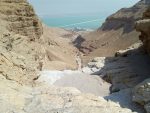
The trip Dotan will be leading in March will begin with an overnight in Mitzpe Ramon, going down into the crater and walking across it to the other side. This is a 12- to 13-kilometre stretch of serious desert.

The group will then bus to the Arava for a night. Dotan described this area as being “in between Israel and Jordan, but very safe. The next day, we’ll go do a trek called Maale Palmach (Palmach Ascent). This is an ascent nobody knew was possible to do … and the Bedouin who met them at the other side said it couldn’t be done…. Therefore,” he said, “it was named ‘the Ascent of the Jews’ by the Arabs. We’ll do part of the trek, including climbing up a ladder, to be able to [get up] this cliff that they walked up.”

The third day will have participants heading into sand dunes, to Kibbutz Ktura for the night. And, on the fourth day, they will go to the colourful sand rocks near Eilat and spend the night in Eilat.

“Lastly, on Saturday, for people who want to walk on Saturday, we’ll go up the mountain and then down through the INT,” said Dotan. “Then, for those who want to go on to Petra, we’ll spend three more days and continue to Petra.

photo - Hopefully travelers will see some of the Shvil's residents, such as mountain goats, which have their babies in the spring
Hopefully travelers will see some of the Shvil’s residents, such as mountain goats, which have their babies in the spring. (photo from Ami Dotan)

“The trip will involve special activities around the walks, to better understand the culture and the character of the people who live there, and things we do in the desert. And, we have a Bedouin evening with local people – an amazing way to get to know the desert geographically, but also the people who’ve lived there for so long and how their life changes in a modern country, which is fascinating subject on its own.

“Next year [2019], we will do less desert, instead going to the north, which is also beautiful. I think, what you get in the north is more the human diversity. You have the Jews – Orthodox, secular and Modern Orthodox – and Arabs, Christians and Druze. In the desert, you have a Jewish population and Bedouin.”

Dotan chose to have the trips in March for two reasons. One is because they will take place before Passover, so participants will have time to return home for holiday preparation. The other reason is that, in March, the desert may have some flowers blooming, as well as some vegetation and grass.

“I hope we’ll even get to have an appointment with some mountain goats that have their babies that time of year – amazing to see,” said Dotan. “Hopefully, we’ll find natural water pools in the valleys filled with water. Not Canadian-scale quantities of water, but, after you’ve walked all day and have been sweating and warm, you’ll get to jump into this cold, fresh natural water … before it disappears in a few months.

“Also, of course, March is the time that birds migrate from Africa back to Europe. Twice a year, we have half a billion birds flying all over Israel, and many of them fly over the Syrian-African rift (which is the border between Israel and Jordan … just over our heads). So, you’ll be able to see swarms of all sorts of birds – birds of prey, storks and pelicans, whatever you want.”

According to Dotan, the trip is designed for people who have good mobility, but it won’t be extreme. There will be walks of roughly 12 kilometres a day, but, as Dotan said he has learned from experience, “It’s not a question so much how many kilometres you walk, it’s about what type of kilometres you walk. Yes, we are going to go down sometimes very steep rocks, but, obviously, it’s doable. It’s part of the excitement of walking in the desert. If you’re reasonably fit, you can do it…. I’ve had people 80 years old doing this trek. It’s not a matter of age. It’s a matter of if you’re enjoying the walk. We’re not going to rush. On the contrary, we have a lot of time to do it calmly and enjoy the landscape, nature, and excellent logistics.”

The tour group will get to stay in unique hotels at the end of each day, with a bus taking them to the beginning of the trails and picking them up at the end. “Every night, you will get to enjoy a hot shower, a good dinner, and so on and so forth,” said Dotan.

“This experience isn’t for those who rush. Rushing in the desert isn’t a good idea. I’ve done most of these treks with my 10-year-old son, and he’s not Superboy. It’s for anybody who loves nature and is reasonably fit for walking in the mountains, not just in a park. Even if you need to not participate for a day because you need the rest, then that’s possible and no problem.”

For more information about the CFHU Shvil tours, contact Dina Wachtel, Western Region executive director at 604-257-5133 or dwachtel@cfhu.org.

Rebeca Kuropatwa is a Winnipeg freelance writer.