Rally highlights resilience

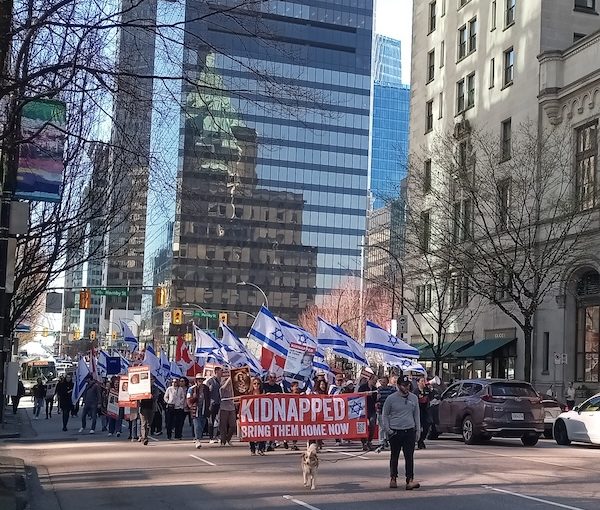
Those who gathered for the weekly rally to call for the release of the Israeli hostages take their message down Georgia Street on Sunday, March 17. (photo by Cynthia Ramsay)

After five months of attending almost every one of the weekly rallies for the Israeli hostages, I found myself Sunday on the other side of the crowd. Daphna Kedem, the organizer of these events, invited me to address the audience on March 17, alongside Rabbi Philip Bregman and Michael Lee, member of the Legislative Assembly for Vancouver-Langara.

I was speaking on nobody’s behalf but my own, although my nearly 30 years of writing for this Jewish newspaper, my being the director of Upstanders Canada, which fights antisemitism, and just generally my being a non-Jew who is a keen Zionist, were presumably the reasons I was asked to speak.

Someone whose primary role is reporter does not like to become part of the story. This is different. I am a journalist (among other things) but there are identities and values that, in my view, supersede journalistic constraints – support for democracy, for example, and free expression. Zionism covers a wide swath of opinion and experience and I fall on that spectrum. There is no point in pretending I don’t. 

Several people have requested that the Independent print the full text of my remarks. We have not done this for other speakers over the past five months, and this issue is jam-packed with news around related topics of allegations of antisemitism in the province so there is not space to run the entire speech. However, we have posted it on the paper’s website, with apologies to the dozens of speakers whose words have not been shared in their entirety over the past five months. Insider privilege, undoubtedly.

Even though the audience at these vigils is overwhelmingly Jewish, I felt my message should be aimed at non-Jewish people.

I’m also angry, and I decided to let that show. In addressing those gathered at the Vancouver Art Gallery, where the weekly rallies for the Israeli hostages are held, I observed that I was standing on the same steps where, days after the pogrom of Oct. 7, people stood and celebrated murder, rape, beheadings and kidnappings. 

“We mourn,” I said, “We grieve every single innocent life lost. We do not celebrate dead innocents. Neither do we tally up bodies in a grotesque competition where the side with the most dead wins moral victory.”

I warned that it is not only Jews and Israelis who are threatened by the behaviours of anti-Israel activists.

“The violence, coercion, intimidation and racism these people embody is a threat to Canada … to our civility, our peace, our multiculturalism and political discourse,” I said.

Maybe, I suggested, there are Canadians who don’t care if the Jewish people lose their country.

“But when they wake up and see that Canadians have lost ours … Jewish Canadians and their allies will be asking: Where were you? Where were you when we were standing up for the values that Israelis and Canadians share? Where were you when we demanded ‘bring them home’? Because, if you are not standing with Israelis against extremism … you are emboldening extremism in Canada.

“This is not about choosing between Israelis and Palestinians,” I said. “Unlike the extremists, we want peace for everyone. This is about choosing between civilization and barbarism. And we need to ask every Canadian:  Which side are you on?”

Before I spoke, Kedem shared comments made the night before at the weekly rally in Tel Aviv, with relatives of living and dead hostages urging Prime Minister Binyamin Netanyahu to do everything in his power to negotiate their release.

Kedem told the crowd that former cabinet minister Selina Robinson was to address the rally but security concerns prevented her from attending.

“I think it’s very, very sad moment for us that we can’t have a Jewish representative walk the streets of Vancouver in 2024,” said Kedem. 

Robinson sent remarks, which were read by Kamiel Kruse. Those remarks can also be read in their entirety on the Independent’s website. Robinson stressed the rally’s theme of resilience, sharing many examples of where she finds resilience.

“Resilience comes from seeing the Oct. 7 survivors of rape and torture pick up the pieces of their lives. It comes from seeing Israelis gather once again to protest their government. It comes from so many of you who have reached out with words of support, encouragement and love,” wrote Robinson.

“Resilience comes from us gathering our collective strength as we lift each other up and remind ourselves that we are not alone – that together we will find the strength – the strength to bring peace,” she concluded.

Bregman – who was the senior rabbi of Temple Sholom from 1980 until 2013 and then was executive director of Hillel BC and created the Other People, an interfaith and multicultural group that has spoken to some 7,500 students and faculty about racism and bigotry – also spoke of resilience.

He contextualized current events as part of a very long Jewish history, with almost 4,000 years of steadfastness in the face of challenges, Temple destructions, expulsions, Crusades, pogroms and worse. He spoke of his own experiences growing up with antisemitism in rural Ontario, and the firebombing of Temple Sholom synagogue, then on West 10th Avenue, on Jan. 25, 1985.

Through all this ancient and modern history, Bregman said, one thing has remained constant.

“The message is clear. We are not going anywhere,” he said. “We are here.”

Lee had just returned from Germany and a meeting of state and provincial legislators from the United States, Germany and Canada. He reflected on the extremism that is rising in places around the world.
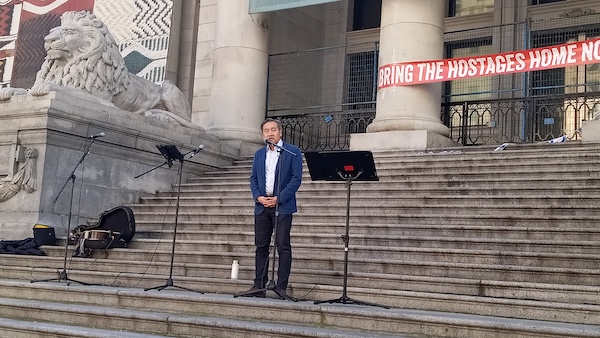
photo - Michael Lee, member of the Legislative Assembly for Vancouver-Langara, addresses the March 17 rally for Israeli hostages
Michael Lee, member of the Legislative Assembly for Vancouver-Langara, addresses the March 17 rally for Israeli hostages. (photo by Cynthia Ramsay)

Part of the BC United party, Lee said he strives to avoid partisanship when speaking at these rallies to help ensure “that the Jewish community is not made a political football” and he assured Jewish community members that they have allies on both sides of the Legislature.

Lee called for the province to fully adopt the International Holocaust Remembrance Alliance Working Definition of Antisemitism because it would clarify discussions. Some of the commentary being heard today falls directly into at least one of the examples accompanying that definition, he said.

“Denying Jewish people the right of self-determination by calling the state of Israel a racist endeavour is an example of antisemitism,” he said.

Lee was recently shuffled into the role of opposition critic for the attorney general, a position he had held before, and he said he has called on the AG to take a stronger line in the justice system against potential hate crimes. 

“We need the attorney general to direct Crown counsel to prosecute the Criminal Code violations which are antisemitic and hate crimes incitement to public violence that are antisemitic in nature on our streets,” he said.

Lee lauded Robinson’s work in the Legislature, especially her commitment to the Jewish community.

“I am very disappointed, like so many of you, that she is not able to be here with you,” said Lee, who has spoken admiringly in the Legislature and elsewhere about Robinson. “But she is with you, you know that. Selina has always been with you. She will always be with you.”

Throughout the afternoon, Mia Mor sang and Richard Lowy joined on guitar and vocals. 

Pat Johnson’s full speech – rally for Israeli hostages March 17/24

I want to thank Daphna not just for inviting me today. But for inviting each of us here every Sunday. It’s so important.

Daphna – todah rabah.

**

I was not born into this community. Nor did I convert. I just showed up here, about 30 years ago, like a stray dog. And you took me in.

As someone coming into this community from the outside — but especially, coming from a background of progressive, left-wing activism, from the gay community, from antiracist activism, I have had the opportunity to see, to hear and to understand events from different angles.

When I showed up in Vancouver’s Jewish community, I had no idea about the depths of the familial, spiritual, emotional and personal connections between almost every Jewish person and the state and the land of Israel.

And I think this is one of the things that you probably discovered in the last five months. Most people just do not comprehend what Israel means to Jewish people.

We need to share that story. But we can only share that story if other people will listen. And that is the problem.

Because the people who need to hear it are too busy chanting to listen … or to understand.

**

Many British Columbians fail to understand why a former cabinet minister is claiming anti-Jewish bias while so many of her colleagues, who have apparently invested no effort into exploring the many forms antisemitism can take, steadfastly insist there must be some other explanation.

Israel is the national embodiment of the Jewish people. To attack Israel is to attack Jews.

Here is the bigger issue …

The people who are marching against Israel … they are not helping the people of Gaza … and they sure as hell are not making the world a better place.

The only thing they are doing is making Canada a more dangerous, toxic, intolerant country.

Hateful words against Israel are inciting violence against Jews in Canada.

And when we express concern about this undeniable correlation, we are accused of conflating anti-Zionism with antisemitism … as if that distinction makes a damn bit of difference to the victim of a hate crime.

Words of hate … lead to acts of hate. We understand this when it comes to any other group.

But when it comes to Jews … people are willing to employ the most dangerous, inflammatory and incendiary rhetoric. And let the chips fall where they may.

**

But it is not only Jews and Israelis who are under attack by these radical extremists.

It is the very essence of what it means to be Canadian. It is our core national values that these activists betray.

Day after day, we see shrieking, crazed mobs shutting down events, screaming obscenities and threatening people who are trying to live their lives, commute to work, go to the theatre, attend synagogue or get an education.

The person you should be hearing from is not me.

Selina Robinson was invited here today. But it was not safe for her to come.

What does that tell you about the state of civil discourse in Canada?

You’ve seen their rallies. You have heard their chants. Do those look to you like people of peace?

They call for Israel to stop defending itself … but they refuse to demand the one thing that would immediately end the war and all this dying – the surrender of Hamas.

On the steps of this art gallery, days after the pogrom of October 7, people stood here and celebrated murder, rape, beheadings and kidnappings.

**

We mourn … we grieve every single innocent life lost.

We do not celebrate dead innocents.

Neither do we tally up bodies in a grotesque competition where the side with the most dead wins moral victory.

And even if some of the people who march for Palestine do not celebrate beheadings, do not applaud rape or rejoice at mass murder – they are absolutely content to march alongside people who do.

Those who on these steps called those horrific, inhuman atrocities “brilliant and amazing” are not only part of a movement that is holding human beings hostage.

They are holding hostage humanity itself.

They have abducted words like peace and ceasefire, freedom and human rights — but they desecrate these values.

Canadians have allowed people who align with the most misogynistic, homophobic, xenophobic, violent and totalitarian forces on earth to masquerade as voices for justice and equality … while accusing us of humanity’s greatest crimes.

If these people were genuinely advancing human rights and social justice, they wouldn’t need to cover their faces in keffiyahs and balaclavas.

We need to figuratively tear off their masks and show Canadians who these people are …

**

Maybe many Canadians don’t care about a conflict half a world away.

But the violence, coercion, intimidation and racism these people embody is a threat to Canada… to our civility … our peace, our multiculturalism and political discourse.

But the threat does not come only from the goons marching in the streets.

It also comes from some of our elected officials – including some who, until very recently, we thought were our friends — from the trusted teacher, the activist clergyperson, the crusading union leader, the self-righteous politically engaged artist.

Meanwhile, far too many Canadians have stood on the sidelines while extremists have taken over our streets, our campuses, our community theatres, our high schools, our public service.

Maybe they don’t care about Israelis.

Maybe they don’t care if the Jewish people lose their country.

But when they wake up and see that Canadians have lost ours … Jewish Canadians and their allies will be asking. Where were you?

Where were you when we were standing up for the values that Israelis and Canadians share?

Where were you when we demanded bring them home?

Because if you are not standing with Israelis against extremism … you are emboldening extremism in Canada.

This is not about choosing between Israelis and Palestinians. Unlike the extremists, we want peace for everyone.

This is about choosing between civilization and barbarism.

And we need to ask every Canadian: Which side are you on?

Selina Robinson’s full speech – rally for Israeli hostages March 17/24

My friends,

I am sorry that I could not join you in person for safety reasons, but I thank the organizers for sharing a few words on my behalf.

My heart has been with all of you these past five months. I join you in seeking release of the hostages now. I join you in seeking peace – peace for the Palestinians – peace for Israelis – peace for us all.

I am told the theme for this week is resilience and so I have spent the last few days reflecting on my own resilience – as the lone voice in government speaking up for the Jewish community and how difficult it had become while others remained silent. I also focused on how much more difficult it became after I was forced to resign, feeling punished for speaking up about Jew-hatred.

I reflected on where the strength, the koach came from to persist, when it would have been so much easier to be silent, to fade into the background, to go along with the others and to pretend that everything was okay.

So, from where do I draw the strength?

It comes from different places:

  • A husband outraged that his wife is poorly treated by her colleagues, forced from a role she loves and who now keeps a baseball bat in the bedroom because others are threatening her life.
  • A son who stopped going to his gym shortly after the massacre on Oct. 7 because the Port Moody gym owner and city councillor decided that putting up a large Palestinian flag in her gym demonstrating to the world that she suddenly cares so deeply about a complex geopolitical conflict thousands of miles away is more important than the hurt this causes friends, colleagues, and customers.
  • A daughter who now must find significant financial resources to make sure the Jewish children in her care are safe this summer.

My strength has also come from:

  • The two Jewish professional women who, as a requirement of their jobs, came to hear the Throne Speech at the Legislature in February. They were forced to find a safe route into the building as there were dozens of protesters aggressively calling for a unilateral ceasefire and the destruction of Jews.
  • The physicians who refuse to train Jew-hating UBC medical students.
  • The teachers who organize to push back on the Jew-hatred we are seeing in the [BC Teachers’ Federation].
  • The people working in the public service who are telling their stories of intimidation like being told that their Jewish star necklace is a symbol of genocide.

Resilience for me comes from the countless stories from people who talk about being fearful at work, from Holocaust survivors who say, “It’s happening again.”

Resilience comes from Jewish community leaders and volunteers who are doing everything they can to keep programs running, to push government to do the right thing, to care for their congregants who are scared and worried, and who lead by example.

Resilience comes from the emails and letters from hundreds of people, Jewish and non-Jewish alike, who remind me that even though I felt alone in my caucus and in government, I was not alone. I am not alone. We are not alone. Many were seeing what I was seeing, what we are seeing and are prepared to stand up to Jew-hatred.

Resilience comes from reaching out to others who are hurting too and finding out that they want to help heal our wounds together.

Resilience comes from seeing the Oct. 7 survivors of rape and torture pick up the pieces of their lives. It comes from seeing Israelis gather once again to protest their government. It comes from so many of you who have reached out with words of support, encouragement, and love.

Resilience comes from us gathering our collective strength as we lift each other up and remind ourselves that we are not alone – that together we will find the strength – the strength to bring peace.

הקלות לישראלים בהגירה לקנדה

קנדה מקילה באופן זמני על ישראלים המעוניינים להגר למדינה. זאת עקב מלחמת חרבות הברזל הארוכה המתנהלת כבר למעלה מארבעה חודשים בין ישראל לחמאס. המסלול הזמני והחדש יתקיים בשלב זה למשך כארבעה חודשים – עד לסוף חודש יוני

על פיו יוכלו ישראלים המעוניינים בכך לקבל ויזת עבודה בקנדה במשך שלוש שנים. מדובר בויזה פתוחה שתוכל לסייע בהמשך הדרך לקבלת אישור תושבות קבוע. ולאחר מכן אף לקבל אזרחות קנדית לכל דבר. מסלול זה שנפתח עתה עבור ישראלים כאמור בעקבות המלחמה, שימש בעבר כסיוע הומניטרי עבור אוקראינים ואוכלוסיית היזידים שנרדפת על ידי דאעש וכן גורמים איסלאמיים קיצונים

הקלות עבור ישראלים המעוניינים להגר לקנדה ניתנות עבור אלה שהם בעלי אשרת תייר המבקרים כאן (ללא קשר למועד הגעתם לקנדה). וכן לאלה שהם קרובי משפחה של אזרחים קנדיים, או אלה שמחזיקים בתעודות של תושבות קבע

עד תחילת מלחמת חרבות הברזל הקריטריונים להגירה לקנדה הקלו בעיקר על בעלי מקצועות מבוקשים וכן על בעלי השכלה גבוהה (בעלי תארים מתקדמים). אך בתנאי שכל אלה הם מתחת לגיל שלושים. וזאת, על פי שיטת הנקודות. מדי מספר חודשים משנה קנדה את גובה רף הניקוד אשר ממנו כל הבקשות מתקבלות

מסלולי ההגירה בקנדה מחולקים על פי הפרובינציות השונות. על פי השיטה על המבקש להגר לכאן מוטל להציג מספיק נקודות שנקבעות לפי מספר קריטריונים. ובהם: מקצוע, גיל ורמת האנגלית. מי מבקשים להגר לקנדה שהציג מספיק נקודות, יכול להגיש בקשה לתושבות קבע, לאחר מספר שנים לעבור מבחן (באזרחות) ואז להפוך לאזרח קבוע. כידוע אזרחים יכולים לבקש דרכון קנדי, נחשב לאחד הדרכונים המבוקשים ביותר בעולם במשך שנים

את הגשת המועמדות להגירה ניתן להגיש באופן עצמאי או להשתמש ביועצי הגירה המומחים לנושא, שיעזרו במילוי הטפסים הרבים. את הטפסים לבקשות הגירה ניתן להגיש מישראל, או מקנדה למי שנמצא כאן על פי ויזת עבודה או אלה שלומדים כאן

זמן ההמתנה לקבלת האישורים להגירה יכול להימשך כשנה ואף יותר מכך, בהתאם לרמת הנקודות של המבקש

באופן כללי מסלולי הגירה לקנדה נחלקים בגדול למסלולים זמנים ומסלולים לתושבות קבע. וזאת על פי קריטריונים שונים ובהם: הגירה לצעירים ומשכילים, הגירה על פי תוכניות של הפרובינציות השונות, מקצועות מבוקשים, הגירה לצורכי לימודים. וכן מסלולים למשקיעים פיננסים, קרובים מדרגה ראשונה ועוד

ניתן לקבל אשרות שהייה זמניות לצרכי לימודים גבוהים או עבודה. אם מעסיק קנדי מציע למועמד הצעת עבודה שעומדת בתנאים של משרד העבודה הקנדי, אפשר לקבל אשרת עבודה למשך מספר שנים. בדרך כלל אשרת עבודה מתקבלת מהר וניתן להאריכה בסך הכל עד שבע שנים. כמובן אם המשרה של העובד עדיין בתוקף. לאלה שעובדים בקנדה, העבודה תקנה להם נקודות כך שבתוך שנתיים הם יוכלו להגיש מועמדות של תושבות קבע במסלול המהיר. מי שקיבל שהתקבל ללימודים במוסד להשכלה גבוהה בקנדה (אוניברסיטהי או קולג’) למשך חצי שנה או יותר, יוכל לקבל ויזת לימודים. בתום סיום הלימודים המועמד יהיה זכאי לקבל ויזת עבודה בקנדה, למשך של שלוש שנים. זאת תלוי במסלול הלימודים ובאישור שהתקבל על ידי מוסד הלימודים. יש לזכור שעל מוסד הלימודים להיות מאושר על ידי מערכת ההגירה של קנדה. הלימודים או העבודה לאחריהם יכולים להקנות מספקי נקודות כדי להגיש מועמדות לקבלת תושבות קבע, במסלול המהיר

לפרובינציות השונות יש מסלולים מקוצרים ומהירים לקבלת תושבות קבע

The choice to convert

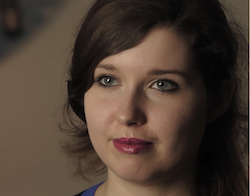
Adam is one of the potential converts interviewed in the documentary Converts: The Journey of Becoming Jewish, directed by Rebecca Shore and Oren Rosenfeld, which is part of this year’s Vancouver Jewish Film Festival. (photo from convertsmovie.com)

A religion that encourages questions, one in which people can speak directly with God. A religion that’s thousands of years old, which so many have attempted to wipe out, yet still flourishes. A religion that’s intellectual and communal, which involves both the head and the heart.

photo - Dana
Danya (photo from convertsmovie.com)

These are just some of the aspects of Judaism highlighted in Converts: The Journey of Becoming Jewish, directed by Rebecca Shore and Oren Rosenfeld. The 70-minute documentary is part of this year’s Vancouver Jewish Film Festival, which runs April 4-14 in theatres and April 15-19 online.

Converts follows Adam, Danya and Bianka as they go through the conversion process. Each have their own reasons for wanting to become Jewish.

Adam, a student at York University when we meet him, grew up in a violence-filled neighbourhood in Toronto. His father used the family’s savings – that could have gone into moving the family elsewhere – to establish a church, which failed. Adam was attracted to Judaism because, unlike the Christianity he grew up with, Judaism gave him the space to ask questions and to speak with God directly, though giving up belief in Jesus was hard, he admits.

Danya, a businesswoman from Costa Rica, found out in high school that she has Spanish-Portuguese Jewish roots, that her ancestors were forced to convert to Catholicism from Judaism centuries ago. She feels that ancestral pull and uproots her life, traveling to Israel with her daughter in the hope of converting and living there.

photo - Bianka
Bianka (photo from convertsmovie.com)

Bianka, a PhD student in chemistry at the University of Warsaw, lives in Radom, Poland. She immerses herself in a few other religions before finding comfort in what she considers Judaism’s scientific approach, but also in the warmth of the Jewish community, which she discovers by attending synagogue and holiday events.

Well-constructed and well-paced, Converts is a fascinating look at identity, family, community, religion, the search for meaning and the possibilities of change and self-actualization.

For tickets to the film festival, visit vjff.org.

רילוקיישן לקנדה: מידע מעודכן לישראלים בימים קשים אלה

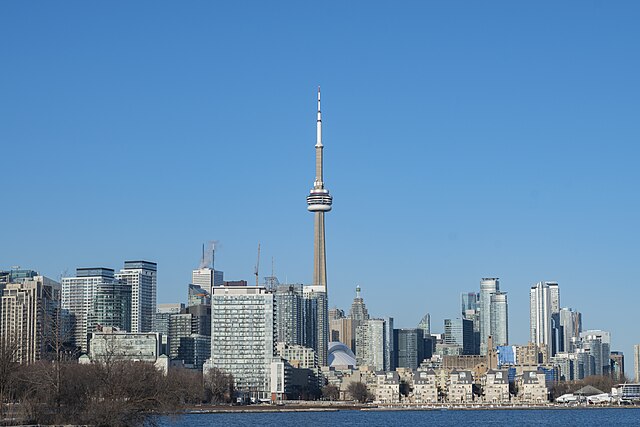
מרכז הקהילה היהודית והישראלית נמצא בטורונטו שהיא העיר הגדולה ביותר בקנדה
צילום Fabian Roudra Baroi

קנדה היא אחת מהמדינות האטרקטיביות ביותר להגירה: מדינה מבוססת כלכלית, יפה, רגועה ועם תנאים סוציאליים נדיבים לתשוביה. עם זאת, רילוקיישן לקנדה כרוך בקשיים ואתגרים

 בשנים האחרונות הפכה קנדה לאחד מהיעדים הנחשקים ביותר להגירה עבור ישראלים. בניגוד למדינות רבות אחרות, המדינה הקנדית דווקא מעודדת הגירה לתחומה. בהתאם לכך, מדי שנה מהגרים אליה בין שלוש מאות אלף לחצי מיליון איש. לקנדה מערכת בריאות אוניברסלית מהטובות בעולם (בניגוד לשכנתה מהדרום ארצות הברית), חקיקה סוציאלית נרחבת, יציבות פוליטית וכלכלית, נופי טבע מדהימים ועוד. היא מדורגת במקום השלישי במדד המדינות שהכי טוב לחיות בהן (ולעומת זאת: ישראל מדורגת במקום הארבעים ושלושה בלבד)

עם זאת, ישנם מספר דברים שכדאי לקחת בחשבון לפני שעושים את הצעד המשמעותי  להגר. כמו: הגשת בקשות ההגירה לקנדה כרוכה בעמלות של אלפי שקלים, החורף קר להפליא ויכול להגיע גם עד למינוס חמש עשרה מעלות צלזיוס. וכן שקנדה קנדה רחוקה משראל מרחק של לכל הפחות עשר שעות טיסה (והטיסות לרוב יקרות), מה שמקשה על ישראלים המהגרים אליה להגיע לביקורים תכופים בארץ

קהילות יהודיות וישראליות בקנדה: מרכז הקהילה היהודית והישראלית נמצא בטורונטו שהיא העיר הגדולה ביותר בקנדה. זו עיר רב-תרבותית ותכולו למצוא בה קהילות מהגרים מכל העולם כולל ישראל כמובן

ממשלת קנדה הקימה פורטל המפרט את סוגי הויזות השונים וכן את ההליכים הנדרשים על מנת לקבל כל אחת מהן. הוויזות השכיחות ביותר הן: איחוד בני משפחות עם אחד מבני המשפחה יש כבר אזחרות קנדית. ויזת סטארט אפ – ניוד של חברת סטארט אפ לקנדה או הקמתה כאן (אשרת עבודה וכן שהייה קבועה). יש גם ויזת עבודה לבעלי מקצועות מבוקשים. קנדה מעודדת הגירה לאנשי מקצוע העובדים במקצועות מבוקשים עליהם נמנים בין היתר: סיעוד, הנדסה, תכנות, פיננסים ופיזיותרפיה

ויזת עבודה לעצמאים: חלק מהפרובינציות בקנדה מציעות תוכניות קליטת הגירה משלהן, כחלק מתהליך בחינת הויזה על המועדמים לעבור מבחנים בידיעת השפה האנגלית (או הצרפתית למי שמעוניין להגר לקוובק). יש לשים לב שתהליך הגשת בקשת הויזה כרוך בעמלות שיכולות להגיע גם לאלפי דולרים קנדיים. ממולץ להתייעץ עם סוכני הגירה כדי לוודא את העמידה בתנאים, תקינות מסמכים ועוד

איך מוצאים עבודה בקנדה: אחד מהיתרונות הגדולים הטמונים בהגירה לקנדה הוא העובדה שהיא מדינה דוברת אנגלית (אלא אם עוברים לקוויבק ששם השפה המדוברת היא צרפתית). לפני ששולחים קורות חיים באנגלית מומלץ לוודא עם דובר אנגלית שפת אם, שאין בתרגום שגיאות ושהמונחים המקצועיים המצוינים כתובים נכון. עוד מומלץ לפתוח/לעדכן פרופיל ברשת החברתית-עסקית לינקדין, הנחשפת למרכזית בהליכי חיפוש עבודה בקנדה. מומלץ גם להעלות לפרופיל שלכם בה פוסט המבשר על המעבר המתוכנן ועל חיפוש עבודה מתאימה. מומלץ עוד לחפש ישראלים בלינקדין מתחום העיסוק הרלוונטי שגרים בעיר אליה מתכננים לעבור ולנסות להיעזר בהם

מערכת הבריאות הקנדית נחשבת לאחת מהטובות בעולם ומדורגת באופן קבוע בעשירון העליון בדירוגים שונים, כולל של ארגון הבריאות הנילאומי. בניגוד לשכנתה ארצות הברית ובדומה לרוב מדינות אירופה, בקנדה קיימת מערכת בריאות אוניברסלית הנגישה לכולם, ובנוייה על תשלום מס בריאות. כמו בישראל, ניתן להוסיף לכף ביטוח רפואי פרטי, שבכוחו להגדיל את הכיסוי, לקצר זמני המתנה לרופאים מומחים ועוד. ישנם מקומות עבודה המספקים ביטוח רפואי פרטי כהטבה לעובדיהם. כל הפרטים הללו רלוונטיים לאזרחים קנדיים. אם עדיין לא קיבלתם אזרחות של המדינה – מומלץ להצטייד בביטוח רפואי פרטי

Anti-racism work at risk

Selina Robinson resigned Monday as British Columbia’s minister of post-secondary education and future skills. She also announced she would not seek reelection as the member of the Legislature for Coquitlam-Maillardville – though she said the latter was a decision she had made earlier.

The resignation Monday afternoon was the culmination of a remarkably speedy controversy that erupted late last week, after video circulated of Robinson, during a B’nai Brith Canada panel discussion, referring to pre-state Israel as a “crappy piece of land with nothing on it.” That she qualified the statement immediately, saying “there were several hundred thousand people, but, other than that, it didn’t produce an economy, it couldn’t grow things, it didn’t have anything on it,” is cut off from almost all the video clips.

The language choice was problematic and careless, no question. The Zionist movement has often been criticized for consciously or unconsciously overlooking the presence of existing populations in the land that became the modern state of Israel. One of the original slogans was: “A land without a people for a people without a land.” Robinson certainly knows this history.

What she meant – as she clarified again after the controversy erupted – was that the land had few if any natural resources or economic development. There is nothing historically inaccurate about that. Not only did Palestine not have an abundance of natural resources but, for hundreds of years, it had been an ignored piece of a failing Ottoman Empire, then, for two decades, an abused outpost of British colonialism. Regardless, the way in which Robinson spoke is not a fair or productive way to talk about a land that clearly (so clearly) means so much to so many people. Resources, economic or otherwise, are not the markers of the inherent value of a land or its significance to Indigenous peoples or anyone with a close relationship to place. That said, the feverish response to her words has been out of proportion. There is a world in which her clarification and apology would have sufficed. But, of course, this is politics.

And it is more than just politics. It is Israel and Palestine politics – and that is a particularly vicious game, even here in peaceable Canada. Annamie Paul, former head of the Green Party of Canada, learned tragically what can happen to a Jewish political leader who dares to take a nuanced position (or, really, anything but a wildly anti-Israel approach) to Middle East affairs. Some of us feared Robinson’s principles on this front put a similar target on her back. We’ve been proved right.

Robinson has been an outspoken pro-Israel voice, never more than since Oct. 7. There is no doubt that some were looking for an opportunity to knock her down – and she stumbled in a bad way, leaving her open to precisely the sort of attack some people were no doubt itching for. 

Protesters, who, since Oct. 7, have been ready to mobilize about Israel with any provocation, moved into action. Social media erupted in such performative ferocity one would think British Columbians had suddenly discovered one of our leaders was a member of the Klan. 

A major New Democratic Party fundraising gala Sunday night was canceled, apparently because they feared a protest that would distract from the party’s message in an election year. A news conference on Monday on a completely unrelated issue was also canceled, presumably for the same reason.

Groups accused Robinson of “blatant bigotry.” Anjali Appadurai, who ran against the current Premier David Eby for party leader, accused Robinson of “racist views.” Protesters Monday and people on social media accused her of “white supremacy.” After the controversy arose but before she resigned, Robinson had agreed to take anti-Islamophobia training.

It is perhaps most remarkable that the people most loudly condemning Robinson probably intersect significantly with the demographic that contests the widely accepted definition of antisemitism, contending, in effect, that Jews make up false “smears” about bigotry for political gain. This, of course, is precisely what happened to Robinson: an offhand (and, yes, offensive) remark is recast as “Islamophobia” by activists who have been waiting to pounce on precisely this sort of slipup. Not incidentally, it sidelines one of Canada’s few Jewish, pro-Israel elected officials.

The rhetoric being used around whiteness, settler colonialism and vulnerable communities also reinforces narratives about Israel that are deeply troubling and rooted in antisemitism and ignorance. Robinson’s comments, heard through an already flawed lens, produced a result that was all but predetermined by entrenched narratives. This is a disturbing reality, one that hurts more than Jews and their allies. Such abuse of terms like racism and white supremacy offend the serious work we must do as a society to confront these problems. Mobilizing these terms for crude political gain, as they have been against Robinson, undermines the fight against racism. 

Robinson, and many in the Jewish community, no doubt feel heartbroken this week. In the long run, though, it is the people of British Columbia who are the losers. They have lost the services of a committed public servant.

More than this, our political culture and the fight against racism in all its forms have been debased. 

A plea for the hostages

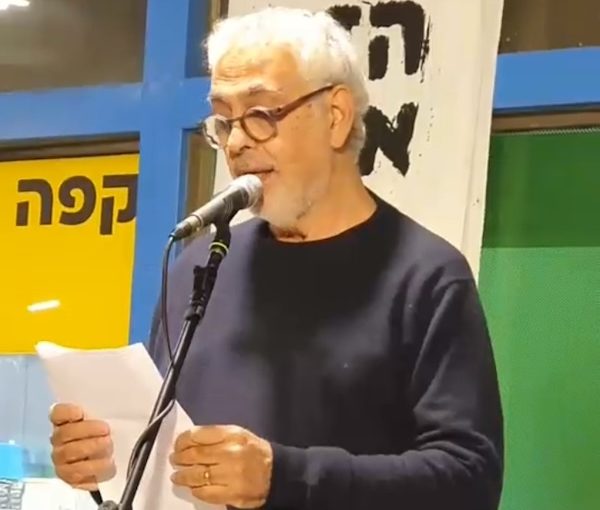
A screenshot of former Israel Air Force pilot Uri Arad speaking at the Jan. 20 Bring Them Home rally in Jerusalem.

***

Weekly rallies have been held in “Hostages Square,” the plaza in front of the Tel Aviv Museum of Art, since the Oct. 7 terror attacks by Hamas, who killed 1,200 people and kidnapped 240 that day. Every week, thousands gather in the square and in other locations, calling for the release of the 136 hostages still being held in Gaza, at least 32 of whom are now believed to be dead. At the Jan. 20 Bring Them Home rally in Jerusalem, one of the speakers was Uri Arad, a former pilot who was held in captivity in Egypt for six weeks during the 1973 Yom Kippur War. Arad is not related to Ron Arad, an Israeli Air Force officer missing in action since 1986, who Arad mentions in his speech. The remarks below were translated into English by Rahel Halabe, a Vancouver translator and educator, who is a family friend.

***

I was asked to speak here today because I have been a prisoner of war. Until recently, I had avoided talking publicly about my captivity or even identifying as a past captive. The reason I stand here today and talk to you stems from my deep empathy with the hostages and their families, my fear for the hostages’ fate and the need to join the call for their immediate release.

Indeed, I can testify from my experience that captivity is a very difficult experience, physically and mentally. Still, it is important for me to emphasize that, as difficult as my experience was, it is not the same as what our hostages in Gaza are going through. As a pilot of the air force, I was totally aware of the possibility of falling into captivity and I was prepared physically and mentally to cope with the experience. This is not the same for innocent civilians who are kidnapped out of the blue, without any previous preparation. As time goes on, it shows that the hostages are indeed going through hell.

Moreover, being held captive by a state is not the same as being held captive by a murderous terrorist organization. Being held by a state, I did not feel the constant existential threat on my life – I knew that, eventually, I would return home. This is unlike the hostages in Gaza, who are in constant existential fear of being murdered by their captors, or even killed by our own forces. It is, therefore, a much more difficult experience than what I went through.

I shut my eyes and imagine Noa Argamani, the Bibas family, Amit Buskila, Elyakim Libman, Yusef and Hamza Alziadneh, Liri Elbag, and all the other hostages, and my heart is shattered. Here in Israel, there are so many tormented families who are suffering from uncertainty and worry for their loved ones, some of them after experiencing losses without the ability to properly mourn. It’s just horror. We have to say clearly and loudly: we have reached a stage in which every day that passes is like Russian roulette in the life of the hostages. Therefore, it is necessary to do everything, everything, to bring them home now!

When people ask what reassured me most and helped me get through my time in captivity, I answer without any hesitation: I knew that the state would do all that it could to bring me back home. The ability to cope with torture, difficult interrogations and the uncertainty of my fate mostly came from my belief in the contract between me and the state, from knowing that I would not be abandoned. This confidence is what accompanies all soldiers who are ready to give their life for the state. This is the Israeli ethos of solidarity, the most sublime expression of which is that those injured on the battlefield are never abandoned, even if their rescue may involve losses, and that the state goes above and beyond to bring its captives and hostages home.

This is why I came here today, to say in a clear voice: the return of the hostages is the most important mission, maybe the only one, that should guide decision-makers at this moment. This is the necessary condition for our ability as a nation to recuperate from the horrendous disaster that hit us on Black Saturday. All of us are tormented knowing that Ron Arad never came back. It is, therefore, important to say it is unthinkable that there will be tens more of “Ron Arads.” If we don’t regain our composure and immediately bring the hostages home, this will happen. Some of the hostages will return in coffins, others will be forever lost.

But, I am asked, how do we bring them back? Don’t they keep telling us that the objective of destroying Hamas is not less important, that there have been great attempts to bring them back, that both objectives are interconnected and that we must keep putting military pressure on Hamas to bring the hostages back? It must be said, at this point in time, as Gadi Eisenkot expressed so well two days ago, this is senseless. The truth is that, today, these two objectives contradict each other. And the evidence is that – except for one hostage – all the hostages who have come back were returned in the framework of a deal. The military operation not only did not help in the return of the hostages, but it even cost the life of a few of them, and every day that passes just increases the danger to their lives. The conclusion is clear and sharp: the only way to bring the hostages back alive is through a deal. Now!

There are those who object to stopping the war, claiming that it would be a repetition of the same mistake that brought Oct. 7 upon us, and that it will eventually bring upon us many more Black Shabbats and an existential danger to the state in the long run. They mistakenly think that the destruction of Hamas is just around the corner. This is a delusion! Today, it is clear to all who are reasonable that the destruction of Hamas is an extremely difficult goal, which will require years to achieve. It is important to understand that what really hides behind this claim is the willingness to give up on the hostages. In the clash between short-term and long-term interests, those who claim the above prefer the long-term. I say, first, we must bring back the hostages! In the long-run, we will be able to continue weakening the terrorists through both military pressure and political initiatives, while striving for comprehensive agreements that will bring an end to the conflict.

I know that the thought of being forced to stop the fighting and, on top of that, pay the heavy price of a mass release of terrorists, is difficult for many people. I, too, have found it hard to swallow and say this grudgingly, but there is no escape. It is necessary to internalize that the hostages are the major asset Hamas has in its hands, and that [Hamas leader Yahya] Sinwar will not give up this asset except in exchange for the end of fighting. The strategic failure of Black Shabbat puts us, after more than 100 days of fighting, in a position in which we are forced to clearly make a decision and pay the price. The Israeli government, therefore, should initiate a deal of “all for all,” including a stop to the fighting. Now!

Binyamin Netanyahu refused to take responsibility for what happened on Oct. 7, but has been “gracious” enough to declare that he is responsible for all that will happen. If so, it must be clearly said: Netanyahu is responsible for the fate of the hostages. From here, I would like to address the prime minister and say: Netanyahu, you have brought upon us the worst catastrophe in the history of the state. This will be your legacy; you will be inscribed in history with shameful disgrace. Still, you have a chance to somehow soften history’s judgment, if you bring the hostages back alive. This is the time to rise above the political considerations that have led you and initiate a deal for the return of the hostages. Now!

Finally, I would like to say: continuing the current policy will cause a rupture, impossible to repair, in Israeli society. Israel will lose its soul, one of its most significant elements. We will never again be able to say that we hold human life sacred. This is an unbearable price. Therefore, bring the hostages back in exchange for stopping the fighting. Now!

Thank you all. 

ICJ ruling ‘nonevent’: lawyer

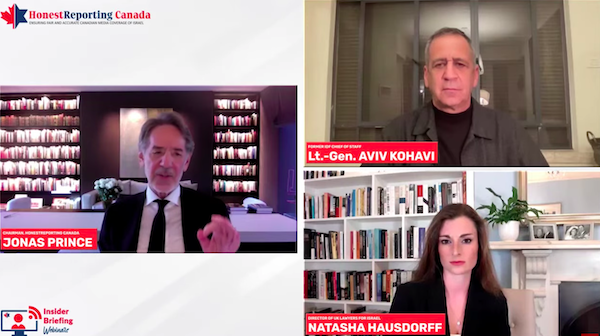
Screenshot of the Jan. 30 HonestReporting Canada discussion on the International Court of Justice ruling on whether Israel is perpetrating genocide. Jonas Prince, chair of HonestReporting Canada, emceed and speakers were Lt.-Gen. Aviv Kohavi, former chief of general staff of the Israel Defence Forces, and Natasha Hausdorff, a British specialist in international law and a former clerk for the president of the Supreme Court of Israel. 

The International Court of Justice ruling on whether Israel is perpetrating genocide means little, according to a legal academic speaking to Canadian audiences last week.  

“This was a complete nonevent,” said Natasha Hausdorff, a British specialist in international law and a former clerk for the president of the Supreme Court of Israel. “There was nothing substantive found and nothing substantive required or ordered as part of the provisional measures because there is no evidence that Israel is engaged in genocide; quite the contrary.”

Hausdorff was speaking in a webinar Jan. 30 alongside Lt.-Gen. Aviv Kohavi, former chief of general staff of the Israel Defence Forces. The event was presented by HonestReporting Canada, which describes itself as “an independent grassroots organization promoting fairness and accuracy in Canadian media coverage of Israel and the Middle East.”

Jonas Prince, cofounder and chairman of HonestReporting Canada, emceed the event.

“The words war crimes, genocide, proportionality, siege, humanitarian crisis have been weaponized by the media, as well as Israel’s enemies,” said Prince. “The Iron Dome defence against these verbal missiles is knowledge.”

Where Hausdorff brought legal acumen to the discussion, Kohavi offered the perspective of a top military official who has been on the ground, making life-and-death decisions in some of the most ethically dicey situations.

World reaction to the international court’s judgment, which was released Jan. 26, has been mixed, if not confused. The court notably did not call on Israel to end the war and neither did it rule, ultimately, on whether genocide is happening or seems imminent. 

The court handed down “provisional measures” that it said Israel was obligated to undertake, including that Israel should do everything possible to avoid killing Palestinians or causing serious bodily or mental harm, creating intolerable conditions, or deliberately preventing Palestinian births. The court also called on Israel to “prevent and punish” public incitement to genocide, citing comments from Israeli officials as examples. 

Hausdorff dismissed the last item, contending it was clear that the statements made by Israeli government officials that the court cited were referring to Hamas terrorists and not to Palestinian civilians. With respect to the other aspects of the ruling, she and Kohavi both essentially argued that Israel is already doing what the court demanded.

The wide-ranging discussion focused on Israel’s rights under international law and attempted to correct what the speakers said were misunderstandings of legal terminology. The expression “proportionality” is an example, Hausdorff said, with many people believing that the greater Palestinian death toll is proof of “disproportionality.”

“That is grotesque,” she said, “not least because the corollary of that analysis is often that not enough Jews have died to justify Israel’s response.” It also encourages Hamas’s tactics of using civilians as human shields, she said, “driving up the civilian casualty count as a means of putting pressure on Israel to desist with its lawful military activities.”

Proportionality, she explained, involves military commanders making assessments on whether the military advantage sought by a strike is proportionate to the anticipated collateral damage.

Kohavi emphasized that disparities in death tolls are due to a significant extent to Israel’s defensive technologies – Iron Dome – as well as the secure rooms and bomb shelters constructed for decades in Israeli buildings.  

“We have taken steps and measures in order to protect our citizens and that’s why the numbers on our side are relatively low,” he said. “Now, I do not expect Hamas to build their [own] Iron Dome, but they could build shelters. Instead, they have been building their tunnels for their perpetrators, not for civilians.”

For 15 years, Kohavi said, Hamas has embedded its military operations seamlessly throughout the Gaza Strip’s dense urban populations. Israel’s precision targeting technologies allow the military to destroy terrorist targets while harming as few civilians as possible, he said. 

Despite a global outcry over the estimated 27,000-plus Palestinians killed, Hausdorff and Kohavi took exception to these figures on several fronts. It is in the interest of Hamas, which compiles the statistics, to maximize them, said Hausdorff. She cited the notorious example of an alleged Israeli bombing of a Palestinian hospital killing 500. Later evidence said it was a Palestinian missile that caused the explosion and that the death toll estimates were exaggerated, possibly by a magnitude of 10. The cumulative casualty tally kept by the Gaza Ministry of Health was never altered downward after initial reports in that case were debunked, Hausdorff said.

The figures also make no differentiation between combatants and civilians, both panelists said. While lamenting all civilian deaths, they said that even in the confined theatre of the highly urban Gaza Strip, civilian deaths tolls are probably significantly lower than in parallel military engagements. 

Other data suggest 1.8 civilian deaths to every killed combatant in the current conflict, Hausdorff said, compared with the macabre accounting of the United Nations, which calculates that, in the context of urban warfare, civilian casualties average nine to every combatant death. American figures in wars Iraq and Afghanistan saw civilian death tolls of 3-to-1 and 5-to-1 respectively, she said.

In the circumstance, Hausdorff said, it is “utterly unparalleled” that Israel has kept civilian deaths to the numbers it has “despite every effort that Hamas has made to increase civilian casualties and inflate that toll.”

The court case, which was brought by the government of South Africa, is “extremely problematic,” Hausdorff said, “not just for Israel but for all law-abiding states, for those who uphold and prize the rule of law, that the International Court of Justice would be entertaining this.”

She accused the International Court of Justice of “essentially doing the bidding of a terrorist organization.”

South Africa likes to paint itself as a champion of Palestinian rights, Hausdorff said. 

“South Africa is a champion of Hamas, an internationally proscribed terrorist organization,” she said. “No individual who cared about Palestinian rights would be seeking to prop up Hamas given that the Palestinian people have borne the brunt of their brutality and their corruption and their slaughter and torture over the blast 16, 17 years.”

Readers can watch the HonestReporting Canada event at youtube.com/watch?v=FwksgmYqXBs. 

More aid sent to Israel

The Jewish Federation of Greater Vancouver has made a new transfer of more than $1 million from its Israel Emergency Campaign (IEC). This is its fourth transfer of funds and brings the total transferred to Israel to approximately $7.5 million.  

It has been 125 days since Oct. 7 and Israel is facing challenges that continue to evolve and deepen as time goes by and the war continues. The IEC allocations committee, chaired by Stephen Gaerber, has reviewed funding proposals with great care to ensure that this latest round of allocations addresses the developing needs on the ground.

To give local community members a sense of what Israelis are facing at this stage, Federation asked Rachel Sachs, director of its Israel office, to provide this summary: 

“As the army continues to fight in Gaza, the loss of soldiers’ lives and the ongoing state of captivity of 136 Israelis in Gaza is a growing and unbearable burden that is taking its toll on Israelis across the country. In the last few weeks, many reservists have been released from duty, with the understanding that they may get called up again. Their return home, after months in the battlefield, has sparked a new set of challenges in their families, their professional paths, academic journeys, and more. 

“The evacuation of approximately 130,000 Israelis from the north and the south continues. Some remain housed in hotel rooms across the country, often miles away from home. Some residents of these frontline communities remain determined to return home the minute they will be allowed to, some remain determined that they will never go back, and others are trying to determine what it will take for them to return, both in terms of their sense of security, and actual security itself.  

“Many of the devastated communities of the Gaza Envelope have either found, or are seeking, sites to which they can relocate together. Until their home kibbutzim are rebuilt, that is. They have been taken in by communities across the country, where they are, hopefully, experiencing a small sense of home for the first time since they fled their real homes months ago. 

“The mental and emotional toll of this extended situation is growing, as the need for ongoing care and therapy for survivors, bereaved families and evacuated communities continues in multiple locations across Israel. 

“In our partnership region of the Upper Galilee, the state of emergency continues.

“There is great uncertainty and concern over when the ‘day after’ will be and what will it look like. There is ongoing outreach to evacuated residents, with the understanding that community resilience is a critical factor in bringing people back home and offering them a hopeful future, together, in the north.”

Funding for this round of allocations is focused in four areas: emergency and humanitarian needs, respite for evacuees, economic support, and targeted populations. The following organizations are recipients of this round of IEC allocations:

Adler Institute: support programs for returning reservists and their families to address the specific needs related to returning from service, as defined by the reservists themselves.

Haruv Institute: a leader in training professionals who treat children suffering from trauma, abuse, and neglect, the institute is providing training for Eshkol Region healthcare professionals who are treating children.

Yeelim Centre at Ein Yael: nature therapy for survivors of the Nova festival, families of soldiers, evacuees, and more.

Ziv Medical Centre: funding to expand the centre’s emergency mental health work, so the hospital – itself in the line of fire and operating in emergency mode – can respond to the evolving needs and growing numbers of patients.

Kiryat Shmona Psychiatric Unit: currently operating from a temporary location in Tiberias, funding is to build a safe room at the Kiryat Shmona facility to ensure they can keep up treatment with patients when they return home.

Upper Galilee Hospice: support for terminally ill evacuated patients and their caregivers.

Yozmot Atid: support for the growing number of businesswomen who have been evacuated, some of whom also have spouses who have been serving as reservists for the past three months.

Israel Diving Federation: therapeutics diving excursions for survivors and evacuees from both northern and southern Israel.

Taglit-Birthright Israel: week-long respites for residents of the Eastern Galilee.

Road to Recovery: transportation for evacuees from across the country to reach their treatment sessions in their home regions, which are now often miles away.

Hannaton Education Centre: support for Kibbutz Hannaton to continue to house families of asylum seekers from Sderot, who were evacuated and have nowhere else to go.

Beit Issie Shapiro: rehabilitation and therapy programs for displaced families of individuals with disabilities.

To donate to the Israel Emergency Campaign and for a full summary of the support given to date, visit jewishvancouver.com. 

– Courtesy Jewish Federation of Greater Vancouver