הערים היקרות בעולם

הונג קונג (סין) היא העיר היקרה ביותר בעולם. (צילום: Estial)

מי אמר שקנדה יקרה: רק 5 ערים קנדיות ברשימת 209 הערים היקרות בעולם

חברת הייעוץ מרסר מפרסמת את הדוח השנתי ליוקר המחייה בעולם. המדד של מרסר המתפרסם זו השנה ה-24 ברציפות כולל 209 ערים, והוא מתבסס על בדיקת עלויות של למעלה מ-200 מוצרים שונים (כולל הוצאות לדיור, הוצאות על מזון, הוצאות על תחבורה, הוצאות על מוצרי צריכה לבית, הוצאות על ביגוד והוצאות על בידור).

קנדה שיש טוענים שהיא מדינה יקרה מיוצגת רק על ידי 5 ערים ברשימת 209 הערים היקרות בעולם. טורונטו במקום ה-109, ונקובר גם כן במקום ה-109, מונטריאול במקום ה-147, קלגרי במקום ה-154 ואוטווה במקום ה-160.

הונג קונג (סין) היא העיר היקרה ביותר בעולם. אחריה בעשירייה הראשונה: טוקיו (יפן), ציריך (שוויצריה), סינגפור (סינגפור), סאול (דרום קוריאה), לואנדה (אנגולה), שנחאי (סין), נג’מנה (צ’אד), בייג’ין (סין) וברן (שוויצריה).

העשירייה השנייה: ג’נבה (שוויצריה), שנז’ן (סין), ניו יורק (ארה”ב), קופנהגן (דנמרק), גונגג’ואו (סין), תל אביב (ישראל), מוסקבה (רוסיה), ליברוויל (גבון), ברזוויל (הרפובליקה של קונגו) ולונדון (בריטניה).

דיון בוועדת העלייה והקליטה של הכנסת להוקרת תרומת יהודי קנדה

ועדת העלייה, הקליטה והתפוצות של הכנסת קיימה דיון מיוחד להוקרת יהודי קנדה, ביום שלישי שעבר (ה-26 בחודש).

בקנדה חיים כיום למעלה מ-400 אלף יהודים ומדובר בקהילה השלישית או הרביעית בגודלה בעולם, מחוץ לישראל. מרבית היהודים בקנדה חיים בריכוזי הערים הגדולות: טורונטו ומנטריאול.

שגרירת קנדה בישראל, דבורה ליונס, שהשתתפה בדיון המיוחד של ועדת העלייה והקליטה, אמרה בין היתר כי היהודים החלו להגיע לקנדה כבר בשנת 1760. הפרלמנט הקנדי החליט כי חודש מאי יהיה חודש מורשת יהודי קנדה, מדי שנה. ליונס הדגישה כי קנדה תמשיך להילחם עד חורמה באנטישמיות ובתנועת החרם נגד ישראל והיהודים. ובמקביל קנדה תמשיך להנציח את זכר השואה תוך אמירת השבועה “לעולם לא עוד”. היהודים בקנדה ימשיכו להיות בטוחים ומוגנים כמו שאר האזרחים בקנדה.

ליונס עושה רבות לקירוב היחסים בין ישראלים לפלסטינים. במרץ אשתקד היא אירחה במעונה הרשמי כמאה נשים מתנועת “נשים עושות שלום”, המבקשת לקדם את הפיתרון הסכסוך בין שני העמים. האירוע לרגל יום האישה הבינלאומי, כלל את השתתפותן של 11 שגרירות שמהכנות בישראל (בהן מסלובניה, פינלנד ואירלנד). וכן שלוש סגניות שגרירים. ליונס אמרה באירוע: “התכנסו הערב, נשים מכל העולם, כדי לתת הכרה לתפקיד הקריטי שנשים ישראליות ופלסטיניות ממלאות בחברה כאן על כל רבדיה. אין מטרה נעלה יותר מאשר שלום במדינה. במיוחד היום כשאנו נושאות את מבטינו מסביב, אנו רואות מספר עולה וגובר של קונפליקטים, אשר גובים מחיר אנושי במיוחד מנשים וילדים. לכן מצאנו לנכון שהיום – יום האישה הבינלאומי, נישא על נס את התפקיד החשוב שממלאות חברות בארגון נשים, שעושות שלום ובקידום השלום. הטרמינולוגיה בה משתמשות הנשים הייתה ביטחון כולל על רבדיו השונים. ביטחון הוא לא רק צבא, אלה הוא גם ביטחון כללי, חברתי ואישי. אך מעבר להרחבת המושג, מדובר בשיתוף נשים בהליכים המובילים להסכמי שלום. כאשר נשים מעורבות במשא ומתן ההסכמים שנחתמים מכילים יותר ומחזיקים מעמד לטווח ארוך יותר. למרות זאת, כיום רק 9% מהנושאים ונותנים הינן נשים. ורק 4% מהחתומים על הסכמים הן נשים. משמעות הדבר היא בפועל כאשר מדובר בהחלטות קריטיות על ביטחון, ממשל, חוקים ותקציבים, כחצי מהאוכלוסיה נשארת מחוץ למעמד החשוב של קבלת החלטות. אנו תומכות במעורבות גוברת של נשים בחברה, דבר היביא לשיפור מצבה”.


מכירת הבונדס תסתיים מחר

מפעל הבונדס ישראל יצא לדרך בסוף שנת 1950, כדי לסייע לישראל לאור הקשיים בהם נתקלה לאחר מלחמת העצמאות.

מחר (יום חמישי ה-31 בחודש) תסתיים מכירת הסדרה החדשה של אגרות החוב – בונדס ישראל של מדינת ישראל, המונפקים בקנדה לשנה זו. בוונקובר יתקיים מחר אירוע ביוזמת אגודת הידידים בקנדה של אוניברסיטת תל אביב ובונדס ישראל בקנדה, לקידום מכירת הבונדס של ישראל. אירוע דומה של ידי אגודת הידידים של האוניברסיטה מתקייים היום (יום רביעי) בקלגרי. ואילו אתמול הקיים אירוע בטורונטו. האירוע בוונקובר יתקיים במשרדים של חברת פשקן ברחוב בורארד בדאון טאון, בין השעות שמונה בבוקר לאחת אחר הצהריים. הוא יכלול ארוחת בוקר וארוחת צהריים. שלושת המרצים שישתתפו בו: ד”ר אוהד ברזילי מאוניברסיטת תל אביב, המשמש חוקר בתחום ניהול טכנולוגיה ומערכות מידע, שידבר על הפלטפרומה הדיגיטלית – ההגיון בעשייה של הכלכלה הדיגיטלית. פרופסור אוריה שביט מאוניברסיטת תל אביב, המשמש חוקר בתחום תאולוגיה ופוליטיקה באסלאם המודרני, שידבר על האסלאם הרדיקלי במדינות המערב. וכן פרופסור יניב אסף מאוניברסיטת תל אביב, המשמש חוקר במחלקה לנוירוביולוגיה, שידבר על הדור הבא של טכנולוגיית סריקת המוח.

ארגון בונדס ישראל בקנדה יקיים אירוע מיוחד להוקרת חיילים בודדים המשרתים בצה”ל בחודש הבא. האירוע יתקיים בטורונטו בבית הכנסת שערי שמיים ב-26 ביוני, בין 7.30 ל-9.30 בערב.

אגרות החוב של ישראל בונדס בקנדה מונפקים פעמיים בחודש: בראשון ובחמישה עשר. להלן התעריפים של אגרות הבונדס הבולטים בקנדה, שמחר כאמור הוא הדד-ליין לרכישתם. למי שמשקיע לפחות 25,000 דולר: שנתיים 2.58%, שלוש שנים 2.88%, חמש שנים 3.47%, עשר שנים 4.25% וחמש עשרה שנים 4.45%. למי שמשקיע לפחות 5,000 דולר: שנתיים 2.43%, שלוש שנים 2.73%, חמש שנים 3.32%, עשר שנים 4.10% וחמש עשרה שנים 4.30%.

הבונדס או בשמו הרשמי מפעל מלווה העצמאות והפיתוח הוא ארגון העוסק במכירת אגרות חוב של ישראל ליהודים בתפוצות. מפעל הבונדס יצא לדרך בסוף שנת 1950, כדי לסייע לישראל לאור הקשיים בהם נתקלה לאחר מלחמת העצמאות. את המפעל יזמו ראש ממשלת ישראל דוד בן גוריון, ביחד עם שר האוצר אליעזר קפלן ושרת העבודה גולדה מאיר. וכן עם שלושה מראשי קהילת היהודים בארה”ב: הפוליטיקאי הנרי מורגנטאו, איש העסקים, הפילנתרופ ומראשי המגבית היהודית המאוחדת שמואל (סם) רוטברג, ומנכ”ל המגבית היהודית המאוחדת והרב הרפורמי הנרי מונטור. בן גוריון זימן לישראל חמישים מנהיגים בולטים קרב קהילות היהודים בארה”ב ובארצות אחרות, והציע להם להקים את הפרוייקט שיאפשר מימון כספי לצרכים הדוחקים של המדינה. אגרות הבונדס החלו להימכר בארה”ב ב-1951, במדינות אמריקה הלטינית ב-1951, בקנדה ב-1953 ובמערב אירופה ב-1954.

בשנות השישים של ישראל הבונדס היה אחד ממקורות ההכנסה העיקריים של תקציב הפיתוח של הממשלה. הכספים שהגיעו מהיהודים בחו”ל עזרו להקמת מספר פרוייקטים לאומיים חשובים מאוד בישראל. בהם: המוביל הארצי, מפעלי ים המלח, תחנת הכוח אורות רבין בחדרה ופיתוח הנמל הימי בחיפה, הנמל הימי באשדוד והנמל הימי באילת. בשנות השמונים ולאחריהם שימשו הכספים של הבונדס כעזרה חיונית לפרוייקטים לאומיים נוספים. בהם: עליית היהודים מברית המועצת לשעבר, עליית היהודים מאתיופיה, הרחבת נמל התעופה בן-גוריון (ובניית טרמינל 3), שיפורים במערך של רכבת ישראל ותשתיות נוספות. עד סוף שנות השבעים מפעל הבונדס הצליח לגייס למעלה ממיליארד דולר. ומאז המפעל מגייס מדי שנה למעלה ממיליארד דולר. מדובר בסכום שהוא כמחצית ממה שישראל מגייסת ברחבי העולם כולו מדי שנה. עד היום מפעל הבונד גייס למעלה משלושים ושלושה מיליארד דולר.

What is it to become Israeli?

Akiva Gersh teaching a group in Israel. Gersh is the editor of, and a contributing writer to, the book Becoming Israeli: The Hysterical, Inspiring and Challenging Sides of Making Aliyah. (photo from Akiva Gersh)

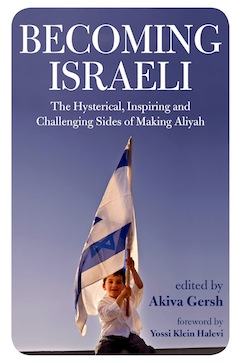
If you or someone you know is considering making aliyah, there is a book that offers a glimpse of the experience. Becoming Israeli: The Hysterical, Inspiring and Challenging Sides of Making Aliyah (Rimonim Press) is a compilation of blogs and essays written by 40 olim (immigrants), including the editor, Akiva Gersh.

“The book speaks about the various sides of aliyah, from the hysterical, to the challenging, to the frustrating, to the emotional,” Gersh told the Independent.

Gersh grew up in the New York area. He and his Philadelphia-born wife, Tamar, made aliyah about 13 years ago. As they were going through the process, Gersh wrote about it in a blog. When he realized others were doing the same thing, he was spurred to collect as much information as he could for publication in book form.

“I kept thinking, someone must have done this,” said Gersh. “People had written about their own aliyah experiences, but not a broad compilation of experiences … and that is what I wanted to do, what I wanted to share. I worked on it for about two years – finding the blogs, talking to the bloggers, telling them what I’m doing, and getting permission to use their posts in the book. And, after about two years doing all this compiling and editing, the book was born.”

In Becoming Israeli, said Gersh, there are the insights of (English-speaking) Jews who have made aliyah, as well as those who have been to Israel, but haven’t yet made the move. “In the book,” he said, “you can really sense the things they love about Israel. Above and beyond that, there is the general world … and much of that includes the Christian world who loves coming to Israel.”

image - Becoming Israeli book coverThe feedback has been good, especially from olim who have read the book and can relate to their fellow travelers. “They went, ‘Wow! Amazing!’” said Gersh. “Every page, they’re like, ‘This is my story!’ They’re laughing, they’re crying.

“I’ve read the book multiple times and I still laugh at the jokes and cry at the same emotional places,” he added. “It’s a really powerful book and I’ve had really positive feedback from olim who say ‘thank you’ and feel it is awesome … [and] exactly what they’ve been going through and experiencing.”

Gersh is a teacher by training and works in a private English-language school in Israel. He also connects with people using music, through a program he started in 2007 called The Holy Land Spirit.

As a musician and teacher, Gersh offers groups – mainly Christians – who visit Israel an evening program of music, prayer and spirituality from a Jewish perspective. “They love it,” he said. “We pray together, dance together, speak together.”

Gersh teaches at Alexander Muss High School, a study-abroad institution near Tel Aviv. There, kids from 45 different countries come to learn for a few weeks or up to a few months at a time, about Jewish history and Israel. They spend half their time in the classroom and half their time traveling around the country.

“So, it’s academic and hands on,” said Gersh. “It’s awesome. I’ve been there about 10 years now. The language of instruction is English and, for those who want to improve their Hebrew, there are opportunities.

“We have young Israelis who are fresh out of the army. And, for those who want the Hebrew experience, they can get it from them and also from being out and about in Israel.

“The kids are inspired, enlightened, pumped up about Israel,” he continued. “We’re not a religious program. We’re not a church denomination. We’re pluralistic. We have Jews on staff, but we don’t push Judaism. We just open up a space for kids to explore connections to Judaism.”

According to Gersh, many of the students are experiencing certain aspects of Judaism for the first time. This is something especially meaningful for him, he said, noting, “I had no connection to Israel growing up at all. I never thought about it, nor talked about it. It just wasn’t a thing in my community. I heard about it a couple times in Hebrew school, but it wasn’t on the radar at all. By the time I was done with high school, going into college, I was really done with anything Jewish…. In college, I began searching for something more cultural, meaningful, spiritual in my life.

“That journey, which was a three-year journey, took me to many different places, meeting different people, reading different books. At the end of the journey,” he said, “it brought me full circle to Judaism. But, I found a new side and a new expression of Judaism that I hadn’t seen before.”

Among the places Gersh traveled after college was West Africa, where he spent two months learning more about the drumming he studied in school.

“After traveling around there,” he said, “I went to Israel for the first time. I was about 22 years old at that point. I traveled around Israel for two months, backpacking and enjoying, taking a class here, a class there, doing a Shabbat and just really getting into it. After those two months, I realized I wanted to really explore my roots and see what Judaism was about. Still, at that point, I did not want to become religious.”

Eventually, Gersh did become religious. He spent some time in a yeshivah, both in Israel and in the United States, before making aliyah with his wife in 2004.

The foreword of Becoming Israeli was written by Yossi Klein Halevi, an Israeli author Gersh looks up to as a Jew, as someone who made aliyah and as a writer.

“We had a book launch at the beginning of the summer and we had a panel of me and a bunch of other bloggers from the book, and he was one of the panelists,” said Gersh. “It was amazing to have his voice and his perspective.”

Becoming Israeli is available on Amazon, and Gersh also has a website, becomingisraeli.com.

Rebeca Kuropatwa is a Winnipeg freelance writer.

Homemade shakshuka

Shakshuka is a combination of flavours, aromas and colours that appeals to all our senses. (photo from Café FortyOne)

Choosing a dish that defines us gastronomically is an impossible task because Jewish cuisine comprises a long and varied history of aromas and flavours fused by our many journeys around the world. But, if we narrow our task to discussing a representative Israeli dish, then shakshuka might be it.

Although there are many variations, shakshuka is generally made with stewed tomatoes, spices and eggs. It is one of the foods most loved by Israelis and it is a dish that has been enjoyed by countless tourists to the country. It is said that its secrets were brought to Israel by Jewish immigrants from North Africa but, for me, it also has a taste of home. My parents used to prepare it to pamper us, using the recipe of my grandparents from Turkey and giving it an Argentine touch. And there is nothing like shakshuka as an example of how certain foods have traveled with us throughout our history and to the different countries in which we have settled.

Shakshuka means “a mixture.” It is a combination of flavours, aromas and colours that appeals to all our senses. In Israel, it is often eaten for breakfast, a bright and spicy way to start the day. But it is also an excellent dish for lunch or for a special brunch.

Like many great dishes, there are as many versions of shakshuka as there are cooks who have made it, and it can be found on café and restaurant menus throughout the world. Modern culinary interpretations enhance the basic dish with salsa, with all kinds of vegetables, including eggplant and kale, and with cheeses such as feta. Some even incorporate meat into the recipe, modifying it according to personal taste. Some variations replace the tomatoes entirely – for example, there is a version that replaces the tomato sauce with one of spinach and cream.

Although there are many ways to cook shakshuka, from the Mexican version called huevos rancheros to the Turkish menemen, my shakshuka cuts to the traditional. The recipe below will give you a lovely shakshuka, rich in flavour. Once you have mastered the basics, you can add your own touch by using other ingredients that you like. However, this dish has one must: it must be accompanied by pita, challah or one of your favourite breads. Why? Simply because the sauce is really delicious and you will not want to leave a drop of it in the pan.

But, enough talk. This recipe I’m sharing is special – it is the one my family uses and which has given us many beautiful memories. It makes enough for two people.

SHAKSHUKA

5 ripe large tomatoes
1 large chopped onion
1 red pepper
4 garlic cloves (if you find it too strong, remove the centre)
2 tbsp extra virgin olive oil
4 eggs
touch of kosher sea salt
2 tbsp paprika
pinch of cumin
chopped parsley for decoration
tomato paste or concentrated tomato (optional, for a stronger taste)

  1. Pour the olive oil in a frying pan over medium heat. Add the onions and sauté until lightly softened, stirring occasionally. Add the red pepper and garlic, frying for a few minutes until they are soft and lightly browned.
  2. Add chopped tomatoes, paprika, cumin and salt. Stir until all ingredients are well mixed, then cover and simmer for about 10 minutes. The idea is for the tomatoes to become soft.
  3. Once the tomatoes are cooked, stir and then make two holes with a spoon in the surface of the sauce. Break an egg into each one of the holes. Arrange the eggs and the surrounding sauce so that the egg whites are below the surface of the sauce.
  4. Cover and let simmer for five to seven minutes, until the egg whites are cooked but the yolk is still runny.
  5. Sprinkle with chopped parsley and serve immediately in the pan it was cooked in, along with pita (or other bread), hummus and an Israeli salad.

Yamila Chikiar co-owns Café FortyOne with her husband, Daniel Presman.


החלטות ממשלת ישראל פוגעות

הכותל (צילום: Golasso)

יו”ר מועצת המנהלים של הג’ואיש פדריישן: “החלטות ממשלת ישראל פוגעות במרקם היחסים המיוחד בין הקהילות בקנדה לישראל”

“ההחלטות האחרונות שהתקבלו על ידי ממשלת ישראל פוגעות מאוד מרקם יחסים המיוחד שקיים בין הקהילות בקנדה לישראל”. דברים חמורים אלה נאמרים על ידי יו”ר מועצת המנהלים של הג’ואיש פדריישן של מטרו ונקובר, קרן ג’יימס. זאת, בתגובת להחלטות הממשלה על הקפאת מתווה הכותל שהיה אמור לאפשר להכשיר את החלקה הדרומית, שם יהיה ניתן לקיים תפילה שוויונית. וההחלטה בנושא חוק הגיור שקובע כי כל הגיורים יהיו רק במסגרת הרבות הראשית בישראל, וכן תהיה בחינה של כל הגיורים שכבר קיימים. משמעות הדבר שיהודים שמשתכיים לזרמים שונים ביהדות דבר שמאפיין את הרוב הגדול של יהדות התפוצה, יהדותם לא תהיה מוכרת על ידי ישראל. אם כן גל המחאות הקשות נגד החלטת הממשלה שהתחיל בקרב יהודי ארה”ב מתפשט גם לקנדה. יש לזכור שבקנדה יש כיום את הקהילת היהודים השלישית בגודלה בעולם, מחוץ לישראל.

ג’יימס (ילידת 1952) כיום היא אשת עסקים שגרה בוונקובר, ועבר נמנתה על נבחרת השחייה של קנדה לאולימפיאדת מינכן שערכה ב-1972, בה נרצחו תשעה ספורטאים ושני מאמנים של נבחרת ישראל על ידי טרוריסטים.

ג’יימס ביקרה בחודש שעבר בישראל כולל אצבע הגליל, במסגרת השותפות של שש קהילות יהודיות בקנדה (מוונקובר, אוטווה, קלגרי, אדמונטון, וויניפג והליפקס) עם האזור שבצפון. השותפות בין הקהילות לאצבע הגליל כוללת קצאת מיליוני שקלים לטובת מערכות החינוך והרפואה באזור, וכן פעילויות משותפות עם אחד עשר בתי ספר באזור, משלחות נוער ותורמים רבים. ג’יימס מזכירה שהקהילה היהודית בוונקובר מקיימת מערכת יחסים מיוחדת עם אצבע הגליל לאורך עשרים השנים האחרונות, שכוללת השקעות כספיות גדולות, על מנת לשפר את איכות החיים של התושבים המקומיים. “במהלך שנים אלו נבנה גשר חי בין שתי הקהילות, שכולל חברויות רבות של בני משפחה אחת גדולה, של עם אחד”.

ג’יימס מוסיפה: “כל זה עומד בניגוד מוחלט להחלטות ממשלת ישראל בנושא מרחב תפילה שיווני בכותל ובנושא חוק הגיור, שמעניק לרבנות שליטה על הגדרת מי הוא יהודי. ובכך מעמיד את הסטטוס של אלפי יהודים בסימן שאלה”. היא מדגישה כי החלטות הממשלה בסוגיות חשובות אלה פוגעות במשמעות התפיסה של מה זה להיות עם אחד, והממשלה שולחת מסר לרוב היהודים בצפון אמריקה כי היא איננה מכירה ביהדותם. “זה מעמיד את המשך תמיכתם של יהודי התפוצות בישראל במצב של סיכון משמעותי. ולכן המצב כרגע הוא חמור ביותר”.

לדברי ג’יימס היא משתייכת לאחד מבתי הכנסת הגדולים ביותר של ונקובר, בו גברים ונשים יושבים ומתפללים ביחד. וכן נשים חובשות כיפה וטלית אם כך הן חפצות. לא מעט גברים ונשים מבית כנסת זה עשו עלייה לישראל. סגנון תפילה זה המשותף לגברים ונשים הוא הנורמה המקובלת עבור מרבית היהודים החיים בצפון אמריקה. ג’יימס מסיימת בדברים אלה: “אני מאמינה כי הזהות המשותפת של כולנו כעם יהודי אחד, ללא קשר לזרם היהדות אליו כל אחד מאתנו בוחר להשתייך, גדולה ומשמעותית לגשר על כל שוני באשר הוא”.

יצויין כי הקונסולית הכללית של ישראל בקנדה, גלי ברעם, שלחה מברק למשרד החוץ בישראל כי קיבלה מסרים חריפים מבכירים בקהילות היהודיות בטורונטו וונקובר, שמזהירים כי שתי החלטות הממשלה יחמירו את הניכור כלפי ישראל, בקרב הדור הצעיר של יהודי קנדה. לדבריה אחד הרבנים בקנדה אמר לה כי סטודנטים יהודים אומרים שמה שישראל עושה זו אנטישמיות”.

Express your opinion

The good news is we’re again debating “who is a Jew.” This is good news, of course, only because it’s a topic that divides Jews mostly when external threats abate enough to allow the luxury of pilpul around denominational rights and definitions.

We can only assume that the state of the world – the Iranian threat, the unhinged American administration, Syria in collapse – looks fine enough from the Israeli prime minister’s office that we have the freedom to indulge in family squabbles.

A year-and-a-half ago, the Israeli government finally agreed to create an egalitarian prayer space at the Western Wall. The Charedim who legally control Israel’s Jewish religious character, including practices at the Wall, have imposed a strict gender division on prayer and ritual at the holy site. This has sent the message to Conservative, Reform and other non-Orthodox Jews that the holy site is not wholly theirs and, by extension, that their forms of Judaism are not authentic or proper. The creation of an egalitarian section was hailed as putting an end to a painful and divisive aspect of Israeli-Diaspora relations.

An egalitarian space would permit families to visit the Kotel together, allow girls to read from the Torah during their bat mitzvahs and give women the right to pray out loud, rather than following the existing rules by which women must pray quietly so that their voices may not be heard by men on the other side of the divided plaza. The agreement for a new egalitarian space would not alter the existing men’s and women’s areas, but rather add a new, third space, south of the traditional prayer areas.

At the time the agreement was reached, Anat Hoffman, chair of the board of Women of the Wall, a group that has been at the fore in advancing the goal of an egalitarian space and whose members are routinely arrested for praying at the Kotel with prayer shawls, said the decision by Israel’s cabinet was an acknowledgment “that there is more than one way to be Jewish.”

Last week, the Netanyahu government changed its mind and decided there is not.

Bending to pressure from the ultra-Orthodox members of his coalition, the proverbial tail that so often wags the dog in Israel’s political system, Netanyahu called a snap vote on whether the decision taken in January 2016 to create the egalitarian space should indeed proceed. Ministers who last year voted in favour last week voted against.

In for a penny, in for a pound, the government at the same time advanced a bill that would reinstate the Orthodox monopoly on conversions and lifecycle events, including marriage and burials. Among the implications is that Jews not converted under the auspices of the Chief Rabbinate – in other words, by Conservative, Reform or other non-Orthodox rabbis – would not be recognized as Jews.

On most issues, Israel should take Diaspora concerns into consideration only secondarily to what is right for Israel. We have said in this space before, for instance, that Israeli defence policies should be determined with the security of Israelis as the priority, not the comfort of Diaspora Jews who have to live with the political consequences, but not the life-and-death consequences facing Israelis.

This is different. Rules regarding prayer at the Western Wall – who, where and how – should be made with the interests of the Jewish people – not just Israelis – foremost in mind. Of course, if the rules were made with the majority of Israelis in mind, they would reflect the diversity of religious observance both in Israel and in the Diaspora. Instead, what we have is a narrow reflection of ultra-Orthodox priorities that is more a result of political realities in the Knesset than religious reality anywhere outside that chamber.

Ultimately, these decisions are a result of political, not religious, considerations. The political needs of the Netanyahu government’s coalition appear to be superseding the Jewish state’s respect for diversity and pluralism within the global Jewish peoplehood.

“We believe in Jewish unity, not uniformity,” states a letter to Netanyahu signed by scores of Canadian rabbis. “The spectrum of Jewish practice is diverse, but it need not lead to divisiveness. Our differences are eclipsed by all that unites us: millennia of shared history and a shared future. What happens to Jews today – no matter where they live or where they attend synagogue – invariably affects us all.… We are an indivisible people, which is why we are deeply concerned by these and any other actions that unnecessarily foment division within amcha.”

Most of us do not have a vote in Israel, but each of us has a voice. The Centre for Israel and Jewish Affairs is urging each of us to contact the Israeli embassy to express our views on this vital matter. Please do.

Expanding food savvy

Kat Romanow is director of food programming at the Museum of Jewish Montreal. (photo from Kat Romanow)

Kat Romanow has taken upon herself the challenge of teaching people more about Jewish food in one of Canada’s most Jewish cities.

“I started studying Judaism in my undergrad and, at the end of it, food was something that sparked my interest,” said Romanow. “I ended up going to Boston for a summer to do an internship and it was there that all of this coalesced.

“Jewish food is what I want to study academically. I also felt a connection to Judaism – Shabbat dinners, shul … I get the non-academic Jewish things, and it was there I realized I felt a deep connection to it. That’s when I knew I wanted to convert. It’s a connection I didn’t necessarily feel in Catholicism, but I found in Judaism – the community, rituals … things that really speak to me and bring meaning to my life.”

Romanow was born and raised in Montreal and is currently the director of food programming at the Museum of Jewish Montreal, where she runs and manages Fletchers, the museum’s restaurant.

Founded in 2010, the museum offers walking tours of historic Jewish neighbourhoods, numerous online exhibits and a large oral history collection. And, now that they have a physical space – which they acquired about a year ago – they also offer lectures, workshops and pop-up exhibitions.

Romanow majored in Jewish food history at Concordia University and, in conjunction with the museum and a friend, developed a walking tour called The Wandering Chew.

“We aimed to teach people about lesser-known Jewish food traditions through pop-up dinners, cooking workshops and other food events,” said Romanow. “That’s where I got the cooking experience, holding pop-up dinners for 30 to 40 people. We’d find the community we wanted to explore, interview people from the community, including getting their recipes, put together a menu and do a dinner.”

The goal was to expand people’s knowledge about Jewish food. “Here, in Montreal, you automatically think of bagels and smoked meat,” said Romanow. “But, our aim was to go beyond that and show people that Jewish food is very diverse and is made up of a lot of different cuisine and dishes.”

At Fletchers, they serve foods during the day that draw from the flavours of the diverse communities highlighted on the walking tours. And, in the evening, one can find a variety of workshops, meals and cookbook launches.

Romanow has been selected to represent Montreal at the ROI (Return on Investment) Summit in Jerusalem July 2-6. The summit brings together 150 of the brightest Jewish minds from around the world to brainstorm ideas for the future.

“I’m really excited,” said Romanow. “It’s also my first time going to Israel. For the summit, I’m most excited about getting to meet all these other young Jews doing really cool projects … making connections and sharing ideas. We’ll learn from each other and build off of what we’re all doing. So, I think, coming out of this, I’ll be full of new ideas and inspiration. I’ve already received emails and I can see potential future collaboration.”

Romanow is planning to stay in Israel after the summit, to visit the country, experience the Israeli food scene and get some new ideas for Fletchers.

Something she has found lately is that people in their 20s and 30s are becoming more open to exploring different ways of making the food they grew up with different, putting their own mark on it.

“There’s now a community of younger Jews who are reintroducing people to what Jewish food is,” said Romanow. “I want to keep adding to the menu and keep holding more and more events, so that people can really engage with their Jewish identity through food on a regular basis.

“But, I also aim to write a cookbook about exploring Jewish food in the Diaspora. That’s what I’ve been doing with the Wandering Chew. I think the cookbook is the next step. I’m in the process of writing the proposal, so hopefully in the next few years it will come out.”

For now, Romanow plans to delve deeper into local Jewish food history, as she balances running Fletchers, the Wandering Chew dinners and walking tours of the local Jewish food scene, which are called Beyond the Bagel.

Through Beyond the Bagel, Romanow said, “We go to places like Schwartz’s and we eat bagels. But, I did all kinds of archival research and oral history interviews … and so you get to go deeper into the history of these places.

“At our space (at the museum), we also have a boutique where we sell things related to Jewish history and Montreal – books, locally made products. And we use it as an event space … concerts, lectures and many more.

“Right now, we have Yiddish classes there, too, and photo exhibits that change throughout the year related to Jewish culture. We’re not a traditional museum, one that you go into and look at objects. You can come to the space, grab a bite, browse the boutique and also go on one of the walking tours or onto the website.”

For more information, visit imjm.ca.

Rebeca Kuropatwa is a Winnipeg freelance writer.

Canada, Israel, Jews

When Canada belatedly opened its door to Jewish refugees – to some of the surviving remnant after the Holocaust – it did so not out of an abundance of humanitarianism but because of economic necessity, the need for skilled and unskilled workers in a booming economy.

Regardless of the motivation, that influx of refugees redefined Jewish identity in Canada. The increased Jewish population and the institutions they spawned essentially built the community we know today.

As former Vancouverite Adara Goldberg described in her book Holocaust Survivors in Canada: Exclusion, Inclusion, Transformation, 1947–1955, the institutions that we now see as the organized Jewish community were created for and by the refugees and immigrants who came after the war. By contrast, those who came to the United States after the war were greeted by and largely assimilated into a strong Jewish community already in progress.

This has had several corollaries. The worldview of Canadian Jewish institutions – and, though not easily verifiable, probably a majority of Jewish Canadians individually – is imbued with the understandable anxieties imprinted on those who witnessed the rise of fascism and lived through it.

On the flip side, the Canadian Jewish community as we know it can be said to have been born almost contemporaneously with the state of Israel. Again, while Zionism is entwined with the American Jewish community, that community had many other preexisting cultural and political dimensions. In Canada, the rebirth and survival of the Jewish state occurred at the most impressionable period in the community’s history. As well, the idea of Jewish self-determination as the surest path to individual and collective security resonated powerfully with a community disproportionately made up of survivors of the Shoah. Moreover, Canada’s approach to multiculturalism, especially after 1967, differed from the American “melting pot” and suspicion of “dual loyalties.”

So, the nature of Diaspora-Israel relations is different for Canadians versus Americans. Yet, some of the challenges are the same.

A new essay by David Hazony, editor of the American Jewish magazine The Tower, takes a new tack on the topic of American Jewry’s existential challenges. The Jewish population is not only declining, he notes, but changing. The only demographic that is flourishing is the Orthodox, which is not necessarily reflective of what would have been recognized as “American Jewry” in the 1950s and ’60s. The two most-recognized paths to avoid assimilation, he says, are currently orthodoxy and aliyah – but he suggests a third way.

Hazony posits that the answer to challenges facing American Jews right now is a little more Israel. The essay reviews concerns that American (read: Diaspora) Jews and Israelis are talking across a widening divide. Hazony’s suggestion is that Americans, who have for generations viewed Israel as a political cause, begin to integrate Israeliness as a cultural characteristic and embrace it as the future of their Diaspora identity. For instance, he says, Diaspora Jews immersing ourselves in Israeli cinema, even with subtitles, will give us a remedial entry point into the culture.

Language – not an easy thing to learn, particularly for notoriously unilingual Americans, Hazony acknowledges – is another important entry point.

“Without Hebrew,” he writes, “any approach to Israeliness will be like walking into an enormous library in a foreign language but relegated to the tiny English-language section.”

He suggests a network of Hebrew language and culture centres modeled on the French example. How many times have you driven by the Alliance Française building south of Oakridge?

Finally, travel. Just 27% of Americans have visited Israel more than once, he notes. To understand a place, you have to go there.

The essay is fascinating and offers ideas that could both strengthen Diaspora communities and narrow the gap between us and our Israeli cousins.

As Canada Day festivities unfurl in the coming days, we will see the familiar dictum “The world needs more Canada.” In some ways, we can proudly say, the world would indeed be a more peaceful, cooperative and respectful place if Canadian models were emulated elsewhere. Like any country, we have our flaws, our oppressive history and current inequalities. But, as countries go, we’re pretty good.

Hazony is taking a similar tack, arguing that Diaspora Jews need a little more Israeliness.

In Vancouver, we are very fortunate that our Jewish community centre has, for longer than we can remember, recognized the vital importance of connections with Israel. A plethora of other Israel-related organizations keep these bonds strong.

While pondering what is great about Canada in the coming week, we might also reflect on the value of integrating more Israeli culture into our lives. It can enrich us individually and enhance Canadian multiculturalism, too.

Jews under the rule of Timur

A statue of Amir Timur. (photo by Deborah Rubin Fields)

The 14th century was not a great time for European Jewry, to say the least – there were various kinds of persecution, including forced conversions, expulsions and massacres, especially in Western Europe. Yet, the Jews of what is now Uzbekistan got through this period relatively unmolested.

Turko-Mongol military leader Timur (Iron), who ruled from 1370 to his death in 1405, is also known historically as Tamerlane, from the Persian Timur-i lang (Timur the Lame), and Amir Timur (or Temur).

Timur conquered central Asia and parts of India – today’s Iraq, Iran, Afghanistan, Pakistan, Azerbaijan, Georgia, Uzbekistan, Turkmenistan, Tajikistan, Kyrgyzstan, large chunks of Turkey and Syria, and the northwestern portion of India. While it is estimated that his armies killed 17 million people, about five percent of the global population at the time, it seems he left Jews alone.

“Over the years, the moral justification for [Timur’s] campaigns … had evolved into a formality,” writes Justin Marozzi in Tamerlane: Sword of Islam, Conqueror of the World. “If the objects of his attentions happened to be Muslim, as they almost invariably were, then they had become bad Muslims. If they were infidels, so much the better.” Yet Michael Shterenshis, in Tamerlane and the Jews, contends that Timur did not consider Jews as infidels, at least not infidels needing to be violently eliminated, perhaps because they had no political ambitions and all they sought was Timur’s protection.

It would seem that Timur’s Jews were of more service alive than dead – which is a good thing, as Timur once reportedly constructed 28 towers from 70,000 of his enemies’ skulls, each tower consisting of 2,500 heads. According to Shterenshis, the ruler primarily used his Jewish subjects as taxpayers and skilled artisans. Jewish weavers and dyers contributed greatly to his efforts to rebuild the region and to reinstitute the abandoned Silk Road, which connected Europe to Asia.

Yu Datkhaev’s The Bukharan Jews is mentioned in Alanna E. Cooper’s Bukharan Jews and the Dynamics of Global Judaism. According to Cooper, Datkhaev argues that the term “Bukharan Jews” came to be after Timur moved several hundred Jewish families from Bukhara to Samarkand to assist in overhauling Samarkand, his designated capitol. These Jews reportedly lived near Timur’s recently rehabilitated and stunning Registan.

Timur’s Jewish subjects appear to have been loyal followers. Indeed, while Jews are not mentioned in his court history, there is a preserved letter from Herat physicians who ask the permission of Shah Rukh (one of Timur’s sons) to treat Timur’s injured soldiers. Significantly, they are offering their services to the state army, notes Shterenshis.

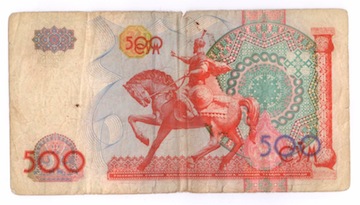
photo - Timur depicted on Uzbekistan’s 500 som note
Timur depicted on Uzbekistan’s 500 som note. (photo by Deborah Rubin Fields)

Timur seemingly responded in kind. He never issued anti-Jewish proclamations, laws, orders or restrictions. He never oppressed the Jews for being Jews, says Shterenshis. Under Timur, he adds, Jews were able to own houses and land, and they could be farmers – the regime did not impose upon Jews the role of moneylenders.

Jews under Timur’s reign were better off than the Jews of Europe and those in the Mamluk Sultanate, but were worse off than those who lived under the Mongols of China. Under Timur, Jews enjoyed a legal, but inferior status, writes Shterenshis. In contrast to their appointed role in other countries, Timur’s Jews were not particularly used as translators or envoys and their main occupations seem to have been as artisans, local merchants and doctors, says Shterenshis, noting that Jewish doctors under Timur did not enjoy the enhanced status they had previously, from the 10th to 12th centuries. Nonetheless, in local Jewish legends, Tamerlane is painted in a favourable light, says the historian, and is even supposed to have moved the Prophet Daniel’s remains to a tomb in Samarkand.

Some sources indicate that the Jewish presence in Samarkand pre-dates Timur’s rule. Tenth-century Samarkand (as well as Khorezm, Osh and Kokand) apparently hosted famous Jewish scholars, known in the singular as khabr, a word derived from the Hebrew chaver (friend or colleague), “which they used to distinguish themselves from ‘commoners,’” writes Irena Vladimirsky in “The Jews of Kyrgyzstan” (bh.org.il/jews-kyrgyzstan).

Indeed, the notion that Jews had been living in Central Asia prior to Timur’s rise to power is reinforced by the late-12th-century traveling Jewish chronicler Binyamin M’tudela (Benjamin of Tudela), who described this community as having as many as 50,000 members, among them “wise and very rich men.” Furthermore, the Samarkand community apparently appointed someone as nasi (head) of their community, who collected the requisite taxes of a recognized ahl al-demma (protected group).

In that period, Jews reportedly made Samarkand a major Jewish centre, and community members contributed to the construction of Samarkand’s aqueduct.

In the centuries after Timur, Jews came to dominate the region’s textile and dye industry, according to historian Giora Pozailov.

Uzbekistan’s aging Jewish population is now mainly concentrated in the cities of Tashkent, Samarkand and Bukhara. Even before the demise of the Soviet Union, Uzbek Jews began leaving, mainly for the United States and Israel. As the JTA article “Dwindling at home, Central Asia’s Bukharian Jews thrive in

Diaspora,” which can be found at ucsj.org, notes, Bukhara’s two synagogues almost never open at the same time, so that at least one of them has a minyan.

Deborah Rubin Fields is an Israel-based features writer. She is also the author of Take a Peek Inside: A Child’s Guide to Radiology Exams, published in English, Hebrew and Arabic.

U.S.-Israel relations in Norman

Richard Gere, left, as Norman Oppenheimer and Lior Ashkenazi as Micha Eshel. In the unlikely confines of an upscale shoe store, the two characters forge a connection that will have profound ramifications. (photo by Niko Tavernise, Courtesy of Sony Pictures Classics)

The marvelous tragicomedy Norman: The Moderate Rise and Tragic Fall of a New York Fixer depicts an aging, desperate Jewish influence peddler who has survived in a shark-eat-minnow world via a smooth patter that blends alleged connections with half-promises.

Through manipulation, charm and luck, Norman (a poignant Richard Gere) devises a rendezvous with a minor Israeli deputy minister (Lior Ashkenazi) at loose ends in the Big Apple. In the unlikely confines of an upscale shoe store, they forge a connection that will have profound ramifications for both men – for better and for worse.

The film, which opens today, April 28, marks the first movie that acclaimed writer-director Joseph Cedar has shot in his birthplace. Cedar grew up in Israel from the age of 6, returned to New York to earn his degree in film at New York University and established himself as one of Israel’s finest filmmakers with Time of Favour, Campfire and a pair of Academy Award nominees for best foreign language film, Beaufort and Footnote.

The soft-spoken Cedar allows that he’s exceptionally familiar with both sides of the complicated dynamic between Israel and American Jews.

“It’s a messy relationship, which, from my point of view, justifies the film,” he said. “There’s something fascinating about what Israelis think of Americans and what they expect from Americans, and how Americans view Israel, how they view Israelis and what Israel is for their identity. All these things are a big part of my conversations, so the movie allowed me to touch some of the things that are vital to my life.”

Cedar has a simple explanation for some of the curious behaviour that takes place at high-level meetings between the countries, illustrated by a scene where Ashkenazi’s character, Micha Eshel, now a figure of greater importance, lectures a U.S. diplomat visiting his Washington, D.C., hotel suite.

“One of the things that will explain so many of the encounters between Israelis and American politicians is that every time they show up they’re in jet lag,” Cedar said. “Especially around AIPAC, Israelis come to America, they’re treated like they’re Caesar and they’re a little off-balance because their time zone is all messed up. And they still have to be awake for Israeli things, so they’re sleep-deprived.”

Some viewers may presume a key plot twist in Norman was inspired by the gifts that Prime Minister Binyamin Netanyahu allegedly received from Arnon Milchan, but Cedar finished shooting the film before the news broke.

“That relationship, of an American Jew gifting an Israeli politician, that’s not something new and it’s not something Bibi invented, and it’s not going to go away…. This is the nucleus of what the relationship is about: Americans gift Israelis,” Cedar said. “I’m trying to understand it; I’m not introducing it. Everyone knows that that’s what it is.”

The encounter between Norman and Micha in the shoe store – on which the movie turns – is Cedar’s inspired way of conveying the complicated personal and moral aspects of any transaction between Americans and Israelis.

“All the meetings between Norman and Eshel helped me understand this relationship, and helped me understand this on an individual, human level, not on a geopolitical or policy side,” Cedar explained.

Cedar also viewed Norman’s character and fate through another prism, that of the so-called “court Jews” of past eras.

“There’s a set of characteristics of that personality that I’m attracted to,” he said. “I identify with the need to get into a close circle of power, and then the tragedy of being ultimately kicked out because you have no substance on your own. You have no safety net, no one is there to protect you, you don’t have an interest that someone else needs to protect.”

Cedar injects notes of levity and absurdity into Norman’s saga, which stem from the director’s appreciation for the long tradition in movies of characters looking bad for our amusement.

“Norman is a little less naïve and he is not as pure as [Charlie Chaplin’s] Tramp, but it’s the same kind of situations – of pushing yourself into places where you’re not invited and being kicked out,” he said.

Cohen’s Advertising Scheme and Cohen’s Fire Sale, part of a series of [short] films from 1902 to 1907, take place in a shop or right outside the shop’s window, and [involve] a merchant trying to cheat someone and ultimately being the victim of his own scheme.”

Cedar acknowledged that some contemporary viewers will see something offensive in the Cohen films.

“Putting it in the context of the image of the Jew in cinema, these are crazy portrayals of Jews,” Cedar said. “They’re grotesque. But it’s just a form of comedy. In the ’30s, if you put that kind of character on the screen, there’s an agenda behind it. In the very beginning, I think it was just funny.”

Gere is not an actor one associates with embarrassment and pratfalls, but he is extremely effective here playing a man trying to retain his dignity amid impending disaster.

“There’s something about Norman that I thought might connect to this primal need of moviegoers to see someone make a fool out of himself, to humiliate himself more than most people are willing to humiliate themselves,” Cedar said. “It’s a form of entertainment that I enjoy.”

There’s another basic element of Norman’s character that Cedar shares, however.

“It’s being essential to something,” he said. “Norman feels if he’s not essential to other people’s projects, then he has no existence. So, his whole motive is, ‘How do I become essential to others? How do I create a situation where people are dependent on me?’ I identify with that because I have that. It’s part of me.”

Michael Fox is a writer and film critic living in San Francisco.