Skip to content
  • Home
  • Subscribe / donate
  • Events calendar
  • News
    • Local
    • National
    • Israel
    • World
    • עניין בחדשות
      A roundup of news in Canada and further afield, in Hebrew.
  • Opinion
    • From the JI
    • Op-Ed
  • Arts & Culture
    • Performing Arts
    • Music
    • Books
    • Visual Arts
    • TV & Film
  • Life
    • Celebrating the Holidays
    • Travel
    • The Daily Snooze
      Cartoons by Jacob Samuel
    • Mystery Photo
      Help the JI and JMABC fill in the gaps in our archives.
  • Community Links
    • Organizations, Etc.
    • Other News Sources & Blogs
    • Business Directory
  • FAQ
  • JI Chai Celebration
  • JI@88! video

Recent Posts

  • Zionism wins big in Vegas
  • Different but connected
  • Survival not passive
  • Musical celebration of Israel
  • Shoppe celebrates 25 years
  • Human “book” event
  • Reclaiming Jewish stories
  • Bema presents Perseverance
  • CSS honours Bellas z”l
  • Sheba Promise here May 7
  • Reflections from Be’eri
  • New law a desecration
  • Resilient joy in tough times
  • Rescue dog brings joy
  • Art chosen for new museum
  • Reminder of hope, resilience
  • The national food of Israel?
  • Story of Israel’s north
  • Sheltering in train stations
  • Teach critical thinking
  • Learning to bridge divides
  • Supporting Iranian community
  • Art dismantles systems
  • Beth Tikvah celebrates 50th
  • What is Jewish music?
  • Celebrate joy of music
  • Women share experiences 
  • Raising funds for Survivors
  • Call for digital literacy
  • The hidden hand of hate
  • Tarot as spiritual ritual
  • Students create fancy meal
  • Encouraging young voices
  • Rose’s Angels delivers
  • Living life to its fullest
  • Drawing on his roots

Archives

Follow @JewishIndie
image - The CJN - Visit Us Banner - 300x600 - 101625

Tag: aging

Louis Brier garden project

Louis Brier garden project

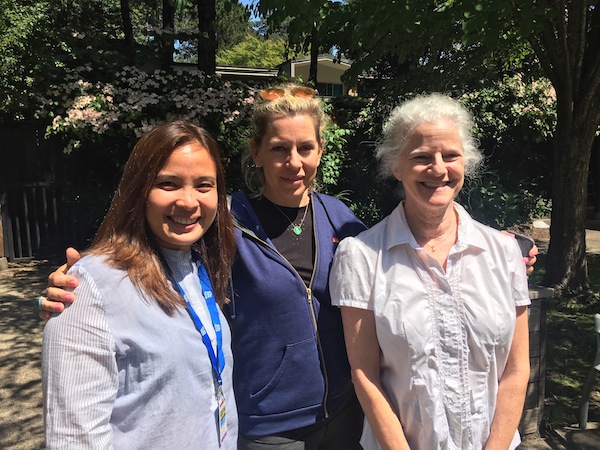
Left to right: Nicole Encarnacion, Ruthie Shugarman and Lisa Ford. (photo from Louis Brier Home and Hospital)

This summer, the Louis Brier Home and Hospital celebrated the transformation of part of its outdoor space into a place of beauty and quiet.

On the morning of June 30, the wider community came out to support the Louis Brier Home and Hospital’s community of residents living with dementia. The special care unit, which is home for 17 residents who live with severe dementia, has its own outdoor space for the residents and their families. Dubbed the “secret garden,” this space has been tended by residents’ families and, now, thanks to the vision and support of local realtor Ruthie Shugarman, it received a major overhaul.

The project was spearheaded by former master gardener Lisa Ford, who visits her mother, Laura Ford, a five-year resident of Louis Brier, several times a week. Since her mother moved into the special care unit two-and-a-half years ago, Ford has been planting and caring for the space. With Shugarman’s help, the private courtyard has become a welcoming space for families to spend time together with dementia-friendly design components recommended by the Louis Brier’s nursing lead, Nicole Encarnacion.

Just prior to the June 30 gathering at the Brier, the Government of Canada announced its National Dementia Strategy: canada.ca/en/public-health/services/publications/diseases-conditions/dementia-strategy.html.

Format ImagePosted on September 20, 2019September 17, 2019Author Louis Brier Home and HospitalCategories LocalTags aging, dementia, garden, Louis Brier Home

Can only live in the now

It’s sunny today as I write this, and there is a lovely breeze fluttering the leaves on a tree outside my window. I am reacquainting myself with myself, pleasuring in the solitude. Writing this story for you (and myself) is a minor distraction.

Knowing ourselves can be scary, but we can get over that. We are not so bad after all. Look at all those good things we have done (rah! rah!) despite the weaknesses we know we have, and how they compare to the aspirations we have had for ourselves. It doesn’t mean we don’t have to try to be better, to achieve more, but facing our failings can make us be kinder to others.

My bride feels that I am amazing in my capacity to forgive myself for my errors and weaknesses. But I know, and I have told her, that she, and most people, are too hard on themselves. I believe it has something to do with the constructs we build up in our minds as to what we believe is success, the goals we set. Then, given the unpredictability of life, we are disappointed when we don’t realize all of them.

But these things we dream of are not real. They are something way out in a potential future. Only the now is real, only the now is what we can change. Often, when we get to the anticipated future, we no longer want what we aspired to. We have changed our mind as a consequence of our life experiences. Our pleasures may really arise from the incidentals we realize on our path, what we encounter in our nows. They may turn out to be what we treasure above all.

So, I forgive my errors as lessons learned, and aim for my goals as a spectrum rather than a single point. And I forgive my blunders as an excess of enthusiasm. I know my enthusiasms can be fierce, as I believe that we really have to want what we want to have some chance of getting there.

We all know that people are watching what we do. A lot of what we think about ourselves is motivated by what we believe other people think about us. And we worry about that at times. It can seriously affect our behaviour. As I have gotten older, however, I find that I am not so much worried about that. The person I am more concerned about is me – that’s the guy I have to come to terms with.

We cannot fail to develop in ourselves, unless we are sociopaths, some ideas about what are the right things to do in life. We absorb it from our parents, what we read or see, what our friends have said or done, and the “inner us” watches and measures everything we do, and passes judgment.

We know when we have violated what our inner judge has said is the right action. Nonetheless, we sometimes, thinking or unthinking, follow our own selfish self-interest. But, often, we are motivated to act in opposition to our short-term interests and according to the larger values we have absorbed.

When we do the wrong thing it stays with us. Our judge is difficult to escape. He or she is there every time we encounter ourselves in our thoughts. We have many ways to distract ourselves from what it is telling us, and that escape may tempt us powerfully, but we cannot know ourselves if we are not in touch, fully acquainted, with that inner self. We cannot be at peace if we are not in harmony with that inner self or judge.

We all know people who publicly espouse the public good and privately pursue the private good. We see examples of that every day on our television and internet screens, our newspapers and magazines, our trips to the grocery store or the community centre. Could we live with ourselves if we were that kind of person? Does it take self-delusion?

Most of us aspire to being the kind of people our children could respect, and we have taught them the lessons we believed would help them on their way. We all have had our aspirations to achieve positions and places, situations in life that we feel are appropriate for the kind of people we truly are. Hopefully, we are happy with the portion that we have earned and been given (as no one makes it on their own, or without some luck).

It is only in our solitudes that we truly confront the people we are, without pretension. Some people are able to be more like their real selves in public, but most of us present to others the person they believe others want or expect to see in us. How fortunate we are if we have those in our circle with whom we feel free to be the person we really are.

Deep in our heart of hearts, we know of all the compromises we have made with the principles we truly believe in. They weigh on us. We have corrected where we could along the way. For what remains undone, which cannot be fixed, we have to find in ourselves the generosity to forgive ourselves, and others.

This moment is the “there” we have arrived at, even if it is the life we did not necessarily aim for. This incidental is the real thing. We are really alive only in the now in which we find ourselves.

Max Roytenberg is a Vancouver-based poet, writer and blogger. His book Hero in My Own Eyes: Tripping a Life Fantastic is available from Amazon and other online booksellers.

Posted on March 8, 2019March 6, 2019Author Max RoytenbergCategories Op-EdTags aging, identity, lifestyle
Everyone can say yes to life

Everyone can say yes to life

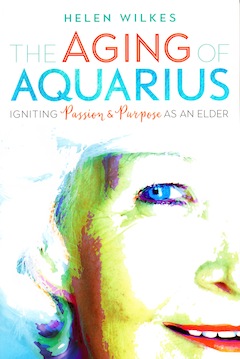
At risk of universalizing a book with a particular theme, The Aging of Aquarius: Igniting Passion and Purpose as an Elder is valuable not just for those who are retired or pondering it – though it has plenty of age-specific content for that demographic. At root, it is a book about living well, and that makes it a valuable volume for people of any age.

Author Helen Wilkes, a Vancouverite and member of the Or Shalom community, has penned an optimistic, uplifting book. But let that not deceive the reader, she warns early on, into misjudging who she is.

“Lest you think I was born with a silver spoon in my mouth or that I am one of those insufferably cheerful people,” she writes in the preface, “permit me to introduce myself.”

She talks about being born to Jewish shopkeepers in a village in the Sudetenland, part of Czechoslovakia that was among the first places occupied by the Nazis in advance of the Second World War.

“Our village fell to Hitler when I was still in diapers and, as a consequence, I have spent a lifetime with fear and negativity as my constant companions,” she writes.

Her childhood was lonely and her parents uncommunicative. Her marriage ended when her daughters were 3 and 4 years old.

“Divorce at the time was still so shameful that it took my mother several years to accept what she and her friends labeled as my ‘failure as a woman.’”

Yet Wilkes pivots to optimism.

“If, despite a childhood in the shadow of the Holocaust, and if, despite a lifetime of experiencing myself as an outsider with little sense of self-worth, I have found cause to hold my head high and to face the future with optimism in my retirement years, there is reason for others to hope,” she writes.

This is not a handbook on aging so much as an illustration by example of how to do it right. She does acknowledge, though, that a person has to make the effort to age well. Each section of her book ends with ideas and actions that might help on the path to success.

“Everywhere, there are opportunities to meet new people, yet surveys indicate that social isolation is a major problem despite the fact that simply joining a club is as good for your health as quitting smoking, exercising or losing weight,” writes Wilkes, who has a PhD in French literature. “The Vancouver Foundation reports ‘a precipitous decline’ in how many people made use of libraries, community or recreation centres in 2017, that only about one in four people took part in any kind of community or neighbourhood project.… And that, in a city as diverse as ours, only about one in four people attended an ethnic or cultural event put on by an ethnic or cultural group different than their own.”

image - The Aging of Aquarius book coverFinding joy in the simple things – again, good advice for people of any age – is one of her key findings.

“Aging has made me a connoisseur of life,” she writes. “It has taught me to savour not what is rare or high-priced, but what is ordinary. The small moments that sometimes overwhelm me with heart-stopping joy. An incredible blue-sky day. The first sip of my morning coffee. The laughter of family and friends. Whenever I am walking in the woods with a boisterous dog, whenever I sit on a log at the beach while the sun dips slowly below the horizon and paints the sky with hues no artist could capture, whenever I stroll through a harvest market where farm-fresh produce overwhelms with its rich ripeness, whenever my grandchildren burst through the doorway to give me a hug, or whenever I am engaged in any number of absorbing activities, I so often have an overwhelming sense of not wanting to be anywhere in the world except exactly where I am at this moment.”

While she challenges the conceptions some people have of retirement as a time to sit in a hammock with a fancy drink, she does also acknowledge that, as Danny Kaye said, “to travel is to take a journey into yourself.”

She talks about an eye-opening trip to China, where she went as a chaperone to her 10-year-old twin grandsons. Having heard of the panoply of human rights abuses in China, she was shocked to see an English-language newspaper with a headline asking “How dare they?” above an article cataloguing racism and human rights abuses in the United States and other “free world” countries. Having heard about China’s reputation as a major contributor to global warming, she was pleased to see solar panels and wind turbines throughout the country. The rapid transit system they used to get everywhere contrasted with what she is familiar with in Vancouver.

“China held up a mirror that led me to reexamine the history I had been taught in high school and university,” she writes. “Day by day, it became more difficult to view the West as having brought enlightenment to backward Asians.”

Wilkes acknowledges that not everyone can travel to foreign countries and says there are ways to experience some of that diversity without getting on a plane.

“Next week, I anticipate attending a Hindu baby-naming ceremony to which I’ve been invited. Last week, I was invited for dinner at the home of a Muslim family from Pakistan. Being at their table, sharing our limited knowledge of one another’s culture, these to me are opportunities for much more than just personal enjoyment or emotional enrichment. They are occasions where it is possible to create a gram of kindness in a world where political and regional and religious differences tend to divide rather than link. I never fail to feel uplifted by experiencing our common humanity writ large. When I can no longer travel, I hope I will still reach out to people from other lands as graciously as people elsewhere have reached out to me,” she writes.

She speaks about another trip – this one to Berlin, for the launch of the German translation of her previous book, Letters from the Lost: A Memoir of Discovery, which explored her survivor’s guilt as she discovered, in adulthood, a cache of letters from family left behind in Czechoslovakia after she and her parents fled just after Nazi occupation of the Sudetenland.

“In Berlin, forgetting is impossible,” she reflects. “Over the years, Germany has made remembering an art as well as an official policy. Germany tells the world that it is only by remembering the past that we have any likelihood of avoiding similar mistakes in the future. The reminders are unavoidable. In Berlin, history is omnipresent. Even the sidewalks are studded with Stolpersteine, raised stumbling blocks inscribed with the names of Jews who once lived in the adjacent buildings.”

Since so many people’s identities are entwined with their profession, she writes, moving into retirement, for many people, can demand a complete reinvention of self. She proceeds to ask a litany of questions about what identity means, and even, as a member of a particular culture, what culture means.

“Such questions and many more continue to haunt me as I age,” she writes.

And, while she turns to books for answers, the process of asking questions may be an end in itself when addressing the existential issues the book confronts.

Among everything else it is, The Aging of Aquarius is also a very Jewish memoir. Both in her personal history and in the theological exploration she discusses near the end of it, her Jewish identity and experiences play central roles in the story.

At a book launch at Or Shalom on Nov. 4, Wilkes said she approaches the later years of life with many unanswered questions. But, as difficult as finding answers may be, she suggested responding affirmatively.

“I know it’s not easy, but if the answer to how is yes,” she said in conclusion, “let us all say yes to life. Yes to aging. L’chaim.”

Format ImagePosted on November 23, 2018November 20, 2018Author Pat JohnsonCategories BooksTags aging, Helen Wilkes, Holocaust, lifestyle, retirement

Learning throughout our life

Isn’t life wonderful? It has such potential to deliver joy, beauty, poetry and music for every one of us. More’s the pity that so many of us get only a small fraction of that potential for our portion. Still, gratitude must be the order of the day because things could always be worse.

If we take the time to examine the simple pleasures that most of us benefit from, we should be able to swallow some of the less digestible bits with a little more grace. Nature is nearly everyone’s inheritance – sun, moon, sky and stars, the green around, with maybe a spot of colour. We breathe in and out, taste the sweet along with the sour, and sometimes hear a birdsong. And perhaps, from time to time, if we are fortunate, our lot allows us a warm embrace.

We start out as strangers in a world we know absolutely nothing about. We start out with only sensations: warmth, cold, discomfort, pain, or their absence, and hunger pangs. Our first lesson is the instinct to cry out in reaction to what we find uncomfortable. We soon learn whether our instinctive appeals for help are likely to be answered quickly or with an incomprehensible delay. Scientists tell us that this knowledge might play an important part in determining what sort of creature we will become in later life. (See, for example, “The Role of Parents in Early Childhood Learning” by Susan H. Landry, Children’s Learning Institute, University of Texas Health Science Centre, which was published online in 2008.)

Totally dependent on others, humans, like other mammals and many species, begin their lives in a precarious situation. We all know from our own learning that survival rates have markedly improved with living standards and advancing technology. An exploding world population provides solid evidence for that. So has the chance that the psyches present in adulthood will be healthier. By no means can it yet be said that such is a foregone conclusion.

We accept that our early years on this planet are the period when we consciously concentrate on amassing the information and knowledge that we need to negotiate our passage through life. In earlier times, that formal period of education, now increasingly financed in one way or another by the state, was much shorter than it has now become.

In the end, we often learn much more on the job, after formal education has ended, about what we must know to do our work. Life has become increasingly complicated though and even this learning will not suffice always, as the very nature of work is altered daily. Jobs disappear, never to return, and new skills become imperative.

I was born during the Great Depression. For a good number of years, my father never had a job. I don’t believe he ever had a formal education, arriving in Canada as a young man. Yet, hired as a labourer to feed coal into a boiler furnace, through self-study, he rose to be an engineer solely responsible for a vast industrial complex. He had some book-learning to get his papers, but mostly he learned his stuff from doing his work.

My degrees were in agriculture, but the only planting I ever did was in my home flower garden. I had four jobs in my career, but only one, the first, had any direct relationship with agriculture. Essentially, I became a manager and I never learned anything about doing that kind of work at school. If I learned anything at all during those years, it was certainly by doing things I had to do on the job.

So what is management? It has to do with trying to get thing done through other people. I know there are courses that try to give a head start on learning that, but I never had the good fortune to take any of them. I can’t say I was a good manager, but I certainly learned a lot about what not to do. And I am content that I learned enough to get all my work done well.

The truth is that learning on the job applies to almost everything we challenge ourselves to try and accomplish in life. This applies to parenting and partnering like everything else. This is not news to any of you out there.

What makes our current situation so much more challenging is the rapid rate of change we face in our lives. How can we give advice to our young when they know more about what is happening in our current reality than we can possibly keep up with?

Parenting may be one the most perplexing learning-on-the-job challenges we will face in our lives. And I don’t envy this generation of parents, who find their children more adept at the latest devices in every home than they ever will be. They will have to concentrate on the management skills they will have to pick up to deal with children who know more about important things in the world than they do.

From working to getting along with our partners to parenting and more, it fascinates me how much we have to learn on a continuing basis, throughout our lives.


Max Roytenberg is a Vancouver-based poet, writer and blogger. His book Hero in My Own Eyes: Tripping a Life Fantastic is available from Amazon and other online booksellers.


Posted on November 16, 2018November 15, 2018Author Max RoytenbergCategories Op-EdTags aging, gratitude, lifestyle
Like a Fly in Amber première

Like a Fly in Amber première

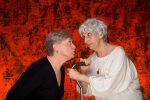
Judith Chertkow-Levy, left, and Karen Kelm co-star in the musical Like a Fly in Amber, which will be at Sheraton Vancouver Wall Centre Hotel Oct. 19. (photo by Victor Dezso Foto)

The Canadian Association on Gerontology Annual Scientific and Educational Meeting (ASEM) is the highlight of the year for those of us who work, conduct research or have an interest in the field of aging,” said Dr. Gloria Gutman, event co-chair. And, as far as she is aware, “this is the first time in the 47 years that the Canadian Association on Gerontology has been organizing ASEMs that it has included a social or cultural event quite like Like a Fly in Amber. When the organizing committee became aware of it, they got excited. It’s just so topical, given population aging; professional, funny and poignant.

“In today’s world,” she added, “many of us, especially women, can expect to be caregivers of frail elderly parents and/or, if we married partners older than ourselves, of a spouse whose physical and/or mental capabilities may become compromised. It’s the new norm.”

Like a Fly in Amber is a two-person musical about aging written by Karen Kelm, and co-starring Kelm and Judith Chertkow-Levy. It sees its Vancouver première at the CAG meeting on Oct. 19. Both the show and the conference are open to the public.

Among other things, Gutman is past president of CAG and professor and director emerita of the department of gerontology and Gerontology Research Centre at Simon Fraser University.

The ASEM, she said, is “where we learn about and present new ideas on how to improve the quality of life of our elderly population. While other organizations may be concerned with a particular age-related disease, CAG is a multidisciplinary organization that is concerned with the health and well-being of the whole person in the context in which they are living.”

Since CAG is a national organization, said Gutman, “the ASEM is held in different parts of the country as a way to build capacity as well as take advantage of what the different venues have to offer in the way of natural beauty, unique scientific and educational offerings, and culture.”

The conference program includes national and international keynote speakers, she said, noting that, this year, there are two from the United Kingdom, one from the United States and one from Vancouver. Preconference events, she explained, allow for more detailed study of particular topics, such as Reducing Seniors’ Social Isolation Through Collective Impact, which is funded in part by the Government of Canada’s New Horizons for Seniors Program. More than 600 abstracts “have been accepted for presentation within the eight streams of the scientific program which correspond to CAG’s professional membership: behavioural sciences; biological sciences; clinical practice; health sciences; humanities; policy and programs; social sciences; teaching and learning in gerontology.”

Like a Fly in Amber was part of the 2016 Toronto Fringe Festival. “The play revolves around Iris’s writing of a eulogy for her mother while sitting in the attic of the house in which she grew up,” wrote Dr. Carol Herbert, former dean of the school of medicine and dentistry at Western University who now lives in Vancouver, in a review of that production for the Jewish Independent. “She struggles to evoke memories of the person her mother was and to put her personhood into words. The resulting tribute is beautiful.” (See jewishindependent.ca/moving-musical.)

According to the synopsis, Iris returns to the family home the night before her mother’s funeral and “discovers that fiercely independent Grace may have hastened her own demise – accidentally, through stubborn, irrational decisions. Iris reviews the final chapter of their relationship, to make sense of Grace’s kooky self-sufficiency, and find closure.”

Kelm plays Iris, while Chertkow-Levy plays Grace. The two performers met doing Fiddler on the Roof at Theatre Under the Stars in 1975.

photo - Karen Kelm
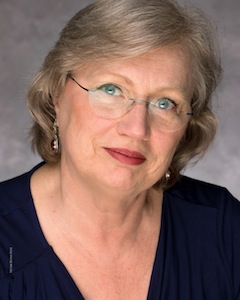
Karen Kelm (photo by Victor Dezso Foto)

“Over 40 years later,” Kelm told the Independent, “we are both enjoying being back onstage together – although I don’t think either of us could have imagined back when she portrayed Tzeitel and I was in the ensemble that she would play my mother one day!”

The two have been close friends since Fiddler. “She would join my family for Jewish holidays and Shabbat dinners and I would sing with her on Christmas Eve at her family gathering,” said Chertkow-Levy. “Although we moved to Toronto and shared an apartment and both pursued music careers, we did not have the opportunity to perform together until 2016. Karen is a gifted songwriter and, when she proposed the idea of doing this show in Toronto, I was thrilled to participate even though I was in San Diego and she was in Victoria.”

In preparation for the 2016 Fringe shows, Chertkow-Levy – who is one of Herbert and Gutman’s sisters – came to Vancouver around Passover for a few days of rehearsal. “Karen joined us for seder at my sister Carol’s home and, at the urging of my sisters, we sang a few bars of one of the songs. The theme of aging resonated with my sister Gloria professionally and with all of us emotionally and she had the idea of doing it sometime at a future convention. The seed of that idea grew and, as this CAG convention was being planned, Gloria felt the show was a good fit.”

photo - Judith Chertkow-Levy
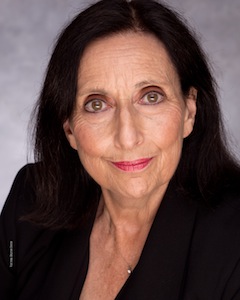
Judith Chertkow-Levy (photo by Victor Dezso Foto)

While Kelm and Chertkow-Levy haven’t publicly performed the show since its debut in Toronto, they have continued to work with the material and improve it, said Kelm. “For example, the songs are mostly the same but, in the previous production, we performed to recorded tracks. In this production, we will perform with a live pianist.

“The script for the Fringe production emerged from swapping anecdotes with friends about their mothers,” she explained. “I knew Judy and Gloria’s mother (she ladled a lot of chicken soup down my throat over the years) and we laughed till we cried, remembering some of her best moments and priceless sayings. Judy also knows my mother, who, by the way, tells me it’s OK to poke a bit of fun at seniors because ‘we old folks are funny.’ Whew – she may come to the show this time. But, essentially, the first version of the show aimed to present a series of vignettes with songs attached.

“Of course, some of my mother’s idiosyncrasies show up in the script, but my experience performing for seniors in independent living facilities has taught me that many of the things we thought were unique to our moms are absolutely universal. So, after our first production, I took to heart some of the insightful observations of a couple of reviewers and began to write a more compelling script. The result is tighter, clearer dialogue and stronger dramatic structure surrounding the songs, now beautifully supported by a new score.

“I have always had a clear picture of Grace (the mother) because she is such a wonderful composite character, representing many mother figures whom I loved,” said Kelm. “Iris (the daughter) gave me more trouble, both as a writer and a performer, because, at first, I didn’t want to get too autobiographical. In this version of the script, Iris much more closely represents me than Grace does my mother.”

“As Grace,” said Chertkow-Levy, “I find myself drawing on the memories of wonderful mothers in my life who are no longer with us: my mother and grandmother and Karen’s wonderful Grandma Matthews and Aunt Peggy. And, I picture Karen’s mother and my mother-in-law who are modern ‘little old ladies’ who have embraced technology and surf the Net and are only old by virtue of their age in years. All are and were strong, resilient women who loved life and took aging with a grain of salt – accepted it but didn’t give in to it. I feel honoured to be able to draw on them as inspiration and keep them with me in memory. I hope that my portrayal lives up to that memory.”

Tickets for Like a Fly in Amber can be purchased from cag2018.eventbrite.ca. The price is $40 for the show only and $65 for the show plus flatbread and a beverage. It plays Oct. 19, 7 p.m., in the Grand Ballroom at Sheraton Vancouver Wall Centre Hotel, 1088 Burrard St. For details about the CAG meeting, visit cag2018.ca. There are one-day as well as student and senior reduced registration fees available.

Format ImagePosted on October 12, 2018October 9, 2018Author Cynthia RamsayCategories Performing ArtsTags aging, Gloria Gutman, Judith Chertkow-Levy, Karen Kelm, Like a Fly in Amber, musical
Help dealing with dementia

Help dealing with dementia

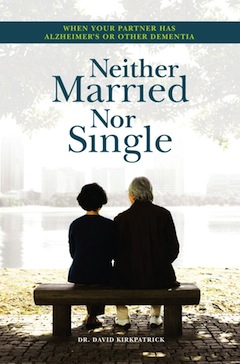
For anyone who is close to someone with Alzheimer’s disease or another form of dementia, Dr. David Kirkpatrick’s Neither Married Nor Single: When Your Partner Has Alzheimer’s or Other Dementia (Brush Education, 2018) is a must-read. There is so much in it that is critical to know, learn or come to understand about living, loving and letting go of one’s spouse, partner or friend with Alzheimer’s.

Kirkpatrick, a recently retired psychiatrist, has written a rare gem of a book and its message is needed by so many spouses of patients with these dreaded diseases. Kirkpatrick is a widower; his wife, Dr. Clair Hawes, a proponent, educator and practitioner of Adlerian therapy, died only last year from Alzheimer’s. His warm, wise and wonderful book is a map to help family members make it through what is normally uncharted, terrifying and anxiety-filled territory.

Besides the great clarity and pathos with which this book is written, it is a rare book because it is written from the dual perspectives of a psychiatrist and a loving husband in the process of watching his beloved disappear. Kirkpatrick, the psychiatrist, brings much-needed information to help the care-taking spouse understand the complicated medical condition, from getting the right diagnosis to clear descriptions of how dementia manifests, and even understandable explanations of the brain. As a loving husband, he shares the insights gained from others, as well as from his own years of confusion, anxiety, pain and suffering.

image - Neither Married Nor Single book coverThe fact of the matter is that the vast majority of the information in this book is also needed by the children of parents suffering from Alzheimer’s or other dementia. If there is no spouse to read it, then children, nephews or nieces, grandchildren or even close friends should read this book.

There are eight chapters – “The Diagnosis,” “Alzheimer’s Disease: A History and an Update,” “Finding Help and Comfort for your AD Partner,” “Care Homes,” “Improving Your AD Partner’s Quality of Life,” “Taking Care of the Caregiver,” “Sexuality and Intimacy” and “Into the Future” – followed by notes and the bibliography.

This small but powerful book takes the reader from the first stages when a spouse or other family member realizes something cognitive is happening to one’s loved one; when a family member begins to know that their loved one’s life is changing for the worse.

With humour, honesty, pathos and the strong voice of man who deeply loved his wife, Kirkpatrick takes the reader on his journey, from before, during and after the diagnosis, to a care home, and all the way to her death.

There are so many quotes that I could share, but space doesn’t allow it. In addition to Kirkpatrick’s words of insight are many important transcripts from other spouses talking with great honesty about their experiences. Every person’s experience in such a situation is partly unique, but it is also fair to say that all of the spouses in the book are on the same road, just getting off at different exits before returning yet again to the main highway leading to the same destination. Kirkpatrick’s special personal and professional voice shines a light to assist readers to see their way.

In Chapter 4, “Care Homes,” after talking about many of the heartbreaking yet life-saving choices a spouse must make on where the Alzheimer’s spouse should live, Kirkpatrick encourages the reader this way: “These are questions that are not always answered quickly or easily, but they must be asked, and the earlier in your shared experience that you do this, the better.” Yet, near the end of the chapter, he writes, “Think it through carefully. Perhaps write down pros and cons. Other than your decision to become partners in the first place, this is the most important decision in all your years together, so take all the time you need.”

One of my favourite quotes from the book is at the beginning of Chapter 6. It is a toast: “Here’s to Aloneness and her second cousin, Loneliness. May we continue to especially savour and enjoy the former without being absorbed by the latter.” And isn’t this yet another way to describe the holy and tragic dance of loving and losing?

While Kirkpatrick writes beautifully as a psychiatrist and as a husband throughout the book, in Chapter 7, “Sex and Intimacy,” he reveals to the reader even greater depths and poignancy. But, every chapter is filled with meaningful advice, guidance and hope.

Finally, a personal note that I’d like to share with you, the reader of this review, and hopefully a future reader of David Kirkpatrick’s book. Besides being a past congregant of mine, David also has been a dear friend for the past 17 years. In addition, before the onset of Alzheimer’s, my wife and I used to go out with David and Clair to dinners and plays. They were one of our favourite couples to see. Watching their dynamic relationship, their sense of humour, their deep shared mutuality and enjoyment was truly an honour. It is, of course, all the more sad knowing what they had and what they lost.

David, already an accomplished psychiatrist and therapist, certainly never wanted to experience such a loss, but he has translated that tragedy into this book. Neither Married Nor Single is a gift to anyone related or close to people with Alzheimer’s, but it is an especially meaningful and helpful gift to spouses suffering on their own.

Rabbi Shmuel Birnham was the rabbi and spiritual leader at Congregation Har El on the North Shore for 16 years. He retired two years ago. Rabbi Shmuel thoroughly loved being Har El’s rabbi and he also completely loves being retired.

Format ImagePosted on September 7, 2018September 6, 2018Author Rabbi Shmuel BirnhamCategories BooksTags aging, Alzheimer's, David Kirkpatrick, dementia, health
Jumping gene research

Jumping gene research

Dr. Gideon Rechavi, who founded Sheba Cancer Research Centre, was in Vancouver in January for an international conference at which he presented new findings on “jumping genes.” (photo from Sheba Cancer Research Centre)

Dr. Gideon Rechavi, who founded Sheba Cancer Research Centre, in Ramat Gan, Israel, was in Vancouver in January for an international conference on DNA and RNA methylation.*

“I described a new work we just published, regarding ‘jumping genes,’” he told the Independent about his presentation at the conference. “Forty-five percent of our genome, part of what people used to call ‘junk DNA,’ is composed of genes that can jump from one place to another.”

As far as what this means for the functioning of a body, he explained, “When they jump, they can activate genes and they can also inactivate genes, and it’s a random process. Actually, when I was PhD student in ’82 at the Weizmann Institute, I found the first example of such an event in mammals.” And, he added, “We were also the first to show the role of such events in cancer.”

Rechavi explained, “In cancer, there is a set of genes called oncogenes, genes that usually are normal genes in our genome but, when they are over-activated or activated in the wrong cell or at the wrong time, they can push the cell to proliferate and can cause cancer.”

Now, he said, many years later, using advanced technologies based on whole genome sequencing, they have found that, “in a variety of neurodevelopmental disorders, such as autism and Rett syndrome and similar diseases, there is a basic gene defect in the family or in the affected child. However, the clinical presentation can differ even between identical twins. Nobody understands why the same genome and the same genetic background will result in such a difference, one patient will be affected by epilepsy, the other one by autism or mental retardation.

“The mechanism that we show is that, in the brain, there is, normally, a constant level of jumping of such genes and, probably, it’s essential for diversity of neurons and brain plasticity and activity.”

This is happening all the time in neuronal stem cells, he said. “During the differentiation of neuronal stem cells … there is a very precise time window of 48 hours when such transposition events can take place. And, probably, it’s essential, because you find it in mice, in monkeys and in humans. However, in all the diseases that we are studying, there is over-activation of the mechanism, so you have many more jumping events.”

We have neuronal stem cells dividing in the brain our whole life, said Rechavi. “In the past, we used to think that all of the neurons are created during pregnancy or soon after, but now, in the last 20 years or so, we know there are also adult neuronal stem cells. When you do gymnastics or when you take Prozac, there are more neuronal stem cells. And, in these neuronal stem cells, these transposable elements – jumping genes – are jumping and probably contribute to brain function.”

The process seems to be quite regulated, he said. “The mechanism we suggest, we call it the ‘lightning rod’ mechanism or hypothesis.”

He explained, “The majority of jumping events occur in sequences in the genome where integration will not cause harm. So, in a normal level of jumping, we expect it will be beneficial, and the chance for damage is low. Although, if, in a variety of diseases, there is uncontrolled activation of this mechanism, so there are many more jumps, then it can saturate the lightning rod safeguard mechanism and then affect genes that are relevant to neuronal diseases, and we have a lot of examples where such things happened.”

To study this, said Rechavi, they sequenced the genomes of 100 samples, which included normal, diseased and control brain samples. “We were able to show that there is a particular normal level of transposition … and, then, over-activation, with many more transposition events, in the brains of disease-affected children.”

From these results, he said, we know that “the genes affected by such insertions from these transpositions, you see that many of them are relevant to neuronal functioning, neural development and a variety of neuronal disorders, such as autism and schizophrenia.”

By understanding the biochemical mechanism in these patients, what activates the jumping, “then you can intervene,” said Rechavi. For example, perhaps a drug could be developed that would decrease the level of transposition.

“This is the next step,” he said. “Now, we have several patients where we know the gene defect involved in the syndrome and, therefore, is involved in the enhanced transposition, so now we have to find a way to shut it off, to lower the activity.”

Rechavi said his lab is researching these jumping genes and their effects in both cancer and neuronal disorders, and that they are currently looking for funding to study the involvement of such genes in Alzheimer’s and in aging.

The purpose of the jumping genes is not certain. “What people suggest,” said Rechavi, “is that it has to do with diversity.” Recalling that it is a random process, he explained, “So, instead of having all the neurons in a particular part of the brain being identical, now you have diversity and probably the diversity increases the efficiency of the brain circuits, etc. It can also be relevant to plasticity. We know that specific brain regions can take over following damage or following a kind of environmental influence and change the activity and perform new activities. So, maybe the ability to create diversity in the brain is an advantage.

“A similar model has to do with the immune system,” he added. “With the immune system, we know that there are genetic mechanisms that increase diversity and, then, the cells of the immune system of an individual can respond to any virus and any bacteria.”

The main focus of his lab at Sheba Medical Centre, he said, is to find new genetic and epigenetic mechanisms, “and then to ask, what is their relevance to normal physiology and what’s their relevance to diseases. That’s how this story that started with cancer research turned out to be very relevant to neuronal disorders and psychiatric disorders.”

Rechavi said the phenomenon of jumping genes, or transposable elements, was first identified by American scientist Barbara McClintock (1902-1992) in experiments with maize. (She won the Nobel Prize in 1983 for this and other contributions to the study of genetics.) “She found it in maize,” he said. “We found it in mammals.”

Conferences like the one Rechavi was attending in Vancouver when he spoke to the Independent by phone Jan. 23 from his room at the Fairmont Hotel Vancouver, where the conference was being held, are useful for several reasons.

“Some people, after my talk, came and they wanted to collaborate, they want to learn the methodologies. Some people suggested samples we could analyze…. This is the basis for scientific collaboration, the main reason to do scientific meetings. You can read everything on the internet,” he said, “but when you discuss with people the findings and you drink coffee together and discuss the details, you can get new information, new non-published information, and also collaborations and friendships.”

Sheba Medical Centre doesn’t have many partnerships with Canadian institutions, said Rechavi. The centre’s main collaboration in Canada, he said, is with Toronto’s Hospital for Sick Children, especially in the field of brain tumours, because one of Rechavi’s former trainees, Dr. Uri Tabori, went to SickKids to study such tumours and stayed there.

Before obtaining his PhD at the Weizmann Institute of Science, in Rehovot, Rechavi earned his doctor of medicine at Tel Aviv University’s Sackler School of Medicine. He is a professor of hematology at Sackler School and heads the Cancer Research Centre at Sheba Medical Centre, the largest hospital in Israel, which serves as a university teaching hospital (affiliated with Sackler) and as a tertiary referral centre. He has published more than 450 scientific papers.

In addition to treating some 1.5 million patients annually, Sheba Medical Centre has 75 laboratories and more than 2,000 ongoing clinical trials; 30% of Israeli medical research is performed at Sheba, which files, on average, 15 biomedical patent applications per year.

In October 2017, Sheba Medical Centre inaugurated the Wohl Institute for Translational Medicine. The idea, said Rechavi, is to take the “findings emerging from basic research and try to translate it into taking care of patients; to better diagnose, to [develop] better treatments.”

* Methylation, explained Dr. Gideon Rechavi, “is the addition of a chemical group known as methyl on the four basic letters of the genetic material (DNA and RNA) to generate a new expanded ‘alphabet.’”

Format ImagePosted on February 16, 2018February 14, 2018Author Cynthia RamsayCategories IsraelTags aging, Alzheimer's, cancer, DNA, Gideon Rechavi, health, jumping genes, medicine, methylation, neurodevelopmental disorders, science, Sheba Medical Centre
Victoria is alive and kicking!

Victoria is alive and kicking!

Dulcinea Langfelder, being carried by Eric Gingras, in Victoria, which is at Massey Theatre for two shows only next week. (photo from Dulcinea Langfelder & Co.)

Victoria is coming to New Westminster next week for two shows only. Created and performed by Dulcinea Langfelder, a versatile dancer, multimedia performer and award-winning choreographer from Montreal, Victoria is about old age and young spirit, about laughter in the face of tragedy.

Langfelder started her life in New York. She studied ballet and pantomime, singing and acting. After a few years in Europe, including London and Paris, she moved to Montreal in 1978 to join La Troupe Omnibus. Since then, Montreal has been her home. In 1985, she founded her own company, Virtuous Circle Dance Theatre. In 1997, the company changed its name to Dulcinea Langfelder & Co.

Langfelder loves Montreal and can’t imagine living anywhere else. “The city is effervescent, young culturally compared to New York or Paris,” she said. “Fewer boundaries between categories, and close enough to New York to visit my mom. Why on earth would I want to live elsewhere?”

The same philosophy applies to her choreography and performing. Why on earth would she do anything else? “For the moment, I can still do what I love to do, and I believe that it’s important to see older people on stage. Art has always been the most effective way to influence our attitudes. Victoria gives voice to those who have ‘disappeared’ through aging – but we are still alive and kicking!”

Although it’s hard to pinpoint Victoria’s exact theatrical classification, Langfelder said, “It is a multidisciplinary and multimedia work for the stage. There really is no major discipline. I work with the elements on my palette: movement (I guess I do always put that one first), text, humour, dramatic – through line, projected imagery, music and a bit of puppetry. Everything is choreographed, not just the movement.”

The heroine, Victoria, is “a wheelchair-bound 90-year-old, suffering from the loss of memory, autonomy and just about everything else,” reads the press release. But Langfelder melds poignant and funny in this show of an elderly woman’s courage. Victoria premièred in 1999, and Langfelder told the Independent about its origins.

“In 1994, an actor friend of mine, Charles Fariala, who also worked as an orderly and knew that I have a penchant for tragicomedy, called me to say, ‘You must meet Victor, an old man in a wheelchair who’s lost his memory; sometimes I wonder if he’s just gaga or if he’s discovered Nirvana.’ I immediately responded, ‘We’ll call her Victoria!’ I was intrigued by the question: Where do we find our mental victory when we we’ve lost our physical power?”

Inspired by the concept, Fariala and Langfelder started working on the project. “Charles wrote pages of text, which I re-worked,” said Langfelder. “I also incorporated a lot of text that came from Angel Petrilli, a woman who became the principal model for the character, although there were other people as well, including my own father. But this piece is multidisciplinary and multimedia, so the ‘script’ is composed of text, choreography, song and projected imagery. It was written in concert with all of my collaborators; I created the choreography.”

One of the most unusual aspects of the show is that the protagonist is bound to her wheelchair. “It is hard to tame the wheelchair beast,” Langfelder admitted, “but fascinating for a mover!”

The show’s success and longevity – 18 years now – surprises even its creator. “I didn’t think it would fly at all, with such taboo subject matter,” she said. “But I discovered that audiences had been starving to have this conversation in a non-depressing way. While treating this subject as accurately as I can, Victoria is an uplifting piece, because there really are rich, poetic and hilarious moments when dealing with dementia and the end of life. We just underline those moments, without taking the subject matter lightly.”

Like every performer, Langfelder knows that art must change with time, that an actor should be flexible in her communication with different audiences. Victoria is no exception to this rule. “It changed a lot in the first years,” Langfelder explained, “then subtle changes. It adapted to different languages and cultures, though it clearly reminds us of what we have in common around the world. We’ve done this piece everywhere from Japan to Zimbabwe, in seven languages.”

One of the latest changes was adding another actress to play the title role. “I recently realized that this piece could live longer than I will,” said Langfelder. “I trained Anne Sabourin in the role. She plays Victoria in French.”

Langfelder herself plays Victoria in English in every show, in every country, and the reception has been overwhelmingly favourable, but that is not enough for the actress. “The Victoria project is about touring the piece for the general audience it was designed for,” she said. “Plus, we work hard to get those who can most benefit, and are the least likely to frequent the theatre: seniors and family/professional caregivers. The way we get them to the theatre, and Victoria can’t be done anywhere else, is that we go to them first. We offer workshops that answer their immediate needs, like non-verbal communication, movement for seniors and seminars on creativity, humour and dementia. Then we use the opportunity to make them understand that theatre can actually be useful, even more useful than workshops. We invite them to the theatre.”

Like her heroine, Langfelder meets her challenges with a smile. “I love making people laugh at difficult situations,” she said. “It makes me feel useful. My father’s last words to me, before his stroke, were in response to me complaining about my challenges. He said, ‘You mustn’t get discouraged, because what you do is so important! You put human dilemma on stage and allow us to laugh at it; what could be more important than that?’ I had just begun working on Victoria, and he never saw it. I become him when I play Victoria.”

Victoria is at the Massey Theatre in New Westminster on Oct. 27 and 28. For tickets, visit ticketsnw.ca or call 604-521-5050.

Olga Livshin is a Vancouver freelance writer. She can be reached at [email protected].

Format ImagePosted on October 20, 2017October 19, 2017Author Olga LivshinCategories Performing ArtsTags aging, dementia, Dulcinea Langfelder, theatre

Celebrating the mundane

Why is it so bad to talk about the ordinaries of life? People often say the mundane is so boring, let’s talk about something exotic. Let’s gossip about somebody’s perversion. Isn’t there a scandal that’s just been discovered? Have you heard about the latest murder? Are the terrorists going to kill us all? Will they take over our world so that we will have to hide and practise our rituals in secret? Will our grandchildren ever get a paying job again? What’s the point of voting, they all tell us lies?

Turn down the TV, step away from the computer. Better still, turn them off! Don’t we wish it was that simple, but if we stop listening and are not active, isn’t what happens partly our fault?

I think I’d rather talk about how wonderful it is that the sun came out today. And this after many too many days of driving rain. If I organize my time correctly I will be able to sit on my balcony in the evening with a small glass of my favourite beverage, sending out smoke signals. We have had a late spring this year and the trees have been slow to leaf. I have a clear view of the water out by English Bay. It is too early in the season to see any sailboats. I have been rushing the season by stuffing the baskets around my balcony edge with colourful plants; red, yellow, blue, mauve and in-betweens. The dozens of tulips I planted last fall have let me down; lots of greenery, but only a handful of flowered heads.

It is not too early in the season for my blue plastic dragonfly to flutter with excitement as the sun pours over the balcony railing. I can feel the gentle blush of warmth on my skin if the breezes are not too vigorous. Sometimes I have to wear a leather jacket and a scarf to advance my challenge to the recalcitrant spring. I have cast off the rigours of a stuffy nose and a dry throat to insist on being in the pink of good health. We have even had a walk on the beach and ventured into Stanley Park to feed the ducks. We have abandoned the heat of the foreign and the exotic to embrace our ordinary life.

We are back to regular exercise at the community centre. Wasn’t it nice that people noticed we have been away and say they are happy to see us back? We are enjoying our regular shopping trips to the places we are used to. And dropping in on the new restaurants that have sprouted in our neighbourhood to vary our regular dietary habits. It was comforting to visit our doctors, dentists and pharmacists just to check in. And it was great to touch base with friends and family, finding occasions to meet and greet. In spite of technology that spans time and distance so effectively, even with those further away, somehow, people seem closer when we communicate with them from home. The ties that bind are so much stronger when we can see each other face-to-face.

For the next while, we will have gatherings bringing together family members and friends into our own locale, the ones not often in the same place at the same time. I look forward to these encounters. Life can be so fragile and we have had recent reminders of that reality. Sharing each other’s company in the flesh can be one of the rare pleasures we can enjoy in the peripatetic world we inhabit. I treasure each and every one of these opportunities. An appreciation of the passage of racing time gives these occasions added significance.

We ourselves will be traveling long distances soon to acknowledge important events in the lives of those near and dear. Travel is not what it once was, and is more of a challenge for us than it has been in the past. But the act of presence is important. Too often, for us, these days, it is about departing souls, so it is delicious when the trip is about new beginnings. And I will actually get to have all my children around me in one place. Wow!

I just had a birthday. I am too often careless about these times; I have had so many. It was heartening to have others make a fuss. And I got to have contact, and actually talk to, people it is often really difficult to reach in the ordinary course of life. I got to talk to some of my favourite people; that’s always a special pleasure. Appreciating how much of a treat it was for me makes me resolve to pay a lot more attention to this item in the lives of my friends and dear ones.

So here it is. We have spent all this time and space nattering on about so many mundane things. None of the topics has been about earth-shaking events. It does help soothe us, particularly when we have to go through some rough spots. You will have to judge whether it has been worthwhile. I think it has been.

I am looking forward to a sunny tomorrow.

Max Roytenberg is a Vancouver-based poet, writer and blogger. His recently published Hero in My Own Eyes: Tripping a Life Fantastic is available from Amazon and other online booksellers.

Posted on May 5, 2017May 3, 2017Author Max RoytenbergCategories Op-EdTags aging, life

A technical love affair

I knew the printer wasn’t working when no typed pages flew out of its up-front opening where typed pages are supposed to fly out. Great! I spend a week feeding it $18 cartridges of yellow, magenta and black, and now that its appetite had been sated, no output. And, by the way, what marketing genius conceived of the scam where the color “black” demands yellow and magenta. It makes as much sense as filling your car with gas but the car won’t go unless you also buy a six pack of beer and two bags of potato chips.

Clearly, I needed a new printer. This clever machine announced its death in a dialect that even I understood. After some 10 years of service, it had gone to that junkyard in the sky where you could print black without magenta or yellow.

I needed a new printer. Even worse, I would have to properly introduce the printer to the computer. I’m a scribbler not an engineer. But then relief, as I thought of my great-grandchild in kindergarten. He was already 6 – he knew all about ’puters, as he called them. No, not a good idea – better my third-grade grandchild – much more experienced.

That thought cost me a quart of strawberry ripple ice cream, and alarm at his mature and loud vocabulary as failure followed failure. Then inspiration lightened the room as I thought of an engineering friend who loved key lime pie. My wife, who didn’t know a printer from a nuclear reactor either, had just made a key lime pie! What followed was the shortest marketing phone conversation on record.

“Henry, come on over and help me share a key lime pie.”

He came. Ate three pounds of key lime pie. We finished. The pie was as dead as the printer. Henry, though, full of pie, was – as I planned – in a jovial mood. I showed him around our house. And, somehow, we ended in the computer room.

“Hey Ted, the wire between the computer and printer isn’t connected.” (My third grader never noticed that! Public schools today are atrocious.) At this point, I hung my head and confessed the whole key lime pie inducement scheme. Nonetheless, my friend – what a friend! – jumped in the driver’s seat. He pushed buttons, tied wires, cursed, sweated. He condemned every printer you could imagine, as my chaste computer wouldn’t mate with the printer.

I didn’t get the whole picture but it had something to with it being a new printer and the ’puter having an old operating system. Such snobbery. It was age discrimination. That lousy printer should end up in court for rejecting the advances of my senior computer.

Not to worry, however. As in most fairytales – though this story is the absolute truth – we somehow found a happy ending. My friend, his forehead wet with frustration, mentioned that he saw another printer in my bedroom.

“Yeah, it’s an old one,” I said. “Somebody gave it to me.”

The word “old” rang in the room like a bell. His eyes lit up like he’d just drained a fifth of champagne.

“Go get it!” he screamed.

Sure enough, the old printer loved that old operating system. The two devices mated in front of our eyes. In fact, together they made this love story.

Ted Roberts is a freelance writer and humorist living in Huntsville, Ala. His website is wonderwordworks.com.

Posted on December 23, 2016December 21, 2016Author Ted RobertsCategories LifeTags aging, computers, technology

Posts pagination

Previous page Page 1 … Page 3 Page 4 Page 5 Next page
Proudly powered by WordPress