Skip to content
  • Home
  • Subscribe / donate
  • Events calendar
  • News
    • Local
    • National
    • Israel
    • World
    • עניין בחדשות
      A roundup of news in Canada and further afield, in Hebrew.
  • Opinion
    • From the JI
    • Op-Ed
  • Arts & Culture
    • Performing Arts
    • Music
    • Books
    • Visual Arts
    • TV & Film
  • Life
    • Celebrating the Holidays
    • Travel
    • The Daily Snooze
      Cartoons by Jacob Samuel
    • Mystery Photo
      Help the JI and JMABC fill in the gaps in our archives.
  • Community Links
    • Organizations, Etc.
    • Other News Sources & Blogs
    • Business Directory
  • FAQ
  • JI Chai Celebration
  • JI@88! video

Recent Posts

  • Eby touts government record
  • Keep lighting candles
  • Facing a complex situation
  • Unique interview show a hit
  • See Annie at Gateway
  • Explorations of light
  • Help with the legal aspects
  • Stories create impact
  • Different faiths gather
  • Advocating for girls’ rights
  • An oral song tradition
  • Genealogy tools and tips
  • Jew-hatred is centuries old
  • Aiding medical research
  • Connecting Jews to Judaism
  • Beacon of light in heart of city
  • Drag & Dreidel: A Queer Jewish Hanukkah Celebration
  • An emotional reunion
  • Post-tumble, lights still shine
  • Visit to cradle of Ashkenaz
  • Unique, memorable travels
  • Family memoir a work of art
  • A little holiday romance
  • The Maccabees, old and new
  • My Hanukkah miracle
  • After the rededication … a Hanukkah cartoon
  • Improving the holiday table
  • Vive la différence!
  • Fresh, healthy comfort foods
  • From the archives … Hanukkah
  • תגובתי לכתבה על ישראלים שרצו להגר לקנדה ולא קיבלו אותם עם שטיח אדום
  • Lessons in Mamdani’s win
  • West Van Story at the York
  • Words hold much power
  • Plenty of hopefulness
  • Lessons from past for today

Archives

Follow @JewishIndie
image - The CJN - Visit Us Banner - 300x600 - 101625

Instilling a survival instinct

Instilling a survival instinct

Jeanne Beker reads from her parents’ (Bronia and Joseph Beker) Holocaust memoir on Feb. 19. (photo from Jeanne Beker via vhec.org)

Some survivors of the Holocaust choose never to speak of the horrors they endured. My parents talked. They were adamant about telling us every detail of their war experience, time and time again. I remember hiding under the bed as a small child – I didn’t want to hear any more of their “war stories.” Now, I realize it was precisely their storytelling that made me who I am, coloring my personal philosophies, imparting a sense of resiliency and instilling in me a precious instinct for survival.
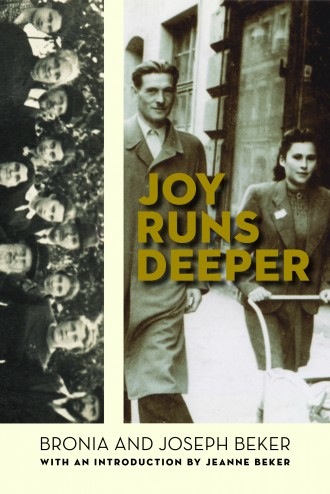
image - Joy Runs Deeper book coverWhat they endured and all they have given me [was] on my mind a great deal over Toronto’s Holocaust Education Week [Nov. 2-9, 2014], with the recent publication of their memoirs, Joy Runs Deeper. With the last generation of eyewitnesses to the Holocaust slowly slipping away, my parents’ stories have taken on more value and urgency. As a child of survivors, I’m keenly aware that I have been left with a legacy that’s as powerfully daunting as it is inspiring.

My parents, Bronia and Joseph Beker, both grew up in Kozowa – a small town in eastern Poland that is now part of Ukraine. They paint a colorful prewar picture of life in their idyllic shtetl, where they met and fell in love. But when Germany invaded Poland in 1939, their lives became a living hell. By 1941, all the Kozowa Jews were confined to a ghetto.

Nazis would regularly come into town and randomly shoot any Jew in sight.

After these horrific shootings, the Germans would command the Jews to make their ghetto even smaller. Many people lived in one room, and with little food, people grew weak and prone to disease. My grandmother and mother both came down with typhus, and it killed my grandmother. In the meantime, my grandfather built a bunker in the basement of the family home where they would hide whenever the Nazis came to town.

In April 1943, my mother and nine members of her family went down to their bunker. After about six hours, they could hear digging: the Nazis were looking for them.

“We held our breath and didn’t move for about half an hour,” writes my mother. “They left without finding our bunker, but the pipes through which we got air must have been covered during their digging. We couldn’t breathe,” she recalls.

“I remember seeing my father, sitting on the floor in his prayer shawl, praying, and my brother with a hammer in his hand, trying to open the entrance to the bunker. Then I fell down and everything went black.”

My mom’s entire family perished that day: all of them suffocated, except, miraculously, for her. Like a knight in shining armor, my dad came to her rescue, scooped her up and, for many months until their liberation, my parents were on the run, hiding in barns and bunkers, depending on the kindness of strangers for their very existence.

It was these stories of survival that were relentlessly recounted to my sister and me throughout our childhood. “Don’t be afraid and never give up” was my father’s famous saying, the mindset that saw him through the war, and the sage edict he raised us on.

My mother’s modus operandi, which tended to chip away any potential optimism, was even more pragmatic: “Expect the worst and you won’t be disappointed.” It certainly wasn’t an upbeat way of viewing the world, but it was her motherly attempt at protecting us and sparing us pain.

While my mother’s influence certainly affects me even to this day, it was my father’s motto that I especially took to heart – an order that still carries me through all my trials.

Ultimately, both my parents taught me the meaning of fearlessness and tenacity, courage and dignity.

As my mother always says, “If you live long enough, you’ll live to see everything.” And her words rang true as I sat by her side at her book launch, watching in wonder as she proudly signed countless books bearing her name. On the verge of turning 94, suffering the ravages of Parkinson’s, but as radiant and stylish as ever, my mom was realizing one of her greatest dreams: she could now share her personal story with the world.

Her memoir, which she’d written more than 30 years ago, along with my father’s memoir, which he’d written, longhand, in Yiddish, just before he died in 1988, has been published by the Azrieli Foundation’s Holocaust Survivor Memoirs Program.

Established in 1989 by the late Montreal philanthropist David J. Azrieli, himself a Holocaust survivor, this Canadian organization collects, archives and publishes inspirational accounts of courage and strength in the light of horrifying adversity, and distributes them free of charge to libraries and educational institutions across the country. (The books are also available at bookstores, with all revenues going back into this extraordinary memoirs program.)

My mother and so many others had their youth nipped in the bud, endured unspeakable pain and suffered profound loss. Yet still, they managed to soldier on, pick up the broken pieces and stoically rebuild their shattered lives.

Their tales of toughness and tenacity light our paths, and teach us the kind of fearlessness it takes to survive. These lessons learned from survivors, like my parents, inspire and challenge us to shoot for the moon, work hard, be successful and live out not just our dreams, but their unrealized ones as well.

Their heroism drives me relentlessly.

Jeanne Beker is a Canadian television personality, fashion designer, author and newspaper columnist. This article was originally published in the Globe and Mail and is reprinted here from Zachor, the magazine of the Vancouver Holocaust Education Centre, with permission.

 ***

Jeanne Beker reads from her parents’ (Bronia and Joseph Beker) Holocaust memoir Joy Runs Deeper (Azrieli Series of Holocaust Survivor Memoirs) on Feb. 19, 7 p.m., at the Museum of Vancouver, 1100 Chestnut St., to open the Vancouver Holocaust Education Centre’s Shafran Teachers’ Conference. Those in attendance receive a complimentary copy of the memoir, and a reception follows. The event is open to the public and is free of charge but space is limited. RSVP to 604-264-0499 or [email protected].

Format ImagePosted on February 6, 2015February 5, 2015Author Jeanne BekerCategories BooksTags Azrieli Series, Bronia Beker, Holocaust, Joseph Beker, Joy Runs Deeper, Vancouver Holocaust Education Centre, VHEC
A return to Auschwitz

A return to Auschwitz

Mordechai Ronen (Canada) is embraced by Ronald Lauder. (photo by Shahar Azran)

Fifteen Auschwitz survivors, aged 80-94, returned to the infamous camp – some for the first time – ahead of the 70th anniversary celebration of its liberation on Jan. 27. Joining the survivors on their visit was Ronald S. Lauder, president of the World Jewish Congress, who, along with the USC Shoah Foundation, organized the delegation of returning survivors from across the world.

“When I arrived in Poland, the tall trees made me immediately anxious. They reminded me of my arrival to Auschwitz – the same day my mother and little sister were gassed,” said Johnny Pekats, 80, one of the American survivors who returned to the death camp for the first time. “For years, I refused to return to this horrible place, but I finally decided to come back with my son. I wanted to say Kaddish with him there. This is my first and last visit to Auschwitz and my message for the world is that it’s not enough just to remember; we have to make sure that this never happens again.”

More than 100 Auschwitz survivors from at least 19 countries traveled to Poland as part of the WJC delegation to participate in the ceremony.

“I deeply admire the courage of these survivors,” said Lauder, who joined them at Auschwitz. “For some of them, this was the first time they returned to the place of their nightmares. Each survivor is a living testament to the triumph of good over evil, of life over death, and they are my heroes.”

There was also a reception at a Krakow hotel for the survivors and other guests, at which film director and founding chair of the USC Shoah Foundation Steven Spielberg said, “Their testimonies give each survivor everlasting life and give all of us everlasting value. We need to be preserving places like Auschwitz so people can see for themselves how evil ideologies can become tangible acts of murder. My hope for tomorrow’s commemoration is that the survivors will feel confident that we are renewing their call to remember. We will make sure the lessons of the past remain with us in the present so that we can now and forever find humanitarian ways to fight the inhumanity.”

Format ImagePosted on February 6, 2015February 5, 2015Author World Jewish CongressCategories WorldTags Auschwitz, Holocaust, Johnny Pekats, Ronald S. Lauder, WJC, World Jewish Congress
Major skull discovery

Major skull discovery

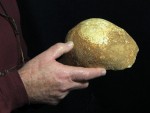
A skull found at the Dan David-Manot Cave supports other evidence that modern humans (Homo sapiens) evolved in Africa or in the Middle East, not in Europe. (photo by Clara Amit, Israel Antiquities Authority)

Francesco Berna, a Simon Fraser University assistant professor of archeology, is part of an Israeli-led team of scientists that has unearthed major clues about the first modern humans in northern Israel.

A paper published in Nature on Jan. 28 – co-authored by Berna – documents the discovery of a 55,000-year-old, partial human skull with a distinctive modern human, bun-shaped “occipital” region, at the Dan David-Manot Cave in the western Galilee.

The study involved researchers from the Israel Antiquities Authority, Geological Survey of Israel, Weizmann Institute of Science, Tel Aviv University, Ben-Gurion University of the Negev, Hebrew University, University of Haifa, University of Vienna, Harvard University, Case-Western University, Max Planck Institute for Evolutionary Biology, Columbia University and SFU. It is headed by Prof. Israel Hershkovitz, Dr. Omry Barzilai and Dr. Ofer Marder, and funded by the Dan David Foundation, Israel Academy of Sciences, Irene Levi Sala CARE Archeological Foundation, Leakey Foundation and IAA.

Berna and his colleagues believe that this skull’s date of origin and where it was found support other evidence that modern humans (Homo sapiens) evolved in Africa or in the Middle East, and migrated from there about 65,000 years ago. This contrasts with the hypothesis that the human species first evolved in Europe.

One of the migration routes by which modern humans spread out across the world passes through the Levant (the Mediterranean basin), which is the only land crossing between Africa and Europe, but until now, no modern human remains that date to the period between 65-45 thousand years ago had been discovered.

The Manot skull’s inner and outer surfaces were covered with cave deposits that were dated by means of uranium-thorium to 55,000 YBP (years before present). A morphometric analysis showed it is that of a modern human being with similarities to modern skulls from Africa on the one hand and the ancient skulls of modern humans from Europe on the other.

Berna helped the scientific team understand how ancient humans used Manot Cave at the time of the skull’s origin and how the cave, its archeological remains and the skull got to their present state.

Megan Thibodeau, one of Berna’s graduate students, explored the use of fire in this cave. Their work is helping scientists confirm whether this skull is from the most recent evolution of anatomically modern humans, which showed up in Europe first, and eventually the rest of the world.

“The skull found at Manot is absolutely comparable to ours and different from other skulls of early modern humans previously found in Israel and dated to 100,000 years ago,” explained Berna. “This earlier group of humans had some slight anatomical differences from us.

“But, most importantly, they didn’t produce stone tools, mobile sculptures and cave paintings such as the one that our direct ancestor produced in Europe and the Middle East, starting at around 40,000 years ago. Earlier modern humans apparently hadn’t yet developed our brain.”

To date, five excavation seasons (2010–2014) on behalf of IAA, TAU and BGU have been conducted in the cave, which is located 40 kilometres northeast of the Mt. Carmel prehistoric caves. Preparations are being made by the Ma’ale Yosef Regional Council, Moshav Manot and the Jewish National Fund for the development of the cave for visits by the public.


Format ImagePosted on February 6, 2015February 5, 2015Author SFU and IAACategories IsraelTags archeology, Francesco Berna, Manot Cave, Megan Thibodeau, Simon Fraser University, skull

An accord for the ages

Here’s a scenario to consider: What if Prime Minister Binyamin Netanyahu came to the Knesset with a peace accord, approved by all its neighbors, that provided for the cessation of war, the recognition of the state of Israel, land swaps to create coherent borders and the dismantling of settlements?

What if Netanyahu said the final decision on the agreement would be up to the Knesset and he would remain on the sidelines, campaigning neither for nor against the agreement? Would the Knesset endorse the deal?

At first blush, such a scenario sounds farfetched, it could never happen. But, 35 years ago, that is exactly what occurred.

Former prime minister Menachem Begin came to the Knesset with a peace agreement with Egypt. He was reluctant to abandon settlements in the Sinai, but he let members of the Knesset vote on the agreement and did not campaign against it. They endorsed the deal.

The 1979 Camp David Accords proved to be more durable than many expected, surviving the assassination of Egyptian president Anwar Sadat, the Lebanon war, the Gaza conflicts and the Arab Spring. Also, the accord laid the foundation for an agreement with Jordan that is now marking its 20th anniversary.

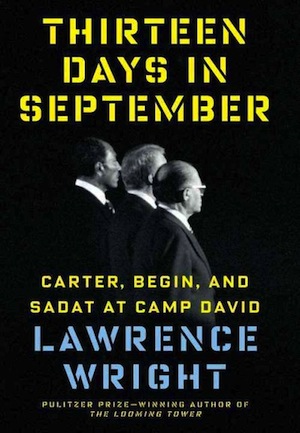
image - Thirteen Days in September book coverIn Thirteen Days in September: Carter, Begin and Sadat at Camp David (Alfred A. Knopf, 2014), New Yorker staff writer and Pulitzer Prize-winner Lawrence Wright goes back to the difficult negotiations in September 1978 that led to the reluctant handshake between Sadat and Begin, and the signing of the accord on the White House lawn in March 1979.

U.S. president Jimmy Carter brought the Egyptian president and the Israeli prime minister together after Sadat took the first courageous step toward peace – a visit to Jerusalem in 1977. The three leaders and some of their most senior aides met at Camp David, a secluded country retreat about 100 kilometres outside Washington, D.C. They stayed for almost two weeks, stepping away from the whirlwind of day-to-day events to focus exclusively on a framework for peace.

A playwright and screenwriter, Wright effectively recreates the moments of high drama during the talks, weaving personal histories, sacred mythologies and past events into a detailed account of the bare-knuckle bargaining session. He also fleshes out the secondary characters, the members of the Israeli, Egyptian and U.S. bargaining teams who played a role in reaching an agreement. In the acknowledgements, Wright says he initially wrote a play about the negotiation, but he could not squeeze all the interesting characters into a 90-minute play.

The evocative portrayal of Moshe Dayan – the Israeli-born warrior who came to personify the country’s most spectacular military accomplishment in 1967 as well as its most significant loss in 1973 – is especially memorable. Dayan is described alternately as a cold-blooded, calculating fighter and the government’s most creative thinker in pursuit of peace.

The book offers a rare glimpse inside the world of high-pressure international negotiations and sheds light on the difficult relationship that Carter continues to have with Israel. That alone would make the book worthwhile. Yet Thirteen Days is more than just an historical account. Delving into how the Camp David Accords were reached inevitably fires up the imagination to think about what is possible.

Could these achievements ever be repeated again?

Wright shines a spotlight on some extraordinary aspects of the negotiations. The U.S. president, who was prepared to dedicate an inordinate amount of time to grappling with the competing interests in the Middle East, had come to the table with little more than a biblical understanding of the issues and virtually no experience in foreign policy. Yet, he shared with the Egyptian president a similar upbringing, religious devotion and commitment to service in the military. An easy rapport evolved between the two men.

Carter had a more difficult time finding a personal connection with Begin, who was scarred by the Holocaust and hardened by his experiences fighting British authorities in Palestine before the establishment of the state.

The isolation of Camp David allowed negotiators to work creatively and take risks that might not have been ventured in the public eye, Wright writes. But being forced together also had negative consequences. The intimacy at times fed hostility, rather than creating trust, and almost torpedoed the talks.

The process of negotiating, ridded with cultural misunderstandings and political miscalculations, was particularly challenging. Sadat and Begin had significantly different approaches to the talks. Sadat came with an agenda of unrealistic demands, but was willing to compromise. Begin came to listen and react. For several days, he adamantly refused to concede anything.

In his naïveté, Carter expected the two warring sides to reach an accord on their own. His opening gambit was to just bring the two sides together and step back. He assumed they would resolve their historic differences once they met and shared their history, their suffering and their dreams. How wrong he was.

Their response at critical moments was a study in contrasts. Where Sadat, a visionary, would become emotional when his idealism was challenged, Begin would become colder and more analytical. Begin kept his eye on details, meticulously dissecting every nuance in anticipation of what could be lurking around the corner. “Both desired peace,” recalled Ezer Weizman, who was Israel’s defence minister at the time. “But Sadat wanted to take it by storm and Begin preferred to creep forward inch by inch.”

Carter eventually realized he had to take the lead. But it was not until the sixth day of negotiations that he introduced a framework for peace that was to be the springboard for negotiated compromises and a final deal.

Despite the hurdles, somewhere there was magic. They reached an agreement.

Wright suggests that domestic political considerations played a significant role. The political cost for all three leaders increased as the negotiations stretched on. Carter, who staked his reputation on bringing the conflict to an end, threatened to break relations with Sadat or Begin if either leader walked away. The threats kept the two wily politicians at the table, despite their personal animosities.

Another pivotal issue was how the three leaders responded to matters related to the Palestinians. Sadat was their self-appointed representative at the talks. But, at a crucial moment, he pushed their interests aside. It was a decision that cost him his life. At the time, however, the prospect of regaining full sovereignty over the Sinai Peninsula was just too tantalizing; leaving the Palestinians on the sidelines enabled the accords to be signed.

Wright observes that there has not been a single violation of the terms of agreement, but he leaves the impression that the Camp David Accords offer little to guide those now searching for more peace. The accords have saved lives and defused tensions in a volatile neighborhood, but the agreement appears to be a unique set of circumstances in history at a time of powerful personalities that probably will not be replicated in our times.

Media consultant Robert Matas, a former Globe and Mail journalist, still reads books. Thirteen Days in September is available at the Isaac Waldman Jewish Public Library. To reserve it, or any other book, call 604-257-5181 or email [email protected]. To view the catalogue, visit jccgv.com and click on Isaac Waldman Library.

Posted on February 6, 2015February 5, 2015Author Robert MatasCategories BooksTags Anwar Sadat, Camp David Accords, Israel, Jimmy Carter, Lawrence Wright, Menachem Begin, Palestinians, peace
Writing key to kids’ literacy

Writing key to kids’ literacy

Prof. Dorit Aram noticed that young children, prior to going to school, long to write. (photo from Dorit Aram)

According to a recent research from Israel, learning to recite the alef bet alone does little to help children advance their literacy – children should be learning to write, and before they even enter the school system.

The team’s lead researcher, Prof. Dorit Aram, maintains that longstanding misconceptions are getting in the way of children’s abilities.

Aram teaches at Tel Aviv University’s Jaime and Joan Constantiner School of Education specializing in adult/child early interactions and their relationship to children’s early literacy and social-emotional adjustment. The research was conducted in collaboration with colleagues at American universities and was published last year in Early Childhood Research Quarterly.

“My research started with children that come from lower socio-economic backgrounds,” said Aram. “What we see is that there are gaps between children in terms of their reading and writing achievements.”

As reading and writing are key to children’s academic success, Aram “was interested in how parents could promote their children’s literacy, in particular those from lower socio-economic backgrounds.” This particular study, however, looked at a group of ethnically diverse, middle-income preschoolers.

Aram began studying literacy with one of the leading early literacy researchers in the world, the late Dr. Iris Levin, working with her, examining children’s early writing development. Levin was a developmental psychologist at the School of Education at Tel Aviv University. She passed away in 2013.

“People are so busy with reading,” said Aram, “but considering young children, in particular, I felt writing was even more fascinating than reading, because it’s more active in its communication.”

Aram noticed that young children, prior to going to school, long to write. She recalled a child asking his father how to write a word, in one case. The child’s father gave him the letters, and Aram was left to wonder, “Did the father know he was really mediating, ‘scaffolding,’ his child’s early literacy?”

Aram began studying such interactions to determine ways in which a parent can “scaffold” his/her child’s understanding of the writing system, help them segment a word into its sounds, connect the sounds with the letters, and understand how to build words.

“I saw in my research that the more the parents help the child understand that written language is really symbolizing the spoken words, and that … when the parents really encourage the children to segment the word into its sounds and then retrieve the letters, the more the parents did it (this is what we call the graphophonemic mediation) … the children were doing better,” said Aram.

Working with children in preschools, Aram discovered that teachers were reluctant to work with kids on their writing literacy. “In the beginning, it was difficult for them because they connect writing to school and felt like they were taking away from the kids’ childhood,” she explained. “They’d say, ‘Well, these kids will have so much writing in school. Why do we have to bother them with writing now?’”

According to Aram, the teachers were not considering the possibility that the kids might want to be able to write out the names of their friends, their telephone number, or how they feel.

“Then they saw it’s not against the preschool spirit, that it can fit very well with it,” she said. “And because they were practising letters and phonological awareness, these things were part of their early literacy curriculum anyway.

“The teachers were unaware that you can combine it and have kids write. And, the writing makes the children happy, because they’re doing something meaningful – allowing them to do more than just practise letters, allowing them to really communicate.”

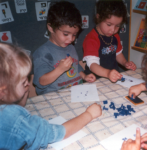
Aram and her team worked with children as young as 3.5-years-old on writing and letter knowledge, graphophonemic understanding, and early writing – not with a pencil, but with magnetic letters or stickers, for example.

“We saw that it worked beautifully,” said Aram. “These children did very well at the end of our intervention year, and it even predicted their achievements and the pace of their development the year after.”

According to Aram, the key is helping the child segment the different letters and the sounds they make. In her research, Aram has found that kids who were taught to connect a letter with the sound the letter makes progressed more than the other groups.

“What amazed us was that the children who received feedback – like so many children of American parents do – by just giving the children the names of the letters, it didn’t help the kids. It was just as good as saying to the kids, ‘Write this word again,’ without any feedback.”

The technique is more challenging to teach in English than in Hebrew, said Aram. However, she added, “From the studies done in English, we found it is still very useful to segment the word into sounds and connect sounds with their letters. Also, to motivate children to write and to respect their writing, even if it’s not 100 percent.”

About English, she explained, “If you think about Italian or other Romance languages, English took all the ‘difficulties,’ and it’s so difficult to see the connection between sounds and letters.”

But that shouldn’t stop parents and teachers from introducing writing into the kids’ daily lives. “For example, if you want, you can send emails, you can [help them] send a ‘Hi Daddy, I love you’ note … or you can write what you want to eat tomorrow, just little things – a word here, a word there.”

Aram noticed, on her visits to North America, that many homes in the United States and Canada have magnetic letters on their fridges. She suggested, “Instead of just naming the letters, write [a] word and do things that are meaningful. Letters, by themselves, are less meaningful. But writing is for communication and writing is meaningful…. It doesn’t have to mean you do a lot of writing, just two words here or there, a sentence here or there – that makes a huge difference, and children love it.”

Rebeca Kuropatwa is a Winnipeg freelance writer.

Format ImagePosted on February 6, 2015February 5, 2015Author Rebeca KuropatwaCategories LifeTags Dorit Aram, education, literacy, Tel Aviv University
השמיים מתהדקים

השמיים מתהדקים

קנדה וישראל חתמו לאחרונה על הסכם תעופה חדש, שיביא לגידול במספר הטיסות בין שתי המדינות. (צילם: commons.wikimedia.org)

השמיים מתהדקים: יגדל מספר הטיסות בין קנדה לישראל בעקבות חתימה על הסכם חדש

קנדה וישראל חתמו לאחרונה על הסכם תעופה חדש, שיביא לגידול במספר הטיסות בין שתי המדינות. כידוע קנדה וישראל נחשבות לידידות קרובות בשנים האחרונות, אך הסכם התעופה הקודם בוטל בעבר בשל מחלוקת בין המדינות. בפועל נקבעה מדיניות עם מגבלות על מספר הטיסות בין המדינות, שמופעלות על ידי אייר קנדה ואל על. לאייר קנדה טיסה יומית בין טורונטו תל אביב, ולאל על שתי טיסות בשבוע בין תל אביב לטורונטו.
בהתאם להסכם החדש יוכלו שתי החברות להגדיל את מספר הטיסות ל-12 בשבוע (נוסעים ומטען), ולאפשר לחברות תעופה שקשורות בהן גם כן לטוס בין המדינות.
ההסכם כולל גם מזכר להגברת שיתוף הפעולה בנושאים שונים של תחבורה ציבורית, כולל אבטחה שעומדת בראש סדר העדיפויות אצל המדינות.
רשות שדות הפעולה הישראלית מדווחת כי בשנת 2014 טסו כ-148 אלף נוסעים בין קנדה לישראל. מדובר על גידול של כחמישה אחוזים לעומת אשתקד.

גם לחיות מחמד מגיע לחיות: כוחות ההצלה המקומיים רכשו ערכות החייאה להנשמת בעלי חיים שנפגעו משריפות

כוחות ההצלה במחוז בריטיש קולומביה רכשו לאחרונה ערכות החייאה מיוחדות להנשמת בעלי חיים, שנפגעו בשריפות. בתים רבים בקנדה בנויים מעץ ולכן מספר השריפות נחשב גבוה יחסית, בהשוואה לישראל. בעלי חיות מחמד שנפגעו בשריפות עומדים לפעמים חסרי אונים, כי אין בידם היכולת לעזור להם.
עתה מתברר נמצא פתרון למצוקתם של בעלי החיות, עם רכישת ערכות ההצלה היחודיות.
הערכות כוללות מסכות חמצן שמותאמות לפנים של בעלי החיים שנפגעו מעשן, ומאפשרות להם לנשום כראוי. מחיר כל ערכה מוערך בסך הכל ב-150 דולר. הערכות משווקות בשלושה גדלים ומותאמות לחרטומים, שפמים ואפילו מקורים. הנשמת בעלי חיים נחשבת ליעילה יותר מזו של בני אדם, כיוון שלבעלי החיים יש מעברים נפרדים לאף ולפה.
לפני רכישת ערכות יחודיות אלה, כוחות ההצלה נהגו לעיתים להנשים בעלי חיים בעזרת ערכות של תינוקות, שיעילותן נמוכה יותר.
יצוין כי בנוסף כוחות ההצלה של בריטיש קולומביה עוברים לאחרונה קורסים מיוחדים להצלת וטיפול בבעלי חיים, מרגע שנפגעו (ולא רק משריפות) ועד להעברתם למרפאות ובתי חולים וטרינרים.

ישוחרר האוכל התקוע: מתקנים עם חוט דנטלי מוצבים מעתה בשירותים של המסעדות

טרנד חדש במסעדות של מונטריאול שמחפשות גימיקים כל הזמן, למשוך לקוחות וכן לפנק אותם. בחדרי השירותים של חלק מהמסעדות בעיר, ליד הכיורים והמראות, הותקנו מתקנים עם חוט דנטלי לניקוי השניים. רופאי השיניים במחוז קוויבק בוודאי מקבלים את הטרנד החדש בברכה.
לכל אחד מאיתנו זה קורה שלאחר ארוחה מחוץ לבית, נתקעות שאריות של אוכל בין השיניים וזה מציק ומעצבן. ואם אף רוצים להצטלם במסעדה לפייסבוק או סתם למזכרת, עדיף כמובן לעשות זאת עם שיניים נקיות. מעתה ניתן מייד עם סיום הארוחה, לפחות במסעדות של מונטריאול, להיכנס לשירותים, למשוך מהמתקן החדש את החוט הדנטלי באורך הרצוי לנו, להעבירו בין השניים ולהיפטר משאריות האוכל.
קיימים דיספנסרים עם החוטים דנטליים מסוגים וגדלים שונים, וכאלה שאפשר גם לנעול למניעת גניבות. הם סופקים על ידי חברה ממונטריאול בשם ‘אורלג’ם’, הראשונה מסוגה שפועל בקנדה. ‘אורלג’ם’ מתחילה בימים אלה בשיווקם גם למרפאות של רופאי שיניים, בתי מלון, מכוני ספורט ובריאות.
יש לציין כי ישנם מספר נוזלים ודברי מאכל שדווקא תורמים לבריאות וניקיון השניים. בהם: מים, תה ירוק, ירקות, פירות, שורש ליקוריץ ומוצרים שונים שעשירים בויטמינים סי. ודי.

Format ImagePosted on February 3, 2015February 3, 2015Author Roni RachmaniCategories עניין בחדשותTags Air Canada, dental floss, El Al, flights, Oralgem, pets, אורלג'ם, אייר קנדה, אל על, חוט דנטלי, טיסות, לחיות מחמד
Century of interest-free loans

Century of interest-free loans

Michelle Dodek is the new president of the Hebrew Free Loan Association. (photo by Naomi Dodek)

The first free loan society in the Vancouver Jewish community was established 100 years ago, in March 1915. It is in this organization that the Hebrew Free Loan Association (HFLA) of Vancouver has its roots. And so, the association will celebrate its centenary this May with a dinner honoring current and past supporters and borrowers.

“The centennial celebration is one of the key projects we’re working on right now,” Michelle Dodek told the Independent. “HFLA has so many success stories, and this event – planned for the evening of Lag b’Omer, May 7, at Beth Israel Synagogue – will give us the chance to share some of them with the community.” Dodek took over as president from Diane Friedman in December. Friedman led the HFLA board for nine years.

“We would like to raise our profile. We joke among ourselves that the HFLA is one of the community’s best-kept secrets. It is challenging for us to publicize what we do because we are serve a niche market,” she explained. “We lend to people who don’t qualify for a bank loan and who also have the means with which to repay a loan. Examples of our borrowers are people who are employed and have encountered difficulties, such as a furnace in need of repair or physiotherapy bills for rehab from an accident. We help old-age pensioners who face the cost of expensive dental work; families with no financial reserves who would like their child to have a nice bar or bat mitzvah; or a new immigrant who needs to buy or lease a car or equipment for a job.”

The concept of interest-free loans, she said, “stems from the Torah itself. In Exodus, parashat Mishpatim, which will be read this year on Feb. 14, it states that a Jew should not charge interest when lending money to other Jews.” This parashah has been used by many founding members of Jewish communities throughout North America to establish organizations similar to Vancouver’s HFLA. “We are affiliated with the International Association of Jewish Free Loans,” Dodek said. “Many of the member organizations were also founded by ‘landsmen’ wanting to help each other when large numbers of Jews began to arrive in communities around North American, about 100 years ago, just like Vancouver’s organization. We all disperse interest-free loans to Jewish people and some member organizations in the States provide interest-free loans to non-Jews, as well.”

The first free-loan society in Vancouver existed until the 1930s, according to HFLA’s website. Another organization, the Achdut Society, was established in 1927 and lasted into the 1960s. In 1979, Shirley Barnett reestablished the Hebrew Assistance Association and, in 2004 – HAA’s 25th anniversary year – HAA was renamed the Hebrew Free Loan Association of Vancouver. From 1979 to 2004, notes the website, HFLA granted more than 1,300 loans, “totaling more than $3.8 million, with virtually all loans having been repaid in full.”

Last year, they dispersed about 40 loans, and they have about 150 loans out in total, said Dodek. “Our numbers are down right now. One of my goals is to build connections in the community to get our mission out to those who would benefit from our service. We have already begun to reach out to different groups and organizations.”

The application process is clearly laid out on the website, as are the terms of repayment. “It’s a relatively easy process with little red tape,” said Dodek. “Once an application is submitted, a board member contacts the borrower within 24 hours. They meet, discuss the application and, at the next board meeting, the loan is dealt with. The board meets twice a month so applications are processed quickly.”

There are various types of loans available: personal (maximum $7,000), emergency (maximum $750) and education, business or other special purpose loans (maximum $10,000), all of which require guarantors.

“We are looking for borrowers,” said Dodek. “We have a strong board with so many fascinating people from all facets of the Jewish community. Our board members include business people and social workers, people who can help applicants, as well.”

The last time HFLA put on a community-wide event was in 2007. The association hopes that the upcoming centennial will increase awareness. Celebrating 100 years in a fairly young community like Vancouver’s is an unusual event.

“On May 7, people will have the rare opportunity to hear from our borrowers in person. We hope to attract a wide cross-section from the Jewish community who will celebrate our amazing history and help us build for the next 100 years. Having an event on Lag b’Omer is significant to our mission because, although people think of it as a holiday of bonfires, the holiday is really about the importance of treating others with respect and dignity. That’s what HFLA is all about. As we look at our amazing past and to our future, we want to help build capacity in our community. We need to reach out, reconnect with our past borrowers and our supporters to act as a referral network, as well as guarantors for future loans so we can lend more money,” Dodek said.

“The Hebrew Free Loan Association changes people’s lives. It enables people to get through a tough situation, to add to their education, to better their situation, to celebrate a milestone – so many things.”

For more information or to become involved, visit hfla.ca, email [email protected] or call 604-428-2832.

Gil Lavie is a freelance correspondent, with articles published in the Jerusalem Post, Shalom Toronto and Tazpit News Agency. He has a master’s of global affairs from the Munk School of Global Affairs at the University of Toronto.

Format ImagePosted on January 30, 2015January 29, 2015Author Gil Lavie and Cynthia RamsayCategories LocalTags Achdut Society, Hebrew Free Loan Association, HFLA, Michelle Dodek, Mishpatim
A new Moishe House

A new Moishe House

Moishe House Toronto’s first residents at the opening housewarming party on Jan. 17. Left to right are Aaron Savatti, Abigail Engelsman, Jillian Windman and Amanda Snow. (photo by Aliza Markovitch)

Earlier this month, Moishe House opened its doors for the first time in Toronto, providing Jewish 20-somethings there a home from which to connect to each other locally, as well as to one of the largest Jewish networks in North America.

Located in the Annex neighborhood, a cultural centre near the University of Toronto, Moishe House Toronto becomes the second Moishe House in Canada after Vancouver, which opened in 2011. Moishe House Toronto, which officially opened the night of Jan. 17 with more than 150 guests attending its first program, will be home to four residents. The young professionals will dedicate a portion of their free time to hosting seven-plus programs a month, ultimately reaching more than 1,000 young adults in total attendance over the course of the first year.

“Toronto is an amazing city and a real hub for young adults. We are thrilled to partner with the local community to bring Moishe House to the Toronto area,” said David Cygielman, founder and chief executive officer of Moishe House. “We are looking forward to our four new residents turning their home into a vibrant Jewish gathering place for their peers in Canada’s largest city!”

The four Moishe House Toronto residents are between the ages of 24-26 and bring their own unique story to the Toronto Jewish community. For example, Aaron Savatti’s grandfather started the Moroccan Jewish community in Toronto and his mother followed in his footsteps. Amanda Snow was born and raised in Thornhill, Ont., and currently works as a fund development coordinator at the Multiple Sclerosis Society of Canada. Abigail Engelman was born in London, England, and moved to Toronto in 2012 to work as a digital advertising executive. And Jillian Windman, whose grandparents emigrated from Poland after the Second World War, was born and raised in Toronto; she has led four organized trips to Israel as a mentor for the 2014-2015 Birthright training program.

In addition to the ongoing programs held one to two times per week, residents and participants will also be able to participate in Moishe House-sponsored Learning and Leadership Retreats and network with all North American Moishe House residents at the annual Resident Leadership Conference this summer. Beyond the organization’s own offerings, Moishe Houses serve as an entry point into Jewish life in general, opening the eyes of participants to other opportunities to engage in the Jewish community by partnering with various local organizations.

The opening of Moishe House Toronto is part of a major Moishe House International growth strategy aiming to double the number of Jewish, young-adult, peer-led communities worldwide by 2017. Currently, there are 74 Moishe Houses in 17 countries that engage more than 5,200 young Jews in programs year-round, and reach more than 88,000 in total attendance annually. The latest Moishe House is being launched through a group of Jewish communal leaders and annual philanthropists.

Founded in 2006, Moishe House uses a peer-to-peer and home-based model to engage Jewish young adults in their twenties in a non-denominational setting that builds community. The Moishe House model empowers young adults to become facilitators and leaders of their own Jewish community. Typical Moishe House programs include Shabbat dinners, Jewish holiday celebrations, sporting events, book clubs, social events and community service opportunities. To find out more, visit moishehouse.org.

Format ImagePosted on January 30, 2015January 29, 2015Author Moishe House TorontoCategories NationalTags Aaron Savatti, Abigail Engelsman, Amanda Snow, David Cygielman, Jillian Windman, Moishe House
A day to honor civil courage

A day to honor civil courage

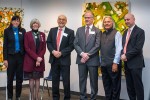
Left to right: Andrea Reimer, Judith Guichon, Henry Grayman, Thomas Gradin, Ujjal Dosanjh and Ezra Shanken, chief executive officer of Jewish Federation of Greater Vancouver. (photo by Wendy Fouks)

Ujjal Dosanjh, former premier of British Columbia and one-time federal cabinet minister, was recognized for civil courage at a ceremony at the Jewish Community Centre of Greater Vancouver on Jan. 18. The event marked the annual Wallenberg Day commemoration in the city, and the award was bestowed in the name of two extraordinary individuals whose actions during the Second World War resulted in the survival of tens of thousands of European Jews.

Dosanjh is the first recipient of the Wallenberg-Sugihara Civil Courage Award. In particular, Dosanjh was recognized for speaking out about political and religious violence in Canada’s Sikh community – notably, a warning in 1985 that Sikh extremism in India could target Canadians. A few months later, 280 Canadians were among 329 people killed when Air India Flight 182 was bombed. More generally, Dosanjh was recognized for a lifetime of contributions to British Columbia and Canada. (See story in the Jan. 9, 2015, issue of the Independent.)

The first annual award was presented at the 10th anniversary commemoration of Wallenberg Day, which honors Raoul Wallenberg who, as a Swedish diplomat in Budapest, issued visas that saved thousands of Jews. The Soviet military entered Hungary in January 1945, and Wallenberg was detained on suspicion of subversive activities. He was never seen again. The commemoration, which was initiated by Anders Neumuller, a former honorary Swedish consul to Vancouver, is now presented by the Wallenberg-Sugihara Civil Courage Society, which, along with Wallenberg, commemorates Chiune Sugihara, a consular representative of Imperial Japan in Lithuania who, similar to Wallenberg, issued visas that allowed thousands of Jews to escape Nazi-occupied Europe.

Henry Grayman, president of the society, explained that it was founded in 2013 by Swedes and Jews to honor and encourage acts of civil courage like those exemplified by Sugihara and Wallenberg.

The impact of acts of civil courage was made evident by Grayman’s wife, Deborah Ross-Grayman, who emceed the afternoon event. She credits her life to the war-era acts of Sugihara.

“I am the breath and the face of civil courage,” she said. “My own mother, Niuta Ramm, was the recipient of such a visa…. I live each day in gratitude for what has been given to me.”

She invited others in the audience whose survival could be credited to the acts of individuals like Sugihara or Wallenberg to stand, and close to a dozen people rose from their seats.

“As you see, one person can make a difference,” she said.

photo - Ujjal Dosanjh
Ujjal Dosanjh (photo by Wendy Fouks)

On stage with British Columbia’s Lt.-Gov. Judith Guichon and Sweden’s honorary consul to Vancouver, Thomas Gradin, Dosanjh received the award but deflected the accolades.

“I am absolutely humbled,” Dosanjh said. “It’s a great honor to be recognized in the names of Raoul Wallenberg and Chiune Sugihara.”

In turn, he said, he accepted the recognition in the name of victims of violence in recent days at Charlie Hebdo and the Jewish supermarket in Paris. He also gave thanks to his heroes – including his grandfather, and Mahatma Gandhi, “the father of the nation I deserted to become Canadian” – and also those who have stood by him during difficult times.

“Terrorism in the name of religion is at war with us,” Dosanjh said. “The venom that moves them leads them to not understand our common humanity. These infidels are not true to our common humanity.”

The lieutenant-governor said Dosanjh has “devoted his life to standing firm against injustice and against violence … he’s served and served.”

The viceroy added that it is more important than ever to celebrate and sing the praises of heroes with at least the vigor “as that with which the deeds of villains are reported.”

Deputy Mayor and Vancouver City Councilor Andrea Reimer brought greetings from the city and read a proclamation from the mayor. She urged people to take the opportunity in 2015 to prove that actions make a difference.

“We have a choice to act, or we have a choice to regret that we didn’t act,” she said.

In addition to Sweden’s Gradin, consular representatives were also in attendance representing Japan, Switzerland and Mongolia.

After the presentation, a feature-length film was screened. The Rescuers features diplomats and government officials from diverse places whose actions saved the lives of thousands of Europe’s imperiled Jews.

Pat Johnson is a Vancouver writer and principal in PRsuasiveMedia.com.


Format ImagePosted on January 30, 2015January 29, 2015Author Pat JohnsonCategories LocalTags Andrea Reimer, Chiune Sugihara, Deborah Ross-Grayman, Henry Grayman, Judith Guichon, Raoul Wallenberg, Ujjal Dosanjh, Wallenberg Day, Wallenberg-Sugihara Civil Courage Award
Blaney addresses UN

Blaney addresses UN

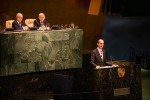
Minister Steven Blaney addresses an informal meeting of the United Nations General Assembly on Jan. 22. (photo from Public Safety Canada)

The Hon. Steven Blaney, Canada’s minister of public safety and emergency preparedness, on Jan. 22 delivered a statement addressing concerns of a worldwide rise in antisemitism. The speech was delivered at an informal meeting organized in New York by the United Nations General Assembly. Blaney addressed the assembly and delivered the statement to more than 50 UN member states, as well as special guests. His remarks were as follows:

“Mr. President, Mr. Secretary General, members of the General Assembly, distinguished guests, dignitaries and senior representatives, Mr. [Bernard-Henri] Levy, Mr. [Elie] Wiesel, ladies and gentlemen:

“Elie Wiesel is a man who lived through the horror of the Holocaust. He has called it ‘Night.’ He has spent his life fighting antisemitism, repression and racism. He is a source of inspiration in assuming mankind’s duty to remember.

“For Canada, Israel has an absolute and non-negotiable right to exist as a Jewish state. Indeed, almost exactly one year ago, our Prime Minister [Stephen] Harper stood in the Knesset in Jerusalem to declare that, through fire and water, Canada would stand with the people of Israel in the face of antisemitism.

“Our Canadian government has adopted an unequivocal approach against groups that spread hatred of Jews, rewrite history, publicly deny historical facts and the scope of the extermination of Jews during the Holocaust [or] are in favor of terrorist acts committed against the state of Israel.

“Sadly, recent events demonstrate that hatred of Jews is in resurgence around the world. The antisemitic attack on a kosher supermarket in Paris occurred on the heels of the horrific jihadist terror attack on Charlie Hebdo journalists.

“On Jan. 10 of this year, I had the privilege of laying a floral tribute in Paris – in front of the Hyper Cacher market – in honor of the victims of those cowardly terrorist attacks.

“Those voices that are being assassinated today and those pens that are being broken through violence are attacks on our own freedom of expression, our own liberty, our democracy, our way of life and our reason for being.

“The world will not be destroyed by those who do evil, but by those who watch them without doing anything. That is why Canada is a leader in the fight against ISIL and is working with a broad coalition of allies to reduce the very real threat posed by that group and terrorists who attack us. As Canada’s Foreign Minister John Baird said during a recent trip to Israel, ‘the great struggle of our generation is terrorism.’

“This very week, we witnessed threats and acts of vandalism against Jewish religious institutions, particularly the Beth Israel synagogue in Alberta.

“In 2010, the prime minister spoke at the Ottawa Conference on Combating Antisemitism, clearly outlining the real threat of antisemitism and Canada’s duty to respond. He said: ‘We must speak clearly. Remembering the Holocaust is not merely an act of historical recognition. It must also be an understanding and an undertaking. An understanding that the same threats exist today, and an undertaking of a solemn responsibility to fight those threats.’

“It was then in Canada, along with 50 other nations, that the Ottawa Protocol on Combating Antisemitism was signed; a robust action plan to share ideas and exchange practices about the best ways to combat and eliminate antisemitism around the world.

“Canada has taken a zero-tolerance approach to antisemitism and all forms of discrimination, including in rhetoric towards Israel and attempts to delegitimize Israel, such as the boycott, divestment and sanctions movement. This is because we have seen time and again that those who threaten the existence of the Jewish people are a grave threat to us all.

“More work needs to be done to combat the scourge of discrimination inherent to antisemitism and, under Prime Minister Harper’s leadership, Canada will continue to be a leader in those efforts.

“As I clearly stated to Jews with whom I met this year in Montreal, Paris or Jerusalem, Canada is your friend and your ally. You can count on our friendship and our untiring support.”


Format ImagePosted on January 30, 2015January 29, 2015Author Public Safety CanadaCategories WorldTags antisemitism, Charlie Hebdo, Holocaust, Hyper Cacher, Steven Blaney, United Nations

Posts pagination

Previous page Page 1 … Page 584 Page 585 Page 586 … Page 650 Next page
Proudly powered by WordPress