Skip to content
  • Home
  • Subscribe / donate
  • Events calendar
  • News
    • Local
    • National
    • Israel
    • World
    • עניין בחדשות
      A roundup of news in Canada and further afield, in Hebrew.
  • Opinion
    • From the JI
    • Op-Ed
  • Arts & Culture
    • Performing Arts
    • Music
    • Books
    • Visual Arts
    • TV & Film
  • Life
    • Celebrating the Holidays
    • Travel
    • The Daily Snooze
      Cartoons by Jacob Samuel
    • Mystery Photo
      Help the JI and JMABC fill in the gaps in our archives.
  • Community Links
    • Organizations, Etc.
    • Other News Sources & Blogs
    • Business Directory
  • FAQ
  • JI Chai Celebration
  • JI@88! video

Recent Posts

  • New rabbi settles into post
  • A light for the nations
  • Killed for being Jewish 
  • The complexities of identity
  • Jews in time of trauma
  • What should governments do?
  • Annie will warm your heart
  • Best of the film fest online
  • Guitar Night at Massey
  • Partners in the telling of stories
  • Four Peretz pillars honoured
  • History as a foundation
  • Music can comfort us
  • New chapter for JFS
  • The value(s) of Jewish camp
  • Chance led to great decision
  • From the JI archives … camp
  • עשרים ואחת שנים להגעתי לונקובר
  • Eby touts government record
  • Keep lighting candles
  • Facing a complex situation
  • Unique interview show a hit
  • See Annie at Gateway
  • Explorations of light
  • Help with the legal aspects
  • Stories create impact
  • Different faiths gather
  • Advocating for girls’ rights
  • An oral song tradition
  • Genealogy tools and tips
  • Jew-hatred is centuries old
  • Aiding medical research
  • Connecting Jews to Judaism
  • Beacon of light in heart of city
  • Drag & Dreidel: A Queer Jewish Hanukkah Celebration
  • An emotional reunion

Archives

Follow @JewishIndie
image - The CJN - Visit Us Banner - 300x600 - 101625

Mystery photo … Sept. 25/15

Mystery photo … Sept. 25/15

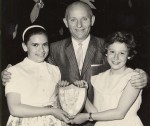
Man with two girls holding a plaque, Peretz School, circa 1965. (photo from JWB fonds, JMABC L.14084)

If you know someone in this photo, please help the JI fill the gaps of its predecessor’s (the Jewish Western Bulletin’s) collection at the Jewish Museum and Archives of B.C. by contacting [email protected] or 604-257-5199. To find out who has been identified in the photos, visit jewishmuseum.ca/blog.

Format ImagePosted on September 25, 2015December 16, 2015Author JI and JMABCCategories Mystery PhotoTags JMABC, Peretz
ראיון עם טימה כורדי חלק ב

ראיון עם טימה כורדי חלק ב

טימה כורדי (צילום: Facebook)

בראיון הטלוויזיה מול ביתך בראשית החודש האשמת את עצמך בטביעה של האחיינים שלך וגיסתך כיוון שאת נתת להם כסף שישלמו למבריחים, שהעבירו אותם מטורקיה ליוון דרך הים. “זה נכון. אני נתתי לאחי עבדאללה חמשת אלפים דולר עבור המבריחים. לא יכולתי לתת לו חסות שיעבור לקנדה, כיוון שהתחלתי עם האח הבכור מוחמד, ואין לי את היכולת הכספית לעזור ליותר מאח אחד כל פעם. עבדאללה צריך השתלת שיניים דחופה כיוון שאין לו שיניים בפה, וזה עולה כסף רב, אך החלטנו שקודם כל הוא יעבור עם המשפחה למערב אירופה. ואחר כך נמשיך. לצערי לא יהיה המשך”. כורדי נחנקת מדמעות ובוכה על מר גורלם של שלושת בני המשפחה שניספו. “הוא סיפר לי איך החזיק את שני הקטנים בידיו בניסיון להציל אותם, מאיימת הים. מי האמין שזה יהיה סופו של המסע. כמה עבדאללה מסכן עכשיו. הוא רוצה להישאר ליד קברם של ילדיו ואשתו. אני לא יודעת כמה זמן יקח לו להתאושש, אם יתאושש בכלל. ואם אביא את כל המשפחה לכאן וגם אביא אותו, כיצד הוא ירגיש כשהוא לבד, וכל האחים מלווים בילדיהם. גם אני שבורה לגמרי ולא מסוגלת לתפקד. אני לא יכולה לאחזור לעבודה כרגע. אני גם אני לא יודעת כמה זמן זה יקח לי לחזור לעצמי. קרה לנו אסון גדול שאני לא מאחלת לאף משפחה, לאף הורים”.

טימה אני שואל בקושי רב, כיצד הרגשת כששמעת שהילדים ואימם ניספו בים? “התחלתי לצרוח כמו משוגעת ולא ידעתי מה קורה עימי. איבדתי את השליטה על עצמי. השכנים שמעו אותי ורצו בבהלה לראות מה קרה לי. ונדמה לי שאף הזעיקו את המשטרה. ביום רביעי בערב הלכתי לישון והיה לי חלום מאוז מוזר. חלמתי על אימי שיושבת מול המחשב ומקבלת הודעות מוזרות ומתחילה לצעוק, שכולם דואגים וכולם בוכים. כולם במשפחה ובין החברים ידעו שעבדאללה היה הילד החביב ביותר עליה. היא כמובן אהבה את כולנו מאוד, אך הוא היה הילד המיוחד שלה, ותראה מה קרה לו. כהתעוררתי בחמישי בבוקר ראיתי המון המון הודעות בטלפון, והבנתי שמשהו לא בסדר. עבדאללה יצא עם משפחה למסע בן חצי שעה ואף אחד לא שומע ממנו יומיים? התקשרתי מיד לאחותי בדמשק וקו הטלפון היה גרוע מאוד. אך הבנתי שמהו רע מאוד קרה לעבדאללה, והתחלתי לצרוח בטרוף. בעלי והבן שלי (בן ה-22) שגר למטה, התעוררו מייד ובאו אלי בבהלה. לא הייתי מסוגלת להתקשר שוב לאחותי וידי לא נענו לי. ביקשתי מבני שיחייג אליה. היא בכתה ושאלתי מה קרה. תגידי לי מה קרה עם עבדאללה צעקתי. לבסוף היא אמרה לי את האמת המרה מכל, שהוא איבד את אשתו ובניו בים. איזה אסון גדול קרה לנו. אני יודעת שבהתחלה הוא האשים את כל העולם במה שקרה לו. אחר כך הוא נרגע ונסגר תוך עצמו. אני מנסה לדבר איתו וזה נורא קשה. כשהוא הגיע לבית החולים לשם הובאו גופות אשתו והילדים, הוא ישב בחוץ והחזיק את בגדי הילדים ולא הפסיק להריח אותם. זה הזכרון האחרון שיש לו מגאליפ ואיילאן. איזה מסכן”. (היא שוב בוכה).

טימה: האם את בטוחה שהתמונה הקשה של גופתו של איילאן שנמצאה על החוף תשנה משהו, תעיר מישהו, הרי מאות ילדים נהרגו כבר בסוריה ולאף אחד כנראה זה לא איכפת? “כן. אני מאמינה שזה מסר מאלוהים. הוא לקח את שני הילדים ואימם לגן עדן. הם בטוחים עכשיו שם ויש להם חיים טובים יותר. והמסר הוא שיש לעצור את האלימות ולהפסיק את המלחמה הנוראית הזו. אני מקווה ובטוחה בעצם שכל העולם יתעורר ויתעשת, ויפסיק את המלחמה. זו השליחות של איילאן לעולם וזה המסר שהוא הביא עימו בטרם נלקח על ידי אלוהים”.

כשדברתי עם בעלך יום קודם לכן, הוא הסביר לי שהיה חשוב שתסבירי לעולם באנגלית, מה המשמעות של התמונה הקשה של אלייאן שוכב שם על החול. כורדי: “כן היה לי חשוב ביום הקשה הזה בחיי לנצל את ההזדמנות שניתנה בידי, ולהסביר לעולם כולו איזה סבל נוראי קורה שם בסוריה, וצריך למנוע את ההרג ושהורים נוספים יאבדו את ילדיהם. אנו בטוחה שכולם יתתעוררו עכשיו ויסיימו סוף למלחמה הקשה הזו. מותו של אלייאן הוא מחיר כבד מאוד למשפחה, אך אולי הוא יביא למשהו טוב. אולי יצא מזה משהו חיובי”.

לסיום אני שואל את כורדי האם יש לה מה להגיד על הצעתו של יו”ר האופוזיצה יצחק (בוזי) הרצוג, לאור משבר הפליטים באירופה, שגם על ישראל לסייע במאמץ לקלוט פליטים מסוריה. “אני גרה כאן עם בעלי האיטלקי והחשיבה שלי היא כיום מערבית. זה ידוע שישראל וסוריה נמצאים ביחסי עויינות ולא ברור לי אם אפשרי בכלל, לקלוט פליטים סורים בישראל. אך אם זה אפשרי בכך ניתן לעזור לפליטים, אין סיבה שזה לא יקרה. אגב אני שמעתי כבר לא פעם שישראל מטפלת בפצועים מסוריה”.

Format ImagePosted on September 24, 2015October 14, 2015Author Roni RachmaniCategories עניין בחדשותTags refugees, Syria, Tima Kurdi, טימה כורדי, סוריה, פליטים
Kenney discusses priorities

Kenney discusses priorities

Jason Kenney, Canada’s minister of national defence and minister for multiculturalism. (photo from forces.gc.ca)

Jason Kenney, Canada’s minister of national defence and minister for multiculturalism, says this country should prioritize Christian refugees and other minorities who constitute the most imperiled of the millions fleeing Syria and Iraq.

“Some people are in an understandable wave of emotion … telling me that we should just send C-17 aircraft over there to refugee camps and load them up and bring them to Canada,” Kenney told the Independent. But the refugees and internally displaced persons (IDPs) that Kenney sees as most vulnerable are not even in the United Nations refugee camps, he said.

“I know these issues extremely well and I can tell you that there are certain vulnerable Syrian and Iraqi minorities who cannot and do not even go to the UN camps,” said Kenney. “Why? Because they are the persecuted minorities. Ismaili Muslims, Druze, Chaldeans, Assyrians, Syrians, Armenians – e.g. the Christians – do not go to the refugee camps in Lebanon, Jordan and Turkey because they’re afraid of their minority [status], the implications of that. These are the people who are living in urban slums in Amman, Jordan, in Beirut, Lebanon, and some in Ankara, Turkey, who we have said we will focus our refugee resettlement programs on.”

These minorities are less likely, Kenney said, to harbor individuals who could pose a threat to Canada.

“These are the victims of the doctrine of armed jihad,” he said. “I can tell you that these people, when they come to Canada, they want to keep us safe from what drove them out of their homes. This is why I think we need to be intelligent about refugee resettlement.”

Kenney emphasized that he wishes peace and protection to all of the refugees and IDPs regardless of their faith or political views. But, he added, “I’ve been to the camps, alright? When I go into people’s tents and I see there’s very few young men, I’ve asked in Turkey and Lebanon and in Jordan: where is your father, where is your husband, where’s your son? I see the pictures in the tents.”

The response he has received often, he said, is that the men are off fighting with the al-Nusra Front or other Islamist militias.

“This is a vicious stew of violence and we must ensure that that cult of violence doesn’t inadvertently come to Canada,” said the minister, who is running for reelection in Calgary. “So that’s why we need to be careful and prudent about security screening and, I think, ensure that to the greatest extent possible the refugees who we welcome to Canada are those who are amongst the most vulnerable.… I don’t apologize for saying we should focus on the most vulnerable and on Canada’s security at the same time.”

Kenney, who has been the Conservative government’s point person for ethnic communities, spoke with the paper as the image of Alan Kurdi, the Syrian-Kurdish refugee child whose body washed ashore on the Turkish coast, was animating the world to act on the refugee crisis.

“The image of that boy represents thousands of others who die in human smuggling operations and the tens of thousands who have – excuse me, the hundreds of thousands – who have died in the Syrian civil war and as victims of the so-called Islamic State in Iraq and Syria,” said Kenney. “It galvanizes collective attention on the total humanitarian catastrophe in Iraq and Syria.”

Canada is the largest per capita resettler of refugees worldwide, Kenney said, welcoming one in every 10 resettled refugees in the world. (CBC and Global News have both analyzed this claim and note that it refers to refugees resettled from an asylum country like Lebanon or Jordan to a country that has agreed to take them as refugees. Because most refugees flee to an adjacent country – or, as seen in recent months, trek to European countries – the news outlets assert that Canada is not first, but 41st, in the world. Canada accepts one in 10 resettled refugees, but most refugees remain unsettled, they claim, making Canada’s acceptance rate of total refugees about one percent, not 10%, of the world’s refugees.)

In any event, the enormity of the problem, Kenney said, means “resettlement is not a solution.”

This is where Kenney differentiates the Conservative government’s position from those of the opposition parties. The United Nations High Commissioner for Refugees cites 15 million Iraqi and Syrian refugees and IDPs, he said.

“It’s a cruel myth if we think we can solve a humanitarian crisis with 15 million IDPs and refugees and here’s the key thing – new refugees are being created every single day,” he said. The world needs to address the root cause of the massive refugee problem, he said, which is the genocidal terror of ISIS (also called ISIL or the Islamic State).

“We have a moral obligation to play a role in degrading and ultimately defeating ISIL in its campaign of terror,” he said. “And, we also need to provide humanitarian support to the IDPs and refugees, which we are doing…. We’ve contributed between the two countries over $810 million in emergency humanitarian assistance. We will do more.”

The defence minister took a shot at New Democratic party leader Thomas Mulcair and Liberal leader Justin Trudeau, both of whom oppose Canadian ground troops in the fight against ISIS.

“What we’re doing is important,” Kenney said. “The military contributions that we are making through our airstrikes and the training of the Kurdish Peshmerga in northern Iraq are making a meaningful difference but, in the grand scheme of things, are relatively modest contributions. So, for the Liberals and NDP to suggest that we should completely withdraw even from the air campaign or, in the case of the NDP, from training, is, I think, morally irresponsible and reprehensible. If the world is moved by the images of the Kurdi family on the Turkish beach, we must recall that these were people who fled the violence of ISIL and there will be more Kurdi families unless and until the world stops this genocidal terrorist organization. That’s why we believe there is a moral obligation and a security imperative for us to participate in the international coalition degrading and, hopefully, ultimately defeating ISIL.”

On the issue of domestic security, Kenney also lashed back at critics of Bill C-51.

“If you look at the additional security powers included in Bill C-51, they are modest compared to most of our liberal democratic peer countries,” he said. “Most of the new powers included in Bill C-51 are actually invested in the courts, the judiciary, not in the police or intelligence agencies and certainly not in the hands of politicians. And many of those additional powers themselves are very modest.”

Kenney said RCMP were keeping an eye on Martin Couture-Rouleau, the “lone wolf” terrorist who killed Warrant Officer Patrice Vincent in Quebec last year.

“The RCMP went to the prosecutors and said we want to apply for a preventative detention order or peace bond to restrict this guy’s movements because we think he’s going to do something crazy and violent,” said Kenney. “The prosecutor said, sorry, but we just do not have the legislative, the statutory, tools to do this. We would have to prove to a court that he will commit a terrorist offence and there’s no way to do that.”

Under the new law, said Kenney, police can go to the prosecutor, who in turn can go to the court, and the court determines whether an order for preventive detention can be issued.

“And, by the way, the maximum order for that can be seven days,” he said. “In Britain, it’s 28 days. It’s why I say the powers here are relatively modest.”

Another example of what Bill C-51 does, he said, is to allow the Canadian Security Intelligence Service to interrupt a possible terrorist event.

“What does this mean practically? If CSIS is observing that a 15-year-old kid’s spending hours every day on terrorist websites, instead of just waiting for him to blow up metaphorically, they can go to his parents now and say, ‘Are you aware that your son appears to be in the process of radicalization?’” Kenney said. “Is this a violation of civil liberties? No. As the prime minister says, the most important civil liberty is the right to live safely and securely.”

Kenney described the idea that C-51 could be used to infiltrate or disrupt civil society protests against things such as oil pipelines as “rubbish.”

“I think the criticisms of Bill C-51 have been massively overblown,” he said. “If they advocate going and blowing up pipelines, yes, possibly. But protesting the construction of pipelines? Absolutely rubbish. No police officer would be interested in that, no prosecutor would bring a charge on that, no court would accept it. It is ridiculous.”

The Conservative government has often been alone on the international stage in defending Israel’s right to defend itself, a position that has been criticized on several fronts, including accusations that the Tories have turned Israel into a partisan political issue. The Independent asked if the government’s vocal position is driven by theology, politics or ideology.

“What drives that is principle,” Kenney said. “Israel is not a normal state. Israel is a moral cause. Israel is the refuge of the survivors of the Shoah and, therefore, the world has a moral obligation to ensure the protection of that refuge, that one and only Jewish homeland in the world.”

He dismissed political expediency as a factor, noting that fewer than one percent of Canadians are Jewish – and that not all of them are committed Zionists – and Canada has little of the Christian Zionist movement that exists in the United States.

“So, it’s not political,” he said, adding that it is also not based on “some kooky Christian reconstructionist millennial theology.”

“I have never heard a Conservative political actor in Canada make reference to Christian Zionist theology in articulating our support for Israel,” he said. “That’s a phantom for some paranoid minds on the left. The truth is this … we see Israel as an emblem, a symbol, a surrogate for Western civilization in the Middle East, by which we mean that Israel is predicated on the belief in human dignity, which is manifest in a liberal democratic political system, protection for human rights, religious freedom and pluralism.”

He said Israel’s enemies are motivated by what they view as “an unacceptable presence of those Western civilizational values in the Middle East, but secondly because the enemies of Israel are motivated by a deep and irredeemable antisemitism.”

“Most of Israel’s enemies do not seek a conventional peace – negotiations toward a two-state solution or a conventional political solution to the conflict there. They seek one thing, which is the elimination of the so-called ‘Zionist entity’ and the driving of the Jews into the sea. A second Holocaust.”

In addition to foreign affairs, Kenney said he wanted to remind Jewish Canadians of programs the government has undertaken domestically.

“We’ve taken a zero-tolerance attitude to antisemitism here domestically and that’s not just rhetorical,” he said. “We’ve paid a price for it. I’ve defunded organizations that were receiving grants – perversely – to provide integration services to newcomers, like the Canadian Arab Federation and Palestine House, whose leadership were openly antisemitic. I’ve been sued for it, our government’s been sued for these decisions, but we did the right thing.”

The government, he said, has also funded security infrastructure projects to upgrade security at synagogues, Hebrew schools and Jewish community centres.

On the issue of whether Canada is in a recession, Kenney said there was a sectoral contraction in oil that’s affected Alberta.

“No doubt about it, Alberta is in a recession due to the crash in oil prices,” he said. “But the rest of the country and the other industry sectors are growing. Employment remains strong. This is hardly a recession by any broadly understood definition and, according to the June StatsCan report, we’re back into a growth phase of two percent annualized growth. The dumbest thing we could do would be to act as though there is a serious, deep recession by going out and borrowing tens of billions of dollars as the other parties [would] do, which constitute deferred taxes. We think fiscal discipline, low taxes [and] expanded trade markets continue to be the right recipe for growth.”

The Independent has interviewed Liberal leader Justin Trudeau and has invitations out to NDP leader Thomas Mulcair and Green party leader Elizabeth May. The federal election is on Oct. 19.

Format ImagePosted on September 18, 2015September 17, 2015Author Pat JohnsonCategories NationalTags Bill C-51, Conservatives, elections, ISIS, Israel, Jason Kenney, recession, refugees, terrorism
Men take centre screen

Men take centre screen

In Love, Theft and Other Entanglements, Sami Metwasi plays Mousa, a likable but unlucky car thief. (photo from Vancouver International Film Festival)

Men in turmoil. If there were a common theme between the films the Jewish Independent reviewed in anticipation of this year’s Vancouver International Film Festival, which opens Sept. 24, it would be that. It also seems to apply to the other few movies in the festival with Jewish- and/or Israel-related content.

Of the films reviewed, Love, Theft and Other Entanglements (Palestine Territories) was the most engaging, though it was slow in its pacing. This was likely done purposefully to reflect aspects of the main character and his milieu, but the movie – which is described by director Muayad Alayan as “a drama, a thriller and a fairytale” – would have been more intense if several lengthy shots had been trimmed even by a few seconds. We don’t have to see a car drive from Point A to Point B to know that it went from A to B, for example.

That being said, Love’s Mousa, is a likable “hero,” and this makes viewers want to stick with him to the end. The choice to film the movie in black and white was made, says Alayan on the film’s website, to minimize “the visual noise that detracts from the story” and reduce “the temptation to examine the setting of the film against the hyper-realistic images of Palestine common in TV reports and documentary films. I wanted the place to be a context that serves the story and not a point of interest in and of itself.” In this, he succeeds. While the film includes evident commentary about Israeli and Palestinian societies, as well as the conflict between them, it is Mousa – representing anyone who has made some bad choices in life – who is at the centre of the narrative; and the desert landscape accents his scarce hope.

Walking out on a job that his father arranged for him with some effort, Mousa steals a car – not his first. Unfortunately, this one has valuable cargo in the trunk and Mousa becomes a man of interest – and use – to both Israeli intelligence and Palestinian militia. Adding to his self-made burden is an affair with a married woman.

Mousa desperately wants to flee from it all. When he tells his father he is leaving, his father responds, “A man who doesn’t solve his problems in his own country, won’t be any different in another country. You’re just running away.” By the end of the film, Mousa is no longer running.

***

Hockney is a flattering documentary by Randall Wright (United Kingdom/United States) of British artist David Hockney. It portrays a creative, innovative man who lived his life publicly, not only explicitly wrestling with his homosexuality in his artwork, but filming many moments of his life, some of which are very intimate and, one would think, private.

By turns flippant (deciding to become a blond after seeing a Clairol commercial that claimed blonds have more fun), sad (mourning with every aspect of his being the end of his relationship with Peter Schlesinger) and serious (continually pushing artistic boundaries and learning new techniques), Hockney is a fascinating person.

Wright’s documentary features interviews with Hockney, 77, as well as Hockney’s family and friends, fellow artists, subjects of his paintings and others. For the film, Hockey – who still works in the studio every day – provided Wright with access to his photographs and “home” movies. Hockney was a documenter not just of what he saw around him in people and nature, but of himself. “I always wanted to see more,” he says about why he always wanted to sit on the top level of the bus on the way home from the pictures – he describes himself as almost being raised with Hollywood, though he was born and raised in Bradford, England. After several stints in Los Angeles, he moved there in 1978.

The documentary serves as an interesting and visually stimulating, if uncritical, introduction to Hockney and his work. The VIFF screenings mark its Canadian première.

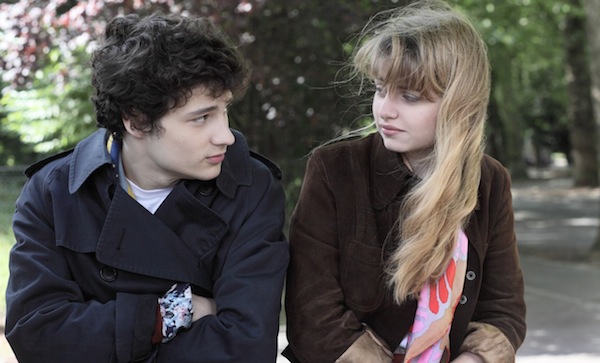
photo - Quentin Dolmaire et Lou Roy-Lecollinet in My Golden Days. Dolmaire is scheduled to attend the film’s première at the Vancouver International Film Festival
Quentin Dolmaire et Lou Roy-Lecollinet in My Golden Days. Dolmaire is scheduled to attend the film’s première at the Vancouver International Film Festival. (photo from VIFF)

Another national première is My Golden Days, directed by Arnaud Desplechin (France). Actor Quentin Dolmaire, who plays the young adult Paul Dédalus, is scheduled to attend the screening.

Called Trois souvenirs de ma jeunesse in its original French, the film begins with the adult Paul in bed with a lover, saying goodbye, set to return to France to take a position with the foreign ministry. His first souvenir (memory) is of his childhood: to understate matters, he doesn’t get along with his mother, who is ill, and, after she dies, his father never recovers and fades into the background of his children’s lives.

Paul’s second memory – and the most interesting part of the entire film – is triggered when he is stopped at customs. Apparently, another Paul Dédalus exists in Australia, with Paul’s same birth date, etc. How can that be?

It goes back to the 1980s and a high school trip to Minsk. Not Jewish himself, Paul helps his friend Marc Zylberberg smuggle documents and money to refuseniks. He is asked, not pressured, to “lose” his passport when he meets with them, which he does.

The strength of character Paul displays at 16 in Russia escapes him upon his return. The third and final memory of his youth takes up more than half of the two-hour film. Despite including some violence, lots of emotional chaos and a few sex scenes, the romance between Paul and Esther is, not to mince words, boring. Though well-acted, the characters are not compelling or sympathetic, and it is hard to care what happens to them and their relationship.

***

The Jewish Independent is sponsoring the Canadian première of Tikkun, directed by Avishai Sivan (Israel). Among other awards, it won top honors at the Jerusalem Film Festival.

When Haim-Aaron, an ultra-Orthodox scholar, collapses and is resuscitated by his father after being declared dead by paramedics, he completely changes personality. While he struggles with that and his new lack of faith, his father is fearful that God is angry for having His will (that Haim-Aaron die) denied.

Among the other films of Jewish interest is Son of Saul, directed by László Nemes (Hungary), which takes place in Auschwitz, where Saul is forced to help the Nazis kill his fellow Jews. In doing so, he sees the corpse of a boy he believes to be his son. He decides to save the body, intent on giving the boy a proper burial.

And there is A Nazi Legacy: What Our Fathers Did, a documentary by David Evans (United Kingdom). Another Canadian première at VIFF, the film follows Niklas Frank and Horst von Wächter, both the sons of Nazis responsible for thousands of deaths, on a trip to Poland and Ukraine. The men have completely different opinions about their fathers’ actions during the war, and “human rights lawyer Philippe Sands investigates the complicated connection between the two men, and even delves into the story of his own grandfather who escaped the same town where their fathers carried out mass killings.”

VIFF runs from Sept. 24-Oct. 9. The full program can be found at viff.org.

Format ImagePosted on September 18, 2015September 17, 2015Author Cynthia RamsayCategories TV & FilmTags Hockney, Muayad Alayan, Vancouver International Film Festival, VIFF
Israelis connect with locals

Israelis connect with locals

Left to right, shinshiniot Ophir Golumbek, Tomer Tetro and Lian Swissa are volunteering with various organizations in the Greater Vancouver Jewish community. (photo from Jewish Federation of Greater Vancouver)

For the first time, Vancouver is participating in the Shinshin program through the Jewish Federation of Greater Vancouver (JFGV) in conjunction with the Jewish Agency for Israel.

Shinshin is an acronym for shnat sherut, meaning year of service, which is exactly what the three 18-year-olds who arrived on Aug. 31 are here to provide the Vancouver Jewish community.

The project, which is co-funded by JFGV and the beneficiary agencies, is an outreach program created by the Jewish Agency to give exceptional Israeli youth a meaningful gap-year experience that furthers the objectives of the Jewish Agency for promoting goodwill and education about Israel. According to Vancouver’s shinshin coordinator, Lissa Weinberger, the program has been wildly successful and popular among the Jewish communities that have had the chance to host Israeli teens in the past. JFGV had planned to begin hosting Shinshinim in 2016 but because of the enthusiasm of participating agencies, they fast-tracked the program and made it happen this year.

Shinshin has been embraced by communities in England, the Netherlands, South Africa, North America and South America, growing from 54 participants last year to 100 this year. The Israeli youths volunteer with young people in schools, synagogues, Jewish community centres and other Jewish organizations to build awareness and give access to a teen perspective on Israel. According to Weinberger, the program has been so effective at building relationships between Israeli and Diaspora Jewish youth that there is a plan to grow it to 300 Shinshinim within five years.

Weinberger said that the young women in Vancouver – Ophir Golumbek, Tomer Tetro and Lian Swissa – will be working six days a week for the next nine months, with a few weeks off spread over that time.

“When we were discussing their schedule, we were told to keep them busy. They were coming to give back, not sit around,” Weinberger said.

The Shinshiniot (feminine plural) will be hosted by local families during their stay, a different family every three months. The host family experience is crucial to the program as it gives the youths a soft landing here in Vancouver, in a family environment.

Jennifer Shecter-Balin will be hosting one of the Shinshiniot for the first term. She spoke for her family when she said, “We are excited for the experience. I have been communicating with Ophir via email and I have been thoroughly impressed by her maturity, enthusiasm and introspection.”

In an interview with the Jewish Independent the day after their arrival, the three young women were indeed bubbling with energy and enthusiasm. Golumbek will be working primarily with students at Vancouver Talmud Torah (VTT), with the Temple Sholom Sunday school as her Sunday job. Tetro will divide her time between the Jewish Community Centre of Greater Vancouver and Congregation Beth Tikvah. Swissa will be working with King David High School, Congregation Beth Israel and Richmond Jewish Day School.

Each one of the Israelis comes with a history of volunteerism and leadership, as well as an impressive command of English. None of them comes from an English-speaking home in Israel but all are eloquent and clear in their goals for their year of service in Vancouver.

Golumbek explained why she applied to the Shinshin program. “I have family in the U.S., third cousins, and they all went on Birthright and I saw how it made them [connected to] Israel. Some came back to study and one made aliya. Each one of my cousins told me about a person who influenced them to love Israel and I wanted to build that connection for people here.”

Swissa echoed Golumbek’s interest in building connections with local Jews and added, “I believe that Jewish people have a shared history and we should create a shared present and future. We are here to learn about Vancouver and Judaism outside of Israel, as much as we are here to share our love of being Jewish in Israel.”

It’s not surprising that 18-year-olds who can express these types of ideas when jet-lagged were selected from the 1,700 applicants to the Shinshin program. Swissa and Tetro have leadership experience and a strong basis in working with other Jewish teens from a two-year program they did in high school called the Diller Teen Fellowship, which brought them to Chicago and Baltimore, respectively, when they were in grades 10 and 11. Their experience working within a pluralistic Jewish environment has prepared them for their work in Vancouver. Golumbek participated in a special program of her Scouts called Seeds of Peace in Maine, which brought together Israeli, American, British, Palestinian and Egyptian teens to work on building relationships and tackling issues of conflict.

When asked how they feel about being away from their families, they all teared up slightly. Swissa is the youngest of seven children, so it’s a shock for her to be without family here, while Tetro will miss her 5-year-old sister. Golumbek has a brother who is finishing his army service this year and, while she said she will miss her family, she looks at this year as an opportunity to get ready for being away when she goes into the army, while making an impact and making new connections. She said, “Our host families will be like a new family … we are grateful for the chance to come here, to make a mark. Thank you is a small word for what everyone has done for us so we could be here.”

Tetro spoke for all three volunteers when she explained what they hope for the year to come. She said, “We are so excited because this is a brand new program and nobody knows what to expect, but we are also stressed because we want to make the best impression. We want to build a really good base for next year so all of the kids will be eagerly waiting for the next Shinshinim to come.”

Michelle Dodek is a freelance writer living in Vancouver.

Format ImagePosted on September 18, 2015June 27, 2016Author Michelle DodekCategories LocalTags Jennifer Shecter-Balin, Jewish Agency, Jewish Federation of Greater Vancouver, JFGV, Lian Swissa, Lissa Weinberger, Ophir Golumbek, shinshin, Tomer Tetro
Memorials to millions

Memorials to millions

Ian Penn’s exhibit at the Zack Gallery, Pole, “isn’t happy but it’s genuine.” (photo by Olga Livshin)

The poignant tale behind Pole, Ian Penn’s new multimedia exhibit at the Zack Gallery, is a bleak travelogue detailing his recent journey to Poland.

Although Penn’s family came from Poland – his parents were lucky to have escaped the Holocaust and settled in Australia – he never wanted to visit the country of his ancestors. “My mother said she would never set a toe in Poland,” he told the Independent.

Growing up in Australia, Penn moved to Vancouver, where he worked as a cardiologist for many years. He is mainly retired now but still teaches at the University of British Columbia and works as a medic with the emergency-response ski patrol in Whistler.

“When I retired, I enrolled in Emily Carr,” he said. “I graduated in 2010 with a bachelor’s in fine arts but I’ve always kept a visual diary, since university. I have hundreds of little albums at home. Wherever I am, wherever I go, I draw and write in them. It’s how I explore the world.”

He paints regularly, landscapes and figurative images. “For me, painting is a way of telling a story, one of many. There are other ways, too: words, sculpture, video, photography. I used the multimedia approach for this show because I wanted to bring all those ways together, see how they fit. The show is a story of Jewish soul.”

Penn found his subject in Poland. He had resisted making the trip for a long time, until a couple years ago. “My daughter said to me then, ‘It’s time to visit your history,’ so I made the decision to go,” Penn explained. “I have a friend in Australia. We have known each other for a long time. He is a Pole, he speaks Polish, and he wanted to take me. He said we should both read a few books first to prepare ourselves, books about the plight of Jews in Poland during the war, but written by Poles, not Jews. We didn’t want to go as tourists. We wanted to understand.”

Nonetheless, Poland shocked him. “There are almost no Jews left there, and the ones who remain don’t know anything about Jewish culture. I went to a synagogue and I had to say Kiddush because nobody there could speak Hebrew. But the Poles – they exploit Jewish history. They charge 23 euros for a trip to Auschwitz. They have those happy golf carts all around Krakow and they take you to the Schindler’s factory and to the ghetto. They sell Jewish souvenirs, but who made them? Not Jews. This is not how you engage in history. They made a commodity out of our tragedy, of the Jews killed by the millions. It’s like Horror Disneyland. I couldn’t stay there more than one week.”

Penn found most of the Jews of Poland in the cemetery. “There, every stone has a name written on the tombstones, remembered, while those who died in Auschwitz are just dust. I learned that Nazis burnt 1,000 people an hour in the ovens in Auschwitz. I tried to wrap my head about the number. That’s why I did this show. It’s about those thousands of souls.”

All of the works displayed in the show bear the same name, “1000 Marks.” By creating the paintings, Penn wanted to visualize his non-memories, remember something he had never witnessed. Five paintings are similar: dead trees, brown and dreary, wooden poles striving to reach the sky, one pole for every Jewish soul that didn’t have their name written somewhere. Together, they form a memorial.

A couple other paintings have a subtitle: “From the Village to the Ramp.” They are painful to view, powerfully evoking the horrors of the Holocaust. So does the entrance to the gallery, decorated with two real wooden poles, with bark still on in some places, unpolished and branchless. The “Welcome Back” mat underneath them doesn’t look particularly welcoming either. There was a sign at the entrance to Auschwitz, too, and the correlations reverberate in the air.

“This show isn’t happy but it’s genuine,” said Penn. “It’s my response to the entertainment industry they made of the catastrophe. Their tourist trips have nothing to do with our dead families.”

The show also includes a few short videos, two of them filmed at the Jewish cemetery. The screens are mounted to the walls like paintings, continually running loops of footage. “I shot them myself,” said Penn. “There is serenity at the cemetery. And lots of greenery, living trees. I saw a man restoring the text on one of the tombstones and filmed him. I didn’t talk to him, didn’t ask him anything. He was doing a holy job. That was enough.”

A few more wooden poles, also part of the exhibition, are placed outside of the Zack Gallery. They are suspended above the atrium, where the stairs lead down to the Vancouver Holocaust Education Centre.

“They are uprooted, like all of us whose parents left Europe,” said Penn. “The poles come from the UBC Endowment Lands and from the Whistler area. They remind me of the trees in the Jewish cemetery but they are also my connection to this place, to Canada.”

The show Pole opened on Sept. 10 and continues until Oct. 11.

Olga Livshin is a Vancouver freelance writer. She can be reached at [email protected].

Format ImagePosted on September 18, 2015September 17, 2015Author Olga LivshinCategories Visual ArtsTags Holocaust, Ian Penn, Poland, Zack Gallery
Building relationships

Building relationships

East Side Jews observes Shabbat at Trout Lake. (photo from Carey Brown)

When Rabbi Carey Brown and her family moved to Vancouver in 2011, they made their home in East Vancouver.

“We settled down in East Van and really loved the neighborhood,” Brown told the Independent. “Slowly, as I became familiar with more people, I realized there was a growing need for additional places for people to meet and connect with their roots.”

photo - Rabbi Carey Brown
Rabbi Carey Brown (photo from Carey Brown)

This realization was the inspiration for East Side Jews, a group that Brown founded about a year ago, and which she co-directs with Lisa Pozin. Brown is associate rabbi at Temple Sholom, and Pozin is the synagogue’s program director.

“We started with Rosh Hashana on Main Street, we invited people to join us and taste honey cake and hear a story at Solly’s, learn about honey at the Honey Shoppe, and sing songs and hear the shofar at a local park. We didn’t know how to reach people, so we posted notes in coffee shops and community centres around the area. To our surprise, the turnout was amazing. We decided to create one event every month. We hosted a tikkun olam event at the PriceSmart food store [now a Save-On] on King Edward Avenue and Knight Street, we did a Havdala under the stars at Trout Lake, and shared Shabbat dinners in local community centres. People really liked our events, a group was formed. We were really happy and excited.”

Elaborating on the tikkun olam event, Brown said it was a “scavenger hunt we called Project Feed. We gave the families a list of specific food items that JFSA [Jewish Family Services Agency] told us were needed by the Jewish Food Bank and PriceSmart told us would be on sale. The families made a donation to participate and then used their lists to fill their carts. After finishing the shopping, we met at Or Shalom to sort the food and hear a short presentation from JFSA about the food bank. People learned a lot about the food bank and realities of hunger in our community. The kids were very into the experience and the parents really appreciated having a hands-on opportunity to engage with their kids in tikkun olam.”

Brown grew up in Minneapolis, went to Northwestern University, which is near Chicago, and then studied at Hebrew Union College in Jerusalem and in New York City. After her ordination, she was a rabbi at Temple Isaiah in Lexington, Mass., for six years. That community’s approach to community outreach influenced her and, when she and her husband – Dr. Gregg Gardiner, assistant professor and Diamond Chair in Jewish Law and Ethics at the University of British Columbia – brought their family (they now have two children) to Vancouver, she incorporated it into her own approach.

“The federation in Boston (CJP, Combined Jewish Philanthropy) invested a lot of time and effort in reaching out to interfaith couples. Every event, every meeting, every holiday, they always emphasize the fact that the invitation is open to interfaith couples, that they are welcome to join in, that it will be in a nonjudgmental atmosphere, that everyone will accept them and encourage them to connect to the Jewish community. I saw how meaningful that was to families and that it really impacted their participation in Jewish life. I wanted to make sure that families in Vancouver were hearing this supportive message as well.”

And it seems that the message is indeed being heard – and appreciated. East Side Jews now has some 200 names on its mailing list, it receives support from the Jewish Federation of Greater Vancouver and has recently been honored by the Union for Reform Judaism. The East Side Jews initiative garnered Temple Sholom one of URJ’s 2015 Belin Outreach and Membership Awards, which recognizes congregations from across North America “that have developed programs to actively welcome and integrate those new to Judaism, created relationship-based membership engagement models, or developed new, innovative ways to engage and retain members.”

“We really try to use the events to establish personal relationships with our new friends, to go for a coffee, to meet in smaller groups, to build a connection following the public events,” explained Brown about what makes East Side Jews unique. “We learned that there are many people out there who are eager to live a meaningful Jewish life, but they are having a hard time finding the right place for them. We create a Jewish experience that is very approachable, very friendly and accepting. There are many Jews who grow up here and they have a very small connection to the community. They would love to have more, but they don’t know where or when or how. We help these kinds of people get engaged and involved and find their own path to design their own Jewish life…. It’s working very well so far and our group is growing at a surprising pace.”

Next on East Side Jews’ calendar is a field trip to Fraser Common Farm/Glorious Organics in Aldergrove on the morning of Sept. 27 with Temple Sholom congregants, religious school kids and others. If you would like to catch the 9:10 a.m. bus from Temple Sholom, register at [email protected] or 604-266-7190. For more information, visit templesholom.ca/sukkot-on-the-farm.

For anyone wanting to know more about East Side Jews, visit eastsidejews.ca.

Shahar Ben Halevi is a writer and filmmaker living in Vancouver.

Format ImagePosted on September 18, 2015September 17, 2015Author Shahar Ben Halevi and Cynthia RamsayCategories LocalTags East Side Jews, Judaism, Rabbi Carey Brown, Temple Sholom

Gender equality lacks

Political parties are sometimes accused of pandering to blocs of voters, especially at election time. The Conservative government’s vocal support for Israel, for example, is seen by some as a slick means of grabbing Jewish votes. (Jason Kenney, the minister of defence and multiculturalism, responds to this claim in this week’s story, “Kenney discusses priorities.”)

But it would be nice if, every now and again, a government was accused of pandering to the biggest bloc of votes of all – women – because it might mean someone is actually paying attention to their issues.

This is slippery terrain, because all issues are “women’s issues.” Women care about the economy and foreign affairs, as well as domestic affairs and social issues. Yet government actions (or inaction) and societal norms still play negative, detrimental and sometimes fatal roles in the lives of women and girls.

We are now more than halfway through the longest federal election campaign in living memory. This Sunday – a month less a day before the Oct. 19 election – has been dubbed a National Day of Action on Gender Equality. The day, initiated by women in Canadian film and television, is intended to “stimulate more public dialogue on gender equality,” especially on social media.

Women and men all across Canada who support gender equality are being asked to get active on social media on Sunday, especially between the hours of 10 a.m. and 1 p.m. Pacific, using the hashtags #WomenVote, #elxn42 and #cdnpoli.

The day of action has been in the planning for some time, but the timing is particularly providential, not just because the election is approaching – that was obviously planned – but because of a shocking and damning report just made public about the place of women in Canadian society.

An internal federal government report marked “secret” was obtained by the CBC under the Access to Information Act. Obviously not intended to be made public, particularly at the peak of election season, the report by Status of Women Canada paints a largely dismal picture.

Canada has one of the developed world’s biggest pay gaps between men and women, below average support for child care and parental leave, and our Parliament ranks 57th in the world in terms of female representation. Poverty among single elderly women and female-headed households is increasing.

Perhaps most damningly, Canada does not have a national strategy on violence against women. Rural and immigrant women are at particular risk of being victims of violence – and aboriginal women are 450% more likely than other Canadian women to be murdered.

With the refugee crisis making front-page news daily, foreign affairs has taken an outsized role so far in this election campaign. Moreover, for many in our community, the foreign policy positions of the various parties already figure prominently in our calculations as we ponder our democratic options.

It is worth reminding ourselves that, as rough as things may be elsewhere in the world, we still have an imperfect country here and these are also things we should be addressing with those who seek our votes.

Posted on September 18, 2015September 17, 2015Author The Editorial BoardCategories From the JITags elections, gender equality, poverty, Status of Women Canada
This week’s cartoon … Sept. 18/15

This week’s cartoon … Sept. 18/15

For more cartoons, visit thedailysnooze.com.

Format ImagePosted on September 18, 2015September 17, 2015Author Jacob SamuelCategories The Daily SnoozeTags penguins, thedailysnooze.com
Burger with a side of Elvis anyone?

Burger with a side of Elvis anyone?

Uri Yoeli, left, at the Elvis Inn, his restaurant/convenience store/gas station in Neve Ilan. (photo by Deborah Fineblum Schabb)

To appreciate how much Israelis love Elvis Presley, you just have to hear three generations of the Mizrachi family of Rehovot crooning, “Wise men say only fools rush in … but I can’t help falling in love with you.”

The Mizrachis – mom Aliza, sons Asaf and Yehoram, and granddaughter Kahila – had just downed some American-style burgers at the Elvis Inn, a restaurant, convenience store and gas station that proudly claims to be the only Israeli institution devoted to “the King.” And they were busy inspecting the impressive Elvis memorabilia and tchotchke collection on the premises.

Drivers passing through this corner of the hills surrounding Jerusalem often do a double take from the car window when they spot not one, but two way-more-than-life-sized statues of Elvis. Unless, of course, they’re among those who, like the Mizrachis, make a special pilgrimage to the Elvis Inn, located in the small hillside town of Neve Ilan.

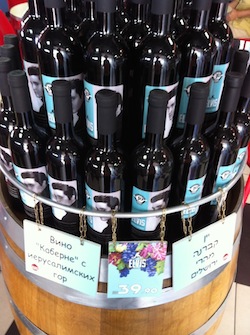
photo - Elvis-themed bottles of wine on sale at the Elvis Inn
Elvis-themed bottles of wine on sale at the Elvis Inn. (photo by Deborah Fineblum Schabb)

Where else can Israelis hear all Elvis, all the time, piped into a 1950s-style diner while they feast on burgers and fries? Where else can they purchase an Elvis mini-alarm clock, a platter-sized “Elvis in Jerusalem” plate, or a postcard with Elvis wearing tefillin in front of the Western Wall? (The latter souvenir comes thanks to Photoshop, since the King was never in Israel – the closest he got was Germany, and there is no evidence that he ever wore tefillin.) Better yet, buy a cup of coffee for 15 shekels (about $5 Cdn) and you get the ceramic Elvis mug to take home as a souvenir.

But nothing of this Elvis sanctuary was in the picture when Uri Yoeli was a 12-year-old growing up in Jerusalem, the seventh generation of his family to do so. The year was 1958 and the Israeli preteen had a girlfriend who was a hardcore fan.

“She gave me a picture of a man and said it was someone named Elvis,” he recalled. “The next week she gave me a small record – One Night with You.” Back then, his family owned one of just a handful of gramophones in all of Jerusalem, and being willing to repeatedly play the Elvis record instantly made Yoeli one of the most popular kids in the neighborhood.

“I didn’t understand one word of English but I knew this was great music,” he said nearly six decades later. So began a lifelong devotion to the King, punctuated with trips to Graceland (Elvis’ Memphis shrine) and an impressive collection of Elvis memorabilia, much of it now on display at Yoeli’s Elvis Inn.

Even during his years of Israel Defence Forces service, Yoeli’s Elvis fascination continued; he bought whatever posters and records he could get his hands on. In 1974, when he had the chance to open a gas station in Neve Ilan, he put a few of the Elvis pictures on the wall behind the cash register.

“That’s when I saw people’s reaction: ‘Wow, Elvis!’” he said. Thus, the Elvis Inn was born.

Over the years, the venue has grown, adding the two oversized statues – the brass one is a towering 16 feet high – and attracting not only Israelis, but plenty of Americans on vacation looking for some old-fashioned home cooking. (Note: any Elvis fans who keep kosher will have to pass on the food at the inn.)


To read more, visit jns.org.

Format ImagePosted on September 18, 2015September 17, 2015Author Deborah Fineblum Schabb JNS.ORGCategories TravelTags Elvis, Israel, Neve Ilan, Uri Yoeli

Posts pagination

Previous page Page 1 … Page 542 Page 543 Page 544 … Page 651 Next page
Proudly powered by WordPress