Skip to content
  • Home
  • Subscribe / donate
  • Events calendar
  • News
    • Local
    • National
    • Israel
    • World
    • עניין בחדשות
      A roundup of news in Canada and further afield, in Hebrew.
  • Opinion
    • From the JI
    • Op-Ed
  • Arts & Culture
    • Performing Arts
    • Music
    • Books
    • Visual Arts
    • TV & Film
  • Life
    • Celebrating the Holidays
    • Travel
    • The Daily Snooze
      Cartoons by Jacob Samuel
    • Mystery Photo
      Help the JI and JMABC fill in the gaps in our archives.
  • Community Links
    • Organizations, Etc.
    • Other News Sources & Blogs
    • Business Directory
  • FAQ
  • JI Chai Celebration
  • JI@88! video

Recent Posts

  • Sharing her testimony
  • Fall fight takes leap forward
  • The balancing of rights
  • Multiple Tony n’ Tina roles
  • Stories of trauma, resilience
  • Celebrate our culture
  • A responsibility to help
  • What wellness means at JCC
  • Together in mourning
  • Downhill after Trump?
  • Birth control even easier now
  • Eco-Sisters mentorship
  • Unexpected discoveries
  • Study’s results hopeful
  • Bad behaviour affects us all
  • Thankful for the police
  • UBC needs a wake-up call
  • Recalling a shining star
  • Sleep well …
  • BGU fosters startup culture
  • Photography and glass
  • Is it the end of an era?
  • Taking life a step at a time
  • Nakba exhibit biased
  • Film festival starts next week
  • Musical with heart and soul
  • Rabbi marks 13 years
  • Keeper of VTT’s history
  • Gala fêtes Infeld’s 20th
  • Building JWest together
  • Challah Mom comes to Vancouver
  • What to do about media bias
  • Education offers hope
  • Remembrance – a moral act
  • What makes us human
  • המלחמות של נתניהו וטראמפ

Archives

Follow @JewishIndie
image - The CJN - Visit Us Banner - 300x600 - 101625

Category: News

Triple treatment for cancer

Triple treatment for cancer

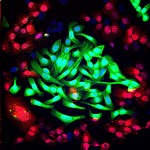
Lung cancer cells (green) cultured together with normal lung cells (red). The triple-antibody combination EGFR, HER2 and HER3 strongly impairs the survival of tumor cells while sparing normal cells. (Modified confocal microscopy image by Maicol Mancini, lab of Prof. Yosef Yarden, via wis-wander.weizmann.ac.il)

Lung cancer is the leading cause of cancer death worldwide, responsible for some 1.59 million deaths a year. That figure is due, in part, to the fact that the cancer often returns after what, at first, seems to be successful treatment. And the recurring cancer is often resistant to the chemotherapy and other drugs that originally drove it into remission. According to new research by the Weizmann Institute’s Prof. Yosef Yarden, a new strategy involving a three-pronged approach might keep an aggressive form of lung cancer from returning.
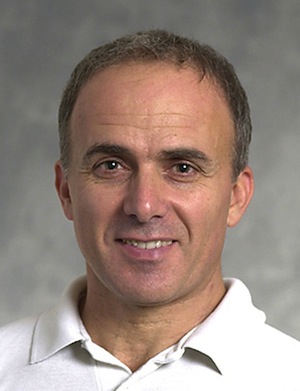
photo - Prof. Yosef Yarden
Prof. Yosef Yarden (photo from National Cancer Institute via commons.wikimedia.org)

The research arose out of some puzzling results of clinical trials, said Yarden. One class of relatively common lung cancers, which carry a particular mutation in a receptor on the cell membrane, called EGFR, can be treated with a sort of “wonder drug.” This drug keeps a growth signal from getting into the cell, thus preventing the deadly progression and spread of the cancer. But within a year, those with this mutation invariably experience new cancer growth, usually as a result of a second EGFR mutation. To prevent this from happening, researchers had tried to administer another drug, an antibody that is today used to treat colorectal cancer. This drug also obstructs the passing of the growth signal by stopping EGFR. Even though the antibody drug should have been able to effectively block the EGFRs – the growth receptors – including those generated by the second mutation, clinical trials of this drug for lung cancer did not produce results. “This finding ran counter to everything we knew about the way tumors develop resistance,” said Yarden.

How do the cancer cells manage to circumvent the blockade put up by an anti-EGFR antibody? In the new study, which appeared earlier this month in Science Signaling, Yarden and his student, Maicol Mancini, discovered what happens to cancer cells when they are exposed to the receptor-blocking antibody.

“The blocked receptor has ‘siblings,’ other receptors that can step up to do the job,” explained Yarden. Indeed, the team found that when the main receptor (EGFR) continued to be blocked, one of the cell’s communication networks was rerouted, causing the siblings to appear on the cell membrane instead of the original receptor. The finely tuned antibody did not block these, and thus the cancer cells were once again “in business.” The researchers uncovered the chain of protein communication in the new network that ultimately leads to appearance of the sibling growth receptors. This new network may overcompensate for the lack of the original receptor, making it even worse than the original. In addition, the team found that the rewired network sometimes included the participation of another molecule, known as receptor tyrosine kinase MET, which specifically binds to one of the siblings. This signaling molecule is often found in metastatic cancers.

Once the researchers discovered how the blockade was breached, they set out to erect a better line of defence. Yarden and his team created new monoclonal antibodies that could target the two main growth receptor siblings, named HER2 (the target of the breast cancer drug Herceptin) and HER3. The idea was to give all three antibodies together – the two new ones and the original anti-EGFR antibody – to preempt resistance to the treatment. Indeed, in isolated cancer cells, applying the triple treatment prevented them from completing the rewiring necessary for continuing to receive growth signals.

Next, the team tried the three-pronged approach on mouse models of lung cancer that had the secondary, resistance mutation. In these mice, the tumor growth was almost completely arrested. More importantly, further research showed that this treatment reined in the growth of the tumor while leaving healthy cells alone.

Although much more research is required before the triple-treatment approach makes it to the clinic, Yarden is hopeful that it will change not only the treatment protocol for lung cancer, but the understanding of the mechanisms of drug resistance. “Treatment by blocking a single target can cause a feedback loop that ultimately leads to a resurgence of the cancer,” he said. “If we can predict how the cancer cell will react when we block the growth signals it needs to continue proliferating, we can take preemptive steps to prevent this from happening.”

Also participating in this research were Drs. Nadège Gaborit, Moshit Lindzen and Tomer Meir Salame of the biological services department, and Ali Abdul-Hai, also of Kaplan Medical Centre; and research students Massimiliano Dall’Ora and Michal Sevilla-Sharon; together with Prof. Julian Downward of the London Research Institute.

Yarden is the recipient of the 2015 Leopold Griffuel Prize for fundamental research, awarded by the major French association for fighting cancer, called ARC Foundation for Cancer Research. He is the incumbent of the Harold and Zelda Goldenberg Professorial Chair in Molecular Cell Biology.

Weizmann Institute news releases are posted at wis-wander.weizmann.ac.il, and are also available at eurekalert.org.
Posted on June 19, 2015June 17, 2015Author Weizmann InstituteCategories IsraelTags EGFR, lung cancer, Weizmann Institute, Yosef Yarden
JNF park named after Baird

JNF park named after Baird

Left to right: Josh Cooper, Frank Sirlin, John Baird, Avi Dickstein and Ilan Pilo. (photo from Jewish National Fund, Pacific Region)

On June 7, the Jewish National Fund, Pacific Region, hosted the 2015 Negev Dinner at the Four Seasons Hotel in honor of Canada’s former minister of foreign affairs, John Baird.

In his speech, Baird summed up Israel and Canada’s friendship, saying, “Canada doesn’t stand behind Israel, but rather, walks shoulder to shoulder with Israel.”

Ilan Pilo, JNF Jerusalem emissary and executive director of JNF-PR, said, “Mr. Baird is a man of integrity and a true friend to Israel. JNF was grateful to honor him for his leadership on the world stage, for years of devoted service to the citizens of Canada, his dedication to the Jews of Canada and to the state of Israel. Thanks to John Baird’s outstanding leadership, Canada has become Israel’s most unwavering ally.”

photo - Left to right: Rafael Barak, John Baird and Josh Cooper
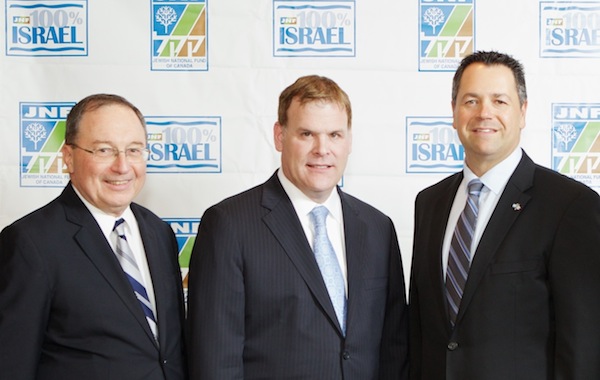
Left to right: Rafael Barak, John Baird and Josh Cooper. (photo from Jewish National Fund, Pacific Region)

Among the 350 guests at the dinner were Minister of Justice Suzanne Anton, representing the province, representatives of major Jewish institutions, as well as many community rabbis. Also in attendance were Rafael Barak, Israel’s ambassador to Canada; Josh Cooper, chief executive officer of JNF of Canada; and Avi Dickstein, executive director of the research and development division of KKL-JNF. All three dignitaries spoke of the uniquely warm relationship between Canada and Israel.

Proceeds from the dinner will support the creation of the Sderot Memorial Park in Israel, which will be named after Baird. This multi-functional urban park will host sports, leisure and recreation activities, as well as community events, and will provide children and their families with playground and fitness facilities. The new park will lift the morale of the residents of the city, which has been the ongoing target of rocket attacks from the Gaza Strip since 2001, as well as provide a venue for community activities and contribute to improving the quality of life for residents.

Format ImagePosted on June 19, 2015June 17, 2015Author Jewish National Fund Pacific RegionCategories LocalTags Ilan Pilo, Israel, Jewish National Fund, JNF, John Baird, Sderot
Celebrating 30 years

Celebrating 30 years

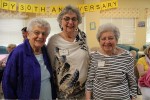
Among those celebrating L’Chaim’s 30th anniversary were original board members, left to right, Sylvia Gurstein, Gloria Hendin and Marion Poliakoff. (photo from L’Chaim)

More than 70 people gathered recently in the L’Chaim Lounge at the Jewish Community Centre of Greater Vancouver to celebrate the 30th anniversary of L’Chaim Adult Day Centre, which provides a “day out” for usually home-bound elderly Jews.

The audience was welcomed by Annica Carlsson, L’Chaim administrator, and Claire Weiss, acting president of L’Chaim, who described its growth. Originally offered at Beth Israel Synagogue, the program had to move to larger quarters at the J in 1995. It now provides programming three days a week, adding up to more than 1,900 client days a year for older adults who can still function with some degree of independence, but are unable to attend other community activities. L’Chaim also initiated a program for Jewish seniors in Richmond, which was taken over five years ago by Chabad of Richmond.

Speaking at the 30th anniversary celebration were three of the program’s founders: Sylvia Gurstein, Gloria Hendin and Marion Poliakoff. Poliakoff described how she represented National Council of Jewish Women in the beginning, enlisting a partnership with the late Irma Zack, who was acting on behalf of the Jewish Family Service Agency. Other present and former board members told anecdotes about their involvement, praising the staff and programming.

At L’Chaim, speakers on timely topics, music and exercise have always been program highlights. Current activities also include the use of iPods and headphones, which were purchased with a donation in memory of Dr. Betty Horodesky. This donation also financed the purchase of new lift chairs and a commercial cooler.

L’Chaim participant Ekatarina Chernyavskaya, 92, gave a heartfelt speech about how the program is her “home away from home” and enables her to stay connected with the Jewish community.

Celebrants also enjoyed “nibbles” provided by L’Chaim’s cook and a birthday cake baked by Nava Creative Kosher Cuisine. Annette Wertman entertained on the piano.

For more about L’Chaim, visit lchaim.ca.

Format ImagePosted on June 19, 2015June 17, 2015Author L’Chaim Adult Day CentreCategories LocalTags Annette Wertman, Annica Carlsson, Claire Weiss, Ekatarina Chernyavskaya, Gloria Hendin, L’Chaim Adult Day Centre, Marion Poliakoff, Nava, Sylvia Gurstein
עשרים שנות פעילות בישראל

עשרים שנות פעילות בישראל

אייר קנדה שבסיסה במונטריאול מפעילה קו יומי בין הערים טורונטו ותל אביב. לאחרונה מופעל בקו זה מטוס הבואינג החדיש (הדרימליינר). (צילום: CNW Group/Air Canada)

 אייר קנדה מציינת עשרים שנות פעילות בישראל

חברת התעופה הלאומית של קנדה אייר קנדה מציינת בימים אלה עשרים שנות פעילות עניפה בישראל. לאור זאת החברה הקנדית קיימה אירוע חגיגי בנמל תל אביב בהשתתפות כמה מאות אורחים. בין האורחים: מנהלת אייר קנדה בישראל, רות בן צור ובכירים של החברה שהגיעו במיוחד מקנדה.

אייר קנדה שבסיסה במונטריאול מפעילה קו יומי בין הערים טורונטו ותל אביב, שנחשב לעמוס במיוחד (ואילו חברת אל על מפעילה שתי טיסות בשבוע בין תל אביב לטורונטו). לאחרונה מופעל בקו זה מטוס הבואינג החדיש 787-9 (הדרימליינר). לישראלים שנוחתים בטורונטו יש אפשרות לבצע טיסות המשך עם אייר קנדה ליעדים נוספים בקנדה, ליותר מחמישים יעדים בארצות הברית וכן למרכז ודרום אמריקה.

קנדה וישראל חתמו בראשית השנה על הסכם תעופה חדש שיביא לגידול במספר הטיסות בין שתי המדינות, במסגרת לידידות המתפתחת ביניהן בשנים האחרונות. בהתאם להסכם אייר קנדה ואל על יוכלו להגדיל את מספר הטיסות (של נוסעים ומטען) לשתיים עשרה בשבוע, ולאפשר לחברות הבנות שלהן גם כן לטוס בין המדינות. ההסכם כולל אף הגברת שיתוף פעולה בנושאי אבטחה.

רשות שדות התעופה של ישראל מציינת כי אשתקד טסו כ-148 אלף נוסעים בין קנדה לישראל. מדובר על גידול של כחמישה אחוזים לעומת שנה קודם לכן.

ועוד חדשות מקבוצת אייר קנדה: חברת הבת לטיסות לאו קוסט רוג’ החלה להפעיל טיסות ישירות, בקו מונטריאול ונציה. מדובר בהפעלת שתי טיסות בשבוע (באמצעות מטוסי בואינג 767) בין שתי הערים, עד אמצע חודש אוקטובר. הטיסות ממונטריאול יוצאות בימים חמישי ושבת בערב (9.30), ונותחות למחרת לפני הצהריים (11.40) בוונציה. ואילו הטיסות מוונציה יוצאות בימים שישי וראשון אחר הצהריים (1.25), ונוחתות במונטריאול גם כן אחר הצהריים (4.25).

צרות של עשירים שזכו בלוטו: זוכה ב-50 מיליון לא רוצה ששמו יתפרסם וזוג שזכה ב-1.6 מיליון לא מפסיק לריב

סוף סוף נמצא הזוכה מבריטיש קולומביה בהגרלת ה-50 מיליון דולר, שהתקיימה לפני שנה. הזוכה המאושר המתין שנה שלמה לאסוף את זכייתו, ועתה לאחר שהגיע למשרדי בריטיש קולומביה לוטו קורפוריישן, הוא דורש ששמו לא יתפרסם. בקורפוריישן מציינים כי בהתאם לתנאי המשחקים שמם של הזוכים יפורסם ברבים, והנושא עבר להתדיינות משפטית.

זוג מהעיר ספרוס גרוב שבאלבטרה הסתבך בצרה איומה. הם זכו בכ-1.6 מיליון דולר בהגרלת הלוטו, ומאז לא מפסיקים לריב. הזוג הסכים להתארח בתוכנית “ד”ר פיל” של הפסיכולוג ד”ר פיל מק’גרו.

אדווין ורקארק זכה עם חברים בעבודה ב-50 מיליון דולר, כשחלקו של כל אחד מהעובדים עומד על כ-1.6 מיליון דולר. מאז החיים שלו ושל אשתו ג’ודי הפכו לסיוט גדול.

ג’ודי טוענת שמאז הזכייה בעלה הפך לאדם כועס וחשאי, והוא שומר מרחק ממנה. אדווין טוען מצידו שהכסף שלו והוא יחליט מה לעשות בו, בו בזמן שהיא רוצה להיות שופתה מלאה בהחלטות. ג’ודי ביקשה שירכשו בית ובעלה העביר לה חצי מיליון דולר לשם כך, אך הפסיק לשלם את החשבונות השוטפים והכל נופל עליה.

אדווין טוען מצידו שאשתו ממשיכה לשמור על מסגרת הנישואים רק בגלל הזכייה בכסף. הוא התחיל לשתות לאחרונה כדי להימנע מהנידנודים של ג’ודי, שיש לה לדבריו “אובססיה לכסף עם סימנים של דולר בעיניים”. הוא העביר לג’ודי חצי מיליון דולר לרכישת הבית, אך הכסף נעלם והיא לא מסוגלת להסביר לאן. אדווין מדגיש שהוא זכה בכסף ויש לו את הזכות הבלעדית להחליט מה לעשות בו.

Format ImagePosted on June 17, 2015Author Roni RachmaniCategories עניין בחדשותTags Air Canada, Edwin Verkerk, Israel, lottery, Ruth Ben-Zur, אדווין ורקארק, אייר קנדה, ישראל, לוטו, רות בן צור

Reconciliation efforts

Ve’ahavta and the Centre for Israel and Jewish Affairs (CIJA) were among the Jewish organizations participating in the ceremonies supporting the Truth and Reconciliation Commission (TRC), an independent commission whose mandate is to acknowledge experiences, impacts and consequences of Indian residential school (IRS) experiences. The TRC promotes awareness and public education, while working to complete an historical record of the 150-year history of the IRS system and its impacts. The TRC also works to encourage and guide a process of reconciliation and renewed relationships with all Canadians.

Ve’ahavta and CIJA presented a public statement of solidarity and action on behalf of six Jewish organizations – Ve’ahavta, CIJA, Canadian Council for Reform Judaism, Reform Rabbis of Greater Toronto, Canadian Rabbinic Caucus and Toronto Board of Rabbis – which formally acknowledges the residential school experiences, impacts and consequences, as well as the inequalities faced by aboriginal (First Nations, Inuit and Métis) communities today. The statement reads:

“The pursuit of a just society is a fundamental concept at the core of Judaism. We, the signees, are motivated by the Jewish values of compassion, sharing, repairing the world and working towards justice for all. We, therefore, commit to a high level of meaningful action in partnership and solidarity with the indigenous peoples of Canada….

“The shared experiences between Jewish and indigenous communities offer a foundation of mutual understanding and unity. Our common histories include persecution, intimidation, forced assimilation and discrimination. These realities bind our two communities. We believe that our mutual values of family, language, culture, elders, and spiritual and ritual preservation – along with the connections to self-determination, kinship and homeland – bring our voices and communities together….

“Historically, indigenous peoples experienced traumatic social change, institutional violence and prolonged attempts to forcibly assimilate them into the Canadian whole. Today, indigenous peoples face disproportionately lower socio-economic conditions as compared to non-indigenous Canadians. There are dramatic disparities in the areas of education, health and well-being, life expectancy, employment, housing, living conditions, average income and access to social services, and over-representation in the justice and social assistance systems. It is important to bring to light an understanding of the history and legacy of these policies, including the residential school system, in order to achieve a just society….

“We believe that partnership and relationship-building must be based on mutual respect, cooperation and understanding. On both the community and individual level, we commit to develop partnerships as a means of celebrating diversity and learning from our respective cultures, unique heritage and traditional knowledge. Through patient and respectful dialogue, we will build capacity in our community for collective participation in promoting social justice together with indigenous peoples….

“We, the signees, commit ourselves to meaningful public education in the Jewish community and beyond and outreach to indigenous communities to guide us to help improve the quality of life of indigenous peoples. We encourage all Jews to build bridges and explore the similarities that bind all humanity, accepting and rejoicing in the differences that make us unique and in the diversity that enriches us all.”

For more information on the TRC, visit trc.ca. To sign the solidarity statement, visit statementofsolidarity.com.

Posted on June 12, 2015June 10, 2015Author Ve’ahavta and CIJACategories NationalTags CIJA, First Nations, Inuit, Métis, reconciliation, residential schools, Ve’ahavta
Shul needs help after flood

Shul needs help after flood

Daniel Ogorek and Morgan Davis rescue Rabbi Emeritus Joseph Radinsky in a canoe. (photo from UOS)

The historic flooding that hit the Houston area late last month dealt an especially hard blow to the city’s Jewish community. The United Orthodox Synagogues of Houston suffered extensive, significant damage in almost every area of the complex, as did many of the homes of its local congregants. The devastated synagogue is also home to the Goldberg Montessori School.

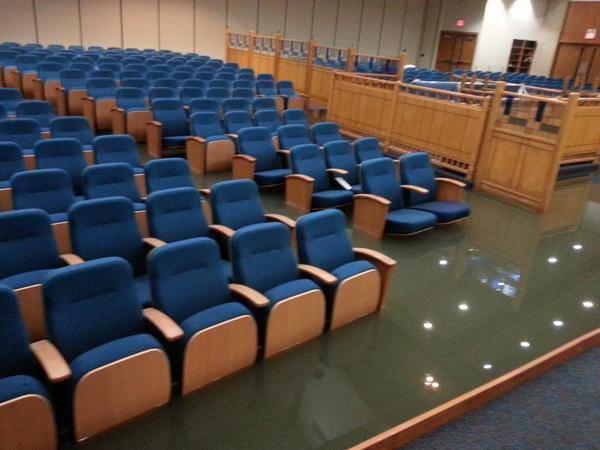
photo - The flooded synagogue sanctuary
The flooded synagogue sanctuary. (photo from UOS)

“It will take months to repair our spiritual home,” said Rabbi Barry Gelman. It will also take millions of dollars. Parts of the Meyerland area, including UOS, spent the days after the flooding May 26 under up to four feet of water and, while the floodwaters have receded, the recovery is only beginning.

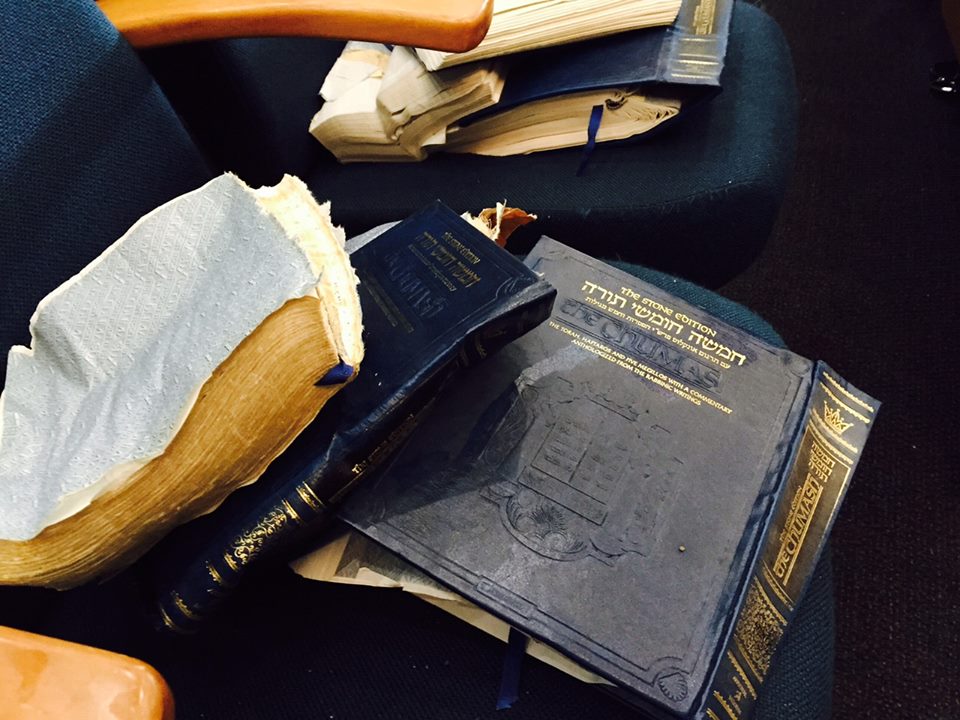
photo - The synagogue’s damaged chumashim
The synagogue’s damaged chumashim. (photo from UOS)

For nearly 50 years, UOS has actively served as a community beacon for the Meyerland area residents, but now the synagogue is forced to turn to its neighbors for help. They are raising funds to support not only the structural repairs needed on the buildings themselves, but they hope to offer a portion to some of their members who are in critical need. Max Reichenthal, UOS president and local business owner, said many of the more than 300 families who attend the synagogue received extensive damage to their homes, vehicles and belongings. He said UOS members have been extraordinarily comforted in their darkest hour by the outpouring of all manners of support they have received, not just from local synagogues, but from community organizations throughout the United States. The community is hopeful that donations will continue to come through the UOS website, uosh.org, to fund the relief effort.

Format ImagePosted on June 12, 2015June 10, 2015Author United Orthodox SynagoguesCategories WorldTags Barry Gelman, flood, Houston, Max Reichenthal, UOS
Moishe House moves

Moishe House moves

Ben Groberman outside of Moishe House’s new location in the 41st and Granville neighborhood. (photo from Ben Groberman)

The Vancouver chapter of Moishe House has found a new home. It will be the third location since the local branch started here three and a half years ago.

Vancouver Moishe House is part of an international nonprofit organization. Originally started in Oakland, Calif., in 2006, the organization’s mission is to provide a gathering place for young Jewish students and professionals who are looking to engage with their peers in a non-formal setting. The houses are run by three to five local students – in Vancouver, it’s generally been four students – who get rent subsidies in exchange for planning and organizing weekly events. Currently, there are 77 chapters of Moishe House around the world. While more than 50 of them are in the United States, there are houses in 16 other countries, including two in Israel (Jerusalem and Tel Aviv) and two in Canada, the other house nationally being in Toronto.

The Vancouver house started in 2011 in East Vancouver, where it was active for two years, then it moved to Point Grey, gaining popularity with nearby University of British Columbia students. It’s now located in the Granville Street and 41st Avenue area.

One of the current residents, Ben Groberman, believes that the new location will offer opportunities to the house and its residents.

“We are very happy with our move,” said Groberman over the phone while unpacking boxes in his new room. “Most of our community members live along the Granville and Oak corridor; it will be convenient for them to join in.

“It also provides us with great opportunity to work with our community partners on some new ideas and programs that will draw new people to our events. We had a wonderful time at Point Grey, we had good connection with Hillel and the UBC students; now we hope to reach new people and engage with some new crowd.”

The new house also will allow the addition of another member to the core group and, in the coming weeks, there will be a change in residents. Two incoming members from Ontario will replace current residents returning to that province and the fifth member, who will join the house from California, will move in next month.

After settling in, Groberman promises to be in full action for the summer and beyond.

“The best way to join the events is to contact one of the house members over Facebook or join our email list,” he said. “We have events for all kinds of people, from Shabbat dinner, Sunday brunch, movie nights, feeding the hungry; we have Havdala parties on Saturday nights, BBQs, going to museums, galleries, watching sports together. It’s always changing, and you get to meet so many people, it’s an amazing experience. I feel very privileged to take part in it and love to share the experience with others.”

Moishe House is designed for Jewish people in their 20s and 30s but others are invited to join their activities by emailing [email protected].

Shahar Ben Halevi is a writer and filmmaker living in Vancouver.

Format ImagePosted on June 12, 2015June 10, 2015Author Shahar Ben HaleviCategories LocalTags Ben Groberman, Moishe House
Driverless cars one step closer

Driverless cars one step closer

Prof. Zvi Shiller in the RAV Lab. (photo from israel21c.org)

Within a few years, you may be traveling in a car with nobody at the wheel. Whether you call it an autonomous, driverless or self-driving vehicle, this automobile of the near future needs a host of complex components, some now under development at Israeli companies and academic laboratories.

“You will be able to go to, let’s say, Paris or Tokyo, rent a car, swipe a card and tell it where you want it to go. You won’t have to know the area or the traffic rules,” explained Prof. Zvi Shiller, founder of the department of mechanical engineering and mechatronics at Ariel University and director of its Paslin Laboratory for Robotics and Autonomous Vehicles (RAV Lab).

The biggest benefit will be fewer traffic accidents than we have today – which cause more than 30,000 casualties annually in the United States alone – by eliminating human error in driving. But that requires a very, very smart car.

In the RAV Lab, Shiller and his students are developing algorithms that will automatically modulate speed and handling in response to constantly changing, unpredictable road conditions. Driverless cars will need this capability to meet future safety regulations.

“Today’s driverless cars, introduced by leading car companies such as Ford, Volvo and even Google, can drive very well on a road that is smooth and flat. Our research is about driving over a surface with bumps, ruts and hills,” said Shiller. “This is much more difficult because you can easily lose stability on that kind of terrain. If you’re driving too fast over a bump, you may jump into the air. You have to know at which speed you can drive safely without losing contact with the ground. You may need off-road driving capabilities less than 10% of the time, but you can’t trust a car that cannot handle those 10%.”

The current research continues Shiller’s work at the University of California-Los Angeles Laboratory for Robotics and Automation, which he founded and headed for 14 years before joining Ariel University in 2001.

At the RAV Lab, Shiller and his students have developed a small mobile robot that manoeuvres between obstacles at high speed, showing how the driverless car would handle itself.

“I haven’t seen a similar robot moving as fast,” said Shiller. “This stems from our ability to compute the optimal velocity that exploits the robot’s motion capabilities.”

A couple of years ago, the lab published their results from testing a simple version of this algorithm against one developed at the Massachusetts Institute of Technology, where Shiller earned graduate degrees in mechanical engineering.

“Our algorithm computes a collision-free path among 70 tightly spaced obstacles in half a millisecond, compared to 500 milliseconds (0.5 seconds) it took the algorithm from MIT,” he reported. “That’s 1,000 times faster!”

RAV Lab’s technology could be one of a few systems for driverless cars to come out of Israel. The different systems address everything from motion planning to cyber-security.

Among the companies working on self-driving car technologies is Jerusalem-based Mobileye, whose driver-assistance software is already built into approximately 3.3 million vehicles worldwide. Mobileye reportedly is collaborating with American electric car manufacturer Tesla on developing its driverless vehicle.

Shiller said that one of the most difficult functions to automate is the 3-D mapping system to take the place of human perception in identifying and avoiding moving and stationary hazards in the car’s vicinity.

“Researchers are still working on this,” he said. “Once we map the region around the vehicle, we can use this information to do the next part, which is planning the vehicle’s motion. That’s where my research comes in.”

Making life easier

Over the years, Shiller’s students have produced robots that climb stairs, clean windows, operate wheelchair lifts, dispense pills, push baby strollers uphill, turn pages and accomplish other everyday tasks. They’ve built up a portfolio of almost 90 robotic products over the last 10 years to solve daily life problems in a futuristic way. “Some of these are world firsts,” said Shiller.

The RAV Lab’s research has been supported by Israel’s ministries of science, transportation and defence, the Israeli Space Agency, General Motors and the Paslin Foundation.

As head of the Israeli Robotics Association (IROB), Shiller is optimistic that Israel can become a world leader in smart robotics.

“Quite a few of the Israeli robotics companies are world leaders in their fields,” he said, citing examples such as Robomow, the Dolphin swimming pool cleaner, the SpineAssist surgical device, Mobileye and the ReWalk exoskeleton.

“The research we do in Israel is state of the art,” said Shiller. “I believe that if we build upon the infrastructure developed over the last 25 years in the remarkable Israeli high-tech industry, we can become world leaders in robotics as well.”

For more information, visit ariel.ac.il/sites/shiller/ravlab.

Israel21C is a nonprofit educational foundation with a mission to focus media and public attention on the 21st-century Israel that exists beyond the conflict. For more, or to donate, visit israel21c.org.

Format ImagePosted on June 12, 2015June 10, 2015Author Abigail Klein Leichman ISRAEL21CCategories IsraelTags automotive, driverless cars, high-tech, RAV Lab, robotics, Zvi Shiller
Five-minute charger

Five-minute charger

StoreDot’s technology would enable drivers to charge their car batteries in less time than the company needs to explain how it works. (screenshot from israel21c.org)

StoreDot made headlines when it unveiled its prototype instant phone battery charger at last year’s Microsoft ThinkNext exhibition in Tel Aviv. The flash-battery/flash-charger unit could be available on smartphones by the end of this year. And, at the 2015 ThinkNext in early May, the Israeli company announced that it intends to demonstrate its five-minute ultra-fast-charge car battery next year.

This groundbreaking technology would enable drivers to charge their car batteries in less time than StoreDot needs to explain how it works.

StoreDot specializes in cost-effective, environmentally friendly nanotechnologies using organic materials that increase electrode capacitance and electrolyte performance. This is the recipe for making batteries that can be fully charged in minutes rather than hours.

While competitors in the electric-vehicle space seek to increase mileage per battery charge, StoreDot is focusing on dramatically reducing charging time.

“This is part of our larger initiative to commercialize a proprietary game-changing technology of fast-charging batteries that would transform the lives of smartphone users as well as drivers,” said StoreDot chief executive officer Doron Myersdorf.

The privately owned StoreDot, incorporated in Israel in 2012, also announced the opening of its new facility in Herzliya, housing an organic chemistry lab, battery material development lab and R&D battery production line.

Israel21C is a nonprofit educational foundation with a mission to focus media and public attention on the 21st-century Israel that exists beyond the conflict. For more, or to donate, visit israel21c.org.

Format ImagePosted on June 12, 2015June 10, 2015Author Abigail Klein Leichman ISRAEL21CCategories IsraelTags Doron Myersdorf, high-tech, StoreDot, ThinkNext
הורה ליצרניות הסיגרות לשלם …

הורה ליצרניות הסיגרות לשלם …

הורה ליצרניות הסיגרות לשלם למעלה מ-15 מיליארד דולר. (צילום: Andrew Magill via commons.wikimedia.org)

התביעה הגדולה בתולדות קנדה: בית המשפט העליון בקוויבק הורה ליצרניות הסיגרות לשלם למעלה מ-15 מיליארד דולר למעשנים

בית המשפט העליון של מחוז קוויבק הורה לשלוש יצרניות סיגריות הגדולות ביותר קנדה, לשלם 15.6 מיליארד דולר למעשנים. זאת לאור הנזקים הכבדים שנגרמו להם מעישון. מדובר בתביעה יצוגית בהיקף הכספי הגדול ביותר בהיסטוריה של קנדה עד היום. כצפוי שלוש יצרניות הסיגריות אימפריאל טובקו קנדה, ג’י.טי.איי מקדונלד קורופרשיין ורוטמנס-בנסון אנד הדג’יס אינק, הזדרזו כבר והודיעו כי יערערו על פסק הדין שפורסם לפני מספר ימים.

ההליך המשפטי המורכב נגד חברות הסיגריות החל לפני כשלוש שנים. התביעה מתייחסת לנזקי העישון שנגרמו למעשנים בחמישים השנים האחרונות. בפועל מדובר בשתי תביעות שאוחדו: הראשונה של כמאה אלף מתושבי קוויבק שחלו בסרטן עקב העישון וחלקם כבר נפטרו, והשנייה של כתשעה מאות אלף מתושבי קוויבק שמכורים לעישון סיגריות.

בפסק הדין ציין בית המשפט העליון כי ליצרניות הסיגריות אחריות ישירה לנזקים שנגרמו למעשנים, בזמן שהן בחרו שלא לעדכנם בדבר נזקי העישון הכבדים הצפויים להם. הנתבעות טענו מצידן כי המעשנים היו מודעים לנזקי העישון שצפויים להם, וכן כי הסיגריות נמכרות בקנדה באופן חוקי ובאישור הממשלה הפדרלית.

יצויין כי בית המשפט לערעורים של מחוז אונטריו דחה לפני מספר ימים, בקשה של יצרניות הסיגריות לבטל תביעה נגדן. ובכך ניתן אור ירוק להמשיך בתביעה מצד ממשלת אונטריו נגד חברות הסיגריות שהיקפה לא פחות מחמישים מיליארד דולר. גם במחוזות של בריטיש קולומביה וניו ברנזוויק הגשו תביעות דומות לבתי המשפט המקומיים, נגד יצרניות הסיגריות. ואילו בשאר המחוזות בקנדה גם נפתחו הליכי תביעה שעדיין לא הגיעו לבתי המשפט.

ועוד בנושא המלחמה ביצרניות הסיגריות: בחודש מאי הוקמה קרן צדקה של המיליארדר היהודי-אמריקני, מייקל בלומברג, לשעבר ראש עיריית ניו יורק, כדי לסייע לממשלות ברחבי העולם להילחם בתעשיית הסיגריות. הקרן אמורה לסייע למדינות שמתקשות לצמצם את העישון, באמצעות אספקת יועצים משפטיים לתמיכה בחקיקה נגד יצרניות הסיגריות. תקציב הקרן של בלומברג ארבעה מיליון דולר בשלב זה, ומובטחות לה תרומות מהקרן של ביל ומלינדה גייטס.

לפי הערכות בארגוני הבריאות העישון גרם למותם של עשרה מיליון איש במאה העשרים, והוא ויגרום למותם של מיליארד איש במאה הנוכחית.

הכלב הוא חברו הטוב ביותר של האדם: כלבת לברדור עזרה לילדה להעיד בבית המשפט

לראשונה בקנדה נעשה שימוש בכלב כדי לעזור לעדים במצוקה להעיד בבתי המשפט הפליליים. כל גורמי האכיפה, השפיטה והעובדים הסוציאליים מציינים בחיוב רב את השימוש בכלבים לראשונה לצרכים יחודיים אלה.

ילדה שחוותה תקיפה מינית ונמצאת בטרומה קשה מאוד נעזרה בעדותה לפני מספר ימים בבית המשפט המחוזי בעיר סרי, בכלבה בת שבע מסוג לברדור צהוב העונה לשם קאבר. הכלבה ממשרתת במשטרת העיר דלתא מאז 2010. השימוש בכלבה בעת הדיונים בבית המשפט התאפשר, לאחר שהשופט בתיק אישר את בקשת פרקליטות המדינה להיעזר בה.

ברגעים הקשים במשפט כאשר קורבן התקיפה המינית התקשתה לתאר מה עבר עליה עת הותקפה, היא חיבקה וליטפה את קאבר שהייתה צמודה לרגליה, ופשוט הרגיעה וניחמה אותה כל הזמן.

במסגרת ניסוי במשטרת דלתא בשלוש השנים האחרונות, קאבר הובאה לחקירות של קורבנות של מעשים פליליים, כדי שתעזור להם להירגע בזמן שמסרו את עדותם. לאור הצלחתו של הניסוי היוצא דופן הזה, הוחלט כאמור לראשונה להיעזר בכלבה גם בין כתלי בית המשפט. גורמים שקשורים במשפט הביעו סיפוק מהפתיחות שבית המשפט גילה כאשר איפשר להשתמש בקאבר.

Format ImagePosted on June 10, 2015Author Roni RachmaniCategories עניין בחדשותTags cigarette, court, Delta Police, dog, Imperial Tobacco, JTI-MacDonald, Quebec Supreme Court, Rothmans Benson & Hedges, אימפריאל טובקו קנדה, בית המשפט, ג'י.טי.איי מקדונלד, וטמנס-בנסון אנד הדג'יס, ית המשפט העליון בקוויבק, כלב, משטרת דלתא, סיגרות

Posts pagination

Previous page Page 1 … Page 287 Page 288 Page 289 … Page 326 Next page
Proudly powered by WordPress