Terror infrastructure discovered

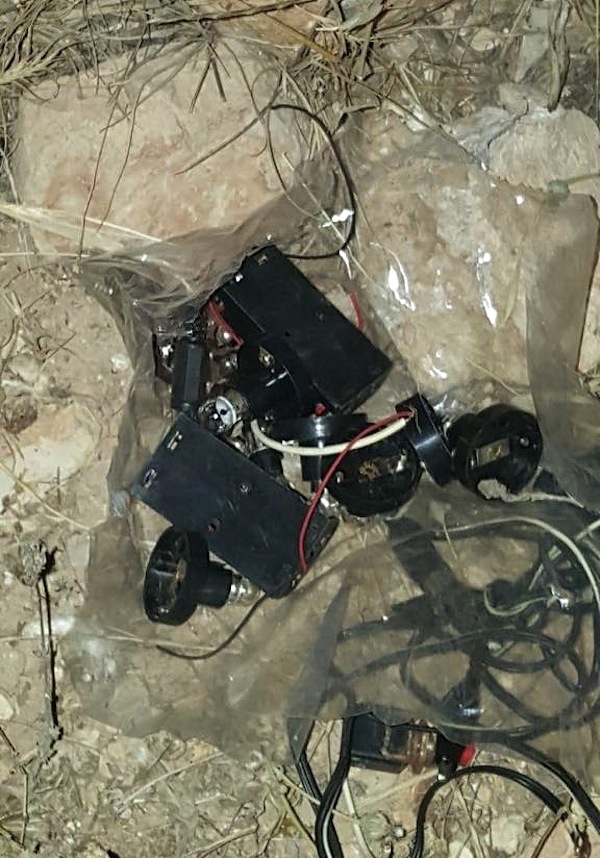
Some of the terror weapons found by Israel Security Agency (ISA) personnel. (photos by ISA via Ashernet)

photo - Terror weapons found by Israel Security Agency (ISA) personnelIn recent months, the ISA, Israel Defence Forces and Israel Police have uncovered a large and active terrorist infrastructure that operated in the Nablus area on the West Bank from October 2017 until late April 2018, when more than 20 members of the group were detained by Israeli security forces. Most of the group’s members belonged to Hamas; some had extensive experience in terrorist operations, including the production of explosives. ISA investigations found that the group intended to carry out several attacks in various Israeli cities. Among the items seized were improvised explosive devices, including one weighing 10 kilograms; materials for the production of explosives; weapons; and instructions for the manufacture of bombs and explosive materials.

New Yad Vashem exhibit

The new exhibit at Yad Vashem features artworks, artifacts, diaries, letters and testimonies that illustrate how Jews yearned for Eretz Israel during and immediately following the Shoah, from 1933-1948. (photo from Ashernet)

“I see a sign that we will meet each other face-to-face in our land, our homeland, Eretz Israel,” wrote 10-year-old Eliezer Rudnik in 1937 to his aunts who had immigrated to Palestine.

The letter, written in Hebrew, is surrounded by his parents’ writing, in Yiddish, as there was a lack of paper. Aryeh and Sarah Rudnik and their son, Eliezer, were the only Jews living in the Ukrainian village of Kosmaczow – they were shot and killed by Nazis in 1942. Eliezer’s letter is just one of the hundreds of items now on display at Yad Vashem, the World Holocaust Remembrance Centre, in a new exhibition, They Say There is a Land: Longing for Eretz Israel during the Holocaust.

photo - Eliezer’s letter is just one of the hundreds of items now on display at Yad Vashem, the World Holocaust Remembrance Centre, in a new exhibition, They Say There is a Land: Longing for Eretz Israel during the Holocaust
Eliezer’s letter is just one of the hundreds of items now on display at Yad Vashem, the World Holocaust Remembrance Centre, in a new exhibition, They Say There is a Land: Longing for Eretz Israel during the Holocaust. (photo from Ashernet)

The exhibit, which opened May 30 in the Auditorium Exhibitions Hall of Yad Vashem’s Museums Complex, features artworks, artifacts, diaries, letters and testimonies collected by Yad Vashem over the years, all of which illustrate how Jews yearned for Eretz Israel during and immediately following the Shoah, from 1933-1948. It is divided into three sections.

The first section presents how Jews viewed their connection to and longing for the Land of Israel during the rise of the Nazi party to power in Germany, until the outbreak of the Second World War. It was during this period that Jews searched for asylum in various countries, including Eretz Israel.

The second section focuses on the years 1940-1944, from the period of the ghettos to extermination. During this stage, Jewish communities in Europe dwindled and, under their daily struggle for survival, many Jews found themselves distanced from Eretz Israel to the point of disengagement; however, their hearts’ yearning for the land remained.

The third and final section focuses on the period immediately after the Holocaust – the displaced persons camps in Europe and the detention camps in Cyprus, and the establishment of the state of Israel. At this time, many survivors felt that only in Israel would they be able to regain their stature and build a full Jewish communal and personal life.

“The longing for Zion and the Land of Israel has been a cornerstone of Jewish identity for generations, manifested in many different forms,” Yad Vashem chairman Avner Shalev said at the exhibition’s opening. “While the Zionist movement was not embraced by the majority of Jews in Europe during the Nazi rise to power, through the course of the Holocaust and in its aftermath, it became increasingly popular. This exhibition portrays the ways in which Jews before, during and after the Shoah expressed their dreams for a brighter future in the Land of Israel, and their fervent hope to rebuild their lives here.”

The exhibition’s title is that of a well-known poem written by Hebrew poet Shaul Tchernichovsky in 1923 in Berlin. The poem brings up existential questions that characterized the Jewish people’s struggle in the interwar period, as well as the forces of dream versus reality, and hope versus despair.

Holy colour of blue

A tallit’s tzitzit with threads dyed in tekhelet blue produced from Murex trunculus snails. (photo from Ptil Tekhelet/Eugene Weisberg)

There’s only one thing missing from the comprehensive temporary exhibit Out of the Blue, which opened June 1 at the Bible Lands Museum Jerusalem (BLMJ) – the reek of the workshops along the Mediterranean coast of Phoenicia and Israel that produced the prized dyes known in antiquity as tekhelet and argaman.

Researchers at the Jerusalem-based foundation Ptil Tekhelet (Blue Thread) maintain that some 8,000 Murex trunculus mollusks were needed to produce a single gram of the luxury pigment. A demonstration of the malodorous dyeing process was carried out – in the garden of the museum – with one of the marine gastropods. A person can only imagine the stink of many thousands of the rotting sea creatures.

The Out of the Blue exhibit documents the significance of tekhelet, together with the Tyrian purple called argaman in the Torah, from antiquity to the present. Not coincidently, the exhibit opened in honour of Israel’s 70th anniversary. It traces the heavenly blue from the time it was a colour revered by the ancient Israelites and other early peoples of the Near East to its use for Israel’s national flag.

“This special exhibition looks at the magnificence as well as the significance of the colour blue in the ancient world, and ties the blue dyed threads mentioned in the Bible and extra-biblical texts to the very design of the flag of the state of Israel today. BLMJ is proud to be the one museum in the world that highlights the relevance and continuity of the roots of civilization in this region and their impact on our world today in a universal and non-sectarian way,” said museum director Amanda Weiss.

Out of the Blue spotlights ancient Near East cultures’ fascination with the colour as a symbol of divinity. In the Egypt of the pharaohs, Mesopotamia and Canaan, lapis lazuli imported at great cost from Afghanistan was used for cultic purposes.

The BLMJ exhibit continues with the lucrative imperial purple dye industry of the ancient Phoenicians, whose name means the “Purple People.”

But, for this reviewer, the core of the exhibit deals with the dyeing of sky blue tzitziyot (ritual fringes affixed to Jews’ tallitot, prayer shawls). In the eighth century, following the Arab takeover of the Levant, that technology was lost. As a result, Jews were compelled to wear white rather than blue ritual fringes on their prayer garments. Research to rediscover the lost dyeing process of the biblical commandment became synonymous with Zionism, the Jewish people’s return to their biblical homeland.

For more than 25 years, Ptil Tekhelet has dyed hundreds of thousands of sky blue tzitziyot coloured with murex snails’ distinctive tint. The azure tzitziyot remind worshippers of the sea, the sky and God’s sapphire-hewn throne, according to Tannaite sage Rabbi Meir, who was a disciple of Rabbi Akiba.

The exhibit includes a collection of the snail (hilazon) shells excavated at Tel Shikmona near Haifa, and dating back to the 10th through seventh centuries BCE, according to Yehuda Kaplan, one of exhibit’s three curators.

“You can see that, for some of them, there is a breach in the shell,” he said during a press tour of the exhibit. It was from those holes that a gland from the snail was extracted, with each yielding only a “minuscule” amount of the rare and highly coveted dye’s raw material.

“These snails, the Murex trunculus, probably about 4,000 years ago it was discovered that they could produce magnificent dyes with the most beautiful colours, dyes that were fast on wool, never faded. And that was something in the ancient world that was simply unheard of, it was priceless,” said Dr. Baruch Sterman of Ptil Tekhelet, co-author of the book The Rarest Blue: The Remarkable Story of an Ancient Colour Lost to History and Rediscovered.

photo - Baruch Sterman of the Ptil Tekhelet foundation, and co-author of the book The Rarest Blue
Baruch Sterman of the Ptil Tekhelet foundation, and co-author of the book The Rarest Blue. (photo by Gil Zohar)

At some point, added Sterman, those dyed fabrics were “worth up to 20 times their weight in gold.”

Other artifacts on display include garment fragments discovered at Masada during archeological excavations in the early 1960s. More than 30 years later, tests using high-performance liquid chromatography (HPLC) proved the cloth had been dyed with a murex solution.

Out of the Blue concludes with the flag flown outside the United Nations in New York in May 1949, when Israel was accepted as a member state of the international body. A second Israeli flag on display was carried into orbit aboard the American Apollo spacecraft, which docked with the Soviet Soyuz rocket on July 17, 1975, in the first international manned space flight.

Sterman’s nonprofit amuta (foundation) is based on the research, in the 1980s, of Otto Elsner, a chemist at Ramat Gan’s Shenkar College of Engineering and Design, who discovered that, if a solution of the purple dye made from the hypobranchial gland of the Murex trunculus was exposed to the sun’s ultraviolet rays, it would turn a deep shade of blue.

Popularizing that knowledge has been a slow process. According to the Talmud, tekhelet is a specific azure dye produced from a sea creature known as a hilazon. Rabbinic sages ruled that vegetable indigo dyes were unacceptable.

Over the past 150 years, several marine creatures were proposed for reviving the biblical process of dyeing the tassels, among them one favoured by Israel’s first chief rabbi, Isaac Herzog, father of Israel’s sixth president, Chaim Herzog. Rabbi Herzog, who completed his PhD at the Sorbonne in Paris in 1914, believed that the violet pelagic snail, Janthina janthina, was the source of the ritual tekhelet.

Another theory was proposed half a century earlier by Rabbi Gershon Hanokh Leiner, known as the Radzyner Rebbe, who produced blue dye from the black ink of the Sepia officinalis (the common cuttlefish). But chemical analysis identified his dye as Prussian blue, an inorganic synthetic colour derived from iron filings and not from the squid itself.

That dispute continues to reverberate: most of the blue-coloured tzitziyot worn in Israel today are dyed from the inexpensive cuttlefish, acknowledged Ptil Tekhelet. (The tekhelet factory in Radzyn near Lublin in Poland was destroyed during the Holocaust, and the technology was lost but was revived in Israel after 1948 thanks to the prewar research of Chaim Herzog.)

The rediscovery of tekhelet has almost messianic implications – one rabbinic source notes, “The revelation of the hilazon is a sign that the redemption is shining near.”

According to the museum, “The tekhelet blue, which reminded every Jew of their connection to God, remained in the memory of the [Jewish] people and became an integral part of the national symbol of the state of Israel.”

Gil Zohar is a journalist based in Jerusalem.

A special anniversary

Children who lost family members fighting for Israel are seen attending a camp at Wizo’s Hadassim Youth Village, which was founded in 1947 to support the influx of refugees fleeing from Europe. (photo from Jewish Museum and Archives of British Columbia, L.10472)

Rabbi Shawn Zell remembers his Grade 10 experience vividly, even though it took place 50 years ago.

Zell, a native of Winnipeg, spent the year in Israel attending a boarding school called the Hadassim Children and Youth Village, along with 18 other Canadian and American young people. It was 1968, one year after Israel’s victory over the combined armies of its Arab neighbours, and the mood in the country was euphoric. There was unbridled optimism in the air, the feeling that anything was possible, Zell recalled.

For Zell and his Canadian contemporaries, it was a time to embrace their Judaism and create greater bonds with the state of Israel, all while getting credits towards their Canadian high school diplomas.

Zell and the others were among the first young Diaspora Jews to spend a year in Israel on a sponsored program – in their case, one organized by Canadian Hadassah-WIZO. Although decades have passed, he still keeps in touch with some of the other participants and, on June 27, most of the group, along with their spouses, children and other family members, will gather in Israel for a 50th reunion.

They will meet at Hadassim, which is located near Netanya, to have dinner, reminisce and see if they can still recognize one another after the passage of so much time.

“I think it’ll be a bunch of alter-kackers looking at each other, saying, ‘I wouldn’t recognize you,’” he said.

photo - Rabbi Shawn Zell
Rabbi Shawn Zell (photo from cjnews.com)

Zell, who serves as the spiritual leader of Tiferet Israel Congregation in Dallas, said his experience in Israel left indelible marks on him. Although he came from a proudly Zionist family, being in the country reinforced those feelings and strengthened his attachment to Judaism.

“I came back with Israel fever,” he said, “more knowledgeable, even more Jewish.”

A few years after his return, he took advantage of an offer to study at a new school for educators in New York and was later ordained as a rabbi. All the while, he has remained in touch with a few of his buddies from the trip. Of the 16 Canadians who were there with him, seven were fellow Winnipeggers, although he did not know any of them before he left. They were joined in Israel by three Americans.

While in Israel, the group was housed in dormitories, with two Canadians and two Israelis per room. It was a great way to meet Israelis and see the country, Zell said, adding that he still keeps in touch with his roommate from Halifax, Lance Webber, and an American, David Klein, among others.

With no parents to monitor them, the boys took advantage of the situation.

“We were doing a lot of horsing around,” Zell recalled, and their schoolwork suffered as a result. But, being on their own in a new country provided plenty of opportunity to develop their independence – they thought nothing of taking a bus into nearby Tel Aviv to wander around. On Shabbat, the Canadian kids organized their own services on campus, without adult supervision.

Zell has lots of memories of that experience, including the time the group was called to attend a Hadassah event that was headlined by former Israeli prime minister David Ben-Gurion. Zell still has the photo, cut out of a magazine he found back in Winnipeg, of he and the others posing with Ben-Gurion.

When Zell got the idea to organize a reunion a year ago, he wasn’t sure how it would turn out. But the response “has been much better than I thought. I didn’t think I’d be successful contacting people after 50 years,” he said.

Zell expects 13 of the original group of 16, along with their family members, to attend the reunion, bringing the total number to more than 30 people.

“We will view Hadassim through mature eyes,” said Zell. “We will see one another, rekindle friendships and share memories. Most of all, we will introspect as we ask ourselves how our year in Hadassim played a role in our lives.”

– For more national Jewish news, visit cjnews.com

Ancient donkey leads to new discoveries

In the ancient city of Gath, now Tell es-Safi, an international team of archeologists has uncovered the earliest example of the use of a bridle bit with an equid in the Near East. (photo from Ashernet)

photo - An aerial view of Tell es-Safi
An aerial view of Tell es-Safi. (photo from Ashernet)

“The use of a bridle bit on a donkey during this period is surprising, since it was commonly assumed that donkeys were controlled with nose rings, as depicted in Mesopotamian art,” said Bar-Ilan University’s Prof. Aren Maeir, who has led the Tell es-Safi/Gath Archeological Project since its inception more than 20 years ago. Evidence of the bit was derived from the skeleton of an ancient donkey dating to the Early Bronze Age III (approximately 2700 BCE). The donkey is one of four that were found buried under neighbourhood houses, indicating the importance of the donkey in this society. Studies of the dental isotopes from this particular donkey (with the bit) demonstrate that it was born and raised in Egypt and brought to the site only in the last few months of its life, before it was sacrificed and buried beneath the floor of the house as it was being rebuilt. The research has been funded by the Canadian Social Science and Humanities Research Council, with additional funds from BIU and the University of Manitoba; the researchers come from BIU, U of M, University of Saskatchewan, Ariel University and Grand Valley State University; their findings were published in the May 16 edition of the journal PLOS ONE.

BGU finds key protein

Ben-Gurion University’s Dr. Deborah Toiber will be part of a panel in Vancouver called Alzheimer’s, Dementia and You: Research, Risk Reduction and Resources. (photo from CABGU)

Alzheimer’s affects about six percent of people over the age 65 worldwide. For years, scientists have been searching for ways to treat it and to discover its roots, but without much success, until recently.

A group of Ben-Gurion University researchers, under the leadership of Dr. Deborah Toiber, is among those who have made breakthroughs. They have discovered that a certain protein, SIRT6, necessary for DNA repair, is largely missing from the brains of people with Alzheimeir’s. The absence of this protein and the gradual decline in its production by the human body as we age might be what triggers the disease.

On June 5, Toiber will be the keynote speaker at Alzheimer’s, Dementia and You: Research, Risk Reduction and Resources. She will be joined in a panel discussion by Laura Feldman from the Alzheimer Society of British Columbia and Joanne Haramia of Jewish Family Services; Simon Fraser University professor emeritus Dr. Gloria Gutman, one of the founders of SFU’s Gerontology Research Centre, will be the moderator. The event, which will be held at the Rothstein Theatre, is being presented by the Canadian Associates of Ben-Gurion University (CABGU) in partnership with the Jewish Independent, the Jewish Community Centre of Greater Vancouver’s Adults 55+ program, the Alzheimer Society of B.C., Louis Brier Home and Hospital, Jewish Family Services, Jewish Seniors Alliance, and L’Chaim Adult Day Care.

According to David Berson, executive director of CABGU, British Columbia and Alberta Region, “the purpose of the panel is to increase the awareness and understanding of Alzheimer’s disease, dementia and neurodegenerative diseases.”

“Deborah was coming to Canada to visit the community in Winnipeg for a similar event,” Berson told the Independent. “We had a wonderful opportunity to bring the young and dynamic researcher to Vancouver and we jumped at it…. Toiber’s research, as I understand it, is part of a race to discover, isolate and understand the characteristics, components and mechanisms of DNA that will allow us to identify and treat neurodegenerative diseases prior to onset.”

In her email interview with the Independent, Toiber talked about her work and her group’s discovery. She said that DNA deteriorate with age. “It is not something genetic or environmental,” she said. “We repair our DNA and continue going on, but the repairs are not perfect. Some DNA remain unrepaired. As we get older, unrepaired DNA accumulate, and their ability to produce proteins diminishes.”

She further explained: “If the DNA is damaged, and a cell feels it is too dangerous to continue with this damaged DNA, the cell may activate a self-destruct mechanism. If too many cells do this, the tissue with the dying cells will deteriorate, such as the brain.” Essentially, the deterioration of the DNA and the reduced production of SIRT6 protein mark “the beginning of the chain that ends in neurodegenerative diseases in seniors. In Alzheimer’s patients, SIRT6 is almost completely gone.”

Toiber said scientists should be focusing on how to maintain the production of SIRT6 and how to improve the repair capacity of the damaged DNA, because that is what causes Alzheimer’s and similar diseases. Unfortunately, it is impossible to introduce the needed protein directly into the brain. “There is a blood barrier that prevents things from passing into the brain,” she said. “But we are trying to find a way to increase the expression of the protein into the brain.”

Toiber has always been fascinated by the molecular biology of the human brain. “I chose this field because I wanted to understand in-depth how the brain works, to investigate what happens when things stop working,” she said. “I think that molecular biology is the answer to all those questions. It’s like being a detective on the molecular level.”

She realizes that a detective’s work is never easy or fast. “Results take years to build, as they are based on previous findings, ours and other scientists’. My current group, where I am the principal researcher, is about three years old. It is a new lab.”

The research is multifaceted and multidirectional. “We do basic science,” she said. “We use animal models and cells to understand what is happening as we age, what is the cause of disease and what can we learn from this to develop treatments or preventive actions. We also collaborate with medical professionals and other scientists to get a fuller picture of various aspects of aging and neurodegeneration, particularly Alzheimer’s disease.”

Toiber’s group doesn’t work on the pharmaceutical angle of how to introduce the protein into patients’ bodies. Instead, she explained, “We are interested in the molecular causes of aging, such as DNA damage accumulation, and how this leads to disease. We work in experimental biology. These experiments are expensive and difficult. It can take a long time to see and understand the results, but it is also rewarding. Molecular processes help us understand how our organisms work and what happens when things go wrong. We have to be optimistic and keep trying.”

Many scientists in related fields of study are interested in Toiber’s work. “I have talked about our research at the international neurochemistry meeting in Paris and at conferences in Crete and Israel,” she said.

To hear her speak in Vancouver, register at eventbrite.ca. There is no cost to attend.

Olga Livshin is a Vancouver freelance writer. She can be reached at olgagodim@gmail.com.

Preserving written word

Pinkas Kehillat Frankfurt am Main contains records of the membership dues and other payments made by the members of the Frankfurt community between 1729 and 1739. It also contains copies of records from the 17th century. The pinkas contains 384 leaves and is written in German in Hebrew letters. (photo from National Library of Israel)

Many know that Shavuot, which we just marked, commemorates the receiving of the Ten Commandments. Less well appreciated, however, is that this holiday is the Jewish people’s beginning as the People of the Book. In this regard, it should come as no surprise that, within two weeks of Shavuot, throughout Israel, we celebrate Book Week, Shavuah Hasefer. But enough about new books.

Since the 1970s, in a tucked-away corner of the National Library of Israel, a small, skilled team conserves and restores the books and documents, not just of the Jewish people’s long and complicated heritage, but those of Muslims and Christians.

Timna Elper heads this department, which currently comprises four full-time and one part-time staff. Until I visited them, I did not understand how challenging it is to physically preserve a written legacy – archival materials face a battery of foes, such as fungus, insects and rodents.

So, here is an admission: I naively believed the term bookworm just meant someone who loves to read books. While this does describe a certain kind of person, bookworms are actually an enemy of old books. Moreover, bookworms aren’t even worms – they’re the larvae of several species of beetles. And they have their preferences; that is, they generally leave newer books alone. If unchecked, they start their voracious dining on the spines of older books, moving on to feast on the pages. The sad result leaves books riddled with small holes and badly frayed covers and edges.

photo - Pinkas Kehillat Frankfurt am Main before conservation efforts at the National Library of Israel
Pinkas Kehillat Frankfurt am Main before conservation efforts at the National Library of Israel. (photo from National Library of Israel)

The repair work carried out in Elper’s department is, in a number of ways, similar to work done in hospitals. As in a medical facility, staff members must be highly trained in a number of fields. In the case of the library, we are talking about knowledge of fibres and textiles, entomology, chemistry, etc. To avoid contagion, sanitation is constantly checked: the library, for instance, closes during Passover and Sukkot in order to carry out fumigation of the entire facility. Tests are routinely carried out for fungal and insect damage. Temperature and humidity are monitored. Special care is taken to avoid stacking books too tightly, as this could endanger their physical stability when removed from their shelves. Attention is also paid to lighting (and not just sunlight), as improper or excessive lighting likewise harms books.

As for surgical procedures, library staff members carefully choose the materials for the restoration process, so that the book will accept, rather than reject, the repairs. The staff has to match the materials composing the old texts, be they parchment, animal skin or paper. However, no staff person is engaged as a scribe, as the department does not deal with restoring the text, no matter how faded or distorted it may be.

Along the way, the staff learns a lot about the old books. They learn about the community from which a text originated. They learn about the building of a book and what might have been involved in producing it. They explore questions that deal with the book’s content, as well as its cover. Was the book covered immediately or later in its life? Was the cover added where the book was written or was it put on in another country? And, if it was added in another country, what does this tell us about cooperation between historic Jewish communities?

Sometimes, to complete the restoration process and return the book for use, the staff employs specially developed machines, such as the Leafcaster, a machine that was developed by the department’s first director, Esther Alkalai. The Leafcaster helps strengthen a page by adding pulp to it.

Once the restoration is complete, the materials are available for study or for exhibition. To a degree, this action puts the texts at risk for contamination or physical damage. Thus, when the National Library loans rare items for temporary display, the restoration and conservation lab goes into full swing with a complicated process of ensuring the articles travel safely. The condition of the items is meticulously inventoried before they leave the library and when they are returned. In addition, a staff person from the lab accompanies the items in order to review the state of the pieces with the receiving institution and to help make sure that the loaned materials are being shown in a way that will not cause harm. When the exhibit closes, a staff person returns to the hosting facility to safely bring the valuable books and manuscripts back to the library. The library also makes special security and customs arrangements. An agreement is signed stating that the loaned articles will all be returned to Israel.

photo - Pinkas Kehillat Frankfurt am Main after conservation efforts at the National Library of Israel
Pinkas Kehillat Frankfurt am Main after conservation efforts at the National Library of Israel. (photo from National Library of Israel)

The restoration process is expensive, and the waiting list for repairing these treasures is in the thousands. While there are donors willing to underwrite the cost of digitizing archival material, few people are willing to contribute to the cost of the restoration.

Elper would love to have people adopt archival material, so that it could undergo restoration at the National Library of Israel. Such a program, she said, has been instituted at the British Library and other institutions. Reportedly, at the British Library, the funds raised through its Adopt a Book program have supported the conservation of thousands of items – books, manuscripts, maps, photographs, stamps and works of art on paper. The possibilities are numerous; one of Elper’s suggestions is to approach different ethnic communities or individuals to adopt or sponsor the repairs needed on an article from their community of origin.

Asked what was the library’s most difficult project to date, Elper said all projects have their challenges. While difficult was not her choice of word, she admitted that preparing for the arrival of a large external (out-of-the-library) archival collection required painstaking attention to removing any known contaminants and, stage-by-stage, safely transporting these acquisitions to the National Library’s archives.

Among the most satisfying projects for the team, Elper said when asked, was the preparation for the recent exhibit at New York University’s Institute for the Study of the Ancient World, called Romance and Reason: Islamic Transformations of the Classical Past. The library lent the institute exquisitely scripted and illustrated manuscripts dealing with the story of Alexander the Great.

The repair of items (donated and purchased) creates a living testimony of history. It is the hope of the National Library of Israel that these rare and cherished books will receive even more attention when the library moves to its new facility in 2020.

As a closing note: if you have old books you love, keep them away from direct light and, to protect them from dust and other grime, store them in archival-quality, acid-free envelopes. Don’t do as yours truly had been doing, keeping them in various Ziploc bags. In closed plastic bags, the books have limited ability to breathe.

Deborah Rubin Fields is an Israel-based features writer. She is also the author of Take a Peek Inside: A Child’s Guide to Radiology Exams, published in English, Hebrew and Arabic.

Welcome, Paraguay!

(photo from Ashernet)

A section of Jerusalem’s Old City, near the Jaffa Gate, is illuminated with a greeting to welcome the establishment of the new Paraguayan embassy. On May 22, the municipality welcomed the establishment of the third embassy in the capital – the United States and Guatemala moved their embassies to Jerusalem earlier in the month. The next country to make the move to the capital is thought to be Honduras.


American embassy arrives

photo - Israelis waited for Monday’s opening in the city of the new American embassy(photos from Ashernet)

In Jerusalem on Sunday, May 13, which was Jerusalem Day, there was a strong feeling of anticipation, as Israelis waited for Monday’s opening in the city of the new American embassy. Other countries are expected to follow the United States’ lead, starting with Guatemala, which opened its embassy in Jerusalem two days later, and Paraguay.

Giro d’Italia begins!

Cyclists met some of the audience in Safra Square during the opening ceremony May 4. (photo from Ashernet)

photo - Israeli model Bar Refaeli was one of the hosts on opening night
Israeli model Bar Refaeli was one of the hosts on opening night. (photo from Ashernet)

The night of May 4 saw a spectacular ceremony to welcome the scores of participants and visitors to Israel to mark the opening of the Giro d’Italia cycling race. This year, the three-week race started in Jerusalem with a time trial. Cyclists from around the world then raced from Haifa to Tel Aviv, then from Beersheva to Eilat, across the Negev Desert. On Sunday, the teams flew by special aircraft, with all their gear, to Sicily to continue with the race on Tuesday. This is the first time that such a prestigious world-class sporting event has been organized in Israel. The three most important cycling events in the world are, in order of importance: Tour de France, Giro d’Italia and La Vuelta (Spain).