Bridging the future

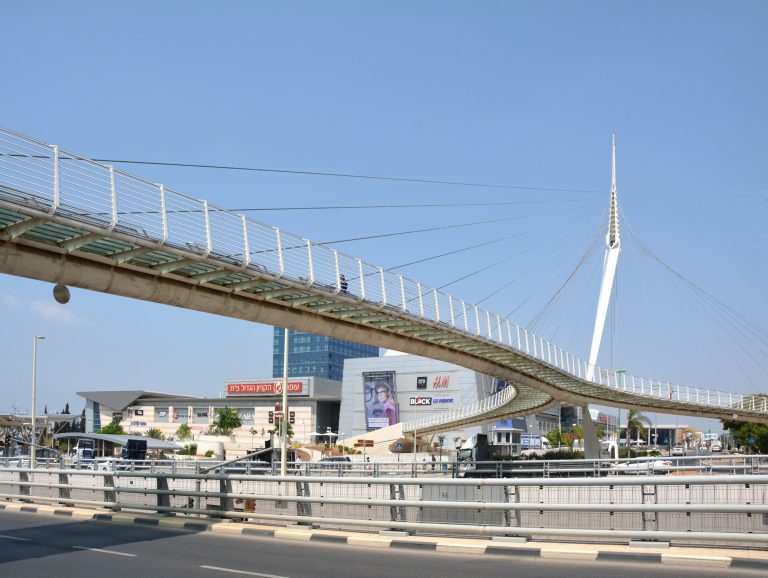
Petach Tikvah’s Calatrava bridge. (photo from Ashernet)

Petach Tikvah’s Calatrava pedestrian bridge and glass walkway was designed by architect Santiago Calatrava, who also designed Chords Bridge at the western entrance to Jerusalem. The Petach Tikvah bridge, erected in 2005, connects the Beilinson hospital complex with a shopping mall and a central park. Situated some 11 kilometres east of Tel Aviv, Petach Tikvah continues to expand to accommodate its increasing population and its appeal to high-tech, pharmaceutical and distribution companies. Today, the city, with its population of more than 240,000 individuals, ranks as the fifth biggest city in Israel, and has one of the larger percentages of religious Jews in the country. However, while some 70,000 religious Jews are served by about 70 synagogues of various sizes, there are more than 300 schools in the city that serve children of all religious and non-religious affiliations.


Learning negotiation together

The Pathways program pairs Arab and Jewish high schools for two-day experiential workshops about interest-based negotiation skills. (photo by Emily Singer)

As politicians debate about how to bring peace to the Middle East, or if it’s even possible, a newly formed nonprofit organization is bringing together hundreds of Jewish and Arab children across Israel every year and teaching them how to get along.

The Pathways program, directed by Avi Goldstein and facilitated by Michael Schnall, pairs Arab and Jewish high schools for two-day experiential workshops about interest-based negotiation skills. The program, sponsored by the U.S. embassy and run in partnership with school networks and community organizations, is based in large part on concepts from the international bestselling book Getting to Yes: Negotiating Agreement Without Giving In by Roger Fisher, William Ury and Bruce Patton (Penguin Books, 2011) and on methodology developed at the Program on Negotiation at Harvard Law School. Thanks to the initiative of the Darca network, the school where I teach, Shaked Darca on Kibbutz Sde Eliyahu, has had the tremendous privilege of participating in Pathways for the past two years.

The Pathways program combines a few goals, the most important of which would be difficult to say. Last year, when we received the invitation to apply to participate, I saw it as an exciting opportunity to expose my students to two intensive days of study and conversation in English. The entire program is in English, and this is a natural common language for communication among the Jewish and Arab students. But the program exposes the students to so much more.

With rich and varied activities, the students learn English as the international language of negotiation, conflict resolution and peace. They develop many new skills with one central message – in order to “win,” you don’t need for someone else to “lose.” When you listen to others and you are curious about their needs, instead of reaching a compromise, you can often reach agreements in which both sides walk away with a feeling of success.

And all of this takes place in a setting in which students have the opportunity to meet kids from a very different population and culture. Or maybe not so different.

The program opens with an activity designed to foster cooperation among the students, while emphasizing what they share. They are divided into mixed groups and given the task to build a paper chain made up of things everyone in the group has in common. Sound simple? Now try it with one hand behind your back. Literally. The students need to talk and plan together, and also to write, cut and paste, all with lots of cooperation, creativity, and even laughter.

Throughout the program, the kids are given situations in which they have to negotiate with each other. For example, a kid lends his friend his iPod. The next day, after the iPod is returned, he discovers that it doesn’t work and he wants his friend to buy him a new one. This is his “position.” But, before he goes into negotiation with his friend, he has to weigh a number of important issues. What does he think his friend is going to claim? Might there be any truth to it? How valuable is his friendship with this person? What is most important to him, and on what is he prepared to compromise?

There is a lot of discussion over the two days about “positions” versus “interests.” If each side comes to the table after serious consideration of what is really important to him or her (their “interests”) and curiosity about what the other party wants and needs, this leaves open the possibility for empathy as well as creative, outside-the-box thinking, and then the sky’s the limit.

The students are exposed to a wide variety of situations that must be negotiated, but none of them addresses the political conflict in which they live. They are able to make connections and compare shared values with students whom they might never otherwise meet, in a setting where the “sides” are mixed up, so they are not negotiating as Jews and Arabs, but rather “Table 1” against “Table 6,” “parent” versus “child,” or friend and friend.

The first day concludes with two powerful exercises. In one, the students are asked to divide into pairs, lock arms and “try to bring their partner’s arm down to the table as many times as possible.” The students proceed to arm wrestle. Mike, the program facilitator, asks why the students felt a need to struggle with their partner. “Did anyone notice that with cooperation, both players could arrive at much higher results?”

The final activity of Day 1 is an improvisational role play of a negotiation between a father and child. The child wants to go to a party and to come home late. Mike is the stubborn father who says, “By 10:30.” The part of the kid is played by students, who take turns volunteering. It begins with a classic negotiation of compromises. Midnight? No, 10:40. How about 11:30? No, 10:45. Whatever the outcome, someone will walk away disappointed. Until one student finally goes up to the stage and asks the Pathways magic word, “Why?” After a real conversation about interests, the boy understands that his father is worried about safety on the roads at night, and he’s feeling too tired to stay awake until his son arrives home safely. So, the boy suggests he stay overnight at his friend’s house and return home in the morning. Dad agrees. Everyone “wins” and walks away happy.

The second day begins similar to the first. After another ice-breaker, volunteers are invited to participate in a game. The kids are divided into two teams. There is a long rope, and each side has to pull the middle of the rope over the red line on their side as many times as possible. Rida, my Arab partner teacher, and I stand there watching in disbelief as the two sides struggle with all their might to “win.” Do they not remember the arm wrestling from the day before? Why are they not working together? But we learned from this and from many other activities that these skills are like muscles. Our habits and assumptions need to be understood and new skills need to be developed and exercised often. The good news is that they are relevant in every aspect of our lives – whether with friends, colleagues, family or business partners – so there is no shortage of opportunities to practise.

By the end of the second day, the students leave with a new language of negotiation – positions versus interests, options versus alternatives, communication, legitimacy, obligation and, of course, everything in English. They also leave thinking a bit differently about “the other,” with some students exchanging emails and telephone numbers.

Unfortunately, after the two days, the program ends and the students remain 45 minutes away, but worlds apart. This year, Pathways has begun new initiatives to build on the program for the future. To this end, I participated in Pathways’ Negotiation Education Teachers Fellowship, funded by the U.S. embassy, designed to bring together a community of teachers to integrate the learning of problem-solving negotiation skills into the English-language curriculum. We are also looking for ways to continue bringing the students together.

I feel incredibly blessed to be a part of the Pathways program and the rich community of Arab and Jewish English teachers in Israel who devote their lives to making the world a better place through education. I’m deeply grateful to the Darca network and to my school, Shaked Darca, for their support and their ongoing desire for innovation and alternative education. I also appreciate the contribution of the U.S. embassy, and Mike and Avi, who created Pathways and continue to keep it going, always thinking how the program can be improved and expanded. Most importantly, I am thankful to our fabulous students, mine and my partner teacher Rida’s, without whose open minds, open hearts and willingness to try new things and to dare to speak in English for two straight days, none of this would be possible.

Our children are truly our future. The more they know the language – and tools – of communication, cooperation and peace, the better our world will be. For more information on Pathways Institute for Negotiation Education, see pathwaysnegotiation.org.

Emily Singer is an English teacher and coordinator at Shaked Darca School on Kibbutz Sde Eliyahu in Israel. Singer taught at Vancouver Talmud Torah and her husband, Ross, was rabbi of Vancouver’s Shaarey Tefilah congregation until 2004.

Many good things happened

Prime Minister Binyamin Netanyahu presents the nuclear secrets of Iran at a special press briefing in Jerusalem on April 30, 2018. (photo from IGPO courtesy Ashernet)

It has been a year of diplomatic success for Israel, as more countries upgraded their relations with the Jewish state. This took, in general, two forms: heads of government making an official visit to Israel or Prime Minister Binyamin Netanyahu visiting other countries; and the establishment of the embassies of the United States, Guatemala and Panama in Jerusalem, Israel’s capital.

photo - The newly discovered Lod mosaic.
The newly discovered Lod mosaic. (photo from IGPO courtesy Ashernet)

In April, at a special press conference hosted by Netanyahu, the world learned of the secret storage facilities in Iran that housed Iran’s nuclear ambitions. It is not known exactly how Israel managed to find out the location of the files, or how they were copied and brought back to Israel, but the revelations served Israel well, and the files were instrumental in making the United States renege on the nuclear agreement that President Barack Obama had made with the Iranian regime.

It was a long, hot summer in more ways than one. The latest form of terrorist aggravation was for Gazans to assemble in the thousands along the Gaza-Israel border and launch kites and balloons to which were attached flaming torches that set fire to forests and agricultural fields in Israel, causing uncountable damage and destruction. A variation of this procedure was for terrorists to attach flaming torches to lines attached to the legs of kestrels who managed to survive long enough to set trees alight in Israeli forests near the border.

photo - In November last year, the three millionth tourist of 2017 arrived in Israel. He and his partner were shown around Jerusalem’s Tower of David Museum by Prime Minister Binyamin Netanyahu
In November last year, the three millionth tourist of 2017 arrived in Israel. He and his partner were shown around Jerusalem’s Tower of David Museum by Prime Minister Binyamin Netanyahu. (photo from IGPO courtesy Ashernet)

In better news, this year Israel became the focus of the world’s cycling fraternity. Due to the generosity of Israeli-Canadian billionaire Sylvan Adams, one of the three most important annual cycling races in the world, the Giro d’Italia, started in Jerusalem with a time trial and then took the cyclists from Haifa to Tel Aviv, with a third stage from Be’er Sheva to Eilat. All this was made possible by an $80 million donation to the federation organizing the event. It was one of the biggest sporting events ever staged in Israel and was seen by tens of thousands on television around the world.

The Jewish year opened with the announcement that one of the most outstanding mosaics ever found in Israel, from the Roman era, was going to be incorporated in a new museum in the city of Lod, where it had been found during preparations for building works. This beautiful mosaic was one of many important archeological finds in Israel in the past 12 months.

photo - Prime Minister Binyamin Netanyahu is welcomed by Indian Prime Minister Narendra Modi in New Delhi in January 2018.
Prime Minister Binyamin Netanyahu is welcomed by Indian Prime Minister Narendra Modi in New Delhi in January 2018. (photo from IGPO courtesy Ashernet)

Also at the start of the Jewish year, tourism in Israel hit a new high, with the three millionth tourist of 2017 arriving at Ben-Gurion International Airport in November. And, this summer, Prince William made an official visit to Israel, where he was received by President Reuven Rivlin and Netanyahu. Members of the British Royal family have been to Israel before, but never on an official visit.

As always, Israeli technology, universities and medical prowess was remarkable over the year. And, when natural disasters occurred around the world, such as earthquakes and floods, Israel was among the first to send aid.

Not all the news was good for Netanyahu, who, for a major part of the year, was being investigated and questioned by Israel Police for allegedly obtaining inappropriate large-scale benefits from businessmen – charges Netanyahu strenuously denied. Ari Harrow, Netanyahu’s former chief of staff, signed a deal to become a state witness to testify against the prime minister.

photo - Plastic waste accumulates in an inlet along Eilat’s Red Sea coast. A worldwide problem, much is being done in Israel to manage the correct disposal of plastic, paper and glass
Plastic waste accumulates in an inlet along Eilat’s Red Sea coast. A worldwide problem, much is being done in Israel to manage the correct disposal of plastic, paper and glass. (photo from IGPO courtesy Ashernet)

The Jewish year also saw Netanyahu’s wife Sara receiving a lot of negative press. In the previous year, the Jerusalem Labour Court awarded an employee of Sara Netanyahu’s the sum of $46,000 as he claimed that she had been abusive towards him and withheld wages at times. While she appealed the ruling, it was turned down. She is now being investigated for allegedly ordering expensive meals at the prime minister’s official Jerusalem residence at government expense, despite the fact that the prime minister’s official residence employed a cook. She refutes the accusations.

Despite these problems, Binyamin Netanyahu maintains a high international profile – he has the ear of presidents Donald Trump and Vladimir Putin, for example.

photo - U.S. President Donald Trump and Prime Minister Binyamin Netanyahu at the White House in January 2018
U.S. President Donald Trump and Prime Minister Binyamin Netanyahu at the White House in January 2018. (photo from IGPO courtesy Ashernet)

As 5778 closes, Israel has the pleasurable problem of deciding how best to market the huge natural gas finds that are presently churning about below the waves of the Mediterranean Sea, well within Israel’s exclusive continental shelf.


photo - Left to right: Prime Minister Binyamin Netanyahu, Sara Netanyahu, Ivanka Trump and Jared Kushner at the opening of the U.S. embassy in Jerusalem
Left to right: Prime Minister Binyamin Netanyahu, Sara Netanyahu, Ivanka Trump and Jared Kushner at the opening of the U.S. embassy in Jerusalem. (photo from IGPO courtesy Ashernet)
photo - The Guatemalan flag is projected on Jerusalem’s Old City walls in anticipation of Guatemala moving its embassy from Tel Aviv to Jerusalem
The Guatemalan flag is projected on Jerusalem’s Old City walls in anticipation of Guatemala moving its embassy from Tel Aviv to Jerusalem. (photo from IGPO courtesy Ashernet)
photo - Violence along the Gaza border
Violence along the Gaza border. (photo from IGPO courtesy Ashernet)
photo - Prime Minister Binyamin Netanyahu and Russian President Vladimir Putin in Moscow
Prime Minister Binyamin Netanyahu and Russian President Vladimir Putin in Moscow. (photo from IGPO courtesy Ashernet)
photo - The Giro d’Italia time trials in Jerusalem
The Giro d’Italia time trials in Jerusalem. (photo from IGPO courtesy Ashernet)
photo - Prince William and President Reuven Rivlin in Jerusalem
Prince William and President Reuven Rivlin in Jerusalem. (photo from IGPO courtesy Ashernet)

Soap factory discovered

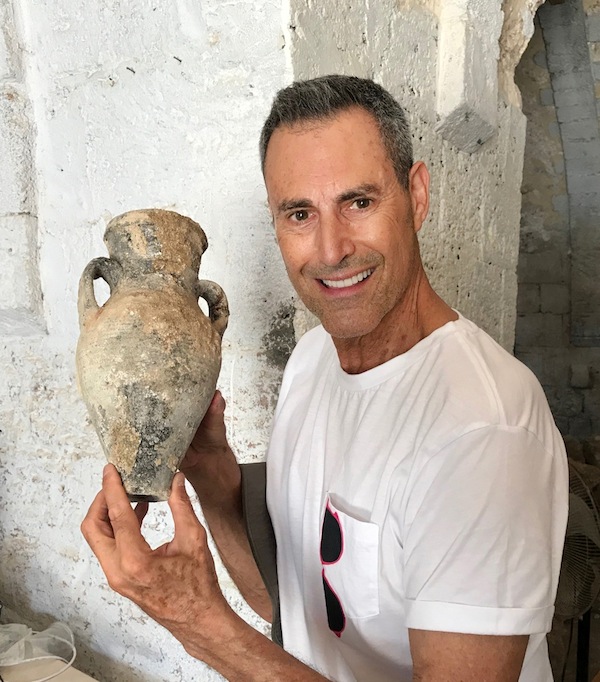
Uri Geller holds a water or oil jug that was found during the construction of a new museum dedicated to his activities. (photo by Dilila Bar-Ratson courtesy Ashernet)

During the construction of a new museum in the Old City of Jaffa, dedicated to the activities of Uri Geller, an illusionist, magician, television personality and self-proclaimed psychic, a 19th-century Ottoman-era soap manufacturing factory was discovered. The museum will go ahead as planned, with the addition of the newly discovered factory.

The site was well-preserved and comprised troughs for mixing raw material, cauldrons, storage facilities and water cisterns. It was of particular interest because soap made from olive oil was recorded as having been produced in Israel for more than a thousand years. Making olive oil-based soap took just over a week to prepare in large vats. The contents would then be poured onto lime-covered trays to cool and solidify for about another week before being cut into bars. It would take another two months approximately for the soap to completely harden before being wrapped in paper and offered for sale.


Vancouverite to serve in IDF

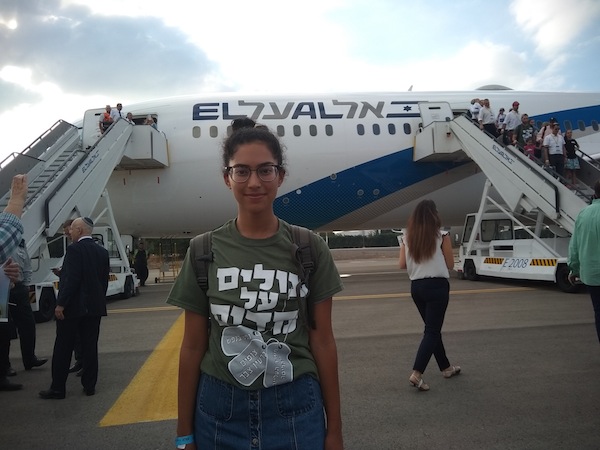
Vancouverite Maya Gur-Arieh was among the 57 soon-to-be-enlisted Israel Defence Forces lone soldiers who landed at Ben Gurion Airport on Aug. 15. (photo by Gil Zohar)

A happy crowd of approximately 2,000 people – family and friends, along with eight members of the Knesset and assorted officials – arrived at Ben Gurion Airport in Israel at 6 a.m. on Aug. 15 to welcome the second plane of Nefesh b’Nefesh olim (immigrants) and returning citizens to touch down this summer. On board were 239 newcomers, including olim hailing from British Columbia, Ontario, Quebec, and 24 American states.

The reception at Terminal 4, a hangar adjoining the tarmac, festooned with banners, featured hora dancing, shofar blowing, tears of joy and shouts of “welcome home” and “mazal tov.” The newcomers varied from babies to retirees, including 30 families, 90 children and three sets of twins. But it was the 57 soon-to-be-enlisted Israel Defence Forces lone soldiers, wearing T-shirts emblazoned in Hebrew with “Ascending to an army uniform,” who garnered most of the accolades.

Among these future IDF soldiers was Maya Gur-Arieh, 18, who was born in Ashkelon but moved with her family to Vancouver when she was six months old. Keen to enlist for the past 24 months, she told the Jewish Independent, “I’m really happy I’m here. I’m really looking forward to my service. I really recommend Garin Tzabar.”

The program, affiliated with the Hebrew Scouts Movement in Israel and largely funded by the Ministry of Immigrant Absorption, facilitates service in the IDF and provides a support system for Israelis and Jews from the Diaspora serving in the army who do not have at least one parent living in Israel.

Lone soldiers receive a higher basic salary from the IDF, as well as financial assistance from the Ministry of Immigrant Absorption and the Ministry of Housing. Lone soldiers in combat units receive a monthly salary of NIS 3,100 ($1,200 Cdn), according to the Garin Tzabar website, and they are given help with housing and the right to extra time off, including 30 days per year to visit family overseas.

Gur-Arieh said she attended four Garin Tzabar programs in San Francisco, at her own expense, in anticipation of joining Zahal, the Hebrew acronym for the IDF.

In heading to Israel, she is following a Gur-Arieh family tradition, she said – her two older sisters both served as lone soldiers, one as an artillery instructor and the other as a combat engineering instructor. Both became officers, she said with pride. One of her sisters is making a career in the IDF.

Gur-Arieh doesn’t know where she will be serving since she hasn’t done the battery of physical and psychological tests that all draftees must complete before being assigned to a unit. Like her sisters, she, too, would like to be an instructor in a combat unit.

Until she is drafted, Gur-Arieh – whose surname means lion cub – will be living at Kibbutz Kissufim on the Gaza periphery. Asked about the tensions in the south and the rockets, mortars and incendiary balloons and kites from Gaza that have targeted her adopted home, she was nonplussed.

Founded in 2002, Nefesh b’Nefesh has assisted in bringing 57,000 Jews to Israel from Canada, the United States and Britain. The organization currently assists 3,200 soldiers in its lone soldier program.

The Aug. 15 Nefesh b’Nefesh charter flight was paid for by Heidi Rothberg of Denver, Colo.

Gil Zohar is a journalist based in Jerusalem.

Benefits from being bilingual

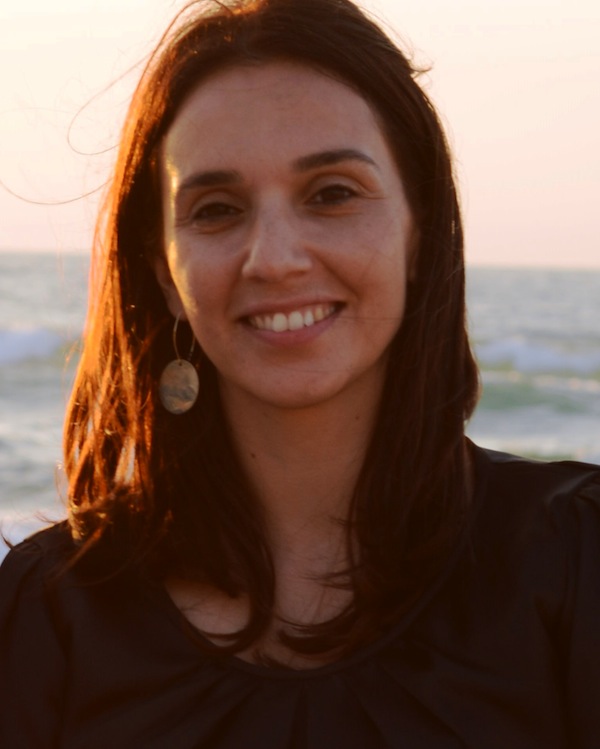
Dr. Carmit Altman of Bar-Ilan University. (photo by Carmit Altman)

“Anna,” a preschooler in the Israeli city of Bat Yam, was thought to be cognitively impaired because testing her in Hebrew showed her cognitive skills lagging behind her classmates. But, when retested in her home language, Russian, she was found to be normal. About half of all Israeli children speak a different language at home than in school, making Israel possibly the world’s best “laboratory” for researching the still little-understood phenomenon of growing up with two or more spoken languages.

One important Israeli discovery is that comparing bilingual kids like Anna to monolingual children is like comparing apples to pears, according to Bar-Ilan University Prof. Sharon Armon-Lotem. For two decades, her lab has studied language-acquisition processes of Israeli preschoolers from English-, Russian- and Amharic-speaking homes.

Roughly 20% of children entering first grade in Israeli secular public schools come from immigrant homes in which the dominant language is not Hebrew. The largest cohort is Russian-speakers, numbering about 1.2 million out of an overall Israeli population of 8.7 million.

Adding more than a million Israeli households where Arabic, Yiddish or African languages are spoken, the percentage of bilingual children climbs to as high as 50% of the general population, Armon-Lotem told Israel21c.

To evaluate bilingualism properly, one must understand that children who grow up speaking two or more languages in everyday life are not using the same brain processes as do monolingual children learning a second language in school, note Armon-Lotem and other Israeli experts. And, if bilingual children like Anna initially have a smaller Hebrew vocabulary, they have better syntax and concept-generation skills in both languages. Overall, they develop language no differently than monolingual peers, unless they have developmental language disorder (DLD).

DLD, estimated to affect five to seven percent of both monolingual and bilingual children, causes dramatic delays in language acquisition not related to other impairments. DLD might manifest differently in each of a child’s two languages, but usually shows up as difficulty with word retrieval and grammar. Since these same phenomena can happen in typically developing bilingual children as they learn the majority language, bilingual children with and without DLD are often misdiagnosed.

Armon-Lotem emphasized that bilingualism does not lead to impairment. From 2009 to 2013, she led a network of researchers from 26 European and five non-European countries in formulating standards for characterizing typical bilingual development and identifying atypical bilingual development in more than 30 language pairs. Research by Natalia Meir in Armon-Lotem’s lab was the first to show that it is possible to disentangle typical and impaired language development, and with 90% accuracy.

“We’ve made a lot of progress in this area in Israel,” said Prof. Joel Walters, professor emeritus of linguistics at Bar-Ilan and now chair of the department of communication disorders at Hadassah Academic College in Jerusalem, which hosts hundreds of specialists at its annual conference on communication disorders in multilingual and multicultural populations.

Walters’ study of the processes underlying how the brain merges two or more languages into a single utterance is informed by recent brain imaging of bilinguals. One of his focuses is “codeswitching,” when a bilingual speaker starts a sentence or word in one language and switches to the other.

“Codeswitching was once thought of as a random phenomenon but actually it’s very systematic and occurs in sentences, phrases and even within words,” Walters told Israel21c. An English-Hebrew bilingual child might tell her sister “muzi,” merging the English word “move” with the Hebrew “zuzi,” for example.

Walters and two co-authors recently published in the International Journal of Bilingualism about their study of Russian-Hebrew bilingual 6-year-olds asked to retell a Russian story to a Hebrew-speaking puppet, a Hebrew story to a Russian-speaking puppet and a codeswitched story to a bilingual puppet. The children were also asked to respond to conversational questions asked in Russian, Hebrew and codeswitched speech about holidays and activities at home and in preschool. In both tasks, the children did more codeswitching from Russian to Hebrew, “because that’s the language of school and street and that’s the language that will help them integrate socially.” However, in children with impaired language development, the directionality is not as predictable, said Walters.

As Israeli researchers formulate better ways of evaluating and treating bilingual children with DLD, Armon-Lotem is planning to establish a global database of voice files sent from clinicians and preschool teachers who work with bilingual children in different language pairs. Data scientists at Bar-Ilan will use new methods in machine learning and big data to better identify existing markers of DLD and possibly find new markers.

Am I Russian or Israeli?

Carmit Altman of Bar-Ilan’s School Counseling and Child Development Programs studies the social impact of growing up bilingual, looking at family language policy – what language parents want their child to speak and how they enforce that preference.

One of her group’s frequently cited studies, published in 2014, examined the language policy of 65 Israeli families raising their children in Russian. They found three main approaches: parents with a strict policy of speaking only Russian at home; parents who don’t forbid Hebrew at home and sometimes encourage it; and those who actively promote both Hebrew and Russian at home for speaking and reading. They predicted that the strictest language policy would result in the best performance in Russian but the middle group performed just as well. Children from this group also showed an advantage in Hebrew in tasks predictive of future Hebrew literacy skills. “In syntax, all the kids did better in Hebrew than in Russian, with no group differences,” Altman said.

Altman’s lab also studies how bilingual children and their parents perceive their children’s language abilities, and their sociolinguistic identity and preferences. They invented a “magic ladder” scale on which preschoolers can attach happy and sad magnet faces to rate their agreement with statements such as “I speak Hebrew well.”

Parents of both English-Hebrew and Russian-Hebrew bilingual children think their children prefer Hebrew, but the kids say they prefer their home language, Altman found. And, while the kids consider themselves hyphenated Israelis, their parents consider them totally Israeli.

There were also differences in performance perception. “In Russian-Hebrew families, both children and parents think the children perform similarly in Russian and Hebrew. In English-Hebrew families, children feel they perform better in English, while parents think the children have similar abilities in both languages,” said Altman.

In collaboration with Armon-Lotem, Altman’s group is developing tools to help researchers understand these differences and to help preschool teachers detect which bilingual children may need a DLD evaluation.

Advantages of bilingualism

The ability to speak more than one language is widely accepted as beneficial in ways from the practical (business, academics, travel) to the medical (possibly delaying symptoms of dementia). When Altman was doing a post-doc in New York, she and her husband spoke Hebrew to their children at home. She feels that raising kids bilingually “is a gift you can give your child for life” and that cross-generational communication is one strong motivation for doing so.

“Having more than one language and more than one culture is definitely a huge advantage in life,” agreed Armon-Lotem.

It is less clear whether bilingualism sharpens “executive functions,” such as shifting attention and inhibiting instructions, as was believed in past decades.

“In one study, we found that English-Hebrew bilingual children with DLD show an advantage in executive function over monolingual children with DLD,” said Armon-Lotem. “But we didn’t find the same in Russian-Hebrew bilinguals. We might be able to find cognitive advantages for certain populations at certain age ranges and within certain tasks.”

Armon-Lotem and her colleagues are beginning to study bilingualism in children with autism and Down syndrome, and will provide tools to help bilingual preschool children, including Eritrean asylum-seekers in Jerusalem, tell coherent stories in Hebrew and their home language.

Israel21c is a nonprofit educational foundation with a mission to focus media and public attention on the 21st-century Israel that exists beyond the conflict. For more, or to donate, visit israel21c.org.

Golden discovery

A Hellenistic-era golden earring, discovered in the Givati Parking Lot in the City of David National Park. (photo from IAA courtesy Ashernet)

A Hellenistic-era golden earring, featuring ornamentation of a horned animal, was discovered in the Givati Parking Lot in the City of David National Park encircling the Old City walls. The discovery was made during archeological digs carried out by the Israel Antiquities Authority and Tel Aviv University. According to the researchers, “It is unclear whether the gold earring was worn by a man or a woman, nor do we know their cultural or religious identity, but we can say for certain that whoever wore this earring definitely belonged to Jerusalem’s upper class. This can be determined by the proximity to the Temple Mount and the Temple, which was functional at the time, as well as the quality of the gold piece of jewelry.”


Raising funds for basics

Phillipa Friedland is trying to raise funds to sustain basic facilities at the Population and Immigration Authority in B’nei Brak, where thousands must go to renew or obtain visas to remain in the country. (photo from gofundme.com/restrooms-for-refugees-israel)

When she left Vancouver for Israel more than a year-and-a-half ago, Phillipa Friedland, 54, became involved in social activism. Today, she is trying to raise funds to sustain basic facilities like toilets and seating at the Population and Immigration Authority (PIBA) in B’nei Brak, where thousands must go to renew or obtain visas to remain in the country. The Independent interviewed Friedland recently to find out more about her involvement.

Jewish Independent: When did you learn about the work of the Population and Immigration Authority?

photo - Phillipa Friedland
Phillipa Friedland (photo courtesy)

Phillipa Friedland: I met an Eritrean refugee at the passport office when my daughter Eli and I lived in Israel in 2014, and we became friends. At the end of February, the Israeli government abruptly closed the South Tel Aviv PIBA office and left a note in Hebrew, not the first language of any refugees, stating that the PIBA office had moved to B’nei Brak, to a very large, barren parking lot in an industrial part of the city. I went with my friend to hand in his form and he waited in line six times, just to hand in the paper.

JI: You’re not happy with the facilities PIBA is providing. Why?

PB: The B’nei Brak municipality refuses to provide shade, toilets, water or seating for those who wait in line. Once refugees gain entry, there are ablution facilities and seating. However, there are approximately 40,000 refugees and the only places to apply for or renew visas are in Eilat and B’nei Brak. Knowing that thousands of people would converge on these centres, the government should have done infrastructural planning to accommodate such numbers.

Activists at the site have confided that, since the government closed the detention centres and refugee prison, they are using PIBA as a “soft” place to repel the refugees. They can no longer threaten them with prison or repatriation to a third African country, since these negotiations fell apart when it was revealed that these are not safe-haven countries for refugees. So, the goal is for the refugees to become so frustrated and disheartened by the visa process that they will voluntarily leave.

JI: How many asylum seekers are using PIBA in B’nei Brak, and where are they from?

PB: Most Sudanese have left Israel, so most of the PIBA users are from Eritrea. Some days, there are over 1,000 people there, though, in recent days [in late May], the number has dropped dramatically, as more refugees are given visas. Families are provided with six-month visas and single men are given two-month visas. They are required to take off work and are not paid when they leave to wait for a visa. By contrast, in many countries, a visa application can be obtained online.

JI: Are these asylum seekers also refugees, or a mixture of both?

PB: The Israeli government says they are all economic migrants. It has granted asylum to 11 people – a very poor showing for a country of refugees ourselves. The government … considers them infiltrators. In fact, the education minister declared openly on public TV that the migrants are infiltrators. It stuns me that a nation that promised to never forget has an education minister that has forgotten the persecution the Jews experienced.

JI: What are you doing at PIBA?

PB: After visiting the PIBA in B’nei Brak, I was compelled to take action. I was reviled by apartheid South Africa, and taught about the perils of discrimination and racism for 15 years at the Vancouver Holocaust Education Centre. I could not just watch quietly.

I decided to sponsor two toilets for a month in the barren parking lot where the refugees line up. These cost $600 per month. I also bought 10 benches, seating for only 50 people. Unfortunately, this is all that I could personally afford.

The toilets were so direly needed that, after three days at the site, I paid additional fees to have them emptied, as the company I lease them from only empties them once a week. Myself and an Eritrean lady, Sabrina, clean them when we are on-site, replenish the toilet paper and spray them with toilet spray.

I realized that I could not sustain this expense every month on my own, as I am an immigrant and earn a salary commensurate with working in a nonprofit organization. So I decided to start a GoFundMe Campaign called “Restrooms for Refugees.” So far, I have raised [almost $3,000]. The Good People Fund run by Naomi Eisenberg in New Jersey is donating $1,800 over three months. [gofundme.com/restrooms-for-refugees-israel]

The B’nei Brak site has been running very effectively thanks to amazing Eritrean volunteers who ensure the lines run smoothly and that people get a turn. One of them is Michael, who left Eritrea after 15 years in forced military conscription; he had 10 years still to complete. His back has many scars from being tortured in the military. He left his wife and four children behind and hopes to come to Canada, where his brother is living.

JI: What do you want Jewish Vancouverites to know about this? Why is it important to you personally, and why should it be important to us?

PB: I believe that, as Diaspora Jews, we have rose-coloured glasses on when it comes to Israel. I love and support Israel, however that does not mean I support racist and discriminatory government policies. Eighteen Jewish U.S. Democratic senators spoke out about Israel’s refugee policy and 400 rabbis, pilots, teachers and other groups spoke out vehemently against the deportation policy the government was adopting. Since Israel first accepted and then rejected the UN’s offer to Israel regarding the refugees, there has been no new Israeli policy. The refugees essentially live in limbo, renewing their visas and being treated with no dignity.

I believe we should treat everyone with dignity. I know that, being such a small country, Israel cannot open its doors to an unlimited number of people. However, those strangers within our Jewish borders should be treated with care, as commanded 37 times in the Torah.

Lauren Kramer, an award-winning writer and editor, lives in Richmond. To read her work online, visit laurenkramer.net.

Archeological cliff-hanger

Dr. Yinon Shivtiel, left, and Dr. Danny Syon inside the cave where large wine jars, a cooking pot and other pottery more than 2,000 years old were salvaged two weeks ago in a joint operation of the Sefad Academic College, the Israel Antiquities Authority (IAA), the Israel Cave Research Centre and the Israel Cave Explorers Club. (photo by IAA from Ashernet)

photo - The pottery was found in a cave high on a sheer cliff, under an overhang
The pottery was found in a cave high on a sheer cliff, under an overhang. (photo by IAA from Ashernet)

In 2017, Dr. Yinon Shivtiel, a speleologist and senior lecturer at Sefad, conducted a survey in Western Galilee, aided by the Israel Nature and Parks Authority, to locate caves that served as shelters and hiding places. He discovered a cave high on a sheer cliff, under an overhang, which contained ancient pottery vessels. “As a first impression,” said Dr. Danny Syon, senior archeologist with the IAA, “the finds seem to date to the Hellenistic period: between the third and first centuries BCE…. We assume that whoever hid here escaped some violent event that occurred in the area. Perhaps by dating the vessels more closely, we shall be able to tie them to a known historic event. It is mind-boggling how the vessels were carried to the cave, which is extremely difficult to access. Maybe an easier way that once existed disappeared over time?”

Height of celebration

Feeding time for the giraffes in Ramat Gan Safari Park on June 21, which was World Giraffe Day. (photo from Ashernet)

It is no coincidence that the day to raise public awareness of the tallest animal on earth takes place on the longest day of the year, at least in the northern hemisphere. In the world, there are nine sub-species of giraffes, all of which are categorized as endangered. Seven giraffes live in the Safari Park: Denisa, Daniela, Dikla, Diana, Dedi, Anton and Dadon. This year, Denisa, the Dutch-born giraffe who came to the safari when she was just 2 years old, broke a record when she passed the age of 28, becoming the oldest giraffe in any zoo.