Teaching entrepreneurship

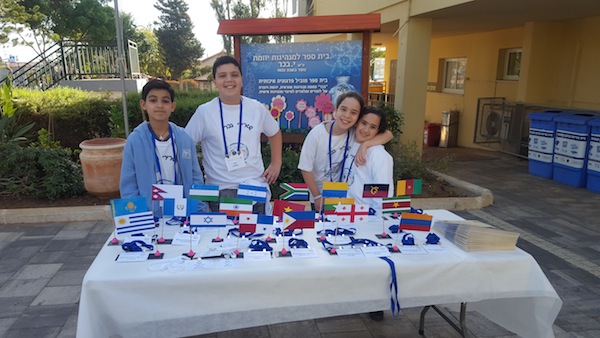
Students at the Bachar school in Even Yehuda, which educates for leadership and entrepreneurship, prepare to welcome a delegation of educators from developing countries, who came to learn how Israeli schools educate for entrepreneurship. (photo from Galit Zamler)

For Galit Zamler, a course that began as a volunteer position at one school has become a full-time job, with more and more schools picking up her program.

In 2009, when Zamler’s third child was in Grade 6, his school principal wanted to have an after-school activity. She brought representatives of a company that was not only expensive to hire, but would only present to outstanding students, and required at least 20 of them.

Seeing the value of educating kids about entrepreneurship, Zamler – who has an MBA and has co-founded two businesses – told the principal that she would do such a presentation at no charge, as long as her son could be one of the participants. A month later, Zamler was teaching her first group of 12 children. She knew she was onto something great after she had sent the students’ parents notes about what was being taught, and the parents responded with thank you letters.

Word spread and, after volunteering for six years, Zamler turned her volunteer work into a full-time career. Now, 10 years into it, she said, “At the beginning of the course, I’d count each one of them, but now there are a lot of schools and there’s awareness of the need to teach entrepreneurship. I don’t need to go and try to convince anyone. They are going out looking for it.”

One of the first things Zamler teaches is that there are different kinds of entrepreneurs. It is not strictly about entrepreneurs of technology or inventions, and it is not just about opening a business. Students are taught that, to succeed, one must stand out from others – be creative and make their initiative unique.

“Then, they raise ideas and learn that there are no bad ideas,” said Zamler. “Each idea can be good and that’s how we do it. Being critical will prevent others from raising ideas. It’s very important that the class be open-minded and let everyone, whatever their idea, say it aloud and learn to explain it. Sometimes, what they have in their head is not clear to the others. They learn to stand in front of the class and explain their ideas.

“It’s not that every idea is great,” she clarified. “It’s just that we won’t criticize ideas. We ask questions to understand, and we discuss what difficulties we see in ideas – things like, how much it will cost, who will need it, to take a good look at it.

“Sometimes, this makes the student drop an idea, because they understand it can’t be implemented…. For example, there was a student who said she wanted every student to have a cupboard in the class to put their books into. The kids asked where she would put them, with very little space. And, she realized it couldn’t be done.”

photo - Sixth graders at the Hayovel school in Ashdod present their social project: A Birthday to Everyone
Sixth graders at the Hayovel school in Ashdod present their social project: A Birthday to Everyone. (photo from Galit Zamler)

Once all the ideas are shared with the class, students start to determine which ones they like the most and come up with business plans – tackling the process like a cake recipe, considering which ingredients they will need to bring their concepts to life. This includes the physical elements, as well as how to make their business unique, part of which involves seeking advice from experts in various fields to see if any changes might be needed.

Only then do the students try to implement their project, which can sometimes be as simple as composing a letter to the municipality.

“I have a school that wanted to have a gym,” said Zamler. “But, the school is small and there’s no place. So, they wrote a letter. The municipality sent an expert to explain why it can’t be done, but gave them money to buy equipment for activities they can move from place to place; using it outside and bringing it back inside as needed. And, they were satisfied with this.”

The curriculum is offered to grades 2 through 9 in Israel and it is funded in part by the government, as principals are allowed some leeway to allocate funds as they see fit within a list of external programs pre-approved by the Ministry of Education.

“Sometimes, they teach it as a science class,” said Zamler. “Other times, it is categorized as a life skills lesson in the curriculum … and, when the school principal thinks it’s important, he or she finds a way.”

Zamler – and other parents – consider the entrepreneurship course a great addition to what is being taught in school, as it will help in practically every aspect of life.

“I think, sometimes, it’s the parents that bring the program to the schools, because they know that children learn something useful for life … not just the ordinary curriculum,” which includes things that may not “help them when they grow up, as things change so quickly,” said Zamler.

Even armed with this entrepreneurial knowledge, Zamler acknowledged that the overwhelming majority of students – 90% to 95% – will end up as employees. But, she is hoping they will be leader employees.

“I was an employee with entrepreneur skills, and that’s what helped me go from the bottom up to management,” she said. “Being an entrepreneur in an organization means that you think big, you do more than you are told. Those are the kinds of workers we need in the workforce.”

While Zamler has not yet conducted follow-up studies on the students who have taken the program, other countries are taking note and looking for ways to implement the program in their own schools.

“The foreign office brings delegations to Israel twice a year and takes them to a school that educates for entrepreneurship,” said Zamler. “And what we see is that, instead of students who don’t like to go to school, we see students who are really enjoying their time in school, because they have choices.

“The army is also looking for these kinds of students…. If they don’t have these kinds of skills – persistence, creativity, and working on team goals – the army doesn’t want them. We know it helps them in the future, in the army and, I think, the workforce.”

The Hebrew Academy in Miami Beach was the first school outside of Israel to implement the program. Also, a company from Hong Kong has purchased the licence to bring the program there.

“They do amazing things there and they’re opening more and more classes,” Zamler said of Hong Kong. “But, there, it is an after-school activity, because it’s hard to bring it into the public school curriculum.”

Zamler has created an online training program for both students and teachers wanting to bring entrepreneurship into their school. For more information, visit tomorrowsuccess.com.

Rebeca Kuropatwa is a Winnipeg freelance writer.

Museum of Babylonian Jewry

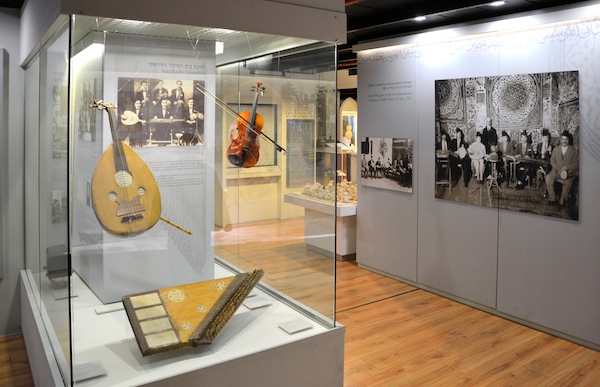
Between 1948 and 1951, more than 121,000 Jews were smuggled out of Iraq in operations Ezra and Nehemia. Many of those who came to Israel settled in the town of Or Yehuda, some 10 kilometres southeast of Tel Aviv. In 1988, Or Yehuda’s mayor, Mordechai Ben-Porat, who was himself born in Iraq, was instrumental in creating in the town the Museum of Babylonian Jewry. Together with six other founding members, the museum was built to tell the story of the Jews in Iraq, up until the aliyah following the establishment of the state of Israel. The museum has become the largest centre in the world for documenting, researching, collecting and preserving the spiritual treasures of Babylonian Jewry. (photo by Ashernet)

Tiferet Yisrael to be rebuilt

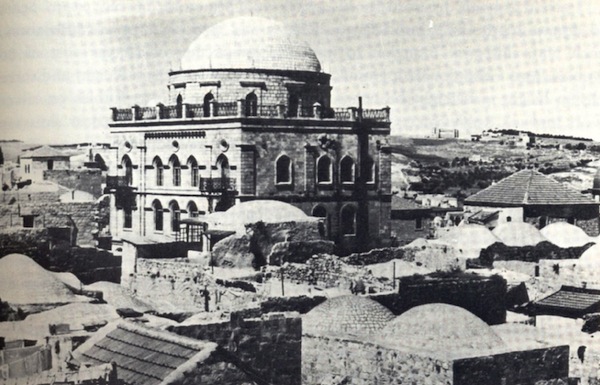
The landmark synagogue before being dynamited by Jordan’s Arab Legion in 1948. (photo from Wikipedia)

A cornerstone laying ceremony was held May 29, 2014, for the rebuilding of the Old City of Jerusalem’s Tiferet Yisrael Synagogue, which was dedicated in 1872 and dynamited by Jordan’s Arab Legion in 1948.

Speaking nearly five years ago, then-Jerusalem mayor Nir Barkat declared, “Today we lay the cornerstone of one of the important symbols of the Jewish community in Jerusalem. The municipality attaches great importance to the preservation and restoration of heritage sites in Jerusalem, and we will continue to maintain the heritage of Israel in this city.”

Citing Lamentations 5:21, Uri Ariel, housing minister at the time, added, “We have triumphed in the laying of yet another building block in the development of Jerusalem, a symbolic point in the vision that continues to come true before our eyes: ‘Renew our days as of old.’”

The two politicians symbolically placed a stone salvaged from the ruined building, and construction was supposed to take three years, according to the Company for the Reconstruction and Development of the Jewish Quarter in the Old City of Jerusalem Ltd. (JQDC), a public company under the auspices of the Ministry of Construction and Housing.

Fast forward to Dec. 31, 2018, and the exercise was repeated, this time with the participation of Jerusalem minister Zeev Elkin, construction minister Yoav Galant, deputy health minister Yaakov Litzman and Jerusalem Mayor Moshe Leon. But, this time, according to the JQDC, much of the project’s NIS 50 million (approximately $18 million Cdn) budget has been secured, in part thanks to anonymous overseas donors. With the Israel Antiquities Authority’s salvage dig of the Second Temple period site headed by Oren Gutfeld completed, work can now begin in earnest.

Fundraising to purchase the land for the Tiferet Yisrael, also known as the Nisan Bak shul, was initiated in 1839 by Rabbi Israel Friedman of Ruzhyn, Ukraine, (1797-1850) and his disciple Rabbi Nisan Bak, also spelled Beck (1815-1889). While der Heiliger Ruzhiner (Holy Ruzhyner), as his Chassidim called him, purchased the hilltop in 1843, the mystic didn’t live to see construction begin.

photo - A model of Tiferet Yisrael
A model of Tiferet Yisrael. (photo from Jerusalem Municipality)

His ambitious plans in Jerusalem reflected his grandiose lifestyle in Sadhora, Bukovina, in Galicia’s Carpathian Mountains, pronounced Sadagóra in Yiddish. There, he lived in a palace with splendid furnishings, rode in a silver-handled carriage drawn by four white horses and, with an entourage, dressed like a nobleman, wore a golden skullcap and clothing with solid gold buttons, and was attended by servants in livery. This unusual manner was accepted and even praised by many of his contemporaries, who believed the Ruzhiner was elevating God’s glory through himself, the tzadik (righteous one), and that the splendour was intended to express the derekh hamalkhut (way of kingship) in the worship of God.

In one incident, described in David Assaf’s The Regal Way: The Life and Times of Rabbi Israel of Ruzhin (Stanford University Press, 2002), the Ruzhiner’s Chassidim noticed that, notwithstanding that their rebbe was wearing golden boots, he was leaving bloody footprints in the snow. Only then did they realize that the gold was only a show and his shoes had no soles. Indeed, he was walking barefoot in the snow.

Rabbis Friedman and Bak were motivated by a desire to foil Czar Nicholas I’s ambitions to build a Russian Orthodox monastery on the strategic site overlooking Jerusalem’s Temple Mount. Bak consulted with architect Martin Ivanovich Eppinger. (Eppinger also planned the Russian Compound, the 68,000-square-metre fortress-like complex erected by the Imperial Russian Orthodox Palestine Society west of the Jaffa Gate and outside the Old City, after the czar was outmanoeuvred by the Chassidim.)

Bak, who both designed the massive synagogue and served as its contractor, spent more than a decade fundraising and six years building it. Inaugurated on Aug. 19, 1872, he named the three-storey landmark in honour of his deceased rebbe.

According to a perhaps apocryphal story, the quick-witted Bak was able to complete the ornate synagogue thanks to a donation from Kaiser Franz Joseph of Austria-Hungary. In 1869, while visiting Jerusalem en route to dedicate the Suez Canal, the emperor asked his subjects who came from Sadhora in the remote Austrian province of Bukovina why their synagogue had no roof. (In 1842, having spent two years in Russian prisons on charges of complicity in the murder of two Jewish informers, Rabbi Friedman fled to Sadhora and reestablished his resplendent court.)

Seizing the moment, Bak replied, “Your majesty, the synagogue has doffed its hat in your honour.” The kaiser, understanding the royal fundraising pitch, responded, “How much will it cost me to have the synagogue replace its hat?” and donated 1,000 francs to complete Tiferet Yisrael’s dome, which was thereafter referred to by locals as “Franz Joseph’s cap.”

Tamar Hayardeni, in “The Kaiser’s Cap” (published in Segula magazine last year), wrote that, while the kaiser made a donation, the dome was in fact completed with funds provided by Rabbi Israel of Ruzhyn’s son, Rabbi Avrohom Yaakov of Sadhora (1820-1883).

In the winter and spring of 1948, the dome served as a key Haganah military position and lookout point for the Jewish Quarter’s outgunned defenders.

Children were recruited for the battle for Tiferet Yisrael. Some as young as 9 built defence positions. The “older” ones – 12 or so – carried messages, food, weapons and ammunition. Some were killed, including Grazia (Yaffa) Haroush, 16, and Nissim Gini, 9, who was the youngest fallen fighter in the War of Independence. Like the others who fell in the defence of the Jewish Quarter and were buried there, his remains were exhumed after 1967 and reinterred on the Mount of Olives.

Badly damaged by heavy shelling, the synagogue was blown up by Jordanian sappers on May 21, 1948. A few days later, following the neighbourhood’s surrender on May 25, the nearby Hurva Synagogue – the main sanctuary of Jerusalem’s mitnagdim (anti-Chassidic Ashkenazi followers of the Vilna Gaon) – met the same fate.

With the rebuilding of the Hurva completed by the JQDC in 2010, Tiferet Yisrael became the last major Old City synagogue destroyed in 1948 not rebuilt.

Hurva is a stone-clad, concrete and steel facsimile of its original structure, updated to today’s building code and equipped with an elevator. The same is planned for Tiferet Yisrael.

The reconstruction of faux historic synagogues has not been without critics. Writing in the Forward in 2007 as the Hurva was rising, historian Gavriel Rosenfeld, co-editor of Beyond Berlin: Twelve German Cities Confront the Nazi Past (University of Michigan Press, 2008), noted the manifold links between architecture, politics and memory.

“The reconstruction of the Hurva seems to reflect an emotional longing to undo the past. It has long been recognized that efforts to restore ruins reflect a desire to forget the painful memories that they elicit. Calls to rebuild the World Trade Centre towers as they were before the Sept. 11, 2001, attacks represent a clear (if unrealized) instance of this yearning. And the recently completed reconstruction of Dresden’s famous Frauenkirche – long a heap of rubble after being flattened by Allied bombers in February 1945 – represents a notable example of translating this impulse into reality.

“And yet, the reconstruction project is problematic, for in seeking to undo the verdict of the past, the project will end up denying it. Denial is inherent in the restoration of ruins, as is frequently shown by the arguments used to justify such projects. In Dresden, for example, many supporters of the Frauenkirche’s restoration portrayed themselves as the innocent inhabitants of a city that was unjustly bombed in 1945, thereby obscuring the city’s longtime support for the Nazi regime and its war of aggression during the years of the Third Reich. Similarly, the physical appearance of the restored Frauenkirche – despite its incorporation of some of the original church’s visibly scorched stones – has effectively eliminated the signs of the war that its ruin once vividly evoked.

“In the case of the Hurva,” writes Rosenfeld, “the situation is somewhat different. If many Germans in Dresden emphasized their status as victims to justify rebuilding their ruined church, the Israeli campaign to reconstruct the Hurva will do precisely the opposite – namely, obscure traces of their victimization. As long as the Hurva stood as a hulking ruin, after all, it served as a reminder of Israeli suffering at the hands of the Jordanians. [Mayor Teddy] Kollek said as much in 1991, when he noted: ‘It is difficult to impress upon the world the degree of destruction the Jordanian authorities visited upon synagogues in the Old City…. The Hurva remnants are the clearest evidence we have today of that.’ Indeed, as a ruin, the Hurva served the same kind of function as sites such as Masada and Yad Vashem – which, by highlighting the tragedies of the Jewish past, helped to confirm the Israeli state as the chief guarantor of the Jewish people’s future.

“At the same time, however, it seems the Hurva’s existence as a ruin conflicted with the state of Israel’s Zionist master narrative: the idea that, ultimately, heroic achievement triumphs over helplessness. In fact, in the end, it may be the project’s ability to confirm the national desire to control its own destiny that best explains its appeal. Israel faces many intractable problems that make present-day life uncertain. But, in the realm of architecture, Israelis can indulge in the illusion that they can at least control and manipulate the past. In this sense, the Hurva’s reconstruction may express deeper escapist fantasies in an unpredictable present.”

Rosenfeld’s theorizing about architectural authenticity made little impression on the JQDC chair, Moti Rinkov. Indeed the JQDC, together with the Ben-Zvi Institute, recently published High Upon High, in which 12 historians trace Tiferet Yisrael’s history. Rinkov noted at the second cornerstone ceremony: “The renovation and restoration of the Tiferet Yisrael Synagogue in the Jewish Quarter is one of the most important and exciting projects I’ve taken part in. Rebuilding the synagogue is, in fact, raising the Israeli flag in the Jewish Quarter. It’s truly a work where they’re restoring the crown to its former glory and restoring glory to the Jewish people.”

The rebuilt Tiferet Yisrael, together with the Hurva, will engage Jerusalem’s skyline not as authentic landmarks but, as Rosenfeld noted, “postmodern simulacrum.”

The other Tiferes Yisroel

In 1953, Rabbi Mordechai Shlomo Friedman, the Boyaner Rebbe of New York, laid foundations for a new Ruzhiner Torah centre in west Jerusalem to replace the destroyed Tiferet Yisrael. Located on the western end of Malkhei Yisrael Street between the current Central Bus Station and Geula, the downtown of the Charedi city, the Ruzhiner yeshivah, Mesivta Tiferes Yisroel, was inaugurated in 1957 with the support of all of the Chassidic rebbes descended from Friedman, who was the first and only Ruzhiner Rebbe. However, his six sons and grandsons founded their own dynasties, collectively known as the “House of Ruzhin.” These dynasties, which follow many of the traditions of the Ruzhiner Rebbe, are Bohush, Boyan, Chortkov, Husiatyn, Sadigura and Shtefanest. The founders of the Vizhnitz, Skver and Vasloi Chassidic dynasties were related to the Ruzhiner Rebbe through his daughters.

A grand synagogue built adjacent to the new Ruzhiner yeshivah also bears the name Tiferes Yisroel. The current Boyaner Rebbe, Nachum Dov Brayer, leads his disciples from there. The design of the synagogue includes a large white dome, reminiscent of the original Tiferet Yisrael destroyed in 1948 and now being rebuilt.

Gil Zohar is a journalist based in Jerusalem.

Dealing with the water crisis

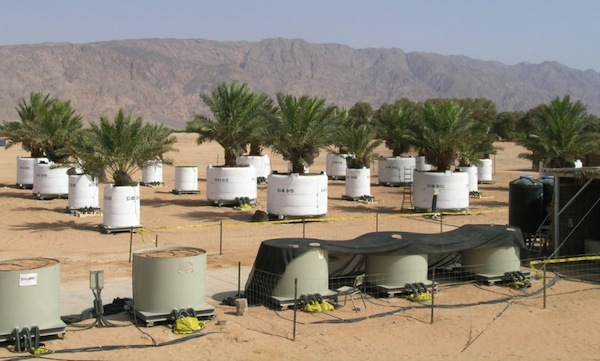
An experimental date palm orchard in the southern Arava Valley, where water consumption and response to salinity is monitored. Based on data measured in these lysimeters, local farmers are advised on recommended quantities of irrigation water daily. (photo from Zehava Yehuda)

“Growing up in Israel, I have been aware of the water problem [since] quite early in my childhood,” said Dr. Zehava Yehuda. “When I graduated, however, the country was still relying mostly on rain. We could still expect rain-blessed years, and the Sea of Galilee to overflow occasionally.”

Over the last two decades, however, only once has there been a year with enough rain to allow for the opening of the Degania Dam, which regulates water levels in the Sea of Galilee (the Kinneret) and the lower Jordan River.

Yehuda spoke on Nov. 27 at a Winnipeg Friends of Israel event at the city’s Temple Shalom. She recently moved to Winnipeg with her family and is currently working at the local Jewish National Fund office as program and communications coordinator, while searching for a research position.

“I graduated from the Hebrew University, faculty of agriculture, department of soil and water, worked on iron uptake in plants, and did post-doctoral studies on phytoremediation of soils contaminated with heavy metals,” said Yehuda. “Phytoremediation is the use of hyper-accumulator plants that tolerate and are able to absorb high concentrations of specific metals.

“I worked as a lab manager and associate researcher at the HU, and as a soil and water researcher at the Centre for Agricultural Water Use Efficiency Research, Southern Arava Research and Development Experimental Station, Yotveta.”

According to Yehuda, soil and water are fundamental resources affecting all forms of life, food security and ecosystem sustainability.

Israeli water authorities have been streamlined to funnel through one office to simplify management and five large-scale desalination plants have been built, she said. Desalinated water now accounts for about 85% of domestic urban water. However, the plants were built late in the crisis.

“Israel is facing a five-year drought that is depleting the country’s most important bodies of water and deteriorating their quality,” said Yehuda. “Israel had not foreseen a sequence of arid years like this.

“The cumulative deficit in Israel’s renewable water resources before the current rain season amounts to approximately two billion cubic metres – an amount equal to the annual consumption of the entire state.

“There are many reasons for the current water situation,” she said. “First, Israel is situated in an arid region, where 60% of the county is desert. Meanwhile, population growth and standard of living have grown significantly.

“This not only has dramatically increased water consumption, but it has also aggravated the load on the coastal aquifer, one of the three major water resources in the country. Israel has also committed by peace treaties to transfer about 85 MCM [million cubic metres] to Jordan and the Palestinians … and, in fact, it transfers much more.

“Most of the water consumption in the world is used for irrigation. Israel has been recycling water for agriculture for decades. About 90% of fresh water is reused.

photo - Water scientist Dr. Zehava Yehuda speaks at a Winnipeg Friends of Israel event Nov. 27
Water scientist Dr. Zehava Yehuda speaks at a Winnipeg Friends of Israel event Nov. 27. (photo from Zehava Yehuda)

“Since the invention of drip irrigation in Israel, efforts have been directed to improving drippers, irrigation regimes and understanding plants’ actual water consumption to efficiently use water in agriculture.”

Further to this, Israel focused on innovative technologies to turn an older, expensive desalination solution into a more practical one, by improving the membranes that remove the salt and reducing the energy needed to run the plants.

“As of today, about 40% of drinking water in Israel is supplied as desalinated seawater, and this percentage is expected to grow even more,” said Yehuda.

Because the membranes also strip the water of other essential nutrients, she said Israel’s water authorities have been supplementing the desalinated water with, for example, “magnesium, a mineral critical for proper heart functioning, among other functions,” but it is expensive to do so and “[a]dding it to all desalinated water would significantly raise its cost.”

Another concern with desalination is that the brine (removed salt) is being returned to the sea, and the ecological implications for the sea are not fully known.

“With all this desalinated water available, both the population and the Israeli authorities wrongly assumed that Israel had solved her water problems, and that saving water was no longer a necessity,” said Yehuda. “The authorities have since changed their position back to the need to save water.”

Plans have recently been approved to build more desalination plants to better meet the growing need for water during the dry months and to redirect unused desalinated water during the winter months to the Sea of Galilee; in a sense, using the lake as a reservoir.

“The current crisis has led to the realization that a comprehensive master plan for policy and for institutional and operational changes is required to stabilize the situation, and to improve Israel’s water balance with a long-term perspective,” said Yehuda.

“Despite the fact that water pumping from the Kinneret was massively reduced, I do not expect water levels to return to what they were 15 years ago when Lake Kinneret – Israel’s biggest fresh water source – and underground aquifers were full. Hopefully, resources will not continue to deteriorate.”

Yehuda provided a rundown of the different water-related experiments with which she has been involved, including an experimental date palm orchard in the southern Arava Valley, where water consumption and response to salinity is monitored. Based on the data collected, local farmers are advised on recommended quantities of irrigation water daily.

Event attendee Carina Blumgrund said, “We all know that Israel is at the forefront of developing smart resources to irrigate, and that they had done drip systems and are always trying to research how to be proactive, like taking advantage of the heat to have off-season production and export to Europe … but we don’t really know about the details…. It was really interesting hearing about current issues. I had no idea about water levels…. And I didn’t know about the treaties, about sharing with neighbours.”

Rebeca Kuropatwa is a Winnipeg freelance writer.

Whisky’s ready to be poured

Milk and Honey Distillery was established in 2012. (photo by Dave Gordon)

The Milk and Honey Distillery’s first three-year-old batch of whisky is about to be officially tapped, to appear in 150 locations across Israel, as well as the Netherlands, Belgium and Luxembourg. And plans are in the works to bring the product to North America. Current output is estimated at about a million bottles.

Milk and Honey’s founders sought to piggyback on what appears to be a trend of people wanting to try certain drinks from places that are not typically known for making them.

“Whisky consumption is seeing a big shift happening all over the world now,” Milk and Honey chief executive officer Eitan Attir told the Independent.

For decades, four countries have ruled the whisky industry – Ireland, Scotland, United States and Canada. But many customers are seeking uniqueness.

“It’s what we call a ‘new world’ whisky,” said Attir. “So, now you can find more and more countries, that never had a history of whisky, doing it.”

Proof of Israel’s new world whisky popularity was evident even before the first ounce of Milk and Honey’s product was officially available. In 2017, the distillery filled 391 bottles with its initial three-year-old whisky single malt. Head distiller Tomer Goren created the batch in his workshop, and it was aged in the distillery.

Bottles numbered 1 through 100 were sold on the Whisky Auctioneer website and more than 30,000 people bid on the bottles. The “number one” bottle was bought for $3,000 US and number two, about $2,500 US. The rest were sold for about $750 US each. Stock sold out in three months.

“That was a huge surprise, not only business-wise, but also the attention it got,” Attir said. Several media took notice: the New York Times, Boston Herald, CNBC and NBC, among others.

Fast forward a year to 2018, and the company’s “triple cask” – a combination of previously red wine, bourbon and Islay barreled whisky – won best in show and second place at Whisky Life Tel Aviv. Its competitors were 15-, 18- and 20-year-old beverages from many different popular brands.

How Milk and Honey got there was as much a blend of perfect ingredients as a premier blended whisky.

In 2012, the company was started by Gal Kalkshtein, Milk and Honey’s owner, and five friends, all previously in the Israeli tech and startup industry. With their million-dollar investment, the friends turned a former bakery into a distillery in 2014. (For more on the distillery, see jewishindependent.ca/israels-first-whisky-distillery.)

“We were the first ones here, so there really was no one to ask about how to build a distillery. So, they traveled all around Scotland and studied a lot,” said Gal Levin, manager of the visitor centre, who oversees business development.

Then came the parts: a tailor-made whisky pot still and a vintage still, each constructed in accordance with Scottish coppersmith tradition. The wash drum was found online, on a German website – it was sitting in a barn in Romania (Transylvania, to be exact).

“The guys traveled all the way there to see it and buy it,” said Levin. “They weren’t sure it was going to work. They bought it, brought it here, and fixed it. We still don’t know who made it and for what. It’s mysterious. It’s working, and that’s the most important thing.”

During renovations, they began tinkering with what recipes to use. In 2013, they hired two professionals. One was Scottish master distiller Dr. James Swan, who guided the company on research and development. His experience included advising distilleries and brands all over the world, from Jim Beam to Chivas. As well, he had expertise in aging and distilling in other hot climates, like Taiwan and India.

The second person hired was Goren, who was studying for his master’s distiller degree in Scotland. (He is also a judge at international whisky competitions.)

“We chose to adopt very strict regulations of the Scottish method, that allows us to connect with the Scottish tradition, and also so our whisky will be considered ‘whisky’ in many places around the world,” said Levin.

photo - Milk and Honey Distillery makes whisky, gin and a liqueur
Milk and Honey Distillery makes whisky, gin and a liqueur. (photo by Dave Gordon)

Whisky, by definition, is made with four ingredients: malted barley, yeast, water and the barrel. Milk and Honey maintains the tradition, with no added ingredients. Barrel selection included casks previously used for bourbon, a collection of new oak barrels, and former wine barrels (all kosher).

“We are aging for a minimum of three years before we call the product ‘whisky.’ That’s an important rule. Of course, in Scotland, the whisky is called ‘scotch.’ We don’t do that,” said Levin.

As an added plus, Israel’s climate allows for relatively quicker fermentation, up to two and a half times faster than that of Scotland, according to Milk and Honey. That means an Israeli three-year bottle might taste like a six-year bottle from the Highlands.

And Milk and Honey doesn’t only make whisky – they also produce gin and a liqueur.

The gin is spiced with and inspired by Israeli ingredients. The Levantine gin, for example, contains za’atar, orange slices, lemon peels, black pepper, cinnamon, chamomile and lemon verbena. The Roots liqueur has typical Holy Land flavourings: almond, savory, coriander, jasmine, tarragon, thyme and cardamom.

With all of this deliciousness, that’s something to say “l’chaim” to!

Dave Gordon is a Toronto-based freelance writer whose work has appeared in more than 100 publications around the world.

Inukshuk in Jerusalem

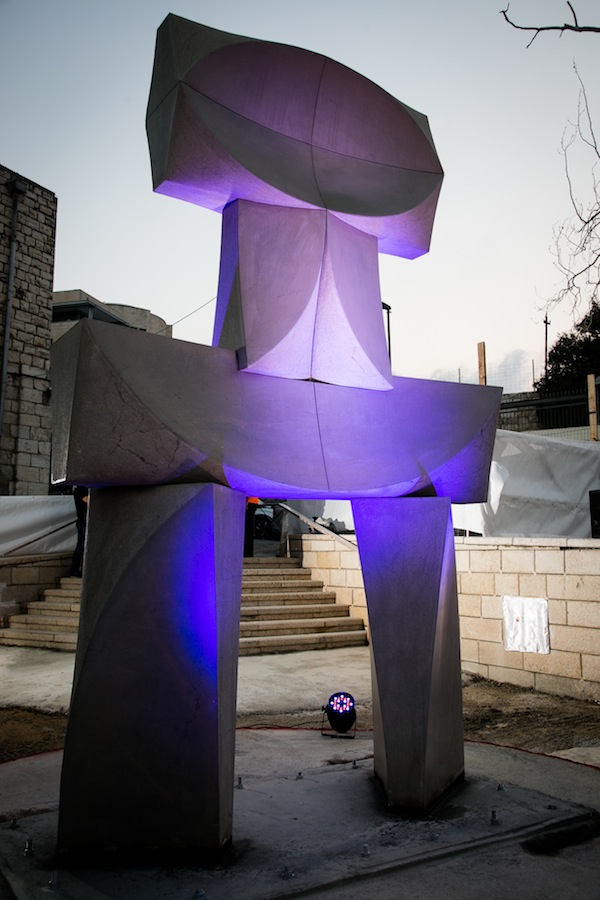
Jerusalem sculptor Israel Hadany’s modern interpretation of the First Nations beacon. (photo from Jerusalem Foundation)

The Inuit, Iñupiat, Kalaallit and Yupik peoples of the Arctic region of Canada, Greenland and Alaska built inukshuks with granite boulders to warn against danger, mark a hunting or fishing site, or stand as a direction marker. Like the traditional inuksuit erected in the treeless tundra, Jerusalem sculptor Israel Hadany’s modern interpretation of the First Nations beacon serves as a marker symbolizing friendship, family and hospitality, humankind’s responsibility toward one another.

On Oct. 17, Hadany’s four-metre-high limestone inukshuk sculpture was installed at the entrance to Canada House in downtown Jerusalem’s Musrara neighbourhood.

Hadany was the winner of a design competition celebrating 50 years of the reunification of Jerusalem, since the 1967 Six Day War. Toronto lawyer Lewis Mitz, president of the Jerusalem Foundation of Canada, initiated the challenge as part of a $4 million renovation of the Canada House community centre on Shivtei Yisrael Street, a location that is becoming increasingly popular with film and art students. Four other Israeli artists were invited to participate: David Gershoni, Ruslan Sergeev, Yisrael Rabinowitz and Ellia Shapiro. The competition jury that selected the winning design included representatives from the Jerusalem Municipality, the Israel Museum, the Jerusalem Foundation and local residents.

Toronto lawyer Lewis Mitz, president of the Jerusalem Foundation of Canada, who initiated the art competition. (photo from Jerusalem Foundation)

“The inukshuk is a communication structure. Providing vital information for people to survive in the frozen Arctic; it isn’t merely a statue, rather an enchanted entity that guides man and seals his fate,” explained Hadany in a press release. “The sculpture tries to create a fascinating synthesis between the primordial and the innovative, between the formulated esthetics and magic.”

Inukshuk, he explained in his remarks at the unveiling of the sculpture, means “helper.”

The sculptor and environmental artist insisted his inukshuk be positioned alongside the street rather than in the courtyard of Beit Canada to increase its visibility. Initially reluctant to appropriate another culture’s symbol, Hadany came to understand that, rather than being decorative in the Western context of art, an inukshuk is “an information-giving object in the space. Emphasizing a religious space, directing people to where there is good fishing. It’s actually a language. It’s sculpture that creates a language in space.”

The judges wrote in their decision that Hadany’s proposal was a “classic sculpture that is suited to and connects with its environment. The artist presents an interpretation that respects the original without copying it. It is obvious that a great deal has been invested in planning and in the use of proportion, materials, light and shade.”

The sculpture was dedicated during the Jerusalem Foundation’s international conference in October in the Canada House garden. The playground around the inukshuk, which is still being landscaped, was a gift of the Joffe family of Calgary, Alta. 

Gil Zohar is a journalist based in Jerusalem.

Supporting Israelis in need

Dr. William and Ruth Ross (photo from Canadian Associates of Ben-Gurion University)

Dr. William Hy Ross tears up talking about the motivation behind his philanthropic activities in Israel. Sitting behind a desk in his room at the medical clinic he runs, over which hangs a watercolour painting of the Mount of Olives, Ross said it is because of the grandparents he never met, both of whom died in the Holocaust. “If we had a state back then, that wouldn’t have happened,” he said. “I would have grandparents.”

Ross met with the Jewish Independent last week to talk about the projects the Ross Foundation has undertaken in Israel, projects aimed at lifting up the underprivileged on the fringes of society there. He was accompanied by Sagie Shein, senior program manager of the Jewish American Joint Distribution Committee (JDC). Shein has acted as philanthropic advisor to Ross, and was recently made the fund manager of the Ross Family Foundation, in which role, he told the JI, he identifies projects that will achieve the foundation’s goals in Israel, whether through JDC or otherwise.

Ross and Shein met after Rabbi Shmuel Birnham, formerly of Congregation Har El, introduced Ross to Prof. Jack Habib of the Myers-JDC-Brookdale Institute in Jerusalem. Shein has now been working with the Ross foundation for six years.

Ross is a surgeon and a clinical professor of ophthalmology at the University of British Columbia. In 2012, he established the Morris and Sarah Ross International Fellowship in Vitreo-Retinal Surgery, which funds the training of ophthalmologists from Israel, including, so far, 12 Israeli Jews, three Israeli Muslims and three Israeli Christians.

Also in 2012, he and his wife, Ruth, established the Ross Family Scholarship Program for Advanced Studies in the Helping Professions, which funds education for nurses and social workers serving in the underserved peripheral communities of Israel. Their contributions have gone to select students at Ben-Gurion University (BGU) and they have been recognized as founders of the university, in honour of their contributions. The Ross Foundation appears on the walls of BGU’s Marcus Campus in Be’er Sheva.

In 2016, the Ross Foundation

extended its activity to another initiative – the Project for the Advancement of Employment for Ethiopian Immigrants, which supports the education of engineers, web developers and others.

“Israel is a fantastic success story,” said Ross. “You hear about the start-up companies, etc., but there is a whole fringe society who doesn’t have any of those advantages.”

Ross spoke to the JI about the particular importance of supporting Ethiopian Jewish immigrants in Israel. “When they’re done serving in the army, they often end up in dead-end jobs,” he said. “We are providing living expenses for them in a way that is a game-changer, allowing them to get jobs as practical engineers and in other needed industries.”

Ross and Shein explained that, even when given support to pay for education, many underprivileged Israelis cannot afford to stop working and go to school full-time. The Ross Foundation’s initiatives give recipients a stipend that allows them to stop working and complete a course of education. The foundation is also supporting other communities facing challenges in the workplace, like Arabs and Charedim.

“JDC empowers all Israelis as a social innovation incubator, developing pioneering social services in conjunction with the Israeli government, local municipalities, nonprofits and other partners to lift the lives of Israel’s children at risk, elderly, unemployed, and people with disabilities,” Michael Geller, JDC’s director of media relations, told the Independent.

Operating since 1914, JDC has provided “more than $2 billion in social services and aid to date,” he said.

The JDC funds and organizes experimental programs in the hope that the government will see their success and launch similar efforts.

“We’re looking to pilot programs that can be adopted by the Israeli government,” Ross said.

“In 2020,” added Shein, “the foundation is expected to further expand its activities to additional programs based on the foundation vision.”

“Hy and Ruthie Ross really get Israel,” said David Berson, executive director of Canadian Associates of BGU for British Columbia and Alberta. “They speak the language of social impact and they lead by example. I am so impressed and moved by their understanding of the human equation for social change. Great training, proper guidance and supportive accompaniment can lead to gainful employment.

“As a social worker who trained and worked in Israel with some of her significant social challenges for two decades years, I know that Hy and Ruthie really understand the most critical needs of Israel. It is also an honour for me to be able to partner with JDC Israel, one of Israel’s most noteworthy agencies of real social mobility and empowerment for Israel’s most at-risk populations.”

Ross summed up the strong belief that drives his philanthropy in Israel simply: “I believe every Jew has an obligation to support Israel in some way.”

Matthew Gindin is a freelance journalist, writer and lecturer. He is Pacific correspondent for the CJN, writes regularly for the Forward, Tricycle and the Wisdom Daily, and has been published in Sojourners, Religion Dispatches and elsewhere. He can be found on Medium and Twitter.

Israelis heading to the moon

Left to right: Inbal Krayes, Morris Kahn, Sylvan Adams and Dr. Ido Anteby at the Israel Aerospace Industries facility in Yehud, Israel. (photo from SpaceIL)

On Nov. 19, SpaceIL announced that Canadian billionaire and businessman Sylvan Adams, who brought the Giro d’Italia Big Start cycling race to Israel this year, joined the project to land the first Israeli spacecraft on the moon and contributed $5 million to the organization.

Adams announced his contribution as part of a special tour that took place at the Israel Aerospace Industries (IAI) MBT Space facility in Yehud, where the spacecraft is being assembled. Also attending the tour were SpaceIL’s president Morris Kahn, SpaceIL chief executive officer Dr. Ido Anteby and other senior IAI officials, including IAI vice-president of space operations Inbal Krayes.

Adams, who was celebrating his 60th birthday, said at the event that “this contribution to strengthening the Israeli space program, and encouraging education for excellence and innovation among the younger generation in Israel, is the best gift I could have asked for.”

He added: “I believe that sending the first Israeli spacecraft to the moon will inspire Israeli schoolchildren to take up STEM studies and think about space exploration, and especially to believe that everything is possible.”

Since SpaceIL’s establishment in 2011, the mission of landing an Israeli spacecraft on the moon has become a national project embodying educational values. Adams joins a group of donors who have contributed to the project, including Dr. Miriam and Sheldon Adelson, Sammy Sagol, Lynn Schusterman, Steven Grand and others.

Kahn, a businessman and philanthropist, took it upon himself to lead the project and bring it to its completion, donating $27 million and serving as the project’s president. He regards its completion as his personal mission.

“We are in the final stretch,” said Kahn, “and I believe that his [Adams] joining will help us raise the remaining money to complete our ambitious mission.”

“The teams of SpaceIL and IAI are making great progress in a series of tests and trials being carried out at IAI’s space facility,” Anteby said. “At the same time, we are stepping up activities to promote scientific and technological education in the state of Israel, ahead of launch.”

In October, SpaceIL and the Israeli Space Agency announced a collaboration with NASA that would enable SpaceIL to improve its ability to track and communicate with the spacecraft before, during and after landing on the moon.

IAI, which is the home of Israel’s space activity, has been a full partner in this project from its inception. Over the years, additional partners from Israel’s private sector, the Israeli government and from academia have joined as well. The most prominent among these are the Weizmann Institute of Science; Israel Space Agency; the Ministry of Science, Technology and Space; the Israeli telecom firm Bezeq, and others.

The same week of Adams’ donation, Ofir Akunis, Israel’s minister of science, technology and space, visited the IAI facility where the spacecraft is being built, after the ministry announced an additional NIS 7.5 million ($2.66 million Cdn) in support for the project.

“The moon mission is one of great national pride. There is a short time before the spacecraft’s launch, and I have no doubt all Israelis will feel great joy when the spacecraft blasts off,” Akunis said. “I am a great believer that the landing will be one of the highlights in the history of the state of Israel, and the educational activity we are doing around the mission sets the foundation for engineers who will work in the field of space and science in the next decade.”

SpaceIL was the only Israeli contestant in the international Google Lunar XPRIZE competition. To win the first prize of $20 million, the participants were required to land an unmanned spacecraft on the moon. The competition ended officially with no winner on March 31, when Google announced that it would no longer sponsor the competition.

After succeeding in raising the critical funds to continue its activity, SpaceIL announced that it was determined to continue on its mission and to launch its spacecraft, regardless of the competition. Concurrently, the nonprofit is continuing its efforts to raise the funds necessary to complete this mission.

SpaceIL aims to set in motion an “Apollo effect” in Israel: to encourage the next generation of Israeli children to choose to study science, technology, engineering and mathematics (STEM) and to change their perception of these subjects; to generate a sense of capability, and to allow them to dream big dreams even in a small country.

The final note

photo - The new bell being lifted to the top of the YMCA tower in Jerusalem
The new bell being lifted to the top of the YMCA tower in Jerusalem. (photo by Ashernet)

YMCA’s new bell.  (photo by Ashernet)

Ever since the YMCA opened on King David Street in Jerusalem in 1933, the building, designed by Arthur Lewis Harman (of New York’s Empire State Building fame), has been a famous landmark; in particular, its iconic tower has been part of the city’s landscape. The tower contained a carillon of 35 bells made by the British bell foundry Gillett & Johnston in the early 1930s. It is the only carillon in the Middle East, but there was one note – in other words, a bell – missing from it. A recent anonymous donation made it possible for the YMCA to order the missing bell from the Royal Eijsbouts foundry in the Netherlands and, in a precisely managed operation earlier this week, a large crane raised and placed the new, 36th, bell into its place in the tower.

Empowering Negev women

In Lakia, Israel, there are 160 women throughout the village who are responsible for designing and developing embroidery materials. (photo from Michelle Sitbon)

Our trip took us to the southern part of Israel, where we traveled to Beersheva. There is a small sign along the way, that you can miss quite easily, and it says Lakia. Lakia is one of the many Bedouin villages in this part of the country.

The Bedouins are a group of nomadic tribes who have lived in the Negev Desert for hundreds of years. Their heritage can be traced back to the traders along the ancient Spice Route, which happened to cross this region. Most traditional Bedouin hospitality experiences include camel riding, Bedouin food and staying inside a Bedouin tent overnight. However, in the village of Lakia, you are probably not going to find any of those things.

When you stop there, you are in for quite a different and unexpected experience. We arrived in Lakia in the middle of a hot summer day at the end of July and our main goal was to visit the Desert Embroidery. As we drove along the unpaved roads of the village, we quickly realized that Lakia might be small, but the Embroidery was extremely difficult to find. There was no sign telling us which direction to go, even though it is a tourist attraction.

When we finally found our destination, we got out of our vehicle and were warmly welcomed by Naama Al-Sana. She is the Bedouin woman who today runs the Desert Embroidery, and also founded the place together with other women from the community in 1996.

As we entered the visitor centre, we saw a display of beautiful art that was recently made by the local women. These women create the art in their homes in between their chores, and they use the money they earn from it to help support their families.

We were invited to sit inside a beautiful and colourful hand-woven tent, while Al-Sana offered us traditional Bedouin coffee that was scented with local spices. She was excited to hear that we had come all the way from Vancouver, as she has a sister who is currently in Canada, studying at the University of Toronto. Her sister often gives lectures about women in the Bedouin society, as a way to keep the history of this region alive.

The Desert Embroidery doesn’t offer the typical Bedouin tent experience, which includes being served a traditional meal. Instead, you will have the chance to contribute to the empowerment of Bedouin women in your own way. When you participate in one of the workshops or purchase any of their artwork, you will be actively improving the life, health and education of Bedouin women.

The Desert Embroidery was known as the Association for the Improvement of the Status of Women when it first began. The business has grown tremendously over the years and there are now 160 women throughout the village who are responsible for designing and developing embroidery materials. They also provide worker training and product marketing, and there is another group of women who work part-time to provide quality control checks on the products.

The system is very well organized. The women visit the Desert Embroidery twice a week to collect embroidery materials, drop off their finished items, learn about new patterns and designs, and participate in educational workshops and lectures. All of the women are allowed to choose how many hours they work, and they are paid by what they are able to produce within that time. A few of the women have chosen to preserve the traditional jewelry-making that was done by previous generations. They spent time learning how their mothers and grandmothers made jewelry and are now creating their own jewelry to include in the Desert Embroidery collection.

photo - With the help of the Desert Embroidery, Bedouin women in the Negev create the art in their homes, and use the money they earn to support their families
With the help of the Desert Embroidery, Bedouin women in the Negev create the art in their homes, and use the money they earn to support their families. (photo from Michelle Sitbon)

The Desert Embroidery is continuing to achieve its goal of providing employment and income for Bedouin women while empowering them and improving their self-confidence. More than 40 different artistic products can be found on display in the visitor centre, as well as other collaborations that help generate revenues for their work. An example of one of those collaborations is with Kibbutz Gan Masarik, which assists with strengthening the coexistence of Bedouin and Israelis.

The Desert Embroidery is also currently involved in improving the education and health of Bedouin children. And they want to expand to other Bedouin communities within the Negev, so that all Bedouin women can achieve economic independence. There are still so many challenges that women face in Bedouin society and this group is trying to help every woman overcome them.

The main reason I chose to visit Lakia was that I wanted to learn about this destination and the work that the Desert Embroidery is doing. My goal is to share what I have learned and to take other travelers to Lakia, so that they can see it firsthand. Of course, such activities aren’t only being done in the Negev region. In the northern part of the country, in the Galilee region, Israeli and Arab women also create traditional artwork to create a change in the lives of women.

I have made a visit to Lakia part of my itinerary in an upcoming small group tour to Israel, because I believe that travel can support and strengthen local communities. Since I am a travel agent who creates itineraries that are art-oriented, this is a perfect way to show everyone that they can appreciate art while making a difference in both children’s and women’s lives.

In the Mishnah Torah, Rambam organized the different levels of tzedakah, or charity, into a list from the least to the most honourable. Sometimes it is known as the “Ladder of Tzedakah.” The highest form of charity is to help sustain a person before they become impoverished, by offering a substantial gift in a dignified manner, by extending a suitable loan or by helping them find employment or establish themselves in business. These forms of giving allow the individual to not have to rely on others.

Projects such as those led by the Desert Embroidery can be found around the globe in places like Jordan, Mexico and Canada. When we travel, we know the many ways in which we benefit. However, I believe we should also try to find ways to benefit others as we travel, even in small ways. We should become more involved with local communities and support them in respectful ways that will, among other things, help them preserve their tradition and art.

Michelle Sitbon is an art travel adviser who organizes small group tours to Israel among other art-related destinations around world. For more information, visit yourartvoyage.com.