Skip to content
  • Home
  • Subscribe / donate
  • Events calendar
  • Business Directory
  • FAQ
  • News
    • Local
    • National
    • Israel
    • World
    • עניין בחדשות
      A roundup of news in Canada and further afield, in Hebrew.
  • Opinion
    • From the JI
    • Op-Ed
  • Arts & Culture
    • Performing Arts
    • Music
    • Books
    • Visual Arts
    • TV & Film
  • Life
    • Celebrating the Holidays
    • Travel
    • The Daily Snooze
      Cartoons by Jacob Samuel
    • Mystery Photo
      Help the JI and JMABC fill in the gaps in our archives.
  • Community Links
    • Organizations, Etc.
    • Other News Sources & Blogs
  • JI Chai Celebration
  • JI@88! video

Recent Posts

  • Or Shalom reopens its doors
  • JFS from past to future
  • Need holistic approach
  • Sharing stories, advice
  • Journalist shares fears
  • Skills to live together
  • Road to independence
  • Cutting grass with scissors
  • Zionism as a solution
  • Deceit, desire & the divine
  • Reclaiming sacredness
  • Creative project ideas
  • Summer squares and cobbler
  • Thou shalt … summer commandments
  • Legal help for students
  • Revisiting myth of Lilith
  • Wrong person rebuked
  • Canada’s mixed messages
  • Questions for museum
  • Symposium on antizionism
  • Making soccer political
  • CJPAC lauds Pulver’s impact
  • City recognizes Vrba’s legacy  
  • Organ donation saves lives
  • Theodore’s March premiere
  • A healing Shabbaton
  • Supplying healthy food
  • A chime of metal tags
  • Yellowknife seder a first
  • Ishai energizes, unifies
  • A Lag b’Omer to remember
  • Expanding the healing
  • Hannah Senesh – a unique hero
  • Community milestones … May 2026
  • Деньги до зарплаты на карту Займ до зп онлайн за 5 минут 2026
  • Микрокредит онлайн в Казахстане Микрозайм в Акшамат

Archives

Follow @JewishIndie
image - The CJN - Visit Us Banner - 300x600 - 101625

Category: Visual Arts

Exploration of identity

Exploration of identity

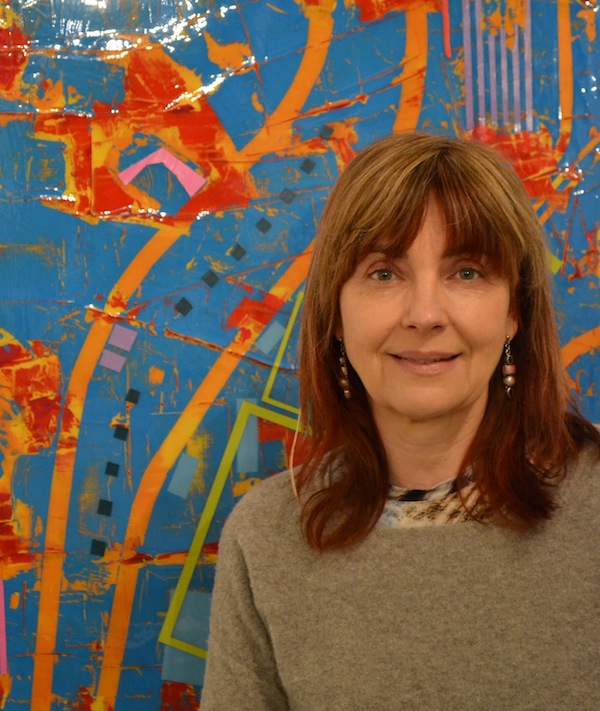
Ira Hoffecker’s Berlin Identities is at Zack Gallery until July 3. (photo from Ira Hoffecker)

Rarely does the Sidney and Gertrude Zack Gallery at the Jewish Community Centre of Greater Vancouver present exclusively a non-Jewish artist. This month, however, the gallery features Ira Hoffecker’s solo exhibit Berlin Identities.

Born and raised in Germany, the horrible history of Nazism and the Holocaust are part of Hoffecker’s identity, the identity she explores in this exhibition and in the entirety of her art. She looks at the Holocaust from the perspective of a German born after the Second World War.

“Germany is rich in history. There are so many layers,” she said in an interview with the Independent. “But the history of WWII and Nazism is different. The previous generations – my parents and grandparents – didn’t want to talk about it. My mother was a child during the war, and all she and her parents wanted after the war was to forget. But we can’t forget. We can’t deny our responsibility. For years after the war, there was a leaden blanket over the Holocaust, over what Germany did. But you can only move on if you accept the past, even such a horrible past as the Holocaust. It’s easy to say: it wasn’t me, I wasn’t born yet, but it’s our heritage. We have to accept our guilt, to acknowledge it, before we can start to heal as a society.”

That’s what her art is about: trying to understand and accept the painful enormity of the Holocaust and the guilt Germany carries, trying to discover her own definition of self underneath those national memories.

Another theme in her art, intertwined with the first, has to do with urban identities. “My paintings are informed by the different identities cities assume over time,” she explained. “History transforms cities, changes the urban space.”

All of the paintings in Hoffecker’s current show reflect her search for personal and urban identities. They are interpretations of maps: colorful, stylized and multilayered.

The layers represent the passing of time, as demonstrated by several paintings of Scheunenviertel, the former Jewish quarter in Berlin. “Before the Nazis came to power, over 150,000 Jews lived there. By the end of the war, none remained,” said Hoffecker.

Accordingly, the main layer denotes what the district looked like right after the war, while the overlaying layer, mounted on Plexiglas, corresponds with the map as it is currently. “The layers are a metaphor – of forgetting, of suppressing the past,” she explained. “Of the inevitable change.”

Two of the paintings look even scarier. One is covered by steel mesh, like a concentration camp fence. Another is concealed under torn tissue paper, where only fragments of the original map are visible, the rest is hidden – perhaps by those who don’t wish to remember. However, “we must remember,” the artist insists, and she tries to stir the memories by her imagery.

As is true for geographical maps, color and geometry play huge roles in Hoffecker’s creations.

“I’m fascinated by colors and I love maps,” she said. “As a child, my favorite book was an atlas. I like studying maps. I have a huge collection at home. My husband calls me a human GPS. I never have trouble navigating in any city, but only cities. I’m an urban person; I don’t do well in the wild.”

With her love for maps, it’s not surprising that she likes traveling. “Every city I ever visited has its own identity, its own atmosphere. I have been in many: all over Europe, India, Egypt, Peru. I’ve moved 26 times, but I hope I’ve stopped at last. I live in Victoria now and I don’t intend to move again.”

Her road from Germany to Vancouver Island was somewhat out of the ordinary.

“I always liked art, but when I lived in Germany, I worked in marketing and publicity for the movie industry,” she said. “Then, my husband and I had our own movie marketing company in Hamburg. Fifteen years ago, we came to Vancouver Island for a vacation. My children were young. We rented a mobile home and traveled together. We loved British Columbia, but the movie producers kept calling us, even though we were on vacation. They could call in the middle of the night, and I thought, What am I doing in this rat race? We needed a change.”

In 2004, they acted on the need for change and moved to Canada, settling in Victoria. “My children went to school there, and I went to school, too,” she said. “I decided to follow my old dream and change careers. I wanted to become an artist. Since we moved to Canada, I’ve been a student of the arts, but the career change is not easy or fast. It’s like a circus salto mortale, almost a free fall. It’s scary.”

But she hasn’t let the fear stop her. She has become an internationally known artist. In the last few years, she has participated in a number of solo and group exhibitions in Canada, England and Germany. She is studying for her master’s degree, and her paintings have started gaining recognition in artistic circles and among private collectors.

“I’ve sold over 170 paintings,” she said. “Recently, I was nominated, together with 53 other artists, for the British John Moore Painting Prize 2016. Our paintings will be shown within the Liverpool Biennal. They were selected from over 4,000 submissions.”

Another big change is coming soon for Hoffecker.

“We are not Canadian citizens yet,” she said. “Until a couple years ago, Germany didn’t accept dual citizenship, and I couldn’t give up my German citizenship either; I’m German. Now that it is possible to have dual citizenship, my family will receive our Canadian citizenship. It will happen on July 1st, on Canada Day.”

Berlin Identities will be on display at the Zack until July 3.

Olga Livshin is a Vancouver freelance writer. She can be reached at [email protected].


Format ImagePosted on June 17, 2016June 16, 2016Author Olga LivshinCategories Visual ArtsTags Germany, Hoffecker, Holocaust, identity, Zack Gallery
Jerusalem in photographs

Jerusalem in photographs

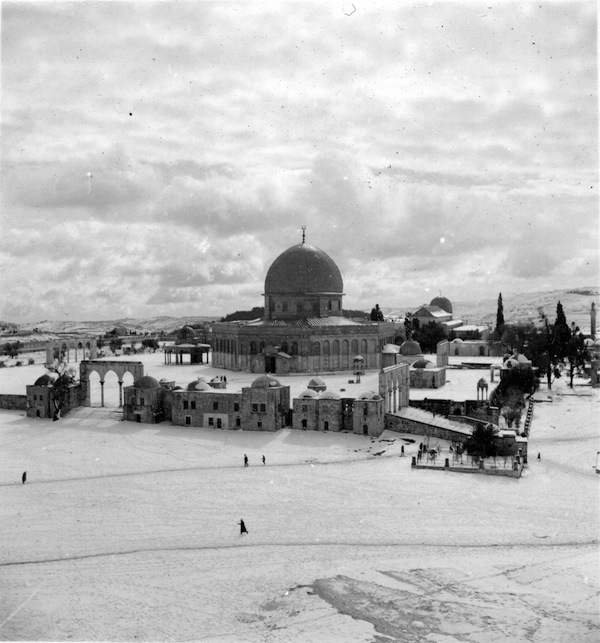
The Dome of the Rock in the snow, 1940s. (photo by Moshe (Nicolas) Schwartz / Schwartz Collection, Bitmuna)

photo - Watermelons, undated
Watermelons, undated. (photo by Elia Kahvedjian)

Jerusalem is one of the most photographed places in the world. The Camera Man: Women and Men Photograph Jerusalem 1900-1950 exhibition at the Tower of David Museum highlights the unique and complex human and cultural heritage of the city. It also offers, for the first time, a comprehensive look at the photographic work in Jerusalem of Christians, Jews and Muslims between the years 1900 and 1950.

photo - Arab fighters on the walls of the Tower of David
Arab fighters on the walls of the Tower of David. (photo by Chalil Rissas / The Central Zionist Archives)

The 34 photographers chosen to be exhibited in The Camera Man lived and worked in Jerusalem during the first half of the 20th century. The photographers come from all different backgrounds – European, Armenian and local, Jewish, Muslim, Christian, men and women. Many photographers recorded the Jerusalem residents of different communities; some were hired by institutions and organizations to photograph various historical events that occurred in the city and some were artists who sought to honor the unique faces of Jerusalem.

What makes this exhibition different from others is that much of the photography that has been displayed before from this time period looks at the young “strong Zionist,” the developing state of Israel, the rural local villages, the posed “Orient,” the “new Tel Aviv.” This exhibition – which includes many photographs that have never been seen before – examines Jerusalem and its colorful mosaic of people, from everyday life to historic events.

photo - The ice cream seller with his bird, 1940s
The ice cream seller with his bird, 1940s. (photo by Hanna Safieh / Rafi Safieh Collection)

“The juxtaposition of different viewpoints and spheres of activity, placing works by prominent photographers alongside less well-known names, reveals a hitherto untold chapter in the history of photography in the country and in Jerusalem’s own history,” writes exhibit curator Dr. Shimon Lev.

In the mid-19th century, when Europe began to take an interest in the Orient, Jerusalem witnessed an influx of travelers from England, France and, later, from America. At the same time, a new invention was spreading through Europe – the camera – and the newcomers carted their unwieldy photographic equipment with them. The sight of the squalid city was a bitter disappointment to them and clashed with an imagined idea of the Holy City that had prompted their journey to Jerusalem.

The dissonance between the Jerusalem cherished by the heart and the Jerusalem revealed to the eye, between the heavenly and the earthly Jerusalem, and between the ideal and the mundane Jerusalem, still occupies photographers today. Although cameras are now conveniently small and light and exposure times are shorter, today’s photographer still tries to capture his own personal version of Jerusalem, even if it is only a digital self-portrait in front of the Tower of David.

photo - Jordanian soldier at the destruction of the Hurva Synagogue, 1948
Jordanian soldier at the destruction of the Hurva Synagogue, 1948. (photo by Ali Zaarour / Zaarour Family Collection)

In The Camera Man, there are photographs showing action in the streets of Jerusalem from 1948, as well as portraits taken by local photographers who opened up their own photographic stores, most of them along Jaffa Road near Jaffa Gate and the Tower of David. The stores were called photographic houses or photo studios, although the driving spirit between the revival of the Hebrew language, Eliezer Ben-Yehuda (1858–1922), suggested the term ‘“light-painting houses” in Hebrew.

The photographs comprising The Camera Man were collected from private and public archives. The catalogue accompanying the exhibition includes selected photos from the exhibit, several of which are published for the first time, as well as articles by Lev, Dr. Lavi Shai and artist Meir Appelfeld.

The Camera Man is on display until Dec. 10. For more information, visit tod.org.il/en/exhibition/the-photographers.


– Courtesy of 

Format ImagePosted on June 10, 2016June 8, 2016Author Tower of David MuseumCategories Visual ArtsTags history, Israel, Jerusalem, photography
A tapestry at the Zack

A tapestry at the Zack

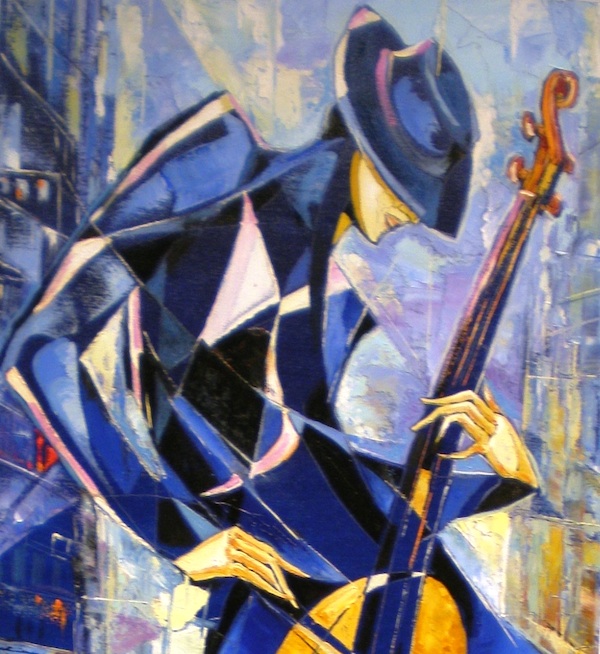
Valeri Sokolovski’s work forms part of A Tapestry of Cultures, the group art exhibit now on display at the Zack Gallery. (photo by Olga Livshin)

A Tapestry of Cultures opened last week at the Zack Gallery. Run in conjunction with Festival Ha’Rikud, which took place May 12-15, the group show also commemorates the birthday of Israel. As such, I expected it to reflect the blend of cultures that together make the multicultural tapestry of Israeli society, but the exhibit was much more global in scope.

With the exception of a few identifiably Israel-focused pieces – mostly photos by Avie Estrin – the rest of the artwork on display could have been created in any country, by an artist from any part of the world.

The Tel Aviv apartment building in Nancy Stern’s photograph wouldn’t be out of place in Vancouver or Prague. The sandals in a large painting by Rina Lederer-Vizer could have been lying on a beach in Spain or hiding under a park bench in San Francisco. The flapper dress from a small piece by Vladimira Fillion Wackenreuther could have been on sale in any fashion store from Moscow to Tokyo.

The exhibition as a whole announces that we all belong to one nation, cosmopolitan in the best sense, regardless of our country of citizenship or our mailing address. We live on the same planet and share similar values.

photo - Valeri Sokolovski’s work forms part of A Tapestry of Cultures, the group art exhibit now on display at the Zack GalleryThe theme of music and musicians appears in paintings by several artists in the show. Eternal and borderless, music wanders where it will, crossing barriers, especially now with the internet. Valeri Sokolovski’s images illustrate the concept perfectly. One could encounter his musicians almost anywhere. Their ethnicity is vague, but their passion soars in his paintings. Sokolovski’s musicians play with such intensity, the viewer can almost hear the notes, the syncopated beats and the soulful melodies.

In between his blue players, Karen Hollowell’s trumpeter introduces a much mellower tune, sunny yellow and flowing. The painting has a romantic quality. Her musician is not here on a street corner, but is somewhere else, behind the veil of imagination.

Not so with Iza Radinsky’s dancers. They strive to twirl off the wall and into the room, their skirts flashing, their feet performing to a jolly rhythm. The artist’s brushstrokes are blurry, but the dancers’ joy is crystal clear, and it transmits outside the frame, sprinkling everyone who passes the gallery.

In contrast to Radinsky’s dancers, Lauren Morris’ image is abstract and colorful, echoing the charm of dreams. Colors splash on the canvas in fanciful profusion and the viewer wonders, Is it a choir singing hymns? Is it a flock of birds on a wire, lost in their lofty trills? Or maybe it’s a flowerbed of exotic orchids, each one a song?

Meanwhile, a crowd of musicians populates David Akselrod’s “Gathering.” The painting is almost a metaphor of the show itself, gleeful and whimsical. The musicians are as cheerful and diverse as the artists who gathered for the exhibit’s opening. They play different instruments and have different skin colors, but they congregate in the same place, they mingle and laugh, and they share the delight of their art with each other and with the viewers.

The motif of unity – of all of us sharing, depending on each other – underlies Orly Ashkenazy’s “The Butterfly Effect.”

“It’s about the 12 tribes of Israel,” said the artist. She even inserted the names of the tribes in Hebrew into the painting. They intertwine with each other like a faint pattern of gold arabesques on a butterfly’s wing, a design mirroring real life, underscoring our own interconnections and effects on each other and the world around us.

It is impossible to mention all of the artists participating in the show in one short article, but all their creations complement and enhance one another.

“In my opinion, the calibre of work in this show is particularly high,” said Linda Lando, the gallery director.

A Tapestry of Cultures is on until May 29.

Olga Livshin is a Vancouver freelance writer. She can be reached at [email protected].

Format ImagePosted on May 20, 2016May 18, 2016Author Olga LivshinCategories Visual ArtsTags Festival Ha’Rikud, Israel, Zack Gallery
Artistic Pesach midrashim

Artistic Pesach midrashim

“Question Mark” by Sydney Freedman and Rachel Pekeles  is among the works created by King David High School Grade 12 students. (photo by Nancy Current)

In conjunction with their current show at Zack Gallery, Visual Midrash, artists Robin Atlas and Nancy Current conducted a two-day workshop with the Grade 12 students of King David High School. Rabbi Stephen Berger, head of the school’s Judaic studies, and some of his more outgoing students talked to the Independent about the project.

“Every year, we do a project for Passover with our Grade 12 students,” said Berger. “The Haggadah is one of those Jewish texts that’s had the most number of interpretations throughout our history, as every generation and every family bring their own understanding. So, I ask the students every year to write their own versions, a short essay on one of the aspects of the Haggadah. This year, we decided to combine the writing with the visual component. The students pitched their ideas, which topic they wanted to explore. I tried to limit the same topics but I didn’t force anyone. They were free to choose. Now, after all the art is done, we’ll put the project online. We’re also going to publish a hardcopy as a pamphlet. One of our former students, Daniel Wiseman, is helping me with the particulars. We will distribute the copies at the JCC, at the synagogues and Jewish delis.”

The rabbi joined his students in creating his own interpretation of the Haggadah, using a sheet of matzah as the base for his artistic journey. “Matzah represents both our slavery and our freedom,” he said. His piece opens the pamphlet.

Like the rabbi, most of his students hadn’t done much visual art in years and were not going to pursue art as a career, but they enjoyed working on Visual Midrash for this assignment.

“They put so much thought into their pieces,” said Current. “Some of them first tried to come up with concrete images, but it’s hard without artistic training. Then Robin and I suggested they should think about some abstract interpretations. What ideas come to mind? What concepts are associated with those ideas? The results were amazing.”

One of the students, Izzy Khalifa, chose the most fun-filled tradition of Passover – the search for bread. “When I was a kid, it was a game in our home. I loved it,” she said. “Now that I’m older, I think it’s not simply a search for bread but it has a deeper meaning, like a search for yourself.”

“Judaism grows on you,” the rabbi remarked, and Khalifa agreed. She also liked working with the abstract concept. “People can take more from an abstract picture, interpret it in different ways,” she said.

photo - “Blue Heart” by Adi Rosenkrantz and Ashley Morris
“Blue Heart” by Adi Rosenkrantz and Ashley Morris (photo by Nancy Current)

Classmates Adi Rosenkrantz and Ashley Morris decided on more concrete imagery. Their blue heart on a blood-red background symbolizes the first plague of Egypt – the plague of blood. “The blue heart is like the heart of the Nile,” said Rosenkrantz. “The abrupt color change, from blue to red, from water to blood, disrupted the Egyptian way of life.” Their heart is almost anatomically precise. “I just did a unit on cardiovascular system,” Rosenkrantz explained, “and it was fresh in my mind.”

Ma’ayan Fadida and Shmuel Hart’s illustration was more metaphorical. They selected a controversial theme for their work – the wicked son. In their artistic interpretation, the wicked son walks a black path, which winds its way across the pink and orange brightness of other family members.

“We wanted to do one of the sons,” Fadida said. “This one makes the decision to separate himself from the others; that’s why his path is black. And the abstract allowed us to show how he was thinking.”

One of the most powerful pieces is a mixed media collage: a large black question mark with the background of newspaper snippets. Created by Sydney Freedman and Rachel Pekeles, it also touches on the story of the four sons but focuses on the son who doesn’t know how to ask.

“We wanted to take a complicated topic and present it as a symbol. The black mark blocks our ability to ask,” explained Freedman.

“The information is all there. You just have to be willing to look for it,” Pekeles elaborated. “It is a challenge. Sometimes, we choose not to ask when we should.”

Olga Livshin is a Vancouver freelance writer. She can be reached at [email protected].


Format ImagePosted on April 22, 2016April 20, 2016Author Olga LivshinCategories Visual ArtsTags Atlas, Current, KDHS, King David High School, visual midrash
Interpreting Torah with art

Interpreting Torah with art

Artists Nancy Current, left, and Robin Atlas at Zack Gallery. (photo by Linda Lando)

Visual Midrash: Plagues and Visions, which opened at Zack Gallery on April 7, features the work of Seattleites Robin Atlas and Nancy Current, the only West Coast artists creating in the genre of visual midrash. The show is the culmination of a four-year collaboration that started in 2012.

“We met through the Jewish Art Salon in New York,” said Current. “Even though we both live in Seattle, we didn’t know each other at that point.”

Atlas elaborated: “The president of the Jewish Art Salon sent us both an introductory email. She said we probably knew each other already, but we didn’t – and we lived only 10 minutes apart.”

“Robin was about to open a new show in L.A. and she brought her works to my studio,” said Current. “I was amazed. There was so much beauty and thought behind it all. That’s what visual midrash is all about. It requires two elements: the clarity of story and the visual beauty of the artist’s interpretation. I looked at Robin’s art and I said to myself, I’m going to work with her forever.”

They started working together, but their chosen genre – interpreting Torah through visual art – is not widely known. “We didn’t have a ready audience in the West,” Current explained, “not like in New York. We needed to build it, so we started teaching adult classes two years ago. The classes include the texts from the Torah, introduced by a Torah instructor, and a visual component, taught by an art instructor.”

“We would do slide shows, video presentations, and the students would have a chance to create their own art,” Atlas said. “Linda Lando, the Zack Gallery director, facilitated the first class we did in Vancouver earlier this year.”

For the current show, the artists explored the theme of the 10 plagues. “We were drawn to the story,” said Current.

Although each artist works with different media – Atlas with textiles and Current with glass and paper – their creative vision is similar. Their symbolic abstracts mesh extremely well, as if the images belong together, buzzing with the same esthetic sense and the same muted elegance, complementing each other to tell the same tale.

While the Vancouver Jewish community was introduced to Atlas when she exhibited at the Zack in mid-2014, Current is a new name for most local art appreciators.

“I always drew and painted as a child but I can’t say that I had the conscious idea to be an artist,” Current recalled. “I grew up in Seattle, in an old house with stained-glass windows. That undoubtedly affected my later fascination with glass. I learned to blow glass when I was about 24, but gave that up in favor of painting on stained-glass.”

She explained, “Glass is different from other mediums because light passes through it (transmitted light) instead of bouncing off [of it], like with paper or canvas (reflected light). Transmitted light, especially through colored glass, connects to a person’s emotional centre more directly than reflected light. It also has a spiritual aspect. Think of all those stained-glass windows in churches and synagogues. That is important to my Jewish work.”

Although she has worked in other visual genres, Jewish themes absorb her artistic passion now.

“Jewish art has gradually replaced my other work, life drawing and landscape, because it is much more meaningful,” she said. “Visual midrash is the most meaningful Jewish art of all. It requires a lot of study and thought, and those are things I highly value about living a Jewish life.”

Current pointed to two particular influences on her development as an artist.

“The first was studying at Pilchuck Glass School,” she said. “The school attracted many artists early in the history of the American studio glass movement. I studied there with the amazing British glass painter Patrick Reyntiens. He is 90 years old now and still a good friend.

“The second was finding the Jewish Art Salon (JAS) in New York. Becoming a fellow in the JAS has led me to friendships with several Jewish artists who have been doing visual midrash for years. They have helped a lot.”

Current doesn’t concentrate on making a living with her art. Her main concern is to share it with as many people as possible. “Of course, eventually I want to sell my work,” she said, “but not until I’ve had a chance to show it in several exhibitions. The purpose of doing my work is to cause people to think about their Jewish heritage.”

Current and Atlas’ show runs until May 8.

Olga Livshin is a Vancouver freelance writer. She can be reached at [email protected].

Format ImagePosted on April 15, 2016April 13, 2016Author Olga LivshinCategories Visual ArtsTags Nancy Current, Robin Atlas, visual midrash, Zack Gallery
Exploring winter landscapes

Exploring winter landscapes

Ian Penn’s exhibit Winter Paintings: The Figure in and on the Landscape opened March 10 at Zack Gallery. (photo by Olga Livshin)

The theme of Ian Penn’s solo show at Zack Gallery is winter. The artist’s love for winter, for the mountains of British Columbia and for skiing reverberates through the gallery.

“I’m affected by the seasons, by my surroundings,” said Penn in an interview with the Independent. “I only paint current seasons. In summer, I paint summer; in the fall, I paint its rioting colors. In winter, I paint snow and skiing.”

Penn spends lots of his free time in the mountains. “Our whole family likes to ski,” he said. “When we first moved to B.C., we bought our first place in the mountains before we settled in Vancouver.”

Penn has been skiing since his youth in Australia, but it was cross-country skiing until he immigrated to Canada and saw the mountains. At the age of 35, he started alpine skiing – and loved it.

Around 2000, he went a step further. He joined the ski patrol in Whistler, volunteering part-time his professional skills as a doctor. He still does that. “I like the ski patrol community. They are nice people,” he said.

About the same time, he also became seriously interested in painting, which eventually led to a degree from Emily Carr.

Penn has a general fascination with landscapes, especially mountain scenes, as an art form. He has painted dozens of landscapes, in every season, and some of his favorite areas to paint are around Whistler and the Callaghan Valley.

“I was always interested in mapping a territory, but a map and a territory are not the same,” he explained. “The painting of a landscape is not the same as if you stand in that place, experience it with all your senses. Or with devices – photo cameras and cellphones. I wanted to capture that difference in my paintings. That’s why I started a series of diptychs. My diptychs are like a single painting in two parts.”

There are several diptychs on display in the gallery. One is a landscape, a vista with the majestic mountains and forest, with tiny human figures. The second affords a closer look. The human figure is larger, the artist’s focus has narrowed, and the people in these paintings are doing something, engaging with the mountains. They whip down the slopes on their skis. They stop to take photos. They enjoy the invigorating exercise and the beauty around them. They laugh and horse around.

Penn captures their movement in his paintings. His objects are not static. They don’t pose. They are just going about their business, and the artist is going about his.

“Initially, I wanted to paint on location,” he said. “I want to paint everywhere I go, but I couldn’t do that in winter. It’s too cold both for my hands and for the paints. Or it might snow. What I do when I’m in the mountains skiing, I take photos and make quick drawings.”

The drawings provide him with the first impression, the emotional subtext. The photographs he uses for details.

“All the details in my landscapes are accurate. The precision is important to me. I want to be able to navigate by them. I want the ski patrol to be able to use my paintings when they have to rescue someone,” he said, only half-joking.

Many of his paintings have personal stories attached, some of which are more obvious than others. In one painting, there was to have been a person but there isn’t; the close-up view is surprisingly empty of life. “He got erased. I erased him,” Penn said. “He was a vain fellow. He was dancing around, making selfies of himself with his cellphone, turning so he would get every possible angle. He didn’t notice anyone else, almost stepped on my ski. At first, I wanted to show it, as a portrait of self-absorption, but I disliked the fellow so much, I finally erased his figure from my painting. But, mostly, I want my paintings to tell your stories, not mine.”

The dominating color in all of the paintings is white, of course, overset by green forest and dark mountains. Only people provide splashes of color: a red jacket or a yellow parka.

“I use five different whites for the snow,” Penn said. “And then there are color patches reflecting the surroundings. Snow is never simply white. It’s complex and a challenge. It’s always different. And so is the sky: blue but different in each painting. But I never used black in any of these paintings. When I needed the dark, I mixed colors.”

Penn paints landscapes because they are endless. “Wherever I go, there is a new and amazing landscape waiting for me. Painting them, making drawings, photographing slows me down, allows me the time to look, to see the beauty around me.”

Winter Paintings: The Figure in and on the Landscape will be at the Zack until April 3. For more information about Penn and his work, visit ianpenn.com. An interview with Penn about his exhibit last year, called Pole, can be found at jewishindependent.ca/memorials-to-millions.

Olga Livshin is a Vancouver freelance writer. She can be reached at [email protected].

Format ImagePosted on March 18, 2016March 16, 2016Author Olga LivshinCategories Visual ArtsTags Ian Penn, landscape, winter, Zack Gallery
Leaving some things hidden

Leaving some things hidden

Olga Campbell and Larry Green’s shared exhibit at the Zack, Hidden, is on until March 6. (photo by Olga Livshin)

In the new exhibit at Zack Gallery, Hidden, the pieces are united not only by theme but also by media. Both artists featured, Olga Campbell and Larry Green, mostly use photography, which they then play with in Photoshop. The computer-generated effects contribute to the graceful and faintly mystical feel of the images. Hazy silhouettes hide behind the splashes of paint. Eyes peek through the veil of the unknown. Mysterious places and partial faces open the gates of subconscious and let us witness the artists’ creative cores, their emotions.

The images are distinct, echoing each artist’s personality, but the common approach makes their double show almost seem inevitable. And the meshing of their artistic visions spills into life beyond the gallery. Both chose careers in the helping professions, for example. Campbell was a social worker until she retired. Green is a psychotherapist and a professor of psychology. But they didn’t really know each other before the idea of a mutual exhibit took root.

Campbell explained how it happened: “Last year, I participated in Culture Crawl. Linda Lando, the Zack Gallery director, came to see my pieces. She asked me if I wanted to have a show at the Zack Gallery.”

Green added: “I was with Linda that day – we are partners. I remembered Olga’s art from other shows…. I like what she does. Someone suggested we have a show together. That’s how this collaboration started, but, even before that, we were vaguely aware of each other. We saw and admired each other’s art at group shows. We knew many of the same people: friends, neighbors, co-workers.”

After the dates of the exhibit were set, the artists met to decide on the theme. “Larry came up with the Hidden, and I thought it was wonderful,” said Campbell. “There is so much in the world that is hidden. People hide things from others and from themselves, adopting layers of masks and veils. When we put obstacles in the way of seeing the world, we hide not only the shadows, but also the light. When we acknowledge the shadows, then we are able to see the light. Most of the really profound and rewarding things in life are hidden beneath the layers of mystery.”

In Campbell’s pieces, the layers are frequently photographs superimposed upon each other in Photoshop, plus special effects and the occasional addition of multimedia. She admitted that she doesn’t do much pure painting although she studied it.

“I always liked doing art,” she said. “In 1986, I took several art classes and then I thought, what to do with it? So I enrolled in Emily Carr. Afterwards, I worked as a social worker part-time and on my art part-time, until I retired. Art is not a hobby for me. I have to do it.”

Green’s path was a bit different. “I did a lot of art until I was about 25. Then I dropped it for 20 years before starting again, first with pottery and then with other stuff. When I worked with clay, sometimes my hands knew better than my brain what I wanted to say. I made a sculpture and now, years later, I look at it and think: Oh, that’s what I meant. Of course! My brain has caught up with my hands.”

The intuitive application of their skills underlines both artists’ creative courage. They are not afraid to experiment.

“I play around with Photoshop,” said Campbell. “I don’t know it very well. I try different things and I often get something I like by accident. Later, I can’t always reproduce the effect, so I never repeat myself.”

Green concurred. “I like Photoshop,” he said. “I learn it as I go. My ideas pull me through the learning process…. Using Photoshop, I can realize my vision much faster than with paint and canvas, but it is all trial and error. I keep worrying at the piece until something comes along. Or not. If it comes, I go for it. If it doesn’t, I don’t. Some pieces take years to come together. For example, years ago, I saw a single pink running shoe in a park and snapped a photo of it but I didn’t do anything about it. Then, recently, in a different place, I saw a single pink glove, and photographed it. I brought them together in Photoshop, and now they are not lonely.”

Many of Green’s pieces at the Zack are foggy landscapes. “I’ve always been fascinated by fog,” he said. “A foggy landscape has a particular dreamlike quality to it. Shapes are indistinct and, therefore, invite the viewer in, in an attempt to give the scene some definition. Alternately, the viewer can rest in the soft tranquility of the scene rather than be overwhelmed by details…. People who come to me for therapy are often afraid of the fog, especially inside themselves, but they’re also interested in it, in what it might reveal. Everything I do, in both art and psychology, is basically the same: trying to reveal the underlying reality, the hidden connections behind the apparent.”

“The same for me,” Campbell agreed. “Although not everything should be revealed. Some parts of the whole are better hidden, while the essence should be revealed.”

Olga Livshin is a Vancouver freelance writer. She can be reached at [email protected].

Format ImagePosted on February 19, 2016February 18, 2016Author Olga LivshinCategories Visual ArtsTags Larry Green, Olga Campbell, Zack Gallery
Painting beauty, meaning

Painting beauty, meaning

Lori Goldberg in front of one of her paintings. (photo from Lori Goldberg)

Lori Goldberg is one of the artists whose work has been chosen to be part of a special project in aid of what will be Abbotsford’s first residential hospice facility, Holmberg House, set to open this year.

“The Reach Gallery and the Abbotsford Arts Council, in partnership with the Abbotsford Hospice Society, selected several artists for the project,” explained Goldberg to the Independent. “After the artworks are completed, the Reach will host an event where donors will bid on them. The proceeds will be split between the Abbotsford Hospice Society, the Reach Gallery and the Abbotsford Arts Council. Some of the works will be placed in Holmberg House. Others will be used to cover medical equipment.”

The artists only receive a small honorarium for their work, which is due at the end of January. But payment comes in other forms. “I like the challenge of creating an uplifting and soulful work that would give the viewer peace and joy,” said Goldberg, who is coming off a fall 2015 solo show at the Zack Gallery called Urban Forest.

The forest theme, intertwined with the “true Canadian” theme, has been filling her canvases for the last several years.

“In the past, my art often involved objects,” Goldberg said. “I was a single mom with two growing sons and I realized recently that the objects and still life in my art meant me being domestic. The objects were all around me, part of my family life, and each object had a story to tell about their owners and the relationships between things and people. An object could be spiritual or mundane, and the stories could change with use.

“But, as my sons grew, I could expand myself. Before, most of my buyers were women. Now, I could reach further with my imagery. I traveled and I taught a lot, and the more I traveled, the more I realized how important my home was: Vancouver, Canada. I started exploring the theme of being Canadian in my art.”

One of the symbols of Canada in Goldberg’s eyes is a canoe. “Visually, the canoe represents something significant. Canoes took explorers across Canada.”

Red canoes float and bob on the water across Goldberg’s paintings. Some of them are big, others small, but all of them are empty. “A canoe is a vessel, and I make it empty on purpose. Everyone looking at my paintings can imagine themselves in the canoe. It is there for them. I did a lot of kayaking in my life, and the experience is similar. You’re on the water, paddling, and there is a landscape unfolding, sometimes peaceful, sometimes dangerous. There is a relationship between the persons in the boats and the landscape. There is a home there.”

For Goldberg, the color of the canoes – red – also represents Canada. “Like on our flag,” she said. “There are people who enjoy boating and water, and they like and buy these paintings. I have some new commissions of the canoes.”

Goldberg loves working on commissions. “I’m good with commissions. People who order them usually know my work, but we always discuss what size of the painting they need, if they want some specific colors, or if they have a story to tell. Maybe they have a cabin on a lake, and then I do research, make lots of sketches, and try to incorporate their familiar landscape details into the painting.”

More often than not, Goldberg’s canoes sail past wild, forested shores, shimmering with green leaves and filtered sunlight. “I like a punch of bright red inside the green,” the artist mused.

Forests, especially Canadian urban forests, have become another important theme in her art. “The forest is so close in Vancouver, just behind your windows. The city is all concrete, but when you step inside a forest, you shed the city, all its artificial neon colors, all the metal and plastic. It all peels off. You become part of nature, but you also become more exposed, more vulnerable, you feel alive. Nature inspires you, but it can also be dangerous, full of beasts and unknown perils. It’s beautiful and uplifting but also powerful. You have to respect it.”

The juxtaposition of the wilderness and the city, our cultural icons among the tangle of branches is a recurring motif in Goldberg’s forests. You could see a deer peeking from behind a tree, or people lugging their suitcases along the woodsy paths. “We all bring our luggage to the forest,” she said. “A forest is as much a metaphor of human lives as it is a real place. There is light and there are shadows there. Our cities are encroaching on the forest, but we need to become caregivers. In my small way, I do what I can, so we can find harmony with nature.”

The theme of urban Canadian forests resonates with many in Canada, and more and more people have become interested in Goldberg’s work. A few months ago, she and her paintings of canoes and forests were profiled in the magazines MontrealHOME, VancouverHOME and TorontoHOME.

More information can be found on the artist’s website, lorigoldberg.ca.

Olga Livshin is a Vancouver freelance writer. She can be reached at [email protected].

Format ImagePosted on January 29, 2016January 26, 2016Author Olga LivshinCategories Visual ArtsTags Homberg House, Lori Goldberg, VancouverHOME
Each creation unique

Each creation unique

The faces that Larry Cohen creates communicate a range of emotions. (photo by Olga Livshin)

Larry Cohen has been working with pottery, on and off, for about 30 years. “A long time ago, I tried to make money from it, but not anymore,” he told the Independent. “Now, I just make things I want to make, things I love.”

Touch and Fire, Cohen’s solo show at the Zack Gallery, highlights the things he likes: elegant but aloof vases, functional bowls made with salted fire, and expressive faces cut into clay – manifestations of the artist’s pains, hopes and desires. “Clay registers every touch,” he said, “expressing the character of a particular place, time, person or purpose.”

With a few touches of his fingers, a few slashes of a knife across a thin clay slab, Cohen manages to convey a multitude of emotions. Every face he has made is unique but, together, they represent the artist’s inner core.

“Sometimes, you have dreams,” Cohen said about his faces. “Good or bad, with faces you recognize or you don’t. Dreams are part of us, part of the human psyche. My faces are mysteries; they’re my imagination. I started making them in 2015 and I call them ‘manifestations.’”

Every other piece on display in the gallery – vases, teakettles and bowls – the artist calls “pots.” Some of these he creates on his pottery wheel, while others he builds from the slabs of clay like sculptural ceramics.

“When I start working with a piece, I know approximately what I want to make, but there are so many different steps along the way,” he explained. “I have to pay attention to what is already done during each step as much as to what I wanted in the beginning. Every step holds a surprise, although some surprises are better than others. Sometimes, things fail technically – like crack in the kiln – and you can only cry. It’s humbling, when the technical stuff affects the end result as much as your skill or your vision. The more I work with clay, the more I realize that there is still so much I don’t know.”

He is learning new things with every pot he makes and, in three decades of working with clay, he has learned quite a lot, but the unknown always beckons.

“I don’t like doing the same things, like factory production. The machines can repeat the same patterns and colors endlessly and sell them in department stores. The pottery coming from machines is perfect and the same. I’m not interested in doing that. I want to experiment; I try something different all the time. My every pot is unique.”

His craving for the new and surprising has guided him as much in his professional life as it has done in his art. In his life, he has been a criminal lawyer and a University of British Columbia law instructor, he did a stint as a commercial fisherman, worked as a building contractor and managed a Japanese restaurant. “Life is interesting when you try different things,” he said. “I’ve been lucky to be able to do what I wanted.”

Whatever he was doing to earn his living, art always occupied a part of his soul. He has never stopped creating in a variety of forms, from simple teacups to complex sculptures, and clay has been his passion for years.

“It’s nice to work with clay,” he said. “It’s meditative and it engages me completely. It’s good for your health but it’s hard physical work. First, you have to prepare clay, to ‘wedge’ it, like kneading dough. Then you make a pot, but afterwards it has to dry completely before you fire it the first time. Only after that, when it cools, you can apply glaze and fire the second time.”

Cohen has two kilns in his studio on Cortes Island. In one, he fires with salt to create texture on his pottery; the other is for smooth surfaces. “In the summer, I spend months on Cortes Island, working in my studio every day. In other seasons, I do it occasionally, too, every few weeks. When I’m there, I work in the studio, but I’m not as young as I was before. It’s getting harder to work long days.”

His artistic creations run from utilitarian to high art. “A difference between art and craft is hard to pinpoint,” he said. “It’s a continuum. On one end is pure craft, the functionality. A teapot has to hold water to make tea. On the other end is pure art, like my faces. They don’t have to do anything. But, mostly, you’re in the middle. Every pot – a vase, a bowl – has to be both functional and esthetic. Pottery at its best is both useful and beautiful, and skills are necessary to achieve both goals. Most of the time, it’s a mixture. I’m as much an artist as a craftsman.”

Unfortunately, he admits, he is not much of a salesperson. “I don’t sell as much as I wish. I want to sell more to have room for new things,” he said with a smile.

Touch and Fire opened on Jan. 14 and will continue at the Zack until Feb. 7.

Olga Livshin is a Vancouver freelance writer. She can be reached at [email protected].

Format ImagePosted on January 22, 2016February 24, 2016Author Olga LivshinCategories Visual ArtsTags clay, pottery, Zack Gallery
Glass exhibit at Zack Gallery

Glass exhibit at Zack Gallery

From left to right are artists Larissa Blokhuis, Kirsten Rankel, Maria Keating, Sonya Labrie, Joanne Andrighetti, Hope Forstenzer, Mona Ungar and Scott McDougall. (photo by Denise Relke)

From antiquity, glass has been used for utilitarian and ornamental purposes. The current group show at Zack Gallery, Works in Glass from Terminal City Glass Co-op, demonstrates both functions in the elegant and colorful creations of co-op members. Vases and funky animal sculptures, jewelry and abstract decorative pieces transform the gallery into a celebration of light and flowing forms.

Holly Mira Cruise, one of the co-op founders and its current executive director, told the Independent a little about the group’s history.

“Terminal City Glass Co-op is the first and only nonprofit, cooperative glass arts facility in Canada. It was founded in February of 2012 by Morley Faber, Joanne Andrighetti, Jeff Holmwood and myself. We came together around a mutual desire to see the glass community in Vancouver grow…. We have worked together since then. We started with 30 members, and we now have over 150. It’s a constantly changing community, and we see new members come in every month, and others move on to other opportunities.”

Many co-op members exhibit their glass art often, attracting interest from both customers and professionals. That’s how Linda Lando, director of the Zack, discovered them.

“Linda reached out to me earlier this year,” said Hope Forstenzer, one of the show participants and a member of the local Jewish community. “She had seen some of our co-op’s pieces during Culture Crawl, liked them, and wanted to talk about a show at the Zack.”

Forstenzer herself is in love with glass. “Glass is an amazing medium. It’s elemental,” she said. “There is nothing like it in the whole world. At different stages, it could be liquid and malleable or hard and bullet resistant. It reflects light and allows colors to play inside. It’s created with fire.”

A professional artist, Forstenzer didn’t start her artistic life with glass. “I worked in ceramics and, at one point, I designed several pieces as a combination of glass and ceramics. I couldn’t find the glass I wanted so I started taking classes to make my own glass. I loved it so much, I stopped doing ceramics and concentrated on glass.”

She even moved from New York to Seattle because of her fascination. “Many of the best glass artists in the world live and work in Seattle, and I studied with some of them. There are two glass centres in the world. Venice is one. Seattle is another.”

When her partner took a job in Vancouver a few years ago, Forstenzer moved here. She has been teaching glass-making for about 10 years now. She teaches a class at the co-op, and she also teaches graphic design at Emily Carr University of Art + Design.

Like Forstenzer, Cruise is also passionate about glass. “I tried almost every medium before glass. I painted and drew, I tried clay and metals, I made jewelry. I was an art school dropout. A friend who had been blowing glass since he was a kid told me, ‘Try glass, you’ll like it!’ He was right. I liked it and I never looked back. I became really attracted to the material, to the way it moves and feels and, of course, all the amazing colors. Glass is enthralling in a way that no other material has been for me. I think a lot of people find it has addictive qualities. There have been times over the past 20 years when I have taken a break from glass, but I always seem to go back. It calls me.”

To answer that call, she not only works as a glass artist but also manages the co-op, organizing all its programs and classes, and bringing in visiting instructors from all over the world. “TCGC offers classes in glassblowing, beadmaking, flameworking and sandblasting,” she said. “We make it easy for people to take the first steps. We also offer advanced learning opportunities for people who have practised for awhile. There is no post-secondary glass program in Vancouver, but there is one at Alberta College of Art and Design and at Sheridan College in Ontario. Hopefully, we will catch up with other provinces soon.”

Widely available education in glass-making is a relatively new development for such an ancient craft. Before the 20th century, glass was mostly worked at factories, and each one guarded its secrets.

“In the 1960s, the Studio Glass Movement started,” Cruise explained. “Glass-making moved from factories to independent artist studios. It became a lot easier for people to approach glass and learn it…. Today, there are books on how to set up your own studio and build your own equipment. People are 3-D printing with glass. This year, Emily Carr ran its first class in 3-D Design with Glass through our studio. It was a great success, and seeing the potential of glass as a material to be enhanced and developed with technology was thrilling.”

According to both Cruise and Forstenzer, the students taking classes at the co-op come in all ages and artistic levels.

“Our students are pretty diverse,” said Cruise. “We get all ages, from 17 to 75. Sometimes, it’s retired people who want to pick up a hobby, or younger people who want to become glass artists, or couples looking for something fun to do. We have something for everyone to try here.”

Works in Glass runs until Jan. 10. For more information about the co-op, visit terminalcityglass.com.

Olga Livshin is a Vancouver freelance writer. She can be reached at [email protected].

Format ImagePosted on December 18, 2015December 16, 2015Author Olga LivshinCategories Visual ArtsTags glass-making, Holly Mira Cruise, Hope Forstenzer, Terminal City, Zack Gallery

Posts pagination

Previous page Page 1 … Page 20 Page 21 Page 22 … Page 25 Next page
Proudly powered by WordPress