Skip to content
  • Home
  • Subscribe / donate
  • Events calendar
  • News
    • Local
    • National
    • Israel
    • World
    • עניין בחדשות
      A roundup of news in Canada and further afield, in Hebrew.
  • Opinion
    • From the JI
    • Op-Ed
  • Arts & Culture
    • Performing Arts
    • Music
    • Books
    • Visual Arts
    • TV & Film
  • Life
    • Celebrating the Holidays
    • Travel
    • The Daily Snooze
      Cartoons by Jacob Samuel
    • Mystery Photo
      Help the JI and JMABC fill in the gaps in our archives.
  • Community Links
    • Organizations, Etc.
    • Other News Sources & Blogs
    • Business Directory
  • FAQ
  • JI Chai Celebration
  • JI@88! video

Recent Posts

  • Last hostage home
  • New bill targets hate crimes
  • Concerning actions
  • Recipes not always required
  • Survivor urges vigilance
  • Seniors profoundly affected
  • Farm transforms lives
  • Musical legacy re-found
  • A range of Jewish literature
  • A concert of premieres
  • Variety telethon on Feb. 22
  • Victoria club’s many benefits
  • Avodah dedicated to helping
  • Artists explore, soar, create
  • Life’s full range of emotions
  • Community needs survey closes March 29
  • Jerusalem marathon soon
  • Historic contribution
  • Chronicle of a community
  • Late-in-life cartoonist
  • Cashflow vs growth portfolio
  • My new best friend is Red
  • ישראלים רבים ממשיכים לתמוך בטראמפ ועדיין אינם מבינים במי מדובר
  • עשרים ואחת שנים בוונקובר
  • Supporting the Iranian people
  • The power of photography
  • A good place to start
  • When boundaries have shifted
  • Guitar virtuosos play
  • Different concepts of home
  • Broadway’s Jewish storylines
  • Sesame’s breadth and depth
  • Dylan Akira Adler part of JFL festival
  • Mortality learning series
  • A new strategy to brighten up BC
  • Sharing latkes and light

Archives

Follow @JewishIndie
image - The CJN - Visit Us Banner - 300x600 - 101625

Category: Arts & Culture

Shalom Sesame for Chanukah

Available Oct. 14, SISU is re-releasing the 12 episodes of the 2010-11 season of Shalom Sesame in a new six-DVD thin-pack gift box. Included in the re-release is a bonus DVD featuring two episodes from the classic Shalom Sesame series, “Jerusalem” and “People of Israel” (originally released in the early 1990s). In addition, the DVD set includes a free 30-day trial download of the first episode.

image - Shalom Sesame DVD

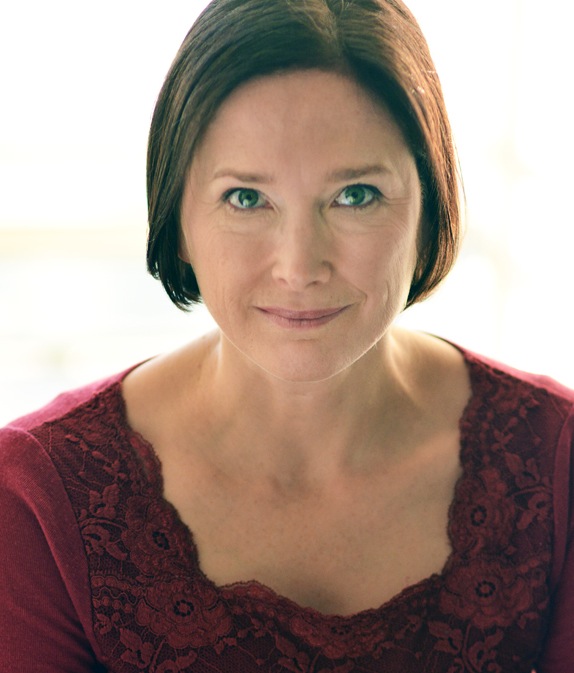
Join lovable, furry Grover and celebrity host Anneliese van der Pol (That’s So Raven, Broadway’s Beauty and the Beast) as they travel to Israel in this 12-part award-winning series co-produced by Sesame Workshop, the nonprofit organization behind Sesame Street, and Israel’s Channel HOP! Designed to help bring the vitality of Jewish culture and tradition, as well as the diversity of Israeli life, to American children and their families, each 30-minute, live-action and animated DVD focuses on storylines drawn from Jewish cultural traditions, highlighting lessons on Hebrew letters and words, unique sites in Israel and Jewish values.

In addition to van der Pol, the series features guest appearances by top name talent, including Jake Gyllenhaal, Debra Messing, Matisyahu, Eva Longoria, Christina Applegate, Greg Kinnear, Debi Mazar and others. The programs’ chronological order mirrors the Jewish calendar, beginning with an introduction to Israel and Hebrew, and ending with a program on mitzvot and a concluding trip to Israel.

Each title in the set contains two episodes and includes extra video segments. Shalom Sesame has been awarded a CINE Golden Eagle Award (2011), a Hugo Television Award Certificate of Merit (2011) and a Dr. Toy Best Pick Award (2010). Learn more about Shalom Sesame at shalomsesame.org, view previews and clips on youtube.com/shalomsesame and visit facebook.com/ShalomSesame. To order DVDs, visit sisuent.com.

Posted on October 3, 2014October 1, 2014Author Shalom SesameCategories TV & FilmTags Anneliese van der Pol, Christina Applegate, Debi Mazar, Debra Messing, Eva Longoria, Greg Kinnear, Grover, Jake Gyllenhaal, Matisyahu, Shalom Sesame
Butt Kapinski – not your children’s clown

Butt Kapinski – not your children’s clown

Deanna Fleysher as private eye Butt Kapinski. (photo from Deanna Fleysher)

Think you’re going to go sit and watch Butt Kapinski at the Cultch next month? Think again. You’re going to be an integral part of the show.

An award-winning hit at last year’s Vancouver Fringe Festival, Deanna Fleysher is returning to Vancouver with her alter ego, Elmer Fudd-meets-Philip Marlowe private eye Butt Kapinski. It is funny, raunchy, unpredictable humor that involves the audience. In her expert hands, they become a crime boss, a femme fatale, a prostitute, all participating in the telling of a unique-every-time murder mystery.

photo - Deanna Fleysher
Deanna Fleysher (photo from Deanna Fleysher)

“We humans crave that feeling of spontaneity, of witnessing and being part of something that has never happened quite this way before and will never happen quite this way again,” Fleysher told the Independent about her preferred type of performance.

“I am convinced that theatre will become increasingly interactive, as theatre practitioners realize that the best way to entice people to put on pants and leave their homes is to include them in the experience somehow. We can’t let flat screens and underwear win the war!”

Fleysher is on the front lines, so to speak, having made interactive theatre a focus of her career. In addition to performing as a clown, in improv and in other capacities, Fleysher is a teacher, writer and director. Among the interactive and clown/bouffon shows she has created or co-created is the erotic production Foreplay, which ran for a year at the People’s Improv Theatre in New York City, as well as at the Chicago Improv Festival, and she created, produced and performed in Kill Me Loudly: A Clown Noir, and directed and co-wrote Red Bastard. She started the Naked Comedy Lab, in which participants learn how to perform interactive comedy and clown/bouffon, and she teaches labs in Los Angeles and around North America.

“My parents are both creative people, although they did not pursue the arts specifically,” shared Fleysher about her background. “Nonetheless, I was in theatre classes from probably 6 years old onwards. My sister is also a performing artist and teacher, specializing in Middle Eastern dance. So, two nice Jewish people ended up with a belly dancer and a clown for children. So it goes.”

Butt Kapinski, however, is not for children. The character is described as a “noir-loving, gender-troubled little fellow-gal who wears a trench coat and a streetlight strapped to his/her back and goes into crowds and solves mysteries.” He/she has appeared in previous Fleysher creations.

“I found Butt Kapinski on a street corner in the East Village, but also, Butt has been with me my whole life,” explained Fleysher about his/her origins. “I used to have many speech impediments as a child, so speaking that way is very natural for me. Also, I am a huge film noir buff, a lover of Raymond Chandler novels and spontaneous poetry and trench coats. Butt is just me without my ‘Normal Disguise.’

“I used to wear a nose, partly because I was worried about being too ‘pretty’ or ‘normal’ (or, hell, ‘feminine’) without it. But Butt is quite different than the me everyone sees, and losing the nose [that Butt used to sport] was the best choice I could have made.

“The streetlight that I wear came into the act once I decided to go solo. What I wanted was a true interactive experience with the audience, but I do not like when performers bring people up on stage. My light lets me take the show right into the audience, where everyone can stay comfortable, and still be a part of things.”

Asked about what attracts her to Kapinski, to the private-eye genre in general, Fleysher responded, “I have always delighted in the dark side. Butt allows me to share that delight with others, to make a community ritual out of a usually private kind of fetish for the sicker shit in life.”

In a 2012 interview with LAFF! (Ladies Are Funny Festival), Fleysher is quoted as saying she once heard Fran Lebowitz say, “Every Jewish woman wants to be a private eye.” About that comment, Fleysher explained to the Independent, “My mother found the first guy I ever slow danced with on JDate. How did she even remember his name? I went steady with him at sleep-away camp for about a week, and she found out all about who he is now … you know … just in case. That is a kind of sleuthing I tip my hat to.

“Fran Lebowitz was introducing some mystery/crime fiction writers at a reading in N.Y. many years ago, when she said, ‘Every Jewish woman wants to be a private eye.’ In that moment, my mother’s passionate curiosity was united with my noir world.”

Fleysher has always been a writer/actor at heart. “I was always more interested in creating my own theatre rather than reading/interpreting someone else’s words,” she said. “It’s not my thing to sell hand soap or be Battered Wife #3 in a cop drama. All of this means that I’d much rather be poor and creatively empowered than poor and at the mercy of casting agents.”

As for her interest in physical comedy/theatre versus more “serious” fare, Fleysher said, “My first theatre teacher was a clown, and I think I always had a strong bent toward comedy. Of course, the root of comedy is despair – so you get two for the price of one!”

Butt Kapinski is at the Cultch from Sept. 30-Oct. 11. For tickets, visit tickets.thecultch.com.

Posted on September 26, 2014September 25, 2014Author Cynthia RamsayCategories Performing ArtsTags Butt Kapinski, Cultch, Deanna Fleysher, Fran Lebowitz, LAFF!
Amy Herzog’s 4000 Miles offers 4,000 laughs

Amy Herzog’s 4000 Miles offers 4,000 laughs

Nathan Barrett and Nicola Cavendish in Amy Herzog’s 4000 Miles. (photo by David Cooper)

I can be quite nervous going to see a play that relies on only one or two main actors to carry the production, particularly when those one or two have most of the dialogue, and the action takes place in only one room for the entire performance.

But my concern is never that great when Nicola Cavendish is one of the two involved because I know I will laugh out loud, stifle tears and otherwise experience a full, rich range of emotions. I was not disappointed when I caught Cavendish in Amy Herzog’s 4000 Miles.

In this starring role, Cavendish plays 91-year-old Vera whose grandson Leo (Nathan Barrett) comes to stay with her after a cross-continent bike trip during which his best friend died.

Leo has come to stay with his grandmother due to lack of cash, being estranged from his mother and in an uncertain position with his girlfriend.

At first Leo appears to be the clichéd lost soul – not entirely the self-absorbed persona you expect to find in a 21-year-old – who brings to Vera a companionship the older woman is missing. The reunion is filled with laughs right off the top as Vera’s hearing problems cause havoc in the communication.

Vera herself is savvy, but tough, and pulls no punches when giving her opinion.

“You smell terrible and I wouldn’t be surprised if you have lice,” she says to Leo in one of the first lines of the play.

The relationship starts with Leo showing warmth to an uncomfortable Vera, who’s more used to complaining all the time than accepting someone’s love; and it’s quickly revealed that

Vera really only wants what’s best for her grandson, like a good night’s sleep.

Vera shows interest in Leo’s recent trip as well, albeit on the weird side, asking Leo if he ever met a sexual crackpot wanting favors in exchange for giving Leo a place to stay.

The two soon start talking about family, and Vera admits she also has a dysfunctional relationship with Leo’s mother: “I always end up telling her what a disappointment she was to her father,” Vera sighs. “I don’t mean to, but I do.”

It’s not long before Leo’s “one-day visit” turns into a lengthy stay and the well-meaning free spirit starts acting like a freeloader, even bringing one-night stands over to the apartment.

Vera, for her part, turns into a crotchety micro-manager who’s defensive and fearful. She starts to lecture Leo on responsibility, and doesn’t hesitate to show an angry frustrated side when she feels her space is being infringed upon.

In one brilliantly funny scene, Leo’s girlfriend comes over and drops her bag in the middle of the living room. Walking by the bag, Vera nonchalantly gives it a kick and, with surprising results, sends it flying a good 10 feet back to the front door – eliciting laughs and applause from the audience.

Vera’s progressive loss of memory, while a bane for her (“I hate not being able to find the right words”), is also a source for comedic enjoyment in the play, especially when she and Leo smoke pot together.

“Your father never did anything for me in bed,” she says, mistakenly referencing her daughter. “Neither of my husbands did.”

“Were my parents in love?”

Leo asks during this baring of stoned souls.

“Which ones were your parents?” Vera dopily responds.

While this play is not likely to offer deep insights that will turn your world around and cause you to run out to reconcile with every estranged member of your family, it is a warm, wonderfully written snapshot of two somewhat lost people who come together with love and humor.

4000 Miles ran Off-Broadway in 2011 and again in 2012, and was a finalist for the 2013 Pulitzer Prize for drama. It shows at the Arts Club Stanley Theatre until Oct. 12. Visit artsclub.com.

Baila Lazarus is a Vancouver-based writer, painter and photographer. Her work can be seen at orchiddesigns.net.

Format ImagePosted on September 26, 2014September 25, 2014Author Baila LazarusCategories Performing ArtsTags Amy Herzog, Arts Club, Nathan Barrett, Nicola Cavendish
Schiffer photograph on display for first time since 1999

Schiffer photograph on display for first time since 1999

Arthur Erickson, circa 1970, Vancouver. (photo by Fred Schiffer; JMABC)

photo - Mirtha Legrand, circa 1953, Argentina. Legrand was the stage name of Rosa María Juana Martínez Suárez
Mirtha Legrand, circa 1953, Argentina. Legrand was the stage name of Rosa María Juana Martínez Suárez. (photo by Fred Schiffer; JMABC L.23933)

Thanks to the B.C. History Digitization Program and the Young Canada Works program, the Jewish Museum and Archives of British Columbia (JMABC) now has more than 1,700 photographs from the Fred Schiffer Photography collection available for viewing on the Yosef Wosk Online Photo Library (flickr.com/photos/jewishmuseum). This is only the first of many phases in the processing and digitization of this collection. The JMABC is also in the beginning stages of developing both a physical and online exhibit of Schiffer’s work.

The Fred Schiffer Photography collection (circa 1940s-1999) contains approximately 80,000 photographs and four metres of textual records and artifacts. Most of the digitized material is from the Vancouver series (1958-1999), which documents family groups, weddings, news celebrities, judiciary, film, stage and music personalities, and many more. Portraits digitized include Vancouver citizens of all walks of life juxtaposed with prominent B.C. personalities (both Jewish and non-Jewish). A smaller portion of the digitized photographs represent his work from when he lived in Buenos Aires.

photo - Chief Dan George, May 3, 1971, Vancouver
Chief Dan George, May 3, 1971, Vancouver. (photo by Fred Schiffer; JMABC L.24421)

Fred Siegfried Schiffer was born in Vienna on April 1, 1917. A law student at the University of Vienna until 1938, he reached England as a refugee shortly before war broke out. He was the sole survivor of his family of five, all of whom perished in the Holocaust. In England, he met his wife Olive, whom he married in 1942, and began his distinguished career as a photographer. Olive and Fred had two children, Jennifer and Roger.

In 1948, the family set off to Argentina. In Buenos Aires, Schiffer became a respected artistic and commercial photographer. In 1958, when political unrest in Argentina became unbearable, the Schiffer family moved to Vancouver. Schiffer opened his studio on Seymour Street, where he quickly became Vancouver’s top portrait photographer.

Schiffer had an impeccable eye and a gift for revealing portraiture, as is evidenced in these selections from his collection.

Format ImagePosted on September 26, 2014September 25, 2014Author Jewish Museum and Archives of British ColumbiaCategories Visual ArtsTags Fred Schiffer, JMABC
Small sample of VIFF

Small sample of VIFF

Nadav Lapid’s The Kindergarten Teacher raises some interesting ideas, but is lacklustre overall. (photo from VIFF) 

The rollercoaster ride of emotions continued this week, as the Jewish Independent reviewed another set of films that will be featured at the Vancouver International Film Festival, which runs Sept. 25-Oct. 10.

Last week, the JI was inspired by the documentary Ilya and Emilia Kabakov: Enter Here (which the paper has sponsored), we enjoyed meeting the plucky street musicians on which Jalanan focused, and we were once again horrified by the banality of evil in learning more about Heinrich Himmler in the ironically-named The Decent One. This week, we went from mild boredom with Nadav Lapid’s The Kindergarten Teacher (Israel/France) to engaged interest with Nancy Kates’ documentary Regarding Susan Sontag (United States) to heart-racing dread with Alexandre Arcady’s 24 Days (France).

The Kindergarten Teacher raises some potentially thought-provoking questions about the origins of creativity, ie. what allows some people to craft magnificent works (in this case, poems) and others to never achieve anything above mediocrity. It does so through the relationship of kindergarten teacher and aspiring poet Nira and one of her students, five-year-old Yoav, who we’re supposed to believe is a poetic genius.

Understanding that this is a work of fiction, the bounds of believability are strained nonetheless on more than one occasion: for example, Yoav’s father fires Yoav’s nanny without pausing upon hearing Nira’s unsubstantiated accusations; and Yoav’s poems, while good for a child are hardly earth-shattering. What’s more frustrating is what passes for internal conflict – Nira staring, staring, staring – or genius at work – Yoav pacing, pacing, pacing. Ultimately, there’s nothing grossly wrong with the storytelling or filmmaking here, the movie just needed a better editing job and more focus. At an hour-and-a-half, The Kindergarten Teacher might have been stimulating; at almost two hours, it’s sleep-inducing.

***

photo - Nancy Kates’ Regarding Susan Sontag is an entertaining personality profile
Nancy Kates’ Regarding Susan Sontag is an entertaining personality profile. (photo from VIFF)

Kates does a far better job at rousing curiosity, raising questions about the nature of art, culture, sexuality, happiness and other such topics. For those who already know a lot about Susan Sontag, Kates’ documentary likely won’t be that illuminating about her as a person or writer/critic/filmmaker, as the biographical and professional moments highlighted seem pretty basic. But, for those who know little of Sontag, this is a great introduction, which captures not only Sontag’s strengths but also her vulnerabilities. For both types of viewers, the excitement of intellectual, philosophical and personal discovery (and re-discovery) that Sontag felt and expressed is catching.

***

photo - A scene from 24 Days: Ilan Halimi’s girlfriend and parents speak with the lead investigator on the case
A scene from 24 Days: Ilan Halimi’s girlfriend and parents speak with the lead investigator on the case. (photo from VIFF)

We know how 24 Days will end. It’s based on the true, tragic, terrifying story of the kidnapping and subsequent murder of Ilan Halimi. Yet, Arcady manages to make us hope – throughout the entire film – that, somehow, Halimi will survive.

Overwhelming at times, between his family’s grief, the police’s desperation and his captors’ anger, 24 Days apparently sticks quite closely to the events as they happened in Paris in early 2006, as recorded by Halimi’s mother, Ruth, in the book 24 jours, la vérité sur la mort d’Ilan Halimi, which she co-wrote with Emilie Frèche.

Targeted for kidnapping because he was Jewish – the logic being all Jews have money and, therefore, could afford to pay a large ransom – Halimi was tortured, starved and, literally, left for dead when the negotiations for the ransom failed. His family was traumatized by ever-changing demands, graphic photos of their beaten son, expletive-filled threatening phone calls (more than 600 in 20 days) and false hope. The police are portrayed as genuinely trying to find and free Halimi, but as sadly ineffective – and completely insensitive to the antisemitic motivations of the criminals.

***

Other films with Jewish content or creative talent include Zero Motivation (Israel), a black comedy by Israeli writer/director Talya Lavie about everyday life for a unit of young, female Israeli soldiers; and Welcome to Me (United States), a “dramedy” directed by Shira Piven, about a lottery winner (played by Kristen Wiig) who has borderline personality disorder and makes some questionable decisions about what to do with her windfall. For the full festival lineup, visit viff.org.


Format ImagePosted on September 19, 2014September 17, 2014Author Cynthia RamsayCategories TV & FilmTags Alexandre Arcady, Ilan Halimi, Nadav Lapid, Nancy Kates, Susan Sontag, Vancouver International Film Festival, VIFF

At foundation of My Rabbi is friendship

After a successful run in Edinburgh, Scotland, the play My Rabbi, from Sum Theatre, has arrived in Victoria. It comes to Vancouver next month.

The playwrights and performers are Kayvon Kelly from Vancouver and Joel Bernbaum from Saskatoon. Their co-creation is billed as a “comedic drama about faith, friendship and fathers” by taking “a look at old world politics through the eyes of two young guys in a pub.”

My Rabbi follows a pair of Canadian best friends that take on divergent spiritual journeys. Arya is a Muslim who searches for cultural identity in the Middle East, while Jacob is a Jew who goes on to become a rabbi.

photo - Kayvon Kelly
Kayvon Kelly (photo from Sum Theatre)

“The play is about the connection between two boyhood friends but, at its heart, it is about Canadian identity and how that relates to the battle between old world politics and religious boundaries,” Kelly told the Jewish Independent in an email interview.

The friendship between Arya and Jacob is based on that shared by Kelly and Bernbaum.

“We used our friendship as a springboard for the story. The base of the friendship is ours,” Bernbaum explained.

“Our sense of humor with each other is strongly reflected in these characters,” added Kelly.

Kelly said the inspiration for My Rabbi came from his and Bernbaum’s cultural backgrounds – Kelly is half Irish and half Iranian, while Bernbaum is Jewish.

“We have always found these differences vibrant and positive,” said Kelly. “But, we also acknowledged that, for a great deal of the world, these differences cause the greatest conflict. We wanted to explore why it is this way with [so] many,” but not with others.

Both Bernbaum and Kelly have been involved in theatre since a young age, and Kelly explained the origins of their theatre company.

“After we graduated from the [Canadian Centre for Performing Arts],” he said, “we both took advice from our mentor to heart, which was to ‘make your own work.’ Both of us have always wanted to play a role in the shaping of the Canadian theatre community, and establishing our voices from within it. Forming Sum Theatre is one of the ways we have found to do that.”

photo - Joel Bernbaum
Joel Bernbaum (photo from Sum Theatre)

About My Rabbi, Bernbaum said, “Politics, religion and family are all parts of this play, but they are not the focus; they are factors that impact the friendship. We see this play as an opportunity to challenge our audiences to work towards peace and understanding.”

Kelly added, “Whether this platform enables conversation into the Israeli conflict, so much the better, but we are not making any direct political comments with this play. We are only asking questions, and making an attempt to boil the immense and often immeasurable global situation into a conversation between friends.”

Bernbaum said that, after a performance of My Rabbi “at the Edinburgh Fringe, an audience member came up … and told us that the play made him ask more questions, as opposed to giving him answers. This was great to hear.”

He continued, “Art has the ability – and the responsibility – to take people a little further down their path of engaging with the world around them.”

Kelly explained that the play “reflects who we were six years ago, who we are today and what we think we ‘could’ look like in some version of the future.” He and Bernbaum share much of their personal lives in My Rabbi and hope that audiences will be encouraged to do so also. “The live theatre experience creates a community, a group of people who have agreed to gather in one place. They bear witness, and thereby are able to feel involved – and culpable,” said Kelly.

“From pub humor to the spiritual journeys to the guys’ relationships with their fathers, there is something for everyone,” said Bernbaum.

Zach Sagorin is a Vancouver freelance writer.

***

My Rabbi is in Victoria at Belfry Studio A until Sept. 28 (belfry.bc.ca/tickets) and runs in Vancouver at Firehall Arts Centre (604-689-0926 or firehallartscentre.ca) from Oct. 7-18 before heading to Saskatoon. For more information about the play, visit sumtheatre.com.

Posted on September 19, 2014September 17, 2014Author Zach SagorinCategories Performing ArtsTags Belfry Studio A, Firehall Arts Centre, Joel Bernbaum, Kayvon Kelly
Vote Cooper for RBC award

Vote Cooper for RBC award

Artist Jess Riva Cooper’s work for the Gardiner Museum competition is entitled Viral Series. You can vote for her at gardinermuseum.on.ca. (photo by Sophia Wallace)

Canadian artist Jess Riva Cooper is currently vying for the RBC Emerging Artist People’s Choice Award, taking place at the Gardiner Museum. You can vote online at the Gardiner site until Oct. 12, 2014. The winner, selected by your votes, will receive $10,000.

“It’s an honor to be nominated as one of five Canadian emerging artists, and the only woman, for this award,” Cooper said.

photo - from Gardiner Museum
(photo from Gardiner Museum)

A ceramic artist and educator, Cooper has participated in residencies across Canada and the United States, including a stint as artist in residence at Medalta in Medicine Hat, Alta., and Brandeis University in Massachusetts.

She cites Yiddish folklore among her most meaningful influences, particularly the foundation myths of the golem and dybbuk spirits, which she reinterprets through a female lens. Her artist statement expands on this point: “I see a direct parallel between my interest in insidious plant life and a malevolent dybbuk spirit, which takes over the human body. In both situations, a loss of control is suffered as the parasitic entity subsumes the host.”

Cooper’s work for the Gardiner competition, entitled Viral Series, is a continued exploration into the death and regeneration taking place in deteriorating communities. Places and things, once bustling and animated, have succumbed to nature’s mercy. Without intervention, nature takes over and breathes new life into objects, as it does in her sculptures. The busts, once plain, are hardly recognizable. They become tattooed with nature. Their heads grow leaves instead of hair. The faces scream out in pain – or perhaps pleasure – in the midst of transformation. Often used to represent life, nature instead becomes a parable for an alternative state, one where life and death intersect.

Supported by the RBC Emerging Artists Project, the $10,000 award honors a Canadian artist who has been out of school and practising professionally with clay as part of his/her artistry for seven years or less. A national panel of artists, curators and arts educators nominated the five exceptional artists.


Format ImagePosted on September 19, 2014September 17, 2014Author Michael MendelCategories Visual ArtsTags Gardiner Museum, Jess Riva Cooper, RBC Emerging Artist

Life lessons in many forms

image - Bagels Come Home cover
image - The Magician of Auschwitz cover
image - What Grandma Built cover
image - Plagues of Kondar cover
image - Victoria cover
image - Rachel’s Hope

It is amazing how many common themes run through even the most disparate books. The selection reviewed by the Jewish Independent this year includes both picture books and novels for teens; the topics range from genocide and oppression, to a grandmother dying and a family getting a dog; the stories take place in fictional worlds and all too real places. Yet, the vast majority of lessons or values imparted are the same.

The importance of family, friendship, resilience, responsibility, creativity, compassion, caring for those less fortunate or more vulnerable, accepting the reality of death – all make an appearance in the books that follow.

From the wonderfully imaginative mind of Joan Betty Stuchner, who sadly passed away earlier this year, Bagels Come Home (Orca Echoes, 2014) is the story of Bagels, a behavior-challenged but friendly dog that the Bernsteins adopt from a shelter. He joins the family’s goldfish, Lox, and their cat, Creamcheese. However, when it proves almost impossible to train him, 8-year-old Josh (who suggested getting a dog in the first place) and his 5-year-old sister Becky must work together (keenly on her part, not so much on his) to keep their parents from returning Bagels. The black and white illustrations by Dave Whamond complement the jovial energy and mood of Stuchner’s tale.

Inspired by a discussion that author Michelle Gilman had with her children after their grandma (bubbie) died, What Grandma Built (Gilman Press, 2014) deals with death straight on. The book – with colorful, childlike drawings by Jazmin Sasky – introduces readers to Grandma when she falls in love with Grandpa. We share in a few of the highlights of their lives, building a house, having children, becoming grandparents. Much of the story is about the fun times that their grandchildren have with them. But then Grandma becomes ill and, despite all the love and care she receives, passes away. The house that Grandma helped build may not last forever, but the home she built, her “cathedral,” will, “especially in the hearts and memories of our family.”

The Magician of Auschwitz (Second Story Press, 2014) by Kathy Kacer is also based on a true story. During the Holocaust, young Werner – whose father died years ago, whose older sister went into hiding with a Christian family two years earlier and who last saw his mother at the police station where he was held before being sent to the concentration camp – is fortunate to meet Herr Levin, whose wife and son are also in the camp, “somewhere.” A gentle soul, Levin treats Werner with kindness so, when Levin is awakened one night, Werner is afraid he may lose his only friend. However, the guards order Levin: “Do your magic!” And he does. Levin’s magic not only saves his life, but Werner’s – a gift Werner never forgets.

The illustrations by Gillian Newland are in dark, rich tones, appropriate for the subject matter, and brightening for the image of an elder Werner teaching his sons the card trick Levin taught him. The book includes a section about the real-life Werner and Levin (the Great Nivelli).

Lynne Kositsky’s The Plagues of Kondar (Dundurn Press, 2014) takes readers to a planet divided by a dense wall of fog: the sun shines on Lightside, while only darkness prevails on Oscura. Arien, 14 cycles old, lives in Lightside, but her life goes from brightness to hardship soon after we meet her. Short on food supplies, her parents set off to see if another settlement has grain to spare, but they don’t make it back. Sold into slavery to pay her parents’ alleged debts, Arien must be strong, confident, resourceful – and kind – to survive. When some Oscurans inadvertently bring a plague to Lightside, Arien is at the centre of the efforts to cure it, and not just for her own people but for the Oscurans, despite the long-told tales that describe them as “ghosts and ghouls.”

Silvana Goldemberg’s Victoria (Turnaround, 2013) is translated from the Spanish by Emilie Smith. Victoria’s title character and her younger twin brothers live with their aunt until the aunt’s boyfriend attempts to sexually assault the 14-year-old. Victoria flees to the streets of Paraná, Argentina, where she must fend for herself among drug dealers and other dangers. Taking control, and keeping to her personal values, Victoria works hard, makes new friends and builds a life that promises better things for her and her brothers.

Building a new life is also central to Rachel’s Hope (Second Story Press, 2014), the third in Shelly Sanders’ Rachel trilogy. We first met Rachel at age 14, in Kishinev, Russia. Her dreams of being a writer are put on hold, as the murder of a Christian man leads to pogroms and chaos, beginning Easter Sunday 1903; however, among all the bad, she is helped by Sergei, a non-Jewish boy.

The unrest in Russia continues and the next time we meet Rachel, her father has been killed and she and the rest of her family flee to Shanghai, where they save money for a ship to America; Sergei remains in Russia, becoming a factory worker, but the horrid conditions lead him to join the rebellions.

Rachel’s Hope begins in winter 1905: Rachel, her sister and brother-in-law, and their young charge, Menahem, have made it to San Francisco (her mother dies in Shanghai); Sergei is still in Russia, part of the revolutionaries. This part of the trilogy introduces readers to the many challenges immigrants face when coming to a new country, encountering a new language, a new culture. But, as hard as life may be in the United States, as unequal as women’s or immigrants’ rights may be, as hard as it is to recover from a natural disaster (the 1906 earthquake in San Francisco), the comparison with Russia at that point in its history is stark. The devastating effects of violent oppression last well beyond the attainment of freedom.

Posted on September 19, 2014September 18, 2014Author Cynthia RamsayCategories BooksTags Dave Whamond, Emilie Smith, Gillian Newland, Jazmin Sasky, Joan Betty Stuchner, Kathy Kacer, Lynne Kositsky, Michelle Gilman, Shelly Sanders’, Silvana Goldemberg

Sweet holiday story for kids

In Apple Days: A Rosh Hashanah Story by Allison Sarnoff Soffer (Kar-Ben Publishing, 2014), Katy and her classmates share what they like best about Rosh Hashanah with their teacher. Katy recalls how each year she and her mom go apple picking, return home, and then Katy helps her mom make applesauce.

image - Apple Days coverThis year’s day goes on the calendar, and it seems like the whole community is looking forward to it, when a family “crisis” arises.

Soon the word spreads that apple-picking day is not going to happen but, soon enough, friends, community members and Katy’s father become involved, leading to a happy ending for all.

This book for children ages 2 to 7 is not only fun to read but it teaches important lessons about what happens when a family has to have flexibility and what can happen when you share your problems with your friends and community for support.

Sarnoff Soffer teaches at a preschool school in Chevy Chase, Md., where she lives with her husband and children. This is her first book. Illustrator Bob McMahon provides cartoon-like, colorful drawings. A recipe for applesauce is included.

Sybil Kaplan is a foreign correspondent, lecturer, book reviewer and food writer in Jerusalem. She has compiled nine kosher cookbooks. She leads weekly walks in English in the Jewish produce market, Machaneh Yehudah, and writes the restaurant features for Janglo, the oldest, largest website in Israel for English-speakers.

Posted on September 19, 2014September 18, 2014Author Sybil KaplanCategories BooksTags Allison Sarnoff Soffer

Waldman Library’s holiday books for kids

Rosh Hashanah and Yom Kippur are nearly here! A memorable way to include some special inspiration for you and your children is to drop into the Isaac Waldman Jewish Public Library, where you’ll find a great variety of books perfect for both celebrating both of the High Holidays. Here are just a few of the new children’s books that you can find on loan.

image - What a Way to Start a New Year coverWhat a Way to Start a New Year! A Rosh Hashanah Story. The complexities of both family and relating to a new community are thoughtfully explored in story of Dina and her family moving to a new city via the great value and resilience of tradition renewed in the High Holidays. Dina’s family life is expressively and colorfully illustrated by Judy Stead.

I’m Sorry Grover: A Rosh Hashanah Tale. Part of the enduring Shalom Sesame series, this is a delightful introduction to all the important aspects of Rosh Hashanah. Dear old Grover tells the funny adventure of Brosh, who has misplaced his favorite blue, woolly hat. In his search, his doubts are resolved and confidence and New Year happiness restored.

Apple Days: A Rosh Hashanah Story. Every year, in preparation for the holiday, Katy and her mom pick enough apples to make their special sauce. But this year brings the birth of a new baby cousin for Katy, so, apple picking is off. Not to worry, the family’s friends and neighbors come to the rescue. Dynamic illustrations complete a story as fresh and crisp as a first, sweet autumn apple.

The library has dozens of other books on the High Holidays, including the Sammy Spider’s First Series that are very popular with preschoolers, as well as lots of board books for babies and toddlers.

Take the books home or read in the library. Babas and Zaydas can drop in with their grandchildren, who can choose their favorite holiday story.

To see a complete list of library books, check out the library catalogue at jcclibrary.ca.

Posted on September 19, 2014September 18, 2014Author Isaac Waldman Jewish Public LibraryCategories BooksTags Judy Stead, Rosh Hashanah, Shalom Sesame

Posts pagination

Previous page Page 1 … Page 150 Page 151 Page 152 … Page 161 Next page
Proudly powered by WordPress