
Skip to content
  • Home
  • Subscribe / donate
  • Events calendar
  • News
    • Local
    • National
    • Israel
    • World
    • עניין בחדשות
      A roundup of news in Canada and further afield, in Hebrew.
  • Opinion
    • From the JI
    • Op-Ed
  • Arts & Culture
    • Performing Arts
    • Music
    • Books
    • Visual Arts
    • TV & Film
  • Life
    • Celebrating the Holidays
    • Travel
    • The Daily Snooze
      Cartoons by Jacob Samuel
    • Mystery Photo
      Help the JI and JMABC fill in the gaps in our archives.
  • Community Links
    • Organizations, Etc.
    • Other News Sources & Blogs
    • Business Directory
  • FAQ
  • JI Chai Celebration
  • JI@88! video

Recent Posts

  • Story of Israel’s north
  • Sheltering in train stations
  • Teach critical thinking
  • Learning to bridge divides
  • Supporting Iranian community
  • Art dismantles systems
  • Beth Tikvah celebrates 50th
  • What is Jewish music?
  • Celebrate joy of music
  • Women share experiences 
  • Raising funds for Survivors
  • Call for digital literacy
  • The hidden hand of hate
  • Tarot as spiritual ritual
  • Students create fancy meal
  • Encouraging young voices
  • Rose’s Angels delivers
  • Living life to its fullest
  • Drawing on his roots
  • Panama City welcoming
  • Pesach cleaning
  • On the wings of griffon vultures
  • Vast recipe & story collection
  • A word, please …
  • מארק קרני לא ממתין לטראמפ
  • On war and antisemitism
  • Jews shine in Canucks colours
  • Moment of opportunity
  • Shooting response
  • BC budget fails seniors
  • Ritual is what makes life holy
  • Dogs help war veterans live again
  • Remain vital and outspoken
  • An urgent play to see
  • Pop-up exhibit popular
  • An invite to join JWest

Archives

Follow @JewishIndie
image - The CJN - Visit Us Banner - 300x600 - 101625

Byline: Shelley Civkin

Daring to make tofu, quinoa

It started out as a culinary experiment. A desire to try something completely out of my wheelhouse. Something I knew my husband Harvey would not eat. It involved tofu. And peanut sauce. I was sure he’d like the second part. As for eating tofu, he’d rather have his wisdom teeth pulled out through his ears. But I like tofu, so the dish was for me. And, lest you think I’m a selfish cook, let me be clear: this was a lunch experiment. And I knew that Harvey was already taken care of for lunch.

Since I know that online cooks (and their reviewers) never lie (ha!) I took the word of someone who claimed to have the easiest, tastiest recipe for crispy baked tofu with peanut sauce. Optimum word being “easiest.” I have a rule: if a recipe has more than seven ingredients or more than 10 steps, fuggedaboudit. It’s not like I have a day job and a pack of children vying for my attention. But I’ve always questioned the sanity of preparing and cooking for several hours only to have the eating of the meal take 12 minutes. Just doesn’t seem right. So it’s easy or it’s takeout. 

PEANUT SAUCE
(six servings)

1/2 cup creamy peanut butter
1 cup full fat coconut milk
2 tbsp low-sodium soy sauce
2 tbsp maple syrup
2 tsp fresh grated ginger
2 cloves garlic, minced
2 tbsp fresh lime juice (about 1 large lime)
chopped cilantro and chopped peanuts (optional, for serving)

Add all the ingredients to a medium saucepan, turn the heat to medium and stir constantly until smooth and creamy, about five to 10 minutes.

It doesn’t get much simpler than that. You’ll notice I’m not giving you the recipe for the crispy baked tofu. Why? Because it sucked. The recipe I tried called for extra firm tofu and, according to reviews, it was supposed to come out “crispy on the outside and pillowy soft on the inside.” More like tough, rubbery and tasteless. It could have been my bad. I may have cubed it too small and overcooked it. But I’ll never know. Because tofu is not going to be making an appearance in my home again any time soon. Which is not a problem because, as it turns out, the peanut sauce is spectacular on steak, chicken, broccoli and pretty much every other foodstuff. One sauce fits all, so to speak. A sauce for all seasons. Stop me anytime.

On a happier note, I discovered a different Asian recipe that was a big hit with hubby – Asian Quinoa Meatballs. Like tofu, Harvey would rather stick a fork through his hand than eat quinoa, so I had to improvise and use rice instead. But the result was proclaimed “guest-worthy.” I did break my own rule of no more than seven ingredients, but it was worth it.

ASIAN QUINOA MEATBALLS 

1 lb ground turkey (we like dark meat since white is too lean)
3/4 cup cooked quinoa (or rice)
3 cloves garlic, minced
2 green onions, thinly sliced
1 large egg
1 tbsp soy sauce
2 tsp sesame oil
1 tsp Sriracha, or more, to taste (optional)
kosher salt and freshly ground pepper
1/2 tsp sesame seeds

sauce
1/4 cup soy sauce
2 tbsp rice vinegar
1 tbsp freshly grated ginger
1 tbsp brown sugar, packed
1 tsp sesame oil
1 tsp Sriracha, or more, to taste (optional)
1/2 cup water, plus 1 tbsp
2 tsp cornstarch

  1. Preheat oven to 400°F. Line a cookie sheet with parchment paper.
  2. In a large bowl, combine ground turkey, quinoa (or rice), garlic, onions, egg, soy sauce, sesame oil, Sriracha (optional), salt and pepper. Using a wooden spoon, stir until well combined. Roll the mixture into 1.25” to 1.5” meatballs, forming about 18-20 meatballs.
  3. Place meatballs onto the lined cookie sheet and bake for 18-20 minutes, or until all sides are browned and meatballs are cooked through. Turn once during baking.
  4. To make the sauce, whisk together soy sauce, rice vinegar, ginger, sugar, sesame oil, Sriracha (optional) and the half cup of water in a small saucepan over medium high heat.
  5. In a small bowl, whisk together cornstarch and one tablespoon water. Stir into soy sauce mixture until thickened, about two minutes.
  6. Serve meatballs immediately with sauce, garnished with green onion and sesame seeds.

The taste is very gingery, so consider yourself forewarned. And, if you have hypertension, know that this recipe probably contains your week’s allotment of sodium. That said, it makes a great dinner over rice. Or even rice vermicelli noodles. Actually, it would be perfect for appetizers – when we get to hold dinner parties again, post-COVID. Plus, it’s just as good the next day. Keep in mind ground turkey is very lean, so be careful not to overcook the meatballs. I always buy dark meat to ensure more moistness. The recipe is a bit more patchkerai (fiddly and complicated) than I normally go for, but when I get a reaction like I did from my husband, that tells me all I need to know.

If all this pandemic stuff is making you a little stir-crazy, put your spare energy to good use and try out some new recipes. Your loved ones will thank you. Or not. Depending on whether there’s tofu or quinoa involved. I once tried to sneak a little quinoa into a salad and Harvey sniffed it out like a bloodhound. That was the last time I tried to deceive him culinarily. Clearly, his “just-put-it-in-my-bowl-and-I’ll-eat-it” claim is a touch weak. But I can’t blame him. Quinoa is an acquired taste (and smell). Maybe if I put some peanut sauce on it?

Shelley Civkin, aka the Accidental Balabusta, is a happily retired librarian and communications officer. For 17 years, she wrote a weekly book review column for the Richmond Review. She’s currently a freelance writer and volunteer.

Posted on December 4, 2020December 2, 2020Author Shelley CivkinCategories LifeTags Accidental Balabusta, Asian food, peanut sauce, recipes, Thai food, tofu

That which no one else can do

Listening to an online class by a Chassidic rabbi, I heard this: “We’re each put on this earth to do something unique, something which no one else can do. No one before you, and no one after you.”

A little pressure? No kidding.

He went on to say: “Fulfil your true and essential purpose. That’s where you will see and experience your ultimate blessings.”

High expectations? Heck, yeah.

I hear these words time and again. Why? Because they’re one of the countless mantras of Chassidim. What’s more, they’re encouraging, positive and impressive, so who wouldn’t be curious? Until you find yourself asking: “But what is my purpose in this world?”

I ask myself that regularly. There are days when maybe I do a good deed for someone and see that person benefit and I think, “There it is.” Maybe I call an elderly friend and wish them good Shabbos. Perhaps I bake a bunch of challah to give away and I think, “There it is. That’s my purpose. Or is it?”

The $64,000 questions are, How do we identify our purpose? And can we have more than one purpose in life? I think the answer to the second question is a resounding yes.

According to a wise rabbi I know, “Every element of our lives is an integral part of our purpose. It’s multi-faceted at every moment.” Sometimes, our purpose can be doing something that makes us happy. Sometimes, it’s the exact opposite – it’s something we struggle with that, in the end, serves a higher purpose and maybe even has a holy outcome. It’s certainly not random though.

As for identifying our purpose, that can be a bit trickier. My guess is that often we don’t even recognize it in the moment, but it’s there, nonetheless. If you have the privilege of recognizing G-d’s purpose for you, consider yourself lucky.

Some people are blessed to have one, humongous, overarching talent, like being an inspirational public speaker. Or a devoted caregiver. Or whatever. Most of us though – we fumble along searching for what resonates, not only with us, but with others. Because, in the end, we are a collective. What we do is never in isolation. Never. We always impact others. Even if it’s not immediately apparent.

We are not single humans floating around this world, alone, or islands unto ourselves. We’re an integral part of relationships – with G-d, with our loved ones, with our co-workers, with our friends. Even with strangers. What purpose we have in life only comes to life when it impacts others. We don’t exist in a vacuum, thank goodness, because those are filled with shmutz.

The thing is, the details of each individual’s purpose look different. Your purpose is something that no one else on earth can do. However, it all converges at the same point, which is to make the world a holier, more light-filled, compassionate place where G-d’s presence is revealed. Whoa, that’s some heaviosity! I dare you to unpack that.

Constantly dipping my amateur toes in the ocean of Judaism – Chassidism, to be specific – I am struck by how often I hear those words: revealing G-d’s presence in this world. Don’t ask me to explain it. I’m just a rookie, trying to understand it a tiny bit more every day. I have miles to go. But I’m certainly up for the challenge.

All I know is this: sometimes we seek out our purpose, sometimes it seeks us out; sometimes gently, sometimes it whacks us upside the head. It doesn’t matter how it happens. It only matters that it does happen. Sooner rather than later. Because sooner gives us an opportunity to do something great, even if it seems small or insignificant. Purpose is all relative. But to what? To the precise moment when that specific purpose finds its way into the world and affects another human being. That’s all it takes. Simple. Like neuroscience. Or astrophysics.

I don’t profess to have any answers or even suggestions, or insights. I just have my own experiences to share. For most of my life, it never crossed my mind that each of us has a purpose that we’re put on this earth to fulfil, except maybe for the obvious ones: teachers help kids learn, doctors heal people, mechanics fix cars. But what was my purpose?

I spent my working life as a librarian and communications officer at a public library. I mostly helped people find things and do research. For a short period, I was a children’s librarian, so I shared the love of literacy, reading stories, singing songs and teaching rhymes to little ones and their parents. Is that purpose? I’m not sure. Certainly it was fun. But it wasn’t what I would call meaningful, in the spiritual realm. Maybe I impacted a few people in some way, who knows. But did I change lives? It didn’t feel like it.

As a communications officer, I spent a good part of each day writing: annual reports, speeches, press releases, book reviews, brochures. Anything and everything. Was that my purpose in life? I doubt it. Maybe I touched a few people with the annual article I wrote in memory of my father’s yahrzeit. But did that give me purpose? Only momentarily.

Then I retired. And started volunteering.

First, I started baking challah buns, as part of the Light of Shabbat meals that Chabad Richmond delivers to homebound seniors on a regular basis, and delivering some of those meals. Now, I know it sounds kind of flimsy and trivial, but baking challah gave my life more meaning. I wasn’t just mixing ingredients, forming them into buns and baking them. As I learned from some rebbetzins, making challah is an auspicious time to give tzedakah and pray for what you want or need for yourself, for your family and for others. I knew that the people who’d be receiving my challah buns might not otherwise have challah for Shabbat. And, even if it wasn’t meaningful to them, it was to me. Oddly enough, that simple act of baking challah gave me a sense of purpose. Delivering it and shmoozing with the seniors was an extra bonus.

As my volunteer activities increased, so did my sense of purpose. When I began tutoring English to Israeli high school students via video chat through the Israel Connect program, I was terrified, but willing to try. After all, what did I know about teaching? Exactly bupkis. Little did I realize that the curriculum was only the supporting cast. The main actors were my student and me. While the goal of the program is for Israeli teens to become proficient in English vocabulary, comprehension and conversation – and they do – the meaningful stuff happens in our connection to one another. When you parse it, life is all about building relationships. About finding ways to connect. It’s about trust and compassion, learning and discovery. It’s about impact. Traveling both ways.

All that to say that having a sense of purpose in life doesn’t require monumental acts. It simply requires meaningful acts. Acts of giving.

So, go out and find your purpose. Or let it find you. Just get out of your own way.

Shelley Civkin is a happily retired librarian and communications officer. For 17 years, she wrote a weekly book review column for the Richmond Review. She’s currently a freelance writer and volunteer.
Posted on November 13, 2020November 11, 2020Author Shelley CivkinCategories Op-EdTags Chassidim, Judaism, lifestyle, spirituality, volunteerism
COVID’s impact on new year

COVID’s impact on new year

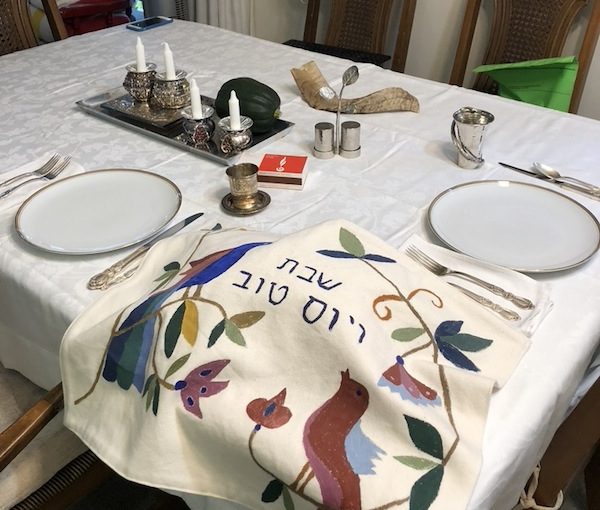
(photo by Shelley Civkin)

Not only did I never imagine that I wouldn’t be able to hug and kiss my family during Rosh Hashanah dinner; I didn’t even get to see them this year. Everyone is still hunkering down, keeping out of COVID’s way and staying close to home. At least most people are.

In case you’re one of those people waiting for things to “get back to normal,” I hate to be the one to deliver the bad news, but there is no going back. Normal is a setting on a dryer. Once the world claws its way out of this pandemic, we will be forever changed. Like grief and loss over time, we may not feel worse, but I guarantee we’ll feel different.

What will come out of this topsy-turvy pandemic is something much better. I’m hopeful that everything we’ve lost and sacrificed will be not only rectified, but made even more hopeful, soul-sustaining and life-affirming. I struggle to say these words, because it sounds downright arrogant, considering the losses people have suffered in the last many months, physically, financially and emotionally. But, if I choose to take the other fork in the road, it’s a dark and scary path, and I just don’t want to go there.

This Rosh Hashanah, like every Rosh Hashanah, we celebrated. Just differently. There was no fanfare. There was no cooking. There were no guests. Not even family. Being cautious by nature has stood me in good stead so far this year, and there was no way I was risking it all after such a long haul. So, we scaled down the physical celebration and revved up the spiritual one. We read more about the High Holiday rituals and their significance this year than ever before; we recited the blessings more powerfully than in the past; and, from our very core, my husband and I sincerely wished each other a healthy, sweet and good new year. And we meant it like never before.

In past years, I would fuss and bother and cook and bake. This year, I didn’t have the emotional or physical koach (strength) for it all. Preoccupied with health challenges, I decided to take the easy way out and have our meals catered from Chef Menajem. Not only was the food spectacular, but it made things (read: pandemic isolation) a bit easier to accept. I set an elegant (if empty) table, got out my silver candlesticks, draped the sweet challah with my homemade Yom Tov challah cover, and we proceeded to eat Rosh Hashanah dinner alone. Just the two of us. It was slightly eerie, but, at the same time, absolutely perfect. And, yes, that’s an acorn squash adorning the table. I didn’t even have the wherewithal to track down a pomegranate. And, while an acorn squash isn’t a first fruit, it was my first squash of the year. I’m sure G-d will understand.

A feeling of tremendous blessing came over me as I realized just how lucky we are to have each other, my husband Harvey and I. Thinking of our single, divorced and widowed friends, and the loneliness and isolation they’re feeling right now, my heart breaks. How I would have loved to invite those friends to our home to join our modest New Year’s celebration. A little wine, a lot of food, some brachot, some honey cake. But COVID-19 was having none of it.

Turns out, COVID-19 is a big, huge bully. It doesn’t care one iota about anyone’s feelings; it doesn’t want to know from suffering or depression or desperation. But, we know, and we’re fighting back. With joy. As many of you know, lots of local Jews took to the parks and beaches to hear the shofar on Rosh Hashanah this year and I, for one, infused much more meaning into the holiday than I can ever remember. Because I could. And it was a very conscious choice. Not only is Rosh Hashanah part of our heritage, it’s our right. And we sure as heck weren’t going to let COVID take that away from us, too. Everything just seemed to magnify this year – the holiness, the urgency, the depth of feeling. And, while it may have seemed a bit lonely from the long view, it was nothing short of superb close up.

Stepping in to fill the spiritual void so many of us are experiencing this year, there are dozens (if not hundreds) of rabbis and synagogues around the world offering online Jewish learning. I want to say a personal thank you to all of you. You are a lifeline, literally. Because of you, I am studying and learning more about my Judaism, and participating in its mitzvot to an extent that’s surprising even me. Never before has finding meaning and purpose taken on such enormous importance. Our mission isn’t just to stay alive; it’s to thrive, even in the face of this brutal pandemic. We, as a people, are stronger than that. Unfathomably stronger.

The pandemic has, for the most part, brought out the best in humanity, and certainly within our Jewish community. People are helping strangers, feeding strangers, doing errands for strangers and wanting to do more. And it’s not just Jews helping Jews. It’s Jews helping everybody. Truly, the world has become one people. When we climb out of our little hidey holes and show up for life in the most positive, compassionate ways we can, each of us makes the world a bit better. And the light grows.

Not a single one of us will come out of this pandemic the same person. We do have the choice to become a better version of ourselves though. Stretched beyond our comfort zone, tired from doing too little for too long, we do have the ability (and the desire) to puff ourselves up and accept the challenges facing us. Or even go beyond. If that’s all that’s within our control right now, that’s enough.

No one is asking us to perform miracles – that’s not in our job description anyway. All we’re being asked to do is help one another through this challenging time. Even just a kind word can get the job done. Do something. Do anything.

Shelley Civkin, aka the Accidental Balabusta, is a happily retired librarian and communications officer. For 17 years, she wrote a weekly book review column for the Richmond Review. She’s currently a freelance writer and volunteer.
Format ImagePosted on October 30, 2020October 29, 2020Author Shelley CivkinCategories Op-EdTags Accidental Balabusta, coronavirus, COVID-19, family, lifestyle, philosophy, Rosh Hashanah

Foods that babas made

I’m here to boldly encourage you to try something entirely different at your Rosh Hashanah table this year. No, not a pony. A new food. Serve it, to non-vegetarians. And, if anybody asks what they’re eating, confidently tell them it’s a family secret. Don’t forget to mention that, if you tell them, you’ll have to kill them. That generally stops people in their nosy tracks. Let me be perfectly transparent: the food I’m about to suggest is on the meat spectrum. Alright, meat adjacent.

Isn’t it enough that everyone’s oohing and ahhing over the unparalleled tenderness of the dish? The specifics are strictly on a need-to-know basis. And no one needs to know. Except your butcher. OK, enough. It’s beef tongue. You heard correctly. I’m aware it’s not politically correct – after all, some farmer is clearly stifling free speech. Even if it only belongs to a cow. (And, technically, they can’t speak anyway. So moot point.)

Just so we’re clear, beef tongue is definitely not vegan. Or vegetarian-friendly. Not by a New York mile. I’m simply providing you with an alternative to screaming chicken, Coca-Cola brisket and mayo-slathered, onion soup-mix salmon.

I know that beef tongue screams old school (and Council cookbook). But so do I. And, if we’re going to be honest about it, people are still enthusiastically scarfing down ketchup-glazed meatloaf and baked salami filled with French’s mustard. They’re just not yelling it from the rooftops. So, loosen up and try thinking of beef tongue as a distant relative. Second cousin twice removed. Only maybe a little farther. But, still, meat mishpachah.

Before you pooh-pooh it, give it a shot. At least Google it and see what other Jews have to say about it. Most delis sell it pickled. But, believe me, pickled tongue has nothing on the sweet and sour version. Personally, I prefer to just boil it, cool it and eat it in a sandwich. With yellow mustard. On white bread. I can see the lynch mob in the distance.

The cooking part is where it gets tricky. If you’re a man, chances are you can’t relate to what I’m about to describe. You ladies, on the other hand, will understand perfectly. The cooking per se is easy (see recipe below). The next part is where it gets awkward. Once it’s cooked, you need to peel off the rubbery outside skin: think of taking off a pair of too-thick, too-tight pantyhose. That are wet. And it’s a hot, humid day. Not a particularly appealing visual, but it’s fairly accurate hyperbole.

Trust me when I tell you that your family/guests will be drooling all over themselves, demanding the recipe – if they can get past the sordid cooking details. Without further ado, here goes. And don’t be fooled by the simplicity of the recipe. You’re welcome.

SWEET AND SOUR BEEF TONGUE

1 beef tongue
2 onions, peeled and quartered
3 cloves garlic, peeled and halved
2 bay leaves
***
15 oz can of tomato sauce
15 oz water
3/4 cup brown sugar
juice of 1 lemon
1/2 cup sultana or dark raisins
dash of Worcestershire sauce (optional)
salt and pepper

Put the tongue and the rest of the ingredients into a deep pot with enough water to cover it well. Bring to a boil and simmer partly covered for about three-and-a-half hours, until tender when pierced with a fork. As it’s cooking, skim off the shmootz that forms on top. When tender, remove from the water. While it’s still warm, remove the skin (see detailed, gross description above), bones and stem. Slice and serve as is, or slice and serve with the sweet and sour sauce.

At the end of the day, a well-cooked beef tongue is all you need and nothing you don’t. But, I get that some of you are disgusted at the thought of eating tongue. So, for you finicky folks, I offer up another old school recipe – short ribs. This one is decades old and was handed down from my father’s cousin, Bertha Bloom. Nobody said it was diet food, so, if you’re not fussy about calories, go for it. Short ribs are notorious for being fatty, but therein lies most of their charm. Alright, all of their charm. You’ll diet tomorrow. And, hopefully, not die of clogged arteries tonight. But, have your cardiologist on speed dial, just in case.

BERT BLOOM’S BARBEQUE SHORT RIBS

Season two pounds of short ribs with salt, pepper and garlic salt then broil them until brown and half cooked. Transfer them to a covered Dutch oven (or similar deep roasting pan). For the sauce:

1 cup chili sauce
1/4 cup ketchup
4 tsp dry mustard
1/2 cup brown sugar
1 clove garlic, crushed
1 tbsp soy sauce
small tin of crushed pineapple

Mix the ingredients together – including the juice from the pineapple tin, but not the pineapple – put in a pot and bring to a boil. Pour the sauce over the ribs and cook covered at 300°F to 325°F for one-and-a-half to two hours, basting occasionally. Add the crushed pineapple 20 minutes before it’s finished cooking and leave uncovered. Prepare to be awed by the yumminess factor.

For your guests who prefer healthy food, you may want to direct them elsewhere for Rosh Hashanah dinner. Or, if you’re a really nice and accommodating host, make them a marinated tofu mock-roast. Or a Tofurkey. But, for those of you indulging in the short ribs, now might be a good time to loosen your belt or unzip your skirt, and prepare to stuff your belly. It’s Rosh Hashanah. Celebrate with some new arterial stents! Tell Dr. Saul I sent you.

Shelley Civkin, aka the Accidental Balabusta, is a happily retired librarian and communications officer. For 17 years, she wrote a weekly book review column for the Richmond Review. She’s currently a freelance writer and volunteer.
Posted on September 11, 2020September 10, 2020Author Shelley CivkinCategories Celebrating the HolidaysTags beef tongue, cooking, Rosh Hashanah
More than a teaching position

More than a teaching position

Sara Barahan, a former Israel Connect student, continues to meet with her mentor from the program, and has started helping others improve their English, too. (photo from Chabad Richmond)

Israel Connect pairs a mentor with an Israeli teen student who is wanting to improve their English reading, vocabulary and language skills. Mentors dedicate time every week to a video meeting with their student, using Israel Connect’s “Tour of Israel” curriculum. The goal is that, by the end of the school year, students have the skills and confidence they need to succeed in Israel’s national university entrance exam.

I have been blessed with the opportunity of being part of the Israel Connect program as a volunteer tutor/mentor. Having done this for a few years, I’m keenly aware of the benefits for both students and tutors.

A year-and-a-half ago, I was matched up with Sara Barahan, 23, who is older than the average student we work with and is in college. When we were first matched up, she was in her first year, studying to be an English and special needs teacher. It was pure joy from the moment we met. Her enthusiasm, motivation and single-minded pursuit for learning English was palpable, and her commitment and memory extraordinary.

We were tutor and student for a full school year and, once it finished, Sara asked if we could continue to meet via WhatsApp video, independently, and, of course, I agreed. I think I enjoy our meetings even more than Sara does! Even though I have a new Israel Connect student I tutor once a week, Sara and I continue to talk weekly, often for an hour or more. I’ve met many of her family members, virtually, and we’ve shared a lot about our lives in our many conversations.

For one of her college assignments, Sara was asked to write about the people and things that have influenced her on her journey to learn English. This is what she wrote:

“The Israel Connect Program was sponsored by Chabad. This program involves senior volunteer tutors from all over North America, who are fluent English-speakers, connect online, one-on-one via Zoom, for 30 minutes once a week with Israeli high school students who want to improve their English conversation and reading skills. The organizers know that good English skills will give Israeli students an advantage in accessing post-secondary education, and getting better jobs.

“English proficiency is crucial to Israeli students, since it makes up a third of their entrance exam marks for university. Students and tutors make great connections and it often goes beyond simply tutoring the curriculum, and turns into friendship. The program is something concrete and meaningful that helps Israeli students improve their lives. Building relationships is a highly satisfying and core part of this program, for both the students and the tutors.

“I joined the Israel Connect Program when I was in my first year in college,” said Barahan. “The lecturer offered this program (although it was meant to be for teenagers) and I saw it as an opportunity to improve my English, so I decided to participate in it. And this is how I got to know my tutor, Shelley from Vancouver, Canada, who until today is still in touch with me.

“This program is very important and meaningful to me because it is through this program that I got to meet the person who has influenced me, and a person that I enjoy talking to about different topics. This relationship has become very close and it’s not just a virtual meeting about a set curriculum; our conversations are about topics far beyond the studies. Thanks to the Israel Connect program I have gotten the chance to practise my English speaking, reading, writing and listening skills and expand my vocabulary.”

What greater accolade could Israel Connect get than this firsthand testimonial from a graduate of the program? I use the word graduate because Sara participated as an older student and has continued with her English studies.

Sara and I are fast friends, despite our 41-year age difference. We talk about school, her social life, our families, her aspirations, her frustrations, and everything in between. She confides in me and we have become very close. I would say that Sara seems like a daughter to me, except for the fact that I’m old enough to be her safta (grandmother). The age disparity isn’t an issue though; in fact, I like to think that she sees me as a kind of hip grandmother.

Sara often asks for my help proofreading her essays for school, and I love helping her learn. I see remarkable progress in her English language fluency and conversation skills. She says that I’m the only person she can speak English with, and really appreciates practising with me. What better way to learn a language than to converse at length about all sorts of topics? And Sara has gone on to tutor English to her neighbour’s 9-year-old daughter. Now, if that’s not a success story, I don’t know what is!

Other Israel Connect mentors have also expressed how gratifying it is to help these young Israeli students, and most mentors say that they’re certain they enjoy the experience at least as much as their students. They’ve described the mentoring experience as refreshing, fun, fulfilling and, at times, challenging – but always rewarding. Their students all sincerely appreciate the chance to practise their English conversation, vocabulary and reading skills with someone who is friendly and nonjudgmental. Some kids said they are embarrassed to try speaking English in class, or in front of their family, so the Israel Connect program gives them the confidence to speak. More importantly, it gives them the incentive to continue learning English, which they know will help them as they enter university and seek out good jobs.

Israel Connect always welcomes new volunteer mentors. For more information about the program and how to volunteer, go to tinyurl.com/yd6y4jrq.

Shelley Civkin is a happily retired librarian and communications officer. For 17 years, she wrote a weekly book review column for the Richmond Review. She’s currently a freelance writer and volunteer. She wrote this article for Chabad Richmond.

Format ImagePosted on August 21, 2020August 20, 2020Author Shelley CivkinCategories LocalTags Chabad Richmond, Diaspora, education, Israel, Israel Connect, Sara Barahan, volunteering
Summer salads for lazy days

Summer salads for lazy days

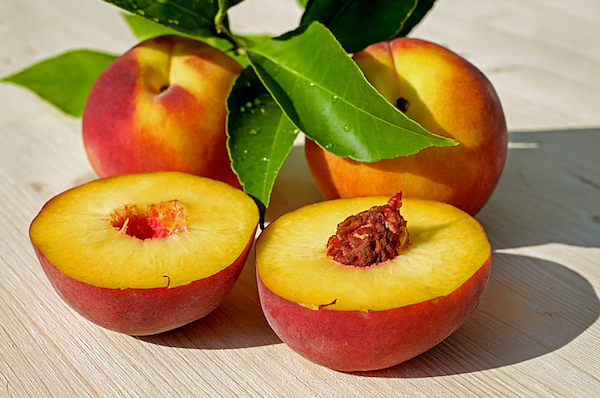
A peach salad not only looks pretty, it’s like a cold culinary shower on a hot day. (photo from pickpik.com)

Recently, I was food-shamed. Not for binge eating. Or for eating too much junk food. But for not eating enough vegetables. Guilty as charged. But seriously? In my own defence, I have a gut (or at least part of one) that doesn’t play nicely in the sandbox with all vegetables. Truth to tell, it can be somewhat of a bully.

Just to set the record straight, I wasn’t always veggie averse. A few short years ago, I could wolf down Caesar salads, corn on the cob and sautéed kale like nobody’s business. It’s mostly a distant memory now, though. But I can still share the love, even if I can’t eat all the food.

Being a bit of a COVID weeny, I’m not entirely comfortable going out to restaurants yet, so I continue to make do at home. Until recently, when the beautiful fresh veggies and fruits started showing up at the party, my fallback positions were fish, chicken and beef; the occasional pasta dish. It was getting a tad dull. So I’m thrilled that I now can eat lighter and fresher.

Here are a few of my favourite lazy summer salads. Nobody likes easy recipes quite like I do. My rule of thumb is this: if a recipe calls for a foodstuff or piece of equipment that a) I’ve never heard of, or b) I don’t know how to pronounce, there’s no way on earth I’m trying it. Hence, lazy-girl recipes are my specialty. The following are not only super-healthy, but they’ll hit the spot on days when you just don’t feel like cooking for real. And what better time to take advantage of all the fresh seasonal fruits and veggies available everywhere in Vancouver? This first salad not only looks pretty, it’s like a cold culinary shower on a hot day.

PEACHY SUMMER SALAD

peaches, diced
Roma tomatoes, diced
can of corn niblets, drained
red or sweet onion, finely diced
fresh mint or basil, chopped or cut chiffonade
blueberries

Throw together a vinaigrette from olive oil and balsamic vinegar and, voilà, you’ve got yourself a refreshing, easy salad that’s a surefire crowd-pleaser. If, however, you’re a card-carrying carnivore like me, you might want to follow it up with an eight-ounce ribeye chaser.

Another summer fave is Sunomono salad. It’s a cold Japanese salad made of rice vermicelli noodles swimming in a rice wine vinegar dressing, if you will. You can add almost about anything to jazz it up, but, being a purist, I only like to throw in some thinly sliced English cucumber and maybe a bit of shredded carrot. If you crave protein, imitation crab will jack it up a notch. There are a variety of recipes for the dressing, but this is my no-fail go-to.

SUNOMONO SALAD

3/4 tsp salt
3/4 cup rice wine vinegar
1/2 cup sugar
small squeeze of lemon juice
few drops of soy sauce
rice vermicelli noodles

Shake the first five ingredients together in a jar, then pour it over cooked and rinsed, cold rice vermicelli noodles. Don’t add too much dressing to each bowl, as it’s quite concentrated – just add enough to cover the noodles. Leftovers can stay in the fridge for a day or two. Sunomono is obviously too flimsy to be a main dish, but it makes a great starter or side dish and goes with everything, particularly fish. Think of it as a Japanese palate cleanser.

For a heartier salad that can double as a main dish (depending on your appetite), I’m a big fan of cold orzo salad. Since this salad is pasta-based, it’s much more filling than just a bowl full of veggies or fruit. And, with the bold-flavoured ingredients, it’s got a depth to it that belies its simplicity.

COLD ORZO SALAD

8 oz orzo pasta
1/2 cup pitted Kalamata olives, roughly chopped (or more, to taste)
4 oz baby spinach (split in two bunches)
6 oz feta cheese, roughly crumbled
1/4 cup pine nuts, lightly toasted on the stove or in the toaster oven (optional)
1/4 cup red onion, finely chopped (optional)
3 tbsp olive oil
1 tbsp balsamic vinegar (or less, to taste)
1 tbsp red wine vinegar (you can substitute lemon juice or regular vinegar)
salt and pepper to taste

  1. Cook the orzo eight to 10 minutes for al dente, or a bit longer if you like it softer. Drain and rinse with cold water.
  2. Puree half the spinach and one tablespoon of the olive oil in a blender. Put cooled orzo in a big bowl and stir in the pureed spinach/olive oil mixture until the orzo is well-coated with the spinach puree.
  3. Roughly chop the other half of the spinach. Lighty mix the chopped spinach, feta cheese, pine nuts, Kalamata olives and red onion in with the orzo.
  4. Make the dressing in a small jar by combining the remaining two tablespoons of olive oil with the balsamic vinegar and the red wine vinegar. Put the lid on the jar and shake it to mix well, or whisk it all together in a small bowl. Pour over orzo mixture and gently mix till it’s all incorporated.
  5. Chill the salad for at least an hour before serving to let the flavours meld.

To round out your meal, buy or make a simple rosemary focaccia. I make one from scratch (in a cast-iron pan) that’s to live for. Sure, it’s easier to buy one, but, if you really want to dazzle your dining companion(s), I suggest putting in the extra effort. Believe me, the effort/reward ratio is huge.

I found my recipe online at flavorthemoments.com/one-hour-rosemary-focaccia-bread and the only things I leave out are the garlic and parmesan, but it’s up to you. You could also add chopped Kalamata or green olives to it, but keep in mind it calls for coarse kosher salt sprinkled on top, so it’s already high in sodium. The focaccia turns outs camera-ready gorgeous and tastes heavenly straight out of the oven, dipped in EVOO (extra virgin olive oil). I mean, who doesn’t love fresh bread? With the hot weather right around the corner (that’s the optimist in me), now might not be the best time to bake bread, but that’s your call. If you ask me, it’s totally worth it.

So, give yourself a break, throw together a salad for dinner and call it a day. If your spouse, partner or you are still hungry after all that, do what I do – order in pizza.

Shelley Civkin, aka the Accidental Balabusta, is a happily retired librarian and communications officer. For 17 years, she wrote a weekly book review column for the Richmond Review. She’s currently a freelance writer and volunteer.

Format ImagePosted on July 10, 2020July 9, 2020Author Shelley CivkinCategories LifeTags Accidental Balabusta, food, fruit, recipes, salads
Kugel comforts during COVID

Kugel comforts during COVID

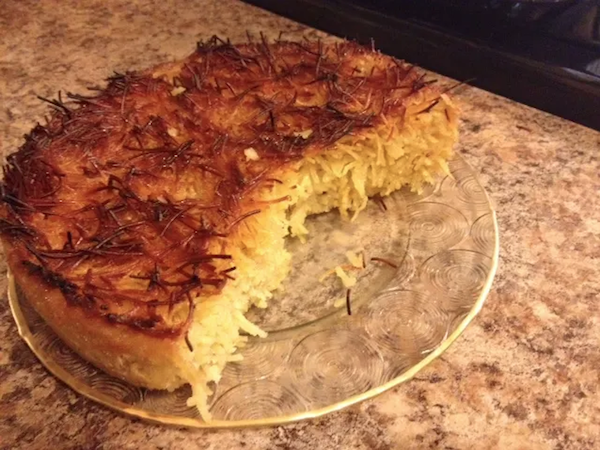
Yerushalmi kugel by Jamie Geller. (photo from jamiegeller.com)

If I’d known the world was going to be locked down because of the COVID-19 pandemic, I would have stocked up on toilet paper, disinfecting wipes and pasta much sooner. Of course, only one of those is edible.

Desperate measures call for desperate times and, when so many restaurants have closed, cooking has become mandatory. As has self-isolation. Sure, we could order takeout, but I’m still slightly paranoid about who cooks my food. After all, you’re only as healthy as the last person you were in contact with. I rest my case.

I’ve tried to be creative in the kitchen, but, when you’re used to eating sushi at least once a week and shopping for fresh food every day, it gets challenging during a lockdown. Now we eat more pasta. Way more pasta. My husband Harvey loves it. Me, not so much.

Harvey does a Costco run every so often to stock up, but I’m loathe to send him out into the dangerous spittle-filled world of COVID coughs right now. And the regular stores are often out of the basics, at least until recently. To be completely frank, I’m sick of cooking. So, what’s an accidental balabusta to do?

I’ll tell you what I did. I handed Harvey my mother’s tattered Jewish Council Cookbook the other day and pronounced: “Make something!” So, what does he choose from all those geshmak recipes? Tuna noodle casserole. You know the one – it’s composed of Campbell’s cream of mushroom soup, Kraft Dinner and a can or two of tuna. If you want to get really fancy shmancy, you can grate some aged cheddar cheese on top. It’s the quintessential comfort food. Minus the sushi. Or, in Harvey’s case, minus the tuna.

My first dip of the fork into the ooey-gooey goodness of the tuna noodle casserole elicited a squeal of surprise. It was actually delicious. Processed deliciousness, but nonetheless yummy in the extreme. The tummy wants what the tummy wants. After a few bites, I expressed my perplexity that I didn’t taste the tuna. Harvey said it had probably sunk to the bottom, so I did a deep dive to the base of the casserole dish, and … bupkis. Harvey had a go at it and, likewise, nada. He humbly walked over to the fridge, opened it, and sheepishly admitted that he’d forgotten to put in the tuna. So, we were eating KD with mushroom soup and a crusty topping of melted cheddar. It was still superb, in a plebian sort of way. Does this count as accidental balabatishness? I didn’t think so. Even if it did, I wasn’t the balabusta who made it.

I’m not proud of what we ate. But I’m sure other people have eaten worse. Much worse. Think fried Spam. Or headcheese (whatever that is). Nobody is going to raise their hand and cop to either of those atrocities, but, trust me, I know where the bodies are buried.

In the end, a casserole that I thought was going to feed us for two nights lasted three. Kind of like a tuna-based Chanukah miracle – the “excess” tuna gave its life for a couple of sandwiches, to boot. The real victory was that I didn’t have to cook for three whole nights.

Don’t think I can’t hear you yelling, “What’s the matter with you people? Haven’t you ever heard of salads?!” Well, yes, as a matter of fact, I have. And, as much as I love salads, it’s not a mutual admiration alliance. Harvey buys pre-bagged salads for himself as a side dish, but rarely do we eat a jacked-up salad for the main course. It could very well land me in the hospital, and I choose not to take that chance. Digestion issues.

By rights, I should probably have scurvy by now, but I have thankfully dodged that bullet. To get some colour in my food, I put steamed or roasted carrots in everything. Sometimes, I even eat broccoli. Is my diet restrictive? Sure. Am I relatively healthy, nonetheless? Yes – the operative word being relatively. My body happens to do well on protein. Lots and lots of protein. Animal protein. I’ll own it: I’m a card-carrying carnivore. Don’t judge me. In case you care, I used to switch things up with more varied restaurant food before COVID-19 came calling. But now that I’m relegated to my own culinary wits, things have gotten kind of serious. And not in a good way.

I am jonesing pretty bad for some agedashi tofu and salmon sashimi, but I don’t dare eat that now. I heard that, if you get takeout food, the first thing you should do is transfer it to your own dishes and reheat it in the microwave to kill off any viruses or bacteria. That’s fine for cooked food, but I believe that eating sashimi during a COVID-19 pandemic is like sticking a hand grenade in your mouth and hoping to have a pleasant day.

Desperate for some variety, I dug through my recipes and came across one for Jerusalem kugel. It still counts as pasta, but I view it as a more cultured, genteel pasta. Usually a side dish, I knew I could convince Harvey that it’s a main (especially if I served him enough of it). I figure I’ll follow it up with a roasted carrot/yam chaser. This particular kugel is satisfyingly savoury and sweet, and the recipe is by Jamie Geller.

SWEET AND PEPPERY JERUSALEM KUGEL

1 (12 ounce) package thin egg noodles
1 cup sugar
1/3 cup oil
4 eggs
1 tsp salt
1/4 tsp to 1 tsp ground pepper

  1. Preheat oven to 350˚F.
  2. Bring a pot of water to a boil. Cook noodles according to package instructions. Strain and set aside.
  3. Add the sugar and oil to a large pot on low heat. Stir until sugar is dissolved and a deep golden caramel colour, but not burnt. This can take 20 minutes or more.
  4. Turn off the heat and add the noodles into the pot of sugar. Immediately stir with a big spoon until the noodles are coated in the caramel. Don’t worry if the sugar hardens into blobs – it will melt in the oven.
  5. Allow the mixture to cool for about 10 minutes. Mix in the eggs, salt and pepper. (Make sure it’s cool so the eggs don’t cook.)
  6. Pour the mixture into a greased springform pan or baking dish. Bake for one hour.

May this COVID-19 pandemic be over with soon. In the meantime, as Dr. Bonnie Henry says: “Be kind. Be Calm. Stay safe.” As for the Accidental Balabusta, figuring out what to cook every night should be my worst problem. Ever.

Shelley Civkin, aka the Accidental Balabusta, is a happily retired librarian and communications officer. For 17 years, she wrote a weekly book review column for the Richmond Review. She’s currently a freelance writer and volunteer.

Format ImagePosted on May 29, 2020May 28, 2020Author Shelley CivkinCategories Op-EdTags Accidental Balabusta, baking, comfort food, cooking, coronavirus, COVID-19, Jamie Geller, kugel

Blessings during COVID-19

It’s far too easy to think of all the hardships and sacrifices that have come with COVID-19. They’re ubiquitous and abundant. They’re in our face the second we step outside our front door, turn on the TV or go online. A barrage of bad news. A surfeit of sadness. A plethora of pathogens. A deluge of disease. Stop me anytime.

It’s getting to be too much. But that’s beside the point. As Prime Minister Justin Trudeau keeps telling us, “moistly,” and with practised gravitas, “We are all in this together.” Sadly, that is no consolation. There is one thing that does help though: making a habit of feeling grateful. While some of you will shut me down right now as being a cliché, that’s where I’m coming from.

Every day or two, when I go for a short walk in my neighbourhood, I look around and wonder when spring happened. How is it that I missed seeing the nascent buds on the magnolia trees, which are now strutting their huge pink flowers like botanical catcher’s mitts? When did the hydrangeas arrive at the party? And when did everyone start walking around the local park in facemasks and latex gloves?

Nothing I have experienced in my 64 years comes close to this COVID-19 pandemic. Same goes for most of us, I’m sure. There is nothing to compare it to, thank G-d. I am at a loss for synonyms. Only antonyms hit the mark: normal, regular, run-of-the-mill. We will likely never return to what we knew as normal ever again. At least not the same variety. But that’s not necessarily a bad thing. Perhaps we will come to redefine normal in an even better light. I know one thing: most people have become kinder, more thoughtful, more aware. This is huge.

In the face of the overwhelming upheaval, illness and sadness we’ve been witness to, I choose to feel grateful. Because there are always gems among the dross, moments of pure beauty and holiness. I assure you, I’m not some Pollyanna who views life through rose-coloured glasses all the time. However, challenged by what’s going on around us, I need to believe that there is still much to be thankful for in this COVID-19 world. For my part, that includes my health, my husband, my family. As well as these sunny days. The last remnants of snow on our pristine mountains. Less traffic. Clear skies. A shocking dearth of commerce. My pension. Food in the freezer and enough pasta to last until I’m 90. I feel luckier than most.

I can’t begin to comprehend the suffering that’s going on around me. Not only the illness and death that’s affecting families and communities all over the world, but the sheer panic and anxiety from loss of jobs, loss of homes, not enough to eat, wondering what’s next. But I’m shored up knowing that there are still people out there who are putting themselves at risk to help others, by delivering food, picking up medications and, of course, all those frontline workers who turn up every day.

For now, I take comfort in the little things, which, I’m realizing have become the big things. Like a walk in fresh air, and hearing good news of any sort. It doesn’t take much. The drugstore has facemasks and latex gloves in stock – woo hoo! I can finally buy Lysol wipes again – victory! Oh, how perception has shifted. If I’ve learned one thing, it’s that this pandemic has taught us to reevaluate our priorities.

Time and a sense of accomplishment are a whole other story. At the beginning of the pandemic, the pattern of my days rotated around things instead of ideas and concepts. Back then, I thought a productive day was accomplishing this:

  • Buying a box of disposable facemasks at Canadian Tire.
  • Spending two hours and successfully finding a store that sells alcohol swabs.
  • Making fried matzah with cinnamon and honey bananas for my husband.
  • Ironing our laundry.
  • Dusting (two rooms).
  • Successfully (or not?) diagnosing myself with eczema from constant and somewhat obsessive handwashing.

Not much, but at least I did things instead of sitting around binge-watching Netflix all day. As the weeks passed, I began to tip the scales by attending online seminars throughout the day; some from the Rohr Jewish Learning Institute, some from Chabad, and others.

Between running around doing, and sitting and learning, I struggle to distinguish between wasted time and purpose. It seems almost counterintuitive, even ridiculous, to call anything purposeful right now. I mean, how much purpose can we have during a pandemic? Who can we influence for the good? What kind of mitzvot can we do?

Believe me – or don’t – but the answers to those questions are: lots, many, and endless. It takes scant energy to say hello to a stranger on your daily walk and ask how they’re doing. People just need to experience or see one good deed to carry it forward. There are countless ways to do a mitzvah – phone an elderly relative or friend; buy a few extra groceries and give them to someone in need; make a meal for your neighbour and deliver it to their doorstep. Simple. Simple. And simple. Just get outside yourself.

The world, and we humans, are not that complicated. It doesn’t take Herculean effort or huge sums of money to pull someone out of an emotional hole. It simply takes an open heart. We spend countless hours building our bodies so they can withstand the weight of the world. Now it’s time to build our hearts. In fact, there is no better time than right now. So go forth and be your best self – for yourself, and for others.

Shelley Civkin is a happily retired librarian and communications officer. For 17 years, she wrote a weekly book review column for the Richmond Review. She’s currently a freelance writer and volunteer.


Posted on May 15, 2020May 14, 2020Author Shelley CivkinCategories Op-EdTags coronavirus, COVID-19, gratitude, lifestyle

Choose to be and to do good

As Jews, we’re acutely aware of our core Jewish values: help others, perform mitzvot, respect human dignity and life, love your neighbour as yourself, act morally, save lives, repair the world. But do we actually do those things? As we’ve heard before, it’s the duty of every single person to leave the world better than he or she found it.

During this unprecedented time, when the world is reeling from the COVID-19 pandemic, now, more than ever we need to remind ourselves of Jewish morals and ethics. And be better Jews.

Exceptional times typically bring out both the worst and the best in people. I’m choosing to focus on the best, though. For instance, folks around the world going outside at a set time every day to make noise and show their gratitude for frontline workers – and not just the doctors, nurses and caregivers, but also grocery store cashiers, letter carriers, pharmacists, delivery people, tradespeople, chefs and taxi drivers. Anyone and everyone who puts themselves in harm’s way each day, to keep us safe, fed and healthy.

If we don’t, as a society, learn the value of showing gratitude and generosity in desperate times, we become a society without a soul. If we think only of ourselves, we become lacking in conscience and void of morality.

What I know for certain is this: if a Jew needs something, another Jew should always step up and help out. It’s what we are supposed do. It’s what we’ve always done, most of the time. It might even be embedded in our DNA. In fact, we’re commanded to do it. Here are some tips for being a better Jew during COVID-19 (and always):

  • Take care of yourself so that you can take care of others. This may sound trite and over-used, but it’s true: your health is everything. I have suffered a long and serious illness and it’s shown me that nothing is more important than having your health. Unless it’s faith.
  • Be an active participant in life – this is not just a long lunch break. There is more to life than Netflix and reading (says the retired librarian). There are meaningful things you can be doing with all your spare time now. Think about where you can be of service, and whom you can help.
  • Practise random acts of kindness, compassion and loving care for your fellow human being – remember the Golden Rule. It can be something as simple as thanking a healthcare worker or letter carrier you see walking on the street. It doesn’t take much to show someone that they’re needed and appreciated.
  • Practise generosity – share, don’t hoard. Surprise a family member or friend with a meal or small gift that might just make their day. It can be something as simple as an extra few rolls of toilet paper or a container of disinfectant wipes (COVID-19 gold). Something that lets them know you’re willing and happy to share. Just remember physical distancing! A friend of mine recently brought me some extra face masks she had on hand (again, coronavirus gold).
  • Offer to do errands (grocery shopping, picking up a prescription, walking a dog, etc.) for family, friends or acquaintances in need. Be someone’s hero. People won’t always be comfortable asking for help, so be proactive and offer, if you can.
  • Cultivate faith (emunah) and trust (bitachon) in G-d, that everything will be OK. Life is easier when you have a higher power on your side and understand that there are many things you can’t control.
  • Check in regularly with single friends and seniors, in particular. Isolation can be devastating, especially when it’s ongoing. Even if you can just wave to a friend or family member through a window, that might just be their only human connection all day (or all week). It costs nothing and it’s priceless. Small gestures can have big impacts. Help people feel part of their community.
  • Show gratitude every day, because there is always something for which to be grateful. Whether it’s big (your good health) or small (cherry blossoms on the trees), appreciate the abundance in your life. It’s everywhere you look. Just keep your eyes open. And get out there at 7 p.m. every day and clap your hands or bang your pots and pans, to show your thanks to all the frontline workers who turn up for us every single day to make our lives easier. We are one big family – show the love!
  • Keep in mind the social and economic impacts the COVID-19 pandemic is having on everyone. Be sensitive to the situations of those less fortunate than yours. If you can, offer financial help, food or any other kind of assistance when you see the need.
  • Volunteer your time delivering food or supplies to others if you’re healthy and able. Contact and get involved with your local synagogue, Jewish Family Services, the Kehila Society or any other organization, Jewish or non-Jewish, working to alleviate the many needs right now.
  • Stay positive – for yourself and others. Positivity is the best medicine during this stressful time.
  • Be your best self. Let your innate goodness shine through. Remember we each have a tiny piece of divine soul within us.
  • Do mitzvot – tip the scales for good.
  • Give tzedakah. You don’t have to be a millionaire to make a difference in someone’s life. Every little bit helps.
  • Study a bit of Torah or other spiritual texts, if you’re so inclined.
  • Recite Psalms, if you’re so inclined. (I have a copy that includes English commentary, and this makes it so much more meaningful when I read them. It started out slowly for me, but now I find huge comfort in reading Psalms. Why not give it a try?)
  • Participate in some online classes or listen to speakers via Zoom video presentations. There’s a lot of inspiration and new perspectives to be gleaned, and goodness knows we could all use some of that right now.
  • Keep busy by finding purpose in your life. This is so important, especially right now, when there is so little to distract us from the devastation of COVID-19. Try to look for the good in every situation – it will serve you well. I’ve been on both sides of that wall and believe me when I say that staying positive will make your life much easier.

Here are some simple rules to live by (unknown source): help others without being asked; help people who cannot help you; help without the expectation of return; help many people; do the right thing the right way.

Remember that, every second of every day, we make choices. Choose to be good and do good. You can’t go wrong with that.

Shelley Civkin is a happily retired librarian and communications officer. For 17 years, she wrote a weekly book review column for the Richmond Review. She’s currently a freelance writer and volunteer.


Posted on April 24, 2020April 24, 2020Author Shelley CivkinCategories Op-EdTags coronavirus, COVID-19, health, Judaism, lifestyle
Why not take olive me?

Why not take olive me?

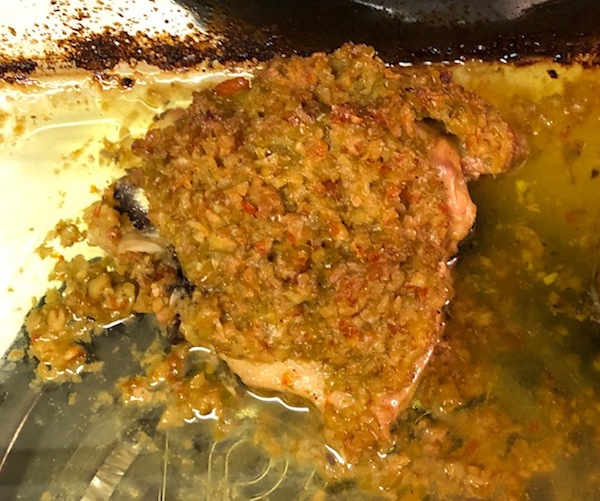
Tori Avey’s Mediterranean Olive Chicken is one of those guest-worthy dishes – impressive, yet easy to prepare and sure to please. (photo by Shelley Civkin)

It’s Thursday afternoon and I’m wondering what the maid is going to make for dinner. Or how I’m going to spend that $70 million Lotto Max I just won. Or when I’ll fly to Mars. See my quandary? I guess you could say I’m in a rut: fish, chicken, steak. Not being a big pasta fan, I seem to fall back on my old regulars every week. If I let him, my husband Harvey would eat pizza and pasta every night.

I remember the ’60s, when my mom had an unwritten weekly dinner schedule. Sundays were prime rib roast with Yorkshire pudding, roast potatoes and salad. The salad was only ever iceberg lettuce (hadn’t farmers discovered romaine, butter lettuce or kale yet??), mixed with cucumbers, tomatoes and green onions. Bottled dressing. The rest of the week’s dinners consisted of chicken livers with onions, salmon, meatloaf or hamburgers, or chicken. Each main was accompanied by the same weekly side dishes. And I mean the same. There was little, if any, variation from week to week. There’s something to say for consistency. With the exception of salad, every other vegetable mom served was frozen and came pre-chopped in a plastic bag. It was the ’60s after all. Occasionally, we’d go to the White Spot on Granville and 67th for a treat, and eat in the car, with the long tray spread across the front seat, attached to the window edges. Exciting times!

It’s funny that the ’60s and ’70s were a time of instant everything – Carnation Instant Breakfast, Pop-Tarts, Shake ’n Bake, Swanson TV Dinners, Nestle’s instant chocolate milk. Even though lots of women were stay-at-home moms and had time on their hands. Not to diminish the hard work they did raising their kids and keeping the house spotless. But let’s face it, lots of women today work outside the home and still do the majority of the childrearing and house chores. There were those privileged few who also had live-in housekeepers (yes, my family was one of them), and still my mother used lots of instant, pre-made foods. She was a good cook, for sure, but had to have a recipe in front of her. I’m like her in that regard. But I digress.

When we got married 10-and-a-half years ago, Harvey and I used to eat out at restaurants three to four times a week. So cooking was easy. Now, not so much. Sure, retirement provides me with more time to explore recipes. But my heart’s just not in it. Actually, that’s not true. I’m usually so busy volunteering that I simply don’t have the time (or inclination) to sit in front of a computer looking for culinary inspiration. Harvey thinks of cooking like a chemistry experiment, so he enjoys it. But as we get older (and sleep way less), we’ve kind of lost the fire in our bellies for cooking.

My father, alav hashalom, used to describe me as a human garbage disposal, because I would pretty much eat anything. He used to say that I’d “eat out of a puddle.” I was the “Give-it-to-Mikey-he’ll-eat-it” daughter. Admittedly, as long as someone else cooks it, I’ll eat it. That was then.

I am still a very easy-to-please eater – as long as the food isn’t too spicy, doesn’t contain too much roughage and doesn’t have nuts, corn, celery or raw vegetables in it. Well-seasoned food is nice, but, at heart, I’m a purist. With a bad gut. Bland food doesn’t bother me; in fact, I’ve been known to enjoy hospital food. After my recent three-month stomach illness, during which I ate only bland food, and very little, I’ve been a bit apprehensive about trying anything different. But, lately, as I’ve been feeling better, I figure it’s time to branch out. Caution to the wind!

As I strolled the culinary landscape that is the internet, I came across a particular chicken recipe by Tori Avey, whose recipes I’ve enjoyed before. Best thing about this recipe is that it’s easy. And, turns out, it’s stunningly delicious. Feast your taste buds. Find it online at toriavey.com/toris-kitchen/mediterranean-olive-chicken.

TORI AVEY’S MEDITERRANEAN OLIVE CHICKEN
(tweaked by me slightly)

3/4 cup chopped green olives (I used queen Manzanilla)
1/3 cup extra virgin olive oil
2 tbsp fresh lime juice
1 tbsp crushed garlic
2 tsp honey
1/2 tsp lime zest
salt and pepper
4-5 lbs chicken pieces, bone in, skin on (I use 6 chicken thighs, as we’re dark meat fans, but white meat would be fine, too)

The recipe also called for red pepper flakes and dried oregano, which I omitted, plus wine to make a sauce afterwards, which I also omitted.

  1. In a mixing bowl, whisk together the chopped olives, olive oil, lime juice, garlic, honey and lime zest. Season the marinade with salt and pepper to taste.
  2. Sprinkle the chicken pieces lightly with salt and pepper. Place chicken pieces in a nine-by-13-inch baking dish. Brush the pieces evenly with olive marinade, using all of the marinade to coat.
  3. Cover the baking dish with plastic wrap and place in the refrigerator for at least two hours (or up to overnight).
  4. Preheat oven to 375˚F. Remove the plastic wrap and cover the baking dish with foil. Pierce a few vents with a sharp knife around the outer edges.
  5. Place the covered dish in the oven. Let the chicken bake for 60 minutes, then remove the foil and bake for an additional 15 to 30 minutes, basting periodically, until well cooked and tender. At the end of cooking, you can broil it for a minute or two to brown the skin (I didn’t bother with this step).

After two bites, my husband pronounced this the best chicken I had ever made. Bar none. And we eat a lot of chicken. Since I usually bake chicken uncovered and it turns out dry, this was a surprising treat – extremely moist, über-flavourful and just as yummy the next day. I’ll probably double the recipe next time around, since it’s worth having enough left for a second dinner. This is one of those guest-worthy dishes – impressive, yet easy to prepare and sure to please. And it makes a nice Shabbat meal, too. I also realized the versatility of the marinade when I tried it on pasta. I’d place bets that it goes well with steak, too. One marinade, three uses. Now that’s a masterful marinade!

You’re welcome. Beteavon!

Shelley Civkin aka the Accidental Balabusta, is a happily retired librarian and communications officer. For 17 years, she wrote a weekly book review column for the Richmond Review. She’s currently a freelance writer and volunteer.

Format ImagePosted on April 3, 2020April 2, 2020Author Shelley CivkinCategories LifeTags Accidental Balabusta, chicken, cooking, Tori Avey

Posts pagination

Previous page Page 1 … Page 4 Page 5 Page 6 Page 7 Next page
Proudly powered by WordPress