Skip to content
  • Home
  • Subscribe / donate
  • Events calendar
  • Business Directory
  • FAQ
  • News
    • Local
    • National
    • Israel
    • World
    • עניין בחדשות
      A roundup of news in Canada and further afield, in Hebrew.
  • Opinion
    • From the JI
    • Op-Ed
  • Arts & Culture
    • Performing Arts
    • Music
    • Books
    • Visual Arts
    • TV & Film
  • Life
    • Celebrating the Holidays
    • Travel
    • The Daily Snooze
      Cartoons by Jacob Samuel
    • Mystery Photo
      Help the JI and JMABC fill in the gaps in our archives.
  • Community Links
    • Organizations, Etc.
    • Other News Sources & Blogs
  • JI Chai Celebration
  • JI@88! video

Recent Posts

  • Federation now across BC
  • Israel fighting for its existence
  • Deal strengthens Iran
  • Patriotic belonging diminishes
  • A campaign to engage
  • Upstanders’ first live event
  • Responding to Carney
  • Having your own home
  • Music a family tradition
  • Musical to warm heart
  • Community milestones … June 2026
  • Sharing her passion for Israel
  • Or Shalom reopens its doors
  • JFS from past to future
  • Need holistic approach
  • Sharing stories, advice
  • Journalist shares fears
  • Skills to live together
  • Road to independence
  • Cutting grass with scissors
  • Zionism as a solution
  • Deceit, desire & the divine
  • Reclaiming sacredness
  • Creative project ideas
  • Summer squares and cobbler
  • Thou shalt … summer commandments
  • Legal help for students
  • Revisiting myth of Lilith
  • Wrong person rebuked
  • Canada’s mixed messages
  • Questions for museum
  • Symposium on antizionism
  • Making soccer political
  • CJPAC lauds Pulver’s impact
  • City recognizes Vrba’s legacy  
  • Organ donation saves lives

Archives

Follow @JewishIndie
image - The CJN - Visit Us Banner - 300x600 - 101625

Byline: Dvora Waysman

Israel at 69 – “love forever”

Jews all over the world celebrate Yom Ha’atzmaut, Israel’s Independence Day – even those who have no intention of ever making aliyah and many of whom have never even visited Israel.

“It’s a kind of insurance policy,” one overseas friend told me. “By supporting Israel financially and emotionally, I know that its sanctuary is available to me or my children or grandchildren should the need ever arise.”

I find this kind of thinking very sad, because Israel is so much more than a refuge for persecuted Jews. Not every immigrant who has built a life here was escaping from the horror of the Holocaust, the tyranny behind the Iron Curtain or the cruelty of life in an Arab country. Many of us – the ones Israelis refer to as “Anglo-Saxim” – lowered their standard of living significantly when they settled in Israel, yet found something here that enhanced our quality of life even as we struggled with inflation, mortgages and trying to make miniscule salaries stretch to the end of the month.

We have found here a family – our own people. Of course, just like any family, we fight – about religion, politics, the settlements. The fights can be very bitter yet, at bottom, we care about each other and bond together when we face a common problem or enemy. We celebrate together and sometimes even have to grieve together. Basically, when the going gets rough, we are on the same side. We express our identity as Jews in different ways, but it is the same identity.

We have found here a beautiful country, unique in the variety of its scenery and climate. Mediterranean beaches banded by azure and indigo water and white sands, coral reefs, dense forests, wooded mountains, deserts and rivers and waterfalls, the shimmering mirrored glass of the Dead Sea, fields carpeted with wildflowers – and Jerusalem, the priceless jewel.

Some of us have found here a spirituality that we would never have been able to achieve abroad. Anyone who has been in Israel on Yom Kippur, when the whole country comes to a standstill for the day, cannot doubt the kedushah, the holiness of Eretz Israel. It is intangible, yet it is an undeniable presence.

We have found here a pride in the remarkable achievements of our relatively smaller and less-developed nation. We teach agriculture to the world, and come to other people’s rescue in times of natural or human-made disasters. We are rich in poets, writers, musicians, actors and artists. We can boast industrial and high-tech entrepreneurs and brilliant scientists. When any new Israeli invention captures the world’s imagination, somehow we all bask in the reflected glory.

Israelis have always been compared to the sabra, the cactus with the thorny exterior but the soft heart. We celebrate Yom Ha’atzmaut in many ways: campfires and singing, picnics, a Bible quiz, concerts, music and dancing in the streets. We spend the day with family and friends and relish every moment of it. But it is more than just enjoyment.

On every building and on almost every balcony flies the Israeli flag, its blue stripes and Magen David bright against the white background. For days beforehand and a week afterwards, the flag flies from every car on the road. Ceremonies open with the singing of Hatikvah, The Hope, Israel’s national anthem. Most of us sing it standing straight and proud, and often with tears in our eyes as we remember the broken people who found a safe haven here, and those who never managed to reach its shores and died with the dream of Zion in their hearts. And we also remember the brave men and women who gave their lives in all of Israel’s wars and in the pre-state days, the fighters and pioneers who fashioned this wonderful land that we have inherited.

Shin Shalom, one of Israel’s greatest poets, expressed it for all of us in “Mother Jerusalem Singing,” which he wrote a day after the Yom Kippur War in 1973: “Love forever, glow forever / cherish, yearn, preserve the kernel / of an everlasting nation, of a heritage eternal.”

Dvora Waysman is a Jerusalem-based author. She has written 14 books, including The Pomegranate Pendant, which was made into a movie, and her latest novella, Searching for Sarah. She can be contacted at [email protected] or through her blog dvorawaysman.com.
Posted on April 28, 2017April 26, 2017Author Dvora WaysmanCategories Op-EdTags aliyah, Israel, Yom Ha'atzmaut
Familiar sounds of Passover

Familiar sounds of Passover

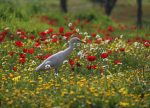
Heron among the flowers near Kibbutz Be’eri, in southern Israel. (photo by Aliza Reshef via PikiWiki)

There is something about Passover that speaks to almost every Jew. In 1840, in a book titled Der Rabbi von Bacharach, Heinrich Heine wrote: “Jews who have long drifted from the faith of their fathers are stirred in their inmost parts when the old, familiar Passover sounds chance to fall upon their ears.”

Although my family was not Orthodox, we always held a seder in Australia, and the singing after reading the Haggadah (and eating lots of knaidel and drinking the cups of wine) was very spirited. As a child, I loved the lively “Dayeinu” and the last song, “Chad Gadya,” which we sang in English, “Only one kid, only one kid which my father bought for two zuzim….” The words seemed very funny to me, until the mood suddenly changed at the end – when we began to sing about the Angel of Death, I remember my mother’s eyes used to fill with tears.

Many years later, when I became observant and began practising mitzvot that, at first, were strange and unfamiliar to me, the seder was like coming home. No one had to explain it to me, or tell me what to do. Etched into my consciousness were the memories of the seder table … the three matzot arranged between the folds of a white cloth so that no two were touching; the dish of parsley with the bowl of salt water; the bitter herbs, the shank bone and the roasted egg.

I remember helping to make the charoset, a delicious mixture of apples and almonds moistened with wine. Passover is so rich in ritual and, that is, after all, the Jews’ survival system.

Without the seder, there’d be no reason for the family to come together at this time. Not every family is religious but, at Pesach, most are traditional. There is a special feeling about the snowy tablecloth with new dishes, the big cup of wine for Elijah, the opening of the door for the prophet to come in, and sweet children’s voices chanting “Mah Nishtanah,” like it’s a favourite pop song. “Memories are made of this”!

In Israel, Passover is a spring festival. After the cold, rainy winter, the air becomes a warm caress. The almond flaunts its white blossom and all the trees are bedecked with new green lace. Cyclamens and wild violets peep shyly from crevices in the rocks, while purple irises and scarlet poppies dot the fields. The cereal harvest season has begun.

However, Pesach is more than a link in the agricultural cycle of

Israel. Its true significance is historical, commemorating the Exodus from Egypt and our release from slavery. The matzah symbolizes the unleavened bread, which did not have time to rise in our hasty flight from Egypt.

The Hebrew word for Egypt is Mitzrayim, the root of which is tzur, meaning narrow or constrained. To say that we must leave Egypt is to say that each of us must struggle to break out of our own narrowness to obtain our full potential – spiritually, emotionally, psychologically.

The main lesson of Passover is freedom. At Passover, we celebrate it on three levels: seasonally, as we mark the release of the earth from the grip of winter; historically, as we commemorate the Exodus; and, on a broader human plane, our emergence from bondage.

In Judaism, events transcend the moments of their happening – they are part of a continuous process that involves not just a single generation, but all who went before and all who follow after. The cycle of the Jewish year is also the cycle of our survival.

May the old, familiar sounds of Passover be woven into the consciousness of you and your family. And may you truly consider the possibility when you conclude your celebration with the words: “Next year in Jerusalem!”

Dvora Waysman is a Jerusalem-based author. She has written 14 books, including The Pomegranate Pendant, which was made into a movie, and her latest novella, Searching for Sarah. She can be contacted at [email protected] or through her blog dvorawaysman.com.
Format ImagePosted on March 31, 2017March 31, 2017Author Dvora WaysmanCategories Celebrating the HolidaysTags Israel, Passover

The strength of family circle

There is a wise Jewish saying: “A little hurt from a kin is worse than a big hurt from a stranger.” (Zohar, Genesis 151b) Why is that? Strangers come and go in our lives. Some remain to become friends, others are barely remembered and, as we move on in life, we leave them behind. But family – that’s a different story.

The closest bonds we will ever form are with our parents and our siblings. They know us intimately and, even with all our faults, they still love us. (Though, admittedly, not everyone is so lucky to have a loving family.)

Next comes the extended family – cousins, aunts, uncles, et al. Some of them we just tolerate, often in an amused way, because families are like fudge – mostly sweet with a few nuts! But we do care about them because they are kin.

Within our own close family circle, we are proud of each other’s accomplishments and boast of them. We hurt when a family member is unhappy. We celebrate birthdays and anniversaries, and we try to be together for important Jewish holidays. That is what family should mean.

I’ve always loved the description of her family by the late Erma Bombeck: “We were a strange little band of characters trudging through life sharing diseases and toothpaste, coveting one another’s desserts, hiding shampoo, borrowing money, locking each other out of our rooms, inflicting pain and kissing to heal it in the same instant, loving, laughing, defending, and trying to figure out the common thread that bound us all together.” I think most families can relate to this warm-hearted description.

When there is a break in a family circle, it can be unbearable. It’s not just a matter of location, for, these days, communication has never been easier and we can connect with family wherever they live. But, when there is a misunderstanding and angry words are exchanged, it can be heartbreaking. We feel as though we have a deep fracture in our very being and life will never be the same again if the family member we once loved is lost to us.

Teenagers are known to be rebellious and that is considered normal. It is necessary for them to become independent, to break away from the sheltering family structure. It can be very hurtful for parents to see them break away, but if they were nourished with your morals and standards of ethical behavior in their childhood, and educated with love, they won’t stray too far. Siblings may have very different ideas from each other as adults, but no one – not even a spouse – can have the same kind of bond, with its childhood memories, shared experiences, old family jokes. It is special.

When strangers hurt you, you may become disappointed or angry, but it doesn’t tear at the fabric of your being. You are not obsessed by it and whatever has happened, you know that you will get over it in time.

It is not the same with families. When there is a break between parents and children or brothers and sisters, it colors every aspect of your life, for the family is your haven, your soft resting-place. When there is a break, your emotional security is gone. We need to feel ourselves one in a world of kinfolk, persons of variety in age and temperament, yet allied to us by an indissoluble bond, which nature has welded before we are even born. A family quarrel does not just leave aches or wounds; it is more like splits in the skin that won’t heal because there’s not enough material. Author Dodie Smith described her family as “that dear octopus from whose tentacles we never quite escape, nor, in our inmost hearts, ever quite wish to.”

So, cherish your family while you still have them. Other things may change us, but we start and end with the family, which is one of G-d’s masterpieces. Having a place to go is your home. Having someone to love is your family. Having both is a blessing.

Dvora Waysman is a Jerusalem-based author. She can be contacted at [email protected] or through her blog at dvorawaysman.com.


Posted on November 11, 2016November 11, 2016Author Dvora WaysmanCategories Op-EdTags family

Determination key to continuity

“The power above is set in motion by the impulse from below, even as vapor ascends to form the cloud. If the community of Israel did not first give the impulse, the One above would not move to meet her, for yearning below makes completion above.” – Zohar, Genesis 35a

I have always believed the secret of Jewish survival is exemplified in the life of my grandmother, of blessed memory, who I never met. She died when my mother – the second youngest of 11 children – was only 7 years old. Young as she was, my mother, Sarah Rebecca Opas, never forgot her mother, or the spirit of Yiddishkeit she left behind.

My grandmother’s name was Mila and she was betrothed to my grandfather David from the age of 3, when her parents in Plotsk, Poland, called her in from playing to tell her that, when she grew up, she was to marry the little boy next door. This was back in the early 1800s when betrothals were arranged by parents as a matter of course.

It was the time of pogroms in Europe and, when he reached the age of 17, David informed his parents he was leaving for the New World and had secured a job on a ship. “What about Mila?” he was asked. “I will send for her when I get settled,” he assured them. “No you won’t, you’ll take her with you.” So, Mila, then 16, and David were married by the rabbi before sailing to the New World, which David believed to be America, but was in fact Australia.

The ship took six months to reach Port Adelaide in Australia. David was hired to be a handy man on the vessel, and his first job was to look after the food. As there was no refrigeration then, the whole supply of meat was lowered on cables into the ocean, where the salt water would preserve it. However, he failed to secure it properly, and it all sank to the bottom of the sea – no meat for the crew for the entire trip. His next job on board was to sew any sails that had been torn in the strong winds. He had no idea how to sew, so his young wife did it for him, as well as keeping the captain and crew’s clothing repaired.

Before they reached Australian shores, Mila was already expecting her first child.

Both having come from Orthodox homes, it was a terrible shock to them when they landed. No synagogues, no kosher butchers, no established Jewish communities. They settled in a little country town, Bombala, near the border between Victoria and New South Wales. David opened a store to provide fodder and dry goods to the farmers in the surrounding districts and, gradually, as they learned English, the business prospered enough to give the family a comfortable lifestyle.

But Mila’s heart was always sad, because she did not know how to keep her family Jewish, as there were no other Jews for them to meet and marry. So, she made a plan.

Mila had heard that there was a small Jewish community in the city of Sydney. As each of her older children turned 18, she would travel to Sydney and stay there until she found a Jewish boy or girl willing to go back with her to Bombala and marry one of her children, sight unseen. Her love of her Jewish heritage was such that achieving this became the most important part of her life, and she was amazingly successful. Of the 11 children, only one of them married a non-Jew; there were no divorces. Sadly, Mila died of scarlet fever still relatively young, before the penicillin was invented that would have saved her life.

My mother and her little brother were raised by their older sisters, who by then were all married. They never let her forget her mother and the importance of remaining Jewish even in near-impossible situations where Jewish rituals are almost nonexistent.

In retelling my grandmother’s story to me so many years later, my mother always stressed that the Jewish soul is unquenchable. No matter how far one strays from observance, the spark remains and it is something precious that must be cherished and passed on from generation to generation. By making my home in Israel, becoming an observant Jewish woman, and being blessed with 18 Israeli grandchildren and 16 great-grandchildren here, I hope my mother and grandmother can be at rest.

Dvora Waysman is a Jerusalem-based author. She can be contacted at [email protected] or through her blog dvorawaysman.com.
Posted on October 28, 2016October 27, 2016Author Dvora WaysmanCategories Op-EdTags continuity, Israel, Judaism
Glimpses of happiness

Glimpses of happiness

Many people have read an enormous amount of Holocaust literature during their lifetime. The stories are tragic, horrifying, heartbreaking. No matter how many books you read, or films and documentaries you see, you can never come to terms with the fact that such evil exists in the world.

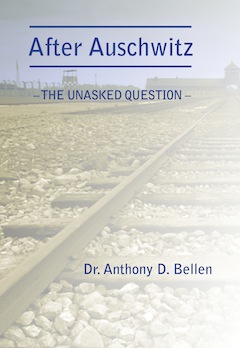
But Dr. Anthony D. Bellen’s book – After Auschwitz: The Unasked Question (Mazo Publishers, 2016) – is different. He is a clinical psychologist specializing in post-traumatic stress disorder, moral resilience and restorative processes. He lives in Israel, is a husband, father and grandfather, and has retired from the Israel Prison Service, where he headed the department of treatment and rehabilitation. He now works with people who have suffered trauma.

book cover - After AuschwitzThe unasked question in the book’s title is: “Do you remember any positive experience from your time in the concentration camp? Was there ever a positive interaction – a brief moment of happiness in the midst of that evil abyss?”

Bellen has chosen six survivor interviews for this book from 56 he conducted with Holocaust survivors in 2004 for his doctoral research study in the department of criminology at Bar Ilan University. The six gave him permission to share their stories, although their names have been changed for privacy.

I don’t think I will ever forget any of these stories. Motti’s moment of happiness occurred on the day of liberation from Theresienstadt, when a Russian soldier stood on a wooden crate and called out in Yiddish: “Has anyone seen my mother?” For Ida, it was finding a friend from her village – Miryam. For Eva, it was finding her hairbrush from home that her brother managed to give her before he was gassed in Majdanek. Reuven’s moment of happiness came in a swimming pool with two friends. Ya’acov’s joy came from meeting the love of his life, Sonya, in a laundry in Brintz. Sarah’s positive memory came from a Christmas in Bromberg, where she and some friends “performed” a song for the SS and later for the inmates of the camp.

These were just miniscule moments of happiness, gone in a flash, but powerfully remembered decades later – and never shared before.

The book concludes with a bibliography and references, as well as the seven questions Bellen asked each interviewee. These remarkable stories may help other people with different traumas find the strength to overcome them. They may even change your perceptions and understanding of your own life.

Dvora Waysman is a Jerusalem-based author. She can be contacted at [email protected] or through her blog dvorawaysman.com.

Format ImagePosted on October 7, 2016October 5, 2016Author Dvora WaysmanCategories BooksTags Holocaust, memoir
Recalling the Six Day War

Recalling the Six Day War

Jerusalem Day celebrations in Israel (photo by Ashernet)

This Jerusalem Day – 28 Iyar (June 5) – marks 49 years since the city split in two by Jordanian occupation became reunited. Nowadays, the names of battle sites are just part of our everyday language – French Hill, Ammunition Hill, Government House – but back in 1967, these were the places where armies were pitted against each other in battle.

We didn’t have Ramat Eshkol then; the hilltops of Gilo were barren and windswept. The Israeli army fought to win territory to the north and the south, until only the walled Old City was still in Jordanian hands.

The war, not of our making, was sparked on April 7, 1967, when the Syrians opened fire on Israeli tractors working near Kibbutz Ha’On, east of the Kinneret. The Israel Defence Forces returned fire, so the Syrians began shelling settlements. Israel Air Force jets were sent to destroy Syria’s artillery batteries. Then Syrian MiGs were sent to intercept them, resulting in dogfights above Kibbutz Shamir. Eventually, six Syrian planes were downed and Syria demanded that Egypt issue a response, which posed a dilemma for president Gamal Abdel Nasser. To prod him, Syria said Israel was amassing forces on the northern border, which was untrue, but Nasser sent massive forces to Sinai on May 14 and 15.

Israel had to call up its reserves, as all United Nations troops had left the Sinai and Gaza. Volunteers swarmed to help with transportation, distributing food and preparing bomb shelters, helping in factories and kibbutzim. Thousands of our soldiers were deployed along the Egyptian border waiting for cabinet to make a decision.

There were frequent meetings between prime minister Levi Eshkol and chief-of-staff Yitzhak Rabin, who said that the IDF was strong and could repel any Arab attack. There were messages from U.S. president Lyndon Johnson calling – as is always the case! – for Israel to show restraint. Egypt also was asked not to escalate the situation.

Eshkol announced that Israel did not seek war, but to no avail. The Egyptians closed the Tiran Straits. On June 5, the war began. Two hundred IAF jets destroyed the entire air forces of Egypt, Syria and Jordan: 374 planes were destroyed on the ground and the rest in dogfights. Israel had complete aerial supremacy during the six days of battle.

On the ground, the IDF entered Sinai in three columns. Jordan started shelling Jerusalem, firing day and night, resulting in many casualties, while Syrian jets raided Haifa Bay and northern settlements.

On June 6, our paratroopers surrounded the Old City and, at 10 a.m. on June 7, they broke through the Lions’ Gate, liberating the Western Wall and the Temple Mount. Lt.-Gen. Motta Gur stood near the Wall, and announced on the radio: “The Temple Mount is in our hands!”

After hours of fierce battles, the paratroopers burst into tears. According to Mordechai Rechschafner, a volunteer from Australia, “There was no sense of jubilation. We had lost too many friends. We had paid for our victory with blood and sacrifice.” When Maj.-Gen. Shlomo Goren, the chief military rabbi, arrived at the Kotel, he blew the shofar and said a prayer: “This is the day we have been yearning for. Let us rejoice in it!”

The Six Day War ended two days later, after the Israel Navy conquered the Tiran Straits and seized Egyptian army bases and airfields in Sinai, and Israel captured the Syrian fortified posts. When the Golan Heights was conquered, the war ended.

There was both great euphoria and terrible sadness. Jerusalem was the focus of the greatest celebration, but a great toll had been exacted. All day the radio played Naomi Shemer’s “Jerusalem of Gold” – it became a victory anthem.

It was three years later that I arrived with my husband and four children in Jerusalem. Forty-six years have passed, and my love for the city has deepened every day. There have been hard times and there was heartache when each of our children served in the army. When our son was a paratrooper in Lebanon, we questioned whether we had made the right decision in bringing them from the safety of their birthplace Australia. Now, most of their children have served in the army or are soon to be inducted, but none of them has ever felt we made a wrong decision. They grew up in Jerusalem and know as we do that it is special. Our feet walk over the stones that King David danced on. We pray at the Western Wall where the Holy Presence, the Shekhinah, still lingers. We travel roads on which kings, soldiers, priests and other holy men have traveled for thousands of years, century after century. Every day, we bathe in the unique quality of golden light that artists have striven to capture.

Each neighborhood in Jerusalem is different. Quiet alleyways that meander, bustling markets filled with the color and spicy smells of the Middle East, walled courtyards softened with a glimpse of greenery. Holy sites where prayers are whispered and blessings invoked. Quiet hills silhouetted with pine trees. Graveyards for the old and military cemeteries for the young. Parks where children laugh and dimpled babies are wheeled in prams. So ancient, and yet also a modern metropolis where people work, play, shop, drive, argue and love.

This Jerusalem Day, as I have for more than four decades, I will thank G-d for the privilege of living here and pray for the peace of Jerusalem forevermore.

Dvora Waysman is a Jerusalem-based author. She can be contacted at [email protected] or via her blog, dvorawaysman.com.

Format ImagePosted on May 27, 2016May 25, 2016Author Dvora WaysmanCategories Op-EdTags IDF, Israel, Jerusalem Day, Six Day War

Our sons, daughters

What happened last month in Hebron is heartbreaking. A young soldier is being vilified for killing a terrorist who had come for the sole purpose of murdering Jews. He is now facing charges of manslaughter.

One of the most difficult things about our decision to make aliyah was knowing our four children would have to serve in the Israel Defence Forces. After all, it was our decision, not theirs, to leave the safety, security and comfort of their birthplace, Australia, to make a new life in Israel.

That was in 1971, two years before the Yom Kippur War erupted. But we stayed, and they grew up here knowing that it was a duty, even a privilege, to set aside their ambitions temporarily and devote a few years to serving their country. They became Israeli gradually and, by the time they were 18, regarded army service as a natural rite of passage.

Nevertheless, as a mother, I found it hard. I will never forget the trauma of standing on the beach at Palmachim (near Ashkelon) with the other parents and watching our younger son make his first parachute jump. Forty young paratroopers jumped that day. Because of the altitude of the planes, it was impossible to see our sons’ faces until they almost landed. We watched breathlessly to see the parachutes open, one by one. I thought each one was my son and, finally came to the realization that they were all my sons.

The years passed. Our sons and daughters enlisted, with one son fighting in Lebanon. They went to university, married, had children of their own. It was lovely to be grandparents of babies, toddlers and then young children. But now, most of them are grown up and following in their parents’ footsteps. Some have completed army service, some are currently serving and some will soon reach that significant age of 18.

We have attended numerous ceremonies where we have watched hundreds of boys take an oath of allegiance. We sang “Hatikvah” with that catch in the throat one gets at moments of high emotion. We laughed as they threw their caps in the air, signaling the end of the formal proceedings. We were so proud of them, and so afraid of what they might be called to do, what decisions they would have to make.

Just like the young soldier in Hebron.

To every parent whose children have served in the IDF, how can our hearts not go out to this young soldier’s family?

Every soldier is our son, our daughter.

Dvora Waysman is a Jerusalem-based author. She can be contacted at [email protected] or through her blog dvorawaysman.com.


Posted on April 8, 2016April 6, 2016Author Dvora WaysmanCategories IsraelTags Hebron, IDF, Israel, soldier, terrorism
Land connections

Land connections

Dried fruit and almonds are traditionally eaten on Tu b’Shevat. (photo from Gilabrand (talk) via commons.wikimedia.org)

Until Jews began to return to Eretz Israel in 1948, no one thought of them as farmers. For nearly 2,000 years, we had been dispersed throughout the world and, in many places, were not permitted to own land or engage in agriculture. But, in ancient Palestine, we were an agricultural people. We treasured the olive tree, the grape vine and the date palm. The Bible encouraged us to plant “all manner of trees” and forbade the destruction of trees of a conquered land.

Just as we believe that on the first day of the seventh month, Rosh Hashanah, we are judged and our fate for the coming year is inscribed in the Book of Life, so we are taught to believe that trees are similarly judged on the New Year of the Trees, Tu b’Shevat (the 15th day of Shevat, this year Jan. 25), the first day of spring.

This semi-holiday has always been associated with tree planting. In ancient times, one planted a tree at the birth of a child – cedar for a boy, cypress for a girl. Special care was given to these trees on Tu b’Shevat and, when the children married, branches of their own trees were cut for the chuppah (wedding canopy).

It is said that, on the 15th day of Shevat, the sap begins to rise in the fruit trees in Israel. So, we partake of the fruits of the land: apples, almonds, carobs, figs, nuts, dates and pomegranates. The pious stay up very late on the eve of the holiday reciting passages from the Torah that deal with trees and the fertility of the earth. We read the story of how trees and plants were created (Genesis 1:11-18), the divine promise of abundance as a reward for keeping the commandments (Leviticus 26:3-18 and Deuteronomy 8:1-10) and the parable of the spreading vine, which symbolizes the people of Israel (Ezekiel 17).

Sephardi Jews have their own special manual, The Fruit of the Goodly Tree. It was first published in the Judeo-Spanish language, Ladino, in Salonica, composed by Judah Kala’i. Each verse is recited as the relevant fruits are eaten, and some of the verses translate as follows:

  • “G-d increase our worldly goods / and guard us soon and late / and multiply our bliss like seeds / of the pomegranate.”
  • “For our Redeemer do we wait / all the long night through / to bring a dawn as roseate / as the apple’s hue.”
  • “Sin, like a stubborn shell and hard / is wrapped around our ssoul / Lord, break the husk and let the nut / come out whole.”

Each of the fruits has symbolic meaning. The rosy apple stands for G-d’s glowing splendor; the nut represents the three kinds of Jews – hard, medium and soft. The almond stands for swift divine retribution, for it blossoms more quickly than other trees. The fig means peace and prosperity, and the humble carob stands for humility, a necessary element of penitence.

Judaism’s strong ties to agriculture and ecology are captured by Rabbi Yohanan ben Zakai, who once declared: “If you hold a sapling in your hand and hear that the Messiah has arrived, plant the sapling first and only then go and greet the Messiah.”

Dvora Waysman is a Jerusalem-based author. She can be contacted at [email protected] or through her blog dvorawaysman.com.

Format ImagePosted on January 22, 2016January 21, 2016Author Dvora WaysmanCategories Celebrating the HolidaysTags Judah Kala’i, Messiah, Tu b'Shevat, Yohanan ben Zakai
Beacon of light, hope

Beacon of light, hope

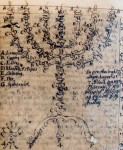
Fray Juan Ricci (1600-1681), sketch of the menorah as described in Exodus, undated. The number of lights on the chanukiyah – eight – is a break with the traditional seven-branched menorah. (photo by Ellen Prokop via commons.wikimedia.org)

The Festival of Lights is unique. We celebrate it for eight days, when most other Jewish festivals and holy days last one or two days or, at the most, seven. The number of lights – eight – is also a break with the traditional seven-branched menorah, which was rekindled in the Temple after the victory over the Syrian-Greeks. We also add a special prayer, “Al Hanissim,” whereby we thank G-d for the deliverance from our enemies:

“Thou didst deliver the strong into the hands of the weak; the many into the hands of the few; the wicked into the hands of the righteous; and the arrogant into the hands of those who occupied themselves with Thy Torah.”

At each morning service, we relate biblical accounts of the dedication of the altar at the time of Moses, and the gifts brought by the 12 princes of Israel. We are comforted, as a small nation against today’s sea of evil, by the words: “Not by might, not by power, but by My spirit, says the Lord of Hosts.” (Zechariah 4:6)

Even though the Temple was destroyed in 70 CE, it did not affect celebrating Chanukah because it is centred mainly on the home. In the third century CE, when our enemies launched their persecution of the Jewish people, when kindling Chanukah lights was forbidden, as often happens, this later awakened special esteem for the rite. It became a sanctification of G-d’s name, with special blessings.

Light has great significance in Judaism. Even during the plague of darkness in Egypt, we are told “all the children of Israel had light in their dwellings.” (Exodus 10:23) Although Chanukah imposes minimum religious restrictions, we are required to kindle the lights, stating that this commemorates “the miracle, deliverance, deeds of powers of salvation” wrought by the Almighty at this season. We are instructed not to use the lights for any utilitarian purpose – they are only to be seen. We pray to be placed “on the side of light” and the mystical book of Zohar promises “a palace of light that opens only to him who occupies himself with the light of Torah.”

Why did it take the priests eight days to prepare more olive oil for the Temple menorah? The 25th of Kislev marked the peak of the winter olive harvest season. The Maccabees’ hometown of Modiin lay in the heart of the country’s richest olive-growing region. They could have quickly picked the olives, prepared the oil and rushed it to the Temple in Jerusalem, a day’s walk away.

The explanation is that the special oil required for the menorah was clear oil of beaten olives (Shemot 27:20). It was a two-part operation: first, the beating and, then, the resulting mash was piled into flat fibre baskets and weighted to squeeze out the oil. It was not extracted by pressure, but allowed to seep out drop by drop. This process took much longer, producing an oil free of sediment and impurities, which burned a clear flame.

The date of Chanukah is related to the winter solstice, when the longest night of the year gives way to a gradual increase in the length of each day. When the Greeks first desecrated the Temple, they offered sacrifices to Zeus on the solstice. Upon the Temple’s liberation, three years later, the Jews renewed their service to G-d on the anniversary of the day it had been desecrated, as a gesture of defiance.

The Festival of Lights takes on special meaning at this time of darkness. In Israel, we see daily stabbings, shootings, car rammings and murders of Jews. But, no matter how dark the days of intolerance and racism worldwide, Chanukah has special meaning. The miracle is not just the supernatural one of the flask of oil. It is that beacon of light, the passion of man that transcends the momentary and the opportune. The Chanukah lights, like the Jewish people, refuse to be extinguished.

Dvora Waysman is the author of 13 books. She can be contacted at [email protected] or through her blog dvorawaysman.com.

Format ImagePosted on December 4, 2015December 3, 2015Author Dvora WaysmanCategories Celebrating the HolidaysTags Al Hanissim, Chanukah, chanukiyah
Ethical will still holds true

Ethical will still holds true

Family, Israel remain at centre of Dvora Waysman’s ethical will. (photo by Ashernet, taken on Jerusalem Day 2015)

Very often wills – including ethical wills – are updated as circumstances change. I wrote my ethical will in the early 1970s, when I was still dewy-eyed about aliya and Israel was somehow more innocent, despite the wars she had endured and her ongoing fight for survival.

It was a less materialistic society back then. If you had one car per family, you were well-off; TVs, videos and microwave ovens were a rarity. In fact, not everyone had a telephone and, thank heavens, the ghastly, intrusive cellphone had not been invented.

Our four children (two sons and two daughters) were still kids. They now have all done their army service, graduated university, married and given us 18 wonderful Sabra grandchildren and 10 great-grandchildren, all still living in Israel.

While Israeli society has changed over the past four decades, many of the things I loved have endured. I still find it a great privilege to live in the beautiful city of Jerusalem – it still inspires my poems and my dreams. I still feel part of a family – even though it’s often a squabbling, divisive one. I’ve never considered leaving – to do so would be for me an amputation.

So, with these modifications, I present again my ethical will as it was first published by the World Zionist Press Service, who distributed thousands of copies and reprinted it in two anthologies, Ethical Wills and So That Your Values Live On, both edited by Jack Riemer and Nathaniel Stampfer. I have not changed it, because I can still become misty-eyed at my love affair with Israel. Perhaps today, like a marriage, the passion has somewhat abated, familiarity may have reduced the miraculous to the humdrum but, nevertheless, I am still in love!

My ethical will

As I write this, I am sitting on my Jerusalem balcony, looking through a tracery of pine trees at the view along Rehov Ruppin. I can see the Knesset, the Israel Museum and the Shrine of the Book – that architectural marvel that houses the Dead Sea Scrolls.

I am at an age where I should write a will, but the disposition of my material possessions would take just a few lines. They do not amount to much. Had we stayed in Australia, where you – my four children – were born, they would be much more. I hope you won’t blame me for this.

For now, you are Israelis, and I have different things to leave you. I hope you will understand that they are more valuable than money in the bank, stocks and bonds, and plots of land, for no one can ever take them away from you.

I am leaving you the fragrance of a Jerusalem morning – unforgettable perfume of thyme, sage and rosemary that wafts down from the Judean hills. The heartbreaking sunsets that give way to Jerusalem at night – splashes of gold on black velvet darkness. The feel of Jerusalem stone, ancient and mellow, in the buildings that surround you. The piquant taste of hummus, tehina, falafel – foods we never knew about before we came here to live.

I am leaving you an extended family – the whole house of Israel. They are your people. They will celebrate with you in joy, grieve with you in sorrow. You will argue with them, criticize them and sometimes reject them (that’s the way it is with families). But, underneath, you will be proud of them and love them. More important, when you need them, they will be there!

I am leaving you the faith of your forefathers. Here, no one will ever laugh at your beliefs, call you “Jew” as an insult. You, my sons, can wear kippot and tzitzit if you so wish; you, my daughters, can modestly cover your hair after marriage if that is what you decide. No one will ridicule you. You can be as religious or as secular as you wish, knowing it is based on your own convictions, and not because of what [non-Jews] might say. You have your heritage – written with the blood of your people through countless generations. Guard it well and cherish it – it is priceless!

I am leaving you pride. Hold your head high. This is your country, your birthright. Try to do your share to enhance its image. It may call for sacrifice, but it will be worth it. Your children, their children, and all who come after, will thank you for it.

I am leaving you memories. Some are sad – the early struggles to adapt to a new culture, a new language. But, remember, too, the triumphs – the feeling of achievement when you were accepted, when “they” became “us.” That is worth more than silver trophies and gold medals. You did it alone – you “made” it.

And so, my children, I have only one last bequest. I leave you my love and my blessing. I hope you will never again need to say, “Next year in Jerusalem.” You are already here – how rich you are!

Dvora Waysman is the author of 13 books. She can be contacted at [email protected] or through her blog dvorawaysman.com.

Format ImagePosted on July 17, 2015July 15, 2015Author Dvora WaysmanCategories Op-EdTags ethical will, Israel

Posts pagination

Previous page Page 1 Page 2 Page 3 Page 4 Next page
Proudly powered by WordPress