Skip to content
  • Home
  • Subscribe / donate
  • Events calendar
  • Business Directory
  • FAQ
  • News
    • Local
    • National
    • Israel
    • World
    • עניין בחדשות
      A roundup of news in Canada and further afield, in Hebrew.
  • Opinion
    • From the JI
    • Op-Ed
  • Arts & Culture
    • Performing Arts
    • Music
    • Books
    • Visual Arts
    • TV & Film
  • Life
    • Celebrating the Holidays
    • Travel
    • The Daily Snooze
      Cartoons by Jacob Samuel
    • Mystery Photo
      Help the JI and JMABC fill in the gaps in our archives.
  • Community Links
    • Organizations, Etc.
    • Other News Sources & Blogs
  • JI Chai Celebration
  • JI@88! video

Recent Posts

  • Legal help for students
  • Revisiting myth of Lilith
  • Wrong person rebuked
  • Canada’s mixed messages
  • Questions for museum
  • Symposium on antizionism
  • Making soccer political
  • CJPAC lauds Pulver’s impact
  • City recognizes Vrba’s legacy  
  • Organ donation saves lives
  • Theodore’s March premiere
  • A healing Shabbaton
  • Supplying healthy food
  • A chime of metal tags
  • Yellowknife seder a first
  • Ishai energizes, unifies
  • A Lag b’Omer to remember
  • Expanding the healing
  • Hannah Senesh – a unique hero
  • Community milestones … May 2026
  • Sharing her testimony
  • Fall fight takes leap forward
  • The balancing of rights
  • Multiple Tony n’ Tina roles
  • Stories of trauma, resilience
  • Celebrate our culture
  • A responsibility to help
  • What wellness means at JCC
  • Together in mourning
  • Downhill after Trump?
  • Birth control even easier now
  • Eco-Sisters mentorship
  • Unexpected discoveries
  • Study’s results hopeful
  • Bad behaviour affects us all
  • Thankful for the police

Archives

Follow @JewishIndie
image - The CJN - Visit Us Banner - 300x600 - 101625

Byline: Dvora Waysman

The sweets of summer

The sweets of summer

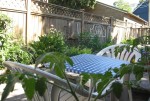
There’s almost nothing better than eating outside in the summer. (photo by Cynthia Ramsay)

Think lazy summer days. Think warm evenings under a star-strewn sky. Think entertaining friends. Think luscious fruits, the chill of ice cream on your tongue, party desserts to tempt your palate. It’s time to be adventurous and try some wonderful summer puddings and desserts.

When the mercury soars, making a fancy dessert can seem like a tall order. The solution is to do most of the work in the cool of the morning or the night before. Finish the preparation at the last minute and present it with a flourish.

Here are a few tips you should keep in mind before trying out the recipes that follow. Egg whites for soufflés and meringues should always be beaten at room temperature, the eggs removed from the refrigerator two hours before beating. They should be fresh and, when you separate the whites, make sure not a speck of yolk gets in. One foolproof method is to break the egg into a saucer, covering the yolk with half an eggshell. Tilt the saucer, pouring off the whites into a clean, dry bowl and use dry beaters. Add a pinch of salt to the whites before beating.

The success of making good cold and frozen puddings often depends on using gelatin (all supermarkets in Israel and many abroad sell a kosher version). Stir it into cold liquid and only afterwards add to the hot mixture. When turning out a frozen pudding, wring out a towel in hot water and hold it over the mold for a few seconds … it will then slide out easily. Egg custards should never be allowed to boil: cook on very low heat or in a double boiler, stirring all the time.

So, let’s get started!

AMBROSIA

6 oranges
2 red apples
1 small tin pineapple rings
3 bananas
a few cherries
1/2 cup sugar
1/2 cup liqueur or sweet sherry
1 cup chilled, whipped cream
other seasonal fruits as desired 

Peel and remove skin from oranges. Slice unpeeled apples into thin rings. Peel and slice bananas. Cover apples and bananas with lemon juice to avoid discoloration. Drain pineapples, remove stones from cherries and halve.

In a glass dish, layer the fruit, sprinkling each layer with a teaspoon of sugar. Reserve cherries for the top. To the pineapple syrup, add liqueur or sherry and pour over the fruit. Cover tightly and chill overnight.

Serve with cream that is passed around in a separate bowl.

MIXED BERRY COBBLERS

6 cups mixed berries (strawberries, blueberries, blackberries, raspberries, fresh or frozen)
1 tsp grated lemon zest
1 tbsp lemon juice
2/3 cup sugar
1/4 cup instant tapioca

biscuit topping:
1 cup flour
2 tbsp wheat germ
1 1/2 tsp baking powder
pinch salt
1/4 cup chilled unsalted butter cut into small pieces
1/2 cup milk
1 egg white lightly beaten
1 tbsp sugar

Pre-heat oven to 375˚F.

Mix berries, lemon zest and juice, sugar and tapioca in large bowl until well combined. Let stand 15 minutes. Spoon one cup of the mixture into each of six one-cup ramekins. Place on a baking sheet. Bake for 20 minutes or until bubbly.

For the topping, stir together flour, wheat germ, baking powder and salt in a medium-size bowl. Cut in the butter with two knives until mixture resembles coarse crumbs. Stir in milk. (The dough will be sticky.)

Remove the baking sheet with ramekins from the oven. Gently stir the filling in each ramekin. Drop 1/4 cup of dough over each ramekin, brushing the dough with egg white. Sprinkle with sugar. Return to the oven, and bake a further 20 minutes until topping is golden. Serve in the ramekins, warm and topped with whipped or ice cream.

APPLE SPONGE PUDDING

4 large cooking apples
2 sticks cinnamon
4 tbsp sugar
300 grams stale cake
1/2 cup thick, whipped cream

Cut up the peeled apples and cook them with the cinnamon and a little water until soft. Grate the cake or crumble to crumbs. In a glass dish, put a thin layer of mashed apple, sprinkle with sugar and cover with a layer of cake crumbs. Continue until all the cake and apples are used up. Spread cream smoothly on top and chill. Serve very cold.

CHOCOLATE MOUSSE

250 grams plain chocolate
4 eggs
4 tbsp sherry or sweet red wine

Cut chocolate into small pieces and melt over hot water.

Separate whites and yolks from the eggs. Beat yolks thickly and stir into chocolate until blended. Add a pinch of salt to the whites and beat till very stiff. Fold into the chocolate mixture with sherry. Spoon into glass dishes, chill and serve.

PINEAPPLE SUPREME

1 large pineapple
1 cup brown sugar
2 tbsp rum
2 tbsp butter
1 cup whipped, sweetened cream

Slice off pineapple top to make a “lid.” Trim base so that the pineapple stands upright. Scoop out flesh and cut into pieces, removing the core. Sweeten with sugar and rum, then put the mixture back into the shell. Dot top with pieces of butter and wrap the pineapple in foil. Wrap the “lid” separately in foil. Stand upright on baking sheet and bake in hot oven (350˚F) for 45 minutes. Remove foil and cover with “lid.” Place pineapple on serving dish and serve with cream or ice cream separately.

GRAPE-PINEAPPLE ICE CREAM

1 cup grape juice
1/2 cup drained, crushed pineapple
1/4 cup lemon juice
1/2 cup sugar
1/2 cup pineapple syrup
1/2 cup water

Heat the water and sugar until the sugar dissolves completely. In a large bowl, combine all the ingredients and stir well. Pour into ice trays and freeze until hard. Remove to a chilled bowl and beat for one minute, until fluffy and light. Return to trays and freeze three hours.

Serve in chilled glasses topped with fresh mint leaves.

Dvora Waysman is the author of 13 books. She can be contacted at [email protected] or through her blog dvorawaysman.com.
Format ImagePosted on July 10, 2015July 8, 2015Author Dvora WaysmanCategories LifeTags ambrosia, cobbler, ice cream, mousse, pudding, recipes
Jerusalem: eternal city

Jerusalem: eternal city

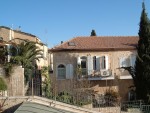
Jerusalem has been known as the Eternal City of the Jewish people since the days of King David and his son Solomon. (photo by Cynthia Ramsay)

My daily routine probably doesn’t differ much from yours. This morning, I went for an early morning walk, and enjoyed the pearly dawn before the sun broke through the clouds. Then I went to a local grocery store and bought some fresh bread for breakfast, before my workday began. Trivial, mundane things. The only difference is my day took place in Jerusalem.

This fact adds an extra dimension to all of my activities. Jerusalem has been known as the Eternal City of the Jewish people since the days of King David and his son Solomon. Even today, generation after generation continues to pray, “If I forget thee, O Jerusalem, may my right hand lose its cunning.” This line was sung under the chuppa at a wedding I recently attended. Jews turn towards Jerusalem as the focus of their longing three times a day in prayer – no matter in what part of the world they live.

The city’s history is long. Five thousand years ago, a group of settlers chose to make their homes on the steep ridge called the Ophel, south of the Old City. In 2000 BCE, Abraham and Isaac ascended Mount Moriah; a thousand years later, King David captured the city, bringing the Holy Ark to Jerusalem, and establishing its sanctity for the Jewish people. From the years 961-922 BCE, King Solomon constructed the First Temple. In 537 BCE, the Jews returned from their exile in Babylon and, in 517 BCE, completed the building of the Second Temple. Then the Greeks, under Alexander the Great, took the city. Antiochus ruled, desecrating the Temple until the Maccabees liberated it. In 63 BCE, Pompey the Great captured it and, for 33 years, King Herod reconstructed the Second Temple. That’s 4,000 years of Jewish history!

Jerusalem’s history continued to be a story of conquest and destruction by an endless chain of occupiers lusting for this precious jewel … the Romans, the Greeks, the Crusaders, Egyptian Mamluks, the Ottoman Empire, the British Mandate, the Jordanians, all lusting for this battle-worn city that possesses no material riches, neither gold nor precious metals, no minerals, no oil, nothing to enrich their coffers.

I don’t know why, although many have tried to come up with some reasons. Jews and non-Jews alike have felt Jerusalem’s magnetism across the ages. Midrash Tehillim 91:7 tells us, “Praying in Jerusalem is like praying before the Throne of Glory, for the gate of heaven is there.” In his 1950 book Jerusalem Has Many Faces, Judah Stampfer wrote: “I have seen a city chiseled out of moonlight, its buildings beautiful as silver foothills, while universes shimmered in its corners.”

I have had the opportunity to visit many enchanting cities, including Venice, Avignon, Bruges, Hong Kong, Paris; all have a magic that transforms the senses. Yet, I can’t define the magnetism of Jerusalem. Certainly there are cities that exceed it in beauty and dignity. Perhaps we can think of Jerusalem as more an emotion than a city. It arouses passions, it nurtures the soul, it is spiritual and inspiring.

To call it home for the past 44 years is, for me, an enormous privilege. I am always aware of the history under my feet. I never forget the nameless heroes who fought to retain it for the Jewish people. Not just in long-ago history, but also those who fought to reunite the city in 1967’s Six Day War. So many heroes who gave their lives so that I, and thousands of ordinary people just like me, could live out our lives in the Eternal City.

Dvora Waysman is the author of 13 books. She can be contacted at [email protected] or through her blog dvorawaysman.com.
 

Format ImagePosted on April 17, 2015April 16, 2015Author Dvora WaysmanCategories IsraelTags Eternal City, Jerusalem, Judah Stampfer
Fruits, nuts, traditions

Fruits, nuts, traditions

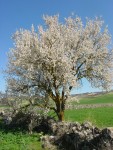
Tu b’Shevat, the New Year of the Trees, coincides with the flowering of the almond tree in Israel. (photo from en.wikipedia.org/wiki/Shevat)

Tu b’Shevat, which falls this year on Feb. 3-4, marks the end of the rainy season in Israel. Buds are beginning to appear on the trees, and the blossoming almond trees, the harbinger of spring, have begun to dot the landscape. So, on the 15th day of the Hebrew month of Shevat, we celebrate the yearly cycle for the growth of trees in Eretz Israel.

According to Jewish mystical tradition, Tu b’Shevat is the day when G-d renews sustenance and the “life-cycle” of the trees, when the sap starts to rise.

There are many customs to remind us of the meaning of this day, including a Tu b’Shevat seder, not unlike the ritual meal we have on Passover.

On Tu b’Shevat, fruit trees were measured for growth in order to calculate the annual tithe to the Temple. Even long after the Temple was destroyed, this seder was a new way to reaffirm the spiritual bond with the land in celebration of the approach of spring and the fruit of the earth.

This ancient tradition was developed in Safed, the seat of kabbalistic studies in the 16th century. Traditionally, we eat nuts and the fruits for which the Torah praises the Land of Israel, including grapes, figs and pomegranates, olives and dates. The table is set with a snowy white tablecloth, candles, fruit and nuts, and the sharing of prayers, readings and songs.

It is traditional to enjoy four cups of wine, like on Passover. Those glasses of wine can be paired with a corresponding fruit and divided into ascending levels of spirituality.

The first cup, therefore, is often white wine, symbolizing winter, accompanied by a fruit that needs a protective covering, such as oranges or almonds.

The second cup is white wine mixed with a small amount of red, signifying spring, the budding of new life. This glass is served with olives, apples, peaches and dates: the outer layer is eaten, yet the heart is protected and has within it the seed of new life.

The third cup is red wine with a small amount of white mixed in. This is the symbol of summer and a perfect world in which nothing is wasted. With this, fruits such as figs, grapes and berries are eaten. These are considered to symbolize the highest level of spiritual openness.

The fourth cup is red wine only, representing fertility and the bounty of the autumnal crops.

What else happens on Tu b’Shevat? Very little religiously, but a lovely ritual has arisen in Israel, one that’s now been adopted all over the Jewish world. It is a popular observance to plant trees, one of the greatest mitzvot we can perform.

Trees have great significance in Judaism. This Tu b’Shevat, however, we are still in a Shmita (jubilee) year in Israel; the land is resting, so no plantings will take place.

Trees hold a special place in Judaism. It is written in Deuteronomy: “When you besiege a city for many days to wage war against it to seize it, don’t destroy its trees….” In the Midrash Shmuel on Pirkei Avot 3:24, it is written that man is like a tree in that his good deeds are his produce, his “fruits,” and his arms and legs the “branches,” which bear these fruits. He is, however, an “upside-down tree,” for his head is rooted in the heavens, nestled in the spiritual soils of the Eternal, and nourished by his connection to his Creator.

At the end of the Hasmonean dynasty, there lived a holy man named Honi, known as the circle drawer, Honi HaMa’agel, and we read his story in Talmud Ta’anit 23a. One day, Honi sees a man planting a carob tree and asks him, “How many years does it take for the carob tree to bear fruit?” The man replies, “Seventy years.” Honi asks, “Do you think you will live another 70 years and reap its fruit?” The man responds, “I am planting the tree not for myself, but for my grandchildren.”

Although the world may not regard Jews as being tied closely to the land, the truth is that Judaism has close ties to agriculture and ecology. The midrash teaches us that man’s life depends on the tree, and we are forbidden to live in a city that has no gardens and trees. They are so important that Rabbi Yohanan Ben-Zakai declared, “If you hold a sapling in your hand and are told, ‘Come look, the Messiah has arrived,’ plant the sapling first and only then go and greet the Messiah.”

Happy Tu b’Shevat!

Dvora Waysman is the author of 13 books, which are available through Amazon, or from the author at [email protected]. Her website is dvorawaysman.com.

Format ImagePosted on January 30, 2015January 17, 2016Author Dvora WaysmanCategories Celebrating the HolidaysTags Israel, Judaism, New Year of the Trees, seder, Tu b'Shevat
This year marks the seventh

This year marks the seventh

According to Jewish law, every seven years, agricultural fields are to lie fallow during the Shmita, or Sabbatical. (photo from commons.wikimedia.org)

This Rosh Hashanah marks the beginning of the year 5755, a year that has a special significance, as a Shmita, or Sabbatical year, a year of rest for the soil.

Shmita literally means renunciation or release. We renounce the right to work the land, and let it lie fallow in the seventh year. In Leviticus 25:4, it says, “The seventh year shall be a sabbath of solemn rest for the land, a sabbath unto the Lord, thou shalt neither sow thy field, nor prune thy vineyard.” It is also a year in which we renounce our right to collect debts. “At the end of every seven years, thou shalt make a release. And this is the manner of the release: every creditor shall release that which he lent unto his neighbor.” (Deuteronomy 15:1-2)

Although the laws of the sabbatical remittance of debts apply to Jews everywhere, the obligation to let the land lie fallow is limited to the boundaries of Israel, as these laws begin only “… when ye come into the Land which I shall give you.…” (Leviticus 25:2) After wandering the desert for 40 years, Moses gathered the Israelites at the foot of Mt. Sinai, and gave them a detailed law about the soil. As soon as they entered Eretz Israel, they were to become people of the land, with their lives bound up in agriculture.

For centuries, as the Jews in the Diaspora became largely non-agricultural, the law of Shmita became a theoretical problem to be discussed by talmudic scholars. However, with the establishment of the state of Israel, Shmita again became a practical problem for the pioneers and early settlers.

Until the system of crop rotation was devised at the beginning of the 20th century, both Jews and non-Jews saw the logic of letting the land periodically rest. For Jews, these agricultural cycles were detailed in the Torah. For centuries, as the Jews in the Diaspora became largely non-agricultural, the law of Shmita became a theoretical problem to be discussed by talmudic scholars. However, with the establishment of the state of Israel, Shmita again became a practical problem for the pioneers and early settlers.

There are many reasons for the Shmita year. It teaches human beings that the earth does not belong to them, but to G-d. It also teaches people to have confidence in

G-d; even though we are asked to let the land rest, the Lord will invoke a blessing for us. Letting the land lie fallow is useful for another reason, too: every seven years, freed from the preoccupation of working the land, we are freed to study Torah full time.

Apparently, even Julius Caesar exempted the Jews from taxation in the Shmita year, since they did not have any livelihood from their fields. After the Bar Kochba revolt, however, the Jews were again compelled to pay taxes, causing grave hardship, which in turn convinced the rabbis to relax many prohibitions.

During the Second Temple period, the Jews rigidly adhered to Shmita in Eretz Israel. During the Hasmonean War, the fall of Bet Zur was attributed to a famine in the city since it was a Sabbatical year. Apparently, even Julius Caesar exempted the Jews from taxation in the Shmita year, since they did not have any livelihood from their fields. After the Bar Kochba revolt, however, the Jews were again compelled to pay taxes, causing grave hardship, which in turn convinced the rabbis to relax many prohibitions.

In the days of early modem statehood, Shmita was problematic in Israel, when its unbearably heavy economic load became too much for the young state to bear. Learned rabbis, like the late Rabbi Abraham Isaac Kook, agreed to the use of a heter (special dispensation) to sell the land to non-Jews during the Sabbatical year, to permit the land to be worked.

In recent years, there have also been developed other methods of using a heter for Shmita, such as early sowing of vegetables before the New Year (relying on the view of Rabbi Shimon of Sens, for example) and the growing of crops by hydroponics or soil-less systems. The Israeli botanist Meir Schwartz founded the first fully automatic hydroponic farm at the Agudat Israel Kibbutz Chafetz Chaim, but there are now other hydroponic farms at Ein Gedi and Eilat, which use water culture and gravel in agricultural production.

How does the Shmita year affect Orthodox Israeli consumers? Throughout the year, in local newspapers, there are regularly published lists of shops from whom it is permissible to buy fruit and vegetables in the Sabbatical year; there are also chains of shops that market Arab Israeli-farmed or imported produce. Many Orthodox Jews buy their fruit and vegetables in the Arab market in East Jerusalem, for example, or travel to Arab cities to shop.

It is not easy in Israel to observe the Shmita year, however. Although different dispensations have been made in recent years to make it less difficult, they are considered “emergency measures,” as implied by Kook in the introduction to his work on the Shmita, Shabbat Haaretz, in which he wrote: “We today are charged with preserving the memory of the commandment until the time is ripe for it to be carried out with all its minutiae.”

Dvora Waysman is the author of 13 books, which are available through Amazon, or from the author at [email protected]. Her website is dvorawaysman.com.

Format ImagePosted on September 19, 2014September 18, 2014Author Dvora WaysmanCategories Celebrating the HolidaysTags Agudat Israel Kibbutz Chafetz Chaim, Meir Schwartz, Sabbatical year, Shmita

Importance of prayer

The holy month of Elul has begun, the sixth month in the Hebrew calendar. There is a rabbinic allusion that the month was named from the initial letters of “Ani le dodi v’dodi li” (“I am my beloved’s and my beloved is mine”), describing the relationship between G-d and His people. In the Aggadah, we read that Elul has special significance because of Moses’ 40-day stay on Mount Sinai (Exodus 34:28), which was calculated to have begun on the first of Elul and ended on the 10th of Tishrei (Yom Kippur).

Every weekday morning, the shofar is sounded and Psalm 27 recited. Sephardim have already begun saying Selichot, but Ashkenazim recite this only in the last days of the month. The word selichah means forgiveness – it is a plea for forgiveness for sins and, as we approach the time when we know that we will be judged, we practise a kind of spiritual stocktaking. We look inward, trying to assess what happened to last year’s dreams/goals, asking pardon for wrongs committed and hoping, with repentance, charity and prayers, to be written into the Book of Life for another year.

Rav Nachman of Bratslav expressed it beautifully: “Every word of your prayer is like a rose which you pick from its bush. You continue until you have formed a bouquet of blessings, until you have pleated a wreath of glory for the Lord.”

Prayer takes on special meaning in Elul, as we move toward Rosh Hashanah, which celebrates the birth of the world. Then, we will recite the special prayer called Unetenah Tokef (“Let us proclaim the sacred power of this day…”) when we are reminded of our mortality. The translation for part of it reads: “Humanity’s origin is dust, and dust is our end. Each of us is a shattered pot, grass that must wither, a flower that will fade, a shadow moving on, a cloud passing by, a particle of dust on the wind, a dream soon forgotten…. But You are the Ruler, the everlasting G-d.” Legend has it that this prayer was written some 10 centuries ago by Rabbi Amnon of Mainz. Ordered to convert to Christianity by the local bishop, Rabbi Amnon refused. His limbs were amputated and, as his mutilated body lay before the ark as he was dying, he said these words, which are also part of the Yom Kippur liturgy.

When mystics pray, they believe there is an ascent of the soul to upper worlds. Prayers of thanksgiving and praise are deemed worthier than petitionary prayers (when we are asking for things), because they are selfless. Some people believe that the highest form of worship is silence. The Bible tells us that Abraham was the first to utter a true prayer – for his fellow man.

In these times, when we are at war, agonizing over our losses and the many families who have lost loved ones, we in Israel need to have faith more than ever. We pray for all Jews to have a good, safe year. We share a common destiny – Jews in Israel and abroad – and it is this shared destiny that binds us together, no matter how different our ethnic and cultural boundaries may be.

I memorized the following poem when I was a schoolgirl. I never knew the author, and doubt that he was Jewish, but I think it is appropriate now and all the year: “I shall pass through this world but once / Any good therefore that I can do / Or any kindness I can show / To any human being / Let me do it now / Let me not defer it or neglect it / For I shall not pass this way again.”

Dvora Waysman is the author of 13 books, which are available through Amazon, or from the author at [email protected]. Her website is dvorawaysman.com.


Posted on August 29, 2014August 28, 2014Author Dvora WaysmanCategories Celebrating the HolidaysTags Elul, High Holidays, prayer, Rosh Hashanah

Israel is my home, heart

I was caught completely off-guard by the question: “Don’t you sometimes long to run away from all this war and violence and madness and terrorism? You could always go back to Australia.”

This was when, like every other Israeli, and probably Jews around the world, I was listening to the news every hour, hoping that the three kidnapped boys would have been found, safe and unharmed. At that time, there was no news yet.

I looked at my friend, a tourist from my birthplace. I didn’t know how to answer her. Once I would have known. I would simply have said “yes,” and my eyes would have filled with tears of nostalgia for the comfortable lifestyle, the ordinariness of everyday living, of only bothering to listen to the news if I wanted a sporting result or the weather forecast; all the security – emotional, financial, physical – that I’d left behind when I made aliyah.

She was looking at me strangely and, I suppose, a lot of time must have passed since she asked me the question. To me, the answer had become extraordinarily complex. A simple “yes” or “no” would not suffice.

We were sitting on a park bench in Beit Hakerem, in Jerusalem, where I live. It was Sunday afternoon, and I’d looked at the scene before us hundreds of times without truly registering it. A little boy was walking his dog on a leash. A pretty girl was jogging, music from an electronic device giving her the beat and rhythm. A grandfather wheeled a baby carriage. A young couple sat near us sharing a falafel and looking into each other’s eyes. Nothing special. Nothing dramatic.

All the drama had been played out in the weeks and months and years before her visit. Down south in Gaza. Up north in Lebanon. Rockets from Syria. Weeks of needing to hear the news every hour. Years of watching funerals on TV of beautiful young soldiers and ordinary people who were in the wrong place at the wrong time. Making phone calls to ensure that grandsons in the army, involved in searching for the missing boys in Hebron, were safe.

How could you “run away” from all the things that had shaped your life for decades? Of course, you could leave, but you’d take all that caring and commitment with you. It would feel like an amputation, and you’d never be a whole person again.

Over the years, I’ve been back to Australia for holidays, but they were never successful visits for long. For a few days, I’d bask in the warmth of seeing family and friends, enjoying their attention and the luxury of their lives. But then, someone would make a thoughtless remark about Israel, and I would bristle at their lack of understanding and feel that I had to defend the country. I’d long to be back home in Jerusalem, where I could talk about, even criticize, the government and corrupt politicians, the lack of good manners and the insane Israeli drivers, because I’d be talking to people on the same wavelength. It was different, very different.

The familiar scene in the park suddenly became very dear to me. I didn’t know any of these people, but I loved them. They were my family. I hoped the young lovers would marry; that the grandfather would live to see the baby’s bar or bat mitzvah; that the little boy with the dog would never have to fight in a war.

Finally, I had my answer. “No, I don’t long to run away. It’s not easy, but we understand what all the sacrifice is about. And it’s home,” I added as an afterthought. And, after all, home is where the heart is.

Dvora Waysman is the author of 13 books. She has lived in Jerusalem for 43 years.

Posted on July 11, 2014July 9, 2014Author Dvora WaysmanCategories Op-EdTags Israel

Posts pagination

Previous page Page 1 … Page 3 Page 4
Proudly powered by WordPress