Skip to content
  • Home
  • Subscribe / donate
  • Events calendar
  • News
    • Local
    • National
    • Israel
    • World
    • עניין בחדשות
      A roundup of news in Canada and further afield, in Hebrew.
  • Opinion
    • From the JI
    • Op-Ed
  • Arts & Culture
    • Performing Arts
    • Music
    • Books
    • Visual Arts
    • TV & Film
  • Life
    • Celebrating the Holidays
    • Travel
    • The Daily Snooze
      Cartoons by Jacob Samuel
    • Mystery Photo
      Help the JI and JMABC fill in the gaps in our archives.
  • Community Links
    • Organizations, Etc.
    • Other News Sources & Blogs
    • Business Directory
  • FAQ
  • JI Chai Celebration
  • JI@88! video

Recent Posts

  • Story of Israel’s north
  • Sheltering in train stations
  • Teach critical thinking
  • Learning to bridge divides
  • Supporting Iranian community
  • Art dismantles systems
  • Beth Tikvah celebrates 50th
  • What is Jewish music?
  • Celebrate joy of music
  • Women share experiences 
  • Raising funds for Survivors
  • Call for digital literacy
  • The hidden hand of hate
  • Tarot as spiritual ritual
  • Students create fancy meal
  • Encouraging young voices
  • Rose’s Angels delivers
  • Living life to its fullest
  • Drawing on his roots
  • Panama City welcoming
  • Pesach cleaning
  • On the wings of griffon vultures
  • Vast recipe & story collection
  • A word, please …
  • מארק קרני לא ממתין לטראמפ
  • On war and antisemitism
  • Jews shine in Canucks colours
  • Moment of opportunity
  • Shooting response
  • BC budget fails seniors
  • Ritual is what makes life holy
  • Dogs help war veterans live again
  • Remain vital and outspoken
  • An urgent play to see
  • Pop-up exhibit popular
  • An invite to join JWest

Archives

Follow @JewishIndie
image - The CJN - Visit Us Banner - 300x600 - 101625

Byline: Cynthia Ramsay

Mulcair talks about choices

Mulcair talks about choices

New Democratic Party of Canada leader Tom Mulcair. (photo from Tom Mulcair’s office)

“I think the values of the community that you’re writing for are very similar to the social values of the NDP historically, and I think that’s a strong connection that we have,” New Democratic Party of Canada leader Tom Mulcair told the Independent in a phone interview last week.

He added that his wife Catherine’s “family connection means that I’m the only person in this race who has a deep understanding of the Jewish community and of its history, and I’ll always be a strong stalwart based on that understanding.”

Even before the election campaign started, Mulcair always has been clear in his support for Israel.

“My position is very comfortable within the NDP,” he said, “because the party’s position has, for a long time, been in favor of a two-state solution. Essentially, we believe we have to be working with partners in the Middle East, in particular, in Israel and Palestine, within a framework of respect for UN resolutions and international law, that’s important. And, we always talk about working towards peace in the region, starting from a base where it has to be mutually agreed borders and, frankly, everyone free from attack of any kind: peace and security, in other words, within established and negotiated borders.”

He defended his strict enforcement of this view, which has included the dismissal of candidates who hold alternate opinions.

“I’ve tightened the reins in making sure people respect our position, and I think that that’s the key thing,” said Mulcair, adding that the NDP is “still the only party political party in Ottawa to have ever had a Jewish leader, in David Lewis [federally] and, of course, in Ontario, Stephen, Lewis’ son. And I’ve had a chance to visit Israel a couple of times and look forward to going back. I daresay that I’m the only leader in this campaign … who can count family in Israel, as well.”

“I think that free trade with a democracy is a good thing. We also backed the trade agreement with Jordan because we know that it’s also a very strong voice for stability and peace in a very tough region with a lot of problems.”

With respect to the expansion of the Canada-Israel Free Trade Agreement earlier this year, Mulcair said, “I think that free trade with a democracy is a good thing. We also backed the trade agreement with Jordan because we know that it’s also a very strong voice for stability and peace in a very tough region with a lot of problems.

“As you know, the NDP takes a pretty strong view that free-trade agreements have to represent dealings with countries that have values similar to ours, and that’s why in both cases we had no problem with it.”

The NDP also has no problem with the P5+1 (China, France, Russia, the United Kingdom, the United States and Germany) nuclear deal with Iran.

“I think that the P5+1 deal shows that diplomacy can achieve real results even after decades of hostility,” said Mulcair, who described himself as “very clear-eyed about the Iranians,” noting that the antisemitism there “is at a level rarely seen in the world today.”

He said, “I don’t have any illusions about what I’m dealing with … no Israeli government can ignore the threat of a nuclear Iran…. At the same time … as long as it is enforced rigorously, the deal shows the possibility of making sure that Iran’s nuclear ambitions are hemmed in.”

About security closer to home, and specifically Bill C-51, Mulcair said, “I think that it’s a question of approach and priorities. Don’t forget Mr. [Stephen] Harper’s approach is always about stark, false choices. He would have you believe, for example, that a government has to choose between the economy and the environment. Of course, that’s a false choice; you have to do both. He would have you believe that you either keep your communities safe or you respect your rights or freedoms. Well, the prime minister’s job is to do both: respect Canadians’ rights and freedoms, and keep communities safe. So, C-51 is a breach with that.”

Offering an example from the party’s history in balancing security and freedoms, Mulcair noted, “The NDP, you might recall, is the party that had the courage politically to stand up in 1970 against the imposition of the War Measures Act that put hundreds of Canadians in jail without trial, without accusation, and the NDP had the courage to stand up against that.

“When Mr. Harper came in with Bill C-51, I was told that I was being foolhardy to oppose it, that the vast majority of Canadians were in favor of it. Well, you know what? I don’t take that as the starting point in these issues. I am more than willing to stand up to Stephen Harper when he’s compromising Canadians’ rights and freedoms, and we did that. We did that with an articulate stance that explained to Canadians why it was a mistake, and you know what? At the end of that process, most Canadians agreed with us, so I’m proud of that.

“There are things that can be done here in Canada to help fight some of the situation there,” he said, referring to the conflict in Syria, as well as others in the region. “There are a couple of concrete things that I think Canada can and should be doing.

“First of all, Canada is the only country in NATO not to have signed the Arms Trade Treaty. Well, that’s something that’s easy to fix, and that can help stop the flow of arms to some of those conflicts right now.

“Deradicalization is entirely absent from Bill C-51 and that is, again, a mistake. Most of our partners in the world who are dealing with these issues realize that the flow of foreign fighters into those regions is one of the biggest problems and, instead of coming to grips with that, Mr. Harper completely ignores the problem.”

“There’s also an important element of deradicalization. And, again, Mr. Harper just doesn’t know how to get this right. For example, he doesn’t talk about going into houses of worship, as you hear President [Barack] Obama talk about. What Mr. Harper will talk about, specifically, are mosques. Now, of course, in that case, he’s finger-pointing a single community. That’s a mistake. Deradicalization is entirely absent from Bill C-51 and that is, again, a mistake. Most of our partners in the world who are dealing with these issues realize that the flow of foreign fighters into those regions is one of the biggest problems and, instead of coming to grips with that, Mr. Harper completely ignores the problem.”

Other problems that Harper has ignored, or about which he has been mistaken, according to Mulcair, concern the budget and jobs. The NDP’s approach to these issues, including its focus on the middle-class, has drawn some criticism that the NDP has strayed from its roots – a point with which Mulcair disagrees.

“We’ve been really clear all along, especially under my leadership, that Canada wants a government that knows how to deal with the big issues of the day in the interest of the population,” he said. “When we [the NDP] were in power in Saskatchewan, we ran 17 consecutive balanced budgets because we had taken over a province that was bankrupt after years of Liberal rule…. After those balanced budgets, we were able to bring in free, universal, public medical care – that was an NDP priority.

“This time around, I’m talking about the importance of bringing in quality, affordable, maximum-$15-a-day child care, and we’re going to do that on the basis of a balanced budget. There are some who would say, well, that’s not a very social-democratic thing, but if you look at the history of the NDP, we have a history of being very prudent public administrators. We know that we have that burden on us – that we’re always going to have to be the ones who have to be the most prudent because, if we’re not, people will judge us more harshly than the others.

“Some of the other parties are taking a different approach,” he continued. “Mr. Harper talked a good game but ran up $150 billion in new debt while he was in power. Mr. [Justin] Trudeau is promising to spend at least $10 billion a year more than what he takes in and, in the fourth year, he’s going to start cutting with, quote, everything will be on the table, in terms of cuts – that was the exact quote from Mr. [John] McCallum when he was asked how he was going to be able to cut $6.5 billion in the fourth year of his budget. So, that’s where the Liberals are, that’s where the Conservatives are.”

“Economically, we’re talking about balanced budgets, but we also want to create opportunities for good-paying jobs. There were 400,000 manufacturing jobs lost on Mr. Harper’s watch, and he wants to kill off tens of thousands more with this recent trade deal.”

Mulcair said the NDP are prudent administrators in other areas, as well. “I have a strong personal track record as a former environment minister as a strong enforcer of environmental legislation and I’m strong on principle on those things,” he said. “Economically, we’re talking about balanced budgets, but we also want to create opportunities for good-paying jobs. There were 400,000 manufacturing jobs lost on Mr. Harper’s watch, and he wants to kill off tens of thousands more with this recent trade deal,” meaning the Trans-Pacific Partnership. On Oct. 5, the 12 countries involved, including Canada, reached an agreement, which still has to be ratified by each country’s parliament.

“On the environment, on the economic issues, on social issues, we’re very different from the other two parties who, more often than not, are of one mind,” Mulcair said, giving three examples.

“Mr. Trudeau and Mr. Harper agreed with tens of billions of dollars of tax reductions for Canada’s richest corporations – we disagree, we’re going to start making them pay their fair share.

“We disagree with the Keystone XL Pipeline. We think that you don’t export your natural resources raw. Mr. Harper and Mr. Trudeau are of one mind, they think that it’s a good idea to send 40,000 Canadian jobs to the U.S. – we disagree.

“We’ve had a different approach on C-51. Mr. Trudeau was afraid of Mr. Harper. He said at the University of British Columbia that he was too afraid of Mr. Harper to stand up for what he thought was the right thing to do in that case. Well, I think that that’s sad, and I think that Mr. Trudeau has shown a lack of leadership and, frankly, a lack of experience.”

While the NDP would increase the corporate tax rate, its platform includes “supporting innovation and investment in companies.” When asked if this was not just a different way of subsidizing business, Mulcair responded, “No. For example, the Conservatives have continued to subsidize companies in the oil patch. We will remove subsidies. What we will do is bring back certain innovation tax credits because we know that the manufacturing sector is, and can be, a hub for innovation and technological jobs in the future that will be knowledge-based.

“We’ll also propose a small-business tax cut, so we’ll bring their taxes down from 11[%] to nine, which we think is a smart way of stimulating the creation of jobs by job creators because small- and medium-sized businesses in Canada create more new jobs. We don’t shy away from saying that government can play an active role in creating the conditions for the private sector to create jobs.”

“This is the first time in Canadian history that we actually have a choice. For 148 years, we’ve been told we have no choice but to alternate. When we get tired of the Liberals and the sponsorship scandal, we’re supposed to go back to the Conservatives. We get tired of the Conservatives and the Senate scandal, we’re supposed to go back. This time, the first time, there is a choice.”

Looking ahead to the last days of the campaign, Mulcair said, “This is the first time in Canadian history that we actually have a choice. For 148 years, we’ve been told we have no choice but to alternate.” For example, “When we get tired of the Liberals and the sponsorship scandal, we’re supposed to go back to the Conservatives. We get tired of the Conservatives and the Senate scandal, we’re supposed to go back. This time, the first time, there is a choice.

“For the first time in Canadian history, the NDP is forming the Official Opposition, we’re seen as a government-in-waiting. We’re doing great across the country but we’ve got very strong support in certain regions that are going to allow us to form a government, and we know that.

“B.C. is a good example of a province where we’re doing super well,” he said. “I just had an event there yesterday morning that showed me that the energy and the strength of the team and the campaign that we’re running are resonating … so we’re going keep that going.”

The Independent has interviewed Liberal leader Justin Trudeau (July 31), Minister of National Defence and Minister for Multiculturalism Jason Kenney (Sept. 18) and Green party leader Elizabeth May (Oct. 9). The federal election is on Oct. 19.

Format ImagePosted on October 16, 2015October 14, 2015Author Cynthia RamsayCategories NationalTags elections, Iran, Israel, NDP, New Democrat, Thomas Mulcair
A sentimental journey

A sentimental journey

Stephen Aberle as Dan and Annabel Kershaw as Sue reflect on their life together in Snapshots: A Musical Scrapbook, at Presentation House Theatre Oct. 28-Nov. 8. (photo by Megan Verhey, Megan Verhey Photography)

Theatre often allows us, the audience, a safe place in which to experience feelings that we are more guarded about showing in daily life. It can offer a way in which to reflect on our own lives and actions without the vulnerability that such introspection usually entails in “real life.” We can learn from what we witness on stage, whether a comedy, a drama or something in between. At the least, we can escape from our own cares for a time, immersing ourselves in someone else’s joys and pains. A perfect example? Snapshots: A Musical Scrapbook.

So popular was last year’s Canadian première of the show in Vancouver at Studio 1398, that WRS Productions – Ron and Wendy Stuart – is bringing it back for 12-day run at North Vancouver’s Presentation House Theatre, Oct. 28-Nov. 8.

“The response was amazing,” Wendy Bross Stuart told the Independent about last year’s production. “People laughed. People wept. Tissues were in short supply. The actors were very moved by the content and the music of Snapshots. The last five shows were completely sold out; people were turned away at the door. It was at that point that Ron and I decided we would seek the opportunity to remount the show.”

In Snapshots, Sue is set to leave her husband Dan after 30 years of marriage. While she is going through the attic, Dan comes home. A box of photographs (snapshots) falls open, leading the couple to reflect on their life together.

Conceived by Michael Scheman and David Stern, composer/lyricist Stephen Schwartz adapted music from his stage shows, feature films and original CDs to mesh with the book by Stern, which takes the audience back to Dan and Sue’s earlier days.

In the WRS Productions’ show, Dan and Sue are portrayed by Stephen Aberle and Annabel Kershaw; Daniel and Susan, by Steve Maddock and Jocelyn Gauthier; Danny and Susie, by Daniel Johnston and Georgia Swinton.

About the ways in which he personally related – or not – to Dan throughout the character’s life, Aberle said, “Hmm, well, younger Danny/Daniel has a winning way with women. Many, many women. I was definitely not like that growing up; I was shy and repressed and a bit of a goob, I guess.

“On the other hand, when Dan truly falls in love, he falls hard and he stays fallen. I identify with that. While he has this playboy past, he’s careful about where he really gives his heart, and he finds it hard to put the truth of his love into words. I think that’s the central struggle in the play for him. Casual physical intimacy comes easily to him (unlike me!), but he’s scared by commitment and emotional intimacy. He’s experienced deep hurt in the past, and he fears opening up too far because he doesn’t want to get hurt like that again. I get that.

“Details from the past – talismans, little triggers for powerful memories – really get to him. I guess they get to all of us one way or another, so it’s not necessarily a specific character thing, but it resonates for me.”

Like Aberle, most of the actors are reprising their roles, but there have been changes, and not only in casting.

“Last year’s Snapshots was in a ‘black box’ theatre,” explained Stuart. “This gave us the opportunity to configure the show ‘in the round.’ The set design was done by Jessica Oostergo.

“This year, we are working in partnership with Presentation House Theatre in North Vancouver. We are in a traditional theatre space. This meant the show needed to be completely reconfigured. With the experienced hand of Pam Johnson, we have a brilliant set – full of secret entrances and exits. This design is in conjunction with our new director and choreographer, one of Canada’s most sought-after and experienced, Max Reimer, former artistic director at the Vancouver Playhouse. The show will look very different.

“In addition, we have two new cast members: Daniel is played by Steve Maddock and Susie is played by Georgia Swinton. The rehearsals are very exciting; we have a chance, now, to add new interpretation and shape to the music. The sound of the ensemble is thrilling!”

Aberle spoke about the ensemble and what it feels like to have different actors “all playing aspects of the same role.”

“The other performers playing Danny and Daniel – my character’s younger selves – give me ideas about Dan that I wouldn’t necessarily have come up with on my own,” he explained. “There’s a lot of give and take. We have an opportunity to develop a shared physical vocabulary, for example: postural or gestural or vocal details that stay with the character as he grows older. That’s a lot of fun to explore.

“We’re all, all six of us – along with the band and the creative team – sharing the task of bringing this decades-long, deep relationship to life. One intriguing consequence is that I get to fall in love on stage with not just one woman but three. I have a lot of interplay with all three of Sue, Susan and Susie. When I’m watching them, the younger selves of the love of my life, remembering how we met as kids and how much we meant and gave to each other, it’s profoundly moving.

“It’s interesting,” he continued, “to relate on stage to my character’s younger selves. We don’t get a lot of direct connection but there are important moments, of both frustration and understanding. In real life, we don’t get to say to our younger self, ‘You idiot! Not that way, this way!’ It’s refreshing. It’s also illuminating to see how patterns set in youth change, or don’t change, in later life.”

And what is it about Schwartz’s music that touches people so much?

“I will speak more specifically about the music in Snapshots,” said Stuart, who also wears the music director and pianist hats in this production. “Here, we have examples of Stephen Schwartz’s music from as early as 1971 (Godspell) and as recently as Wicked (2003)…. Schwartz chose the songs to move the new story (book by David Stern) forward in the most compelling way. About 85% of the story is told in music.

“This plot line allows two characters to each communicate with themselves at different stages of their lives. Stated differently, we have a story that takes place 1) in the present, 2) in the past and 3) in one’s interior life. The music is not simply one song after another, it is multi-layered, with (formerly unrelated) songs performed simultaneously in gorgeous counterpoint with one another.

“I truly feel that the music and lyrics (often changed by Schwartz himself to fit the arc of the new story) can simply be enjoyed for their depth of meaning, their melodic interest and their beautiful harmonies. However, for those who know Stephen Schwartz’s music, the complexity and brilliance of the multi-layered nature of this work are simply breathtaking.”

Stuart added, “Yesterday at rehearsal, we had many moments when we simply had to stop. The actors were so ferklempt (choked up with emotion), they were unable to continue. I feel the same way.”

For tickets to Snapshots, visit phtheatre.org, call 604-990-3474 or drop by Presentation House Theatre, at 333 Chesterfield Ave.

Format ImagePosted on October 16, 2015October 14, 2015Author Cynthia RamsayCategories Performing ArtsTags Presentation House, Snapshots, Stephen Aberle, Stephen Schwartz, Wendy Stuart, WRS Productions
Korczak’s legacy now

Korczak’s legacy now

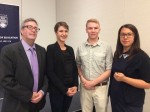
Left to right, keynote speaker Irwin Elman and panelists Rachel Malek, James Copping and Jess Boon. (photo by Cynthia Ramsay)

“Children are not the people of tomorrow but are people of today. They have a right to be taken seriously, and to be treated with tenderness and respect. They should be allowed to grow into whoever they are meant to be.”

Polish doctor, educator, writer and orphanage director Janusz Korczak’s philosophy and writing laid the foundation for the United Nations Convention on the Rights of the Child (UNCRC). Murdered in 1942 at Treblinka with the almost 200 children in his care, Korczak’s work and life remain relevant to this day.

Jerry Nussbaum, president of the Janusz Korczak Association of Canada (JKAC), was one of the many speakers on Sept. 29 to remind the approximately 70 people in attendance of this fact. “We hold this lecture series in his honor,” said Nussbaum, “because we seek to follow his example of respecting children and honoring the whole child.”

“How to Love a Child”: The Janusz Korczak Lecture Series is co-organized by the JKAC and the faculty of education at the University of British Columbia, with contributions from other faculties, universities, activists and advocates. The first of six lectures was called Keeping our Promise to Children: The Relevance of Korczak’s Legacy for Children Today. It featured as keynote speaker Irwin Elman, provincial advocate for children and youth of Ontario, and president of the Canadian Council of Child and Youth Advocates.

Other speakers included moderator Dr. Charles Ungerleider, director of research and managing partner of Directions Evidence and Policy Research Group, LLP; Marni Point, who welcomed attendees to the traditional and unceded Musqueam territory; Dr. Krzysztof Olendhi, ambassador titulaire, consul general of the Republic of Poland in Vancouver; and. Dr. Blye Frank, dean and professor, UBC faculty of education. The most poignant tribute came from child survivor Lillian Boraks-Nemetz, board member of JKAC, author and UBC instructor.

“Korczak has been my hero all my life,” she said. Both she and Korczak were among those held in the Warsaw Ghetto. She spoke of going to school secretly until one day two Nazis came in and pushed the teachers around (they were sent to prison) – “we children sat there frozen in fear for quite some time, then the teachers sent us home. The next day, the school was boarded up. And that is what I remember, clutching my father’s hand ever so tightly while looking into the cellar through a little window at the now-empty grey room, where once there was life, color and learning. I had lost my right to education.”

Her father took her to Korczak’s orphanage. Even though the doctor was not in, they were welcomed, and she saw the children reading and doing artwork, seemingly happy “inside this space, as if the horror of the ghetto and the threat of the always-impending danger didn’t exist. This was Dr. Korczak’s world…. I had the impression that the doctor also tried to raise the children’s spirits during the terrible times in which they lived.”

She described the deportations; she, her mother and little sister narrowly missing the transport cars to Treblinka when a commotion distracted the guards and her father managed to save them out of the line. “We were lucky, not so Dr. Korczak and his children, who were destined to walk along the same route.”

On Aug. 5, 1942, the Nazis came for the children of the orphanage. While he was offered a reprieve, “Korczak refused, saying I hate desertion and besides, my children need me.

“Father often spoke of that day and how Korczak’s 200 orphans were ordered out of the building and made to march through the Warsaw Ghetto with Korczak at the helm, holding a small child in his arms and one little one by the hand. They were carrying the green banner of King Matthew, the character in his [Korczak’s] popular book for children about a child king who fought for children’s rights…. No survivor who was there at that time can forget the long procession. Many wrote about it.”

Boraks-Nemetz said her father often spoke about Korczak and taught her his principles, principles she followed in raising her own children. She concluded her remarks with the poem “And Still They March” by Yala Korwin, before presenting the first JKAC scholarship award to UBC PhD student Matthew Lee for his work on children’s social and emotional development.

When Elman began his keynote address, he admitted that he only learned about Korczak about 15 years ago, on a trip to Japan, where he was invited to “help them learn about children’s rights and to help teach them to elevate the voice of children.” When visiting a children’s home – an institution that can have as many as 200 children living in it – a staff member mentioned Korczak and was amazed when Elman, a Jewish educator who had worked with children for 20 years at that point, did not know the name.

Elman has since learned enough to know that Korczak’s work and life are relevant. “In Canada today, there are approximately 350,000 children connected to care in one way or another…. Some say that there are as many as two million former Crown wards … in this country.”

Speaking of his home province, he said there were 23,000 kids in Ontario living in some form of care, 8,000-10,000 permanently (ie. Crown wards, which, in British Columbia, are called continued custody orders) – and they are not doing well. Of those, more than 18% are aboriginal; in British Columbia, it’s 60-65%; in other provinces even higher. “It’s not hard to understand and listen to and hear the echoes of the Truth and Reconciliation Commission’s report, and the need to address this over-representation of First Nations children across the country in our systems of care.”

In Ontario, he said, children can only come into care if a social worker (or somebody in such a capacity) has deemed the child in need of protection – from abuse or neglect – and a court has agreed. The children have not done anything wrong.

When the state takes children into care, said Elman, “You’re making a promise to them. The first thing, obviously, is, you’re protected now. The second thing is … if you’re permanently in our care, we’re going to take care of you … we’re going to ensure that you’re going to live to your full potential. And, when that child is brought into care, what do they hear? Maybe we don’t say it, but they hear, we’re going to love you, it’s OK now.”

But, he said, only 40% of children in care in Ontario graduate from high school, and that percentage doesn’t vary much between provinces; 43% of the homeless population of Canada have had an in-care experience. Young people connected to care are over-represented in the justice and mental health systems.

Elman shared many stories of his work as the province’s advocate. When somebody steps up for a child, he said – whether it be a community, foster parents, a group home, adoptive parents, anyone – “the government needs to say thank you, we’ve got your back, what do you need? We’ll do whatever is necessary, because we owe our children a home in which they are nurtured and loved…. That takes a whole different way of thinking about child welfare.”

He has been told, “We can’t legislate love.” His response is, “I don’t think you can legislate love, but I do think you can create conditions in which love can flourish. The government should be all over that… And, to do that, they need to ask young people and they need to ask children and they need to ask their caregivers in whatever form that is…. We owe that to children.”

If we took that approach, he said, if children in care were listened to, they would feel in charge of their own lives. If they knew what was in their files and had a say in what was written there, they would contribute to making policy, they would have a say in where they lived. Social and child-care workers would be trained differently, including respecting all the different cultures from which children in care come. “Many practical, revolutionary things … would happen in the way in which the system is run if children felt listened to.”

Panelists Rachel Malek, Jess Boon and James Copping – all members of the Federation of B.C. Youth in Care Networks – joined Elman on stage for a 35-minute Q&A. Questioners wanted to know more about the criteria for a child going into care, how to create a sense of belonging for a child and ensure their safety, how to reduce the number of children in care, the impact of poverty, and which programs in Canada reflect Korczak’s philosophy.

As the final question, the consul general asked the young panelists, all of whom had experienced the care system, “What does it mean to you to love a child?” Boon spoke of commitment, being there for the serious and fun times but also investing in your own education to give back to the community. Copping mentioned consistency in home, support for school, having someone on whom to rely through thick and thin. For Malek, it is to be vulnerable – to open your heart, to recognize that it’s a two-way street, to be willing to go the extra mile for a child.

The next lecture in the Korczak series takes place Oct. 29, 7 p.m., at UBC Robert H. Lee Alumni Centre. Registration is required via jklectures.educ.ubc.ca.

Format ImagePosted on October 16, 2015October 14, 2015Author Cynthia RamsayCategories LocalTags children's rights, education, Holocaust, Irwin Elman, Janusz Korczak, JKAC, Lillian Boraks-Nemetz
May on foreign, domestic issues

May on foreign, domestic issues

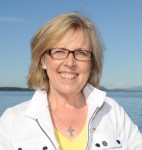
Green party leader Elizabeth May. (photo from Elizabeth May’s office)

“Let’s face it, Israel is a miracle in the world – in innovation, and science and technology, solar energy!” Green Party of Canada leader Elizabeth May told the Independent in an interview last week.

While the Green party passed a motion last year against the expansion of settlements in Israel, which they claim are illegal and pose an obstacle to a peace agreement between Israel and the Palestinians, May noted that there is a Green Party of Israel, and shared some of its accomplishments. She said her party supports Israel and the collaboration of Canada with Israel, particularly on science, technology and climate change.

She added, “I think that it really needs to be stressed that world peace depends on Canada playing a role where we command respect from a lot of different communities and support for the state of Israel has never marginalized Canada in the world, never. But, aligning ourselves with only one of the political threads of the Israeli body politic, basically being a pro-Likud country, reduces our influence in the world, for sure. And our influence in the world is needed for many things, including striving for peace in the Middle East – real, durable, sustainable peace, so we don’t have Israeli children or Palestinian children fearing for their lives.

“The Green party has always condemned Hamas, we condemn Hezbollah, we also want the response [to their actions] to be proportional, so it’s a very difficult issue and I don’t think it helps in our democracy when we can’t discuss it. I’ll clearly say that we draw a very strong line [between] any campaigns that criticize Israel, I think that’s legitimate, [and] any campaign that criticizes Israel but has at its base an even hidden agenda of antisemitism. I think we can spot that pretty quickly, and we’ve always condemned those.”

While prime ministers Stephen Harper and Binyamin Netanyahu opposed the Iran nuclear deal, May said, “We think it’s a good thing. We think that you can’t risk having Iran have nuclear weapons. You can’t take a chance on missing the opportunity for diplomacy to give you inspections – they are real. They’re not even going to implement the lifting of sanctions till Iran shows good faith and allows for inspections…. I think it’s important to say trust but verify.

“We also recognize that, if we’re going to solve the crisis in Syria, we have got to start making more alliances in the region and Iran could play a significant role. I think, obviously, that was on [U.S. President] Barack Obama’s mind in pursuing an agreement with Iran … we do not have enough natural enemies of ISIS [the Islamic State of Iraq and Syria] and extremism. Leaving Libya as a failed state was a mistake in the region, so we’re very concerned with the big picture, and maybe you have to take some water in your wine sometimes.”

If there were a Green government, May said she would consider deploying Canada’s military in action on foreign soil with a United Nations sanction, “which makes it legal under international law. We’re global, we have Greens in 80 countries around the world. We believe that you act within international law, with a UN approval. That’s one of the tragedies with the Libyan engagement, of course, was that we used the responsibility to protect with a UN sanction then, midway through, changed the mission to regime change, and we really contaminated the usefulness of responsibility to protect for future missions.

“… I could see Canada participating now in a mission that involved troops on the ground if it was to fortify the border between Syria and Turkey to stop the flow of black marketability. ISIS is funding itself in the millions through black-market operations, both its sale of black-market oil and its sale … of antiquities from the archeological and culturally significant sites they are looting. We should be using all of the tools at our disposal to stem the flow of money to ISIS….”

“But, for instance, I could see Canada participating now in a mission that involved troops on the ground if it was to fortify the border between Syria and Turkey to stop the flow of black marketability. ISIS is funding itself in the millions through black-market operations, both its sale of black-market oil and its sale … of antiquities from the archeological and culturally significant sites they are looting.

“We should be using all of the tools at our disposal to stem the flow of money to ISIS, but the recent figures – I saw today in the press that the number of recruits to ISIS has grown and, I have to say, of course! That’s why they wanted the West to come at them. If the West comes at them, that’s their best recruiting tool…. What they’ve done in terms of recruiting youth through social media tools, what they’ve done through brutal, sadistic and public murders, it’s unprecedented historically. Their brutality is not unprecedented historically but their techniques, like social media, are, so you have to ask yourself, why are they putting beheadings and tortures on YouTube? They want to recruit from the West and they want to excite Western nations to retaliate.

“And,” she added, “I think we have to ask ourselves, what’s Saudi Arabia doing? There’s certainly a lot of concern that Saudi Arabia is actually supporting ISIS. We need to have a significant effort involving all regional governments to end the war in Syria. If we have the focus on ending the war in Syria, shutting down ISIS becomes one of the many objectives.”

On security domestically, including Bill C-51, May said, “I supported that community and Jewish schools and facilities should have additional funding for security and that it should be government funded. C-51 is in another category altogether because C-51 actually makes us less safe against terrorists in every way.”

In 2012, with Bill C-38, she said, “Stephen Harper’s administration eliminated the inspector general for CSIS [Canadian Security Intelligence Service]. In 2015, they bring out C-51, which says CSIS can now – [with] what was in C-44 in December – is CSIS can … operate overseas and domestically, can collect intelligence and can act … [with] access to something that doesn’t exist in any other democracy anywhere around the world, which is access to a private, secret hearing to get a warrant for constitutional breach.”

With C-51, she said, there is no oversight. “It’s not a question of inadequate oversight,” she stressed. “Zero oversight of the RCMP, zero oversight of CSIS, zero oversight of the Canadian Border Services Agency, zero oversight of CSEC [Communications Security Establishment Canada]…. You take this together and – what a former MI-5 agent testifying to the Senate said was that – Canada has created a tragedy waiting to happen. If C-51 had been drafted as the legislative tool to implement the recommendations from the Air India inquiry, it wouldn’t look anything like it now looks. It would be about your intelligence agencies having pinnacle control, somebody know[ing] what everybody else is doing. Israel would never put in place a zoo like this. This is a three-ring circus with no ringmaster, and it’s dangerous.”

“We opened up our doors to ‘boat people’ from Vietnam. You could have made the same case – you could have said, there could be communist sympathizers who are sneaking into Canada. Now, the reality of the situation in Syria is that people are fleeing Syria because you can’t live there. The extent of the violence, there are very few areas of the country that are untouched by it.”

With respect to the refugee crisis, and balancing the acceptance of more immigrants with security, given that these refugees are coming from countries that inculcate antisemitism and anti-West views, May said, “We do apply security screens when people come to Canada. We always have. We opened up our doors to ‘boat people’ from Vietnam. You could have made the same case – you could have said, there could be communist sympathizers who are sneaking into Canada. Now, the reality of the situation in Syria is that people are fleeing Syria because you can’t live there. The extent of the violence, there are very few areas of the country that are untouched by it.

“I’ve helped some Syrian families reunite and I’ve known the extreme fear and terror that young men live under if they do not want to be captured by any one of the rival forces and forced into servitude,” she continued. “The military in Syria – whether it’s Bashar al-Assad’s forces … [or those that] oppose Bashar al-Assad – they’re all looking for people for their army. These young men that are fleeing, these young families that are fleeing, older people, are trying to get away from a war zone, and they are legitimate refugees. That said, we have a security screening process. They get interviewed before they come to Canada. We can create a situation where we know [through] ongoing surveillance and interviews for anyone. And, within the community itself, there’s a strong degree of networking that would not want someone coming here who posed a threat to them. We really can put in place effective security.

“Stephen Harper announced in January that we would accept 10,000 Syrian refugees and, having worked to try to bring refugee families to Canada, I absolutely say this is a system that was designed not to work. On one hand, he promised 10,000 refugees would be able to come to Canada; with the other hand, he made it impossible to accept them, which is devastating and tragic. I understand the fear, I’m not discounting it. I’ve been so impressed with the number of Jewish communities and religious leaders within the Jewish community who’ve called for us to accept more refugees. I think it matters. We call on accepting more but, obviously, not without security checks.”

May and the Green party have had to be innovative to get their ideas across during this campaign. When May was not invited to the Globe and Mail’s leaders debate on Sept. 17, for example, she countered with Twitter. Figures from North Strategic were cited in the media: “May was mentioned in 1,799 tweets in a 24-hour period leading up to the Calgary debate. That was about 300 more than NDP leader Tom Mulcair but fewer than Conservative leader Stephen Harper and Liberal leader Justin Trudeau.” May apparently gained 5,000 Twitter followers after the debate.

“… this may be the least fair election yet because the public expects to see all the leaders in a national televised leadership debate before the election is over, and … we are unlikely to have a single additional English language debate, and none that are broadcast nationally.”

“In terms of the fairness of the elections,” she told the Independent, “this may be the least fair election yet because the public expects to see all the leaders in a national televised leadership debate before the election is over, and it hasn’t been really explained in the media that, as things now stand, we are unlikely to have a single additional English language debate, and none that are broadcast nationally.”

In responding to a question about her party’s approach to the economy, May eschewed labels.

“Our solutions, and our view is, too, that we are not left or right,” she said. “If there’s a solution to a problem that comes from what we might say is a free-market, right-wing toolkit of solutions, like a pricing mechanism, we’ll use that, if it works. But, if you need a regulation, we’ll use regulation.

“So, our fee-and-dividend approach is less free market than Tom Mulcair’s cap-and-trade – he says the market will determine the price for carbon, I heard him say that the other night…. We’re pragmatic more than anything else. But, Greens around the world, where Greens have been in government, the kinds of programs we put in place really work…. We’re the only party left that opposes free-trade deals if they include investor-state agreements.”

As an example, she gave the Green party’s opposition to the Canada-China investment treaty. “It amazes me that it didn’t ever really get understood by the media, we never had a vote in Parliament on it, and we are trapped in the Canada-China investment treaty till the year 2045 without any real discussion of it and what it means to have the People’s Republic of China have the right to sue us for decisions we make they don’t like. I’m hopeful that, after this next election, with a minority Parliament, we can bring forward some legislation to require transparency, so that when China complains, there’s an obligation on governments to make that public, to make it known.”

The Independent has interviewed Liberal leader Justin Trudeau, Minister of National Defence and Minister for Multiculturalism Jason Kenney and has an invitation out to NDP leader Thomas Mulcair. The federal election is on Oct. 19.
Format ImagePosted on October 9, 2015October 8, 2015Author Cynthia RamsayCategories NationalTags elections, Elizabeth May, Green party, Israel
Ullmann’s last work

Ullmann’s last work

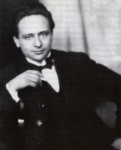
Viktor Ullmann, 1924. (photo from Arnold Schoenberg Centre Los Angeles)

The memories of City Opera Vancouver’s production of The Emperor of Atlantis in 2009 still resonate. Written by Viktor Ullmann (composer) and Petr Kien (librettist) in 1943-44 at Theresienstadt concentration camp, its stirring score and lyrics, both of which, remarkably, reflect hope for a positive future, stay with you. No doubt, Project Elysium’s Cornet: Viktor Ullmann’s Legacy from Theresienstadt will have a similar effect.

In two public performances (and one private), the group Elysium will present Cornet, the last work that Ullmann finished before he was deported to Auschwitz on Oct. 16, 1944, and killed there two days later. Set to excerpts from Rainer Maria Rilke’s The Lay of Love and Death of Cornet Christoph Rilke, it tells the “tale of a young soldier who experiences love and death in a single night.”

Combining recitation and piano, the piece will be performed by pianist Dan Franklin Smith, who is also music director of Elysium, with Gregorij H. von Leïtis, who is the group’s founder (in 1993) and artistic director, among other things. The evening will include Ullmann’s Piano Sonata No. 6, Op. 49, written in Theresienstadt in 1943, and a lecture by Michael Lahr, Elysium program director and executive director of the Lahr von Leïtis Academy and Archive. Project Elysium was created by Vancouver performer and producer Catherine Laub to bring Elysium to Canada.

“In honor of the 70th anniversary of the end of WWII, Elysium – an organization focused on performing music of composers persecuted during the Nazi regime – is coming to Canada for the first time to present a concert of Viktor Ullmann’s music. One of the concert dates will be the actual date 71 years ago that Ullmann arrived in Auschwitz from Theresienstadt and was immediately put to death,” Laub told the Independent. “The focus of the endeavor is not to dwell on the suffering and death of this artist but to celebrate a man who created beauty during an intensely painful time, and be uplifted by artistry that justly survives his shortened lifespan. In Michael Lahr’s words, ‘The adamant will to live, the unshakable hope that good will prevail no matter how horrible the attempt to crush it – this is the message of Ullmann’s music from Theresienstadt. Elysium offers Ullmann’s music as a powerful symbol of hope.’”

In addition to being a performer, composer and teacher, Laub has been a concert producer since she moved to Canada from the United States in 2006. She founded the Erato Ensemble, with William George, and has been involved on the production side with various other ensembles. Since the creation of the monthly Sunday concert series at Roedde House Museum in 2012, of which she is artistic director, she said, “I have started to focus more energy on being aware of which artists and which projects are poised to bring important gifts to audiences and communities in Vancouver. Project Elysium is the largest-scale project I’ve been involved with from an organizational standpoint, and it’s unique in that I’m not wearing my performance hat at all.”

The Project Elysium concerts, she said, “have been in the works since December 2013, when I reconnected with Gregorij von Leïtis and Michael Lahr on a trip to Munich. I first worked with them when I was fresh out of graduate school and participating in their young artist program. In the years since, I had become more familiar with the second part of their mission statement: ‘… fighting against discrimination, racism and antisemitism by means of art.’ It inspired me that here were people with a clear artistic mission as well as a humanitarian focus. In today’s world, where we all expect quick sound bites and instant gratification, it has to be clear why live performance and the arts – beyond big-budget Hollywood – are relevant and important. This seems like a clear answer to me, and it’s never been more important to be reminded of what happens to the world when we don’t listen to such messages.”

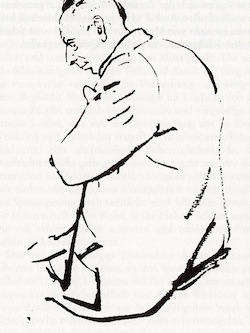
image - Drawing of composer Viktor Ullmann by Petr Kien, graphic artist, Theresienstadt inmate and librettist of The Emperor of Atlantis
Drawing of composer Viktor Ullmann by Petr Kien, graphic artist, Theresienstadt inmate and librettist of The Emperor of Atlantis. (image from project-elysium.org)

“Never forget.” This was one of the reasons that City Opera Vancouver decided to produce The Emperor of Atlantis.

Artistic director Dr. Charles Barber first encountered Ullmann’s music when he was in graduate school at Stanford. “I had made friends with Lotte Klemperer, daughter of the great conductor Otto Klemperer,” Barber told the Independent. “She and her father knew his work, and she introduced me to Ullmann’s broken life and unbroken promise. We listened to recordings together, and Lotte told me about his music and its time.”

Barber also knew Ullmann’s work through violin teacher Paul Kling. “He had played Ullmann’s music, knew it intimately, and was imprisoned with him at Theresienstadt. Prof. Kling considered Ullmann one of his teachers, and strongly believed in his genius.”

While Ullmann and Kien did not survive the Holocaust, Kling did, and, said Barber. “I felt an obligation to help maintain, in his name, the music that might have been.”

The choice of Atlantis, said Barber, had to do with “its unique story, its historical context and its relevance today.” City Opera presented it “in partnership with the Vancouver Holocaust Education Centre, and they were wonderful collaborators in bringing this British Columbia première to the Rothstein Theatre.

“City Opera specializes in chamber opera: the small forms, the intimate eloquence, the affordable advantage. Atlantis met all of these criteria, and more. The music is wonderful, the libretto is bold and vivid, the voice is favored and the audience was moved. It’s what we hoped to achieve, and it’s what we tried to honor.” (For more on the 2009 production, visit jewishindependent.ca/oldsite/archives/feb09/archives09feb06-01.html.)

While Barber, unfortunately, won’t be able to attend Elysium’s Cornet concert – he will be in Quebec City with COV, conducting its opera Pauline – he put the program into context. He said, “It highlights Ullmann’s gifts: concision, wit, superlative technical accomplishment, daring, and a strong foundation in European musical traditions.

“Ullmann’s significance in musical history is, alas, limited. He was one of the great lights in a musical generation destroyed by the Nazis. We will never know what his place would have been; we only know what it might have been. In his 46 years, he seems to have composed as many works. Only 13 survived him after he was killed at Auschwitz.

“His music works for me, and I think will for the audience coming up, because of its eclecticism. Ullmann was an authority on many sources, he drew widely upon them, but found a voice that was unlike others of his day. He was not an academicist. He wrote for real people, and presumed in them a shared awareness of musical and cultural traditions, and a desire to advance them – playfully, skilfully and imaginatively.”

“While it isn’t possible to rewrite history,” said Laub, “this project functions as a kind of musical ‘rescue mission,’ bringing recognition to a brilliant composer whose work was nearly lost to us. His story and his music allow us to make a more personal connection to a time that is almost too overwhelming to contemplate. This connection is essential as it helps us not only mourn but learn.”

Echoing these comments, Barber said, “These concerts will not be a funeral procession. Ears will be challenged, knowledge will be deepened, and awareness will be empowered.

“According to my teacher Paul Kling, the real Ullmann was a witty and profoundly learned man who delighted in sharing knowledge and in jolting listeners. What an irresistible combination.”

Cornet will take place Oct. 16, 8 p.m., at the Cultch’s Historic Theatre, and Oct. 17, 8 p.m., at Pyatt Hall. Tickets ($30/$20) are available from the Cultch box office, 604-251-1363, and tickets.thecultch.com/peo.

Format ImagePosted on October 9, 2015October 8, 2015Author Cynthia RamsayCategories MusicTags Catherine Laub, Charles Barber, Cornet, Elysium, Emperor of Atlantis, Holocaust, Viktor Ullmann
Help save us from zombies

Help save us from zombies

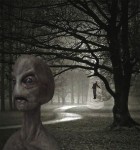
Alien Contagion: Rise of the Zombie Syndrome tasks audiences with finding a downed UFO that has crashed on earth. Virtual Stage’s interactive adventure runs to Nov. 1. (photo from Virtual Stage)

For anyone who has dreamed of saving the world, now’s your chance. All you have to do is take part in Virtual Stage’s Alien Contagion: Rise of the Zombie Syndrome, which runs until Nov. 1.

Several shows have already sold out, with people keen to take on their mission. “This year, audiences are tasked to respond to a highly confidential NASA report about a downed unidentified flying object that has crashed on earth. The exact location is unknown,” reads the promotional material. “To add to the mystery, the alien pilot is reportedly injured, has escaped and is hiding in Vancouver. Furthermore, every NASA official sent to locate the UFO has returned in a zombie-like state … brave and adventurous audience members must find the downed spacecraft, quell the nearby zombie uprising and, ultimately, save the human race from the brink of extinction.”

This is the fourth annual interactive, smartphone-enabled theatre experience produced for the Halloween season by Virtual Stage.

photo - Zombie Syndrome series creator Andy Thompson
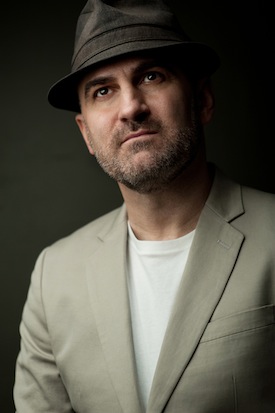
Zombie Syndrome series creator Andy Thompson. (photo by Rob Gilbert)

“The idea originated four or five years ago after I went to the West End in London, England, to see a bunch of theatre,” creator Andy Thompson told the Independent. “I saw all sorts of plays in many different styles of venues. I went to very fancy theatres. I went to small, edgy, Fringe-type theatres. I was even lucky to witness rare performances including Kevin Spacey playing Richard III, as well as the ‘real-life’ theatrical event of Rupert Murdoch getting pied in the face in the British House of Commons.

“The most engaged I felt as an audience member, however, was during an interactive play called The Accomplice. It took place on the streets of London and involved the audience being endowed as key figures in an adventure to recover stolen loot. It was so much fun! The piece was basically a crime drama, but I wondered how a horror-genre show could use a similar format. Add to the mix my interest in technology and smartphones and I quickly developed an idea for a smartphone-enabled, site-specific, roving, zombie-themed theatre adventure with audience members tasked with saving the world.”

Thompson said the series, which premièred in 2012, wasn’t meant be an annual event. “It was a huge creative risk ‘one-off’ event and I thought it could easily flop,” he said. “Needless to say, it came as quite a pleasant surprise when the show was so well received, selling out almost shortly after we opened. People just loved it. After I realized the popular appeal, I looked at how it could be designed as an annual series that is completely new each year.”

This is not Thompson’s first foray into science fiction. The Jewish community member’s credits include – but are in no way limited to – the three previous Zombie Syndromes, SPANK!, 1984 (an adaptation of George Orwell’s novel) and the sex-comedy musical Broken Sex Doll, which featured original music by fellow Jewish community member Anton Lipovetsky, as well as episodes of TV’s Fringe.

“It is so much fun to imagine the seemingly endless possibilities in the universe,” said Thompson about his interest in science fiction. “I often contemplate our reality on planet earth, which often feels like a far-fetched science fiction story idea. Consider: we are on a small planet, whipping through space, revolving around a star. Our star is merely one of billions of stars in the Milky Way galaxy. And, if that’s not all, there are billions of galaxies in the universe. So, by my rough math, that means there are at least 1,000,000,000,000,000,000 stars in the universe. Earth and our existence seem extremely small when put into this perspective. And that’s just when we look at ‘third-dimensional’ reality. I am convinced that there are tangible, intelligent realities on other vibrational frequencies that we are unaware of. Like the sound of a dog whistle, humans are just not currently attuned to be aware of them. Without a doubt, what Shakespeare said in Hamlet is certainly true: ‘There are more things in heaven and earth, Horatio, than are dreamt of in your philosophy.’

“Life is pretty mind-blowing when you really think about it. Science fiction allows us to imagine the possibilities. And, half the time, because our existence is so vast, we get to explore far-fetched ideas that cannot be definitively refuted. To me, it’s a great deal of fun.”

And a great deal of work. Alien Contagion: Rise of the Zombie Syndrome features “about 45 performers this year, as well as about a dozen crew and designers,” said Thompson. “The logistics are mind-numbing, but we have a great team and a lot of experience under our belts. We generally start planning the show a year in advance. Things progressively kick into higher gears over the spring and summer. The storylines are often collaborative. This year, my stepson Finn [Ghosh-Leudke] co-authored the story with Tyler Clarke and myself. I then wrote the script based on that story.”

The show is fully wheelchair accessible. However, it is rated PG-13 because of the subject matter, and children under 13 must be accompanied by a parent or guardian. For tickets and more information, visit thevirtualstage.org/tickets.

Format ImagePosted on October 9, 2015October 8, 2015Author Cynthia RamsayCategories Performing ArtsTags aliens, Andy Thompson, Virtual Stage, zombies
Forest can transform

Forest can transform

Beyond the Edge by Lori Goldberg , part of the exhibit Urban Forest, which opens at the Zack Gallery on Oct. 15. (photo from Lori Goldberg)

“Urban Forest is a body of work exploring the relationship between urban dwellers and the natural world of the B.C. forest, and tying it into Jewish thought,” artist Lori Goldberg told the Independent about her new exhibit at the Sidney and Gertrude Zack Gallery, which opens Oct. 15.

photo - Reconstructing Nature, acrylic on canvas, by Lori Goldberg
Reconstructing Nature, acrylic on canvas, by Lori Goldberg. (photo from Lori Goldberg)

The forest affords multiple experiences, which are often dichotomous, she explained, “freedom and fear spotlight fragments of light and cavernous darks, convoluted winds and soft silences. Trees collide with the sky, providing a protective umbrella that obscures the skyline of the cityscape. Those entering the forest shed layers of urban living as the drone of the city dims, senses awaken to the natural world, the forest breathes and comes to life.

“The paintings are narrative in style and explore the arena of the personal and the collective. Ordinary views and everyday objects come together in discordant co-existence and question the multiple, often contradictory, issues we face as members of a fragmented society disconnected from nature and from self.” In this way, the exhibit evokes the notion of tikkun olam (repairing the world), “which suggests humanity’s shared responsibility to heal, repair and transform the world.”

Goldberg will be in attendance at the Oct. 15 opening, which starts at 7:30 p.m. The exhibit is at the gallery until Nov. 8. To see more of her work, visit lorigoldberg.ca.

Format ImagePosted on October 9, 2015October 8, 2015Author Cynthia RamsayCategories Visual ArtsTags Lori Goldberg, Urban Forest, Zack Gallery
Ready for the election

Ready for the election

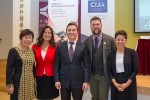
SUCCESS chief executive officer Queenie Choo, left, with federal election candidates, left to right, Jody Wilson-Raybould, Erinn Broshko, Wes Regan and Mira Oreck. (photo by Jocelyne Hallé)

More than 100 people filled Choi Hall on Sunday to hear local candidates in the Oct. 19 federal election talk on immigration, economics, security, employment and health care. Co-sponsored by the Centre for Israel and Jewish Affairs and SUCCESS Canada, as well as various media outlets, including the Jewish Independent, the panelists, in order of initial three-minute presentations, were Vancouver-Granville candidates Erinn Broshko (Conservative), Mira Oreck (NDP) and Jody Wilson-Raybould (Liberal) and Vancouver East candidate Wes Regan (Green). The candidates each had two minutes to respond to questions submitted in advance by the public and, at the end of the Q&A, they each gave summary statements.

Charlie Smith, editor of the Georgia Straight, served as moderator, while Doug Purdie, chair of the board of SUCCESS, welcomed the audience and Jason Murray, chair of CIJA, closed the proceedings.

Format ImagePosted on September 25, 2015September 24, 2015Author Cynthia RamsayCategories LocalTags Centre for Israel and Jewish Affairs, CIJA, elections, Erinn Broshko, Jody Wilson-Raybould, Mira Oreck, SUCCESS, Wes Regan
Men take centre screen

Men take centre screen

In Love, Theft and Other Entanglements, Sami Metwasi plays Mousa, a likable but unlucky car thief. (photo from Vancouver International Film Festival)

Men in turmoil. If there were a common theme between the films the Jewish Independent reviewed in anticipation of this year’s Vancouver International Film Festival, which opens Sept. 24, it would be that. It also seems to apply to the other few movies in the festival with Jewish- and/or Israel-related content.

Of the films reviewed, Love, Theft and Other Entanglements (Palestine Territories) was the most engaging, though it was slow in its pacing. This was likely done purposefully to reflect aspects of the main character and his milieu, but the movie – which is described by director Muayad Alayan as “a drama, a thriller and a fairytale” – would have been more intense if several lengthy shots had been trimmed even by a few seconds. We don’t have to see a car drive from Point A to Point B to know that it went from A to B, for example.

That being said, Love’s Mousa, is a likable “hero,” and this makes viewers want to stick with him to the end. The choice to film the movie in black and white was made, says Alayan on the film’s website, to minimize “the visual noise that detracts from the story” and reduce “the temptation to examine the setting of the film against the hyper-realistic images of Palestine common in TV reports and documentary films. I wanted the place to be a context that serves the story and not a point of interest in and of itself.” In this, he succeeds. While the film includes evident commentary about Israeli and Palestinian societies, as well as the conflict between them, it is Mousa – representing anyone who has made some bad choices in life – who is at the centre of the narrative; and the desert landscape accents his scarce hope.

Walking out on a job that his father arranged for him with some effort, Mousa steals a car – not his first. Unfortunately, this one has valuable cargo in the trunk and Mousa becomes a man of interest – and use – to both Israeli intelligence and Palestinian militia. Adding to his self-made burden is an affair with a married woman.

Mousa desperately wants to flee from it all. When he tells his father he is leaving, his father responds, “A man who doesn’t solve his problems in his own country, won’t be any different in another country. You’re just running away.” By the end of the film, Mousa is no longer running.

***

Hockney is a flattering documentary by Randall Wright (United Kingdom/United States) of British artist David Hockney. It portrays a creative, innovative man who lived his life publicly, not only explicitly wrestling with his homosexuality in his artwork, but filming many moments of his life, some of which are very intimate and, one would think, private.

By turns flippant (deciding to become a blond after seeing a Clairol commercial that claimed blonds have more fun), sad (mourning with every aspect of his being the end of his relationship with Peter Schlesinger) and serious (continually pushing artistic boundaries and learning new techniques), Hockney is a fascinating person.

Wright’s documentary features interviews with Hockney, 77, as well as Hockney’s family and friends, fellow artists, subjects of his paintings and others. For the film, Hockey – who still works in the studio every day – provided Wright with access to his photographs and “home” movies. Hockney was a documenter not just of what he saw around him in people and nature, but of himself. “I always wanted to see more,” he says about why he always wanted to sit on the top level of the bus on the way home from the pictures – he describes himself as almost being raised with Hollywood, though he was born and raised in Bradford, England. After several stints in Los Angeles, he moved there in 1978.

The documentary serves as an interesting and visually stimulating, if uncritical, introduction to Hockney and his work. The VIFF screenings mark its Canadian première.

photo - Quentin Dolmaire et Lou Roy-Lecollinet in My Golden Days. Dolmaire is scheduled to attend the film’s première at the Vancouver International Film Festival
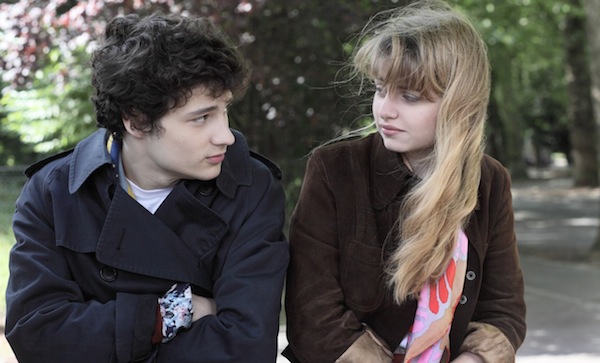
Quentin Dolmaire et Lou Roy-Lecollinet in My Golden Days. Dolmaire is scheduled to attend the film’s première at the Vancouver International Film Festival. (photo from VIFF)

Another national première is My Golden Days, directed by Arnaud Desplechin (France). Actor Quentin Dolmaire, who plays the young adult Paul Dédalus, is scheduled to attend the screening.

Called Trois souvenirs de ma jeunesse in its original French, the film begins with the adult Paul in bed with a lover, saying goodbye, set to return to France to take a position with the foreign ministry. His first souvenir (memory) is of his childhood: to understate matters, he doesn’t get along with his mother, who is ill, and, after she dies, his father never recovers and fades into the background of his children’s lives.

Paul’s second memory – and the most interesting part of the entire film – is triggered when he is stopped at customs. Apparently, another Paul Dédalus exists in Australia, with Paul’s same birth date, etc. How can that be?

It goes back to the 1980s and a high school trip to Minsk. Not Jewish himself, Paul helps his friend Marc Zylberberg smuggle documents and money to refuseniks. He is asked, not pressured, to “lose” his passport when he meets with them, which he does.

The strength of character Paul displays at 16 in Russia escapes him upon his return. The third and final memory of his youth takes up more than half of the two-hour film. Despite including some violence, lots of emotional chaos and a few sex scenes, the romance between Paul and Esther is, not to mince words, boring. Though well-acted, the characters are not compelling or sympathetic, and it is hard to care what happens to them and their relationship.

***

The Jewish Independent is sponsoring the Canadian première of Tikkun, directed by Avishai Sivan (Israel). Among other awards, it won top honors at the Jerusalem Film Festival.

When Haim-Aaron, an ultra-Orthodox scholar, collapses and is resuscitated by his father after being declared dead by paramedics, he completely changes personality. While he struggles with that and his new lack of faith, his father is fearful that God is angry for having His will (that Haim-Aaron die) denied.

Among the other films of Jewish interest is Son of Saul, directed by László Nemes (Hungary), which takes place in Auschwitz, where Saul is forced to help the Nazis kill his fellow Jews. In doing so, he sees the corpse of a boy he believes to be his son. He decides to save the body, intent on giving the boy a proper burial.

And there is A Nazi Legacy: What Our Fathers Did, a documentary by David Evans (United Kingdom). Another Canadian première at VIFF, the film follows Niklas Frank and Horst von Wächter, both the sons of Nazis responsible for thousands of deaths, on a trip to Poland and Ukraine. The men have completely different opinions about their fathers’ actions during the war, and “human rights lawyer Philippe Sands investigates the complicated connection between the two men, and even delves into the story of his own grandfather who escaped the same town where their fathers carried out mass killings.”

VIFF runs from Sept. 24-Oct. 9. The full program can be found at viff.org.

Format ImagePosted on September 18, 2015September 17, 2015Author Cynthia RamsayCategories TV & FilmTags Hockney, Muayad Alayan, Vancouver International Film Festival, VIFF
Responding to emergencies

Responding to emergencies

Israeli field hospital personnel look after those injured in the earthquake in Nepal. (photo by Sam Amiel)

Cardiac surgeon Lt.-Col. (res.) Dr. Ofer Merin is deputy director general of Shaare Zedek Medical Centre and lectures at the Hebrew University in Jerusalem. He heads the Israel Defence Forces Home Front Command’s field hospital, and was part of the IDF’s relief efforts in Haiti after the 2010 earthquake, in Japan after the 2011 tsunami, in the Philippines after the 2013 typhoon and in Nepal after the earthquake in April this year. With various colleagues, he has written about these experiences, as well as about the provision of trauma care at Shaare Zedek.

From the New England Journal of Medicine, March 2010: Within two days of the earthquake in Haiti in January 2010, Israel had sent “a military task force consisting of 230 people” who “landed in Port-au-Prince 15 hours after leaving Tel Aviv and began to deploy immediately…. In its 10 days of operation, the field hospital treated more than 1,100 patients.”

From the Journal of the American Medical Association, July 2015: After the earthquake in Nepal in April 2015, the IDF sent a medical team of 126, and the field hospital was “deployed as a stand-alone facility 82 hours after the earthquake.” Over 11 days, “we treated 1,668 patients, performed 85 operations and delivered eight babies.”

From the Lancet, April 2015: “There were 11 terror attacks in Jerusalem, Israel, between October–December 2014 alone. Two of the injured terrorists arrived at our institution and, following standing triage protocol, we prioritized one terrorist to undergo surgery first since his medical condition was more critical than that of the victims.”

photo - Temple Sholom Rabbi Dan Moskovitz with Dr. Ofer Merin when Merin was in Vancouver in August
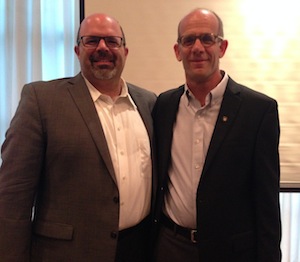
Temple Sholom Rabbi Dan Moskovitz with Dr. Ofer Merin when Merin was in Vancouver in August. (photo by Karen James)

These are but a few examples of the work Merin and his colleagues do, and the challenges they face. When Merin was in Vancouver recently, he shared some of his experiences and discussed the ethical issues surrounding trauma care. He spoke to the Jewish community on Aug. 20 and to physicians in the trauma unit at Vancouver General Hospital the day prior.

Dr. Rick Schreiber – professor of pediatrics at the University of British Columbia, director of the B.C. Pediatric Liver Transplant Program and president-elect of the Canadian Association for the Study of the Liver – was the catalyst for Merin’s visit. Yet his connection to Merin was not, as it first might appear, through his work as a fellow medical professional, but through Merin’s wife, Ora.

Schreiber was on an adult March of the Living mission earlier this year that was organized by the Montreal Jewish community.

“I’m originally from Montreal. I’ve been out here about 20 years,” said Schreiber, who is very involved with Jewish causes in Israel, overseas and elsewhere, including here with the Jewish Federation of Greater Vancouver. On this recent mission, he explained in a phone interview with the Independent, all of the tours and activities in Israel were organized by Ora Merin and her company,

Giant Leaps. “I was very impressed with how the program was laid out for the Israel aspects of the mission and the level of the people [we met] and the things that we did. We got to places that most people wouldn’t get to….”

Ofer Merin attended the mission’s closing dinner with his wife. With medicine in common, he and Schreiber started talking, and Merin’s involvement with the Israel Defences Forces disaster response team came up.

The next day, as Schreiber was leaving Israel, he saw Ora Merin again. She told Schreiber that her husband had left for Nepal, which had just experienced an earthquake. “I got to tell you,” said Schreiber, “within six hours, they had up and going a launch – and they bring everything.… It’s amazing what the Israelis do to be first responders, and they are recognized around the world as being the best. They get there very quickly and they set up all the units, like an intensive care and operating tents and all this kind of stuff, and triage, and get rescue things going long before other countries are even getting their finances together.”

“It’s amazing what the Israelis do to be first responders, and they are recognized around the world as being the best. They get there very quickly and they set up all the units, like an intensive care and operating tents … long before other countries are even getting their finances together.”

During that conversation, Ora mentioned that their family (she and Ofer have four adult children) was going to be in the United States – Ofer has a brother in Seattle – in the summer, and Schreiber suggested they think about coming up to Vancouver on that trip. He said that it would be good for her, because of her travel agency, to meet with Federation, which runs missions to Israel, and maybe her husband could give a talk on his work. “So, that’s how that all started, back in Israel, back last May,” he said.

In addition to the community meetings and talk, Schreiber also organized for Ofer Merin to speak at VGH. “There is a big group of trauma people at VGH, and they jumped on this because they had heard of him and they knew of him, and we organized for him to give rounds…. There was very good attendance at that rounds, and he talked about what he does. But he didn’t talk about all the people they deal with and how they set up, he talked about a lot of ethical things, like how do you decide to save this person versus that person – you only have limited space to save people.”

Merin spoke at VGH about treating such large numbers of injured after a natural disaster, and about handling the stress of that, said Schreiber. “The next thing he talked about, the ethics. You’re not able to provide the same level of care as you’re accustomed to, like we supply for trauma people in Vancouver, we can’t give the same level of care … you’ve got to treat people and turn them over quickly, so you can treat the next person.”

Merin also discussed how, at Shaare Zedek Hospital in Jerusalem, they have to treat victims of terror attacks, including, at times, the terrorist. Of the victims and the perpetrator(s), who do you take care of first? At Shaare Zedek, Merin said, such decisions are made on the basis of triage, who is the most badly injured.

The Independent caught up with Merin by email after his Vancouver visit.

JI: What interested you in cardiac medicine/surgery versus other specialties? Did you always want to be in medicine?

OM: My decision to go into medicine was relatively late, in my early 20s, not something I was born with. My decision to go into cardiac surgery, I guess, was based first on my “nature” to choose something surgical – more adrenalin, very quick results. Cardiac surgery in specific is a great combination of both surgery and the need of good clinical and physiology understanding.

JI: The burnout rate for doctors in general is quite high. It must be higher for trauma physicians. How do you (and/or your colleagues) manage the stress?

OM: I would divide [my response]. There are things done on the group level – discussions, sharing, etc. Especially these days in Jerusalem, there is an extra challenge – dealing with treatment of terror victims, and many times treatment of the terrorists themselves…. We have a psychologist who is doing some group work especially with the ER people and the intensive care unit. And, on the personal level, everyone has to find his ways to vent. I jog almost every day. For me, it’s a good way to relax. In missions abroad, I write every day. Also a great way to vent.

JI: The enormity of being part of a disaster-response team is almost beyond comprehension for anyone who has not had the experience. If it’s possible to outline a general order of events, from the time a natural disaster hits to when the Israeli unit is on the ground in another country providing care, could you please share the main points?

OM: One of the important things is to work in parallel. We bring in the team way before there is a full understanding of the scale of the disaster, so we are prepared before there is a governmental decision to send a team. Once a decision is taken, we are prepared to leave. We send immediately a small forward team, which can report back, and prepare whatever is needed for deployment. We drill every year, so we maintain a high level of preparedness.

JI: In a couple of articles, you mention collaboration/integration with local facilities in a disaster-response situation. What types of factors enter the decision of where the Israeli unit fits into the overall aid effort?

OM: To be honest, in the last natural disasters around the globe, Israel is almost always the largest and first to be on ground. Therefore, we communicate with the local health providers and make a mutual decision where it is best to deploy.

The decision if to deploy as a self-sufficient unit or to operate (like in the Philippines) as an integrated unit is based mainly on the question if the local services are still functional. If they are, it is many times better to assist them and not “compete” with them, as we are arriving for a short term.

Format ImagePosted on September 11, 2015September 9, 2015Author Cynthia RamsayCategories WorldTags disaster relief, IDF, Israel Defence Forces, Ofer Merin, Rick Schreiber, Shaare Zedek

Posts pagination

Previous page Page 1 … Page 73 Page 74 Page 75 … Page 84 Next page
Proudly powered by WordPress