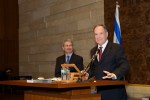
Gillerman: “call a spade a spade”

Dan Gillerman addresses the audience at Jewish National Fund Pacific Region’s Tu b’Shevat event Feb. 3 as emcee Geoffrey Druker looks on. (photo by Robert Albanese)

A former Israeli ambassador to the United Nations heaped praise on Canada and excoriated the United States during a candid speech here last week.
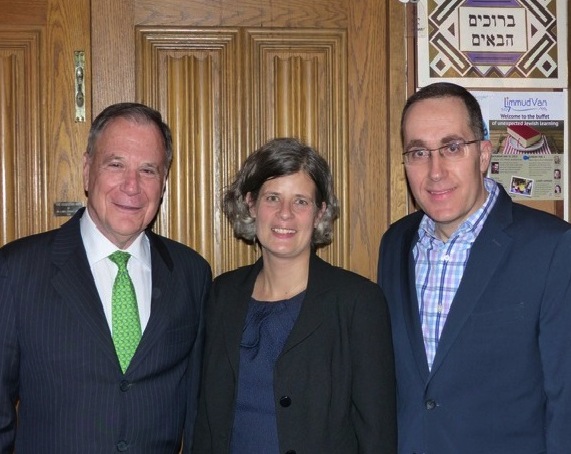
photo - Left to right, former ambassador to the United Nations Dan Gillerman, Mayor of Victoria Lisa Helps and JNF Pacific Region shaliach Ilan Pilo
Left to right, former ambassador to the United Nations Dan Gillerman, Mayor of Victoria Lisa Helps and JNF Pacific Region shaliach Ilan Pilo. (photo by Julie Elizabeth)

Dan Gillerman, who led the Israeli delegation at the UN from 2003 to 2008, was filling in for current Ambassador Ron Prosor, whose obligations kept him in New York. The occasion was the Jewish National Fund of Canada’s Tu b’Shevat event at Beth Israel on Feb. 3. He also spoke in Victoria at Emanu-El for JNF the next day.

Gillerman, who acknowledges that he has a penchant for political incorrectness and is now a private citizen free to speak his mind without the constraints of a diplomatic post, received a strong ovation when he called Canada “by far, the greatest friend Israel has in the world” and when he heaped praise on Canada’s Prime Minister Stephen Harper as “probably the greatest leader in the world.”

His perspective on the United States was not nearly as positive.

“I think that what we are witnessing today is at least a perception, hopefully a wrong perception, of a weak America and a weak American president,” Gillerman said. Even a whiff of American weakness is a dangerous thing in the world, he said, with America’s enemies feeling that they can get away with murder and America’s allies believing that they cannot rely on the superpower.

Gillerman equates the contemporary situation of the United States with the advent of the First World War a century ago, which he says was due in part to perceptions of British weakness under Prime Minister H.H. Asquith. Gillerman contended that Russian dictator Vladimir Putin would not do what he did in Ukraine and other countries would not do what they are doing elsewhere if they thought the United States would intervene.

On dangers facing Israel, Gillerman said that the most serious threats are not Hamas or Hezbollah, and not even Iran, which is pushing for nuclear capability. “They are not our most dangerous threats, because we can take care of them,” he said. “The two most dangerous phenomena we face today are appeasement and being politically correct.”

Trying to appease terror and the Iranian regime, as the world is doing today, Gillerman said, is very dangerous.

About political correctness, he said the world is “trying to find other words to explain what is happening,” other than identifying it as Islamic extremism and terrorism. “We have to call a spade a spade,” he said. “There is evil in this world. There is terror in this world. It threatens your country and every country in the world.”

On Iran, Gillerman characterized nuclear negotiations as “a weak America and a weak American president who wants an agreement at any cost.”

Gillerman said he had a conversation with UN Secretary-General Ban Ki-Moon, who is South Korean. Gillerman said that the global powers dithered while North Korea prepared for nuclear weaponry then one day the world woke up to a nuclear North Korea. Gillerman said Ban told him that Iran is much more dangerous than North Korea.

“North Korea sought nuclear weapons out of desperation,” Gillerman quoted Ban as telling him. “While Iran is seeking them out of aspiration.”

Gillerman spoke of his close relationship with the late former Israeli prime minister Ariel Sharon, who appointed him ambassador to the UN. Gillerman’s background is not in politics or diplomacy, but business, and he was chairman of the Israeli Chamber of Commerce before his ambassadorial appointment.

He said Sharon warned him that the appointment to the UN would leave him lonely and facing hostility, but Gillerman said he later told the prime minister that he had been wrong. As Israel’s representative at the world body, Gillerman said, he operated on the knowledge that he represented a country that “is far, far better than most other member countries of the United Nations.”

Despite Israel’s isolation at the UN, one of Gillerman’s achievements during his time as ambassador was the proclamation of International Holocaust Remembrance Day every January. It was the first time that an Israeli-sponsored resolution was passed by the General Assembly.

Gillerman was speaking on the day that Canadian foreign minister John Baird announced his resignation from cabinet and politics. Gillerman said that he had spent several days with Baird recently in Davos, Switzerland, and had no indication that Baird was planning a major change.

“I think it’s a loss for Canada and a loss for Israel, but I wish him well,” Gillerman said, before once again praising Canada’s leaders.

“I think you have in Stephen Harper one of the greatest leaders in the world. Probably the greatest leader in the world and definitely the best friend Israel has in the world,” he said.

While the bulk of the former ambassador’s speech was ominous and pessimistic, it didn’t conclude that way.

“Despite all that, I am optimistic about the future of Israel,” he said near the end of his remarks. “I believe that the world is waking up.”

In the Arab world, he said, the fight between extremists and moderates will lead moderates to recognize that Israel is not the enemy. Comparatively moderate Arab states are as afraid of Iranian extremism and nuclear capability as Israel is – possibly more afraid – he said, and a regional agreement will emerge from shared interests.

“I believe we can reach a fair and lasting settlement with the Palestinians,” he said, adding that leadership is needed on both sides, and in the world, and that it must go beyond bilateralism. He predicted what he calls a “23-state solution,” an agreement between Israel and Arab countries that leads to lasting peace.

He went on to say that if the Palestinian issue were settled, Arab states could calm their streets and become partners with Israel.

To those who say that the United Nations is a failed, useless organization, Gillerman described it as simply a building on First Avenue in Manhattan that is only as good as its tenants. Blaming the UN for the faults of its member-states is like blaming Madison Square Garden when the Knicks lose, he said. “It’s not the UN as an organization, it’s the world we live in.” The UN General Assembly has a “built-in immoral majority,” he said.
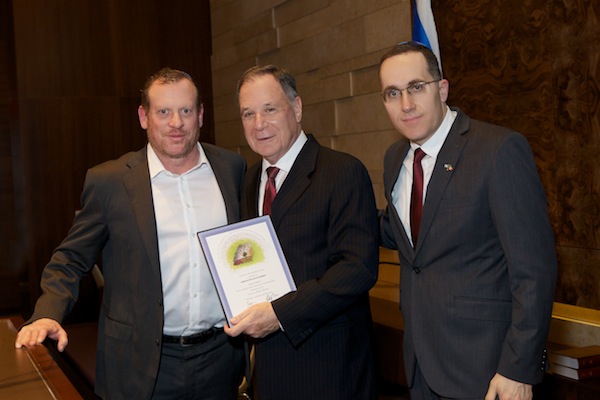
photo - Left to right, Frank Sirlin, president of Jewish National Fund Pacific Region, former ambassador to the United Nations Dan Gillerman and JNF Pacific Region shaliach Ilan Pilo
Left to right, Frank Sirlin, president of Jewish National Fund Pacific Region, former ambassador to the United Nations Dan Gillerman and JNF Pacific Region shaliach Ilan Pilo. (photo by Robert Albanese)

Prosor, the ambassador who was originally slated to attend, provided a video message that was screened at the beginning of the event. Singers from Vancouver Talmud Torah sang a song for Tu b’Shevat and King David High School students sang the national anthems. The event was emceed by Geoffrey Druker, Rabbi Jonathan Infeld welcomed visitors to the new Beth Israel building and Diane Switzer, board chair of the Jewish Federation of Greater Vancouver, introduced Gillerman. Frank Sirlin, president of JNF Canada Pacific Region, spoke about this year’s Tu b’Shevat campaign, which will see trees planted along roads in Israel that are within range of gunfire from the Gaza Strip. The “green barrier” will help green the desert while shielding drivers and passengers from sniper fire. The JNF campaign includes two telethon sessions, on Feb. 15 and 22.

Pat Johnson is a Vancouver writer and principal in PRsuasiveMedia.com.

ZDS music inspires movement

Zvuloon Dub System is at the Imperial on Feb. 20, the first of several world-class musicians taking part in this year’s Chutzpah! festival. (photo by Naom Chojnowski)

“Come prepared to dance!” advises the Chutzpah! promotional material about Zvuloon Dub System’s upcoming show at the Imperial. Wise words, indeed. Just listen to a few bars of any song and you will find yourself moving to the beat.

Founded in 2006 by brothers Asaf and Ilan Smilan, the Tel Aviv-based band is part of an impressive world music lineup at this year’s Chutzpah! As part of its series on the festival this month, the Jewish Independent spoke with Asaf Smilan about ZDS’s evolution into an internationally known reggae group.

JI: How did you come together as the current incarnation of the band, and who will be coming to Vancouver?

AS: ZDS is a little bit like a sports team. We have an extended lineup with sub musicians, and when we go on tour, we need to do some personnel changes in some of the positions from time to time.

The core lineup of ZDS has included eight musicians since 2010. When we recorded our latest album, Anbessa Dub, we brought more musicians to the studio to achieve a certain sound. When we released the album, we wanted to credit all the musicians that took part in the production of the album – the sub musicians that play with us – so we credit all of them on our website.

We’ll come to Vancouver with eight members: Gili Yalo on vocals, Inon Peretz on trumpet, Idan Salomon on saxophone, Ilan Smilan and Simon Nahum on guitars, Lior Romano on organ, Tal Markus on bass and me on drums. This is the same lineup that will play tonight [Jan. 22] in Tel-Aviv.

JI: Is there something about the tribe of Zvuloon that inspired you to choose the name for your band?

AS: Back in 2006 when we start to play together, I used to live on Zvuloon Street in Tel Aviv. We used to rehearse in my apartment and we were surprised to see that many neighbors really liked what they heard. One couple from the other side of the street used to go out to the balcony to listen, another neighbor from our building used to come down to our apartment and sit with us, the man from the grocery shop on the corner brought us Arabic coffee and cookies. We felt strong vibes from that place. So, when we thought about a name for the band, we wanted to capture that special vibe in the name of the band and, because we’re playing roots reggae that relates to Rasta (that relates to the 12 tribes of Israel), we felt that Zvuloon was the right name for us.

JI: Have the reactions to your music differed between Jewish and mainstream audiences? Have you played in the Caribbean and/or in Ethiopia? If so, what was the experience like? If not, any plans to do so?

AS: There are small differences, but basically it’s the same reaction. Sometimes we’re playing in front of a mixed audience of Jewish people, Caribbean people, Ethiopians and mainstream audiences and our music can speak to all of them. This is the beauty of music, the power to touch the hearts of many people no matter where they’re coming from.

When we played last summer in Jamaica, we sang mostly in Amharic. The Jamaican people were really curious to hear how reggae mixed with Ethiopian music, so after we played at Reggae Sumfest in Montego Bay, we got an invitation to come to play in Kingston at the Haile Selassie birthday celebrations organized by the Rasta people.

In Israel, we’re playing many times in front of Ethiopian and non-Ethiopian audiences and we can feel how the music brings people together and how people from different backgrounds can enjoy and dance together to our music.

When people who were not familiar with Ethiopian culture come to me after the show and ask me where they can hear more Ethiopian music, I get the feeling that we’re really doing something important that opens the minds and the hearts of the people.

JI: On Anbessa Dub, there are Ethiopian songs done in ZDS style. Can you talk about adapting them for this album?

AS: I started to listen to Ethiopian music in the early 2000s, a long time before we started to work on Anbessa Dub. After Gili joined the band in 2010, we started to know each other and, one day, we were sitting together and listening to music. I asked Gili if he knew a song in Amharic that I really liked. From that conversation, we started to think maybe we could play this song in the band in our version. A week later, I brought the arrangement to the band rehearsal and everybody really liked the new song, [as did] our audiences. Slowly, we added more Ethiopian songs to our set until we came up with the Anbessa Dub album.

During the work on the album, we developed a unique way to translate the Ethiopian music, which is based on 6/8 rhythms, into a reggae beat in 4/4, so the tempo of the song isn’t changing but the whole feeling is extremely different. When we worked on some of the songs with Ethiopian artists who knew the original versions, it took them some time to understand what we’d done to the songs.

JI: Freedom Time features English lyrics and Anbessa Dub songs in Ethiopian languages. Any plans to do a Hebrew album?

AS: Lately, I have found myself exploring the influences of biblical text on Jamaican reggae so maybe we’ll do something with that in the future. Last year, we released “Manginah,” our first single in Hebrew, so I believe that some day in the future we’ll come up with a Hebrew album.

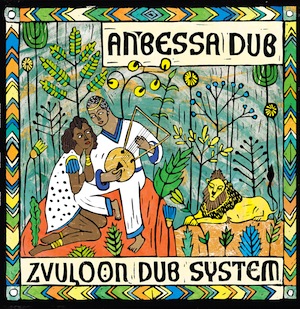
image - Anbessa Dub CD cover
Israeli artist Moran Yogev created the cover of Zvuloon Dub System’s Anbessa Dub album.

JI: Who did the cover art of King Solomon and the Queen of Sheba for Anbessa Dub?

AS: The beautiful artwork featuring King Solomon and the Queen of Sheba was done by Moran Yogev, a very talented young Israeli artist.

I saw some of Moran’s works that combined elements of Ethiopian art in the newspaper and I felt that she could bring the right appearance to the album. I was very happy when she told me that she loves our music and would be happy to design our album.

JI: What’s the Tel Aviv music scene like these days? In what kinds of venues do you usually play?

AS: Tel Aviv is a small city but the music scene is quite big. You’ll find many talented musicians playing all kinds of musical genres, from Middle Eastern to jazz, from Ethiopian music to rock and roll and electronic music.

We’re playing in many venues, like the Barbie Club, Hangar 11, Levontin 7, the Zone and many other venues in the city.

JI: Are there any musicians, Israeli or not, with whom you would like to work?

AS: We have a list of musicians that we would like to work with, and from time to time we’re doing it. In the reggae field, we have worked with artists like U Roy, Cornell Campbell, Echo Minott, Ranking Joe, the Viceroys and others. In the Ethiopian field, we have worked with the legendary Mahmoud Ahmed, with Zemene Melesse and Jacob [Tigrinya] Lilay. In Israel, we have worked with Carolina, and Ester Rada. I have a dream to collaborate one day with Ehud Banai.

JI: What’s next for ZDS?

AS: I hope we’ll continue to move forward, to create more music, to tour as much as possible and to collaborate with more musicians and, by doing so, to develop our unique sound.

JI: If there is anything else you’d like to share with our readers, please do.

AS: I invite each one of you personally to come to our show in Vancouver and to discover something new, music that unites people and cultures into a groovy soundtrack.

Opening for Zvuloon Dub System at the Imperial (319 Main St.) 19+ show on Feb. 20, 8 p.m., is Brooklyn-based band Twin Wave, which fuses jazz, soul, rock and pop. Tickets are $30, $25 for students. Other Chutzpah! music offerings are Les Yeux Noirs; the Borealis String Quartet, Eric Wilson and Boris Sichon; Daniel Kahn and the Painted Bird; Diwan Saz; and, in Chutzpah!Plus, Ester Rada. For tickets and the full schedule of music, dance, comedy and theatre, visit chutzpahfestival.com.

Compassion in the face of death

Last week, the Supreme Court of Canada unanimously struck down the law that makes it illegal for doctors in Canada to provide medical assistance to severely ill patients who wish to die.

The court decision permits physicians to assist in the suicide of “a competent adult person who clearly consents to the termination of life and has a grievous and irremediable medical condition, including an illness, disease or disability, that causes enduring suffering that is intolerable to the individual in the circumstances of his or her condition.”

The decision reflects a fundamental shift in societal opinions toward end-of-life issues. It is worth noting, at this point, that attitudes toward death, life and intervention have never been static. As medical technologies advanced in recent decades, some (primarily religious) voices argued that these technologies interfere with the will of God by “artificially” extending life. Now, the reverse is apparently true. It tends to be religious voices today arguing that, in some cases, the withdrawal of life-extending technologies and treatments is akin to exercising the prerogatives of the Divine in ending life.

Whatever moral concerns surround this serious issue, an understandable dissonance has affected Canadians’ attitudes: it has been noted that there are times when we force human beings to endure suffering at the end of life beyond what we would permit our pet animals to experience.

Many Canadians who have watched loved ones suffer excruciating and slow illness and deaths recognize that human suffering could be more compassionately ameliorated. Among the first steps should be the provision of the best palliative care available. When absolutely no better option exists, assisted death may be the best choice for some individuals. Most of us can see this. We may wish it weren’t so and, of course, we hope we and our loved ones are never faced with these decisions. The fact is, many of us will.

Yet, every instance in which an individual, their family and doctor make decisions about end-of-life preparations must be entirely individualized. There is absolutely no way that one can apply the same criteria to two cases. Circumstances are not transferable between diseases, patients, families or belief systems. Two people with identical conditions and prognoses may justifiably choose diametrical endings.

Indeed, we must ensure that assisted death does not become a go-to “solution” when alternatives exist, or that any patient feels the slightest pressure to choose it. There is a real danger that some people will weigh decisions not on what is best for themselves but what they perceive as best for others or based on what others in similar situations have done. Not wanting to be a “burden” should not be a legitimate justification for assisted death.

There is genuine and justifiable fear around the potential for a “slippery slope.” It is important to note that this Supreme Court decision deals

with the rights of an individual of sound mind to make a decision on their own in consultation with those they trust to end a life of suffering dominated by unbearable pain and the absence of hope for recovery.

Euthanasia is an entirely different matter. It does not involve an individual’s free and informed choice. The fear is that the acceptance of assisted death will make our society more amenable to – or at least less vigilant against – euthanasia. This is not a consideration to be dismissed. The sanctity of human life is too great to ignore the fact that human beings have the capability of justification for all sorts of things. So, as Canada engages in discussions about this ruling, we should also be vigilant in reasserting our fundamental beliefs that the value of life is not diminished by the legalization of assisted suicide, but rather our humanity and the right of all Canadians to a decent life and a respectful death is part of a worldview that is life-affirming.

Certainly there is nothing happy about this subject, but if this decision makes the end of life more bearable for some Canadians then it should be welcomed. Safeguards are absolutely crucial and, as a society, as families and as individuals, we must discuss and understand the limits and potential misuses of this new freedom.

It is so important that we as a society get this right. The federal government will address this issue in the coming months. The Supreme Court has spoken, as often happens in this country, leading legislators in social progress. It’s our turn now. Canadians should have a long, thoughtful and nuanced discussion on this topic.


The godliness of survival

As the 70th anniversary of the liberation of Auschwitz approached last month, discussion turned to the shrinking number of survivors. My father-in-law, Bill Gluck of Vancouver, was one of them, having been deported to Auschwitz from Hungary in 1944, a beautiful boy of 13 with piercing green eyes, a compact frame and a knockout grin. We mentally celebrated his life on that anniversary. But not 24 hours later, his ailing body gave out.

As we began to grieve my father-in-law’s death, I became aware of the delicate dance between remembering Holocaust survivors for the individuals they were, and invoking their identity as survivors.

Esteemed psychoanalyst and child survivor of the Holocaust Anna Ornstein specializes in trauma. Yet even she bristles at being called a “survivor,” telling the Washington Post on Jan. 23, “That’s almost like another crime.” She added, “We were reduced to a race…. This is my name, I had parents who raised me a certain way, and that was not washed away.”

Mourners don’t have the luxury of asking the departed how they wish to be remembered. In any case, we each carry our own points of salience with us when we remember.

At my father-in-law’s funeral and shiva, Bill’s nephew recalled dancing on his uncle’s feet. My husband described the invisible love that had been all around him, like clean air. Bill’s daughter reflected on the heartiness of autumn’s last remaining leaves as she had helped make her father comfortable during his final weeks. And there were his fellow Holocaust survivors, coming to pay respects to a departed member of their own.

Before I met him some 20 years ago, my father-in-law had visited Vancouver schools, telling students his personal story of survival and freedom. For some of the audience, this was their first experience of learning about the Holocaust. One of these students later befriended a young man from Toronto when they studied together at Queen’s University. That young Torontonian would, a few years later, become Bill’s son-in-law.

My stepmom encountered Bill years before I met him, hearing him relay his personal account one evening at Vancouver’s Jewish community centre. I, too, recall reading about Bill’s journey in the pages of the Jewish Western Bulletin (now the Jewish Independent) before meeting his son, who I would go on to marry.

Survivors manage to touch so many, directly and indirectly. Yet, as each one is, my father-in-law was so much more than the sum of those harrowing experiences. Along with his wife, my beloved mother-in-law, Bill built a life of love out of the depths of inhumanity. He lavished a great deal of affection and nurturing on his family, and found his own moments of serenity and solitude as he took up distance sailing around the islands of British Columbia in his later years.

As the rabbi spoke about my father-in-law at the graveside service, he spoke of the godliness that surely ran through him. In young Bill’s harrowing months at Auschwitz, he had found ways to help his fellow inmates. Perhaps most profoundly, Bill had also committed to memory details of instances of kindness amid the horror. Sometimes a certain German guard in the camps would help him – pulling him out of a work line to give him a less strenuous task, placing him on a bicycle during a long march, even giving him his gun to hold. These stories of goodness didn’t die with Bill, for my father-in-law had taken pains to impress these anecdotes upon his children.

Perhaps the godliness of survival is also the godliness of looking for kindness wherever it happens to be, and instilling goodness in the everyday. Bill wanted life to be simple and good; he wanted to find kindness around him, and he hoped others did too.

Mira Sucharov is an associate professor of political science at Carleton University. She blogs at Haaretz and the Jewish Daily Forward. A version of this article was previously published in the Canadian Jewish News.

Mixed welcome at Downton

In Downton Abbey, Rose (Lily James) is smitten with Atticus Aldridge (Matt Barber). (photo from pbs.org/wgbh/masterpiece)

Jewish characters have finally joined the impeccably attired throng at Downton Abbey, and it’s not an altogether happy day.

While Lord and Lady Grantham welcome the arrivals with exquisite manners and the perfectly calibrated amount of modest warmth, series creator and writer Julian Fellowes is a good deal less hospitable. He has devised a nuclear family of cardboard cutouts that fit unflattering Jewish stereotypes and generate viewer antipathy.

Before we rush to judgment or leap to conclusions, however, we should allow for the possibility that the uncomplimentary presentation of the Aldridge family in Season 5 is merely a teaser for Season 6 (and beyond, given the series’ extraordinary popularity in the colonies). It’s not a stretch to imagine Fellowes using the Aldridges as a means of exposing and examining British antisemitism as Downtown Abbey rolls into the late 1920s and early 1930s.

As everyone knows, PBS’s hit Masterpiece series has long featured a character with Jewish ancestry. Lady Grantham, aka Lady Cora Crawley, is the American-born daughter of the late Isidore Levinson. Cora is Episcopalian, like her mother, but she doesn’t view Jews as “the other.”

I must reveal a spoiler, namely that Lord Grantham’s niece, Rose, doesn’t see Jews as different, either. That is, not when they’re as hunky as Atticus Aldridge, a square-jawed banker’s son who chivalrously shelters Rose with his umbrella in one of the least-inspired meet-cutes in the annals of television.

One could trace Rose’s open-mindedness to last season’s colorblind liaison with a black jazz singer, and her naive modernity to her fight with Lord Grantham over bringing a wireless into the sacred realm of Downton Abbey. But Atticus is so assimilated and so devoid of personality that he wouldn’t register as Jewish if he didn’t tell us. In other words, Rose is smitten with an Englishmen of her status and breeding, and whose Jewishness is incidental rather than fundamental. In fact, the moment when he confides that he’s descended from Jews who left Odessa after particularly brutal pogroms doesn’t belong to him but to his listeners – bitter, broke Russian expatriates of the pre-Revolution regime who insult Atticus over their shoulders as they walk away.

Now, Atticus is of the right class and has parents of means, and those are the credentials that matter in Downton’s rarefied world. However, his perpetually unsmiling father, Lord Sinderby, is less sanguine about his son’s involvement with a shiksa, and the utterance of the epithet stamps him as intolerant and clinches our dislike.

There are certainly valid arguments against intermarriage, and Fellowes could have written an impassioned monologue for Lord Sinderby that expressed the costs and worth of Jewish identity, and the weight and meaning of traditions and rituals. Instead, Lord Sinderby has a couple angry lines that leave the impression that he prizes money and influence above all else. While much is made of Lord Sinderby’s family values, namely his hatred of divorce, it’s presented as evidence of his inflexibility and anachronism rather than allegiance to vows and moral behavior. As for Lady Sinderby, she is totally gracious and agreeable, but in an unwaveringly superficial way.

To keep things in perspective, Downton Abbey is an upstairs/downstairs soap opera that is generally more concerned with the romantic complications of its female characters (Rose, in particular) than with the big picture of class-conscious Britain. I find the series most interesting, though, when it invokes and reflects the changes in British society after the First World War (and evokes contemporary parallels). Fellowes has introduced a story arc that’s tailor-made for illuminating antisemitism between the wars. On those grounds, I’m already anticipating Season 6.

Michael Fox is a writer and film critic living in San Francisco.

Making money your friend

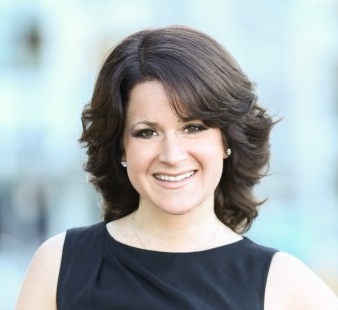
Marissa Cepelinski during the 2014 Run for Water. (photo from Marissa Cepelinski)

Some people spend their entire lives trying to figure out what they want to be when they grow up. Some know when they’re just a kid.

At a rather young age, Marissa Cepelinski already knew two key things about herself that would lead her to her current position as co-founder of Capital Core Financial: she loved numbers and she wanted to help people.

photo - Marissa Cepelinski not only advises people on how to direct more of their money to causes they care about, she also donates her time and money
Marissa Cepelinski not only advises people on how to direct more of their money to causes they care about, she also donates her time and money. (photo from Marissa Cepelinski)

Cepelinski is the daughter of an Israeli computer engineer who spent many hours tutoring her in the art of finances. “He had me tracking all my money in a blue Hilroy notebook when my babysitting career began at 11,” she said. “I had to enter all the debits and credits and I loved it.

“I also loved working with people,” she added. “So I knew I wanted to somehow pair the two.”

After completing her minor in psychology at university, Cepelinski targeted the financial advisor career path, leading to what now has been a 12-year career in the industry.

Doing what she loved was the first step. The second was finding a way to make that career choice satisfy her need to help others.

“I became very clear on what I wanted to build and what we needed more of in the financial world,” she explained. “I wanted to work with people on a goals-based approach rather than just working with the money.”

After teaming up with Franco Caligiuri on a consultation basis for several years, the two realized their goals aligned, leading them to partner in starting their own boutique firm, Capital Core Financial. Through her work at Capital Core, Cepelinski has engaged in many charitable programs, both as a donor and as a participant. Specifically, she advises many individuals, families and businesses on strategies to help direct more funding toward causes they care about.

“We found that many people simply didn’t know or understand how they have the option to choose a cause to donate to rather than ‘donating’ their money to Canada Revenue Agency (CRA),” she explained. “Being able to present a cheque for $100,000 to a charity … is a feeling I can’t even describe.”

Cepelinski said that Capital Core Financial has a goal to help redirect at least $1 billion to be donated to the nonprofit sector.

Community building is one of Capital Core’s main values. As such, Cepelinski also donates a lot of her time to various causes, highlighted in the past year by her participation in the Run for Water ultra-marathon, the Covenant House Sleep Out to raise awareness and the 24-Hour Famine for a Better Life Foundation. She personally raised more than $22,000 for these charities in 2014.

Earlier this year, she and colleague Alli Warnyca spoke at the Recharge Conference at the Jewish Community Centre of Greater Vancouver. They talked about how people could change their attitudes about money and debt, and feel good about their finances.

As for her typical client base, Cepelinski insisted she doesn’t really have one. “We work with people who are committed to their goals, that have values that align with ours,” she explained. “People who are wanting to raise the bar in their life and remove their emotional limitations in regards to building wealth.

“I’ve worked with business owners on corporate planning, young families starting to save to buy a home and struggling artists or actors learning to budget and commit to a plan,” she continued. “Many of us walk around with money stories we created at a very young age. We will spend some time discussing those with clients because it’s important that people look at the patterns they are running in regards to their money.”

To set up a meeting with Cepelinski or any member of her team, contact Capital Core Financial at 604-685-6525 or go to capitalcorefinancial.com.

Kyle Berger is a freelance writer living in Richmond.

Hundreds learn at Limmud Vancouver

This year’s Limmud Vancouver had about 35 percent more attendees than it did last year. (photo by Robert Albanese)

About 350 lifelong learners spent the day exploring a huge diversity of Jewish ideas at the second annual Limmud Vancouver event Feb. 1.

Limmud is a worldwide confederation of festivals of Jewish learning, entertainment, ideas and exploration. Started in the United Kingdom in 1980, Limmud is now an annual event in 80 cities. The local event last year was held at King David High School, but this year, it took place a few blocks away, at Eric Hamber, which accommodated 350 registrants, where last year’s had to be capped at 260.

“That’s about a 35 percent growth,” said Avi Dolgin, a founder and organizer of the Vancouver event. The structure changed a little as well, with 40 individual sessions, up from 36 last year, but over five blocks instead of six as was done previously.

“We had eight options per timeslot to drive people truly crazy,” said Dolgin. At breaks between sessions, participants shared take-aways from the many lectures, events, performances and panel discussions.

King David teacher Aron Rosenberg led a session called Love, Hate and the Jewish State, based on a program developed by the New Israel Fund. Participants were asked to move around the room in response to questions of core values around attitudes about Israel, Canada, citizenship, human rights, religion and other hot button topics. Participants moved left or right across the room depending on their level of agreement or disagreement with statements such as “Christmas should be a federal holiday in Canada” or “serving in the Israeli military is a Jewish value.” The room broke into smaller groups to discuss statements about Israel with which they agreed or disagreed.

In another session, comedian and inspirational speaker Adam Growe explained his mathematical formula for measuring success at tikkun olam. (The formula is: S=(hti)c*k.)

In a session on the messianic idea in Judaism, Beth Israel Rabbi Jonathan Infeld said that Judaism is “100 percent about bringing Moshiach” and added that “we have a problem with this idea.” Part of the problem, he said, is that Jews have a history with false messiahs, from Jesus and Bar Kochba to Marx and the Lubavitcher Rebbe.

As an example of how messianism – a belief in a future of perfect existence ushered in by the Messiah – permeates Judaism, Infeld said that the Passover seder, which is almost universally accepted as a metaphor for the Exodus from bondage in Egypt, is actually about redemption from this world. And the wish “next year in Jerusalem” is not so much an aspiration for the literal city in Israel, but for the place and time of the Messiah.

Dolgin took special pride in the diversity of Limmud Vancouver’s offerings. “It was a mix of some text, some history … this year we had a lot of arts and culture – Bernstein and opera and Shakespeare, Jews and Western literature,” he said. “This year, we also had workshops, group discussions about what’s your relationship with Israel and Jewish identity, traditional talmudic study chavruta-style. We had a panel talk which included a debate on the issue of Shmita, which is the seventh year in which the land and the economy is supposed to revert to the situation before.”

In future, Dolgin said, he hopes Limmud will beef up children’s programming and attract more Orthodox participants. He noted that, on forms submitted by presenters, a large proportion said they were shomer Shabbat and keep kosher.

“We look like were kind of a Renewal or Reform outfit, but a quarter or maybe as much as a third of the presenters said they observe Shabbat,” he explained.

Organizers are already priming volunteers and presenters for next year. In addition to attracting teachers who may not see themselves as teachers, Limmud is looking for volunteers in such areas as technology and publicity.

“As a young organization, we’re still easy to hijack because we have no allegiances to anybody except the people working in it,” Dolgin said. “So, if people have a vision for what Limmud could be, then they should come in and steer it in that direction and they will be met with open arms.”

Pat Johnson is a Vancouver writer and principal in PRsuasiveMedia.com.
Learning, fun at Limmud cabaret

Moishe House (and friends) show off their “Most Jewish Table” certificates. From left to right are Alexei Schwartzman, Benjamin Groberman, Carol Moutal, Jordan Stenzler, Shayna Goldberg and Kevin Veltheer.  (photo by Robert Albanese)

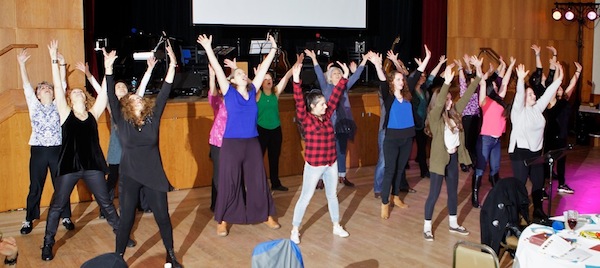
photo - Limmud Vancouver’s Saturday night cabaret included a flash mob, music and Havdalah
Limmud Vancouver’s Saturday night cabaret included a flash mob, music and Havdalah. (photo by Robert Albanese)

Music. Storytelling. Video. Flash dance. These were just some of the elements in Limmud Vancouver’s first-ever Saturday night cabaret, which took place on Jan. 31, the night before the all-day learning festival.

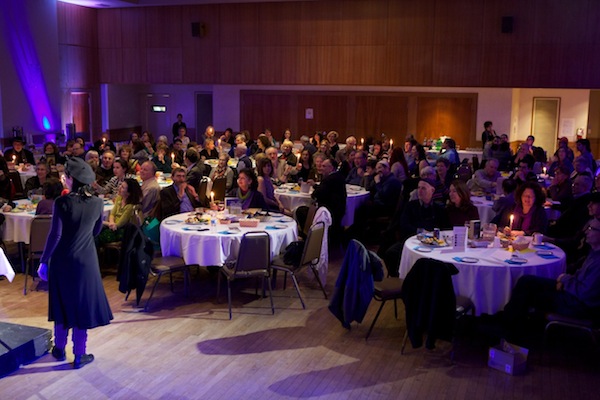
One hundred and sixty people gathered around tables of food, books and Havdalah candles in a transformed Jewish Community Centre of Greater Vancouver auditorium, awash in colored lights and humming to the music of Sulam. The event, co-produced by JCCGV and LimmudVan ’15, brought a cabaret of storytelling (Shoshana Litman of Victoria and local raconteur Michael Geller), drama (Michael Armstrong of Victoria’s Bema Theatre), songs (singers Harriet Frost and Wendy Rubin), Talmud (Tracy Ames), a quiz show (former Vancouverite Adam Growe), Havdalah (Rabbi Laura Duhan Kaplan), dancers (led by Nona Malki) and lots of good food.

photo - Havdalah at the LimmudVan cabaret
Havdalah at the LimmudVan cabaret. (photo by Robert Albanese)

A highlight of the evening was an inter-table contest of personal Jewish experiences: Who has climbed Masada? Who attended Camps Miriam or Hatikvah? Who speaks Ladino? etc. The winners, a group of Moishe House residents and friends, beat the opposition in a spirited event that included spontaneous renditions of Adon Olam, and were proclaimed “Most Jewish Table.”

Rise of modern management

Since Scottish economist Adam Smith published The Wealth of Nations in 1776, arguing the importance of the division of labor and launching the era of specialization, a formal managing role – initially personified by the owner of the enterprise – became necessary to coordinate the diverse tasks and operations of machines and workers.

image - The Development of Managerial Culture: A Comparative Study of Australia and Canada book coverAs a modern profession, management is relatively new. It rose in importance during the 20th century as formerly unskilled preindustrial workers transformed into skilled workers, and their increasingly specialized knowledge and skills needed coordinators and supervisors to ensure the attainment of organizational objectives. Although the managerial role subsequently shifted from owners to professional managers, the latter tended to pursue similar goals as the wealthy elite who retained corporate ownership interest.

Comparing business owners in two of the largest English-speaking nations, the United States and the United Kingdom, suggests they were quite distinct from each other. The American business leader was typified by Horatio Alger-type stories of rising from the depths of poverty to the height of financial success. The rapid economic growth of the Gilded Age in the decades that followed the Civil War contributed to a stereotype of achievement, suggesting the existence of “equality of opportunity.” This American cultural striving for – and adulation of – achievement reflects the strength of individualism in American society. In contrast, the role of the businessman in Britain and Canada was different. Australian sociologist Sol Encel suggests that the typical representative during the 18th and 19th centuries was not just a male who owned a small business but one who was capable of seizing the opportunities provided by technological change to increase the size of his plant or create a completely new enterprise, revealing “a tradition of hard work, self-denial, the ploughing back of profits and the gradual building up of small firms into large ones.” There was less ruthless competition and vicious battles with trade unions compared to the United States but, similar to the U.S. tradition, British leaders of industry were viewed as “self-made men,” typified by a Scotsman like Samuel Smiles.

Encel rightfully alludes to Alger and Smiles for they provided flattering images of individuals who successfully built up their enterprises ostensibly on their own initiatives, whose achievements were admired by their peers and workers alike. There is a notable absence of such images in Australia where, in contrast with these other cultures, Encel observes, “Businessmen, apart from isolated individuals, are not generally regarded as having contributed prominently to the ‘development’ of Australia.” Credit for this largely belongs to members of the working class who championed egalitarianism and preferred flatter hierarchies, often to the chagrin of the more individualist managerial class.

As the managerial role evolved following the Second World War, it was no longer seen exclusively in the context of business. In the words of American management guru Peter Drucker, management “pertains to every human effort that brings together in one organization people of diverse knowledge and skills.” In a modern sense, “management” applies as much to the functioning of nonprofit organizations – from religious institutions, charities, social service agencies and public academic institutions – to the world of business and government. The term “manager,” therefore, signifies a role known by various titles, from supervisor, director and department head, to team leader and coordinator, among numerous other possibilities. Regardless of the title, contemporary managers focus their efforts on controlling, directing or coordinating the work of others.

Although the activities of managers have evolved to include a more supportive role to help the work efforts of people by coaching and otherwise supporting their labors, whether first-line, middle or top managers, they have customarily been defined as people to whom other people directly report. This arrangement suggests vertical hierarchy with management above workers, so the term manager applies to holders of positions of authority who not only possess the ability to influence how people work or behave but also indirectly impact their quality of life. Hence, the origins and implications of differences between Australian and Canadian egalitarianism and the role of political ideology in the development of the managerial outlook expose subtle variances in managerial culture. Management models also provide a window to identify salient Anglo-Celtic cultural features in managerial style. How workers organized is also revealing.

Unions in Australia and Canada emerged in the late 19th century as powerful representatives of workers in their dealings with management. In the last quarter of the 20th century, however, there was a rise in employment arrangements with individual employees rather than the workforce as a collective entity, a development that reflects a largely Anglo-Protestant management’s preference to reduce as much as possible union involvement in employment policy matters. Even in instances when union involvement could not be excluded from the bargaining process, the heightened focus on the individualization of employment has been evident in the increased use of performance-based pay systems over job- or grade-based pay, and with greater reliance on individual goal-setting procedures and appraisal, and more direct communication with individuals instead of unions as an intermediary. Prior to the rise of this individualist trend, however, collectivism strongly affected employment policies due to the strength of unions and the ideological and ethnic influences that helped shape Australian and Canadian society. The ideological influences on each culture were not identical. But what do the terms individualism and collectivism mean when applied specifically to the context of management? Above all, they provide a useful way to see influences on labor-management relations.

Arthur Wolak is a freelance writer based in Vancouver. He received his PhD in management from Macquarie Graduate School of Management, Australia. He has published articles in Australian, Canadian, U.S., U.K. and Israeli academic journals, as well as written for numerous newspapers, including the Jerusalem Post and the Jewish Independent. This is an excerpt from his book The Development of Managerial Culture: A Comparative Study of Australia and Canada (Palgrave Macmillan, 2015).