

For more cartoons, visit thedailysnooze.com.
Author: Jacob Samuel
Call for nominations
Nominations for this year’s Courage to Come Back Awards are open until Feb. 12, 2016, 5 p.m. The annual awards recognize abilities, celebrate differences and give centre stage to six British Columbians who have overcome tremendous challenges, yet reach out to help others in the province.
Courage recipients show us that people can walk again despite the predictions of some of the best medical minds. They teach us that disabled does not mean unable. They prove that hearing voices in one’s head does not mean a lifetime in hospital. These are valuable members of our community despite injury or illness: they are role models.
Nominations are open only to residents of British Columbia and the nominee must agree to be nominated for a Courage to Come Back Award. All nominees will receive a special certificate of nomination, which pays tribute to their outstanding courage.
A team of volunteer health professionals and community leaders will select one recipient in each category to be honored with an award. If your nominee is unsuccessful, he or she can be nominated again next year.
Any material submitted to Coast Mental Health will not be returned. Coast makes every effort to verify nominee stories but takes no responsibility for errors or omissions, and Coast reserves the right to place nominations in their award categories. Video or CD nominations are not accepted.
To nominate someone, tell the nominee’s story of a courageous comeback accurately and in detail. Submit only one nomination form for the nominee, and submit a minimum of three letters of support and testimonials, and optional supplemental documents, to [email protected]. Nominations will not be considered complete or eligible until a completed nomination form and all mandatory letters of support have been received.
Once you have clicked “submit,” an immediate message should appear confirming your nomination has been successfully submitted. You will also receive a confirmation email.
To read about past honorees and to access the nomination form, visit couragetocomeback.ca/courage-to-come-back-awards.
Living at Victoria’s Hillel House
Living at the Victoria Hillel House has provided Hannah Faber a space to engage with her Jewish identity in a holistic way. (photo from Hannah Faber)
When I decided to move to Victoria to finish my undergraduate degree at the University of Victoria, I was told by a longtime friend to look into the Victoria Hillel House as a place to live. At first, I was cautious because I had not been very active at the Hillel of my last university. Following that friend’s advice has turned out to be one of the most transformative experiences I have ever had. Living at the Hillel House has given me so many opportunities to be a part of the Jewish community, which has irrevocably changed my sense of Jewish identity.
Within the first week of moving to Victoria as a transfer student, I was asked by the Hillel director to volunteer at a lot of community events. There were two things that struck me deeply and had me admiring the local Jewish community. The first was how small it was and, therefore, how everything within it was such a labor of love. The second was how much older most people at community events were and how much they wanted young people to become involved. Even though I grew up in a relatively small Jewish community in Calgary, the question of whether or not young people would commit and engage in the Jewish community did not seem nearly as urgent as it does in Victoria. Victoria Jewry is made up of mostly older people who have dedicated their lives to the community and are looking for people to carry the torch.
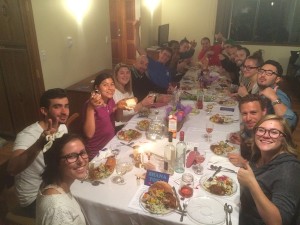
My ability to get involved with the kehilah is in part because I am a resident of the Victoria Hillel House. Living in the Hillel House has provided me a space to engage with my Jewish identity in a holistic way, to explore its many facets and intricacies. The space created is based on values like hospitality, generosity, tikkun olam, as well as inclusive and compassionate listening. I can ask questions about the intersections of feminism and Judaism in my life, and how social justice could be directly informed by my Jewish identity. It is a place where I have explored pertinent questions relating to my Jewish identity with other young Jews, been surrounded by Jewish culture, met members of the Jewish community outside of the university, as well as faculty, and done that all within the Jewish tradition of sitting down to a nice meal.
Hillel House has been a place for me to feel a sense of pride in my identity as a person who is part of a greater shared history. It is rare for one to find a place that validates oneself and simultaneously allows for personal growth. The Victoria Hillel House has done just that. It has played an integral part in allowing me to come into my Jewish identity and, for that, I am very grateful.
Hannah Faber is a Victoria Hillel House tenant, as well as the volunteer coordinator of the Jewish Students Association and an undergraduate studying theatre at the University of Victoria.

Noah’s Ark marks chai
The Noah’s Ark Project began in 1997 as a response to the B.C. law stating that a newborn may only be discharged from a hospital in a regulation, rear-facing infant car seat. (photo from JWI-BC)
The Noah’s Ark Project, a Jewish Women’s International-BC (JWI-BC) program that supplies regulation, rear-facing infant car seats and essentials for newborns to 14 major British Columbia hospitals and other family agencies, is celebrating its 18th year of providing this essential service to needy families in the province.
Noah’s Ark began in December 1997 as a response to the B.C. law stating that a newborn may only be discharged from a hospital in a regulation, rear-facing infant car seat. The law negatively affected families who could not afford to purchase them. Since the car seat requirement did not apply to taxis, hospital social work departments were obliged to provide these families with taxi vouchers or coupons to transport newborns home without car seats.
However, hospital staff were dismayed at the lack of safety for an infant riding without a car seat in a taxi on their first trip home, as well as the likelihood of riding in a parent’s lap in the future. They were also aware that non-driving single moms without infant car seats would likely be unable to accept transportation offers from family or friends without putting the baby at risk, each and every trip.
In response to this situation, a volunteer program was started in 1997 by Isabelle Somekh to provide nearly new rear-facing infant car seats to St. Paul’s Hospital’s social work department. These rear-facing infant car seats were allocated to working-poor parents, refugees and single parents of newborns at the hospital’s maternity centre. In November 2000, the Noah’s Ark Project was taken on entirely by members of JWI-BC, as one of their many service projects.
Barbara Lucas, a social worker at B.C. Women’s Hospital, said of the program, “B.C. Women’s Hospital and Health Centre delivers 7,000 babies a year and we want them to stay safe after they leave the hospital. We appreciate the wonderful generosity of Jewish Women International-BC for donating hundreds of infant car seats over the years so that families in need can bring their babies home safely.”
Debbie Rootman is a member of the basic resources team and coordinator of the Lower Mainland’s Jewish Food Bank, which is co-funded by Jewish Family Service Agency, JWI-BC and donors from the community. She said, “We are grateful for the assistance received from Noah’s Ark – 2015 was an extraordinary year for pregnant clients and JFSA requested and received many nearly new items to assist these new mothers in the community. Noah’s Ark has provided essentials such as a new crib mattress, cuddle cloths, newborn diapers, sleepers, complete layettes, strollers and infant car seats. All we had to do was ask. It is very much appreciated to have this partnership to support us.”
Since the services that are provided by JWI-BC’s Noah’s Ark Project depend on community support and grants, cheques or Visa donations are appreciated to keep this vital service available for all who depend on it. Donations can be mailed to Jewish Women International-BC, c/o 106-7580 Columbia St., Vancouver, B.C., V5X 4S8. Donations over $18 receive tax receipts.
For more information on the rear-facing infant car seat program, call 604-838-5567 and leave a message for Somekh, the Noah’s Ark Project chair, or e-mail [email protected].
Mystery photo … Jan. 29/16
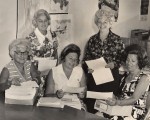
Women organizing a mail-out for State of Israel Bonds, circa 1960. (photo from JWB fonds, JMABC L.14497)
If you know someone in this photo, please help the JI fill the gaps of its predecessor’s (the Jewish Western Bulletin’s) collection at the Jewish Museum and Archives of B.C. by contacting [email protected] or 604-257-5199. To find out who has been identified in the photos, visit jewishmuseum.ca/blog.
Overburdened system
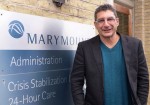
Mardy Yager, manager of fund development at Marymound. (photo from Mardy Yager)
Mardy Yager manages the resources of Marymound, the second largest agency in Manitoba that provides support to some of the province’s highest-needs kids. Every day, he has to deal with an overburdened social services system that is struggling to keep up with demand.
A lifelong Winnipegger, Yager has been working in the child welfare field for 26 years. He has been serving at Marymound for the past 15. “I began working frontline with the kids and now I’m the manager of fund development,” he said.
“I have a passion for the kids and intimate knowledge of the work, so I’ve been effective in raising funds and awareness for child welfare here in Manitoba,” he said of his choice of profession, “which isn’t historically a choice for most people.”
When he was 14, his father passed away. Although Yager is not a practising Jew, he feels strongly that his passion for service stems from his Jewish heritage and the example set by his father, who was vice-president of their synagogue, among other things.
Marymound was started in 1911 by Sisters of the Good Shepherd. Yager said he felt privileged to work alongside the sisters when he first began working there, and found their values to be the same as any other religion’s ethics. “You look after those less fortunate, you honor people’s differences, you celebrate other people’s religions,” he said. “Spirituality is very important, regardless of what faith you practise.”
The overwhelming majority of Marymound’s kids – 70% – are indigenous. As such, the focus of Marymound’s assistance is not so much about religion. “That’s kind of how the sisters looked at it as well,” said Yager. “The focus was more on spirituality and healing, and that’s what’s kept me here.”
Marymound’s staff is a mix of professionals with different cultural backgrounds, including indigenous, Christian, Muslim and Jewish. There are more than 300 full-time and another 200 other staff working with approximately 3,000 children annually.
Manitoba has the highest number of children in care (11,000) compared to any other province. For example, the province has almost double the number of Saskatchewan (6,000) despite the fact that the population breakdown of each province is similar.
“The system is overburdened here in Manitoba,” said Yager. “And it’s struggling to meet the needs of all those kids. Some are very high needs. A lot has to do with fallout from the residential schools. Lots has to do with our indigenous populations being marginalized over the decades.
“We also, unfortunately, did the 1960s scoop, where we pulled kids out of their homes and adopted them out to white families all over North America. We’re just starting to understand the issues and making some corrections as to how we approach the problems.”
Most of the kids Marymound works with are dealing with family breakdown, physical and sexual abuse, neglect and poverty. Some are battling mental illness, fetal alcohol syndrome and other issues that mainly afflict the most vulnerable segments of the population.
While Marymound has serviced Jewish kids and still does in their foster-care programs, those percentages are small.
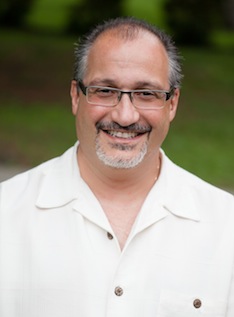
Al Benarroch, executive director of Jewish Child and Family Services (JCFS) in Winnipeg, knows all too well how Marymound and similar organizations help.
“They run some very specific programs around treatment for sexual abuse,” said Benarroch. “Working at JCFS, being a small sliver of child and family services in Manitoba, we work in our own community. But, in my past professional career, when I was in private practice, I used to see a lot of cases of sexual abuse – both in adults who are survivors … and also with youth and children who were in the welfare system because of that.”
But Benarroch was quick to point out that sexual abuse is the smallest percentage under the abuse category – at least on paper – with 10% or 12% of all reported cases of abuse being sexual abuse.
“There is a much higher number being reported of physical abuse, and the highest number is probably neglect,” he said. “What does that mean? Does that mean there’s less sexual abuse or does that mean that it’s underreported? The likelihood is, it’s most likely extremely underreported by virtue of its nature – the nature of the secrecy and the nature of the disruptive levels of trust that a person has when they’ve been victimized.”
While Benarroch said that anyone who can afford counseling can find it very readily, in general, accessing quality, well-trained therapists is difficult for those who are less financially well off.
“With JCFS, we deal with sexual assault very little for a few reasons,” he said. “Number one, our agency is almost exclusively serving the Jewish community. I’m not saying this doesn’t occur in the Jewish community but, as a cultural community, we don’t like to air our dirty laundry. So, as an agency, JCFS is constantly working on raising awareness about these issues so we can peel away those layers of secrecy.”
Benarroch said JCFS sees many more cases in which there has been high levels of neglect and dysfunctional parenting that usually stems from the parents’ past trauma, thereby impacting their ability to parent. In these cases, he said the parents can overcome their challenges and positively parent through talking about childhood experiences, which may involve physical or sexual abuse, to work through those traumatic experiences as adults.
“For me,” added Yager, “it’s always been about the kids and the kids don’t pick and choose. They are just here and we need to help them…. They didn’t ask for the things afflicting them…. We need to do our best to help them get a handle on the issues and go into the community in a productive way.
“Helping those less fortunate, who can argue with that? Right? Those are all things we should all be doing. That’s what makes our country as great as it is, because we focus not just on getting ahead, but on trying not to leave the less fortunate behind.
“I think the values we have here, at Marymound, even though it started from an order of nuns, those values cross all religions.” As an example, Yager said, “I know that philanthropy and caring for others are basic values that all Jews share. We’re quite charitable. It’s also part of the values that the Sisters of the Good Shepherd have provided to us at Marymound.”
For more information, visit marymound.com.
Rebeca Kuropatwa is a Winnipeg freelance writer.
Berlin’s House of One
In Petriplatz, Pastor Gregor Hohberg, left, and Imam Kadir Sanci listen as Rabbi Andreas Nachama recites a prayer for peace. (photo by Frithjof Timm)
In the middle of Berlin, on the grounds of where a church was destroyed in the Second World War, a pastor, imam and rabbi are collaborating to create a new reality wherein Christianity, Islam and Judaism can be practised under the same roof.
“It seems so logical that something like this would take place, but it never has before,” said Rabbi Dr. Andreas Nachama who leads the only Reform congregation in Berlin, Sukkat Shalom (House of Peace).
Some congregations and groups of people refrain from intermingling out of fear of losing members to other groups. For Nachama and the other House of One proponents, this is not a concern.
“I think that the congregations are solid and I don’t think that this might turn out to be a problem,” he said. “We have a lot of experience from sharing a building with Catholics, Protestants and Jews, and we’ve never had that kind of problem. The problems we had were very secular and could be solved quickly with a short discussion – things like who is cleaning the toilets after congregation and so on.”
As for the risk of intermarriage, Nachama said intermarriages “take place because people are studying at the same university or classroom, sitting in the same office, or meeting in a restaurant or theatre. I haven’t had a single case where intermarriages originate from a Christian-Jewish dialogue group in all my years.”
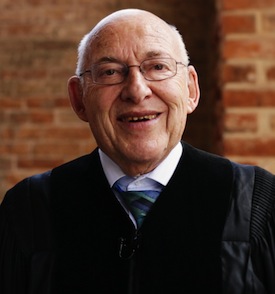
The idea for House of One originated five or six years ago with Nachama’s predecessor, Rabbi Tovia Ben Chorin. He was working to bring the concept to life until he retired and moved back to Switzerland. Nachama has been involved with House of One since April 2015.
Nachama is no stranger to Christian, Jewish and Muslim trialogue. He has been involved in the field since 1972, starting at summer camps in western Germany, where a local school invited members of each of the three faiths to discuss common stories and problems.
As Nachama went on to take Jewish studies in university in the 1970s, he also took basic courses on Islam and Catholicism. Gaining a good understanding of these religions has enabled him to effectively introduce his congregation to interfaith interactions since 1999, bringing in his Islamic and Christian counterparts to teach in the synagogue alongside him.
The clergy meet on a regular basis, sometimes involving leaders in their respective communities, but always aiming to keep meetings to no more than 15 people. So, the interfaith groundwork began long before the excavations started in 2007 of Petriplatz, the site of the old church, among other structures, and a new House of God was being planned. The church wanted to build a house where the three religions would each have a holy space of their own.
“Each would have their own synagogue, mosque and church, working together in one building,” said Nachama. “But, everyone would follow his/her own faith tradition, so it was not about some new religion being created.
“Instead, the idea was to build a house of teaching, of worship, wherein the teaching might bring us together; the worship, everyone does for him/herself in his/her religion.
“We can do programs on some aspects of interest to many, like looking at the differences between kosher and halal. We can also offer teaching programs to the general public.”
Worship times do not seem to be an issue either, with the holy day for Muslims being Friday; for Jews, Saturday; and, for Christians, Sunday.
“But, what happens if Christmas Eve is on a Friday night or during Shabbat?” admitted Nachama. “We can always find problems in terms of holy days on the calendar. They will be solved, but it’s not so easy.”
According to Nachama, the most difficult challenge is in the area of politics. “Islam, in particular, is being taken as a hostage for Islamic fundamental brutality,” he said. “That makes it difficult, because those Muslims that we deal with are not part of that. It makes it difficult … in the public eye … to make it understandable that we, as individuals and as congregations here in Berlin, can cooperate and speak with each other, whatever happens.
“My congregation is very much involved in Christian-Jewish dialogue, and we also sometimes have teachings or panel discussions together with Muslims, so it’s not new to my congregation and, as far as I see, the other congregations have had experience in the field before as well.”
As far as reaching beyond congregational circles, Nachama understands all too well that if someone has prejudice, it is he or she who needs to be willing to open their eyes and ears to seeing the other side. “We can’t do it for them,” he said. “If they are willing, we then can try to show them how we see things.”
While the project is gaining momentum and more than a million euros have already been collected, much more is needed to even break ground on the building project.
Nachama anticipates that his congregants will have no problem with the move when the time comes. “We’ve moved already once and, when completed, either parts of the congregation will move or the whole congregation. It won’t be a problem.
“We believe this project is a result of the history in Berlin,” he continued. Given the history of antisemitism in Germany and the Holocaust, people want to create “a new page of history,” he said. “People really try to look for new ways of cooperation, coexistence and respect for other peoples and faiths.”
For more information or to join the project, visit house-of-one.org.
Rebeca Kuropatwa is a Winnipeg freelance writer.

יחסים מאוד מאוד טובים
ראש ממשלת קנדה, ג‘סטין טרודו ,בדאבוס שהתקיים בשבוע שעבר בשוויץ. (צילום: facebook.com/JustinPJTrudeau)
פגישה נוספת בין ג’סטין טרודו לבנימין נתניהו: השניים נפגשו בשבוע שעבר בדאבוס
ראש ממשלת קנדה, ג’סטין טרודו וראש ממשלת ישראל, בנימין נתניהו, נפגשו בפעם השנייה. הפגישה הפעם ארעה במסגרת הפורום הכלכלי העולמי בדאבוס שהתקיים בשבוע שעבר בשוויץ. כנס דאבוס נחשב לאחד האירועים הכלכליים הבינלאומיים החשובים ביותר, ומשתתפים בו גורמים בכירים מכל העולם. בפעם הראשונה מאז טרודו מונה לראש ממשלה בחודש אוקטובר, נפגשו השניים בוועידת האקלים בפריז שנערכה בסוף חודש נובמבר.
נתניהו ציין כי הפגישה הנוכחית בינו ובין טרודו שנערכה בשבוע שעבר הייתה מצויינת “ויש לנו יחסים מאוד מאוד טובים”. כידוע לנתניהו וסטיבן הרפר, ראש הממשלת קנדה הקודם, היו יחסים מצויינים והם נחשבו למנהיגים מקורבים ביותר. עתה נתניהו משתדל לצייר תמונה של עסקים כרגיל וכי גם הוא וטרודו נמצאים במערכת יחסים טובה מאוד. זאת למרות שבממשלת ישראל חששו מאוד מהניצחון של המפלגה הליברלית בחירות הפדרליות האחרונות כאן ותבוסתו של הרפר שעמד בראש מפלגת השמרנים.
עם זאת נתניהו בוודאי לא אהב לשמוע את טרודו מצהיר שוב בנאומו בדאבוס כי הפתרון למשבר הגרעיני עם איראן הוא פוליטי ולא צבאי. וכן על הכרזתו של ראש ממשלת קנדה בתשובות לשאלות שהופנו אליו בכנס, שקנדה אכן מפסיקה להפציץ מטרות של דאע”ש במזרח התיכון.
ג’סטין טרודו צפוי ללכת בדרכו של אביו פייר טרודו ולהנהיג מדיניות מאוזנת במזרח התיכון
ראש ממשלת קנדה הנוכחי, ג’סטין טרודו , כמו אביו, פייר אליוט טרודו ששימש ראש ממשלת קנדה בשנים 1968-1979 ו1980-1984, צפוי להנהיג מערכת יחסים יותר מאוזנת עם ישראל, תוך ניסיון לחזק את הקשרים עם מדינות ערב, שנחלשו מאוד בתקופת ראש הממשלה הקודם, סטיבן הרפר. שר החוץ של טרודו הבן, סטפן דיון, הזדרז מייד אחרי הבחירות והודיע שקנדה מבקשת לחזור לתפקידה המסורתי (לפני עידן הרפר), ולהיות מתווך הוגן בין הצדדים במזרח התיכון. זאת תוך חיזוק הקשרים מחדש עם מדינות ערב השונות. לדעת פרשנים טרודו כמו אביו לא יעמוד מאחורי ישראל באופן אוטומטי (כמו הרפר) ויבדוק כל נושא לגופו. כאביו הוא כבר הודיע כי קנדה תתנגד לכל חרם על ישראל “שזה סוג חדש של אנטישמיות”.
פייר אליוט טרודו היה קשור וקשוב לקהילה היהודית. הוא מינה שר יהודי לממשלתו, החזיק ביועצים יהודים, והיה ראש הממשלה הראשון בקנדה שמינה שופט יהודי לבית המשפט העליון. הוא היה תומך נלהב של ישראל אך הבין שצריך גם לשמור על איזון עם הפלסטינים. האב כעס מאוד ששמע על החרם הערבי נגד חברות שסחרו עם ישראל. הוא גינה את פעולות הטרור נגד ישראל מצד הפלסטינים והבין את הדאגה הטבעית של ישראל לביטחון. במקביל התנגד לפלישת צה”ל ללבנון ב-1982. המלחמה ואירועי סברה ושתילה סימנו את תחילת התהליך התקררות היחסים בין קנדה לישראל, שהתחממו בעידן הרפר. פרופסור לפוליטיקה באוניברסיטת מקגיל שבמונטריאול, גיל טרוי, טוען שלטרודו הבן גם יש יועצים יהודים ורבים מאנשיו מכירים את ישראל. אביו הבין את ישראל ואין שום אינדיקציה שהבן יהיה שונה ממנו. ברני פרבר מבכירי הפעילים בקהילה היהודית אומר שלא יהיה הבדל המהותי בין הרפר לטרודו, אך טון הדברים יהיה שונה. לדבריו שלטונו של הרפר “הזיז” את הקהילה היהודית חזק ימינה, ומעולם לא היה קיטוב כה גדול בתוך הקהילה כמו היום. פרבר מקווה שקנדה של טרודו תחזור למדיניות יותר מאוזנת במזרח התיכון, כך שקולה ישמע שוב בזירה הבינלאומית וזה יהיה גם טוב יותר לישראל.
Memorial reflects loss, hope
On Jan. 26, Robyn Driedger-Klassen (soprano), Joseph Elworthy (cello), Mark Ferris (violin), François Houle (clarinet) and Mark Fenster (baritone) will be joined by Lani Krantz (harp) and Kozue Matsumoto (koto) in a performance of Renia Perel’s Songs of the Wasteland. (photo by Lindsay Elliott)
On the eve of International Holocaust Remembrance Day, Jan. 26, Renia Perel’s Songs of the Wasteland will be presented by the Vancouver Academy of Music (VAM).
The musical memoir is written for two singers and an instrumental ensemble. The first part, “From Tragedy to Triumph,” features songs of remembrance, including to the children who died in the ghettos and to Perel’s family who were killed – she and her sister Henia were the only ones who escaped. The second half, “Survival,” begins with a song Perel dedicates to her husband, Morris, who passed away in 1999, and concludes with “Jerusalem,” Perel’s hope that, one day, there will be no more war.
“I regard Songs of the Wasteland as an epochal work of art that hopefully will in future be as commonly heard during times of Holocaust remembrance as say Britten’s War Requiem during Nov. 11 observances,” Joseph Elworthy, executive director of VAM, told the Independent. “This was one of our far-reaching goals when I first discussed with Renia about mounting the production on Jan. 26, the eve of the UN International Holocaust Remembrance Day.”
Perel approached Elworthy in December 2014 about collaborating with VAM, he said, “as she held a long-standing respect and admiration for the quality of music education we deliver. Songs of the Wasteland was the perfect instrument to realize this desire.”
And Perel’s work connects to VAM’s vision and purpose.
“VAM believes in the transformative power of music to influence our personal development and daily existence,” he explained. “Music has the power to express the inexpressible while allowing room for the listener to formulate their own inner narrative. It is not surprising that Renia turned to music to express her sense of loss and remembrance for the victims of the Holocaust.”
Elworthy also noted, “It is important to point out that VAM is first and foremost an educational institution and not a concert-presenting organization. This allows us more liberty to choose repertoire and projects that will bring educational value for our 1,400-plus students, as well as the community of music appreciators throughout Greater Vancouver.”
This will only be the second public presentation of the work. Elworthy – who, in addition to being executive director of VAM, serves as the head of the academy’s cello department – will take on the cello part.
“The cello so closely resembles the timbres of the human voice, therefore making it a perfect instrument to capture the beautiful nuances of the Jewish liturgical tradition, which are so rooted in song,” he said. “The cello writing for Songs of the Wasteland is exquisite and greatly reminds me of established cello masterpieces such as Max Bruch’s Kol Nidrei and Ernest Bloch’s Schelomo.”
Elworthy will be joined by VAM faculty members Mark Ferris (violin) and Robyn Driedger-Klassen (soprano), as well as Mark Fenster (baritone), François Houle (clarinet), Lani Krantz (harp) and Kozue Matsumoto (koto).
“We are fortunate to have Mark Ferris (VAM violin faculty and concertmaster of the Vancouver Opera Orchestra) as the music director of this production,” said Elworthy. “Mark was part of the original cast and has great insight to the totality of this composition.”
Also part of the original performance was Fenster, the eldest child of Holocaust survivors.
“When Mark Ferris called me and described the piece, I was immediately interested, mainly because of my own family heritage and musical connection with Yiddish and cantorial singing,” said Fenster about why he chose to participate in the 2010 presentation. “Then, later, when I met with Renia and discovered that she and my father lived quite close to one another in prewar Poland, this was an even stronger reason – I could, with my small part, possibly help these two souls, and the many others this piece would surely touch, find some peaceful healing through the expressions in this powerful piece.”
While the music and message of the work remain the same, Fenster said, it somehow “feels more intense this time. I cannot say why. Perhaps because there seems to be more publicity, more media coverage, more interest in the story behind the music, the composer’s journey and her wishes, or because there seems to be intolerance and hatred quite present in the news today. Also, since it is being performed at the VAM this time rather than the Telus Theatre in the Chan Centre, I also feel this may offer a more intimate performance experience for the audience.”
Fenster said that, in performing the work again, his “feelings around the healing and peace-wishing elements of the piece have grown stronger, more profound. Otherwise, I still feel very much as I did in 2010. I still see my mom and dad, their (our) families, and all they went through. And I also see and feel the hurt so many still carry, the ripples from these times and how they have projected into our beings, no matter which faith or personal connection. We’re all affected.”
What also hasn’t changed for Fenster since 2010 are the emotions that Songs of the Wasteland invoke.
“The most difficult work for me in singing this piece is being able to share this art with an honest, open heart, but without it drawing me to tears,” he said. “It took me several weeks of practise in 2010 to get past the tears, and it hasn’t become any easier this time…. I hope we all realize that it doesn’t matter which flag is flying or being torn down, the result is always the same – deep experiences of loss, pain, for us all, from generation to generation. I hope this heartful piece penetrates our fears and leads us to the light that guides us to see love in everyone. That is what I believe is offered in all the scriptures in every tongue.”
One of Fenster’s personal and professional goals is to help people feel peace, believe in themselves and find their own unique joy. In that context, he said, “I wish my own parents could be here to see, hear and feel this piece and all that the composer, arranger, musicians and technicians are sharing. I know they would cry, and smile, and inside they would feel a sense of completeness, a sense that what they went through is understood, compassionately accepted, and that it has led to some wonderful miracles, like their own gratitude, liberation, joy and family.”
For more on Renia Perel’s life and musical work, see “Renia Perel is a ‘survivor who is blessed.” For tickets to Vancouver Academy of Music’s Jan. 26, 7:30 p.m., performance of Songs of the Wasteland, visit vam.eventbrite.ca.
Each creation unique
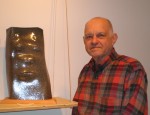
The faces that Larry Cohen creates communicate a range of emotions. (photo by Olga Livshin)
Larry Cohen has been working with pottery, on and off, for about 30 years. “A long time ago, I tried to make money from it, but not anymore,” he told the Independent. “Now, I just make things I want to make, things I love.”
Touch and Fire, Cohen’s solo show at the Zack Gallery, highlights the things he likes: elegant but aloof vases, functional bowls made with salted fire, and expressive faces cut into clay – manifestations of the artist’s pains, hopes and desires. “Clay registers every touch,” he said, “expressing the character of a particular place, time, person or purpose.”
With a few touches of his fingers, a few slashes of a knife across a thin clay slab, Cohen manages to convey a multitude of emotions. Every face he has made is unique but, together, they represent the artist’s inner core.
“Sometimes, you have dreams,” Cohen said about his faces. “Good or bad, with faces you recognize or you don’t. Dreams are part of us, part of the human psyche. My faces are mysteries; they’re my imagination. I started making them in 2015 and I call them ‘manifestations.’”
Every other piece on display in the gallery – vases, teakettles and bowls – the artist calls “pots.” Some of these he creates on his pottery wheel, while others he builds from the slabs of clay like sculptural ceramics.
“When I start working with a piece, I know approximately what I want to make, but there are so many different steps along the way,” he explained. “I have to pay attention to what is already done during each step as much as to what I wanted in the beginning. Every step holds a surprise, although some surprises are better than others. Sometimes, things fail technically – like crack in the kiln – and you can only cry. It’s humbling, when the technical stuff affects the end result as much as your skill or your vision. The more I work with clay, the more I realize that there is still so much I don’t know.”
He is learning new things with every pot he makes and, in three decades of working with clay, he has learned quite a lot, but the unknown always beckons.
“I don’t like doing the same things, like factory production. The machines can repeat the same patterns and colors endlessly and sell them in department stores. The pottery coming from machines is perfect and the same. I’m not interested in doing that. I want to experiment; I try something different all the time. My every pot is unique.”
His craving for the new and surprising has guided him as much in his professional life as it has done in his art. In his life, he has been a criminal lawyer and a University of British Columbia law instructor, he did a stint as a commercial fisherman, worked as a building contractor and managed a Japanese restaurant. “Life is interesting when you try different things,” he said. “I’ve been lucky to be able to do what I wanted.”
Whatever he was doing to earn his living, art always occupied a part of his soul. He has never stopped creating in a variety of forms, from simple teacups to complex sculptures, and clay has been his passion for years.
“It’s nice to work with clay,” he said. “It’s meditative and it engages me completely. It’s good for your health but it’s hard physical work. First, you have to prepare clay, to ‘wedge’ it, like kneading dough. Then you make a pot, but afterwards it has to dry completely before you fire it the first time. Only after that, when it cools, you can apply glaze and fire the second time.”
Cohen has two kilns in his studio on Cortes Island. In one, he fires with salt to create texture on his pottery; the other is for smooth surfaces. “In the summer, I spend months on Cortes Island, working in my studio every day. In other seasons, I do it occasionally, too, every few weeks. When I’m there, I work in the studio, but I’m not as young as I was before. It’s getting harder to work long days.”
His artistic creations run from utilitarian to high art. “A difference between art and craft is hard to pinpoint,” he said. “It’s a continuum. On one end is pure craft, the functionality. A teapot has to hold water to make tea. On the other end is pure art, like my faces. They don’t have to do anything. But, mostly, you’re in the middle. Every pot – a vase, a bowl – has to be both functional and esthetic. Pottery at its best is both useful and beautiful, and skills are necessary to achieve both goals. Most of the time, it’s a mixture. I’m as much an artist as a craftsman.”
Unfortunately, he admits, he is not much of a salesperson. “I don’t sell as much as I wish. I want to sell more to have room for new things,” he said with a smile.
Touch and Fire opened on Jan. 14 and will continue at the Zack until Feb. 7.
Olga Livshin is a Vancouver freelance writer. She can be reached at [email protected].