Skip to content
  • Home
  • Subscribe / donate
  • Events calendar
  • News
    • Local
    • National
    • Israel
    • World
    • עניין בחדשות
      A roundup of news in Canada and further afield, in Hebrew.
  • Opinion
    • From the JI
    • Op-Ed
  • Arts & Culture
    • Performing Arts
    • Music
    • Books
    • Visual Arts
    • TV & Film
  • Life
    • Celebrating the Holidays
    • Travel
    • The Daily Snooze
      Cartoons by Jacob Samuel
    • Mystery Photo
      Help the JI and JMABC fill in the gaps in our archives.
  • Community Links
    • Organizations, Etc.
    • Other News Sources & Blogs
    • Business Directory
  • FAQ
  • JI Chai Celebration
  • JI@88! video

Recent Posts

  • Sharing her testimony
  • Fall fight takes leap forward
  • The balancing of rights
  • Multiple Tony n’ Tina roles
  • Stories of trauma, resilience
  • Celebrate our culture
  • A responsibility to help
  • What wellness means at JCC
  • Together in mourning
  • Downhill after Trump?
  • Birth control even easier now
  • Eco-Sisters mentorship
  • Unexpected discoveries
  • Study’s results hopeful
  • Bad behaviour affects us all
  • Thankful for the police
  • UBC needs a wake-up call
  • Recalling a shining star
  • Sleep well …
  • BGU fosters startup culture
  • Photography and glass
  • Is it the end of an era?
  • Taking life a step at a time
  • Nakba exhibit biased
  • Film festival starts next week
  • Musical with heart and soul
  • Rabbi marks 13 years
  • Keeper of VTT’s history
  • Gala fêtes Infeld’s 20th
  • Building JWest together
  • Challah Mom comes to Vancouver
  • What to do about media bias
  • Education offers hope
  • Remembrance – a moral act
  • What makes us human
  • המלחמות של נתניהו וטראמפ

Archives

Follow @JewishIndie
image - The CJN - Visit Us Banner - 300x600 - 101625

Month: January 2025

An inspiring Shabbat Shira

An inspiring Shabbat Shira

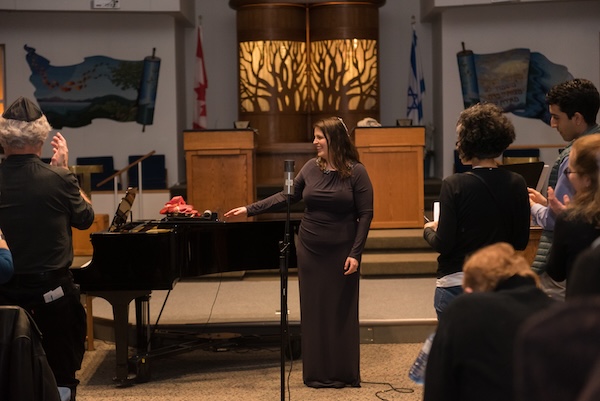
Cantor Shani Cohen and Wendy Bross Stuart (photo below) team up for another Shabbat Shira concert at Temple Sholom, on Feb. 8. (photo from Temple Sholom)

“I’m looking forward to the Shabbat Shira concert as an opportunity for our community to come together and enjoy some beautiful music as a temporary respite from the challenges of the past two years, within the safety of our own walls,” said Temple Sholom’s Cantor Shani Cohen of her Feb. 8 performance at the synagogue with Wendy Bross Stuart.

“Shabbat Shira is the annual day when we read the Song of the Sea, which is the climax of the Exodus story,” explained Cohen. “To celebrate this Torah reading, there is a tradition of adding some extra musical elements to the weekend. That was the inspiration for the Shabbat Shira concert that Wendy and I are doing. We started this tradition last year, and it was a wonderful evening of music that brought the community together.”

Cohen and Bross Stuart have chosen a range of musical styles for the concert, from musical theatre to jazz to classical art song. 
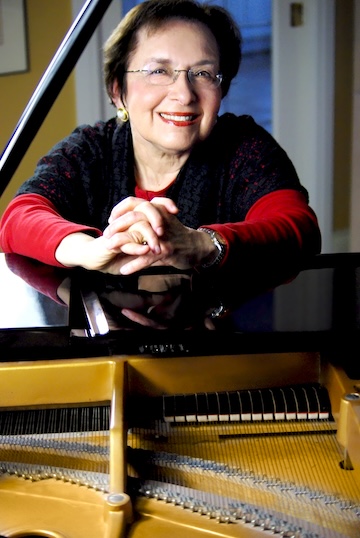
photo - Wendy Bross Stuart
Wendy Bross Stuart (photo from Temple Sholom)

“One of our focuses in the concert is highlighting Jewish composers,” said Cohen. “In this vein, we will be performing ‘How Much Do I Love You’ by Irving Berlin, ‘Still Hurting’ from Jason Robert Brown’s Last Five Years and ‘Vanilla Ice Cream’ from Jerry Bock’s She Loves Me. There will also be some songs by the very talented Jewish songwriting duo Zina Goldrich and Marcy Heisler, including ‘The Last Song’ and ‘Let Me Grow Old.’

“Finally, I am excited to be sharing a few classical art songs, including some by contemporary American composer Lori Laitman from her song cycle ‘The Mystery,’ and one from Hector Berlioz’s song cycle, ‘Les nuits d’été.’”

Before Cohen went to cantorial school, she studied to be an opera singer. She still feels a strong connection with classical music, she said.

“While I love being a cantor and find the role incredibly fulfilling and meaningful, I realized that I still have a passion for opera,” she said. “Singing opera, for me, is like a workout for my vocal muscles, keeping them in shape and, in turn, helping me sing my cantorial music more confidently. 

“I also think it’s important and healthy to have a work-life balance. For me, that means finding activities outside of synagogue life. Over the past two years, I have found some creative outlets that have allowed me to delve into classical music again in a different way than I do as a cantor. It has been an exciting and fun journey that has challenged me in new ways.”

Cohen’s passion for classical singing led her to Opera Lirica, headed by artistic director Trudy Chalmers, which is dedicated to bringing classical music to the community and providing performance opportunities to local opera singers. Among other things, Cohen was invited to perform as part of their Heritage Salon Series.

“My concert was on Nov. 10, and it was entitled The Sacred Tongue and the Mother Tongue: A Concert of Hebrew and Yiddish Songs. I had a wonderful time preparing for the concert with pianist Roger Parton [Opera Lirica’s music director]. I explored my own Israeli and Ashkenazi family background, and performed both new and familiar Hebrew and Yiddish repertoire…. It was a deeply personal concert, and I was proud to share it with not just the Jewish community, but the wider Vancouver music community. It meant a lot to me that after Oct. 7 and the rise in antisemitism that we have experienced, Trudy and Roger were both so supportive of this project and of me. This is the kind of crucial cross-cultural relationship building that I believe music can help us do.”

In another cross-cultural endeavour, Cohen will join the Jan. 26 performance of Songs of the Wasteland about survivor Renia Perel, which was written by Perel, who died in 2017, and arranged by Larry Nickel. The Vancouver Academy of Music is once again presenting the work, in honour of International Holocaust Remembrance Day (vancouveracademyofmusic.com/events).

For the past two years, Cohen has performed with the Reform Cantors and Cantorial Soloists of Canada (RCCC) organization in Toronto. “This year, we will be hosting the RCCC concert at Temple Sholom in May! More information to come,” she said.

Cohen and Bross Stuart first worked together on the community Yom Hashoah commemoration a few years ago, and in which both have participated multiple times. They also worked together in the Chutzpah! Festival concert debut of the Joan Beckow Project and album release; Bross Stuart and her daughter Jessica Stuart, who is also a musician, are co-directors of the project.

“We each bring a different musical perspective,” said Cohen of working with Bross Stuart. “Wendy has a wealth of knowledge and experience in musical theatre, Yiddish music and jazz, while I have a background in Jewish and classical music. We each learn from the other, and are able to meld our experiences into programs that I believe are intriguing and exciting for our audience.”

When Cohen started working at Temple Sholom back in 2021, she was straight out of cantorial school, and had just moved to Vancouver from New York. Grateful for the opportunities she has had at Temple Sholom, she said, “I am especially thankful to work with the supportive and inspiring clergy team that we have: Rabbi Dan Moskovitz and Rabbi Carey Brown. It was Rabbi Moskovitz’s vision to bring in an ordained cantor to our synagogue for the first time, and both he and Rabbi Brown have been supporting me through every step of my transition into this vibrant community.”

Over the years, Cohen has found ways to bring more of herself into her job: “more of my passions, interests and identity into what I offer.”

“On a basic level,” she said, “my role includes leading prayer services, running our b’nai mitzvah program and officiating lifecycle events like weddings and funerals. Beyond that, I am passionate about growing our musical offerings at Temple Sholom, and I believe in the power of music to help us tap into our spirituality. That’s why I started a small vocal ensemble that sings at our High Holy Day services, as well as a few special Shabbatot throughout the year. I also started a Temple Sholom band, called the Temple Tones, who enrich our Friday night services a few times a year for holidays and Shabbatot.”

Cohen oversees the Sholom Shishim (60-plus) program. 

“My goal with this group is to find new and creative opportunities to engage our seniors,” she said. There have been lunch-and-learns, speakers, concerts and various outings. “We now have on average 70 attendees per month, and our annual Hanukkah party gets up to 100 seniors!” she said.

“I run a monthly Temple Sholom Tea gathering at the Louis Brier for our members who live there, though anyone is welcome to join,” she added. “A few years ago, I began a program I call Teatime with Cantor Cohen, where I meet with small groups of Temple Sholom seniors in local cafés and tea shops, so they can get to know me, each other and, hopefully, create meaningful relationships in their own neighbourhoods.” 

One thing Cohen loves about her cantorial role is that she works with people of all ages, from teaching classes at the shul’s religious school, to various adult offerings. “Recently,” she said, “I began a High School Prayer Leader program to train the next generation of prayer leaders.”

Cohen also started a Queer Torah Study group, which has evolved into Kehilateinu, the Temple Sholom Pride Club.

“When my wife and I moved to Vancouver, we were welcomed into the community with open arms, and I want to ensure that our growing number of queer members feel welcomed at Temple Sholom as well,” she said. “I know that Kehilateinu’s events have been especially meaningful since Oct. 7, when so many queer Jews were rejected by their social circles.”

Tickets for the Shabbat Shira concert are $18 for synagogue members and $36 for non-members. The Feb. 8 event starts at 7 p.m. with a happy hour and the concert is at 7:30 p.m. Register at templesholom.ca.
Format ImagePosted on January 17, 2025January 15, 2025Author Cynthia RamsayCategories MusicTags Jewish composers, opera, Shabbat Shira, Shani Cohen, Wendy Bross-Stuart
Robinson kicks off book fest

Robinson kicks off book fest

The JCC Jewish Book Festival opens Feb. 22 with Selina Robinson talking about her memoir, Truth Be Told. (photo from JCC Jewish Book Festival)

This year’s JCC Jewish Book Festival opens Feb. 22 with Selina Robinson talking about her recently published memoir, Truth Be Told.

Most Jewish Independent readers will be familiar with the events that propelled Robinson to write this book. The first chapter, called “Four Fateful Words,” starts at what some people may think is the beginning – when, during a Jan. 30, 2024, webinar, Robinson said the state of Israel was reestablished on a “crappy piece of land.” But she believes she had been targeted for months.

“It was sloppy language, nothing more, but it provided the Gotcha! for anti-Israel extremists to build a case that I was racist, Islamophobic, intolerant and an evil monster that needed to be canceled,” she writes.

“In an ideal world, it would have been the extremists who were dismissed, not me. In an ideal world, we would be blessed with leaders who can differentiate between right and wrong.”

Truth Be Told covers the fallout from her comments. Premier David Eby initially seemed prepared to stand by Robinson, but the political pressure – including from a group of Muslim clergy who threatened the NDP’s access to Muslim voters unless Robinson was dismissed – soon led to him firing her from cabinet, though he never used the word.

“I told the premier that if he wanted my resignation, I would give it to him, but he needed to ask for it,” writes Robinson.

“In the end, he didn’t fire me and I didn’t resign, although the undeniable conclusion of the call was that I was no longer in cabinet.”

After taking some time to absorb the situation, Robinson rallied. 

“As part of my t’shuvah [repentance], the premier asked that I make a series of calls to Muslim community leaders,” she shares. “I began to think: What if I could engage with these groups and bring the Jewish community and the Arab and Muslim communities together in some way? These two heartbroken communities, both fearful for their families overseas and feeling powerless to effect change, could find commonality in that shared experience, at the very least. Action is always an antidote to hopelessness and helplessness. I could do this as part of my role as an MLA and the government could take credit for doing something meaningful that makes a positive difference for both these aching communities. For me, this would be a profound form of redemption, of t’shuvah, and also of tikkun olam [repair of the world].”

But this ray of light was soon extinguished, the idea being deemed “too political.”

“I knew in that moment that this was no longer my place, no longer my government, no longer my political party,” writes Robinson. “A place and a party where I belonged would recognize the opportunity for someone who was seen to have transgressed to do some good. My place, my party, would recognize the value of bringing people together. A place where I belonged would not be afraid to try something unique and potentially powerful.”

Robinson quit the NDP and finished her term as an MLA as an independent. She was going to retire anyway, but this was not how she wanted her political career to end.

And it was quite a career. With a master’s degree in counseling psychology, Robinson spent most of her working life as a family counselor and in senior roles in various social service agencies.

“I never planned to enter politics,” she writes. “The first real engagement I had was speaking to Coquitlam City Council, my hands shaking, in support of an emergency cold weather refuge for homeless people proposed by a church in my neighbourhood.”

image - Truth Be Told book coverOne of the councilors suggested she run for council, and she did. She was elected to Coquitlam City Council in 2008 and reelected in 2011. Truth Be Told gives readers a glimpse of what that experience was like, what Robinson accomplished as a councilor, and more. We find out how and why she made the leap to provincial politics in 2013 – a decision in which the late John Horgan played a pivotal role. The memoir is dedicated to Horgan, for whom Robinson had great respect and a close relationship. As premier, Horgan was the one who appointed Robinson minister of finance after the 2020 election that gave the NDP a majority government. She held that position through COVID, the government managing to file budget surpluses despite the challenges the pandemic brought.

“What saddens me right now is that people are losing faith in government,” writes Robinson. “That is especially distressing because if anything should have renewed people’s faith in government, it was the collective response to the pandemic.”

When Horgan stepped down as premier in 2022 because of the toll his cancer treatments were taking on him, Robinson began to more seriously reflect on her own future. She had been in public service for so long, she wanted to spend more time with her family. In Truth Be Told, we learn more of her own fight against cancer – a fight that started in 2006, a fight she seems to have won, finding out on Oct. 6, 2023, that her cancer had disappeared. The celebration was short-lived. That evening, news started coming in of Hamas’s terror attacks on Israel.

Robinson’s ambivalence about running for reelection was one of the reasons she didn’t pursue the party leadership vacancy Horgan’s departure opened. Other candidates bowed out, and Eby was anointed the new leader of the BC NDP and became premier in November 2022.

Robinson calls herself an “eternal optimist,” and that attitude has served her well. Despite being effectively demoted by Eby after he became premier, Robinson threw herself into the position of post-secondary education and future skills minister. It is interesting to read about some of the issues in that sector, and of the other portfolios Robinson held, as well as get some insider knowledge of how politics works and about the personalities of the people who represent us.

The crux of Truth Be Told is Robinson’s “four fateful words,” the reactions to them, and what was said and done – or, more importantly, what was not said and what was not done. Many of her colleagues were “quiet allies,” not willing to speak out.

“There are lessons from my experience that transcend my personal story,” she writes. “There are lessons for our democracy about the necessity to stand up to coercion from interest groups and harassment from mobs. There are lessons for leaders about how to act (and how not to act) when presented with choices between what is easy but wrong and difficult but right. There are lessons about speaking up rather than remaining silent.”

Truth Be Told is about a person doing what they passionately believe in, a person living their values – some of which were instilled at Camp Miriam, where Robinson was a counselor in her youth – and trying to make what they feel are positive contributions to the world. 

Given what happened to her, Robinson could be forgiven for giving up and going quietly into obscure retirement. But that’s not who she is. She asks Canadians to have the courage to speak up, while recognizing that we should not “kid ourselves that a millennia-old problem will be resolved in a day.” She ends her book with calls to action, suggestions of what we each can do to counter antisemitism, as Jews (for example, don’t hide, “engage respectfully or not at all” and don’t give up) and non-Jews (speak up and engage with Jews, among other things), and as a society (for instance, protect students and nurture real inclusion). She includes some resources for readers wanting to explore various topics more.

In the “Final Reflections” chapter, Robinson writes, “We will never be perfect. The world will never be faultless. But repairing the world must always be our guiding star. Our reach must always exceed our grasp.”

Profits from the sale of Truth Be Told will be donated to the Parents Circle-Families Forum (theparentscircle.org/en) and Upstanders Canada (upstanderscanada.com). 

The JCC Jewish Book Festival runs Feb. 22-27. For the full list of events and participating authors, visit jccgv.com/jewish-book-festival.

Format ImagePosted on January 17, 2025January 15, 2025Author Cynthia RamsayCategories BooksTags antisemitism, JCC Jewish Book Festival, memoir, politics, Selina Robinson, Truth Be Told

Kiki more than a muse

History is fickle. Who becomes known as great in their field, whose work is displayed in museums or taught in schoolbooks? When there is a tangible product – a building, a painting, a book, whatever – the chances seem higher that you’ll be remembered. But what if you were mainly a muse to others, what if you could enthrall audiences with your voice but never recorded an album, if you created works of art that people liked and even bought, but you didn’t create in the popular style of the day, or you were a woman in a man’s world?

image - Kiki Man Ray book coverMost readers will not have heard of Kiki de Montparnasse, born Alice Prin in 1901, in Châtillon-sur-Seine, about 240 kilometres southeast of Paris, to an unwed mother who wasn’t much into mothering. But most would likely recognize her – she modeled for many an artist (Alexander Calder, Tsuguharu Foujita, Amedeo Modigliani, to name a few, as well as Maurice Mendjizky, with whom she fell in love for awhile). And, during her seven-year relationship with surrealist photographer Man Ray (who thought himself more of a painter), she posed for him many a time. In 2022, one of Ray’s most famous images of her, called “Le Violon d’Ingres,” sold for $12.4 million, the most expensive photograph ever sold at auction.

Yet, what of her own work, her talents, her accomplishments?

Cultural historian Mark Braude gives Kiki her overdue due with his latest book, Kiki Man Ray: Art, Love and Rivalry in 1920s Paris, which Braude will discuss with University of British Columbia professor emeritus of history Chris Friedrichs at the JCC Jewish Book Festival on Feb. 24, in an event called Art & History: Paris, Jews and Surrealism.

While Kiki wasn’t Jewish, so many of the artists she hung out with were, including, of course, Ray, who was born Emmanuel “Manny” Radnitzky. If she hadn’t lived among the who’s who of Dada and Surrealist art, perhaps she wouldn’t have been overshadowed, mostly forgotten. She was a commanding performer, she sold at least a few dozen paintings, wrote a memoir, appeared in films. By all accounts, a success. But, as “Queen of Montparnasse,” the early-1900s bohemian paradise in Paris, Kiki lived on the more wild side. Addiction would speed along her end – she died in 1953, only 51 years old. Another reason, perhaps, that her legacy was not as lasting.

As much as Braude’s account is about Kiki, it is about the time in which she lived and the people among whom she lived. Because, “as she experienced her era and channeled that experience into her art, Kiki shared drinks and cigarettes and ideas with many of the people who would shape how their century saw and thought and spoke: Modigliani, Stein, Picasso, Barnes, Matisse, Guggenheim, Calder, Duchamp, Breton, Cocteau, Flanner, Hemingway,” writes Braude. “And Man Ray, whose emergence as a modern artist must be understood as intimately linked to her own.”

While Kiki may not have left much physical evidence behind of her influence, it doesn’t mean she wasn’t influential. Living as she did, with whom she did, Braude writes: “Evolving in concert with them, watching them become who they were, challenging them and joking with them, working with them and through them, Kiki, too, played her role in shaping the cultural history of the past hundred years.”

Braude’s book is not only a fascinating read, but a reminder that none of us is insignificant. Even if our names are lost to history, we matter, we impact others and the world around us.

For the full book festival schedule, visit jccgv.com/jewish-book-festival. 

Posted on January 17, 2025January 15, 2025Author Cynthia RamsayCategories BooksTags art, history, JCC Jewish Book Festival, Kiki de Montparnasse, Man Ray, Mark Braude, painting, Paris 1920s, photography

Community milestones … Marie Doduck, Poritz Freeman, Israel Emergency Campaign

Last month, Governor General of Canada Mary Simon made 88 new appointments to the Order of Canada, one of the country’s highest honours. Among those appointed as a member to the Order was Vancouver Jewish community member Marie Doduck.

photo - Marie Doduck
Marie Doduck

For more than 50 years, Doduck has been a leader in Holocaust education and philanthropy. A child Holocaust survivor, she is a founding member of the Vancouver Holocaust Education Centre and has shared her history with tens of thousands of students and others. Her memoir, A Childhood Unspoken, was published in 2023 by the Azrieli Foundation’s Holocaust Survivor Memoirs Program. (See jewishindependent.ca/survivor-reflects-on-identity.) She champions various community engagement and fundraising initiatives. 

“Members of the Order of Canada are builders of hope for a better future,” said Simon. “Each in their own way, they broaden the realm of possibilities and inspire others to continue pushing its boundaries. Thank you for your perseverance, fearless leadership and visionary spirit, and welcome to the Order of Canada.”

New members will be invited to a ceremony at a later date to be invested and to receive their insignia.

* * * 

The US Department of State recently announced the selection of international education professional Freeman Poritz for an English Language Specialist project in Israel. The project is one of around 250 that the English Language Specialist Program supports each year.

photo - Freeman Poritz
Freeman Poritz

Poritz, who is originally from Vancouver (and has written for the Jewish Independent), is a teacher trainer and conflict resolution practitioner with expertise in the Middle East, Africa and Latin America. Previously, he served as an English Language Fellow at the Institute of Rural Development Planning in Tanzania and at Haramaya University in Ethiopia, where he conducted professional development workshops for faculty, provided teacher trainings on differentiation, virtual facilitation and needs assessment, and taught academic writing courses to undergraduate and graduate students. In Israel, he will collaborate with a group of educational professionals to design an English language bicommunal youth peace and leadership curriculum for the Ministry of Education as part of Jerusalem Peacebuilders and Retorika for Multiculturalism’s EXCEL Teacher Training Institute for Partnership and Peace Leadership.

The English Language Specialist Program is an opportunity for leaders in the field of teaching English to speakers of other languages to enact changes in the way that English is taught abroad. Through projects developed by US embassies in more than 80 countries, English language specialists work directly with local teacher trainers, educational leaders and ministry of education officials to exchange knowledge, build capacity and establish partnerships benefiting participants, institutions and communities in the United States and overseas. The program is administered by the Centre for Intercultural Education and Development at Georgetown University in Washington, DC.

* * *

Last November marked a year since the Israel Emergency Campaign Committee began its work, allocating grants to organizations and partners across Israel who are dedicated to addressing the critical needs that emerged in the aftermath of Oct. 7, and the war that has been raging since.

The committee’s work over the summer and the fall demonstrated its continued mission to provide support to the evacuated communities of the Upper Galilee – in education, infrastructure and capacity building – while also supporting projects in the realm of rehabilitation, also in the north.

Broadly, during the first six months, allocations were designated to projects supporting the numerous emergency needs across Israel: $8,853,704 was deployed October 2023 to March 2024, to projects addressing emergency needs in mental health care, food and supplies for vulnerable populations, rehabilitation initiatives, educational frameworks and evacuation infrastructures.

In the spring to the fall, as the committee realigned its focus to supporting the northern communities, with special attention to projects in the realm of rehabilitation, April-October grants totalling $3,011,750 were distributed.

Over the summer and the holiday season, as war continued across the north, IEC grants focused on enabling safe and meaningful programming for youth, children and families, and supporting schools that were preparing for the opening of another school year away from home. These grants came alongside immediate, emergency deployment of funds in support of the Druze communities of the Golan, after the tragic attack on Majdal Shams in July.

With the ceasefire taking effect on Nov. 27, 2024, what was once coined “the urgency of the day after,” has become the emergency of today. Jewish Federation of Greater Vancouver’s partners in the Galilee are taking initial steps to plan their gradual return home, and the IEC committee remains aligned with this evolving reality.

A significant component of this strategy is a pan-Canadian initiative spearheaded by Sarah Mali, director general of JFC-UIA together with Jewish Federation’s executive team, in Israel and in Vancouver, and partner federations from across Canada. Earmarked to leverage collective funds to generate substantial healing and long-term impact in the north, this initiative is a central element in the IEC’s final rounds of allocations that will be developed over the coming months.

– Stephen Gaerber, chair, Israel Emergency Campaign Allocations Committee, Jewish Federation of Greater Vancouver

Posted on January 17, 2025January 15, 2025Author Community members/organizationsCategories LocalTags education, Freeman Poritz, Holocaust education, Israel Emergency Campaign, Marie Doduck, Order of Canada, Stephen Gaerber, survivor
Lifelong lessons from camp

Lifelong lessons from camp

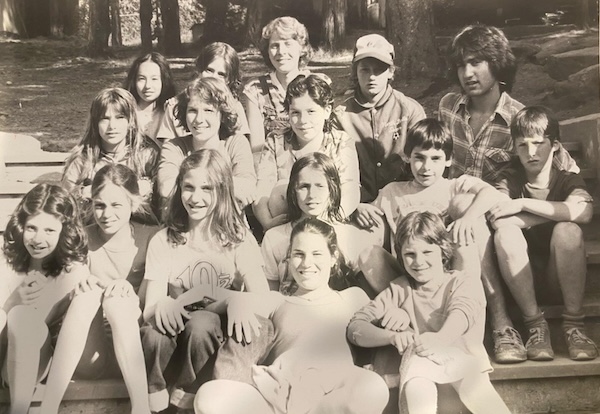
Selina Robinson (centre front) was a counselor at Camp Miriam for four summers. She is pictured here, in 1981, with the Sayarim (Grade 5s) in that year’s first session. (photo from Camp Miriam)

Little did I know how much Camp Miriam would teach me about leadership, standing up for others and how to be the “Jew in the Crew” in the face of antisemitism.

I never had the opportunity to go to Camp Miriam as a chanicha (camper) and wish that I had had that opportunity. I am grateful however that, when I was 17, a fresh-faced graduate of Richmond High School, I got hired for the summer of 1981 to be a madricha (counselor). 

I had no idea what I was getting into, but, within days, I realized that I had been missing regular contact with a Jewish community. Back in 1981, there were only four Jewish students in our school of 1,200. But Camp Miriam was much more than being in an environment where I didn’t have to explain myself, my traditions, my values. It was an environment that encouraged me to explore how I wanted to be Jewish. Learning about Israeli culture and history in a place that values debate and discussion taught me that all perspectives have value.  I learned how to consider various perspectives, how to be respectful in debate and how to articulate my arguments.

Joining the tsevet (staff) was a tremendous opportunity to learn and refine so many leadership skills, setting a personal example, making sure that all members of the group are equally engaged and even how to chair a meeting with more than 100 campers (yes, it is possible to chair a meeting with more than 100 children).

Camp Miriam helped me understand not just the importance of social responsibility but how to put these ideas into practice. I got to see these ideals in action and see why they are important, and then to talk with the chanichimot (campers) about why we have these values and what they mean to us as Jews and as human beings who are responsible for one another. Whether we were cleaning the sherutim (bathrooms) or painting the rocks around the mifkad (flagpole), it was always with purpose and understanding that we were taking responsibility for our home.

photo - Selina Robinson (fourth from the left) with the Amelim (third and fourth graders) in the second session of 1981’s summer camp season
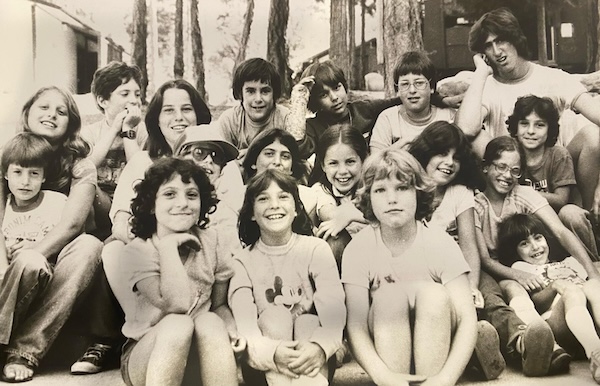
Selina Robinson (fourth from the left) with the Amelim (third and fourth graders) in the second session of 1981’s summer camp season. (photo from Camp Miriam)

I worked at Camp Miriam over four summers and, as I reflect on my time there, I am struck by how those four summers impacted my life as I got my post-secondary degrees, worked in the social services sector, started a private practice and eventually moved on to politics. In every leap, my experiences at Camp Miriam were there with me: the importance of caring for others who might be down on their luck, the role of personal responsibility in decision-making and how to make collective decisions.

As a Coquitlam city councilor from 2008 to 2011, I put these collective decision-making skills into practice often. I listened to my colleagues around the council table present their arguments and determined if I agreed or disagreed with the direction they wanted to go – it was just like an asefa (meeting) that a kvutsa (group) might have about how to spend their kupa (collective pot of money). It was in these meetings with 11- and 12-year-olds that I learned how important it was that everyone have an opportunity to have their say so that we could make the best decisions for the collective. I was able to carry this experience with me into my political life.

When I became BC minister of finance in 2020, I received a note from Leah Levi, Camp Miriam’s registrar at the time. She sent me a note of congratulations and included “make good decisions with the kupa.” I had a good chuckle, realizing that is exactly what I was responsible for, our province’s kupa, making spending decisions with the Treasury Board and the cabinet. Little did I know that my four years at Camp Miriam would come in handy as I managed our province’s finances as we navigated through a global pandemic.

Upon reflection, I believe that my ability to sit around a cabinet or council table and make collective decisions, my appreciation of the responsibility for managing the province’s kupa, and even my decision to walk away from government inaction as antisemitism continued to raise its ugly head, all stem from how Camp Miriam helped me understand what it means to be a proud Jew and what it takes to be an effective leader. Camp Miriam helped me to be the person that I am today and for that I am eternally grateful.

To learn more about Camp Miriam, visit campmiriam.org. 

Selina Robinson was the MLA for Coquitlam-Maillardville from 2013-2024 and a BC NDP cabinet minister from 2017 to 2024. She was fired from cabinet and left the BC NDP in early 2024. She wrote a memoir about her experiences, Truth Be Told, which is available on Amazon. For more information, visit selinarobinson.ca.

Format ImagePosted on January 17, 2025January 15, 2025Author Selina RobinsonCategories LocalTags Camp Miriam, Jewish summer camp, reflections, youth
Out-tripping’s many benefits

Out-tripping’s many benefits

Canoe trips are a vital part of the camp experience, not only because of the physical activity they involve but also because of the deep personal growth they foster. (photo from Camp Hatikvah)

At Camp Hatikvah, one of the most enriching aspects of the summer experience for older campers is the out-tripping program. Designed to expose campers to the beauty of the outdoors while introducing them to a blend of adventure, skill-building and personal growth, the program is a cherished part of the Camp Hatikvah experience. It is also central to the camp’s mission of fostering resilience, independence and community.

Each year, the camp’s Kochot and staff-in-training (SIT) campers embark on canoe trips that vary in length and difficulty, ensuring that each trip is tailored to their abilities and experiences. These journeys are much more than a chance to paddle; they provide campers with opportunities to push their limits, learn new skills and bond with their peers.

photo - Each year, the camp’s Kochot and staff-in-training (SIT) campers embark on canoe trips that vary in length and difficulty
Each year, the camp’s Kochot and staff-in-training (SIT) campers embark on canoe trips that vary in length and difficulty. (photo from Camp Hatikvah)

The Kochot campers are introduced to the concept of out-tripping through shorter trips that offer a taste of outdoor adventure. The one-night and two-night trips, depending on age, provide an introduction to sleeping outdoors, cooking meals and navigating the natural world. These trips are designed to balance activity and relaxation, with plenty of time for swimming and socializing, all within nature. For many, this is the first time they sleep away from home, and the experience is a significant milestone in their personal development.

As campers get older, the trips become more challenging. The SIT campers take on a more intensive excursion that tests their physical endurance and leadership abilities. The trek to Shuswap Lake involves paddling for several hours each day, setting up camp at new locations each night, and working together to navigate the challenges of outdoor living. Through this five-day journey, the SIT campers develop valuable life skills, including resilience, adaptability and teamwork.

Canoe trips are a vital part of the camp experience, not only because of the physical activity they involve but also because of the deep personal growth they foster. They teach campers about responsibility, independence and the importance of working as part of a team. Campers learn to rely on one another as they work together to navigate the water, set up camp and manage the logistics of living outdoors. They also gain a profound appreciation for the natural world, learning to respect and care for the environment while enjoying its beauty.

The lessons learned on these trips extend far beyond the trip itself. Campers return to camp with a stronger sense of self, greater confidence and a newfound appreciation for the outdoors and for their fellow campers. Whether they are paddling across a serene lake or cooking dinner under the stars, the skills they develop and the memories they create during these trips become an essential, and beautiful, part of the Camp Hatikvah experience.

To learn more, visit camphatikvah.com. 

– Courtesy Camp Hatikvah

Format ImagePosted on January 17, 2025January 15, 2025Author Camp HatikvahCategories LocalTags Camp Hatikvah, canoeing, Jewish summer camp, out-tripping, youth
Where Jewish pride grows

Where Jewish pride grows

Camp Solomon Schechter builds identity and combats antisemitism. (photo from Camp Solomon Schechter)

During Tisha b’Av, a day of mourning and reflection, the entire camp community of Camp Solomon Schechter in Tumwater, Wash. – 300 campers, ranging from 3rd to 10th graders – gathered in silence at the amphitheatre. A staff member stepped forward, the flicker of torches casting shadows. They asked a question: “Please stand if you have ever encountered antisemitism.” 

Slowly, hesitantly at first, campers began to rise – one by one, then in clusters. Younger campers glanced around, their faces etched with uncertainty, before joining their peers. Staff members, too, stood. Eventually, every camper and every staff member were on their feet. 

The sight was both powerful and heartwrenching. The realization that every single member of our community, even our youngest, had faced antisemitism was a sobering reminder of the challenges our children navigate. It underscored the importance of camp being a safe haven and Camp Solomon Schechter’s mission to empower campers with pride, resilience and an unshakable connection to their Jewish identity. 

“Living as a minority, especially in times when hate seems to be ever growing, camp becomes an oasis of belonging, safety and joy,” said Rabbi Eve Posen of Congregation Neveh Shalom in Portland, Ore. “The opportunity for children to be immersed in joyful Judaism at camp is a powerful antidote to the antisemitism present in our world today.” 

Antisemitism is not a relic of the past – it is a persistent reality that manifests in subtle and overt ways, from exclusionary rhetoric to acts of violence. As Jewish communities grapple with these challenges, there is a question that arises time and again: how do we equip the next generation to respond to and rise above these threats? One answer lies in Jewish summer camp. 

Camp Solomon Schechter believes camp is more than a summer getaway – it’s a transformative space where Jewish identity is not only celebrated but deeply ingrained. It’s where children and teens connect with their Judaism, form forever friendships and discover the joy of being part of community. These experiences serve as a critical counterweight to the forces of antisemitism by fostering pride, resilience and a sense of belonging.

Proud Jewish identities

Antisemitism seeks to diminish Jewish identity, often targeting individuals and communities by attacking their sense of self-worth and belonging. Schechter counters this by fostering environments where Jewish life is celebrated unapologetically. Imagine a Shabbat at camp: the entire community dressed in white, walking hand in hand to a service that looks out on Lake Stampfer. The melodies of prayers mingle with the natural beauty of the outdoors, creating a sacred space where campers feel deeply connected to their heritage and one another. These moments instil a sense of pride that stays with them long after camp ends.

Whether it’s singing Birkat Hamazon after meals or morning prayers, core tenets like Shabbat, kashrut and tefillah – and the intentionality (kavana) brought to these traditions – the camp cultivates shared values and rituals that form the foundation for lasting friendships and a rich Jewish life. Examples include Maccabiah (team-building through friendly competition), the Oded program (Jewish leadership development) and Havdalah, where the entire community gathers to mark the end of Shabbat with song and light.

The integration of Jewish practice into every activity reinforces the idea that being Jewish is not just about rituals – it’s about community, identity and how we live our daily lives. At Schechter, Jewishness is woven into everything, from discussions about values to hands-on activities like planting Camas bulbs as part of an environmental stewardship program. Playing basketball becomes a Jewish experience because it’s played alongside Jewish friends. Swimming in Lake Stampfer is Jewish because it’s filled with laughter and camaraderie among a community united by shared traditions. Climbing the ropes course is Jewish because it’s about trust, teamwork and overcoming challenges together. Even sitting down for lunch is Jewish because it’s a moment of connection, blessings are recited. 

Through stories, songs and discussions, campers gain a nuanced understanding of Israel beyond the headlines. Hebrew is spoken throughout the day. Programs like the Israeli Scout delegation and daily flag-raising ceremonies, where Hatikvah is sung, help campers develop a connection to Israel while instilling a sense of responsibility to something greater than themselves. 

Cultivating resilience

Camp teaches resilience in ways both subtle and profound. The challenges of a ropes course or the learning a new skill remind campers of their own strength and capability. These lessons are essential when confronting antisemitism, which often tests the emotional and psychological fortitude of young Jews. 

More importantly, camp creates a safe space to address difficult conversations. When global events – like the war in Israel – impact our community, camp becomes a haven where campers and staff can process their feelings and find support. 

Staff bring their own Jewish journeys to Schechter, and campers are surrounded by Jewish role models who inspire them through teaching, leadership and mentorship.

Community bonds 

Antisemitism isolates individuals and communities, attempting to weaken the collective strength of the Jewish people. At Schechter, the opposite happens: connections are built that transcend geography and last a lifetime. Campers come from across the Pacific Northwest, spanning a range of backgrounds and experiences. At camp, these differences dissolve as the kids unite around shared traditions, values and goals. Whether it’s competing in a friendly staff versus camper football game or singing camp parodies around the closing bonfire, the bonds formed at camp are rooted in joy, trust and mutual respect.

These connections don’t just benefit the individuals involved. Camp alumni go on to become leaders in synagogues, schools and other Jewish organizations, bringing the lessons of connection and collaboration they learned at camp into their adult lives. 

At Schechter, we see it every summer: campers and staff return home inspired and proud to be Jewish. Campers leave not only with stronger Jewish identities but with a sense of hope for the future. That hope is our greatest weapon against hate, and it’s what ensures the continuity and vibrancy of our people for generations to come. To support our work, visit campschechter.org/give. 

– Courtesy Camp Solomon Schechter

Format ImagePosted on January 17, 2025January 15, 2025Author Camp Solomon SchechterCategories LocalTags antisemitism, Camp Solomon Schechter, education, identity, Jewish summer camp
Why work at summer camp?

Why work at summer camp?

(photo from Camp Kalsman)

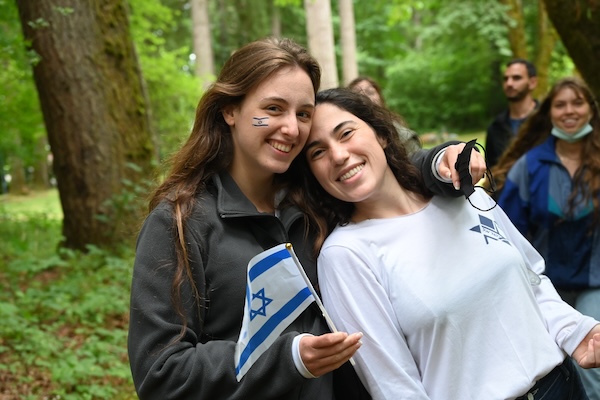
We know that today’s university and college students have lots of choices for summer jobs – but here are 10 reasons why working at a Jewish summer camp is the absolute best opportunity for someone who’s starting to think about a professional career.

1. Leadership skills

Regardless of your major, working at a summer camp puts you in a prime place to develop job-marketable skills. As a counselor, you’ll be overseeing large groups of children, and that work translates well into excellent management and personnel skills. You may also qualify for college/university credit, so check with your adviser.

2. Change campers’ lives

Campers love coming to summer camp, which many consider a second home. Summer camps hire fun, energetic people who are motivated to give campers the best summer ever and to make them want to come back, year after year. There’s no question that campers look up to their counselors more than anyone else. You’re directly responsible for helping young people learn about themselves, challenge themselves and explore their Jewish identities. During this formative time, you have the chance to become a camper’s hero.

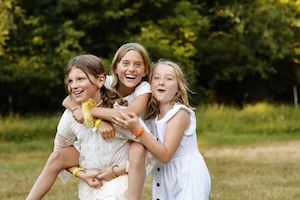
photo - campers having fun (photo from Camp Kalsman)
(photo from Camp Kalsman)

3. The great outdoors

Most summer camps give you access to the best of nature. Set among the trees with an expansive view of the sky, you can hike, swim, mountain bike, zipline through the forest, stargaze, kayak and so much more. As far as offices and work locations go, it doesn’t get much better than that.

4. Opportunity to grow

Camp staff become a community within itself. You’ll end up inspiring and learning from one another, experiencing much of the same joy and wonder as the campers. Plus, you’ll make friends with people who live across North America and even abroad, as many Jewish camps hire summer staff from Israel.

5. Bigger than yourself

Jewish camp works. Those who attend and work at camp are more likely to feel a strong connection to their Jewish community, which can mean lighting Shabbat candles, feeling a personal connection to Israel and attending a synagogue. Camp gives you the skills to change the world and connect to something bigger than yourself.

6. Save money

Think of how much you’ll save when food and housing are provided for you!

7. Be nurtured and cared for

Camps take the health and well-being of their counselors and campers very seriously. For example, URJ Camp Newman, a Reform Jewish summer camp in Santa Rosa, Calif., applies the CARE philosophy to everything they do: the philosophy is based upon the principles of community, acceptance, role-modeling, and that each and every individual is created b’tzelem Elohim, in the image of God.

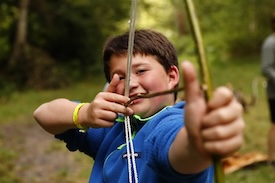
photo - camper doing archery
(photo from Camp Kalsman)

8. Goals and interests

Because there are so many roles to fill and because you come with so many additional strengths and skills, camp directors will strive to match your passions to your role at camp so that you get the most out of your experience.

9. Jumpstart career

Camp is for the career-driven. Seriously!

10. Buzzfeed agrees

If you need even more reasons to apply for a camp counselor position, BuzzFeed has 20 more reasons working at a summer camp will be your best job ever: buzzfeed.com/sarahmcf/20-reasons-why-working-at-summer-camp-is-the-best-k6jl. 

For information on working at URJ Camp Kalsman, which is southeast of Arlington, Wash., about a two-and-a-half-hour drive from Vancouver, visit campkalsman.org/work-at-camp.

Format ImagePosted on January 17, 2025January 15, 2025Author Alaina Yoakum REFORMJUDAISM.ORGCategories LocalTags Camp Kalsman, employment, Jewish summer camp, summer job, youth
Camps post-pandemic

Camps post-pandemic

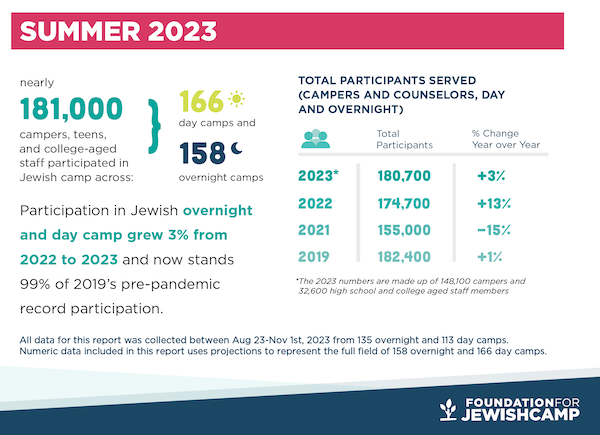
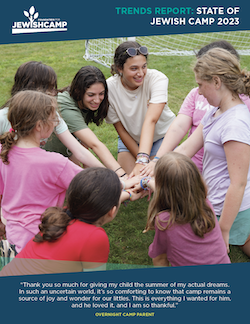
The Foundation for Jewish Camp recently released its latest census results, Trends Report: State of Jewish Camp 2023. The research indicates that Jewish camps in Canada and the United States have settled into a new normal within the post-pandemic world.

In summer 2023, the field served 3% (6,000) more campers and counselors than in summer 2022, with a total of nearly 181,000 campers, teens and college-aged staff participating in Jewish camp across 166 day camps and 158 overnight camps. Part of this new reality includes hiring more staff, since fewer are working the full summer. Camps are having to raise more money to keep up with rising costs and the increased demand for camper financial aid. 

Some key takeaways from the report are:

• Camp enrolment continues to grow, with the largest gains coming from day camps. Day camps reached pre-pandemic enrolment levels in 2023. Overnight camps enrolment remained at 96% of 2019 (pre-pandemic) levels, but 80% of overnight camps were expecting to increase their enrolment in 2024 – data for last summer are not yet available.

• Many staff are no longer working full summers, which is creating an increased need for seasonal staff positions. The total number of staff in summer 2023 was higher than in 2019 (pre-pandemic) and, given that many staff are not working a full summer, especially within overnight camps, there is a need for camps to hire more staff to fill in gaps.

• Increased turnover of Jewish camp professionals: 66% of reporting overnight camps and 58% of reporting day camps had professional staff leave their positions between fall 2022 and fall 2023.

• Families requested more financial aid from overnight camps than ever before. Overnight camps saw about a 30% increase in the amount of financial aid that families requested from their camps.

• MESSH (mental, emotional, social and spiritual) resources ranked highest in terms of the resources camps need. Camps also indicated a need for resources on character development and resilience-building; parent communication and engagement; antisemitism and bridging differences; and diversity, equity and inclusion. (It should be noted that this census was conducted before the Oct. 7, 2023, Hamas terror attacks on Israel and the ensuing war.)

• Capital needs are a big priority for camps across the field, as camps prioritize growing camper enrolment and making camp more accessible, all while upkeeping older buildings and facilities. Staff housing is a key need, as camps are unable to grow enrolment without it.

Camper satisfaction

Overnight camp overall satisfaction and likelihood to return both increased by 2% in 2023, with levels remaining relatively consistent since 2019, in the 91-94% range for satisfaction and 84-87% range for likelihood to return.  

image - Trends Report coverAlongside these trends, positive impacts for Jewish camp remained high, with 93% of families reporting that overnight camp made their child feel part of the larger Jewish community and peoplehood, and 90% of families reporting that camp has built important Jewish friendships for their child.

In addition, more than half of families reported that their child’s camp experience has motivated their child to participate in other Jewish programming throughout the year.

Regarding day camps, overall camper satisfaction was 87% and the likelihood to return 82% in 2023, levels that have remained relatively consistent since 2021. Further, 82% of families reported that their day camp created a culture of belonging for their child(ren) and 89% of families reported that it is important to them that camp provide an inclusive experience for everyone.

The situation in 2024

An article in the Jerusalem Post last month reported on the Foundation for Jewish Camp’s three-day Jewish camp summit, which took place in Chicago in December. In the article, writer Howard Blas shares some data on the 2024 camp season, which was offered by the foundation’s chief executive officer, Jeremy J. Fingerman.

According to Fingerman, surveys indicated that, in 2024: “Nine in 10 families reported that camp created an environment that supported their children’s social and emotional health and well-being”; “85% of camp staff felt that camp connected them to feeling a part of the worldwide Jewish community”;  “94% of parents shared that camp connected their child to the global Jewish community”; and “80% of North American overnight camp staff said camp helped them to connect to Israel and Israeli staff.” 

– Courtesy Foundation for Jewish Camp

Format ImagePosted on January 17, 2025January 15, 2025Author Foundation for Jewish CampCategories LocalTags Foundation for Jewish Camp, Jewish summer camp, research

A summer camp moment

image - cartoon featuring summer campers lining up at the camp clinic, by Beverley Kort

Posted on January 17, 2025January 15, 2025Author Beverley KortCategories Visual ArtsTags health care, Jewish summer camp, youth

Posts pagination

Previous page Page 1 Page 2 Page 3 Next page
Proudly powered by WordPress