Skip to content
  • Home
  • Subscribe / donate
  • Events calendar
  • News
    • Local
    • National
    • Israel
    • World
    • עניין בחדשות
      A roundup of news in Canada and further afield, in Hebrew.
  • Opinion
    • From the JI
    • Op-Ed
  • Arts & Culture
    • Performing Arts
    • Music
    • Books
    • Visual Arts
    • TV & Film
  • Life
    • Celebrating the Holidays
    • Travel
    • The Daily Snooze
      Cartoons by Jacob Samuel
    • Mystery Photo
      Help the JI and JMABC fill in the gaps in our archives.
  • Community Links
    • Organizations, Etc.
    • Other News Sources & Blogs
    • Business Directory
  • FAQ
  • JI Chai Celebration
  • JI@88! video

Recent Posts

  • Story of Israel’s north
  • Sheltering in train stations
  • Teach critical thinking
  • Learning to bridge divides
  • Supporting Iranian community
  • Art dismantles systems
  • Beth Tikvah celebrates 50th
  • What is Jewish music?
  • Celebrate joy of music
  • Women share experiences 
  • Raising funds for Survivors
  • Call for digital literacy
  • The hidden hand of hate
  • Tarot as spiritual ritual
  • Students create fancy meal
  • Encouraging young voices
  • Rose’s Angels delivers
  • Living life to its fullest
  • Drawing on his roots
  • Panama City welcoming
  • Pesach cleaning
  • On the wings of griffon vultures
  • Vast recipe & story collection
  • A word, please …
  • מארק קרני לא ממתין לטראמפ
  • On war and antisemitism
  • Jews shine in Canucks colours
  • Moment of opportunity
  • Shooting response
  • BC budget fails seniors
  • Ritual is what makes life holy
  • Dogs help war veterans live again
  • Remain vital and outspoken
  • An urgent play to see
  • Pop-up exhibit popular
  • An invite to join JWest

Archives

Follow @JewishIndie
image - The CJN - Visit Us Banner - 300x600 - 101625

Month: February 2023

An intense, urgent read

A formula for survival for a child in the Holocaust: “Don’t trust anyone; never speak unless spoken to; never give your real last name; if you see your brothers and sisters, don’t run to them: cross over to the other side of the street. Don’t cry and don’t get sick; just survive.”

This is how the character of Mariette Rozen of Brussels, Belgium, aka Marie Doduck of Vancouver, Canada, was fashioned during her formative years between the ages of 6 and 11 during the Holocaust, beginning in 1940. Those words of caution from her older brother Jean, painfully scoured from the mists of Marie’s memory, have become a kind of coat that one takes off in polite company, but it is a mantle that never left her, even in her 80s, as Marie looks back in her memoir on her two lives: a child Holocaust survivor and a Canadian with a lifetime of achievement in the arts, family life, business and service to her community.
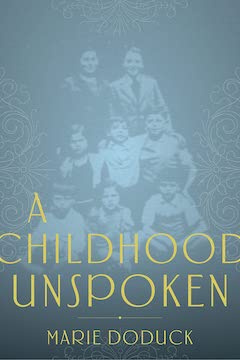
image - A Childhood Unspoken book coverEntitled A Childhood Unspoken, this book of only 138 pages is a powerhouse! Co-authored and researched by Simon Fraser University history professor Lauren Faulkner Rossi, the memoir is written in two authentic voices: Marie Doduck the Canadian citizen, 86-year-old mother, grandmother and great-grandmother who, while recollecting her past, slips back into Mariette Rozen, being hunted or hiding in Belgium in the 1940s or transitioning to a new life in Vancouver in the 1950s. I began reading the first chapter silently. Then, the urgency and honesty of the voices behind the prose came alive. I wound up reading the entire book aloud to my partner Ruth, who grew up with Marie and shares high school memories with her.

It was an intense experience. There is in the book an urgency to at last speak the unspoken repressed memories of her traumatic childhood, to unearth and – most importantly – to verify the truth of Marie’s memory about where Mariette had been, with whom and where she lived as she was bounced from one location in Belgium to another while running from the Nazis. Marie wondered: did Mariette really see her mother and brother snatched from a Brussels street by the Nazis or did that happen in a dream? Did she have grandparents? This and much more was verified through Faulkner Rossi’s research. Marie’s memory grew clearer, however, when she described the frustration of Mariette the teenaged refugee whose lack of English drove her to draw pictures in order to communicate with her Vancouver foster parents, the Satanoves.

But Mariette desperately wanted to catch up on her education, to fit into the Kerrisdale schools of Vancouver. To become a Canadian. Very quickly, and to the amazement of other children, she not only learned English but even seized leading singing roles in school operettas. As a married woman, the same talent, grit, brains and determination guided Marie to leadership roles in her children’s schools, in her synagogue, in Jewish charities and in business with her husband, Sidney Doduck. She gained such a wide reputation as a Holocaust witness and survivor that she was invited to address the German parliament, which she refused.

Several of the Shoah episodes retold by the Doduck-Rossi team bear repeating here. In a Belgian orphanage where Mariette’s Jewish origins had been carefully guarded, one of the nuns told the Nazis about her but then confessed it to the Mother Superior, who quickly opened a sewer for Mariette and banged the metal plate closed over her. Mariette waited for hours, terrified in the black sewer while rats crawled over her and the boots of Nazi soldiers clanged on the metal plate above. The Nazis left empty-handed.

Chased by Nazis, Mariette took shelter in a Belgian barn but knew that she couldn’t hide in a loose haystack because they would be probing them with pitchforks, so she chose a tightly-bound bale, dug a hole for herself, crawled in and pulled the hay in behind her. Sure enough, a Nazi came and began probing the loose stacks with a pitchfork. As he left, he stuck the fork into Mariette’s bale and pierced her hand. When the farm housewife came to rescue her, she found blood all over and took the child into the kitchen for repairs. “Who is doing all the screaming?” Mariette wondered out loud. “It’s you,” said the woman as she disinfected and bandaged the wound.

Although Mariette saw much brutality and death, there were some good people. Among her many saviours was a “good” German soldier. Mariette had been swept up on a Brussels street along with many other Jews and non-Jews, packed into a cattle car and transported to a concentration camp overnight. When the doors slid open at the camp, a Nazi soldier screamed in German, “What is my sister doing on this train?” Without hesitation, Mariette began screaming back the few German words she knew and the Nazi soldier took her off the train, put her into a motorcycle sidecar, drove her to the outskirts of town and dropped her off.

I was inspired by Marie’s Judaism. There is also much to be admired about her lack of hate and her anti-hate philosophy, her lack of self-pity and the life force that drove her to accomplish so much and to give back so much. Yet this book is also a tribute to Marie’s brothers and sisters and to all of those approximately 1,200 traumatized Jewish children who were brought to Canada after the war and strove to fit in and to make themselves a new life. It’s a memoir that Marie’s children, grandchildren and great-grandchildren can proudly cherish as a history of their ancestor who is one of this country’s great Jewish Canadians.

Stan Goldman is a retired English teacher who lives in Richmond.
Posted on February 10, 2023February 9, 2023Author Stan GoldmanCategories BooksTags Holocaust, Lauren Faulkner Rossi, Marie Doduck, memoirs, survivor
JP’s legal correspondent

JP’s legal correspondent

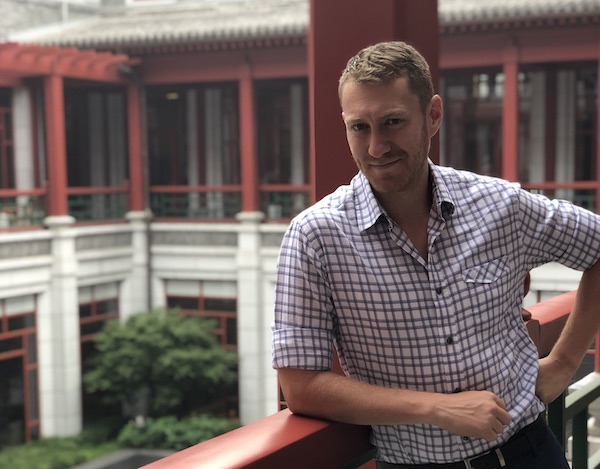
Michael Starr (photo from Michael Starr)

Canadian Michael Starr, who joined the Jerusalem Post in 2021, started a new position last month: that of legal correspondent.

Starr was born and raised in Toronto, but has a B.C. connection. His parents, Steven Starr and Iris Green-Starr, both doctors, moved the family to Victoria, where they still live, “because it is a lovely place and there is more nature there.” It was in Victoria that Starr attended high school.

Starr made aliyah at the age of 18 and joined the Israel Defence Forces later in the year, at the age of 19, serving in the infantry from 2009 to 2012.

“I grew up in a religious and Zionist household, and Israel was a large part of my cultural heritage,” he told the Independent about why he made aliyah. “My grandmother was born in Israel and my grandfather served in the Haganah and IDF. Further, there comes a time in every young man’s life in which he needs to leave his father’s home and put himself in a new environment to truly allow him to become himself.”

His brother, Joseph, came in 2012 and served in the Israeli army; today, he is in the Canadian military. Starr’s younger brother, Sam, is currently part of the IDF’s Golani Brigade.

Starr received a bachelor’s degree, majoring in government studies, and a master’s in terrorism and counterterrorism operations from Reichman University in Herzliya. (Reichman is Israel’s first and only private university, founded in 1994 as the IDC or Interdisciplinary Centre, a private college, before being rebranded in 2021.)

When a friend mentioned that there was a job opening at the Jerusalem Post, he applied and got the job.

“I never set out to be a journalist,” he said. “My interests are security and diplomacy.”

In March of 2021, he started writing for the Jerusalem Post magazine and the Post itself. From March 2020 through December of last year, he was on the breaking news desk.

“When the legal affairs correspondent position opened up, the end of November, I accepted because I wanted to be a journalist and it was a promotion, a step up,” he said. “I also like writing and this would be an opportunity to do more.”

On Jan. 1, Starr started that new position, “where I am reporting on the judicial reforms, which are not just one proposal but many different provisions. It was lucky I studied international law; this is a new field for me.”

Although Starr admits, “I’m a bit of a workaholic,” he runs for enjoyment and takes long walks.

Sybil Kaplan is a Jerusalem-based journalist and author. She wrote Witness to History: Ten Years as a Woman Journalist in Israel, set against the history of Israel in the 1970s, and Hatzaad Harishon, A “First Step” Love Story, relating her experiences as the first youth leader of the first black Jewish youth group in New York. She has edited/compiled nine kosher cookbooks and is a food writer for North American Jewish publications.

Format ImagePosted on February 10, 2023February 9, 2023Author Sybil KaplanCategories IsraelTags Israel, Jerusalem Post, journalism, judicial reform, Michael Starr
Integration policy misguided

Integration policy misguided

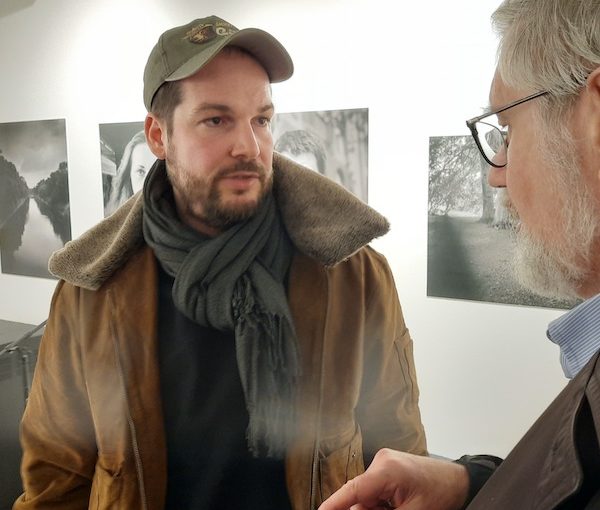
Max Czollek, left, speaks with Prof. Chris Friedrichs, after Czollek launched his new book here Jan. 19. (photo by Pat Johnson)

German attempts to create a cohesive national narrative into which newcomers must integrate is a mistake – and the role Jewish Germans play in this “Theatre of Memory” is especially problematic, according to Max Czollek, a provocative thinker who was hosted by the Cherie Smith JCC Jewish Book Festival last month.

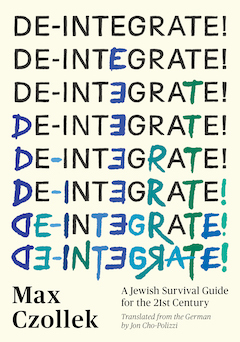
Czollek visited Vancouver Jan. 19, the only Canadian stop on a North American tour promoting the English translation of his book De-integrate: A Jewish Survival Guide for the 21st Century. He excoriated the German integration process as an ideological disaster.

“The only integration Germany has done well is the integration of old Nazis,” he said, explaining that about 99% of Nazi core perpetrators never met justice and, in fact, often succeeded in postwar Germany despite their wartime activities. By contrast, he notes in his book, those who challenged the Nazi regime were often viewed in the postwar context as politically untrustworthy: “[A]fter all, they had already revealed themselves as willing to resist the structures of the German state before.”

While the failure of the larger integration scheme is a theme of Czollek’s book, his main thesis is that Jews are being used to cover up the atrocities of the past. In the contemporary German narrative of integration, newcomers to the country are expected to assimilate into a vaguely defined “guiding culture” (Leitkultur) and not misbehave, Czollek told an audience in the Zack Gallery. But, despite that the vast majority of German Jews are migrants, too, that expectation is not imposed on them. Instead, Jewish Germans are assigned a different and unique role in a German narrative that seeks a return to a normality that was shattered by the Nazi era.

Positioning German Jews collectively as bit players in a larger narrative of redemption reduces them to a cover for the history of their own destruction, he argued: “Because, as long as there are Jews in Germany, then Germans can’t be Nazis.” He later said, “We don’t feel this is our function – making Germans feel good again.”

Czollek, who was born in East Berlin in 1987, two years before the reunification of Germany, explained the different postwar experiences of the tiny Jewish populations of East Germany and West Germany. Numerically, though, these experiences are overwhelmed by those of post-Soviet Jews: 90% of German Jews are migrants from the former Soviet Union or their descendants, he said. And these migrants (or, in the term used for their children and grandchildren, “postmigrants”) are excluded from the burdens placed on other newcomers, especially Muslims. In fact, said Czollek, Muslim immigrants play a role in this narrative, too, in which “good Germans” must now protect Jews against perceived threats from Muslims.

image - De-integrate book coverThe author looks with a particularly jaundiced eye at German Jews who subscribe to this narrative, such as those who vote for the far-right Alternative for Germany party (AfD) based on anti-Muslim and anti-immigrant policies. “Maybe the next time the mosques are going to burn first, but then the synagogues are going to be next,” Czollek said. “We know if the Muslims won’t be able to live safe in Germany, then the Jews won’t either.”

The very idea of a German “guiding culture” is flawed, Czollek argues, not only because the unification of Germany in the 19th century brought together diverse tribes and groupings into what is now purveyed as a unitary nation, but because the postwar immigration of diverse peoples has made such a unified culture unworkable. “Because, given its current state of social diversity, arriving at an ethnically and culturally homogeneous Germany would simply require ethnic and cultural cleansing,” Czollek writes.

A central flaw in the integration narrative, he argues, is that, no matter how long someone named Mohammad has lived in Germany, they will be subject to different criteria of good citizenship. Neo-Nazis who commit arson against refugee shelters or march down the street chanting “Heil Hitler” are not accused of failing to integrate into the German culture, he noted.

“[A]t what point are you no longer considered an immigrant who refuses to integrate [Integrationsverweigerer], but simply a frustrated German?” he asks.

Czollek contends that the narrative of a prevailing German culture (and integration into it) has seeped from the far-right across the spectrum. “Not a single democratic party platform neglects to centre this term in discussions of social belonging,” he writes. “No discussion panels about migration are complete without someone underscoring the importance of integration.”

Czollek argues for a live-and-let-live approach, but suggests the advocates of integration aren’t interested.

“They can eat weisswurst with sweet mustard for lunch and drink at least one litre of beer a day,” he writes. “I have no problem with that and neither do my friends. And that’s precisely the point that fundamentally separates those of us who would defend a concept of radical diversity from those proponents of German guiding culture: we want to create a space in which one can be different without fear, while the other side wants to implement cultural criteria for belonging that by necessity exclude those who don’t align with their concept.”

The original German version of Czollek’s book was published in 2018, shortly after the far-right AfD had become the third-largest party in the Bundestag. Rather than spurring a backlash against extremism, other politicians took a page from the playbook, he argues, with the parties of the right, centre and left warning of the perils of nonintegrated newcomers.

Czollek views the AfD’s rise as a symptom as much as a cause – “Suddenly things everywhere are staining Nazi brown,” he writes – and he sees a different avenue for political success in the face of the far-right surge.

“I don’t believe Germany will win the fight against the New Right without the votes of (im)migrant, postmigrant, Jewish and Muslim citizens,” he writes. “And this critical – if perhaps unfamiliar – new alliance requires strong narratives, the willingness to accept self-criticism from all sides, and a political vision for a society beyond the current integration paradigm.”

Czollek has a doctorate from the Centre for Antisemitism Research at the Technical University of Berlin, has published books of poetry, and is a co-editor of Jalta, a journal of contemporary Jewish culture. He has been involved in political and multicultural theatre in Berlin for many years but with this, his first nonfiction book (translated into English by Jon Cho-Polizzi), he burst on the scene as a contentious public intellectual. The opposition to his work evoked not just political challenges but also public efforts to discredit him based on his identity as a patrilineal Jew.

Czollek’s presentation, in conversation with Markus Hallensleben, associate professor in the department of Central, Eastern and Northern European studies at the University of British Columbia, was opened by book festival director Dana Camil Hewitt. The main festival runs Feb. 11-16.

Format ImagePosted on February 10, 2023February 9, 2023Author Pat JohnsonCategories BooksTags assimilation, Germany, governance, Holocaust, integration, Max Czollek, policy

Land of milk, honey …

Toward the end of last year, Israel signed an historic agreement with Lebanon, enabling both countries to enjoy an abundance of natural gas located deep below their respective territorial waters.

Now, Israel can continue exploring its northern Karish gas field without the risk of Hezbollah missiles overhead. And Israel will receive indirect royalties from Lebanon’s Kana field – with no peace treaty (yet), royalties will be paid via a third country. Add that to potential revenues from Israel’s other natural gas finds in the Mediterranean, and there’s the opportunity of Israel replacing Russia as Europe’s main natural gas provider. Israel will become more than just the land of milk and honey.

Optimistic forecasts of a natural gas Sovereign Wealth Fund are for billions of shekels in tax revenue. Trusting that the new ruling gas triumvirate – Prime Minister Binyamin Netanyahu, Finance Minister Bezalel Smotrich and Energy Minister Israel Katz – will optimize our natural gas and its wealth fund, then Israel becomes the land of milk, honey, natural gas and an overflowing wealth fund.

Hopefully, Lebanon’s natural gas opportunity will help their economy. Then it, too, will be a country overflowing in natural gas and with its own wealth fund.

***

Israel’s 2022 inflation rate was 5.3%, its highest since 2008.  Within the OECD, Israel had the third lowest rate, behind Japan’s 3.0% and Switzerland’s 3.3%. How’s that for our little shtetl! Can’t even compare these rates with the much poorer performing OECD countries such as Estonia at 23.6%, Lithuania at 24.1% and Turkey at 83.5% (yikes!).

Israel’s rate was even lower than the 6.3% of Canada, whose neighbour to the south experienced a similar level. As for Israel’s neighbours, Jordan and Saudi Arabia were at 4.4% and 3.3% respectively … pretty good. Egypt suffered a 24.4% inflation rate, Syria a rate of 105% and Lebanon 189.4%, one of the highest in the world! Israel, the land of milk, honey and competitive inflation rates.

***

Then there’s the judicial reforms bonanza. Israel’s new justice minister, Yariv Levin, is looking to overhaul the system by granting the government – through a simple majority vote – the right to overturn High Court decisions and by giving politicians more power in appointing Supreme Court judges. Detractors are concerned this gives the government way too much say over legal matters and threatens our democracy.  Supporters – largely those who voted for the new government – believe these changes will strengthen the legislature’s ability to enact the will of the electorate. Theirs, anyway.

Karnit Flug and Stanley Fischer, former Bank of Israel governors, are firmly in the former camp. They’re concerned these reforms will harshly undermine the High Court’s authority and concentrate too much power with the government, hurting Israel’s sovereign credit rating, destabilizing the economy and reducing the standard of living.

Netanyahu – the free market czar who revolutionized Israel’s economy as finance minister and who extracted natural gas from our sea as prime minister – believes his judicial reforms will rejuvenate the economy by reducing excess regulation and judicialization.

Adding to the festivities. Israel’s anti-reform (and largely anti-government) movement had its third weekly 100,000-person protest in Tel Aviv last month. A sea of people storming the city square, waving flags of blue and white, singing folk songs and Hatikvah and shouting slogans of support for the high judges. Israel, the land of milk, honey and a real judicial balagan.

***

It’s here! 7-Eleven opened its first store in Israel. In downtown Tel Aviv (of course), with plans to roll out hundreds of branches throughout our little shtetl over the coming years. Hello, Slurpees! Those multi-coloured slushies were a staple of my Canadian childhood. Although now  I am more a fan of the fresh Dole bananas sold at the stores in the United States and Japan, which I’d buy as a healthy snack while on overseas business trips. Looking inward, does this mean the demise of Israel’s famous mom-and-pop stores, found in neighbourhoods across the country, the Bella’s and Yankela’s, which add to Israel’s heimishe-like atmosphere? That would be a pity! Israel becoming the land of milk, honey, Slurpees … and Dole bananas.

***

On a much lighter note, what about Israel’s maple syrup revolution? It was once only available from specialty food stores, and at an exorbitant price. But what’s a poor Canadian immigrant to do? I paid the ransom and our family enjoyed Shabbat morning French toast, pancakes and waffles. Whenever visiting Canada, I stocked up with the stuff, packing carefully bubble-wrapped bottles of both real and imitation maple syrup into my suitcase.

But, thanks to free trade. Real maple syrup – the organic kind from Canada – became super cheap in Israel, even less expensive than in Canada! And it’s available everywhere, even at Bella’s and Yankela’s. Now when I return to Canada, I take back Canadian maple syrup as gifts. Dare I say it … Israel, the land of milk, honey and Canadian Maple Syrup, eh.

Bruce Brown is a Canadian and an Israeli. He made aliyah … a long time ago. He works in Israel’s high-tech sector by day and, in spurts, is a somewhat inspired writer by night. Brown is the winner of the 2019 AJPA Rockower Award for excellence in writing, and wrote the 1998 satire An Israeli is…. Brown reflects on life in Israel – political, social, economic and personal.

Posted on February 10, 2023February 9, 2023Author Bruce BrownCategories Israel, Op-EdTags business, economics, inflation, Israel, judicial reform, politics

Promises can be motivating

Most of us have to work for a living. Even if we enjoy most of what we do, it’s rare to find someone who feels every moment of their job is a joy. After all, if they’re paying you to do it, my brother and husband would joke with me, “there’s a reason they call it work.”

However, sometimes things happen at work that just aren’t OK or comfortable. Long ago, I worked at an hourly job at a university doing educational administration. It was a mind-boggling number of obligations, managing hundreds of short courses, from instructor attendance lists and access codes to editing course descriptions, proofreading course catalogues and scheduling classrooms. I even set up chairs and tables myself for some courses. It was not my favourite job.

When Passover came along, I had to request time off to clean and cook at home, as I was expecting family to visit. It was not a standard holiday at this university and, although I was asking for time off without pay, the dean questioned me in detail about why it was necessary to grant this to me.

I needed the job. I’d finished my graduate degree but my husband hadn’t finished his yet. We needed the income. I tried to politely field the questions. I knew she was just curious and likely hadn’t ever had the opportunity to ask a Jewish person these kinds of things before. She took pride in wishing me happy holidays – by name – even when she got the Jewish holidays wrong or shared the greetings at the wrong times of year. Even so, she was in a position of power as my boss and I had no option but to answer her if I wanted to keep my job.

The weird part about this encounter is that it doesn’t only happen to religious minorities working for a majority culture boss. I’ve experienced similar questioning as a freelancer working for Jewish organizations, too – everyone wants to know what your observance level is, whether they know your family, if you have a plan for the holidays. Perhaps it’s meant to be friendly and supportive but it can also feel uncomfortable or intrusive. If one answers truthfully, sometimes the outcome doesn’t align with whatever the boss’s preferences would be.

If you work in a large organization with a human resources department, maybe there’s help there, but, most of the time, bringing it up elsewhere can result in more trouble than it’s worth. If diversity and inclusion at your organization don’t recognize “Jewish” as one of the categories, you may have singled yourself out for even more difficulties later on.

The commitments we make Jewishly vary, and everyone chooses their own boundaries. However, these promises we make, to ourselves and our families, are in some ways vows that we must honour and reconcile with our work lives.

This made me think about the talmudic tractate of Nedarim (Vows), which I just finished studying. Much of the tractate is spent trying to help people understand why rabbis think vows of any kind are just a bad idea. Culturally, too, this tractate seems to recognize a time when someone could announce that “all vegetables are forbidden to me” and suddenly this very poorly thought out vow becomes real and must be observed. Hence, the rabbis spent a lot of time suggesting that people just avoid taking vows altogether: better to skip making serious promises you can’t keep. That said, eventually, the Kol Nidre prayer was developed for erev Yom Kippur – it is a blanket prayer releasing us from all the vows we could not keep over the past year.

Rabbi Elliot Goldberg taught an interesting perspective in an online siyyum (celebration at the end of the tractate) on My Jewish Learning. Goldberg points out an example from Nedarim 8a that, even if one is committed to doing mitzvot (commandments), making a vow to do more is motivating: “Rather, it teaches us this: it is permitted for a man to motivate himself to fulfil the mitzvot in this manner, although the oath is not technically valid.” For example, if someone decides that, this year, it would be good to attend services or to donate more to charity, these are not technically vows, but more like New Year’s resolutions. We’re already supposed to do these things, but if we voice a commitment to doing them, it is motivating.

What does this have to do with our uncomfortable moments at work? Sometimes, even knowing that a situation will be awkward, we decide to do it anyway. It would have been easier for me to work right through Passover instead of going through the question-and-answer situation with the university dean. Instead though, this hard encounter motivated me even more to take the time off to clean, cook and spend time with visiting relatives.

Sometimes, finding a way to cope with a difficult situation at work can result in a deeper personal commitment to one’s own beliefs and values. In my case, even though I was very happy to leave that job, I believe that my year working in the Short Course program made a difference. When I left, colleagues told me that they’d learned from me and respected what I’d offered the department.

Our household finances often dictate our work lives – we all have to pay the bills and eat. Yet, sometimes Jewish law, provincial or federal law also affect our finances and ability to make our way in the wider world. We shouldn’t make vows, but promising ourselves to try harder next time to do what’s right just might be motivating in situations that don’t make those choices easy.

Joanne Seiff has written regularly for CBC Manitoba and various Jewish publications. She is the author of three books, including From the Outside In: Jewish Post Columns 2015-2016, a collection of essays available for digital download or as a paperback from Amazon. Check her out on Instagram @yrnspinner or at joanneseiff.blogspot.com.

Posted on February 10, 2023February 9, 2023Author Joanne SeiffCategories Op-EdTags Judaism, lifestyle, Talmud, work
Just for Laughs returns

Just for Laughs returns

Phil Rosenthal of Somebody Feed Phil takes part in Just for Laughs Vancouver on Feb. 19. (photo from JFL Vancouver)

Just for Laughs Vancouver returns for another year’s festival, presented in association with SiriusXM Feb. 16-25. It welcomes back Best of the West, highlighting local talent, and reintroduces the Creator’s Series, with the first guest confirmed surely to be an entertaining afternoon: Phil Rosenthal. Listed below are some of the Jewish community members participating in the festival.

A Conversation with Phil Rosenthal /  Feb. 19, 5 p.m., at Vogue Theatre

Rosenthal is the award-winning creator, executive producer and host of Netflix’s hit Somebody Feed Phil, as well as a New York Times best-selling author. The Emmy-nominated unscripted documentary series combines Rosenthal’s love of food and travel with his unique brand of humour and he recently won a 2022 Critics Choice Real TV Award for Best Travel/Adventure Show on behalf of the series and garnered a 2022 James Beard Award nomination. He also recently released Somebody Feed Phil: The Book, which instantly landed on the New York Times bestseller list.

Sarah Silverman: Grow Some Lips / Feb. 23, 7 p.m., at Queen Elizabeth Theatre

Silverman is a two-time Emmy Award-winning comedian, actress, writer and producer. She currently hosts her weekly podcast, available on iTunes and wherever podcasts are available. She can next be seen as the host of TBS’s Stupid Pet Tricks, an expansion of the David Letterman late-night segment. She recently wrapped production on Netflix’s Maestro, a biopic on the life of composer Leonard Bernstein, where she will star opposite Bradley Cooper.

Ari Shaffir / Feb. 25, 9:30 p.m., at Vogue Theatre

Shaffir is best known for the storytelling show he created and hosted on Comedy Central called This Is Not Happening. His last Netflix special, Double Negative, won a Grammy for best comedy special before the award committee realized it was too filthy and didn’t represent the high standards that the Grammys has long stood for so the honour was stripped from him. Shaffir has had numerous appearances on the Joe Rogan Experience podcast, as well as WTF with Marc Maron, The Adam Carolla Show and Your Mom’s House. His own podcast, Ari Shaffir’s Skeptic Tank, is a chart topper that comes out every week.

Sarah Sherman / Feb. 16, 9:30 p.m., and Feb. 17, 7 p.m., at Biltmore Cabaret

Sherman aka Sarah Squirm is currently a featured player on Saturday Night Live. Outside of the show, she is known for her unconventional and popular live show, Helltrap Nightmare. She was chosen as one of the 2021 Just for Laughs’ Montreal’s New Faces of Comedy.

Jared Freid / Feb. 22, 9:30 p.m., and Feb. 23, 7 p.m., at Rio Theatre

Freid is a stand-up comedian based out of New York City, with a strong focus on dating and relationships. His comedy is current and reflects the ordinary daily thoughts of everyone you know, especially if you know a lot of millennials who are obsessing over dating apps, trying to be real adults, and worrying about their bodies. He co-hosts the podcast U Up? with Jordana Abraham, where they discuss their takes on modern dating, and recently launched a new show, Dating Makeover, a podcast presented by Spotify.

An Intimate Evening with Adam Pally / Feb. 17, 7 p.m, at Rio Theatre

Songs, stories and jokes come together just like Momma used to make it. Enjoy the stories, sing along to the songs, hopefully think the jokes are in fact jokes and the price of the ticket and commute and being around a bunch of strangers was worth it. I, uh, I mean whoever is writing this, definitely not Adam Pally, is so thankful for the opportunity to entertain you.

Hannah Berner / Feb. 18, 9:30 p.m., at Rio Theatre

Berner was born in Brooklyn, N.Y., and played competitive tennis for the University of Wisconsin. She emerged on the comedy scene by directing, editing and acting in videos on Instagram and writing viral tweets. She has two podcasts, Giggly Squad and Berning In Hell. Berner is an advocate for mental health, animals and napping.

* * *

For the full Just for Laughs Vancouver lineup and show tickets, visit JFLVancouver.com. 

– Courtesy JFL Vancouver

Format ImagePosted on February 10, 2023February 9, 2023Author JFL VancouverCategories Performing ArtsTags comedy, Just for Laughs, Vancouver

Navigate golden years

On Feb. 15 at Beth Israel, there will be two opportunities to hear Dr. Mielu Rabinovici speak on the topic of The Know-How to Navigate Through the Golden Years and Retirement, and Preparedness also Towards an Increased Longevity and a Better Quality of Life.

Rabinovici is an author and educator who has lived and worked across Canada and on three continents. He has degrees from various institutions, including the University of Toronto, faculty of education.

He has written and taught on several subjects, his areas of speciality being accounting, marketing and management. He is also the author of several books especially designed for seniors, about retirement, longevity and towards a better quality of life.

Now in his mid-80s, Rabinovici is still writing and sharing his knowledge with many groups, including seniors, helping them navigate through the modern complexities of life, characterized by climate change and rapid technological changes.

To register for one of Rabinovici’s Feb. 15 talks (2-4 p.m. or 6-8 p.m.), call him at 604-725-1376.

– Courtesy Temple Sholom

Posted on February 10, 2023February 9, 2023Author Temple SholomCategories LocalTags Mielu Rabinovici, retirement
Climate-change era graphic novel for young readers

Climate-change era graphic novel for young readers

Steve and Eve Save the Planet is an illustrated graphic novel series that tries to address the challenges of this climate-change era while inspiring children with adventure, laughter and hope. The project is the creation of authors Paul Shore and Deborah Katz Henriquez, and illustrator Prashant Miranda.

image - I Can Hear Your Heart Beep book coverIn the first book in the series, I Can Hear Your Heart Beep, readers will be introduced to Steve, a kooky polar bear with a magical power gifted to him by the Northern Lights, and Eve, a feisty electric car who wants to change the world. The 200-page illustrated work-of-art will be available to pre-order from Amazon in paperback, hardcover and ebook formats as of Feb. 14, and the book launch will take place on Feb. 25, 1 p.m., at Arts Umbrella on Granville Island.

Parents or their kids can sign up to Planet Hero Kids at savetheplanetbook.com/signup to follow Steve and Eve as their adventures begin to unfold.

– Courtesy Planet Hero Kids


Format ImagePosted on February 10, 2023February 9, 2023Author Planet Hero KidsCategories BooksTags children's books, climate crisis, graphic novels

Posts pagination

Previous page Page 1 … Page 3 Page 4
Proudly powered by WordPress