Skip to content
  • Home
  • Subscribe / donate
  • Events calendar
  • News
    • Local
    • National
    • Israel
    • World
    • עניין בחדשות
      A roundup of news in Canada and further afield, in Hebrew.
  • Opinion
    • From the JI
    • Op-Ed
  • Arts & Culture
    • Performing Arts
    • Music
    • Books
    • Visual Arts
    • TV & Film
  • Life
    • Celebrating the Holidays
    • Travel
    • The Daily Snooze
      Cartoons by Jacob Samuel
    • Mystery Photo
      Help the JI and JMABC fill in the gaps in our archives.
  • Community Links
    • Organizations, Etc.
    • Other News Sources & Blogs
    • Business Directory
  • FAQ
  • JI Chai Celebration
  • JI@88! video

Recent Posts

  • Sharing her testimony
  • Fall fight takes leap forward
  • The balancing of rights
  • Multiple Tony n’ Tina roles
  • Stories of trauma, resilience
  • Celebrate our culture
  • A responsibility to help
  • What wellness means at JCC
  • Together in mourning
  • Downhill after Trump?
  • Birth control even easier now
  • Eco-Sisters mentorship
  • Unexpected discoveries
  • Study’s results hopeful
  • Bad behaviour affects us all
  • Thankful for the police
  • UBC needs a wake-up call
  • Recalling a shining star
  • Sleep well …
  • BGU fosters startup culture
  • Photography and glass
  • Is it the end of an era?
  • Taking life a step at a time
  • Nakba exhibit biased
  • Film festival starts next week
  • Musical with heart and soul
  • Rabbi marks 13 years
  • Keeper of VTT’s history
  • Gala fêtes Infeld’s 20th
  • Building JWest together
  • Challah Mom comes to Vancouver
  • What to do about media bias
  • Education offers hope
  • Remembrance – a moral act
  • What makes us human
  • המלחמות של נתניהו וטראמפ

Archives

Follow @JewishIndie
image - The CJN - Visit Us Banner - 300x600 - 101625

Month: March 2015

Digital lending gets a boost

Digital lending gets a boost

Rita and Marvin Weintraub with Isaac Waldman Jewish Public Library librarians Karen Corrin, left, and Helen Pinsky, second from the right. (photo from Isaac Waldman Jewish Public Library)

The e-book market has been growing by leaps and bounds, particularly in Canadian libraries, where the concept of a book that doesn’t get dog-eared, doesn’t fall apart and can be carried around on something as small as a phone or tablet seems to appeal to young and old alike. According to a 2014 report published by the Canadian Urban Libraries Council, the interest in e-books in libraries “has exploded” since 2011, when e-book borrowing constituted just one percent of the overall circulation in Canadian libraries. By 2013, that number had jumped to 10 percent, demonstrating that library readers were now comfortable with the digital book format.

The Isaac Waldman Jewish Public Library has been tapping into that surge, thanks to a grant from the Sonner Family Foundation. The library launched its digital book-lending program in 2013, said librarian Helen Pinsky. The program got going at the encouragement of Eve Sonner, who manages the family foundation in her parents’ memory. The list of available books now numbers around 206 titles. “[It] is just amazing how much we were able to do and how much we were able to achieve [with this grant],” she said.

But keeping up with the expansion has been a challenge at times, she added, particularly because of the cost that publishers charge libraries for digital books.

“The popular books are extremely expensive in e-book version,” Pinsky explained. This is because most publishers charge libraries a higher price for e-books, which are regulated under usage licences based on the amount of times the book is checked out and the length of the licence. The top five Canadian publishers – HarperCollins, Hachette, Macmillan, Penguin and Random House – will all licence to libraries, but with varying terms. Simon & Schuster’s pilot library program was not available until 2014, when it made its digital property available on the electronic public library system.

Isaac Waldman licences its e-books through OverDrive, an e-book platform that sets its own contracts and costs. Pinsky said the average cost of an e-book licence for a newly released book can run as much as $85. That allows for it to be listed for two years or 26 views (whichever limit is reached first).

“So it is very difficult for us to maintain this,” she said, explaining that the library naturally wants to carry the most popular and requested titles, but must find a way to balance the costs. “It is our intention to, but we would really love to get more financial support to keep this collection growing.”

One of the ways the library hopes to expand its funding is through the upcoming telethon, which this year will run March 15-22. The annual telethon, which was started in 1994 by Rita Weintraub, is a vital part of the library’s fundraising network for many areas of the library.

“We serve so many [interests], and are constantly trying to keep each area current and meaningful to its reader base,” explained Pinsky. The money raised is allocated according to need. “For example, we’re always updating the storytime corner, where parents and grandparents come with their little ones to hear stories being read, or to read together. Our non-fiction books include the latest in politics, economics and history/biography, especially about Israel. We try to entice and encourage young readers with the latest in their favorite genres, all with a Jewish motif.” Some of those selections may be in print, while others are in electronic format. Pinsky said the library generally tries not to duplicate print editions in its electronic listing, but makes exceptions in some cases.

“Many of the purchases these days are in direct response to requests. And so, what we want to do is make books available to our members that wouldn’t necessarily be available through [other] library systems.” So books that have long wait times at other libraries, or are hard to get, are also considered for the program.

Some of the most popular e-books that the library has carried include My Promised Land by Israeli journalist Ari Shavit, The Remains of Love by Zeruyah Shalev and Growing Up Jewish in China by Dolly Bell. Pinsky said there are also books that are difficult to supply on the OverDrive system, and those include books in Hebrew and children’s picture books.

Asked if she had any advice for readers, she said simply, “Avoid long lines by borrowing from us.”

Those who wish to contribute to the library can either do so at the time of the telethon, by going online to the Isaac Waldman site at jccgv.com or by calling 604-257-5181. Those who donate $36 or more automatically become Friends of the Library.

“We are grateful to the Sonner family for their generosity in initiating the e-book program and helping us to build the collection,” said Pinsky. “Eve chose this initiative to honor the memory of her father, who was an innovative and creative thinker.”

Jan Lee’s articles have been published in numerous publications. She also writes on sustainable business practices for TriplePundit.com. Her blog can be found at multiculturaljew.polestarpassages.com.

Format ImagePosted on March 13, 2015March 12, 2015Author Jan LeeCategories LocalTags ebooks, Helen Pinksy, Isaac Waldman Jewish Public Library, IWJPL, Rita Weintraub, Sonner Family eBook Project
JFSA still has garden plots

JFSA still has garden plots

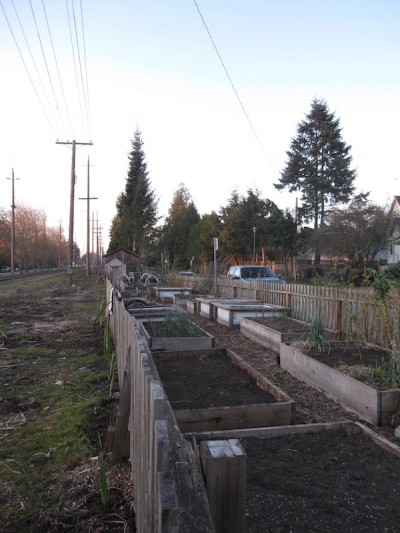
The Jewish Family Service Agency’s community garden was halved by CPR. (photos by Cynthia Ramsay)

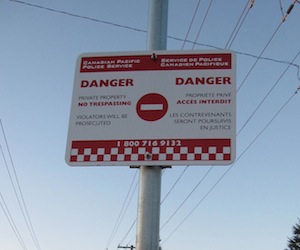
photo - CPR no trespassing sign
In asserting their ownership, CPR insists that it is still an active rail line.

As many residents have witnessed, the legal dispute between the City of Vancouver and Canadian Pacific Railway (CPR) has reached a point of no return, with many community gardens along the Arbutus corridor destroyed by CPR in the past few months.

The dispute between the city and CPR is about the future of the 11-kilometre railway line that was in use from 1905 until 2000, when the line was shut down. Since then, there have been ongoing discussions about the future of the line and its surrounding land. In asserting their ownership, CPR insists that it is still an active rail line.

In the past 15 years, several community gardens have flourished along the old railway line; one of them is the Jewish Family Service Agency community garden that provides produce to the Jewish Food Bank.

photo -JFSA's community garden provides fresh produce to the Jewish Food Bank.
JFSA’s community garden provides fresh produce to the Jewish Food Bank.

Guy Askadsky is a JFSA volunteer who has been working with the garden for the past two years. His team of volunteers meets at the garden twice a week to work together and foster the two plots that provide pears, figs, plums, almonds, raspberries, blackberries, currants, strawberries, zucchini, winter squash, kale, collards, cucumbers, tomatoes, lettuce, parsley, chard, peas, beans and arugula. All the crops are organic and go directly to the Jewish Food Bank and its customers.

“Our food bank clients are extremely happy to get this fresh organic products in their baskets, it’s healthy food that is usually very expensive in the grocery store,” said Askadsky over the phone. “Our production volume was cut to half because of the dispute between the city and CPR, we had to clear half of our garden, and now the volunteers see [that part of the land] standing there without any use, it’s kind of frustrating, but we have to adjust to the reality. Our reward is being able to provide an important need for many in our community that are unable to enjoy that kind of variety without a garden.”

The JFSA community garden is always looking for volunteers. Anyone interested in joining the gardening team can email Askadsky at [email protected].

Shahar Ben Halevi is a writer and filmmaker living in Vancouver.

Format ImagePosted on March 13, 2015March 12, 2015Author Shahar Ben HaleviCategories LocalTags CPR, garden, Jewish Family Service Agency, JFSA
Making people aware

Making people aware

The Holocaust awareness event at the University of Victoria was a collaborative effort. (photo from Hillel BC)

On Feb. 5 and 6, Hillel BC, University of Victoria’s Kibbutz Hillel Student Club and I-witness Field School presented a Holocaust awareness event. More than 200 visitors viewed the installation at UVic.

photo - The Victoria Children’s Choir (below) were among the many participants in the Holocaust awareness event at the University of Victoria
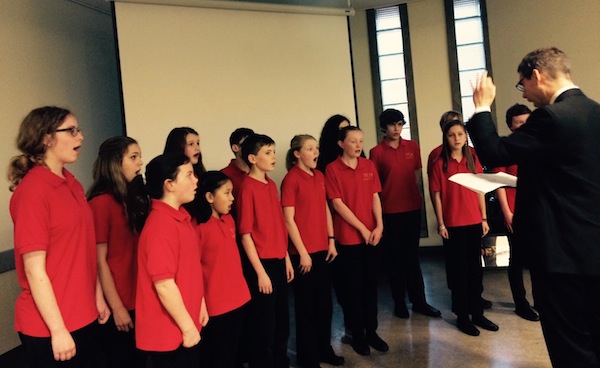
The Victoria Children’s Choir were among the many participants in the Holocaust awareness event at the University of Victoria. (photo from Hillel BC)

Also participating in the event were Amnesty International Student Club, PRIDE Student Club, Society for Students with a Disability, Anti-Violence Project and Students of Color Collective. Additional support and participation came from the Victoria Holocaust Remembrance and Education Society, UVic Students Society, UVic Multifaith Services, Jewish Federation of Victoria and Vancouver Island, Phoenix Theatre, North African Jews and the Holocaust, Starbucks and many individuals, all of whom contributed to the event’s success.

A special presentation was held Feb. 5, across from the installation in the Michele Pujol Room, UVSS Student Union Building. Approximately 70 people came out to hear Dr. Rick Kool (the son of a survivor) speak, the Victoria Children’s Choir and Dr. Orly Salama-Alber perform and contributing words from Dr. Helga Thorson of I-Witness Field School, Sabine Ricard of Kibbutz Hillel and Carmel Tanaka of Hillel BC.

Following the second day of the installation, there was a traditional Ashkenazi Shabbat dinner at UVic Hillel House, attended by about 40 people, primarily organizers and volunteers.

Format ImagePosted on March 13, 2015March 14, 2015Author Hillel BCCategories LocalTags Hillel BC, Holocaust
A legacy of stewardship

A legacy of stewardship

The author in 1974 at a tree planting event organized by her father in England. (photo from Shula Klinger)

It all began with my great-grandfather, Simon Picker. In the early 20th century, the timber industry in Bukowina was booming. Before the First World War and the collapse of the Habsburg Empire, my great-grandfather supported his family by working as a carpenter. According to his gravestone, he was “an honest man who enjoyed only the fruit of his toil.”

My father was always passionate about trees. He referred to Japanese maples by the Latin name acer palmatum, and took great delight in planting trees in our backyard. Acacia, eucalyptus, willow. He loved to visit Kew Gardens and told me how he’d planted trees in Israel, in the early days of independence. When my grandfather died at our home in 1969, my father planted a magnolia tree on the spot where he fell and, although the house has gone, the tree is still there today.

When my father came to England, one of his first businesses was in public relations. For a time, he held a contract for the Forestry Commission, which was when he also started a charity called Trees for People (TFP). TFP provided trees and equipment to schools, so that children could get their hands dirty and learn what it meant to be guardians of the environment.

After he died, I realized that I did not know what had become of TFP. My father had talked about passing on the fund to a group in England, but I wasn’t sure how that had panned out.

Then, when I was clearing out his personal effects just a few weeks ago, I learned what happened. In 2005, he donated all of the remaining TFP funds to the Woodland Trust in the United Kingdom. The trust’s goal is to recreate native woodland with the help of local schools and communities. It aims to protect surviving woodland, restore areas that are damaged and advocate for those that are currently under threat.

The trust put the TFP legacy to work immediately, using it to develop a new project in southeastern England, the Fordham Hall Estate. According to Liz McLelland, woodland creation project officer for the Woodland Trust, this is “an amazing 505-acre piece of land near Colchester in Essex. It is now a beautiful landscape of woods, meadows and riverside habitat.”

As well as transforming the environment, the fund has supported the development of a new outdoor curriculum for local children, providing hundreds of children with opportunities to plant trees and be inspired by nature, McLelland said. Furthermore, it has promoted their understanding of their role, as stewards of the environment. “This type of event is now a core part of our activity whenever we buy land on which to create native woodland.”

Needless to say, I am also a tree lover. I live with my family on the North Shore, close to the forests of Lynn Canyon, where our back yard is overshadowed by giant evergreens. Last year, my husband built me a vegetable box. Our children and I planted seeds in it and waited eagerly to see what we could harvest, but before the seedlings were more than a few inches tall, I got the call.

My father died on July 2, 2014, in Cambridge, England. We traveled there for his funeral and came back at the end of the month to an overgrown tangle of leaves the size of tea trays. Benjamin, 7, took on the job of harvester, leaping into the hip-high plants to pull out a foot-long zucchini.

And now it is spring again. Last week, I cut open an apple and found that one of the seeds had already germinated inside the fruit. The children were overjoyed to see the tiny sprout, and insisted that we plant it. We check on it every day, and Joel, 4, loves to water it with his “squirty bottle.” Today, we’re going to plant Canterbury Bells, peas, pumpkins, tomatoes and carrots. And then we will walk in the forest, appreciating the giant, protective limbs of the trees and the aromatic, warm earth, as it nurtures the growth of a another new generation of plants.

Shula Klinger is a freelance writer living in North Vancouver.

Format ImagePosted on March 13, 2015March 12, 2015Author Shula KlingerCategories LifeTags Fordham Hall Estate, Liz McLelland, TFP, Trees for People, Woodland Trust

Living on the wet West Coast

Living in the wet Pacific Northwest, mold grows with reckless abandon. It only needs moisture, moderate temperatures and a food source to grow. In the outdoors, mold is necessary to breakdown dead, organic material. Unfortunately, however, it isn’t really too picky about where it lives. If we are not careful, mold invades our homes.

photo - Marni Moss is one of Sean Moss’ mold detectors
Marni Moss is one of Sean Moss’ mold detectors. (photo from homeinspectorsean.com)

Without an active moisture source, mold will stop spreading. At the same time, mold spores can lay dormant for long periods of time until the right conditions are present … and crop right up again. Since we can’t get rid of mold completely, we should make every effort to control it in our living spaces.

Mold survives on anything organic such as paper, cardboard, wood, under carpets, leather or even the old cheese in your refrigerator from Adam’s bar mitzvah.

Heath issues associated with prolonged exposure, especially for young children, the elderly and those with respiratory issues are already well documented in the media and medical community. Listed below are some common household areas where mold can be found:

Bathroom mold: The high humidity levels generated from showering and bathing, causes mold growth anywhere dust and/or dirt accumulates. Over time, caulking along the corners and base of the shower will discolor and become moldy. When grout sealing has been neglected, cracks develop in the mortar between the ceramic tiles. This allows moisture in behind the walls, through the cracks by way of “capillary action.” Over time, the moisture can’t escape, so it builds up, resulting in mold growth. Most people are unaware of this until the tiles become loose, it smells musty or they renovate.

Prevention: Always run the fan before, while and after a bath or shower for at least 45 minutes. You can monitor the humidity levels by purchasing a hygrometer. In our environment, you want to keep it 55 percent or lower. In addition, remove your wet towels, clean all dirt, dust and debris. Replace all discolored caulk, while sealing the grout lines.

Attic mold: This type of mold is usually due to poor ventilation. In winter, when the temperature on the attic sheathing is cold, condensation forms. Left unchecked, mold will eventually damage the sheathing. Other notable sources result from roof leaks and air leakage.

Prevention: Ensure the attic hatch is properly weather stripped and insulated to prevent air leakage. Topping up the insulation level to an R-Value of 40-50 is also recommended. All bathroom and laundry vents should be insulated and vented through the roof, not discharging inside the attic. In addition, baffles should be installed along roof edges. Roof or ridge vents allow the air to escape. Roof leaks should be prevented through annual inspections and repairs.

Basement and crawlspace mold: Common in homes that are poorly sloped, missing waterproof membranes, have broken drain tile or foundations cracks. All of these conditions contribute to moisture ingress, resulting in mold. Often people store old furniture or cardboard boxes in the basement for years. As the moisture develops the mold grows, often ruining photos, documents or paperwork.

Mold grows on the structural wood members when the home (usually older) has been built on a dirt floor. There is an incredible amount of moisture vapor that seeps into the crawlspace from the ground below. In addition, ground water can spill into the crawlspace where there are voids along the outer perimeter or cracked foundation wall. Over time, the accumulation of mold can compromise the structure of the home. In addition, these spores can migrate up into the living space through small voids, causing indoor air quality issues.

Prevention: Call a drainage company to scope the perimeter drainage to determine its condition. If damaged, replace older clay, concrete or plastic corrugated drain tile with the modern PVC drain pipe. (This can be expensive) At the same time, seal all cracks and have a proper moisture barrier installed. Place drainage stone around the perimeter, while keeping soil and trees away from the foundation wall.

Completely seal dirt floors with a heavy-duty vapor barrier. Concrete walls should be insulated to reduce moisture. Depending on the water issue, a sump pump may be needed. According to modern best practices, exterior vents are not recommended in crawlspaces, as they should be conditioned (heated). Have the vents covered when possible; install weather stripping and a properly sealed door to the crawlspace as well.

Kitchen mold: This type of mold is usually found under the sink, behind the refrigerator or near the dishwasher, walls and ceilings. These areas are common because small leaks often go unnoticed. Poor ventilation while cooking contributes to indoor humidity issues.

Prevention: Periodically check under the sink, along the floor by the refrigerator and dishwasher for leaks. Clean and caulk around the sink, seams and corners to reduce water damage above and below the counter. Always be at home when you run the dishwasher to catch any leaks. Use the kitchen fan while cooking.

Window and surface mold: Is commonly found on windows sills and frames. When dust and dirt accumulates, in combination with the moisture from window condensation, mold grows. Ceilings, exterior (outside) facing walls, closet walls, or surfaces near kitchens and bathrooms should be examined for signs of mold.

Prevention: If the budget allows, I recommend replacing metal-framed windows with vinyl. Because windows are always the coldest surface of the home, it is important to keep them warm and dry. Mold and mildew can be cleaned off with a mold remover from your local hardware store, or a simple green solution consisting of one-part vinegar, one-part dish soap to 10 parts water. Mix together in a spray bottle. Continue to clean all dust and dirt, and wipe away excess moisture, especially in the winter.

Remember, the most important part of managing the mold in your home is to identify and remove the moisture source(s) as soon as possible. A certified mold inspector can investigate any mold related concerns. If significant mold growth has been discovered, call a mold remediation contractor for safe and proper removal.

Sean Moss is a professional home inspector with his company Sean Moss Home and Mold Inspections.

Posted on March 13, 2015March 11, 2015Author Sean MossCategories LocalTags mold
AJD on Road to Peace

AJD on Road to Peace

Road to Peace: left to right, Josh Morry of the Arab Jewish Dialogue on Campus, and AJD’s Howard Morry and Ab Freig. (photo by Rebeca Kuropatwa)

Founded in 2006, the Arab Jewish Dialogue (AJD) is a national organization based in Winnipeg with the goal of improving relations and respect between Arabs and Jews through dialogue and education. On Feb. 23, AJD co-founder and co-chair Ab Freig, co-chair Howard Morry and AJD on Campus founder Josh Morry spoke at the University of Manitoba on The Road to Peace in the Arab Israeli Conflict – A Conversation with the Arab Jewish Dialogue.

Of AJD on Campus compared to AJD, Josh Morry said, “We, too, discuss issues that are difficult and that often make us feel uncomfortable. The only difference is some policy statements that make our group more conducive to operating on campus.

“One of the things we added to our constitution, and I believe you can find it on the website, is that we abhor the use of name calling. Not only does this undermine policies, but it stops people from being able to engage in positive dialogue.”

The core campus group consists of six Arab members and six Jewish members. Plans are in the works for the organization to host a Middle East feast at the U of M.

Since AJD on Campus formed, Morry said, “I’ve seen firsthand a reduction in the hateful speech that undermines the policies. Jewish students feel much safer on campus now.”

About Arab and Jewish relations, Freig said, “We talk about what is the best case scenario: living in peace and harmony, prosperity, cooperation. We talk about that and understand it. Then we talk about the obstacles and how we can overcome them. We both need to identify what’s best for us.

“That’s the basics of what we do. In order for us to do that, we needed to dig deeper. No one seems to dig deeper to understand. So, I’ll meet with people and start with a discussion on how to take it from here.”

Freig has witnessed how what starts in the dialogue group passes onto children, cousins, and further.

Howard Morry provided an example of how, simply by acting from a humanistic level, he was able to restore trust within the group after one of the times Israel sent its military into Gaza. He told those gathered that the Jewish members were sorry for any loss of life during the operation. “Once I said that, it was as if the oxygen was put back in the room,” he explained. “The people that were sitting cross-armed changed their posture to a more open one. And then, continuing with this … we actually had a very productive talk – politically, strategically, and at every level. But, until that moment, we had lost all the trust in that room and we couldn’t move any further.”

Recently, AJD has been talking a lot about ISIS, working to understand who is supporting them, how they are getting the money and what is driving them. And, because of the violence that happened in France with Charlie Hebdo, they also took some time to discuss the Prophet Mohammed.

“There was a Muslim Arab in the group who explained [the concerns] to the other members,” said Freig. “We issued a statement. We condemn violence and we support freedom of expression and [the] press. We put together a press release, signed by the Jewish and Arab members.”

While AJD has been going strong for nine years, creating the same kind of openness and trust within a university setting will be a challenge. “Unless you’re a really bad student, you’re not going to be part of this group for nine years, because you graduate,” said Josh Morry. “I think before we expand across Canada, we have to expand across Winnipeg. So, it would be nice to a get a student here to set up a group at the University of Winnipeg (U of W).”

He noted that it may be easier for AJD on Campus to expand to schools on the East Coast. “People are much more eager to join student groups and get involved there,” he said. “Our model is easy to replicate. The constitution is easy to duplicate, using very general terms.”

Freig stressed that, within both groups, members do not “agree on everything, [but] we don’t really need to, to have a dialogue. We discuss difficult topics and keep talking about it, and hash over the issues until we get to an understanding. That’s what we try to achieve.

“It’s not necessarily an agreement, but an understanding – understanding each other’s narratives. There are some issues we are in too deep with, so we have one meeting after another, trying to get the other person to understand. If you don’t understand where the other person’s coming from, you won’t ever get over being at odds with one another. We still have work to do.”

Howard Morry added, “One of the great gifts of this group is that it gives you a chance to explain things more than once. In this group, we approach issues in different ways. Over time, listening to each other, there’s an understanding with some members, but not with others.

“I’ll tell you that the happiest moment I think I’ve had is when I’ve said something the 16th time over a two-year period, and I had one of the members come up to me and say, ‘Howard, you just changed my life.’”

Both groups hope to inspire the broader Canadian population with how well people – not only Arabs and Jews – can get along by speaking to each other respectfully, not jumping the gun, and not just trying to be right. They see their groups as a learning tool for life, teaching how to get along with others and to build trust.

“Our intention is to extend throughout Canada and then maybe we will inspire people in the Middle East,” said Freig.

Co-chair Morry added, “While we want there to be peace, our group is focused on Canadian Jews and Arabs.… We were concerned when we first started, not wanting to become like Europe. There was a lot more violence and disagreement and no dialogue at all.

“The idea is that when you get dialogue amongst the people who’ve chosen to live in Canada, over time, it will hopefully influence the rest [of the world].”

Rebeca Kuropatwa is a Winnipeg freelance writer.

Format ImagePosted on March 13, 2015March 11, 2015Author Rebeca KuropatwaCategories NationalTags Ab Freig, Arab, Arab-Israeli conflct, dialogue, Howard Morry, Jewish, Josh Morry, peace
Family’s little white lie

Family’s little white lie

Lacey Schwartz celebrates her bat mitzvah with her parents, Peggy and Robert. (photo from littlewhiteliethefilm.com)

From Hollywood films like Next Stop Greenwich Village and Reversal of Fortune to documentaries like The Times of Harvey Milk, hyper-verbal Jews are practically a movie cliché. Name the last film that featured a Jew at a loss for words. It’s a stumper, because the silver screen stereotype of Jews is emotionally candid, unabashedly frank and unfailingly articulate. The rare exception to that rule, Lacey Schwartz’s Little White Lie deserves a place in the record books for that reason alone.

The first-person documentary follows the 30-something filmmaker’s effort to learn the identity of her biological father and, more importantly, force her parents to acknowledge and confront a painful secret. At the critical juncture, however, they become unexpectedly tongue-tied.

A fascinating modern mystery that paradoxically chooses not to explore the most interesting aspects of identity and race, Little White Lie airs nationally on March 23 as part of PBS’s Independent Lens series.

Schwartz grew up in Woodstock, N.Y., with doting parents. Her mother, Peggy, married at 21, sticking to a path her parents had instilled.

“We didn’t think outside of the box,” Peggy recalls. “And sometimes it was easier that way.”

Going with the flow seems to have been Peggy and husband Robert’s credo. After Lacey was born in 1977, and relatives or friends would observe that she was darker-skinned than her parents, Robert would point to a photograph of his swarthy, Sicilian grandfather by way of explanation.

Schwartz offers numerous childhood pictures of herself, and it’s obvious to the viewer that one of her parents could be black. Was she adopted? That would make sense, and certainly wouldn’t be a shanda, but no, there’s a photo of a very pregnant Peggy. Did Peggy have an affair? If so, neither she nor Robert ever said a word about it while they raised Lacey like any other white and Jewish girl.

“I wasn’t passing,” Schwartz tells us, referring to the practice of becoming regarded as a member of another racial or ethnic group. “I actually grew up believing I was white.”

One of the odder aspects of this bizarre saga is that Peggy and Robert seemingly never anticipated that one day Lacey would have questions and demand answers. It wasn’t until Lacey started high school – in a neighboring town with African American students – that she began to experience serious cognitive dissonance. The black kids assumed she was black, even though she thought she was white.

Schwartz gives the impression that in the ensuing years, through college and into adulthood, she had to work out her identity issues on her own with little to no help from her parents.

The perfectly titled Little White Lie eventually clears up the paternity mystery but, along the way, the emphasis shifts to Schwartz’s ongoing confusion, frustration and insecurity. In its weaker moments, the film becomes a therapeutic record of, and a vehicle for, her rocky process of acceptance.

Peggy and Robert’s inability to take responsibility for the messy secret at the family core deprives Lacey of the catharsis she seeks, and Little White Lie of a poignant climax.

More regrettable, though, is Schwartz’s disinterest in pursuing a deeper discussion of identity, and the comparative influences of genetics and upbringing. The film operates on a relentlessly personal level that perhaps precludes a broader perspective, but it is, therefore, baffling that Schwarz never talks about which Jewish and African American practices and traits she maintains and cherishes.

Schwartz’s wedding partially addresses this oversight. The filmmaker joins in the hora circle and is lifted with her husband on chairs; a bit later she dances to an African American rhythm. The scene doesn’t have the feel-good power it aspires to, but that’s a minor quibble.

The greater disappointment is that Little White Lie squanders a unique opportunity to bring Jewish culture and values to a wide audience, and African American culture and values to a Jewish audience.

Michael Fox is a writer and film critic living in San Francisco.

Format ImagePosted on March 13, 2015March 11, 2015Author Michael FoxCategories TV & FilmTags Lacey Schwartz, Little White Lie
Secure a future for Studio 58

Secure a future for Studio 58

(photo from langara.bc.ca)

It’s 50 years in the future. You’re in your landspeeder, zipping along the desert horizon to the Langara oasis for the opening production of Studio 58’s 2065 season! It features the usual outstanding student acting and production talent, plus a very special guest sponsored by the Studio 58 Legacy Fund, which you helped start back in 2015. “Who’d they bring in this year?” you wonder, doing a portal scan through the virtual implants in your right eye. “Ah, they’ve got Antony Holland again. Bravo!”

Holland founded Studio 58 in 1965 (at 94, he is Canada’s oldest working actor) and the Studio 58 Legacy Fund was created to celebrate the school’s 50th anniversary and help carry on its tradition of excellence. The fund will help expand the scope of Studio 58’s productions by providing exceptional practical learning opportunities not otherwise available within the program’s regular operating budget, allowing the hiring of guest artists to work on productions, and permitting the program to offer special workshops, mentorships, etc.

The fundraiser’s goal? To establish an endowment of at least $250,000 – and Langara College will match every dollar raised before March 31, 2015.

Performances play a crucial part within the total program. In the past – through special grant funding or partnerships with outside agencies and companies – Studio 58 was able to enhance the student experience through co-productions, special workshops and mentorships. Sadly, the financial landscape has changed hugely since 1965, which is why the school is now reaching out for help.

Studio 58 has never done anything like this, and is unlikely to again. Donors will receive a charitable tax receipt for any donation, whether made online at langara.bc.ca/studio-58/learn-about-us/legacy-fund.html or by cheque to Langara College Foundation, 100 West 49th Ave., Vancouver, B.C., V5Y 2Z6. Please specify Studio 58 Legacy Fund with your donation.

Format ImagePosted on March 13, 2015March 11, 2015Author Studio 58Categories Performing ArtsTags Antony Holland, Langara College, Studio 58 Legacy Fund
Na’amat stands in solidarity

Na’amat stands in solidarity

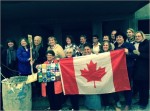
The Canadian contingent included representatives from Montreal, Ottawa, Toronto, Hamilton, Calgary, Edmonton and Vancouver. (photo by Israel Malovani)

Leaders of Na’amat Canada joined representatives of the organization from the United States, Brazil, Mexico, Belgium, Argentina, Uruguay and Israel for the first Na’amat International Solidarity Conference in Israel. The delegation, led by national president Sarah Beutel, were guests of Israeli President Reuven Rivlin during the conference’s opening session on Feb. 10.

Rivlin welcomed the representatives. “The state of Israel has always been committed to the value of equality,” he said. “In the Declaration of Independence, our leaders committed themselves to the complete social and political equality for all citizens of Israel, without distinction of religion, race or gender. And when we promise something, we then must be committed to working hard to deliver on our promises.

“You, the women of Na’amat, have always supported the state of Israel, and dedicated so much to the welfare of the citizens of Israel. You were always proud Zionists, even in times when people were afraid to show public support for Israel. Moreover, your support helped, and still helps us, to ensure that we live up to our promises and that we keep alive the symbiotic connection between Israel’s Jewish and democratic identities.”

Attendees at the conference also took part in groundbreaking ceremonies for a new day-care centre sponsored by Na’amat Canada.

Other highlights included visiting a centre for victims of domestic violence, an evening in the Ayanot Youth Village, a Na’amat’s boarding school and a day in Jerusalem.

Delegates discussed issues confronting Israel, women and families, and Na’amat’s role in meeting those challenges. The conference provided an opportunity to experience the fruits of the organization’s efforts to promote gender equality and to help women with child-care, legal and family issues, domestic violence and employment issues.

Format ImagePosted on March 13, 2015March 11, 2015Author Na’amat CanadaCategories NationalTags Israel, Na'amat, Reuven Rivlin, Sarah Beutel
Paris synagogue visit

Paris synagogue visit

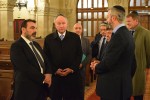
The Hon. Rob Nicholson at the Great Synagogue of Paris during a trip to France, accompanied by Joël Merghi and Rabbi Moshe Sebbag. (photo from the Office of the Minister of Foreign Affairs)

The Hon. Rob Nicholson, minister of foreign affairs, visited the Great Synagogue of Paris during a trip to France, accompanied by Joël Merghi, chair of the Central Consistory of France, and the synagogue’s Rabbi Moshe Sebbag.

As they toured the synagogue, they discussed the recent attacks against the Jewish communities in France and Denmark and the importance of continuing to denounce antisemitism. Nicholson also took the opportunity to reiterate the Government of Canada’s support for freedom of religion, including through the Office of Religious Freedom.

Nicholson traveled to Paris to meet with Laurent Fabius, France’s minister of foreign affairs and international development. The ministers discussed a range of international issues, including the crisis in Ukraine, the fight against the Islamic State of Iraq and the Levant, and global terrorism. In addition, they discussed the state of the world economy and opportunities for growth, trade and jobs following Canada’s recent trade agreement with Europe.

This trip was Nicholson’s first visit abroad as minister of foreign affairs and is part of concerted efforts by both Canada and France to further strengthen the deep and long-standing bond between the two countries.

Format ImagePosted on March 13, 2015March 11, 2015Author Office of the Minister of Foreign AffairsCategories NationalTags France, Moshe Sebbag, Rob Nicholson

Posts pagination

Previous page Page 1 … Page 5 Page 6 Page 7 Page 8 Next page
Proudly powered by WordPress