Skip to content
  • Home
  • Subscribe / donate
  • Events calendar
  • News
    • Local
    • National
    • Israel
    • World
    • עניין בחדשות
      A roundup of news in Canada and further afield, in Hebrew.
  • Opinion
    • From the JI
    • Op-Ed
  • Arts & Culture
    • Performing Arts
    • Music
    • Books
    • Visual Arts
    • TV & Film
  • Life
    • Celebrating the Holidays
    • Travel
    • The Daily Snooze
      Cartoons by Jacob Samuel
    • Mystery Photo
      Help the JI and JMABC fill in the gaps in our archives.
  • Community Links
    • Organizations, Etc.
    • Other News Sources & Blogs
    • Business Directory
  • FAQ
  • JI Chai Celebration
  • JI@88! video

Recent Posts

  • BGU fosters startup culture
  • Photography and glass
  • Is it the end of an era?
  • Taking life a step at a time
  • Nakba exhibit biased
  • Film festival starts next week
  • Musical with heart and soul
  • Rabbi marks 13 years
  • Keeper of VTT’s history
  • Gala fêtes Infeld’s 20th
  • Building JWest together
  • Challah Mom comes to Vancouver
  • What to do about media bias
  • Education offers hope
  • Remembrance – a moral act
  • What makes us human
  • המלחמות של נתניהו וטראמפ
  • Zionism wins big in Vegas
  • Different but connected
  • Survival not passive
  • Musical celebration of Israel
  • Shoppe celebrates 25 years
  • Human “book” event
  • Reclaiming Jewish stories
  • Bema presents Perseverance
  • CSS honours Bellas z”l
  • Sheba Promise here May 7
  • Reflections from Be’eri
  • New law a desecration
  • Resilient joy in tough times
  • Rescue dog brings joy
  • Art chosen for new museum
  • Reminder of hope, resilience
  • The national food of Israel?
  • Story of Israel’s north
  • Sheltering in train stations

Archives

Follow @JewishIndie
image - The CJN - Visit Us Banner - 300x600 - 101625

Tag: Zack Gallery

Constant artistic reinvention

Constant artistic reinvention

The Vancouver skyline, photographed and painted by Sharon Tenenbaum.

Sharon Tenenbaum is celebrating her 10-year anniversary – since becoming an artist photographer – with a solo exhibition at Zack Gallery. The exhibit includes photographs from a number of different series, an eclectic selection reflecting the progressive stages of her artistic journey.

“It’s the hardest challenge for any artist to constantly reinvent herself, both business-wise and creative-wise,” Tenenbaum said in an interview with the Independent. “Everything has a shelf life, so we have to come up with something new every few years.”

In the decade since she began, Tenenbaum has reinvented herself several times, although she never abandons her previous endeavors. Her first love was architectural photography, and it is still an important part of her artistic output.

photo - Sharon Tenenbaum
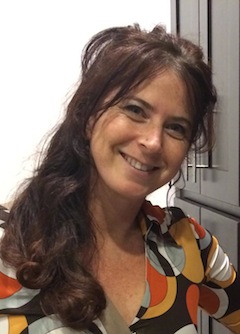
Sharon Tenenbaum (photo from Sharon Tenenbaum)

“Maybe because I was an engineer before I became an artist, I like architectural photography,” she said. “You can take your time with buildings and bridges, come to them again and again, see them from many angles and in different weather. With people, it is transitory: a moment, and it is gone.”

Tenenbaum’s architectural photography has won awards. The most recent one came last year, when her Musical Reflections Hoofddorp Bridge Series won first place in the 2015 International Photography Award, in the category of architecture, bridges. All three photographs in the series are on display at the Zack.

“These three bridges, with musical names Harp, Lute and Lyre, are located in the small town of Hoofddorp, Holland, on the outskirts of Amsterdam,” Tenenbaum explained. “They were designed by the Spanish engineer and architect Santiago Calatrava. I love his works and I photographed them before.”

Although her architectural photography started as black and white, a few years later, she began painting the photographs. Her painting phase started with trees.

“I started with one image of a tree, a photo from Portugal,” she said. “Then, there was a maple tree outside my window; it was gorgeous in the fall. I wanted to convey its beauty with my image, too.”

These works are the result of a two-step process. First, Tenenbaum prints her photos on canvas and then she paints the canvas with acrylics. People coming to Zack Gallery will see several of these painted photos in the show.

After her tree paintings proved successful, Tenenbaum moved to paint a different kind of photographic imagery – the Vancouver skyline.

“I was inspired to do this after I saw a painter in Jerusalem about two years ago, Adriana Naveh. Her abstract urban landscapes were amazing. I was blown away by her work,” said Tenenbaum. “But not every architectural image submits well to painting. Sometimes, I try to paint something but it doesn’t work out. It’s hard to explain what works and what doesn’t. I think if the image is too architecturally clean, it needs the black-and-white palette.”

The examples of Tenenbaum’s painted skylines in the Zack show combine the technical proficiency of the photographer with deep emotional undertones echoing through the color schemes. The skyline might be of the same place – Vancouver – but each image is different, reflecting different facets of the artist’s inner self.

photo - Lions Gate and Stanley Park by Sharon Tenenbaum, from her Bike Art series
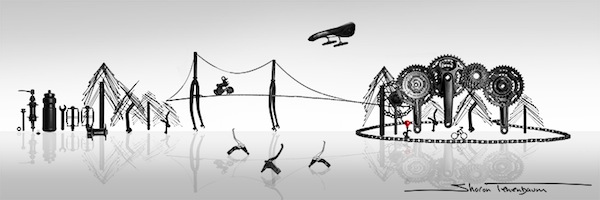
Lions Gate and Stanley Park by Sharon Tenenbaum, from her Bike Art series.

The Vancouver skyline fascinates Tenenbaum. Recently, she started a new project showcasing her favorite subject. She creates photo images of the skyline assembled exclusively from spare bicycle parts. She calls this new project Bike Art.

“I love biking and I always look for new and original ways to depict Vancouver. This project is a melding of my two passions,” she explained. “I use the recycled bicycle parts from the bike shops, the parts the shops would throw away. It’s a very time-consuming process, lots of work, and my place resembles a bike garage now, but it is very rewarding. I only have three images for now and I would like to get a grant to continue this project.”

Tenenbaum’s unique skylines made with bicycle parts are charming, quaint and amazingly authentic. One can see the ocean and Stanley Park, the skyscrapers of downtown and the masts of the marina, all created with recycled screws and bolts. “The viewers could interpret the images anyway they like,” she said.

But certain images are harder to fathom, like the image of an airplane flying above the clouds. The photo is just across from the entrance to the gallery, greeting guests with its mystery. “Many people ask me how I did it,” said Tenenbaum. “I always tell them: take my class and find out.”

Tenenbaum is eager to share her extensive expertise. She teaches students to use a number of photographic techniques to create fine art, to express their souls, and not just document what they see. With two different classes at Langara College plus some private tutorships, her teaching schedule is extremely busy, but she finds time for international workshops as well. “I have one in Chicago next year,” she said.

The show Sharon Tenenbaum – Architectural Fine Art Photography opened on Dec. 15 and continues to Jan. 15. For more information on Tenenbaum and her work, visit sharontenenbaum.com.

Olga Livshin is a Vancouver freelance writer. She can be reached at [email protected].

Format ImagePosted on December 23, 2016December 21, 2016Author Olga LivshinCategories Visual ArtsTags art, photography, Sharon Tenenbaum, Zack Gallery
Keeping things simple

Keeping things simple

“Overseas” by Ivor Levin. (photo by Ivor Levin)

Ivor Levin’s path to artistic photography was a long and gradual one. “Photography is my hobby,” he said in an interview with the Independent, but one couldn’t have guessed it from his solo exhibition at the Sidney and Gertrude Zack Gallery.

Levin’s images reveal an artist’s perception. Where anyone else might see a dirty warehouse, he sees a play of light and shadows, a mosaic of colors and shapes. Peeling paint on a wall or a rivet screwed into corrugated metal transform under the magic touch of his camera into fascinating pieces of art.

By his education and day job, Levin is a dentist. By inclination, he is an artist, walking around Vancouver in his spare time with his camera, capturing amazing and unexpected pictures.

“I like simplicity,” he explained. “I don’t like cluttered images. All my images have one focal point. I’m interested mostly in two genres. One is urban geometry and abstraction: I look for patterns there, for lines and colors. Another is street photography: when I find an interesting geometric setting, I wait there until a person appears, walks into my scene, and then I take a picture. I don’t do landscapes or faces. No mountains. And absolutely no flowers.”

Levin said there was always a camera in the house when he was growing up. He snapped pictures during family gatherings, trips and holidays, but, in the last eight years, his passion for photography deepened.

“I started looking around with more of an artistic eye,” he said. “I also discovered Flickr and opened an account there, saw what other photographers were doing on the site and taught myself to achieve the effects I like. Gradually, people started noticing and liking my pictures, too. Friends and family were the last to notice, and they began saying: ‘Your photos are so interesting; why don’t you have a show?’ It happened about two years ago.”

photo - Ivor Levin at the opening of his exhibit Simplicity
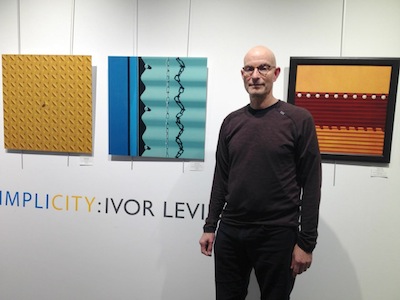
Ivor Levin at the opening of his exhibit Simplicity. (photo by Olga Livshin)

The idea of a show took root and, last year, Levin applied to the Zack Gallery. “I sent them a link to my Flickr account, and they liked it. They offered me a show. It’s the first time I actually printed my photos. Before that, I only had them digitally, on my computer and on Flickr.”

The show at the Zack – called Simplicity – reflects the artist’s vision not only of Vancouver, his hometown, but also of some other places he has visited. One of his favorite hunting grounds for images is Granville Island, and a few of the images exhibited came from there. Others he found during his international travels, like “Overseas,” which originated in Cape Town, South Africa. “There is the ocean there, and a swimming pool on the other side of the walkway, and the sky above. Everything is blue, but different shades of blue. When I saw a woman in a blue dress on that sidewalk, I knew I had to take the picture,” Levin explained.

Most of his images depict bright and cheerful colors.

“I can appreciate black and white, too,” he said, “but only when the image demands it.”

One such image is his black and white street scene “Piano Man.” He shot it under an overpass in Brooklyn, and its punchy graphics are only slightly enhanced by computer editing.

“I rarely use the images straight from the camera, but most of my modifications are minor,” he said. “I adjust exposure and saturation. Sometimes, I crop or tilt the images.”

Unlike many photographers, he doesn’t use Photoshop, but rather the online program PicMonkey. He taught himself to use it, like he taught himself the other aspects of photography. “I learn from the other photographers’ photos and from some internet sites,” he said.

As the years go by, Levin spends increasingly more of his free time on his hobby, although he confessed that taking pictures absorbs him much more than the editing process. “I prefer creating with the camera, not with the computer,” he said. “I’m always on the lookout for the ‘Wow!’ factor. In the beginning, I kept everything, thousands and thousands of images. Now, I’m much more selective. When I see an image, I know: it’s a keeper. Otherwise, I just delete them.”

Titles for his images are also important to him.

“I’ve always liked to play with words, make puns. For me, it’s half the fun to find the right title for the image. Each one needs a catch phrase to catch the people’s attention.”

Despite his love for photography, he doesn’t have plans to abandon his day job.

“I like my job,” he said. “Of course, if I could make the same living with photography as I do as a dentist, I’d probably choose photography.” He didn’t sound too sure.

Simplicity is at Zack Gallery until Nov. 20.

Olga Livshin is a Vancouver freelance writer. She can be reached at [email protected].

Format ImagePosted on November 11, 2016November 11, 2016Author Olga LivshinCategories Visual ArtsTags photography, Zack Gallery
Chagall lithograph exhibit at Zack

Chagall lithograph exhibit at Zack

Susanna Strem, owner of Chali-Rosso Art Gallery, in front of a Marc Chagall lithograph. (photo by Olga Livshin)

Marc Chagall needs no introduction. But perhaps not everyone is aware that there is a gallery in Vancouver that specializes in original graphic works by Chagall, as well as a few other 20th-century European masters.

“We opened the gallery in 2005,” Susanna Strem, owner of Chali-Rosso Art Gallery, told the Independent. “Since then, I always wanted to have a Chagall show at the JCC. I was familiar with the community and liked it. When I first immigrated to Canada and arrived in Vancouver, I often went there.”

Now, she finally will have her wish. On Sept. 15, she is bringing her selection of Chagall’s lithographs to the Sidney and Gertrude Zack Gallery at the Jewish Community Centre of Greater Vancouver.

Strem considers herself not just a gallery owner but also an art educator. She is passionate about art and she longs to share her passion and her knowledge. She often discusses multiple aspects of the arts with gallery guests and she loves answering their questions. A recurring question concerns the nature of lithographs.

“Not everyone realizes that lithographs are original works by the artists,” she explained. “First, the artist creates an image on a stone block and then he transfers it on paper. It’s a time-consuming process and, after the artist makes a set number of copies, the stone image is destroyed. It is called a ‘limited edition.’ A limited edition could consist of 50 or 100 copies, or however many the artist had decided upon, but each copy has a number and is signed by the author. They are all originals, and that’s what we sell in our gallery. That’s what we’ll be bringing to the Zack.”

Lithographs, or prints on paper, while originals, are not unique. Consequently, they are more affordable than other works by the same artist.

“Some people, when they think of art at all, they think oil on canvas,” Strem mused. “But most artists create in different media. Creative minds always try something new and interesting. Salvador Dali, one of the artists we represent, created many amazing sculptures. Pablo Picasso worked on pottery. Both Picasso and Chagall enjoyed printmaking. When we first decided to open the gallery, we knew we wanted to represent graphic works on paper because of their relative affordability, compared to the oils. Oil paintings by Chagall could go for enormous prices, but a lithograph by Chagall could cost only a couple thousand dollars.”

Strem started her professional life far from the artistic field. She was born in Hungary and studied art history and computers in Budapest. After graduating from university, she worked as a software developer and IT consultant for many years, first in Hungary, then in several European countries and, for a short spell, in Israel. None of those places suited her for long.

“Europe has too much history and culture; it’s too heavy a burden. That’s why Canada, and specifically Vancouver, work for me,” she said. “It is a new world here, it is lighter, more accepting.”

In 1994, Strem settled in Vancouver and resumed her work with computers. For the first decade she lived here, she worked as an IT specialist, until the moment came when she knew it was time to embark on a new career.

“When my husband and I opened the gallery, it was a big change. It would have been impossible in Europe. People there don’t switch careers: once an engineer, always an engineer. If I decided to open a gallery in Europe, after being an IT person for years, everyone would look at me and think something was wrong with me. But it was OK in Vancouver.”

Chali-Rosso first opened on Granville Gallery Row – a short strip of Granville Street between Broadway and the bridge – where many major Vancouver galleries still reside.

“Art collectors knew to come there if they wanted some art,” she explained. “It was the right place to open a new gallery.”

A couple years ago, after their collection quadrupled in size, they moved the gallery to a new and larger facility in downtown Vancouver, on Howe Street.

They chose the name Chali-Rosso for their gallery because of the artists that comprise the majority of their collection: four European masters of the first half of the 20th century.

“The gallery name is an acronym of their names: Marc Chagall, Salvador Dali, Joan Miro and Pablo Picasso,” said Strem. “We focus on these four, although we have some works by other artists, too, including a small but wonderful piece by Rembrandt.”

For Strem, opening a gallery on the West Coast is a challenge.

“I like Vancouver, like living here,” she said, “but it’s not easy for any art gallery to engage people’s attention. Western Canada is still too new, too young. Most people are attracted more by the outdoors than by art. To spend $300 on bicycle gear is fine, but $800 on a piece of art is too much. There is no centuries-old tradition here, no art on the street. In Europe, people are surrounded by art, but here, art is not an integral part of life. It’s up to us, gallery owners and artists, to change the situation here. We’re pioneers.”

Marc Chagall’s Bible Suites opens at the Zack on Sept. 15, 7 p.m., with a reception to which the public is invited. The exhibit runs until Oct. 26.

Olga Livshin is a Vancouver freelance writer. She can be reached at [email protected].

Format ImagePosted on September 9, 2016September 7, 2016Author Olga LivshinCategories Visual ArtsTags Chagall, Chali-Rosso, lithography, Strem, Zack Gallery
Community art for the Zack

Community art for the Zack

(photo from jccgv.com)

The upcoming show at the Sidney and Gertrude Zack Gallery, which features 45 community artists who have donated their work, is a fundraiser for the gallery.

“The idea for the show belongs to Shirley Barnett,” said gallery director Linda Lando in an interview with the Independent. “We wanted to showcase the works of the people who do art for the joy of it, not professional artists. Shirley also made a donation towards the show.”

Lando explained the process leading to the exhibit, which opens Aug. 31.

“I purchased 45 11-by-14-inch wood panels and sent a group email to the gallery email list. The artists got the panels for free and, if their art sells, they will get a tax receipt. The price for every piece is the same, $125, and the proceeds of all sales will go to the gallery. The theme of this art show is ‘Renewal.’ It’s a very broad theme that allows for many interpretations.”

Jewish Independent photo - Linda Lando, director of the Sidney and Gertrude Zack Gallery
Linda Lando, director of the Sidney and Gertrude Zack Gallery. (photo by Olga Livshin)

Lando doesn’t think that the universal size and shape of the panels limits artists’ creativity. “Just the opposite: it’s a challenge.”

The response to the email was overwhelming. Lando had to turn away people who wanted to participate. The demographics of the show’s contributors are broad.

“A lot of word of mouth helped spread the news about the show,” she said. “Among our participants are people who are involved with the gallery, some who exhibited with us before, while others haven’t. There are several poets from the Pandora Collective, members and non-members of the JCC and some mother-daughter duos. Most of them are not professional artists, but the works that have already started to arrive are amazing and very diverse. I hope we sell most of them.”

The Independent spoke with a few of the exhibit’s artists.

“I have always been interested in arts: painting, poetry, etc.,” said Carl Rothschild, a child psychiatrist with more than 40 years of experience, who is about to retire. “I published two books of my poetry and visual arts.”

Rothschild considers himself an amateur artist but he has already participated in several shows at the Jewish Community Centre of Greater Vancouver and sold a few paintings. When Lando asked him to participate in the fundraiser, he was thrilled. His piece is already at the gallery.

“I decided to participate in this show because I am always painting and because Linda asked me,” he said. “My small piece is called ‘The Backyard Garden in a Box.’ I am endlessly fascinated by the little landscapes around me. My small garden, with crocosmia flowers, attracts a hummingbird each summer. Sometimes, the bird comes with his mate and, on this occasion, as I stood motionless and watched, he came over and hovered for a few seconds about a foot from my head before passing me as safe.”

Another participant, Liz Koerner, retired a few years ago from working in a law office. “I am a professional artist in the sense that I get paid for some of my work, but I started down this path as a hobby,” she said. “Over the past 15 years, I have done dozens of commissions.”

Like the other contributors, Koerner learned about the show from Lando’s email. “I met Linda years ago, when I would take my mother into her gallery, and they always had lively discussions about the paintings and the artists. My mother has since passed on and, at her request, we gave Linda a number of art books from her collection.”

When Koerner decided to participate in Renewal, she chose the theme of spring. “Spring is a wonderful time of renewal and rebirth in nature,” she explained. “My painting is almost done. I needed to leave it while I complete a rush commission, then I will get back to it and finish it soon.”

Sandi Bojm’s piece is also a work in progress. She works part-time as a speech language pathologist and as a therapist, which allows her the time to explore her other interests, including art and writing. “I don’t consider myself an amateur artist; nor am I a professional,” she said. “Perhaps chronically ‘emerging.’”

Over the years, Bojm has taken art classes at Langara College and with private mentors. She met Lando through the Zack Gallery.

“I support the gallery and participated in last year’s community show/fundraiser,” she said. “Linda and I have shared ideas this past year for the next upcoming show, regarding community engagement and participation, and, at the same time, offering a fundraising opportunity for the gallery. It is exciting that it is now coming to fruition.”

Her own piece will be an amalgam of abstract and landscape. “I have just completed an intensive painting workshop on abstraction of the landscape and decided to expand on that,” said Bojm. “I have been intrigued in the past, in my walks through the woods, with the presence of logs and stumps that have nurtured new growth; nursing logs, I believe they are called. This is the image I am exploring in its relationship to renewal.”

A show as a gallery fundraiser is not a new concept. The Federation of Canadian Artists, for example, holds their fundraiser, Paintings by Numbers, annually, but their event is much more expensive for art lovers, and they feature well-known and established artists in their galas.

“Giving the local community artists the opportunity to shine, and making all the paintings affordable to everyone might be unique in Canada,” said Lando. “The idea was not only to engage the community artists but to bring in their families and friends to the gallery, to show them that it is their gallery, too.”

Renewal will run to Sept. 11. There is a free reception at the Zack, with the artists in attendance, on Sept. 8, starting at 7 p.m.

Olga Livshin is a Vancouver freelance writer. She can be reached at [email protected].

Format ImagePosted on August 19, 2016August 18, 2016Author Olga LivshinCategories Visual ArtsTags fundraising, Lando, Zack Gallery
Creating with images

Creating with images

Bob Prosser’s “Cuts” is part of the PhotoClub Vancouver group exhibit now on at the Zack Gallery.

Members of PhotoClub Vancouver don’t consider their photography a way to capture moments in life as they come across them, but rather as a complex, multifaceted art form. They experiment with their cameras, discover the limits of Photoshop, and modify their images in unpredictable ways. Their group show at the Zack Gallery demonstrates the results of their explorations.

The club was founded in 1998, “as an outgrowth of a photography course a couple years earlier,” said Bob Prosser, the club secretary responsible for organizing the show, in an interview with the Independent. “I wasn’t among the founding members, only joined in 2011, but I can tell that this club is unlike many others in Vancouver. It’s more informal, less competitive, with a constructive, supportive atmosphere. We encourage experiments, and our members subscribe to all sorts of styles.”

Prosser said that, at the moment, the club counts 28 paid members. “There are men and women among the club members; most of them middle-aged or retired. I guess, younger people may be look for a different environment, more social media-oriented.”

image in Jewish Independent - Selfie” by Wayne Reeves
“Selfie” by Wayne Reeves.

The club offers a variety of services and activities to its members. “We critique each other’s works, organize guest speakers and presentations on some inspiring masters of photography, offer technical workshops and field trips to some interesting places, like an Italian festival on Commercial Drive or a Pride parade,” said Prosser. “We organize shows every year, usually at a different venue, and publish books, the best of [each] year. We also have a challenge once a month, and everyone is invited to participate.”

Most of the club members are amateurs. “It’s almost impossible now to make a living as an artistic photographer,” Prosser said. “Everyone has a camera in his cellphone. A professional photographer should be so much more. He should be versatile, able to make video, websites, engage in social media, marketing. Some of our members do very well selling their photos to stock photo companies. Others do it simply for fun.”

Prosser resides firmly in the second category. He shoots lots of photos and participates in club shows, but sales are not his priority. “Of course, I photograph when I travel – just came back from a trip to Japan – and I make portraits of my family but, in general, I’m not interested in capturing people with my camera. I don’t like it when people pose. I prefer doing studio shoots: objects, scenes, and then playing with Photoshop, seeing what I can do.”

The club encourages such an approach, and Prosser relishes its easy atmosphere and its emphasis on experimentation. “I’m not interested in copying nature,” he said. “I try to convey a mood, a message. I want to move my photography towards abstraction, and I use Photoshop to push my photos in that direction, enhance them. I’m fond of impressionist paintings and I’m trying to achieve similar solutions. With software, you can combine several images in different combinations, change colors and shapes. Not all of it is even possible in painting – photography is a unique art form.”

His image “Cuts” in the exhibit represents the Cubist movement. The visual style and the method of execution overlap in the picture, creating a sharp, edgy feel, a scattering of cutouts on a red background. It could be an echo of our hectic lives or a reflection in a broken mirror.

Another fascinating Cubist image is the experimental self-portrait by Wayne Reeves, one of the founding members of the club. The older man in the image comes across as a jumble of conflicting angles, just like so many of us.

In contrast, a lyrical, lovely picture of mother and child inspires contemplation and promotes harmony. It belongs to Richard Markus, the current president of the club.

image in Jewish Independent - Terry Beaupre’s “Floating on Fog”
Terry Beaupre’s “Floating on Fog.”

On the opposite end of the range of expressions are various landscapes and cityscapes. Some are earthy nature snapshots, bursting with colors. Others stress glass-filled urban architectural motifs. Still others are romantic and airy, like Terry Beaupre’s “Floating on Fog,” a dreamscape rising out of the mist.

The selection at the gallery encompasses a number of genres: portrait and still life, street scenes and travel mementos. While some photographs lean towards the traditional, others push the boundaries of the medium. Beside the colorful landscapes or abstract compositions, there are also a few images in the black and white palette. “In certain cases,” Prosser said, “color could get in the way of feelings. It could be a distraction, lessening the impact of the message.”

The group show opened on July 7 and runs until Aug. 6. For more information about the photo club, visit photoclubvancouver.com.

Olga Livshin is a Vancouver freelance writer. She can be reached at [email protected].

Format ImagePosted on July 15, 2016July 13, 2016Author Olga LivshinCategories Visual ArtsTags Cubism, PhotoClub, photography, Prosser, Zack Gallery
Exploration of identity

Exploration of identity

Ira Hoffecker’s Berlin Identities is at Zack Gallery until July 3. (photo from Ira Hoffecker)

Rarely does the Sidney and Gertrude Zack Gallery at the Jewish Community Centre of Greater Vancouver present exclusively a non-Jewish artist. This month, however, the gallery features Ira Hoffecker’s solo exhibit Berlin Identities.

Born and raised in Germany, the horrible history of Nazism and the Holocaust are part of Hoffecker’s identity, the identity she explores in this exhibition and in the entirety of her art. She looks at the Holocaust from the perspective of a German born after the Second World War.

“Germany is rich in history. There are so many layers,” she said in an interview with the Independent. “But the history of WWII and Nazism is different. The previous generations – my parents and grandparents – didn’t want to talk about it. My mother was a child during the war, and all she and her parents wanted after the war was to forget. But we can’t forget. We can’t deny our responsibility. For years after the war, there was a leaden blanket over the Holocaust, over what Germany did. But you can only move on if you accept the past, even such a horrible past as the Holocaust. It’s easy to say: it wasn’t me, I wasn’t born yet, but it’s our heritage. We have to accept our guilt, to acknowledge it, before we can start to heal as a society.”

That’s what her art is about: trying to understand and accept the painful enormity of the Holocaust and the guilt Germany carries, trying to discover her own definition of self underneath those national memories.

Another theme in her art, intertwined with the first, has to do with urban identities. “My paintings are informed by the different identities cities assume over time,” she explained. “History transforms cities, changes the urban space.”

All of the paintings in Hoffecker’s current show reflect her search for personal and urban identities. They are interpretations of maps: colorful, stylized and multilayered.

The layers represent the passing of time, as demonstrated by several paintings of Scheunenviertel, the former Jewish quarter in Berlin. “Before the Nazis came to power, over 150,000 Jews lived there. By the end of the war, none remained,” said Hoffecker.

Accordingly, the main layer denotes what the district looked like right after the war, while the overlaying layer, mounted on Plexiglas, corresponds with the map as it is currently. “The layers are a metaphor – of forgetting, of suppressing the past,” she explained. “Of the inevitable change.”

Two of the paintings look even scarier. One is covered by steel mesh, like a concentration camp fence. Another is concealed under torn tissue paper, where only fragments of the original map are visible, the rest is hidden – perhaps by those who don’t wish to remember. However, “we must remember,” the artist insists, and she tries to stir the memories by her imagery.

As is true for geographical maps, color and geometry play huge roles in Hoffecker’s creations.

“I’m fascinated by colors and I love maps,” she said. “As a child, my favorite book was an atlas. I like studying maps. I have a huge collection at home. My husband calls me a human GPS. I never have trouble navigating in any city, but only cities. I’m an urban person; I don’t do well in the wild.”

With her love for maps, it’s not surprising that she likes traveling. “Every city I ever visited has its own identity, its own atmosphere. I have been in many: all over Europe, India, Egypt, Peru. I’ve moved 26 times, but I hope I’ve stopped at last. I live in Victoria now and I don’t intend to move again.”

Her road from Germany to Vancouver Island was somewhat out of the ordinary.

“I always liked art, but when I lived in Germany, I worked in marketing and publicity for the movie industry,” she said. “Then, my husband and I had our own movie marketing company in Hamburg. Fifteen years ago, we came to Vancouver Island for a vacation. My children were young. We rented a mobile home and traveled together. We loved British Columbia, but the movie producers kept calling us, even though we were on vacation. They could call in the middle of the night, and I thought, What am I doing in this rat race? We needed a change.”

In 2004, they acted on the need for change and moved to Canada, settling in Victoria. “My children went to school there, and I went to school, too,” she said. “I decided to follow my old dream and change careers. I wanted to become an artist. Since we moved to Canada, I’ve been a student of the arts, but the career change is not easy or fast. It’s like a circus salto mortale, almost a free fall. It’s scary.”

But she hasn’t let the fear stop her. She has become an internationally known artist. In the last few years, she has participated in a number of solo and group exhibitions in Canada, England and Germany. She is studying for her master’s degree, and her paintings have started gaining recognition in artistic circles and among private collectors.

“I’ve sold over 170 paintings,” she said. “Recently, I was nominated, together with 53 other artists, for the British John Moore Painting Prize 2016. Our paintings will be shown within the Liverpool Biennal. They were selected from over 4,000 submissions.”

Another big change is coming soon for Hoffecker.

“We are not Canadian citizens yet,” she said. “Until a couple years ago, Germany didn’t accept dual citizenship, and I couldn’t give up my German citizenship either; I’m German. Now that it is possible to have dual citizenship, my family will receive our Canadian citizenship. It will happen on July 1st, on Canada Day.”

Berlin Identities will be on display at the Zack until July 3.

Olga Livshin is a Vancouver freelance writer. She can be reached at [email protected].


Format ImagePosted on June 17, 2016June 16, 2016Author Olga LivshinCategories Visual ArtsTags Germany, Hoffecker, Holocaust, identity, Zack Gallery
A tapestry at the Zack

A tapestry at the Zack

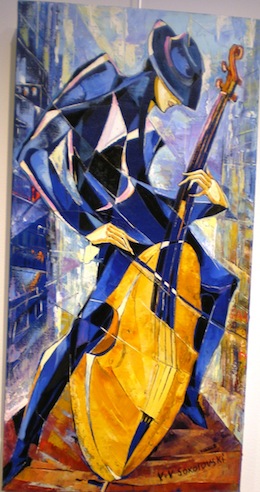
Valeri Sokolovski’s work forms part of A Tapestry of Cultures, the group art exhibit now on display at the Zack Gallery. (photo by Olga Livshin)

A Tapestry of Cultures opened last week at the Zack Gallery. Run in conjunction with Festival Ha’Rikud, which took place May 12-15, the group show also commemorates the birthday of Israel. As such, I expected it to reflect the blend of cultures that together make the multicultural tapestry of Israeli society, but the exhibit was much more global in scope.

With the exception of a few identifiably Israel-focused pieces – mostly photos by Avie Estrin – the rest of the artwork on display could have been created in any country, by an artist from any part of the world.

The Tel Aviv apartment building in Nancy Stern’s photograph wouldn’t be out of place in Vancouver or Prague. The sandals in a large painting by Rina Lederer-Vizer could have been lying on a beach in Spain or hiding under a park bench in San Francisco. The flapper dress from a small piece by Vladimira Fillion Wackenreuther could have been on sale in any fashion store from Moscow to Tokyo.

The exhibition as a whole announces that we all belong to one nation, cosmopolitan in the best sense, regardless of our country of citizenship or our mailing address. We live on the same planet and share similar values.

photo - Valeri Sokolovski’s work forms part of A Tapestry of Cultures, the group art exhibit now on display at the Zack GalleryThe theme of music and musicians appears in paintings by several artists in the show. Eternal and borderless, music wanders where it will, crossing barriers, especially now with the internet. Valeri Sokolovski’s images illustrate the concept perfectly. One could encounter his musicians almost anywhere. Their ethnicity is vague, but their passion soars in his paintings. Sokolovski’s musicians play with such intensity, the viewer can almost hear the notes, the syncopated beats and the soulful melodies.
In between his blue players, Karen Hollowell’s trumpeter introduces a much mellower tune, sunny yellow and flowing. The painting has a romantic quality. Her musician is not here on a street corner, but is somewhere else, behind the veil of imagination.

Not so with Iza Radinsky’s dancers. They strive to twirl off the wall and into the room, their skirts flashing, their feet performing to a jolly rhythm. The artist’s brushstrokes are blurry, but the dancers’ joy is crystal clear, and it transmits outside the frame, sprinkling everyone who passes the gallery.

In contrast to Radinsky’s dancers, Lauren Morris’ image is abstract and colorful, echoing the charm of dreams. Colors splash on the canvas in fanciful profusion and the viewer wonders, Is it a choir singing hymns? Is it a flock of birds on a wire, lost in their lofty trills? Or maybe it’s a flowerbed of exotic orchids, each one a song?

Meanwhile, a crowd of musicians populates David Akselrod’s “Gathering.” The painting is almost a metaphor of the show itself, gleeful and whimsical. The musicians are as cheerful and diverse as the artists who gathered for the exhibit’s opening. They play different instruments and have different skin colors, but they congregate in the same place, they mingle and laugh, and they share the delight of their art with each other and with the viewers.

The motif of unity – of all of us sharing, depending on each other – underlies Orly Ashkenazy’s “The Butterfly Effect.”

“It’s about the 12 tribes of Israel,” said the artist. She even inserted the names of the tribes in Hebrew into the painting. They intertwine with each other like a faint pattern of gold arabesques on a butterfly’s wing, a design mirroring real life, underscoring our own interconnections and effects on each other and the world around us.

It is impossible to mention all of the artists participating in the show in one short article, but all their creations complement and enhance one another.

“In my opinion, the calibre of work in this show is particularly high,” said Linda Lando, the gallery director.

A Tapestry of Cultures is on until May 29.

Olga Livshin is a Vancouver freelance writer. She can be reached at [email protected].

Format ImagePosted on May 20, 2016May 18, 2016Author Olga LivshinCategories Visual ArtsTags Festival Ha’Rikud, Israel, Zack Gallery
Interpreting Torah with art

Interpreting Torah with art

Artists Nancy Current, left, and Robin Atlas at Zack Gallery. (photo by Linda Lando)

Visual Midrash: Plagues and Visions, which opened at Zack Gallery on April 7, features the work of Seattleites Robin Atlas and Nancy Current, the only West Coast artists creating in the genre of visual midrash. The show is the culmination of a four-year collaboration that started in 2012.

“We met through the Jewish Art Salon in New York,” said Current. “Even though we both live in Seattle, we didn’t know each other at that point.”

Atlas elaborated: “The president of the Jewish Art Salon sent us both an introductory email. She said we probably knew each other already, but we didn’t – and we lived only 10 minutes apart.”

“Robin was about to open a new show in L.A. and she brought her works to my studio,” said Current. “I was amazed. There was so much beauty and thought behind it all. That’s what visual midrash is all about. It requires two elements: the clarity of story and the visual beauty of the artist’s interpretation. I looked at Robin’s art and I said to myself, I’m going to work with her forever.”

They started working together, but their chosen genre – interpreting Torah through visual art – is not widely known. “We didn’t have a ready audience in the West,” Current explained, “not like in New York. We needed to build it, so we started teaching adult classes two years ago. The classes include the texts from the Torah, introduced by a Torah instructor, and a visual component, taught by an art instructor.”

“We would do slide shows, video presentations, and the students would have a chance to create their own art,” Atlas said. “Linda Lando, the Zack Gallery director, facilitated the first class we did in Vancouver earlier this year.”

For the current show, the artists explored the theme of the 10 plagues. “We were drawn to the story,” said Current.

Although each artist works with different media – Atlas with textiles and Current with glass and paper – their creative vision is similar. Their symbolic abstracts mesh extremely well, as if the images belong together, buzzing with the same esthetic sense and the same muted elegance, complementing each other to tell the same tale.

While the Vancouver Jewish community was introduced to Atlas when she exhibited at the Zack in mid-2014, Current is a new name for most local art appreciators.

“I always drew and painted as a child but I can’t say that I had the conscious idea to be an artist,” Current recalled. “I grew up in Seattle, in an old house with stained-glass windows. That undoubtedly affected my later fascination with glass. I learned to blow glass when I was about 24, but gave that up in favor of painting on stained-glass.”

She explained, “Glass is different from other mediums because light passes through it (transmitted light) instead of bouncing off [of it], like with paper or canvas (reflected light). Transmitted light, especially through colored glass, connects to a person’s emotional centre more directly than reflected light. It also has a spiritual aspect. Think of all those stained-glass windows in churches and synagogues. That is important to my Jewish work.”

Although she has worked in other visual genres, Jewish themes absorb her artistic passion now.

“Jewish art has gradually replaced my other work, life drawing and landscape, because it is much more meaningful,” she said. “Visual midrash is the most meaningful Jewish art of all. It requires a lot of study and thought, and those are things I highly value about living a Jewish life.”

Current pointed to two particular influences on her development as an artist.

“The first was studying at Pilchuck Glass School,” she said. “The school attracted many artists early in the history of the American studio glass movement. I studied there with the amazing British glass painter Patrick Reyntiens. He is 90 years old now and still a good friend.

“The second was finding the Jewish Art Salon (JAS) in New York. Becoming a fellow in the JAS has led me to friendships with several Jewish artists who have been doing visual midrash for years. They have helped a lot.”

Current doesn’t concentrate on making a living with her art. Her main concern is to share it with as many people as possible. “Of course, eventually I want to sell my work,” she said, “but not until I’ve had a chance to show it in several exhibitions. The purpose of doing my work is to cause people to think about their Jewish heritage.”

Current and Atlas’ show runs until May 8.

Olga Livshin is a Vancouver freelance writer. She can be reached at [email protected].

Format ImagePosted on April 15, 2016April 13, 2016Author Olga LivshinCategories Visual ArtsTags Nancy Current, Robin Atlas, visual midrash, Zack Gallery
Exploring winter landscapes

Exploring winter landscapes

Ian Penn’s exhibit Winter Paintings: The Figure in and on the Landscape opened March 10 at Zack Gallery. (photo by Olga Livshin)

The theme of Ian Penn’s solo show at Zack Gallery is winter. The artist’s love for winter, for the mountains of British Columbia and for skiing reverberates through the gallery.

“I’m affected by the seasons, by my surroundings,” said Penn in an interview with the Independent. “I only paint current seasons. In summer, I paint summer; in the fall, I paint its rioting colors. In winter, I paint snow and skiing.”

Penn spends lots of his free time in the mountains. “Our whole family likes to ski,” he said. “When we first moved to B.C., we bought our first place in the mountains before we settled in Vancouver.”

Penn has been skiing since his youth in Australia, but it was cross-country skiing until he immigrated to Canada and saw the mountains. At the age of 35, he started alpine skiing – and loved it.

Around 2000, he went a step further. He joined the ski patrol in Whistler, volunteering part-time his professional skills as a doctor. He still does that. “I like the ski patrol community. They are nice people,” he said.

About the same time, he also became seriously interested in painting, which eventually led to a degree from Emily Carr.

Penn has a general fascination with landscapes, especially mountain scenes, as an art form. He has painted dozens of landscapes, in every season, and some of his favorite areas to paint are around Whistler and the Callaghan Valley.

“I was always interested in mapping a territory, but a map and a territory are not the same,” he explained. “The painting of a landscape is not the same as if you stand in that place, experience it with all your senses. Or with devices – photo cameras and cellphones. I wanted to capture that difference in my paintings. That’s why I started a series of diptychs. My diptychs are like a single painting in two parts.”

There are several diptychs on display in the gallery. One is a landscape, a vista with the majestic mountains and forest, with tiny human figures. The second affords a closer look. The human figure is larger, the artist’s focus has narrowed, and the people in these paintings are doing something, engaging with the mountains. They whip down the slopes on their skis. They stop to take photos. They enjoy the invigorating exercise and the beauty around them. They laugh and horse around.

Penn captures their movement in his paintings. His objects are not static. They don’t pose. They are just going about their business, and the artist is going about his.

“Initially, I wanted to paint on location,” he said. “I want to paint everywhere I go, but I couldn’t do that in winter. It’s too cold both for my hands and for the paints. Or it might snow. What I do when I’m in the mountains skiing, I take photos and make quick drawings.”

The drawings provide him with the first impression, the emotional subtext. The photographs he uses for details.

“All the details in my landscapes are accurate. The precision is important to me. I want to be able to navigate by them. I want the ski patrol to be able to use my paintings when they have to rescue someone,” he said, only half-joking.

Many of his paintings have personal stories attached, some of which are more obvious than others. In one painting, there was to have been a person but there isn’t; the close-up view is surprisingly empty of life. “He got erased. I erased him,” Penn said. “He was a vain fellow. He was dancing around, making selfies of himself with his cellphone, turning so he would get every possible angle. He didn’t notice anyone else, almost stepped on my ski. At first, I wanted to show it, as a portrait of self-absorption, but I disliked the fellow so much, I finally erased his figure from my painting. But, mostly, I want my paintings to tell your stories, not mine.”

The dominating color in all of the paintings is white, of course, overset by green forest and dark mountains. Only people provide splashes of color: a red jacket or a yellow parka.

“I use five different whites for the snow,” Penn said. “And then there are color patches reflecting the surroundings. Snow is never simply white. It’s complex and a challenge. It’s always different. And so is the sky: blue but different in each painting. But I never used black in any of these paintings. When I needed the dark, I mixed colors.”

Penn paints landscapes because they are endless. “Wherever I go, there is a new and amazing landscape waiting for me. Painting them, making drawings, photographing slows me down, allows me the time to look, to see the beauty around me.”

Winter Paintings: The Figure in and on the Landscape will be at the Zack until April 3. For more information about Penn and his work, visit ianpenn.com. An interview with Penn about his exhibit last year, called Pole, can be found at jewishindependent.ca/memorials-to-millions.

Olga Livshin is a Vancouver freelance writer. She can be reached at [email protected].

Format ImagePosted on March 18, 2016March 16, 2016Author Olga LivshinCategories Visual ArtsTags Ian Penn, landscape, winter, Zack Gallery
Leaving some things hidden

Leaving some things hidden

Olga Campbell and Larry Green’s shared exhibit at the Zack, Hidden, is on until March 6. (photo by Olga Livshin)

In the new exhibit at Zack Gallery, Hidden, the pieces are united not only by theme but also by media. Both artists featured, Olga Campbell and Larry Green, mostly use photography, which they then play with in Photoshop. The computer-generated effects contribute to the graceful and faintly mystical feel of the images. Hazy silhouettes hide behind the splashes of paint. Eyes peek through the veil of the unknown. Mysterious places and partial faces open the gates of subconscious and let us witness the artists’ creative cores, their emotions.

The images are distinct, echoing each artist’s personality, but the common approach makes their double show almost seem inevitable. And the meshing of their artistic visions spills into life beyond the gallery. Both chose careers in the helping professions, for example. Campbell was a social worker until she retired. Green is a psychotherapist and a professor of psychology. But they didn’t really know each other before the idea of a mutual exhibit took root.

Campbell explained how it happened: “Last year, I participated in Culture Crawl. Linda Lando, the Zack Gallery director, came to see my pieces. She asked me if I wanted to have a show at the Zack Gallery.”

Green added: “I was with Linda that day – we are partners. I remembered Olga’s art from other shows…. I like what she does. Someone suggested we have a show together. That’s how this collaboration started, but, even before that, we were vaguely aware of each other. We saw and admired each other’s art at group shows. We knew many of the same people: friends, neighbors, co-workers.”

After the dates of the exhibit were set, the artists met to decide on the theme. “Larry came up with the Hidden, and I thought it was wonderful,” said Campbell. “There is so much in the world that is hidden. People hide things from others and from themselves, adopting layers of masks and veils. When we put obstacles in the way of seeing the world, we hide not only the shadows, but also the light. When we acknowledge the shadows, then we are able to see the light. Most of the really profound and rewarding things in life are hidden beneath the layers of mystery.”

In Campbell’s pieces, the layers are frequently photographs superimposed upon each other in Photoshop, plus special effects and the occasional addition of multimedia. She admitted that she doesn’t do much pure painting although she studied it.

“I always liked doing art,” she said. “In 1986, I took several art classes and then I thought, what to do with it? So I enrolled in Emily Carr. Afterwards, I worked as a social worker part-time and on my art part-time, until I retired. Art is not a hobby for me. I have to do it.”

Green’s path was a bit different. “I did a lot of art until I was about 25. Then I dropped it for 20 years before starting again, first with pottery and then with other stuff. When I worked with clay, sometimes my hands knew better than my brain what I wanted to say. I made a sculpture and now, years later, I look at it and think: Oh, that’s what I meant. Of course! My brain has caught up with my hands.”

The intuitive application of their skills underlines both artists’ creative courage. They are not afraid to experiment.

“I play around with Photoshop,” said Campbell. “I don’t know it very well. I try different things and I often get something I like by accident. Later, I can’t always reproduce the effect, so I never repeat myself.”

Green concurred. “I like Photoshop,” he said. “I learn it as I go. My ideas pull me through the learning process…. Using Photoshop, I can realize my vision much faster than with paint and canvas, but it is all trial and error. I keep worrying at the piece until something comes along. Or not. If it comes, I go for it. If it doesn’t, I don’t. Some pieces take years to come together. For example, years ago, I saw a single pink running shoe in a park and snapped a photo of it but I didn’t do anything about it. Then, recently, in a different place, I saw a single pink glove, and photographed it. I brought them together in Photoshop, and now they are not lonely.”

Many of Green’s pieces at the Zack are foggy landscapes. “I’ve always been fascinated by fog,” he said. “A foggy landscape has a particular dreamlike quality to it. Shapes are indistinct and, therefore, invite the viewer in, in an attempt to give the scene some definition. Alternately, the viewer can rest in the soft tranquility of the scene rather than be overwhelmed by details…. People who come to me for therapy are often afraid of the fog, especially inside themselves, but they’re also interested in it, in what it might reveal. Everything I do, in both art and psychology, is basically the same: trying to reveal the underlying reality, the hidden connections behind the apparent.”

“The same for me,” Campbell agreed. “Although not everything should be revealed. Some parts of the whole are better hidden, while the essence should be revealed.”

Olga Livshin is a Vancouver freelance writer. She can be reached at [email protected].

Format ImagePosted on February 19, 2016February 18, 2016Author Olga LivshinCategories Visual ArtsTags Larry Green, Olga Campbell, Zack Gallery

Posts pagination

Previous page Page 1 … Page 8 Page 9 Page 10 Page 11 Next page
Proudly powered by WordPress