
Skip to content
  • Home
  • Subscribe / donate
  • Events calendar
  • Business Directory
  • FAQ
  • News
    • Local
    • National
    • Israel
    • World
    • עניין בחדשות
      A roundup of news in Canada and further afield, in Hebrew.
  • Opinion
    • From the JI
    • Op-Ed
  • Arts & Culture
    • Performing Arts
    • Music
    • Books
    • Visual Arts
    • TV & Film
  • Life
    • Celebrating the Holidays
    • Travel
    • The Daily Snooze
      Cartoons by Jacob Samuel
    • Mystery Photo
      Help the JI and JMABC fill in the gaps in our archives.
  • Community Links
    • Organizations, Etc.
    • Other News Sources & Blogs
  • JI Chai Celebration
  • JI@88! video

Recent Posts

  • Legal help for students
  • Revisiting myth of Lilith
  • Wrong person rebuked
  • Canada’s mixed messages
  • Questions for museum
  • Symposium on antizionism
  • Making soccer political
  • CJPAC lauds Pulver’s impact
  • City recognizes Vrba’s legacy  
  • Organ donation saves lives
  • Theodore’s March premiere
  • A healing Shabbaton
  • Supplying healthy food
  • A chime of metal tags
  • Yellowknife seder a first
  • Ishai energizes, unifies
  • A Lag b’Omer to remember
  • Expanding the healing
  • Hannah Senesh – a unique hero
  • Community milestones … May 2026
  • Sharing her testimony
  • Fall fight takes leap forward
  • The balancing of rights
  • Multiple Tony n’ Tina roles
  • Stories of trauma, resilience
  • Celebrate our culture
  • A responsibility to help
  • What wellness means at JCC
  • Together in mourning
  • Downhill after Trump?
  • Birth control even easier now
  • Eco-Sisters mentorship
  • Unexpected discoveries
  • Study’s results hopeful
  • Bad behaviour affects us all
  • Thankful for the police

Archives

Follow @JewishIndie
image - The CJN - Visit Us Banner - 300x600 - 101625

Tag: tradition

Courage, particularity

Courage, particularity

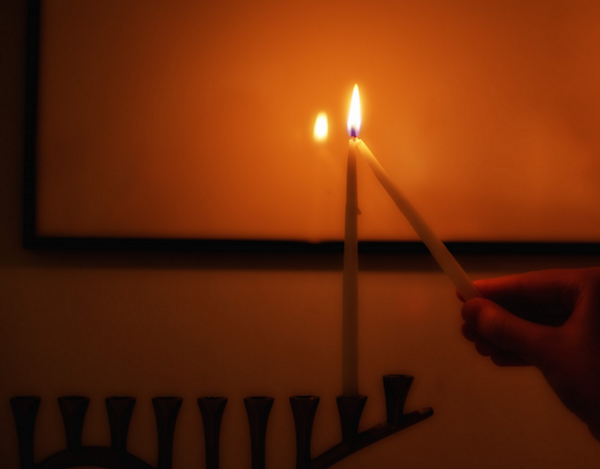
The chanukiyah is an expression of Jews’ commitment to place the particular into the mainstream of history. (photo from pxhere.com)

Jewishness is not merely determined by a biological accident. It involves commitment and dedication to the spiritual worldview contained within the vast literature produced through Jewish history. Without Torah – however understood – Jewish identity lacks a vital and ultimate purpose. Torah saves Jewish identity from being reduced to pure secular nationalism or racist folk sentimentality.

During the Chanukah period, one is challenged to reflect on the two main motifs of this festival: the Maccabean struggle and the rekindling of the menorah. A Jew can draw inspiration from his people’s courage to revolt against religious tyranny and from his being a member of a community that nurtures its national identity on the basis of a spiritual vision of life.

The Maccabean revolt is a compelling symbol not because of chauvinist nationalist tendencies but because of the values and way of life that this revolt aimed to preserve. The Maccabean revolt expressed intense loyalty and passionate dedication to monotheism and mitzvot. The courage, commitment and heroism of the Maccabees should not, however, be divorced from that for which they fought.

One of the distortions of modern existentialism is the exaltation of the virtues of sincerity, devotion, authenticity, etc., irrespective of their specific content. The sincerity of the Nazis in no way mitigates their barbarity and depravity. Subjective attitudes are important aspects of human behaviour only if their content is worthwhile and significant.

It is ludicrous to celebrate Maccabean courage and devotion without seriously considering the underlying values that motivated them to persevere in their struggle. In order to appreciate the full importance of the Maccabean victories over the enemies of the Judaic tradition, we must understand the basic values of that tradition.

The lights of the Chanukah menorah symbolize the strength to remain different and the right to sustain particular values and loyalties in a world in which one is different and often isolated. Placing the Chanukah menorah near the window for all to see represents the great message that Jews convey to the world: we choose not to hide the flame of our spiritual tradition within the secluded confines of our people, our family, but rather we wish to have our flame radiate light in the marketplaces of history. The Chanukah menorah is a concrete expression of Jews’ commitment to place the particular into the mainstream of history, to enter the marketplace with dignity and integrity.

To love Judaism, one must Jove Jewish particularity. This love is expressed by a passionate involvement with Jewish history and with efforts to enhance the well-being of the particular people who are the living carriers of the Judaic tradition.

Chanukah focuses attention on the problematic issues involved in the survival of a community within a world whose values and cultural rhythms seem so dissimilar and foreign to its own. How can one sustain the vitality of the intimate family in an impersonal world of mass culture? How can one keep alive a vital interest in that which is unique to one’s particular culture and experience if one allows modern technology to bring a diverse array of values and cultures into one’s private home?

Some Jews believe that cultural particularity is incompatible with modern mass culture and that the bonds holding together the family of Judaism cannot bear the stress caused by exposure to the cultural rhythms of the broader culture. According to this school of thought, Chanukah celebrates the Maccabees’ courageous repudiation of the world culture of their time, Hellenism. “Hellenistic” and “Hellenization” have become derisive terms that connote the assimilating Jew, the cultural opportunist without deep roots in his community’s value system.

Those who accept this assessment of Judaism in the modern world turn to social and cultural separation in order to secure Judaism’s survival. Withdrawal into well-defined ghettos, the total rejection of secular learning even remotely related to cultural values, banning television sets in one’s home or any form of alien culture – all these build up the walls insulating this vulnerable community from the threatening world outside. Radical separation is the way these people express their will to survive.

Others are skeptical as to whether this approach can succeed. Modern communication technology makes it impossible to escape acculturation to modern Hellenism. It is, in their opinion, futile to resist. We should accept our fate and accommodate ourselves to the inevitability of our assimilation.

A third option rejects the defeatism of the latter point of view and also the separatism of the former. This approach questions the belief that Judaism has always survived because of its radical separation from the surrounding culture. Chanukah does not commemorate a total rejection of Hellenism but, as Elias Bickerman shows in From Ezra to the Last of the Maccabees, the revolt focused specifically on those aspects of foreign rule that expressly aimed at weakening loyalty to the God of Israel.

The Maccabees rejected the paganization of Judaism. They were selective in their attitude to Hellenism: they rejected what was considered to be inimical to the continuity of Judaism and incorporated within their way of life what was compatible with Jewish values and practices.

To determine the criteria of such a cultural selection is undoubtedly difficult. Can one ever determine the point beyond which outside cultural influences destroy an individual’s character and identity?

Maimonides’ thought was clearly enriched by his exposure to the writings of Aristotle, Ibn Vaja and Al Farabi. Soloveitchik was enriched by Kierkegaard, Kant and Hermann Cohen. These two great teachers who strengthened Jewish particularity by their halachic teachings are examples of cultural openness and of the intellectual and spiritual enrichment that results from exposure to non-Jewish intellectual and spiritual frameworks.

The major question that we must ponder on Chanukah is whether the Jewish people can develop a profound personal identity that will enable it to meet the outside world without feeling threatened or intimated. The choice need not be ghettoization or assimilation. Can we absorb from others without being smothered? Can we appreciate and assimilate that which derives from “foreign” sources, while at the same time feel firmly anchored to our particular frame of reference?

Chanukah is a time to reflect on such questions. How we answer them will influence our priorities, the types of families and institutions we build, and the character of the leaders we train.

The destinies of both Israel and the Diaspora depend on how solidly we build Judaic values into the core of our identities, so that Jews will be able to interact with the world from a position of dignity and rootedness. The modern return to Jewish nationhood is incomplete and destined to end in assimilation, if we do not witness a modern return to the values for which the Maccabees fought.

Jewish chauvinism and mistrust of the world is lessened when we experience the joy of mitzvah. Intense Judaic learning in the spirit of Maimonides and Soloveitchik is the key to integrating Jewish particularism with modernity. Israel’s great gift to the Jewish world is that it enables us to realize that ghettoization or assimilation are not the only choices possible in the modern world.

Rabbi Prof. David Hartman (1931-2013) was founder of the Shalom Hartman Institute. This essay on Chanukah, one of several on the holiday, dates to 1980. This and other writings have been brought to light by SHI library director Daniel Price. Articles by Hartman, z”l, and other institute scholars can be found at shalomhartman.org.
Format ImagePosted on December 13, 2019December 12, 2019Author Rabbi Prof. David Hartman SHICategories Celebrating the HolidaysTags Chanukah, Judaism, modernization, tradition

Respecting minority opinions

There’s something extraordinary about Jewish texts. What is it? You may have heard of Hillel and Shammai, or any of the many famous rabbinic voices recorded in the Talmud and Midrash. Our foundational religious texts record and evaluate both the “winning” voice, the rabbi whose opinion became mainstream in our traditions, and minority views.

Sometimes, communities or people follow a viewpoint that was originally the minority voice. I’ve heard people say that they chose a less popular rabbi’s ruling, based on their study of the relevant texts. I’ve been at a Talmud study session where learner pairs presented summaries on why they sided with the minority in a debate.

Analysis and debate remain at the core of our Jewish identities. We’ve all heard the joke, “Two Jews, three opinions!” Sandwiched in that is the idea that we learned and thought deeply about it. There’s another angle to this joke though – the assumption that, if we’ve come to this point, we’ve heard differing opinions. We learned enough to make a judgment. We’re also committed to a civil discourse to get there, because, if every study session or discussion meant people fought violently, we’d never have survived for thousands of years.

Jews are traditionally committed to behaving appropriately – derech eretz, literally “the way of the land,” means “how we behave” – promoting peace and avoiding embarrassing others unnecessarily. We value a good argument but, in the end, agreeing to disagree – with civility – is key.

I recently read a piece written by historian Henry Abramson. It was published by online newsfeed JTA (Jewish Telegraphic Agency) about the Bergen-Belsen marriage contracts (ketubot) produced after the Second World War. After the war, this concentration camp became a displaced persons camp. There was a marriage and baby boom, seen as a way to repopulate the many lives lost there. However, the “standard” ketubah issued there did something very different. These marriage contracts acknowledged that many people didn’t know what had happened to their prewar spouses and families. It took years to find this out, and the contract stated that, if their first families reappeared, the people who signed this contract must take the situation to a beit din (a Jewish court) to figure out what to do. Jewish law was flexible and resilient enough in this terrible situation to find recourse in civility and law.

Unfortunately, the effort to accept difficult, diverse situations and opinions is being lost to the larger culture’s problems with incivility. Recently, the Charedi Orthodox deputy mayor of Jerusalem, Eliezer Rauchberger, was the keynote speaker at a national convention for Israel’s Real Estate Appraisers Association. He canceled at the last moment when he saw the event was being held in facility owned by the Conservative movement. He took the opportunity to condemn those who affiliate with the Reform and Conservative movements, calling them heretical. He sought to embarrass and shame others rather than be inclusive. (Hint: That’s not in line with the commandments.)

These are “distant” stories, but, closer to home, we’ve just demonstrated both sides of this civility debate in Winnipeg. Limmud supports the wide diversity of Jewish opinion and, as such, organizers of the learning event in Winnipeg invited Lex Rofeberg, a rabbinical student, educator and activist to speak. Rofeberg’s Limmud and Shabbat dinner topics weren’t controversial. His lecture subject was Digital Judaism, a topic that’s long overdue. (Parts of Winnipeg’s Jewish community look like they still use the abacus compared to other communities when it comes to this topic.)

Some people, however, disagree with Rofeberg’s Israel activism. Instead of respecting the right of others to hold a different opinion, they use their social media bullhorns to protest. These voices were loud in this case. It seems they had the attention of those with deep pockets who donate to support Jewish events. But, being loud, bullying others and manipulating funders doesn’t mean they were right.

Jewish tradition teaches us that minority voices deserve to be heard. It teaches us to respect others’ right to an opinion and to behave appropriately. These aren’t just Jewish values, they are our country’s democratic values. We should be flexible and resilient in our responses, not quick to condemn others.

Canceling Rofeberg’s Shabbat Across Winnipeg lecture (even though Rofeberg wasn’t going to make any comments about Israel or politics) was described as an action that would maintain shalom b’bayit, peace in the home. That’s another aspect of derech eretz many of us invoke as we try to hush shouting children. Limmud Winnipeg, by contrast, continued to support Rofeberg’s appearance at its event.

I missed this real-time drama. My kids go to bed early, so we eat Shabbat dinner at home. I’m not on Facebook. I didn’t get to Limmud this year. However, based on what I’ve read and heard, I’m saddened that some Jewish institutions bowed down before the social media bullies and donor dollars, and withdrew their support for the event.

Can we learn from people with whom we disagree? Of course. Does shaming others whose opinions differ with yours have a place in Jewish discourse? No.

North American Jews emphasize education. With that learning comes the ability to do analysis and think critically. We’re lucky to live in a country that allows us to voice those differing opinions. Shame on us, Winnipeggers, for bowing down to bullies who would silence that discourse – all for a little peace on Shabbat. We should know better. We should support healthy debate about things that matter to us. As adults, we should be able to behave appropriately and peacefully on Shabbat regardless.

We lost an opportunity to be our best selves – thinking, discussing and disagreeing while we break bread together. That said, I believe our community will have many opportunities to do this better in the future. The research indicates that younger Jewish community members may have different views – including those on Israel’s politics – than their grandparents do. It’s time to listen respectfully to one another.

Joanne Seiff has written regularly for CBC Manitoba and various Jewish publications. She is the author of three books, including From the Outside In: Jewish Post Columns 2015-2016, a collection of essays available for digital download or as a paperback from Amazon. See more about her at joanneseiff.blogspot.com.

Posted on March 15, 2019March 14, 2019Author Joanne SeiffCategories Op-EdTags Judaism, Limmud Winnipeg, tradition
The mitzvah of challah

The mitzvah of challah

On Rosh Hashanah, the challah is round and sweet, symbolizing our collective wish for a good, sweet year. (photo by Przemyslaw Wierzbowski)

It was two years ago that I fell in love with challah. I attended a challah baking workshop at a Jewish retreat and, at that point, the extent of my challah knowledge was that it’s sold in delis, comes in a plastic bag with a twist tie and makes great French toast. I was a challah virgin. This was around the same time that I was test-driving a more observant Jewish life, and figured it behooved me to learn more about our people’s famous braided egg bread. Little did I know how profoundly the workshop would affect me.

There we were, 40 or so Jewish women, up to our elbows in yeast dough, patiently following the instructor’s directions. She explained what each ingredient symbolizes, and how making challah each week is an auspicious time for Jewish women to pray for what they want and need. I was hooked. When it came time to make the blessing over the challah, that’s when I lost it, and became emotional. Something about a sisterhood of Jewish women gathered around tables doing something their mothers and grandmothers had been doing for generations struck a chord deep within me.

As I said the blessing, with my eyes closed and my hands atop the soft dough – “Baruch atah Adonai, Eloheinu, melech ha’olam asher kidshanu b’mitzvotav v’tzivanu, l’hafrish challah” – tears poured down my cheeks like they would never stop. The woman sitting next to me (almost a complete stranger) heard my sniffling and put her arm around me. I’m sure she was puzzled by my tearful response and, truth to tell, I was embarrassed, but I was overcome and just couldn’t help myself. Somehow, the mitzvah of making challah, and all that it symbolizes in our collective identity as Jewish women, hit me.

It mattered, in a deep-seated way, that I was part of something much bigger than myself – something inextricably tied to my Jewish roots, something to which I had paid scant attention over the years. I knew this activity would become a meaningful part of my life from that moment on. Challah is far more than just a food to sustain my family and me physically. It fills us spiritually as well. And that’s the most beautiful taste in the world.

Long story short, I now bake challah on a regular basis, for others and myself. It reminds me of who I am at my core. It draws me closer to my community of Jewish friends and acquaintances, and places me smack in the middle of what is real and true – my Yiddishkeit. Who knew that combining a few essential ingredients could produce such an inexplicable gift in my life?

It’s no secret that every Jewish custom is significant on a spiritual level. With Rosh Hashanah approaching, I set out to learn how to make one of the many unique symbols of the Jewish New Year – the round challah. The rest of the year, we make braided challot and dip them in salt, but, on Rosh Hashanah, the challah is round and sweet, symbolizing our collective wish for a good, sweet year. Its circular shape, which represents the cycle of life, has no beginning and no end, thereby symbolizing the continuity of the Jewish people. You could also say it’s a metaphor for the endless blessings that God sends us. Another interpretation is that the round challah resembles a crown, symbolizing the supreme power and authority of God.

As Rosh Hashanah nears, it’s a time for personal introspection and the beginning of our individual and collective teshuvah (return or repentance). We get ready to reflect, repent and ask for forgiveness. It’s a time to elevate ourselves and direct our thoughts and deeds toward a higher, more purposeful end. At precisely this time, when our thoughts turn to repentance and resolutions for improvement, the round challah reminds us that the opportunity for teshuvah is never-ending. This Rosh Hashanah, may we all be successful in elevating ourselves from our current reality into a higher, more spiritual state of being, on both an individual and collective level.

For those of you who want to learn more about the significance of baking challah, there’s a fascinating book called The Mitzvah of Challah by Esther Rivka Toledano (ArtScroll Mesorah Publications, 2018). The author dives deep into what is undeniably a mitzvah granted especially to women. She shares the history, the halachic (Jewish legal) guidelines, several recipes and lots more. The book goes far beyond the basics for those who really want to understand and embrace the mitzvah of challah.

May we all have a sweet, happy, healthy and prosperous New Year. L’shana tova u’metuka!

Shelley Civkin is a happily retired librarian and communications officer. For 17 years, she wrote a weekly book review column for the Richmond Review, and currently writes a bi-weekly column about retirement for the Richmond News.

Format ImagePosted on September 7, 2018September 6, 2018Author Shelley CivkinCategories Celebrating the HolidaysTags baking, challah, history, Judaism, Rosh Hashanah, tradition, women
Brisket at any price?

Brisket at any price?

Why do we love brisket so much? (photo from Jewish Post & News)

When Ricki Silver was leaving for Toronto to visit her family, she faced a dilemma: Do you continue the brisket tradition with the skyrocketing price? The plaintive cry of her granddaughter Charlie – “Bubba, are you bringing the brisket and the gravy?” she wailed over the phone – answered the dilemma. Silver had no choice but to continue her more than 40-year tradition and shlep the brisket to Toronto, cooked and ready to enjoy.

Why do we love this rather tough cut of meat so much? Why has the price hit the roof? Why do so many Jewish people feel their holiday table is empty without a brisket? Why do people treasure and brag about their own brisket recipes? And what are we going to do with this time-honored Jewish tradition now that brisket is just so popular and expensive?

“Brisket is one of the tastiest cuts, hands down, just unbelievable,” according to butcher Al Jones.

Because of this, the demand has gone up, particularly as more people have smokers, slow cookers and backyard barbecues. Jones has found that brisket customers are younger and watch cooking shows, so they are more inclined to try new recipes. At the same time, the price of beef has been steadily rising and shows no signs of changing. This is a function of the Canadian dollar, global economy, climate change and farming practices. “Farmers are using their fields to grow crops that can be used for making gas,” said Jones. This results in higher costs to grow the corn needed for cattle grazing.

Jews have been eating brisket for what seems like forever and, according to Matthew Goodman in his charming cookbook Jewish Food: The World at Table, this brisket business began at the end of Genesis 32 when Jacob had an attack from an angel and injured his thigh vein. Jews stopped eating the cow’s hindquarter. Plus, kosher meat requires quick preparation so the meat is not fully aged and tenderized. The result is that Jews had to find other ways to make meat tender, says Goodman. Brisket, with its need for slow cooking, is simply the perfect food.

Meat, including brisket, is also a cornerstone of Jewish deli food. David “Ziggy” Gruber, who is featured in the documentary Deli Man, said he had a calling to continue this style of cooking. “I feel my ancestors right next to me. It makes me happy,” he says in the film. Perhaps this is what drives many of us to pine for brisket and have it on our holiday table.

“Everyone has a brisket story,” writes Stephanie Pierson in her book The Brisket Book: A Love Story With Recipes, and often “my way is the only way.”

In my Thursday lunch group, one person swears by onion soup, others marinate in different concoctions involving either cola, beer, coffee, soy sauce or orange juice. Even the most uncompetitive person is likely to have a strong opinion on how to make the best brisket. Jones recommends avoiding the use of salt, as this tends to make the meat tougher and he believes that marinating is crucial.

Competition is intense on the price front and everyone seems to be trying to find a good buy, but price should not be the only consideration – quality counts. Jones said people should buy their meat from a reputable butcher to make sure that it has been hung and aged properly. He recommended it have a bit of fat on it. “That is why knives and forks were invented a few hundred years ago,” he said. You need the fat to keep the meat moist and tender, he explained. Just cut it off after the meat has cooked.

So, what is with this brisket love affair? No question, once you go through the days of marinating, cooking, cooling, slicing and reheating, brisket is a totally forgiving cut of meat. If your guests are late, forget to come or are impossible to please, brisket is your most reliable main course. This slab of meat never gets dry, everyone loves it and leftovers are even better than the meal. For Silver, there are four food groups: “meat, vegetables, dairy and brisket.”

Brisket keeps us connected to our past and elevates our celebrations to a special event. Our traditions keep the holidays alive and bring family and friends together. Many of us have our own superior brisket recipe passed down from one generation to another and strong memories of food prepared with love. This brisket food chain tells a story that deserves to be preserved.

Fern Swedlove is a Winnipeg freelance writer. A longer version of this article was published in the Jewish Post & News.

Format ImagePosted on July 8, 2016July 6, 2016Author Fern SwedloveCategories LifeTags 12 Minutes Max, brisket, inflation, tradition

Nostalgia’s place in progress

There were no doubt many emotions surrounding the Israel Prize this year: disdain over Prime Minister Binyamin Netanyahu intervening to disqualify some judges apparently on ideological grounds, pride for the winners and disappointment among those forgotten. Even Chaim Topol, this year’s Israel Prize winner for lifetime achievement, said he had mixed feelings about his victory since other deserving candidates have been shut out in recent years. And for those who think about Topol in what is his most popular role, that of Tevye in the 1971 film (and some of the stage productions of) Fiddler on the Roof, there is likely one other emotion: nostalgia.

Nostalgia often gets a bad rap when it is talked about in the context of social maturity. But as I’ve argued elsewhere, the collective experience of nostalgia can also be a source of psychological sustenance for mourning an apparently simpler past in order to embrace a more complex present. In 20th-century Jewish popular culture, nowhere has this been more apparent than in the case of Fiddler on the Roof.

This was a time of emerging feminism and rising divorce rates. Races, religions and ethnicities were mixing as never before. The nature of Jewish religious practice was becoming viewed as a personal choice – something that Steven M. Cohen and Arnold M. Eisen have described as the emergence of a “Jewish sovereign self.” On this backdrop, Fiddler’s audiences were given a “safe space” – in today’s parlance – to mourn patriarchy, cultural homogenization, and collective adherence to folkways and cultural conventions.

Consider the dream sequence. In presenting his concocted reverie as a divine omen in order to convince Golde that Tzeitel should marry Motel, Tevye pulls a trick out of the bag of shtetl superstition. And the conceit works. Though we know it’s a ruse, we become caught up in the ghoulish spin of the costumes, choreography and music. For a few minutes, we bid farewell to outmoded beliefs and traditions without feeling that we are abandoning our past commitments outright.

Or the ironic and comical number “Matchmaker, Matchmaker,” where the comfort of convention is as thrilling for the daughters initially in the show, as is their fierce independence by the end.

Or Tevye conceding in the prologue that he doesn’t know the origin of some of the community’s customs. As Judaism becomes increasingly infused with contemporary values – the ecological dimension of powering down on Shabbat; the blending of new food politics with kashrut and the search for personal spirituality – Tevye’s proverbial wink directed at the audience allows us to keep one foot in the present of personal autonomy and choice, while the other dips into the comfortable past where automatic adherence to Jewish tradition formed the bonds of community.

American Jewish writer Cynthia Ozick complained that Fiddler portrayed Sholem Aleichem’s stories as “naive,” with “the occasion of a nostalgia for a sweeter time, pogroms notwithstanding.” Fiddler’s Broadway director and choreographer Jerome Robbins was concerned about the play appearing overly nostalgic, writing to his costume designer that he didn’t want audiences viewing the characters “through the misty nostalgia of a time past….”

For allowing Americans to come to terms with a changing America, however, and for American Jews to reflect on the rapid changes within their own communities, the nostalgia in Fiddler has been important. As Stephen J. Whitfield has written in his history of the show, Fiddler “had the advantage of distance: play-goers were far enough removed to memorialize without honoring any particular claims it might make, and without submitting to any moral mandates it might demand.”

Thinking about the role of Fiddler in today’s Jewish landscape, I think about the constant tensions between history and tradition on one hand, and modernity and contemporary values on the other. This has been especially important in how Jewish communities negotiate difference.

From the ashes of the Holocaust, the Zionist struggle for sovereignty and postwar North American Jews fighting against prejudice and discrimination, Jewish concerns now include many additional tensions. There’s intermarriage – how to broaden the tent enough to include intermarried families who may wish to be part of the Jewish people, but not so much that the meaning of being Jewish is lost; increased women’s ritual participation in North American synagogues and in public space in Israel; and LGBTQ Jews looking to take their place in Jewish communities. For their part, Israelis struggle – not hard enough, perhaps – to honor their state’s Jewish identity while extending full equality to the Palestinian minority and contending with the ongoing occupation, all while confronting the difficult plight of African refugees and asylum-seekers.

With Passover just behind us – and, for many, its nostalgia-drenched experience of gathering around the seder table – we might pause to consider how to navigate the uncertain waters of change while being anchored by tradition. And yes, a little nostalgia now and then might just help.

Mira Sucharov is an associate professor of political science at Carleton University. She blogs at Haaretz and the Jewish Daily Forward. A version of this article was originally published on haartez.com.


Posted on April 24, 2015April 23, 2015Author Mira SucharovCategories Op-EdTags change, Fiddler on the Roof, tradition

Posts pagination

Previous page Page 1 Page 2
Proudly powered by WordPress