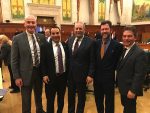
A sold-out crowd attended CJPAC’s Women in Politics Pecha Kucha event on Oct. 24, which featured four speakers, including CJPAC’s Sherry Barad Firestone (standing on the left). (photo from CJPAC)
On Oct. 24, CJPAC (the Canadian Jewish Political Affairs Committee) hosted its first Women in Politics Pecha Kucha event in Vancouver. It was a sold-out crowd with women and men of all ages and political backgrounds in attendance. Hodie Kahn hosted the event at her home.
The Pecha Kucha style of 20 slides at 20 seconds per slide created a dynamic evening that allowed CJPAC to showcase four guest speakers, all Jewish, each highlighting different facets of political engagement, as well as its importance and its accessibility during and between elections.
CJPAC advisory board chair Sherry Barad Firestone, originally from Vancouver but now living in Toronto, was one of the presenters. “It was such a thrill to participate,” said Firestone. “It was nice to be able to share my experience as someone who does not come from a political background. We often think politics should be left to the experts but there’s a role for all of us, regardless of experience, in our democracy.”
Other presenters included Temple Sholom Rabbi Carey Brown, an American transfer to Canada, who is passionate about adult and youth education, social justice and teen engagement; Dr. Moira Stilwell, who served as the member of the Legislative Assembly for Vancouver-Langara from 2009 until 2017, and was a minister of several portfolios; and, Rakeea Gordis, a high school student who has attended political rallies, volunteered on campaigns and recently became an EF Canadian Youth Ambassador.
Perhaps one of the best and inspiring quotes of the night came from Gordis, who stated, “I’m too young to vote. The only way I can use my womanly voice is to volunteer on campaigns.”
Kara Mintzberg, B.C. regional director for CJPAC, noted that CJPAC hopes to have more events focused on women’s experience in politics. “We know that it’s not always easy to be a woman in politics but we think events such as these, in particular hearing from their peers, will encourage more women to get involved and, ultimately, it will become easier for those who follow.”
CJPAC is hosting another event soon – the Ultimate Kiddush Club, featuring “Scotch master” Barry Dunner, on Nov. 23, 7:30 p.m. For more information about the evening or any other CJPAC events and opportunities, contact Mintzberg at kmintzberg@cjpac.ca or 604-343-4126.
Left to right, MP David Sweet, MP Michael Levitt, CIJA chief executive officer Shimon Koffler Fogel, MP Scott Reid and MP David Anderson pose for a photo during the House of Commons Standing Committee on Canadian Heritage hearings on M-103 on Oct. 18. (photo from CIJA)
Jewish groups were in Ottawa on Oct. 18 to testify in front of the House of Commons Standing Committee on Canadian Heritage, which will make policy recommendations on M-103, a motion that condemns “Islamophobia and all forms of systemic racism and religious discrimination.”
Leaders of the Centre for Israel and Jewish Affairs (CIJA) and B’nai Brith Canada drew on the Jewish community’s experience with fighting antisemitism in their recommendations on how to maximize the motion’s efficacy.
In his testimony, CIJA chief executive officer Shimon Koffler Fogel pointed to statistics that showed Jews are the most targeted religious minority in the country.
“Nationally, there were 54 hate crimes targeting Jews per 100,000 individuals in 2015. While this number is relatively consistent with previous years, there was an increase in hate incidents targeting other minority communities, including the Muslim community. In fact, Muslims were the next most targeted group, with 15 incidents per 100,000 individuals,” Fogel said. “I mention these numbers not to showcase Jewish victimhood, but rather to demonstrate the very real experience our community has in grappling with the issues this committee is studying.”
B’nai Brith Canada chief executive officer Michael Mostyn recommended that the motion be constructed so that it will be “embraced broadly by all Canadians” and by “communities that are the targets of racism and discrimination, including Canadian Jews, who continue to be the target of antisemitism.”
Mostyn said the bill must not diminish “the threat to Canadians of all faith communities who face racism and religious discrimination and it must not suggest that one form of racism or religious discrimination is more threatening, or of greater priority, than another.”
Among Fogel’s recommendations was that the committee work to improve on the collection and publication of hate crime data, as it currently varies widely by police department.
He said statistics from the Greater Toronto Area – including Peel Region, Toronto and York Region – are readily available, “but even with these three neighbouring jurisdictions, each report provides different information, making direct comparisons sometimes difficult.”
He added that there are cities, such as Montreal, that don’t release data about which identifiable groups are being targeted, leaving policymakers with incomplete information.
Fogel said it’s important to properly define hate, as we “can’t effectively fight bigotry and hatred without precisely defining it. The term ‘Islamophobia’ has been defined in multiple ways, some effective and some problematic. Unfortunately, it has become a lightning rod for controversy, distracting from other important issues at hand.”
Fogel used the Islamic Heritage Month Guidebook, which was issued by the Toronto District School Board earlier this month and contains a definition of Islamophobia that includes “dislike toward Islamic politics or culture,” as an example.
“Muslims can be protected from hate without restricting critique of Islamist political ideologies,” Fogel said.
Mostyn agreed that the committee should “exercise great care in any definition of Islamophobia” because, if the definition is vague or imprecise, it can be “hijacked and only inflame tensions between and among faith communities in Canada.”
Mostyn said an imbalance can create “the impression that Canadian Muslims are the only victims of hate crimes. We are just as concerned with the source of hate crimes targeting Canadian Jews from within radical elements of the Muslim community.”
Fogel also recommended that greater and more consistent enforcement of existing laws is needed. “Recently, the attorney general of Quebec decided not to lay charges in a case of an imam in Montreal who had called for the murder of Jews. Quebec’s attorney general also declined to pursue a second charge of genocide promotion. This decision sent a message that someone can call for the death of an entire group of people without consequence,” he said, adding that the federal government should train police and prosecutors to better enforce the existing Criminal Code hate speech provisions and provide resources for the development of more local hate crime units.
In his testimony, David Matas, B’nai Brith Canada’s senior legal counsel, argued that some fear of radical Islam is rational.
“Adherents to some components of Islam preach hatred and terrorism, incite to hatred and terrorism and engage in hate-motivated acts and terrorist crimes,” Matas said. “What the committee, we suggest, can usefully do is propose criteria, with illustrative examples, which can guide those directly involved in the combat against the threat and acts of hatred and terror coming from Islamic radicals.”
Matas called on the committee to “focus both on those victimized by Islamophobia and on the incitement and acts of hatred and terrorism, which come from within elements of the Islamic community.”
In his remarks, Fogel also referred to the passing of Bill C-305 – a private member’s bill that would expand penalties for hate crimes against schools and community centres associated with identifiable groups – which had its third reading on Oct. 18.
“CIJA has long advocated for the changes contained in Bill C-305,” Fogel said. “C-305 is a clear example of how elected officials can work together, in a non-partisan spirit, to make a practical difference in protecting vulnerable minorities.”
CIJA chair David Cape said, “CIJA remains grateful for the tireless efforts of MP Chandra Arya, who has committed his time and energy to strengthening hate crime protections. As we celebrate Canada’s 150th anniversary, we’re reminded that the safety of at-risk communities is essential for a healthy, vibrant country. Criminals who target Jews or other minorities don’t distinguish between houses of worship, community centres and schools – neither should the law.”
The United States and Israel will withdraw from UNESCO. The United Nations Educational, Scientific and Cultural Organization is one of the most impressive and vital global agencies addressing international cooperation on this range of human endeavours. Unfortunately, like the United Nations itself, which exemplifies unfulfilled promise, it has been coopted into the service of Israel-hating forces.
UNESCO does vitally important work advancing education as a basic human right, fostering cultural diversity and dialogue, and promoting heritage as “a bridge between generations and peoples.” It is also committed to “full freedom of expression; the basis of democracy, development and human dignity.”
The irony here is that, by succumbing to the influence of Israel-bashers, UNESCO is in cahoots with countries that betray the most basic concepts of free expression and democracy.
The U.S. State Department announced last week that it would quit UNESCO and, while insisting that Israel was unaware of the impending announcement and that the decision was uncoordinated between the two countries, Israel’s Prime Minister Binyamin Netanyahu announced that Israel would follow its ally and also leave the agency.
Coincidentally or deliberately, UNESCO elected its first Jewish director general just days after the United States’ announcement. France’s former minister of culture, Audrey Azoulay, was elected to the leadership role, outpolling the Qatari perceived frontrunner, in a vote by UNESCO’s executive last Friday.
The United States was in arrears to UNESCO to the tune of $550 million and even a U.S. State Department spokesperson didn’t deny that money figured into the calculation. The United States stopped paying its dues to UNESCO in 2011, when the agency admitted “Palestine” as a full member state.
In July, UNESCO declared Hebron an endangered World Heritage site, diminishing the Jewish people’s ancient and contemporary connections to the city, home to the tombs of the Patriarchs and Matriarchs.
UNESCO has also adopted resolutions that call Jerusalem “occupied” territory, acknowledge Muslim but not Jewish historical connections to the Temple Mount area and repeatedly reinforced a common Palestinian position that Jews have little or no historical connection to the land of Israel.
The question is, do you stay and fight or give up and decamp in protest? A similar paradox occurred at the United Nations-sponsored World Conference Against Racism, in Durban, South Africa, in 2001. When it became clear that the event had been commandeered not only by anti-Zionist elements, but by some of the most antisemitic forces in the world, the United States and Israel walked out. Canada stayed. The Liberal government of the time justified the decision by saying they could remain as a voice of critical reason. There are legitimate cases to be made for both positions.
In choosing to leave the organization as a member but remain as an observer state, the United States found the right balance. They can continue to make their opposition to UNESCO excesses heard, without countenancing them morally or financially.
At least, that is how it would work in a world in which Donald Trump was not president of the United States. In this, as in so much, Trump changes everything. While the administration’s decision on UNESCO may be a decent one, in context with other decisions of the Trump administration, it becomes part of a retraction of American influence in and engagement with the world. Trump is motivated by spite, not by principle. While another president could have made the same move and explained it as a principled defence of the country’s most important ally in the Middle East, this president’s lack of principle and surfeit of malevolence relocates even defensible positions into a constellation of petty pique. Despite its manipulation by anti-Zionist ideologues, UNESCO remains an invaluable institution, doing much good work in the world. Even while maintaining observer status, the U.S. decision is likely to be read by critics not as a repudiation of what UNESCO does wrong, but as part of an ongoing American trend against all that is good in culture, science and education.
Context matters. Like Richard Nixon in China – OK, perhaps not really like that, but at least in the respect that a president with some credibility in areas relevant to UNESCO could get away with repudiating it – a president Hillary Clinton (or Bill Clinton, or Barack Obama) could have withdrawn from UNESCO and not made their country look like a collection of petty Philistines. When a president who has little demonstrated respect for culture, education or science withdraws from a global organization dedicated to these pursuits, it probably legitimizes UNESCO more than it delegitimizes it.
Worse for Jews, this tight friendship between Trump and Netanyahu reinforces perceptions of the Jewish people – or, at the very least, the Jewish state – as ideologically entwined with a figure who seems destined to go down as the most ineffectual and destructive president in American history. Not an enviable place to find oneself.
Angela Merkel was returned for a fourth term as Germany’s chancellor on Sunday, defeating her main Social Democrat opponent, as well as a seemingly global surge toward populism. However, while she succeeded, her vote share declined – and the footnote of the election turns out to be the bigger story.
The far-right Alternative for Germany (AfD) party came third, taking about 13% of the vote and entering parliament for the first time. The result was as good as any polls had predicted, meaning that some people who voted for them probably didn’t feel comfortable sharing their voting intentions with pollsters. The party was formed just four years ago, amid an anti-immigrant and anti-refugee backlash in response to Merkel’s liberal approach to the crisis caused by the Syrian civil war. In response, Merkel reined in her liberal approach somewhat, possibly saving her party from defeat. Just a few months ago, Merkel’s reelection appeared to be in doubt.
The success of Merkel’s conservative bloc is a sign that, when push comes to shove, German voters trust her steady hand at a time when the European Union and the world is in upheaval. While immigration remained a central issue in the election, its potentially negative impact on Merkel’s chances may have been blunted by the overarching desire for stable government.
In the face of Brexit and various economic crises in EU member states over recent years, Merkel emerged as the unequivocal leader of the vision of European unity. German voters endorsed her overall approach. But the emergence of AfD is worrying, though not surprising. Extremist parties have been burgeoning all over Europe – and extremism is flourishing in the United States. It would have been stunning if Germany completely avoided this trend.
For their part, the Social Democrats had been in a governing agreement with Merkel’s conservatives and, as is often the case in such scenarios, found themselves at a disadvantage in differentiating themselves from the incumbent government when putting their case to voters. They may choose to rebuild their party from the opposition side, rather than form another coalition with Merkel. However, if they choose to cooperate with the conservatives, that will put the third-party AfD in the enviable position of official opposition. This would give the radical right grouping even greater prominence than their 13% vote share would seem to justify.
“We will change this country,” declared Alexander Gauland, a co-leader of the AfD, on Sunday night. These are eerie words coming from the leadership of a group that promises a return to traditional German “volk” values, glorifies the Nazis and has been accused of racism and antisemitism.
The extremists will have an unprecedented platform (at least in the postwar era) in German politics and, even lacking legislative power, will be able to give voice to ideas that have largely been taboo in the German body politic for the past 70 years.
Yet, we should not allow the dark lining to obliterate the silver cloud. The election secured a stable, reliable and moderate direction for Germany that is good for Europe, the world and, not incidentally, Israel.
In its manifesto, Merkel’s party acknowledged a “special responsibility of Germany toward Israel” and earlier equated the BDS (boycott, divestment and sanction) movement with the Nazi campaign to boycott Jewish businesses. Under Merkel’s leadership, Germany has continued and strengthened its very close alliance with the Jewish state. The German government has been a bulwark, to the extent that a single government can be, against the anti-Israel movements at the EU and the United Nations.
In election after election in Europe over the past year, worst-case scenarios have been avoided. Extremist parties have made inroads, but generally less than anticipated. The AfD’s relative success may be seen as a protest vote, in which case we may be seeing its zenith. In any case, Germans will now get a clear view of what the party stands for – and will have the opportunity to stand up in opposition to the divisive and xenophobic policies the AfD promotes.
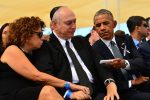
September 2016, Jerusalem. At the funeral of former president and prime minister Shimon Peres, U.S. President Barack Obama offers a tissue to Peres’ son Chemi. (all photos from Ashernet)
In reviewing the Jewish year 5777, one name stands out – Binyamin Netanyahu. Despite having to fend off accusations of various wrongdoings at home, the Israeli prime minister has had a successful diplomatic year.
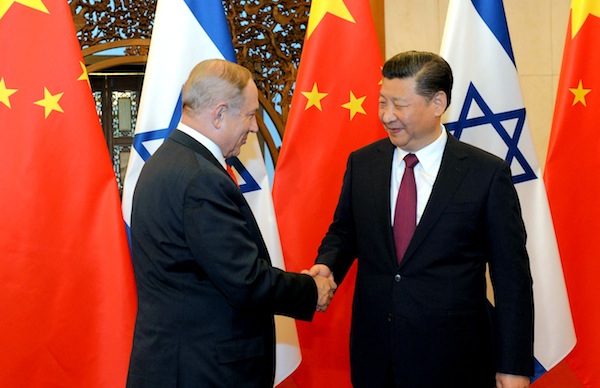
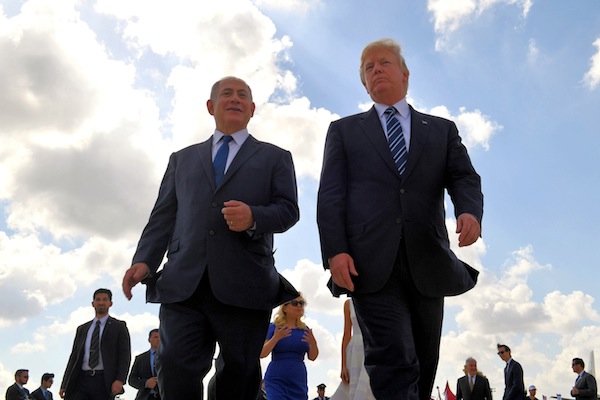
This year, Israel welcomed U.S. President Donald Trump and India’s Prime Minister Narendra Modi. Modi’s visit marked the first time since the foundation of the state of Israel that a sitting Indian prime minister had visited. Meanwhile, Netanyahu was warmly received by China in March and, a month prior to that, by Australia. Closer to home, he established good relations with Greece and Cyprus.
In September 2016, Israel bade a final farewell to former president and prime minister Shimon Peres. His funeral was attended by many sitting and former heads of state, including former U.S. presidents Barack Obama and Bill Clinton.
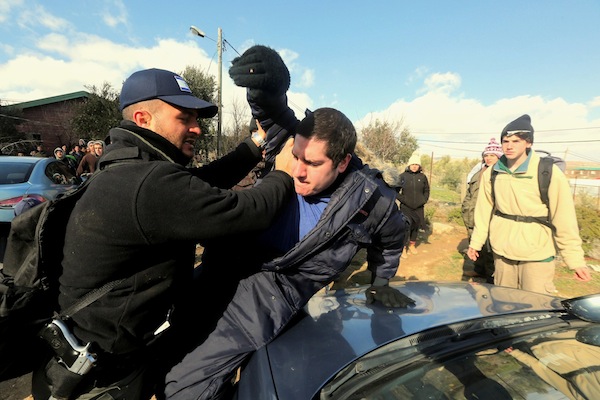
Last December, the Israel Air Force received its first F-35 fighter plane from the United States. In January, settlers in the West Bank outpost of Amona fought with police following a court order that declared Amona an illegal Jewish settlement.
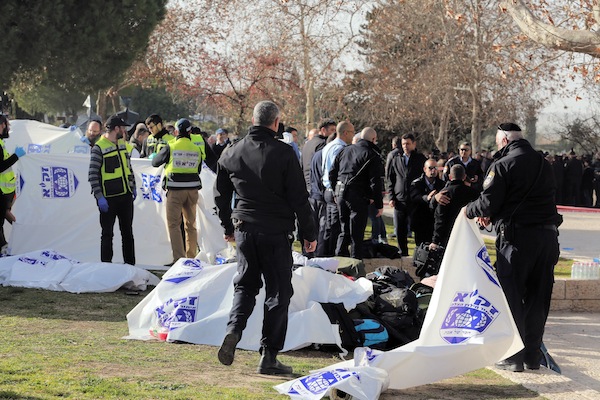
On Jan. 8, four people were killed when a released Arab prisoner ran a truck into a group of people on the Armon Hanatziv Promenade in Jerusalem. This act of murder was referred to as the “truck intifada.” In Gaza, Hamas activists handed out sweets in celebration. This method of terror was soon to be repeated many times in countries all over the world.
At regular intervals during the year, announcements were made concerning important archeological finds all over Israel. Israeli law states that the Israel Antiquities Authority must be notified as soon as there is indication of archeological remains and that, only after specialist examination and, if necessary, excavation, can the development proceed.
The year also saw the celebration of the 50th year since the reunification of Jerusalem in the Six Day War ( June 1967).
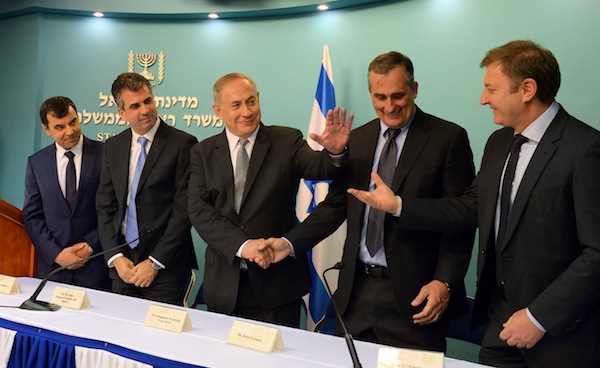
It has been an outstanding year for Israel’s high-tech sector. In particular, 2017 saw the largest business deal in Israel’s history when Mobileye was bought by Intel for some $15 billion.
The Jewish year ended with a bit of confusion, as the region once again became unsettled as Iran attempts to get a stronger foothold in Syria, along with their continued efforts to arm Hezbollah.
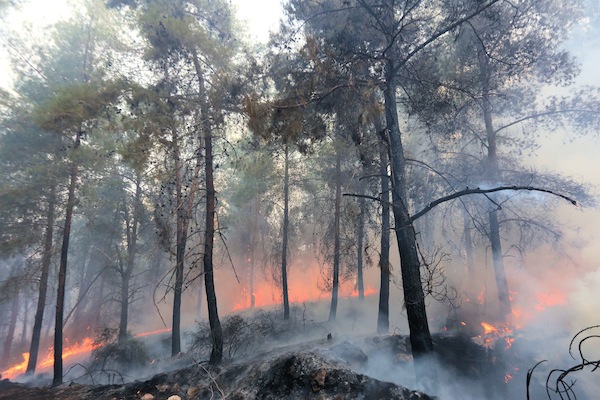
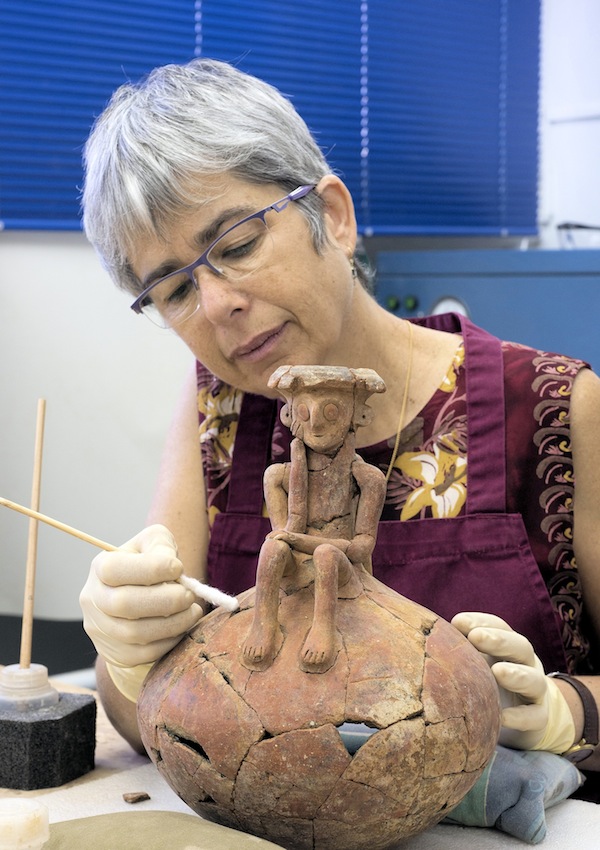
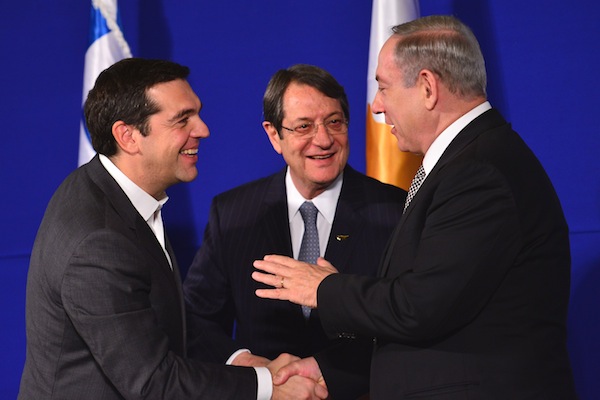
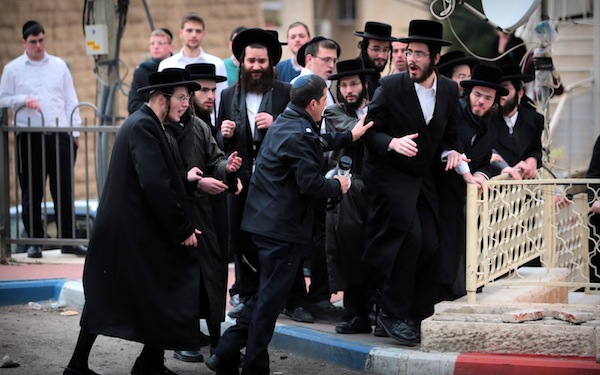
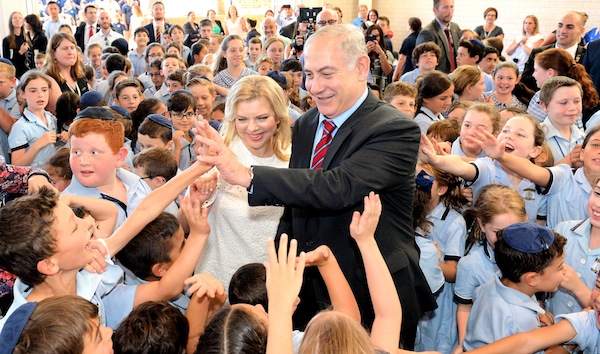
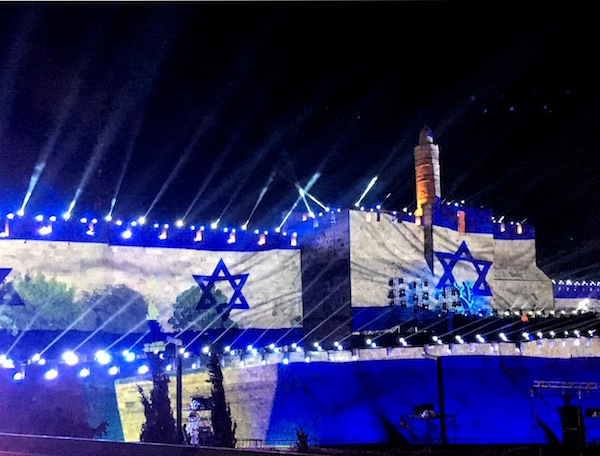
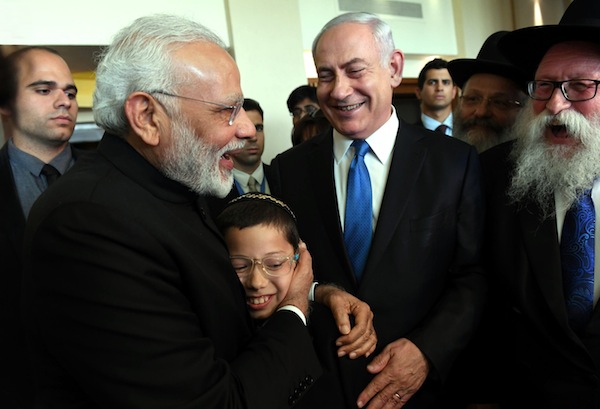
November 2016. A serious fire breaks out near Latrun in the Jerusalem corridor following yet another dry, hot summer. Some 140 firefighters are needed to bring the blaze under control.November 2016. A high school student taking part in an organized excavation in Yehud, near Ben-Gurion International Airport, finds a 3,800-year-old jug from the Middle Bronze Age, seen here during its restoration.December 2016, Jerusalem. Left to right: Greek Prime Minister Alexis Tsipras, Cypriot President Nicos Anastasiades and Israeli Prime Minister Binyamin Netanyahu hold historic tripartite talks to improve cooperation between the three eastern Mediterranean countries.December 2016. The first of 50 F-35 stealth fighters arrive in the Israel Air Force base in Nevatim. The IAF was the first air force outside the United States to receive this state-of-the-art fighter plane.January 2017. Four pedestrians are murdered in Jerusalem’s East Talpiot neighbourhood by a truck driven at speed; 13 others are injured. The terrorist is shot dead by police.February 2017. Following a High Court ruling, the illegal Jewish settlement of Amona, 20 kilometres north of Jerusalem, is forcibly evacuated by police and security forces. The court ruled that the settlement had been established on Palestinian-owned land.February 2017. Some ultra-Orthodox riot over government insistence that all able-bodied young men be drafted into the army. While heads of many Charedi yeshivot have encouraged their students not to report to induction centres, there are many Israel Defence Force units that have ultra-Orthodox soldiers in their ranks.February 2017. Binyamin Netanyahu is the first incumbent Israeli prime minister to officially visit Australia. The picture shows Netanyahu and his wife Sara at the Sydney Jewish School of Moriah.March 2017. Prime Minister Binyamin Netanyahu with Chinese President Xi Jinping. Netanyahu, together with a business delegation, made the visit to China to expand trade between the two countries.March 2017. Mobileye is bought by Intel, but the headquarters of the company will remain in Jerusalem. Left to right are Amnon Shashua, Eli Cohen, Prime Minister Binyamin Netanyahu, Brian Krzanich and Ziv Aviram.May 23, 2017. U.S. President Donald Trump, seen here with Prime Minister Binyamin Netanyahu, made Israel one of the first overseas countries he visited since becoming president.May 2017. On May 20, Jerusalem was illuminated to celebrate the 50th year of the city’s reunification following the Six Day War.July 2017. Indian Prime Minister Narendra Modi, left, becomes the first sitting Indian prime minister to officially visit Israel. Accompanied by Prime Minister Binyamin Netanyahu, Modi meets with Moshe Holtzberg, 10, who survived the terrorist attack that killed Moshe’s parents and seven others at Mumbai’s Chabad House in November 2008.
George Heyman, MLA for Vancouver-Fairview, and Selina Robinson, MLA for Coquitlam-Maillardville, were elevated to cabinet. (photos courtesy of George Heyman and Selina Robinson, respectively)
Left to right, Larry Elder, Dennis Prager and Hugh Hewitt at the Unite Inland Empire Conservative Conference on April 30. (photo by Dave Gordon)
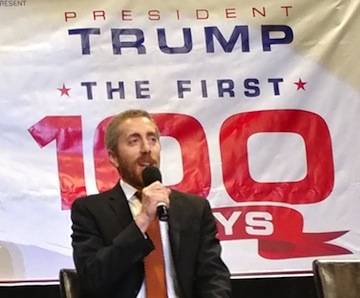
Eight hundred supporters of U.S. President Donald Trump gathered in a Los Angeles-area venue recently – before the controversy this week over Trump’s sharing of classified information with Russia – to hear four major U.S. media figures discuss why, in their opinion, the president had thus far made impressive executive choices.
The April 30 event – the fourth annual Unite Inland Empire Conservative Conference – was entitled Trump’s First 100 Days.
Panelists were talk radio hosts Larry Elder, Hugh Hewitt and Dennis Prager and senior editor-at-large of Breitbart News, Joel Pollak.
Trump was praised by all speakers for his Supreme Court choice of Neil Gorsuch, his strike on Syria, his efforts to overturn Obamacare and the newest Iran sanctions. The two Jewish speakers – Prager and Pollak – told the Independent that the president has, in a very short time, done much for Israel.
Appointing a U.S. ambassador to the United Nations who is critical of the world body’s treatment of the Jewish state should be seen as significant in itself, Prager said. “Why isn’t Nikki Haley enough for a Jew?” he asked.
The author of seven books, including the recently released Ten Commandments: Still the Best Moral Code, Prager said Trump should divest the United States entirely from the UN, however.
“It is a morally bad organization. It does more harm than good,” he said. “You can have aid agencies without the UN. Think we need UN peacekeepers? You can talk about Rwanda. What good has the Security Council done? It is the most anti-Jewish institution in the world. What more do you need to know? My whole life I have understood Jew-hatred as the barometer of the world’s health.”
In terms of reported rising Jew-hatred in the United States, Prager said some of it is fabricated and some is an imminent threat.
“All of the Jewish centres’ bomb threats – this was hysteria – all because of a black radical and a disturbed Jewish kid in Israel. It wasn’t 40 antisemitic incidents; but maybe one or two.”
To those who accuse the president of attracting those who bear ill will towards the Jews, Prager added, “It’s a world of lies that Trump has increased antisemitism and that he is an antisemite and that he has let antisemites in his administration.”
The true menace, he said, was “the transformation of the university to the most Israel-hating institution in America. Jews don’t want to acknowledge this because they adore the university.”
Antisemitism might be among the reasons Trump has waffled on his promise to move the U.S. embassy to Jerusalem, Prager said, adding, “I 100% excuse him on it.”
It is Prager’s belief that Israel may be reticent, at this point, to deal with the potential blowback.
“The Arab world is a passion-based, hate-filled world,” he said. “The hatred of Israel is the food of the Arab world. There’s no joy in saying this.”
However, it was important that Trump said that while campaigning, argued Prager. “I believe [the promise] didn’t say, ‘I am going to open an embassy in Israel.’ It said, ‘I care about Israel,’ unlike the previous president.”
Joel Pollak, senior editor-at-large at Breitbart News, addresses the conference. (photo by Dave Gordon)
Meanwhile, Pollak thinks that the president may follow through with moving the embassy to Jerusalem at some point in the future.
“I don’t see it as a back pedal,” said Pollak. “David Friedman [U.S. ambassador to Israel] is going to live in Jerusalem, even though the embassy is in Tel Aviv. It indicates which of the two cities the U.S. considers is Israel’s capital.”
In terms of the peace process, the new administration will not be mirroring that of Barack Obama, who “took the Palestinian side, and that was destabilizing,” said Pollak.
On the UN, Pollak said it was a forum for enemies to hash out their differences, but its Human Rights Council – where many dictatorships have representatives – should be dismantled.
In agreement with Prager, he said the pressing danger to U.S. Jews is the surge of university-based antisemitism.
“Students are being exposed to anti-Israel activities that they’re ill-equipped to counter,” said Pollak. “It has gotten so bad that now discrimination is happening on religion, not just for supporting Israel.”
Last year, U.S. campuses saw a 45% increase in anti-Jewish sentiments, according to Tel Aviv University researchers and the AMCHA Initiative, which investigates antisemitism on college campuses.
The issue will worsen, Pollak said, as more young people remain ignorant of the Holocaust – a tragedy all-too-often invoked and misused by those who compare the Final Solution to the Palestinian situation.
For attendee Evan Sayet, author of Kindergarten of Eden, the “single most important thing” for American Jews to do is to rebuke government-funded universities, “twisting the screws against the lies and antisemitism in the guise of academia.”
He said, “You might not think of American campuses, because it doesn’t seem like an existential threat. You might think academia is just a place of words. Obviously, this is the next generation who are infused with antisemitism. It bodes ill for the Jews. Antisemitism is an evil that is placated in the Arab world and, now, other places in the world, including Europe.”
Dave Gordonis a Toronto-based freelance writer whose work has appeared in more than 100 publications around the world.
In his pre-election interview with the Jewish Independent, B.C. Green party leader Andrew Weaver acknowledged his ideal scenario might be to hold the balance of power in a minority legislature.
The results of the May 9 election were in fact so tight that the outcome will not be known until at least May 24, and even then additional recounts may hold up final determination of what the new government will look like. Pending the counting of absentee ballots and at least two judicial recounts, the results have the incumbent B.C. Liberals under Premier Christy Clark with 43 seats, the NDP under John Horgan 41 and the Greens with three seats.
For Jewish community members running in the election (and profiled by the Independent prior to the vote), the results were a draw. New Democrat George Heyman, MLA for Vancouver-Fairview, was re-elected, defeating another member of the Jewish community, Liberal Gabe Garfinkel.
Green candidate Michael Barkusky was defeated in Vancouver-Quilchena. And, in Coquitlam-Maillardville, New Democrat Selina Robinson was re-elected, defeating her Liberal challenger by about 2,500 votes – a comparative landslide compared with her 2013 margin of 41 votes, which was the closest race in the province.
Vancouver-Langara Liberal MLA Moira Stilwell did not seek re-election.
Israel’s government shut down the country’s public broadcaster last week, an act so contentious that it has the potential to bring down the government and spark fresh elections.
The Israel Broadcasting Authority was widely viewed as a dysfunctional and wasteful structure that Israeli observers from across the spectrum agreed needed reform. But the manner in which the deed was done – which involved both blatantly political motives and insensitivity to long-time employees – has turned the situation into a potential political firestorm.
The country’s press council expressed fears that media freedom in Israel is “at risk.” The country’s president, Reuven Rivlin, weighed in, saying, “Without public broadcasting, there is no democracy.… Without public broadcasting, the state of Israel isn’t the state of Israel.”
The incident inspired beastly analogies from journalists, with one saying, “They not only killed us, but they gave us a donkey’s funeral,” and another commentator declaring: “One does not close an institution the way one drives a stray dog out of the house…. One does not give an ignominious burial to what used to be the leading light of Israeli broadcasting.”
“This is a blow to the most important part of democracy – the news,” said Yitzhak Herzog, the opposition leader.
From the government side, there was little effort to deny the evidence of political interference.
“It can’t be that we’ll set up a broadcasting authority and not control it,” said Miri Regev, the Likud culture minister.
Neither does it appear to be an ad hoc effort to change the media dynamic in support of the Netanyahu government. Prime Minister Binyamin Netanyahu appointed himself communications minister and, in forming his coalition, he exacted from every party the promise to support whatever changes he introduced regarding the media.
The fact is there is still a state broadcaster in Israel. A new entity was created to replace the IBA, and some of the IBA’s staff – apparently somewhat less than half –have been hired by the new national agency that will replace the defunct broadcaster. But many of Netanyahu’s critics suspect the new channel is designed specifically to be more amenable to intervention from those with political power.
The print media in Israel has also experienced a shakeup that raises questions of political interference. American billionaire Sheldon Adelson has invested millions to produce the free daily Israel Hayom, which quickly rose to become the largest-circulation daily in the country, at least partly because it is free. Adelson is a strong supporter of Netanyahu, and the paper has been accused of being a mouthpiece for the Likud government.
Netanyahu has a relationship with the media that bears some resemblance to that of Donald Trump, the U.S. president. He picks personal quarrels with reporters with whom he disagrees and even used the term “fake news” recently in referring to CNN and the New York Times, echoing a familiar refrain from the head of the American government.
It was not only the action of shutting the IBA that has caused outrage, but the crassness with which the whole thing was handled.
The 49-year-old flagship TV news program was given one hour’s notice before its final airing, leaving on-air personalities in tears as they said their goodbyes. The program – and the channel – was slated for closure May 14 and the show was planning a farewell episode for Sunday night with nostalgic and historical clips and reflections. The sudden decision to shut it down on May 10 was seen as an unnecessary indignity.
Officials in the prime minister’s office insisted Netanyahu did not know that the abrupt end was planned and agreed that is was disrespectful.
Canada’s public broadcaster has not been above political interference – successive governments have cut funding in what is one of the most destructive forms of interference – but there has been nothing to compare with what has happened to Israel’s state broadcaster.
Israel has a reputation for a disputatious and vibrant media and public discourse. It will not be felled by one government. But recent developments are not encouraging and their impacts will be closely watched to see what effects they have on politics and society in Israel. There are also, of course, independent private media outlets in the country and, we may see – in the way that the loss of one sense results in greater acuity in another – the private broadcasters rise to keep the government effectively in check.
When President Donald Trump heads to the Middle East, the world will be primarily watching closely to see if he makes any of his trademark gaffes that set off a cultural land mine in Saudi Arabia or Israel. But the more important question is whether he will use the trip to actually make policy.
The expectation is that, at some point during his visit, Trump will announce the convening of a new Middle East summit. Trump appears to believe in the “outside-in” approach to peace talks, in which Arab states like Saudi Arabia would play a role in trying to encourage and even muscle the Palestinians into negotiating in good faith with Israel at a peace conference. But whether or not that dubious plan is put into action, Trump’s presence in Jerusalem is also being scrutinized for any hint that the United States is prepared to acknowledge his stay at the King David Hotel will be time spent in Israel’s capital.
Though Trump repeatedly pledged during the 2016 campaign he would move the U.S. embassy from Tel Aviv to Jerusalem, it hasn’t happened yet. It’s still possible he could do it, perhaps even when he’s there only a day before Israel celebrates Jerusalem Day – which this year marks the 50th anniversary of the city’s reunification during the Six Day War. But few in the know think this is going to happen.
In recent weeks, Trump has been listening to his more mainstream advisers, such as Secretary of State Rex Tillerson and Secretary of Defence James Mattis. This has led him to take a more realistic attitude toward NATO and the conflict in Syria. It’s also likely to mean he will heed their warnings that an embassy move would set off riots in the Muslim world rivaling those occurring in reaction to a Danish newspaper publishing cartoons of the Prophet Muhammad. That’s a price that not even Trump may be willing to pay to keep a promise.
If so, then those pro-Israel activists who pushed hard to pin down Trump on the embassy issue last year will probably write it off as just a noble effort that failed. But by putting the question of Jerusalem’s status back on the national agenda and then failing, they will have made a mistake that could set back Israel’s cause and boost efforts to re-partition the capital.