Negev a family affair

Left to right, Negev Dinner 2017 honourees Michael Averbach, Gary Averbach and Shannon Gorski (née Averbach). (photo from Jewish National Fund, Pacific Region)

“The important thing that I want to say is that I’ve accepted this honour because I’m sharing it with my kids,” Gary Averbach told the Independent about this year’s Jewish National Fund of Canada, Pacific Region, Negev Dinner, which will pay tribute to Averbach, his son Michael Averbach and daughter Shannon Gorski.

“Ultimately, it came down to my father being recognized,” said Michael Averbach. “He was apprehensive. Initially, he didn’t want to do this. He’s a very humble man and doesn’t like to be in the spotlight; in fact, he’s quite the opposite. But, he also understands it’s for a greater good and it will help build JNF, help fundraise and go towards a need in Israel.”

Even though the dinner on June 4 is sold out, community members can still support the Averbachs’ chosen project: the Tzofei Tzamid, the Israeli Scouts.

The Israeli Scouts run programs for kids 9 to 21. Their 80,000-plus members include more than 2,500 children and youth with disabilities.

Gorski and her father visited Israel in late February. She described the Scouts as “a rite of passage for Israelis.” In the program, she said, children with severe Down syndrome, kids with visual or hearing impairments or who are on the autism spectrum, “all of these children are being able to work side-by-side with their Israel Scouts’ peers and fully participate in the programs the Israeli Scouts offer. And that is what my family, alongside the JNF Vancouver community of supporters, are funding – the ability of the Israeli Scouts program in Raanana, to ensure that they have the proper resources and equipment when they take the Israeli scouts into the wilderness, as well as their own facility, to make it accessible for all.”

She said the organization’s mission “really resonated with my own philosophy, and that is one of inclusion … providing opportunities so that kids can develop skills, and leadership opportunities and life-preparedness. I see Israel already as such a leader in a lot of innovative ideas … and, when I got to see what they were doing in the area of youth services, they also are [excelling in that]…. When my father and I were there – to be able to see firsthand how happy these children were and how they were included, and listening to the testimonies of the parents, who are so appreciative and happy themselves, because what makes a parent happy is to see their child happy.”

Gorski, Gary and Diane Averbach’s eldest child, and Michael, their youngest, live in Vancouver, while their middle son, Blake, splits his time between Israel and Quebec City. The three Negev honourees are being celebrated for their many local community contributions.

Born in Vancouver to Louis and Betty Averbach, Gary Averbach – who is chief operating officer of Belmont Properties – has been involved in various capacities with JNF, the Jewish Community Centre of Greater Vancouver (JCCGV), the Jewish Federation of Greater Vancouver, the Jewish Community Foundation of Greater Vancouver (JCF), Congregation Beth Israel and the Jewish Museum and Archives of British Columbia, among others.

Shannon Gorski, managing director of the Betty Averbach Foundation, has worked with marginalized people and at-risk youth for most of her life. In the Jewish community, she has served on the boards of JCCGV, Hillel BC and Richmond Jewish Day School (RJDS); chaired galas and events, such as JCCGV’s Israel at 60, Beth Tikvah’s 40th anniversary and RJDS’s 18th gala; and sat on committees of JCF, King David High School and the Bayit.

Michael Averbach, who owns Averbach Mortgages and also works with Belmont Properties, has chaired the JCC Sports Dinner for many years (he co-chaired it this year with James Dayson), has co-chaired a Vancouver Talmud Torah Gentleman’s Dinner, is on the executive board of the Ohel Ya’akov Community Kollel and is active with Federation.

“We had a reception last night,” Gary Averbach told the Independent the morning after a Negev Dinner-related cocktail party at his home, “and I heard it enough times, that people understand, it’s so great your kids are carrying on your tradition. That’s the message I want to go out: how lucky I am to have kids that have carried forward what I believe in.”

The first Jewish organization Averbach got involved with was JNF, he said, and it is the only Israeli organization with which he has been heavily involved. “The local community, and especially things involving Jewish youth, means the most to me,” he said.

“I think it’s great what the JNF is doing now,” he added. Funding groups such as the Israeli Scouts, he said, “is a great step and it really makes the JNF more relevant to a lot more people all over, but certainly in Vancouver.”

Gorski said she has spoken to Israelis now living here about how integral the Israeli Scouts were to them. “In fact,” she said, “one individual in the community, who’s very active with youth in the community, said to me, ‘The Israeli Scouts saved my life.’ I was so, so moved by that.”

After she and her father visited the Israeli Scouts, Gorski joined JCCGV’s Bagel Club in Israel as a chaperone on their Birthright-style mission – “for many of these Jewish persons with different abilities and challenges,” she said, it was their first trip to Israel.

While she’s never been formally connected to the Bagel Club, Gorski said she has a step-uncle who is a participant and she was on the hiring committee for the current leader of the program, Leamore Cohen.

Worried about being away from her two children for so long, she asked them if they were OK with her leaving. She said her older son said, “What are your talking about? I’m excited for you. You’re going to Israel, and you’re going to do something that’s so important.

“That’s another reason why I get connected,” she said. “My father has been such a mentor to me and has instilled in me the importance of modeling behaviours of tikkun olam and just giving generously of your time. He used to say, when I was first asked to be on different boards, which he had been on, i.e. the JCC and involved with Federation, I basically said to him, ‘My biggest concern, Dad, is that I don’t have the capacity, the deep pockets that perhaps they think I do because of yourself,’ and he said, ‘You know what, the community, when they look at people to sit on their board and to participate and to volunteer … they look for the three Ws: wealth, wisdom and work. It’s not all three, it can be one…. They don’t just want the wealthy people.’ And he used to say it’s easy for somebody to write a cheque.

“He’s so humble,” she continued. “Every time that they would ask him to speak, he would always put the credit to those who were the worker bees, the people who were behind the scenes, who were doing the work, they were the ones who deserved the accolades…. For me, that’s been a lot of why I have focused on the Jewish community, but not just the Jewish community…. The fear among the older generation, which I’m entering into, is that, will the next generation be able to carry on and give with the three Ws … is Vancouver in good hands, is the Jewish community in good hands, is Israel in good hands?”

For his part, Michael Averbach – who has four children – has focused his attention mostly on the Jewish community. He was inspired, in his early 20s, by his father’s work on the campaign for JCCGV’s redevelopment. Achieving the goal, Averbach said his father “was so elated, so excited. He screamed out, ‘Yabadabadoo!’ It was the first thing that came to his mind, he was so happy.” Witnessing this reaction, he said, “I caught the bug. I got involved.”

Calling the JNF tribute “a huge honour,” he added, “If we can encourage other young philanthropists and people in the community who are thinking about getting involved to get off the fence and push forward, find something that resonates with them, then this is all very much worthwhile.”

Gorski echoed these sentiments. She said many of her peers “thought the JNF was restricted to selling trees … and, if you go to the Negev Dinner, you see a large demographic of the older generation and not a lot of young people.” With her brother and her joining their father in being honoured, she said, they have managed to share with their peers more about what JNF does – in Israel and around the world – and many “are coming to the Negev Dinner for the first time.”

While in Israel, Gorski organized a get-together for the Bagel Club with madrichim (counselors) from the Israeli Scouts. “They made friendship bracelets, they made pita over an outdoor fire, they were all conversing. It was a really fun evening,” she said. And, as it turns out, some of the Israeli Scouts will be in Vancouver around the time of the Negev Dinner, and some of them will be joining the festivities.

She also shared that it is JCCGV head Eldad Goldfarb’s hope that, along with Cohen of the Bagel Club, which is for adults, and Shirly Goldstein, who is the centre’s youth director, they will be able “to create a program of the two different groups – youth, and adults with special needs – working together with the same sort of philosophy that the Israeli Scouts follow, doing similar types of activities.”

The June 4 Negev Dinner at Four Seasons Hotel will also see Richmond Jewish Day School head of school Abba Brodt presented with JNF’s Education Award. For more information or to donate, contact JNF Pacific Region at 604-257-5155 or van@jnf.ca.
When peace comes

Speaking at the Israel Museum in Jerusalem Tuesday, U.S. President Donald Trump quoted Theodor Herzl. “Whatever we attempt there for our own benefit will redound mightily and beneficially to the good of all mankind,” Herzl said.

This is not Herzl’s most famous quote, but the words were well chosen. In seven decades, Israel has contributed such an immense amount to the knowledge and culture of the world that Herzl himself could probably not have foreseen it in his wildest imagination – and he had a wild imagination.

The only barrier to the great redounding of which Herzl spoke has been the rejection of Israeli people, knowledge, technology and existence, first by those who would have benefited most – the country’s nearest neighbours in the Middle East – and latterly by many around the world, from the United Nations to college campuses across the West, where boycotting all things Israeli has become almost a rite of passage.

Trump also said Tuesday: “I had a great meeting this morning with President Mahmoud Abbas and I can tell you that he is ready to reach a peace deal.”

The president’s reputation is founded on his deal-making abilities and this is perhaps why he made it his first order of foreign business to travel to the Middle East, site of the world’s most elusive deal. But, telling an audience of Israelis, and global observers who have far deeper knowledge of the situation than Trump does, that Abbas is ready to reach a peace deal displays a degree of naiveté, to say the least.

Herzl’s vision of Israel as an oasis of excellence sharing its knowledge and advancements with neighbours was unquestionably imbued with the colonial attitudes of his era. But it was also founded on assumptions of enlightened self-interest.

“Israel is a thriving nation,” Trump said, “and has not only uplifted this region, but the entire world.” True enough, but it could have done so much more uplifting if others in the region had not rejected most of what the state has had to offer.

When the Arab Spring had its limited expression, it seemed that the peoples of the region might finally be rising up against not just the leaders who oppressed them, but the very scapegoating ideologies and miseducation that kept them down. One by one, most of the oppressors regained the upper hand and the greatest hope for Israeli-Arab peace – that the people and leaders would see coexistence as synonymous with self-interest – faded again.

If Trump thinks he has the magic beans to succeed where so many have failed, may he go from strength to strength.

This week in Israel … May 26/17

U.S. President Donald Trump and First Lady Melania Trump lay a wreath during a visit to Yad Vashem, the World Holocaust Remembrance Centre, on May 23. (photo from IGPO via Ashernet)

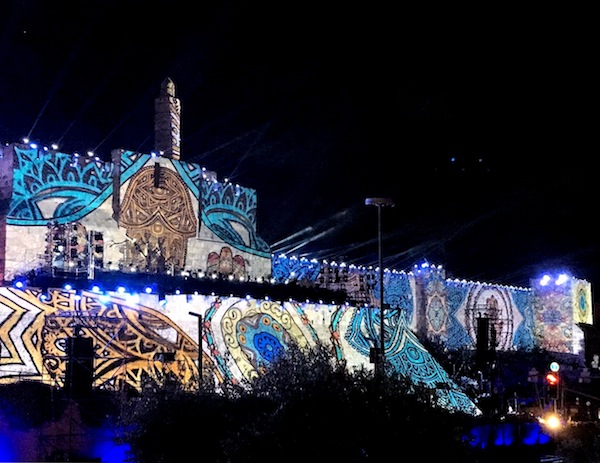
photo - On May 21, Israel celebrated 50 years since the reunification of Jerusalem. The images projected on the Old City Wall were part of the festivities
On May 21, Israel celebrated 50 years since the reunification of Jerusalem. The images projected on the Old City Wall were part of the festivities. (photo from Ashernet)
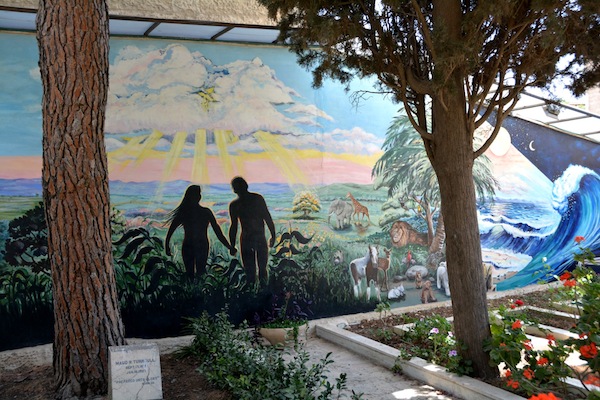
photo - A mural by Patricia Solveson depicting the Garden of Eden adorns the wall of the Alliance Church International Cemetery in Jerusalem’s Emek Refaim neighbourhood, also known as the German Colony because, in the latter part of the 19th century, many German Templers lived in this part of the city
A mural by Patricia Solveson depicting the Garden of Eden adorns the wall of the Alliance Church International Cemetery in Jerusalem’s Emek Refaim neighbourhood, also known as the German Colony because, in the latter part of the 19th century, many German Templers lived in this part of the city. (photo from Ashernet)

Unceremonious end

(photo by Andrew Shiva / Wikipedia)

Israel’s government shut down the country’s public broadcaster last week, an act so contentious that it has the potential to bring down the government and spark fresh elections.

The Israel Broadcasting Authority was widely viewed as a dysfunctional and wasteful structure that Israeli observers from across the spectrum agreed needed reform. But the manner in which the deed was done – which involved both blatantly political motives and insensitivity to long-time employees – has turned the situation into a potential political firestorm.

The country’s press council expressed fears that media freedom in Israel is “at risk.” The country’s president, Reuven Rivlin, weighed in, saying, “Without public broadcasting, there is no democracy.… Without public broadcasting, the state of Israel isn’t the state of Israel.”

The incident inspired beastly analogies from journalists, with one saying, “They not only killed us, but they gave us a donkey’s funeral,” and another commentator declaring: “One does not close an institution the way one drives a stray dog out of the house…. One does not give an ignominious burial to what used to be the leading light of Israeli broadcasting.”

“This is a blow to the most important part of democracy – the news,” said Yitzhak Herzog, the opposition leader.

From the government side, there was little effort to deny the evidence of political interference.

“It can’t be that we’ll set up a broadcasting authority and not control it,” said Miri Regev, the Likud culture minister.

Neither does it appear to be an ad hoc effort to change the media dynamic in support of the Netanyahu government. Prime Minister Binyamin Netanyahu appointed himself communications minister and, in forming his coalition, he exacted from every party the promise to support whatever changes he introduced regarding the media.

The fact is there is still a state broadcaster in Israel. A new entity was created to replace the IBA, and some of the IBA’s staff – apparently somewhat less than half –have been hired by the new national agency that will replace the defunct broadcaster. But many of Netanyahu’s critics suspect the new channel is designed specifically to be more amenable to intervention from those with political power.

The print media in Israel has also experienced a shakeup that raises questions of political interference. American billionaire Sheldon Adelson has invested millions to produce the free daily Israel Hayom, which quickly rose to become the largest-circulation daily in the country, at least partly because it is free. Adelson is a strong supporter of Netanyahu, and the paper has been accused of being a mouthpiece for the Likud government.

Netanyahu has a relationship with the media that bears some resemblance to that of Donald Trump, the U.S. president. He picks personal quarrels with reporters with whom he disagrees and even used the term “fake news” recently in referring to CNN and the New York Times, echoing a familiar refrain from the head of the American government.

It was not only the action of shutting the IBA that has caused outrage, but the crassness with which the whole thing was handled.

The 49-year-old flagship TV news program was given one hour’s notice before its final airing, leaving on-air personalities in tears as they said their goodbyes. The program – and the channel – was slated for closure May 14 and the show was planning a farewell episode for Sunday night with nostalgic and historical clips and reflections. The sudden decision to shut it down on May 10 was seen as an unnecessary indignity.

Officials in the prime minister’s office insisted Netanyahu did not know that the abrupt end was planned and agreed that is was disrespectful.

Canada’s public broadcaster has not been above political interference – successive governments have cut funding in what is one of the most destructive forms of interference – but there has been nothing to compare with what has happened to Israel’s state broadcaster.

Israel has a reputation for a disputatious and vibrant media and public discourse. It will not be felled by one government. But recent developments are not encouraging and their impacts will be closely watched to see what effects they have on politics and society in Israel. There are also, of course, independent private media outlets in the country and, we may see – in the way that the loss of one sense results in greater acuity in another – the private broadcasters rise to keep the government effectively in check.

Embassy location secondary

When President Donald Trump heads to the Middle East, the world will be primarily watching closely to see if he makes any of his trademark gaffes that set off a cultural land mine in Saudi Arabia or Israel. But the more important question is whether he will use the trip to actually make policy.

The expectation is that, at some point during his visit, Trump will announce the convening of a new Middle East summit. Trump appears to believe in the “outside-in” approach to peace talks, in which Arab states like Saudi Arabia would play a role in trying to encourage and even muscle the Palestinians into negotiating in good faith with Israel at a peace conference. But whether or not that dubious plan is put into action, Trump’s presence in Jerusalem is also being scrutinized for any hint that the United States is prepared to acknowledge his stay at the King David Hotel will be time spent in Israel’s capital.

Though Trump repeatedly pledged during the 2016 campaign he would move the U.S. embassy from Tel Aviv to Jerusalem, it hasn’t happened yet. It’s still possible he could do it, perhaps even when he’s there only a day before Israel celebrates Jerusalem Day – which this year marks the 50th anniversary of the city’s reunification during the Six Day War. But few in the know think this is going to happen.

In recent weeks, Trump has been listening to his more mainstream advisers, such as Secretary of State Rex Tillerson and Secretary of Defence James Mattis. This has led him to take a more realistic attitude toward NATO and the conflict in Syria. It’s also likely to mean he will heed their warnings that an embassy move would set off riots in the Muslim world rivaling those occurring in reaction to a Danish newspaper publishing cartoons of the Prophet Muhammad. That’s a price that not even Trump may be willing to pay to keep a promise.

If so, then those pro-Israel activists who pushed hard to pin down Trump on the embassy issue last year will probably write it off as just a noble effort that failed. But by putting the question of Jerusalem’s status back on the national agenda and then failing, they will have made a mistake that could set back Israel’s cause and boost efforts to re-partition the capital.

Read more at jns.org.


Jonathan S. Tobin is opinion editor of JNS.org and a contributing writer for National Review. Follow him on Twitter at @jonathans_tobin.

Religious stock

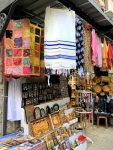
Knowing that, in any one day, hundreds of visitors will pass their shops, usually on the way to the Kotel (Western Wall), shopkeepers in Jerusalem’s Old City stock as many items as possible to appeal to all religions. Prayer shawls, rugs, crosses and ritual items of every size and description are available, as are religious paintings and carvings, key holders and the like. (photo from Ashernet)

Jerusalem, the Eternal City

Today I arose early and took a few minutes to look at the pearly dawn through my bedroom window. A bit later, I walked to the nearest grocery store and bought fresh bread for breakfast before I began my work day. All trivial, mundane things? Yes, but there is a difference, for I was doing them in Jerusalem.

No matter what ordinary events shape my day, the fact that they are happening here, in the Eternal City, somehow endows them with an extra dimension.

Jerusalem got its name because it has been the city of the Jewish people since the days of King David and his son Solomon, who built the First Temple here. Generation after generation continues to pray: “If I forget thee, O Jerusalem, may my right hand lose its cunning.” Devout Jews the world over turn towards Jerusalem three times a day in prayer, as the focus of their longing.

Five thousand years ago, a group of settlers chose to make their homes on the steep ridge called the Ophel, south of today’s Old City. Two thousand years later, David captured it from the Jebusites and, by bringing the Holy Ark here, he established forever its sanctity for Jews.

Jerusalem’s history spans 4,000 years. In 2000 BCE, Abraham offered his son Isaac for a sacrifice on Mount Moriah – ready to carry out the ultimate renunciation until the angel stayed his hand. A thousand years later, David captured the city and, from 961 BCE to 922 BCE, Solomon constructed the First Temple. In 537 BCE, Jews returned from Babylon, where they had been exiled by Nebuchadnezzar and, in 517 BCE, the Second Temple was completed. After that, Alexander the Great took the city and then Antiochus ruled it, until the Maccabees liberated it. In 63 BCE, Pompey captured Jerusalem and, over a period of 33 years, Herod reconstructed the Second Temple.

Jerusalem’s history continued to be a story of conquest and destruction by a chain of occupiers lusting for this precious jewel: the Romans, the Greeks, the Crusaders, the Mamelukes, the Ottoman Empire, the British Mandate, the Jordanians … a succession of nations who wanted to rule this battle-worn city that possesses no material riches – no gold, no precious metals, no minerals, no oil, nothing to enrich their coffers. So what does it possess?

I don’t know the answer but, in 1907, Hermann Cohen, in his Religiose Postulate, put forward the idea that they had no choice: “All nations, without exception, must go up with the Jews towards Jerusalem.”

Prior to that, in 1882, Peretz Smolenskin wrote, in Nekam Brith, a prophecy about its conquerors: “This shall be our revenge; we shall quicken what they shall kill and raise what they shall fell…. This is the banner of vengeance which we shall set up, and its name is – Jerusalem.”

Jews and non-Jews alike have always felt a magnetic pull towards the Holy City. It is written in Midrash Tehillim 91:7: “Praying in Jerusalem is like praying before the Throne of Glory, for the gate of heaven is there.” Every Jew who prays at the Western Wall feels an unusual closeness to G-d. Judah Stampfer, in his book Jerusalem has Many Faces (1950), expressed it poetically: “I have seen a city chiseled out of moonlight / Its buildings beautiful as silver foothills / While universes shimmered in its corners.”

There are many enchanting cities in the world, and I have visited many – Venice, Avignon, Bruges, Hong Kong, Paris, all have a magic that transforms the senses. Yet there is something extra in Jerusalem that I simply can’t define. It is a beautiful city, but there are many that exceed it. It is dignified, ancient, historic – all adjectives that can be applied to other cities, like London and Rome. Jerusalem, however, is an emotion, a state of mind even more than a place. It arouses dormant passions. It nurtures the soul. It is spiritual and inspiring.

To call Jerusalem home for the past 46 years is, for me, an enormous privilege. I am always aware of the history under my feet. I never forget the nameless heroes who fought to retain it for the Jewish people. And so, let us pay homage to the Maccabees, to those who withstood the Crusaders and Saladin and the Ottomans. And, in our own time, our Jewish soldiers who reunited Jerusalem in the Six Day War in 1967, 50 years ago. So many heroes, who made the ultimate sacrifice so that those of us in Jerusalem today could live out our lives in the Eternal City.

Dvora Waysman is the Australian-born author of 14 books. She came with her family to live in Jerusalem in 1971. She can be contacted at dwaysman@gmail.com or through her blog dvorawaysman.com.

Caesarea’s treasures

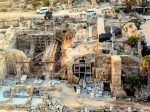
An aerial view of part of the Caesarea excavations. (photo by Griffin Aerial, via IAA and Ashernet)

On April 27, the Edmond de Rothschild Foundation, Caesarea Development Corporation, Israel Antiquities Authority (IAA) and Israel Nature and Parks Authority announced cooperation on an unprecedented scale in conserving and making accessible the public buildings of ancient Caesarea in Caesarea National Park, as well as developing and making the settlement’s beaches more accessible. The more than $28 million project will hopefully help attract three million tourists to Caesarea by 2030.

Caesarea has been a vibrant port city since its establishment about 2,030 years ago and throughout the various ensuing periods. The archeological excavations have revealed many remains that range from the time of Herod to the Crusader period. According to IAA director Israel Hasson, “To date, only about six percent of Caesarea’s treasures have been discovered, and magnificent finds on a global scale are buried beneath its sand dunes.”

The future we seek

A different approach to Yom Hazikaron took place Sunday in Tel Aviv. An alternative form of marking Israel’s remembrance day for fallen soldiers – bringing together Israelis and Palestinians who have lost family members to decades of conflict – was the 12th annual such gathering.

About 4,000 participants crowded into an arena for the ceremony convened by Combatants for Peace and Parents Circle-Families Forum, a grassroots organization of bereaved Palestinians and Israelis with the slogan, “It won’t stop until we talk.” Regardless of one’s politics, their website – theparentscircle.com – is a testament to the ability of families who have suffered the worst imaginable tragedy to get beyond anger and try to find or create something constructive in the aftermath.

On the other hand, whatever one’s politics, one should condemn the behaviour of a few dozen apparently far-right thugs who protested outside and disrupted the proceedings. Screaming “traitor,” “enemies” and “Nazis,” the protesters threw sand and spat at attendees, including a member of the Knesset. According to a report in the Jerusalem Post, one individual shouted at those entering the arena: “I hate Hitler – not for what he did but for not finishing the job and killing you.”

Across whatever divides exist among Jews, there should be a clear consensus that language and behaviour like this has no justification.

Yet, while 50 or so individuals with no sense of decency made the experience shockingly unpleasant, remember that 4,000 people came together across lines of race, religion and experience based on two things they share in common: grief and the certainty that something has to change if our respective peoples are to ever know lasting peace.

We can argue whether what the participants did helps advance that ideal future, but we can’t argue that everything done before has achieved it, because it has not.

After hundreds of community members filed out of the Chan Centre at the University of British Columbia Monday night following an uplifting and uncontroversial celebration of Yom Ha’atzmaut, anyone tuned to CBC Radio One heard an interview with David Grossman, re-broadcast from 2010. Grossman, considered one of Israel’s preeminent authors as well as a leading voice for peace, spoke about losing his son Uri, in the 2006 war in Lebanon against Hezbollah, about the necessity of Israeli military strength and about the efforts by then-U.S. president Barack Obama to broker some sort of peace in the region.

The interview was, sadly, timeless. There has not been a U.S. president who has not tried and failed to find peace between Israelis and Palestinians. There is not an Israeli parent who has not feared for their child in the Israel Defence Forces or when a terror attack strikes. One does not need to be a victim who has lost a family member, Grossman said, to be victimized by the circumstance where that kind of anxiety hovers over every day.

There is no doubt it is controversial for the parents, children or other loved ones of dead Israeli soldiers and the parents, children and other loved ones of Palestinians who have died in the conflict to come together. There is a whole range of reasons why many people would find this idea threatening, profane or wrong. But those who came together for the event should be granted by everyone the most minimal acknowledgement: it’s worth a try.

It might not work. But everything else has failed.

It is arrogant in the extreme to assume that we have the only answer. It is equally arrogant to assume there is no solution just because we ourselves can’t conceive of one.

If the current generation – of Israeli leaders, of U.S. presidents, of Diaspora leaders, commentators, activists, diplomats and anyone else – does not have solutions to this conflict, there is one encouraging light. There are young Israelis, Palestinians, Canadians and others who are trying new things. These ideas, too, might not work. But we have to keep trying.

At the local Yom Ha’atzmaut celebration Monday, children – some even toddlers – participated in songs of peace. Children of all ages danced and, even when they weren’t on stage as part of the performance, they filled the aisles with exuberant moves. The main musical attraction, the young Israelis who form the uplifting musical group Jane Bordeaux, chose to spend Yom Ha’atzmaut in Vancouver – their first concert outside Israel.

Will these young people hasten the future we seek?

Diamonds at Shalva opening

The new Shalva National Centre in Jerusalem officially opened on April 27. (photo from Shalva)

History was made on April 27, when hundreds of friends and donors traveled from around the world to gather in Jerusalem to celebrate the grand opening of the new Shalva National Centre. The day began with a rendition of “To Dream the Impossible Dream.”

photo - Leslie Diamond
Leslie Diamond (photo from Shalva)

“I fell in love with the concept that Shalva represents,” said Jerusalem Mayor Nir Barkat. “It is an icon and a role model for the world. Shalva has shown innovation in dealing with children with disabilities and I believe it will create ripple effects around the world.”

Leslie and Gordon Diamond, who dedicated the centre, flew in from Vancouver with family and friends. In addition, they dedicated the Steven Diamond Sports and Wellness Centre in memory of their son, Steven. With its semi-Olympic pool, large therapy pool, fitness centre and gymnasium, it is a significant gift of wellness to the Shalva children, their families and the broader community. Also dedicated was the Shalva Inclusive Parks in memory of Ambassador Ronald E. Arnall.

“Shalva epitomizes tikkun olam, making the world a better place and respect for family dignity. I am sure that Shalva will serve as the gold standard in its field for many years to come,” said Gordon Diamond. “For me and my family, it is an amazing honour to help this institution. Imperfection is inevitable in this world. We cannot make this a perfect world, but this is where society can shine. There is no more shining model than Shalva.”

“We have built a centre of excellence, full of colour, a magical place for the children of Shalva,” said Shalva chairman Avi Samuels. “We are humbled to open this state-of-the-art facility.”

photo - Gordon Diamond, reading into the microphone 
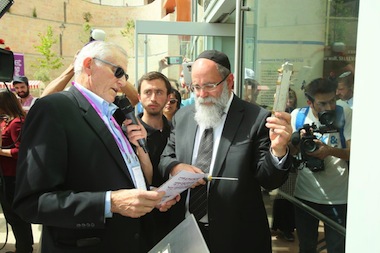
Gordon Diamond, left, with Shalva co-founder Kalman Samuels, who is holding the mezuzah. (photo from Shalva)

MK Chaim Katz said, “This is a huge day of giving. There’s so much heart and so much soul. I am bursting with pride to know that these world-class facilities are available right here in the state of Israel.”

The ribbon-breaking ceremony began with the sounding of 10 shofars. Barkat said, “When people come to the city of Jerusalem, they ask me what they should see. I tell them to go see the City of David so they see their roots. And then I tell them to go and see Shalva. People who enter this centre do not go out the same people. This place changes them.”

Kalman Samuels, who founded Shalva 27 years ago with his wife Malki when their infant son became blind and deaf following a faulty vaccination, thanked the audience of philanthropists, dignitaries and well-wishers. He said, “Your boundless love and your selfless care for your brothers and sisters with disabilities makes this earthly site heavenly.

I have gratitude to the Almighty and gratitude to each of you who continue to impact precious lives.”