Skip to content

  • Home
  • Subscribe / donate
  • Events calendar
  • News
    • Local
    • National
    • Israel
    • World
    • עניין בחדשות
      A roundup of news in Canada and further afield, in Hebrew.
  • Opinion
    • From the JI
    • Op-Ed
  • Arts & Culture
    • Performing Arts
    • Music
    • Books
    • Visual Arts
    • TV & Film
  • Life
    • Celebrating the Holidays
    • Travel
    • The Daily Snooze
      Cartoons by Jacob Samuel
    • Mystery Photo
      Help the JI and JMABC fill in the gaps in our archives.
  • Community Links
    • Organizations, Etc.
    • Other News Sources & Blogs
    • Business Directory
  • FAQ
  • JI Chai Celebration
  • JI@88! video
image - Weizmann Canada Physics Tournament 2025
image - The CJN - Visit Us Banner - 300x600 - 101625

Recent Posts

  • Vrba monument is unveiled
  • Music to build bridges
  • A better future possible
  • Anne Frank exhibit on now
  • Human rights in sport
  • Telling the story of an icon
  • Crawl bigger than ever
  • JCC Maccabi in Toronto
  • A way to meet fellow Jews
  • Time to include
  • Add Jewish joy to the mix
  • Reminder of humanity’s light
  • From the archives … editorials
  • Year-round holiday recipes
  • מדוע עזבתי את ישראל ואינני חושב לחזור ארצה
  • OJC hosts Oct. 7 memorial
  • A journey beyond self
  • Antisemitism a problem
  • Young man is missed
  • Orr action sparks complaint
  • Prison sentence for hate
  • Etgar Keret comes to Vancouver
  • New fall lecture series
  • Series explores music
  • Doc on Zapiro screens Nov. 6
  • Joy of shared existence
  • Community milestones … October 2025
  • MAID vs Jewish values
  • Cheshvan a great month, too
  • Bull, bear or bubble?
  • From the archives … a coin, etc.
  • מדוע האנטישמיות הולכת וגואה בעולם
  • New bio gives Vrba his due
  • Joy brighter than ever
  • When approaches differ
  • New leadership at the JCCV

Archives

Follow @JewishIndie

Tag: Caesarea

The prevalence of birds

The prevalence of birds

Pelicans and cranes gather at Hula Lake in Israel. (photo from commons.wikimedia.org)

Beginning with the Book of Genesis, we read about the raven and especially about the dove: “After 40 days, Noah opened a window he had made in the ark and sent out a raven, and it kept flying back and forth until the water had dried up from the earth. Then, he sent out a dove to see if the water had receded from the surface of the ground. But the dove could find nowhere to perch because there was water all over the surface of the earth; so, it returned to Noah in the ark. He reached out his hand and took the dove and brought it back to himself in the ark.

“He waited seven more days and again sent out the dove from the ark. When the dove returned to him in the evening, there, in its beak, was a freshly plucked olive leaf! Then Noah knew that the water had receded from the earth. He waited seven more days and sent the dove out again, but this time it did not return to him.”

In Deuteronomy 32, we read that God Himself is compared to a bird: “Like an eagle who rouses its nestlings / Gliding down to its young / So did [God] spread wings and take them / Bear them along on pinions.”

Eagles are so important to our culture that Israel’s 1949/50 rescue of 46,000 Yemenite Jews was named Operation on the Wings of Eagles. 

Jews had lived in Yemen for millennia, experiencing both relatively good and more oppressive times. In the 20th century, especially following the United Nations Partition Plan of 1947, conditions worsened. Arab rioters in Aden – then a British protectorate on the southern tip of Yemen – killed at least 82 Jews and, in early 1948, accusations that Jews murdered two Muslim Yemeni girls led to further violence and looting of Jewish homes and businesses.

When news of the young state of Israel’s planned evacuation reached Yemeni Jews, they walked and walked, some from hundreds of miles away, to a refugee camp in Aden. Few of them had seen an airplane before and, to convince them to go aboard, someone painted an eagle with outstretched wings over the door of each craft, reflecting Isaiah’s prophesy: “They shall mount up with wings as eagles.”

Despite the attempt to keep the evacuation secret, the planes going from Yemen to Israel were routinely fired on by Egyptian forces. Pilots were warned that, if they were forced to land in enemy territory, the passengers and perhaps the crew risked being executed. Luckily, this never happened.

Di goldene pave, or the golden peacock, refers to a mythical bird that is a common symbol in Yiddish poetry. For Itzik Manger, the golden peacock symbolized Jewish resilience and optimism, and Israeli singer Chava Alberstein sings a song about the golden peacock, which you can listen to on YouTube.

There is a legend that King Solomon gave the hoopoe – Israel’s national bird – a gold crown, after the bird spreads its wings to protect the king from the sun’s rays. But then people began hunting the hoopoe for its crown. When the bird told this to the king, the king replaced the crown with a crest of feathers.

Although there are several negative comments about the raven and the ostrich in Jewish texts, there are also some positive statements made about them. For instance, the raven brought Elijah bread and meat in the morning and bread and meat in the evening. (I Kings 17:7)

In his prophecy, Micah (1:8) uses the ostrich to show what will become of the faithless. But, while the ostrich generally receives a “bum rap” in Scripture, there is no mention in any sacred Jewish writing of ostriches hiding their heads in the sand. When a threat does appear, the ostrich flattens itself on the ground. With its colouring, it is often able to camouflage itself. Furthermore, when an ostrich senses the danger is too close, it can rapidly run away. 

photo - A section of the Bird Mosaic, a large mosaic floor that was apparently part of a Byzantine villa
A section of the Bird Mosaic, a large mosaic floor that was apparently part of a Byzantine villa. (photo from commons.wikimedia.org)

Storks are mentioned in Psalms 104:16-17 and in Jeremiah 8:7 for their beauty, grace and devoted parenting: “Storks in the sky know their seasons; swallows and cranes their migration times; but my people do not know the rulings of Adonai!” 

Further, the stork appears on decorative Torah wimpels, long strips of fabric used to bind the scroll when it’s not in use. Once, they were made from the swaddling clothes of a newborn baby. (This custom began in the second half of the 16th century and lasted for a few hundred years.) After the circumcision ceremony, the fabric was cut into segments that were sewn together to form a long sash, which was embellished with painted or embroidered inscriptions and images and donated to the synagogue.

Most storks use Israel just as a stopping off point on their way to and from Europe to Africa. Sadly, according to Israeli wildlife veterinarian Dr. Rona Nadler Valency, many migrating storks are killed or injured along their journey. She blames Israeli electric and wind turbine companies, which, she claims, do not invest in measures to protect the birds.

Although the type of bird is not mentioned, it is said that birds guided the Jewish people and kept watch over their crossing during the splitting of the Reed Sea.

Psalms 84 mentions the sparrow and the swallow: “Even the sparrow has found a home / and the swallow a nest for herself / where she may have her young….”

According to Uzi Paz, author of The Birds of Israel, there are about 470 bird species in Israel today. There are three main reasons for why Israel is a haven for birds. First, for European and West Asian birds, Israel is located on a main migration route to and from Africa; these birds stay in Africa during the European winter and return to Europe when spring comes in Europe. Second, Israel provides a range of habitats. And, third, Israel stands at the crossroads of three continents and assorted climate zones.

When you visit Israel, stop near Caesarea to see the remains of a large mosaic floor that was apparently part of a Byzantine villa. It is called the Bird Mosaic because the centre part of the floor features 120 medallions, each of which contains a bird. 

Deborah Rubin Fields is an Israel-based features writer. She is also the author of Take a Peek Inside: A Child’s Guide to Radiology Exams, published in English, Hebrew and Arabic.
Format ImagePosted on June 13, 2025June 12, 2025Author Deborah Rubin FieldCategories IsraelTags birds, Caesarea, Hebrew Bible, history, Israel, Torah
Caesarea’s treasures

Caesarea’s treasures

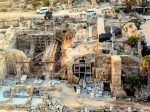
An aerial view of part of the Caesarea excavations. (photo by Griffin Aerial, via IAA and Ashernet)

On April 27, the Edmond de Rothschild Foundation, Caesarea Development Corporation, Israel Antiquities Authority (IAA) and Israel Nature and Parks Authority announced cooperation on an unprecedented scale in conserving and making accessible the public buildings of ancient Caesarea in Caesarea National Park, as well as developing and making the settlement’s beaches more accessible. The more than $28 million project will hopefully help attract three million tourists to Caesarea by 2030.

photo - A Roman figurine of Asciepius, god of medicine
A Roman figurine of Asciepius, god of medicine. (photo by Clara Amit, IAA, via Ashernet)
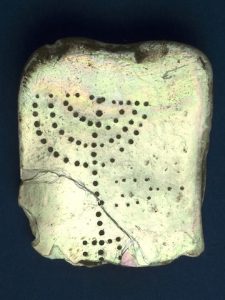
photo - A mother-of-pearl tablet engraved with a seven-branched candelabrum
A mother-of-pearl tablet engraved with a seven-branched candelabrum. (photo by Clara Amit, IAA, via Ashernet)

Caesarea has been a vibrant port city since its establishment about 2,030 years ago and throughout the various ensuing periods. The archeological excavations have revealed many remains that range from the time of Herod to the Crusader period. According to IAA director Israel Hasson, “To date, only about six percent of Caesarea’s treasures have been discovered, and magnificent finds on a global scale are buried beneath its sand dunes.”

Format ImagePosted on May 12, 2017May 9, 2017Author Edgar AsherCategories IsraelTags archeology, Caesarea, Israel
תינוקת ומאה וחמישים תנינים נמצאו

תינוקת ומאה וחמישים תנינים נמצאו

 במאי נמצא תנין משוטט ברחבי העיר קיסריה, לאחר שברח מחוות תנינים שבישוב בית חנניה שסמוך אליה.(צילום: YouTube screenshot)

תינוקת בוכיה נמצאה נעולה בכספת: איש האחזקה של בית מלון שיחרר אותה ללא פגע

בשבוע שעבר חדרנית של בית המלון הווארד ג’ונסון באזור הניאגרה פול של קנדה, נדהמה שממה שזוג שגר באחד החדרים סיפר לה. שני האורחים ממוצא אסייתי תוך שהם מנתנשפים ובאנגלית עילגת וכמעט בלתי מובנת, אמרו לה שהתינוקת שלהם שהיא כמעט בת שנה, ננעלה בכספת שבחדרם. לאחר שהתעשתה, החדרנית הזעיקה את איש האחזקה של המלון, שהגיע בריצה מטורפת הישר לחדר של ההורים עם ארגז הכלים שלו. הוא הצליח תוך מספר דקות ארוכות לפתוח את הכספת, ולחלץ ממנה את התינוקת הבוכייה כשלמזלם שכולם היא בריאה ושלמה. הנהלת בית המלון הספיקה בינתיים לדווח על המקרה המוזר למשטרה הפדרלית (האר.סי.אם.פי) ועוד בטרם השוטרים הגיעו, ההורים המבויישים ביחד עם התינוקת ושני אחיה המבוגרים יותר, נכנסו לרכבם ונעלמו אל תוך החשכה. לאחר מכן התברר למשטרה כי המשפחה בשל החוויה הקשה שעברה עליה ומאימת אמצעי התקשורת, העדיפה לעבור וללון אצל חברים שגרים בעיר מרקהאם שליד טורונטו.

המשטרה פתחה בחקירה מואצת לאתר את ההורים והתינוקת. בשלב ראשון התברר בחקירה כי רכבם של ההורים נושא לוחית זיהוי אמריקנית (של מדינת ניו ג’רסי), הם גרים בברוקלין והגיעו לחופשה של מספר ימים בקנדה. לחקירה צורפה עתה גם המשטרה הפדרלית האמריקנית (האף.בי.איי), והודעה נמסרה אף למשטרות הגבולות של קנדה וארה”ב, כדי שיעצרו את הזוג כאשר ינסו לחצות את הגבול ולחזור לארה”ב.

לאחר ששמעו באמצעי התקשורת הרבים כי הם מבוקשים לחקירה ע”י המשטרה הפדרלית, שמחפשת אחריהם במרץ, ההורים המבוהלים התקשרו ביוזמתם לתחנת המשטרה המקומית. בחקירתם שהתבצעה בעזרת מתורגמן, סיפרו השניים כי שלושת ילדיהם שיחקו במחבואים בחדר שבמלון, והתינוקת מצאה לנכון להתחבא דווקא בכספת. אך לרוע המזל הדלת של הכספת ננעלה והם לא ידעו כיצד לפתוח אותה. לאחר שנשמעה גירסת ההורים לאירוע ומשהתברר שהתינוקת לא נפגעה אלא רק בכתה, הוחלט במשטרה שאין מדובר כאן במעשה פלילי. ולכן לא היה מקום להעמיד את ההורים לדין והם שוחררו לדרכם, וחזרו לארה”ב.

מאה וחמישים תנינים נמצאו בבית אחד: הם הועברו לחוות תנינים ללא פגע

בעל חווה וגן חיות לגידול תנינים שנמצא מרחק כשעתיים נסיעה מטורונטו, נדהם מטלפון שקיבל לפני מספר ימים. על הקו היה אזרח העיר שגידל בביתו לא פחות ממאה וחמישים תנינים, וביקש את עזרתו המידית לפנותם. הוא גידל את התנינים במשך כעשר שנים, אך כבר לא היה מסוגל להשתלט עליהם כיוון שגדלו, וחלקם אף הגיע לאורך של שלושה מטר ויותר. שמו של בעל התנינים וכתובתו נשארו חסויים. בגן החיות ציינו שביתו נמצא בתוך אזור מגורים בטורונטו, והתנינים חיו בתוך אקווריומים גדולים. בעל החווה הודה לו על שביקש להעביר את התנינים לגן החיות ואף העביר תרומה כספית גדולה למימון אחזקתם היקרה.

מבצע פינוי והעברת התנינים היה ארוך ומסובך ונמשך למעלה מארבע שעות, בהשתתפות יותר מעשרים מתנדבים שמנוסים בטיפול בזוחלים האגרסיביים. לאחר שלסתותיהם נקשרו וראשם כוסה בבד יוטה עבה, הועברו התנינים לתוך תיבות מיוחדות וגדולות שהועלו למשאיות. לאחר מכן הם הוסעו אחר כבוד לביתם החדש והנוח יותר בגן החיות.

במאי נמצא תנין משוטט ברחבי העיר קיסריה, לאחר שברח מחוות תנינים שבישוב בית חנניה שסמוך אליה. המשטרה נקראה למקום והזעיקה את בעל החווה. הוא לכד את התנין והחזירו לחווה. לטענתו מישהו פרץ לחווה ושבר את מנעול הכלוב בה שהה התנין, וזה ברח.

Format ImagePosted on August 26, 2015August 26, 2015Author Roni RachmaniCategories עניין בחדשותTags baby locked safe, Caesarea, crocodile zoo, escape, Howard Johnson, Niagara, אזור הניאגרה, המלון הווארד ג'ונסון, וגן חיות, קיסריה, תינוקת נמצאה נעולה בכספת, תנינים ברח
Proudly powered by WordPress