Skip to content
  • Home
  • Subscribe / donate
  • Events calendar
  • News
    • Local
    • National
    • Israel
    • World
    • עניין בחדשות
      A roundup of news in Canada and further afield, in Hebrew.
  • Opinion
    • From the JI
    • Op-Ed
  • Arts & Culture
    • Performing Arts
    • Music
    • Books
    • Visual Arts
    • TV & Film
  • Life
    • Celebrating the Holidays
    • Travel
    • The Daily Snooze
      Cartoons by Jacob Samuel
    • Mystery Photo
      Help the JI and JMABC fill in the gaps in our archives.
  • Community Links
    • Organizations, Etc.
    • Other News Sources & Blogs
    • Business Directory
  • FAQ
  • JI Chai Celebration
  • JI@88! video

Recent Posts

  • עשרים ואחת שנים להגעתי לונקובר
  • Eby touts government record
  • Keep lighting candles
  • Facing a complex situation
  • Unique interview show a hit
  • See Annie at Gateway
  • Explorations of light
  • Help with the legal aspects
  • Stories create impact
  • Different faiths gather
  • Advocating for girls’ rights
  • An oral song tradition
  • Genealogy tools and tips
  • Jew-hatred is centuries old
  • Aiding medical research
  • Connecting Jews to Judaism
  • Beacon of light in heart of city
  • Drag & Dreidel: A Queer Jewish Hanukkah Celebration
  • An emotional reunion
  • Post-tumble, lights still shine
  • Visit to cradle of Ashkenaz
  • Unique, memorable travels
  • Family memoir a work of art
  • A little holiday romance
  • The Maccabees, old and new
  • My Hanukkah miracle
  • After the rededication … a Hanukkah cartoon
  • Improving the holiday table
  • Vive la différence!
  • Fresh, healthy comfort foods
  • From the archives … Hanukkah
  • תגובתי לכתבה על ישראלים שרצו להגר לקנדה ולא קיבלו אותם עם שטיח אדום
  • Lessons in Mamdani’s win
  • West Van Story at the York
  • Words hold much power
  • Plenty of hopefulness

Archives

Follow @JewishIndie
image - The CJN - Visit Us Banner - 300x600 - 101625

טראמפ ממשיך להשתולל

טראמפ ממשיך להשתולל

פסגת הג’-7 שהתקיימה בשרלבוקס קוויבק שבקנדה. (צילום: Shealah Craighead)

נשיא ארצות הברית, דונלד טראמפ, ממשיך להתנהג כבריון שכונתי, מאיים ומלכלך על המדינות הקרובות ובעיקר על השכנה ומי שנחשבה עד היום לידידה הקרובה ביותר – קנדה. כל בוקר מתעורר העולם וצופה בתדהמה כיצד נשיא ארה”ב מנהל את ענייניו ומגיב על כל עניין ועניין, באמצעות חשבון הטוויטר הרועש שלו. אין תקדים בעולם להתנהלות כה שערורייתית וחסרת אחריות, על מי שאמור לעמוד בראש העולם המערבי הדמוקרטי והנאור. בהתנהגותו הביזרית מצליח טראמפ לפצל את העולם המערבי ובעצם לבודד את ארה”ב, מול המחנה השני השפוי שכולל את קנדה ומדינות אירופה. מנהיגי רוסי וסין בוודאי נהנים לראות מה עושה טראמפ למערב. בחלומותיהם הוורודים ביותר הם לא היו מאמינים שנשיא אמריקני, יהיה זה שיצור אנרכיה ובלגן כה גדול בארה”ב ומחוצה לה, שתוך שהוא מבטל הסכמים מהסכמים שונים, ומראה שאין עוד תוקף לחתימתו.

פסגת הג’-7 שהתקיימה בשרלבוקס קוויבק שבקנדה, לא רק שלא הביאה להפגת המתח בין טראמפ לראשי מדינות אירופה, קנדה ויפאן, אלא אף הגבירה אותו לאור התנהלותו של נשיא ארה”ב. טראמפ הגיע באיחור לפסגת המדינות המתועשות וכיאה לו עזב לפני שהדיונים הסתיימו. תחילה הוא חתם על המסמך המסכם את הפסגה לפיו המדינות יילחמו בפרוטקציוניזם (מדיניות של הטלת מכסים על מוצרי יבוא לשם העצמת ייצור עצמי), אך לאחר מכן בדרכו לסינגפור (לפגישה עם שליט צפון קוריאה, קים ג’ונג און), הוא חזר בו ממה שהוסכם ובעצם פוצץ את פסגת הג’-7. במקביל טראמפ לא חדל להתקיף את ראש ממשלה קנדה, ג’סטין טרודו. הוא ציין שטרודו חלש, לא נאמן ובעצם תקע לו סכין בגב. על מה ולמה? אף אחד לא מבין.

גם שני יועציו הקרובים של טראמפ נקראו לעמוד לצידו והתקיפו את טרודו באופן חמור ביותר. היועץ הכלכלי של הנשיא, לארי קודלו, טען כי טרודו תקע

לנשיא סכין בגב. ואילו היועץ לענייני מסחר של הנשיא, פיטר נבארו, אמר מצידו כי יש מקום מיוחד בגיהנום לכל מנהיג שעוסק בחוסר תום לב בדיפולמטיה, כפי שטרודו עשה. לאחר מכן נבארו שכנראה נבהל מהביקורת הקשה שהוטחה בו לאור דבריו החמורים, חזר בו והתנצל על מה שאמר.

המונדיאל של 2026 יערך בקנדה-מקסיקו וארה”ב

הפעם נשיא ארה”ב, דונלד טראמפ לא הצליח להפריע ולמנוע את אחדות המדינות צפון אמריקה. שלוש המדינות של היבשת הצפונית, קנדה, מקסיקו וארה”ב נבחרו על ידי קוגנרס פיפ”א לקיים את אליפות העולם בכדורגל – המונדיאל, בעוד שמונה שנים (2026). מול הצעה משותפת של שלוש המדינות שקיבלה 134 קולות, התחרתה מרוקו שקיבלה רק 65 קולות ולא היה לה סיכוי.

המונדיאל של צפון אמריקה יהיה גדול מקודמותיו וישתתפו בו ארבעים ושמונה נבחרות. שמונים המשחקיה של האליפות יתפרשו על פני שלושים וארבעה ימים. מרבית המשחקים שישים במספר יערכו מטבע הדברים בארה”ב, עשרה מהם יערכו במקסיקו ועשרה נוספים יערכו בקנדה (ומדובר רק בשלבים המוקדמים). המשחקים כאן יתקיימו באיצטדיוני הכדורגל של הערים טורונטו (אצטדיון בי.אם.או שמכיל 30,000 מקומות והוא כנראה יורחב ל-45,000), מונטריאול (האצטדיון האולימפי שמכיל 72,000 אלף מקומות) ואדמונטון (אצטדיון הקומונוולס שמכיל 56,418 מוקומות). שלושת האצטדיונים ידרשו לעבור מקצה שיפורים כדי לעמוד בסטנדרטים הגבוהים של פיפ”א.

המונדיאל התקיים במקסיקו ב-1970 (עם השתתפות ראשונה ואחרונה של נבחרת ישראל) וב-1986, וכן במארה”ב ב-1994. קנדה לעומת זאת אירחה את אליפות העולם בכדורגל לנשים ב-2015.

Format ImagePosted on June 20, 2018June 14, 2018Author Roni RachmaniCategories עניין בחדשותTags Canada, FIFA, soccer, Trudeau, Trump, United States, ארצות הברית, טראמפ, טרודו, כדורגל, פיפ"א, קנדה
If you’re feeling down

If you’re feeling down

Warren Kimmel and Cathy Wilmot in Arts Club’s Mamma Mia. (photo by David Cooper)

Warning: The song titles mentioned in this article have been known to cause stuck-song syndrome for several weeks. Read at your own peril.

So, let’s say it’s Friday night and the lights are low, and you’re looking out for a place to go. Is the music in your head yet?

Even if the simple mention of the name Mamma Mia doesn’t have you drumming up ABBA songs in your head that get stuck there for days at a time, don’t jump to any quick conclusions about whether you’ll enjoy this play. I am not a raving ABBA fan, but highly recommend it – for the singing, the characters and, very last but far from least, the outrageous closing number.

If, for some reason, this were the last review I were able to write, I would put down my pen feeling complete, having seen Warren Kimmel prance around stage in a hot pink jump suit singing ABBA. Does this man’s talent know no bounds?

It’s also worthy to see, at least once, the show that has had such lasting power and whose celluloid “offspring” has broken records.

The title of the 1999 musical was taken from the group’s 1975 hit. In London’s West End, it became the eighth-longest running show in history, as well as the ninth-longest-running show in Broadway history, closing in 2015 after 14 years.

In 2008, Mamma Mia became the highest-grossing film to ever be released in the United Kingdom, beating Harry Potter and the Sorcerer’s Stone.

But, if you’re not one of the huge Mamma Mia fans out there, you may not know the story.

We open on a Greek island, where Sophie and friends are planning for her wedding. Sophie reveals that, upon reading her mother’s journals, she may know the identity of her father, whom her mother left before Sophie was born. Sophie has narrowed the list to three potentials and, without telling her mother, invites them to the wedding.

When the possible dads show up, mom is more than a little surprised and curious that they all ended up coincidentally on her island at the same time, but even they don’t know at first the real reason they were summoned.

Dad potential Bill Austin (Warren Kimmel) is the early favourite, but the question of who the real father is stays up in the air – and please, no bribes this time. I’m not telling.

This is really the feel-good play of the summer. The singing is fabulous and many of the dance numbers (including seven guys doing a can-can wearing diving flippers) are highly entertaining.

If you’re a fan of Absolutely Fabulous, you’ll recognize a lot of Joanna Lumley’s character Patsy in Mamma Mia’s Tanya. One half-expects her to pull out a cigarette and bottle of booze and start tripping around the stage.

Even a mild ABBA fan will enjoy the music and the way the lyrics are woven into the story. Since the words of many of ABBA’s songs talk about relationships and life, they lend themselves well to being adapted into dialogue and plot.

I am left with two complaints, however. The first is the exaggerated movements and over-acting that permeate the first quarter of the production. It seems to be a fault of many musicals, as though every sentence that isn’t sung needs grand arm gestures or running around the stage for no reason. Once that dies down, however, you are free to sit back, tap your toes and enjoy the fun.

The second has to do with a dream sequence that completely lacks any esthetic cohesion. A chorus in full-body leotards, leaves on their heads and arms, left me with more questions than answers about what was going on.

But this is where the story ends, this is goodbye. I know some JI readers might think Mamma Mia is just going to be a silly romp. However, if you’ve got no place to go, if you’re feeling down, if you change your mind, be the first in line … oops, there I go again.

Mamma Mia is at the Stanley Industrial Alliance Stage until Aug. 12. For tickets and information, visit artsclub.com.

Baila Lazarus is a Vancouver-based writer and principal media strategist at bailalazarus.com.

Format ImagePosted on June 15, 2018June 14, 2018Author Baila LazarusCategories Performing ArtsTags ABBA, Arts Club, Mamma Mia!, musical, theatre, Warren Kimmel
Painting a lasting impression

Painting a lasting impression

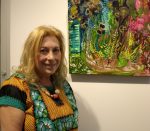
Diana Zoe Coop stands beside her painting “Frida Kahlo’s Garden.” (photo by Olga Livshin)

Diana Zoe Coop paints gardens. She paints them on canvas and paper. She paints them on costumes and wall panels. Her new show at the Zack Gallery, The Artist’s Garden, is an explosion of colours and shapes that sprout not only from nature, but from the garden of the artist’s imagination.

“All my life, I painted,” she said in an interview with the Jewish Independent. She studied for her bachelor of fine arts at the University of Manitoba, continued her education at Syracuse University in New York and finished her postgraduate specialty training at Saint Martin’s School of Art in London, England. She graduated with a degree in printmaking and thought herself more a graphic designer than a painter, but, as time passed, she gradually switched to painting.

“I didn’t always have access to a printer studio and equipment,” she explained. “Without it, I gravitated towards painting.”

Her favourite subjects are gardens and flowers. “People send me photos of beautiful gardens, the places they live or the places they travel,” she said. “These photos feed me ideas and often become paintings. My own travels also result in paintings.”

During her most recent trip to Mexico, in 2016, she visited Frida Kahlo’s home. Again.

“I’ve visited Frida’s home many times,” said Coop. “I always loved her art, felt an affinity for Kahlo’s work. She painted what she knew, even when she couldn’t move from her bed. I also paint what I know: my garden or the forest behind my house. Someone sent me a photo of a fiord, and I painted it…. Many of my paintings have a distinct blue colour. It is the colour of Frida’s house. She had walls painted with it, and this particular blue bleeds into my paintings.”

Coop’s paintings explore far beyond blue. In the gallery, her pieces are an explosion of hues and forms, bright arabesques of brushwork interspaced with dazzling sprinklings of gold and silver. The collective work is the representation of a garden through the lens of the artist’s perception.

“Recently, I read an interesting quote that I felt really defined the creative process,” said Coop. “It was written by Gordon Atkins, the renowned Canadian architect. He said something like this: ‘I don’t think we create. I think we interpret and I think our interpretations are the result of all the visual and actual experiences we go through.’ This seems to me to be an accurate definition of what happens when we paint or draw or sculpt. We are the storytellers of our generation. We make real and tangible our thoughts and emotions, our visceral interactions with the landscape around us.”

Many of the images in the show are mixed media collages, with pansies applied to the paint and bright crystals bringing sparkle to the compositions. “I grow pansies in my garden. It’s not easy to care for them, especially through the winters, and I do need many of them for my paintings,” Coop said.

Coop also uses art to convey her memories of “the myriad experiences of decades of relationships. And, most sadly, the profound losses of people I loved,” she said. “There were friends who passed away before their time, far too early and far too young.

“Roberta Mickelson inspired me to paint the wild gardens of my discontent and my anger, an anger directed at the unfairness of her life cut short. She was a talented artist herself, and it pained me to think that she could not paint anymore.

“And my friend Shelley Dyer, who passed, tragically, a year ago, was a beacon of brightness, beauty and creativity. Shelley loved the garden and all creatures great and small. Her laughter still echoes in my mind, and these paintings bear witness to the questions I asked myself every day, as I struggled to comprehend where she was now. One day, it just came to me: she was right here with me, in my paintings.”

Coop’s works hang in private and corporate collections in Canada, the United States, the United Kingdom, the Netherlands, Italy, Australia, Bulgaria, Poland, Czech Republic, Austria, Serbia, France and Finland. But painting pictures is only part of her creative journey. She also designs unique costumes for rhythmic gymnastics, dance, circus, aerial and skating. For years, many Canadian athletes wore her designs at international competitions, including at the Olympic Games.

“A girl gymnast once saw my paintings and said naively that they looked like her costume. I didn’t have the heart to tell her it was the other way around,” Coop said with a smile.

Her costume design business started as a personal necessity. “My daughters were gymnasts when they were young. I made costumes for them. Their friends on the team saw the costumes, liked them and asked me to help them with their costumes. And the word spread.”

In addition to making costumes, Coop volunteers as a judge of rhythmic gymnastics. “I studied for it, took an exam. Since 1997,” she said, “when I became an internationally qualified judge, I’ve traveled all over the world to judge the competitions.”

But art remains her passion and her joy. “I can’t stand when I don’t paint,” she confessed. “I become very cranky. Painting for me is as much a physical release as an emotional one. I need it. I don’t like being still. That’s why I enjoy working in my garden when I don’t paint. And I dance. I dance salsa and zumba, with their lively music, but I paint in silence.”

Coop sees her paintings as a reminder to the ones who come after her. “As we grow older, we hope to leave a part of ourselves behind,” she said. “Through our interactions, our deeds, our love of family and friends, and the people we meet, even briefly, we all attempt to be remembered. I consider making art the definitive memory-maker. Centuries after I depart from this visceral world, my art will still be a testament that I was here now.”

The Artist’s Garden exhibit continues to June 29. To learn more, visit the artist’s website, dianazoecoopartist.com, and her costume design site, zoeycouture.com.

Olga Livshin is a Vancouver freelance writer. She can be reached at [email protected].

Format ImagePosted on June 15, 2018June 14, 2018Author Olga LivshinCategories Visual ArtsTags Diana Zoe Coop, painting, Zack Gallery

Violence not solution

Last week, thousands were on the streets of Tehran for Al-Quds Day events, which consist of calling for the annihilation of Israel. Parallel events were held in other cities, including London, England, where Hezbollah flags flew amid posters bearing modern blood libels, and in Toronto, where a speaker called for the “eradication” of Israelis and Zionists.

Also difficult to ignore are the realities of the incendiary kites being sent over the border from Gaza affixed with flaming tails or petrol bombs. Some international observers have dismissed the incidents, contrasting the Gazans’ unsophisticated arsenal with Israel’s contingent of fighter jets and advanced weaponry. But Israeli firefighters report that 741 acres of forest and 4,500 acres of agricultural land have burned in the past two months thanks to at least 285 individual kite and helium balloon attacks. An estimated 500 kites have been intercepted before they could do damage. Experts say return of flora and fauna in affected areas will take years.

The ongoing hostilities at and near the Gaza border are the latest in the ongoing conflict that keeps the world’s attention focused on the region.

That attention turned to the world of soccer recently. A planned game between the Israeli and Argentine national teams was cancelled after pressure from the movement to boycott, divest from and sanction Israel (BDS).

On social media, the BDS movement profusely thanked the Argentine team for cancelling the match. But the president of the team acknowledged it was not political considerations, but safety concerns, that led to the cancellation. The team – and specifically its megastar Lionel Messi – received threats of violence. As well, at the team’s practice facility in Barcelona, protesters waved Argentine soccer jerseys daubed with fake blood, and it wasn’t clear whether the blood was meant to symbolize Palestinians who have died or Argentine soccer players who might have been harmed if the game had been held as planned and the threats been realized.

There has been a shift from peaceful protest – that was the phrase repeatedly invoked about the conflagrations at the Gaza border – toward overtly violent rhetoric, threats and actions by Israel’s adversaries, who are both literally and figuratively “playing with fire.”

Nonviolent pressure, which is what BDS has claimed to advocate, is a tactic that could, one never knows, lead to some peaceful resolutions. But destroying farmland, endangering children, threatening people with harm and inciting genocide will only lead to more violence.

Posted on June 15, 2018June 14, 2018Author The Editorial BoardCategories From the JITags anti-Israel, antisemitism, BDS, boycott, genocide, Israeli-Palestinian conflict, peace, violence

Send more than love by mail

Have you ever seen a grandfather advertising for work? “Experienced grandfather seeks skilled or semi-skilled position, any shift that doesn’t interfere with afternoon nap.” Nope, haven’t seen any ads. And I know why: we are already busy as a bee in the clover patch serving as the family anchor.

Most of us are convinced that our grown children are still too young and far too immature to be real parents and thus must need our help. My advice is to concentrate on the smaller dependents; they’re still malleable. And the younger the better: the little ones are far more impressed by a grandparent’s ministrations than, say, a 13-year-old.

My grandkids live out of town, so I take advantage of every form of communications I can get my hands on. Even in this age of email, that quaint invention, the telephone, still works – except with the littlest ones, who haven’t mastered the art of holding onto the receiver without dropping it.

I’ve written about this before, but it’s worth saying again – the United States Post Office gets my vote because, for 49 cents, you can send a large number of words and, for not much more, you can include other accessories and get them all delivered by a uniformed employee of the U.S. government (kids love uniforms). You can’t send a stick of gum attached to an email. A wise grandfather, besides sage counsel and family gossip, will include a baseball card, a newspaper clipping, bubblegum, or even a candy bar. I don’t think of it as a bribe, rather as a way to lure the young mind into the civilized joy of correspondence.

Legend tells us that Socrates kept a big jar of black olives on his desk to reward precocious students. So, I too use wiles of all kinds to encourage younger kin to rip open envelopes from me with frantic enthusiasm. The result I’m looking for is, “Wonder what he sent this time? Maybe if I write back today, he’ll send another Hershey bar.”

On second thought, while chocolate bars are nice and flat for mailing, they have their disadvantages in summer, so unless you’re mailing from Nome to Anchorage, you might want to skip that idea. But I do try to always include something that is amusing, edible or ethically fortifying. My grandkids usually award the family Pulitzer Prize to the clippings I call “Pet Heroes” – the collie who pulled little Jimmy out of the river, the cocker spaniel whose barking woke up a family in time to escape their burning home, the rescue dog who finds the missing child. If it’s true that the gabbling geese saved Rome, then I bet there was a grandfather’s letter reporting it to the kids in Venice.

Today’s kids are fascinated by this old-world form of communication. It doesn’t interrupt their TV dependency, and often yields candy or money. And it doesn’t take a great writer to be a fabulous correspondent; in fact, the letter can be pretty drab, like, “Dear Malcolm, How are you? I am fine. Grandma says hello too. The End.” (Kids seem to like formal endings.)

How to outwit the smart kid who just goes straight for the cartoon or the baseball card? I include coupons. Here’s a sample post-epistle phone conversation: “Malcolm, did you like the candy?” “Yes, I like candy.” “Great. You know, I had another one here, but you didn’t send me back the coupon and a letter, so I had to feed it to the cat.” (Whispered aside: “Mom, where’s the coupon?”)

I once had a 4-year-old granddaughter – well, I still have her, but she’s 8 now. She loved insects. You wouldn’t believe how well crickets, grasshoppers and locusts travel in the mail. My best letter, she told me later, was accompanied by a thin, flat frog mashed into two dimensions by a truck. He shipped well.

Ted Roberts is a freelance writer and humorist living in Huntsville, Ala. His website is wonderwordworks.com.

Posted on June 15, 2018June 14, 2018Author Ted RobertsCategories Op-EdTags family, Father’s Day
Summer Celebration 2018 cover

Summer Celebration 2018 cover

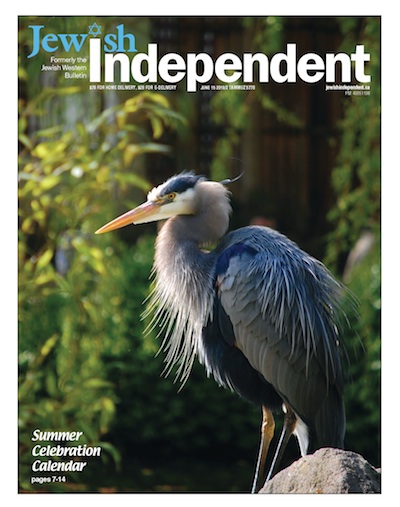
image - JI Summer Celebration 2018 coverPictured on the cover of this year’s Jewish Independent Summer Celebration issue is a great blue heron. Winnifred Tovey, who lives in Vancouver, shot the photograph in Dr. Sun Yat-Sen Park. The heron was a frequent visitor, and Tovey has taken scores of photos of him over the years. When she lived in Strathcona, Tovey would walk to the park and the gardens next door every day after work. The heron would usually hang out in a tree or elsewhere higher up, waiting for the gates to close and the tourists to clear out, but occasionally he’d pose for a picture. Tovey took up photography when she lived in New York City, 2000-2007. Perhaps because New York was such a city, Tovey took to hanging out in wildish places and photographing birds. She’s kept it up ever since.

Format ImagePosted on June 15, 2018June 14, 2018Author Winnifred ToveyCategories From the JITags birds, summer
Check out JI’s 2018 Summer Celebration calendar!

Check out JI’s 2018 Summer Celebration calendar!

Click here to check out the 2018 JI Summer Celebration calendar

Format ImagePosted on June 15, 2018June 14, 2018Author The Editorial BoardCategories From the JITags calendar, summer
Kick scooting for a school

Kick scooting for a school

Gil Drori and Bex Band are kick scooting down the West Coast to raise money to build a school in Tanzania. (photo from Gil Drori)

Gil Drori and Bex Band are en route to the Mexican border. They left from Vancouver last month. What’s newsworthy is how and why. They will be making the journey entirely by way of kick scooter – that’s right, not electric scooter, but kick scooter, the glorified skateboard with safety rails, and they will be doing so to raise money for a school in Africa. They are calling their adventure Kicking the States.

“We decided to do a charity challenge like no other that would help raise money to build a school in a poor village in Tanzania. We visited the village and the half-built school last year and saw the reality and hardship that the children are living in,” Drori told the Jewish Independent in an email interview. “It wasn’t easy to see but we wanted to do something positive, which is how the idea for Kicking the States came about.”

The journey is about 2,500 kilometres long and will take the couple three months. It is, as they say, “entirely muscle-powered.” Drori and Bend have had to pack very lightly to fit all their gear into their modified front pannier, so they are carrying just a tent, sleeping bags and a spare change of clothes.

“When we first thought of the idea, it seemed an impossible challenge, which is exactly why we went for it,” Drori told the JI.

Drori was born in Jerusalem and grew up in Zichron Yaakov. He met Bend while traveling in Guatemala. He’d recently finished his army service and Bend, university. Despite having completely different backgrounds, they “instantly clicked.” They now both live in the United Kingdom, where Bend comes from, and call London home, although they still visit Israel regularly. They recently celebrated their third wedding anniversary.

A kick scoot journey of this kind has never been attempted before, so there are no precedents, and Drori and Bend are learning as they go. “It’s a real adventure!” said Drori.

They hope to raise a total of $10,000 along the way, through sponsorships and by delivering free talks at events for which admission is by donation.

Two years ago, Drori and Bend were working regular jobs, Drori in IT and Bend in teaching. They decided to leave the city life to hike the Israel National Trail, having never done anything like it before. It took two months to complete and, from that point, they have been attracted to adventure as a way of exploring and seeing of what they are capable. They now both work as digital nomads, which gives them the flexibility to keep taking on new challenges, like Kicking the States.

“I think the simplicity of traveling with just a bag with everything you need and working your body each day is really appealing,” said Drori.

Before taking on their latest adventure, they did a four-day mini-trip on scooters, which showed them that it was possible.

“We’ve had a tough but great first two weeks on the expedition,” said Drori. “Physically, it has been very demanding and we have been scooting distances of 30 to 50 miles a day [50 to 80 kilometres], so are left achy and tired. Hills also pose a challenge and we have to get off and push the scooters uphill, which is not easy with all our gear attached.”

Most days, Drori and Bend have no idea of where they’ll be sleeping that night. They have been reliant on people offering to host them, as well as staying at campsites and even sleeping in the yards of strangers. “It has been quite tiring sometimes, living with that uncertainty each day,” said Drori, “but we are trying to embrace the excitement that that also brings.”

The two have faced setbacks every day so far, from road blockages, wrong turns, running low on food and fatigue. Drori said focusing on the money they have raised is what gets them through.

“The children we met in Tanzania are living in real hardship and their only hope of escaping is by getting an education,” said Drori. “They are fed two meals a day at the school, learn to read and write, leave with qualifications and, more important than that, confidence in themselves. We believe that every child should have a right to an education no matter what their circumstances, which is why we are so passionate.”

Drori said they have been surprised by the amazing people they have met along the way. “It’s been the absolute highlight,” he said. “Such kind and wonderful people who, despite us being strangers, have hosted us for a night, fed us or made generous donations to the charity. We’ve met people from all walks of life and have heard so many interesting stories. It sounds cliché, but it restores your faith in humanity. People really are good!”

Drori stressed that 100% of the money raised goes directly to the school. “We really hope that people will support us and get behind this cause,” he said.

People can donate at justgiving.com/kickingthestates.

Matthew Gindin is a freelance journalist, writer and lecturer. He is Pacific correspondent for the CJN, writes regularly for the Forward, Tricycle and the Wisdom Daily, and has been published in Sojourners, Religion Dispatches and elsewhere. He can be found on Medium and Twitter.

Format ImagePosted on June 15, 2018June 14, 2018Author Matthew GindinCategories WorldTags Africa, fundraising, Gil Drori, kick scooting, tikkun olam
Ageism and advocacy

Ageism and advocacy

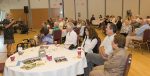
Wanda Morris of the Canadian Association of Retired Persons speaks at the Jewish Seniors Alliance Spring Forum May 13. (photo from JSA)

The annual Jewish Seniors Alliance Spring Forum was held on May 13 at the Peretz Centre for Secular Jewish Culture. Even though it was Mother’s Day, attendance was strong, with 70 to 80 enthusiastic attendees enjoying a lively afternoon presentation and discussion.

Ken Levitt, president of JSA, introduced the program, reminding everyone of JSA’s motto, “Seniors Stronger Together.” He explained that, among other things, JSA is involved in advocating for a national pharmacare initiative, as well as helping older adults become more self-reliant, thus enabling them to stay in their homes longer. He spoke about the Chai Tea, which was held on June 10, and honoured Serge Haber, who has been instrumental in the JSA, on the occasion of Haber’s 90th birthday. Levitt then introduced Wanda Morris, the forum’s guest speaker.

Morris is vice-president of advocacy for the Canadian Association of Retired Persons (CARP). Prior to that, she was chief executive officer of Dying with Dignity Canada, where she led a strategic campaign for legislative change, leading to the Supreme Court of Canada’s decision in the groundbreaking case Carter v. Canada for the right to die with dignity. In the process, Morris established her reputation as a key influencer and go-to commentator in national discussions on issues of importance to all Canadians, particularly on issues pertaining to aging. She brings to CARP years of successful advocacy and policy development, plus a track record of fundraising results and business expertise gained from three decades as a chartered professional accountant. Morris is a regular contributor to the Vancouver Sun.

Morris began by talking about some problems experienced by many elder adults, such as having to spend more than 30% of their income on housing, especially when that income is fixed; the high cost of prescription drugs; the long wait times for medical procedures; the long wait times in emergency rooms; and the difficulty of finding a family physician. In this context, she introduced the audience to the term “GOMER” – “get out of my emergency room.”

There are numerous challenges facing older adults and there are many more of them all the time, she said. For example, there are more Canadians over 65 years old than under 15, 1,000 Canadians turn 65 daily, and centenarians are the fastest growing demographic.

Morris pointed out that ageism is one element that is making life more difficult: it is harder to find work as we age and doctors prefer not to take on older patients, as they tend to have more health issues. There are also many safety issues that involve getting around in the community; for example, the short time green lights allow for crossing the street, the lack of benches for resting and the few public washrooms. In addition, there are often long lines in such places as airport security or in supermarkets. Ageism starts with disrespect and can lead to neglect and abuse, said Morris.

So, what are the solutions? Engagement is the most important factor, she said. Anger is not helpful but active advocacy in the areas of media, politics and bureaucracies can have an effect. The approach must be respectful and concise, she said. Point out when people make ageist jokes but do it in a non-threatening manner, she suggested. And stories of individual experiences can be more effective than long tirades – Morris gave the example of a Sears employee who had worked there for many years and was left with little or no pension.

CARP has more members across Canada than all the political parties combined, and can thus have a strong effect on the political process in their advocacy for seniors. They can work together with other seniors groups for change in such areas as pharmaceutical policy. CARP’s largest groups are in Ontario, said Morris, but the organization is hoping to revitalize the B.C. chapters.

Morris’s presentation was followed by a spirited question-and-answer period. Most of the questions focused on health care and its costs. Morris said it was reorganization rather than more money that could be the solution. As an example of this, she noted the number of seniors taking up acute care beds at a very high cost because of the lack of home care and/or live-in facilities like long-term care. Other topics touched upon were the addressing of incontinence by having more staff for regular toileting; advance directives about death and dying; using the term “rewire” rather than “retire”; and shuttle buses to bring seniors to cultural events, thereby reducing social isolation.

After the discussion, Ezra Shanken, executive director of the Jewish Federation of Greater Vancouver, gave greetings to all and JSA’s Gyda Chud thanked Morris for elevating our voices with new and powerful information focused on current and future solutions. Chud pointed out that stories, as Morris had said, are important not just for children, but also for adult learning. Everyone then enjoyed snacks and desserts by Gala and shmoozed.

JSA is dedicated to enhancing the quality of life of all seniors, by providing peer support services, advocacy for seniors’ issues, education and outreach. For more information, visit jsalliance.org.

Shanie Levin, MSW, worked for many years in the field of child welfare. During that time, she was active in the union. As well, she participated in amateur dramatics. She has served on the board of the Jewish Federation of Greater Vancouver and is presently on the executive of Jewish Seniors Alliance and a member of the editorial committee.

Format ImagePosted on June 15, 2018June 14, 2018Author Shanie LevinCategories LocalTags CARP, JSA, seniors, Wanda Morris
Traveling with family

Traveling with family

Levinsky Market (photo by Daniel Dodek)

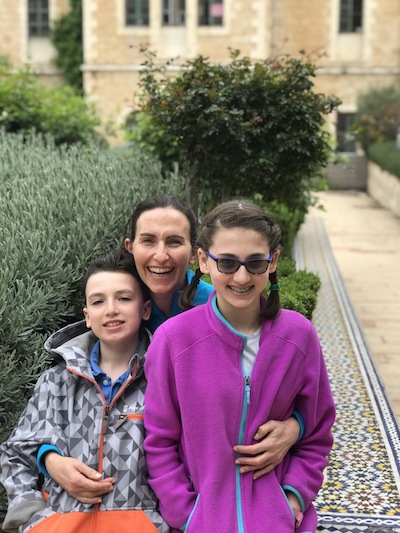
The decision to travel with your family to Israel is a big one. It’s so expensive and the long distance requires going for at least two weeks to make it worthwhile. My husband and I debated for years on the merits of taking our children on such a trip. Finally, our daughter’s bat mitzvah convinced us it was time. At nearly 13, she would get a lot out of it, and our 11-and-a-half-year-old son seemed ready as well. To mitigate jet lag, I traveled a week early with the kids to London, England, where we laid low, staying with friends and taking in a few sights. We then met my husband in Jerusalem.

photo - Michelle Dodek with Max and Naomi
Michelle Dodek with Max and Naomi. (photo by Daniel Dodek)

The morning after we arrived, we went on a walking tour. Our guide, Dvir, specializes in tours of the Old City, which must be done on foot. Not only did he take us to all of the highlights, find us the best food in the Old City and explain the geopolitics of Jerusalem but, also, he knew where to find all of the clean toilets. And our children surprised us with the knowledge they had gleaned from their years of Jewish education, enriching our experience, as well. That day, we walked more than 13 kilometres, helping us sleep well and rid us of any jet lag that might have been lingering.

The next day, we returned to the Old City to buy special gifts of Judaica, and managed to pick up plenty of beautiful treasures for ourselves. We finally found use for our son’s bargaining skills, which had previously only been used to negotiate things like screen-time and treat consumption.

One of the best decisions we made was to stay in apartments. With two preteens, the need for food sometimes comes fast and furious. Knowing breakfast was in the fridge and we could make nutritious snacks to take along with us every day contributed enormously to the success of our trip. The other element that made it the best vacation we’ve ever had with our children was the planning my husband did, combining some days with a tour guide and other days with age-appropriate activities. Since neither of us is interested in driving in Israel, he also worked our plans around all the different kinds of transit. Our centrally located lodging enabled us to walk many of the places we wanted to go.

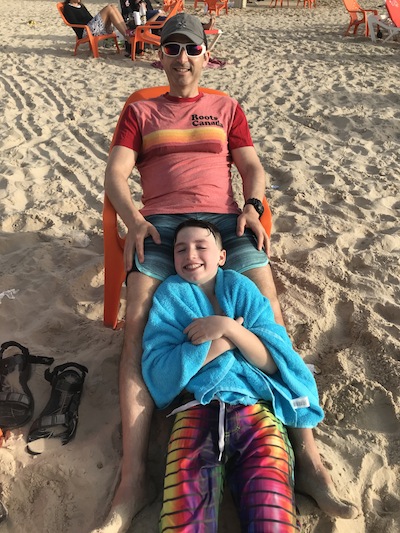
photo - Daniel and Max Dodek enjoy the beach
Daniel and Max Dodek enjoy the beach. (photo by Daniel Dodek)

We were invited by a friend, who was also visiting Israel with her family, to join their tour one morning of an agriculture reserve called Neot Kedumim. Near Modi’in, the site is of archeological significance and takes visitors back to biblical times through the landscape, agriculture and activities. Our experience included tree-planting, za’atar-grinding, pita-making, cooking and pulling water up from a cistern. My husband’s dream now is to spend his birthday working as a shepherd there. Another morning, with the same friends, was spent in fierce competition at the Tower of David doing something called the Amazing Race. It was good fun and educational, too.

We ventured one windy day to Ein Gedi and did a hike. Luckily, before driving to Masada, we discovered that, when it’s too windy for the cable car to run, Masada is closed. However, the Dead Sea was open for business as usual and, while we took in the experience of the mud and the floating, we also loved the variety of people from around the world visiting the waters.

In Jerusalem, we loved the green spaces like Station One. Formerly a train station and tracks, it is beautifully landscaped and is perfect for cycling, so we rented bikes. The public art in Israel makes the parks and streets even more interesting. Markets are favourites when we travel and Machane Yehuda did not disappoint. We returned there a number of times to buy Israeli essentials like halva, rugelach and dates, as well as more mundane food like fruit, vegetables and bread. The dinner scene is like the best food court in the world.

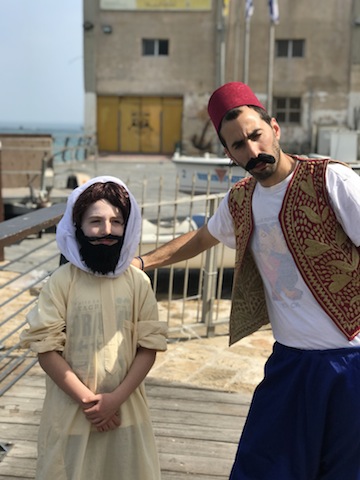
photo - Max Dodek dressed as Aaron Chelouche, founder of Neve Tzedeck, and Noam Rumsack, the guide
Max Dodek dressed as Aaron Chelouche, founder of Neve Tzedeck, and Noam Rumsack, the guide. (photo by Daniel Dodek)

We all enjoyed the food in Israel. Gone are the days when every corner had falafel, fly-covered shawarma and pizza with corn and tuna. You can still find those delights in a few places but, these days, no matter what you like to eat, you can find it in Israel (except on Shabbat or holidays in Jerusalem). Keeping kosher for Passover, once the holiday began, was certainly easier than we find it in Vancouver.

Two days before Passover started, we took the bus from Jerusalem to Tel Aviv. Comfortable, cost-effective and an experience in Israeli culture, the bus took only 45 minutes. Our lovely apartment in Tel Aviv was in an area in transition. Just over a block from the beach and a short walk from Shuk HaCarmel (where we went almost daily), the location was excellent. We were able to walk to many places, including Sarona (the market is like an upscale Granville Island), Shenkin (shopping), the Tachana (eclectic Israeli items) and Neve Tzedeck (artists and fancy touristy stores). We ended every day relaxing at the beach on the powdery sand.

The seder was delightful at my cousin’s house in Ramat Hasharon. Seeing my secular Israeli cousins argue over the tunes and forget the words occasionally showed us that they observe Passover similarly to how we celebrate it. The only difference was that they served twice as much food as I do, including seven types of meat. The food was almost as unreal as the traffic jam at 12:30 a.m., as people left their respective seders.

Other excellent parts of our trip included a fun and informative walking tour of Jaffa. Our guide, Noam, dressed in Turkish garb of 1905 – and, for awhile, our son dressed up as well, beard and all. We spent a day in Ramat Aviv, between the Museum of the Diaspora (Beit Hatfutsot) at Tel Aviv University and the Palmach Museum, just down the road. All of us took full advantage of the many types of exercise equipment in the public parks all around Tel Aviv and rode bikes along the Yarkon River, in addition to enjoying the lively promenade (Tayelet) along the ocean. One day, we took a fabulous full-day private tour up north to Akko, Haifa and Caesarea. The guide enabled us to get the most out of the day.

When we saw the family dynamic start to go sideways, we split up. Our ability to keep good snacks handy and to make sure everyone got enough outdoors time each day made everything we were able to see and do a wonderful experience for all of us. I would recommend a trip to Israel to anyone.

Michelle Dodek is a freelance writer living in Vancouver who spent enough time in Israel in her youth to speak sufficient Hebrew to communicate with taxi drivers and vendors in the shuk.

Format ImagePosted on June 15, 2018June 14, 2018Author Michelle DodekCategories TravelTags family, Israel, travel

Posts pagination

Previous page Page 1 … Page 357 Page 358 Page 359 … Page 650 Next page
Proudly powered by WordPress