Skip to content
  • Home
  • Subscribe / donate
  • Events calendar
  • News
    • Local
    • National
    • Israel
    • World
    • עניין בחדשות
      A roundup of news in Canada and further afield, in Hebrew.
  • Opinion
    • From the JI
    • Op-Ed
  • Arts & Culture
    • Performing Arts
    • Music
    • Books
    • Visual Arts
    • TV & Film
  • Life
    • Celebrating the Holidays
    • Travel
    • The Daily Snooze
      Cartoons by Jacob Samuel
    • Mystery Photo
      Help the JI and JMABC fill in the gaps in our archives.
  • Community Links
    • Organizations, Etc.
    • Other News Sources & Blogs
    • Business Directory
  • FAQ
  • JI Chai Celebration
  • JI@88! video

Recent Posts

  • Story of Israel’s north
  • Sheltering in train stations
  • Teach critical thinking
  • Learning to bridge divides
  • Supporting Iranian community
  • Art dismantles systems
  • Beth Tikvah celebrates 50th
  • What is Jewish music?
  • Celebrate joy of music
  • Women share experiences 
  • Raising funds for Survivors
  • Call for digital literacy
  • The hidden hand of hate
  • Tarot as spiritual ritual
  • Students create fancy meal
  • Encouraging young voices
  • Rose’s Angels delivers
  • Living life to its fullest
  • Drawing on his roots
  • Panama City welcoming
  • Pesach cleaning
  • On the wings of griffon vultures
  • Vast recipe & story collection
  • A word, please …
  • מארק קרני לא ממתין לטראמפ
  • On war and antisemitism
  • Jews shine in Canucks colours
  • Moment of opportunity
  • Shooting response
  • BC budget fails seniors
  • Ritual is what makes life holy
  • Dogs help war veterans live again
  • Remain vital and outspoken
  • An urgent play to see
  • Pop-up exhibit popular
  • An invite to join JWest

Archives

Follow @JewishIndie
image - The CJN - Visit Us Banner - 300x600 - 101625

Category: News

Okanagan’s New Year

The Okanagan Jewish community celebrated the High Holidays with spiritual leaders Rabbi Larry Seidman and Rabbi Linda Seidman from California officiating at the services. The husband-wife team had prepared special pamphlets for everyone in the community to be able to participate.

There was an erev Rosh Hashanah service on Oct. 2, as well as morning services the next day, which were followed by a potluck luncheon. For Yom Kippur, there were also two services, with Kol Nidre on the erev and a day-full of services on Oct. 12, which included a discussion period, Yizkor and a break-fast potluck.

The services were all well-attended and Rabbis Larry and Linda were warmly welcomed to Kelowna and to the celebrations.

Rabbi Larry has a background in research and management, encompassing communications, satellites, aerospace, wind energy and telemedicine. He holds many degrees, as well as being skilled in engineering and management, and has been sought after for presentations. He has given talks around the world.

Throughout his career, he has been dedicated to Jewish practice and study, having served as a lay leader of minyans and Torah study groups, and has continued to pursue both formal and informal Jewish education. A few years ago, he retired from his position as a senior manager in Phantom Works, the research and development organization of the Boeing Company, which has allowed him to increase his engagement in Jewish activities.

He was ordained as a rabbi by the Academy for Jewish Religion, in California, and is a member of the Southern California Board of Rabbis. His practice is dedicated to being a rabbi who combines Jewish tradition with modern thought.

A 2010 ordinee, Rabbi Linda currently serves as a prison chaplain in Orange County, Calif. Donning her uniform and bullet-proof vest, Rabbi Linda, who is certified as a deputy chaplain, works with the county jails, offering counseling and other services to 80 or 90 people per month. “If anybody had told me 10 years ago, when I was an aerospace engineer, that I would be doing this, I would have said ‘in your dreams,’ but life takes funny turns,” she said.

Admitting that she failed at retirement, she said she became interested in the Academy for Jewish Religion, which is a non-denominational rabbinical school, when she heard that it offered a part-time program. She enrolled a year after her husband. Today, in addition to the jail chaplaincy, she serves as the chaplain at a hospice, performs an occasional funeral and leads services and Bible study at a senior living facility.

Rabbi Linda believes that there is “a tremendous amount of security in knowing what to do and when to do it,” and that traditional Judaism meets the needs of some people who are happy and comfortable with their roles. But, she feels that women bring another approach to Judaism. “We see things differently than men,” she said. In other areas, however, such as women’s health and children’s issues, “our concerns are rooted in same values, and there is plenty to unite us.”

* * *

In other recent OJC news, one of the community’s newer members, Philippe Richer-Lafleche, became a bar mitzvah on Oct. 15. Not having had the opportunity to have a bar mitzvah when he was a boy, Richer-Lafleche had looked forward to the special day, which took place after many months of studying under the guidance of OJC’s religious chair, Evan Orloff. The services were followed by a potluck lunch, which included dishes provided by Richer-Lafleche.

* * *

Finally, OJC celebrated Sukkot on Oct. 17 with a mixture of 60 adults and children in attendance. The rains dispersed and the ground dried so that everyone could enjoy the experience of building and decorating the sukkah.

A special thank you to Natasha for organizing crafts, and to the parents who helped construct the sukkah without the help of Google or Siri. The construction was followed by a potluck inclusive of pizza cooked by one of the OJC Golf Classic food sponsors, Mr. Mozzarella Pizza and Wings.

* * *

The Okanagan Jewish Community Centre’s mission “is to work towards building a strong and unified Jewish community in the Okanagan Valley of British Columbia. The OJCC encourages an inclusive atmosphere of understanding and respect amongst Jews of different backgrounds, and maintains cooperative relationships with other regional and national Jewish community organizations. The OJCC also aims to promote a positive and active relationship with the Okanagan community at large.”


Posted on November 11, 2016November 11, 2016Author Okanagan Jewish CommunityCategories LocalTags High Holidays, Jewish life, Judaism, Okanagan
Getting through menopause

Getting through menopause

Harriet Berkal unveils the secrets of menopause. Berkal began the support group Menopause Matters after experiencing a lack of help when she went through that stage of life. (photo by Manny Berkal-Sarbit)

Medical advocate Harriet Berkal recalls eagerly anticipating going through menopause, imagining it to be a fabulous life stage without having a period every 28 days or so.

“Now, if I could go back and have my periods and not go through this other nonsense, I would say, give me my periods back,” Berkal told the Independent.

Berkal works as an executive financial consultant for Sarbit Advisory Services in Winnipeg and has been struggling with menopause-related issues for the past seven years. She has leaned from experience that there is next to no help out there for dealing with the effects of menopause, and this has led her to take matters into her own hands and create a support group.

“One problem with this issue of menopause is, if you complain to a physician about something like weight gain, a symptom of menopause, they bundle everything you say after that behind that carriage,” said Berkal. “So, my GP missed the fact that I had a thyroid condition, because it was thrown into menopause – the same way that people get thrown into the irritable bowel syndrome (IBS) or the fibromyalgia hole … where anything you complain about is automatically assumed to be related to that, when it might not actually be.”

Menopause symptoms for many women include hot flashes, night sweats, migraine headaches, bladder infections, gastroesophageal reflux disease, lost libido, and painful intercourse. There are also some very rare reactions, such as feeling as though you have bugs crawling all over you, and emotional depression or anxiety, which are also related to hormonal fluctuations.

While typically menopause begins in one’s 50s, it can start in one’s 40s, where the cycles become more erratic, and, in some cases, even earlier, from induced conditions via cancer treatments, for example.

As Berkal searched for solutions, she decided to share the information she gathered with other women undergoing menopause. She approached Winnipeg’s Jewish Child and Family Services (JCFS) about starting up a learning and support group.

The idea was welcomed and the group was called Menopause Matters. Some 20 women meet once a week for five weeks to learn about different approaches to dealing with menopause symptoms and management.

“Most of the primary group are those in the throes of menopause and who aren’t functioning well,” said Berkal. “We had about 18 at last week’s meeting. It was an emotional meeting. There were some people who were extremely – not just frustrated with the system, but at the end of their rope. They don’t know who to turn to, what to do. We provide them, each week, with a different speaker and go through the whole gamut of solutions from traditional to non-traditional.”

Some education is provided by the clinic Vitality Integrated Medicine, which is run by a former pharmacist. Participants are informed about drug interactions, different kinds of tests to help determine actual lacks in their systems, and three different kinds of estrogen. According to Berkal, what often happens is that menopause-affected women consult their doctors and are told they need estrogen, and then they just take whichever one is prescribed.

Recently, Menopause Matters participants had a guest speaker who is an acupuncturist discussing stress control and how it affects hormones, and various acupuncture relaxation techniques that could help. “She brought needles and tried them out on some people,” said Berkal. “People were appreciative of that approach.”

Another scheduled guest speaker at the time of Berkal’s interview with the Independent was gynecologist Dr. Maggie Morris. She was to speak “about mainstream methods for dealing with things like Premarin estrogen application.”

Berkal’s personal experience with conventional medicine in general is that its practitioners are uncooperative from the moment she mentions that other approaches will be presented.

“The pharmacies have these ready-made solutions,” she said. “They aren’t one-size-fits-all solutions in my mind. We’re trying to provide people with a range of different solutions and methods to cope with this. One solution doesn’t do everything. You don’t want to mask symptoms. You want to get to the root. Everyone’s jockeying for position here and everyone has different approaches, so you should try figuring out what system fits you the best.”

Another speaker booked to address the support group is to talk about the importance of exercise, while another will highlight a treatment called Mona Lisa Touch, which involves the use of a laser inserted into the vagina to stimulate vaginal collagen production.

“It rejuvenates the tissue in the vagina without hormones, so you can get increased libido and increased moisture,” explained Berkal. “It helps create a better balance of health in the vagina.

“Many women get bladder infections, because the bladder and the vagina are closely linked. And, if you don’t have the right environment in the vagina, which is decreased because of menopause, you can end up with UTIs [urinary tract infections] … which I had probably 10 of last year before I started treatment.”

When Berkal underwent menopause, she said, “It was a pretty extreme and exacerbated reaction. Mood swings are a very big issue. Last week, there were several women in the group who said, ‘Does anyone feel like they’re going crazy?’ Almost everyone raised their hand.

“Hormones are so powerful. When they are working great, that’s great. When they are depleted, you are left with a shell of a body, susceptible to bone loss, memory fog, you think you’re getting the early stages of Alzheimer’s … but really, you’re not.”

Berkal believes that integrated medicine is the right direction and, in fact, integrated clinics are popping up in many places.

“But, the fact that I couldn’t find a menopause support group was mind-boggling,” said Berkal. “I approached the Mature Women’s Clinic at the Victoria Hospital and asked if they would start a support group. They said ‘no.’

“Why would they not want to help women in need? Yet, when the pharmaceutical companies sponsor a forum for one of their gynecologists to speak, they get thousands of women to come down who are in dire need of help … but they are only giving one approach.”

Shelley Levit, a social worker at JCFS, was very receptive to the integrated approach Berkal described, and the concept of letting women choose for themselves what they want to pursue.

Berkal hosted a Menopause Matters free, five-week support group from Sept. 15 to Oct. 13, via JCFS.

“We call it ‘the Sisterhood of Sharing,’” said Berkal. “Sharing is deeply required in order to feel camaraderie and kinship with these other women who really have no one else to talk to. It wasn’t intended to be targeted at Jewish women specifically. It’s like cancer – not specific to any ethnicity.”

Berkal wants to see if the group would be receptive to having partners and spouses join, so they can be present and hear from other women.

Rebeca Kuropatwa is a Winnipeg freelance writer.

Format ImagePosted on November 11, 2016November 11, 2016Author Rebeca KuropatwaCategories NationalTags health, menopause, Winnipeg
Making a life in Israel

Making a life in Israel

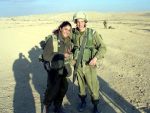
Emily Rose and Aviv Eisenstat in the Israel Defence Forces’ officer’s training school in 2008. (photo from Emily Rose)

When Emily Rose, 28, moved to Israel almost 10 years ago, her plan was to serve in the Israel Defence Forces and then return to Winnipeg. It didn’t happen quite as planned.

Rose was born in Odessa, Tex., and grew up in Winnipeg. Taking a similar road as many Jewish kids in the city, Rose studied at Gray Academy of Jewish Education (GAJE).

“The Winnipeg Jewish community is truly saturated with role models for social justice and it had a major impact on me growing up,” said Rose. “I grew up watching my aunt, Faye Rosenberg, who works for our Jewish community, help bring hundreds of Jews to Winnipeg from Argentina, where they suffered from antisemitism, and watching my best friend’s dad work tirelessly in court to help victims of residential schools receive compensation from the government.

“Winnipeg is an incredibly Zionist and supportive community,” she added. “The longer I am away, the more I appreciate what a wonderful community it really is.”

When Rose was 14, she went to Israel on a Jewish Federation of Winnipeg Partnership 2000 (or Gesher Chai) trip, which sent 10 high school students from GAJE to their sister school, Danziger, in Kiryat Shmona.

She fell in love with the city and the people. “My host family had three sisters and I was thrilled because, up until then, I only had big brothers. And, I remember writing to my mom, ‘Now I have three sisters!’ on the first night. I realized at that point that all my new friends in Israel would be going to the army soon and I remember thinking I had the responsibility to do that as well.”

This is what led Rose to move to Israel at the age of 18, starting with a mechina (a pre-military program) in her first year there.

She lived in Sde Boker in southern Israel and volunteered as an English teacher’s aide in an unrecognized Bedouin village. “Can you think of anything more polar opposite to a very cold Winnipeg, Man., than the middle of the Negev Desert?” she quipped.

“Your first year in Israel is always the most challenging, I think. There were a lot of tears. I was the only foreigner in the program, so I had to learn Hebrew very quickly. But, the program itself was also very intense, because we had classes every day and political tours and hikes every month.”

Something Rose was especially thrilled about in Israel was getting to sleep outside. As a child, she eagerly anticipated going to summer camp for canoe trips and sleeping under the stars.

“When you see the stars in the Negev, you really think it’s got to be the best seat in the house,” said Rose. “And, that first year, my roommate used to wonder why I’d always drag my sleeping bag out of our room to sleep outside.”

The next year, Rose joined the IDF as a lone soldier and served as a combat fitness officer. She recalled that some of her trainees used to call her “M&M,” as she was “hard on the outside, but sweet on the inside (and very small).”

She added, “My first job was training infantry soldiers on a combat training base where I worked with a unique battalion of Druze soldiers. The soldiers I worked with spoke Arabic. This really sparked my interest in the language, which is why I studied Modern Standard Arabic (MSA) in school.”

Today, Rose serves in reserve duty in Jerusalem’s Homefront Command. Her job is to communicate with the civilian population in Jerusalem during times of emergency.

A few years after her IDF service, Rose volunteered at the Michael Levin Centre for Lone Soldiers, which helps soldiers before, during and after their service. At the centre, the first thing she was asked to do was to tell those thinking about joining the IDF “don’t.”

Rose explained, “If we couldn’t convince them not to, then we’d help them as much as we possibly could. Nobody told me not to join the IDF, but also no one would have been able to convince me not to. And, the day I joined, I remember I wasn’t nervous – I just knew it was the right decision.

“I also didn’t plan on staying. I thought I’d serve for two years and then return to Canada. Here I am, almost 10 years later.”

After the army, Rose took Middle Eastern studies (along with MSA) at Hebrew University of Jerusalem. She still lives in Jerusalem, where she recently started writing for the Times of Israel.

Just prior to that, she was an editor at Israel National News, where, she said, she mostly wrote the breaking news but also covered longer form stories. “A few weeks ago,” she said, “I broke a story with exclusive footage of a former Australian minister who got caught in a firefight clash between Kurdish forces and ISIS in Iraq.

“The plight of the Kurdish people is an issue that is very close to my heart. I jumped at the chance to write about it. I’m also so proud to say I come from Winnipeg, [as] our Jewish community sponsors Operation Ezra, bringing Yazidi refugees safely to Canada.”

When on leave from the army a few years back, Rose returned to GAJE to speak to the students. When she visited Winnipeg this past summer, some community women stopped to say hello to her and her mom. “One of them told me that her grandson was going to be a lone solider, an IDF paratrooper, this fall … and she said that I’d spoken to him when he was in high school,” said Rose. “That was very nice, like coming full circle.”

Currently, Rose is working on a short story collection, a novel and three plays.

Her first play was presented at the JCC Berney Theatre in Winnipeg in 2006, the year she graduated high school. Called Radyo, it is about a group of high school kids in Kiryat Shmona who run their local high school radio station during the Second Intifada.

“The second play is a children’s musical I wrote called Don’t Touch the Glutch, which was performed as a part of the Next Wave of Musicals Festival in Montreal and then at the Centaur Theatre children’s series in 2013. It’s about a boy who gets lost in the zoo on a school field trip and discovers that the zoo has a whole host of strange creatures that only come out at night. My brother wrote the music and lyrics and I wrote the book. The show has an anti-bullying theme, because it’s a topic we both feel very strongly about.”

When asked about her feelings about Israel, Rose quoted Rabbi Abraham Isaac Kook: “The truly righteous do not complain about evil, but rather add justice; they do not complain about heresy, but rather add faith; they do not complain about ignorance, but rather add wisdom.”

She added, “Israel is in everything I write, in some form or another, and, though I may not always succeed, I try my best to contribute justice, faith and wisdom with my words.

“For now, I love reporting the news as it happens. Israelis, and those who care about Israel, want to stay informed and I feel privileged to be working with a team that is very committed to keeping our readers updated at all times.”

Rebeca Kuropatwa is a Winnipeg freelance writer.

Format ImagePosted on November 11, 2016November 11, 2016Author Rebeca KuropatwaCategories IsraelTags aliyah, IDF, Israel, journalism, Winnipeg
Unique rabbinical road

Unique rabbinical road

Sandra Lawson is studying at Reconstructionist Rabbinical College. (photo from Sandra Lawson)

Sandra Lawson, an African-American lesbian who converted to Judaism after being raised in a secular home, is now studying to be a rabbi at Reconstructionist Rabbinical College, in Wyncote, Penn.

Born in St. Louis, Mo., Lawson’s dad was in the military, so the family moved around a lot, though mainly stayed in the Midwest. Her dad was a military recruiter and career counselor.

“My dad was raised a Christian, but I really had no religious upbringing when I was a child,” Lawson told the Independent. “I knew about Jesus, and we would occasionally get invited to church, but there really was no religion in our house.

“On my mom’s side, we had a back story of an ancestor who was Jewish. Like folklore, it really meant very little to me until I started on this Jewish path myself.”

This path began when Lawson was an undergraduate student and needed another class to graduate. The only course available at the time was one on the Hebrew Bible, which Christians refer to as the Old Testament. The teacher was a Christian academic from Kenya.

“When I got to the class, the teacher told everyone they needed to get a Bible for the class,” said Lawson. “But, he said to not get a King James version, as, he said, it’s a bad translation.

“This class opened my mind a little bit to the Bible as a piece of literature. He made the Bible acceptable for me. It wasn’t a book to be feared. Years later, I have a Jewish girlfriend and her sister invites me for Shabbat dinner. I thought, I like this. It’s really cool. I shared with my girlfriend at the time that an early ancestor was Jewish, but that I know nothing about Judaism.”

From that first Shabbat dinner, Lawson went to her girlfriend’s family home every Friday night.

“They weren’t Orthodox,” said Lawson. “They were just a modern family that would stop everything for Shabbat. It was really cool. I loved the ritual. I loved how open the family was. I loved how they accepted and treated me.”

Around this time, Lawson met Rabbi Joshua Lesser of the Reconstructionist Congregation Bet Haverim in Atlanta. Lesser hired Lawson as his personal trainer and, over the course of the two or three years she worked in that capacity, their friendship evolved and he invited her to his shul.

“I was hesitant,” admitted Lawson. “I shared with him the story of my great-grandfather. Eventually, I did go and I fell in love with the community – not necessarily Judaism, at the time – but I loved the community. That’s how I got interested.

“I started going to services regularly. The community has straight people, gay people and kids but, mostly, it is a space where I felt like I could be myself – something I’d never experienced before in a religious community.”

Lawson went on to learn more about Judaism and, in 2003, she told Lesser she was thinking about converting. In the conversion classes she took, the teacher helped her see a broader view of Judaism.

“I loved the class,” said Lawson. “I loved learning about the Jewish calendar and reading the Bible again, as a piece of literature. I loved learning about Jewish history.”

After about a year of studies, the class was over. And, on Oct. 13, 2006 – the day before her 35th birthday – she converted to Judaism.

Lesser asked Lawson to be a congregational representative on the board for the gay members of the synagogue. A year later, when gay marriage was a hot topic in the presidential election debate, Lawson took her stance a bit further.

“It was sort of funny, because I didn’t know anyone in my gay life who was even thinking about trying to change marriage laws,” she said. “We were all just happy that we could be legally gay. Josh [Lesser] asked if I wanted to join the gay and lesbian task force, as they were coming to Atlanta to do some training. I was like, sure. And he’s like, the good thing about it is, they need more diversity. They need more black and brown voices on these issues.”

Lawson later joined a clergy-based group working on the issue. This group, according to Lawson, was all over the map as far as sexual orientation and most everything. But, what they did agree on was that the state had no business legislating what you did behind your own closed doors.

“The more I started to do volunteer work, the more I realized I wanted to have a more powerful effect, more ability to effect change … that I would need the title of rabbi … and here we are today, as I work on becoming one,” said Lawson.

“Obviously, I’m different. There aren’t a lot of rabbis that look like me. I think being on the edge of the fringes of Judaism allows me to be more flexible or more creative in the things I do.”

One of the required classes that Lawson took last year was on entrepreneurship and thinking outside of the box. During that time, she was approached by the Jewish owner of a local vegan café she went to often, asking if she would be willing to lead services at the café on Friday evenings.

“I went back to class and told my teacher about it,” said Lawson. “I wrote it up as a grant … so I had the grant to lead services at this Lansdale café (outside Philadelphia).”

They have been running services at the café for months now. Every Friday, Lawson shows up with two vegan challot and grape juice. Arnold (the café owner) sets up the place and invites friends and customers to stay for the service.

“Every time, we’ve had at least a minyan,” said Lawson. “It’s been a lot of fun. People can show up as they are, with their sandals, their shorts. We sing. We do a little Torah and welcome the Shabbat.

“People come because they want to see what’s happening in the café … I think it was last week, Arnold had a flautist there, and people came to hear this guy play the flute. Also, I think, in May, there was a couple there who were not Jewish, but they had been taking a Christian class on Judaism. The class was finished, they saw this service and came to learn more about Judaism.”

Next on Lawson’s mind is leading services outside. “I don’t know how I’m going to pull it off yet,” she said. “Right now, I’m in this stage of trying to get a lot of buzz around different ways that people can do Shabbat.

“My dream, I don’t know when it will happen, is to have a Shabbat morning service in the future, in a park. I’m someone who, I see God in nature a lot. To be running in the woods, when the sun is coming up, is the best way for me to pray in the morning. I know a lot of people could connect their Judaism to nature. I haven’t quite figured it out yet, but I hope to.”

Lawson is set to graduate rabbinical school in 2018.

Rebeca Kuropatwa is a Winnipeg freelance writer.

Format ImagePosted on November 11, 2016November 11, 2016Author Rebeca KuropatwaCategories WorldTags Jewish life, Judaism, Reconstructionist, spirituality
Ancient coins found

Ancient coins found

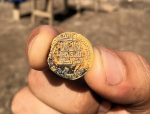
A 1,200-year-old gold coin fonud at Kfar Kama. (photo by Israel Antiquities Authority via Ashernet)

Two teenage students from the lower Galilee, Dor Yogev and Ella Dicks, who were participating in an Israel Antiquities Authority dig in nearby Kfar Kama, found some ancient coins. Included in the find was a 1,200-year-old gold coin inscribed in Arabic and mentioning the name of Muhammad and monotheism. The find shows that the people who lived at the location were there at the early Islamic period in the 7th and 8th centuries. The location of the dig, Kfar Kama, is the home of the Circassian community. The Circassians are a Sunni Muslim community closely allied with Israel; they participate fully in Israeli life, including their young men serving in the Israel Defence Forces.

Format ImagePosted on November 11, 2016November 11, 2016Author Edgar AsherCategories IsraelTags antiquities, archeology, IAA, Islam, Kfar Kama, monotheism
מגפת הפנטניל

מגפת הפנטניל

מגפת הפנטניל: חמש מאות חמישים וחמישה תושבים מתו בבריטיש קולומביה בתשעה חודשים. (צילום: Crohnie via Wikimedia Commons)

מצב חירום הוכרז במערכת הבריאות של מחוז בריטיש קולומביה לאור מגפת הפנטניל, הסם הקטלני שהורג מדי יום בממוצע שני מכורים במחוז. מספר המתים בבריטיש קולומביה מהסם, בתשעת החודשים הראשונים של השנה הגיע כבר לחמש מאות חמישים וחמישה. לעומת זאת בכל שנת 2015 מתו מהסם בסך הכל חמש מאות ושמונה איש. כוחות ההצלה והמשטרה מסתובבים באזורים בהם מרוכזים נרקומנים שברובם הומלסים, ובידיהם ערכות חירום להציל ממוות משתמשי יתר בפנטניל. להדגמת חומרת המצב: ביום אחד באחד החודשים האחרונים, בתוך כעשרים דקות הגיעו לחדר המיון באותו בית חולים באזור העיר דלתה, שמונה מכורים במצב קריטי ביותר כתוצאה מהשימוש בסם.

הפנטניל שנחשב לזול ונגיש הרבה יותר מהרואין והוא אף חזק פי חמישים ממנו, התחיל להגיע לשוק בקנדה ובארצות הברית לפני כארבע שנים. הוא מיוצר בעיקר בסין ומשם מגיע למעבדות בבתים פרטיים ברחבי בריטיש קולומביה. הסם מורכב ממשכך הכאבים החזק פנטניל (שהוא אופיואיד סינתטי) בתוספת חומרים שטבעם עדיין לא ידוע. ישנן שתי סיבות עיקרתיות לסכנת המוות מהשימוש בפנטניל. הראשונה – סוחרי הסמים מוכרים אותו כהירואין והמשתמשים מזריקים חומר רב כהרגלם (כי הם כאמור חושבים שמדובר בהירואין) ופשוט מתים ממנת יתר. השנייה – הסם מעורבב בחומרים רעילים והדרך על המות קצרה מצד המשתמש.

כידוע הזמר האמריקני פרינס מת משימוש בפנטניל. כעת המשטרה מנהלת חקירה מורכבת כדי לבדוק האם פרינס ידע מראש באיזה כדורים נגד כאבים הוא השתמש. או שהודבקה תווית לא נכונה על הבקבוק שהשתמש בו שהיה מלא בפנטניל.

מדד התיירות הרפואית: קנדה במקום הראשון ואילו ישראל במוקם השלישי והמכובד

קנדה ממומקמת במקום הראשון ואילו ישראל נמצאת לא הרחק אחריה במקום השלישי והמכובד, במדד התיירות הרפואית לשנת 2016, המתפרסם על ידי המרכז הבינלאומי למחקר רפואי (איי.איץ’.אר.סיי) שמושבו בפלורידה. המדד שמורכב משלושים וארבעה קריטריונים שונים כולל ארבעים ואחת מדינות.

עשר הראשונות במדד התירות הרפואית העולמי: ראשונה כאמור קנדה, שנייה בריטניה, שלישית כאמור ישראל, רביעית סינגפור, חמישית הודו, שישית גרמניה, שביעית צרפת, שמינית דרום קוריאה, תשיעית איטליה ועשירית למרבית הפלא קולומביה.

בחלוקה לפי אזורים: חמש עשרה מדינות מהמזרח התיכון ואפריקה (מהוות כשלושים ושבעה אחוז מסך התיירות הרפואית בעולם), תשע מדינות מאירופה (מהוות עשרים ושלושה אחוז מסך התיירות הרפואית בעולם), תשע מדינות מצפון ודרום אמריקה (מהוות עשרים ושניים אחוז מסך התיירות הרפואית בעולם) ושמונה מדינות באסיה (מהוות למעלה משמונה עשר אחוז מסך התיירות הרפואית בעולם).

המרכז הבינלאומי למחקר רפואי מצא עוד נתונים מעניינים לגבי התיירות הרפואית בעולם. חמישים ואחד אחוז הם נשים ואילו ארבעים ותשעה אחוז גברים. למעלה מחמישים ושניים אחוז הם נשואים, כשלושים ושניים אחוז רווקים ואילו כשישה עשר אחוז גרושים. למעלה משישים ושישה אחוז לבנים, כארבעה עשר אחוז שחורים, כשניים עשר אחוז לטינים וכשבעה אחוז אינדיאנים.

גם בשנתיים הקודמות (2014 ו-2015) ישראל מוקמה במקום השלישי. לישראל מגיעים כיום למעלה משלושים אלף תיירים בשנה לקבלת טיפולים רפואיים (שכוללים ניתוחים מוסבכים וטיפולים מורכבים). ובנוסף מגיעים לארץ למעלה משישים אלף תיירים להחלמה ומנוחה (בעיקר לאזור המרחצאות של ים המלח).

בהתאם לנתוני המרכז הבינלאומי למחקר רפואי, מדי שנה גדל מספר החולים שנוסעים לקבל טיפולים רפואיים במדינות אחרות ברחבי העולם. עם זאת אין מספרים מדוייקים של התופעה בקרב המדינות השונות והמדד מתבסס בעיקר על נתונים סטטיסטיים.

Format ImagePosted on November 9, 2016November 8, 2016Author Roni RachmaniCategories עניין בחדשותTags Canada, fentanyl, Israel, medical tourism, התיירות הרפואית, ישראל, פנטניל, קנדה
The aftermath of war

The aftermath of war

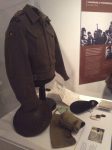
One of the displays in the exhibit Canada Responds to the Holocaust, 1944-1945, at the Vancouver Holocaust Education Centre until March 31. (photo by Cynthia Ramsay)

Canada Responds to the Holocaust, 1944-1945, opened on Oct. 16. The exhibit, said Nina Krieger, executive director of the Vancouver Holocaust Education Centre, at the event, “is the first major project of its kind, examining the encounters between Canadians and survivors of the Holocaust and the evidence of Nazi crimes at the end of the Second World War and its immediate aftermath.”

The VHEC commissioned the original research and writing under the direction of Prof. Richard Menkis and Ronnie Tessler, which includes a companion school program. “Students and other visitors will engage with a number of media elements in the exhibit,” said Krieger, giving the example of a tablet with survivor testimony, various interviews and other audio and video material.

The centre also commissioned a comic book by Colin Upton to accompany the exhibition, called Kicking at the Darkness, which will be given to every student participating in the school program, and is available to others for a suggested donation of $5.

Krieger thanked contributors and funders of the exhibition. She then introduced Menkis, an associate professor in the department of history at the University of British Columbia, and Tessler, a documentary photographer and a project consultant and editor for cultural arts groups, who also happened to be the first executive director of the VHEC, in 1990.

“Canada Responds to the Holocaust is a challenging exhibition,” began Menkis. “And it’s challenging, I think, for two reasons. First of all, because liberation is a complex phenomenon. Superficially, one might think, with liberation, of being free and being happy but, in fact, in the words of one of the Dutch survivors, it was, ‘not an undiluted joy’; to be free but then to be trying to look for family and the like. This exhibition very much tries to convey how complex liberation is.

“It is a complex phenomenon for three reasons,” he said. It is complex because, as the liberators (the soldiers) were in Europe, they were moving through new locations and coming up with new experiences. As well, liberation is the interaction between groups, each with their own assumptions and lived realties. And, finally, liberation is complex because of the disbelief at what had happened, and the difficulty in communicating what had been witnessed.

In addition to the voices of some of the survivors, the exhibit follows a number of different Canadians across Europe, including army chaplains, notably Samuel Cass. It also follows the First Canadian Army.

“Only three of the Western Allies had field armies on D-Day: the Americans, the British and the Canadians,” said Menkis. “The First Canadian Army was comprised of two corps,” he explained, but, also, “within the Canadian Army, as was the case with other armies, there were a variety of groups, such as Polish units as part of the Canadian Army, and there were Canadian units who were in, for example, the British army, which is why they are going to figure in Bergen-Belsen.”

The exhibit follows journalists, especially Matthew Halton, but also other CBC and Radio Canada journalists. “Moreover, we look at and follow the reactions of official war artists, official photographers and film crews and, finally, for the postwar period, we look at international agencies, such as the United Nations relief organization and the American Joint Distribution Committee,” said Menkis.

Using maps, archival photographs, news footage and video clips of interviews, Menkis touched on the highlights of the exhibit. He spoke of survivors coming out of hiding, of Canadians’ arrival at Vught, in the Netherlands, a camp that had been abandoned – the cover of Upton’s comic book is of this encounter – and Canadians’ reactions at Westerbork transit camp, also in the Netherlands. While outwardly appearing more well than other survivors, the 900 prisoners at Westerbork had experienced continual fear of being on one of the weekly deportations to an extermination camp.

A number of Canadian soldiers had been at Bergen-Belsen before they arrived at Westerbork, explained Menkis. “The effect of Bergen-Belsen was searing, and it affected, in some complicated ways, how the soldiers and others would view Westerbork,” he said, before sharing a quote from survivors Walter and Sara Lenz: “Shortly after the Canadians arrived it became clear that something was bothering them. They asked a number of questions that made little sense to us at the time, Why were we so well fed? Why were we not sickly, on the verge of death?

“In fact, as cruel as it may sound now, I had the feeling that our liberators were in a sense let down, for as we soon learned, they had steeled themselves for … another Bergen-Belsen.”

Noting that this was not just a view expressed years later, Menkis presented an excerpt of a letter Cass wrote to his wife on April 24, 1945: “I spent a good part of the day with our people [Canadians] at Camp Westerbork.… Everything looks so good on the surface…. With the papers full of the cannibalism of Belsen, it is almost a shock to find a camp where the survivors are all well and the physical surroundings good. But you can’t see the fear that people lived through every moment of their existence, nor can you see the 110,000 Jews who were herded like cattle on the transports.…”

While some people believed that things could return to the way they were before the war, that was not possible. A number of Jews felt they could not stay in Europe; they saw it as a graveyard, with no future. Many Jews looked to Palestine, but not everyone agreed with that. Menkis gave the example of Vancouver aid worker Lottie Levinson, who saw nationalism as the cause of what had happened and couldn’t understand why others would see Zionism as the resolution of the issue. “So, different approaches to what Jewish life would be,” said Menkis.

In the last part of his presentation, Menkis screened a video clip from an interview with war artist Alex Colville, which included some of the images he had drawn at Bergen-Belsen. Menkis also played an audio clip of an interview with Maj.-Gen. Georges Vanier, who went to Buchenwald shortly after its liberation with a group of U.S. congressmen. In his remarks, Vanier – one of the few Canadians who advocated for the acceptance of refugees before the war broke out – specifically referenced Jews as being victims, whereas most reports did not.

Rather than simplify this complex story, Menkis said that he and Tessler “chose to keep as many voices and perspectives as possible. Some of them may be uncomfortable to hear or see, but we wanted to do justice to the bewildering and poignant encounters of the time.”

When Tessler took to the podium, she explained, “The inspiration for Canada Responds to the Holocaust, 1944-1945, dates back to 2005, the 60th anniversary year of V-E Day, Victory in Europe Day. For that commemoration, Richard and I developed a CD for the Vancouver Holocaust Education Centre that teachers could use in one classroom session. Compact and tightly constructed, the themes were presented in short, crisp slides characteristic of PowerPoint presentations.

“The CD was a multi-media production – which the exhibition has retained. Along with text in point form, we included photographs, excerpts of articles, newsreels, eyewitness testimonies and art by Canada’s official war artists. Since that time, the 70th anniversary of the Second World War has passed and new research has been published, allowing us to expand and enrich the information that was in the PowerPoint.”

Many steps were required to “keep this complex story coherent,” said Tessler.

“The exhibition began with a year of research in archives across Canada, the Netherlands, Israel, the United States and Britain, and with locating the support material,” she said. “We were fortunate in this phase to have a good working relationship with several researchers and archives in the Netherlands. On the home front, we had access to the VHEC collections, and the assistance of a student intern.

“The next step was to arrange this mass of material into an easily readable and chronological narrative. In whittling down the accumulated information, it was essential not to lose sight of the historical overview. By including testimonies and other media, we could add individual, and sometimes opposing, perspectives on the events being portrayed. By adding photographs, the viewer gains a sense of place and time.

“The exhibition format also allowed us to display material objects,” she said. “For example, the Shalom Branch of the Royal Canadian Legion loaned the V-E Day edition of the Maple Leaf, a newspaper printed for the Canadian Forces, with the word ‘Kaput’ covering the front page. Dr. E.J. Sheppard of Victoria, one of the first soldiers through the gates of Westerbork transit camp in the Netherlands, loaned his battle uniform, pocket diary and a topographical map he carried in his tank that day.

“One of the most symbolic and touching objects in the exhibition is the yellow Jood star a newly liberated Jewish prisoner insisted on giving Sheppard in gratitude.

Another moment that gives pause is witnessing the large number of letters reproduced on a pillar in the gallery. Written by individuals and organizations seeking friends and relatives, they are but a smattering of the letters existing in just one archive in Montreal.”

The exhibit also includes “an antisemitic pamphlet printed in the Netherlands, and a 1943 poster ordering those with Jewish blood where, and when, to register with the authorities in The Hague … one of the most haunting objects in the exhibition is a facsimile notebook containing the weekly lists of deportees from Westerbork in the Netherlands to extermination camps in Poland: 100,657 people between July 1942 and September 1944 were, in most cases, sent to their deaths.”

Tessler thanked the many people who helped bring the exhibition to fruition, including Upton, who created the 24-page Kicking at the Darkness with the input of students in Menkis’ UBC course on Jewish identities in graphic narratives, and Canadian war historian Mark Celinscak, on whose research the section on the liberation of Bergen-Belsen concentration camp was based. She also thanked all the VHEC staff and Public, the design studio that designed the exhibition.

Canada Responds to the Holocaust, 1944-45, is at the VHEC until March 31.

Format ImagePosted on November 4, 2016November 4, 2016Author Cynthia RamsayCategories LocalTags Bergen-Belsen, Canadian Army, Holocaust, Second World War, VHEC, Westerbork
Temple Sholom’s roots

Temple Sholom’s roots

Left to right: Michael Schwartz of the Jewish Museum and Archives of British Columbia, Rabbi Philip Bregman, Rabbi Dan Moskovitz, Mike Harcourt and Chris Gorczynski. (photo by Cynthia Ramsay)

Lisa Wilson, special projects coordinator at Vancouver Heritage Foundation, welcomed the approximately 60 people who gathered at Trimble Park on the afternoon of Oct. 23 for the presentation of a plaque commemorating Temple Sholom’s first building, which was firebombed in January 1985.

A joint effort between VHF, Temple Sholom and the Jewish Museum and Archives of British Columbia, the plaque was the 86th presentation of a planned 125 in VHF’s Places That Matter project, which started in 2011, said Wilson. “Our goal is to raise awareness about the people, places and events that tell Vancouver’s history,” she said, “and we invited the public to nominate and vote online, and an independent site-selection committee selected 125 sites to receive a plaque.”

In anticipation of a website for the project, Wilson invited people to submit their memories of the original Temple Sholom building.

“I moved here in 1984 and I lived just down the street,” said Vancouver Deputy Mayor Heather Deal. “I had been here for less than a year when the fire happened, and I was shocked…. I moved here from Cleveland, Ohio, a city deeply, deeply divided along racial lines … and I was shaken to my core when this happened just down the block from me.”

Deal said Vancouver is a “great city in striving to overcome” intolerance. “I think we’ve come a long way and have a long way to go, and this is a great reminder of not forgetting that it is much closer to the surface than we think it is sometimes.”

She noted the importance of the Jewish community to the city of Vancouver, and acknowledged specifically the growth of the Temple Sholom community. “I welcome you all here to acknowledge something that’s happened and, out of that, the good that has come and the better city that we are today because we learn from our mistakes and we learn from other people’s lack of tolerance, so that we continue to move forward as a peaceful and tolerant city.”

Temple Sholom spiritual leader Rabbi Dan Moskovitz spoke of the Holocaust-related memorials he and his wife Sharon witnessed on a mission to Central and Eastern Europe this summer, stumbling blocks that indicate where a Jewish family lived or a Jewish business stood. This local memorial plaque is different, however. “This notes where we were, but it also acknowledges that we are still here,” said Moskovitz. “And though not in that physical space on West 10th, we are very much a part of the city in our ‘new’ home on Oak and 54th…. This is not a memorial plaque, but a testament rather to the roots – the seeds that were planted, the roots that grew – and to what has blossomed into a wonderful Reform Jewish community in Vancouver and, I think, an incredible member and partner in the larger faith community of our city.”

Cantor Arthur Guttman then led the group in Psalm 100, after which Philip Bregman, rabbi emeritus of Temple Sholom, briefly shared some of the congregation’s history, including the story of the firebombing and his role in helping save the synagogue’s Torahs, as the building was burning. There had been a previous arson attempt and vandalism to his car, which led the congregation to start putting iron bars on all the windows, as the police were not motivated to act. The job was almost complete when the arsonist struck again, throwing a Molotov cocktail into the one window without a grate.

Bregman spoke of his disbelief that such antisemitism could exist in Canada. He spoke of his phone call to then-mayor Mike Harcourt, who was at the plaque ceremony, and Harcourt and his wife Becky’s support of the congregation in its work to rebuild. The Harcourts attended services, said Bregman. “Mike and Becky showing up made a statement that was so very important: it was not the Jewish community that was attacked, it was Vancouver, it was Canada, it was our society that had been attacked.”

After the Temple Sholom bombing, said Bregman, there was also an attempt to torch the Chevra Kadisha, which was on Broadway and Alma at the time. “These were targeted events that were taking place,” he said. “The police were tremendously responsive then and thereafter.”

Bregman expressed his pleasure at the work that had been done to mark the place where Temple Sholom once stood, and how the congregation has grown since.

The plaque – which will be placed at 4426 West 10th Ave. – was presented by VHF board member Chris Gorczynski, who read it aloud. The event ended with Guttman leading those gathered in Oseh Shalom.

Format ImagePosted on November 4, 2016November 3, 2016Author Cynthia RamsayCategories LocalTags antisemitism, memorial, synagogues, Temple Sholom, tolerance
Part of Operation Overlord

Part of Operation Overlord

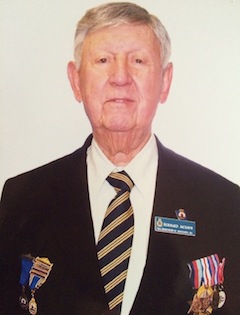
Bernard Jackson joined the British Royal Air Force Volunteer Reserve in 1941, and landed on a Normandy beach on “D-Day plus one”: June 7, 1944. (photo by Shula Klinger)

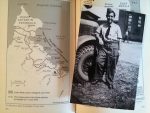
Bernard Jackson joined the British Royal Air Force Volunteer Reserve in 1941. The Second World War was in its second year and the Luftwaffe was bombing the centre of London. With Erwin Rommel’s army on the march toward Alexandria, Jackson was equipped and trained for desert warfare in North Africa. The RAF’s plans changed, however, and Jackson was sent to Portsmouth to board a ship bound for France, as part of Operation Overlord. He landed on a Normandy beach on “D-Day plus one,” he said: June 7, 1944. Seventy years after the end of the war, in 2015, Jackson was awarded France’s Légion d’Honneur.

Jackson took an active role in the war, right from the first bombings during the Blitz. “Young as I was,” he said, he was a firewatcher on the rooftops near his workplace in Charing Cross, in central London. Gazing at the sky, a teenage Jackson observed “the RAF and the Germans fighting overhead. It was very interesting.”

With battle raging in the skies, below ground was a different story. “Most people went down into the subway. Everyone was friendly, they found things to do,” he said.

Jackson’s youthful fascination with the tools of the trade is still apparent. “We used stirrup pumps to put fires out, with water from a bucket. They were so ingenious. I often wondered what happened to those stirrup pumps.” He offered a useful tip: sand is actually more effective than water at putting out fires.

Jackson described civilian office workers picking their way through the flames, broken glass and shattered buildings after another nighttime bombing raid. Londoners must have been shocked, going to bed with an intact city and getting up amidst smoking ruins. “People get used to anything,” he said, speaking with the wisdom of experience.

Jackson’s vignettes of wartime military life are varied. Prior to D-Day, he was attached to the Navy for combined operations training, on a destroyer. He spoke enthusiastically about this 10-day period off the coast of England. He also served in the RAF Regiment, guarding airfields and anti-aircraft guns, in the event of enemy fire.

Recalling his June 7 arrival at Arromanches, Jackson described a “choppy” crossing. He saw “German soldiers, British wounded…. As far as the eye could see, there were tanks, landing craft, ships and battleships, and they’re firing over our heads. An incredible scene.”

Obstacles had been cleared from the beach by that point – the enemy had littered the beach with mines and “hedgehogs” (large constructions of iron and concrete) to slow down Allied progress, but the psychological impact of the battle was all too obvious in the men. They were “all grey and bent over, all weary – they were knocked out,” said Jackson. He describes reaching a pillbox (bunker) above the beach, “surrounded by dead German soldiers.” By the end of the landings, 156,000 men had been brought across the Channel. After one day of fighting, there were 10,000 casualties and 2,500 dead.

Raised in an observant Jewish home, Jackson became a bar mitzvah at a synagogue on Menetti Street, near Charing Cross. He was glad to find two other Jewish boys in his unit of more than 100 men. His stories, which are peppered with local details, often refer to their “mischief.”

Bernard Jackson (photo from Bernard Jackson)

Jackson recalled with a laugh, “never mind [Bernard] Montgomery [who forbade fraternization with locals], we’re living eight to a tent! I said to two or three of the boys, ‘France is known for its cheese, let’s see if we can get a decent meal.’” Off they went to the village of Arromanches, where they found a café managed by “Madame, on a high chair like a throne.” Having explained in “doggerel French” that they were hungry, the boys were served an omelette with crunchy bread, a delicious treat that was paid for with scrip, the money printed for servicemen to use overseas.

Having managed to wangle the use of a truck once a week, the lads went on excursions together, said Jackson. “Being the boys that we were, we wanted to go and look at a château, and we found one! So, we were walking up the path to the château and saw a big horse in a field. It was the summer, and it was an apple orchard. There’d been fighting through the orchard, so the apples were on the ground; it was awful, there was a plague of flies. We saw the horse go into the forest. It trod on a land mine. Blew itself up. We turned around and went back.”

Jackson also described the accommodations made by troops, who slept in muddy ditches, with no bathing facilities. They used dissected gasoline cans as washbasins; the water was contaminated with arsenic, which gave the men impetigo. Even with proper medical care, this condition is extremely painful – and these boys had no antibiotics.

In spite of the immense hunger and hardship, Jackson spoke of the warm hospitality of locals in the months after the war. While his unit was stationed in Louvain, just outside Brussels, they were “parked in a field for a good while.” He recalled an impromptu but hectic social scene, which led to numerous interesting conversations.

“Us three Jewish boys managed to pal up with a husband and wife who owned an apartment block. They rented out rooms. This Belgian couple had hidden in their rooftop attic a Jewish couple, husband and wife, for two years. Quite a few air force fellas used to go there.”

The end of the story is bittersweet. “There was also a Jewish doctor and his wife, they had a beautiful girl, 18 or 20, who’d been in a concentration camp,” he said. “One of the boys proposed to this girl and they were going to marry, but she died very suddenly. She had picked up something in the camp.”

Jackson spoke animatedly of the war machinery that made the landing possible. In particular, he recounted how temporary “Mulberry Harbors” allowed Allied troops and vehicles to land in occupied France when all of the ports were held by enemy forces. When he drove back to the scene in his brand new Austin 10, one year later, he was dismayed to find the pride of British engineering “in bits, laying all over the beach. It’s buried in the sand, all rusty. It’s a disgrace.”

The trip was worth it nonetheless, he qualified. He and his pals attended a French celebration to mark the end of the war, which he described as “marvelous, marvelous.”

It’s clear from Jackson’s stories that – in his words – he “left home a boy and came back a man.” In any conversation with a storyteller of his calibre, there are many golden moments. It’s as if the air almost crackles with the immediacy of his memories, the descriptions of the grey-faced survivors of the D-Day landing, or his helpful instructions on how to boil water in a discarded German helmet. Quite apart from his resilient spirit and natural leadership, his candor is impressive. Speaking about such events – even 70 years later – can be difficult for many war veterans, not to mention that he actually went back only a year later.

“It’s a traumatic experience in many cases,” he said of why many people do not like to talk about their experiences in the war, or go back to where it took place. “I never talked about it to my children because, you see, my generation came out of the war saying there’ll never be another war after this one.” In other words, the information may have seemed redundant. But, Jackson added, “Look where we are today. It’s something in the human psyche. It’s greed. It’s power politics.”

Speaking to Jackson is a tremendous privilege; his vignettes of wartime – and postwar – Europe reveal a society in turmoil, where looting was common. He offered accounts of Russian dancing and vodka, gunfire and generosity, stolen yachts and black market cigarettes, hardship and hospitality.

Jackson is an astute observer of humankind and its many failings. But, as well as the stark and troubling stories, he has tales of compassion, generosity and the universal nature of the human experience. “People forget,” he said, “how the French suffered, on top of being occupied. They were short of food, coffee was unheard of, they hadn’t seen it in a long time – they used grass with acorns to give it body. They had no clothes; they stripped the dead for their clothes, even German soldiers, they just stripped off the epaulettes.”

Speaking of the Russian prisoners of war who insisted on sharing their meagre, greasy meals with Jackson and his comrades, he said, “They put dances on for us, someone played the accordion and they did these Russian dances.”

From peasants who could neither read nor write to highly educated ballet dancers or leading aircraft men like himself, Jackson said he realized, “they’re just like you, just like everyone else.”

Shula Klinger is an author, illustrator and journalist living in North Vancouver. Find out more at niftyscissors.com.

Format ImagePosted on November 4, 2016November 3, 2016Author Shula KlingerCategories LocalTags British army, D-Day, Second World War
Upcoming geniza exhibit

Upcoming geniza exhibit

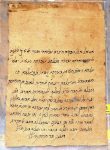
A letter of introduction, written and signed by the Rambam (Maimonides) in the 12th century, which is part of the Discarded History exhibition that will be opening in April 2017 at Cambridge University. Visitors will be able to see a small fraction of the more than 300,000 manuscripts and fragments that were originally found in the geniza, or storeroom, of Ben Ezra Synagogue in Fustat, or Old Cairo, in Egypt. Some of the items are more than 1,000 years old and, among them, are accounting records and parts of responsa and observations by some of the greatest Jewish theological minds, such as the Rambam, Isaac Luria and Joseph Caro. (photo by Edgar Asher with permission of the Syndics of Cambridge University Library)


Format ImagePosted on November 4, 2016November 3, 2016Author Edgar AsherCategories WorldTags Egypt, history, Maimonides, Rambam

Posts pagination

Previous page Page 1 … Page 238 Page 239 Page 240 … Page 322 Next page
Proudly powered by WordPress