Yom Hashoah at KDHS

The Sir Charles Tupper Secondary School Grade 11 history class for which King David High School teacher Anna-Mae Wiesenthal (middle row, second from the right), did a presentation on the Holocaust. Their teacher, Bonnie Burnell, is to Wiesenthal’s left. (photo from Anna-Mae Wiesenthal)

“They were in awe of the Holocaust survivor,” said Bonnie Burnell, a teacher at Sir Charles Tupper Secondary, describing the reaction of her students to survivor Robbie Waisman’s talk at a Yom Hashoah assembly at King David High School (KDHS) on April 24. “Looking at him as he spoke at the podium, they could scarcely imagine him on the inside of a Nazi concentration camp.”

Students from Prince of Wales Secondary School and, of course, from KDHS also joined the assembly, which was organized by KDHS teachers Anna-Mae Wiesenthal and Aron Rosenberg, and included Cantor Yaakov Orzech chanting El Malei Rachamim.

The multi-school initiative was led by Wiesenthal, who is currently pursuing a master’s degree in Holocaust and genocide studies. Last year, she went to Austria and Poland with the Sarah and Chaim Neuberger Holocaust Education Centre of Toronto. In addition to teaching about the Holocaust at KDHS, she has been giving presentations at various public schools. She told the Jewish Independent that students have been very engaged and have asked many questions. This outreach led to the recent assembly at KDHS, where other schools’ students were invited to attend.

photo - Holocaust survivor Robbie Waisman addresses the assembly for Yom Hashoah at King David High School on April 24
Holocaust survivor Robbie Waisman addresses the assembly for Yom Hashoah at King David High School on April 24. (photo from Anna-Mae Wiesenthal)

“My students, in general, were impressed with the ceremony and glad that they had made the decision to come,” Burnell said. “We have had a real focus on racism in our curriculum this year, and this visit definitely adds something of central importance to that subject.”

Wiesenthal, who has taught at KDHS since 2006, became interested in focusing more on Holocaust education after attending an educators seminar at Yad Vashem in 2012.

“I feel Holocaust education is about giving voice to the millions of victims who were murdered simply because of who they were, and honouring their legacy and our history,” explained Wiesenthal. “It is about remembering the vibrancy of Jewish life both before and after the war. It is about preserving memory for future generations and across cultures. It is about taking the knowledge of unprecedented horrors, and keeping them in front of us so that we remain vigilant about our humanity in the face of genocides today.”

Wiesenthal also admitted to being inspired by a possible kinship with renowned Nazi hunter Simon Wiesenthal. Her great-grandfather, Mattityahu Wiesenthal, was a Russian boy saved from forced conscription in the Russian army by being “thrown across the river” from Russia into the town of Skala in Austria-Hungary, as many boys were at that time. As an orphan in Skala, he was taken in by Moshe Efroyim Wiesenthal, who supported many such refugee orphans, and the young boy took the family name Wiesenthal to honour his patron. Wiesenthal does not know if Moshe Efroyim was directly related to Simon Wiesenthal, but the latter remains one of her heroes, and she has been in touch with his granddaughter, Racheli Kreisberg.

Wiesenthal also recently initiated a pilot project at the Vancouver Holocaust Education Centre (VHEC), in which KDHS students trained as docents (museum guides) lead other students through the exhibit.

Another project was an art exhibit at KDHS, where her Jewish History 11 class viewed a video of a Holocaust survivor’s testimony, chose an aspect of the testimony that stood out for them and then created a work of art based on that aspect. Each work was accompanied by an artist’s statement, a picture of the survivor and why the student chose the testimony they did. Contributions included painting, sculpture, writing and music. “The quality of expression was very moving,” said Wiesenthal.

Rabbi Stephen Berger, head of Judaic studies at KDHS, said he is thrilled with the work Wiesenthal has been doing.

“She shares her passion with her students and fulfils the talmudic dictum, ‘Words that leave from the heart, penetrate the heart,’” he said. “Our school and students benefit immeasurably by having her as a teacher of history and Holocaust studies.”

Matthew Gindin is a freelance journalist, writer and lecturer. He writes regularly for the Forward and All That Is Interesting, and has been published in Religion Dispatches, Situate Magazine, Tikkun and elsewhere. He can be found on Medium and Twitter.

Pesach sameach!

During Passover, thousands of Israeli families will be taking advantage of the holiday period to visit some of the many attractions all over the country. One of the busiest will be Ramat Gan Safari Park, which does its own Pesach cleaning, to ensure there is no chametz (unleavened bread) anywhere. The park has ordered five kilograms of matzot for each of the animals that eats breads the rest of the year.

About the Passover cover art

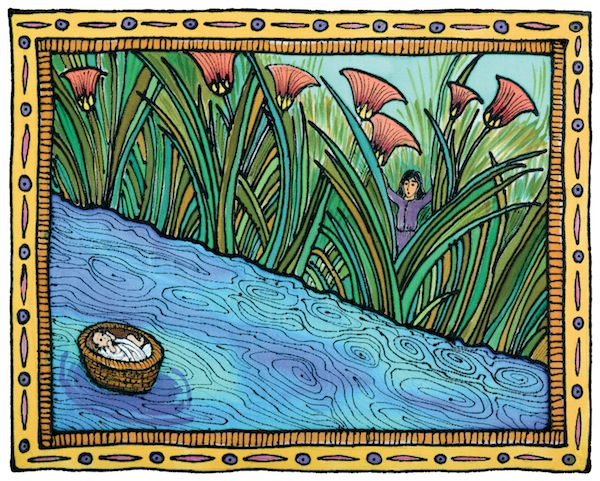
“Basket on the Nile” by Carol Racklin-Siegel. “She could not hide him any longer, so she took for him a wicker basket and smeared it with clay and pitch; she placed the child into it among the reeds at the bank of the River.” (Exodus 2:3)

This image – created with gutta resist and fabric dyes on silk – is the cover art for The Brave Women Who Saved Moses, the eighth book in a series of children’s Bible books published by EKS Publishing. The books are available on Amazon or from ekspublishing.com.

You can see more of Racklin-Siegel’s artwork on pomegranatestudios.com or “The Artwork of Carol Racklin-Siegel” on Facebook.

Delicious and new recipes

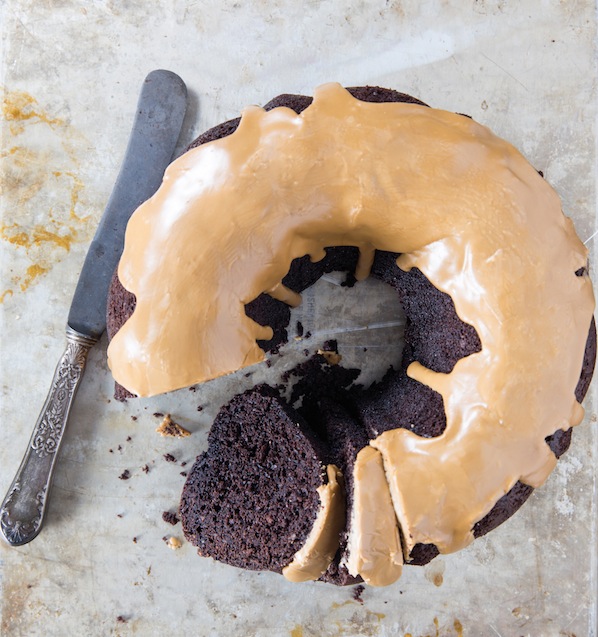
Naomi Nachman’s Fudgy Chocolate Bundt Cake with Coffee Glaze is gluten-free. (photo by Miriam Pascal)

What? Another cookbook for Pesach? Yes. And a welcome one – Perfect for Pesach: Passover Recipes You’ll Want to Make All Year by Naomi Nachman (Artscroll/Shaar Press, 2017).

“As a chef specializing in Passover, I wanted to provide home cooks with delicious recipes that bring something new to the table,” Nachman explains in the press material. “Some of the recipes in this book reflect my years of catering Pesach dinners and others are brand new to reflect today’s kosher cooking styles. All my recipes use fresh, simple and delicious combinations of ingredients that you can get all year long and create interesting meal choices.”

Nachman, who lives with her family on Long Island, N.Y., grew up in Australia. She served Long Island’s Five Towns through her personal chef business, the Aussie Gourmet. She led a culinary arts program at a Poconos camp for seven summers and, currently, she is director of the Culinary Arts Recreational Program for VIP Ram Destinations’ Pesach holiday in Florida. She also hosts a weekly show on the Nachum Segal Network and writes a monthly column for Mishpacha magazine.

She certainly has the credentials! And what variety in this book.

book cover - Perfect for Pesach: Passover Recipes You’ll Want to Make All Year by Naomi NachmanPerfect for Pesach features more than 125 recipes, with mouth-watering photography by kosher blogger and cookbook author Miriam Pascal.

There are appetizers, such as Hush Puppy Potato Knishes and Southwestern Chicken Egg Rolls; dips and salads, including Chimichurri Coleslaw and Kale and Roasted Butternut Squash Salad; soups such as Kitchen Sink Vegetable Soup and Kale, Apple and Sausage Soup; fish dishes like Red Snapper en Papillote and Sweet and Sour Tilapia; poultry choices like White Wine and Herb Roasted Turkey Roll and Hawaiian Pargiyot; meat recipes such as Coffee Infused Chili and Maple Glazed Rack of Ribs; dairy recipes such as Quinoa Granola Parfait and Oozy Fried Mozzarella; side dishes like Cauliflower Fried “Rice” and Broccoli Kishka Kugel; and desserts including Pomegranate Pistachio Semifreddo and Mini Lemon Curd Trifles.

In her introduction, Nachman writes that her intention is to present “recipes that are easy to make with ingredients that are generally easily accessible from your local supermarket or online.” She highly recommends using fresh lemons and limes, fresh herbs, fresh spices, and a variety of oils.

Each recipe includes cook’s tip, ideas for year-round serving, an author’s comment and, my favourite, method steps that are numbered. The press release says all the recipes are gluten-free.

Don’t bother to look around for a house gift if you are going to a seder at a friend or relative’s home. Perfect for Passover is the perfect gift – all year round.

Here are just two of Nachman’s recipes.

ZUCCHINI KUGEL
pareve, 8-10 servings

6 medium zucchini, grated with peel
1 grated onion
4 beaten eggs
1 1/2 cups matzah meal
1 tbsp baking powder
3/4 cup oil
1 tbsp kosher salt
1/4 tsp ground black pepper

  1. Preheat oven to 350°F. Prepare a nine-by-13-inch baking pan.
  2. Add all ingredients to a large bowl; stir well to combine.
  3. Pour into prepared pan. Bake, uncovered, for 90 minutes, until lightly browned and centre is firm.

FUDGY CHOCOLATE BUNDT CAKE WITH COFFEE GLAZE
pareve, freezer-friendly

2 1/2 cups almond flour
1 cup cocoa powder
1/2 cup potato starch
1 tbsp instant coffee granules
1 1/2 tsp baking powder
1/2 tsp kosher salt
1 1/2 cups sugar
1/2 cup oil
1 tbsp imitation vanilla extract
6 eggs

  1. Preheat oven to 350°F. Grease a Bundt pan well; set aside.
  2. In a small bowl, whisk together almond flour, cocoa powder, potato starch, coffee, baking powder and salt. Set aside.
  3. In a separate bowl, whisk together sugar, oil, vanilla and eggs. Add dry ingredients; stir to combine.
  4. Pour batter into Bundt pan; bake 40-45 minutes, until toothpick inserted into the centre comes out clean. Set aside to cool completely in the pan. Remove from pan; glaze with coffee glaze, below.

Coffee glaze:
1 cup powdered sugar
1 tbsp brewed coffee
1 tsp oil

  1. In a small bowl, whisk together all ingredients to form a glaze. If the glaze is too thick to pour, add water, a half teaspoon at a time, until desired texture is reached.
  2. Pour glaze over cooled cake.

Sybil Kaplan is a journalist, lecturer, book reviewer and food writer in Jerusalem. She created and leads the weekly English-language Shuk Walks in Machaneh Yehudah, she has compiled and edited nine kosher cookbooks, and is the author of Witness to History: Ten Years as a Woman Journalist in Israel.

Familiar sounds of Passover

Heron among the flowers near Kibbutz Be’eri, in southern Israel. (photo by Aliza Reshef via PikiWiki)

There is something about Passover that speaks to almost every Jew. In 1840, in a book titled Der Rabbi von Bacharach, Heinrich Heine wrote: “Jews who have long drifted from the faith of their fathers are stirred in their inmost parts when the old, familiar Passover sounds chance to fall upon their ears.”

Although my family was not Orthodox, we always held a seder in Australia, and the singing after reading the Haggadah (and eating lots of knaidel and drinking the cups of wine) was very spirited. As a child, I loved the lively “Dayeinu” and the last song, “Chad Gadya,” which we sang in English, “Only one kid, only one kid which my father bought for two zuzim….” The words seemed very funny to me, until the mood suddenly changed at the end – when we began to sing about the Angel of Death, I remember my mother’s eyes used to fill with tears.

Many years later, when I became observant and began practising mitzvot that, at first, were strange and unfamiliar to me, the seder was like coming home. No one had to explain it to me, or tell me what to do. Etched into my consciousness were the memories of the seder table … the three matzot arranged between the folds of a white cloth so that no two were touching; the dish of parsley with the bowl of salt water; the bitter herbs, the shank bone and the roasted egg.

I remember helping to make the charoset, a delicious mixture of apples and almonds moistened with wine. Passover is so rich in ritual and, that is, after all, the Jews’ survival system.

Without the seder, there’d be no reason for the family to come together at this time. Not every family is religious but, at Pesach, most are traditional. There is a special feeling about the snowy tablecloth with new dishes, the big cup of wine for Elijah, the opening of the door for the prophet to come in, and sweet children’s voices chanting “Mah Nishtanah,” like it’s a favourite pop song. “Memories are made of this”!

In Israel, Passover is a spring festival. After the cold, rainy winter, the air becomes a warm caress. The almond flaunts its white blossom and all the trees are bedecked with new green lace. Cyclamens and wild violets peep shyly from crevices in the rocks, while purple irises and scarlet poppies dot the fields. The cereal harvest season has begun.

However, Pesach is more than a link in the agricultural cycle of

Israel. Its true significance is historical, commemorating the Exodus from Egypt and our release from slavery. The matzah symbolizes the unleavened bread, which did not have time to rise in our hasty flight from Egypt.

The Hebrew word for Egypt is Mitzrayim, the root of which is tzur, meaning narrow or constrained. To say that we must leave Egypt is to say that each of us must struggle to break out of our own narrowness to obtain our full potential – spiritually, emotionally, psychologically.

The main lesson of Passover is freedom. At Passover, we celebrate it on three levels: seasonally, as we mark the release of the earth from the grip of winter; historically, as we commemorate the Exodus; and, on a broader human plane, our emergence from bondage.

In Judaism, events transcend the moments of their happening – they are part of a continuous process that involves not just a single generation, but all who went before and all who follow after. The cycle of the Jewish year is also the cycle of our survival.

May the old, familiar sounds of Passover be woven into the consciousness of you and your family. And may you truly consider the possibility when you conclude your celebration with the words: “Next year in Jerusalem!”

Dvora Waysman is a Jerusalem-based author. She has written 14 books, including The Pomegranate Pendant, which was made into a movie, and her latest novella, Searching for Sarah. She can be contacted at dwaysman@gmail.com or through her blog dvorawaysman.com.

Food with long history

What food, served with cooked beef, is an essential component of a traditional wedding dinner in southern Germany? It is also used in salad served with lamb dishes at Easter in Transylvania and other Romanian regions. In Serbia, it is an essential condiment with cooked meat, including roasted pig. In Slovenia, it is a traditional Easter dish, grated and mixed with sour cream, hard-boiled eggs or apples. And, in southern Italy, it is a main course with eggs, cheese and sausage. It is probably indigenous to eastern Europe but has been cultivated since antiquity and was known in Egypt in 1500 BCE.

One final hint, and you will know immediately. According to the Haggadah, we are to eat it to symbolize the bitterness of slavery in Egypt. “And they made their lives bitter with hard labour, in mortar and in brick, and in all manner of work in the field….” (Exodus 1:14)

Maror is one of the foods on the seder plate, which we bless then dip into charoset to symbolize the mortar the Israelites used to bind the bricks. Shaking off the charoset, we eat the minimum amount of maror, the volume of an olive.

Horseradish. The English word, coined in the 1590s, combined horse, meaning coarse or strong, and the word radish.

According to John Cooper in Eat and Be Satisfied: A Social History of Jewish Food, “the Mishnah enumerated five vegetables that could be utilized as the bitter herb for the seder service, all of which should have leaves. The five are chazeret, ilshin, tamchah, charchavina and maror.”

Chazeret refers to lettuce; ulshin is either endive or chicory or both; tamchah was a leafy, dull green herb also known as horehoud, which is used in cough medicine and liqueur; charchavina was either field or sea eryngo; and maror possibly a wild lettuce or type of cilantro. Sephardim interpret chazeret as Romaine lettuce.

Rabbi Alexander Suslin of Frankfurt, who died in 1394, was the first authority to permit the use of horseradish where lettuce was not available, although this vegetable was primarily a fleshy root that did not strictly conform with the halachic requirement of eating leaves. The Talmud also says, besides leaves, maror should have white sap and dull green foliage, neither of which is in horseradish. The medieval German rabbinic authorities appear to have identified horseradish incorrectly: merretich, in German, with merirta, the Aramaic form of maror, the Hebrew for bitter.

Prior to this, according to Gil Marks in the Encyclopedia of Jewish Food, Eliezer ben Nathan of Mainz, who lived from 1090 to 1170, mentions chrain (paste made with horseradish). Rabbi Eleazar ben Judah of Worms in Sefer ha-Rokeach (published around 1200) included it in his charoset ingredients.

It was not until Rabbi Yom Tov Lipman Ben Nathan Heller (1579-1654) of Moravia, in his commentary on the Mishnah, considered horseradish to be the tamchah mentioned in the Talmud. In Hebrew, it is called chazeret, which is on the talmudic list of accepted types of maror.

Horseradish is a root vegetable in the same family as mustard, wasabi, broccoli and cabbage. When the plant grows, it can reach 4.9 feet and is cultivated for its root, which has hardly any aroma. When the root is cut or grated, cells break down and produce an oil, which irritates the nose and eyes.

German immigrants in the late 1800s began growing horseradish in Collinsville, Ill., a Mississippi River basin area adjacent to St. Louis. This self-proclaimed horseradish capital of the world – this is where most of the world’s supply is grown, some six millions gallons annually – has been hosting the Horseradish Festival since 1988.

The first American Jewish cookbook, Jewish Cookery (1871), included a recipe for horseradish stew. When the Settlement Cookbook was published in 1901, horseradish sauce, beer and relish were included.

H.J. Heinz processed and bottled horseradish in 1869. In 1932, Hyman Gold and his wife, Tillie, processed and bottled horseradish in their Brooklyn apartment.

Today, Gold’s and other private labels produce 90,000 bottles a day of the classic plain and grated beet horseradish without sugar.

My husband likes to tell the story of coming home from school one day before Passover, at the age of 8, and going into the kitchen where his grandmother was grating the horseradish; she made horseradish almost every week. He jumped up on a chair, took one big whiff and fell over backwards! Thank goodness his father was in the room and caught him.

Sybil Kaplan is a journalist, lecturer, book reviewer and food writer in Jerusalem. She created and leads the weekly English-language Shuk Walks in Machaneh Yehudah, she has compiled and edited nine kosher cookbooks, and is the author of Witness to History: Ten Years as a Woman Journalist in Israel.

The path to our destination

More than 100 years ago, no one could have imagined the destruction that would ravage the earth, nor the scientific breakthroughs that would transform it. Yet, in every generation there are rare visionaries who provide us with a blueprint for the future, and the 20th century was no different.

While Albert Einstein was publishing revolutionary theories that would change the world, in a small town in White Russia called Lubavitch (the city of love), Rabbi Shalom Dovber Schneersohn, the Rebbe Rashab and fifth Lubavitcher Rebbe (1860-1920), was advising us on what was to come.

On Passover in 1908, the Rebbe Rashab delivered a discourse – The Voice of My Beloved, Behold the One that Leaps over the Hills – which was later delivered by his son, Rabbi Yosef Yitzchak Schneersohn, the sixth Lubavitcher Rebbe. In retrospect, we can see how critically important were his words.

The Rebbe Rashab begins with a mystical analysis of the history of the empires that controlled the world. Based on various sources, including the Midrash and the writings of the great kabbalist Rabbi Isaac Luria, known as the holy Arizal, the Rebbe takes us on a journey to the time of Abraham. In the words of the Torah: “As the sun was setting, a deep sleep fell upon Abram: and a deep dark dread fell upon him. [G-d] said to Abram: ‘Know for sure that your descendants will be foreigners in a land that is not theirs for 400 years. They will be enslaved and oppressed. But I will finally bring judgment against the nation who enslaves them, and they will then leave with great wealth….’” (Genesis 15:12-14)

What was the dread that befell Abraham? The Midrash explains that he was shown the future empires that would control the world, each in their own way: the Babylonian, Persian, Greek, Roman and Ishmaelite empires.

The Arizal explains that these empires represent the different stages of refinement we achieve through the generations. He explains that everything in our material existence contains Divine “sparks,” i.e. spiritual energy. We are charged with the mission to redeem and elevate these sparks, thereby refining the material universe and transforming it into a vehicle for spiritual expression, its true purpose. Starting with the Egyptian empire, the archetype and root of all the exiles and empires, each subsequent empire symbolizes another stage in integrating matter and spirit. The process will conclude with the refinement of the last two powers, Edom (Esau) and Ishmael, leading to the Messianic age, a world where there is no more destruction and terror, and all children of Abraham serve the one G-d of Abraham in peace and harmony.

We now stand, according to the 1908 discourse, in the final stage, when Edom – the Western world, descendants of Rome – and Ishmael – the Ottoman Empire – dominate. The Ottoman Empire began to dissolve in 1908 and, a few years later, would join the powers who lost to the Allies in the First World War. The Arizal explains that the refinement of Edom and Ishmael, our work today, corresponds to netzach (endurance) and hod (humility/acknowledgement). Most of the 1908 talk elaborates on the practical application of these two features.

Two states of spiritual consciousness are possible. One, which personifies earlier generations, is a state of revelation, when the “Divine Face” is exposed and souls are aflame with passion. In a spiritually evolved environment, beings naturally gravitate toward the Divine when minds and hearts are attuned to the sublime, emotions are deeply felt and lives are dedicated to service. In such a state, the higher emotions of love (chesed), awe (gevura) and empathy (tiferet) reign.

The second state, which reflects our times, is a spiritual awakening that comes out of a void: when

G-d said to Moses that He would cover His face, there was no darker hour in history. In a state of spiritual darkness, our primary effort must be netzach and hod. Netzach is the determination and fortitude to overcome any adversary and challenge. Hod is a profound sense of acceptance and acknowledgement of a higher presence, rising from the depths of the soul. Both of these forces stem from the innermost essence of the human soul, which cries out in times of pain and discovers the greatest strength in times of challenge.

Both netzach and hod, in one word, are commitment. They are the unimaginable efforts we will exert when our lives or the lives of the ones dearest to us are at stake; the absolute faith in good even when facing death; the hope that can be elicited from each of us when our essential beliefs are challenged.

When the darkest and brightest moments of the 20th century were about to unfold, the fifth Lubavitcher Rebbe in 1908 and the sixth Lubavicher Rebbe in 1924 and 1949 told us that these are the two forces that we will need as we face the challenges ahead.

There is a moment of truth that comes from seeing the light, and there are truths that are born in darkness. When things aren’t apparent and there is no revelation, or oppressive forces consume us and want to extinguish the fire of the soul, then netzach and hod, which are rooted in the essence, surface with their unfathomable intensity. Even the greatest souls have their spiritual fluctuations but the essence remains steady and reliable.

All three discourses address times of prosperity as well. Standing in the early part of the century, the Rebbe’s primary focus is on the darkness. But, recognizing the century would also bring untold success and technological advancement, he addresses the best of times, briefly, in 1908. The 1924 and 1949 discourses elaborate more.

In 1949, the sixth Lubavicher Rebbe said, “Just as one needs unwavering fortitude in troubled times, the same is true in opposite times. When a person is blessed in all his endeavours, both at home and at work, and his heart is lifted to great and exalted heights, endowed with wealth and great success, with many investments and all the anxieties connected with absorption in business matters, despite all these distractions, his heart should not digress from his spiritual commitments, he should consistently maintain his commitments to ongoing, designated time for study and prayer, without any alteration – with the unwavering fortitude and resolution of netzach.”

If you think about it, it is absolutely brilliant advice and it captures the essence of all the suggestions you will ever read in personal growth manuals: never waver from your good actions and commitments to positive causes. Even when you feel down, overwhelmed or distracted, hold on with your dear life to the constructive things that you are connected with. It is this absolute dedication that will carry you through. It is this fortitude that will save your life.

Today, we’re blessed with freedom and many comforts. We also don’t live in a world of Divine revelation. Today, the darkness is within. Complacency and apathy are apparent. As we focus on outer success, it seems our inner lives suffer in direct proportion. It creates a profound void.

So, as we prepare to enter this year’s Passover, beginning on Monday evening, April 10, and celebrate the seder with family, friends and guests, let’s try to be persistent and accepting of our Divine mission, to know with a lightness of spirit and firm belief that, if we are consistent and absolute in our dedication and commitment, we will see the end of the exile and reach our destination: personal and global redemption.

Wishing everyone a happy and kosher Pesach!

– Excerpted from an article by Rabbi Simon Jacobson by local educator, writer and counselor Ester Tauby with permission. For the full piece, visit meaningfullife.com/acharei-calling-generation.

Singing about national miracles

“The Crossing of the Red Sea,” a painting by Nicolas Poussin, which was commissioned in 1632. It can be found at the National Gallery of Victoria in Melbourne, Australia. (photo by Nicholas Poussin via Wikimedia Commons)

The Israelites left Egypt on the first day of Passover, but the Egyptians didn’t leave them until the sea separated them forever on the seventh day. By celebrating Passover for seven days, we celebrate ambivalent feelings of joy and stress. Shabbat Shira – the Shabbat whose Torah portion contains the song sung by Israel after the splitting of the Red Sea – invites us to focus on the miracle of Passover’s seventh day.

Just imagine the unbearable stress when Israel was caught in a death trap between the Egyptians and the sea, the shouts, cries and prayers. Imagine the hand of Moses raised, the long and dark night between the protecting pillar of fire and the cloud, the great wind splitting the sea in two, the first steps into the water, crossing on dry land, seeing the vicious enemy destroyed.

It is not surprising that it resulted in an epic song. While evil was drowned in deep water, happiness flooded Israel. Only a heartless man wouldn’t sing. How many of us are capable of imagining this and meaning what they say in Exodus (15:1-2): “Sing to God…. This is my God, and I will glorify Him.” What a great national miracle that was, once upon a time.

Is this episode still relevant for us today? When we think of the Sinai revelation, it’s clear – we have the Torah. But is something left from the Song at the Sea? If the answer is yes, what is the key for finding meaning?

Our sages interpreted the future tense of the song as indicating a song that hasn’t yet been sung. Thus, for example, they say, “It is not written, ‘then Moshe sang,’ but ‘will sing.’” The sages also attributed a double reading to the words “Elohai avi” – they read it as both, “the God of my fathers,” and “God is my father.” They elaborated on the significance of the song to “every single generation.”

Indeed, the secret for singing a song of faith lays in this verse. My teacher, Rabbi Prof. David Hartman, used to point out that the coin has two sides. Many can tell about our own God; many can tell stories about the God of our fathers. The secret of the Jewish people lays in the way we identify our own God with the God of our fathers.

My grandmother, Savta Privah, sang her personal song at the sea more than 70 years ago, when she was liberated from Auschwitz. On her way from the refugee camps to Israel, she told my grandfather, “Now that we are making aliyah to Israel, from now on, we are Zionists.”

Going down from the ship, my grandfather, Saba Menachem, was asked for his occupation. He had lost his parents at a young age and had worked for his living even before the Holocaust.

“I’m a tinsmith,” he said.

Very well, they said, register with the labour union and we will find you a job.

“I had enough red flags in Europe,” my grandfather said, and established his own business.

Ironically, he found work at Mishmar Ha’Emek, one of the most anti-traditional Israeli kibbutzim. He was the only observant employee. Back then, they had two dining rooms, one for the young kibbutznikim and another one for the elders, because only they kept kosher.

My grandfather – a young man at that time – used to eat with the elders. One day, Shoshana Hazan, mother of Yaakov Hazan, leader of the Shomer Hatza’ir youth movement, came to his table with two Shabbat candlesticks.

“These are our family silver Shabbat candlesticks,” she said, “but my daughter-in-law would never use them. Take them to your wife to light Shabbat candles.”

Read more at jns.org.


Dr. Shraga Bar-On is a member of the Beit Midrash for New Israeli Rabbis Program of the Shalom Hartman Institute and HaMidrasha at Oranim.

Haggadah from 1500s

Pages from the 1500s Passover Haggadah that was recently sold to the National Library of Israel. (photo from Sotheby’s)

On the right, a man sits and prays holding a liturgical book. On the left, a rabbi is seen explaining the story of the Exodus to a child. These images were printed on the pages of a Passover Haggadah in the city of Prague in 1556.

This nearly 500-year-old Haggadah, one of only two remaining copies, is part of the Valmadonna Trust Library collection that was recently sold to the National Library of Israel, with the help of philanthropy from the Haim and Hana Salomon Fund.

photo - The line to view the Valmadonna collection outside Sotheby’s in New York, before the collection was sold to Israel’s national library
The line to view the Valmadonna collection outside Sotheby’s in New York, before the collection was sold to Israel’s national library. (photo from Sotheby’s)

“The Haggadah is the most widely published book in Jewish history,” said Sharon Mintz, senior consultant for Judaica at Sotheby’s auction house, which arranged the sale to the Israeli library. She told JNS.org that more than 3,000 editions of the Haggadah have been printed during the last several centuries – more than the Bible.

The Valmadonna collection’s 1556 Haggadah is a rare, luxury edition with Yiddish interpolations that “constitute the earliest examples of such texts,” said Marc Michael Epstein, professor of religion and visual culture and the Mattie M. Paschall (1899) and Norman Davis Chair at Vassar College in New York.

Just a few decades after Johannes Gutenberg invented the printing press around 1440, printing spread to the Jewish world, beginning in Rome and then moving throughout Italy and the Iberian Peninsula. Scholars tend to refer to the era of early printing, before 1501, as the Incunabula period.

Jews were “tremendously excited” to be able to print multiple books, Mintz explained. “They viewed it as a gift of God,” she said.

The earliest printed Haggadah was printed in Spain in 1482. Another early Haggadah dates back to roughly 1486, and was published by the Soncino family, named for the Italian town where the family ran its printing operation. These early Haggadot were not illustrated. The earliest known illustrated Haggadah was printed in Constantinople (modern Istanbul) around 1515, but only a few pages of this Haggadah remain.

Jewish printing spread to other parts of Europe in the 1500s, which also led to a growth in competition among printers.

“The cradle of Hebrew printing is, of course, Venice. But the printing of Jewish books north of the Alps began in Prague in 1512 in the circle of Gershom ben Solomon Kohen and his brother Gronem,” said Epstein, who is the author of Skies of Parchment, Seas of Ink: Jewish Illuminated Manuscripts and The Medieval Haggadah: Art, Narrative and Religious Imagination.

“Due to the humanistic patronage of the Holy Roman Emperor and a general climate of relative tolerance and free trade, Prague in the 16th century was a place of vibrant Jewish communal and cultural life, and thus – along with Venice – a crucial centre of the newly developed art and craft of Hebrew printing,” he said. “Jewish printing spread from Prague throughout Western as well as Eastern Europe, the next great centres being in the Polish communities such as Lublin.”


Read more at jns.org.