Skip to content
  • Home
  • Subscribe / donate
  • Events calendar
  • News
    • Local
    • National
    • Israel
    • World
    • עניין בחדשות
      A roundup of news in Canada and further afield, in Hebrew.
  • Opinion
    • From the JI
    • Op-Ed
  • Arts & Culture
    • Performing Arts
    • Music
    • Books
    • Visual Arts
    • TV & Film
  • Life
    • Celebrating the Holidays
    • Travel
    • The Daily Snooze
      Cartoons by Jacob Samuel
    • Mystery Photo
      Help the JI and JMABC fill in the gaps in our archives.
  • Community Links
    • Organizations, Etc.
    • Other News Sources & Blogs
    • Business Directory
  • FAQ
  • JI Chai Celebration
  • JI@88! video

Recent Posts

  • Last hostage home
  • New bill targets hate crimes
  • Concerning actions
  • Recipes not always required
  • Survivor urges vigilance
  • Seniors profoundly affected
  • Farm transforms lives
  • Musical legacy re-found
  • A range of Jewish literature
  • A concert of premieres
  • Variety telethon on Feb. 22
  • Victoria club’s many benefits
  • Avodah dedicated to helping
  • Artists explore, soar, create
  • Life’s full range of emotions
  • Community needs survey closes March 29
  • Jerusalem marathon soon
  • Historic contribution
  • Chronicle of a community
  • Late-in-life cartoonist
  • Cashflow vs growth portfolio
  • My new best friend is Red
  • ישראלים רבים ממשיכים לתמוך בטראמפ ועדיין אינם מבינים במי מדובר
  • עשרים ואחת שנים בוונקובר
  • Supporting the Iranian people
  • The power of photography
  • A good place to start
  • When boundaries have shifted
  • Guitar virtuosos play
  • Different concepts of home
  • Broadway’s Jewish storylines
  • Sesame’s breadth and depth
  • Dylan Akira Adler part of JFL festival
  • Mortality learning series
  • A new strategy to brighten up BC
  • Sharing latkes and light

Archives

Follow @JewishIndie
image - The CJN - Visit Us Banner - 300x600 - 101625

Category: Arts & Culture

Sidra Bell Dance New York presents two works at Chutzpah! PLUS

Sidra Bell Dance New York presents two works at Chutzpah! PLUS

Sidra Bell (photo by David Flores)

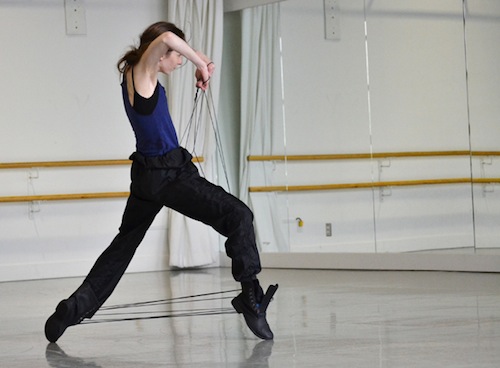
Back in Vancouver for the third time, Sidra Bell Dance New York presents a double bill of STELLA and garment March 27-29. The performances are co-presented by the Chutzpah! Festival as part of its PLUS series and the Dance Centre. Artistic director Sidra Bell spoke with the Jewish Independent via email about her background, what inspires her, the power of dance theatre and what makes her company unique.

JI: Could you share a bit about your background?

SB: I was born in New York City to mixed heritage and grew up in the northernmost part of Manhattan in a neighborhood called Inwood. My father’s background is Italian, Irish and Bohemian (on my grandmother’s side) and my mom is African-American. Both of my parents were raised in New York City, in the Bronx and Brooklyn respectively. My paternal grandparents came in through Ellis Island.

I identify with my mixed heritage and was always exposed to the various components that make me who I am although we didn’t specifically practise religion in our household. My parents are both pianists and met through music. They went to New York College of Music and went on to direct together, as well as teach. I am the youngest of four siblings who are all involved in the arts…. In some way or another, most of my family and extended family are artists or use art as an entry point into what they are doing now, and we are all largely entrepreneurs….

JI: How and when did you first discover dance? When did you discover choreography?

SB: I participated in preschool in an after-school dance program, Ms. Patti Ann’s Dance, in my kindergarten years. A couple of years later, my mom took me to an audition at the Dance Theatre of Harlem. I resisted mainly because I was extremely shy and very nervous. I started taking classes in ballet there at age 7 and fell in love with the language of dance and its rigor. I was a very serious child and loved delving into the form that was being taught. I excelled very quickly and was asked to join the weekday program on scholarship, which increased my level and the number of classes a week. By 13, I was taking classes with the professional division, particularly in my summers when I could participate in the intensives.

At age 14, I realized I needed to stretch away from just a classical training and that is when I was accepted into the Ailey School, where I spent two-and-a-half years on scholarship. It was during that time, as I became more exposed to modern techniques, that I became interested in generating my own movement vocabulary. I was able to create a few solos for myself that were showcased at Ailey’s student showcases and also at my high school, the Spence School, where they had a dance program. Because both were New York City based, these showcases were taken very seriously and showcased in well-attended venues such as Symphony Space.

From an early age, I knew that I had to be very rigorous in my craft. In college at Yale, I was part of a student dance company called Yaledancers that produced its own shows in the New Haven, Conn., community. I became more active in my choreographic process and there started truly investigating and making work. This was outside of a conservatory environment and it allowed me to work with my own movement invention. My college years were formative exploration years.

JI: Can you describe how a piece comes together, from inspiration to the stage?

SB: I simply start with movement. Movement has been a driving force behind all of my works. There is always a question around why movement is an important means of expression. This question leads to larger subtexts within a work and perhaps characterizations. What is important to me is to challenge my collaborators to investigate movement with various qualities, tones and entry points. This collaborative focus has led to wildly different worlds onstage. The dancers ingest the vocabulary and regurgitate it based on the tasks or objectives at hand. I find that the concept evolves as we dig deeper each day into the vocabulary. There is a lot of trying and playing in the studio. Sometimes we are at ease and just talking, which leads to insights into what the dancers are thinking about in relationship to the world around us. How does movement bring in larger overtones about the world around us? I love form and that is a huge emphasis. Inventing forms is my primary concern. As we continue, the lens and environment come into play, as well as how the dancers are interpreting each relationship. More recently, I have been working more closely with my lighting designer to create limits onstage that inform how the dancers will interact with the arena or environment set up for them.

JI: Is this Vancouver performance part of a larger tour? I see that STELLA is from 2012, but garment is a brand new piece. How did garment come about? How do the two pieces work together, if at all?

SB: This has been a wonderful year of touring for the company. We have already completed residencies and tours in Philadelphia, Pittsburgh … and Atlanta’s Tanz Farm. [Two weeks ago], we world premièred garment as part of the Kelly Strayhorn Theatre’s commissioning series KST Presents. STELLA was created in 2012 and world premièred at NYC’s Baruch Performing Arts Centre. Before arriving at Chutzpah!, we will be showcasing the same program of garment and STELLA in our San Francisco Season at Dance Mission Theatre.

Sidra Bell
Sidra Bell Dance New York performs garment in Vancouver March 27-29.
(photo by Mark Simpson)

garment is about living in the skin you are in. Like STELLA, it deals with voyeurism and culture, but I think it drives towards the idea that we can rid ourselves of cultural constructs to re-establish or reclaim our personal and unique identities. Both works deal with popular constructs and individualism in an episodic framework. STELLA has a more cultish feeling, where you really see the dancers playing games and you can’t guess who “Stella” actually is until the end. garment sees the dancers reproducing trends and systems, and also working with joyful abandon. I think the two pieces are in conversation with each other and inhabit many different worlds within these general themes.

JI: Critics have called your work powerful, atmospheric, surreal, sensual and ferocious. I would add that your work is also in many ways hyper-modern, with industrial or “futuristic” qualities, from the costumes to the electronic soundscape you work within. It’s also very theatrical. Is there an overarching aspect of contemporary life that you’re exploring through your choreography?

SB: The main thread of my work is the personal questions that I grapple with. I think they are universal questions about our condition in contemporary life. As the world changes more rapidly, I grapple with my individual questions around identity, legacy, the afterlife, politics, community. The list can go on. I think I deal with these questions in my work, and not in a politicized way. The dancers contribute to this probing research and we work with play to reach and deconstruct content around these themes. Personas get developed through movement research and worlds get built from our collective thinking. I like playing this out on stage. There is often no resolution, but I am happy that there are always more questions. There is no one way to view the work and I like that the audience can reach in and find their own personal story. I am always surprised and pleased at the level of analysis an audience can bring to a moment. They bring up aspects I didn’t see and I think that is the beautiful quality that dance has. Its ephemeral and abstract nature can really make you feel. You may not know why you feel a certain way because it is truly coming from a visceral space. I like the fact that dance doesn’t have to deal with realism in such a direct way.

JI: What are the lines between dance and theatre, and what elements of performance bring them together? As well, can you share something about your work on Test and what draws you to work in the medium of film?

SB: I actively aim to eliminate the lines between dance, theatre and visual art. They are mediums that create a mutual, shared experience for the performers and the audience. I use whatever elements help me create those experiences for the viewer. I think this is why I have explored so many different aspects of dance and theatre. I use whatever technique or model that I believe services the work in the moment. I was the lead choreographer on Test (testthefilm.com), which has now been seen and awarded prizes worldwide. The film was shot and created on location in San Francisco. It was an incredible process working with Chris Mason Johnson, who wrote the screenplay and directed. He was a former dancer with Frankfurt Ballet and White Oak Project. I learned so much about the process of film making that I believe has improved my skills as a dance maker. Everything that was created on set was to service the storyline about dancers in the 1980s during the AIDS epidemic. My material was tempered to that era and I found it refreshing to have such a guide. It made me much more clear in the process of creating a choreographic work, which I consider to be a directorial act as well.

JI: How does your academic orientation and background impact your dance work, if at all? Are you currently teaching?

SB: I guest teach internationally. Teaching is a passion and I truly love the exchange I get to have with dancers from all over the world. My mind expands each time I lead a workshop because of the collaborative nature of working with such diverse communities. My academic background gave me a strong sense of language and articulation. My analytical nature has kept me interested in the research of movement not just its results.

JI: Are there differences in how you approach choreography for your own company versus commissions from other companies?

SB: My process is highly collaborative and I always go into a studio with very little expectation. This has produced very different works in each environment I visit. I like going into a new community on commission and introducing my language, but also learning about what gets that particular company excited about movement. With my company, we have such a history together that each work seems to be a reflection or a response to the last. I have been working with my dancers for some years and there is rich history that they bring to the studio but also a curiosity in moving forward.

JI: Vancouverite Rebecca Margolick is one of your dancers. Is there anything you can tell me about Rebecca’s contributions to SBDNY for her hometown audience?

SB: I met Rebecca when she was 16 years old at Arts Umbrella, where I taught and staged work. She was so wise and left a great impression on me. She brings a beautiful physical quality to the work but is also highly theatrical. When she is on stage she inhabits another aura. I find that fascinating about her. She is very discrete offstage but onstage she is a bold performer. She is a chameleon.

JI: Is there is anything else you would like our readers to know?

SB: This is our third visit to the Chutzpah! Festival as a company and I am so excited to be returning with these two works. I’m also thrilled to be co-presented by Chutzpah! PLUS and the Dance Centre. We love the city and can’t wait to see our Vancouver friends.

Sidra Bell Dance New York presents STELLA and garment March 27-29, 8 p.m., and March 29, 2 p.m., at Scotiabank Dance Centre, 677 Davie St. Tickets, $28/$24/$20, are available at chutzpahfestival.com or ticketstonight.ca.

Format ImagePosted on March 21, 2014April 16, 2014Author Basya LayeCategories Performing ArtsTags Chutzpah!, garment, Sidra Bell, Sidra Bell Dance New York, STELLA
Pi Theatre presents Between the Sheets in actual classroom

Pi Theatre presents Between the Sheets in actual classroom

Caitriona Murphy, left, and Stephanie Moroz in Between the Sheets by Jordi Mand. (photo by Tim Matheson)

Twenty-something Torontonian Jordi Mand is a Canadian playwright coming off a huge success with her first full-length script, Between the Sheets, the story of a parent-teacher interview gone awry. Local company Pi Theatre, known for its innovative and site-specific work, will treat Vancouver to the Western Canadian première of the play in an actual classroom at Admiral Seymour Elementary School in Strathcona.

The action revolves around two characters, Teresa, a Grade 3 teacher, and Marion, the well-heeled private-school power mom of Alex. Marion rushes into the classroom at the end of an evening for an unscheduled interview. The conversation deteriorates into an accusation from the furious Marion that Teresa is having an affair with her husband of 24 years, Curtis. As one would expect, Teresa vehemently denies the charge until the incriminating evidence is literally thrown in her face – a folder of romantic e-mails. Oh my! The predicament makes for 60 intense minutes of theatre.

In a telephone interview with the Independent, Mand spoke about her career and work. Born and raised in the Toronto suburb of Richmond Hill, she attended Jewish day school and graduated from the National Theatre School of Canada. “Originally, when I went to theatre school, I thought I wanted to work in classical text and then, in my second year, a group of us adapted a novel and it was an amazing experience where we collaborated to create an independent piece of work. It started my writing heart to pulsate. When I graduated, I realized that acting was not for me. I hated the auditioning process and I was bored in rehearsal. Then I started to write and I realized that that was my passion and where I wanted to be.”

Mand has written a number of short plays but Between the Sheets is her first full-length work. “My idea for the script did not come from one particular thing but from a number of events in my life,” she said. “Some of the inspiration came from my personal health issues where I had to navigate the health system, which I found very difficult to do, and so part of Teresa’s experience with those same issues relates to that.

photo - Jordi Mand
Torontonian Jordi Mand is a Canadian playwright coming off a huge success with her first full-length script, Between the Sheets, the story of a parent-teacher interview gone awry. (photo by Will O’Hare)

“Another aspect of the play comes from the time I was the drama instructor at a Jewish day camp in Ontario and I worked with special needs campers. I became very close to one with Down’s syndrome, Alex. He was this amazing, miraculous creature but he had a very complicated relationship with his mother. The memory of that has stayed with me all these years and is reflected in Marion’s character.

“As to the classroom setting,” she continued, “it sort of goes back to my Jewish upbringing. I went to a private Jewish school and perhaps in my subconscious I wanted to play out some of my anxieties from that time. A classroom means so much to different people. It allows for a different dynamic and interpretation of what is happening in the script.”

Between the Sheets had its world première in Toronto in 2012. The National Post called it “a gripping new play, terrifically performed.” The Globe and Mail critic declared, “If you handed out report cards for shows, Between the Sheets would get straight As.” While one of the critics was surprised at the sexual connotations of the title in relation to a school drama, Mand said, “I was surprised to read that comment. That was never my intention. The title comes from the fact that the two characters are in a tremendous amount of pain and together they share those kinds of feelings that we only let ourselves think about while we are in bed just before we fall asleep. So, to me, the title symbolizes a place where our loneliness and pain catch up with us.”

The play has had international exposure, with a successful run in New Zealand and a remount scheduled for later this year. To date, it has been produced in a theatre setting. Mand is excited that Pi will be using an actual classroom for its production. “Pi has a reputation for using non-traditional spaces in really inventive ways,” she commented. “Using a classroom makes the room the fifth character – it is magical and will open up the audience experience in so many ways. It will solidify what happens in real time and people will be a part of it. I am really excited to see how it turns out.”

Mand is grateful for the opportunities that the production has brought her at home and abroad, and the impact the play has had. “In Toronto, teachers and principals would come up to me after the show and thank me for telling this story. The script really stirred something in people. Once they see the show, they will never be able to look at a classroom in the same way again.”

Between the Sheets runs March 14-26 at Admiral Seymour school, 1130 Keefer St. For times and ticket information, visit pitheatre.com or call 604-872-1861.

Tova Kornfeld is a Vancouver freelance writer and lawyer.

Format ImagePosted on March 14, 2014August 27, 2014Author Tova KornfeldCategories Performing ArtsTags Admiral Seymour Elementary, Between the Sheets, Caitriona Murphy, Jordi Mand, Pi Theatre, Stephanie Moroz

Amos Oz’s Between Friends is a tight collection of short stories

In the early 1950s, at the age of 15, Amos Oz moved to Kibbutz Hulda in central Israel. Idealists at that time still celebrated the kibbutz as a new form of community that would transform human nature. But the reality was something else. In Between Friends (Mariner Books, 2013, translated from the Hebrew by Sondra Silverston), the acclaimed Israeli novelist takes us to a fictitious kibbutz in 1950s Israel called Yikhat to meet several characters that were part of that world.

photo - Amos Oz in 2006.
Amos Oz in 2006.

With an eye for revealing details, Oz recreates a rich world of ordinary, well-meaning people with difficult pasts and passionate dreams. Their anxieties are not unique, stemming from tangled-up longings, failed relationships and unspoken thoughts. Their personal crises would not be out of place as part of daily life in any tightly knit community.

Oz, an acclaimed Israeli novelist who has been mentioned as a candidate for the Nobel Prize in literature, writes eight stories that are interconnected about the plain folks of the kibbutz – the gardener, schoolteacher, mechanic, electrician and others. They may have once believed they could change the world but, by the time we meet them, they are resigned to their quiet routines, which they undertake without complaint and, in some instances, with considerable pride. However, their emotional lives remain in turmoil, entangled in tussles “between friends.” A pervasive feeling of loneliness in the midst of neighbors they have known for years overshadows all other feelings.

Zvi Provisor is the first kibbutznik we meet. He is obsessed with reporting famines, earthquakes, plane crashes and other disasters from anywhere in the world. Most kibbutzniks dismiss him, with some affection, as the Angel of Death. Kibbutznik Luna Blank offers a sympathetic ear.

As their friendship grows, they meet in her room for coffee. One evening, she is, as Oz writes, so overwhelmed with compassion that she suddenly takes his hand and holds it to her breast.

“Zev trembled and pulled his hand back quickly, with a gesture that was almost violent. His eyes blinked frantically. Never in his adult life had he touched another person intentionally, and he went rigid whenever he was touched … a short time later, he stood up and left.”

In an interview with Haaretz after the book was first published, Oz said he wanted to look at the loneliness in a society where there is supposedly no place for loneliness.

“In a few of the stories, a situation is portrayed of ‘almost touching’: people very nearly touch, but something blocks it. Like [‘The Creation of Adam,’] in the painting by Michelangelo, where finger almost touches finger.

“I am very curious about loneliness and grace, or a moment of grace amid loneliness, because that is a description of the human condition.

“The stories are set on a kibbutz, but they tell about universal situations, about the most basic forces in human existence, about loneliness, about love, about loss, about death, about desire, about forgoing and about longing. In fact, about the simple and profound matters, which no person is unfamiliar with.”

image - Amos Oz Between Friends book cover
Between Friends takes readers to the fictional Kibbutz Yikhat.

Not surprisingly, Oz portrays simple kibbutz life with some charm. Kibbutzniks translate Polish novels in their spare time and listen to classical music. Everyone takes his or her turn doing a shift in the dining hall.

Osnat is a quiet woman. She works all day alone in the laundry, beginning at 5:30 a.m. As we are introduced to her, Osnat’s partner Boaz has just told her that he has been in a relationship for eight months with another kibbutznik, the tall, slim Ariella Barash, who works in the chicken coop. Boaz has decided to move into Ariella’s apartment.

On Kibbutz Yikhat, the environment reinforces the characters that live there. Ariella has an old cat and young dog that treat each other much like the kibbutzniks relate to the other kibbutzniks. The young dog was frightened of the cat and would politely give it a wide berth, Oz writes. The old cat would ignore the dog and walk past as if the dog were invisible. Boaz shows some affection for the young dog. “But if the cat should jump onto his lap asking for affection, he heaves him off with such disgust that I cringe,” Ariella writes in a note to Osnat, several days after Boaz has moved in with his new love.

We are not told about Osnat and Ariella’s relationship before Boaz arrived on the scene. However, after Boaz starts living with Ariella,

the two women exchange notes. Osnat, who is not angry about the break-up, continues to worry about Boaz’s health. Ariella tries to justify her relationship with another woman’s partner.

With Oz’s poetic style, the chapter ends with a gentle breeze blowing, “just enough to cool a cup of tea.” A solitary figure abandoned by her lover, Osnat listens to “light music” on the radio and reads a book before going to bed. “Her nights are dreamless now and she wakes before the alarm clock rings. The pigeons wake her.”

Oz is well known as an outspoken advocate of a two-state solution to the Israeli-Palestinian conflict. Middle East tensions and Israeli politics pop up only as a backdrop to the kibbutzniks’ lives. He writes about the effect of events on the kibbutzniks, not much about the events themselves. The characters mention threats to the kibbutz but without any discussion of events.

We learn that Nahum’s wife was killed in a retaliatory raid and that his son was killed during an army incursion into the village of Deir al Nashaf. We are told nothing more about these confrontations. However, we can feel the impact of these tragedies when Nahum struggles as his 17-year-old daughter Edna, a few months before going into the army, moves in with David Dagan, a teacher her father’s age, as well as a longtime friend of her father.

David is a devout Marxist who speaks with authority about ideological issues as well as matters of everyday life. Nahum is an unsure father who does not have the confidence to confront David over the inappropriate affair.

Oz is extremely effective in bringing the reader right into the room with the characters he creates. We are in Nahum’s electrician’s workshop, where he sits, day after day, “shoulders stooped, glasses sliding down his nose, working on appliances in need of repair: electric kettles, radios, fans.”

We are taken to the doorstep of Edna’s dorm room, where Nahum has gone to bring a sweater she has left at his apartment. He listens to the music coming from the room, “a light, lengthy étude that repeated itself in a melancholy way.”

In later chapters, we hear the gossip about kibbutz secretary Yoav Carni. We see the futile efforts of Henia Kalisch as she tries to arrange for kibbutz support for her son to study abroad. Despite whom we meet, there is no escaping the sadness and loneliness that permeates the lives of so many people on Kibbutz Yikhat.

Our kibbutz visit ends with a funeral for shoemaker Martin Vandenberg, an enthusiastic advocate of Esperanto, the universal language that was to unify humanity.

Osnat is the last person to leave the cemetery. She lingers, feeling a sense of peace. In remarks that could be Oz reflecting on the entire book, Osnat feels as if this “hadn’t been a funeral, but a good satisfying conversation.”

Oz does not leave the kibbutz at that point, however. Osnat has a sudden desire to say more, one or two quiet words in Esperanto in tribute to Martin. “But she hadn’t had time to learn anything and she had no idea what to say.”

Media consultant Robert Matas, a former Globe and Mail journalist, still reads books. Between Friends is available at the Isaac Waldman Jewish Public Library. To reserve this book, or any other, call 604-257-5181 or email [email protected]. To view the online catalogue, visit jccgv.com and click on Isaac Waldman Library.

Posted on March 14, 2014April 16, 2014Author Robert MatasCategories BooksTags Amos Oz, Between Friends, Kibbutz Hulda, Nobel Prize, Sondra Silverston
Innovating a rich music revival – banjoist Jayme Stone

Innovating a rich music revival – banjoist Jayme Stone

Musician Jayme Stone. (photo from Jayme Stone)

Jayme Stone calls himself a banjoist, instigator and composer. His repertoire, which includes four albums – The Utmost (2007), Africa to Appalachia (2008), Room of Wonders (2010) and The Other Side of the Air (2013) – bridge myriad genres, including folk and roots music from around the world, jazz and chamber music. His latest endeavor is the Lomax Project, which he brings here for CelticFest Vancouver next weekend.

Music journalists have said that Stone’s music “sounds like nothing else on earth,” is “spirited,” “enchanting,” “adventurous” and “delicate, imaginative and unusual.” To get a true sense of what Stone is capable, however, and what his oeuvre sounds like, it might help to know more about from where he comes than to where he’s going.

More associated in North American ears with the sounds of Appalachia and bluegrass, the banjo also has a significant presence in traditional American folk and roots music, including country, blues and old-time. However, what we know of as the modern banjo has a longer – and more global – story to tell.

“Predecessors of the banjo and the blueprint for making and playing it came over with slaves from West Africa starting in the 1500s,” Stone told the Independent in an email interview. “It was, and continues to be, part of many African-American traditions, and African influence abounds in all forms of American music, including the blues, jazz, rock and roll and the many roots and branches of traditional music. From my perspective, each of these genres tells a unique story of how immigrant culture from the British Isles and Europe combined with African culture in a different way. The history of the banjo tells a similar story.”

Growing up in Toronto, Stone developed a love for music early but didn’t start playing banjo until his teens. “I was born and raised in Toronto but started playing the banjo at 16 when I moved to Vancouver for a spell. My parents had a good record collection growing up and my uncle Ian loved listening to music and played a little piano. We used to listen to old records with rapt attention, and he was the first person to turn me on to poetry, Eastern philosophy and ’60s culture.” Most significantly, perhaps, delving into those records introduced Stone to the inherent possibilities of his chosen instrument.

“I discovered the banjo at precisely the moment I got serious about studying music,” he said. “I had started playing country blues guitar having fallen in love with folks like Elizabeth Cotten, Mississippi John Hurt and Reverend Gary Davis. At that time, you could mail order cassettes of out-of-print recordings from the Smithsonian Folkways catalogue and I reveled in the discovery of these older artists and avidly read liner notes. In a short span, I heard the banjo in many settings, from southern old-time Appalachian music to Mike Seeger to Earl Scruggs to modern pioneers like Tony Trischka ad Béla Fleck.

“Béla came to play at the Orpheum Theatre in Vancouver and it turned my world upside down. I immediately wanted to play the banjo, but I also realized that you could play any kind of music on the instrument. It was thrilling to see both what a varied history the banjo had and how much music had yet to be played on the instrument. I loved the quirky physics of the tuning, its unique timbre and variety of playing styles. I’ve been hooked ever since!”

Stone’s musical lens is global and multidisciplinary in scope, as he explores songwriting and storytelling traditions from around the world. Bringing all the pieces together is a labor of love. “I’ve long been interested in music from around the world and like immersing myself in different approaches to making music,” he said. “I love the interaction and improvisational spirit of jazz; the clarity of melody and grit of folk music; the attention to detail and color in chamber music; the rhythmic variety of music from foreign cultures. It’s often these core elements that attract me, rather than simply the veneer of style, if that makes any sense. In a way, I like to bring different approaches into my own musical culture and sort of curate my own esthetic world, as if it were an art gallery with all different kinds of art hanging on the walls.”

His reputation for innovation, reinvention and collaboration stems from his role as an instigator. “At bottom, I really just love being engaged in listening to and learning about music. Since I sometimes hear things that don’t exist yet or have an inkling to combine things that aren’t obvious, I have to make that music so it exists in the world. Along the way, I’ve performed, made records, produced them for others and taught – it’s really all a natural extension of my passion for music and interest in sharing it with others. It’s often necessary for independent musicians like myself to wear many hats. I started using the word ‘instigator’ because I often kickstart and head up projects and collaborations. I’ve always been an upstart of sorts.”

Indeed, frequent collaboration has been integral to Stone’s career. Each album and project has been a shared effort, as they take listeners from the banjo’s roots in West Africa, to the music of Bach and Debussy, and along the Cinnamon Route through Persia and India and beyond.

“I really love collaborating,” Stone noted. “It includes so many things I enjoy: learning, sharing, creating, friendship and community. I also like working with musicians that have their own voice and sensibility – often people that play their instruments in unique ways. It just makes sense to collaborate because I could never write music that fully allows them express their personalities and idiosyncrasies. By collaborating, I get to draw on people’s uniqueness while also working it into a context that includes my own voice and approach. I have to be very organized, plan ahead and work with people who I trust. I’ve been doing this for a long time, so I’m pretty used to balancing all the elements and rolling with things when they go awry.”

Stone’s Lomax Project is named after Alan Lomax, the famed field collector of American folk and roots music, an ethnomusicological treasure trove, much of which is archived at the Library of Congress’ American Folklife Centre. Lomax is also well known for having produced radio and live concerts, as well as for his academic contributions and political activism, among other roles. It is fitting that Stone would pay homage to the multitalented and versatile Lomax, whose work was cross-genre, global and truly multicultural.

“Alan Lomax was a folklorist who began accompanying his father, John Lomax, on field recording trips through the American South in the early 1930s when portable recording technology first became available,” Stone explained. “They collected folk songs from people on plantations, penitentiaries, front porches, churches and schoolyards in the hopes of capturing traditional, rural, folk songs from people who made music for their own enjoyment rather than for commercial gain. Alan made field-collecting trips all over America and eventually all over the world for 60-plus years and recorded over 50,000 songs, in addition to taking photographs, making films and writing prolifically about traditional music. He was an incredibly strong-minded, dedicated and prolific cultural force.

“The idea of my project is to unearth songs that Alan collected and collaborate with some of my favorite musicians on new arrangements. We’ll recycle, re-imagine and rework these old melodies and lyrics and try to bring new life to the material.”

The artists with whom Stone will perform in Vancouver include multi-instrumentalist Eli West, fiddler Crittany Haas, singer and composer Moira Smiley and double bassist Joe Phillips. Other Lomax Project artists have included Tim O’Brien, Bruce Molsky, Margaret Glaspy, Greg Garrison, Julian Lage, and Pharis and Jason Romero.

Stone’s own cultural background is Jewish. “I am Jewish or, as I prefer to say, Jew-ish. My family on both sides are Jewish, and I grew up going to Hebrew school, synagogue, having a bar mitzvah and all that. It’s not something I kept up with in my adult life, and I looked more to Buddhist and yoga traditions in my late teens. Since having kids, my wife and I have been slowly coming around to incorporating more Jewish traditions back into our lives. We try to do Shabbat dinner every week and get together for some holidays with other like-minded, somewhat-on-the-fence, modern Jewish families and friends. I can’t say being Jewish has influenced my music per se, but it’s of course one of the many things that has shaped who I am.”

Finding the time to unwind might be difficult, but Stone has a rich life outside of music, too. “When I’m not working on music, I’m spending time with my family. I have an almost-four-year-old girl and a 10-week-old boy, so life is full. When I do find time to unwind, I like to practise yoga, do contact improv dance, read and hang out with friends. I love to cook and we usually make a big deal about meals at home.”

After CelticFest, Stone will play a concert at the Bach Music Festival of Canada with his Other Side of the Air collaborators. The concert will feature the quintet “playing a Bach fugue, a Trinidadian calypso, Bulgarian mountain dance and an Appalachian barnburner.”

And next on the list for Stone? “I’ll be recording the Lomax Project over the next year and an album will be out in the spring of 2015. It’ll include Grammy-winning songster Tim O’Brien, Bruce Molsky, Brittany Haas, Margaret Glaspy, Moira Smiley, Eli West, Julian Lage, Greg Garrison, Joe Phillips and others. We’ll be launching a Kickstarter campaign in the spring to fund the recording.”

Jayme Stone brings his Lomax Project to CelticFest Vancouver on March 14, 8 p.m., at the Vogue; March 15, 8 p.m., at Vancouver FanClub; March 16, 2 p.m., at Mahony and Sons Music Stage (Granville at Robson); and March 15, noon-4 p.m., at the Tom Lee Music City Stage (929 Granville St.) for a series of one-hour workshops with  Lomax  Project artists. For tickets and information, visit celticfestvancouver.com.

Format ImagePosted on March 7, 2014April 27, 2014Author Basya LayeCategories MusicTags banjo, CelticFest, FanClub, Jayme Stone, Lomax Project, Tom Lee Music

Art space gets new director – Linda Lando

“I was in the right place at the right time with the right preparation,” said Linda Lando about her new position: director of the Sidney and Gertrude Zack Gallery.

photo - Linda Lando
Linda Lando (photo from Linda Lando)

Lando has unique qualifications for the job, having been an art dealer, with her own gallery, for 30 years. Now, she wants to share her knowledge of the arts with the Jewish Community Centre of Greater Vancouver and its gallery.

Lando didn’t dream of becoming a gallery owner when she was young. “It just happened,” she told the Independent. “After getting my degree in art history from UBC, I did some work for the UBC art gallery and worked for a local auction house. When Alex Fraser Gallery had an opening, I applied and got the job. I liked gallery work so much that I ended up buying the gallery. It was unintentional. It was never a goal of mine to run a gallery, but I loved it.”

Although her gallery has changed its name twice since – it is now Granville Fine Art on the corner of Granville and Broadway – Lando remains the owner. She intends to retain her client and artist lists, both of which she’s established over the years, but she is eager to explore the new venue, to dedicate half of her time to the Zack.

“I can’t see myself doing anything else but running a gallery, but I’m ready for something new, for community-minded work, away from the commercial art world…. Sometimes we have to rise above the monetary values and do something for the community.”

She had been searching for a new direction for awhile when she received a phone call from Reisa Smiley Schneider, the gallery’s recently retired gallery director. Schneider told the Independent: “We started talking about the recent changes in our lives, and she said she wasn’t sure what she was going to be doing in the next while and had to make some decisions about her gallery. We chatted for awhile, and then she said someone had suggested she apply for my position. I asked her how she responded to them, and she sounded like it was something she might consider. I proceeded to tell her how much I had loved my job over the 15 years I had worked there. I included some of the things that frustrated me as well, just to be realistic, but basically I encouraged her to apply and to do so soon, as the deadline for applications was in two days. I was delighted to hear that she was interested in the position, as it seemed a ‘win-win-win’ for everyone and every organization involved. What a gift to me to have Linda, a gallery owner for 30 years, take over as gallery director! I am excited to see how the gallery will soar under her direction.”

Lando elaborated, “I’ve known Reisa for some time, and she was always happy here at the Zack. She had a connection with people. When I learned about her retirement, I decided to apply for this job. Sitting all day at my commercial gallery could get lonely. Nobody comes there just to chat. But here, interacting is easy. Children come to the gallery. Someone offered me a chocolate. Nobody’s offered me chocolate at my gallery. Here, Reisa had created a warm, friendly place, and I’ll try to keep it [that way].”

She is already keeping that promise, maintaining a link between the past and the future of the gallery. Whoever comes through the door – an art lover to look at the current exhibition, a toddler to play hide and seek or a senior on the way from a class – Lando engages everyone with a smile and a friendly word.

“Running a gallery requires huge people skills,” she noted about her approach. “I have to keep my artists happy. The best part of the job is phoning the artists and saying that their painting is sold. I love it. It could be very disheartening, when you put up a beautiful show, and it doesn’t sell. But it’s not only about selling.” Her job is also about educating people, she said. She considers the educational aspect essential, both for a commercial gallery and for the Zack.

Keeping her clients happy is also paramount. “Anybody walking into the gallery with the intention to buy is in a good space with me. I have to build on that. Sometimes, people start by liking art and then they become collectors, passionate and knowledgeable about the art they collect. I have to keep up my research to be worthy of their trust. It’s all about trust. For the clients to trust my taste and my artists, I have to know what’s going on in the marketplace, what is a good investment, especially in regards to historical works. Before [the] internet, I often went to auctions and shows in Toronto. Now it’s easier – everything is online.”

Unlike sales of historical masterpieces, where the dealer’s personal taste counts for much less than marketplace demands and cultural traditions, in the modern arts, the dealer’s taste is utterly important.

“That’s why I like the Zack,” Lando added. “It’s not exactly a commercial gallery, no pressure to sell. But, of course, if paintings sell, it’s good for everyone, for the artists and for the JCC. I see it as my biggest challenge: finding good, quality art and making sure a certain calibre of artists wants to exhibit here. Plus, attracting serious buyers. Now, when collectors want to buy a painting, the Zack is not on their usual route. I’d like to change that, so they would consider the Zack when they are ready to make a purchase.”

Olga Livshin is a Vancouver freelance writer. She can be reached at [email protected].

Format ImagePosted on March 7, 2014May 5, 2014Author Olga LivshinCategories Visual ArtsTags JCC, JCCGV, Jewish Community Centre, Linda Lando, Reisa Smiley Schneider, Zack Gallery

Ari Shavit’s My Promised Land is a vivid look at Zionism

In collaboration with the Isaac Waldman Jewish Public Library, the Jewish Independent will be reprinting a series of book reviews by Robert Matas, formerly with the Globe and Mail. He has chosen My Promised Land: The Triumph and Tragedy of Israel (Speigel & Grau, New York) by Haaretz journalist Ari Shavit as the first in the series. My Promised Land has been listed as number one on the Economist’s best books of 2013, is a winner of a National Jewish Book Award and is included on the New York Times’ list of 100 notable books of 2013.

Israel is an incredibly strong country. Its high-tech start-ups spur economic growth while most of the world is trying to sidestep a financial meltdown. Its democratic institutions remain vibrant, while its neighbors disintegrate. Its military, backed up by nuclear power, effectively has stopped any attack on the state over several decades despite virulent opposition to its existence.

image - My Promised Land cover
My Promised Land offers a fascinating window into the country at a crucial time in Israel’s history.

Yet the fault lines in Israeli society steadily widen. Internal divisions that threaten the country spread out in all directions. The rumblings of unrest are becoming louder and more frequent, from the occupied territories, the Arab Israeli communities, the ultra-Orthodox enclaves and the non-Ashkenazi underclass.

Ari Shavit, in My Promised Land: The Triumph and Tragedy of Israel, offers a fascinating window into the country at a crucial time in Israel’s history. Based on family diaries, private letters and interviews and discussions with hundreds of Jews and Arabs over a period of five years, Shavit, a leading Israeli journalist and television commentator, has written a book with the potential to change understanding of the seemingly intractable problems confronting Israel.

This book is not for those who believe Israel requires the unquestioning support of Diaspora Jews. With brutal honesty, Shavit describes episodes in Israel’s history that many would like to remain untold, or at least to be discussed only in hushed whispers within the family. But his account of the life stories of numerous people including Aryeh Deri, Yossi Sarid and others who played pivotal roles in the development of the country is essential reading for anyone who is concerned about Israel.

In a nutshell, Shavit concludes that Israel is vulnerable and will remain vulnerable as long as Israeli cities and farms exist where Palestinians once lived. He argues that ending the West Bank occupation will make Israel stronger and is the right thing to do, but evacuating the settlements will not bring peace. The crux of the matter is that all Palestinians who were expelled – not just those in the West Bank – want to return home and will settle for nothing less.

He is pessimistic about the future. Israel can defend itself now, but he anticipates eventually the hand holding the sword must loosen its grip. Eventually, the sword will rust.

“I have learned that there are no simple answers in the Middle East and no quick fix solutions to the Israeli Palestinian conflict. I have realized that the Israeli condition is extremely complex, perhaps even tragic.”

Despite his critical eye on events of the past century, it is difficult to label Shavit’s politics. He was an active member of Peace Now and a vocal critic of the settler movement. But he praises Prime Minister Binyamin Netanyahu for confronting Iran. “I have learned that there are no simple answers in the Middle East and no quick fix solutions to the Israeli Palestinian conflict,” he writes. “I have realized that the Israeli condition is extremely complex, perhaps even tragic.”

***

Shavit explores 120 years of Zionism through vividly written profiles of numerous people beginning with his great-grandfather, Herbert Bentwich, who came to Jaffa on April 15, 1897, on a 12-day trek to explore the land as a home for the Jews. At that time, Palestine was part of the Ottoman Empire, populated mostly by Bedouin nomads and Palestinians serfs with no property rights, no self-rule or national identity.

“It’s quite understandable that one would see the land as a no-man’s land,” Shavit writes. Bentwich would have to turn back if he saw the land as occupied, Shavit adds. “But my great-grandfather cannot turn back. So that he can carry on, my great-grandfather chooses not to see.”

Israel was settled and continues to be populated by people who do not see others who are right in front of them. The early Zionists bought land, often from absentee landlords, and ignored those who had worked the land for generations. Herzl’s Zionism rejected the use of force. But as the number of Jews escaping European antisemitism, a new breed of Jew arrived.

Shavit describes how kibbutz socialism, with its sense of justice and legitimacy, displaced indigenous Palestinians. Jews who were godless, homeless and, in many cases parentless, colonized the land with a sense of moral superiority. “By working the land with their bare hands and by living in poverty, and undertaking a daring unprecedented social experiment, they refute any charge that they are about to seize a land that is not theirs.”

Tracing the development of the state, he identifies in painful detail the Palestinian villages that were wiped out and replaced with Jewish settlements. Transferring the Arab population became part of mainstream Zionism thinking during the riots of 1937, as Zionists confronted a rival national movement. David Ben-Gurion at that time endorsed the compulsory transfer of population to clear vast territories.

“I do not see anything immoral in it,” Ben-Gurion said. By the time of the War of Independence in 1947/48, Palestinians who did not leave voluntarily were, as a matter of routine, forcibly expelled from their homes and the buildings demolished.

Shavit delves deeply into the sad history of the Lydda Valley, where Jewish settlements began in idealism but evolved into what Shavit describes as a human catastrophe. “Forty-five years after Zionism came into the valley in the name of the homeless, it sends out of the Lydda Valley a column of homeless.”

In the new state’s first decade, Israel was on steroids, absorbing nearly one million new immigrants, creating 250,000 new jobs and building 400 new Israeli villages, 20 new cities and 200,000 new apartments. The new Israelis had little time for Palestinians, the Jewish Diaspora or even survivors of the Holocaust. As it marched toward the future, Israel tried to erase the past. The miracle was based on denial, Shavit writes.

“The denial is astonishing. The fact that 700,000 human beings have lost their homes and their homeland is simply dismissed.”

“Ten-year-old Israel has expunged Palestine from its memory and soul, as if the other people have never existed, as if they were never driven out,” he writes. “The denial is astonishing. The fact that 700,000 human beings have lost their homes and their homeland is simply dismissed.”

Yet the denial was essential. Without it, the success of Zionism would have been impossible. Similar to his great-grandfather, if Israel had acknowledged what had happened, it would not have survived, he writes.

He recounts how the settlements in the West Bank have changed the course of Zionism. They began as a response to a fear of annihilation but evolved into an aggressive movement to dislocate Palestinians and prevent peace agreements. Shavit is convinced the settlements will eventually lead to another war. The settlements are an untenable demographic, political, moral and judicial reality that harms the entire country, he writes. He believes occupation must cease for Israel’s sake, even if peace with Palestinians cannot be reached.

With similar intensity, Shavit offers insight into the Masada myth of martyrdom and reports on how Israel developed nuclear power. He maintains that nuclear deterrence has given Israel decades of peace. He exposes the cracks in Israeli society with thought-provoking portraits of prominent figures from the ultra-Orthodox and Sephardi communities.

Posted on February 28, 2014April 16, 2014Author Robert MatasCategories BooksTags 100 notable books, Ari Shavit, Diaspora Jews, Haaretz, Herbert Bentwich, Masada myth, My Promised Land, National Jewish Book Award, Peace Now, Theodor Herzl, War of Independence
Waldman Jewish Public Library is building its ebook collection

Waldman Jewish Public Library is building its ebook collection

Shannon McLeod, left, and Rachel Yaroshuk. (photo by Olga Livshin)

Unlike academic and institutional libraries, most small public libraries in North America don’t offer ebooks to their readers. Setting up a digital borrowing system requires hours of research and special computer knowledge. It is an expensive endeavor, too, besides presenting several legal wrinkles. Isaac Waldman Jewish Public Library at the Jewish Community Centre of Greater Vancouver is the first Jewish public library in Canada to do so.

In September 2013, the Waldman Library hired two digital content managers, Rachel Yaroshuk and Shannon McLeod, to organize the library’s digital portal. Both have master’s degrees in library and information studies from the University of British Columbia.

In an interview with the Independent, Yaroshuk and McLeod explained that the project grew out of the endowment to the library from the Sonner family, which was established 10 years ago. Eric Sonner, a Holocaust survivor and a local businessman, initiated the endowment.

McLeod said: “Eric was an avid reader. He established a fund with the Jewish Federation of Greater Vancouver for the benefit of the library. The fund was to sit for 10 years, and the interest would finance the library needs. Eric passed away in 2009. After the 10-year term ended in 2013, Eric’s daughter, Eve, approached the library with the idea to launch a unique Jewish ebook collection at the library, using the principle capital. She thought that such a project would be a fitting way to use the money, as her father liked to be cutting edge in his thinking and actions. He also had a strong commitment to the Jewish community and highly valued the library’s contribution.”

Of course, the library embraced the Sonner Family eBook Project, one that would honor the life and values of Eric Sonner. “We want to keep up with the rest of the world,” said librarian Karen Corrin about the new collection. “Everybody is excited about ebooks.” To take this idea from intentions to execution wasn’t easy, however: it took two dedicated professionals and a lot of hard work.

Yaroshuk recalled: “I was working as an on-call librarian at the New Westminster Library when Karen contacted me. We met, and I knew it’s too much for one person. We needed a team of two, so they hired my friend, Shannon. We both studied at the same program at UBC and worked together. Having a good partner is important for such a complex project.”

They started out by looking at possible digital content providers. “We had limited options,” said Yaroshuk. “Only a few suppliers offer ebooks to libraries in Canada. There are legal restrictions. And we needed to find Jewish content. Not all the books are available in e-format. We ended up with OverDrive, one of the leading ebook suppliers for libraries in Canada. The format offered is ePub. Many devices can read it: tablets, Kobo reader, iPhone. The library signed a four-year contract with OverDrive.”

“We’re still building the collection. For now, it includes about 50-50 fiction and non-fiction, children’s and adult books. We’d like some feedback from the community before proceeding.”

At first, 50 books will be available to library patrons, but Yaroshuk noted that it’s only a start. “We’re still building the collection. For now, it includes about 50-50 fiction and non-fiction, children’s and adult books. We’d like some feedback from the community before proceeding.”

McLeod also outlined some technical considerations they faced. “There was a problem of online integration,” she explained. “The digital content doesn’t sit at the library – it’s on the OverDrive servers, but the users will be able to access it from the library catalogue.”

Users will be able to link to it from the library catalogue and download ebooks. They will be able to do so from the library or from anywhere in the world, even from home, as long as they have an internet connection and a library card.

According to McLeod, OverDrive has built a special website for Waldman. It looks similar to the library website and uses the same color scheme. Users will be able to link to it from the library catalogue and download ebooks. They will be able to do so from the library or from anywhere in the world, even from home, as long as they have an internet connection and a library card. After three weeks – a standard library borrowing time – the file will disappear from their reading devices.

The computer aspects, as well as the finding and cataloguing of all the books, took time, but now the system is almost ready. It goes live at the end of February.

“It’s a soft launch,” said Yaroshuk. “The official launch is in the beginning of March, but now the next phase of the project starts – to train everyone to use the new system. We’ll have posters, video instructions and printed handouts, color coordinated for different devices. We’ll have demonstrations and one-on-one sessions for the JCC staff, library volunteers, seniors groups, school kids. We are preparing promotional materials to let everyone know about the new service.”

Of course, an ebook needs an e-reader, and not everyone is comfortable with the idea of digitized books just yet, or even owns an electronic reader, especially older adults. “We’d love to offer some e-readers, too, so people could borrow them as well as ebooks, as the VPL is doing, but it’s expensive,” Corrin said.

As representatives of a younger generation, both McLeod and Yaroshuk own e-readers, but “… I love physical books,” said McLeod. “I don’t think ebooks will replace print; they are just a convenient supplement. When you commute or travel, you can have a few ebooks on your device and not worry that you’ll have nothing to read when you finish a book. And the devices are light.”

For information about the ebook collection, call 604-257-5111, ext. 252, or email [email protected].

Olga Livshin is a Vancouver freelance writer. She can be reached at [email protected].

Format ImagePosted on February 28, 2014April 16, 2014Author Olga LivshinCategories BooksTags Karen Corrin, OverDrive, Rachel Yaroshuk, Shannon McLeod, Sonner Family eBook Project, Waldman Library
An organic connection – artists Karen Brumelle and Joanne Waters

An organic connection – artists Karen Brumelle and Joanne Waters

Joanne Waters, left, and Karen Brumelle. (photo by Olga Livshin)

Karen Brumelle and Joanne Waters have much in common. They have been friends for more than 40 years. Both spent their childhood and young adulthood in the United States. Both came to Vancouver when their husbands started working at the University of British Columbia. Both are artists and have participated in multiple exhibitions. Both are inspired by nature. But they never exhibited together until now. Their show, Brush and Wire, is at the Sidney and Gertrude Zack Gallery until March 16.

The artists’ visual narrations complement each other, as Brumelle’s cheerful paintings of rivers and forests provide a quaint background for Waters’ wire sculptures of birds and sea creatures.

“You’re influenced by the place you live in,” Brumelle said, explaining her landscapes of local scenery. Color and line serve as her creative language, the vehicle of her love for her adopted land. “Everything I look at, I mentally put a frame around. I always wonder: what might make a good painting? I take lots of photographs but I don’t want photographic likeness. I want to simplify the images, find their emotional core. I am more concerned with portraying a spiritual essence.”

Orange leaves blaze on her autumn trees. The green flow of the Fraser River invites contemplations. What many Vancouverites see from their windows, Brumelle explores through brushstrokes, paper and scissors.

“Collages are more fun. They are spontaneous, a free exploration.”

In her collages, Brumelle combines paper shapes with painting. “Collages are more fun. They are spontaneous, a free exploration. The pattern of the paper often suggests the collage details. I collect papers, buy them wherever I travel. My collages are more abstract than my paintings but they’re also more playful.”

Perhaps the playfulness of her collages is an echo of her long career as an art teacher. Before she retired in 2004, she taught art at Arts Umbrella and other schools. For 10 years, she taught art at Lord Byng and loved it.

“When I was a teacher, I constantly tried to come up with new exercises for my students. I wasn’t painting as much then – no time – but my creativity was engaged fully. The fun part of teaching was to see what my students would come up with.”

Now, when she has more time, she is drawn to capturing the quiet, elusive beauty of nature. Recently, she also started adding figures to her compositions. “I want to express the wonder of the world, its size, its light and shadow, its patterns and its hidden places. I need to paint. I get grumpy if I don’t.”

“Crochet, knitting, felting, macramé, I’ve done it all. I also made baskets and sculptures from dry kelp and driftwood for 20 years.”

Like her friend, Waters feels the irresistible attraction of nature and the urge to share her artistic discoveries. “I always had to create,” she said. Although by education, she is an occupational therapist, art has always been important to her. “I started with fabric art,” she said. “Crochet, knitting, felting, macramé, I’ve done it all. I also made baskets and sculptures from dry kelp and driftwood for 20 years.” Not many artists occupy such a niche, and her crafty, whimsical kelp pieces sold well at arts-and-crafts boutiques around British Columbia.

She also taught various arts-and-crafts classes and worked in recreational therapy. Among her students were not only healthy adults and children but also seniors with mental and physical disabilities. “When I worked with low-functioning people, my creativity went into making their work look good. Being creative isn’t just art.”

Her transition to wire sculpture is more recent. “When my husband died a few years ago, I moved to a smaller apartment,” she said. “There was no place to dry kelp, so I started experimenting with wire. I made a wire basket. Then I thought: if I could make a basket I could make anything. I made a dolphin. Then a bird. I use picture books and the internet and I usually fiddle with wire in front of the TV. About two hours at a time; afterwards my hands get tired.” Her wire ducks promenade in front of Brumelle’s paintings of ponds and rivers. Her starfish cling to the plastic stool legs as if they were pier piles submerged in a river. Her fisherman dreams of the biggest catch of his life and, behind him, a father and son roam a beach on her friend’s painting. The organic connection between the two artists links them on a subliminal level, as well as in their everyday lives.

Olga Livshin is a Vancouver freelance writer. She can be reached at [email protected].

Format ImagePosted on February 28, 2014May 5, 2014Author Olga LivshinCategories Visual ArtsTags Joanne Waters.Zack Gallery, Karen Brumelle
Iraq ‘n’ roll at FanClub

Iraq ‘n’ roll at FanClub

Dudu Tassa & the Kuwaitis will play at Vancouver FanClub on March 9. (photo from Chutzpah!)

The 2012 Vancouver Jewish Film Festival brought Dudu Tassa to local audiences – on film. The 2014 Chutzpah! Festival is bringing Tassa to the city again – in person.

Dudu Tassa & the Kuwaitis will play at Vancouver FanClub on March 9. Tassa, on vocals and guitar, will be joined by Nir Maimon (bass guitar), Neta Shani Cohen (cello), Eyal Yonati (computer), Barak Kram (drums) and Ariel Qasus (qanun). They will perform “Iraq ’n’ roll” – not coincidentally the name of the documentary that screened at VJFF.

Gili Gaon’s film Iraq ’n’ Roll followed Tassa as the rock musician/composer reconnected to his musical roots: specifically, as he gathered information about his grandfather and great-uncle, Daoud and Saleh al-Kuwaiti, respectively, who were famous musicians in Iraq in the 1930s. When they emigrated to Israel in the 1950s, they were unable to make a living as musicians and their music was all but forgotten. That is, until Tassa set about discovering more about his cultural heritage.

In addition to the film, Tassa’s 2011 release – Dudu Tassa and the al-Kuwaitis – reinterprets the al-Kuwaiti brothers’ work in a contemporary context. On the album, Tassa “sings their songs in Arabic and Hebrew, and integrates Iraqi, Middle Eastern and Israeli rock music.” The album features archival materials from the Kuwaitis and “integrates a variety of styles and guests, among them Yehudit Ravitz and Barry Sakharov. Tassa’s mother and Yair Dalal also take part in this exciting project.”

Tassa grew up in Ramat Hasharon, in central Israel, close to Tel Aviv. “I started out by playing the guitar and singing at a young age,” he told the Independent in an e-mail interview. “I was noticed, and realized that this was what I wanted to do in my life and went in that direction. Growing up, my musical taste changed but, in my heart, I will always be a rocker. At home, my mum listened to mostly Arabic music when my dad was out of the house. The general idea was to become ‘Israeli’ and to listen to Hebrew music.”

Tassa put out his first album when he was only 13 years old. He described the genre of the music on that recording as “more oriental singing. I then turned towards rock and, by 2000, I was a singer/songwriter. I joined many productions and became a requested guitar player. I played for many years on a famous TV show with a comedian – that’s how I earned the money to finance my own material.”

His second album came out in 2000 and his third, Out of Choice in 2003, includes a version of “Fug el-Nahal,” which his grandfather and great-uncle used to perform; the song also appears on Tassa’s 2004 album Exactly on Time. While the al-Kuwaiti brothers did not write the song, they performed it, and the song represents Tassa’s first foray into interpreting and performing that type of music, sung in Arabic.

“My grandfather and his brother, Daoud and Saleh al-Kuwaiti, were great composers coming from Kuwait to Iraq. They composed many songs, which spread in popularity throughout the entire Middle East. The sultan in Iraq in the ’40s appointed them to start the National Broadcasting Orchestra and they composed, played and recorded for many years, until they emigrated to Israel in the ’50s.

“My grandfather and his brother, Daoud and Saleh al-Kuwaiti, were great composers coming from Kuwait to Iraq,” explained Tassa of what he discovered in his research. “They composed many songs, which spread in popularity throughout the entire Middle East. The sultan in Iraq in the ’40s appointed them to start the National Broadcasting Orchestra and they composed, played and recorded for many years, until they emigrated to Israel in the ’50s.

“I am named after my grandfather Daoud (David); Dudu is a short name for David,” he added. “My grandfather died just when my mum was pregnant with me.

“I had always heard of my grandparents and the dark side of it was that, when arriving to Israel, they had to make their living out of other things and could not support themselves with music. I was aware of it always, but didn’t deal with it.”

He has since dealt with it, of course, and he is continuing his family’s musical legacy with his current work. About that, he said, “In a way, I guess, it keeps their names alive. In Iraq during Saddam Hussein’s period, the composers’ names were deleted on all the compositions (because of their Jewish heritage), and now the world again recognizes them. Also in Iraq, a few years ago, Iraqi musicologists on TV recognized the Kuwaitis to be the most important composers of modern Iraqi music.”

Tassa is also a record producer, he has composed music for film and TV, and has even tried his hand at acting, which was “a truly new experience” for him – he played a Syrian prisoner in Samuel Maoz’s 2009 film Lebanon.

“I am currently working on a new album,” he said, sharing with the Independent that he still gets “excited each time before the release … like a child.”

Dudu Tassa & the Kuwaitis’ appearance at the Chutzpah! Festival is the first of a tour. “We continue to New York – the Jewish Heritage Museum, where they also have an interesting exhibition on Iraqi Jewry – then to Boston, South by Southwest showcases in Austin and, finally, San Francisco.”

About how musical performance has changed since his grandfather and great-uncle took to the stage, Tassa said, “The fact that we can use the computer, and involve recordings inside a live performance, does change a lot.

“As for the audience, I think they will judge good music and bad music so, in that sense, maybe nothing has changed. As a matter of performance, it’s the same. Either you’ve got it on stage or not. I think that although we try to impress [people] with great lights and sounds, it all comes down to if the listener is moved or not.”

Vancouver FanClub is at 1050 Granville St. The March 9 show starts at 8 p.m. Tickets ($25/$30 plus taxes and fees) are available at chutzpahfestival.com, as is the full festival schedule.


Format ImagePosted on February 28, 2014April 27, 2014Author Cynthia RamsayCategories MusicTags Chutzpah!, Dudu Tassa, FanClub, Kuwaitis
Idan Sharabi has been dancing all his life

Idan Sharabi has been dancing all his life

Idan Sharabi will be joined by three other dancers when he comes to Vancouver for Chutzpah! (photo by Tami Weiss)

From running around barefoot as a child to dancing for audiences around the world, Idan Sharabi has never stopped moving. “Dancing is the only action I have been doing all my life,” he told the Independent – and we in Vancouver can see him in action at Chutzpah! early next month.

The festival runs Feb. 22 to March 9, and Idan Sharabi & Dancers opens for eight-member Italian contemporary dance company ImPerfect Dancers in performances on March 6, 8 and 9. While based in Tel Aviv-Yaffo, Idan Sharabi & Dancers are an international group: accompanying Sharabi to Vancouver are Ema Yuasa (Japanese), Rachel Patrice Fallon (American) and Dor Mamalia (Israeli). Sharabi himself has studied in Tel Aviv (Thelma Yellin High School of the Arts) and New York (Juilliard School), performed with Nederlands Dans Theatre (NDT) in The Hague and Batsheva Dance Company in Israel, and had his work shown in – among other places – Israel, Switzerland, the United States, Japan, Italy and Canada (Montreal and Toronto).

“I have loved every person I have met from Canada. I have had a great connection with them immediately. There is something I like about Canadians!”

The Chutzpah! show will bring Sharabi to Vancouver for the first time. “I have been many times to Montreal but never anywhere else in Canada,” he said. However, “I have loved every person I have met from Canada. I have had a great connection with them immediately. There is something I like about Canadians!”

Idan Sharabi & Dancers will be coming to Vancouver from a residency in Holland. “Right after, we go to Rome to perform in the Food for Thoughts event [hosted] by the European Dance Alliance of Valentina Marini and, after, to teach repertoire workshops and master classes at the Contemporary Dance School Hamburg, in Germany,” said Sharabi, who has known and collaborated with each Mamalia, Yuasa and Patrice Fallon for some years now.

“Dor and I have worked together for the past 2.5 years,” Sharabi told the Independent. “We met back when I created for him and others in The Project of the Israeli Opera House, in 2011. Since then, we’ve been good friends and inspiring each other to create.

“Ema had danced with me in NDT and we created a lot together there: both Adar and K’zat (two pieces of our repertoire were made back then with her). She joined the group in 2010, when we had just started in Israel with our first show, when we weren’t yet settled at all. It was the show Home, which I had created for five dancers and, only two years later, I was able to start Idan Sharabi & Dancers as a traveling and performing group. It took those years, but Ema stuck with me through it, even though she lived in Holland – it was done by e-mails, phone, Skype. We made it happen, and she joined us again, since August 2013, in the Copenhagen Summer Dance Festival of the Danish Dance Theatre, who invited us to perform Adar there.”

Last but not least, Patrice Fallon and Sharabi met each other in 2011 at the Springboard Danse Montreal program. He has worked with her since then. “I was invited by Yuri Zhukov recently to create for his company ZDT [Zhukov Dance Theatre] in San Francisco, Calif., and I insisted on him auditioning her for the company,” explained Sharabi. “She got it and came to do my project there – we created together Spider on a Mirror. Everyone was happy with the decision to bring her, as she is definitely a great and very physical, groovy dancer with an open mind and heart, and then I realized she should definitely join us every time, whenever it’s possible.” The Chutzpah! show will be the first time that Patrice Fallon joins the full group of Idan Sharabi & Dancers in performance – she will also be with them during their residency in Holland prior to their coming here.

Born in Rishon Le Zion, Sharabi moved with his family to Mazkeret Batya when he was four years old. “It was like a tiny town,” he said of where he grew up. “Back then, everybody used to know each other and you got really close to your neighbors. The whole town was like a big neighborhood. Now, there is a road to it but when I was a child, there was no road yet for cars to drive on, and we used to run there barefoot, there was just sand. Actually, I don’t remember many cars … inside the village. We could basically use the ‘road’ (the sand) to lie down on, we would play there.”

Sharabi said he grew up in a traditional Jewish home. The youngest of three children, he went to synagogue with his father and brother every Friday night, and there was always Shabbat dinner, at least until he was in his mid-teens. “No one from my family works formally in the arts,” he said, “but they are all very creative, and especially my mother, who writes stories and poetry – but never to be published.”

Asked when he first discovered dance, Sharabi shared, “I always remember dancing and moving around as a kid. In general, as a kid, I was weird, according to the stories and my overall feeling. My mom says I was telling her things like there is movement inside plants, that the flower I was holding in my hand is not only what we see. She also says my father tells her that he can never understand me and he thinks my mom and I understand each other because we are both ‘crazy.’

“So, movement, and even exploration, was always there. I first started dancing in a class when I was about 12 years old.”

Sharabi also shared the recollection of a vacation at a hotel where his family stayed every summer. He participated every night in a dance activity for kids. “I think it was called Disco-Kid or something,” he said. “Apparently, according to the stories, I stayed there every day after the other kids left and kept moving around with one of the entertainment team of the hotel, and made myself – and her – memorize movements. By the end of the week, I had a little dance I had choreographed for us! Then, she brought my parents to watch me when I was dancing.”

“I don’t know how to describe how dancing makes me feel, but I can say for sure that dancing is the only action I have been doing all my life.”

A year later, he said, he was studying dance. “I don’t know how to describe how dancing makes me feel, but I can say for sure that dancing is the only action I have been doing all my life.”

One of Sharabi’s recent creations – with two other members of the group – is Nishbar, which means both broken and breaking, and the work has “a lot to do with feeling broken … breaking down or breaking up,” explained Sharabi. He said, “Everything we create in the group is personal on a certain level and people are touched in the creation process. I feel the moment when there is no inspiration for myself or the dancer, it stops there.”

“I realized how we always have our first stage in the process, which is playing a lot of games in the studio, getting to know the dancers, their personalities, their insecurities, the natural movement approach, their ideas of things, their creativity or the lack of it. Mainly, you see the reasons for one to dance almost right there on the spot.”

Sharabi and Mamalia recently were inspired to choreograph a work for Israel Ballet, at the ballet company’s invitation to Sharabi. “It was a very interesting process,” he said. “I realized how we always have our first stage in the process, which is playing a lot of games in the studio, getting to know the dancers, their personalities, their insecurities, the natural movement approach, their ideas of things, their creativity or the lack of it. Mainly, you see the reasons for one to dance almost right there on the spot…. This is something I always start with these days. In my group, I can sometimes just start with a lot of improvising with the dancers, or just watching them improvise and [encouraging] them towards different directions, giving them more and more tools to develop, things that I think of at the moment, leaving the freedom for them to develop other things…. I love this kind of process because I always learn so much from it.”

At the Chutzpah! Festival, Idan Sharabi & Dancers will be presenting a première formed from a couple of different parts of their repertoire. Called Makom, Sharabi explained, “Dor is a dear friend and so I talk to him a lot. I realized at a certain point that I simply love talking to him, I love how witty, funny, easygoing and open and sensitive he can be. I decided to start recording our talks. It became small interviews I would make with him before rehearsing. I asked him stuff in English instead of Hebrew because I started thinking [I would like] to use the material. He didn’t think we would do such a thing and it definitely surprised him to hear himself on the soundtrack. Then we went through a whole process of discovering his voice and the sound it creates in space and time. The textures of his voice and the meanings of what he had said were almost always connected.”

About the future, Sharabi said, “We might travel to Malta this summer. I go a lot to Europe to teach and create for companies as a freelance choreographer and this has created interest recently from a lot of companies to join my company with theirs, and so we do a lot of collaborations.

“We are booked to perform Nishbar and more works from our repertoire in Jerusalem, in Beit Mazye Theatre, in May. After, [we’ll be] in Herzliya with another show with the orchestra there. Poliphony invited my group for this collaboration. Artistic director and conductor Gil Shohat had met me recently and expressed his interest in my work to live music. I loved the idea and we are going to work on that as soon as we step in Israel again.”

ImPerfect Dancers and Idan Sharabi & Dancers are at the Rothstein Theatre on March 6, 8 p.m.; March 8, 2 p.m. and 8 p.m. (evening includes a talkback); and March 9, 4 p.m. Note: There is partial nudity. Tickets ($20-$28, plus taxes and service charge) are available at chutzpahfestival.com, as is the full festival schedule.

Format ImagePosted on February 21, 2014April 16, 2014Author Cynthia RamsayCategories Performing ArtsTags Chutzpah! Festival, Dor Mamalia, Ema Yuasa, Gil Shohat, Idan Sharabi, Idan Sharabi & Dancers, ImPerfect Dancers, Makom, Nishbar, Poliphony, Rachel Patrice Fallon, Rothstein Theatre

Posts pagination

Previous page Page 1 … Page 158 Page 159 Page 160 Page 161 Next page
Proudly powered by WordPress