Screenings educate, inspire

Forty years ago, Ian Merkel was involved in clandestine film screenings. The films were nothing Canadians would consider illicit, but in apartheid South Africa, color barriers meant it was illegal to show films featuring blacks and whites together, and the films had to be smuggled into the country. Merkel watched these contraband films in friends’ garages. When the police raided the screenings, people sometimes landed in jail. Even with this possibility, for a young Merkel, film was worth the risk.
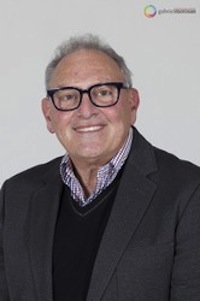
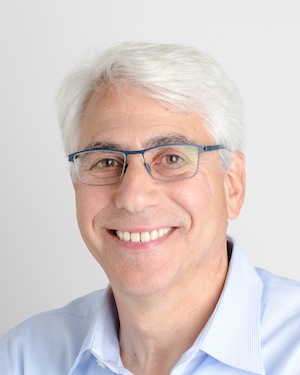
photo - Ian Merkel
Ian Merkel (photo by Gabriel Morosan)

Years later, Merkel is still as passionate about the evocative nature of film as he ever was. He has been involved in many film related organizations in Vancouver, including as a board member and executive director of the Vancouver Jewish Film Festival. Today, Merkel in involved with the potential of working toward social change through film, and has become involved with Reel Causes and the Vancouver Foreign Film Society.

“Film, for me and a lot of people, is the most memorable art genre,” said Merkel about why he believes film can change the world.

According to their website, the mission of Reel Causes is “to educate, inspire and engage the community around social justice, environmental and health-related issues.”

Merkel described how the organization began in an interview with the Independent. “Mohamed Ehab, a pharmacist from Egypt, had just moved here and wanted to meet people. He loved movies, so he began having movie nights in his home, then began bringing films in [from out of town] for the public.”

In 2010, Reel Causes registered as a nonprofit society and has since partnered with many B.C.-based nonprofits to promote health, environmental stewardship and social justice.

“We bring films that are not political or religious and partner with what we call community causes, in order to educate people,” Merkel said. “The belief is that the media of film is one of the most powerful ways to get people involved in causes. People connect as a group while they watch a film and are able to engage with our community causes to effect positive change.”

Reel Causes has an arrangement with Vancity that enables the organization to screen films once a month at Vancity’s theatre at Simon Fraser University and once every six months at the Vancity Theatre downtown on Seymour Street. They aspire to raise awareness and funds for the causes with which they engage.

“Our most successful event was a partnership with the Lipstick Foundation, which provides esthetic services to patients in palliative care in a hospice on the North Shore,” Merkel said. “We showed a movie called Happy. The Lipstick Foundation brought a big sheet of paper and cupcakes. Whenever a person wrote on the sheet about what makes them happy, they got a cupcake. We had over 200 people there.”

Coming up next for Reel Causes is a film dealing with youth issues and a partnership with Artquake, an organization whose mission it is to empower young people and build confidence through art.

Reel Causes is at a turning point as an organization, Merkel said. Several younger people sit on their newly enlarged board of directors and Merkel said he anticipates passing the torch to a new generation soon, while still maintaining some involvement.

At the same time, he looks forward to turning his attention to his other passion: promoting foreign films.

The Vancouver Foreign Film Society was formed in May 2014 as a result of the dearth of independent movie theatres in Vancouver. While the Ridge Theatre has been demolished and Fifth Avenue and the Park are now owned by Cineplex, the demand for quality foreign and international films remains high. Eight films were screened by the society last year and 12 screenings are planned for this year at Pacific Cinémathèque.

“The criteria for our films is that they are produced outside of North America, but for some French films from Quebec we may bend the rules because they are never seen outside of Quebec,” said Merkel. “We’ve had films from France, Sweden, Norway, Britain, Australia and soon will show films from Japan, India, Spain, Turkey and Thailand.”

For Merkel, providing his insider knowledge of how to procure films and put on events is a labor of love. “The impact of a film will inspire for pure entertainment or for social justice,” he said. “Film shows us things that happen around the world and people remember powerful images from film. I see that film can stimulate the mind and somehow retain the content so those images are lodged in your mind.”

For more information, visit reelcauses.org or vanforfilm.org.

Michelle Dodek is a Vancouver freelance writer.
JFSA appoints Richard Fruchter

Jewish Family Service Agency has appointed Richard Fruchter as senior management consultant. He began working in this position on Jan. 7, and will be leading JFSA while the executive director search committee continues its efforts in identifying candidates and hiring of the long-term ED.

photo - Richard Fruchter
Richard Fruchter (photo from Jewish Family Service Agency)

“We are pleased to welcome Richard, who not only brings with him tremendous experience and a proven track record in not-for-profit organizations in Jewish communities in North America, but also has a thorough knowledge of our Jewish community, having served as the senior management consultant of the Jewish Federation of Greater Vancouver from 2013-2014,” said board chair Joel Steinberg.

“Richard will support the agency with his extensive knowledge in areas of finance, fundraising, communications, board governance and human resources – initiatives that were identified in our strategic plan. Prior to his tenure in Vancouver, he was the president and CEO of the Jewish Federation of Greater Seattle and, over the last 30 years, he has been in top executive positions with federations, Talmud Torah [schools] and other general community organizations in Seattle, Wash., Minneapolis, Minn., and Tucson, Ariz.”

“It’s an exciting time at the JFSA as we build for the future,” said Fruchter. “I will be playing a strategic and advisory role with the board and staff to help JFSA continue to transform the lives of individuals and families, through quality services and innovative programming. The last few weeks, I’ve had the opportunity to visit some of our programs, see their impact, and learn more about how we respond to evolving community needs. I found our staff to be dedicated and committed professionals – passionately working day in and day out to care for their clients. Our board and volunteers are talented and willingly share their wisdom and resources to provide for our community’s welfare. During this transition, I look forward to having renewed and fresh conversations with our community members, leaders and donors about how JFSA can even more effectively service our community.”

Ruling against terror

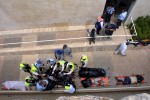
Bodies are taken away following an explosion at the cafeteria of Jerusalem’s Hebrew University on July 31, 2002. Hamas took responsibility for the bombing, which killed seven people and wounded 70, but a new U.S. federal court ruling found the Palestine Liberation Organization and the Palestinian Authority liable for that attack and other committed during the second intifada. (photo from Flash90)

A New York City-based federal jury on Monday ordered the Palestine Liberation Organization (PLO) and the Palestinian Authority (PA) to pay $218.5 million in reparations to American citizens who were targeted by terror attacks in Jerusalem, and to the victims’ families. The ruling is seen as a major victory for those seeking to hold so-called moderate Palestinian factions accountable for terrorism.

The court ruled in favor of 10 American families who sued the PLO and PA for six different terrorist attacks that were linked to those groups during the second Palestinian intifada. Thirty-three people were killed in those six attacks between 2002 and 2004, and 450 were injured. Since the lawsuit was filed in a U.S. court under the Anti-Terrorism Act, the reparation amount is expected to triple to $655.5 million.

Among the families involved in the landmark ruling were representatives of four victims of a Hebrew University cafeteria attack in 2002, in addition to Palestinian shooting attacks and suicide bombings that took place between 2002 and 2004 in Jerusalem.

The plaintiffs won the case after a 10-year legal battle in which the defence claimed that the PLO and the PA were not directly responsible for the attacks, which were carried out by the al-Aqsa Martyrs Brigade and Hamas. The verdict is likely to bolster Israel’s longstanding claim that Palestinian factions such as Mahmoud Abbas’ PA – which many in the West consider to be more moderate than Hamas – support terrorism.

“The PA and the PLO and the Fatah faction were all involved in terrorism during the second intifada,” said Jonathan Schanzer, vice-president for research at the Foundation for Defence of Democracies and a former terrorism finance analyst at the U.S. Department of the Treasury. “Abbas reined in those groups and has done a reasonably good job of preventing their resurgence. But the sins of his predecessor, Yasser Arafat, continue to haunt him. And now it looks as if it will cost him, as well.”

Read more at jns.org.


Using art to bridge peoples

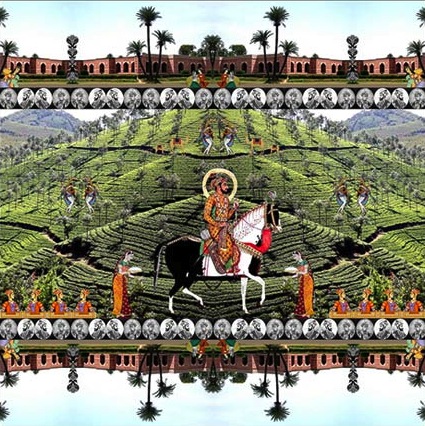
The gallery includes work by Almagul Menlibayeva of Kazakhstan. (photo from AMOCAH)

When people in Israel saw that Belu-Simion Fainaru and his partner Avital Bar-Shay were considering opening yet another art museum/gallery, some eyebrows were raised. But what this dynamic duo in life and in art had in mind was much more than another one-dimensional art space. Their far-reaching ideas will likely quiet the doubts of any naysayers.

Fainaru and Bar-Shay, both Jewish artists living in Haifa, decided to create an art meeting space for Jewish, Christian, Muslim, Bedouin and Druze artists – a place where they could display their art alongside one another. They created the Arab Museum of Contemporary Art and Heritage (AMOCAH) in Sakhnin in the Lower Galilee, which was declared a city in 1995 and has a population of 25,000 of mostly Muslims and a minority of Christians. It also is home to a significant population of Sufis, Muslims who adhere to a mystical stream of Islam.

Bar-Shay and Fainaru originally met in Israel. Fainaru made aliyah from Romania in 1973. A successful visual artist, he has curated exhibits around the world, making international connections along the way. Bar-Shay is an Israeli-born artist, designer and architect. She has exhibited in Israel and abroad and has vast experience in public art, working as a cultural entrepreneur. She specializes in artistic activity in the periphery.

The idea for AMOCAH started with Fainaru and Bar-Shay initiating and curating the Haifa Mediterranean Biennale four years ago. This led to a second biennale in 2013, which took place in Sakhnin. At the Haifa biennale, they used shipping containers to exhibit the artwork. In Sakhnin, the biennale was held in a building that the town’s mayor offered for the occasion.

“Right now in Israel, a lot of … Jewish people feel a special energy when it comes to Sakhnin,” said Fainaru. “So, we did this big project in the Sakhnin area, where a lot of Jewish people are already using various art mediums to bring communities together.”

Fainaru said that the various communities do not usually do things together and, even within the Arab community, Muslims and Christians generally keep to themselves.

“The art will have an urban dimension and we can approach art for a population that’s not very familiar with contemporary art,” said Fainaru. “We think it’s important to decentralize the art scene in Israel.”

Going with the biennale (Italian for every two years) concept seemed the most feasible, with politics and budgets in Israel regularly being in flux. “We had a big project with the Ministry of Education, but a few months after we decided to move ahead with [the minister], he [had] just resigned,” noted Fainaru, as an example.

While the idea of a biennale was born 100 years ago in Venice, Fainaru and Bar-Shay wanted to go with that premise and added a new twist – creating a biennale melting pot of cultures, and eventually transform that into a permanent museum in Sakhnin.

“We think countries around Israel and the Mediterranean should cooperate and exchange ideas in the area of contemporary art,” said Fainaru. “We put a lot of emphasis on education and doing workshops with artists from abroad.

photo - Afghani-German artist Jeanno Gaussi’s work is at AMOCAH
Afghani-German artist Jeanno Gaussi’s work is at AMOCAH. (photo from mfa.gov.il)

“We want to develop projects under the umbrella of the biennale and museum, also with Jewish and Arab children – the next generation – to communicate and get to know each other, have fewer misconceptions, and make a better living here not based on violence.”

It took some time and meetings with the right people to get the Sakhnin museum off the ground. Fainaru and Bar-Shay met with the mayor of Sakhnin, Mazin G’Nayem, who was open to the idea. The mayor spoke with his culture deputy and the pieces began to fall into place.

“He [the mayor] thinks it’s important to have contact between Jews and Arabs, as we have to live together,” said Fainaru. “He understands that art will help the people of Sakhnin and promote coexistence between Jews and Arabs. He saw that with the football team he put together that has Jews and Arabs playing together.”

During the first biennale in Sakhnin in 2013, Sakhnin was flooded with people coming to participate in the festivities. AMOCAH is open to the public and, so far, the majority of the visitors have been students of contemporary art. The educational component of the museum is still being developed. “We hope, with these educational activities with the biennale, Israel’s sense of art will become known to people all around,” Fainaru said.

AMOCAH carries art from the various cultures in the region and from different religions, but Fainaru is especially proud of the art coming from countries without political ties to Israel, like Syria, Iraq, Iran, Afghanistan and Turkey.

“Normally, relations between Israel and Turkey are very bad,” he said. “Even I was dismissed from a biennale exhibition in Turkey, because of war between Israel and Gaza [last] summer.”

To facilitate cooperation between the Jews and Arab artists involved, the biennale and the museum are being organized by both communities.

“Tel Aviv-area people are self-sufficient in art, culture, cinema, food … in life,” said Fainaru. “They don’t feel they have to go to another place inside Israel. But, in the periphery, what we’re doing is creating an alternative activity in art in Israel and having an influence on life here – making a change and bringing art to people while incorporating cooperation between Jews and Arabs and neighbors around. This is just a beginning.”

The next Sakhnin biennale is scheduled for the end of 2015, with Fainaru and Bar-Shay already working to bring in the works of many new artists from Israel and abroad.

Rebeca Kuropatwa is a Winnipeg freelance writer.

Halper talks across Canada

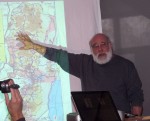
Dr. Jeff Halper speaks at the University of Manitoba on Feb. 9. (photo by Rebeca Kuropatwa)

Dr. Jeff Halper, an Israeli anthropologist and Nobel Peace Prize nominee, spoke on four different occasions in Winnipeg over two days, Feb. 8 and 9, as part of a cross-Canada speaking tour, which also brought him to Vancouver Feb. 10-12. He is the head of the Israeli Committee Against House Demolitions (ICAHD), an organization self-described as “dedicated to ending the Israeli occupation and [that] advocates for a just peace between Israel and the Palestinian people.”

The first of Halper’s Winnipeg talks was An Israeli in Palestine, and it was held at Crescent Fort Rouge United Church. He then spoke at the University of Manitoba on Academic Freedom and the Israeli-Palestinian Conflict, reprised An Israeli in Palestine at the University of Winnipeg and, finally, did an interview with Jewish Post & News editor Bernie Bellan at the Free Press News Café (which can be found at icahd.org/node/568).

The U of M lecture on Feb. 9 was sponsored by the department of history, the Centre for Professional and Applied Ethics, and the Global Political Economy program. Halper began this talk by saying that “the side” most people are aware of is the one that “only demolishes houses of terrorists and that is trying really hard to make a fair peace with the Palestinians.” But, he said, people are not very aware of the side that is “building settlements in the West Bank and refusing to issue building permits to Palestinians in the West Bank.”

According to Halper, Israel has been working for years to physically eliminate the proposition of a two-state solution by creating in the West Bank a Palestinian territory that is so fragmented with Israeli settlements that such an option is no longer viable. “A solution that the Israeli peace camp, including myself, supported for many years … the solution accepted by the international community … U.S., Canada, the UN, the Palestinians and every Arab country, is gone,” he said.

Halper believes that the two-state solution is “tremendously pro-Israeli.” He said, “If Israel in fact wants peace and security, it could have had that 27 years ago. And, it could have kept 78 percent of the country. This two-state solution was adopted unanimously by the Arab League. Every Arab country said that if Israel relinquishes the occupation, we will not only make peace with Israel, we’ll integrate Israel into the region. There was even talk of Israel joining the Arab League.”

In Halper’s view, “Israel has always said no and never seriously considered a two-state solution…. In 1993, there were 200,000 settlers. By the year 2000, after seven years of negotiation, there were 400,000 settlers. Today, there are 600,000 settlers. In four years from now, there will be a million Israelis living in the occupied territory.

“What Israel has done to ensure its permanent control, to ensure that the Palestinians are imprisoned in areas, is not a bi-national state … heaven forbid, because it has to be a Jewish state…. There’s no chance Israel will be forced out of the occupied territory. Israel has laid over the West Bank what I call ‘a matrix of control.’”

Halper argued, “There is no more West Bank: it’s gone. There are today more Israelis living in east Jerusalem than there are Palestinians. And whether it’s east Jerusalem or the West Bank, Palestinian territory is completely fragmented.

“Also, out of the 600 checkpoints in the West Bank, only 17 are actually between the West Bank and Israel. All the others are inside the West Bank, preventing Palestinian movement, confining them to these islands.

“How will a Palestinian state emerge from this?” he asked. “The whole idea of the two-state solution was based on a north/south axis, here’s Israel and, alongside, it’s a Palestinian state.”

Halper sees Israel as “working to force Palestinians out of homes located in the ‘wrong’ place, largely through house demolition. None of those homes had anything to do with security.”

As an example, Halper used the house of ICAHD member Salim Shawamreh. To date, said Halper, that home has been demolished and rebuilt by the ICAHD six times. “They bought a small plot of land in the town of Anata, which is right next to Jerusalem,” said Halper. “The land is registered. When they went to apply for a building permit, the answer was ‘no.’ Israel has zoned the entire West Bank as agricultural land so, when a Palestinian comes to build a home on land he owns, the answer is ‘Sorry, but this is agricultural land.’ It applies to Jews and Arabs.”

Beside Anata is the Israeli town of Ma’ale Adumim, which, Halper said, is built on the same agricultural land with a permit. “You have 50,000 Israelis living in government-built cities on the same land,” said Halper. “If you want to rezone from agricultural to residential, it takes a second.”

Many families build without a permit, said Halper, and Shawamreh “decided to build his house without a permit and the Israeli authority sent a demolition order with a dozen solders. They aren’t coming to arrest him. They’re coming to demolish his home…. Salim resisted and was taken out by force. His wife, Arabiya, managed to lock the door and stayed inside with the children. So, the soldiers broke the windows and threw in tear gas to flush the family out. Arabiya was taken out unconscious, the kids running and screaming in every direction. We get into the act if we can. She managed to call us … [and] we resist the demolition of homes.

“We rebuild homes as political acts of resistance,” he continued. “We’ve rebuilt 587 homes over the last 14 years or so … 587 joint acts of resistance. We refuse to be enemies. That’s one of our slogans.”

Halper’s tour, organized by United Network for Justice and Peace in Palestine/Israel and Independent Jewish Voices-Canada, as well as various local groups, fundraised for ICAHD’s building of a house for a Palestinian family whose home was demolished. Admission to events was free, though donations were welcomed.

Rebeca Kuropatwa is a Winnipeg freelance writer.

Taking care of elders

Cindy Greenlay, therapeutic recreation manager at Winnipeg’s Simkin Centre, is one of the first to admit that no one plans to retire and move into a care home. But, she explained, “Circumstances happen and the support we’re able to provide here is something needed in the community.”

On Feb. 18, the women’s philanthropy of Combined Jewish Appeal (CJA) in Winnipeg hosted an educational evening at the Simkin Centre on the centre’s programming. Daniela Jacobson, co-chair of women’s philanthropy, began the event, noting that the Simkin Centre “is our newest agency to the Jewish Federation of Winnipeg.” She then gave the floor to Greenlay.

photo - Simkin Center’s therapeutic recreation manager, Cindy Greenlay
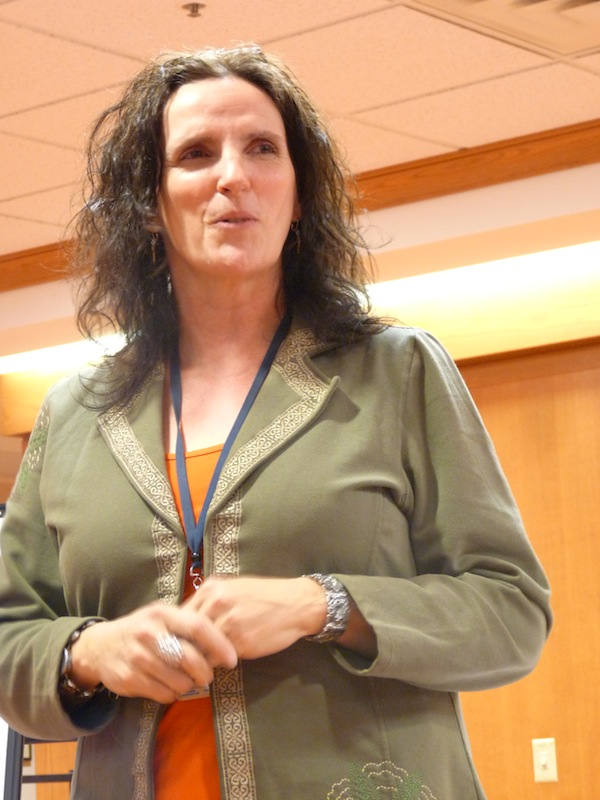
Simkin Center’s therapeutic recreation manager, Cindy Greenlay. (photo by Rebeca Kuropatwa)

According to Greenlay, people don’t come to the Simkin Centre at the end of their lives to die – they come to continue living. Something about which the centre staff feel strongly is the importance of getting to know each of the residents individually. “We don’t assume that everyone who is 75 likes to play Bingo,” said Greenlay by way of example.

The staff meet with each resident several times and gather as much information about what he/she likes to do, so they can build activities to match. One of the most important things to understand, said Greenlay, is that residents have a lot of free time on their hands and the centre needs to fill that time with relevant programming.

“We need to do that every single day – 13 hours a day,” she said. “As 80 percent of our population is cognitively impaired, so we have some people here who make those choices…. We’re all trained in specific areas to adapt to different disabilities…. We have one recreation staff for every 40 residents. That person works five days a week to fill up this big piece of the pie.”

The centre’s programming is funded by the local Jewish federation and private donors.

“To brag a little bit, our facility is chosen every year by Red River College to bring the recreation students to,” said Greenlay. “The students come here every fall to see what they want to be when they ‘grow up.’ They shadow our staff every fall to see what the programs are supposed to look like.”

Until a year ago, Simkin’s spiritual health care was led by Rabbi Neal Rose, and it was based on a chaplaincy model. “Once Rabbi Rose retired, the board met and did some rethinking,” said Barb Findlay, the centre’s spiritual health care practitioner. “They researched what spiritual health could look like going forward. I think that in the whole world – and the Jewish world is not different – generally, people today are less religious and more spiritual. People use yoga and meditation and different ways to access the Divine. It’s interesting, as I go around and meet new residents and introduce myself, I get one refrain that I hear all the time, ‘Wait a minute. I’m not too Jewish.’ And, you know, actually, they are very Jewish.”

photo - Barb Findlay, Simkin Centre’s spiritual health care practitioner
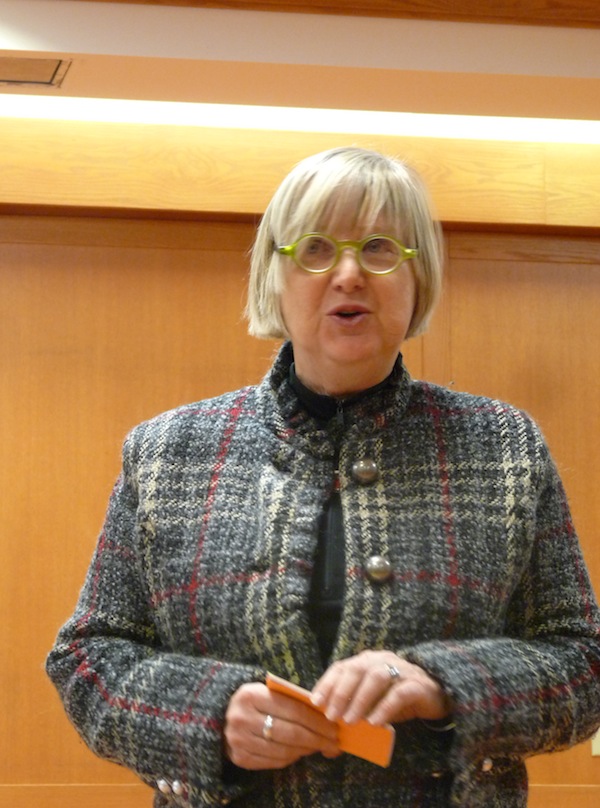
Barb Findlay, Simkin Centre’s spiritual health care practitioner. (photo by Rebeca Kuropatwa)

Spiritual health has been recognized by the Canadian Medical Association and the Winnipeg Regional Health Authority (WRHA) as an integral part of the health profile, which includes physical and emotional health.

“Spirituality is defined as that which gives meaning and purpose to life, besides the physical,” explained Findlay. “The purpose of spiritual health is to symbolically walk beside people and to occupy that liminal space between what’s known and what’s not known in life.”

Although the overwhelming majority of people at the Simkin Centre are Jewish, the centre operates as the Victoria Hospital emergency placement location. As such, the spiritual health personnel have to provide support for people from all religions, including Buddhists, Catholics, Evangelical Christians and First Nations.

“What is important is their belief system and helping them to boost that and work with that for whatever needs they have,” said Findlay. “Israel has embraced this new profession. They named it the ‘livui ruchani,’ which is Hebrew for ‘spiritual accompaniment.’

“The Simkin population is roughly 200, and about 15 percent aren’t Jewish,” she continued. “The average age is 90, and about 85 percent of our people have some element of dementia. Ninety-six percent of elders live out their lives in the community with or without some supports, so, what we have here is a very small percentage of our elderly population – about four or five percent.”

Dr. Harvey Chochinov, a geriatric psychiatrist in Winnipeg, has dedicated much of his work focus to end-of-life care, and has found that distress at the end of life is usually connected with people feeling as though they are a burden.

“He’s developed a whole process which involves questioning and reflection, so we can help people review and rebuild, and hopefully move away from feeling they’re a burden for their loved ones,” said Findlay.

The evening’s talk ended off on a lively and light note, with Cindy Bass, the centre’s music therapist demonstrating how she engages residents. “Music memory is one of the last remaining faculties for the elderly population with Alzheimer’s disease,” said Bass. “For example, if you take a song like ‘My Bonnie Lies Over the Ocean,’ everybody knows it. And it’s been shown that some people who can’t speak anymore can still sing, which is also why it works well as therapy for stroke victims, helping them relearn to speak.”

Music can increase attention span and be very useful for the cognitively impaired, she added, as it opens new brain pathways, evidence of which has been seen using MRIs.

Bass led the crowd in a few songs to illustrate the power of music and she explained the many benefits gained through music, including the building of community ties and increased socialization, as well as its use in prayer and to enhance self-expression.

“Music,” she said, “provides people of all ages, regardless of disability, with ample opportunity for meaningful responses to all aspects of our environment.”

Rebeca Kuropatwa is a Winnipeg freelance writer.

Brush up kids’ STEM

(photo from e2 Young Engineers)

The Israeli education revolution is here. e2 Young Engineers, which started operating in 2008, is pioneering the concept of “edutainment” in the classroom, combining education and entertainment. The edutainment method is used to develop children’s knowledge and understanding of STEM (science, technology, engineering and mathematics) subjects. In turn, Young Engineers is helping foster the next generation of engineers.

e2 Young Engineers was founded by Amir Asor, a young Israeli entrepreneur. Asor, who dealt with learning difficulties as a child, understood from firsthand experience that the way schools teach STEM does not engage all children, challenge them or give them the desire to continue learning these subjects. Inspired to change this reality, Asor began to develop the Young Engineers’ curricula. In its first year of operation, the company opened 10 centres across Israel. During the following year, 2009, the company grew to 90 centres.

The curricula created by Asor are aimed at children between the ages of 4 and 15, and operate in community centres, after-school programs, private schools, teen centres, private homes and more. e2 Young Engineers lessons are built on a logical progression of teaching theoretical material in a lively way – using engaging stories, demonstrations and experiments – and then giving the children the opportunity to build a K’nex (for the younger age group) or LEGO bricks model that illustrates the principle being studied in that lesson. At the end of the year, children who have participated in a e2 Young Engineers lesson will be able to explain, for example, what transmission is, the difference between a power-increasing transmission and a speed-increasing transmission, what centripetal and centrifugal force are and how Bernoulli’s Law works. These concepts and basic principles of physics and engineering are not sufficiently covered by traditional school curricula, and e2 Young Engineers’ courses give children great exposure and access to these professions.

e2 Young Engineers operates from north to south in Israel, and continues to grow. International recognition arrived for the company in 2011, when Asor was awarded the Youth Business International Entrepreneur of the Year prize, presented by YBI’s founder, HRH Prince Charles. Building on this, e2 Young Engineers’ franchise operation was launched in 2012; in the space of two years, franchisees from 15 different countries spanning five continents signed up, forming a family of 40 franchisees – a number that is still growing. In addition, the University of Carnegie Mellon has chosen to market Young Engineers courses through its subsidiary, iCarnegie.

The company is continuing to develop its curricula at both the technological and pedagogical levels. An intensive project to bring digital technology to the classroom is nearing completion, with the development of a 3-D application exclusive to e2 Young Engineers. The application, which is used on a tablet, contains all the building stages for every model, which can be viewed 360°. It also contains pop quizzes, fun and educational cartoons (featuring Eureka, the e2 Young Engineers mascot), and a very popular function that allows the child take a photo of themselves with the model they built and email it to their parents – or whomever they choose – via the app. In this way, parents can receive instant insight into what their child is learning and how much they are enjoying themselves.

As an Israeli company, Young Engineers has a particularly special connection with Jewish communities worldwide and, to this end, has generated much interest from Jewish schools and educators across the world, supported by the company’s active approach to cultivating such ties. The Jewish community in Vancouver – and the wider British Columbia area – has been identified as having potential for being a flag-bearer for the company in Canada. The company is open to potential franchisees from across British Columbia. Find out more by visiting youngeng.net/franchise or by emailing natasha@e2youngengineers.com.

And, why the poppy seeds?

Poppy seed hamantashen from owl-at-home.blogspot.ca.

Purim has its share of food customs as it is observed by Jewish communities around the world, but for this article, I will narrow my question to one: why the poppy seeds – particularly in hamantashen?

A little research indicates that Esther ate seeds as part of her efforts to maintain a kosher diet. They are also said to have been the only food Esther ate during the three-day fast before she went to see the king.

Another interpretation indicates that poppy seeds symbolize the promise G-d made to Abraham (Genesis 22:17): “I will bless thee and, in multiplying, I will multiply thy seed as the stars of the heaven, and as the sand which is upon the seashore …” because this is the antithesis of the annihilation planned by Haman.

Mohn, the Yiddish word for poppy seed, was combined with milk, sugar or honey and sometimes raisins and nuts and used as a filling as early as medieval times. Tasch is German for pocket, so the original name was mohntaschen, pockets filled with poppy seeds. Why pockets? Because of Haman’s coat pockets, where he carried the lots (purim) he cast to determine on which day the Jews would be killed.

When Jews fled Germany for Eastern Europe, in the Middle Ages, they took the poppy seed pastry with them and added the Yiddish prefix ha, thus making it hamohntaschen.

By the way, if you plant poppy seeds, you end up with poppy flowers. Their unripe seed capsules, when processed, are the source of heroin, opium and morphine. It is said that if you consume poppy seed-filled cake or pastry, including hamantashen, you could test positive on a drug test. Many years ago, a state police crime lab in Oregon tested the driving ability of subjects who had consumed 25 grams of poppy seeds baked into a bundt cake and found that their driving ability was not impaired – however, they did test positive for opiates. Another bit of research indicated that eating two poppy seed bagels could cause failure of a drug test!

Poppy seeds contain high amounts of oil and are best refrigerated when not being used. They are also an excellent source of calcium. But don’t eat too many, as a 50-gram hamantash may have 200 calories.

Speaking of poppy seeds, poppy seed cookies, or mohn kichel, are also popular for Purim, as is mohn torte, or poppy seed cake where two layers of pastry dough are filled with a mixture of poppy seeds, sugar or honey, ground almonds and raisins.

Another interesting note: for Purim, some people make challah shaped into a very long braid – to symbolize the rope used to hang Haman. And, in keeping with tradition, why not add some poppy seeds to it?

Sybil Kaplan is a journalist, foreign correspondent, lecturer, food writer and book reviewer who lives in Jerusalem. She also does the restaurant features for janglo.net and leads weekly shuk walks in English in Jerusalem’s Jewish food market.