Purim’s got it all

On a cloudless, heavenly morning, well before the Almighty turned the dust of the earth into man, he announced the holy days to the assembled Heavenly Hosts. The angels listened solemnly, especially to Yom Kippur. After a few moments of meditation, they burst into a perfectly sublime harmonious hallelujah. The holy days were fashioned; a string of pearls to decorate creation.

There was Rosh Hashanah and Yom Kippur for the pious and meditative; Tu b’Shevat for the nature lovers. Simchas Torah for the joyous Chassids; Chanukah for the chauvinists. Passover pleased several groups; the bright-eyed lovers of matzoh balls, and the historically minded.

Yes, all the angels and cherubim and sages yet to be, thundered a mighty “Amen” as the Almighty announced the holiday lineup. All except one, that is. One of the younger angels, his wings still fluffy with down.

“What about the children?” he blurted out. “What about a holiday for the children? It should be a happy day of games and, of course, some special delectable food. And, most of all, noise! It should be the one day in the year when kids may shout to their heart’s content without a giant, adult hand muffling their mouth.”

The Holy One listened with compassionate attention. Then He pronounced, “Yes, I shall invent a happy day just for the children. I shall create an historical situation that seems destined for tragedy, but at the last minute dissolves into deliverance.” (“Just like the Red Sea and the Exodus,” whispered the excited Heavenly Hosts in unison.) “There shall be the essence of evil in the form of a tyrant.” (“Good,” thought the angels, even children must know about evil.) “And the young shall eat triangular cakes and shout as loud as they like at the evil name.” (“If they’re going to be loud and noisy, they may as well holler at evil,” said the Hallelujah Chorus.)

So, on the festival Megillah – the great scroll of the holidays – He who made time itself, inscribed Purim, a holiday for children.

My friend, Herb, a childlike celebrant who’d swap two Passovers and a Chanukah for one Purim, says that if Purim occurred daily, he’d attend shul all year round, as faithfully as the Ner Tamid, the eternal light that shines on the bima. Purim’s got it all, says Herb. “A love story like Ruth, but spiced with suspense. And all the joy of Simchas Torah, with a plot line.”

Herb may be right. Esther is one of the great triumvirates of Jewish heroines. Her two sister heroines are, who else? The militant Yael and Judith. The latter two, you’ll recall, dispatch two of Israel’s enemies to that special Gehenna where Amalekites sing Hatikvah on our holidays. This daring, dynamic duo were simple straight shooters like Annie Oakley. But Esther – ah, there’s a woman of subtlety as well as valor. You won’t find Hadassah ruining her manicure with tent pegs or swords. She’s behind the scenes orchestrating, directing. Totally invisible to her antagonists, she’s the ghostess with the mostest, you might say.

Once Cousin Mordechai alerts her to the peril facing her people, she swings into action. Two lavish banquets – not one, but two – she throws for the king, and Haman of all people. It’s the first Purim Oneg. And, although the Megillah does not spell out the menu, I’m sure Esther laid out a nice kosher spread with plenty of Persian slivovitz and followed by platters of those crisp, little, layered honey cakes.

Esther’s eyes caress the king, those succulent cakes melt in his mouth. They’re eating high on the challah, so to speak.

Haman, the quintessential Amalekite, sits in a corner daydreaming of the gibbet for the Jew, Mordechai. Esther, the supplicant who fantasizes a special Gehenna for Haman, in which he eternally grates potatoes for all the Chanukahs yet to come, pleads with the king for her people, Israel. She gazes tearfully at the king like he’s a titanic honey cake. In the background, we can almost hear a silvery “Taps” – with a klezmer lilt – for Haman the Agegite.

My good friend, Herb, loves to hear this Megillah. As I say, he’s a Purim regular. There he is, every year, with his own grogger, just like the Minyan Club members have their own tallis and tefillin. And he’s carrying one of those neat, silver hip flasks just to make sure he obeys the talmudic injunction to be sufficiently zonked so you can’t tell Haman from Mordechai. Over the whole year – 613 mitzvah opportunities available to him – this is Herb’s finest moment of observance.

Well, I love Purim as much as Herb. On what other holiday can you make obnoxious noises and even talk more than the rabbi without being shushed. I guess, like Herb, I’m a Purim Jew.

Ted Roberts is a freelance writer and humorist living in Huntsville, Ala.

One-stop planning and sharing app

Wedivite founder and groom-to-be Ben Novak. (photo from israel21c.org)

Within a couple months of its alpha launch in June last year, more than 7,000 couples around the world had already used Wedivite, the first free socially integrated digital platform exclusively for weddings. As of last week, nearly 36,000 couples had used it.

Conceived and built by Israeli groom-to-be Ben Novak, Wedivite enables sending invitations via email, Facebook, Twitter, Google+, SMS or WhatsApp, or adding a QR code to a printed invitation. There’s an option to create a custom page for a wedding registry, too.

Guests can click to RSVP, add the event to their Google calendar, get directions to the wedding, send greetings and gifts, recommend songs for the playlist and add photos to the online album and live wedding slideshow.

Additional features have since been added, such as a dedicated gift registry, integration with Google contacts and Dropbox (for photo storage and printing), text reminders for guests and designer invitation templates.

“We’re connecting everything to make it more comfortable for couples to engage guests and to make it cheaper and fun,” said the 29-year-old founder, who is bootstrapping the venture by working as a digital marketing consultant.

From Israel with love

Wedivite’s website and mobile app were launched in beta in January 2013 and became an instant hit with couples in India, the United States, South Africa, the United Kingdom and Canada. A Spanish-language version was added before the alpha launch, due to demand from users in Spain, Latin America and the United States.

Novak also introduced a Korean beta version of Wedivite, he said.

“Three months ago [prior to August 2014], a wedding organizer from South Korea emailed me and said online mobile invitations are big in Korea but they don’t have everything I am offering, and she wanted to translate all the material for me [in return for putting] her link on my website in Korea,” he explained.

While his fiancée was scouting out a gown and a hall for the couple’s May 2015 nuptials, Novak was knee-deep in the technical side of pending matrimony, learning that vast cultural differences require him to tweak Wedivite for specific audiences.

In South Korea, for instance, nobody uses PayPal or Google Maps, which are integral to Wedivite. And because Koreans don’t dance at weddings, there’s no need for a song-suggestion feature.

“One of my dreams is to create a big infographic or PDF with cultural differences between weddings that I have learned about,” said Novak, a Tel Aviv resident.

But some things are universal, such as the increasingly digital components surrounding the romance of engagements and weddings.

Mashable’s social and tech wedding survey in 2012 revealed that “relationship status” is the digital age’s version of flaunting a new diamond ring, as 31 percent of engaged women update their status within hours of accepting a marriage proposal.

Other trends show that couples are forgoing classic wedding formats in favor of ceremonies and receptions that reflect their personal tastes and create a positive experience for guests while keeping costs down.

“Wedivite is here to re-set the standard of wedding invitations from the traditional to the digital,” said Novak. “By putting social-media integration at the forefront of our platform, we recognize the influence that social media and digital presence has in the lives of today’s couples.”

Novak was inspired to start Wedivite by a conversation with a newly married friend whose wedding photographer had failed to take a picture of the groom’s mother. Though many guests take their own photos at weddings, these couldn’t easily be added to an official album.

“My idea was to make a shareable photo album for weddings, but I decided, why not make it a lot cooler?” Novak said. “Eventually, it became what it is today.”

Novak possessed the requisite skills to realize his idea, because he has been a graphic designer and web developer since age 14, and has experience working for an ad agency and as marketing director for New Media College in Tel Aviv.

“I always had my own businesses on the side, but now I am 100 percent working on Wedivite around the clock,” he said. That, and planning his own wedding.

For details, visit wedivite.com.

Israel21C is a nonprofit educational foundation with a mission to focus media and public attention on the 21st-century Israel that exists beyond the conflict. For more, or to donate, visit israel21c.org.

***

In addition to the wedding invitation and all its aspects, wedivite.com also offers a lot of other information for planning your big day. Among its blog categories are love quotes, if you’re looking for inspiration, or a few pithy phrases to round out your vows; do-it-yourself ideas on a host of topics, such as reception themes, food offerings, flower decorations, etc.; and wedding tips on photography, budgeting and more. It is from this latter section that the following advice on budgeting comes.

One of the first things that you will notice when you begin perusing wedding magazines and guides is the amount of cash that most people sacrifice to their big day. If the average $27,000 price tag has you rethinking your nuptials, rest assured that there is a better – and less expensive – way.

Beginning married life with a burden of debt may not be in the best interest of your relationship, so find some ways to have a fabulous time within a beautiful venue without breaking the bank.

Choose an off-season date

Not only will this offer you greater availability of the locations and services that you would like to reserve, you are likely to get a better price than you would if you were married in the peak month of June. You will also enjoy savings when you plan your honeymoon.

Select a gorgeous venue

This may seem counterintuitive since a lovely location may come with a hefty price tag. However, if you choose a venue that is beautiful as-is, you can skip the decorations and make the most of what your venue offers. Historic sites and outdoor locations are wonderful choices for venues that do not require additional décor.

Bargain shop

Chances are that your marriage will be just as amazing if you are married in a dress from last year’s collection for a fraction of the price of the latest styles. This single purchase offers you the opportunity to save hundreds of dollars. Shop clearance racks, online sales and reusable party supply sites for great deals on the stuff you need.

Get creative with catering

What are your priorities when it comes to food at your reception? If a sit down, multicourse meal is a necessity, be sure to budget for it. This is a potential area to save serious money by planning a buffet. Consider your favorite restaurants as caterers rather than only those who specialize in weddings.

Forget the favors

Party favors are one of those things that everyone buys and nobody wants. Your guests will not feel less loved or important if they do not go home with a piece of tchotchke that will collect dust for a few weeks before they finally through it in the trash.

Use a Wedivite invitation

Save hundreds of dollars in printing costs and postage by using Wedivite’s digital wedding invitations to communicate with guests rather than old-fashioned snail mail. It’s free and comes with a lot of cool features like a social wedding album, songs suggestion, directions for guests, wedding registries and more.

 – From wedivite.com

Nine things you probably didn’t know about the month of Adar

The Jewish month of Adar began last Friday, Feb. 20. Known as a month of celebration and happiness, Adar contains the joyous holiday of Purim that takes place mid-month. Purim, however, isn’t the only thing that makes Adar special.

  1. Be happy now!

The Talmud tells us that “when the month of Adar arrives, we increase in joy” to welcome a season of miracles. Accordingly, the Talmud tells us that this month is fortuitous for the Jewish people.

  1. What’s in a name?

The Hebrew name Adar is related to the word adir, which denotes strength and power. The Rebbe, Rabbi Menachem M. Schneerson, of righteous memory, points out that the term adir is used to refer to the Jewish people. What could be more apropos for the month when the Jewish people’s fortunes are strong?

  1. Double your joy, double your fun.

Adar is the only month in the Jewish calendar that comes back for seconds. The Jewish leap year, or shanah me’uberet (literally pregnant year in Hebrew), occurs approximately once every three years. In order to assure that the lunar months of the Jewish year stay in sync with the solar calendar, an additional month of Adar is added. In a leap year, Purim is celebrated in the second Adar.

Read more at chabad.org.

לקראת הבחירות בישראל

בנימין נתניהו – 5 בינואר. סוגיית מתן הצבעה לישראלים שגרים בחו”ל חוזרת לחדשות. (צילום: Ashernet)

לקראת הבחירות: יש ישראלים שרוצים שיאפשרו להם לבחור בחו”ל

סוגיית מתן הצבעה לישראלים שגרים בחו”ל עולה על סדר היום בדרך כלל, לקראת קיום בחירות חדשות. הנושא שוב חוזר לחדשות לקראת הבחירות הקרובות שיתקיימו ב-17 במרץ.

אליהו גורדון שגר בחו”ל כבר למעלה מ-16 שנים, עוקב בדאגה אחרי מה שקורה בישראל. גורדון (50, נשוי+3) גר ב-12 השנים האחרונות בריצ’מונד ועובד ברשות המיסים הקנדית. הוא בעל תואר ראשון ביחסים בינ”ל ומדע המדינה.

גורדון חושש מאוד ממה שעומד לקרות בעתיד הקרוב בישראל. לדבריו: “הנתונים הדמוגרפים לא משקרים ובשנת 2020 חלקם של הילדים החילוניים בכיתה א’ בבתי הספר הממלכתיים, יהיה פחות מ-50 אחוז, למרות שהם מהווים למעלה מ-50 אחוז מכלל האוכלוסיה. ומה המשמעות של נתון זה? שמספרם של האזרחים הלא ציונים, החרדים, הדתיים וכן הערבים ילך ויגדל בחברה הישראלית, ואילו כוחם של החילונים ילך ויקטן”.

לדברי גורדון למדינה צפוי גורל קשה אם בתחום הילודה לא יהיו שינויים, וכנראה שלא יהיו שינויים, כי כידוע במגזרים הדתי והערבי עושים יותר ילדים. לכן הפתרון יכול לבוא רק מצד הישראלים שגרים בחו”ל. כיום גרים בחו”ל למעלה מ-600 אלף ישראלים בעלי זכות בחירה, ורובם המוחלט חילונים.

גורדון: “עומדות לפנינו שתי אופציות. לאפשר להמשיך ולתת לאנטי ציונים, החרדים והערבים להמשיך ולהגדיל את כוחם. או לאפשר לישראלים בחו”ל להצביע כאשר כוחם שווה בין 10-15 מנדטים שיתחלקו בכנסת, בין המחנה החילוני והמחנה הלאומי. ועל ידי כך המחנה החילוני יגדל באופן מאוד משמעותי. ומה שלא יעשה הרחם של האמהות הציוניות, יעשה קול הבחירה של הישראלים בחו”ל. בעיני רבים בארץ, הישראלים שגרים בחו”ל נחשבים ליורדים, נפולת של נמושות ובוגדים שנטשו את המערכה ולא מוכנים לשאת עוד בנטל. אז לתת להם לבחור ממרחקים ולהשפיע על מה שקורה בישראל? אולי כדאי לעצור רגע ולשאול מי יכול באמת לעזור לעתיד המדינה. הישראלים בחו”ל שילמו ביטוח לאומי ומס הכנסה ועשו מילואים. לעומת זאת רבים שגרים כיום בישראל לא עושים בכלל צבא. כמו שכבה שלמה של המגזר החרדי והערבים, שמהווה נטל גדול על המדינה, בזמן שהם חיים על קצבאות. אך יש להם כוח רב ביום הבחירה”.

גורדון מציין כי בכל המדינות הנאורות בהן ארה”ב קנדה, אנגליה, גרמניה, צרפת, איטליה והולנד, מאפשרים לאזרחים שגרים בחו”ל להצביע. ואילו ישראל שייכת למחנה קטן שכולל את סין ורוסיה, שלא מאפשר לאזרחים בחו”ל להצביע.

גורדון מסכם את דבריו: “חלון ההזדמנויות הולך ונסגר ואם לא נתעורר הדמוקרטיה הישראלית חילונית תעלם, ובמדינה ישלוט רוב דתי חרדי עם מיעוט של ערבים שהולך וגדל בהתמדה. אך לעומת זאת אם ניתן לישראלים בחו”ל להצביע מפת הכנסת תשתנה לחלוטין, ויתאפשר לרוב החילוני ציוני לנהל את ענייני המדינה, ולחוקק חוקים חשובים ונאורים, בזמן שכוחן של המפלגות הסוחטות יקטן משמעותית. ומי שלא יעשה צבא יחוייב לעשות שירות לאומי, כך שהנטל יתחלק שווה בשווה בין האזרחים. הארכת שעון הקיץ תבוצע כמו בכל מדינה מתוקנת במערב, כדי להגדיל את החסכון במשק. תתקיים תחבורה ציבורית בשבת לעזור בעיקר למעוטי היכולת והקשישים. יתוקן העיוות בקצבאות

הילדים, כך שעד הילד השלישי תהיה בהן עליה, ומהרביעי תהיה ירידה באופן יחסי. ובסופו של דבר את גורל המדינה לא יקבעו החרדים הלא ציונים והערבים, אלה הישראלים שגרים בחו”ל. הם אלו שיצילו את הציונות ויחזירו את השליטה למחנה החילוני. ובכך גם יגרמו ליותר חילונים ודתיים ציוניים לחזור הביתה”.

Connecting past with present

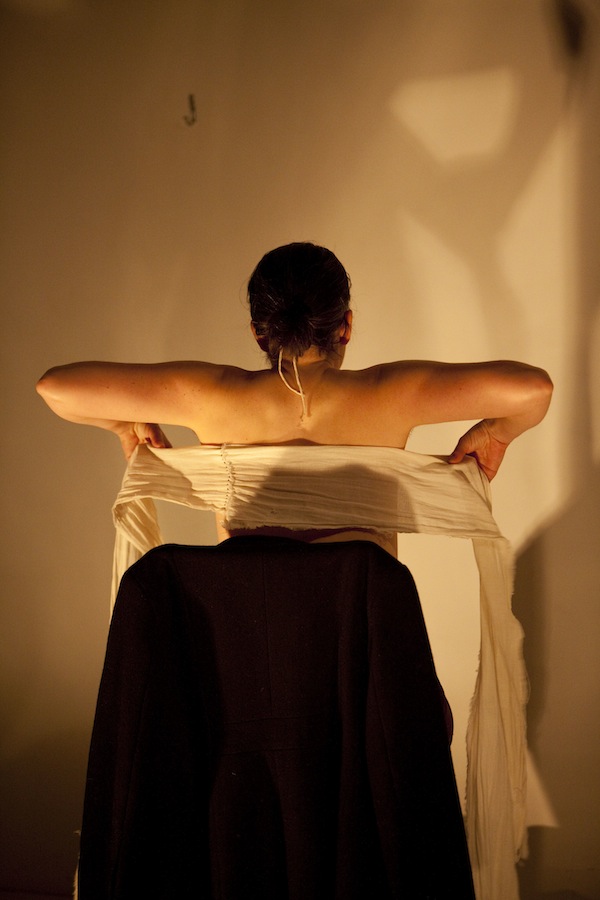
Heather Hermant in ribcage, which will be at the Firehall Arts Centre March 3-8. (photo by Tim Matheson)

As a graduate student, Toronto spoken word artist Heather Hermant took a workshop taught by Diane Roberts, a former artistic director of Vancouver’s urban ink productions. Roberts asked her students to research and embody an ancestor, and Hermant chose her great-great-grandmother Riva. The process eventually led to the multimedia theatrical project ribcage: this wide passage, which comes to Vancouver’s Firehall Arts Centre next month.

ribcage centres on Esther Brandeau, a Jewish woman who, posing as Jacques La Farge, a male Christian laborer, came to Canada from France in 1738. Said to be the first Jew to ever set foot in Canada, she was discovered, interrogated and later deported when she wouldn’t convert to Catholicism. Writes Hermant in a 2013 Canadian Theatre Review article, “Riva stepped aside as I followed an archival labyrinth – in Ottawa, Montreal and Quebec City, and in every place that Brandeau was purported to have worked as a young man over five years across France.”

The 2005 workshop was Hermant’s introduction to Roberts’ Personal Legacy process and, writes Hermant in the CTR, it is “the first performance to move from idea to production through the Personal Legacy process. It was workshopped and presented in Vancouver as part of the 2010 Tremors Festival. The full production premièred at Le MAI in Montreal in October 2010.” A French version of the performance has also been created: thorax: une cage en éclats, translated by Quebec performer and scholar Nadine Desrochers.

“I began as a spoken word performer, and thought I would approach this performance as a series of spoken word pieces. In other words, what I usually did but longer, more material,” said Hermant, who is now a performer across several genres, as well as being a curator, scholar and educator. “When I began to work, I discovered that spoken word poetry as I knew it would not do it with this story. Partly, this had to do with language. I was working with French language archives and yet I write in English. On top of or because of that, a lot of the material I was creating was physical – gesture, movement. A lot of it was video. These were things that were unexpected and new for me since what I thought I was aiming for was spoken word poetry. So, it was a bit scary.

“But, in studio work with Diane Roberts, who directs the show and who has been there from the beginning of its creation, this is where you start. Starting with movement, for example, is a key to storytelling. According to Diane, working from the body first forces a kind of honesty that is difficult to achieve when using language. Luckily, it was in a performance class with Diane where I first discovered the story of Esther Brandeau. Words came late, which is odd for a poet, but in a way this was part of the story. It was as if an impossibility to fully know stood at the centre, and required all sorts of different approaches to do just that: to approach the story, which demanded its own form.”

As her research continued, Hermant realized the production would need a musical dimension. “I began to hear live fiddle and see live mixed video installation. When we came together in collaboration with composer/fiddle player Jaron Freeman-Fox, he composed most of the material in studio (as in dance/theatre studio) with me, working from my movement and the rhythms of some of my text.”

The video in the production, she explained, derives from her research in various countries, “often collected as a way of journaling” her work. “A bunch of the video material is from site-specific reenactments filmed by Melina Young. VJ Kaija Siirala and I worked in studio together to make all this eclectic rich footage into a mixed installation concept…. The video installations operate as a kind of memory space, their own kind of eye on what’s transpiring. Interdisciplinarity in this piece allows for different witness positions to come through, I think. Different ways of looking.”

Hermant doesn’t consider ribcage a play. “It is somewhere between spoken word and storytelling, physical theatre, a series of interdisciplinary tableaux, a performance installation, all of it in a theatre. I just understand it all as poetry, regardless of whether words are involved or not.”

As diverse as are the performance aspects, so too are ribcage’s themes: identity and sexuality, belonging and personal history, established roles and genders as well as rebellion against them. “Thematically,” explained Hermant, “ribcage is a confrontation with the meaning of history and how we know the past. It is about how we work and translate across languages, eras and bodies. It confronts holes and gaps and unknowns in any written record, and works from a place of longing, desire to know and to feel belonging and to understand the present moment. I created this piece because I was compelled by the personal resonances I found with the story of Esther Brandeau…. My show is about my own ancestral and personal histories, and the journey of my research, as much as it is about the story of Esther Brandeau/Jacques La Fargue. All of these stories enter into ribcage: this wide passage, through the different media and forms that I integrate.”

photo - Heather Hermant in ribcage
Heather Hermant in ribcage (photo by Tim Matheson)

Hermant noted that women passing as men, “especially in Europe in the 17th and 18th centuries … was far more common than the exceptional cases seem to suggest. In addition to the most popular assumption and representations – that the primary motive for women who passed as men was to follow their male lovers, which circulates through pop culture across many eras, and of which there are indeed many documented historical examples – there were many cases of passers who did so out of economic necessity, there were many cases of passers who did so in order to partner with women, or a combination of these.”

For Hermant, the historical record must be regarded with care. “The important thing to me is to ask how a story is recorded, how it comes to us, what are the stakes for the person outed. In other words, it is vital to read askance and to distrust the document, even as the document gives us the story.

“What is particularly interesting for me in this case,” she continued, “is this is purportedly a case of a female passing as a male and a Jewish person passing as a Christian. I like to call this person a multicrosser. I find we need to challenge the assumption that passing is simply a ruse. Classical literature is full of titillating stories of passers, titillating primarily for straight male audiences. My queer positionality perhaps makes more available to me a knowledge that changing gender can be a profoundly sacred process, that sexuality may or may not have anything to do with it, and that queerness as many of us know ourselves today has history. This doesn’t mean sameness across time. That last sentence is vital. In other words, how people understand themselves today and the terms through which they do so are not the same as how people understood themselves 200 or 300 years ago. This is an inherent challenge to reading, understanding and representing things as they were long ago. It’s partly why I have not chosen to create a work that takes place only contained in a long ago era.”

Describing ribcage as “a midrash on the archive,” Hermant explained, “It’s a meditation, a questioning, a digging in deep into the idea of archive, into archives themselves, into memory and telling, loss, desire, the written word and its troubles, a need to understand belonging, compelled by questioning and not by a need or a belief in the possibility or utility of resolution. In fact, to me, such a stance is an ethical stance, and some might say a profoundly Jewish one – though of course not exclusively so – i.e. the imperative of the question. So, yes, of course, my Jew-ish-ness (hyphenation intentional) is important to me and to my show. ‘Jewishness,’ however defined … and a grappling thereof, informs the piece profoundly. As does my non-Jew-ish-ness, my queerness, my experiences of gender, my feminist leanings, my francophone ancestry, my being a settler ally working with an aboriginal and intercultural theatre company on unceded Coast Salish territory, my work as a scholar in gender studies, colonial history and historiography, my teaching, my concern for land and water…. The list goes on. It is all important to me, all profoundly inform the show, and none of these is mutually exclusive!”

And these are not the only aspects informing the show. “Dealing with difficult histories does not preclude humor, playfulness or joy. In fact,” said Hermant, “these are essential precisely for dealing with difficult histories. I choose the topics I choose – or they choose me – because I feel a responsibility and a call to do so. And because, very simply, they compel me.”

ribcage, produced by urban ink productions, will be at the Firehall Arts Centre March 3-8. Freeman-Fox’s original music will be performed by Vancouver musician Elliot Vaughan.

Olga Livshin is a Vancouver freelance writer. She can be reached at olgagodim@gmail.com.

Klezmer meets punk

Germany’s Daniel Kahn and the Painted Bird play at the Electric Owl on March 6 as part of the Chutzpah! festival. (photo from Daniel Kahn and the Painted Bird via Chutzpah!)

Daniel Kahn and the Painted Bird live up to the hype. They are indeed “helping klezmer reach a new renaissance, seasoning it with folk, punk and deep-digging lyrics, full of sarcasm and wicked self-irony.” They most certainly belong “to this caste of Yiddish music agitators” and their music is “[a]n absolute must for lovers of unusual, intelligent, challenging, exciting folk music and a blast at every instant.” They are “forward-marching and backward-glancing,” making “truly great art.”

And that’s not the half of it. On their website (paintedbird.de), you can read more about what reviewers have said, you can download the lyrics to all their songs, you can watch several videos – and you can get an excellent idea of what to expect when they perform at the Electric Owl on March 6 as part of this year’s Chutzpah! festival. Kahn spoke with the Jewish Independent ahead of that one-night only show.

JI: Could you share a bit about your background – how you came to be a musician, how and when you came to live in Berlin, for example?

DK: I’ve been a musician all my life but I first started working professionally as a singer-songwriter in Detroit, and then in New Orleans in 2001.

I was a part of founding the Earthwork music collective in Michigan, which has grown to a large community of artists and activists. I produced four albums of my songs with them. I first really invested in klezmer music and Yiddish after attending Klez Kanada, in Quebec, for the first time in 2004. It was there that I met Alan Bern, who was my accordion teacher. He had been living in Berlin for many years and he offered me his apartment to sublet. I was already quite interested in German theatre, particularly Brecht, and I wanted to live in Europe, so it fit.

After going to the Jewish festivals and workshops that summer in Krakow and Weimar, I had the idea to start the band the Painted Bird. And it was around then that I really started learning not only German, but Yiddish and incorporating translations into my songs, and performing in many languages at once. The band has had many members but the heart of it for all these years has always been Michael Tuttle, whom I met in New Orleans, playing bass, and Hampus Melin, a drummer from Sweden, whom we met in Berlin. We wanted to create a band that would be able to take traditional songs, folk songs, in different languages and infuse them with a modern sensibility that we take from the other music we dig – punk, jazz, new music. And Berlin is the perfect city for this band. It’s a real cosmopolis.

JI: You’ve studied drama and your bio notes that you’ve been a professional actor since age 12. How does acting fit in with your music career?

DK: From a performance perspective, I’ve never made too much of a distinction between ways of being on a stage. Songs and plays are simply different modes of collaborative or solo storytelling. As a musician, I get to employ many of the techniques I need to write, direct or act in the theatre. And I’ve never really quit making theatre. I’ve done many productions over the years, in the States, as well as in Germany. I’ve been involved as a composer or arranger of music and songs for various productions, and I’ve been acting and directing again, as well.

I’m currently very involved in Berlin at the Maxim Gorki theatre, a wonderful space for progressive work these days. The new artistic director, the Turkish-born German Shermin Langhoff, is an inspiring, powerful voice for diversity and political engagement in drama. I’ve been a kind of “house-poet” for the theatre, working on several productions as composer, actor, musician, etc. I’m about to direct a small play in their studio theatre space, an adaptation of Romain Gary’s The Dance of Genghis Cohn. It’s become an important family for me, and has also connected to the international klezmer family, as well. I curate a concert series there, focusing heavily on new Jewish music.

JI: What drew/draws you to Yiddish as a language in which to write and sing?

DK: Besides the connection it may have to my personal background as a descendant of immigrants from what we could call Yiddishland, I’m attracted to Yiddish on a purely esthetic level. I like the way Yiddish sounds, how it feels to sing and speak it. It tastes good. I like the things you can express in Yiddish that don’t quite work in other languages. And I like the challenge of trying to translate that not only into English, but into a kind of performance that makes sense to an audience that may not have the cultural or historical literacy to know where it comes from. I think Yiddish has a lot to teach us about the world we live in today, as well as the world of a century ago. It’s a language which defies borders, which defies easy categorization, which defies simple historical narratives. It’s a defiant language.

JI: Your lyrics are poetry, full of meaning, commentary on history and contemporary society. How would you describe your core beliefs/values? Do they have any foundation in Jewish traditions/ teachings?

DK: My core beliefs, which are never fixed, have their foundations in many things in my life. Some of those things are Jewish. Others simply come from being a child of Detroit in the late 20th century, being an ex-pat, being someone who travels a lot, etc. But some of what I received as a Jewish education goes against other values that I hold to. I try to take what I need from traditions and leave the rest alone. But this is itself a tradition. So, insofar as Jewish tradition contains a tradition of subverting other traditions, I’m a fairly traditional subversive.

JI: You also arrange the words of others, Heinrich Heine, Bertold Brecht, Itzik Manger, Leonard Cohen, and a wide range of writers. How do you choose, or what aspects of a poet’s words tend to interest/excite you?

DK: I work on what speaks to me.

I’ve loved Leonard Cohen since I was about 14 or 15 years old. I definitely owe the fact that I chose to be a songwriter and a poet largely to him. Brecht was the thinker and poet who kept me interested in the radical potential of the theatre to dynamically reflect the world in a political and lyrically effective way. My first plays that I worked on out of college were by him, in New Orleans and Detroit. Somehow, they were the best response I could find to the Bush era. Brecht wrote of living in “bad times for poetry.” I think I know what he meant. He was also a tremendous songwriter, who directly influenced people like Bob Dylan and performers like Nina Simone.

Heine and Manger were poets whom I really discovered in learning German and Yiddish. And now I understand that they are relatives of Cohen, Dylan (both Bob and Dylan Thomas) and others. They are just obscured behind the barriers of language and the catastrophes of history. I like to think of what a young woman I met once said after attending Klez Kanada and first encountering modern Yiddish poetry, she’s from Newfoundland, not Jewish, and she said: “I can’t believe it. It’s like a crime that I’ve been alive for 25 years and no one has ever told me about Itzik Manger!” I think a lot of people would feel that way if they could read him. He was amazing.

Daniel Kahn and the Painted Bird’s 19+ show at the Electric Owl, 1926 Main St., starts at 8 p.m. Tickets are $30/$25. For the other musical performances, as well as the dance, theatre and comedy shows that take place during Chutzpah!, visit chutzpahfestival.com.

Moose-led family show

Alex the Moose, aka Alex Konyves, performs at the Jewish Community Centre of Greater Vancouver’s Family Day on Feb. 9. (photo by Kale Wilson Beaudry of klphotograph.com)

The show had ended. Alex the Moose, though, had not left the building. Known to his friends as Alex Konyves, the man beneath the antlers sat next to me basking in the afterglow of his Family Day concert at the Jewish Community Centre of Greater Vancouver on Feb. 9.

With sweat on his brow and a big smile, he and I sat looking towards the now vacant stage. No longer in moose attire, he was obviously pleased. “I was so excited for this show,” he beamed. “We were asked to do it a number of months ago, and put a great band together with Jesse Bentley on bass, Jeff Child on percussion, Emma Wong on vocals and myself on guitar and vocals. We had a blast. The kids here are really adorable, really sweet, really engaged.”

Alex the Moose, joined by a giraffe, a cheetah and a bunny, played for the children, but the parents and grandparents in the audience bobbed their heads and tapped their feet, too. Blending elements of funk, Latin, klezmer and rock and roll, the band opened with a bass solo from Jesse the Cheetah (Bentley) that would not be out of place at the Commodore Ballroom on a Saturday night.

“The trick is keeping it suitable for children, but also engaging for parents,” Konyves explained. “Some children’s music is not the most engaging for parents, and if they’re going to be playing at your house, on repeat, it’s nice to have music that’s engaging and fun, original and diverse.” Hence, the ensemble includes a range of instruments – the didgeridoo, two types of hand-drum, wind chimes, guitar, bass and voices. “We like to keep it eclectic,” said Konyves.

They opened with an original song – “Wake up in the Morning” – and aptly chose their current single, “The Pyjama Song,” as the finale. The group performed other originals, such as “The Bumblebee Song” and “The Iguana Song,” in which the group counts iguanas falling off a tree, in Spanish, as well as classics like “The Hokey Pokey,” “If You’re Happy and You Know It” and “Head and Shoulders, Knees and Toes.”

“The first time I played music for young children was at Camp Miriam when I was a madrich [counselor] there, and I had a young age group,” said Konyves, now 29. “At night, I’d put them to sleep by playing guitar and, three songs in, they’d all be fast asleep. It was really special.”

These days, Konyves, who is also the song leader at Temple Sholom, lists Raffi, Debbie Friedman and the Beatles as his musical influences. “Raffi talks a lot about child-honoring, where you really respect children in every regard. You don’t push product placements, you really allow them to make choices for themselves, and you give them your heart.”

Konyves also believes in making music accessible to children. “If you have any instruments in your house, put them out,” he advises parents. “Just like having books in your house, it should be the same with musical instruments.”

As our conversation wound down, an impromptu jam session broke out among the bandmates on stage. To the bellowing of the didgeridoo and the beat of the djembe, Konyves explained his love of playing for children: “Kids are very honest with you when you play. If they don’t like it, they’ll let you know.”

Based on the bouncing, jumping, laughing and smiling in the audience, they liked the Family Day show a lot.

Many of Alex the Moose and company’s songs are available for download at musicwithalex.bandcamp.com.

Benjamin Groberman is a born and raised Vancouverite. He is a freelance writer, and is pursuing a bachelor of education degree, with aspirations to teach in a Jewish high school. He is a resident of Vancouver’s Moishe House.

Angels make delivery

(photo by Lauren Kramer)

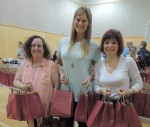
Lynne Fader, Courtney Cohen and Toby Rubin hold some of the 500 care packages that were distributed to the needy in Richmond recently by Rose’s Angels, an organization founded by the Kehila Society and Cohen, in memory of her grandmother Rose. Each package contained toiletries and food, while additional bundles supplied socks, toque, gloves and scarves. The packages were distributed to CHIMO, Richmond Family Place, the Jewish Food Bank and Turning Point Recovery House.

Zionism’s meaning in Diaspora

After the attacks in Copenhagen, like after the violence and vandalisms that have rocked the French Jewish community, Israel’s Prime Minister Binyamin Netanyahu is urging the Jews of Europe to come to Israel as violence against Jews and Jewish institutions increases across that troubled continent.

This call for a new mass aliyah is being met with opposition by European leaders – including Jewish leaders. In Copenhagen, more than 30,000 people, led by their prime minister, commemorated the victims of the terror attacks. Copenhagen’s chief rabbi, Jair Melchior, told the Associated Press, “People from Denmark move to Israel because they love Israel, because of Zionism. But not because of terrorism. If the way we deal with terror is to run somewhere else, we should all run to a deserted island.”

Coincidentally, in preparation for our upcoming 85th anniversary issue, we were perusing old copies of this newspaper recently. We came across a commentary from July 1948 titled “Zionism should be wound up.” The author argued that the motive for Zionism – the creation of a Jewish state – had been realized and so the global enterprise should be concluded: even as Israel was literally fighting for its survival in the ongoing War of Independence, and so soon after the Holocaust.

Zionism had been a divisive force in the Diaspora Jewish community, including here in Canada. There were pro- and anti-Zionist Jews of left, right and centre politics, and of Orthodox and secular persuasion and everything in between. Some arguments against Zionism as a movement relied on religious foundations, contending that the ingathering of the exiles would coincide with the messianic era. Other arguments were emphatically secular with the left holding, for example, that it was incumbent upon Jews to remain where they are and fight for a better world for all, rather than retrenching to nationalistic or religious-based separations.

Reading the editorial from 1948, one particular sticking point was that community fundraising efforts had been overwhelmingly allocated to the Zionist effort. Now that the goal had been achieved, the author argued, it was time to redirect fundraising and spending inward, to individual Diaspora communities and to resurrect the “kehilla pattern” of community building and security, with each community taking care of its own needs.

Despite the writer’s conclusion, as successive wars and decades of terrorism confronted Israel, Zionism was not shelved. It morphed into a different type of movement. No longer mobilizing for the creation of a Jewish homeland, it became the overseas support group for the country. After 1967, when “the occupation” altered perceptions of Israel at home and abroad, Zionism again became a divisive cause. But for those two decades, the Jewish people were probably as united as they have ever been in support of Israel.

The lesson of the second half of the 20th century proved the lesson of the first half. Close to a million Jews across the Middle East and North Africa were forced, driven or encouraged by various means to leave their homelands. The difference for these people was that there was now a place where Jews control the immigration policy. Had such a place existed in the 1930s, the impact of the Holocaust may have been massively reduced. Nitpickers will contend that it was the creation of the state of Israel itself that led to the expulsion of Jews from the Arab world, but this equivalency, whatever its merits, does not distract from the underlying point: Jews have often lacked security and permanence in places where they are a permanent minority.

However, being a majority is no assurance of safety. Despite Netanyahu’s invitation, all is not nirvana for the Jews of Israel. Violence and terrorism are not unknown, and life is challenging in different ways than in Europe. It also needs mentioning that everything Netanyahu says and does right now must be seen through the prism of political expediency as the Israeli elections approach.

Nevertheless, these events raise a very serious question: What does Zionism mean today for people in the Diaspora?

There are probably more answers than there are Jews and, in a way, this is the question we grapple with, in one way or another, in these pages every week. But this conclusion may be safe to draw: it is not quite time for Zionism to wind up its affairs.

Purim in our modern days

Purim, at its heart, is a story about unseen forces. Throughout the entire Megillat Esther there are numerous instances of divine intervention, even though G-d’s name is not mentioned even once. In that way, Purim provides a microcosm of our lives, even in this day.

As we all know, this holiday offers an opportunity to be merry and celebrate our nation’s survival at the brink of destruction. But this chag also gives us the chance to consider and appreciate the often positive and unrecognized forces at work in our lives, which help shape our families, relationships and, indeed, our Jewish community.

By way of background, my husband and I moved to Richmond from Israel just a few years ago. We both had successful jobs in Tel Aviv and were living a block from the beach, but we knew that when we wanted to start a family, we wanted to be closer to our parents.

Last September, my husband and I welcomed our son, and began to seriously consider the important role a synagogue would play in our child’s life – for his Jewish identity, education, relationships and milestone occasions.

It was just a few short weeks later that we all had the chance to attend a Shabbat service at Beth Tikvah, a 200-family-strong congregation in Richmond. The services had ruach and intent and the congregation was warm, welcoming, comfortable and child-friendly – in short, it was a perfect fit for us.

Just like the story of Purim, where “natural events” can seem random, so, too, could our introduction to Beth Tikvah be viewed as serendipitous. But it is possible to discern the unseen divine in the human forces at work – in this case, through a special congregation, whose members and leadership reached out to us like family.

These types of inspired instances are all too common in all our lives. I’ve seen it firsthand.

I’ve seen the parents who run their children around town so they can attend Jewish day schools, participate in Hebrew school activities on weekends and evenings, and participate in Jewish-oriented programming. All so their children – the next generation – will have a strong Jewish identity and foundation upon which to grow.

Or, our teens and young adults, who participate in chesed programs and tikkun olam projects, exemplifying Jewish values and displays of kindness. Not only do they brighten up the days of those they help, but they help make our community strong and their actions inspire others.

This Purim, we should celebrate. Not only the unseen miracles of Purim, of which there were many, but also the often-unsung forces that drive our Jewish community every day. The congregations and their members who welcome newcomers into their fold. The parents who instil Jewish values and identity in our children. The youth who devote their time to helping those less fortunate and repairing the world one small step at a time. These are the tangible forces of our modern-day Purim, and they are miraculous in their own right.

There are many events around Purim, so go out and celebrate with friends, family, and your community. I will be celebrating with my Beth Tikvah family, and invite everyone to join. For more information about Beth Tikvah – and other – Purim programming and activities, please see the Jewish Independent’s Community Calendar, either in this issue and online.

Hofit Indyk is program coordinator at Congregation Beth Tikvah.