New Loran Scholars

The Loran Scholars Foundation has selected a new class of Loran Scholars. Each of the 30 scholars receives a Loran Award valued at up to $100,000 over four years, including mentorship and a summer program. Loran Scholars may attend one of 25 partner universities.

“I was ecstatic to discover I had been selected,” said Hannah Lank, a Grade 12 International Baccalaureate student at Kelvin High School in Winnipeg, of her Loran Scholarship win.
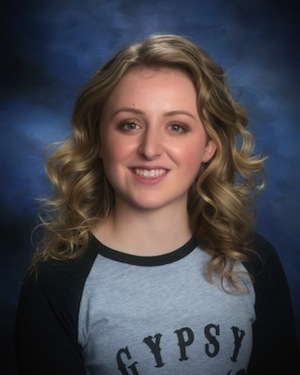
photo - Hannah Lank
Hannah Lank has earned a $100,000 scholarship over four years. (photo from Hannah Lank)

Lank was selected from some 70 students across Canada, chosen to attend the final interviews in Toronto. “We had two days of interviews,” said Lank. “Everyone was so accomplished. It seemed impossible for the judges to choose.”

Loran Scholars are chosen for their character, commitment to service and outstanding overall leadership potential through a three-month selection process. This year, the Loran Scholars Foundation received 3,800 applications from schools across Canada. Approximately 400 semi-finalists were interviewed in 22 cities and 76 finalists advanced to national selections in Toronto.

Lank is known for her work with food-allergy awareness. Being allergic to peanuts and tree nuts, Lank sits on a youth advisory panel for Anaphylaxis Canada. She gives talks to Grade 9 classes at her school about food allergies and how to use Epipens, or auto-injectors. Before the year’s end, she will have educated more than 1,000 students on the topic.

Lank also created and regularly updates a teen blog about food allergies, teenwithfoodallergies.com. “I post tips about living with food allergies and I have held nut-free bake sales at school to raise money for Anaphylaxis Canada,” she said.

Lank fills the rest of her time with community service. She is president of the student council, editor-in-chief of the school newspaper for the last three years, part of the social justice committee, and is on the basketball and cross-country teams. Over and above this, Lank also finds time to serve as a peer tutor for physics, math and chemistry, and be an inner-city mentor at Machray School.

“I have been brought up in a Jewish family,” said Lank of her background. “My parents always emphasized to me the importance of education. I think that being raised as a Jew forces you in some ways to be more acutely aware of the world around you. As Jews, we are often asked to defend our beliefs about Israel, our community and our world and, therefore, we must be prepared to answer these questions responsibly and intelligently.

“My parents have always encouraged in me a love of learning, tolerance and understanding, and the power to stand up for your beliefs and believing in yourself. I don’t think these are Jewish qualities, per se, but I do believe that they were emphasized and perhaps enhanced by our faith.”

Lank has known about the Loran scholarship since entering high school, but became more acutely aware of it when a boy from her school won the scholarship last year.

Many consider the Loran to be Canada’s most prestigious scholarship. It is valued at up to $100,000, which pays for tuition, residence, allows for a living stipend, summer programs, a mentorship program and other opportunities.

In Manitoba, there were approximately 10 students sent to regional interviews, which consisted of a day at the University of Manitoba, where each candidate was interviewed by prominent members of the community. “We were told the very next day if we had been selected to proceed to nationals,” said Lank.

To prepare for the national interviews, Lank spoke to past scholars to learn more about the process, but the interviewers are different each year and the questions asked are based on individual applicants.

“If you’ve altered the truth (on the application) and are asked about it, you won’t look very good in front of the judges,” said Lank. “I practised answering questions based on my application with my history teacher but, other than that, I just read over my answers.

“I knew that whatever I was asked, I would respond honestly. Everything I listed on my application was something I had done. I just had to be me.”

Lank found out she had won the day after the interviews. “It was an unbelievable moment,” she said. “I am still shocked from the overwhelming nature of the weekend. I still don’t think the news has fully sunk in.”

The Loran foundation is highly involved in each scholar’s life for the four years of his/her undergraduate degree to ensure they have the needed support to achieve their full potential.

One of the requirements is that scholars study at a university outside of their home province. Lank is considering studying at the University of Toronto’s Trinity College (where she has been accepted) or at McMaster University’s arts and science program (acceptance still pending). Her parents fully support both options.

Lank said she encourages anyone interested in having their university experience enhanced and exploring their world in a new way to apply for a Loran scholarship. While many scholarships are based on financial aid, the Loran is based on merit and not necessarily on what you have done in the past, but on the potential the judges see in you for the future.

“If you are passionate about living life as a leader, committing yourself to service in the community and working hard but also enjoying life, you should apply,” said Lank. “You do not have to have exceptionally high marks to apply. If you are genuine in everything you do and truly want to make yourself and your community better, you are a worthy applicant.”

If you still have a few years to go before applying, Lank suggested pinpointing an interest you are passionate about and pursuing it. For Lank, that was food allergies, but she is also involved in a wide range of other activities.

“Try whatever you’re interested in,” said Lank. “Don’t be involved in something because you feel it will help you win a scholarship or look good on a resumé. There are lots of meaningful ways to become involved in your local/school community.

“Everyone has a passion. You just have to find it. It may take a few tries and a bit of work, but it’s a rewarding process. And, if you meet some people along the way and discover a few new interests, it’s a worthwhile experience, I think.”

Her final words of advice (for now)? “Don’t be afraid to try new experiences. Step outside your comfort zone and explore your world. You’re never too young to be a leader, an explorer or an innovator. That fearlessness combined with drive and hard work can get you anywhere you want to go. Never be disheartened by failure. If you believe in yourself, you’re destined for great things.”

Rebeca Kuropatwa is a Winnipeg freelance writer.

Grant-winning video

A screenshot from Erin Goldberg’s winning entry to the NSERC competition.

The public has voted, the judges’ scores have been tallied and the results are in. The 15 winners of Natural Sciences and Engineering Research Council of Canada’s Science, Action! video contest have been revealed. Jewish community member and University of Manitoba student Erin Goldberg joined McGill’s Ira Sutherland and University of Guelph’s Morgan Jackson in the top three.

may 29 Health.29.Erin Goldberg-photo by Marc Goldberg
Erin Goldberg (photo by Marc Goldberg)

Goldberg, a survivor of childhood cancer, is now 26. She has always gravitated to the sciences, she said. “I especially love biology and chemistry so, naturally, that was always a part of my education. I was able to take my first nutrition course at the U of W [University of Winnipeg], which solidified my interest in the subject. After switching to the U of M [because of their nutrition program], I fell in love with it.”

Goldberg is an animal lover who enjoys doing yoga in her spare time. She began taking university courses at the age of 15 at the U of W Collegiate, and graduated a year early by doing course work through the summers. She is currently preparing to defend her thesis at U of M.

Goldberg has always been a creative person and enjoys translating her research in a way that is understandable to laypeople, she said, so she was ready for the NSERC competition. She also had participated in the 2013 3MT (Three-Minute Thesis) competition at U of M, which involved explaining her research in basic terms in three minutes. Regardless, she said she was still apprehensive about the NSERC competition; it is open to any student in Canada holding an NSERC grant, which numbers in the thousands. “I didn’t know what to expect,” said Goldberg, who said she was ecstatic when she learned that her video was one of the 32 chosen to move to the second round.

On April 7, she received notification that she was a winner. The email read, “After careful consideration by our panel of judges, your video was selected as one of the top three entries (English submissions). They felt your video told a compelling story and exhibited an exceptional grasp of quality science communication.” Besides the recognition, Goldberg will receive a $3,000 prize.

Goldberg’s 60-second video explains her latest research project, which was funded through NSERC. It involved feeding hempseed and hempseed oil to hens to enrich their eggs with omega-3. “Ironically, humans are allowed to consume hemp, but we can’t feed it to livestock, due to concerns over THC accumulation [the psychoactive compound in marijuana],” said Goldberg about the hempseed feed. “There is actually a very miniscule trace of THC in most hemp products, so there is really little risk, but the Canadian Food Inspection Agency requires several research trials to prove this, which is what our lab group is doing.”

Goldberg’s research proved that these two ingredients are safe and effective, even at the highest possible dose, and that there is no risk in feeding hempseed to chickens. In subsequent research trials, Goldberg designed different vegetable oil blends to boost the levels of DHA in eggs. “We found that feeding a higher ratio of saturated fat, called linoleic acid (an omega-6) and oleic acid (on omega-9), can reduce the competition between omega-3 and -6, leading to greater deposition of these critical fatty acids.”

[vsw id=”nQ_2A8sbGFU” source=”youtube” width=”425″ height=”344″ autoplay=”no”]

In her thesis, Goldberg examined the impact designer diets have on the fatty acids and sensory properties of the eggs of laying hens. She was able to create omega-3 eggs using novel ingredient blends (like hemp, canola and flax), and then test the egg yolk for fat profile, aroma and flavor. The egg white remains the same regardless of what you feed the bird, so the changes only occur in the yolk, she explained.

Goldberg’s interdisciplinary research was conducted at U of M’s Fort Garry campus, in the poultry barn in the animal science, food science and human ecology buildings. She completed some of her research at the Saint Boniface Research Centre, as well.

“I love that it is interdisciplinary research,” said Goldberg. “I combine my interest in sensory with analytical work. I’m fully involved from start to finish, and like that I can combine my love of animals (i.e. taking care of my birds) with my analytical work.”

Although the cancer that Goldberg had as a 6-year-old was spontaneous, she said she believes that diet plays a major role in the development of many diseases, including Type-2 diabetes, heart disease and certain cancers, such as colon and breast cancer. “I believe in disease prevention through maintaining a healthy lifestyle, (including a proper diet), which would also ease the burden on our medical system,” said Goldberg. “Because I love educating people, I also teach an undergraduate nutrition course at the U of M, called Food – Facts and Fallacies.”

Goldberg feels is it critical to focus on omega-3s. “Omega-3 fatty acids are essential in our diet,” she said. “We must consume them in our food. They are critical for normal growth and development, and have a large impact in reducing inflammation in the body, which can prevent the development and progression of numerous diseases.

“A lot of research has focused on the health benefits of the longer chain omega-3 fatty acids, EPA and DHA in particular, which play a key role in brain and eye health, as omega-3s contribute to membrane fluidity. These fats are especially critical in a child’s proper development.”

The benefits spread across the lifespan, but in infant/child development, they are mainly related to cognitive/visual function and, in adults, the major benefits are mostly in the progression or prevention of Alzheimer’s, dementia, cancer and cardiovascular disease. Omega-3s can also lower triglycerides.

Research has shown that the best source of available omega-3 comes from fatty fish, like wild salmon; farmed fish have significantly less. Omega-3-enriched eggs are an excellent source for those who cannot or do not consume fish, for example, if someone is allergic to fish or is vegetarian. They are a safe, economically viable alternative.

“You can also get omega-3s from plant foods, like hemp, flax, walnuts, canola oil and chia seed,” said Goldberg, of those who prefers to get their omegas through vegan sources. “But, your body must convert a proportion of ALA into the longer-chain EPA and DHA, and this is inefficient (and possibly insufficient) in most adults.

“In omega-3 eggs, if you choose eggs from hens fed both flax and fish oil, you’re getting a great source of both ALA and EPA/DHA. My dietary blends help to eliminate the need for fish oil in the hen diet (which is expensive), because the laying hen can convert more ALA to EPA/DHA than can humans.”

Goldberg feels it is critical to encourage women to enter the STEM fields – science, technology, engineering and mathematics – and to pursue advanced education. She believes the payoff is well worth the investment. “I’d also encourage people to think critically about the nutrition messages they hear in the media,” she said. “When in doubt, look to the research or consult a dietician for nutrition advice.

“I also recommend people use supplements with caution. Sometimes it’s necessary (like taking Vitamin D3 supplements, because we do not get enough sunshine) but, in general, I recommend people consume whole foods first and use supplements to supplement a healthy diet, not to replace it.

“Functional foods, like omega-3 eggs, are a great way to consume foods that are enhanced with certain nutrients to protect against diseases and maintain a healthy body.”

Rebeca Kuropatwa is a Winnipeg freelance writer.
Gazan women in business


In the traditionally conservative Palestinian society of the densely populated Gaza Strip, women do not have many opportunities for entrepreneurship. Women usually marry young and raise large families. Yet, a small number of women in Gaza are opening their own businesses and serving as a model to young women throughout Gaza.

Maram Ganem began working at age 32 as an employee at a restaurant in Gaza. Five years later, she decided to start her own business. Today, she owns two restaurants in Gaza: a fast-food place and a fancy restaurant overlooking the Mediterranean Sea. She said that the first part of her dream came true when she rented a small space in a hotel in Gaza City in partnership with a local businessman. Shortly after that, she opened the first-ever fast-food restaurant in Gaza. The success of her projects led to the opening of the Roots restaurant, one of the most upscale restaurants in the city.

Ganem believes that determination and strong personality were the main reasons behind her success. She even represented Palestinians at economic conferences in Egypt. “If you have the will, you can do anything,” she told the Media Line. “I have met my goals despite the difficult political and economic conditions we face.”

She also credits her husband with contributing to her business success. “You need family support to survive in Gaza,” she said. “Men usually control most of the businesses here, and women are the workers or employees.”

Ganem was in Ramallah in recent weeks to attend the National Investment Conference, hosted by the Palestinian Ministry of Economy and Ministry of Tourism, which aims to increase international tourism to the West Bank and Gaza Strip. Representatives from more than 120 companies owned by Palestinians who live abroad came to the West Bank to discuss possible investment.

While unemployment in the West Bank has decreased slightly to just over 18%, in Gaza it is almost 40%. Unemployment is especially high among young Palestinians, including university graduates.

Read more at themedialine.org.

Early detection is key

Left to right: Dr. Alon Friedman, Jayson Dzikowicz, Dr. Michael Ellis and Benedict Albensi. (photo by Rebeca Kuropatwa)

It has been known for years that there is a connection between brain injuries and diseases like Alzheimer’s, autisms and epilepsy, but early detection and possible prevention still elude us.

This was the message Ben-Gurion University’s Dr. Alon Friedman relayed at a recent brain-injury panel discussion, hosted by the Canadian Associates of Ben-Gurion University in Winnipeg. A professor in the medical faculty at Dalhousie University, Friedman was joined by Dr. Michael Ellis of the Pan Am Clinic Concussion Program; Dr. Benedict Albensi of the University of Manitoba and St. Boniface Hospital; and Jayson Dzikowicz of the Blue Bomber Alumni Association. The discussion was moderated by Charles Laflèche of St. Boniface Hospital Foundation.

Friedman opened with remarks on the work being done in the field of brain injuries at BGU and broke the discussion into two topics: traumatic brain injury and brain deterioration due to age.

“The money that we as a community spend on traumatic brain injury and on the outcome is tremendous,” said Friedman. “Sport injury is only one small part of it. Mostly, it’s road accidents and falls.

“We are getting into the 21st century and the average [life] expectancy in Western countries is around 80-to-90-years-old. Most of us will live at least until 90 or 100. The price is that we will all probably die with a brain disorder.”

According to Friedman, what is clear with all of the diseases is that we lose a lot of brain tissue before we see any symptoms. “The main problem is that we don’t understand how the diseases are generated. [Over] the last decade, we are trying to look differently at the brain.”

Researchers are now starting to look at the brain as a whole entity, including different cells that interact and communicate with one another all the time.

“While the brain gets the most blood to supply it with the elements it needs, blood does not enter into the brain tissue normally,” said Friedman. “The brain has its own environment protected by what researchers call ‘the blood-brain barrier.’ This separation allows the nerve cells in the brain to act in a very accurate and stable condition, regardless of what’s happening in the blood. A brain injury occurs when this barrier is broken.”

BGU learned more about this barrier by studying a group of football players in Be’er Sheva. “The reason we did it with football players is we knew it would attract the media much more than others, unfortunately,” said Friedman.

To help the audience grasp what football players face, Dzikowicz, who is a former player, shared his experiences with the panel. He has had approximately nine concussions. “Usually, one is more than enough to take people out of sports,” he said. “In business, if you’re faulting, it’s a long process to replace you. In sports, your replacement is standing 30 feet away…. You’re heavily motivated to stay on the field despite injury.

“When it became an issue with me … if you ever rub your eyes a lot and you see those circles … when I had those circles permanently, and when I got hit in the head and they’d be pulsing and flashing for weeks on end, that’s when I got the message that maybe I should stop playing.”

In the 1990s, when Dzikowicz played the game, his coaches’ main reaction was to say that he had “had his bell rung.” Dzikowicz went on to explain, “You got two plays off, you got some smelling salts and you got tapped on the butt and sent back on the field.”

Run by Ellis, the Pan Am Clinic Concussion Program treats children who have had concussions – the program focuses on kids with head injuries. “It’s a very unique partnership between Pan Am, the Children’s Hospital and our provincial government – multidisciplinary care for the children of Manitoba with mild, traumatic brain injuries,” he said. “Patients with more severe injuries go to the Children’s Hospital. We see 40-60 children a week.

“Fortunately, the vast majority of children who sustain a concussion will recover within two to three weeks, but we know that there’s a certain proportion, about 30-40%, who will have symptoms that will last longer.”

Some kids will have headaches or visual/reading abnormalities, issues with balance or develop mood disorders. The focus of the Pan Am program is to bring together experts from various fields to meet the needs of each individual patient.

While collaborative research on brain tumors and Alzheimer’s is being conducted, less is known about the connection between concussions and epilepsy. About the connection between brain trauma and epilepsy, however, Albensi said, “There’s certainly very good evidence that head trauma can lead to neurodegenerative disease…. The question is how many patients with TBI [traumatic brain injuries] develop epilepsy?”

At BGU, the focus is on using MRI to get better pictures of brain injuries and comparing them with images of normal brains. At Pan Am, researchers are developing an MRI brain stress test and looking at blood flow within the brain.

All the panelists agreed that treatment would be more effective with early detection. “Unfortunately, if someone has full-blown Alzheimer’s, the chances of reversing and changing the situation is almost impossible,” said Friedman. “The only chance … is early diagnosis.”

One of the biggest hurdles is getting those who are experiencing memory loss to see a doctor early enough and for the doctor to send them to a specialist without dismissing the memory loss as “normal.”

“There is a lack of awareness, because people don’t think that there’s something to do,” said Friedman. “Patients can go to early diagnosis in every large hospital today. There is general advice to be made and practice for detection, for treating.”

“I think that what we agree on is that there is some risk in families,” added Albensi. “It’s basically impossible to predict if a parent had Alzheimer’s whether his/her son or daughter will have it. Early diagnosis is more important.”

Albensi explained, “What we study in my laboratory as far as the inflammatory response are transcription factors, which are specialized proteins involved long term in the inflammatory process. And, it’s getting the brain to turn off this inflammatory process, in my view, that is key to reducing the risk for these neurodegenerative disorders.”

“The brain can change itself any time in our life,” said Friedman. “The fact that we can learn means the brain can change, at any age. In any condition basically after a trauma, whether emotional or physical, I don’t think it’s that important, but it’s possible.

“Inside a person, stress is a very important factor against brain plasticity. If we are motivated to change our brain, we can find ways to do it and help ourselves.”

Rebeca Kuropatwa is a Winnipeg freelance writer.

Israelis flipping for acro-yoga

Jerusalem-based instructor Ayo Oppenheimer bases student Rabbi Rachel Kobrin in her first acro-yoga flight. (photo by Daniel Cuevas)

As I walk through Tel Aviv’s HaYarkon Park on a gorgeous day, I watch people enjoy nice, normal activities like soccer, running, rowing and yoga. But that’s not what I’m here for. No, I’m at the park to join a weekly meetup of people who balance, flip and manoeuvre each other in a series of gravity-defying poses called “acro-yoga.”

Even though I don’t know a soul, I instantly recognize the acro-yoga group. They are all partnered up, the “bases” lying on their backs with the “flyers” balancing on top of them.

Within minutes of joining them, I meet Yair Chuchem, a computer programmer who’s practised these strange yet fun-looking moves for more than three years. When I tell him that I’m writing an article about Israel’s growing acro-yoga craze and ask for an interview, he responds, “The best way to understand acro-yoga is to do it.”

Anything for my craft….

The next thing I know, I’m trusting Chuchem – a complete stranger – to balance me upside-down with my shoulders planted on the soles of his feet. Surprisingly, Chuchem doesn’t feel like a stranger for long. After all, we are literally in a position that requires us to communicate and cooperate clearly and patiently with each other.

“This is what acro-yoga is all about,” he said after carefully lowering me back on my feet. “It’s trust and teamwork, and it bonds people.”

Once the blood rushes out of my head, I realize he’s right. Chuchem already feels like a friend (although, had he dropped me, I might feel differently).

In terms of the physical dynamics, acro-yoga is a practice that combines acrobatics and yoga moves between the base and the flyer. But, as I learned from my first experience, it also involves cooperation and some fearlessness, which perhaps is why Israelis are going absolutely crazy for it.

“Acro-yoga is a really fun practice with lots of social components to it,” explained Ofir Gothilf, an established acro-yoga instructor based in Tel Aviv. “It’s a warm community that uses touch in a safe, secure way; and everyone is looking for that human experience – maybe Israelis more than others.”

While acro-yoga (or acro-balance) is an international practice – with the trademarked AcroYoga school founded by two Americans in 2003 – it has grown leaps and bounds in Israel, which is recognized as one of the strongest, if youngest, acro-yoga communities worldwide.

“[The community] started out as just 10 friends wanting to jam and get together in the park,” explained Eitan Padan, an Israeli acro-yoga instructor with six years of experience. “And now, in just two years, it’s grown to over 4,000 members.”

That figure is based on current members of Israel’s acro-yoga Facebook group called LaOof Nifgashim or Fly Together. Padan estimates that among the 4,500 members, several hundred of them actively practise. The interest is also evident by the sheer number of acro-yoga opportunities throughout the country. According to Fly Together, Israel boasts nearly 30 instructors, classes and self-organized meetups spanning from Eilat to Haifa.

From May 21 to 24, a few hundred Israeli acro-yoga enthusiasts of varying levels were in the Negev for the fifth Israeli Acrobatic Convention, featuring workshops led by world-class teachers hailing from cities including Berlin, Paris and Moscow.

Among the headlining instructors was Lux Sternstein, who, for his third year in a row, traveled all the way from Seattle to lead several advanced workshops throughout the convention’s four-day program. Upon each visit, Sternstein grows more impressed with the growth and diversity of Israel’s acro-yoga community.

“Most remarkable to me is the age range [in Israel],” Sternstein said. “It’s the model that I wish the entire world would practise – to have teenagers and senior citizens working together. We don’t have that in North America, where it’s typically people in their early 20s to mid-40s.”

While it might seem shocking to imagine senior citizens doing acro-yoga, it speaks to the inclusive, welcoming nature of the practice, said Padan, who is in his 50s.

“Everyone can come join,” he said. “No matter your sex, race, religion, size, age. There is no sense of competition in ‘acro’ like there is in other sports. It’s about working together.”

Beyond recreation and fitness, acro-yoga also has therapeutic applications, said Jerusalem-based instructor Ayo Oppenheimer, who taught in the United States before immigrating to Israel.

“Acro-yoga is a tool for happiness, self-awareness and empowerment,” she said. “In addition to teaching my regular practice, I’ve taught here [in Israel] at a women’s shelter for victims of domestic violence and at a hospital for teenage girls at risk. I don’t see myself as a fitness instructor. For me, I really believe that acro-yoga can improve people’s lives.”

Back at the HaYarkon acro meetup, I hear a similar sentiment. People aren’t here for exercise, per se, but for a challenge that thrives on personal connection.

“It’s nice that people are cooperating together for one goal,” said Shira Rosenzweig, who is one of the best flyers at the meetup.

Next comes a real visual treat: Rosenzweig and Chuchem pair up. From handstands to turns to straddles, Rosenzweig gracefully flows from pose to pose with Chuchem expertly guiding and supporting her. They look like an ice-dancing couple who has practised together for years. But, then I remind myself that this is acro-yoga. It’s quite possible that they only just met.

Israel21C is a nonprofit educational foundation with a mission to focus media and public attention on the 21st-century Israel that exists beyond the conflict. For more, or to donate, visit israel21c.org.

Fueling your workout

With the arrival of warm weather, many Canadians take their workout outside. Whether you’re a recreational runner or an Ironman competitor, nutrition plays a vital role in your performance. Five-time Olympian Hayley Wickenheiser has said, “Good nutrition accounts for 50% of my performance, with 40% being mental and 10% being physical.”

For improving either endurance or strength training, carbohydrate is the key nutrient. Our bodies rely primarily on carbs to provide the fuel needed during aerobic, power and strength-based activities. If you are gluten-intolerant, like 12% of Canadians, it is important to find gluten-free carb sources.

Pre-workout: Eating prior to physical activity allows us to exercise harder and longer, and recover more quickly. Include a small low-fat, moderate-protein, high-carbohydrate meal or snack 30-60 minutes prior to activity, such as a fruit smoothie, toast (gluten-free breads are readily available) and nut butter, or cereal and yogurt. Wickenheiser’s favorite pre-game meal is chicken, quinoa and steamed vegetables.

During: If you’re working out for less than 60 minutes, there is no need to have anything but water during your workout. For longer workouts, choose an electrolyte-based beverage containing carbohydrates. Small portions of gluten-free bagels or cereal bars can also be quick and effective. Dehydration causes fatigue and cramping, and impairs performance, so drinking adequate fluid before, during and after exercise is important. While hydration needs vary from one person to the next, a good starting point is having one to two cups of fluid before, during and after activity.

Post-Workout: Within 30-60 minutes after physical activity, the goal is to replace the water lost in sweat, restore the muscle fuel (carbs) and promote muscle repair with protein. Great post-exercise meals and snacks include flavored dairy, soy or almond milk, stir fry with lean meat, rice and vegetables, a wrap with hummus and vegetables or trail mix.

Tristaca Curley is a registered dietitian in Kelowna. She is a member of the Sport Nutrition Advisory Committee of Canada and can be found at fuelingwithfood.com.

Rights and security

When we see online memes saying that a Canadian is more likely to die from an interaction with a moose than a terrorist, we can justifiably relax and even admire the characteristics of a country where a gangly antlered mammal is more to be feared than the kind of ideological threats rampant around the world.

The moose meme is part of a campaign that views the federal government of Prime Minister Stephen Harper as fear-mongering, trying to drive voters back to the Conservative party lest more “soft on terrorism” parties come to power in this fall’s election. The Conservatives’ weapon at hand is Bill C-51, which is seen by critics as a bludgeon against a mosquito.

It may be true that in the history of our country moose have been more deadly than terrorists, but times change. Moose are not mobilizing globally to attack civilians across the West. Vigilance tempered by pragmatism would seem to be in the Canadian tradition.

The difficulty of balancing overreaction with being prepared has been most evident in the mixed reaction to Bill C-51 from Canada’s opposition parties. Thomas Mulcair’s New Democrats voted against the bill; Justin Trudeau’s Liberals voted for it but Trudeau said he would make changes to the law if he forms government.

Canada has blessedly not suffered the magnitude of terrorist or hate-motivated violence seen in Europe recently, including the brutal Charlie Hebdo and Hyper Cache attacks. But we have seen so-called “lone wolf” violence in Saint-Jean-sur-Richelieu, where warrant officer Patrice Vincent was killed and another Canadian Forces personnel was injured, and in Ottawa, where Cpl. Nathan Cirillo was killed while standing guard at the War Memorial.

Barring a stunning reversal in a Conservative-dominated Senate, Bill C-51 will become law in the coming weeks. The legislation will make it easier for government departments to share information about Canadians across jurisdictional silos. It will also give police new powers to “preventatively” detain or restrict individuals who are suspected of plotting a terrorist act. It bans the “promotion of terrorism,” gives the public safety minister the right to add people to the country’s “no-fly list” and increases the powers of the Canadian Security Intelligence Service (CSIS).

CSIS is Canada’s spy agency and until now has had a role limited to observation. C-51 would expand that role to something called “disruptive” powers, allowing agents to act more directly in ways that are not fully spelled out.

Critics also fear a loss of individual privacy as, for example, tax information that is now secluded in the Canada Revenue Agency could be shared with other government departments.

These concerns are justified, particularly those that increase the powers of CSIS, which has been criticized for lacking adequate civilian oversight.

Some Canadian Jews, including the recently deceased Alan Borovoy, have been among Canada’s greatest civil libertarians and bulwarks against government overreach in individual lives. With a history deeply affected by totalitarian governments, some in our community may have a special sensitivity to legislation that threatens to impinge on individual rights. Because this is not an exact science, it will always be a matter for disagreement, with some arguing that security legislation goes too far and others declaring it absolutely necessary.

At the same time, though, terrorist attacks and hate crimes in Europe have been disproportionately directed toward Jewish people and institutions. Statistics on hate crime incidents in Canada also indicate that Jewish people and institutions are vulnerable to acts of hate in numbers disproportionate to population.

Most Canadians may be more vulnerable to a moose than a terrorist, but Jewish Canadians understand that terrorism needs to be taken seriously. Of course, so do civil liberties.

Canadians across the country will rally against Bill C-51 Saturday. Even so, it will almost certainly become law. When it does, concerned Canadians should pressure the government to improve civilian oversight of our spy agency, which is perhaps the most crucial measure needed to ensure the law does not lead to lawlessness by government officials.

We should also strengthen public vigilance by supporting organizations that monitor and measure government intrusions into private spheres, such as the Canadian Civil Liberties Association.

And we should do all we can to ensure that Canada remains a place that is both safe from a collective standpoint – and secure in terms of our individual liberties.

Committed to translating Israel

What someone writes clearly says a lot about a person. And so do the books one chooses to translate. For Israeli books that make it abroad to an English-speaking audience, an important and sometimes overlooked subset of Israeli literary society is the translators themselves.

Himself an accomplished author based in Chicago (his newest book is a young adult novel called Me Being Me is Exactly as Insane as You Being You), as a translator, Todd Hasak-Lowy sees it as his mission to bring excellent and innovative literature to English speakers. Motti by Asaf Schurr (which also includes an afterword by Hasak-Lowy) is a good example. “You could change 30 words of it and you wouldn’t know it’s an Israeli book. It challenges what people think of about Israeliness. That’s a book I want Americans to read because it’s great Hebrew literature, someone who’s a product of that society, but it’s not Amos Oz.”

As an American who never made Israel his permanent home, Hasak-Lowy spent a year in Israel after high school, took some Hebrew in college, and then pinned himself to a seat in the library in graduate school deepening his Hebrew knowledge, before spending some additional time in the country. “When I graduated high school, I knew around 300 Hebrew words from summer camp; when I got to grad school, I was able to crawl through an early [A.B.] Yehoshua novel over 30 months,” and now he’s a sought-after translator who thinks carefully about which projects he seeks to take on.

Haim Watzman is a translator’s name I had long known, staring at me from the inside front page of some of the most formative books I read about Israel when I was younger, including David Grossman’s first two non-fiction books, The Yellow Wind and Sleeping on a Wire. The first in-depth look at the Palestinian experience of being under Israeli military occupation, The Yellow Wind brought the Palestinian narrative to an Israeli – and then to a worldwide – audience; Grossman’s follow-on treatment of Palestinian citizens of Israel was similarly path-breaking.

Watzman and I spoke by Skype, as he and his wife, Ilana, prepared to celebrate their 30th wedding anniversary with a trip to the Netherlands. In talking to Watzman about politics, style, culture and translation, there are some technical points I was reminded of. First, English translations of Hebrew books tend to run about 30% longer. The economics of this for publishers can be daunting, so sometimes translators suggest editorial cuts. Second, because of the gendered nature of the language, Hebrew can afford both more passive tense and longer, meandering sentences. As Hebrew writers have become accustomed to using the passive voice that English writers now eschew as being a bad habit, translators have to take on an editing role: fact-checking and at times asking the writer “who” did what, exactly? And as for long, drawn-out sentences, English readers prefer theirs short and breezy.

About The Yellow Wind, Watzman describes it as his “rookie” assignment, which he was fortunate to land. As an undergraduate at Duke University, Watzman had written a thesis on Palestinian citizens of Israel, and as a correspondent for the Chronicle of Higher Education covering Palestinian colleges in the West Bank, he felt it important to bring the Palestinian story abroad. And while he’s careful to insist that these are the author’s works, not his own, today he says he’d do some things differently in the translation. Though he thinks “the translation came out fine – the public loved it; the editors loved it,” he says he “was more deferential then. I’d probably be more demanding of the author today, in terms of needling him for clarifications and suggestions.” Stylistically, he pushed to change Grossman’s present tense to the past, and he chose to keep some Arabic terms in the English translation.

It wasn’t until years later and subsequent translation gigs – including Grossman’s (and other authors’) political petitions published in newspapers – that Grossman finally asked him whether he agrees with the thrust of his political messages. For the most part, Watzman does.

I couldn’t help but be intrigued by the fact that Watzman leans left-liberal while being Orthodox in his religious outlook. (His Twitter profile photo, for example, is a sketch of Grossman working with Watzman, the latter’s kippa dominating the foreground.) Watzman explains that he came to religious observance “gradually,” having been “very taken by Shabbat and the intellectual component, including the debate over texts.” Two things “didn’t work for him,” however: orthodoxy’s attitude towards women, and the tendency within the Orthodox community towards right-wing politics. “I wasn’t going to give up my political principles for religion.” In Jerusalem’s Baka neighborhood, Watzman eventually found a like-minded community called Kehilat Yedidya.

And, while Watzman is committed to liberal democracy and human rights, he is no pacifist. Having tragically lost his son Niot in a military accident four years ago, Watzman tells me how he understands the military to be a necessity. Yet, while “Israel has to be vigilant and defend itself,” the country should be searching for peace through “accommodation and understanding.” He believes that “you can be both a Jewish nationalist and a liberal humanist. Not only is it possible, it is essential.” One could say that reading Israeli books, including new literature as well as the kind of searing non-fiction works that Grossman, Tom Segev and others have produced, captures this dualism perfectly: a nation committed to writing in its own land in its own language, while keeping tough questions in the foreground.

Mira Sucharov is an associate professor of political science at Carleton University. She blogs at Haaretz and the Jewish Daily Forward. A version of this article was originally published on haartez.com.

Good for Jews not good read

Washington Post columnist Richard Cohen came under a barrage of criticism in 2006 for writing that Israel was a mistake. Almost a decade after the controversy, he has come back with Israel: Is It Good for the Jews? (Simon & Schuster, 2014), in which he acknowledges that “mistake” may have been the wrong word and explains what he intended to say.

book cover - Israel: Is It Good for the Jews?Cohen admits that he could not think of another word to reflect the missteps in Israel’s history. He believes that early Zionists were mistaken to think the creation of a Jewish homeland in Palestine was the answer to antisemitism. Also, Israel in its 67 years has made mistakes; for example, he believes it was a blunder not to banish all Palestinians in 1948, and that it was a huge error to become an occupying power after 1967.

Those are hot topics to debate, especially after the recent election in Israel. But how are they related to the provocative question posed by the title? Cohen never makes a connection. He pays little attention to contemporary Israel and its relationship to Jews around the world. The title does not reflect the book that he wrote.

A provocative book title may be good for promotion and sales. It’s disappointing for readers who are familiar with his reputation and expect more from his book. Cohen is a syndicated columnist who has received awards for his investigative reporting. Israel: Is It Good for the Jews? was nominated for a Jewish Book Council award.

So, let’s ignore the title and look at the book for what it is. Cohen has written a brief history of antisemitism leading up to the creation of the state, an account of the early days of Israel and a quixotic account of some current events. He includes an 11-page index of books about Israel and the Jewish world that provide the anecdotes and profiles for his work.

However, even here, Cohen stumbles. With a deft pen, he fills the page with clever turns of phrases but, at times, his comments seem simply glib. His sweeping statements do not always make sense. He occasionally drifts sideways, making it difficult to follow what he is saying as he weaves his way through history.

At the outset, he makes it clear that he is not questioning Israel’s right to exist when he voices criticism of the country. He offers his credentials as a staunch supporter of Israel who loves and admires the country. He then begins his journey through the vitriolic world of antisemitism, paying special attention to leading figures who are not normally considered to be antisemites, and to the diabolical attacks against Jews in Europe that stretched far beyond Nazi Germany.

No one will challenge Cohen when he says that those who thought a Jewish homeland would end antisemitism were wrong. Creating a nation of Jews in the midst of Arab Muslim countries has produced a century of warfare and terrorism. Hatred of the Jews persists. He provides ample evidence that shows how the antisemitism of medieval and 20th-century Europe, with its pogroms and death camps, has morphed into aggressive anti-Zionism, spreading like an unruly virus throughout the Arab Muslim countries.

Cohen also shows how mistaken early Zionists were when they assumed that the Arab Middle East would politely make way for European Jews.

He writes that the Zionist dreamers meant no harm to the Arab residents. They intended to bring a European way of life to their new homeland. They sometimes thought, innocently, that the new country would benefit the Arabs as well as the Jews. Cohen says they were mistaken. But, as he notes, Palestinian resentment of Jewish immigration has been vocal and often violent since the 1930s.

Despite the harsh reception, the early immigrants came with their European morals. Ethnic cleansing and massive population shifts were common in other countries at that time, but founding father David Ben-Gurion and others refused to accept the expulsion of all Palestinians. The Palestinians became “collateral damage” to the fight for a new country. Cohen contends that the harm done to Palestinians was necessary, if the state was to be built, and could have been far worse.

He refers to the expulsion of 14 million ethnic Germans from their homes in countries outside Germany. The world shrugged as they were sent back to their ancestral homeland. The transfers were uncontroversial government policy in several European countries at that time. Similarly, in India and in Russia. He maintains that Israel could have done something similar.

Cohen links the decision to leave most Palestinians in their homes inside the country to the current situation, where Israel is now “two nations in one land.” He says that the occupation of the West Bank territories has further weakened the country. The occupation is “lighting the slow-burning demographic fuse that ensures that Jews will not be the majority in the Jewish homeland.”

He is extremely pessimistic about the country’s future. “To say Israel should survive is to accept ethnic cleansing,” he writes with a tone of despair.

Viewing the country from a left-wing perspective, Cohen contends that Israel has lost its purpose. The withering Jewish populations in Europe and the Islamic world have diminished the necessity of a safe haven for Jews. Meanwhile, Jews in North America are increasingly assimilated or indifferent to the country.

Israel has also lost its moral compass and “cannot distinguish the bell of reasonable criticism from the bell of hateful antisemitism,” he writes.

Cohen predicts things will only get “worse” for Israel. War or the constant threat of war will degrade Jewish Israel; secular Jews will leave Israel. The country – a land for a hated people and a despised religion – will become a gated community in the Arabian Desert. Time is not Israel’s ally. Echoing Israeli journalist Ari Shavit, Cohen believes that, sooner or later, the Jews will run out of miracles.

Robert Matas, a Vancouver-based writer, is a former journalist with the Globe and Mail. This review was originally published on the Isaac Waldman Jewish Public Library website and is reprinted here with permission. To reserve this book or any other, call 604-257-5181 or email library@jccgv.bc.ca. To view the catalogue, visit jccgv.com and click on Isaac Waldman library.