Skip to content
  • Home
  • Subscribe / donate
  • Events calendar
  • News
    • Local
    • National
    • Israel
    • World
    • עניין בחדשות
      A roundup of news in Canada and further afield, in Hebrew.
  • Opinion
    • From the JI
    • Op-Ed
  • Arts & Culture
    • Performing Arts
    • Music
    • Books
    • Visual Arts
    • TV & Film
  • Life
    • Celebrating the Holidays
    • Travel
    • The Daily Snooze
      Cartoons by Jacob Samuel
    • Mystery Photo
      Help the JI and JMABC fill in the gaps in our archives.
  • Community Links
    • Organizations, Etc.
    • Other News Sources & Blogs
    • Business Directory
  • FAQ
  • JI Chai Celebration
  • JI@88! video

Recent Posts

  • Eby touts government record
  • Keep lighting candles
  • Facing a complex situation
  • Unique interview show a hit
  • See Annie at Gateway
  • Explorations of light
  • Help with the legal aspects
  • Stories create impact
  • Different faiths gather
  • Advocating for girls’ rights
  • An oral song tradition
  • Genealogy tools and tips
  • Jew-hatred is centuries old
  • Aiding medical research
  • Connecting Jews to Judaism
  • Beacon of light in heart of city
  • Drag & Dreidel: A Queer Jewish Hanukkah Celebration
  • An emotional reunion
  • Post-tumble, lights still shine
  • Visit to cradle of Ashkenaz
  • Unique, memorable travels
  • Family memoir a work of art
  • A little holiday romance
  • The Maccabees, old and new
  • My Hanukkah miracle
  • After the rededication … a Hanukkah cartoon
  • Improving the holiday table
  • Vive la différence!
  • Fresh, healthy comfort foods
  • From the archives … Hanukkah
  • תגובתי לכתבה על ישראלים שרצו להגר לקנדה ולא קיבלו אותם עם שטיח אדום
  • Lessons in Mamdani’s win
  • West Van Story at the York
  • Words hold much power
  • Plenty of hopefulness
  • Lessons from past for today

Archives

Follow @JewishIndie
image - The CJN - Visit Us Banner - 300x600 - 101625

Author: Binny Goldman

Showtimers wow audience

Showtimers wow audience

JCC Showtime’s cowgirl dance was an audience favorite. (photo by Binny Goldman)

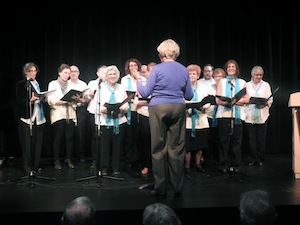
The duet sung by Maurice Moses and Debbie Cossever, “Teach the World to Sing,” set the tone for the entire afternoon performance by JCC Showtime at the last of this year’s JSA Snider Foundation Empowerment Series, which had as its theme, “A Smile on Your Face, a Song in Your Heart.”

Toby Rubin, executive director of Kehila Society of Richmond, welcomed the crowd of 100 who gathered June 29 at Congregation Beth Tikvah for the Jewish Seniors Alliance of Greater Vancouver and Kehila event.

Rabbi Howard Siegel, who led the Hamotzi, joked with those assembled that the reason there was no clock on the wall was because it would not suffice to record the length of his sermon (which he said he was about to deliver), as his would require a calendar.

After the BBQ lunch catered by Stacey Kettleman – and just before a huge cake honoring all the volunteers was served – Rubin called up a number of those volunteers from her various committees and presented them with certificates.

Rubin said that, in the audience, there were people from the Louis Brier Home and Hospital, L’Chaim Adult Day Centre, JSA, Angels There for You, CARP and seniors from Beth Tikvah, as well as people who had heard about the event through publicity.

The program began with “Happy Opening“ and showcased the talents of the JCC Showtime performers, accompanied on piano by Muriel Morris and with Gary Zumar as sound technician.

photo - Arnold Selwyn leads other JCC Showtimers in a song
Arnold Selwyn leads other JCC Showtimers in a song. (photo by Binny Goldman)

Each number presented new and charming scenarios, which included quick and clever costume changes. Some crowd favorites were the duets “Together” and “Let’s Call the Whole Thing Off” by Arnold and Nassa Selwyn; the guest appearance of “Dolly,” Marshall Berger dressed as a woman; Cossever belting out “Can’t Get a Man with a Gun”; Moses engaging the crowd with “Beautiful Morning”; and the striking cowgirl dance, as well as “Chattanooga Choo Choo.” Two of the last songs, “Tzena Tzena” and “Hava Nagila,” led by Moses and Arnold Selwyn, took the crowd to Israel as they sang along.

Complex choreography and the blink-of-an-eye costume changes were all conceived and created by the founder of JCC Showtime, Beryl Israel, who immigrated in 2002 from South Africa, where she had been involved with a similar program.

photo - Videographer Stan Shear, left, and performer Maurice Moses
Videographer Stan Shear, left, and performer Maurice Moses. (photo by Binny Goldman)

Rounding out the Showtime lineup were Sara Bernstein, Rona Black, Lisa Conn, Andria Engel, Tamar Glaser and Susan Goldstein.

Just as the performers were about to leave the stage, Berger was handed the microphone and asked to sing “Happy Birthday” to his wife, Marilyn Berger, president of JSA, who was celebrating her birthday that afternoon. He was joined by all the performers in the singing of a touching rendition of the song.

Marilyn Berger thanked the performers for a wonderfully joyful afternoon that traveled down memory lane and she also gave a short talk about JSA, highlighting its advocacy and its peer support program. She then handed out gifts for each of the cast, helped by Kenneth Levitt, one of JSA’s vice-presidents.

Stan Shear, with Karon Shear, JSA coordinator, by his side, made a video of the performance, which will be posted at jsalliance.org.

It was an afternoon that definitely put smiles on faces and songs in hearts.

Binny Goldman is a member of the Jewish Seniors Alliance of Greater Vancouver board.


Format ImagePosted on July 10, 2015July 8, 2015Author Binny GoldmanCategories LocalTags Beth Tikvah, JCC Showtime, Jewish Seniors Alliance, JSAGV, Kehila Society

Ben-Gurion the leader

The story is told that the idea of building a modern city in Beersheva came from David Ben-Gurion, Israel’s first prime minister. He appointed a committee of experts to examine the idea. The committee reported back that it could not be done. When Ben-Gurion was asked how he wanted to respond to the report, he replied, “Appoint a new committee.”

image - David Ben-Gurion, Father of Modern Israel by Anita Shapira book coverAccomplished Israeli historian Anita Shapira recounts the apocryphal anecdote in David Ben-Gurion, Father of Modern Israel (Yale University Press). Shapira, whose book Israel: A History won the National Jewish Book Award in 2012, presents Ben-Gurion as the person who did more than anyone else to establish the state. He inspired a nation of idealists and wartorn refugees to achieve the impossible. But does your overcrowded bookshelf need another Ben-Gurion biography? I can think of three strong reasons to recommend Shapira’s book.

Although not the definitive biography, Shapira offers a fresh perspective on Ben-Gurion’s life based on newly available files of the Israel Defence Forces and extensive work in the archives at kibbutz Sde Boker, where Ben-Gurion lived. She sets out his considerable accomplishments through colorful anecdotes and well-crafted prose.

As well, despite the passage of years, Ben-Gurion remains a central figure in contemporary debates, a touchstone for politicians from all parties. He is invariably quoted during heated arguments over Israel’s relations with Germany, its borders with its neighbors and its treatment of the Palestinians. He is often cited for his work in forging a partnership with the religious communities in the 1930s. Shapira offers solid scholarship for those who wish to reflect on his work.

And, for those with big ambitions, the new biography offers a vivid portrayal of how he scaled the heights of domestic and international politics. His biography may not be a roadmap to glory but aspiring leaders could pick up a few tips.

Shapira writes in detail about the years after the state was declared in 1948, and especially about Ben-Gurion’s role leading up to the Sinai campaign. However, the most engrossing part of this book is about his unlikely development as a leader. With a knack for telling stories, Shapira effectively tracks how the unexceptional youngster, not particularly well liked by his peers, developed pragmatic organizational skills, sharp elbows and incisive political instincts that propelled him into the forefront of the Zionist movement.

Ben-Gurion, born in 1886, grew up in Plonsk, a backwater shtetl three hours outside of Warsaw. Shapira found nothing in his birthplace, his lineage or his education that hinted at his future role in history. She sees no notable qualities in his personality that foreshadowed his destiny.

His mother died in childbirth when Ben-Gurion was 11. He quit school after his bar mitzvah, although he had a lifelong love of learning.

By 14 years old, he had embraced the Zionism of his father, who had been swept up in Theodor Herzl’s dream of a Jewish homeland in Palestine. However, Ben-Gurion was not in a rush to make aliya. At 18, he moved to Warsaw with the intention of becoming an engineer. The engineering schools rejected his applications.

Here is where destiny steps in. He happened to be in the city at a crucial moment in history. He was swept up in the heady events of the days before the Russian Revolution.

He joined Poalei Zion (Workers of Zion), a party that combined his newfound enthusiasm for Marxist socialism with Zionism.

Although his grasp of Marxism was considered shallow, he rose to a leadership position, recognized as a strong debater and speaker.

He finally immigrated to Palestine in 1906, but his early years in Palestine were not particularly auspicious. He often said one thing and did another.

He firmly believed that Jews would reclaim Palestine only by working the land. He said the land would belong to the Jews only when the majority of its workers and guards were Jewish.

He worked in the fields at Petach Tikva and then in the Galilee but he was frequently sick and, when he was healthy enough to work, he was miserable, Shapira writes. Throughout the following decades, he described himself as an agricultural worker while, in reality, he was doing other work in and outside of Palestine.

He had a strained relationship with his father and, according to Shapira, a distant relationship with his wife, who was the mother of his three children. He was excluded from clandestine groups and collectives in Palestine that were forming in those years.

Also, he misunderstood political realities. He was convinced that the Turks would remain in control of Palestine, never anticipating the British Mandate.

Ben-Gurion’s rise to prominence began slowly after the First World War. He expanded the Histadrut, the national federation of trade unions, into one of the most powerful institutions in the country. Elected leader of the World Zionist Organization and the Jewish Agency in 1935, he became the recognized leader of the Jewish community in Palestine. By the mid-1940s, he was exactly the type of leader that was required for the state of Israel to be born. Shapira shows that, from these ambiguous beginnings, a giant of history was formed.

The book has little to say about the lasting significance of some of his initiatives. She writes about his authorization of the forced expulsion of some Arabs, his reluctance to define Israel’s borders and, despite his secular lifestyle, his partnership with the religious community, but does not mention the social and political tensions arising from these initiatives. Shapira does not hold him accountable for creating conditions that led, although unintentionally, to many of the difficulties now confronting the country.

Regardless, Ben-Gurion’s accomplishments overshadow everything else. He transformed armed militias that were focused on fighting the British into a military force that could stand up to the armies of neighboring Arab countries. He ensured that tanks, artillery and aircraft were available to defend the land and its people. He hammered together a provisional government from the fiercely competing factions among the Jewish people in Palestine.

In sharp contrast to prominent Zionists of his era, Ben-Gurion advocated for a Zionism of practical achievements and put little faith in diplomacy and international proclamations. He demanded that Hebrew names be given to every aspect of government-related activity. He ensured that the religious community became partners in this ambitious nation-building project. He also had a hand in shaping the cultural, religious and intellectual character of the new country right from the start.

Shapira says that Ben-Gurion liked to argue that history was made by the masses, not individuals. She shows that, beyond a doubt, his role was decisive.

Robert Matas, a Vancouver-based writer, is a former journalist with the Globe and Mail. This review was originally published on the Isaac Waldman Jewish Public Library website and is reprinted here with permission. To reserve this book or any other, call 604-257-5181 or email [email protected]. To view the catalogue, visit jccgv.com and click on Isaac Waldman library.

Posted on July 10, 2015October 27, 2015Author Robert MatasCategories BooksTags Ben-Gurion, Israel, Zionism
Mystery photo … July 10/15

Mystery photo … July 10/15

Pioneer Women having tea, circa 1955. (JWB fonds, JMABC L.12595)

If you know someone in this photo, please help the JI fill the gaps of its predecessor’s (the Jewish Western Bulletin’s) collection at the Jewish Museum and Archives of B.C. by contacting [email protected].

Format ImagePosted on July 10, 2015July 8, 2015Author JI and JMABCCategories Mystery PhotoTags JMABC, Pioneer Women

Summer, sun … melanoma

A public service video produced a few years ago and making the rounds again this year hits me close to home. Produced by the David Cornfield Melanoma Fund and called Dear 16-Year-Old Me, the video warns of the dangers of melanoma and the importance of sun smarts and mole checks.

When I was 21, I had just recently returned from a year living in Israel, where I attended Hebrew University. One morning in Vancouver as summer was winding down, I was flipping through the Vancouver Sun at my parents’ kitchen table and paused on a full-page feature about melanoma.

I glanced over at my right forearm. I had long had a mole there, but now I noticed the mole contained one of the warning signs of melanoma: rather than being a uniform brown, it had a darker spot on a medium-brown background. Overcoming my fear of needles and scalpels, I insisted that my family doctor remove the mole.

A week later, back in Montreal for my final year of university at McGill, I received a call from my parents that I should make an appointment with a plastic surgeon as soon as possible. The biopsy results had come back and I indeed had malignant melanoma, thankfully only to a depth of 0.4 millimetres – so far. I was more scared than I’d ever been. One of my best friends scooped me up that evening for a distracting sojourn on St. Laurent Boulevard.

A few days later, I left my flat in the McGill Ghetto and went to the Jewish General Hospital. My surgeon, the late Dr. Jack Cohen, was a much-admired member of the medical profession in Montreal. He was also an excellent amateur whistler, and I asked him to whistle through the surgery to help calm my nerves. He warmly complied before leaving me with a formidable scar: a small price to pay for saving my life.

That night, swaddled and bandaged, I walked over to the McGill Arts Building to hear Canadian author Michael Ondaatje read from his latest novel. As the evening closed, the painkillers began to wear off.

My friends and family know that because of my melanoma history, I am much less fancy-free when it comes to summer fun than many of my fellow Canadians who are desperate for sunlight after our country’s seemingly endless winters.

I take care to wear hats and sunscreen (I seek out favorite brands and stick to them). I constantly seek out shade. I don’t sunbathe. I don’t turn my face to the sun and quip about needing vitamin D; instead, I take oral supplements.

As for sun-smart clothes, this season’s “maxi dress” fashion trend has helped a little. And, with the recent development of vitiligo on parts of my body, my vanity helps me want to avoid the sun for the cosmetic goal of keeping an even skin tone, as well.

When I’m feeling sarcastic, I joke that my Zionism – given the first of three years I spent in Israel – gave me melanoma. Sometimes, I look wistfully at the last photograph of my pre-surgery arm, my near-deadly mole visible as I sport a large backpack, smiling for the camera while waiting for the Egged bus from Jerusalem to take me to kibbutz Urim, one of my favorite weekend hangouts.

When I’m feeling ironic, I think about how the religious laws of modesty that I often privately disdain are actually very prudent for protecting the body from the dangers of the sun’s rays. It is for the reason of modest dress, researchers have inferred, that Palestinian citizens of Israel develop melanoma at lower rates than that of Jewish Israelis.

When I’m feeling especially cautious – which is always, when summer comes – I’m careful to apply sunscreen to my kids each morning. No one said that the sticky, daily ritual was fun. But it’s important.

I try not to saddle my kids with more fear than they deserve to have in their innocent years. Life is scary, and we need to protect ourselves where we can.

Mira Sucharov is an associate professor of political science at Carleton University. She blogs at Haaretz and the Jewish Daily Forward. This article was originally published in the Canadian Jewish News.

Posted on July 10, 2015July 8, 2015Author Mira SucharovCategories Op-EdTags cancer, melanoma
A look into the Ashernet archives

A look into the Ashernet archives

Traveling by car between Tel Aviv and Jerusalem in 1973. (photo by Edgar Asher)

In the 1970s, Edgar Asher worked at BBC Television News as a photojournalist. In 1973, he went to Israel to take photos of the country, mainly for the Ministry of Tourism, but also to update the BBC stills library. It was his first trip – he and his family would make aliya in 1975.

photo - With café culture yet to be established, Dizengoff Street was one of the only places to go and, noting the average age of the clientele in this photo, the “city that never sleeps” did not apply to 1970s Tel Aviv
With café culture yet to be established, Dizengoff Street was one of the only places to go and, noting the average age of the clientele in this photo, the “city that never sleeps” did not apply to 1970s Tel Aviv. (photo by Edgar Asher)
photo - Adiv Hotel on Ben Yehuda Street in Tel Aviv, 1973
Adiv Hotel on Ben Yehuda Street in Tel Aviv, 1973. (photo by Edgar Asher)


Format ImagePosted on July 10, 2015July 8, 2015Author Edgar AsherCategories IsraelTags Adiv Hotel, BBC, Ben Yehuda, Dizengoff
The sweets of summer

The sweets of summer

There’s almost nothing better than eating outside in the summer. (photo by Cynthia Ramsay)

Think lazy summer days. Think warm evenings under a star-strewn sky. Think entertaining friends. Think luscious fruits, the chill of ice cream on your tongue, party desserts to tempt your palate. It’s time to be adventurous and try some wonderful summer puddings and desserts.

When the mercury soars, making a fancy dessert can seem like a tall order. The solution is to do most of the work in the cool of the morning or the night before. Finish the preparation at the last minute and present it with a flourish.

Here are a few tips you should keep in mind before trying out the recipes that follow. Egg whites for soufflés and meringues should always be beaten at room temperature, the eggs removed from the refrigerator two hours before beating. They should be fresh and, when you separate the whites, make sure not a speck of yolk gets in. One foolproof method is to break the egg into a saucer, covering the yolk with half an eggshell. Tilt the saucer, pouring off the whites into a clean, dry bowl and use dry beaters. Add a pinch of salt to the whites before beating.

The success of making good cold and frozen puddings often depends on using gelatin (all supermarkets in Israel and many abroad sell a kosher version). Stir it into cold liquid and only afterwards add to the hot mixture. When turning out a frozen pudding, wring out a towel in hot water and hold it over the mold for a few seconds … it will then slide out easily. Egg custards should never be allowed to boil: cook on very low heat or in a double boiler, stirring all the time.

So, let’s get started!

AMBROSIA

6 oranges
2 red apples
1 small tin pineapple rings
3 bananas
a few cherries
1/2 cup sugar
1/2 cup liqueur or sweet sherry
1 cup chilled, whipped cream
other seasonal fruits as desired 

Peel and remove skin from oranges. Slice unpeeled apples into thin rings. Peel and slice bananas. Cover apples and bananas with lemon juice to avoid discoloration. Drain pineapples, remove stones from cherries and halve.

In a glass dish, layer the fruit, sprinkling each layer with a teaspoon of sugar. Reserve cherries for the top. To the pineapple syrup, add liqueur or sherry and pour over the fruit. Cover tightly and chill overnight.

Serve with cream that is passed around in a separate bowl.

MIXED BERRY COBBLERS

6 cups mixed berries (strawberries, blueberries, blackberries, raspberries, fresh or frozen)
1 tsp grated lemon zest
1 tbsp lemon juice
2/3 cup sugar
1/4 cup instant tapioca

biscuit topping:
1 cup flour
2 tbsp wheat germ
1 1/2 tsp baking powder
pinch salt
1/4 cup chilled unsalted butter cut into small pieces
1/2 cup milk
1 egg white lightly beaten
1 tbsp sugar

Pre-heat oven to 375˚F.

Mix berries, lemon zest and juice, sugar and tapioca in large bowl until well combined. Let stand 15 minutes. Spoon one cup of the mixture into each of six one-cup ramekins. Place on a baking sheet. Bake for 20 minutes or until bubbly.

For the topping, stir together flour, wheat germ, baking powder and salt in a medium-size bowl. Cut in the butter with two knives until mixture resembles coarse crumbs. Stir in milk. (The dough will be sticky.)

Remove the baking sheet with ramekins from the oven. Gently stir the filling in each ramekin. Drop 1/4 cup of dough over each ramekin, brushing the dough with egg white. Sprinkle with sugar. Return to the oven, and bake a further 20 minutes until topping is golden. Serve in the ramekins, warm and topped with whipped or ice cream.

APPLE SPONGE PUDDING

4 large cooking apples
2 sticks cinnamon
4 tbsp sugar
300 grams stale cake
1/2 cup thick, whipped cream

Cut up the peeled apples and cook them with the cinnamon and a little water until soft. Grate the cake or crumble to crumbs. In a glass dish, put a thin layer of mashed apple, sprinkle with sugar and cover with a layer of cake crumbs. Continue until all the cake and apples are used up. Spread cream smoothly on top and chill. Serve very cold.

CHOCOLATE MOUSSE

250 grams plain chocolate
4 eggs
4 tbsp sherry or sweet red wine

Cut chocolate into small pieces and melt over hot water.

Separate whites and yolks from the eggs. Beat yolks thickly and stir into chocolate until blended. Add a pinch of salt to the whites and beat till very stiff. Fold into the chocolate mixture with sherry. Spoon into glass dishes, chill and serve.

PINEAPPLE SUPREME

1 large pineapple
1 cup brown sugar
2 tbsp rum
2 tbsp butter
1 cup whipped, sweetened cream

Slice off pineapple top to make a “lid.” Trim base so that the pineapple stands upright. Scoop out flesh and cut into pieces, removing the core. Sweeten with sugar and rum, then put the mixture back into the shell. Dot top with pieces of butter and wrap the pineapple in foil. Wrap the “lid” separately in foil. Stand upright on baking sheet and bake in hot oven (350˚F) for 45 minutes. Remove foil and cover with “lid.” Place pineapple on serving dish and serve with cream or ice cream separately.

GRAPE-PINEAPPLE ICE CREAM

1 cup grape juice
1/2 cup drained, crushed pineapple
1/4 cup lemon juice
1/2 cup sugar
1/2 cup pineapple syrup
1/2 cup water

Heat the water and sugar until the sugar dissolves completely. In a large bowl, combine all the ingredients and stir well. Pour into ice trays and freeze until hard. Remove to a chilled bowl and beat for one minute, until fluffy and light. Return to trays and freeze three hours.

Serve in chilled glasses topped with fresh mint leaves.

Dvora Waysman is the author of 13 books. She can be contacted at [email protected] or through her blog dvorawaysman.com.

Format ImagePosted on July 10, 2015July 8, 2015Author Dvora WaysmanCategories LifeTags ambrosia, cobbler, ice cream, mousse, pudding, recipes

Cookbooks for the summer

While it might be hard to contemplate cooking on these hot summer days, there are a few recent cookbooks enticing enough to draw you into the kitchen – with savory results.

image - Jewish Soul Food: From Minsk to Marrakesh by Janna Gur book coverJewish Soul Food: From Minsk to Marrakesh (Schocken Publishers, 2014) is Janna Gur’s third cookbook. It follows The Book of New Israeli Food: A Culinary Journey (Schocken, 2008), and she also edited and published Fresh Flavors from Israel (Al Hashulchan, 2010).

Gur’s family immigrated to Israel from Riga, Latvia, in 1974. She completed a bachelor’s degree in English literature and art history and a master’s degree in translation and literary theory. In 1991, she and her husband founded Al Hashulchan, a Hebrew food magazine.

In an interview with thekitchn.com, Gur explains that she wrote this new cookbook “to give the North American audience a taste of what Jewish foods could be – how diverse and wonderful they are, and how possible it is to make them a part of our modern cooking.”

Gur’s aim was to make a focused, edited and approachable collection of 100 recipes from as many Jewish communities as possible. She wanted them to be authentic, to fit the modern kitchen and to answer the question, What is the soul of the dish “that makes us relish it and want to make it ours?”

The eight chapters include starters, salads and noshes (23 recipes); cozy soups for chilly nights (14 recipes); meat balls, fish balls and stuffed vegetables (10 recipes); braises, pot roasts and ragus (13 recipes); meatless mains (12 recipes); savory pastries (11 recipes); Shabbat state of mind (10 recipes); and cakes, cookies and desserts (20 recipes).

There are 94 color illustrations, which are beautiful and mouth-watering.

For me, as a cook, the three most useful aspects of a cookbook are all here: every recipe has its country of origin, a brief story and numbered instructions.

And what wonderful countries of origin for these recipes – Morocco, Hungary, Bulgaria, Romania, Algeria, Libya, North Africa, Georgia, Kurdistan, Russia, Persia, Syria, Turkey, Bulgaria, Iraq, India, Yemen and America. As the book’s promotional material notes, the cuisines from most of these countries may be “on the verge of extinction … because almost none of the Jewish communities in which they developed and thrived still exist. But they continue to be viable in Israel, where there are still cooks from the immigrant generations who know and love these dishes. Israel has become a living laboratory for this beloved and endangered Jewish food.” And the hope for Jewish Soul Food is that it will help “preserve traditional cuisine for future generations” by encouraging people to cook it.

For more about Gur, visit jannagur.com.

***

Former Wall Street lawyer Ronnie Fein decided to become a freelance food and kitchen appliance writer. This led to the Ronnie Fein School of Creative Cooking, lecturing and cooking demonstrations – and cookbooks. She has written several, but describes Hip Kosher: 175 Easy-to-Prepare Recipes for Today’s Kosher Cooks (Da Capo Press, 2008) and The Modern Kosher Kitchen: More than 125 Inspired Recipes for a New Generation of Kosher Cooks (Fair Winds Press, 2014) as “more labors of love.”

image - The Modern Kosher Kitchenby Ronnie Fein book coverShe writes on her website (ronniefein.com): “They are, like this website, my efforts to bring the world of kosher cooking into 21st-century America. Just as our kosher ancestors cooked the same foods as their neighbors in Eastern Europe or the Middle East or wherever they happened to live, and adapted it to the dietary laws, why shouldn’t we, right here in America?”

Fein says she wrote The Modern Kosher Kitchen “to try to inspire all home cooks who keep kosher and would like to prepare the kinds of foods that informed, sophisticated – hip – folks want to cook today.”

And the focus is, indeed, on modern American recipes – “multicultural, innovative and interesting.” Every recipe is marked meat, dairy or pareve, and every recipe has some introductory remarks, which I think make the recipe so much more personal and interesting. As well, every recipe has a “Did you know?” or serving suggestions and substitutions. Most recipes also have a boxed tip, piece of advice. When a recipe runs to a second page, it is always opposite, so the cook does not have to turn the page while working.

The 12 chapters include appetizers; soups; salads; grains, beans, pasta and vegetarian dishes; fish; meat; poultry; vegetables and side dishes; breakfast, brunch and sandwiches; budget meals; Passover dishes and desserts. Ingredients are listed in imperial measurements as well as metric.

Although there are 127 recipes, there are only 39 beautiful, mouth-watering color photographs – but that is certainly not a reason to pass up this book. My only criticism about the cookbook is that the instructions are in paragraphs and not numbered, which I find easier to follow.

***

Rounding out these reviews is not a kosher cookbook per se, however, by eliminating the cheese or using pareve chicken stock, some of the recipes could be adapted.

image - The Ultimate Mediterranean Diet Cookbook by Amy Riolo book coverAmy Riolo (amyriolo.com) is an Italian American whose ancestors came from Calabria. She is the author of many cookbooks, a chef and a TV personality, so I felt that her most recent publication – The Ultimate Mediterranean Diet Cookbook (Fair Winds Press, 2015) – was worth noting.

The 101 recipes in this book were included because of their taste, authenticity and nutritional value. They are low in fat, cholesterol and sodium, and packed with vitamins, minerals and healthful properties. There are also seven recipes specifically listed as alternatively gluten free.

The recipes are organized according to the Mediterranean diet pyramid with fruits, vegetables, grains, olive oil, beans, nuts, legumes and seeds, herbs and spices at the bottom, for every meal to be based on these foods. Above them are fish and seafood to be served twice a week. Above them are poultry, eggs, cheese and yogurt to be served in moderate portions daily or weekly. At the top of the pyramid are the least-served foods – meats and sweets.

Categorizing the recipes to give the reader an idea of what is included, one can find recipes for seven soups, five fish meals, four breads, six pasta, eight appetizers and sauces, five dips, three egg dishes, one sandwich, five poultry meals, eight side dishes, eight salads, eight main dishes, nine vegetables, 10 fruit dishes and six desserts.

Each recipe has a little story, the list of ingredients opposite the instructions (regrettably, not numbered) and a boxed Mediterranean lifestyle tip to “enhance the daily living aspects of the eating plan,” along with meal plans and serving suggestions.

At the end are a glossary with pantry foods defined, a bibliography and a selection of websites, magazine/newspaper articles and journals for further reading.

The 69 color illustrations are so tempting cooks will be motivated to rush to the kitchen to start making these dishes.

Sybil Kaplan is a journalist, foreign correspondent, lecturer, food writer and book reviewer who lives in Jerusalem. She also does the restaurant features for janglo.net and leads weekly walks in English in Jerusalem’s market.


Posted on July 10, 2015July 8, 2015Author Sybil KaplanCategories BooksTags Amy Riolo, Janna Gur, Jewish Soul Food, kosher, Mediterranean diet, Ronnie Fein
The love of chocolate

The love of chocolate

Goodies from Sarina Chocolate’s kids workshop. (photo by Viva Sarah Press)

Israeli chocolatiers aren’t worried about the reported shortage of the sweet treat despite warnings by the world’s largest cocoa grinder, Barry Callebaut, that a potential chocolate shortage by 2020 is imminent.

“There will always be chocolate,” Limor Drucker of Sarina Chocolate told this reporter. “As long as there’s a demand, people will make it.”

“Originally, only kings were able to get chocolate. As long as people want it, people will grow it. I think reports of a shortage in chocolate are a marketing tool to get people to pay more,” added Jo Zander, co-founder of Holy Cacao.

photo - Chocolate spoons from Galita Chocolate
Chocolate spoons from Galita Chocolate. (photo from israel21c.org)

Visitors centres and chocolate-making workshops like Sarina have popped up around Israel as the domestic gourmet chocolate scene continues to grow. From Sweet N’ Karem in Jerusalem to Sarina Chocolate in the Sharon region, to Galita Chocolate Farm near the Kinneret to De Karina Chocolate Factory in the Golan Heights, to Hagit Lidror’s Vegan Chocolate in the Western Galilee, hands-on workshops on making pralines and other chocolate treats are popular.

Israel has a Chocolate Museum in the Upper Galilee and annual chocolate festivals.

“What’s more important for me than how many chocolatiers there are in Israel, is what kind of chocolate Israelis are eating. There’s more awareness of good quality chocolate,” Drucker said. “The level is going up. Today, people understand what makes good chocolate.”

Israeli cacao trees?

At Sarina Chocolate, the workshop begins at the hothouse. This is the only place in Israel where visitors can see cacao trees.

Drucker had worked as an English teacher before becoming a chocolatier. In 1999, her husband, Gil, who is an agriculturalist and grows oranges, was relocated for a job to Germany and they lived there for six years. During that time, she decided to take a course in chocolate-making at Barry Callebaut Academy.

She was hooked. Fine-tuning her craft came via internships and visits to chocolatiers in Europe and North America. Upon returning to Israel in 2005, she and her husband decided to “build this centre from scratch on our own land” in Ein Vered, a moshav near Netanya. After five years of bureaucracy and licensing procedures, Sarina Chocolate opened at Rosh Hashanah 2010.

The Druckers decided that cacao trees would add an educational element to their venture. On a visit to a nursery not far from their home, they met a salesman who had brought cacao seeds to Israel from Brazil “because he wanted to be able to say that he had every type of tree at his nursery.” He had tried to grow the trees in Israel with little success. The Druckers bought all six of his seedlings.

Though Israel’s weather is not ripe for these tropical trees, the Druckers created a singular hothouse replete with special air-conditioning units, sprinkler systems and drip irrigation. The six cacao trees may need pruning so as not to split open the roof of the hothouse, but their yield is zilch.

“We don’t make our own chocolate. Six trees are not enough to make chocolate,” she said. “So, why do we have this place if we don’t make chocolate? We have them to teach and show people how the process is made. We leave the cocoa fruit on the trees as long as possible for people to be able to see.”

The Druckers received a one-time grant from the Ministry of Agriculture and Rural Development of Israel when they first set up the hothouse, but today all energy and care costs are their responsibility. “It’s worth the investment because we’re the only ones in Israel with the cacao trees,” she said. “It’s special.”

Get your hands dirty

From the hothouse, visitors are taken to a square mosaic at the entrance to the centre. Here, Drucker tells the abbreviated history of chocolate from the Mayans to the Aztecs to Christopher Columbus presenting these brown beans to King Ferdinand and Queen Isabella, to Spanish explorer Hernando Cortez, who is credited with being the first to add sugar to cocoa beans, to modern-day chocolate habits.

A short film highlights the health benefits of chocolate, and shows how the beans are dried, ground and mixed into chocolate sludge before being cooled, molded and packaged.

Visitors, decked out in aprons and chef hats, are now ready to get their hands dirty.

Eating chocolate is one thing, but actually trying to mold it is a whole other experience. Squeezing the chocolate through a cornetto (funnel) is harder than it looks, as the chocolate quickly hardens.

The kids workshop includes fondue dipping, cupcake decorating and making milk-chocolate discs with outlined white-chocolate pictures, as well as three-chocolate molded lollipops. Adult workshop participants get to play with alcohol fillings, premium ingredients and chocolate-making techniques. Like the other chocolate centres throughout Israel, Sarina has workshops for families, businesses, wedding parties, bar- and bat-mitzvah events and birthday parties.

Drucker – who was born in Congo, grew up in South Africa and immigrated to Israel with her family in her late teens – conducts the workshops in both English and Hebrew.

“The centre is designed to be an experience for all the senses,” she said. When the hardened chocolates are brought out of the refrigerator and displayed on the counter, they look almost too good to eat.

Demand for quality

Whereas mass-produced, low-grade chocolate candy bars used to suffice, today Israelis demand better texture and flavors.

Most of the chocolatiers in Israel – and around the world – use ready-made industrial chocolate processed in Europe. The innovation and creativity kicks in when the imported product is formed into pralines, truffles or flavored confections.

One Israeli company, Holy Cacao, actually imports cocoa beans, grinds them and mixes its own chocolate.

“We’re proud to be Israeli chocolate. Do we do it to be the most profitable? No. We grind our own beans for quality,” said Zander.

“The demand for chocolate has always been more than the supply. The demand for our chocolate is greater outside of Israel. We sell to the health market. I’m not sure why our top sellers are 100% cocoa mass with no sugar.”

Sarina Chocolate, named for Drucker’s late mother, adds its own flavors to fine Belgian chocolate. “I love working with chocolate,” she said, confiding that she prefers working with it than eating it. She also loves the reaction her job elicits from others. “I just tell people I’m a chocolatier, and they start smiling.”

Israel21C is a nonprofit educational foundation with a mission to focus media and public attention on the 21st-century Israel that exists beyond the conflict. For more, or to donate, visit israel21c.org.

Format ImagePosted on July 10, 2015July 8, 2015Author Viva Sarah Press ISRAEL21CCategories IsraelTags chocolate, Holy Cacao, Jo Zander, Limor Drucker, Sarina
Handmade by artists

Handmade by artists

Left to right are artists Robin Adams, Jan Smith and Julie Kemble. (photo by Olga Livshin)

In common perception, the word “manufacture” is associated with industrial production and machinery, but it wasn’t always so. The word’s origins are found in manu factus, Latin for “made by hand,” and the new show at the Zack Gallery, Manufacture: From the Hand, takes visitors back to these roots.

The show presents beautiful handmade jewelry and wall hangings by 33 artists and craftspeople, members of the Vancouver Metal Arts Association (VMAA). Crafts are not a regular sight at the Zack, but gallery director Linda Lando explained, “The Vancouver Metal Arts Association has been welcomed to the Zack Gallery, as they … approach metal in a unique way. They use metal as one would use paint and canvas, so their creations bridge the gap between art and craft.”

The exhibition is eclectic in both imagery and materials, with each piece reflecting its creator’s personality. The entire show emphasizes the participants’ diversity in cultural backgrounds and artistic interests. The only common factor is metal – gold, silver, copper, brass and others – as the basis for their art.

The Independent talked to several of the featured artists. One of them, Julie Kemble, is a recently retired communications teacher from a local university, although she always enjoyed various artistic hobbies. “I started working with metal around year 2000,” she said. “I used to work with fibres. I guess I love body adornment, so it was a natural transition for me from fabrics to jewelry. They both adorn the body.” A Kemble sculpture could be used as a desk decoration or worn as a pendant. In both incarnations, they are charming.

Robin Adams has been a jeweler for more than 20 years. “I owned a jewelry shop before,” said the professional craftsman. “I sold my own jewelry there, but for a shop, you produce several copies of the same pieces. Now, everything I make is one of a kind. I’m an artist.”

Another jeweler in the show, Jana Kucera, currently manages a pub. “Art, making jewelry, is a hobby for me, but I hope it could become more,” she said. “I’ve always been an artist at heart. I graduated from the VCC [Vancouver Community College] Jewelry Art and Design program in 2005 and I enjoy making jewelry. I sell through shows like this one.” Her original copper necklaces are delightfully graceful.

photo - One gallery wall is dedicated to Dana Reed’s series of hanging disks, which combine copper etching, enamel and photography
One gallery wall is dedicated to Dana Reed’s series of hanging disks, which combine copper etching, enamel and photography. (photo by Olga Livshin)

The exhibition showcases not only jewelry but other metal art, as well. One full gallery wall is dedicated to Dana Reed’s series of hanging disks. Each about the size of a hand, the disks combine copper etching, enamel and photography.

Reed has been working with metal for a few years. “My day job is in administration and tech support,” she said, but “I’ve always made stuff; my whole family made beautiful things.” Her brother is a metalworker, too, and although Reed doesn’t have a formal artistic education, she has been taking classes in different artistic media. “I find metal to be pleasing to work with. It stays in place,” she joked before turning serious. “I can achieve precision with metal, while enamel allows more of a free-fashion imagery.”

Among the other wall pieces in the show is a selection of life-sized garden tools, made of Damascene by Karin Jones – a decidedly unexpected item – and a small but picturesque installation called “Changing Values,” made of pennies by Peggy Logan.

Logan has been a professional artist for 30 years. Currently, she is teaching jewelry art at Langara. “I started collecting old pennies when they went out of circulation,” she said. “Before 1993, all pennies were made of copper, and I used them for this piece.” The pennies, strung together and covered with multicolored enamel, glint on the wall, defying the government’s decision to stop producing them.

Another professional artist in the show is Jan Smith, VMAA founder and past president. Her elegant enamel and silver jewelry is represented by galleries in Montreal, San Francisco and Seattle.

“I’ve been an artist for over 20 years,” she said. “It’s not easy to make a living as an artist, especially not here in B.C. I’ve often had to supplement my income by teaching art or working as an art therapist. I’m a member of the International Enamel Association. It’s a small world and we all know and talk to each other. I must tell you that other countries support their artists much better than Canada. Britain, even America, offers better conditions to artists. Their art donations are larger. I’d love to have my art better known here but, so far, collectors in the U.S. know my art better. Even the East Coast is better for artists; I have representation in Montreal but not here. Maybe it is because Vancouver is such a young city.”

Three years ago, Smith founded VMAA to improve the situation. Current VMAA president Louise Perrone told the Independent a little more about the association. “The VMAA was founded by Jan Smith in 2012. Before moving to Salt Spring Island, she lived in Seattle, where there is a thriving metal arts guild. Jan felt Vancouver needed something similar. Unlike Seattle, there are no specific jewelry galleries and no jewelry and metal BFA programs. There is no community of artistic jewelry collectors in Vancouver supporting us either. That is why we started VMAA – to give art jewelry a platform and educate the public, to build a community of jewelry and metal artists.”

Manufacture: From the Hand opened on June 25 and will continue until July 26. To see a selection of the jewelry on display, visit jccgv.com/content/metalart.

Olga Livshin is a Vancouver freelance writer. She can be reached at [email protected].

Format ImagePosted on July 3, 2015July 3, 2015Author Olga LivshinCategories Visual ArtsTags Dana Reed, Jan Smith, Jana Kucera, Linda Lando, Louise Perrone, Peggy Logan, Robin Adams, Vancouver Metal Arts Association, VMAA, Zack Gallery

Choosing the side of hope

When focusing on Israeli-Palestinian relations, as I do for a living, it’s nice to have a good news story to relay once in awhile. On June 22, the annual Victor J. Goldberg Prize for Peace in the Middle East (run by the New York-based Institute of International Education) was awarded to Yehuda Stolov and Salah Aladdin, two leaders of the Interfaith Encounter Association (IEA). To many outsiders, inter-ethnic encounter experiences seem a no-brainer when it comes to grassroots, peace-building efforts. But not everyone is so convinced, particularly the “anti-normalization” faction of the Palestine solidarity movement.

The Goldberg Prize recognizes “outstanding work being conducted jointly by two individuals, one Arab and one Israeli, working together to advance the cause of peace in the Middle East … [by] bringing people together and breaking down the barriers of hatred toward ‘the other.’” It comes with $10,000 US.

IEA brings together Israelis and West Bank Palestinians to engage with one another in an “interactive, interfaith encounter” context. The organization has run 1,900 programs over 13 years, with 4,000 individuals participating in 2014 alone. Stolov is executive director of IEA, and Aladdin has taken on various leadership roles in the organization, most recently as assistant director.

The so-called “anti-normalization” movement is amplified by elements of the Palestine solidarity movement who associate with BDS (boycott, divestment and sanctions). For example, the Palestinian Campaign for the Academic and Cultural Boycott of Israel guidelines urge that Israeli-Palestinian encounter-type initiatives be boycotted under the rubric of “anti-normalization.” The guidelines go on to suggest that “events, projects, publications, films or exhibitions that are designed to bring together Palestinians/Arabs and Israelis so they can present their respective narratives or perspectives, or to work toward reconciliation, ‘overcoming barriers,’ etc., without addressing the root causes of injustice and the requirements of justice” be boycotted.

The anti-normalization tendency may be understandable as a philosophical commitment, particularly if one believes – as those BDS activists do – that justice points to the amelioration of only one side’s lot. But even if one believes that the only justice to be served is that of the Palestinians, the anti-normalization tendency is a misguided way to hope to achieve it.

Psychologists have long shown the importance of the “contact hypothesis” for reducing intergroup prejudice. Recent studies have even shown that even “imagining a positive interaction” with an outgroup member can be just as powerful in reducing prejudice as face-to-face encounters can be. And the first step in getting Israelis to realize the power their country wields over Palestinian life and dignity is to render the Palestinian experience visible.

Stolov agrees. The only way to end the occupation, Stolov explained when I reached him by phone in Israel, is to increase the sense of human connection between Israelis and Palestinians. Aware of the anti-normalization pressures some participants may feel, participation in IEA is kept “under the radar,” press access is restricted and meeting spots are chosen so the events can appear as inconspicuous as possible.

As the lead Palestinian drafter of the 2003 Geneva initiative, which sought to lay out a two-state plan for Israeli-Palestinian peace, Ghaith al-Omari has every reason to be jaded. And having advised the Palestinian negotiating team from 1999 to 2001, al-Omari knows firsthand how little has emerged from the halting peace process. Still, he has recently declared his opposition to the anti-normalization movement in a moving essay in Fikra Forum, reprinted on the Third Narrative website (thirdnarrative.org/israel-palestine-articles/ills-of-anti-normalization), where I serve as co-director of its scholars for Israel and Palestine affiliate group. People like al-Omari and the founders of IEA and even the Goldberg peace prize visionaries realize the possibilities inherent in hope rather than cynicism. And if you have to choose among them – as it seems you do these days – I’d rather be on the side of hope.

Mira Sucharov is an associate professor of political science at Carleton University. She blogs at Haaretz and the Jewish Daily Forward. This article was originally published in the Canadian Jewish News.

Posted on July 3, 2015July 3, 2015Author Mira SucharovCategories Op-EdTags anti-normalization, BDS, Ghaith al-Omari, Goldberg Prize, Israeli-Palestinian conflict, peace, Salah Aladdin, Yehuda Stolov1 Comment on Choosing the side of hope

Posts pagination

Previous page Page 1 … Page 552 Page 553 Page 554 … Page 649 Next page
Proudly powered by WordPress