New and old voices unite – NCJW, turning 100, partners with startup Beyond a Ballot

Amanda Alvaro, left, and Rachael Segal cohost the podcast Beyond a Ballot, on which they will interview former BC premier Christy Clark live on stage at the Waterfront Theatre on March 25. (photo from NCJW)

International Women’s Day is marked today, March 8, and this month one of Canada’s oldest women’s organizations is partnering with a new female-focused startup to encourage greater engagement with politics.

National Council of Jewish Women, Vancouver branch, is holding a special event March 25 with Beyond a Ballot. The social enterprise launched by Rachael Segal, a Vancouver woman with extensive experience in politics and broadcast journalism, aims to encourage women to get more informed and involved in politics at every level. Segal is cohost of the Beyond a Ballot podcast, which will be recorded in front of a live audience for the first time at this month’s event. She and Amanda Alvaro will interview former BC premier Christy Clark on stage at the Waterfront Theatre on Granville Island. 

The collaboration between one of Canada’s oldest Jewish women’s groups and one of the newest innovations on the Canadian political scene is a product of the friendship between Segal and Jordana Corenblum, Vancouver chapter president of National Council.

Corenblum took over less than two years ago as president of the local section of NCJW, which is marking its 100th anniversary this year. The chapter is in the process of a major generational shift, she said, and partnering with a new female-focused organization on a live podcast fit the group’s vision. It is also a consequence of their personal connection.

photo - Jordana Corenblum, Vancouver chapter president of National Council of Jewish Women
Jordana Corenblum, Vancouver chapter president of National Council of Jewish Women. (photo from NCJW)

Corenblum’s first job out of university was as a youth director at Congregation Beth Israel, where she met a 14-year-old Segal. They have remained tight ever since.

Corenblum, who is a career youth worker, said she had been urging Segal for some time to create something that educates and encourages women to get more involved in politics. With

Segal launching Beyond a Ballot last year and Corenblum taking over the local branch of National Council, a partnership was a cinch.

Segal holds a master’s in law and worked on Parliament Hill with Conservative members of Parliament, ministers and senators. She has extensive broadcast experience in TV and radio and is a commentator on CBC’s Power and Politics. During her undergraduate studies at the University of Victoria, she was president of the Canadian Federation of Jewish Students and she has worked with the Canadian Jewish Political Affairs Committee. She has served as senior director of the BC Liberal party.

Segal’s podcast cohost, Alvaro, who lives in Toronto, runs a communications agency and has also worked as a political advisor for provincial and federal Liberals. She is a regular commentator on CBC TV’s Power and Politics and appears regularly in national print media. 

“For a generation, we’ve been talking about putting your name on the ballot,” Segal said. “We need more women in the Legislature. We need more women in the House [of Commons]. But nobody was ever talking to the women who didn’t want to put their name on the ballot, [who] just wanted to be more engaged. I decided to launch this company, which uses media product, educational product and the building of community to try to talk to women differently about politics.

“My goal is for every woman in Canada to have a daily touch point with politics, whether that means having a conversation with your girlfriends, talking to your kids about something in the news, reading a news story or maybe that means deciding to run,” she said. 

The podcast has been “astronomically successful, beyond belief,” Segal said. “Amanda and I put hours and hours a week on it.”

Future plans for Beyond a Ballot include developing a mentorship model that allows women to engage in smaller, more intimate groups, and hosting national conferences to give a platform to women in politics. 

“Nothing like that exists right now in this country,” she said.

Beyond a Ballot is all about multi-partisanship and that comes through in the podcast.

“We don’t care what your position is, just that you have one,” said Segal. “Amanda is from the Liberal side, I’m from the Conservative side, but we have a really interesting conversation, where it is not divisive. We don’t go after people based on their political positions. It’s really about education above all else.”

While Segal started Beyond a Ballot from scratch last year, Corenblum took over as the new face of an established organization already in progress.

The Jewish community has a long history of women’s philanthropic and leadership organizations, which have had huge impacts over more than a century. Social changes – not least the increase in women working outside the home in the past several generations – have had an impact on these groups. Moreover, as happens in any volunteer agency, leaders burn out or simply weary of the commitment.

Local leaders approached Corenblum, who had not been involved previously, and urged her to take a role.

“The people who had been involved in the leadership for decades were all stepping back,” said Corenblum. “They were looking to the next generation and courting me and my friends and really flattered us and said, we need you young people to be involved. When you’re in your mid-40s and somebody’s calling you young, it’s flattering. We’ll listen to anything they have to say.”

The relevance of National Council, she said, has not diminished, as there is backsliding on some of the issues facing women. More than many other women’s groups of longstanding, NCJW has always been deeply engaged in political issues, she said.

“I think there’s a lot of overlap between this vast array of Jewish women’s groups,” she said. “The unique piece about National Council is that it is specifically focused on social justice work. They have a long history of being involved in political advocacy.… The entire focus of the organization is about social justice and engagement of women in tikkun olam.”

Corenblum and the mix of new and experienced local leaders are conscious of the embarrassment of riches the Jewish community has in terms of organizations doing good works. 

“There doesn’t need to be another organization that is doing programming,” she said. “We don’t need to get in and continue to offer more, because our community has so much to offer. What we really want to focus on is collaboration with organizations that are doing work or have values that are aligned with ours and doing things with them and supporting them in their work.”

One new NCJW initiative is working with Jewish Family Services on a garden-to-table project where they join with families planting vegetables in a community garden, then nurturing and harvesting the produce and cooking healthy meals.

Ideas sometimes fall into their laps. A thread on an online Vancouver Jewish moms group indicated that several families were coming to Vancouver from Israel for a respite from the chaos there. People were asking for car seats, warm clothing, highchairs, toys and other needs for families visiting for a few weeks.

“With National Council support, we were able to create a new local program called Warm Welcome,” Corenblum said. Before long, they had more donations than they could handle.

Ongoing projects the group runs include Books for Kids. 

“It’s about getting kids books to families and institutions that don’t necessarily have access to new beautiful books for families and children to take pride in,” she said. 

In January, as a local part of a national fundraiser, NCJW organized a games day that raised $8,000 in Vancouver alone to support a counseling service in Israel that has been overwhelmed with demand since Oct. 7.

“The thing that I love about this organization is that it so incredibly flexible,” said Corenblum. “People who are doing small projects around BC can apply to us for funding to help with whatever projects that are going on.”

She calls on anybody who has a passion project or is excited about an idea to reach out and make it happen together. “We really want this to be a grassroots organization for things that matter on the micro scale – and sometimes on the macro scale,” she said.

Corenblum acknowledged that her own politics do not mesh with those of the guest at the live taping her group is sponsoring – but that dialogue across divides is precisely the point, she said.

For Segal, Clark is a great get.

“Christy was on our A-list for our dream conversations,” Segal said, “so she very kindly agreed to do this one not only with us, but in person, which is amazing.”

The partnership with NCJW is an opportunity to reach new audiences, Segal added. “They approached us with this idea,” she said. “I think it’s pretty awesome that they’ve recognized the importance of this conversation and they have been incredible partners and hosts for this event.”

Segal said that, as a Jewish woman in the current climate, finding a supportive community is important. 

“We saw everything with Selina Robinson on the provincial level, we’ve seen international issues, and I think there’s a lot of women who are feeling like they want to do more,” she said. “Beyond a Ballot aims to provide women with that opportunity. Engaging with us and knowing that you have a community across the country that is here to support whatever issues are important to you, and give you the tools to be a better advocate for your community, is what women across Canada should know about Beyond a Ballot.”

Tickets for the March 25 event, at 7 p.m., are $18 and available online at eventbrite.ca.

“If you’re going to go and engage in Women’s Month events, please consider putting this one on your calendar because it may not be the sexiest of all topics, but it is definitely the one that impacts your life every day,” Segal said. 

Let’s talk about new bill

The federal Liberal government has introduced a new Online Harms Bill. The bill is intended to address two primary areas of concern – hate crimes against groups and posts that harm individuals, such as those that bully children – and recognizes a range of what are clearly serious problems.

If passed, the new law would require social media platforms and “user-uploaded adult content” websites to delete offending posts within 24 hours. These could include posts that encourage self-harm, target a child for bullying or are examples of “revenge porn” – the distribution of, for example, nude photos of a former partner.

The bill also proposes making hate-motivated crimes a separate offence. Hate motivation can currently be considered in the sentencing phase as an aggravating context. The bill would amend the Canadian Human Rights Act to have the Canadian Human Rights Commission address some of these concerns.

Maximum penalties would be severely stiffened. For example, the maximum sentence for advocating genocide online would be life imprisonment, up from five years.

The law would also create a panel, a “digital safety commission,” to oversee online content and it would reclassify hate speech as discrimination under the Criminal Code. A digital safety ombudsperson would support victims and guide social media companies. Companies that break the rules could be fined up to $10 million or six percent of their global revenues. Private messages between individuals, like email, would not fall within the prohibitions.

Since Section 13 of the Canadian Human Rights Act was repealed a decade ago, commentators and activists, including Jewish organizations, have been calling for something to address serious issues around online content. This is the government’s overdue response – overdue by its own admission, having promised during the last election campaign to advance such a bill in its first 100 days if reelected.

Opposition parties fell into sadly predictable lines. New Democrat leader Jagmeet Singh said his party will vote for the bill and condemned the government for waiting so long. Conservative leader Pierre Poilievre turned his hyperbole hose on full force, calling the bill part of “Justin Trudeau’s woke authoritarian agenda.”

“What does Justin Trudeau mean when he says the words ‘hate speech’? He means the speech he hates,” said Poilievre. “You can assume he will ban all of that.”

Surely parliamentary democracy can come up with something more nuanced between “Faster, faster! More, more!” and “We’re all headed for the gulags.”

The bill was tabled last week and will go through committee before coming back to the House of Commons. The committee phase is when elected officials examine the details of proposed legislation and we trust (despite the above caveats) that sober consideration will be given to balance the right to free expression and the legitimate need to protect individuals and groups from harm.

The experience of now-defunct Section 13 should be an object lesson for politicians considering the new law. The section was finally killed after showing itself to be both too weak to address the realities of an online world that didn’t exist when the law was originally drafted, yet strong enough to drag individuals and institutions with controversial but probably reasonable speech (for example, Maclean’s magazine and commentator Mark Steyn) before something resembling a Cold War show trial.

Justice Minister Arif Virani responded to concerns over free expression.

“It does not undermine freedom of speech. It enhances free expression by empowering all people to safely participate in online debate,” he said. This reflects an emerging approach to online dialogue, in which traditional ideas of free speech are balanced with the reality that some people are excluded from participation through harassment and threats, which may be a fair assessment. 

Outrage at hate speech is an appropriate response, but one aspect of the bill could have the effect of turning reasonable people off it. Few would seriously believe that a judge is going to send someone to prison for life (ie., 25 years) for a late night, drunken rant that the law characterizes as incitement to genocide. However, the fact that the law would permit precisely that outcome makes the whole exercise faintly preposterous, like the exasperated parent who shouts, “You’re grounded for life!” Appearance can be reality and that aspect of the bill looks ridiculous. Moreover, all of us should apply sober second thought when advocating for the expansion of the prison system – imprisonment is not a solution to hate.

Canada has always taken a different approach to expression than our First Amendment cousins in the United States. Absolutism, which is the American approach, is comparatively easy. The more nuanced approach of finding a balance is an organic, always shifting challenge.

Most Canadians do not pay a great deal of attention to the goings-on in parliamentary committees. This would be a good time to start. Last week’s tabling of the Online Harms Bill should be the beginning of a national conversation. 

Provincial campuses roiling

On Nov. 1, about 200 Jewish students and their supporters engaged in a low-key demonstration at the University of British Columbia, with many holding posters of kidnapped Israelis. Since the terror attacks of Oct. 7 and the start of the Israel-Hamas war, universities and colleges worldwide have been hotbeds of conflict. (photo by Pat Johnson)

Jewish students and their supporters at the University of British Columbia celebrated a victory last week after the student government overwhelmingly rejected motions that critics say were openly antisemitic.

The Alma Mater Society (AMS), which represents UBC students, voted in the early hours of Feb. 29 not to include a number of referendum questions on the ballot during upcoming student elections.

One proposed question accused Israel of genocide and called for an end to UBC’s exchanges with Israeli institutions. It would have also invited students to vote on whether they believe Hillel BC, the organization that has represented Jewish students, faculty and staff at the university since 1947, should be evicted from campus. (Hillel’s lease is with the university and the AMS has no jurisdiction over whether Hillel does or does not remain on campus.) This question was rejected by a vote of 23 to 2.

A second proposed referendum question would have asked students to massively revamp the governing structure of the AMS, adding dozens of additional elected representatives of marginalized groups. The change would have assigned designated groups representation on student government, including the Social Justice Centre, UBC Solidarity for Palestinian Human Rights, UBC Trans Coalition, Black Student Union, Indigenous students, and the Women’s Centre. Explicitly excluded from representation were Jewish students and groups that represent them. This proposal was rejected 25-0.

Referendum questions can be submitted anonymously, so it is not known from which individuals or groups these proposals emerged, though they had support from the Social Justice Centre, which calls itself “a resource group that works toward progressive social change, inclusivity and equity through a survivor-centric, harm-reduction, radical, feminist, decolonial, anti-oppression framework.”

“I was very pleased and relieved that the AMS leadership chose not to include what I would say are very antisemitic referendum questions on the student voting ballots,” Rob Philipp, executive director of Hillel BC, told the Independent. The intention of the proposed ballot question was to intimidate Jewish students and the vote is a reassurance to Jewish students, he said. “It’s surprising that it took them close to five hours to discuss this. But the vote, in the end, was pretty overwhelming to turn it down, so that was very heartening for us.”

A few hours later, across town at Simon Fraser University, referendum results were announced, with an anti-Israel ballot question receiving overwhelming support. The compendious policy, adopted by the Simon Fraser Student Society in 2022, was put to a vote by the broader student population, endorsing the boycott, divestment and sanctions campaign and repeating the boilerplate condemnations of Zionism as “a colonial ideology” bent on “ethnically cleansing the Indigenous population.”

The referendum question passed 1,801-442 and, while the statement of results did not indicate percentage turnout, there are around 40,000 students at SFU. It appears perhaps one in 20 students voted in the elections, in which a new president was elected with a tally of 878 votes.

These are just two of the foremost fires the Jewish community has been attempting to put out on campuses across the province recently. Universities and colleges worldwide have been hotbeds of conflict since the atrocities of Oct. 7 and the beginning of the war between Israel and Hamas. Administrators have struggled to balance preservation of free speech with often dangerously inflammatory, sometimes clearly antisemitic expressions. The presidents of the University of Pennsylvania and Harvard University were forced to resign after their remarks before a congressional hearing late last year were viewed as insufficiently condemnatory of overt calls for violence against Jews.

Philipp emphasized that postsecondary administrators in British Columbia have all been supportive of the Jewish community’s concerns – the administrations are not where the problems are coming from, although they are inevitably placed in the middle of these dramatic conflicts.

At Langara College, a months-long controversy over the fate of Natalie Knight, an English instructor who called the Oct. 7 mass murder of Israeli civilians “an amazing, brilliant offensive,” may not be over. Knight was put on leave while the college undertook an internal investigation. She returned to work, albeit in a non-instructional role, after the investigation determined her comments were “not clearly outside the bounds of protected expression.” She then spoke at a rally on campus, where she declared: “I’ve been reinstated as an instructor with no disciplinary actions, which means we won. It means we won. It means I did nothing wrong.”

Knight was then fired. While not mentioning her by name, the college said that an employee had engaged “in activities contrary to the expectations laid out by the college and as a result this employee is no longer an employee.” Her union has taken up her case.

Philipp commended Langara’s president, Dr. Paula Burns, for her leadership.

At Emily Carr University of Art and Design, some instructors have encouraged students to leave classes to attend pro-Palestinian rallies, and what Philipp calls “very, very aggressive posters” have appeared on campus. Hillel has been in conversation with administrators there.

“They understand the issue and they are in process right now of making changes to help protect the student body,” said Philipp.

“All our relationships are pretty strong,” he said of administrators at the many institutions at which Hillel BC has a presence, adding that he was recently in Victoria and had dinner with the president of the University of Victoria.

“These administrators,” he said, “are encountering very, very challenging situations that are really stressing their organizations at different levels. Nobody’s able to figure out exactly how to handle these very tricky situations.”

Hillel is also dealing with a lawsuit from the Social Justice Centre, about which they are unable to speak publicly except to say that an independent contractor, not acting on behalf of the organization, participated in the distribution of contentious stickers around the UBC campus. Hillel terminated its relationship with the contractor but is facing a case that attempts to hold the organization responsible. 

These are not easy times for Jewish students, but, in some cases, individuals are finding resources they did not know they have.

Rachel Seguin, a graduate of Vancouver Talmud Torah elementary and King David High School and a second-year psychology student at UBC, has become an accidental activist.

“Since Oct. 7, I’ve seen a new part of me that I didn’t even know existed – neither did my parents, honestly,” she said. The anti-Israel actions of the Social Justice Centre and the repeated stonewalling by the AMS in response to her complaints have driven Seguin to become a public voice against antisemitism on campus, including addressing the council last week in opposition to the referendum proposals.

“I didn’t imagine myself doing something like that,” she said. The fact that the AMS did what Seguin believes is the right thing was, she said, “really refreshing and satisfying.” 

Danger in cancelations

Leah Goldstein was supposed to speak today at an International Women’s Day event but her invitation was rescinded. (photo from Leah Goldstein)

Leah Goldstein, a BC woman who is a professional road-racing cyclist and inspirational speaker, was supposed to be sharing her story with an audience in Peterborough, Ont., today, International Women’s Day. Instead, first she, then the event itself, was canceled, a byproduct of tensions around the Israel-Hamas war and its overflow into domestic affairs in Canada and around the world.

Goldstein, who lives in Vernon, was told her invitation to share her story – one of resilience and recovery following a devastating 2005 road accident that nearly ended her career – had been rescinded by the group organizing the IWD event in the city northeast of Toronto. The event had become the target of protests and threats after local activists learned of Goldstein’s service in the Israeli military.

“Their sponsor threatened to pull support after receiving threats from a small group of activists,” Goldstein told the Independent. 

Goldstein spent most of her 20s first in the Israel Defence Forces teaching the martial art krav maga, then in elite Israeli spy and police agencies. 

“I was made in Israel,” Goldstein said. “I was born in Canada.” The family made aliyah when Goldstein was a child, and she has dual Canadian and Israeli citizenship.

Perhaps in keeping with her martial arts background, Goldstein pulls no punches over her cancelation. In the climate since the start of the war, in October, it is not just Israelis who are being targeted, she said, but Jews.

“It’s not the IDF or whatever,” she said. “Even if I didn’t serve in the IDF, I still question whether they would’ve had me present.”

If the shoe were on the other foot, Goldstein said she would have no problem listening to a person with a different perspective.

“I can promise you this, though. If I were a Palestinian woman, I would not have been canceled,” she said. “As a Jewish woman, I would also not be offended listening to a Palestinian woman talking about her life. Why would I be offended?”

Whatever caused the organizers to disinvite her, whether her identity or the fact of her military background, Goldstein said, the content of her presentation would not have been controversial. 

image - No Limits by Leah Goldstein book cover“I’m not political,” she said. “I’ve been speaking for 11 years. Not one time has anyone ever come up to me, my manager or the organization I work for and said they felt offended by anything I said. Not one time in 11 years. I speak about my athletic career, about my crashes, my recovery, some of the hardships that many women go through. That’s it.”

By focusing on her past, rather than her current message, Goldstein said, it is other people who are making Israel and Palestine an issue.

“They are almost forcing me to be political by making a comment or a statement,” she said.

Goldstein’s story is one of literally too many to keep track of recently, with anti-Israel activists targeting individuals, groups and businesses for cancelation or boycotts. In some cases – the defacing of a statue in Toronto of the late Canadian Jewish actor Al Waxman with Palestinian slogans – there is no pretence that the target is Israel rather than Jews.

Here in Canada, recently, other incidents are just this side of plausible deniability of overt antisemitism. 

An anti-Israel march through the streets of Toronto took a moment to linger outside Mount Sinai Hospital chanting for “intifada.” After condemnations from Toronto’s mayor, Canada’s prime minister and other top officials, protest organizers insisted there was no antisemitic intent in targeting a hospital with a Jewish name founded by Jewish doctors.

“[Mount Sinai Hospital] just happens to be along our regular rally route, which we pass by on a usual basis, as we head to rally in front of the U.S. consulate,” they said in a statement.

If any form of racism was at play, they insisted, it was on the other side.

“The irony is that portraying the raising of the Palestinian flag as a hate-motivated act of antisemitism is itself perpetuating anti-Palestinian racism,” they contended.

Days later, an anti-Israel rally at McGill University in Montreal blockaded the Samuel Bronfman Building on campus, home of the university’s management department, accusing the faculty of a “long history of complicity in the occupation of Palestine.” The choice of location had nothing to do with the famous Jewish name plastered on the front of the building, they said.

Closer to home, Muslim organizations in British Columbia threatened that representatives of the NDP provincial government would not be permitted in Muslim spaces as long as Selina Robinson remained in cabinet because she made an offhanded remark about the arability of desert land three-quarters of a century ago. As one of the country’s most prominent (and only) Jewish elected officials and one who has unashamedly defended Israel, Robinson’s expulsion was a big coup for the activists.

These are all of a piece with similar reported events and, doubtlessly, many more such incidents unreported.

The Jewish-American singer (American, note, not Israeli) Matisyahu is currently in the midst of a kerfuffle in which concerts in Arizona and New Mexico were canceled. The venues assured the public that the concerts were canceled because of security concerns and short staffing, not because he’s a Jew. 

Comedian Jerry Seinfeld was recently subjected to chants of “genocide supporter” and “Nazi scum” while leaving the State of World Jewry address by author Bari Weiss at New York’s 92nd Street Y. He got, perhaps, a better sense of the state of world Jewry outside the event than he did inside.

The group Art Not Genocide Alliance is calling to exclude Israel from this year’s 60th Venice Biennale. Officials at the Eurovision Song Contest are fine-tooth-combing this year’s Israeli entry to make sure there are no hidden political messages. Soccer governing bodies from 12 countries – almost all of them among the world’s worst human rights violators – are calling for Israeli teams to be excluded from FIFA, the international football entity.

In each of these instances, there is an argument to be made that the targets were not chosen because they are Jews (or are institutions founded or funded by Jews) but because they were at a Zionist event, or they made an impolitic remark or the people in the building are guilty of some unspecified Zionist infraction. This, though, is to unjustly justify their actions.

Whether Israel is being fairly or unfairly untreated is not the point here. Goldstein’s cancelation and the raft of similar examples are not targeting a country but Jewish individuals and entities. Yes, we are assured, these Jewish individuals and entities are also Zionist people and groups, a differentiation that is presumed to excuse this extraordinary singling out. Yet, we do not see performing artists from China, a country that is holding hundreds of thousands of Muslims in concentration camps, denied admission to Canadian or European cultural festivals. Citizens of Saudi Arabia, which holds mass public executions and subjugates the female half of the population, is not excluded from world soccer events. Citizens of the 50 or so other countries in the world that (unlike Israel) are categorized as “not free” or “partly free” are not subjected to slanders on the streets of New York or banned from speaking in Peterborough.

Never mind human rights abominations like North Korea or Iran. The brutalities perpetrated by their governments are almost entirely ignored by commentators and activists fixated on Israel. Again, though, that is only part of the problem. What we are seeing here is not an attack on official representatives of those countries. Rather, it is akin to screaming at people leaving an exhibition of Iranian art or boycotting a Chinese-Canadian-owned business. It is the sort of guilt by proxy that led apparently millions of otherwise decent Canadians to see little wrong in interning “enemy aliens” during wartime – except even that parallel fails because Canada is not at war with Israel but has longstanding and justifiably friendly relations and shared values with that country.

Agree or not with the approach, movements targeting a country and its official representatives operate in a realm of legitimate political discourse. There is something parallel but significantly different happening here. People and organizations perceived even remotely as associated with Israel are being targeted for boycotts – in some cases, to all appearances, merely being Jewish is enough to earn condemnation and cancelation. This is a textbook case (well, a codified illustration) of antisemitism.

Holding Jews collectively responsible for actions of the state of Israel is one of the examples accompanying the International Holocaust Remembrance Alliance Working Definition of Antisemitism. This is largely moot, though, because the very people who employ these tactics explicitly reject the definition because it is accompanied by precisely examples like these. (If you don’t like being accused of xyz, redefine the meaning of xyz.)

Ultimately, there is no way to prove motivation. We can say the people shouting outside a Jewish hospital or calling Seinfeld “Nazi scum” are antisemitic, they can say they’re not, and no one is any further ahead.

There is something irrefutable, though. The Overton window, the spectrum of ideas that are deemed acceptable in a political discussion, is widening. Every time a Jewish speaker is targeted or a Jewish singer is subjected to cancelation and the public responds with a yawn, the bounds of what is acceptable broadens. It is by no means hyperbolic to suggest that this is precisely the way a society begins a slide into despotism or mob rule.

The context or content of the complaints cease to really matter. Organizations issue diktats demanding the ouster of a Jewish politician, thugs threaten to disrupt a concert, a religious group threatens a governing party’s standing in a few swing ridings and political leaders, event producers and concert venues capitulate. Pretty soon, activists and malcontents of all sorts see that threatening violence or boycotts is the easiest way to silence their targets because middle-of-the-road people fold instantly behind valid concerns for safety.

Motivation and intent probably matter less than outcome. These targetings have the effect of isolating, sidelining and menacing Jewish people – call them Jews, call them Zionists, call them whatever.

This is, without overstatement, a dangerous threat to bedrock ideas of a democratic society. 

Tri-Cities Chabad Siyyum Sefer Torah on March 10

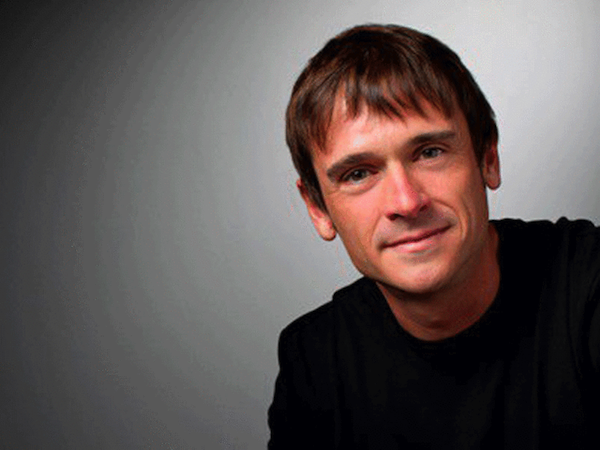
Moshe Denburg, founder of the musical ensemble Tzimmes. (photo from Tzimmes)

Tzimmes will take part in the Siyyum Sefer Torah celebration of Tri-Cities Chabad, as the community marks the completion of a Sefer Torah on March 10, 2:30 p.m., at Old Orchard Hall in Port Moody.

Rabbi Mottel Gurevitz, the driving force behind this year-long project and the spiritual leader of Tri-Cities Chabad, expressed the significance of completing a Torah: “The completion of a Sefer Torah is a monumental occasion in the Jewish tradition. It represents the unity of our community, the passing on of our heritage to future generations and the commitment to our shared values. It is a symbol of strength, resilience and continuity.”

– information from Tri-Cities Chabad

Call for human “books” – share your lived experience with community members

(image from dirtdaubber.wordpress.com)

Do you defy a stereotype? Have you faced prejudice or stigma in your life? Do you have unique life experience, or a story to tell? Apply now to be a human book for the Isaac Waldman Jewish Public Library’s Human Library event on Sunday, April 7, and share your lived experience with others. 

The Human Library originates in Denmark and has spread across the globe. The program is based on the idea of “unjudging” others, and seeks to challenge our preconceived notions of people through conversation.  

The local Sunday event will run from noon to 4 p.m. Community members will come in and ask to take out certain “books,” meaning they’ll have the opportunity to have a conversation with certain volunteers. To give an example, the library currently has three volunteer books and their titles are “Child Holocaust Survivor,” “Brain Cancer Survivor” and “Police Officer,” which indicates the facet of their lived experience/identity that they are willing to talk about. Each volunteer can expect to have four to seven sessions with “borrowers,” either one-on-one or in small groups. There will be a lot of breaks and snacks, and volunteer books are empowered to decline talking about anything that makes them uncomfortable. There will be a training session prior to the event to help everyone prepare.

A Human Library is a way for people to reach out and connect with individuals in their community with whom they might not normally engage. Human Libraries promote tolerance, celebrate differences and encourage understanding of people who come from varied cultural or lifestyle backgrounds. 

Apply to be a human book at bit.ly/WaldmanHumanLibrary2024 within a few days of March 8. Email any questions to library@jccgv.bc.ca. 

– Courtesy Waldman Library

Taking on care homes – Stolen Time screens in March 21

A still from the film Stolen Time: lawyer Melissa Miller reviews footage from a long-term-care room camera. (photo from National Film Board of Canada)

“I’m only at the beginning of this fight,” says lawyer Melissa Miller in the documentary Stolen Time, written and directed by Jewish community member Helene Klodawsky. Miller, of Toronto firm Howie, Sacks & Henry LLP, is lead counsel in mass tort claims against for-profit long-term-care corporations Extendicare, Revera Inc. and Sienna Senior Living.

Stolen Time will screen in Vancouver March 21 at VIFF Centre – Vancity Theatre, as part of a national release that includes Edmonton, Toronto and Montreal. The film is a joint production of Intuitive Pictures Inc. (with Jewish community member Ina Fichman at the helm) and the National Film Board of Canada (Ariel Nasr, producer).

To give readers an idea of what Miller is up against, there is a scene in the film where the private investigator she has hired, Brett Rigby, shares some financial data. According to Rigby’s documents, Extendicare had a revenue of $1.1 billion in 2019, $91 million in earnings and $42 million cash dividends declared – “and they’re locking up incontinence pads,” remarks Miller.

The film notes that “a few hundred family clients have grievances against these companies,” the most common complaints being serious dehydration, malnutrition, injuries and misdiagnoses. The homes apparently meet the requirements for staffing, but at least one person is off at any given time, so they are consistently understaffed. There seems to be no regulatory oversight, while the companies bring in record profits, the film contends.

Miller has been suing for-profit nursing home corporations in Canada and elsewhere for negligence since 2018, both in mass tort (class action) claims and independent cases against various facilities, one of which is featured in the documentary.

Video clips of residents experiencing abuse juxtaposed with family videos of the long-term-care residents when they were healthy allow viewers to see the people more fully and the depth of the injustices more clearly. Miller contends that it isn’t the staff who are to blame, generally, but rather that the staff aren’t given adequate resources by the companies, who could afford to do something but don’t. 

A complicating factor in effecting change is that, for example, Revera is owned by a Canadian Crown corporation, ie. the federal government, notes the film. As COVID ravaged nursing homes in 2020, with thousands of residents dying, “governments across North America pass[ed] legislation to protect them from lawsuits.”

“Today, nursing home chains around the world have become sites for wealth extraction by investors and shareholders,” writes Klodawsky in her director’s statement. “At its core, such financialization of care ties frail elders to overworked, racialized and predominantly female staff. When public pension fund managers, private equity and real estate companies help set the rules, compassion and dignity fall by the wayside. Nonetheless, rapidly expanding populations of the frail elderly, combined with shrinking numbers of family caregivers, ensure a steady stream of residents.”

People interviewed in Stolen Time include Dr. Pat Armstrong, a sociologist and professor at York University; Lisa Alleyne, a personal support worker who has worked in for-profit nursing homes (she is also an artist and her illustrations of what some long-term-home residents face are powerful); Rai Reece, who writes and teaches on anti-Black racism; Jackie Brown, who researches how publicly traded companies make money for investors; Jason Ward, who investigates how public pension funds are invested in for-profit nursing homes globally; Katha Fortier, who has been fighting for the rights of care workers for decades; Ayesha Jabbar, a former social worker who became a union rep; and members of a couple of the families Miller is representing.

Stolen Time is an engaging film that raises a lot of important questions about how nursing homes are run. It is unfortunate that it doesn’t include any interviews or statements from company representatives or government officials.

The post-screening panel discussion in Vancouver will feature Sara Pon, staff lawyer and researcher at Seniors First BC, and co-chair of the BC Adult Abuse and Neglect Prevention Collaborative; Bruce Devereux, a recreation therapist with three-plus decades of experience in the not-for-profit aging care sector; and Julia Henderson, assistant professor in the department of occupational science and occupational therapy at the University of British Columbia, and chair of the North American Network in Aging Studies.

More information about the March 21 event and other screenings of the documentary at VIFF Centre will be posted at viff.org. A ticket link will also be posted at events.nfb.ca/events/vancouver-theatrical-special-panel-on-march-21. 

Art helps bring us together

The current show at the Zack Gallery, Community Longing and Belonging, brings together a range of artists and styles. Pictured here is Alejandra Morales’s “A Landscape of Consumable Dreams.” (photo by Olga Livshin)

The current show at the Zack Gallery, Community Longing and Belonging, which opened Feb. 21, is the sixth annual exhibition in celebration of Jewish Disability Awareness and Inclusion Month. 

The exhibit was organized by the Jewish Community Centre of Greater Vancouver’s Inclusion Services and curated by Shelly Bordensky, the program’s coordinator. Most participating artists are either members of the JCC program or similar ones in other localities, like Aspire Richmond. These initiatives support people with developmental disabilities through various creative endeavours. 

The Zack show’s creative displays consist of paintings and pottery. While the size, media, colour palettes and framing of the works are all different, the underlying theme is the same: we all want to belong, we are all together on this planet.

Two paintings reflect that theme not only in their content and method of execution, but in their titles as well: “All Together 1” and “All Together 2.” Both works are cheerful and colourful, rendered with the abandon of the primitivism style. Cats and birds frolic on the canvas without regard for one another or for rules of perspective. Both list the artist as Art Hive, the visual art division of JCC Inclusion Services.

Bordensky told the Independent that both paintings were group pieces, created by several people. “Each artist added an element – a cat or a bird – and our wonderful art instructor, Kim Almond, made sure they all matched in style and colours.”  

According to Almond, 13 artists, all members of Art Hive, participated in each painting.

“Mark Li and Andrew Jackson started off the two collaborative paintings for the group, and it was a great project to work on as a class,” she said. “Colours were a huge part of the process, as the artists were always striving to create that special pop of colour.”

Another example of group art is the pottery creations – playful little animals, solemn hamsas (hands) and juicy pomegranates – crowding several stands around the gallery. 

“These ceramic pieces are all Raku ceramics by the pottery artists who are members of our Art Hive,” said Bordensky. “Together, we can create so much.”

Individual artists’ paintings are also on the theme of community.

Alex Lecce’s untitled piece is a slice of a neighbourhood street with a pie shop. The colours are realistic, and the image captures a quiet, everyday moment. We all go there, the artist seems to say. Those pies make our lives happier and more flavourful. They unite us in our humanity. 

On the other hand, Alejandra Morales’s painting, “A Landscape of Consumable Dreams,” is jarring in both the colour palette and the structure. This painting screams of discord. There are two disparate parts in the image. The top part is a tangled bunch of flowers, all in beautiful, greyish lilac hues, intertwined and elaborate. The bottom part is a vague human figure bowing to the pretty flowers. The colours of the figure are harsh, grating; they don’t fit with the flowers. But the figure obviously wants to fit, just as we all want to fit in with our surroundings. The complexity of the juxtaposition of humans versus nature is unmistakable.

Other paintings are not as complicated. Mami Zimmerman’s “Best Friends” features two ponies. Its simplicity is charming and lovely. We all want such friends. 

image - Mami Zimmerman’s “Best Friends”
Mami Zimmerman’s “Best Friends” (photo by Olga Livshin)

Calvin Ho’s painting “Nuts” is another example of primitivism in the show. The bright depiction of a squirrel and a woodpecker is reminiscent of picture books from our childhood. Bold lines and primary colours underscore that feeling. The two creatures are playing tug with a nut. Or maybe they are sharing it. Or fighting over it. The innocence of the picture invariably induces a smile.

image - Calvin Ho’s “Nuts”
Calvin Ho’s “Nuts” (photo by Olga Livshin)

In contrast, Merle Linde’s powerful landscape – “BC Wildfire 2023” – doesn’t invite smiles. The painting, its red and black scheme grim and scary, reminds us of the horror of the wildfires that affect our forests every year. The tragedy implied in the painting unites us, just as the sweeter emotions in other images do. 

In a telephone interview with the Independent, Linde said: “I’ve always enjoyed art, from the day I could hold a pencil. I liked going to art shows, too.” Mostly self-taught as an artist, she said she only started painting seriously after she retired. 

Judaica is one of the directions she explores in her art. To date, the Independent has used two of her paintings for its cover: for the 2023 Passover issue and for the 2022 Rosh Hashanah issue. Occasionally, she teaches classes for seniors in various artistic techniques.

Merle Linde’s “BC Wildfire 2023” (photo by Olga Livshin)

“Acrylic pour is a fascinating technique,” she said. “You pour the paint and let it spread as it will without a brush, and then wait till it dries. That was what I did for the background of the ‘Wildfire’ painting. I made it a few years ago. When I saw the news about the wildfires last summer, I picked up a brush and painted the black burned-out tree skeletons on top. I have two such paintings, but there was only space for one in the Zack show.”  

Most of the paintings in the show express themselves at first view. However, Gail Rudin’s “Out for the Hunt” raises questions. It portrays four seemingly perky owls on a merry, greenish background. One could assume a light-hearted company of friends on an outing, until one notices a line of tiny mice scurrying away in terror in the very bottom of the picture. Suddenly, the entire image changes its meaning, illustrating the unavoidable conflicts within nature, where the hunters and the hunted coexist. Despite the constant danger of the wild, nature somehow always finds its balance. Maybe, as humans, we could take lessons from that.     

Community Longing and Belonging is on display at the Zack Gallery until April 2. 

Olga Livshin is a Vancouver freelance writer. She can be reached at olgagodim@gmail.com.

History, family & love – Vancouver Jewish Film festival starts April 14

 A Radiant Girl (still from film)

As the Vancouver Jewish Film Festival approaches, the Jewish Independent reviews three more of the festival’s offerings: A Radiant Girl, All About the Levkovitches and One More Story.

Linking past to present?

In A Radiant Girl, 19-year-old Irene (Rebecca Marder) is an actress whose incessant theatrics get on her family’s nerves but the enthusiasm for performing that she and her diverse group of drama student friends exhibit provides a convenient distraction to the events going on around her in 1942 Paris.

A succession of Nazi policies add up, one after another, from the “Juive” stamped in red on her identity papers to the expropriation of Jewish people’s bicycles, radios and telephones, but Irene and her friends continue their thespian activities, mostly oblivious to larger events. The viewer, of course, knows that more ominous things await but the ending is both dramatic and subtly understated.

Costuming and hairstyles in the film do not always clearly situate the timeframe of events, especially early on, and a viewer beginning the film without any background might not be certain if it is set in contemporary times or another era. As the movie progresses, automobiles and more clearly discernible 1940s clothing styles make the era more specific. But is the filmmaker sending a message about the timelessness of vigilance against the slow drip of authoritarian actions that can lead to totalitarianism and catastrophe?

Shadow boxing

image - All About the Levkovitches (still from film)
All About the Levkovitches (still from film)

A family drama is at the heart of All About the Levkovitches, in which Tamás, an aging boxing coach in Hungary (Bezerédi Zoltán) is forced to confront his estranged son Iván (Tamás Szabó Kimmel) who, recently religious, returns from Israel for his mother’s shiva, hauling along his young son.

The decidedly unobservant father/widower has no interest in following traditional Jewish mourning rituals. “What’s a minyan?” asks one of his friends as he explains what is happening at home. “A bunch of Jews in my house,” he replies. (“When my mother died, we just drank,” the friend says.) The arrival of the local Jews to pray with the grieving son while the father goes about his business in an undershirt is a priceless vignette of worldviews colliding.

The father, who doesn’t know any Hebrew, and his grandson, who may or may not understand Hungarian, eventually find a common language. So, too, do the estranged father and son, through much fighting, boxing, arguing and wrestling demons. 

The grandfather’s disastrous attempt to assemble a Scandinavian do-it-yourself wall unit as his own ritual tribute to his late wife is a metaphor for his fumbling way of dealing with crisis, a project that is (somewhat predictably) resolved when the handy ba’al teshuvah son finally relents to helping, resolving not just the bookshelf problem but the larger issue of how things fit together.

It is a darkly hilarious and often emotionally moving drama.

Live, laugh, love

image - One More Story (still from film)
One More Story (still from film)

In One More Story, Yarden (played by Dina Sanderson) is a 20-something journalist at Israel’s largest-circulation newspaper and needs an attention-grabbing human interest series. She goes to that old standby, modern dating, and sets up doofus Adam on a series of disastrous dates, aiming for the print media version of the reality TV dating genre.

She recounts the foibles of Adam’s love life – with flashbacks to cringe-inducing interactions between the hapless Adam and a stream of mismatched potential romantic interests – while herself on a first date (with the film’s director Guri Alfi, playing the bad first date foil for Yarden’s storytelling).

The bad dates within a bad date motif provides a canvas for a variety show-style packed script of hilariously calamitous meetups. But Adam goes off script when love at first sight hits him out of the blue – literally – which does not coincide with Yarden’s journalistic requirements.

There is nothing particularly innovative in the romantic comedy department, but the witty writing and vivacious acting, plus a veritable bombardment of sight gags and more subtle facial expressions, make the film a laugh riot and a delight. 

Watch vjff.org for the full lineup and tickets for the Vancouver Jewish Film Festival, which runs April 4-14 in theatre and April 15-19 online.

A creator of unique places

You may not know his name, but you certainly know his work. Vancouver Jewish architect Richard Henriquez has designed iconic local buildings including Eugenia Place in English Bay (the one with the pin oak on its penthouse terrace), the Sylvia Tower, the Sinclair Centre and the BC Cancer Research Centre. He designed New Westminster’s Justice Institute of BC, the UBC Michael Smith Laboratory, the UBC Recreation Centre and the Presidio. And that’s just scratching the surface of his 53 years of work in Vancouver, and well beyond. 

photo - Richard Henriquez
Richard Henriquez (photo from Richard Henriquez)

Henriquez, 83, was born in Jamaica in 1941. That same year, his father, Alfred George Henriques, aware of the danger facing the Jews of Europe, joined the Royal Air Force as a bomber pilot. He did not survive the war.

One of Richard Henriquez’s earliest childhood memories is of a powerful hurricane that brought wind speeds of 150 miles per hour, devastating Jamaica’s north coast. At the time, the 3-year-old Henriquez was living on the north coast with his mother, grandmother and sister. “I still remember the sound of the metal roofing being torn off the roof, the screaming of the wind and the crashing of crockery being blown off the kitchen shelves,” he told the Independent. “The next morning, there were fish all over the yard and trees flattened everywhere.”

With their family home ruined, Henriquez and his sister joined their grandparents on a citrus plantation in Greenwood, Jamaica. Later, they moved to Buff Bay, to a new home with their mother and stepfather. Henriquez attended boarding school and Hebrew school in Jamaica. “Over the High Holy Days, I’d go to synagogue but I was never very religious,” he said.

By age 10, Henriquez had already decided on a career in architecture, a choice influenced by his grand-uncle Dossie, an architect, engineer and artist who would take him along on building visits. Rudolph “Dossie” Henriques, whose firm was Henriques and Sons, had designed the Kingston synagogue in 1912, after the original was destroyed by a 1907 earthquake. He also won a competition to design and build Jamaica’s Ward Theatre in 1912, and worked on the structural drawings for New York City’s Grand Central Terminal. 

In 1958, after graduating from high school, Richard Henriquez left Jamaica to study architecture at the University of Manitoba. He returned to Jamaica after graduation and spent a couple of years working there before returning to North America to do a master’s degree at the Massachusetts Institute of Technology in 1967. He then settled in Vancouver.

“My wife, Carol, is from Saskatoon, and she didn’t love Jamaica. She preferred to come back to Canada,” said Henriquez, whose time in Jamaica had a lifelong influence on his architectural style.

“In Jamaica, materials are expensive and labour is cheap, so I tend to want to renovate rather than tear down a house,” he explained. “I think that’s much more interesting than creating a new building. Later on in my career, I designed a couple of buildings that look like they were built a long time ago and renovated, like the Sylvia Tower in the West End.” 

His talent as an architect has won Henriquez many accolades. In 1994, he won a Governor General’s Medal. In 2005, he won the Royal Architectural Institute of Canada’s gold medal. And, in 2017, he received an Order of Canada for his contribution to Canadian architecture.

“To me, architecture is about creating a unique place in the world,” he reflected. “Unlike West Coast modernists, who were inspired by light and connection to the outdoors, I was more interested in the specificity of a site, in researching the history of a site and incorporating it into the concept for a building.” 

photo - Richard Henriquez’s Eugenia Place, in English Bay, is topped with a 35-foot pin oak, brought to Vancouver from Oregon, representing a first-growth forest that covered the area decades ago
Richard Henriquez’s Eugenia Place, in English Bay, is topped with a 35-foot pin oak, brought to Vancouver from Oregon, representing a first-growth forest that covered the area decades ago. (photo by Andrew Bowden / flickr)

The Eugenia is a perfect example of Henriquez’s respect for the specific history and culture of a community. That 35-foot pin oak, brought to Vancouver from Oregon, represents a first-growth forest that covered the area decades ago. By incorporating it into the building, he paid homage to the landscape.

Henriquez’s son Gregory has followed in his footsteps and works alongside him at Henriquez Partners Architects in Vancouver, where Gregory Henriquez is overseeing the Oakridge Park complex in Vancouver, valued at over $5 billion. Richard Henriquez’s grandson is completing a master’s degree at the University of Toronto and will soon be joining the firm as the newest architect in the family.

Among his varied works, Henriquez designed Vancouver’s Temple Sholom Synagogue and, at one time, he had hoped to build something in Jerusalem, a goal that now seems remote.

These days, there are many projects competing for his time. A man keenly interested in genealogy, he traced his family history back more than 12 generations to Portugal, learning that his eighth-great-grandmother, Anna Rodriguez, was burned at the stake in 1643. He’s working on his second book on that family history, while also devoting time to art and sculpture, lifelong passions. Some of his work was on display at the Monica Reyes Gallery in Vancouver last month.

To learn more about Henriquez’s work, watch the 30-minute documentary Richard Henriquez: Building Stories on Shelter, an architecture streaming service. Commissioned by Marcon Developments, it celebrates his 53rd year of work in Vancouver and beyond. Also interesting to peruse is henriquezpartners.com/work. 

Lauren Kramer, an award-winning writer and editor, lives in Richmond.