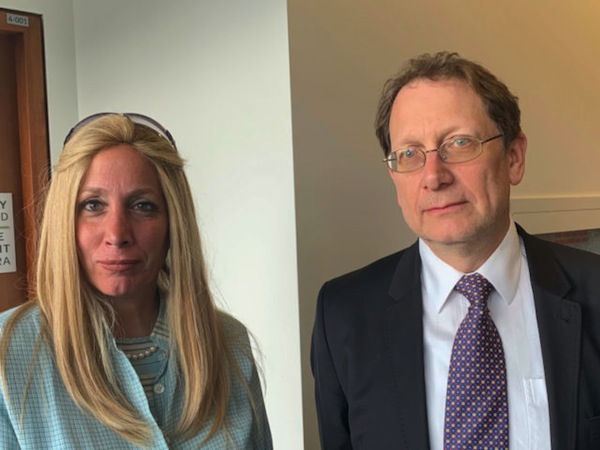
Speaking up for safe spaces

Although I have been doing Daf Yomi (studying a page of Talmud a page a day), I fell asleep a few days ago before I could finish learning my page of Talmud. I was worn out. And it was a page particularly relevant to my life.

Bava Kamma 99 talks about the value a craftsperson brings to the raw materials. For instance, if a customer brought wool to be dyed but something went wrong and the dyer made a mistake, the dyer would owe the customer the value of the wool. The value of the craftsperson’s enhancement is a different, additional calculation on top of the raw materials’ value. The skill and artistry that the craftsperson brings to their craft has economic value, which is part of what this tractate of Jewish law covers. 

I’m a maker. I create lots of things, from baking bread to making labneh and many homemade family meals. I can make jams and pickles. I’m a hand spinner. I also dye yarn. I knit and design things. I even occasionally weave. I sew clothing, too, if in an elementary way. I appreciate it when I read about how a craftsperson adds value to raw materials in a Jewish text because it’s personally relatable. It shows that, in a time when everything was handmade, the rabbis valued the skilled work involved to make functional and sometimes beautiful things.

Since I had to study the rest of page 99 before heading on, I did half of that page and the next on the same day. Bava Kamma 100a talks about how teachers “go beyond” – not just in how they teach Torah, but in how they do mitzvot (commandments) and help others. Even though I trained as a teacher long ago, nobody’s an expert at everything. I teach some things, like hand spinning, and not others. I’m not able to “go beyond” as a sewing teacher, for example, and, instead, I searched for someone who could teach my kids.

My kids took sewing classes and attended sewing camp for two summers at a studio nearby. The small business owner was warm and inviting. It seemed to be a safe place. When she asked people to write blog posts for her, I did. It didn’t pay much but I thought it was a good community business, promoting slow fashion and reuse.

As many people were, I was in shock after Oct. 7. I didn’t immediately see anything concerning about this business, as it felt like it was “mostly” about sewing. Then, eventually, I began to realize that, in fact, there was an increasing trickle of activism on this social media feed. Like many Canadian progressives, this was part of a wider theme. Nothing was expressed in solidarity with the hostages or those who died on Oct. 7. Rather, the business began acknowledging and amplifying Palestinian influencers, posting participation in a raffle for the Red Crescent and posting ceasefire comments.

Every time I ask questions of someone I know – Why are you posting this? Do you support the right to a democracy to protect itself? – the exchanges, often disappointing, take an enormous amount of energy. Being brave and speaking out is tiring with so much antisemitism circulating.

I finally got up the nerve to ask the business owner … why are you posting about this, what does this activism about Israel and Gaza have to do with your small business? Are you Israeli or Palestinian? Are you an activist about a lot of things beyond slow fashion? If so, where is your outrage about Nigeria, Sudan, Syria, Uyghurs…?

In response, she did say she wanted all the hostages released, but she had never posted that publicly. Instead, she had reposted images promoting a tatreez (Palestinian embroidery) class. Fine, I thought, this aligned with her sewing business – but the image posted showed the outline of Israel with Arabic on top that read “PALESTINE” across the whole country. It erased Israel altogether.

I engaged via social media messaging, but saw it wasn’t likely to help. She asked, well, what do you want me to say? I suggested one could choose to be an ally of people you taught or worked with, or could choose to listen and to not amplify only one side. She didn’t choose either of those options. Instead, she decided to take down my writing from her site. I’d suggested that she could remove my name, if she chose, as it was her prerogative, that she’d bought my writing and owned it. 

She then made things clear, saying it was “Only Jews who told her to ‘shut up’ or ‘stay in her lane as a Canadian.’” She said plenty of Jews aligned with her beliefs … although, based on the polls, I responded they were likely a minority. I suggested maybe only those Jewish customers brave enough to say something had spoken up.

I was initially sad to lose this community connection. I could have unfollowed this person without this discussion. My kids would never have taken another class. I’d never do business with her again. The depth of her concerning opinions wouldn’t have been revealed. 

By exposing this small businessperson’s attitude, I learned more about what was “out there” in the local makers’ community. This included a willingness to lose business and relationships with students and clients who feel uncomfortable with these views. 

I struggle sometimes to create a positive sewing lesson environment for my kids at home. However, there’s a different outcome here. I might grow as a person from “adding value to raw materials” as a craftsperson, to teaching more. This was something I could do. I falsely hoped that, if I tried hard to communicate, build bridges and connect with this person, things would change. But I need to continue learning and growing, too. Even this negative experience might have positive potential for growth.

When telling my family about the experience at the dinner table, my twins surprised me by saying, “Well, what took you so long? We could never go back there again.” Indeed, sometimes we give intolerant people too many chances to rise to the occasion, to become upstanding people. In this case, my kids knew the way before I did. 

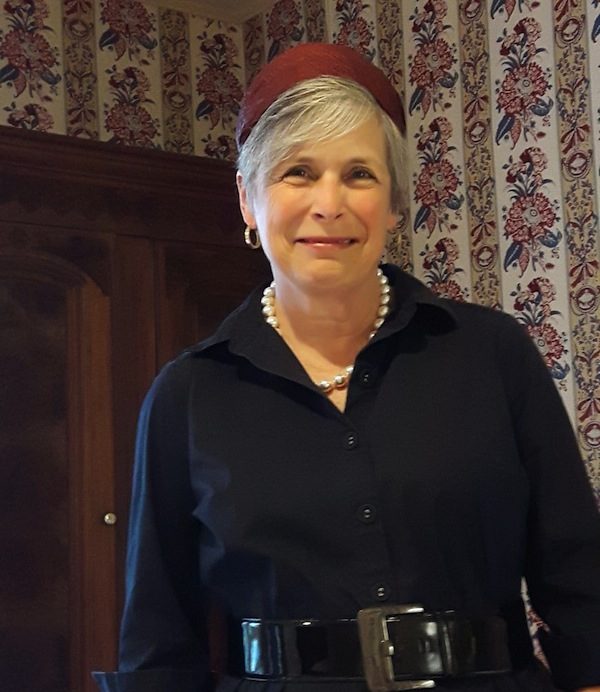
Joanne Seiff has written regularly for the Winnipeg Free Press and various Jewish publications. She is the author of three books, including From the Outside In: Jewish Post Columns 2015-2016, a collection of essays available for digital download or as a paperback from Amazon. Check her out on Instagram @yrnspinner or at joanneseiff.blogspot.com.

The choice to convert

Adam is one of the potential converts interviewed in the documentary Converts: The Journey of Becoming Jewish, directed by Rebecca Shore and Oren Rosenfeld, which is part of this year’s Vancouver Jewish Film Festival. (photo from convertsmovie.com)

A religion that encourages questions, one in which people can speak directly with God. A religion that’s thousands of years old, which so many have attempted to wipe out, yet still flourishes. A religion that’s intellectual and communal, which involves both the head and the heart.

photo - Dana
Danya (photo from convertsmovie.com)

These are just some of the aspects of Judaism highlighted in Converts: The Journey of Becoming Jewish, directed by Rebecca Shore and Oren Rosenfeld. The 70-minute documentary is part of this year’s Vancouver Jewish Film Festival, which runs April 4-14 in theatres and April 15-19 online.

Converts follows Adam, Danya and Bianka as they go through the conversion process. Each have their own reasons for wanting to become Jewish.

Adam, a student at York University when we meet him, grew up in a violence-filled neighbourhood in Toronto. His father used the family’s savings – that could have gone into moving the family elsewhere – to establish a church, which failed. Adam was attracted to Judaism because, unlike the Christianity he grew up with, Judaism gave him the space to ask questions and to speak with God directly, though giving up belief in Jesus was hard, he admits.

Danya, a businesswoman from Costa Rica, found out in high school that she has Spanish-Portuguese Jewish roots, that her ancestors were forced to convert to Catholicism from Judaism centuries ago. She feels that ancestral pull and uproots her life, traveling to Israel with her daughter in the hope of converting and living there.

photo - Bianka
Bianka (photo from convertsmovie.com)

Bianka, a PhD student in chemistry at the University of Warsaw, lives in Radom, Poland. She immerses herself in a few other religions before finding comfort in what she considers Judaism’s scientific approach, but also in the warmth of the Jewish community, which she discovers by attending synagogue and holiday events.

Well-constructed and well-paced, Converts is a fascinating look at identity, family, community, religion, the search for meaning and the possibilities of change and self-actualization.

For tickets to the film festival, visit vjff.org.

JSA celebrates its 20th

Kyle Berger, left, and David Granirer headline the Jewish Seniors Alliance’s A Night in the Catskills on March 17. (photos from JSA)

The Jewish Seniors Alliance of Greater Vancouver is celebrating its 20th anniversary with an event that’s all about laughter.

A Night in the Catskills: Jewish Humour Then and Now takes place at Congregation Schara Tzedeck March 17, 6 p.m.

“Jewish humour has enabled the Jewish world to gain strength through a history that shows that we should not be in existence today, but here we are bigger, stronger and better than ever!” said Marilyn Berger, a past president of JSA, who will make her debut as a stand-up comedian at the event. “Ask Kyle,” she said, referring to one of her sons. “I have given my family plenty to laugh about.”

It is perhaps not a coincidence then that Kyle Berger preceded his mother on the standup stage, and also produces comedy shows. He and David Granirer, founder of Stand Up for Mental Health, are headliners of the 20th anniversary event, which will include a performance by magician Stephen R. Kaplan, aka the Maestro. The whole megillah will be emceed by JSA board member Michael Geller, whose involvement in JSA was inspired by his late father, Sam Geller.

“He derived a great deal of joy from regularly attending JSA events and this is one of the reasons why the organization is so special to me,” Geller told the Independent.

photo - Michael Geller emcees JSA’s A Night in the Catskills at Schara Tzedeck
Michael Geller emcees JSA’s A Night in the Catskills at Schara Tzedeck. (photo from JSA)

“This comedy night is a follow up to a similar event organized by JSA 13 years ago,” he explained. “It was initiated by a phone call from the late Serge Haber, who called to tell me that the province had just canceled JSA’s gaming grant, but he knew my father would want me to help replace the funds. I asked how much was the grant. He said it was $18,000. I told him that was too much for me, but I had an idea.

“I was a fan of the website Old Jews Telling Jokes. Since JSA served many older Jews, I offered to book a room, buy some deli, and invite 17 of my friends to join me and each put up $1,000 and we would entertain one another with our favourite Jewish jokes.”

Haber – who founded JSA – liked the idea, as did the board, but they also wanted to join, and couldn’t afford to pay $1,000 each. So, the format was changed to one where people would attend and donate what they could, said Geller. Held at Congregation Beth Israel, almost 250 showed up.

“We presented clips from Old Jews Telling Jokes and invited people in the audience to share a joke in return for a donation. Everybody agreed it was a fabulous event,” said Geller. “There was just one small problem. We didn’t raise very much money. 

“So, this year we are charging $118 dollars to attend. Some generous members of the community are coming forward and agreeing to be sponsors. This will allow other seniors in the community who can’t afford $118 to attend. It has also allowed us to hire Tim Bissett, an experienced professional event organizer to assist with the program.”

photo - Stephen R. Kaplan will perform at the 20th anniversary celebration
Stephen R. Kaplan is a special guest performer at the 20th anniversary celebration. (photo from JSA)

Expressing gratitude to the sponsors on behalf of JSA, Geller said, “we are hoping other community members will come forward, especially those who regularly share their favourite Jewish jokes on the golf course. Sponsors will be invited to participate in the program by telling a favourite joke or two, or introducing a favourite comedian or routine.”

For his part, Geller is preparing for his role as emcee by watching vintage and contemporary Jewish comedians and selecting material. “The program will also include some professional comedians who are volunteering their time, and special appearances by local rabbis who have been urged to share stories they would never tell in shul,” he said.

“I am thrilled to be celebrating our 20th anniversary and look forward to going from strength to strength as my own children now, believe it or not, become seniors!” said Berger, who shared her appreciation for the organization that Haber started.

“As I gracefully age,” she said, “I thank Serge for enabling me to spend my golden senior years embraced by the love that Seniors Alliance offers.”

“JSA undertakes many programs that benefit so many Jewish seniors, including the excellent Senior Line magazine,” said Geller. “While we are supported by many community organizations and foundations, we need additional funding. I am, therefore, hoping this evening will help promote the organization’s good work and, this time, actually raise money to allow it to continue.”

For tickets to A Night in the Catskills or to become an event sponsor, visit jsalliance.org or call 604-732-1555. 

Resistance screens here March 3

A still from the documentary Resistance: They Fought Back. (theyfoughtback.com)

Resistance: They Fought Back screens March 3, 2pm, at Rothstein Theatre. Presented by the Vancouver Jewish Film Centre, special guest at the screening will be director Paula S. Apsell.

The film’s synopsis reads: “We’ve all heard of the Warsaw Ghetto Uprising, but most people have no idea how widespread and prevalent Jewish resistance to Nazi barbarism was. Instead, it’s widely believed ‘Jews went to their deaths like sheep to the slaughter.’ Filmed in Poland, Lithuania, Latvia, Israel and the U.S., Resistance: They Fought Back provides a much-needed corrective to this myth of Jewish passivity. There were uprisings in ghettos large and small, rebellions in death camps, and thousands of Jews fought Nazis in the forests. Everywhere in Eastern Europe, Jews waged campaigns of nonviolent resistance against the Nazis.”

For tickets ($10) to the screening, visit vjff.org.

– from theyfoughtback.com

Chelsea Hotel is heavenly

Jack Garton, playing a Jokeresque bellhop, manipulates the memories and thoughts of the Writer, played by Adrian Glynn McMorran. (Sarah Race Photography)

In Paper Thin Hotel, Leonard Cohen writes, “It is written on the walls of this hotel, you go to heaven once you’ve been to hell.” Heaven is where you will be if you catch Steve Charles and Tracey Power’s 2024 iteration of their 2012 hit Chelsea Hotel, playing at the Firehall Arts Centre until March 3.

Chelsea Hotel is a loving tribute to Cohen and his poetry, which transcends time and space while touching on enduring universal topics – passion, loss, sex, religion and politics. Although Cohen has been dead for more than seven years, his music and lyrics live on and perhaps are more relevant than ever given the troubled state of our world. 

I saw the world première of the show back in 2012 (jewishindependent.ca/oldsite/archives/feb12/archives12feb10-02.html) and did not think anything could make it better but, after a cross-country tour and 400 performances, like a fine wine, it has improved with age. Half of the original cast returns to reprise their roles and they, too, have only become better with time. Power does triple duty as she choreographs, acts and directs, while Charles is musical director/arranger and musician/actor.

The sung-through musical revolves around a tortured writer (Adrian Glynn McMorran) shuttered up in a shabby room in New York’s Chelsea Hotel trying to forget his past so that he can be creative again. The show opens with him outstretched on a bed towering with crumpled paper, a metaphor for his cluttered mind. Each time he writes something down and throws it away, we feel his existential angst as he searches for inspiration from his life’s memories. Five actors, playing multiple characters, move in and out of his various visions, reminding him of his past romantic entanglements and indiscretions through songs like “Suzanne,” “Take this Waltz,” “First We Take Manhattan,” “Tower of Song,” “Dance Me to the End of Earth,” “Bird on a Wire” and, of course, “Hallelujah.”

All the scenes play out in the Writer’s mind – illusions in a carnival-like setting guided by a Jokeresque bellhop (a terrific Jack Garton) who pops in and out of the set as he manipulates the Writer’s memories and thoughts.

This truly ensemble production is a fusion of dance, music and theatre, with the multi-talented cast of six all triple threats – each capable of singing, dancing and playing the myriad instruments used in the show, ranging from the traditional – guitar, violin, keyboards and drums – to the more unconventional – banjo, ukulele, accordion and even a kazoo (showcased in the very erotic “I’m Your Man” number).

McMorran is sensational as the Writer. His vocals run the gamut from softly crooned ballads to frenetic rock ’n’ roll numbers. Power, Marlene Ginader and Michelle Bouey play the lovers and the muses, moving through the various vignettes in dreamlike, ethereal fashion. Ginader, in her blue raincoat, is touching in her portrayal of the jilted lover trying to get back into the Writer’s heart. Hovering quietly in the shadowy background, Charles switches effortlessly from instrument to instrument, until he emerges front and centre stage to sing a poignant “Famous Blue Raincoat.”

The staging is sublime. Kudos to set and costume designer Drew Facey for his fragile, paper-like set and simple costumes. John Webber’s mood lighting completes the surreal atmosphere.

As you unwrap the layers of this performance, so ably packaged by this wonderful cast, the pleasure only increases. There is so much to like in this production – don’t miss it.

As a bonus, on Feb. 23, the theatre is holding a special event, Endless Love, toasting the legacy of Cohen, which includes pre- and post-show receptions, cast mingling and, of course, the show. Tickets can be purchased at firehallartscentre.ca or by calling the box office at 604-689-0926. 

Tova Kornfeld is a Vancouver freelance writer and lawyer.

A new voice for BC elders

Dan Levitt has been appointed to be British Columbia’s new seniors advocate (photo from Dan Levitt)

Dan Levitt is set to become British Columbia’s new seniors advocate. The appointment was announced last month by BC Health Minister Adrian Dix.

“Dan Levitt has championed the rights of seniors for 30 years and with his extensive experience he is an excellent choice for BC’s seniors advocate,” Dix said in announcing the appointment. The Office of the Seniors Advocate is an independent branch of the provincial government, which acts in the interest of seniors and their caregivers.

Levitt becomes only the second person to hold the role, replacing Isobel Mackenzie, who will retire April 5 from the position she initiated a decade ago.

Levitt spoke with the Independent over lunch in the community centre that is part of KinVillage, the Tsawwassen continuing care retirement community he has headed as chief executive officer since 2021. Over the din of an adjacent bingo game, Levitt spoke of his career, the footsteps of his father and his plans for the new job.

The role of seniors advocate is unusual, he explained. British Columbia’s was the first in Canada, being created by legislation in 2013. To date, only two provinces, New Brunswick and Newfoundland and Labrador, have followed suit, though others are considering it.

The purpose of the advocate’s office, which has a staff of 17, is to look at systemic issues that impact seniors and make recommendations to government. 

“The five areas that we look at are transportation, housing, health care, income supports and community services that are geared around older people,” said Levitt. While the office has no authority to force governments to take steps, Levitt said his predecessor, Mackenzie, has recommended many proposals that have found favour with those in power. Not all recommendations will be adopted, he said, but “it usually helps to move the needle in a direction.”

“There isn’t that power, if you will, to say, ‘This must happen.’ But, many times, the recommendations are ones that are introduced and taken forward because they are the right things to do,” said Levitt, noting that his predecessor initiated a great range of measures that the government has taken up. 

“Isobel and the office have been real pioneers in shedding lights on challenges and opportunities with an aging population,” he said. “That’s the purpose of these independent offices. They can reflect, in this case, what matters most to seniors, what are their concerns, and then move that agenda forward in helping to influence public policy.”

The position is nonpartisan and independent from government. 

“In the recruitment process, no political official was involved,” said Levitt. 

Levitt is not the first in his family to work in the senior care field. His father, Ken Levitt, was a longtime administrator of the Louis Brier Home and Hospital, during a time of significant expansion, including the development of the Weinberg Residence. The elder Levitt is now, among other things, past president of the Jewish Seniors Alliance of Greater Vancouver. 

“I am following in his footsteps, for sure,” said the son. “And I think I am honouring, as he did, our parents by ensuring the health and well-being of older adults.”

As his new position requires he hold no outside affiliations, Levitt recently resigned from roles on the boards of directors of CommonAge, which advances the interests of older adults in the 53 Commonwealth countries, and the International Federation on Ageing. He has also given up adjunct professorships in gerontology at Simon Fraser University and in the school of nursing at the University of British Columbia, and a sessional instructor position at the British Columbia Institute of Technology.

Levitt’s undergrad degree in psychology is from UBC and he graduated from the University of North Texas, Centre for Studies in Aging, with a master of science.

“I need to dedicate 110% of my working time to this role,” he said of giving up his other gigs, which included speaking engagements worldwide on topics of aging and extensive public commentary on related subjects. 

The vetting process for the seniors advocate position was a lengthy one – and Levitt compares getting the final word on his selection with the feeling of elation he gets when he places well in his avocation of competitive running.

“Probably like anybody else who’s been through a job search like this, when you get that nod, it feels pretty good,” he said. “I am a competitive runner in my age category and, when I place well in a race, you are elated. So, when I got the message, I was pinching myself, making sure I heard what I thought I heard. You feel this elation. Soon this wears off and you start realizing the responsibility, start realizing what this means now, and people are depending on you to make their lives better.”

Caring for seniors also means helping the people in their lives, he said.

“It’s not just the older people that we’re trying to support, who are directly impacted, but it’s their family members,” said Levitt. 

Although he is not yet in the job – he’ll have to move to Victoria, coming home to Vancouver on weekends – he already has the first few months scoped out.

“I’m going to be doing a tour around the province of BC [meeting with seniors],” he said. “I’ll be asking them questions around what are those policies that help or hinder them in those five areas of transportation, housing, health care, income supports and community supports. We’ll be looking at those issues, listening to them, then we’ll come back to the office, synthesize the information and then we will release a report on what we found. That report will give us a mandate of what the biggest concerns are that seniors have and we’ll make recommendations to the government on how we can improve different aspects of seniors’ lives.”

In the statement announcing Levitt’s appointment, his predecessor had kind words for him.

“It has been an honour and a privilege to serve as seniors advocate for the Province of BC,” said Mackenzie. “Our population is aging and seniors need the ability to live independently at home, knowing the programs and services to support them are easily accessible to everyone. As issues such as dementia, housing and elder care become more complex, it’s crucial to advocate for strengthened seniors services throughout the province. I know Dan is ready to continue the cause and his efforts will make a difference in the lives of seniors for years to come.”

“I have big shoes to fill,” said Levitt, “because Isobel Mackenzie has done a phenomenal job starting the Office of the Seniors Advocate and really setting a very high bar, really pushing forward the agenda of older people, shining a light on some of the inequities and some of the systemic issues that impact older people and making recommendations that have stuck and changed just about every aspect of life for seniors.”

Levitt has spoken out on issues in the past, weighing in, for example, on the controversy around Lisa LaFlamme, whose firing as CTV National News anchor was blamed on sexism and ageism, and in challenging the ageism of birthday cards. While he will be taking on systemic issues on the larger stage of provincial policy, he urges individuals to speak up against ageism in everyday life and to celebrate aging.

Be aware of even subtle language that debases older people and their experiences, he advises.

“Don’t use the language that demonizes or goes into the negative stereotypes we often will see,” he said. “For example, ‘I’m having a senior moment.’ No one who is young says they’re having a junior moment.”

He encourages everyone to reject negative connotations around aging.

“Embrace your own age,” he said. “Embrace who you are and enjoy those birthdays and celebrate them and celebrate getting older. Don’t hide your age.” 

Tikva campaign to start

The most vulnerable members of the Jewish community are struggling. The lack of affordable housing and a persistent high inflation rate are causing individuals and families to exhaust their income, which can lead to homelessness. The reality poses a major crisis that affects more than 350 people in the Jewish community who need a safe, secure and affordable home. 

photo - Anat Gogo, executive director at Tikva Housing
Anat Gogo, executive director at Tikva Housing. (photo from Tikva Housing)

The Jewish community witnessed Tikva Housing’s significant growth in 2023, as the organization’s portfolio grew from 98 to 168 units. Also, in keeping with its mission, it increased the monthly maximum rent subsidies available for families, couples and individuals in an effort to reduce the effects of market rental increases. But such hopeful news is overshadowed by growing demand. Vancouver’s vacancy rate is below 0.9%, and, as an example, two-bedroom rents grew by 8.6% on average. Substantial increases in rents of units at turnover drove this growth, and the outlook is not encouraging. The Canada Mortgage and Housing Corporation reported: “Affordability worsened for low-income households: vacancy rates for the most affordable units were lower than average, and these households already spend a greater share of their income on rent.”

“In the last three years, we saw an increase of 458% in people registered with the Jewish Housing Registry,” said Anat Gogo, executive director at Tikva Housing.

The Jewish Housing Registry (JHR) was launched in 2020 to provide affordable-housing seekers with a convenient point of application. It also serves housing providers with demographic information, therefore, a studied approach to future housing developments and partnerships.

“Today, we know that, among those over 350 individuals and families waitlisted, 84 are families with children, 72 are applicants with disabilities, and 129 are seniors over 65 years old,” said Gogo.

Housing is a human right, and we all have a role in ensuring that more people have the dignity and safety of an affordable home. From Feb. 26 to March 11, support Tikva Housing’s annual fundraising campaign. Visit tikvahousing.org. 

– Courtesy Tikva Housing

L’Chaim program grows

L’Chaim Adult Day Centre is now open five days a week. (photo from L’Chaim)

L’Chaim Adult Day Centre has received funding from Vancouver Coastal Health to expand its program. It can now offer its services to frail senior citizens in the community on a five-day-a-week, 16-clients-per-day basis.

L’Chaim first opened its doors on Sept. 14, 1985, in the Maccabee Room of Beth Israel Synagogue. At first, L’Chaim operated only one day a week and was run completely by volunteers. A project of the National Council of Jewish Women and the Jewish Family Services Agency, it was able to secure funding from the Jewish Community Fund and Council, as well as NCJW.

Soon afterward, a committee was formed to secure funding from the BC Ministry of Health, which allowed the program to operate two days a week. Ten years later, L’Chaim moved to the Jewish Community Centre of Greater Vancouver, thanks to a $400,000 grant from the BC government, which enabled the JCC to renovate the premises to meet L’Chaim’s needs. On April 1, 1996, L’Chaim opened at the JCC and, since then, it has been operating three days a week, serving 13 clients a day.

As the Jewish population has grown and aged, the number of clients seeking L’Chaim’s services has increased. Unlike other adult day centres in Vancouver, L’Chaim has a cultural mandate to accommodate Jewish seniors who live outside Vancouver’s geographical boundaries, but prefer to frequent L’Chaim precisely because of the Jewish component of its activities. This has not precluded the intake of seniors in the area who, though not themselves Jewish, want to attend L’Chaim because of its cultural programming and level of care, but demand has been greater than L’Chaim can service and the wait list and wait times are long.

With the recent expansion, under the supervision of L’Chaim’s trained activity specialists, more participants will be able to benefit from the variety of programs offered, including exercise sessions, discussion groups, live entertainment, expressive art and garden therapy, games, and day trips into the community. Participants receive a culturally and nutritionally appropriate meal prepared fresh daily, consisting of a three-course kosher lunch tailored to their dietary needs. As well, L’Chaim has a nurse on the premises who supervises medications, monitors participants’ health status and other aspects. Of course, Shabbat and Jewish holidays are occasions for special celebrations, often in conjunction with other stakeholders and programs at the JCC.

 “Old age,” as Tennyson wrote, “hath yet his honour and his toil,” and the longer people can stay at home surrounded by loved ones and visit those places that have become familiar, the better off we all are. L’Chaim is honoured that it can provide care and comfort to the frail elderly and thereby offer support to their relatives and caregivers. Anyone who goes by the JCC will see that it is a hub of activity and being located within its walls makes L’Chaim all the more vibrant. Relatives can drop off their loved ones and take advantage of JCC activities; L’Chaim clients can see people they know who drop by the office.

Now that L’Chaim has obtained funding to expand its services, it looks forward to growing from strength to strength, and this will require time and money. Fortunately, L’Chaim has an active board of committed individuals, as well as day-to-day onsite volunteers, who aid its director, Leah Deslauriers.

Deslauriers was hired by the JCC as the seniors program coordinator shortly after she graduated from the gerontology program at Simon Fraser University. In 2008, she started overseeing L’Chaim, when their administrator went on vacation, and she left her position at the JCC and became the director of L’Chaim in 2017. The position includes intake, fundraising and strategic planning, and it is in large part due to her accomplishments that L’Chaim now embarks on the next stage in its development.

L’Chaim benefits from the financial support of the Jewish Federation of Greater Vancouver, several Jewish foundations, and the donations, large and small, of many friends and supporters. To all of them, L’Chaim is grateful. 

To see if you or your loved one is eligible for L’Chaim’s services, contact the home and community care office in your local health authority or get in touch with Deslauriers by calling 604-638-7275. 

– Courtesy L’Chaim Adult Day Centre

Exploring past, present

During Hillel BC’s Holocaust Education Week, Drs. Gene Homel (pictured above) and Rachel Mines offered Unheard Echoes, a program on Jews in Lithuania. (photo by A. Jaugelis)

Unheard Echoes, a program on Jews in Lithuania, was held Jan. 29 during Hillel BC’s Holocaust Education Week on the University of British Columbia campus. Dr. Gene Homel, an historian, and Dr. Rachel Mines, a Yiddishist and English instructor, spoke about the past and present experiences of Litvaks, Jews with roots in the region of Lithuania.

Homel began by introducing Lithuania, a liberal democracy in the North Atlantic Treaty Organization (NATO) and the European Union, currently in the news because of possible threats from Russia’s attack on Ukraine. He explained that Jews have been a key, productive part of Lithuania since at least the early 1300s, when they were invited by nobility to settle in these territories and were granted a charter to run their own affairs in their own communities. By the 1700s, the largest Jewish population in Europe was in what was then the Polish-Lithuanian Commonwealth, occupying much of Eastern Europe. The partition of Poland in the late 1700s absorbed the region into imperial Russia.

Vilnius, now Lithuania’s capital but then in the Russian empire, was known as “the Jerusalem of the North” for its role as a world-renowned centre of Jewish learning, culture and publishing. However, poverty and Russian conscription motivated many Jews to emigrate in the early 20th century to North America,  South Africa and elsewhere.

In 1918, with the First World War winding down, Jews joined the successful push for an independent Lithuanian state. While the restored Polish state, which now included Vilnius, slid into enhanced antisemitism in the 1930s, the much smaller Lithuanian state avoided pogroms and other extreme manifestations of antisemitism. Lithuanian Jews and Christians lived side by side in relative peace.

The 1939 pact between Nazi Germany and the communist Soviet Union divided Eastern Europe between the two tyrannies, and the Soviets forcibly annexed and Sovietized Lithuania and the other two formerly independent Baltic states, Latvia and Estonia. Mass deportations of Baltic peoples to Soviet Siberia included many Jews, who comprised an estimated 7% of Lithuania’s population but 10% of the deportees.

Nazi Germany’s invasion of the Baltics and the Soviet Union in mid-1941 initiated the Holocaust in Lithuania. Of the 220,000 to 250,000 Jews there, 95% were murdered, most in the early stages of Nazi occupation and control.

Lithuanian historians and researchers agree that, while most Lithuanians were passive bystanders, some thousands (the exact number is unknown) were (by degrees) active collaborators with the Nazis. Homel pointed out that collaborators were active in almost all other European countries, and there were some Lithuanians, such as Catholic clerics, who served as rescuers of their Jewish neighbours. More than 900 Lithuanians have been recognized by Yad Vashem as Righteous Among the Nations, and there were doubtless many more.

In 1944, the Soviets returned to the Baltics, robbing Lithuania, Latvia and Estonia of their independence, and costing many people their freedoms and their lives. Decades later, the fall of Soviet Communism – Lithuania was the first Soviet republic to declare its independence in 1990 – led to a revival of Jewish culture and institutions, as the Soviet Union had not only suppressed religious and cultural expression but denied or downplayed the Jewish Holocaust in the areas it controlled.

Homel discussed a particularly sensitive issue in Lithuania’s history of wartime Nazi occupation, since there was some overlap between those who were both anti-Soviet partisans from 1944 to the early 1950s (thus nationalist heroes) and Nazi collaborators. Recent published research on Lithuanian collaboration in the Holocaust has caused a stir of controversy, raising the problems of a competing sense of victimhood and of definitions of genocide. This can be seen as a sort of zero-sum game.  Collaboration has been a contested issue in other countries’ histories, of course, for example France and, notably, Poland.

That said, the Lithuanian government has accomplished much by way of justice since the restoration of independence. Shortly after that time, in May 1990, the government issued a declaration condemning “without reservation the genocide perpetrated in Lithuania against the Jewish nation … and notes with sorrow that among the executioners who served the occupiers there were also citizens of Lithuania.” The declaration also stated that there would be no toleration for any expressions of antisemitism, and that all bodies of government and citizens should “create the most favourable conditions for the Jews of Lithuania….”

Four years later, the government created the annual Sept. 23 National Memorial Day for the Genocide of Lithuanian Jews. Commemorations are held in schools and other public and governmental institutions. The prime minister recently joined a march to Paneriai, a site of mass murder of Jews and non-Jews during the Nazi occupation. The Vilna Gaon State Jewish Museum includes five sites, one being the “Green House” Holocaust museum. In 2011, Lithuania committed to pay 37 million Euros over a decade in compensation for Jewish communal property seized during the mid-20th century, and recently the government passed a bill to transfer another 37 million euros. Rescuers have been honoured in the country, as well as by Israel’s Yad Vashem. International teams of archeologists are working on a project to recover Vilnius’s historic Great Synagogue, which was utterly destroyed by the Soviets in the 1950s.

Mines followed Homel’s presentation with a more personal view of Lithuania, based on her reconnection with her Litvak roots, and her experiences with the non-Jewish Lithuanian community both in Lithuania and in British Columbia. She detailed her father’s family life in Skuodas, a lively and thriving town near the Latvian border, which, prewar, had many Jewish-owned enterprises. His relatives once owned a productive boot and shoe factory in town. In 1936, her father, Sender, moved to Kaunas, then capital of Lithuania, and married. In 1941, Sender and his family were imprisoned in the Kaunas ghetto. That winter, Sender was deported to Latvia and forced into slave labour in several Nazi ghettos and concentration camps. As a survivor, he emigrated to Canada in the early 1950s, where he remarried and started a second family.

photo - Dr. Rachel Mines presented a more personal view of Lithuania, based on her reconnection with her Litvak roots, and her experiences with the non-Jewish Lithuanian community both in Lithuania and in British Columbia
Dr. Rachel Mines presented a more personal view of Lithuania, based on her reconnection with her Litvak roots, and her experiences with the non-Jewish Lithuanian community both in Lithuania and in British Columbia. (photo by A. Jaugelis)

Mines and Homel have visited Lithuania a number of times in the last 16 years or so, including a Yiddish summer program at Vilnius University. They found a warm, welcoming reception in Skuodas, where the local museum featured a display on the town’s Jewish population, including Mines’s father. Locals took them to sites of interest, including the Jewish cemetery and Holocaust memorials, which date back many decades, to when the country was still under Soviet occupation. In 2015, Mines was invited to Skuodas to address high school students and adults during that year’s commemoration of the Holocaust in Lithuania. As she learned more about her father’s origins, Mines created a bilingual website on the town, shtetlshkud.com, as a genealogical and historical resource.

Both Mines and Homel are members of the board of directors of the Lithuanian Community of British Columbia (LCBC), which welcomes Litvaks and acknowledges the Jewish contribution to Lithuanian history and culture. The last two years, the LCBC has commemorated Lithuania’s National Memorial Day for the Genocide of Lithuanian Jews, first at the Peretz Centre for Secular Jewish Culture and then at the Italian Cultural Centre. LCBC’s website is lithuaniansofbc.com. 

– Courtesy Gene Homel

A need to shift thinking

New approaches for getting younger generations to engage in communal Jewish life were put forward by Rabbi Mike Uram, the first-ever chief Jewish learning officer for Jewish Federations of North America, in a Zoom talk organized by Kolot Mayim Reform Temple in Victoria on Feb. 4.

Uram admitted he does not have a magic answer to the problem that has been confounding leaders of Jewish institutions for several years. Instead, he regards himself as a “provocateur” who stimulates novel thinking and a sense of possibility.

photo - Rabbi Mike Uram urges organizations to create new entry points and ways for Jews to connect with Jewish life
Rabbi Mike Uram urges organizations to create new entry points and ways for Jews to connect with Jewish life. (photo from Kolot Mayim)

He started by addressing Jewish communities and Jewish institutions, saying they no longer exist as they have in the past. He suggested that there is no longer the same power of gatekeeping and that the concept of who is a Jew has become more fluid. What may be seen as a community – through a synagogue, federation, university campus or geographic area – is, according to Uram, more accurately described as a network. 

“There’s something imprecise about the language, and that imprecision leads to imprecise strategies,” he said, adding that this view is more aligned with an operating system that was in place several decades ago. “And the operating system, which was perfectly aligned with the North American Jewish population in the 1950s and 1960s, is now almost perpendicular with the ways that North American people and Jews access almost everything else in their lives.”

Using television viewing patterns as an example, Uram demonstrated a shift from “macro-communities to micro-communities.” That is, in the 1950s, close to three-quarters of the American public watched an episode of the hit show I Love Lucy at the same time. Today, a successful show might obtain a viewership in single-digit percentages. 

A similar pattern can be identified in Jewish circles, if one were to observe the steep decline in the numbers of Jews affiliated with a synagogue today as opposed to the 1960s, he said. The drop is not singular to Jewish groups; a corresponding fall in institutional engagement has occurred across a range of civic and political organizations.

More broadly, people are spending less time out of the house and have fewer friends than in previous generations. As well, with social media and streaming services’ algorithms, people are now living more in “customized little bubbles.” To solve this dilemma, Uram proposed a change in the language and thinking used by institutions to bring the unaffiliated into their realm. 

“When we say us and them, we’re thinking we’re the core, they’re the periphery. We’re involved, they’re uninvolved. We’re affiliated, they’re unaffiliated. The problem with that thinking is [that] it is measuring Jewish identity on a very linear and highly judgmental spectrum,” Uram said.

The challenge, too, with this institutional mindset, he argued, is that people do not wake up each day thinking they are an uninvolved or unaffiliated Jew and wondering how they can become more involved or affiliated. In fact, he said, many have a negative stereotype of organizational Judaism, as a place they feel judged and like an outsider.

Nonetheless, Jews not participating in institutional Jewish life are no less proud of being Jewish.

“They don’t feel broken,” Uram said. “They don’t feel like they need a synagogue or a federation to fix them. What has changed in American life is that, as affiliation rates have gone down, positive Jewish feelings have actually gone up.” Many Jews are interested in Judaism but not affiliation, he said. Hence, rather than focusing on programming and marketing, institutions should concentrate on building relationships, he said.

While emphasizing that he is not disparaging affiliation, Uram urges organizations to create new entry points and ways for Jews to connect with Jewish life.

“It’s a one-on-one conversation, and it’s more like community organizing than it is like traditional programming,” he said, noting that the organized Jewish community can often function like a taxicab in the age of ride-hailing companies or network television when there are streaming services.

“We’re not in the business of preserving network television,” he said. “We’re in the business of changing people’s lives with amazing shows. So, we should be doing anything we can do to get people to interact with the magic and the power and the wisdom of Jewish values.”

Another issue within a community is infrastructure, such as buildings, staff and program calendars, said Uram. Here, he advocates a change in philosophical approach, focusing on impact over affiliation.

“Spending a little bit more time talking about how we’re going to make a difference in people’s lives, rather than how they can help us keep the organization strong, will trickle down and change the way emails are written, the way the website looks, the way people are greeted,” he said.

Towards the end of his talk, Uram threw some questions out to institutions, asking if they were in the synagogue preservation business, the program planning business, the membership business or the transforming people’s lives business.

“My guess is they do not say that our mission is to make sure that the next generation of Jews joins. It probably says that they’re going to engage in Judaism in a way that transforms them and the world, that makes them feel closer to community and that helps them live more enriched lives, and all those things,” Uram said.

If organizations are to meet the challenges and take advantage of the opportunities offered in the future, they must understand the perspectives of the next generation, he said. Millennials, he added, bring with them their own insights and values that can “guide the future of Judaism in exciting ways.”

Uram is a former executive director of Hillel at the University of Pennsylvania and the author of the 2016 book Next Generation Judaism: How College Students and Hillel Can Help Reinvent Jewish Organizations, which received a National Jewish Book Award. He was speaking as part of Kolot Mayim’s 2023/24 Building Bridges Speaker Series. On March 3, Rabbi Dr. Nachshon Siritsky, spiritual leader of the Reform Jewish Community of Atlantic Canada, will talk on the topic Our Evolving Jewish Understanding of G!d and Gender. To register, visit kolotmayimreformtemple.com. 

Sam Margolis has written for the Globe and Mail, the National Post, UPI and MSNBC.