More aid sent to Israel

The Jewish Federation of Greater Vancouver has made a new transfer of more than $1 million from its Israel Emergency Campaign (IEC). This is its fourth transfer of funds and brings the total transferred to Israel to approximately $7.5 million.  

It has been 125 days since Oct. 7 and Israel is facing challenges that continue to evolve and deepen as time goes by and the war continues. The IEC allocations committee, chaired by Stephen Gaerber, has reviewed funding proposals with great care to ensure that this latest round of allocations addresses the developing needs on the ground.

To give local community members a sense of what Israelis are facing at this stage, Federation asked Rachel Sachs, director of its Israel office, to provide this summary: 

“As the army continues to fight in Gaza, the loss of soldiers’ lives and the ongoing state of captivity of 136 Israelis in Gaza is a growing and unbearable burden that is taking its toll on Israelis across the country. In the last few weeks, many reservists have been released from duty, with the understanding that they may get called up again. Their return home, after months in the battlefield, has sparked a new set of challenges in their families, their professional paths, academic journeys, and more. 

“The evacuation of approximately 130,000 Israelis from the north and the south continues. Some remain housed in hotel rooms across the country, often miles away from home. Some residents of these frontline communities remain determined to return home the minute they will be allowed to, some remain determined that they will never go back, and others are trying to determine what it will take for them to return, both in terms of their sense of security, and actual security itself.  

“Many of the devastated communities of the Gaza Envelope have either found, or are seeking, sites to which they can relocate together. Until their home kibbutzim are rebuilt, that is. They have been taken in by communities across the country, where they are, hopefully, experiencing a small sense of home for the first time since they fled their real homes months ago. 

“The mental and emotional toll of this extended situation is growing, as the need for ongoing care and therapy for survivors, bereaved families and evacuated communities continues in multiple locations across Israel. 

“In our partnership region of the Upper Galilee, the state of emergency continues.

“There is great uncertainty and concern over when the ‘day after’ will be and what will it look like. There is ongoing outreach to evacuated residents, with the understanding that community resilience is a critical factor in bringing people back home and offering them a hopeful future, together, in the north.”

Funding for this round of allocations is focused in four areas: emergency and humanitarian needs, respite for evacuees, economic support, and targeted populations. The following organizations are recipients of this round of IEC allocations:

Adler Institute: support programs for returning reservists and their families to address the specific needs related to returning from service, as defined by the reservists themselves.

Haruv Institute: a leader in training professionals who treat children suffering from trauma, abuse, and neglect, the institute is providing training for Eshkol Region healthcare professionals who are treating children.

Yeelim Centre at Ein Yael: nature therapy for survivors of the Nova festival, families of soldiers, evacuees, and more.

Ziv Medical Centre: funding to expand the centre’s emergency mental health work, so the hospital – itself in the line of fire and operating in emergency mode – can respond to the evolving needs and growing numbers of patients.

Kiryat Shmona Psychiatric Unit: currently operating from a temporary location in Tiberias, funding is to build a safe room at the Kiryat Shmona facility to ensure they can keep up treatment with patients when they return home.

Upper Galilee Hospice: support for terminally ill evacuated patients and their caregivers.

Yozmot Atid: support for the growing number of businesswomen who have been evacuated, some of whom also have spouses who have been serving as reservists for the past three months.

Israel Diving Federation: therapeutics diving excursions for survivors and evacuees from both northern and southern Israel.

Taglit-Birthright Israel: week-long respites for residents of the Eastern Galilee.

Road to Recovery: transportation for evacuees from across the country to reach their treatment sessions in their home regions, which are now often miles away.

Hannaton Education Centre: support for Kibbutz Hannaton to continue to house families of asylum seekers from Sderot, who were evacuated and have nowhere else to go.

Beit Issie Shapiro: rehabilitation and therapy programs for displaced families of individuals with disabilities.

To donate to the Israel Emergency Campaign and for a full summary of the support given to date, visit jewishvancouver.com. 

– Courtesy Jewish Federation of Greater Vancouver

Small but staying visible

A new novel blurb for Tilda is Visible by Jane Tara just arrived in my email inbox. I haven’t read it yet, but its premise is familiar. Publisher’s Lunch describes it as a book “about a successful woman who wakes up one day to discover her ear is gone, the next day her nose; she is diagnosed with a condition whispered about around the globe – as some women age, they start to disappear; she finds a renegade doctor, other diagnosed women, as well as a blind man who might see her more clearly than anyone ever has.”

The plot reminded me of an anecdote I heard. Since a person in a position of authority at work must be impartial, any outward expressions of her Judaism or feelings about the war remain mostly off-limits as a “boss.” An admin assistant proudly hangs a Ukrainian flag, but an Israeli flag is out of bounds. The boss feels that the current situation and increasing antisemitism make her feel smaller. Her recent solution? She put up a piece of tape on her door with a handwritten number. She does this to recognize how long Israeli hostages have been held in Gaza. This idea, started by hostage Hersh Goldberg-Polin’s mother, Rachel, helps people show a visible sign of concern about the hostages. It’s a small way to stay visible during a difficult time.

Older women often experience the feeling of becoming smaller. As women age, their earnings can decrease, despite job seniority or wisdom. If a woman doesn’t dye her hair or “keep up” appearances, others comment that she is “past her prime,” as if worth is only wrapped up in appearances or fertility. Despite recent legal or financial protections, many older women’s financial worth depends directly on a higher-earning male partner.

Many Jews describe a similar feeling of “becoming smaller” after Oct. 7. Politicians pair antisemitism and Islamophobia when discussing discrimination and hate, but the numbers aren’t equivalent. In Canada, the Jewish community is a minority and, in terms of population, substantially smaller than the Muslim community. Jewish community members describe choosing not to shop in areas where they used to feel safe or trying to avoid conflict in places where protests take place. Protesters may hold Jewish Canadians somehow responsible for the Gaza war. 

There have always been security concerns, but now when a Jewish event happens, organizers include information about security provisions. We are a small group, forced by circumstance to become smaller to protect ourselves. Our worth and safety as citizens feels tied to the majority’s interest in keeping minorities from harm.

For some, it’s a new and restrictive feeling. However, social media clips of Israeli soldiers singing “Gesher Tzar Me’od” show that this isn’t new. These words, which come from Rabbi Nachman of Breslov, with music written by Ofra Haza, are “The whole world is a narrow bridge and the main thing is not to be at all afraid.” 

Rabbi Nachman lived from 1772 to 1811 in Ukraine and founded the Breslov Hasids. He was the great-grandson of the Baal Shem Tov, who started Hasidism. During his lifetime, Rav Nachman traveled to Israel, moved within Ukraine, and struggled with tuberculosis. Although he died at age 38, his teachings remain vibrant. While this song is old, the message remains contemporary.

One way to understand the feeling of becoming smaller or narrower is to look at Jewish texts that embrace the concept. Psalm 118:5 says, “From the narrow place I called out to you [G-d], G-d answered me from a wide space.” Another translation ends, “the Lord answered me and brought me relief.” The word for Egypt, Mitzrayim, holds within it this idea of a “narrow space.” How eerie that soldiers, heading south into Gaza, towards Egypt, reminded themselves of this.

Continuing the metaphor, when leaving Egypt, Moses took the people into the wilderness, which is seen as a big, uncharted territory. Diving into the unknown is scary. New endeavours feel this way, whether it’s something dangerous like a war or something less worrying, like starting something new or entering an unfamiliar place.

We’re often encouraged that, if we dive in and move beyond our anxieties, we will have great opportunities ahead. Surely Rabbi Nachman’s efforts to help people seemed novel in his time. He taught through niggunim, wordless melodies. He encouraged his followers to embrace uninhibited prayer, personal conversations with the Divine, and to fulfil the mitzvah of always being joyful. To those who just go to services and follow along, or who don’t pray at all, it all might feel a little ecstatic and weird.

Yet, getting beyond a narrow place or being made to feel small can sometimes result in something bigger and better ahead. Whether you make yourself bigger through prayer, protest, quiet signals (like masking tape numbers), getting out into nature and the world or singing, you are finding a bigger space for yourself. When I simply take a walk with my dog and pause to see the prairie landscape, to greet neighbours and be greeted, I feel momentary narrow places dissipating. In contrast, when we think of the truly small spaces where Israeli hostages spend their time, our feelings of being diminished in the diaspora may not feel as pressing.

We choose to see others and be seen when we consider wider possibilities or the wilderness ahead. Being acknowledged and “seen” for our contributions helps everyone. It scares away our inhibitions to make it past the narrow spaces and into a better time. Right now, advocacy through law helps some fight hate and discrimination. Some, like the Israel Defence Forces, physically fight. Others might bide their time in scary, smaller spaces to get to a safer space, a place full of potential, ahead.

When we’re afraid, our breathing becomes shallow. We get less oxygen to our brain. We think less clearly. Rabbi Nachman and Ofra Haza may not have known the biology behind why singing would open up our souls. Surely, those deep singing breaths help us take on bigger, harder things. Those deep breaths, like experiencing the outdoors in nature, offer us more power to conquer our fears. When we sing out, we also become visible. Our voices, even as a minority in the diaspora, may be heard. 

Joanne Seiff has written regularly for the Winnipeg Free Press and various Jewish publications. She is the author of three books, including From the Outside In: Jewish Post Columns 2015-2016, a collection of essays available for digital download or as a paperback from Amazon. Check her out on Instagram @yrnspinner or at joanneseiff.blogspot.com.

Games help ALUMA counseling centre

Some 130 women came out to play mahjong, bridge or canasta at National Council of Jewish Women Canada, Vancouver section’s Games Day on Feb. 15, raising almost $8,000 for the Israeli nonprofit ALUMA Counseling Centre. (photo by Adele Lewin Photography)

Last month, 130 women gathered for a Games Day Fundraiser for Israel, hosted by National Council of Jewish Women Canada, Vancouver section. Almost $8,000 was raised for the Israeli nonprofit ALUMA Counseling Centre.

The afternoon event on Jan. 21 was held at the Jewish Community Centre of Greater Vancouver and featured mahjong, bridge and canasta, offering participants a chance to connect with one another, while raising funds for ALUMA, so that help can be provided to the many families who need to start the healing process from the Oct. 7 terror attacks.

ALUMA, also known as IFCA, Israel Family Counselling Association, was established in Tel Aviv in 1954 and joined forces with NCJWC in 1973, said NCJWC national president Linda Steinberg.

“Golda Meir had the idea of twinning Israeli organizations needing financial assistance with women’s organizations abroad,” explained Steinberg. Dorothy Reitman, as president of NCJWC at the time, was contacted and this twinning was arranged through Carol Slater, who then lived in Israel. Slater was the chair of NCJWC’s Israel project ALUMA for 15 years.

ALUMA is a centre for counseling and treatment of couples, families and individuals, regardless of their place of residence, origin, religion or economic circumstances. It was a pioneer institution, the first such centre in Israel, said Steinberg. Most people receiving therapy pay what they can, if anything, and the professional therapists are volunteers, receiving little if any remuneration.

Steinberg noted that ALUMA is dependent on donations and NCJWC is the only Canadian organization providing financial support for the nonprofit. National members have supported ALUMA through fundraising teas, brunches and other events, and by yearly contributions as NCJWC members.

Oct. 7 has increased the need for trauma support in Israel and ALUMA has developed several models to meet this growing need, said Steinberg. “Most recently, their therapists have been training and mentoring new volunteers to help.”

photo - Left to right are event co-chairs Lisa Boroditsky, Juleen Axler, Jordana Corenblum (NCJW Vancouver president) and Sandy Hazan. (Co-chair Jane Stoller is missing from photo)
Left to right are event co-chairs Lisa Boroditsky, Juleen Axler, Jordana Corenblum (NCJW Vancouver president) and Sandy Hazan. (Co-chair Jane Stoller is missing from photo.) (photo by Adele Lewin Photography)

Gadi Lifshitz, NCJWC’s contact and spokesperson for the staff at ALUMA, wrote a letter to Lisa Boroditsky, who was one of the chairs of the local games day event, along with Juleen Axler, Sandy Hazan, Lola Pawer and Jane Stoller. NCJWC Vancouver’s president is Jordana Corenblum.

“Dr. Orly Rubin, the director of the institute, and, on my own behalf, I want to thank your wonderful community for the continued contribution and support of ALUMA,” wrote Lifshitz. “First, I will tell you about a treatment process in which Dr. Rubin and I provided a group therapy to five friends in their 30s who, on that cursed Sabbath, simply decided to go to the kibbutzim that were under attack and help as much as they could,” wrote Lifshitz. “Without weapons and without orders from any official authority, they decided that they are going to help. During those hours, they witnessed terrible sights, helped evacuate the wounded and dead, and all this while helping each other and supporting each other.

“About two weeks after the events, they contacted us for help. We quickly developed for them a trauma intervention model for a group therapy. We accompanied them through several group and personal meetings until we felt that their emotional state had stabilized and that they could return to their day-to-day ‘life.’

“It was a very powerful process, which required a lot of commitment, sensitivity and thought from all of us,” wrote Lifshitz. “This is just one of the many examples of the effort we invest in ALUMA in supporting all the many trauma victims who contact us.

“We need your continued support in our journey to expand our services to those, the many, who need them and us today.”

To donate to the ALUMA Counseling Centre or other NCJWC projects, go to give-can.keela.co/NCJWCVAN. 

– Courtesy NCJWC Vancouver

Law seminar on antisemitism

At the daylong legal seminar being held at Congregation Beth Israel on Feb. 15, Howard Mickelson, KC, and Vancouver Mayor Ken Sim discuss the legal implications of adopting the IHRA definition of antisemitism. Mickelson, left, spearheaded the event.

Congregation Beth Israel will be holding a full-day seminar, titled The Legality of Combatting Antisemitism, on Feb. 15. Topics will include defining antisemitism, combatting and addressing antisemitism on campus and in the workplace, examining the Charter implications of fighting antisemitism and the constitutional implications.

“Attendees can expect a top-notch group of speakers providing legal insight on, and addressing, a critical issue of our current troubled times,” said Howard Mickelson, KC, of Gudmundseth Mickelson LLP, who is spearheading the seminar. Mickelson has been a lawyer for more than 30 years.

The daylong event takes place four months after the Hamas attacks on Israel that killed approximately 1,200 people and saw about 240 people taken hostage. More than 130 hostages are still in captivity, with at least 32 believed dead. Since Oct. 7, there has been a dramatic rise in hate crimes in Vancouver, as well as the rest of Canada. A disproportionate number of these crimes have targeted Jews. 

According to information released by the Vancouver Police Department (VPD) on Jan. 16, tensions from the Israel-Hamas war have fueled increases in protest activity and hate crimes in the city. Of the 47 antisemitic hate incidents reported to VPD in 2023, 33 occurred after Oct.7. In all, antisemitic incidents increased 62% in 2023 compared to 2022, when there were 29 incidents reported. 

“The topic of the seminar is a result of the rise after Oct. 7 of antisemitism,” Mickelson told the Independent.

Mickelson, along with Vancouver Mayor Ken Sim, will discuss the legal implications of adopting the International Holocaust Remembrance Alliance (IHRA) definition of antisemitism. Sim promised during his 2022 mayoral campaign to push for the adoption of the IHRA definition by the city and Vancouver city council voted for the definition shortly after he assumed office.

In 2016, the IHRA created a non-legally binding definition of antisemitism, which reads: “Antisemitism is a certain perception of Jews, which may be expressed as hatred toward Jews. Rhetorical and physical manifestations of antisemitism are directed toward Jewish or non-Jewish individuals and/or their property, toward Jewish community institutions and religious facilities.” 

Jewish groups are hoping that other jurisdictions, such as the provincial government, will follow Vancouver’s lead. In June 2022, former British Columbia Premier John Horgan issued his support of the definition in a letter. His successor, David Eby, has made several statements confronting antisemitism but his government has yet to adopt the definition. The federal government has adopted it, as have the provinces of Ontario, Alberta, Saskatchewan, Manitoba, New Brunswick and Newfoundland and Labrador. 

Rob Phillip, executive director of Hillel BC, Beth Israel’s Rabbi Jonathan Infeld and Dr. Jay Eidelman, PhD, who is a professor in the history department at University of British Columbia, will present the seminar’s opening session, What is Antisemitism?

Russell Brown, who served on the Supreme Court of Canada from 2015 to 2023, will focus on the Charter implications of combating antisemitism. Prior to his appointment to the Supreme Court, he was an associate professor and associate dean at the University of Alberta faculty of law and is the author or co-author of numerous legal works.

On the topic of Combating Antisemitism on Campus, one of the scheduled speakers is Prof. Cristie Ford of the Peter A. Allard School of Law at UBC. Colleges and universities across the province and the country have witnessed a sharp uptick in antisemitic incidents over the past four months. Jewish students have reported feeling unsafe on several campuses due to anti-Israel rhetoric and hostile behaviour from other students, as well as faculty.

The session Addressing Antisemitism in the Workplace is a roundtable moderated by Claire E. Hunter, KC. It features Reut Amit of Southern Butler Price LLP, Erin Brandt of PortaLaw and Abigail Cheung of Harris & Co. 

The final topic, Mooting the Constitutional Implications, will be taken on by Marshall Rothstein, CC, KC, Osler Russell Brown; S. David Frankel, KC; Geoffrey Cowper, KC, Fasken; and Greg Allen, Allen/McMillan.

About the seminar as a whole, Mickelson said attendees can expect “legal guidance in a variety of areas, such as employment, campus life and criminal law, to deal with the heightened levels of antisemitism post-Oct 7.

“It is, of course, highly distressing to our community and especially our children,” he added. “As a lawyer, this is the best way I and the others assisting me on this, particularly Claire Hunter, KC, can do something constructive and educational to feel less helpless.”

Mickelson noted that Congregation Beth Israel has put on other topical daylong continuing legal education seminars, with assistance and insight from Infeld, including two separate trips to Israel with members of the bench and bar.

The cost for the Feb. 15 seminar, which runs 8:30 a.m. to 4:30 p.m., is $360 for professionals and $180 for students. Breakfast, snacks and lunch are included. The event is worth six continuing professional development (CPD) credits, including two ethics credits. For more information, visit bethisrael.ca or write info@bethisrael.ca. 

Sam Margolis has written for the Globe and Mail, the National Post, UPI and MSNBC.

Roots of Arab-Israeli conflict?

The historic milestones that led to the creation of the state of Israel are well known: Theodor Herzl’s Zionist congresses, the Balfour Declaration, the Partition Resolution, the War of Independence. Oren Kessler – who participates in the Cherie Smith JCC Jewish Book Festival on Feb. 13 – believes that a significant chunk of history has been largely overlooked and he sets out to right that wrong in his new book, Palestine 1936: The Great Revolt and the Roots of the Middle East Conflict. The Arab uprising of 1936 to 1939 in Palestine, he writes, “was the crucible in which Palestinian identity coalesced.” It also set in stone the intransigence toward Jewish self-determination in the region.

image - Palestine 1936 book coverAn Arab reaction to increased Jewish migration to Palestine – presaging both the potential for an eventual Jewish majority in the British-controlled Mandate and an even more alarming political outcome, a Jewish national homeland – inspired three years of Arab terror and British colonial repression, with the Jews inevitably caught between, argues Kessler.

Beginning with a series of strikes and protests in April 1936, the haphazard opposition to British rule and Jewish immigration was soon corralled and led by the notorious Grand Mufti of Jerusalem, Hajj Amin al-Husseini, into a mass movement of terror and anti-colonial (and anti-Jewish) violence.

While the British, on the one hand, hammered the Arab guerrillas – and plenty of civilians – they also rewarded that violence with policies such as those emerging from the 1937 Peel Commission report and the 1939 White Paper, both of which effectively caved to Arab demands by massively reducing Jewish immigration just as the Nazis were closing their fists across Europe. At the same time, the British left the Arabs unsatisfied by throwing tiny offerings to the Jews as a sign of compromise.

So unyielding was the mufti’s opposition to even considering Jewish migration that his Arab Higher Committee boycotted the various commissions’ hearings.

“Amid Hajj Amin’s boycott, no Arabs came forward,” writes Kessler. “Jerusalem Vice Mayor Hassan Sidqi Dajani, the mufti opponent who had once contemplated testifying, was found along the train tracks outside the city with two broken hands and two bullet holes in his forehead.”

In the end, the revolt was a disaster for everyone.

“The great revolt had exacted a withering toll on Palestine,” writes Kessler. “About 500 Jews had been killed and some 1,000 wounded. British troops and police suffered around 250 fatalities in their ranks. But the most onerous price of all was paid by the Arabs themselves: at least 5,000 – perhaps more than 8,000 – were dead, of whom at least 1,500 likely fell at Arab hands. More than 20,000 were seriously wounded.”

The Arab economy in Palestine was ruined, even as the Jewish economy hummed along.

Kessler’s thesis is that the events of 1936-1939 deserve to be recognized more as pivotal to the history of the region as a whole. There are also voluminous parallels and lessons for contemporary times in his review of that era.

The uprising did not, in the end, prevent Jewish national self-determination in Palestine. What it did prevent was a refuge for the Jews of Europe when they needed it most – and, for at least some of the players in this tragic drama, like the Hitler-allied mufti, perhaps that was a reward in itself. 

The Cherie Smith JCC Jewish Book Festival runs Feb. 10-15. For tickets, visit jccgv.com/jewish-book-festival.

True crime wraps up festival

They both made headlines in their day, and then were more or less forgotten. A social climber who ends up convicted of killing his wife in one instance, an inventor-turned-money launderer in the other. Two very different men living in different eras who achieved the wealth and lifestyle they sought, then lost it all in spectacular fashion.

Historian Allan Levine and filmmaker David Rabinovitch close the Cherie Smith JCC Jewish Book Festival on Feb. 15, 8 p.m., at the Jewish Community Centre of Greater Vancouver with the event Jewish True Crime Stories, moderated by SM Freedman, who spent years as a private investigator in Vancouver before becoming a bestselling author of psychological thrillers. Levine will talk about his latest book, Details Are Unprintable: Wayne Lonergan and the Sensational Café Society Murder (2020), and Rabinovitch will talk about : The Mob and the Dark Side of the American Dream (2023), his first book.

Both true crime publications have a similar structure. They both have a cast of characters at the beginning, followed by a prologue or preface, then the narrative proceeds chronologically, beginning with each protagonist’s origin story, and following the circumstances and decisions that led to their headline-grabbing lives. Both books have extensive notes and bibliographies. Levine and Rabinovitch each read more than a thousand pages of court transcripts and related documents, like witness testimonies and letters, as well as newspapers of the day. These types of resources, written as events were unfolding, allow both authors to tell their stories with an immediacy that propels readers along. In both books, it feels as if what we’re right in the midst of what is happening.

image - Details Are Unprintable book coverFor Levine, the idea of exploring Toronto-born opportunist Wayne Lonergan’s conviction for the Oct. 23, 1943, murder of his wife, Patricia Burton Lonergan, the daughter of a wealthy German-Jewish family in New York City, came from reading a 1948 Cosmopolitan article by Raymond Chandler. The renowned detective fiction writer listed Lonergan’s case as #9 in his list of the “10 greatest crimes of the century.” There have been a couple of novels based on the case and, writes Levine, “Over the years, the story of the murder, with the requisite number of theories about Lonergan’s sexual identity, has been told and retold in countless tabloid newspapers and magazines and remains a favourite topic of crime and mystery bloggers.”

Lonergan’s bisexuality plays an important part in the story, including his initial alibi, and Levine adds social context in this and other instances, such as describing the mores of the café society into which Lonergan married. Levine takes the tabloid aspect out of the telling, in that he seems to have harnessed the facts and his conclusion as to Lonergan’s innocence or guilt seems solid.

image - Jukebox Empire book coverRabinovitch’s ability to step back and tell the story of Wolfe Rabin in an apparently unbiased way is even more impressive, given that Rabin is his uncle. Granted, Rabinovitch never met Rabin, but still, family is family. 

“How did my father’s brother, raised in an immigrant Jewish family in a remote Canadian prairie town [Morden, Man.], become a jukebox tycoon, a crony of gangsters and the mastermind behind an audacious and complex international money-laundering scheme?” writes Rabinovitch. “My investigation would reveal his world and a tale of jukeboxes, money laundering and organized crime.”

Rabin was a smart, creative and resourceful person. “He invented the car radio. He was a wartime profiteer. He designed the first jet-age jukebox. He was an international bonds trader,” writes Rabinovitch. “Wolfe and his sexy wife Trudy were a glamorous couple.”

But, early in his career, Rabin makes a deal with the proverbial devil, a mobster, and it’s a deal that makes him rich at first. But a competitor – fellow Manitoban David Rockola – successfully sues for patent infringements in the late 1940s, putting Rabin out of business and in need of money to pay back his criminal investors. It is fascinating to read of the mob connections to the jukebox industry, an industry that pulled in millions a week because, as Rabinovitch writes, “Even at the nadir of the Depression, anyone could afford a nickel for a song.”

And Rabin’s story becomes even more incredible after his jukebox business fails. In pursuit of much-needed cash, he becomes involved with stolen bonds, in what the U.S. Department of Justice called “the largest money-laundering scheme in history.” Eventually, the law does catch up with Rabin and some of his associates. Jail time is served. But Rabin’s biggest secret was only revealed long after his death in 1967, after Rabinovitch completed the draft of this book. It is one of the sadder elements of Rabin’s story. Despite all his achievements, there is much Rabin missed out on in his quest for wealth. 

The Cherie Smith JCC Jewish Book Festival runs Feb. 10-15. For tickets, visit jccgv.com/jewish-book-festival.

“Moses” does standup at JFL

Samson Koletkar, dubbed the “world’s only Indian Jewish standup comedian, performs Feb. 15 as part of Just for Laughs Vancouver. (photo from Just for Laughs Vancouver)

This year’s Just for Laughs Vancouver features several members of the Jewish community, including Samson Koletkar, aka Mahatma Moses. He comes as part of Desi Comedy Fest – On Tour, which takes place at the Biltmore Cabaret Feb. 20, 9 p.m.

Koletkar is a co-founder of the Desi Comedy Fest with fellow San Francisco Bay Area comedian Abhay Nadkarni, who also hails from India. The biggest South Asian comedy festival in the United States, it is described as “celebrat[ing] subcontinental diversity with punchlines that transcend boundaries.”

Desi Comedy Fest isn’t Koletkar’s only entrepreneurial venture. He has a background in technology and also started Comedy Oakland, which “features funny, diverse, industry pros alongside up-and-coming comedians at various venues across Oakland,” according to its website.

Koletkar, who claims to be the “world’s only Indian Jewish standup comedian,” spoke with the Jewish Independent earlier this week.

JI: How does one go from being a techie to a standup comedian? Are there overlaps in skill sets? Do you still work in both areas or are your entrepreneurial endeavours your focus?

SK: I have tried a few things in my life, and standup started the same way. It seemed like a fun thing to do, I gave it a try and, the first time I was on stage, I was hooked. There is definitely an overlap from my tech life into standup – bulletproof logic in my jokes. If I am making a point, and I like to make many, there is no room for bugs, the jokes have to be tested thoroughly and any gaps in logic have to be fixed.

Standup has also helped make my day job easier with the ability to inject humour during tough situations. One of my ex-bosses actually made me realize the value of my standup comedy at work – he used to invite me to the tough customer meetings because invariably I would make the room laugh and the meetings got much easier after that.

JI: What were you like growing up – have you always seen the world with a humourous eye?

SK: I think so. I have always had this urge to crack a joke. There were a lot of inappropriate ones at inappropriate times, but isn’t that how we all learn, by making mistakes? Now, every time I meet parents who think their kids are funny, the one thing I advise them is to accommodate their kids’ misspeaks, and keep that funny bone intact. More often than not, the only mistake we as comedians make is saying out loud what everyone is thinking but politely holding back.

JI: When did you move from Mumbai to the San Francisco Bay Area?

SK: I took the first opportunity I got to move as far away from my parents as I could and, at the age of 24, I moved to the Silicon Valley in October 2000. I felt like the needle that burst the Y2K bubble.

JI: When did you first perform standup?

SK: Late 2005, but then jumped all in in January 2006.

JI: What led you to start Comedy Oakland?

SK: Standup is the one art form you can’t practise in your garage. You need a live audience. After grinding through three years of empty open mics and sub-par independent shows, I decided I could either sit and complain about how poorly some shows were produced, or try to do it myself. That led to Comedy Oakland, in May 2009, starting with one show on Friday nights. My goal was to create a space where comedians needed to only bring good jokes and audience experience was optimized for the art.

Just before the pandemic, I used to run 250+ shows (five shows a week), featuring 400+ comics entertaining 12,000-13,000 [person] audiences every year. In 2024, 15 years running, I am back to five shows a week at three venues in Oakland. These venues are 40 to 90 seaters.

JI: When you envisioned the Desi Comedy Fest, did you think it would become as huge as it is?

SK: I don’t think it is huge enough yet. Yes, the fest has grown from its early days, but we have a long way to go, and partnering with JFL is a big step in that journey. What I knew was that it was going to be fun, and it continues to be one of the most fun shows every year in my calendar.

JI: In what ways have you experienced racism and antisemitism, how do you handle such incidents and how do they impact you?

SK: Those stories are more fun to hear in my standup than they are to read, although they only form a small part of my routine because racism and antisemitism are a small part of my life. The world has a lot more good than bad in it and I don’t let the bad overshadow the good. An optimistic comedian – go figure! But, yes, they do impact me, not only when it happens to me but when I see it happen to others. So, some of my content is driven out of that and I tend to focus on the logical hypocrisy/fallacy of it.

JI: You’ve had much success. What are one or two things that you’d still like to achieve or do professionally?

SK: When my joke offends someone in America, it’s “Go back to where you came from.” When my joke offends someone in India, it’s “Go to Pakistan.” I want to tell an offensive joke in every single country in the world, just to see where they send me next, sort of like The Offensive Joke World Comedy Tour!

JI: If there is anything else you’d like to add, please do.

SK: Come watch a show, nothing gives me more happiness than seeing you laugh!

***

Desi Comedy Fest – On Tour also features Alisha Dillon, Amar Singh and UK Shah. For the full Just for Laughs Vancouver line-up and tickets, visit jflvancouver.com. 

Lanyi’s live Canadian debut

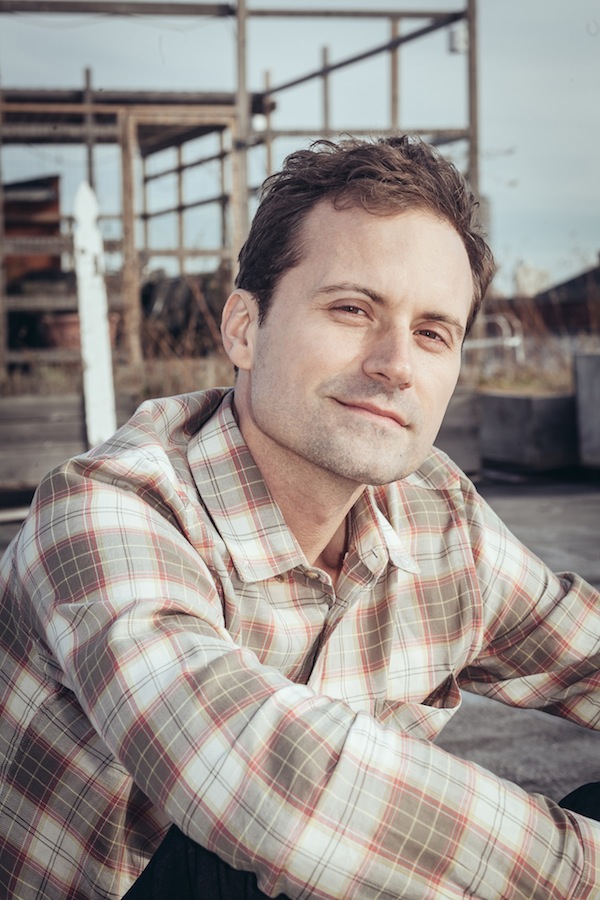
The Vancouver Recital Society hosts London, England-based pianist Ariel Lanyi on March 3. (photo © Kaupo Kikkas)

“Art is there to remind us that there is something bigger and greater than the present moment, something that will remain long after we are gone, which is worthy of our devotion and commitment,” pianist Ariel Lanyi told the Independent in a recent interview. Lanyi will perform an afternoon concert at Vancouver Playhouse March 3.

Hosted by the Vancouver Recital Society, Lanyi will play works by Ludwig van Beethoven (1770-1827), Frédéric Chopin (1810-1849) and Max Reger (1883-1916). In a Facebook post, the London, England-based pianist noted his pleasure at working on Reger’s Variations and Fugue on a Theme by Bach, calling it an “underrated masterpiece of the late-Romantic era” that he couldn’t wait to bring to the stage in 2024.

“Max Reger had a problem: writing fugues was too easy for him. He could jot down fugues with the same ease that Picasso could scribble drawings. Hence, his music sometimes falls into a trap of gratuitous polyphony. However, when he put his heart and soul into a work, as he did with the Bach Variations (which he considered to be his finest work), the result is worthwhile,” Lanyi explained to the Independent. “We hear a multitude of styles in this work – at times, we hear the world of Brahms and his traditional harmonic language; at times, we enter the post-Wagnerian sphere, and we even get a glimpse of more decadent music that was yet to be written. Still, it hangs together organically, and comes to a rousing ending, as all threads convene and the piano truly emulates the sound of the organ. 

“The reason this work is underrated and underplayed is quite obvious,” he added. “People tend to avoid Reger, and it takes a Herculean effort to learn this work. However, I earnestly believe that it is a masterpiece of piano literature.”

Last spring, Lanyi was awarded the Prix Serdang, which is given to young pianists at the beginning of their careers who excel in musicianship and artistic vision. The head of the selection panel, Austrian pianist Rudolf Buchbinder, said of Lanyi: “His playing is precise, nuanced and virtuosic, but he is no superficial virtuoso. What sets him apart is his ability to delve deeply into the music and to establish a connection with it. He doesn’t simply play the notes, he lives the music, seeks to capture its essence, and reflects it with extraordinary intensity, sensibility and expressive maturity.”

If one reads Lanyi’s posts and blogs, one gets a hint of the research that he puts into his performances, which have garnered critical acclaim. In addition to the Prix Serdang, Lanyi won third prize at the 2021 Leeds International Piano Competition. Also in 2021, he was a prize winner in the inaugural Young Classical Artists Trust (London, England) and Concert Artists Guild (New York) International Auditions, as well as being a finalist in the Arthur Rubinstein International Piano Master Competition. Other honours for the 26-year-old pianist include first prize at the 2018 Grand Prix Animato Competition in Paris and first prize in the 2017 Dudley International Piano Competition in the United Kingdom.

Born in Jerusalem, Lanyi studied piano at the Conservatory of the Jerusalem Academy of Music and Dance and moved to London in 2015 to study at the Royal Academy of Music. He remained in the city after graduating in 2021. Last month, he was among those selected by the Royal Academy for a 2023-2024 associate honour, which will be conferred in April: the award recognizes former students who have made “significant contributions to the musical landscape.”

Lanyi has performed around the world, both as a soloist on his own and with orchestras, and as a chamber musician. When he plays concertos or chamber music, he said of his preparation, “I always make sure to study the full score, in order to grasp the music from all points of view, not just through the prism of my individual part. When playing alone, obviously, this doesn’t apply.”

Among the highlights listed on Lanyi’s website for this season is the VRS concert next month. In 2021, during COVID, the recital society shared Lanyi’s Virtually VRS recorded performance on its YouTube channel. The March concert will be his live debut in Canada. In addition to the Reger composition, it will feature Beethhoven’s Sonata No. 30 in E Major, Op. 109; Chopin’s Mazurkas, Op. 59; and Chopin’s Polonaise-Fantaisie in A-flat major, Op. 61.

“Beethoven’s Sonata Op. 109 is a work that has been in my repertoire for quite awhile,” Lanyi told the Independent. “It was the first of the late Beethoven sonatas I worked on as a teenager, so coming back to it now feels enormously gratifying, as my idea of it has evolved in the years since. (It is also, if I remember correctly, the first work for piano to have ever moved me to tears.) The first two movements are concise and contrasting – from the relative serenity of the first movement to the fearful obsessiveness of the second. The third movement begins and ends with a hymn of gratitude and, in between, we are taken on a comprehensive journey through six distinct variations, each inhabiting its own world, deviating from the theme in the most fascinating ways while retaining the same epicentral connection to it.

“The two Chopin works in this program – the Op. 59 Mazurkas and the Polonaise-Fantaisie, Op. 61 – both stem from the composer’s late period, which is characterized by harmonic and structural exploration we seldom find in his earlier works. The mazurkas are elegant and poignant at the same time – in the midst of mellifluous music, Chopin finds ways to express intense distress with bold, dissonant harmonies, often left exposed. The Polonaise-Fantaisie is among his most symphonic works, I find. He never wrote any symphonies and, in my view, some of the late works make up for that by using the piano orchestrally. In the slow middle section of the Polonaise-Fantaisie, we almost hear a foretelling of Bruckner in the long, interwoven lines, which lead to the most unexpected places.”

Lanyi said he doesn’t have any specific formula for choosing performance repertoire.

“Usually, I have an idea of one or two central works I want to include in a program, and look for works which will complement them in a balanced way,” he said. “In the case of this program, the Reger has been on my mind for many years, so I was looking to combine it with works which aren’t as heavy.”

Lanyi’s March 3 performance takes place at 3 p.m. and is followed by a talkback. For tickets, visit vanrecital.com/concert/ariel-lanyi-2. 

2024 public speaking contest

The Jewish Federation of Greater Vancouver’s Public Speaking Contest has been happening annually in Vancouver since 1989 and is open to students in grades 4 to 7. The registration deadline for this year’s event – which takes place March 7, 7 p.m., at the Jewish Community Centre of Greater Vancouver – is Feb. 26.

For the contest, students are asked to prepare a speech of three minutes or less, choosing from a variety of topics connected to Judaism and Israel. Speeches are delivered on the evening of the contest in front of an audience, with two judges who assess the speeches based on content and presentation. 

Prizes are awarded to the top three speeches in each age group. While there are winners in every section, participation is valued above everything else, and all participants receive a prize and a certificate. 

Those students who are Hebrew-speaking or interested in the Hebrew language are encouraged to deliver their speech in Hebrew. Hebrew speeches have their own grouping and are judged on effort and content, not on their level of Hebrew fluency. 

The contest is a great learning experience, good preparation for bar or bat mitzvah, and a skill increasingly needed in our present political climate. For a flavour of the contest, there is a film on YouTube, posted by Larry Barzelai, which was commissioned for the 13th anniversary of the contest in 2018. Barzelai established the contest in memory of his father, a few years after his brother established one in Hamilton, Ont. (See jewishindependent.ca/young-speakers-deliver.)

The topics for the Public Speaking Contest are:

1. Talk about one person from either Tanach or the Talmud and highlight one important life lesson we can learn from them.

2. What makes a piece of art or music Jewish? Is it Jewish just because the person who created it is Jewish or does it have to have something Jewish embedded into it (i.e. a Jewish symbol, tradition or value)?

3. If you were to create a TikTok highlighting the Vancouver Jewish community what would it be about?

4. There are many different ways for Israelis to serve their country. Select one way Israelis do this and discuss why it is important to the country.

5. What is in a name? Talk about your name, what it means and why your parents chose that name.

6. We all have experience where we are the only or one of the only Jewish people. Talk about what it is like to be the only or one of the only Jews in your school, in one of your afterschool activities or at camp.

7. You are planning a trip to Israel. Name one place in Israel that you would like to visit and explain why you would like to visit that place.

8. Rambam (Maimonides), in his eight levels of tzedakah, says the highest form of giving is to enable someone to support themselves. Why do you think this is the highest form of tzedakah?

9. We have a continuing concern about climate change and the environment. What does the Torah say about caring for the land and how can we integrate Jewish values with environmental protection?

10. Topic of your choice.

For more information about the contest, contact Lissa Weinberger at lweinberger@jewishvancouver.com. To register, visit jewishvancouver.com/psc2024. 

– From jewishvancouver.com

Show Your Heart

Natalie Portman, Evan Goldberg and Seth Rogen (photos from Variety)

On Feb. 25, 1-5:30 p.m., the 58th annual Variety Show of Hearts Telethon will be broadcast on Global BC. The fundraising event will feature celebrity guests, including appearances by Natalie Portman, Evan Goldberg, Seth Rogen and others, as well as musical performances by renowned artists. Viewers will hear directly from the children and families that have been supported by Variety and the impacts the organization has had on their lives.

“Variety is committed to stepping in for families who need urgent support and specialized care when there is nowhere else to turn,” said Andrea Tang, chief executive officer of Variety BC. “The essential programs, services and resources made possible by our generous donors not only transform daily realities for children – they change the trajectory of their future and positively affect entire communities across the province.”

Every donation made during the Variety Show of Hearts campaign will be matched, allowing donors to make twice the impact in a child’s life. Donors who join Variety’s monthly giving program or make a one-time donation of $169 or more will receive a limited-edition poster of Robert Bateman’s “Northern Reflections – Loon Family.” This artwork was commissioned in 1981 by the Government of Canada as a gift for HRH the Prince of Wales (now King Charles III) on his wedding.

To donate, visit variety.bc.ca or call 310-KIDS (5437) toll-free. To make an automatic $25 donation, text the word KIDS to 45678.

A full list of Variety Show of Hearts guests and performers can be found online at variety.bc.ca.

– Courtesy Variety