Premier hears concerns

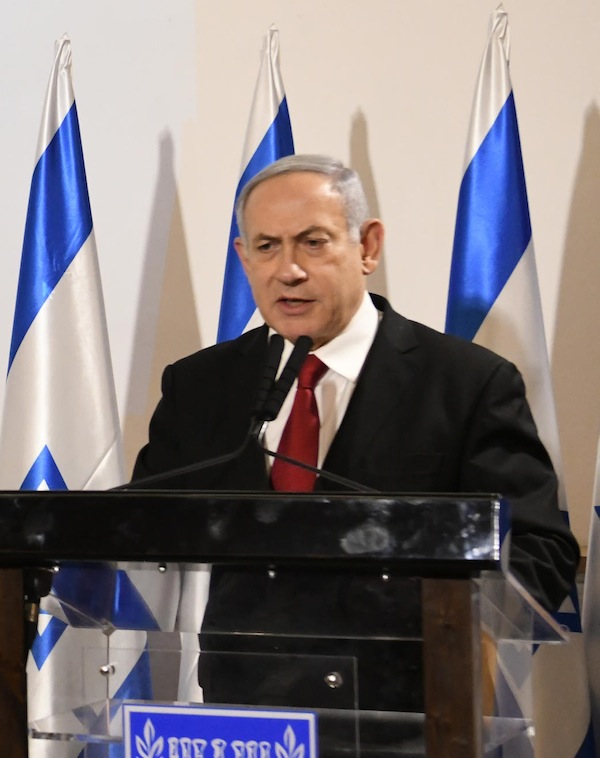
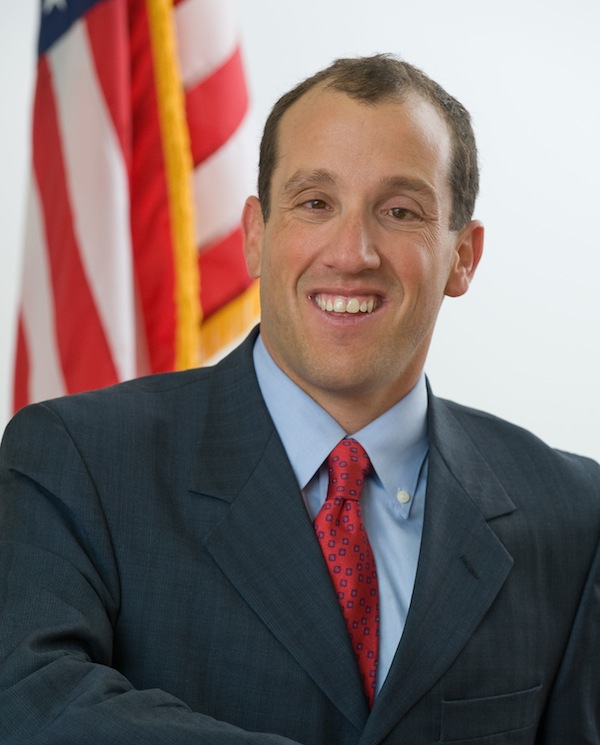
Premier David Eby announces on Nov. 15, 2023, that the province is taking action against hate-motivated violence in British Columbia by supporting community organizations throughout the province and by providing resources to individuals. (photo from Province of BC / flickr)

Jewish community leaders met with BC Premier David Eby March 8 in what participants describe as an emotional, intense and frank dialogue around antisemitism in British Columbia and the added impact of the loss of the community’s most prominent voice in government, Selina Robinson.

The meeting was convened by the Rabbinical Association of Vancouver and seven speakers from the Jewish community shared their experiences around antisemitism with the premier and three of his staff. Rabbi Jonathan Infeld, head of the rabbinical association, spoke, as did Ezra Shanken, chief executive officer of the Jewish Federation of Greater Vancouver, and others about incidents in the public school system, the post-secondary sector, healthcare, the legal profession, unions and the public sector.

“The general vibe was one of significant sadness, particularly around Selina’s departure from the NDP caucus and from cabinet, but also around just an array of examples of antisemitic activities in British Columbia that have been experienced by community members,” Eby told the Independent.

Even Jewish participants said that hearing the numerous personal encounters with antisemitism shared by various participants was emotionally taxing. Speakers conveyed not only their firsthand experiences but advised the premier and his staff on a range of incidents reported by civil servants and by students and families in public schools.

Among many examples drawn from the Vancouver school district alone, there was a teacher on call who asked if there were any Jews in the class. When two students self-identified, the teacher asked them to explain to the class, on the spot, what Israel was doing. In a Grade 9 science class, a teacher called Jews genocidal murderers. There have been multiple incidences of antisemitic graffiti, including swastikas and SS symbols, as well as students yelling “Heil Hitler” in hallways. Some teachers are wearing or displaying symbols indicating allegiance with a side in the conflict, such as wearing keffiyehs or displaying Palestinian flags in their classrooms. An elementary teacher made derogatory comments about Israel and Jews and, when a student complained, the student was made to sit in the hallway. A student overheard another student say “Allahu akbar, Hamas for life!” – when she told the principal, she was accused of calling the other student a terrorist. A librarian asked students: “What do you think about what is happening in Gaza?” One student said, “They’re doing what they did here to the Indigenous people” and another said, “They’re killing a lot of babies” and the instructor said “That’s right! It’s genocide!”

According to incident reports from civil service employees, a hostile atmosphere for Jews exists in many segments of the public service, with one-sided expressions of support for Palestinians being demonstrated in online meetings, on government bulletin boards and in staff meetings. One public employee was asked not to wear their Star of David necklace in meetings “as it may make my colleagues of colour uncomfortable because it is a symbol of genocide.”

Participants in the Jewish community meeting took particular exception to Eby’s statement in the Legislature denying systemic antisemitism and contended that a litany of examples from the public service refutes his assessment.

“It was extremely important that the premier heard what various leaders of the Jewish community had to say,” Infeld told the Independent after the meeting. “We are at a precarious moment in Jewish history in the province and in the country and the premier has let us down in a significant way.

“He seemed somewhat shocked by the degree of antisemitism that people are facing in the province,” the rabbi said. “He knew that there was antisemitism but, as people ran through case-by-case of experiences they know of, or that they experienced, he seemed surprised.”

Eby acknowledged that, after Jewish community members spoke, it did not seem appropriate to say, “Let me present to you this list of things [that we’re prepared to do],” noting that such a response would have “almost trivialized the emotion in the room and where everybody was at.”

“The next steps are about us working together,” the premier told the Independent. At the same time, he said, “I made a couple of commitments in the room.”

These included, said Eby, working together to weed out antisemitism anywhere it is identified in the province, including in government, and assisting with the “overwhelming security costs that have been incurred by the community.”

The premier admitted a reflexive response to Robinson’s allegations that the government has not adequately responded to antisemitism.

“I have to admit, my first instinct is to say, we have,” said Eby. “We’ve done these pieces around mandatory Holocaust education, around the Crown counsel definition of hate crimes, being present with the community in key moments. 

“But, on reflection, here is someone who has the lived experience of being a person who has relatives in Israel that were called up to military service, that she knows through family and friends who died in the Oct. 7 attacks, and she hears every day from people in the Jewish community about the anxiety and the fear of the rise of antisemitism that we’ve seen following those attacks, across Canada and certainly in British Columbia, and so is it really up to me to tell her that we have done everything we can? So, instead, my response was, this is a time for me to reflect.”

Shanken said the meeting highlighted the seriousness of the issue. 

“I’ve heard stories about people’s interaction with antisemitism and Jew-hatred within our province, but to hear it all together in one room, one speaker after another, it was really stomach-churning,” Shanken said. “I think the premier listened, I think his staff listened, so I do believe that people realize how serious this problem really is.”

On the issue of Robinson’s removal from cabinet, Shanken said, the premier has work to do.

“We need to be addressing the double standard that existed with Selina Robinson, there’s no doubt about that,” he said. “But we also need to be addressing the issues that people are facing.… We rely upon him to really set that tone for our community and for all the communities of British Columbia.” 

New face in BC media

There was a ceremonial handing over of a goat when Spencer Hall, left, bought the Rocky Mountain Goat newspaper from Laura Keil, who founded the paper in 2010. The goat, Buddy, was loaned for the occasion by Amanda Cameron. (photo by Sharon Ireland)

Small towns can get a bad rap. Valemount – a community of just over 1,000 people, tucked into the mountains about 300 kilometres northeast of Kamloops – has proved a pleasant surprise to Spencer Hall.

Hall, a 26-year-old Jewish trans man, has not only found fellow Jews in the tiny town but also nothing except positive responses to his trans identity. And it’s not like Hall is keeping a low profile – he just bought the community newspaper.

The Rocky Mountain Goat was founded in 2010 by Laura Keil, who sold it to Hall officially on Jan. 8 this year. Hall had been serving as a reporter there since the previous autumn. The market for the weekly paper is the sprawling Robson Valley region, which includes not just Valemount, but McBride, Dunster, Blue River, Dome Creek and Crescent Spur. Free copies are also distributed in Blue River and Prince George and in Jasper, Alta. 

photo - Spencer Hall is the new publisher of the Rocky Mountain Goat newspaper, which is based in Valemount, BC
Spencer Hall is the new publisher of the Rocky Mountain Goat newspaper, which is based in Valemount, BC. (photo from Rocky Mountain Goat)

Hall grew up in Terrace, studied broadcast journalism at the BC Institute of Technology and then got a job at a radio station in Fort St. John. The job was one of those on-location gigs, where a station broadcasts live from community events.

“But it was during COVID, so I was going to people’s garage sales,” Hall said with a laugh. “The softest possible start to journalism, I guess.”

He moved up the ranks there before being hired as a reporter in Valemount.

The Goat – the quirky name was one of the draws that attracted Hall – is an independent newspaper and the fate of print journalism in the internet age was a consideration before Hall bought the business. However, on a webinar with local journalism professionals, Hall found he is not the only one to have entered the publishing field recently.

His paper, and many others, are getting support from the LJI – Local Journalism Initiative – a federal program that funds salaries for newspapers to hire reporters. The stories they produce are then shared across a network of participating outlets, sort of like Canadian Press or other newswires, Hall said.

“It allows people to bolster their coverage without having to take the financial burdens on,” he said. If a story published in the Goat is relevant to a paper elsewhere in the province or the country, they can run it.

Among locals, the reaction to Hall’s purchase of the paper has been one of relief.

“It was for sale for a couple of years,” he said. People were afraid that it might get snapped up by a corporate conglomerate or, worse, shut down. “Most people that I’ve talked to, they say, thank goodness.”

Some people have even said they moved to the community because it has its own independent paper, which is both an expression of support and a heavy burden to carry as head of a small team of editorial, sales and production staff.

Another happy surprise is that stereotypes about young people abandoning print media (if not news itself) have proven incorrect, based on Hall’s experience.

“It’s also interesting to see how many young people come into the office and say I love reading the paper every week,” he said. “I say, really? You’re 15.”

Hall thinks the accepted wisdom that “print is dead” is itself an antiquated assumption. 

“There is an appetite, especially in our market, for people who don’t really want to participate in the 24-hour news cycle of social media and that’s why they find value in the paper,” said Hall.

For all his optimism, Hall is not expecting to get rich.

“I knew I wasn’t going to make money,” he said. “I’m hoping I can make a living. But I view what I do as a public service. It’s something that’s very much needed, especially in today’s climate, and that’s kind of the main reason I did it. I hope that I break even but, if I don’t, it is what it is, I tried.”

As an individual fitting into a new community, Hall has been warmly welcomed. A tiny group of Jews get together to celebrate holidays and his transgender identity was right out there when he did a routine addressing it during a fundraising event.

“We were trying to get a mountain bike pump track installed and I did some stand-up comedy and mine was about being trans and [the response] was overwhelmingly positive,” he said. “Everyone’s been super, super supportive.”

Valemount has a rainbow crosswalk, he noted with a laugh, and a Pride society – not what some big city-dwellers might expect from a remote town.

“I think how we view small towns, especially ones the size of Valemount, isn’t necessarily how they are,” he said. “I think there is the expectation that, because it’s a small town, there’s going to be a lot of ignorance, but people are pretty well informed and with the times here.”

The region is a draw for outdoorsy folks.

“It is surrounded by mountains and on the way to Mount Robson, so we do get quite a few tourists,” Hall said. “It’s actually a resort municipality. There’s a lot of mountain biking and getting into the backcountry … snowmobiling or mountain-biking. Also, we are very blessed to be right in the mountains, so anytime anybody wants to see the mountains, Valemount is the place.”

To check out the newspaper, visit therockymountaingoat.com. 

King David head retires soon

King David High School principal Russ Klein at the school’s 2023 Golden Thread Gala fundraiser. About to retire, this year’s event will celebrate his 16 years of service. (photo from  KDHS)

Russ Klein stepped into the role of head of school at King David High School for a two-year temporary stopgap when Perry Seidelman retired in 2008. This June, he retires after 16 years at the helm.

“This job has just been a gift,” Klein said, before clarifying: “It hasn’t been a job.”

Klein was a vice-principal at Prince of Wales Secondary, in the Vancouver public school system, and was on track to become a principal when the position at KDHS opened. One of the teachers at PW was on the search committee to hire the new King David head of school and asked Klein – hounded might be a more appropriate term – to consider the role.

“I told him a number of times, using choice language, what I thought of that idea,” Klein recounted recently in his corner office at the school.

Finally, Klein consented to meet the search committee’s director, who convinced him to tour the school. He was suddenly interested.

Klein’s superiors at the Vancouver School Board thought a two-year stint as principal at an independent school would be good experience before returning to the public system, and a deal was struck.

“I thought I was in and out,” he said. “I thought I was coming because they needed someone. They knew I had a two-year contract. That’s what I signed.”

The King David experience, though, changed his life.

“When the Vancouver School Board invited me back to be a principal at one of our local Vancouver schools, I had to think long and hard about it and I realized I didn’t want to leave,” said Klein. “I had joined a community that was so different than anything I had experienced before. 

“In this job, I found a community that I didn’t know I had,” he said. “That was beyond special. I really do think of this job, this position really, as a gift.”

Klein, who was divorced, found not only professional fulfilment at King David, but personal, too. At the school, he met Deborah Youngson, a King David parent, and they have been together for 13 years.

“Deborah is the gift that keeps on giving,” he said. “She is just simply unbelievable. She has managed to help me through the highs and the lows of this job because I could not have done it on my own. Believe it or not, it may be a small school and it may be a small Jewish community, but there’s a lot of pressure that one feels and trying to look like the pressure isn’t impacting you when it really is, is not always so easy. But having a person who understands and is supportive made the biggest difference in the world.”

There are many tangible and intangible measures of success in the education field. The year Klein started, the Grade 8 incoming class had 18 students. This year’s Grade 8 intake was 65. Total school population has risen to 270 from fewer than 140.

“That’s very pleasing for all of us because the whole goal is to provide a Jewish education for as many Jewish students as we can,” he said. “That’s the mission.”

As the only Jewish high school in town, King David has an obligation to reach the widest swath possible, he said.

“We need to be able to provide as much of an education as we can from secular to, let’s say, a more traditional family,” Klein said, noting they use the term pluralistic Jewish school. “We also describe ourselves as a community school. We are open to everyone. We want everyone to be here. We are not a religious school – I will just clarify that with people – but we are a faith-based school.”

Among the advances during Klein’s tenure has been the solidifying of the Judaics department and the requirement for all students to participate in that component. He cites as a point of pride the annual Grade 8 trip to Israel – though global events have hampered that tradition in recent years.

Taking Grade 8s to Israel is rare, he said, as most Jewish schools in North America wait until students are a bit older. Klein thinks getting kids to Israel as early as possible is invaluable.

Dorin Eilon-Heiber, the school’s Hebrew coordinator and Judaic studies teacher, organizes the Israel trip and she and Klein have now accompanied more than 500 students on the journey.

“That’s probably one of the biggest satisfactions I have,” he said, laughing that it’s hardly a vacation. “But it was a privilege.”

The school had previously taken students on Israel trips but when Klein arrived they began taking the Grade 8s.

“It was considered young and we even had pushback here in taking them [at that age],” Klein acknowledged. However, the impact on the students throughout their high school experience is profound, he said. “I would ask [students], why do you come to a Jewish day school? And the kids don’t know. To be honest, many of them know they’re Jewish, [but] they’ve never been to Israel, they don’t know anything about Israel. My goal was to take them in Grade 8, let them fall in love with Israel and – you know how teenagers are, puppy love, etc. You go to Israel in Grade 8 and it is one of the most special moments you have in your life. We take them to meet Israelis, to spend time in Israeli homes and, literally, they fall in love.

“And then they have four more years to understand why they are actually at a Jewish school or why they’re learning Hebrew or why the history that they are learning is meaningful,” he said. “I just think it changes the conversation for them.”

Then worldwide events intervened. COVID prevented the annual excursion in 2020, 2021 and 2022. By 2023, the only students who had been on the school trip to Israel were in Grade 12. “So, last year, we were able to organize with our Israeli sister school, Har Vagai, two trips,” said Klein. “We took one in October with our Grade 10 students and we took one in March with our Grade 11 students, trying to catch up.”

Doing two trips was too stressful on the school and stressful on the Israeli hosts. “So, we decided at that point that this year we would move the trip to Grade 10 because we couldn’t catch up to get back to Grade 8,” he said.

There were plans to take the students just after Pesach this year. “And then, of course, Oct. 7 happened and we’re not going to Israel in Grade 10 this year,” Klein said. The sister school, located just outside the Vancouver partnership community of Kiryat Shemona, in the Galilee Panhandle, is mostly evacuated due to attacks from Hezbollah in southern Lebanon.

“They are all in hotels and other places and it’s a terrible situation,” said Klein. “Dorin and myself and our spouses are heading to Israel in a few weeks and we’re going to visit our sister school, take them our love and presents, and we’re also going to take our alumni in Tel Aviv and Jerusalem out for dinner, offer them our love and support and just say, hey, we’re here with you.”

Klein credits the entire KDHS team for everything he has accomplished over 16 years, but especially for stepping up during COVID.

Managing education during the pandemic may have been easier for independent schools, being able to navigate separate from a massive bureaucracy, said Klein. Within two days of shutting down in March 2020, King David classes were completely online. Unlike public schools, students were back in classes, with extensive protocols, at the beginning of June. 

In addition to the immediate issues of a deadly pandemic, there have been conflicting ideas about vaccines, masks and the broader needs and solutions in dealing with it. Klein credits parents and staff with superb resilience and patience.

There was a loss, though, of some of the social factors. Relationships between school staff and parents were less robust than before the pandemic simply because face-to-face contact was reduced, he said.

COVID has not been the only difficult time. 

“The lows are tragic moments, when alumni passed, parents passed,” he said. “Of course, most recently, with the loss of Ben Mizrachi in Israel at the Nova Music Festival [on Oct. 7]. Those are really hard, especially to try and lead when you are feeling as heartbroken as everybody else. Those lows are pretty clear.”

Klein calls the past 16 years “the most meaningful in my life,” bringing him back into a community he had mostly left behind. 

“I went to Talmud Torah [elementary school], I was part of the Jewish community in Vancouver. I had my bar mitzvah at the Beth Israel and, then, like a lot of people of my generation, I did not participate,” he said. “I went to Israel in my 20s a couple of times, spent time on kibbutzim and had that experience and fell in love with Israel, but I wasn’t living any religious life or any traditional life whatsoever. When I came to the school, my whole life changed, and I had community and that was a gift.”

As for retirement, Klein has planned not to plan.

“Very intentionally, I am not making a plan,” he said. “I’ve got tension and stress that needs to ooze out of me and it’s going to take a period of time for me to get to know myself again in a different way, without being in a position, to be able to feel relaxed and to not worry every time my phone pings.”

When school reconvenes in September, he and Youngson will be on their way to London to board a cruise to Iceland. Beyond that, he has only one commitment.

Klein’s father, Emerich, who passed away last year, was a survivor of Auschwitz.

“I will totally offer my services to VHEC [the Vancouver Holocaust Education Centre] to see if I can do some storytelling for them so I can bring that message,” said Klein. “But that is actually the only thing that I have thought I will definitely want to offer my services for.”

Diane Friedman, co-chair of the King David board, lauds Klein’s 16 years of accomplishments.

“Russ has overseen the transformation of King David into a strong, lively and inclusive Jewish high school,” Friedman said.

She credited Klein, and the King David team during his tenure, with adding an accelerated math and science program, annual school retreats, and an outdoor education program. 

“Russ also built up the Judaics program, making it compulsory for all students with no exceptions – it is who we are – focusing on service and volunteerism,” she said. “Russ recognizes that, while our students’ academic achievements are noteworthy, student achievement is so much more than academic marks.”

Under Klein’s leadership, Friedman noted, King David also became a Canadian Accredited Independent Schools member school, which attests that the institution follows national standards and best practices.

“Russ has been a true guiding light for King David,” she said. “He exemplifies the principles and traditions of Judaism, with a sense of purpose, fairness and kindness. Russ has fostered unity and belonging to a point where the King David community is a family … everyone says so, starting with the students and including staff and families. Russ has an open-door policy and strives to create an environment where every student feels welcome and valued.”

Friedman acknowledged the support the school has received from the Diamond Foundation, which owns the land on which KDHS sits and helped fund renovations and the addition of custom modular units on the campus during Klein’s tenure. 

While Klein is set to retire before the dramatic development of JWest breaks ground – a project that will ultimately see the school move into the new community hub on the site of the Jewish Community Centre of Greater Vancouver – Friedman credits Klein for collaborating on that project to ensure the long-term stability of the school.

“While seeing Russ off to retirement is bittersweet, we are excited for the future of King David and we look forward to welcoming Dr. Seth Goldsweig as our new head of school this summer,” said Friedman.

Klein’s years of service will be the focus of celebration at the Golden Thread Gala May 22. Information and tickets are at goldenthreadgala.com. 

Parade’s story remains relevant

Josh Epstein stars as Leo Frank in Raincity Theatre’s production of Parade, which runs until April 13. (photo by Nicol Spinola)

Raincity Theatre’s production of the musical Parade opened March 21 at 191 Alexander St., a heritage venue in Gastown. It runs until April 13.

The story of Leo Frank, who was kidnapped from the Georgia State Penitentiary by members of the Ku Klux Klan on Aug. 17, 1915, and lynched, might not seem the stuff of musicals. However, playwright Alfred Uhry and Broadway producer Hal Prince saw the potential of reaching new audiences with this important story that had already been told in novels, plays, film and television. With a book by Uhry and music and lyrics by Jason Robert Brown, the Prince-produced show opened on Broadway in 1998 – it won two Tony Awards. In 2023, Parade had a Broadway revival, again winning two Tonys.

Frank’s alleged crime was the rape and murder of a 13-year-old factory worker, Mary Phagan, but his real crime was being Jewish in the American South, which was, at the time, still feeling humiliation and anger over losing the Civil War.

Mary was last seen alive when she came to pick up her wages on the morning of April 26, 1913. Her body was found in the factory basement later that day. Frank was arrested and charged with the crime.

Several factors prevented a just trial, including a district attorney wanting a conviction to support his bid for governor, the antisemitism of a right-wing newspaper publisher, sloppy police work, the withholding of evidence, witness tampering, perjured testimony, and an all-white jury. This was America’s version of France’s Dreyfus Affair.

Frank’s wife, Lucille, lobbied everyone she could to intervene, and prominent newspapermen and others campaigned on Frank’s behalf. Finally, after two years in jail, Frank’s death sentence was reduced to life in prison, but the news was not welcomed by everyone. Mobs stormed the governor’s mansion and the National Guard was called out; martial law was declared. Frank was transferred into protective custody but the lynch mob – some of whom had been jurors in his trial – managed to kidnap and murder him.

“Our production will plunge our guests into the depths of human emotion, amidst the backdrop of a true historical event that still resonates today,” writes director Chris Adams in Raincity Theatre’s press material. “The passion and the tragedy of Leo and Lucille Frank’s story, enveloped in the haunting beauty of Jason Robert Brown’s score, will be simply unforgettable and I hope the undeniable resilience of the human spirit will deeply move audiences.” 

Many Jewish community members are part of the show’s creative team, both on stage and off. Josh Epstein plays Frank. Warren Kimmel, Richard Newman, Stephen Aberle and Erin Aberle-Palm play various roles. Itai Erdal is the lighting designer, Michael Groberman the researcher and Kat Palmer, one of the producers. Rabbi Kylynn Cohen and Cantor Shani Cohen are consultants.

The Jewish Independent interviewed Epstein regarding his role.

JI: How did you get the part of Leo Frank?

JE: I was fortunate. I had it offered to me. I did not have to audition. I was asked to do this a year ago. I said yes immediately. Parade is my favourite piece of musical theatre. I am obsessed with it. I even went down to Seattle years ago to see it when the original Broadway cast toured it and got Jason Robert Brown’s autograph (my favourite composer) on the program, which I still have today. I remember just sitting there being gripped the entire show. The music is so gorgeous. However, it is not your typical Broadway production. 

JI: The director said in an interview that you were born to play this part.

JE: I do feel like it is right for me. I have been waiting a long time to get a chance to play Frank and, when it was offered to me, I grabbed the opportunity. It was offered to me even before Oct. 7 and I knew it was an important role as, even then, there was a very antisemitic YouTube clip being circulated and, as a Jew, it was on the top of my mind with incidents happening and growing, and it is even more relevant today after Oct. 7.

JI: What research did you do to prepare for the role?

JE: I read what I could. The trial is a fascinating story that has everything in it, not just antisemitism but racism and women’s suffrage and children working in factories and people’s attitudes even 50 years after the Civil War is over. The parade was organized to honour the Confederate soldiers and then this explosion comes out of it with a resurgence of the KKK and the formation of the B’nai B’rith Anti-Defamation League. As far as the role goes, it is a deep acting role, but you also have to be able to sing. It has a lot of layers to it. I just read the script over and over to get some sense of the depth of Leo’s character. 

JI: How would you classify the production?

JE: It is dark but there are moments of levity. It is the music that brings you joy. It will be an intense experience. It is such an incredible musical that you get swept away and it soaks into you. It is very visceral. People crave that. You won’t get that experience anywhere else. 

JI: What can you tell us about the space and the cast?

JE: It is a gorgeous, intimate space with the audience close to the action and a really strong cast. The original production had a cast of 40. This one is pared down to 20. It is huge to have 20 people in a 70-seat space – it feels like a giant production yet there still is a sense of intimacy about it. Lucille is the real star in a way as she becomes the driving force behind Leo’s sentencing being reduced and the resurgence of their love.

JI: How has the experience of playing Frank been for you?

JE: This experience has been incredible. Sometimes, I can’t always speak about the experience but I feel it. When I am in the show, I trust it, the material is great. I don’t have to come up with any tricks or think of the next joke or push the drama, I just stay present in the scene and give my version of what Leo is going through. 

JI: Why should people come and see it?

JE: People love true crime stories and it is one of the most interesting cases in history, still talked about today. The production takes everything interesting about the case and puts it to the most gorgeous music you will ever hear.

JI: What would you like to have the audience take away from the production?

JE: They don’t have to take any theatrical thing away. Just come and watch. The story is there. It is a true story. They should just come, watch and feel.

For more information and tickets, visit raincitytheatre.com. 

Tova Kornfeld is a Vancouver freelance writer and lawyer.

Songs released since Oct. 7 

At Beth Tikvah Synagogue on April 2, Israeli music expert and radio personality Josh Shron will present A Musical Hug from Israel. (photo from Josh Shron)

Beth Tikvah Synagogue in Richmond welcomes Israeli music expert and radio personality Josh Shron on April 2. Shron, longtime host of the radio show and podcast Israel Hour Radio, will be in Calgary and Vancouver as part of a North American tour. He will present A Musical Hug from Israel, which explores songs that have been released in Israel since Oct. 7.

For Shron, Israeli music has always meant more than just nice tunes in Hebrew. It’s been a window into Israeli society, providing a meaningful glimpse into the heart and soul of the Jewish state. “I’ve long believed that Israeli music has the power to connect us to our homeland unlike anything else,” Shron said. “The songs are great, but the stories behind them often teach us a great deal about the amazing spirit of Israel.”

It’s that amazing spirit that has enabled Israelis to cope with the horrific events of Oct.7.  Music has been a large part of the healing process.

“The music that’s emerged from this tragedy has been nothing short of inspirational,” said Shron. “It makes us cry, makes us sigh and makes us proud to be supporters of Israel – sometimes all in the same song.”

The presentation will feature a selection of Israeli songs, seen on video with English subtitles. The music will highlight the unity, optimism and determination that have characterized the Israeli people throughout this challenging period, showcasing the resilience and strength that unite them in the face of adversity. The repertoire will include songs that touch on themes of sadness and death. Other songs will shed light on the plight of Israeli hostages in Gaza, serving as a reminder of the desperation felt around the world to bring them all home.

Several Vancouverites have previewed Shron’s presentation and agree that it is a powerful and unique way for the local community to understand the rollercoaster of emotions that Israelis and other Jews around the world have been experiencing.

A former resident of New Jersey, Shron recently fulfilled a lifelong dream by making aliyah with his wife and four of his five children, moving to Modi’in in August 2023.

“I’ve immersed myself in Israeli music for more than 25 years,” he said, “and the more I listened, the more I felt like I belonged there. We put it off for years, but, with our kids getting older, we realized it’s now or never – and we weren’t prepared to say never. Obviously, we wish the circumstances were different, but, during this challenging time, it just feels right to be there. It’s only been a few months, but we can’t imagine living anywhere else.”

Thanks to sponsor support from the Kehila Society, Richmond Jewish Day School and the Vancouver Israeli Folkdance Society, tickets to A Musical Hug at Beth Tikvah April 2, 7 p.m., are only $10 each. As part of the event, Hadas Klinger will lead an Israeli dance session immediately following Shron’s presentation.

The event is for adults 19+ and registration is recommended, as space is limited. Visit tinyurl.com/28anpjab. 

– Courtesy Beth Tikvah

Movies that offer optimism

Stay With Us (still from the film)

Healing. Of body and soul. Of self, community, family, friends. This year’s Vancouver Jewish Film Festival offers many poignant films – dramas sprinkled with humour that invite contemplation, and hope that we flawed humans are capable of change and loving one another, despite our insecurities and differences.

Of the films the Jewish Independent reviewed this week, Stay With Us and Rose are among the films that will be screened at Fifth Avenue Cinemas in the main portion of the festival, April 4-12, which is followed by various screenings at the Rothstein Theatre April 13-14. No Name Restaurant will be both at Fifth Avenue, as well as online during that portion of the festival, which runs April 15-19.

Stay With Us is a sensitively written and well-performed movie that is based on Moroccan-born Canadian comedian Gad Elmaleh’s real-life fascination with the Virgin Mary. In the movie, he returns to Paris to visit his family, not sharing with them that he is in the process of converting to Catholicism. Perhaps because he’s dealing with his own actual emotional journey (though he co-wrote the script with Benjamin Charbit), Stay With Us delicately and thoughtfully explores some of the roles religion has in life and the effects a potential conversion can have on a family. 

Despite being an immensely personal film – Elmaleh’s real parents and sister play his family in the film and most of the cast are people close to him – Stay With Us will resonate with anyone who has questioned their purpose in life, or been curious about other religions and cultures. Elmaleh doesn’t disparage religion or the religious. Thankfully, he chooses to tackle the subject seriously, with well-timed comedy, his own stand-up act as part of the story, as well as other natural-seeming, unforced funny moments – the reaction of his parents when they find a statue of the Virgin Mary in his suitcase is hilarious, for example.

The movie Rose is similarly satisfying – serious but also light and amusing. In the first minutes, set at Philippe’s rocking, festive, friend-filled 80th birthday party, we learn that Rose and Philippe are still madly in love after decades of marriage, that their three adult children each have their own personal challenges and rivalries (between themselves and for their parents’ affection), and that Philippe is fatally ill.

Understandably, after Rose loses the love of her life, she grieves. Her children worry that she doesn’t answer the phone, that she’s not taking care of herself. When 78-year-old Rose does start to take care of herself, to focus on her needs, to rediscover herself after years of being a wife, mother and grandmother, her children worry even more.

image - a still from the film Rose
Rose (still from the film)

Written by Aurélie Saada and Yaël Langmann, Rose is a charming, heartwarming film about how we choose to experience life, its happy, sad and other moments – and how it’s never too late to find joy. Saada is the film’s director, and she also composed original music for the film, which has a notably wonderful soundtrack. The movie is infused with her Tunisian Jewish background.

“It was important for me to put my first film in this setting because I didn’t want to cheat,” Saada says in the press material. “I wanted this film to resemble me and not to borrow anything from cultures that I hadn’t sufficiently mastered. Also, Eastern Judaism is often caricatured in French cinema. I wanted to show its more complex face, far from the clichés. But it remains a setting, a costume, a perfume because the heart of the subject is not there. This film may be imbued with Judeo-Eastern culture, but a friend of mine from Corsica, a Christian, told me a short while ago: ‘It’s crazy, it’s like home.’ I believe that we humans are much more alike than we imagine.”

This notion pretty much encapsulates the film No Name Restaurant as well. Written and directed by Stefan Sarazin and Peter Keller, the idea for the story apparently came from Sarazin’s “numerous travels to the Middle East” and was “inspired by an abandoned boat in the desert and the friendship to an elderly Bedouin.”

Ben, an ultra-Orthodox Jew from Brooklyn, has yet to marry. Within hours of arriving in Jerusalem, both to visit family but mostly to meet the matchmaker – who he purposefully misses by taking his time to get to his uncle’s shop from the airport – Ben eagerly agrees to Uncle Yechiel’s request to head right back to the airport to catch a flight to Egypt.

image - still from the film No Name Restaurant
No Name Restaurant (still from the film)

The Jewish community of Alexandria, the president of which is Yechiel’s brother-in-law, needs a 10th man to form a minyan before Passover. If they can’t observe the holiday, according to some written agreement, all the community’s property and possessions will have to be turned over to the state.

Ben seizes the chance to save the ages-old synagogue, but misses his plane and then is kicked off the bus to Alexandria by fellow passengers, putting the whole plan in jeopardy. Luckily, he is picked up in the Sinai Desert by Adel, a Bedouin searching for his lost camel. Unluckily, Adel’s truck breaks down and the two men must head out on foot. Short on water – much of which had been used by Ben for ritual handwashings along the way – and going only on Adel’s memory of a well his family had frequented when he was a kid, the journey is fraught with existential concerns, including what other Arabs might do to a Jew in their midst and to the Bedouin who is helping him.

No Name Restaurant is a buddy movie that delivers all that one would expect from such a movie and more. With respect and humour, it brings together Jews, Muslims and Christians in a novel way to optimistic effect. 

For the full Vancouver Jewish Film Festival lineup, go to vjff.org.

Art as an anchor amid chaos

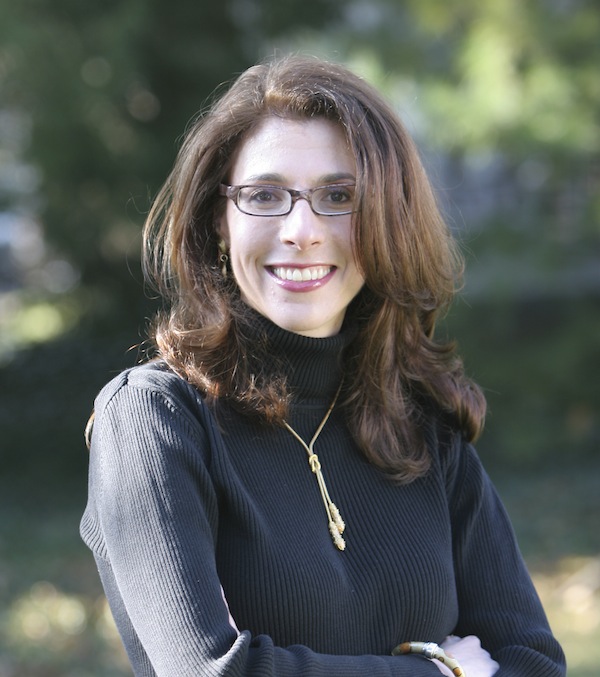
Lisa Wolfin, executive director and founder of Art Vancouver International Art Fair, which is at the Vancouver Convention Centre East April 11-14. (photo from Art Vancouver)

“Art serves as a vital anchor amidst the chaos of the world, both as a creator and a viewer,” said Lisa Wolfin, executive director and founder of Art Vancouver International Art Fair, which returns to the Vancouver Convention Centre East April 11-14.

“As a creator, it offers a therapeutic outlet to process complex emotions, providing a medium through which to express, reflect and make sense of the turbulence surrounding us,” she told the Independent, saying that, no matter the form of artistic expression, she finds solace in the act of creation, in addition to beauty and meaning.

“As a viewer,” she said, “art serves as a sanctuary, offering moments of escape and contemplation. It provides a lens through which to interpret and understand the world, offering insights, perspectives and opportunities for introspection. In both roles, art becomes a source of comfort, inspiration and resilience, offering a sense of connection and grounding amidst the uncertainty of our times.”

Wolfin and her daughters, Taisha Teal and Sky Lilah, who are also part of the Art Vancouver team, are among the Jewish community members participating in the annual art fair that drew more than 11,000 attendees last year. This April’s event is the eighth edition of the exhibit, which includes workshops, live demonstrations, a range of conversations, and is an opportunity for creatives to network and collaborate.

Wolfin is most looking forward to the sense of community and connection that Art Vancouver brings. “I’m eager to be a part of that vibrant atmosphere once again,” she said.

photo - Taisha Teal
Taisha Teal (photo from Art Vancouver)

Teal echoes that sentiment.

“I’m particularly excited about showcasing my art to a diverse audience of art enthusiasts and collectors,” said Teal. “Connecting with fellow artists, sharing insights and drawing inspiration from their work is another aspect I’m looking forward to. This event also provides a unique opportunity to engage with artists and galleries from around the world…. Moreover, I’m eager to receive feedback from attendees and potential buyers, which will contribute to my growth as an artist and refine my artistic practice.”

Lilah is looking forward to two main things: what she will create for the exhibit – “it is always a surprise,” she said – and, she shared, “Additionally, there’s immense enthusiasm surrounding hosting the opening night! Welcoming everyone to Art Vancouver is a true privilege, and having a significant role at the show is an honour.”

Art Vancouver, which was established in 2015, has been held annually, with the exception of the first two years of COVID.

“During the pandemic, I dedicated time to exploring new artistic styles,” said Teal. “Over the past couple of years, I’ve blended several styles together, continually evolving my approach. For instance, my ‘sparkle ladies’ series has undergone transformations with each passing year, featuring diverse female figures and introducing abstract faces. I particularly enjoy experimenting with abstract shapes and colours, and my upcoming collection will focus on incorporating textured elements using molding paste and various tools.”

photo - Sky Lilah
Sky Lilah (photo from Art Vancouver)

Following the pandemic, Lilah curated her inaugural solo art exhibition, unveiling a series of abstracts for the first time. “Instead of merely attempting to depict something, I sought to channel the divine through my creative process, crafting unique works of art that had never been realized before – pieces that were distinctly mine,” she said.

“Over the years, I’ve persisted in exploring abstract styles, seamlessly blending them with my previous series,” she added. “I’m currently amalgamating elements from several series, combining the favourite aspects of each into a cohesive whole. While I continually experiment with new styles, I often layer them upon the foundations of styles with which I am familiar – an ongoing ebb and flow of artistic exploration.”

Wolfin, too, has spent time developing and refining her existing style and techniques, while venturing into different areas. “This has allowed me to push the boundaries of my creativity and explore new avenues of expression,” she said, noting that her work is inspired by many sources, “including nature, emotions, personal experiences.”

“I find inspiration in the beauty of the natural world, the complexities of human emotions and the stories of people and cultures,” said Wolfin. “Each of these influences shapes my creative process and fuels my desire to express myself through art.”

Teal also has a deep love for nature – “Whether it’s the patterns in a leaf, the colours of a sunset or the textures of a rock formation, nature constantly offers fresh ideas and motifs that find their way into my artwork” – and points to multiple sources of creativity.

“Firstly, the diverse cultures, landscapes and experiences I encounter during my travels serve as a constant wellspring of inspiration,” said Teal. “Each new destination offers unique perspectives, colours, textures and stories that influence my artistic vision.

“Secondly, connecting with other artists allows me to exchange ideas, techniques and perspectives, fueling my creativity and pushing me to explore new artistic territories. Collaboration and dialogue with fellow creatives foster a sense of community and shared creativity that invigorates my artistic practice.”

image - “A Thousand Expressions” by Taisha Teal
“A Thousand Expressions” by Taisha Teal.

Teal added that her “passion for experimentation with new materials adds another dimension.”

“Exploring unconventional materials and techniques challenges me to think outside the box and pushes the boundaries of my artistic expression,” she said.

“Art serves as a profound means of expression for me,” said Teal. “As a creator, it allows me to channel my emotions and immerse myself completely in the process. I infuse my art with love and happiness, aiming to evoke those feelings in my viewers. In a world filled with chaos, art becomes my sanctuary, a place where I find solace and peace. My intention as an artist is to spark positive emotions and inspire others with each brushstroke, inviting viewers to explore their own creativity and embrace the beauty within themselves.”

For Lilah, art embodies her very existence. “I’ve never known a life without it,” she said. “It serves as a means of creative expression, a harmonizing force for the diverse aspects of my personality and an invitation to embrace play, structure, freedom, love and acceptance.

image - a portrait by Sky Lilah
A portrait by Sky Lilah. (photo from Art Vancouver)

“Through art, I learn valuable skills and life lessons, such as time management (as artistic endeavours require dedication), self-love (recognizing that my efforts are ‘good enough’) and the importance of experimentation. It teaches me that we don’t know the result before it happens, and that you have to start in order to get to the end. For my work, I rarely know what I’m going to paint before I start painting, I discover it on the canvas, and that is a life lesson for my role in business as well – when hosting a new event, I won’t have all the answers before. I simply just need to start.”

Transformations in her life and the “opportunity to explore diverse cultures, languages and symbols sparks a fire of creativity,” Lilah said, adding that she tries, in her art, to “communicate a message that embodies inner strength, love, exploration, confidence, authenticity and kindness,” creating works “in an abstract, pop art manner to challenge mainstream thinking.” 

Art Vancouver opens April 11, 7 p.m., and runs April 12, 1-9 p.m.; April 13, noon-9 p.m.; and April 14, 11 a.m.-5 p.m. For tickets and more information, visit artvancouver.net. 

Sasha Velour speaks April 18

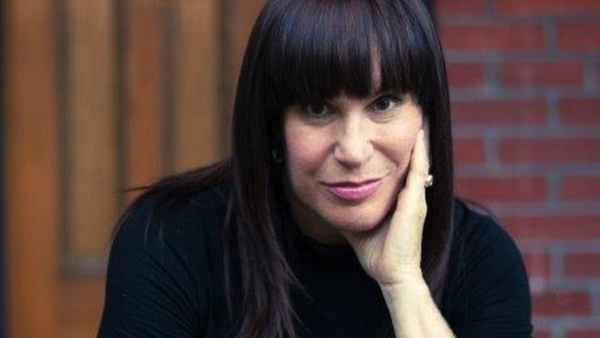
Jewish drag queen, visual artist, speaker, illustrator and author Sasha Velour. (photo from UBC)

The 2024 Phil Lind Initiative speaker series concludes on April 18 with Jewish drag queen, visual artist, speaker, illustrator and author Sasha Velour, winner of the ninth season of RuPaul’s Drag Race and a co-host of the current season of HBO’s We’re Here. Velour will give a talk titled The Big Reveal: Why Drag Matters. Exploring the intersections of pop politics and pop culture, she will delve into the roots of drag, its historical significance in queer culture and its evolution into a politically charged art form. “Drag embodies the queer possibility that exists within each of us, the infinite ways in which gender, good taste and art can be lived,” she said.

The Phil Lind Initiative is hosted by the School of Public Policy and Global Affairs in the faculty of arts at the University of British Columbia. The initiative’s mandate is to invite prominent US scholars, writers and intellectuals to UBC to share ideas on some of the most urgent issues of our time.

Velour’s talk takes place April 18, 6 p.m., at the Chan Centre for the Performing Arts. Tickets are free (maximum two per order), but registration is required. Audience members can attend in person or watch online via livestream. You do not need a ticket but you do need to sign up for the Phil Lind Initiative email list. For full details, go to lindinitiative.ubc.ca.

– Courtesy University of British Columbia

Pride despite facing hatred

Ben Freeman (photo by Pat Johnson)

A couple of dozen loud and aggressive protesters accosted people arriving to an event at Hillel House at the University of British Columbia March 13. One masked woman raced up and screamed into the faces of those arriving. Another shoved her phone, presumably filming, into the faces of those trying to enter. Marchers, carrying communist banners and flags, screamed “You are on the wrong side of history!”

Inside, a packed audience listened to gay, Jewish, Scottish writer and activist Ben Freeman contextualize the state of world Jewry since Oct. 7. The author of Jewish Pride: Rebuilding a People and Reclaiming our Story: The Pursuit of Jewish Pride, in conversation with Vancouver media personality Shane Foxman, spoke while, throughout the entire presentation, the dull roar of protesters screaming provided background.

“We need to understand very, very clearly that we have done nothing to deserve that rabble outside,” Freeman said. “It is not our fault. This is their problem and not ours. Jew-hatred is a non-Jewish problem. We need our non-Jewish friends and allies to set up on the task of dismantling it. We have other work to do.”

Jews, of course, fight antisemitism, he said, but it is up to non-Jews to defeat it.

“This [protest] is not a commentary on Israel or Zionism,” he said. “This is an expression of Jew-hatred. We need to understand that.”

It is not only Jew-haters who try to separate diaspora Jews from Israel, said Freeman. Many Jews fall into the trap as well. The accusation of dual loyalty is a tool to dissuade Jews from expressing their natural connection to the land of Israel, he said.

“The canard of dual loyalty has led some Jews to say, ‘No, no, no, no, I’m not connected to Israel. I’m an American or I’m British or I’m Canadian’ or whatever the case may be,” Freeman said. “The reality is we are the diaspora. That word gives us a really incredible clue to the aspects of our identity. If we are in the diaspora, Israel is our home. You can be Canadian and Jewish, you don’t need to choose. That is what the non-Jewish world tries to make us do. They try to make us choose. Are you Canadian or are you Jewish? That’s the message that we get, you have to choose. But you don’t.”

He recounted a conversation with his dermatologist, a Briton of Pakistani descent, who said he was “going home” to Pakistan on vacation. 

“I said, oh, wonderful, were you born there? And he said, no, I was born here,” recalled Freeman. “And I thought, yes! You get it. And he’s allowed [to visit what he calls home], but somehow we are told we are not allowed.”

Freeman argued succinctly that it’s time Jews stopped fearing accusations of divided loyalties.

“I do have dual loyalty,” he said. “Suck it.”

In addition to refusing to succumb to false accusations, Freeman argued that Jews need to set boundaries on personal and professional relationships. 

“After Oct. 7, I spoke to Jewish friends who were in relationships with non-Jewish people and they said, oh, it’s hard, because my partner isn’t sure how they feel about Israel,” Freeman said. “My jaw kind of hit the floor. We have to have bottom lines. We have to have boundaries. There should be conversations we are willing to have and conversations we refuse to have. Each of us will make those ourselves but recognizing that Israel has a right to exist, Israel has a right to defend itself, that should be a bottom line. And I think I would encourage all Jews, whether it’s in romantic relationships, whether it’s in friendships, to be able to prioritize yourself, to be able to centre yourself and create those boundaries. We are not accepting half-assed empathy or friendship.” 

Probably all Jews have had difficult conversations with friends and others in recent months, he said, and Freeman urges a little more resistance.

“I say to my friends in those situations – it’s a little bit arsey, to be honest, but I am so done with being a nice Jew – I say to them, let’s be really clear before we have a conversation about Israel: I know more about this than you do, so don’t come for me. Have some respect. Not only is this my work, but I’m a Jew. That should be respected. And then, I care more about this. My friends are people in the world who might see a headline, they might see a tweet by those bozos outside, and they get enraged and inflamed. They can’t point out which river or which sea. We care deeply, we think about it.”

photo - As author Ben Freeman spoke at Hillel House at the University of British Columbia, the dull roar of protesters provided background
As author Ben Freeman spoke at Hillel House at the University of British Columbia, the dull roar of protesters provided background. (photo by Pat Johnson)

Ignorance should be challenged and invitations to learn extended, he said. “But there will be those who are malicious,” he added. “There will be those who think that we are bad, evil Zionists, we’re colonizers, we’re white oppressors and we are murdering the Indigenous people, we are committing genocide. There are people who believe those things and, if they do, those people are not interested in a conversation, so we block them…. They’re not worth our time. They’re not worth our energy. We’re not dealing with those people.” 

He admits, though, this can be easier said than done. All the hatred can get into one’s psyche.

“I’m the author of books about Jewish pride. I’m very proud to be Jewish. I love Israel,” said Freeman. “And there have been flickers of weakness in the past five months, when I have been weighed down by what is happening in the diaspora, what happened in Israel and what is said to me online and you do think, Are we the bad guys? What is happening? No. We are not. We have a right to be in that land. We have a right to defend ourselves. We need to make the world understand crystal clearly that you do not get to murder Jews and get away with it. Jewish blood is not cheap. We will defend ourselves and we have a country to do that. We lost our sovereignty.… We are not losing it again.”

Tight security ushered attendees out a back door and away from the still-chanting protesters circling the front of the building. 

Ever-evolving notions

In a March 3 webinar, Rabbi Dr. Nachshon Siritsky reflected on understandings of the Divine and gender, exploring some of the ways that Judaism’s most ancient teachings can be relevant in current discussions. Their Zoom talk was part of this season’s L’dor V’dor: From Generation to Generation lecture series hosted by Victoria’s Kolot Mayim Reform Temple.

photo - Rabbi Dr. Nachshon Siritsky spoke on March 13 as part Kolot Mayim Reform Temple’s L’dor V’dor lecture series
Rabbi Dr. Nachshon Siritsky spoke on March 13 as part Kolot Mayim Reform Temple’s L’dor V’dor lecture series. (photo from Kolot Mayim)

Siritsky discussed the kabbalistic understanding of creation and humanity, which, they said, describes a process of progressive emanation, revelation, incarnation and embodiment. Whereas the standard concept of history, in the Western mind, is as a straight line of evolution, Jewish time is circular and cyclical, Siritsky explained, returning to the same points again and again, whether they be holidays or the weekly Torah portion.

More deeply, this is manifested in restorative practices such as teshuvah, which can be seen as forgiveness or returning to oneself. In other words, God works with people in completing the work of creation, and this happens through how we channel that light and energy into this world. “I firmly believe that the more we can reconnect with our ancestral wisdom that is contained in kabbalah, Jewish mysticism and tradition, the more we can work to liberate ourselves and realign with the larger rhythms of the universe,” Siritsky said.

Kabbalah, they explained, describes how there are two different ways that God’s energy flows through humans. It can flow through masculine and feminine aspects and each of us contains elements of both. Thus, our goal is to be in alignment with all the different ways in which God flows through us.

“The reason we were put on this planet was to complete the work of creation. When we do that, then we build within ourselves. The act of building is holy, but God dwells inside of us, not inside of our buildings,” Siritsky said. “The goal of our traditions, according to the rabbis, is this notion of making a place within our bodies for God to be present and to be expressed and to able to be articulated and shine forth back into the universe.”

Siritsky spoke about the notion of gender fluidity in Judaic texts. According to the rabbi, the Talmud identifies eight genders. “All eight of these are just the ways in which humans exist on this planet,” said Siritsky. “So, anyone who says that non-binary, agender or intersex doesn’t exist or is not Jewish is not fully speaking from the ancestral traditions of the Talmud and of our rabbis through the generations.”

Citing other theologians, Siritsky said we are always evolving in our understanding of who we are and what we know, and that we must make space to acknowledge that our spiritual understandings are also on that same path.

“Each of us, as we grow into ourselves and this world, we are always having to discard beliefs or understand them in new ways in that cyclical way that promotes healing and God’s progressive emanation into the universe and into ourselves,” they said.

Siritsky next addressed the use of they/them pronouns, arguing that, since the Talmud states that God speaks in human language, then we have to be constantly reinterpreting, re-translating and re-understanding what that language is in each generation – what is true in one generation may not be true in another.

“Ultimately, it leads us to this: we are created in the divine image and, when we see God in one another, we will know God,” Siritsky said, adding that the topic of gender diversity is not a new one in Judaism or other spiritual practices, and that binary thinking is not a Jewish way of thinking.

Siritsky pointed out that our understanding of God and gender is continually evolving, reflecting the ever-changing landscape of society and culture. “By exploring this evolution, we can better appreciate the richness and complexity of Jewish spirituality,” they said.

Siritsky is spiritual leader of the Reform Jewish Community of Atlantic Canada, serving all four Maritime provinces. Ordained by Hebrew Union College-Jewish Institute of Religion, they are also a board-certified chaplain with Neshama: Association of Jewish Chaplains, a social worker with advanced training from the Postgraduate Centre of Mental Health, and a doctorate in ministry and pastoral counseling with a focus on burnout in healthcare workers. 

The final talk in the 2023/24 L’dor V’dor series will take place April 7, 11 a.m., on Zoom. Cookbook author and food writer Bonnie Stern will, together with her daughter, Anna Rupert, present a talk titled Don’t Worry Just Cook: A Delicious Dialogue on Intergenerational Jewish Cuisine. Register for the free webinar at kolotmayimreformtemple.com.

For more information about Rabbi Siritsky, visit rabbinadia.com. 

Sam Margolis has written for the Globe and Mail, the National Post, UPI and MSNBC.