Diverse & happy show

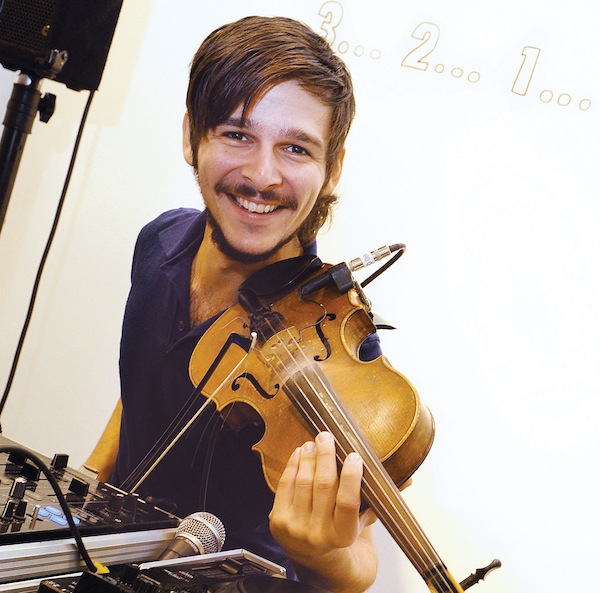
Members of the Clore & Roll Ensemble will perform in Vancouver on May 13. (photo from Clore Centre)

Every year, it is sobering to experience the transition from Yom Hazikaron, the day of remembrance for Israel’s fallen soldiers and victims of terrorism, into Yom Ha’atzmaut, the celebration of Israel’s Independence Day. This year, it will be even more so. And it will be especially poignant, given that the musical group headlining the local community gathering on May 13 is an ensemble from Kfar Blum, a kibbutz in the Galilee Panhandle, in northern Israel, where some 60,000 people have been evacuated because of the threats posed by Hezbollah in Lebanon.

The Clore & Roll Ensemble is an initiative of the music school of the Clore Centre for the Performing Arts, which also has a dance and theatre school. The centre was established in 1996 and approximately 1,000 students (which include adults) study there. They come from kibbutzim and moshavim in the area, as well as Druze and Arab towns.

“I’m glad to say that the conflict doesn’t get inside the centre,” Telem Chorin, chief executive officer of the Clore Centre and director of the ensemble, told the Independent. “Music is an international language and also an emotional language that connects people,” he said.

While the Clore Centre’s offerings remain afterschool programs, the centre has played a more important role in students’ lives since the Oct. 7 terror attacks that led to the current war.

“For some kids, the Clore is like a second home,” said Chorin. “Because, for some students, it is a more stable place than the hotel they were evacuated to, or the school that is currently closed or working partially.”

Despite being displaced, ensemble members have been coming together weekly to practise for the show in Vancouver. Rehearsals are at the centre.

“Last week, we had matriculation exams in dance and, during April and May, we will have matriculation exams in music playing,” said Chorin. “It is interesting to see how committed the students are to performing arts subjects even in such a period, and how much effort they have to invest – time, long journeys, sometimes even risking [their safety] and coming to Kfar Blum, even though it is relatively more dangerous here than in their homes or the hotels they have moved to. This shows how important it is to them and how much they don’t give up on it despite everything, and maybe even this is what keeps them ‘sane’ amidst all the chaos currently prevailing in the north.”

Some members of the ensemble have been playing together for more than five years in different capacities, but the group that is coming to Vancouver has only been playing together for the past three months, said Chorin. Due to the war and the evacuations, the group had to rebuild. “We’ve added additional musicians to the band so that you will have an amazing show!” he said.

Coming to Vancouver are Menachem Ofri (17, singer), Yaron Shir (18, singer), Kachtan Aviv (17, flute), Maman Moria (17, alto saxophone), Moyal Ido (17, tenor saxophone), Shem Tov Ido (19, trombone), Kovesh Gil (24, drums), Primor Adi (17, electric guitar), Fitzer Tal (16, piano) and Deutscher Goni (16, bass guitar). Also coming are Ziv Greenberg (music director), Ferry Stefan (dance teacher and dancer), Malki Smadar (administrative manager) and Kashri Noam (technical manager). 

“Ofri, Ido Shem-Tov, Aviv and Noam were evacuated from their homes, and they are coming from all over the country to the rehearsals at the centre – sometimes, under rocket attacks!” said Chorin, who will join the band in the performance, on clarinet. 

“Some of the students have already appeared in Edmonton and Calgary,” he said. “I have performed in Edmonton, Calgary, Windsor and Hamilton, but this is my first time in Vancouver and I am very excited! Some of the students were in Vancouver on student exchanges with their schools in Israel.”

Of what it means for the Clore & Roll ensemble to play a Yom Ha’atzmaut concert in the diaspora, Chorin said, “It is a great pride and honour to represent the state of Israel in general, and the Upper Galilee in particular, in such a show, on the eve of Independence Day, in a challenging time like now.”

The ensemble will present a wide-ranging repertoire.

“We are going to play modern Israeli songs (Idan Raichel, Mizrachit [Israeli pop]), classic Israeli songs and also some songs in English,” said Chorin. “A very diverse and happy program.”

“Bringing the Clore ensemble serves as a reminder of the unbreakable bond we share across borders,” said Dafna Silberstein, associate director of Israel connections and partnerships at the Jewish Federation of Greater Vancouver. “It is also an amazing opportunity for the ensemble of teens and young adults to take a break from what they have been through for the past six months. And, for us, it feels like it is exactly what we need this year: coming together as a community united for and with our brothers and sisters in Israel.”

Jewish Federation has supported the Clore Centre as part of the Coast-to-Coast Federations’ Collective and independently, “as the centre is in our partnership region of Kiryat Shmona and the Galilee Panhandle,” explained Silberstein.

“We have wanted to bring the Clore ensemble for awhile now, to showcase the impact our support has had on its students and have been waiting for the right opportunity,” she said, noting that it is “with mixed emotions” that Oct. 7 created that opportunity.

“This year, the commemoration of Israel’s 76th Independence Day holds an even deeper meaning and significance,” said Silberstein. “It is an opportunity to stand together in solidarity and celebrate our shared values. Considering the spike in antisemitism, the need for community unity has become more important than ever.”

For tickets ($18) to the May 13, 7:30 p.m., concert at Congregation Beth Israel, as well as information about other Israel@76 activities, visit jewishvancouver.com/israelhere. 

Don’t leave. Engage!

Anthony Housefather has decided to remain in the federal Liberal caucus. Housefather, member of Parliament for the Quebec riding of Mount Royal, is one of only two Liberals to have voted against the NDP motion last month that called for a ceasefire, an end to Canadian military trade with Israel, as well as other positions about Israel and the current conflict.

As discussed in this space last issue, the New Democratic Party motion had some of its rough edges sanded down in order to make it palatable to almost all Liberal MPs. The rest of the House of Commons voted predictably. Conservatives unanimously opposed the motion, which they viewed as biased against Israel. The Bloc Québecois and the Green party sided with the NDP.

The daylong negotiations over amendments to the motion were a face-saving effort by the Liberal government to avoid the embarrassment of a serious schism in their caucus over foreign policy. In the end, a less inflammatory motion was passed.

Housefather, who is Jewish and represents a riding that has one of the largest concentrations of Jewish voters in Canada, was joined on the government side in opposing the motion only by Ontario Liberal MP Marco Mendocino.

Housefather was open about his frustration. Anyone who has found themselves in a place where they do not feel welcomed, based on their core identity, can certainly appreciate his feelings of isolation. However, we are pleased that he has decided to remain in the Liberal caucus.

Crossing the floor and joining the Conservatives, which he had said he was considering, would not have been advantageous to Jewish and pro-Israel voters. Since the administration of former prime minister Stephen Harper, at the latest, the Conservative party has been perceived as overwhelmingly pro-Israel. This approach has been welcomed by many Jewish Canadians.

However, this reality means that, were Housefather to switch parties, he would become just another pro-Israel voice in the Conservative caucus. By staying where he is, he will be a necessary voice for Israel and the Jewish community in the governing party. In an announcement a week ago, he said the prime minister has asked him to lead the government’s efforts in fighting antisemitism. This effort needs as much multi-partisan support as possible.

Anyone who has had difficult conversations with friends or family in recent months understands the emotional burden of being a voice for Israel in this challenging time. This, however, makes Housefather’s presence in the Liberal party that much more important.

We face a similar challenge at the provincial level. With the firing of Selina Robinson from cabinet, and her subsequent withdrawal from the governing New Democratic Party caucus, the Jewish community’s most outspoken ally, liaison and voice is gone from the government side of the legislature. Neither Robinson, who now sits as an independent, nor George Heyman, the other Jewish New Democrat in Victoria, are seeking reelection. It is entirely possible that the Jewish community will not have any community members in the next legislature.

This is not to say we do not have friends there.

Michael Lee, the MLA for Vancouver-Langara, has been a steadfast ally of the Jewish community and a stalwart presence at the weekly Sunday rallies for the Israeli hostages. Recently, when he addressed that audience, he went to lengths to warn against making Israel a political football. A community that can be taken for granted by one party and written off by another will find itself unrepresented in the halls of power. Lee reassured Jewish British Columbians that they not only have friends on the opposition side of the house, but in the governing NDP as well.

We know that there are allies for Israel and the Jewish people in the provincial NDP. It is a symptom of a larger concern that some of these people feel constrained around expressing that solidarity fully because of segments of their own party who would almost certainly single them out for that support.

As Robinson herself told the Independent last issue, she has friends and supporters in the caucus – but she wouldn’t mention them by name for fear of putting a target on their backs. This is a serious problem, of course. But it is better to have quiet allies than no allies at all. Their presence can potentially moderate extreme elements in their party. Were they not there, restraining impulses might be minimized.

As we approach a provincial election this fall, and a federal election at some unpredictable date (remember, there is a minority government in Ottawa) Jewish Canadians and allies of Israel should not abandon the parties that include voices with alternative views. We should, like Housefather has chosen to do, make sure our voices are heard in all of Canada’s diverse political venues. 

Isolated, tired, disappointed

A “Toronto for Palestine” protest Oct. 28, 2023. In the last six months, across Canada, such protests have often featured calls for violence against or the death of Jews. (photo by Sikander Iqbal)

In the past six months, protesters have targeted Jewish community buildings and synagogues in Montreal and the Toronto area. Jewish student group Hillel has also been a prime target for anti-Israel and anti-Jewish sentiment at Canadian universities, including in Vancouver. Similar protests caused the Art Gallery of Ontario to cancel an event with the Canadian and Italian prime ministers over security concerns. A man in Vancouver was charged with hate-related crimes over the defacing of Israeli hostage posters. 

These are just a few examples of organized anti-Israel protests, often with calls for violence against or the death of Jews, on the streets and campuses across the country. Much of this activity is met with silence or borderline anti-Jewish remarks from many elected officials and leaders.

Trans and queer rights are also under attack in Canada with the premier of Alberta’s recent announcement of sweeping new anti-trans policies and Saskatchewan Premier Scott Moe’s use last year of the notwithstanding clause in the Charter to push through a law requiring parental consent for children under 16 who want to change their names or pronouns at school. 

The confluence of these events and the ongoing need to carefully navigate the intersectionality of their identities has left many queer Jews feeling isolated, tired and disappointed.

Queer communities in Canada have long trended toward a pro-Palestinian point of view, often reflected in clashes over whether certain Jewish groups should be allowed to march in pride parades, Aviva Rathbone, board chair of JQT, a Vancouver-based Jewish queer and trans organization, told the Independent.

“Right now, what it means is that many of the Jews in the queer community, especially Israelis, but also Jews who would maybe call themselves Zionists or who feel complex about the situation in Israel and Gaza, are not welcome in queer communities,” she said.

“I did not know there was such thing as an anti-Zionist Jew until I moved to Canada,” said Ari Fremder, a 33-year-old who works in Vancouver’s animation industry. Fremder is originally from Zimbabwe.

As a trans person who is also autistic and introverted, Fremder said, they don’t leave their house very often anymore because of the anti-Jewish protests, posters and stickers – that frequently incite violence against Jews – in their neighbourhood.

They used to go to local queer events but said they don’t feel safe anymore, as many groups are pro-Palestinian and openly state Zionists are not welcome.

“I feel a lot safer being queer in the Jewish community than I feel safe being Jewish in the queer community,” said Jessie, a 21-year-old student and environmental activist in Ontario, who asked not to use their real name.

As one of few Jewish queer people in Halifax, Schuyler H. Smith said they are facing “more hate” than they’ve ever faced in that city.

The 33-year-old diversity consultant agreed that it’s more comfortable to be part of a Jewish than a queer community right now. They will, often with trepidation, reach out privately when they see antisemitic comments and remarks from queer community members, to try to dispel myths about Jews as white colonialists or as non-indigenous to Israel, for example.

Smith hopes one-on-ones can make people think twice before posting negative comments or memes about Jews.

Anti-trans policies in Alberta and Saskatchewan, attacks and protests at drag queen story times and other “parental rights” actions across the country are also taking a toll on members of the LGBTQ2S+ community.

“I’m scared, honestly, for young trans people who need this care and are being interfered with by politicians,” said Cas Allen, a 21-year-old university student in Victoria who says access to hormone blockers changed his life when he was 15.

Ezra, a 39-year-old trans teacher in Calgary, who prefers not to use his real name, said the government is pushing a lot of misinformation, but he’s heartened by the pushback from the queer community.

He’s committed to being a visible queer influence in his school, which has a high number of new Canadian immigrants.

“If there were any queer kids in the class, they could see themselves reflected,” he said, “and [I can give] them a safe adult to confide in [while] they decided who they are.”

Allen, who grew up in a religious Jewish family in Alberta, said since he transitioned, he has “recreated” his queer Jewish identity “from the ground up” but he’s once again finding it “complicated and messy” to reconcile both those parts of himself.

He said he feels isolated and unable to talk about his feelings regarding Israel and his Jewishness to the LGBTQ2S+ people he knows. He said the only person he can really confide in is his twin sister.

Queer spaces on university campuses tend to be very pro-Palestinian and are forcing students to choose between their Jewishness and being queer, said Rabbi Seth Goren, executive director of Jewish student group Hillel Ontario, which has a presence at nine universities in the province.

“I think that’s a choice that queer Jewish students shouldn’t have to make,” he said.

Many Jewish students feel like there is no place where the conflict isn’t swirling around them, added Rabbi Kylynn Cohen of Hillel BC. She said she’s had to help students who, after Oct. 7, couldn’t go to classes because of the anti-Jewish rhetoric, both from student groups and in classrooms.

Cohen said she sees more Jewish students hanging out in the Hillel building on the University of British Columbia campus, seeing it as a safe space. Many queer students have told her they go to straight bars to unwind now rather than congregating in gay spaces.

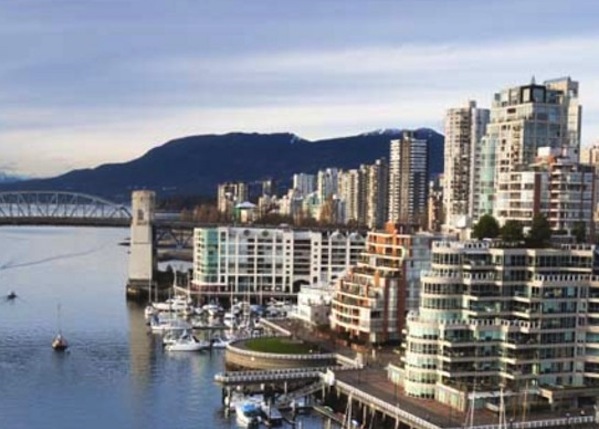
photo - Vancouver skyline at night
From Vancouver to Halifax, many queer Jews are feeling unsafe and isolated because of the increase in anti-Jewish and anti-trans sentiment since the Oct. 7 Hamas terror attack on Israel and the ensuing Israel-Hamas war. (photo by Maximilian Ruther / Pexels)

Many student-run groups and education-related unions have come out with strong anti-Israel statements. Six Canadian universities are facing class action lawsuits over anti-Jewish hate speech, threats against Jewish students on campus, and the silencing of Jewish voices. 

There are also dozens of reports of Jewish students being shouted at, punched and spat on by anti-Israel protesters at universities across the country. Ontario student Jessie said, even though they’re at a university with a large Jewish population, there is constantly an “uncomfortableness” between their two intersecting identities.

Like many LGBTQ2S+ Jews, their stance on Israel is multi-faceted but they said they’re frustrated and have lost friends in the queer community who aren’t open to the nuances of how different Jewish people are feeling or to seeing the Jewish community as anything other than homogenous “white settler colonialist[s].”

Jessie wears a Star of David necklace but said they now often hide or remove it, including during their local drag king performances at which other performers have made pro-Palestinian tributes. They say they’d be “canceled” if they shared their support for the hostages or Israeli citizens during a show.

“There’s no space even for me to mourn or to acknowledge my feelings and what’s happening,” said Jessie.

There are, however, some Jewish queers for whom the past few months have been a time of solidarity and community building.

Non-binary Toronto artist Sadie Epstein-Fine said they are Jewish but were raised as an anti-Zionist. They’re a member of a group called Jews Say No to Genocide, whose membership is almost all queer Jews. Since Oct. 7, they say they’ve been “entirely surrounded by queer Jews” in a busy, activist environment.

They admit to looking white and acknowledge the privilege that brings, also recognizing that antisemitism is on the rise but saying they’ve been fortunate not to have felt it personally.

“We’re more concerned about Palestinian safety than we are about our safety,” Epstein-Fine said of their group members.

Beyond campuses, the past six months have seen bomb threats and attacks against Jewish schools and businesses, as well antisemitic graffiti and a rising number of other hate crimes aimed at Jews across the country. Police forces in some cities have enlarged their hate crimes units and set up hate-crime reporting centres in Jewish areas.

Darren Sukonick, 53, a Toronto businessman who has been involved with Jewish charities and community groups for decades, said he was surprised and disappointed at how widespread and swift anti-Jewish sentiment was across Canada after Oct. 7. He said he never thought he’d ever experience levels of hate like he’s seeing now.

“It was like being on a hike, turning over a log and seeing all this vermin crawling out from under it. That’s what it felt like,” he said.

On the other hand, Sukonick said many non-Jewish friends have reached out and shown support.

Calgary teacher Ezra said he frequently hears racist and hate speech about Jews, but not aimed at him, from his Grade 7 students. When he hears it, he addresses it with the kids in an effort to get them to see different points of view.

Sometimes, it’s easier to get out of bed and deal with all the negativity being hurled at both the trans and Jewish communities, said Ezra. Other days, he said, it takes a greater toll on his mental health. 

Gail J. Cohen is an award-winning Toronto-based writer, editor and communicator.

Egypt faces many struggles

Twenty years in the making, Egypt’s Grand Egyptian Museum is in a soft-opening period, with a section of the 81,000-square-metre site open for limited guided tours. (photo from Grand Egyptian Museum)

In biblical times, the Patriarch Jacob led his family to Egypt, the granary of the ancient Near East, to escape famine in Canaan. By the Roman era, the Nile River Valley and Delta – enriched by the Nile’s annual flooding with alluvial mud – had become the breadbasket of Rome. King Herod built an artificial harbour at Caesarea to facilitate the crucial maritime shipment of wheat to the imperial capital. Today, the once fabulously wealthy country is an economic basket case.

President Gen. Abdel Fattah el-Sisi and his military-industrial kleptocracy blame the country’s high birth rate for the inability to feed Egypt’s burgeoning population of 110 million people. Taking a page from Keynesian economic theory, the regime – which toppled Islamist leader Mohamed Morsi in a 2013 coup d’état – has triggered a free fall of hyperinflation and devaluations while building mega-projects to stimulate the country’s broken finances.

The country’s annual rate of inflation soared to 36% in February, the Central Agency for Public Mobilization and Statistics (CAPMAS) said on March 31. The Egyptian pound, called the guinea, traded at 20 to the American dollar as recently as 2020. Now, one needs 52 to buy a greenback in the flourishing parallel market. In the past 24 months, a crippling shortage of foreign currency has caused prices of goods and commodities to more than triple, forcing low- and middle-income Egyptians to further tighten their belts.

The result? Strained services, a bloated bureaucracy, a huge government budget and a staggering deficit.

Compounding the economic misery, Hamas’s Oct. 7 attack on Israel and the resulting Israel-Hamas war in Gaza have driven away tourists from the land of Pharaonic wonders and spectacular coral reefs. Houthi rockets targeting shipping in the Red Sea have shrunk revenue from the Suez Canal, which is down 40% this year versus the same period in 2023. And Russia’s invasion of Ukraine two years ago has driven up wheat prices and made subsidized bread – a staple for most Egyptians – more costly.

Notwithstanding Egypt’s inability to repay its current foreign debt of about $165 billion, el-Sisi’s immediate financial problems were eased in recent weeks thanks to a bailout, more than $23 billion provided by the International Monetary Fund (IMF), the World Bank and the European Union.

At the same time, the United Arab Emirates launched a rescue plan to prop up its ally through the Ras el-Hekma deal announced last month. The vast real estate project envisions a new city on the barren shores of the Mediterranean Sea near the site of the pivotal Second World War battle of El Alamein. It was concluded in exchange for $24 billion in cash liquidity and $11 billion in UAE deposits with the Central Bank of Egypt, which will be converted into Egyptian pounds and used to implement the project, reported Reuters.

Where then has Egypt invested, or perhaps squandered, its largesse?

One expensive pet project has been to expand the quasi-governmental Egyptian Railway Authority’s network of standard-gauge train tracks. The system, the oldest in the Middle East, dating back to the 1854 line between Alexandria and Kafr el-Zayyat on the Rosetta branch of the Nile, now extends across 10,500 kilometres. A further 5,500 kilometres are currently in construction, including high-speed lines from Alexandria west to Mersa Matruh, Cairo south to Aswan, and Luxor east to Safaga via Hurghada.

Equally ambitious are plans to expand the country’s clogged highways. Transportation Minister Kamel al-Wazir, who took over the accident-plagued portfolio from Hisham Arafat following the 2019 Ramses Station train disaster, in which 25 Cairenes were killed and 40 injured, plans to complete 1,000 bridges, tunnels and flyovers this year.

Key to the plan to clear Cairo’s traffic woes is to complete an ambitious, shimmering new capital 50 kilometres east of the megalopolis, whose population is estimated to be more than 22 million people. The so-far-unnamed New Administrative Capital, under construction for nearly a decade, is located just east of the Second Greater Cairo Ring Road. It includes more than 30 skyscrapers, the most striking of which is the 77-floor Iconic Tower – the tallest building in Africa. Equally noteworthy are the 93,000-seat soccer stadium, the Fattah el-Aleem Mosque, accommodating 107,000 worshippers, and the Nativity of Christ Cathedral, which has room for 8,000 Copts.

To date, 14 ministries and government entities have relocated to the New Administrative Capital, but the city remains a largely lifeless white elephant with few residents.

Apart from these vast infrastructure projects, Egypt has been burnishing its cultural heritage. In 2022, the Ministry of Tourism and Antiquity launched the Holy Family Trail, stringing together some 25 stops along the celebrated route that Jesus, Mary and Joseph took to escape King Herod’s wrath. Last year, the government restored the medieval Ben Ezra Synagogue in Fostat (Old Cairo), the home of the Cairo Geniza. The long-delayed Grand Egyptian Museum in Giza near the Pyramids is scheduled to officially open this summer – though no date has been announced.

photo - The top part of the Merneptah Stele, inscribed by the New Kingdom pharaoh, dated around 1208 BCE. Line 28 reads: “Israel is laid waste – its seed is no more”
The top part of the Merneptah Stele, inscribed by the New Kingdom pharaoh, dated around 1208 BCE. Line 28 reads: “Israel is laid waste – its seed is no more.” (photo from Grand Egyptian Museum)

Twenty years in the making, the GEM is currently in a soft-opening period, with a section of the 81,000-square-metre site open for limited guided tours.

Touted as the largest archeological museum complex in the world, the GEM will house more than 100,000 artifacts. It will showcase the treasures discovered in the tomb of Tutankhamun in 1922. Other highlights will include a restoration centre, an interactive gallery for children and the Khufu Boat Museum.

King Tut’s funerary possessions had been on display at downtown Cairo’s Egyptian Museum in Tahrir Square, a hopelessly inadequate leftover from Britain’s colonial rule. There, a decade ago, I wandered in sensory overload gawping at the Aladdin’s Cave of Wonders. As if guided by divine providence, or perhaps Ra or Isis, I stumbled upon the Merneptah Stele – a three-metre-high piece of black granite inscribed by the New Kingdom pharaoh, dated around 1208 BCE, which was discovered in Thebes in 1896 by archeologist Flinders Petrie. Line 28 reads: “Israel is laid waste – its seed is no more.”

For me, it symbolizes the cold peace Israel and Egypt have enjoyed since 1979. Though few Israelis would wish to repudiate that historic agreement, many share the sentiment of Eitan Haber, the confidant of former prime minister Yitzhak Rabin, who said: “The Egyptians don’t like us and – why deny it? – we don’t like them.” 

Gil Zohar is a writer and tour guide in Jerusalem.

Cultural constellations

Lindsey Tyne Johnson has a new show at the Zack Gallery: The Irish Mazzaroth & Hebrew Spelled Backwards. It comprises two separate parts.

Hebrew Spelled Backwards debuted at the Kamloops Art Gallery in 2023. It is a series of illustrations in which the artist explores her Jewish heritage.

“When the show finished in Kamloops, the Zack Gallery director contacted me,” Johnson told the Independent. “But the show had only seven pieces, and the Zack Gallery is large. It needed more art.”

At about the same time, Johnson decided to delve deeper into her ethnic roots. “My mother’s family were Irish Jews,” she said. “Not a usual combination. I went to Ireland in February 2024 to find out more.”     

She was fascinated by what she discovered. “Jews appeared in Ireland in the 1500s,” she shared. “Later, antisemitism forced many of them to leave, but they came back again. Then, there was a wave of Jews who came to Ireland and Northern Ireland from Russia in the beginning of the 20th century – they were escaping pogroms. Someone tricked them, sold them tickets to New York, but delivered them to Ireland instead and kicked them off the ship there. Some persisted in traveling to America, but others settled in Ireland. And then, there were the Jewish children escaping the Holocaust in Europe, Ireland took them in.”        

When Johnson visited the Irish Jewish Museum in Dublin, she found a number of her ancestors. “Their names were all written up in the Book of Irish Jewry there,” she explained. “The museum staff asked me if I wanted my name to be added to the new edition of the book. Of course, I said yes.”

The second part of the show, Irish Mazzaroth, started taking shape in her mind while she was in Ireland. The 12 black and white illustrations on the gallery walls reflect Johnson’s take on the zodiac’s traditional imagery. Mazzaroth means constellations in Hebrew.

Both Jewish and Irish lore have a long record of zodiac interpretations, from Greco-Roman mythology to the Zodiac Wheel, the centrepiece of the sixth-century mosaic at Beit Alpha in Israel. 

image - “Virgo” by Lindsey Tyne Johnson, part of Johnson’s solo exhibit at the Zack Gallery until May 9
“Virgo” by Lindsey Tyne Johnson, part of Johnson’s solo exhibit at the Zack Gallery until May 9.

Johnson, a young Canadian artist, has succeeded in meshing seamlessly Celtic symbolism and Jewish mysticism into a series of computer illustrations that are uniquely hers. 

“I started the first one in January. I finished the last one just before the show,” she said. “Each one is a well-known astrological sign, and each involves some aspects of both Jewish and Irish culture.” 

Every illustration is a whimsical little story, a playful tale that connects all earth cultures to one another. The images are clean and austere, uncluttered by unnecessary details. The twin girls in Gemini smile at the viewer. In front of them are Shabbat candles and a challah. Behind them, a leafy tree rises in the Irish countryside. Their quiet joy is unmistakable. 

On the other hand, the lone girl in Scorpio is solemnly considering the riches of ancient books in the famous Old Library in Trinity College in Dublin. She seems breathless with excitement at the abundance of choices in front of her, her braid curling up defiantly like a scorpion’s tail. The Jewish thirst for knowledge is given form in the context of the historical Irish library.

In another famous location in Dublin, the Temple Bar pub, Johnson features, in Virgo, an Irish Jewish woman playing a fiddle, merging lively Jewish klezmer and Celtic tunes.

image - “Leo” by Lindsey Tyne Johnson
“Leo” by Lindsey Tyne Johnson.

In Leo, the backdrop is grimmer. It depicts the Crumlin Road Gaol, hinting at the political strife in Ireland, while the man in front reminds us of the story of Daniel and the lions. “One of my distant relatives worked as a prison guard there,” Johnson said. 

The frames of every illustration are identical: a rounded rectangle of Celtic knots, tied together at the top by a Magen David, which also emphasizes the affinity of two cultures.

The Irish Mazzaroth & Hebrew Spelled Backwards is on display at the Zack Gallery until May 9. To read more about Johnson and Hebrew Spelled Backwards, go to jewishindependent.ca/artfully-exploring-heritage. 

Olga Livshin is a Vancouver freelance writer. She can be reached at olgagodim@gmail.com.

Ed Asner shines in final role

Ed Asner gives a remarkable performance in Tiger Within, which is part of the online Vancouver Jewish Film Festival, April 15-19. (tigerwithin.info/press-photos)

I had the privilege of interviewing Ed Asner several years ago. It was an experience I (and my mother, who also got to speak with him) won’t forget. So, it was with some sentimentality that I watched his last film, Tiger Within, which can be screened online April 15-19, as part of the Vancouver Jewish Film Festival, which has other movies being presented at the Rothstein Theatre April 12-14.

Asner, who died in 2021, gives a wonderful, understated performance in Tiger Within, as widower and Holocaust survivor Samuel, who takes a troubled young woman under his wing, and changes her life for the better. His performance is the main reason to watch this film. People old enough to know Asner will understand when I say Tiger Within would have fit perfectly into the ABC Afterschool Special lineup. Well-intentioned, it is not well written and, with the exception of Asner, the acting is middling.

Casey, played by Margot Josefsohn, is a rebellious teenager with a struggling mother who prefers to keep her nasty boyfriend happy than care for her daughter. Casey’s father has started a new family and their suburban life isn’t a place for the mouthy, punk-loving, artistic teen. Another highlight of Tiger Within is Casey’s art, which makes appearances throughout, further communicating her frustrations and other feelings.

Out on her own, Casey is lucky to meet Samuel, who sees her inner light and inherent worth, even if she doesn’t. He manages to see beyond the swastika someone spray-painted on her jacket, which she didn’t bother to wash off, and her antisemitic opinions, including that Jews made up the Holocaust, which were taught to her by her mom and others. He gives her the unconditional love, snippets of wisdom and space to “tame the tiger within” and make her place in the world.

The movie has a timely and important message. And a younger audience might be just the one to receive it in the manner it was intended. 

“One of the biggest tragedies is the misuse of love, the most powerful force there is,” writes director Rafal Zielinski on the movie’s website (tigerwithin.info). “Loving oneself, family, group, race, country (narcissism) and being incapable of loving the other equally, as oneself, is the misuse of love, it breeds hate.

“That is the message, I feel, in this film – Samuel overcomes hate for this girl and shows her unconditional love. 

“It’s the greatest gift anyone can receive on this earth, and he keeps his promise, he once made to his wife – ‘to forgive all before he dies.’”

For tickets to Tiger Within and other festival films, visit vjff.org. 

Writing music for life

Composer Ari Kinarthy writes music using interactive hardware and software systems that form sounds from movements. His story is told in the documentary Ari’s Theme, which will screen at Hot Docs in Toronto, then be available on TELUS originals. (photo from Salazar Film)

Ari’s Theme, about Victoria composer Ari Kinarthy, will make its world première this spring at Toronto’s Hot Docs Film Festival. Directors Jeff Petry and Nathan Drillot said the idea for the documentary came from an article about Kinarthy in the Jewish Independent, which was published in April 2020.

Petry and Drillot, who run Salazar Film, a production company located in Vancouver, were intrigued and inspired by Kinarthy upon discovering his method for composing music. By using interactive hardware and software systems that form sounds from movements, Kinarthy can use the movements he makes with his wheelchair to produce music that is recorded into multimedia platforms. For example, movements closer to the recording device create lower notes and movements further away result in higher notes.

“As we learned more about Ari’s story, we thought about how interesting it would be to work with a composer like Ari, who has a very particular life experience, and ask him to compose music about the most impactful moments, dreams and experiences of his life and let us create cinematic scenes around them,” Petry said.

Petry and Drillot pitched the project to TELUS originals, which supports local documentaries by independent filmmakers in British Columbia and Alberta, with the objective of bringing films on various social topics to wider audiences.

“As the filmmaking relationship between Ari and ourselves developed, it turned into a really deep collaboration, and other themes we hadn’t expected started to grow and evolve,” said Petry. “Ari showed a lot of strength and vulnerability in creating this film with us and, for this, we are really honoured by his trust.”

Kinarthy, now in his 30s, has used a wheelchair since childhood because of type-2 spinal muscular atrophy, a condition that continues to weaken his muscles. Kinarthy is profoundly cognizant of his mortality and Ari’s Theme delves into his desire to tell his story, as he endeavours to create a new composition inspired by some of the most meaningful moments in his life.

“This film has been nothing short of a gift from God,” Kinarthy said. “The ability to install my music in a visual project is already amazing, and my dream, but to have that project be a complete portrayal of my life is truly special. I have always wanted a way to not only inspire others but to have my memory, or legacy, encapsulated so that I live on beyond my body.”

Kinarthy said he enjoys the challenge of creating grand symphonic music of the sort John Williams writes – the kind composed for a hero. There have been times in his life, he said, when he has had to fight like one.

For Kinarthy, the process of working on the film was a journey from stress to happiness. 

“Looking back and reflecting on my past, myself, and my life was challenging and rewarding. I have been through a lot and I got to write music about key moments,” he said.

“Working with Salazar was a wonderful experience,” he added. “The studio was always very understanding of my situation and gave me tons of flexibility to write how I write. They were also very helpful in helping me articulate my thoughts. The directors and I became close during the process of the film, and I am so glad I got to meet them. I will never forget them.”

Petry and Drillot have several documentaries to their credit, including Becoming Sumo, the story of Ōsunaarashi Kintarō, the world’s first Arab Muslim professional sumo wrestler; Handsome and Majestic, a short film about a teenage transgender boy growing up in Prince George; and Wizard Mode, a feature-length movie (eventually acquired by Netflix US) about Robert Gagno, a world champion pinball player.

Over the past decade, Petry and Drillot have filmed around the world, from Nunavik to Bolivia, to the Democratic Republic of Congo. They received Juno and Grammy nominations for best full-length music documentary for their work with Canadian indie rock duo Tegan and Sara. 

Despite some problems, which were recently reported in the entertainment media, it appears the show will go on for Hot Docs Canadian International Documentary Festival, now in its 31st year. In late March, director Hussain Currimbhoy stepped down for personal reasons, according to the festival. Ten other members of the programming team also left, for undisclosed reasons.

Ari’s Theme will first screen in Toronto on April 30, followed by another festival screening on May 2. After its Hot Docs run, the film will be available on TELUS Optik TV Channel 8 and online at TELUS originals.

To read the article that sparked the idea for Ari’s Theme, visit jewishindependent.ca/no-barriers-to-music. To view the documentary following its showing at Hot Docs, go to watch.telusoriginals.com. 

Sam Margolis has written for the Globe and Mail, the National Post, UPI and MSNBC.

The rise and fall of a giant

Michael Shamata directs The Lehman Trilogy, which will be at Victoria’s Belfry Theatre from April 23 to May 19. (photo from Belfry Theatre)

From April 23 to May 19, Victoria’s Belfry Theatre will stage The Lehman Trilogy, a three-act play that follows the Lehman family’s story, from three immigrant brothers arriving in the United States in the mid-1800s to the founding of their investment firm, which became a financial giant, then fell.

Michael Shamata, the Belfry’s artistic director, said he knew at once after reading the play that The Lehman Trilogy had to be shown in Victoria. 

“I couldn’t put the script down,” he said. “In literary terms – it’s a ‘page-turner.’ In theatrical terms – it is a stunning high-wire act. Three exceptional actors play three brothers and three generations of the Lehman dynasty. It’s a wild ride: from a tiny store in Alabama to a Wall Street juggernaut – from small-town enterprise to full-on moral corruption.”

The Lehman Trilogy was written by Italian novelist and playwright Stefano Massini. It has since been translated into 24 languages and appeared on London’s West End and on Broadway. In 2022, the show picked up five Tony Awards.

Ben Power, associate director at London’s National Theatre, adapted the play from Mirella Cheeseman’s English translation. Massini’s original work started as a nine-hour radio play before being shortened to a five-hour, three-act theatrical work written in free verse. The length was whittled down again when it hit the London stage under the direction of Sam Mendes and the cast, which once numbered 20, was cut to three.

The tale is remarkable. Lehman Brothers started out as a dry goods store in Montgomery, Ala. The firm grew exponentially, moved to Wall Street and rose to become a corporate behemoth before its demise during the 2008 financial crisis. As the Belfry states on its website, “We view The Lehman Trilogy as an exploration of the American Dream, and ultimately a critique of American capitalism.”

The story of Lehman Brothers, once one of the world’s most esteemed financial institutions, offers a worthwhile glimpse into “this journey which is so emblematic of the evolution of consumerism, capitalism and the American way of life,” notes the Belfry. In its heyday, Lehman Brothers employed 25,000 people. At the time it declared bankruptcy, it was in debt more than $600 billion.

One reason the play is compelling theatre, Ben Power told NPR’s The Indicator from Planet Money in 2020, is that it explores the abstract, as the Lehman company grows into a financial powerhouse by being, essentially, a middleman. Whereas, at one time, a trader might have had to bring goods, such as cotton, to a market to be seen (and touched) by a purchaser, trade on a stock exchange involves no such visibility or tangibility, as goods are traded through companies like Lehman Brothers.

“There is a move into the imagination, a move into metaphor. Instead of having a thing, you just have a word,” Power said. “And I think one of the reasons the story works is that at the heart of all these financial systems is the idea that one thing stands for something else. You get the distance from the actual thing that you are selling and the people’s lives you are impacting when you do that. The more you move into the abstract, maybe, the harder it gets to have a moral framework around what you are doing.”

The Victoria production features actors Brian Markinson (Henry Lehman), Celine Stubel (Mayer Lehman) and Nigel Shawn Williams (Emmanuel Lehman). The three take on the roles of dozens of other characters throughout the play.

“Casting across race, religion and gender highlights the universal seductiveness of both the American Dream and capitalism,” says the Belfry on its website. “In addition, given that the production’s three actors are playing multiple characters – crossing genders, cultures and ethnicities – why should the casting not do the same?”

A Broadway staging of The Lehman Brothers encountered some snags due to the pandemic. The March 26, 2020, official opening at the Nederlander Theatre was postponed and did not reopen until September 2021.

Though widely acclaimed by reviewers, The Lehman Trilogy did not receive universal praise. Writing for The Observer, David Rich called the play “profoundly antisemitic.”

“Not in a crude way – a clumsy turn of phrase here, a jarring stereotype there – but in its innermost essence, connecting a modern audience to malevolent beliefs about Jews and money that are buried deep within Western thought. Most striking of all, none of the people responsible for writing, acting, directing or producing this play seem remotely aware, and most reviews have missed it entirely,” Rich wrote.

The play is the first Jewish-related work to be in the Belfry’s lineup since the cancellation of The Runner late last year. The planned scheduling of that play, about an Israeli ZAKA volunteer, made national headlines after anti-Israel protesters demanded that it not be shown. 

To order tickets for The Lehman Trilogy, go to belfry.bc.ca. 

Sam Margolis has written for the Globe and Mail, the National Post, UPI and MSNBC.

Take a trip back in time 

School girls, Lord Strathcona School, 1915. The JMABC Walking Tours take participants on a journey through the girls’ Strathcona neighbourhood, as well as to the Mountain View Jewish Cemetery, where many of the community’s pioneers are buried. (JMABC L.00172)

This summer, the Jewish Museum and Archives of British Columbia is once again offering opportunities for time travel. JMABC Walking Tours are back, taking guests on an immersive journey into Vancouver’s Jewish past. All you need to bring for the journey is your curiosity – and a hat and water!

The Jewish presence in British Columbia goes back 166 years, to the days before Vancouver was established as a city. Early Jewish immigrants arrived in the region during the 1850s Klondike Gold Rush, along with masses of other hopefuls seeking fortune in the wilderness of the BC Interior. Unlike their contemporaries, early Jewish gold-seekers did not head to the mines. Instead, they opted to sell supplies to those seeking gold. In the mines, there was no guarantee that gold would be found; in the shops, even unsuccessful miners needed provisions, thus guaranteeing an income for the shopkeepers.

The earliest Jewish community in the province was based in Victoria. It was primarily made up of businessmen and their families, who had profited during the gold boom. As the rush petered out, Jewish-owned outfitter shops transformed into general stores or niche market suppliers that specialized in items such as stoves, fabric, dry goods and other essentials, updating their stock as necessary to meet the changing needs of the times. When Vancouver was officially established in 1867, Jewish storefronts in Gastown were among some of the earliest establishments along the main thoroughfare of Water Street.

Eventually, attention in the region turned away from mercantile pursuits and towards the burgeoning real estate market. With the completion of the CPR and the dedication of Vancouver as its terminus station, the railway company began selling off large packages of land that had been taken from Indigenous communities. Real estate investors jumped at the opportunity, and Jewish businessmen were among some of the first investors in what would later become the residential and commercial neighbourhoods of Downtown Vancouver. As the city expanded, surveyor groups purchased large swaths of the forested area to the south, which now comprises the bulk of the City of Vancouver. During this time of growth, Jewish real estate moguls were instrumental in securing space for a Jewish section within the then-newly established Mountain View Cemetery.  

Around this time, the whispers of two core Jewish neighbourhoods sprang up: the West End, where those with more resources and status would settle; and the East Side, where immigrants and other lower-income families would congregate. The latter neighbourhood, Strathcona, was the closest residential area to the hub of the city. While the Jewish community eventually moved towards Fairview Slopes and Oak Street in the 1950s, the Strathcona neighbourhood continues to stand as a testament to the historic challenges and achievements of British Columbia’s early immigrants.

The JMABC walking tours seek to engage audiences in the remarkable structures and values that have contributed to Jewish life here over its history. Each tour introduces participants to the iconic characters, stories and cultural phenomena that formed the Jewish community’s foundations, and it is hoped that participants emerge from each experience with greater insight and new perspectives, inspired to continue building the legacy of the community in Vancouver. 

Jewish Strathcona: The Architecture of Community-Building
(JMABC Walking Tours July 7, July 21 and Aug. 18, at 11 a.m.)

Since the city’s early beginnings, Vancouver’s East Side neighbourhhood of Strathcona has been home to multiple waves of immigrant communities. From the 1880s through the mid-20th century, Jewish immigrants were among the ethnic minorities that claimed these streets as home. As early as the 1850s, these Jewish pioneers were establishing essential services and buildings to accommodate the vision of a thriving Jewish community. 

The JMABC tour of Strathcona highlights the themes of social welfare, family and tradition as cornerstones of Jewish communal development. The tour follows the journey of early immigrants to this area and the paths they took to found and build communal structures and social groups. Through the magic of storytelling, participants are transported back in time and immersed in the experiences of those who laid the groundwork for the expansive Metro Vancouver Jewish community we have today.

Mountain View Jewish Cemetery: Exploring Common Grounds
(JMABC Walking Tours July 14 and Aug. 4, 3 p.m.)

Despite its context and location, this tour is all about life! Like its sister tour in Strathcona, this experience transports audiences back in time to get to know the once-lively personalities of the people buried in the Mountain View Jewish Cemetery. Tour participants are encouraged to engage with the space and explore the unique aspects of the surroundings, looking beyond the façades of stone and dirt to understand the deeper nuances of this historic site. Using an audience-guided model, this tour can be repeated multiple times, with variable content and direction, stemming from three focal themes: the people, the stones and the stories. Each area of focus gives its audience new perspectives on the significance and role of a cemetery as a foundational pillar of Jewish community.

* * *

To join a tour or to book a private one, contact the JMABC office at 604-257-5199 or info@jewishmuseum.ca. 

– Courtesy Jewish Museum and Archives of British Columbia

Reflections on Shoah

For 20 years, on the afternoon of Yom Kippur, Prof. Chris Friedrichs delivered a lecture to the congregants of Temple Sholom on the subject of the Holocaust. It started in 2004, when Rabbi Philip Bregman, now rabbi emeritus of the shul, asked Friedrichs to speak on the most solemn day in the liturgical calendar. The rabbi asked him to reprise the lecture the following year, and it became an annual event.

After the 2014 passing of Friedrichs’ wife, Dr. Rhoda Lange Friedrichs, like her husband an historian, Rabbi Dan Moskovitz announced that the presentation would be known as the Rhoda Friedrichs Memorial Lecture. 

photo - Chris Friedrichs
Two decades of Prof. Chris Friedrichs’ Yom Kippur lectures at Temple Sholom have been compiled into a book, Reflections on the Shoah. (photo from Chris Friedrichs)

Friedrichs, now professor emeritus of history at the University of British Columbia, decided to end the tradition after 20 years and his friend and UBC colleague, Prof. Richard Menkis, suggested the idea of compiling the lectures in a book.

The volume, Reflections on the Shoah: Yom Kippur Sermons Given at Temple Sholom 2004-2023 is a small but irreplaceable volume offering deep and original insights on the lessons of history from a leading thinker on these subjects.

In these lectures, Friedrichs does not dwell on the facts of history so much as draw broader insights into their meaning. In 2005, he reflected on the term “martyrs,” which is often used in reference to the victims of the Nazis.

“A martyr is someone who has accepted death rather than renounce his or her Jewish faith,” he said. Yet, he noted, among the six million were many, like the Jewish-born Catholic nun Edith Stein, who were not killed because they refused to renounce their faith. Indeed, he said, renunciation would not bring redemption. It was Jewish “racial” identity, not adherence to Jewish ideas, that drove the Nazis’ murderous objectives.

In an historic sense, though, Friedrichs argues, Jews were murdered in the Holocaust because generations of ancestors had refused, against all pressures, to abandon their identities. “And, therefore, it is in fact right to honour those who died as martyrs,” he said.

In 2007, Friedrichs struggled with theologians’ explorations of the meaning of the Shoah, as though some divine purpose could be discerned from it.

“The Shoah was an entirely human event,” he said. “But that hardly removes the question: where was God while it took place? Why did God allow it to happen?”

God gave humans free will, he concluded, but this does not answer the unknowable question.

“In a world we cannot begin to understand, we can still hope for mercy, and we can pray for strength,” he said.

In a brief postscript to this lecture, Friedrichs writes that the daughter of a friend, having heard the sermon, asked her father “Where was God?” In response, the father said, “Where was man?”

In 2012, Friedrichs spoke of the first Holocaust memorial ever created, in May 1943, in the Majdanek death camp, where a group of prisoners persuaded the SS administrator that the camp could be made more beautiful if they could erect a pillar topped by a statue of three eagles about to take flight. The commandant never knew that under the base of the pillar the inmates had buried a container of ashes of the victims taken from the crematorium.

In 2013, Friedrichs addresses the problem with the very word Holocaust, which means a burnt sacrifice.

“What a meaningless term!” Friedrichs declared. “Six million Jews were sacrificed? Sacrificed to what God? Sacrificed to what end?”

In 2020, when his lecture was recorded and shared virtually because of the pandemic, Friedrichs spoke of the sanctity of life.

The next year, after unmarked graves were discovered adjacent to a former residential school in Kamloops, he spoke of the “humanitarian obligation to go beyond just our circle of Jewish concerns.” He drew parallels between the MS St. Louis, the ship of Jewish refugees turned away from ports of refuge, including Canada’s, and the Afghans clambering through the Kabul airport, struggling to escape the country before the takeover of the Taliban.

In 2022, he invoked a very different piece of history. In high school, his most memorable teacher was Anne Schwerner. When the news came, in the summer of 1964, that three civil rights workers had been murdered by white supremacists in Mississippi, one of them Michael Schwerner, Friedrichs realized this was his favourite teacher’s son. He reflected on the lessons of obligation to universal freedom and rights embodied in Jewish tradition.

image - Reflections on the Shoah book coverIn his last lecture in the series, Friedrichs spoke of how, when he speaks to audiences of high school students, as he frequently does, he makes the lessons relevant to young, multicultural Canadians.

“I tell the students that it is normal to dislike somebody because that person, as an individual, is bad or unkind or unpleasant,” he said. “But to dislike or hate somebody not because of their own characteristics but because they happen to belong to a group, to hate them just because they are Chinese or Filipino or South Asian or Black or members of any other group, is to take the first step on a path that has led and could lead again to things like the Holocaust.”

In most of his lectures, Friedrichs describes predations that are difficult to read and must have been more difficult to hear on a Yom Kippur afternoon, in a room that includes survivors of precisely such atrocities. This, though, is one of the invaluable aspects of Friedrichs’ approach. Whatever reservations might exist in this time of safe spaces and trigger warnings, one can hardly make the case that it is too burdensome to listen to a few examples of the barbarism for the sake of education, memorialization and understanding, when there are people in our community, including in the congregation Friedrichs was addressing, who experienced the cruelties themselves.

Anyone who heard these lectures when they were delivered, or has heard any of Friedrichs’ many presentations elsewhere, can hardly help but hear his deep voice and commanding delivery while reading his words. Those who haven’t had the privilege of hearing him speak are fortunate to have these lectures compiled in this new book.

Reflections on the Shoah is available at templesholombc.shulcloud.com/form/reflections.