Many invaluable contributions

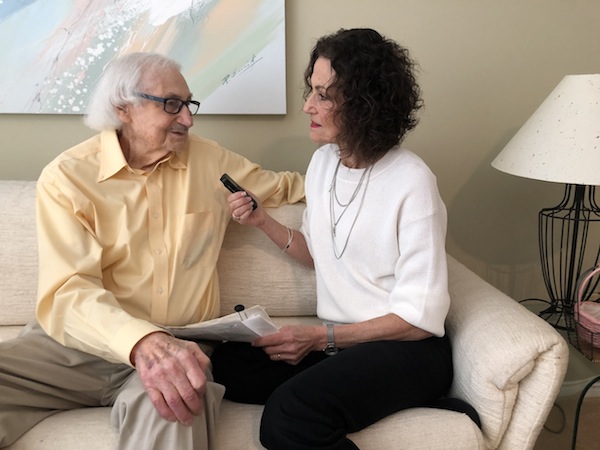
Harley Rothstein has just released a three-CD compilation of Jewish music and secular folk songs. (photo from harleyrothstein.ca)

A little over a year ago, my friend and musical colleague Harley Rothstein – cantor, songwriter, folk singer – shared with me his freshly minted three-CD compilation of both Jewish music and secular folk songs. The recordings, several years in the making, are Modim: Songs of Spirit and Gratitude; Songs of Love and Humanity: Folk Songs of Fifty Years, Volume I; and Songs of Love and Humanity: Folk Songs of Fifty Years, Volume II.

Before getting into more “nuts and bolts,” let me say something well understood by all hardworking creatives: the life of an artist is, in a very real sense, an act of service to the community in which they live. This contribution to the community is what stands the test of time, and Harley Rothstein is undoubtedly one such indefatigable contributor, an artist who has dedicated himself to serving the community in which he lives, and sharing his work unselfishly. The compilation under discussion here is only the most recent of the many invaluable gifts of music Harley has given us over the years.

As many readers may know, Harley is a scion of the philanthropic Rothstein family; indeed, his parents are the benefactors of the Norman and Annette Rothstein Theatre. So, he comes by “service to the community” quite honestly.

Harley Rothstein has been singing since the age of 6, and he learned to play the guitar at age 18. Since then, he has played and performed folk songs in many locales – from Vancouver’s Bunkhouse coffeehouse in 1965 to the Princeton Traditional Music Festival from 2016 to 2019, and numerous other venues and occasions in between. He was inspired by a trip to New York’s Greenwich Village coffeehouses in 1965 and to the Berkeley Folk Festival in 1966. 

Harley also played in rock bands in the late 1960s, taught elementary music and university-level music education from 1975 to the early 1990s, and sang for 10 years in the 150-voice Vancouver Bach Choir. He studied Jewish liturgical music with several cantorial teachers and has led congregations in synagogue services for 40 years. Harley has led many sing-alongs at political and social gatherings.

Harley’s musical contributions to local Jewish life have included years of performing, teaching and mentoring others who wish to lead services. He regularly conducts services at Or Shalom and Beth Israel, and has recorded a seven-CD set of instructional recordings, which are on the Beth Israel website.  

Now to the music at hand. On Modim: Songs of Spirit and Gratitude, Harley’s meticulous work makes accessible a raft of songs for the Jewish community, for prayer and for simple enjoyment. There is a variety of offerings – a klezmer song, two songs in Ladino, and two Israeli folk songs from the 1950s. The majority of the songs are prayers from the siddur, set to music composed by pioneer songwriters such as Shlomo Carlebach and Debbie Friedman, as well as contemporary songwriters including Hanna Tiferet Siegel, Myrna Rabinowitz, David Shneyer, Jeff Klepper and Dan Freedlander, plus five of Harley’s own compositions. Harley notes: “I focus on these because all of these writers have inspired a whole new repertoire of contemporary Jewish spiritual music.”

Indeed, the music of the synagogue has been transformed by contemporary songwriters, like Harley, who, over the past generation or so have introduced the melodic and harmonic sensibilities of North American folk song into congregational song. Harley’s compositions reflect this line of creative work, and are part of a revival, for many, of a Judaism that is closer to the people, enabling all attendees to participate in services in a meaningful way. This folk music thread serves as a common sinew running through the entire three-album project. 

The Songs of Love and Humanity: Folk Songs of Fifty Years recordings are a unique compilation of folk music that, I hope and expect, will help a younger generation become aware of the significant thoughts and hopes of their forebears. This in itself, apart from being an authentic and loving look back upon the artist’s personal musical history, makes the project irreplaceable. I salute Harley for his singular dedication.

The two CDs of folk songs are comprised of numerous pieces, 32 in all, which cover a truly large sweep of folk music history. Being Harley’s contemporary, I recognized many of these songs, but there were some that I was not aware of, or only dimly so, such as those that make up the track “Union Medley,” for example, and the rare gem “Toy Gun,” a 1960s antiwar song. There are classics by Woody Guthrie (“Blowing Down the Road”; “Hard Travelin’”), Bob Dylan (“Don’t Think Twice It’s All Right”; “I Shall Be Released”) and Pete Seeger (“God’s Counting On Me God’s Counting On You”). And other heroes of folk music are well represented – Tom Paxton, Ian Tyson, Gordon Lightfoot and Stan Rogers, among others. It’s a heady mix of work and labour songs, spirituals, political songs from the 1960s and Canadian songs. Harley says, “the unifying theme was that each song has been important to me in my career of over 50 years. This is why I refer to the recordings as a ‘legacy project.’”

Regarding the production elements, I really loved the focus on voice as foreground, unfettered by excessive tech. The songs are thus presented as primary and the accompaniment is just that, in support. It is also evident that these songs have been loved by the artist for many years, and one can hear this in his renditions. On Modim: Songs of Spirit and Gratitude, check out Harley’s own settings of “Yosheiv B’seiter” (“Dwelling in the Shelter of the Most High”), “Luley He’emanti” (“Mine is the Faith”) and the titular piece “Modim” (“We Give Thanks to You”). On Songs of Love and Humanity, I was delighted by his renditions of “Pack Up Your Sorrows,” “Follow the Drinking Gourd” and “Blowing Down the Road,” among many others. Throughout the recordings, Harley’s lyric baritone voice is always a pleasure to listen to.

Included with each CD is an informative booklet, with texts and backgrounders for all the songs. To find out more about the recordings, how to purchase them digitally or in hard copy, visit harleyrothstein.ca. 

Moshe Denburg is a Vancouver-based composer, bandleader of the Jewish music ensemble Tzimmes, and the founder of the Vancouver Inter-Cultural Orchestra (VICO).

Dance as an act of solidarity

Iraqis in Pajamas’ new album is a tribute to the victims of the Oct. 7 massacre.

In the wake of the Oct. 7 massacre of Israelis…. And the celebrations that followed worldwide – glorifying the raping, burning and decapitating of my people…. 

And the subsequent mass destruction of posters raising awareness of Israeli hostages being tortured in captivity by Hamas…. 

And the simultaneous call for a violent uprising against Jews worldwide…. 

And the astronomical spike in hate crimes against Jews – among other things, leading to incessant harassment, assaults and death threats of students at my alma mater, Columbia University, and additionally leading to the murder of a kind Jewish man I knew in Los Angeles….

And the international mob chants of “From the river to the sea,” harkening back to the harrowing cries my father heard on Arabic radio stations as a child in Iraq, “We will throw the Jews into the sea.”…

And the palpable terror I then felt as a Jew, whose family had seen this before, had fled this before, in a pro-Nazi uprising in Baghdad, where a similar massacre had taken place during my father’s childhood….

And the deafening silence in the wake of all this – not even one word of care or kindness from the vast majority of non-Jewish people I had loved, had lived with, had broken bread with….

And I felt as if I had died.

I stopped journaling, stopped writing poetry, stopped writing music, stopped singing, stopped playing bass, stopped dancing. I got sick repeatedly and continuously over the course of two months, even ended up in the emergency room with symptoms of a possible stroke at 2 a.m. one night – this, after years and years of never getting sick, not once, not even when my ex got COVID and I nursed him back to health. 

I couldn’t sleep, had nightmares, woke up in the middle of the night, lying awake for hours, my mind circling around and around, imagining the horror and terror the hostages must be suffering through. I was haunted by the video image I accidentally had seen of a young Jewish woman who was naked and chained, publicly being dragged around by Hamas, as they filmed her – one of the many Jewish women they gang raped and mutilated that day, often next to the dead bodies of these women’s friends – filming that violence, too, in something akin to snuff porn. 

I could feel it in my body.

I couldn’t breathe.

I couldn’t move.

Despite the impact on me, I felt that, somehow, by energetically experiencing and, by extension, by physically experiencing the pain that my people were enduring, I was communicating a telepathic message to them: I will not forsake you, I will not forget you. 

No, I will not frolic on the beach beneath the misty grey soothing skies. No, I will not enjoy the quiet, peace and comfort of the vast rainforest just outside my door. No, I will not detach myself from something “happening on the other side of the world,” as a non-

Jewish acquaintance kindly advised, because there is no “other side of the world” when it comes to Jews. You are me, and I am you, and we are connected. I cannot control the world’s response, but I can control mine. I will face, see, hear and feel your pain, until it is gone.

But wait…. That’s exactly what Hamas wants, isn’t it? To demoralize and destroy Jews. To suffocate us, hijack our imagination. To strip us of our dignity, safety, peace and, perhaps most of all, joy.

So, to reclaim my joy is, in fact, a radical act of Jewish power and solidarity. To flip imagination on its head – instead of visualizing all the horrors and shrinking in my body, to instead expand in my body and visualize all the hostages, injured people and 

grieving families as resilient, grounded, surrounded by love, and the dead as soaring freely and peacefully, wrapping their loved ones in comfort.

Nothing is black and white, but this is an article, not a book, so I’m trying to keep it short and sweet. Suffice it to say, I actively and repeatedly attempted to turn the images around over the course of two months – to send white light, to bless the hostages, to emit some kind of protective energetic shield, but it kept seeming silly, foolish, without actual impact, perhaps just making myself feel better, like a hollow New Ager. My prayers would not stop a psychopathic Hamas gunman with absolute control over a hostage, I reasoned, because G-d gave humans both the gift and curse of free will. 

But then….

But then I went to a concert of Yemen Blues, which was more of a primal howl of freedom than a “performance,” and which featured an Israeli woman dancing with a defiant, raw ferocity that brought back to life the sanctity, dignity and power of the Jewish female body – and, with that, permission to dance.

And, after that, I started dancing again. And, after that, I started singing again. And, after that, I started frolicking with my beautiful dog beneath the misty grey, soothing skies on the beach, and through the vast rainforest just outside my door.

And I came back to life.

In this very difficult but transformative journey, I learned that life begets life begets life, and artistic self-expression is not an indulgence, but rather, a superpower. 

As I danced on the beach with my dog over a couple of days, a vision emerged – a global movement of Jews and our allies taking videos of ourselves dancing joyfully, and sending those videos to the people wounded in the Oct. 7 massacre, the families of those who died, the families of those taken hostage, and the young women and men on the frontlines defending Israel from further attack – turning “we will dance again” into “we will dance for you until you can dance again” – sharing whatever strength, freedom and joy we have to uplift those who are in the thick of it, struggling and suffering.

Having snapped out of an emotional coma of sorts, I then picked up my bass, and out poured both the melody and lyrics of a new song, “’Til You Can Dance Again.” That same day, I finally finished the song I had started a few weeks after Oct. 7, “Dear Hostages.” Not having touched my bass for the better part of three months, I played until my fingers were blistered and almost bleeding. Over the next 24 hours, I wrote two additional songs, and then worked with my band on developing a full album, ’Til You Can Dance Again, offering both my journey and my joy as a catalyst for healing and transformation.

It is through song, dance, story, prayer and food that Jews historically have not only overcome tragedy, but have taken that very experience and transmuted it into an vehicle for joy – the ultimate “f*** you” to those who have tried to destroy us. For this reason, my band released our new album on March 23, at the start of Purim, a holiday marking one of many historical traumas that the Jewish people have turned on its head and morphed into a cause for celebration. My heartfelt prayer for this album is that, as broken as we may feel right now, we shall once again rise up, sing and dance ourselves back to wholeness, and honour the victims of Oct. 7 not only through our grief and pain, but also through our fierce and irrepressible Jewish joy – emerging, once again, like that unstoppable phoenix, soaring up and out from the ashes. 

Loolwa Khazzoom (khazzoom.com) is the frontwoman for the band Iraqis in Pajamas and editor of The Flying Camel: Essays on Identity by Women of North African and Middle Eastern Jewish Heritage (theflyingcamelbook.com). She has been a pioneering Jewish multicultural educator since 1990, and her writing has been featured in the Washington Post, Marie Claire, Rolling Stone and other top media worldwide. This article was originally published in the Times of Israel.

More about the album

On March 23, Iraqis in Pajamas released the album ‘Til You Can Dance Again, as a tribute to the victims of the Oct. 7 massacre.

Its creation served as a vehicle for Khazzoom’s processing and healing, and the tone of the songs evolved as Khazzoom herself evolved from feeling despair to outrage to core power.

“Dear Hostages” is a love song to those held in captivity, in which Khazzoom pledges, I will not forsake you, I will not forget you, as she explores what it means to act in solidarity from afar. 

“’Til You Can Dance Again” is a spin on the Israeli promise, “We will dance again” – vowing to spread the life energy of dance, to help uplift the spirits of those who were shattered by the massacre. 

“Bataween” draws from a conversation with an Iraqi Muslim friend, exemplifying the healing imperative of Arab Muslims recognizing and caring about the history of indigenous Middle Eastern Jews, including the experience of Arab Muslim oppression. 

“Kids from the Sandbox” builds on that imperative, holding out a vision for Arabs and Jews to embrace the complexity of shared history, using art to express love and hate in healthy ways, effectively co-creating a new reality. 

“I’m a F***-You Jew” fuses ancient and contemporary stories of Jewish defiance and soul power in an unabashed expression of Jewish pride and strength amid an onslaught of global accusation and condemnation. 

“These Boots” is a campy spin on “never again,” calling out the left’s hypocrisy and betrayal in the wake of Oct. 7, and refusing to contribute Jewish energy and resources to those who do not offer the same in turn. 

“Bloody Cross” is a scathing critique of the Red Cross’s racism and hypocrisy in its failure and refusal to properly care for the Israeli hostages in Gaza.

For the full press release, and to listen to the recordings, visit khazzoom.com/blog and click on ’Til You Can Dance Again – New Album Release.

– Courtesy Iraqis in Pajamas

The story of my mother’s narrow escape

In February, I attended the Canadian première of the movie 999: The Forgotten Girls, directed by Heather Dune Macadam, who also wrote the book on which it is based, 999: The Extraordinary Young Women of the First Official Transport to Auschwitz. Screened at the Rothstein Theatre, the documentary was presented by the Vancouver Jewish Film Centre.

image - poster for the film 999: The Forgotten Girls
Watching the film 999: The Forgotten Girls prompted Dr. Helen Karsai to write about her mother’s last-minute escape from the “work assignment” that had some of her friends taken to Auschwitz, where most were killed.

This is a brilliantly made movie, which combined clips from home movies, historic film footage and photos, interviews with survivors and others, Slovak folk songs, and more. The movie explained how the Hlinka Guards (Slovak militia) rounded up young, unmarried Jewish girls from small towns in eastern Slovakia. The Jewish girls from the city of Humenné were put on buses and transported to the city of Poprad, where they were put into military barracks. On March 25, 1942, when the number of girls reached 999, they were put into a cattle-car train and left Poprad and their native Slovakia for an “unknown destination.” The train went into the Third Reich for “volunteer work.” This was the first transport to Auschwitz. Most of these girls died there.

I heard a similar story from my mother, Klara (Tamara) Kulkova, who was born in northern Slovakia, in the town of Zilina. She remembered that, in the summer of 1940, she attended a Jewish camp of the Maccabi movement, and that she enjoyed that summer very much with her classmates and some older girls. She fondly remembered these days as being full of fun and laughter.

Then came the years of repression for Jews. They were not allowed to go to school or summer camp. In March 1942, my mother heard from her friends that they had received a letter, which summoned them to volunteer for a work assignment. She asked her parents for permission to volunteer, too.

At the time, nobody had any idea where these Jewish girls were going. For some reason, my mom’s father was not suspicious, despite that he had, by this time, given away his Ripper liquor-producing business to a Slovak employee for the company to continue functioning and given up the family’s spacious middle-class apartment, as Jews were forced to live in smaller accommodations. He gave my mom permission to go with her friends. So, my mom and her parents went to the gathering place in Zilina. The Hlinka Guards read the names of the invited girls and my mom’s name was not on the list. At this point, my mom asked a guard if she could join. He said, “Well, you are already here, I will add your name and you can come with your friends.”

The boys who had also been in the Maccabi summer camp decided to come help the girls with their luggage. My mom mentioned Duri Singer and I met Martin Schpitzer, who told me that the boys felt fear for the fate of these girls. They asked the guards in charge of these Jewish girls, where is this transport going? They got no answer. They also asked how long the working assignment would be, and again they did not get any answer, only smiles from the guards.

The train arrived in Poprad and the girls went into a military barrack. My mom remembers that her cousin, Erika Tellemanova, was with her, as well as some friends: Dita Linksova, Rosa Scheinbergerova, Iluska Weilova, Zuzka Policerova and Anika Grossmanova. She recalled that the military barrack did not have toilets. There was a hole in the ground, called a Turkish toilet, which they had to use. They slept on hay, on one side was Erika Tellemanova and on her other side was Rita Brownova. They stayed there for a few days, waiting for more girls to arrive from other towns, as the train out of Slovakia was, in my mom’s memory, to have around 1,000 unmarried Jewish girls on it.

In the meantime, after the boys returned, Duri Singer went straight to my grandparents and insisted that my grandfather try to get my mother out of the transport. My grandfather, Leon Kulka, listened. He then went to his lawyer and they traveled to the capital city of Bratislava, to the department of the Hlinka Guards. They met the head of the transport department and explained that they had not received a response about their application for “economically needed Jews” to be exempted from the deportations. They asked for my mom to be released and their request was granted. A telegram was sent from Bratislava to Poprad to release my mom.

My grandfather went back to Zilina and filled up his car with liquor, then traveled to Poprad to get my mother. The head of the camp said this was the first request he had received to release somebody and suggested that my grandfather take my mom and leave quickly. There was the possibility that some other Hlinka Guard would object to the release. Of course, all the liquor was left for the guards in the camp. Much later, my mom understood that the day after she left was the third transport of Jewish girls from Poprad to Auschwitz concentration camp.

After all this happened, my grandparents decided to send my mom away from Zilina, and she became a babysitter to her niece, Maya Berger, in the town of Sučany.

It took many years for my mom to be able to tell me about March 1942. It was only after the Second World War that the fate of the women transported became known. My mom lost her good friends, so she was only able to add very slowly some details about this tragic time in her life. 

Helen Karsai is a retired medical doctor, who used to work at BC Cancer Agency. In the 1980s, she was a co-chair of the Western Association of Holocaust Survivors, Families and Friends. Her previous printed article was “Secrets of My Native Town,” published in the Spring 2022 Zachor, the magazine of the Vancouver Holocaust Education Centre.

Mitzvah to return lost items

During the winter and spring in Winnipeg, sometimes one sees a child’s toy or a colourful mitten attached to a tree or hedge along a sidewalk. These are lost items. The neighbourly thing to do when you see something in a snowbank or on the packed snowy sidewalk is to pick it up and prop it up at adult eye level. It helps others. Maybe it will stop toddlers’ tears. 

Our household found somebody’s bike lock key last fall. This was harder to post. We took a piece of paper and wrote “Is this your key?” on it in large capital letters. Using clear tape, we attached the key and the sign to a powerline pole. A long time passed. One day, someone finally found their key. Relieved, we took down the sign.

I’ve been studying the Babylonian talmudic tractate of Baba Metzia, which covers civil law, including the rules around how to deal with lost items. It examines details that I often ponder. For instance, if a person finds an inanimate object, it has different obligations attached than if one finds an animal. We must return lost animals. If we don’t know how to return them, the finder must care for the animal, including feeding and watering the animal. If the animal’s upkeep is a burden, provisions exist for selling the animal and keeping the money to compensate the person who lost their animal. The particulars can be complex.

I became interested in a category that isn’t easy to describe – an object that isn’t alive or animate but still needs care. Things like books, which, in the days of the Talmud, were scrolls made of parchment made from animals. The finder had to rotate the scrolls occasionally to maintain them until they could return them. The finder couldn’t use the scrolls for study in a way that might cause undue wear on these hand-scribed texts. 

Another thing in this category, in Bava Metzia 29b, says: “If one found a garment, he shakes it once in thirty days and he spreads it out for its sake, to ventilate it, but he may not use it as a decoration for his own prestige.” As someone who makes and cares for natural fibre textiles (handspun and knit sweaters, for instance), I understood this immediately. Clothing wasn’t mass produced then. There were no factories. Everyone used spindles and spun and wove clothing. It wasn’t fast fashion. Clothes took skill and a lot of time to make. So, if someone found a garment, he knew its value. It wasn’t disposable. He must keep it well-aired, to be sure it was clean and cared for, and not attracting destructive pests like moths. Since he didn’t own or make it, he also couldn’t use the garment himself. 

Bava Metzia also explores when someone loses a garment and “despairs” of its return. That is, when one gives up entirely on getting it back.

For anyone who has seen images of the destroyed cars, homes and belongings left after Oct. 7 on the kibbutzim in southern Israel or from the Nova festival, these details hit hard. Some Israelis from these areas escaped with their lives but have “despaired” of ever getting back what they lost, they don’t want to return and try to reclaim things. Others asked for help or sifted through the remains of their homes to find precious items. Still others have managed to return home to their belongings and restart their lives.

This despair and reclamation reminded me of my in-laws and their stories of displacement after the Second World War. Their possessions, buried or left behind years earlier in Poland, were impossible to claim. Non-Jews had moved into their homes and taken their things. After four years in five different displaced persons’ camps, my father-in-law, his sisters and parents moved to the United States. Decades later, my husband’s grandmother would describe her family’s bakery in Mezritch and what they lost. Even in her despair, there was an acknowledgement that she worked daily to let go of that loss, and be grateful for a new, rich life for her family. 

This family refugee story, of loss and rebuilding, contrasts sharply with the UNRWA concept of intergenerational Palestinian refugee status. As Jewish communities have been forced to move over thousands of years, we have, perhaps, been lucky to have these talmudic guidelines, now 1,500 to 2,000 years old, on how we can claim lost items and how we can accept loss and move on. As we tell the Passover story, we remind ourselves of the many times our people have had to leave everything behind and start again. 

Teaching how to navigate lost items starts young. A PJ Library book sent to our children, called Sara Finds a Mitzva, helped us with this. Sara, the protagonist, follows through with the mitzvah (commandment) to return lost items when she finds a toy duck. She tours her Orthodox New York City neighbourhood to find the duck’s owner. My kids loved this book and its beautiful illustrations, which offered glimpses of my mother’s childhood, as well as taught a valuable lesson.

We also work with our children to help them understand that sometimes things go missing, and how to move on. After all, we say, it’s just a thing. People matter more than things. With war on our minds, we must focus on what counts most. I am praying for the safe return of the Israeli hostages. We cannot fall prey to despair – our tradition teaches that, when we despair, we have given up hope of an eventual return. Further, we must make sense of a situation where thousands of Israelis have lost their physical belongings but must now make a new life for themselves. Across the border, there are civilians in Gaza who must also rebuild their homes and lives after the war.

It’s one thing to study the rabbis’ ancient debates as an intellectual exercise. It’s another thing altogether to return pets and livestock, find belongings, and make new households amid this destruction. We have a history of past loss that offers guidance, as those affected by war are physically finding their way through this difficult experience. 

We must work together to find new paths after loss. Even if it’s familiar territory, as Jews, it doesn’t mean it’s easy. Perhaps each of us, like Sara in the children’s book, can be lucky and find something – whether it’s physical or intangible. Then we, too, can do the mitzvah of returning lost things, and observe Passover, too. Creating a joyful holiday after trauma also offers a third mitzvah, that of tikkun olam, or “repairing the world” – bringing a bit of joy back to someone who needs it. 

Joanne Seiff has written regularly for the Winnipeg Free Press and various Jewish publications. She is the author of three books, including From the Outside In: Jewish Post Columns 2015-2016, a collection of essays available for digital download or as a paperback from Amazon. Check her out on Instagram @yrnspinner or at joanneseiff.blogspot.com.

Many make gala successful

Left to right: Ken Levitt, Tamara Frankel, Tammi Belfer and Marie Doduck. (photo by Marchant Photograophy)

photo - A Night at the Catskills emcee Michael Geller
A Night at the Catskills emcee Michael Geller. (photo by Marchant Photograophy)

The Jewish Seniors Alliance commemorated their 20th anniversary with a gala titled A Night in the Catskills, which showcased Jewish humour from past to present.

On March 17, Schara Tzedek Synagogue was filled with more than 230 supporters and guests who reveled in an evening of good food and timeless humour. I was co-chair of the event with Michael Geller, who masterfully emceed the proceedings.

photo - More than 230 people attended the Jewish Seniors Alliance gala, which took place at Schara Tzedek Synagogue on March 17
More than 230 people attended the Jewish Seniors Alliance gala, which took place at Schara Tzedek Synagogue on March 17. (photo by Marchant Photograophy)

The night commenced with a warm welcome from JSA president Tammi Belfer and a tribute to the late Serge Haber, whose foresight laid the foundation for the seniors alliance two decades ago. The JSA is dedicated to supporting the welfare of all seniors, irrespective of race, religion or sexual orientation, through advocacy, peer support, education and outreach.

photo - MLA Michael Lee makes one of the night’s 50-50 draws, as Tim Bissett and Marilyn Berger await the result
MLA Michael Lee makes one of the night’s 50-50 draws, as Tim Bissett and Marilyn Berger await the result. (photo by Marchant Photograophy)

The entertainment lineup featured archival footage of renowned Jewish comedians, whose jokes still elicit laughter, alongside contemporary comedians like Kyle Berger and David Granirer, founder of Stand Up for Mental Health, and magician Stephen R. Kaplan, also known as “The Maestro,” all of whom enchanted the audience with their humour. I capped off the night with my “bucket list” stand-up sit-down comedy act, leaving the crowd in high spirits. (I delivered my routine from my wheelchair, if you’re wondering about the sit-down part of my stand-up.)

photo - Gala attendee Gary Averbach waits as magician Stephen R. Kaplan forms his prediction
Gala attendee Gary Averbach waits as magician Stephen R. Kaplan forms his prediction. (photo by Marchant Photograophy)

Guests enjoyed deli offerings from Omnitsky Kosher and desserts and service by Nava Creative Kosher Cuisine. Tim Bissett provided concierge service, working in tandem with JSA volunteers, who merit special recognition for their efforts in facilitating every aspect of the event, from its inception to festive conclusion. A special acknowledgment is also due to JSA staff members Miguel Méndez, Rita Propp and Jenn Propp for their dedication and extra hours spent supporting the volunteers.

Heartfelt gratitude is extended to all who generously contributed to the success of JSA’s 20th-anniversary celebration. 

Marilyn Berger is a past president and a life governor of Jewish Seniors Alliance. She was a co-host of and performer in JSA’s gala, A Night in the Catskills.

Richmond teen speaks in New York

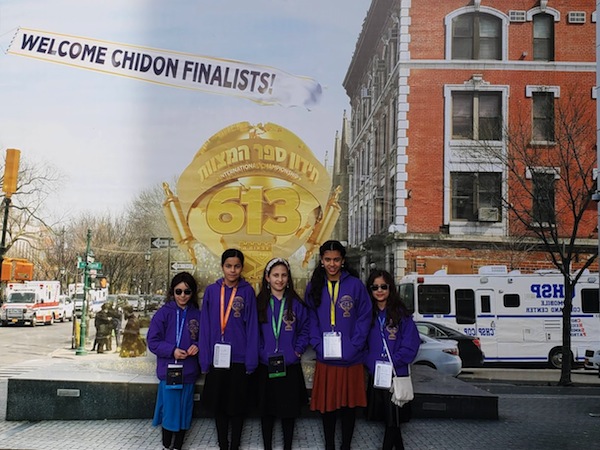
CTeen Shabbaton Havdalah in Times Square this past February. (photo from Chabad Richmond)

Richmond teenager Miriam Kriche addressed a global  audience at the CTeen (Chabad Teens) International Jewish Teen Summit in New York City during the group’s annual Shabbaton. She shared her story of overcoming adversity and emerging as a local leader, guided by Rabbi Yechiel Baitelman of Chabad Richmond. Kriche’s story highlights the resilience and strength of Jewish youth, particularly significant in the wake of the events since Oct. 7.

Active in CTeenU and the Richmond CTeen chapter – projects of Chabad Richmond and the Bayit – Kriche has made significant contributions through her volunteer work with the Hebrew school and support for Holocaust survivors. Her journey is marked by personal challenges and a transformative trip to Israel.

The summit, which took place in New York Feb. 22-25, brought together more than 3,000 participants from 58 countries. It provided a platform for Jewish teens to connect, share their stories, and reinforce their commitment to their heritage and values during challenging times.

Kriche’s speech, infused with personal anecdotes and reflections on Jewish identity, encouraged her peers to find their purpose and connect with their community. Her message, which centred on the belief that everyone has a place and a role within the Jewish tradition, underscored the summit’s aim to empower Jewish youth.

She shared her journey of facing bullying and alienation, which led her to question her identity and purpose. She spoke of a trip to Israel that rekindled her faith and connection to her Jewish roots, inspiring her to embrace her heritage and lead with conviction.

The CTeen Summit featured a series of workshops, leadership training sessions and a Havdalah ceremony in Times Square.

“In a world where our youth are bombarded with countless challenges to their faith and identity, teens like Miriam Kriche stand as living examples, empowering the teens to hold strong and be ambassadors of their faith back home,” said Rabbi Mendy Kotlarsky, vice-chair of CTeen International.

Kriche’s participation and the presence of the Richmond delegation at the summit demonstrate the impact of youth leadership in fostering strong Jewish identities.

“Our teens have returned invigorated, ready to lead and make a difference within our community and beyond,” said Baitelman. “This experience has not only deepened their connection to their Jewish identity but has also empowered them to be a source of strength and inspiration to their peers.”

CTeen Richmond, sponsored by Chabad Richmond and the Bayit and led by Rabbi Schneur and Tamara Feigelstock, is a part of CTeen, a network of Jewish teenagers encompassing more than 730 chapters, focused on empowering Jewish teenagers to become leaders in their communities through acts of kindness, community service and a strong commitment to their values.

For more information about CTeen Richmond and upcoming events, contact Rabbi Feigelstock at 604-716-2770. 

– Courtesy Chabad Richmond

Immersed in animation

Alex Greenberg’s family experience drove his work for the Dallas Holocaust Museum. (photo from Alex Greenberg)

It was a winding road for Alex Greenberg to become head of animation at a leading creative technology firm in Vancouver. 

Born in Moldova, Greenberg and his family made aliyah in 1990, when he was 11 years old. After a “pretty regular childhood” in Israel, high school graduation, military service and a bit of travel around the world, Greenberg settled down to study animation.

“Unfortunately, two months into school, the director of the school took the money and split,” he said. “My luck. All the money was gone, the money I got from my [military] service.”

He started looking for schools in Canada and the United States where he could continue his studies. He discovered the Art Institute of Vancouver and moved here, by himself, in 2003.

Fast-forward … Greenberg is immersed in immersive technology. As head of animation for ngx Interactive, he has his finger in many projects – including one that shares the testimonies of Holocaust survivors and which, of everything he has worked on, is closest to his heart.

Founded more than two decades ago in Vancouver, ngx’s 80 or so employees, according to the company’s website, help clients “reimagine what’s possible in physical and digital spaces.”

“We work with four main sectors,” said Greenberg. 

The museum sector is a big one. The company took part in a major re-envisioning of the National Portrait Gallery in London, UK. It reopened last year featuring 41 multimedia exhibits, including an artificial intelligence-powered portrait experience, an animated projection wall featuring some of the gallery’s most stunning portraits, interactive touch screens, and documentary films produced by ngx.

The medical sector is another area and, if you have ever taken your kids or grandkids to BC Children’s Hospital, you may have seen the interactive aquarium ngx developed for the emergency room so that young patients and their families have something to take their minds off the stressful reasons for their visit.

A third area is themed attractions, which have engaged audiences in such diverse spaces as Vancouver’s Science World, SeaWorld Abu Dhabi, Jurassic World in Beijing and the Canada Pavilion at Expo 2020 in Dubai.

Their corporate and institutional work, another core area for ngx, includes an interpretive exhibition in the pharmaceutical sciences building at the University of British Columbia, where visitors explore the world of health, and a project for Roche Canada, in the Toronto area, where the global pharmaceutical company has an interactive space for employees to engage with the Roche brand story.

Other projects help visitors explore cultural institutions like the Citadel Heritage Centre in Halifax, Indigenous cultural storytelling at Wanuskewin Heritage Park in Saskatoon, and interpretive exhibits about nature at Wind Cave National Park in South Dakota.

Greenberg’s specific role in ngx projects is lighting and look development.

“When you are working on a project, there’s a certain style to it, lighting, a certain mood, something that will convey the story,” he said. “We don’t just create these experiences to make them look cool. There’s a lot of thought that is being put behind them, thinking about the colours and thinking about the movement and [in the case of the BC Children’s Hospital virtual aquarium] how kids are going to interact with it to help them relax.” 

In his seven years with the company, one project stands out among the rest for Greenberg.

Visitors to the Dallas Holocaust Museum, in Texas, enter a room that transforms into a home in eastern Europe at the start of the Holocaust. Survivors share their testimonies as the home becomes no longer a refuge but a backdrop for the projection of scenes of atrocities. Then the screen rises and a holographic version of a survivor engages with the audience.

Hundreds of hours of interviews with survivors using 360-degree cameras allow for the realistic perspective of meeting these individuals in person. The project, called Dimensions in Testimony and developed in partnership with Steven Spielberg’s USC Shoah Foundation, introduces school groups and other museum visitors to a different survivor and their experiences each week of the year.

“This was one of the most impactful projects that I ever worked on,” Greenberg said. “You feel like you’re sitting in their living room. As you hear the story, the room begins to change. Lights going off, you hear marching of the boots outside, the rooms become slowly, almost unnoticeably dilapidated, just to show that the people were driven out of their homes and these homes are left with nothing but memories and a few photographs.

“After that introduction, the screen goes up and there’s a hologram production of that survivor. That’s the technology that the USC [Shoah] Foundation has developed. You can ask a question – for example, ‘What was your favourite sport when you were little?’ – and that would trigger a story where the survivor will be talking about where he used to play soccer with his friends when they were little.”

The project was close to home for Greenberg, whose grandfather lost his entire family in the Shoah.

“There was a big part of me in that experience,” said Greenberg. “I can tell and I can educate other people, people that are coming to this museum and people around the world that still don’t know what the Holocaust is, don’t know what a genocide is. It’s almost like I was telling my story.” 

Art beyond the gallery walls

For Dan Russek, art abounds in urban settings, whether it be in the form of manhole covers, bike racks or other items and scenes that city dwellers regularly encounter. Spurred by an early love of photography, he has been surveying cityscapes with an eye for “public art that goes beyond the gallery.” 

photo - University of Victoria professor Dan Russek, author of Exercises in Urban Mysticism: Practical Poetry and other books
University of Victoria professor Dan Russek, author of Exercises in Urban Mysticism: Practical Poetry and other books. (photo from Dan Russek)

A professor in the department of Hispanic and Italian studies at the University of Victoria, Russek is the author of Exercises in Urban Mysticism: Practical Poetry, a 2020 book – written in Spanish, with the title Ejercicios de mística urbana: Poesía práctica, and published in Mexico – that explores the poetry of everyday life.

“One way I look at it is that I take the idea of modern art seriously,” Russek told the Independent. “When you see a painting by Jackson Pollock, you may understand its place in the history of art. But what Pollock is showing is a kind of texture, composition and movement that you can find outside of the gallery walls, appealing to a certain sensibility that takes you beyond the museum.”

Russek was intrigued by the 1996 book Manhole Covers, written by Mimi and Robert Melnick and published by MIT Press. It delved into how an object many consider ordinary can provide a record of the history of a city and, some would argue, be deserving of a spot in contemporary urban culture; in other words, seeing a utilitarian object as an “urban sculpture.”

Russek devoted a lot of space in his illustrated book to manhole covers, bike racks, various geometric structures and a variety of textures. Art, as he views it, extends far beyond the confines of canvas or paper. Indeed, by his admission, one of his favourite spots to be is on construction sites, especially in a place like Mexico City, where there are few restrictions for getting inside. 

“You take something in itself that may not appear to be too interesting, but, when you look at it in a certain way, it becomes interesting. Or, to quote Gustav Flaubert, ‘Anything becomes interesting if you look at it long enough,’” Russek said.

As an example of this, Russek gives the work of American photographer Edward Weston in the 1920s and 1930s. As Russek describes it, in one image, Weston takes a simple green pepper and turns it into something “astounding.” The same can be done for bike racks and many other urban and industrial artifacts, he said.

Russek, who was born in Mexico, remembers being surrounded by relatives who were passionate about photography.

“As a kid, we would make an album while on a vacation. Each trip yielded an album, as did life events, weddings, bar mitzvahs,” he said. “Life was documented. It gave me a model. I began taking pictures in high school, and I realized I was interested in abstraction.”

Over the years, walking through the streets of cities like Chicago, Mexico City and Buenos Aires, Russek has been struck by many aspects of street art, including graffiti, another form of public art that is found beyond the gallery. In fact, some graffiti, he said, is as valuable as the art one finds in a museum.

“I wish I had my camera with me all the time. The reflections of light in the afternoon over the pavement, it’s phenomenal. The light making reflections on the water from a gutter – life is full of these interesting moments. Bringing the camera is a good thing because I don’t have to look for anything, the world sends it to me,” he said. 

Russek completed a PhD in comparative literature at the University of Chicago, specializing in modern and contemporary Latin American literature and visual arts. His fields of research include the links between literature and the visual arts and media, urban studies and esthetics. He has explored the relations between modern technology, culture and literature, and centres on the notion of epiphany and the phenomenon of light. His first book, Textual Exposures: Photography in Twentieth Century Spanish American Narrative Fiction, was published in 2015 by University of Calgary Press. 

Some of Russek’s next plans involve going beyond the printed page. He wants to make videos, as the medium “allows you to do more stuff, with music and the matching of images, that you cannot do in a book.” He also writes poetry (sonnets in particular) because, for one reason, “you can take an object or an emotion and write a poem about it and elevate it to a new level of importance.”

Argentine writer Julio Cortázar is an example Russek cites of an artist reaching beyond the confines of a particular medium, an approach that is multifaceted or experimental. In one work, Último Round (Last Round), Cortázar created an almanac-style book filled with articles, poems, essays and illustrations.

Aside from teaching and writing, Russek is the coordinator of the Latin American and Spanish Film Week, now in its 14th year, held in the fall at UVic’s Cinecenta. He is also the president of the Hispanic Film Society of Victoria. 

Sam Margolis has written for the Globe and Mail, the National Post, UPI and MSNBC.

The joys of making matzah

Left to right: Joanne Belzberg, Henia Wineberg, Rabbi Yitzchok Wineberg, Arnold Silber, Tammi Kerzner and Syd Belzberg. (photo by Yaletown Photography)

For more than three decades, the Model Matzah Bakery, organized by Chabad Lubavitch in British Columbia, has offered a unique and interactive Passover experience for thousands of participants. What started in the early 1990s has blossomed into an event anticipated by children, high school students, adults and seniors alike.

The hands-on program immerses participants in the ancient tradition of making matzah, a significant element of the Jewish holiday of Passover. From separating wheat kernels to baking the final product, attendees go through each step of the process, gaining a deeper understanding of the cultural, spiritual and historical significance behind this unleavened bread.

One of the highlights of the Model Matzah Bakery is its emphasis on participation. Everyone is invited to roll up their sleeves and get involved in every aspect of the process. We begin by separating wheat kernels from the chaff, a task that connects us with the agricultural roots of this ancient practice. Next, we grind the kernels into flour, followed by meticulous sifting to ensure the purity of the ingredients. As the flour mixes with water, laughter and excitement transform the process into a joyful communal experience. With expert guidance from volunteers, participants roll out the dough, making sure to create holes to prevent leavening. And all of this must be completed within a strict time limit of 18 minutes, after which the dough may begin rising, which will create chametz, leaven, which is not permitted during Passover.

This year, the Matzah Bakery got an upgrade as it partnered with Stable Harvest Farms. Not only did participants get to make matzah for Passover using locally grown, organic wheat, Stable Harvest Farms is also offering the chance for children to experience the process from farm to seder table – literally. Two family days will be hosted at the farm, where families will plant and then harvest their own wheat, which they will then use to create matzah for next Passover. Save the dates: May 12, a special Mother’s Day celebration, where the wheat will be planted, and Sept. 8, a pre-Rosh Hashanah experience, including harvesting the wheat and setting aside for Passover 2025/5785.

“Chabad is known for their innovative approach to Jewish education,” said one educator from a local Jewish day school. “This kind of hands-on, start-to-finish project will guarantee that the children remember the joy and excitement of the holiday for years to come.”

While initially designed for children, the Model Matzah Bakery has evolved to welcome participants of all ages. High school students and educators find themselves drawn to the program as an engaging way to learn about Jewish traditions, while adults and seniors appreciate the opportunity to celebrate their cultural heritage. This year, for the first time, children with special needs had their own opportunity to visit the bakery.

“It’s not just about making matzah; it’s about connecting with our heritage in a tangible way,” said Rachel Cohen, a long-time attendee of the Model Matzah Bakery. “The experience of being part of something so ancient yet so relevant to our lives today was truly special.”

Rabbi Dovid Rosenfeld, director of Lubavitch BC, which organizes this project, emphasized the importance of preserving and passing on these traditions to future generations. “Our goal isn’t just to teach about matzah making, but to create lasting memories and connections to our shared history through positive Jewish experiences,” he explained. “When participants left here, they took with them not just matzah, but a sense of belonging and pride in their heritage.” 

– Courtesy Chabad Lubavitch BC

About the 2024 Passover issue cover

image - JI Passover cover April 12 2024There are numerous interpretations of Chad Gadya (One Little Goat), which ends the Passover seder. A cumulative song, like “There Was an Old Lady Who Swallowed a Fly,” it starts with Father buying a goat, which is then eaten by a cat. Because it’s easier to summarize from the end, the last verse is, depending on your translation: then came the Holy One, Blessed be He, and slew the angel of death, who killed the butcher, who slaughtered the ox, that drank the water, that quenched the fire, that burnt the stick, that beat the dog, that bit the cat, that ate the goat. The Hebrew on the table in the cover image is the beginning of the song: Chad gadya, chad gadya, d’zabin Aba bitrei zuzei (that Father bought for two zuzim).

Often sung with different seder participants making the sounds of the succeeding aggressors, Chad Gadya is a cheerful song despite its violent imagery. With the numerous conflicts that mark human history and our present, I imagined the song’s characters, animate and inanimate, sitting down for a seder and what that might look like. This idea forms the centre of the cover scene.

While specifically about the Israeli-Palestinian conflict, Chava Alberstein’s 1989 version of Chad Gadya has always spoken to me more personally than politically. I have “been” the deer and dove of her song in my more empathetic and hopeful moments; her wolf and leopard in my more angry, fearful and hurt moments. As she sings – I, too, sometimes “don’t know who I am” in this world that can be so incredibly harsh. I, too, have thought, as Alberstein sings, and which I’ve written on the bottom of the cover art in Hebrew: “And we start again from the beginning …” each time one of us attacks another, with words or actions.

But giving up is not an option. So, while the characters of Alberstein’s song lie at the periphery of the seder image I created, 16 other symbols that might appear on a modern seder plate are scattered throughout. They represent what each of us can do to make ourselves better humans and the world a better place. They are not my ideas. I completely lifted all of them from “Beyond Bitter Herbs: Contemporary Additions to the Seder Plate” by Beverley Kort (with Leland Bjerg), which we ran in the Jewish Independent’s Passover issue last year.

Kort explains the meanings behind the fruit, acorns, chocolate, coloured light bulb, key, mirror, potatoes, banana, olives, basil, whole wheat matzah, vegetables, dried flowers, feather, rock and puzzle piece. For all the explanations, visit jewishindependent.ca/the-modern-seder-plate. Highlighting some of them: the acorns at the top of the picture represent an acknowledgement of Indigenous land rights; the rock above the dog’s head is symbolic of resilience; the key by the seder plate is about unlocking doors, embracing change; on the left side, the coloured lightbulb symbolizes the creative spirit; and the feather wafting off to the right is a reminder of the importance of kindness and compassion.

Chag Pesach sameach.