Skip to content
  • Home
  • Subscribe / donate
  • Events calendar
  • News
    • Local
    • National
    • Israel
    • World
    • עניין בחדשות
      A roundup of news in Canada and further afield, in Hebrew.
  • Opinion
    • From the JI
    • Op-Ed
  • Arts & Culture
    • Performing Arts
    • Music
    • Books
    • Visual Arts
    • TV & Film
  • Life
    • Celebrating the Holidays
    • Travel
    • The Daily Snooze
      Cartoons by Jacob Samuel
    • Mystery Photo
      Help the JI and JMABC fill in the gaps in our archives.
  • Community Links
    • Organizations, Etc.
    • Other News Sources & Blogs
    • Business Directory
  • FAQ
  • JI Chai Celebration
  • JI@88! video

Recent Posts

  • Sharing her testimony
  • Fall fight takes leap forward
  • The balancing of rights
  • Multiple Tony n’ Tina roles
  • Stories of trauma, resilience
  • Celebrate our culture
  • A responsibility to help
  • What wellness means at JCC
  • Together in mourning
  • Downhill after Trump?
  • Birth control even easier now
  • Eco-Sisters mentorship
  • Unexpected discoveries
  • Study’s results hopeful
  • Bad behaviour affects us all
  • Thankful for the police
  • UBC needs a wake-up call
  • Recalling a shining star
  • Sleep well …
  • BGU fosters startup culture
  • Photography and glass
  • Is it the end of an era?
  • Taking life a step at a time
  • Nakba exhibit biased
  • Film festival starts next week
  • Musical with heart and soul
  • Rabbi marks 13 years
  • Keeper of VTT’s history
  • Gala fêtes Infeld’s 20th
  • Building JWest together
  • Challah Mom comes to Vancouver
  • What to do about media bias
  • Education offers hope
  • Remembrance – a moral act
  • What makes us human
  • המלחמות של נתניהו וטראמפ

Archives

Follow @JewishIndie
image - The CJN - Visit Us Banner - 300x600 - 101625

Month: March 2026

Garden City of Tel Aviv

Garden City of Tel Aviv

Liebling Haus’s exhibit Life, Plant, City: 100 Years of Geddes’ Plan for Tel Aviv’s Garden City, which documents how Sir Patrick Geddes’ vision continues to shape the city’s urban fabric, includes multidisciplinary works by dozens of artists (photo by Yael Schmidt / Liebling Haus)

On April 11, 1909, 60 families gathered on the beach north of Jaffa to draw lots for the parcelization of the sand dunes they had purchased north of the ancient port. This moment in Israel’s history has been much mythologized, but one thing is clear – those garden suburb pioneers were clueless about urban planning. They turned their backs on the site’s most notable feature – its iconic Mediterranean beach.

The village that the founders initially named Ahuzat Bayit (Homestead), now called Tel Aviv, grew haphazardly, house by house, with an interruption during the First World War, when the Ottoman Turks expelled the newly established town’s Jews. In 1921, following the arrival of the British during the war and the replacement of their military rule with a civil administration, the growing suburb was granted township status separate from the neighbouring Arab-majority city of Jaffa.

It became clear that the township’s slapdash growth needed to be regulated. Into this planning chaos stepped Sir Patrick Geddes (1854-1932), a Scottish-born polymath who was at once a biologist, sociologist, landscape theorist and pioneering urban planner. The 62-page plan for Tel Aviv that he drew up a century ago remains among the most important documents in the history of the city. Liebling Haus – an architectural and cultural centre located in downtown Tel Aviv – recently opened the exhibit Life, Plant, City: 100 Years of Geddes’ Plan for Tel Aviv’s Garden City. It documents how Geddes’ vision continues to shape the city’s urban fabric, featuring not only archival materials but multidisciplinary works by dozens of artists and other contemporary interpretations of Geddes’ ideas and reflections on the city’s future.
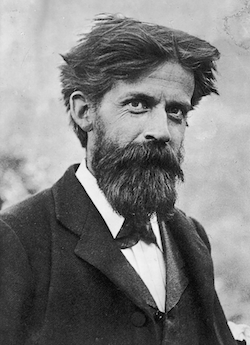
photo - Sir Patrick Geddes (1854-1932) was a Scottish-born polymath who was a biologist, sociologist, landscape theorist and pioneering urban planner
Sir Patrick Geddes (1854-1932) was a Scottish-born polymath who was a biologist, sociologist, landscape theorist and pioneering urban planner. (photo from shbt.org.uk/knowledge)

In 1925, Geddes – who earned a reputation for his urban planning in 18 cities in British India – was invited by Tel Aviv’s mukhtar, Meir Dizengoff, to prepare the first master plan to guide the town’s growth. (Tel Aviv achieved city status in 1934.)

Geddes believed that cities were living organisms, shaped by the interplay of nature, society and culture. This holistic approach – unusual for its time – made him particularly attractive to Zionist leaders, who envisioned Tel Aviv as both a future-facing modern metropolis and a cultural project rooted in Jewish history.

His plan was deeply influenced by the Garden City movement, but Geddes adapted it to the climate and social context of the Levant. It emphasized shaded streets to mitigate the Mediterranean heat, wide boulevards that encouraged airflow and social life, and parks and squares as communal anchors. Human-scale residential blocks were arranged around shared green spaces and courtyards.

Geddes’ plan expanded Tel Aviv north from its early neighbourhoods to the Yarkon River. It was delineated by the Mediterranean Sea to the west and what is now Ibn Gabirol Street to the east. Into this flat and featureless space, Geddes laid out a skein of streets with a clear hierarchy. Main north-south and east-west arteries allowed for speedy movement across the city. Secondary streets were narrower and designed for local circulation. Small residential lanes fostered neighbourhood intimacy. The goal was to create a walkable city that balanced efficiency with livability.
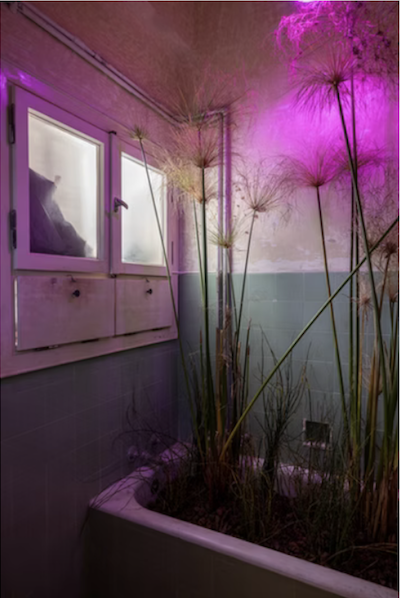
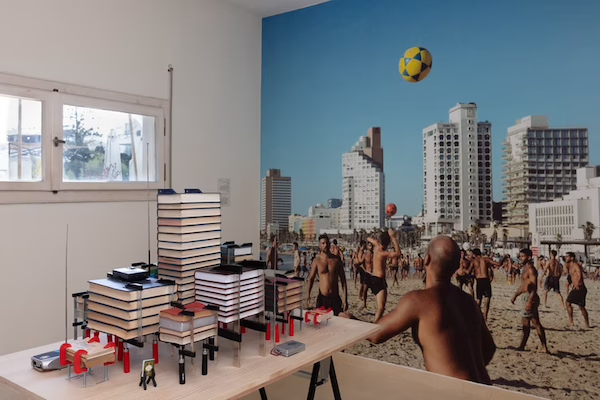
photo - On display at Liebling Haus: One of the artworks inspired by Sir Patrick Geddes’ century-old plan for Tel Aviv
On display at Liebling Haus: One of the artworks inspired by Sir Patrick Geddes’ century-old plan for Tel Aviv. (photo by Yael Schmidt / Liebling Haus)

The plan also contained what later scholars have identified as anarchist or cooperative elements. It emphasized worker-led housing blocs and resisted speculative land practices. These ideas resonated with the social and economic conditions of Tel Aviv in the 1920s and 1930s, when workers wanted architecture that reflected their egalitarian values.

Although Geddes’ plan was not executed in its entirety, its core principles shaped the development of the White City, which was recognized as a UNESCO World Heritage Site in 2003. By the 1930s, Tel Aviv had some 4,000 white Bauhaus-style buildings constructed within the distinctive blocks, boulevards and public gardens Geddes laid out.

Bauhaus was a school of arts, crafts and architecture that operated in Germany from 1919 to 1933. The rise of the Nazi party led to the shuttering of the academy. Some 60,000 Jews left Nazi Germany and Austria for Mandatory Palestine, including architects who didn’t study at the Bauhaus school but were greatly influenced by its style. There, they created a revolutionary, streamlined architectural style that suited the modernist ethos of Zionism. 

Tel Aviv’s amalgam of Bauhaus (also called International Style) buildings arose from an accident of historical coincidence: first came Geddes’ town plan; then the wave of mass aliyah triggered by the Nazis’ ascent to power in 1933, which triggered an urgent demand for housing; and, thirdly, the International Style’s lack of expensive decorative features made the cost of construction relatively low. No decorative tiles or ornamental plasterwork meant cheaper construction that could be executed by less-specialized craftsmen.

For the Yekke newcomers, many of whom had to leave significant assets behind, cheaper housing that didn’t sacrifice style was a major draw. The streamlined design with porthole windows, curved walls and balconies was a snub to the values of Central Europe, which the newcomers had barely escaped.

Liebling Haus, built in 1936, is an example of this architectural era. While not designed by Geddes, it manifests the urban environment his plan envisioned. The house’s clean lines, functional design and integration with the surrounding streetscape reflect the synergy between Geddes’ urbanism and the architectural modernism that followed. The Life, Plant, City exhibit runs to May 31.

Gil Zohar is a journalist and tour guide based in Jerusalem.
Format ImagePosted on March 13, 2026March 12, 2026Author Gil ZoharCategories IsraelTags Ahuzat Bayit, exhibits, Garden City, history, Liebling Haus, Patrick Geddes, Tel Aviv, urban planning
Sanctuary garden benefits

Sanctuary garden benefits

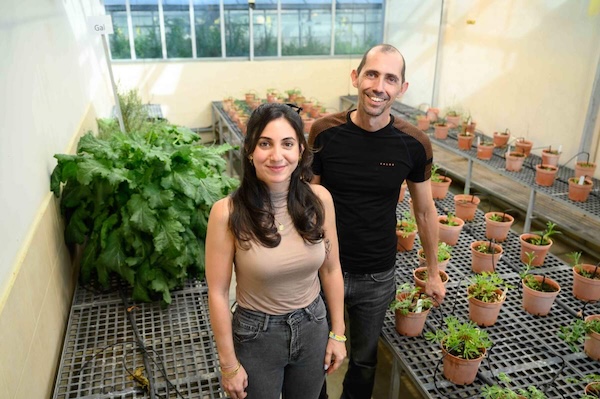
Gal Raviv, left, and Prof. Tamir Klein in the plant sanctuary at Weizmann Institute of Science in Rehovot, Israel. (photo from Weizmann Institute of Science)

When PhD student Gal Raviv thought of creating a sanctuary garden at the Weizmann Institute of Science, what she had in mind was saving endangered plants. But, after the Oct. 7, 2023, attack on Israel, the garden became for her a refuge of serenity and strength. “There’s something grounding about plants that keep growing no matter what happens around us. If they can do it, so can we,” she said. “They represent what the land of Israel can produce and, in these difficult times, they symbolize our own roots in this land.”

Raviv came up with the idea of the garden after hearing a lecture on plant conservation at a conference that Prof. Tamir Klein, whose Weizmann lab specializes in tree research, had organized at the institute. In late summer of 2023, they set up the garden in Weizmann’s greenhouses, with full backing from Weizmann’s Institute for Environmental Sustainability.

Raviv’s doctoral research, conducted in Prof. David Margulies’s lab, is unrelated to plants and focuses on molecular aspects of cancer therapy. Nonetheless, she volunteered to tend the garden, getting crucial help from the greenhouse staff and relying on their expertise.

“When people hear about endangered species, they usually think of a toad whose swamp has dried up, or other animals or birds. But at the basis of any ecosystem are plants: they are the very foundation of our existence,” Raviv said.

“Plant diversity supports diverse insects that in turn provide food for birds and animals. When plant species go extinct, their loss can disrupt the integrity of an entire ecosystem,” added Klein.

Of some 2,300 wild plants found in Israel, more than 400 are in danger of extinction, according to the Red Book of Israel’s Nature and Parks Authority. Plant species that are unique to Israel are particularly threatened: there are about 55 such species, and 35 of them are endangered. 

“We have a global responsibility to preserve these plants,” Klein said.

The major threat to plants is habitat loss, which in Israel is especially acute along the Mediterranean. Sand dunes and other parts of the coastal plain are home to an unusually large proportion of wild plant species, yet, to the plants’ misfortune, that’s also where humans love to settle. Less than 30% of the pristine coastal sands that used to line the Mediterranean in the early 20th century remained undeveloped by the beginning of the 21st. These sands might disappear altogether if left unprotected.

There are several plant sanctuaries in Israel, but not all have the proper climate to grow coastal plants outdoors, whereas the Weizmann campus, with weather that’s similar to that of the coast, is well suited to this end. Raviv and Klein kept this in mind when preparing a list of plant species for the sanctuary. The final list was compiled in collaboration with the Israel Nature and Parks Authority, which also provided seeds.

Now in its third year, Weizmann’s sanctuary garden holds some 20 endangered plants, a number of which are unique to Israel’s coastal plain; others also grow in neighbouring regions. Most are flowering annuals, but there are also perennials, as well as two species of ancient wheat, genetic relatives of today’s crop varieties. These plants are gradually revealing their preferences and personalities to Raviv and the greenhouse staff, while occasionally serving up challenges and surprises.

For example, since the greenhouses have no bees or other natural pollinators, some of the plants bloomed but produced no seeds. “So, I became the bee,” Raviv said.

To help some species, she made adjacent flowers “kiss,” that is, touch in a way that pollen from one flower could get to the stigma, or ovary system, of another – a process known as self-pollination or cross-pollination, depending on whether the two flowers belong to the same plant or to different ones. She did that, for instance, for Erodium subintegrifolium, known as stork’s bill in Europe and heron’s bill in North America. 

In other species – such as the perennial Salvia eigii, named for the botanist Alexander Eig – the reproductive organs are too deep inside the flower for the kiss method to work. Raviv came up with a creative solution. She collected whisker hairs shed by her three cats and used them to transfer pollen from one flower to the stigma of another.

Luckily for Raviv, however, most plants in the sanctuary garden manage to pollinate by themselves. 

Other challenges now solved include “late bloomers.” Silene modesta, from a genus also known as campion or catchfly – an annual plant that grows in sandy soil on the coast and in the western Negev desert – thrived in the sanctuary garden from the start. However, even though it produced lots of flower buds, these seemed to dry up before getting a chance to bloom. 

A plant conservation expert told Raviv to open one of the dried buds to see if it contained seeds. Indeed, it did, which meant that it had bloomed at some point without being caught in the act. So Raviv went to the garden late at night and, sure enough, found the slender Silene in full bloom. Keeping the bud closed after sunrise is the plant’s strategy for reducing water evaporation during the hot hours, while also protecting its flowers from the strong daytime coastal winds. 

The discovery prompted Raviv to initiate a research project in which she compares Silene modesta with its non-endangered relative, Silene palaestina. The goal is to uncover the biochemical processes that ensure water conservation in the endangered plant.

In fact, a major goal of plant conservation is to preserve valuable properties that might be lost forever should their carriers disappear. Revealing the mechanisms behind such properties might make it possible to transfer them to other plants to, for example, help them grow in arid conditions or otherwise adapt to the adversities of climate change. 

– Courtesy Weizmann Institute of Science

Format ImagePosted on March 13, 2026March 12, 2026Author Weizmann Institute of ScienceCategories IsraelTags conservation, education, endangered plants, Gal Raviv, gardens, preservation, science

Gardening in Eden …

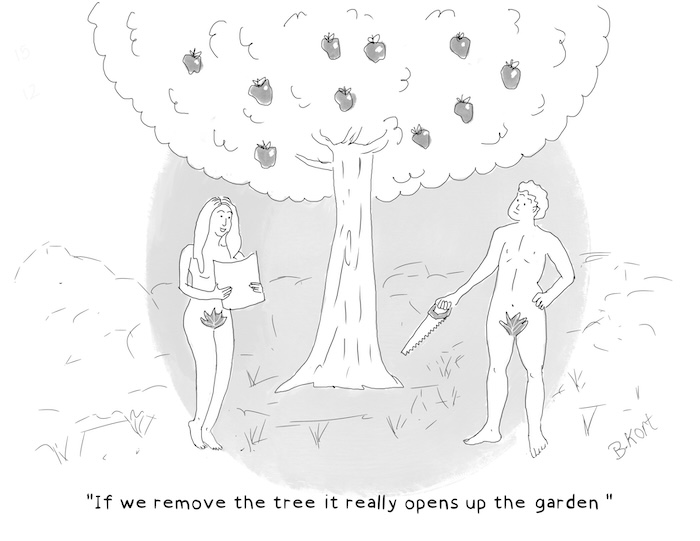
image - Beverly Kort cartoon - Adam and Eve contemplating cutting down the Tree of Knowledge to open up the garden

Posted on March 13, 2026March 12, 2026Author Beverley KortCategories OpinionTags Adam and Eve, Garden of Eden, gardening, Tree of Knowledge
האנטישמיות גואה ביוון

האנטישמיות גואה ביוון

חזרתי מחופשה בת שבוע מיוון ונוכחתי לדעת שגם במדינה ים תיכונית זו האנטישמיות גואה ומורגשת היטב. כיום ישראל ויוון נחשבות למדינות ידידותיות למדי אך מבחינת לפחות חלק מאזרחי יוון, ישראלים ויהודים נחשבים לאויבים לאור ההרג הרב של פלסטינים ברצועת עזה, כתוצאה מאירועי הטבח של השבעה באוקטובר

יחסי יוון  וישראל התחממו מאוד מאז השבעה באוקטובר לאור קרע הגדול בין ישראל לטורקיה – שהמאשימה את ישראל בביצוע רצח עם ברצועת עזה. ביוון שלא שוכחים לטורקיה את כיבוש חלק מהאי קפריסין ולכן ברגע שנוצר נתק ביחסי ישראל וטורקיה, היוונים קפצו על המציאה והגבירו את יחסי החברות עם ישראל. לאחר השבעה באוקטובר ראש ממשלת יוון הגיע לביקור סולדירות בישראל, והצהיר אז שהוא מגיע לישראל לא רק כבעל ברית אלה גם כידיד אמת. שיתוף הפעולה ההדוק בין ישראל, יוון וקפריסין כולל הגנה אווירית ואימוני צבא משותפים, וכן גם פרויקטים של אנרגיה. יוון רכשה לאחרונה מערכות הגנה אווירית מהתעשיה האווירית של ישראל תמורת כשלושה מיליארד יורו

למרות קשרי הידידות בין ישראל ליוון האנטישמיות ביוון נגד ישראל מורגשת מאוד וישראלים לא מרגישים בטוח במדינה הים תיכונית. התקריות האנטישמיות הרבות ביוון גרמו לחלק מהישראלים שעברו לגור בה לקום ולעזוב למדינות אחרות. ישראלים הותקפו כאשר הגיעו באוניות ליוון, או ברחובות או באזורי הבילוי השונים. במקביל הפגנות מחאה רבות מצד פלסטינים ותומכיהם התרחשו בחלקי המדינה השונים. המפגינים מתנגדים למדיניות ממשלת יוון של שיתוף פעולה עם ישראל בתחומים שונים

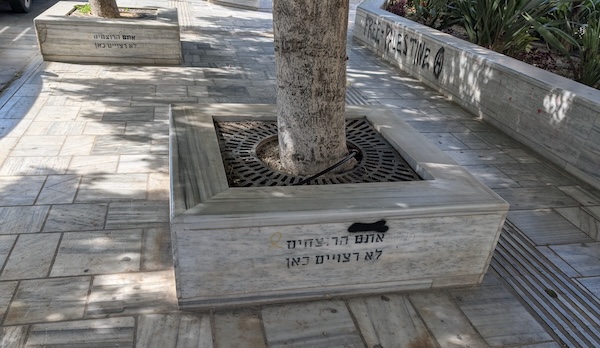
אני ביקרתי ביוון במהלך חודש פברואר שנחשב לעונה שקטה יחסית, כדי להימנע מהחום הכבד והעומס הכבד של תיירים. הסתובבתי באופן חופשי בשתי הערים אתונה והרקליון (שנמצאת באי כרתים). במסגרת סיורי וביחד עם קבוצות מודרכות ראיתי לא מעט כתובות גרפיטי בגנות ישראל, הישראלים והצבא הישראלי – לאור אירועי השבעה באוקטובר. בהרקליון ראיתי באחד הרחובות כתובת בעברית מסביב גדר המקיפה עץ כדלקמן: “אתם הרוצחים לא רצויים כאן”. המדריכה היוונית ביקשה ממני לתרגם זאת עבורה ופניה הראו שהיא הרגישה מאוד לא בנוח כשהבינה במה מדובר

לאור האנטישמיות הקשה ביוון שרת התיירות של המדינה אולגה קפלויאני, אמרה כי יוון היא יעד בטוח, שיוויוני ומכיל עבור כל המבקרים – כולל תיירים מישראל. לדברי השרה יוון לא סובלת אפלייה ולא תקבל התנהגות שפוגעת או מבזה כל אדם. היא הדגישה כי המדינה שלנו הייתה ותישאר יעד בטוח, פתוח ומסביר עבור אזרחי ישראל. לדברי קופלויאני התיירות מהווה גשר של ידידות, שלום והבנה הדתית. הוא ציינה עוד כי משרד התיירות שבראשו היא עומדת פועל כל העת בשיתוף עם משרדים ממשלתיים נוספים במטרה להבטיח שכל מבקר ביוון – ללא קשר למגדר, מוצא או אמונה דתית – ייהנה מביטחון וכבוד. שרת התיירות של יוון אמרה עוד כי האנטישמיות בכל צורה שהיא, נחשבת לדבר דוחה, היא מקוממת ואין לה מקום ביוון, לא בתיירות, ולא בדמוקרטיה של המדינה שלנו. כבוד ואירוח הם ערכים שאינם נתונים למשא ומתן

וכיצד מגיבים ברשת הישראלים על האנטישמיות ביוון: וויתרתי על יוון עד שלא ישתלטו על הזבלים האלה, תחרימו את יוון, אל תסעו לשם ואל תקנו נכסים במדינה ותבזבזו כסף במקום עויין, היוונים לא אוהבים אותנו ורק רוצים את הכסף שלנו, לא להתקרב ליוון בגלל האנטישמיות, תשכחו ממני עד כאשר תשתלטו על המטורפים האלימים אלה, המציאות מגלה כי האנטישמיות ביוון עולה

Format ImagePosted on March 11, 2026Author Roni RachmaniCategories עניין בחדשותTags antisemitism, Gaza, Greece, Israel, Oct. 7, tourism, אנטישמיות, השבעה באוקטובר, יוון, ישראל, עזה, תיירות

Posts pagination

Previous page Page 1 … Page 4 Page 5
Proudly powered by WordPress