“Moses” does standup at JFL

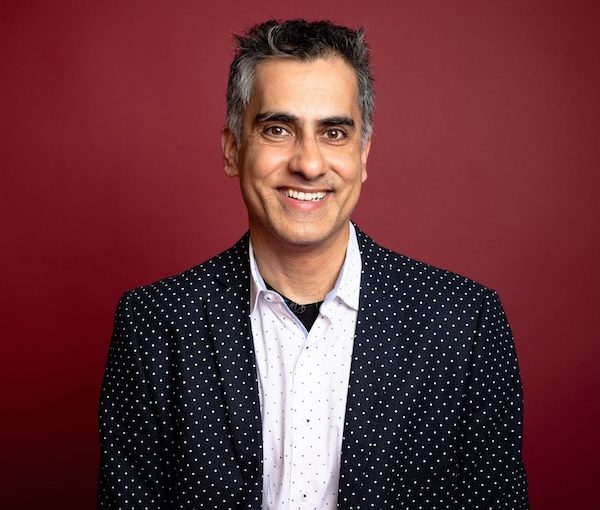
Samson Koletkar, dubbed the “world’s only Indian Jewish standup comedian, performs Feb. 15 as part of Just for Laughs Vancouver. (photo from Just for Laughs Vancouver)

This year’s Just for Laughs Vancouver features several members of the Jewish community, including Samson Koletkar, aka Mahatma Moses. He comes as part of Desi Comedy Fest – On Tour, which takes place at the Biltmore Cabaret Feb. 20, 9 p.m.

Koletkar is a co-founder of the Desi Comedy Fest with fellow San Francisco Bay Area comedian Abhay Nadkarni, who also hails from India. The biggest South Asian comedy festival in the United States, it is described as “celebrat[ing] subcontinental diversity with punchlines that transcend boundaries.”

Desi Comedy Fest isn’t Koletkar’s only entrepreneurial venture. He has a background in technology and also started Comedy Oakland, which “features funny, diverse, industry pros alongside up-and-coming comedians at various venues across Oakland,” according to its website.

Koletkar, who claims to be the “world’s only Indian Jewish standup comedian,” spoke with the Jewish Independent earlier this week.

JI: How does one go from being a techie to a standup comedian? Are there overlaps in skill sets? Do you still work in both areas or are your entrepreneurial endeavours your focus?

SK: I have tried a few things in my life, and standup started the same way. It seemed like a fun thing to do, I gave it a try and, the first time I was on stage, I was hooked. There is definitely an overlap from my tech life into standup – bulletproof logic in my jokes. If I am making a point, and I like to make many, there is no room for bugs, the jokes have to be tested thoroughly and any gaps in logic have to be fixed.

Standup has also helped make my day job easier with the ability to inject humour during tough situations. One of my ex-bosses actually made me realize the value of my standup comedy at work – he used to invite me to the tough customer meetings because invariably I would make the room laugh and the meetings got much easier after that.

JI: What were you like growing up – have you always seen the world with a humourous eye?

SK: I think so. I have always had this urge to crack a joke. There were a lot of inappropriate ones at inappropriate times, but isn’t that how we all learn, by making mistakes? Now, every time I meet parents who think their kids are funny, the one thing I advise them is to accommodate their kids’ misspeaks, and keep that funny bone intact. More often than not, the only mistake we as comedians make is saying out loud what everyone is thinking but politely holding back.

JI: When did you move from Mumbai to the San Francisco Bay Area?

SK: I took the first opportunity I got to move as far away from my parents as I could and, at the age of 24, I moved to the Silicon Valley in October 2000. I felt like the needle that burst the Y2K bubble.

JI: When did you first perform standup?

SK: Late 2005, but then jumped all in in January 2006.

JI: What led you to start Comedy Oakland?

SK: Standup is the one art form you can’t practise in your garage. You need a live audience. After grinding through three years of empty open mics and sub-par independent shows, I decided I could either sit and complain about how poorly some shows were produced, or try to do it myself. That led to Comedy Oakland, in May 2009, starting with one show on Friday nights. My goal was to create a space where comedians needed to only bring good jokes and audience experience was optimized for the art.

Just before the pandemic, I used to run 250+ shows (five shows a week), featuring 400+ comics entertaining 12,000-13,000 [person] audiences every year. In 2024, 15 years running, I am back to five shows a week at three venues in Oakland. These venues are 40 to 90 seaters.

JI: When you envisioned the Desi Comedy Fest, did you think it would become as huge as it is?

SK: I don’t think it is huge enough yet. Yes, the fest has grown from its early days, but we have a long way to go, and partnering with JFL is a big step in that journey. What I knew was that it was going to be fun, and it continues to be one of the most fun shows every year in my calendar.

JI: In what ways have you experienced racism and antisemitism, how do you handle such incidents and how do they impact you?

SK: Those stories are more fun to hear in my standup than they are to read, although they only form a small part of my routine because racism and antisemitism are a small part of my life. The world has a lot more good than bad in it and I don’t let the bad overshadow the good. An optimistic comedian – go figure! But, yes, they do impact me, not only when it happens to me but when I see it happen to others. So, some of my content is driven out of that and I tend to focus on the logical hypocrisy/fallacy of it.

JI: You’ve had much success. What are one or two things that you’d still like to achieve or do professionally?

SK: When my joke offends someone in America, it’s “Go back to where you came from.” When my joke offends someone in India, it’s “Go to Pakistan.” I want to tell an offensive joke in every single country in the world, just to see where they send me next, sort of like The Offensive Joke World Comedy Tour!

JI: If there is anything else you’d like to add, please do.

SK: Come watch a show, nothing gives me more happiness than seeing you laugh!

***

Desi Comedy Fest – On Tour also features Alisha Dillon, Amar Singh and UK Shah. For the full Just for Laughs Vancouver line-up and tickets, visit jflvancouver.com. 

Lanyi’s live Canadian debut

The Vancouver Recital Society hosts London, England-based pianist Ariel Lanyi on March 3. (photo © Kaupo Kikkas)

“Art is there to remind us that there is something bigger and greater than the present moment, something that will remain long after we are gone, which is worthy of our devotion and commitment,” pianist Ariel Lanyi told the Independent in a recent interview. Lanyi will perform an afternoon concert at Vancouver Playhouse March 3.

Hosted by the Vancouver Recital Society, Lanyi will play works by Ludwig van Beethoven (1770-1827), Frédéric Chopin (1810-1849) and Max Reger (1883-1916). In a Facebook post, the London, England-based pianist noted his pleasure at working on Reger’s Variations and Fugue on a Theme by Bach, calling it an “underrated masterpiece of the late-Romantic era” that he couldn’t wait to bring to the stage in 2024.

“Max Reger had a problem: writing fugues was too easy for him. He could jot down fugues with the same ease that Picasso could scribble drawings. Hence, his music sometimes falls into a trap of gratuitous polyphony. However, when he put his heart and soul into a work, as he did with the Bach Variations (which he considered to be his finest work), the result is worthwhile,” Lanyi explained to the Independent. “We hear a multitude of styles in this work – at times, we hear the world of Brahms and his traditional harmonic language; at times, we enter the post-Wagnerian sphere, and we even get a glimpse of more decadent music that was yet to be written. Still, it hangs together organically, and comes to a rousing ending, as all threads convene and the piano truly emulates the sound of the organ. 

“The reason this work is underrated and underplayed is quite obvious,” he added. “People tend to avoid Reger, and it takes a Herculean effort to learn this work. However, I earnestly believe that it is a masterpiece of piano literature.”

Last spring, Lanyi was awarded the Prix Serdang, which is given to young pianists at the beginning of their careers who excel in musicianship and artistic vision. The head of the selection panel, Austrian pianist Rudolf Buchbinder, said of Lanyi: “His playing is precise, nuanced and virtuosic, but he is no superficial virtuoso. What sets him apart is his ability to delve deeply into the music and to establish a connection with it. He doesn’t simply play the notes, he lives the music, seeks to capture its essence, and reflects it with extraordinary intensity, sensibility and expressive maturity.”

If one reads Lanyi’s posts and blogs, one gets a hint of the research that he puts into his performances, which have garnered critical acclaim. In addition to the Prix Serdang, Lanyi won third prize at the 2021 Leeds International Piano Competition. Also in 2021, he was a prize winner in the inaugural Young Classical Artists Trust (London, England) and Concert Artists Guild (New York) International Auditions, as well as being a finalist in the Arthur Rubinstein International Piano Master Competition. Other honours for the 26-year-old pianist include first prize at the 2018 Grand Prix Animato Competition in Paris and first prize in the 2017 Dudley International Piano Competition in the United Kingdom.

Born in Jerusalem, Lanyi studied piano at the Conservatory of the Jerusalem Academy of Music and Dance and moved to London in 2015 to study at the Royal Academy of Music. He remained in the city after graduating in 2021. Last month, he was among those selected by the Royal Academy for a 2023-2024 associate honour, which will be conferred in April: the award recognizes former students who have made “significant contributions to the musical landscape.”

Lanyi has performed around the world, both as a soloist on his own and with orchestras, and as a chamber musician. When he plays concertos or chamber music, he said of his preparation, “I always make sure to study the full score, in order to grasp the music from all points of view, not just through the prism of my individual part. When playing alone, obviously, this doesn’t apply.”

Among the highlights listed on Lanyi’s website for this season is the VRS concert next month. In 2021, during COVID, the recital society shared Lanyi’s Virtually VRS recorded performance on its YouTube channel. The March concert will be his live debut in Canada. In addition to the Reger composition, it will feature Beethhoven’s Sonata No. 30 in E Major, Op. 109; Chopin’s Mazurkas, Op. 59; and Chopin’s Polonaise-Fantaisie in A-flat major, Op. 61.

“Beethoven’s Sonata Op. 109 is a work that has been in my repertoire for quite awhile,” Lanyi told the Independent. “It was the first of the late Beethoven sonatas I worked on as a teenager, so coming back to it now feels enormously gratifying, as my idea of it has evolved in the years since. (It is also, if I remember correctly, the first work for piano to have ever moved me to tears.) The first two movements are concise and contrasting – from the relative serenity of the first movement to the fearful obsessiveness of the second. The third movement begins and ends with a hymn of gratitude and, in between, we are taken on a comprehensive journey through six distinct variations, each inhabiting its own world, deviating from the theme in the most fascinating ways while retaining the same epicentral connection to it.

“The two Chopin works in this program – the Op. 59 Mazurkas and the Polonaise-Fantaisie, Op. 61 – both stem from the composer’s late period, which is characterized by harmonic and structural exploration we seldom find in his earlier works. The mazurkas are elegant and poignant at the same time – in the midst of mellifluous music, Chopin finds ways to express intense distress with bold, dissonant harmonies, often left exposed. The Polonaise-Fantaisie is among his most symphonic works, I find. He never wrote any symphonies and, in my view, some of the late works make up for that by using the piano orchestrally. In the slow middle section of the Polonaise-Fantaisie, we almost hear a foretelling of Bruckner in the long, interwoven lines, which lead to the most unexpected places.”

Lanyi said he doesn’t have any specific formula for choosing performance repertoire.

“Usually, I have an idea of one or two central works I want to include in a program, and look for works which will complement them in a balanced way,” he said. “In the case of this program, the Reger has been on my mind for many years, so I was looking to combine it with works which aren’t as heavy.”

Lanyi’s March 3 performance takes place at 3 p.m. and is followed by a talkback. For tickets, visit vanrecital.com/concert/ariel-lanyi-2. 

2024 public speaking contest

The Jewish Federation of Greater Vancouver’s Public Speaking Contest has been happening annually in Vancouver since 1989 and is open to students in grades 4 to 7. The registration deadline for this year’s event – which takes place March 7, 7 p.m., at the Jewish Community Centre of Greater Vancouver – is Feb. 26.

For the contest, students are asked to prepare a speech of three minutes or less, choosing from a variety of topics connected to Judaism and Israel. Speeches are delivered on the evening of the contest in front of an audience, with two judges who assess the speeches based on content and presentation. 

Prizes are awarded to the top three speeches in each age group. While there are winners in every section, participation is valued above everything else, and all participants receive a prize and a certificate. 

Those students who are Hebrew-speaking or interested in the Hebrew language are encouraged to deliver their speech in Hebrew. Hebrew speeches have their own grouping and are judged on effort and content, not on their level of Hebrew fluency. 

The contest is a great learning experience, good preparation for bar or bat mitzvah, and a skill increasingly needed in our present political climate. For a flavour of the contest, there is a film on YouTube, posted by Larry Barzelai, which was commissioned for the 13th anniversary of the contest in 2018. Barzelai established the contest in memory of his father, a few years after his brother established one in Hamilton, Ont. (See jewishindependent.ca/young-speakers-deliver.)

The topics for the Public Speaking Contest are:

1. Talk about one person from either Tanach or the Talmud and highlight one important life lesson we can learn from them.

2. What makes a piece of art or music Jewish? Is it Jewish just because the person who created it is Jewish or does it have to have something Jewish embedded into it (i.e. a Jewish symbol, tradition or value)?

3. If you were to create a TikTok highlighting the Vancouver Jewish community what would it be about?

4. There are many different ways for Israelis to serve their country. Select one way Israelis do this and discuss why it is important to the country.

5. What is in a name? Talk about your name, what it means and why your parents chose that name.

6. We all have experience where we are the only or one of the only Jewish people. Talk about what it is like to be the only or one of the only Jews in your school, in one of your afterschool activities or at camp.

7. You are planning a trip to Israel. Name one place in Israel that you would like to visit and explain why you would like to visit that place.

8. Rambam (Maimonides), in his eight levels of tzedakah, says the highest form of giving is to enable someone to support themselves. Why do you think this is the highest form of tzedakah?

9. We have a continuing concern about climate change and the environment. What does the Torah say about caring for the land and how can we integrate Jewish values with environmental protection?

10. Topic of your choice.

For more information about the contest, contact Lissa Weinberger at lweinberger@jewishvancouver.com. To register, visit jewishvancouver.com/psc2024. 

– From jewishvancouver.com

Show Your Heart

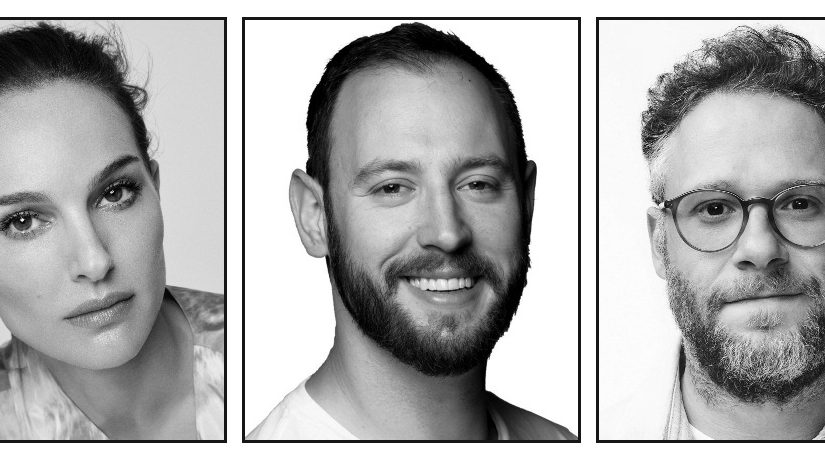
Natalie Portman, Evan Goldberg and Seth Rogen (photos from Variety)

On Feb. 25, 1-5:30 p.m., the 58th annual Variety Show of Hearts Telethon will be broadcast on Global BC. The fundraising event will feature celebrity guests, including appearances by Natalie Portman, Evan Goldberg, Seth Rogen and others, as well as musical performances by renowned artists. Viewers will hear directly from the children and families that have been supported by Variety and the impacts the organization has had on their lives.

“Variety is committed to stepping in for families who need urgent support and specialized care when there is nowhere else to turn,” said Andrea Tang, chief executive officer of Variety BC. “The essential programs, services and resources made possible by our generous donors not only transform daily realities for children – they change the trajectory of their future and positively affect entire communities across the province.”

Every donation made during the Variety Show of Hearts campaign will be matched, allowing donors to make twice the impact in a child’s life. Donors who join Variety’s monthly giving program or make a one-time donation of $169 or more will receive a limited-edition poster of Robert Bateman’s “Northern Reflections – Loon Family.” This artwork was commissioned in 1981 by the Government of Canada as a gift for HRH the Prince of Wales (now King Charles III) on his wedding.

To donate, visit variety.bc.ca or call 310-KIDS (5437) toll-free. To make an automatic $25 donation, text the word KIDS to 45678.

A full list of Variety Show of Hearts guests and performers can be found online at variety.bc.ca.

– Courtesy Variety

A way to support Israel

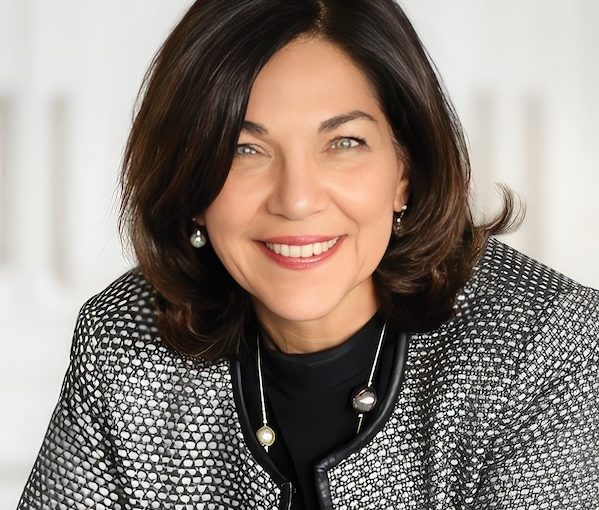
Raquel Benzacar Savatti, chief executive officer of Israel Bonds Canada. (photo from Israel Bonds Canada)

The phones at Israel Bonds Canada have been ringing off the hook since Oct. 7, according to Raquel Benzacar Savatti, chief executive officer of the organization that sells bonds for the Israeli Ministry of Finance in this country.

Canada has always shined in terms of its large base of retail purchasers of Israel Bonds, Savatti told the Independent earlier this month. That base has grown substantially.

“Jews to Israel are like firefighters to a burning building. When that building is on fire, they run towards it. When Israel is in trouble, Jews in the diaspora run towards it,” Savatti said. 

Israel Bonds can be purchased online and Savatti noticed that many new accounts were opened in October.

“The volume was incredible – people I have not heard from in years, people I have never heard from before, young people. We always asked, how are we going to capture the next generation? This was it,” she said. “People understand it’s a very direct way to show their support of Israel.”

Savatti stressed that Israel Bonds is looking to engage as much as it can with the community in Vancouver and beyond. She praised the work of Ross Sadoff, executive director of the organization for British Columbia, noting that a lot of people in the province reinvested after their bonds reached maturity in recent months.

“We have to be together in our support of Israel and for each other. We have to have hope…. Israel has historically proven that after any conflict it has come out stronger and more innovative. I firmly believe we are going to see more of that when this is over,” she said. 

Savatti underscored that the war has caused economic devastation in Israel, yet the country still has to operate and, ultimately, rebuild. The majority of Israel’s budget comes from taxpayers and there are a lot of people not working right now. Concurrently, there are challenges with sustaining the farming sector, the shuttering of businesses, the need to house evacuees and missing tourism dollars as a result of the war.

More than $50 billion has been invested through Israel Bonds by people from all over the world since its inception in 1951, creating a direct connection with Israel for many in the diaspora. In 2023, Israel Bonds had set a global goal of $1.5 billion US – by the end of the year, the amount exceeded $2.7 billion US, the bulk of which arrived after Oct.7. In Canada, more than $130 million US was sold last year and the goal for 2024 is $120 million US, though needs could change.

“I am so proud of us as a country,” Savatti said. “We punch so high above our weight given the size of our Jewish community. Per capita, we do better than any other country.”

The bonds are loans to the state of Israel to be used as it sees fit. When a particular bond – there are several to choose from – reaches maturity, the loan is repaid with interest. In the 73-year history of Israel Bonds, the country has never defaulted on the payment of the principal or interest of its debt.

In February 2021, with Savatti as CEO, Israel Bonds (officially Canada-Israel Securities) became a registered broker-dealer.

“This decision to become regulated came under the behest of the government of Israel,” Savatti said. As such, anyone who sells Israel Bonds must take the Canadian Securities Course, which would allow them to serve in an advisory capacity regarding investments as well.

“Whatever investments are being made by the purchaser, we, as the bonds organization, want to make sure they are suitable,” Savatti said. “We are not advising on a full portfolio, only on how Israel Bonds could work in that portfolio.”

For example, a person can invest in a given Israel Bond as part of a Registered Retirement Savings Plan, a Registered Education Savings Plan, a Tax-Free Savings Account and even a First Home Savings Account, depending on the goals of their portfolio. A person can select a variety of bonds with different dates of maturity.

“They really suit everybody and still make very good bar and bat mitzvah gifts,” Savatti said.

Of the types of bonds on offer, there is, for example, the eMazel Savings Bond, which is only available online; it starts at $36, with a maturity of five years. The Jubilee and Maccabee Bonds last as long as 15 years, with a $25,000 Cdn and $5,000 Cdn minimum, respectively.

Savatti has been connected with Israel Bonds since 2001. Before becoming CEO in 2016, she was the director of women’s and synagogue positions, divisional director, human resources manager, and chief customer officer. She was also the executive director of Ezer Mizion, an Israel health support organization, in Canada for two years.

For more information, visit israelbonds.ca or call 1-866-543-3351. Questions can also be put to Sadoff in the BC office, at 604-266-7210 or ross.sadoff@israelbonds.ca. 

Sam Margolis has written for the Globe and Mail, the National Post, UPI and MSNBC.

Why pick segregated funds?

Segregated fund products can offer greater peace of mind for those looking to participate in the market but wanting the reassurance of insurance guarantees to help them sleep better at night. (photo from pxhere.com)

Looking for an investment option that can help you sleep at night? Segregated fund products can guarantee you’ll get back some or all of the money you invest.

Segregated fund products, available exclusively through insurance companies, provide the growth potential of market-based investments with the benefits of an insurance contract. They first came into popularity more than 25 years ago, when interest rates began to fall and conservative investors turned to them as a secure alternative to guaranteed investment certificates (GICs). They continue to provide a safe way to grow your assets while providing you with some protection from market downturns.

Are segregated funds a good investment?

Ninety-eight percent of Canadians surveyed as part of the 2015 Retirement Now report said it’s important to have some form of guaranteed income in retirement. At the same time, Canadians are living longer than ever before and many are underestimating their longevity and are underfunding their retirement.

Segregated fund products can offer greater peace of mind for those looking to participate in the market but wanting the reassurance of insurance guarantees to help them sleep better at night. They’re particularly suitable for those who are:

• Seeking enough return on their investments to reach savings goals.

• Looking for a broad range of quality investment options.

• Building their savings but looking for protection against market downturns.

• Seeking insurance benefits, including prompt estate settlement and guarantees.

• Looking for guaranteed income for life.

Segregated funds vs alternative investments such as mutual funds

Segregated fund products have some similar features to mutual funds in that they can hold a range of assets and enable you to benefit from holding a diverse mix of investments. They differ in that they offer the following unique benefits:

• Maturity guarantee: Even if the value of your investment declines, you are still guaranteed to get back 75% to 100% of the money you have deposited, less any withdrawals, in either 15 years or at age 100, depending on the type of product you have selected.

• Death benefit guarantee: Segregated fund products offer a 75% or 100% death benefit guarantee that can protect the value of your estate. The greater of your market value or death benefit will bypass probate and flow directly to your beneficiaries, depending on the type of product you have selected.

• Potential creditor protection: Small business owners and entrepreneurs can benefit from the fact that, under provincial insurance legislation, segregated fund products may offer protection against creditors in the event of a bankruptcy.

Segregated fund products also provide a variety of investment options to meet the needs of people in specific life stages:

• Competitive fees: In the past, segregated funds have typically been more expensive than mutual funds. But some of today’s segregated funds come with lower maturity and death benefit guarantees and carry management fees not much higher than standard mutual funds.

• Lock in market gains: Some segregated fund products provide the option of resetting the maturity guarantee up to several times a year. If your funds go up in value, you can lock in a higher guarantee.

• Guaranteed income options: Looking to fund your retirement? Some segregated fund products are designed to function like an annuity and provide you with a guaranteed income for life.

• Naming beneficiaries on non-registered accounts so that it bypasses the estate and goes straight to the beneficiaries. This is a good tool for estate planning and to avoid any wills variation issues.

• Designate an irrevocable beneficiary who needs to sign off on any account withdrawals or changes. Owner retains control while providing a gift to children or grandchildren. 

Philip Levinson, CPA, CA, is an associate at ZLC Financial, a boutique financial services firm that has served the Vancouver community for more than 70 years. Each individual’s needs are unique and warrant a customized solution. Should you have any questions about the information in this article, visit zlc.net or call 604-688-7208.

Disclaimer: This information is not to be construed as investment, legal, taxation or account advice, nor as an offer to sell or the solicitation of an offer to buy any securities. It is designed only to educate and inform you of strategies and products currently available. The views expressed in this commentary are those of the author alone and are not necessarily those of ZLC Financial. As each situation is different, please seek advice based on your specific circumstance.