זה לא חלום אלה

אמזון מבצעת ניסויים סודיים במזל”טים בקנדה. (צילום: amazon.com)

 הונאת הפונזי הגדולה של קנדה: 3,000 משקיעים איבדו קרוב ל-300 מיליון דולר

פרטי פרשת הונאת הפונזי הגדולה ביותר בתולדות קנדה נחשפים בימים אלה, במהלך משפט פלילי נגד שני אזרחים מקלגרי. גרי סורנסון (71) ומילו ברוסט (61), נאשמים שהונו כ-3,000 משקיעים בסכום שנאמד בקרוב ל-400 מיליון דולר. מקורות הכספים של המשקיעים באו מחסכונותיהם, כספים שהקציבו לטובת הפנסיה ואף מהון עצמי של בתיהם.

המשפט שנחשב לאחד מהארוכים בהיסטוריה הפלילית של העיר הקלגרי, נפתח ב-2009, וכאמור הוא עדיין מתנהל בימים אלה. בבית המשפט הוצגו למעלה ממאה אלף של דפים של מסמכים וקלטות שמע. לאחרונה אחד עשר חברי המושבעים הרשיעו את סורנסון וברוסט, בשלושה סעיפי אישום. הם הואשמו בשני סעיפים אישום של זיוף וסעיף אחד של הלבנת כספים. התביעה מבקשת להטיל על השנים את העונש המירבי שנקבע בחוק, שעומד של 14 שנים בכלא. פסק דינם של שני הנוכלים צפוי להתפרסם בקרוב.

סורנסון וברוסט שיכנעו את המשקיעים שרובם מצפון אמריקה (בעיקר אמריקנים וקנדים), בשנים 1999 ועד 2008, לרכוש מניות של שלוש חברות השקעות לכריית זהב שבשליטתם. פעילות החברות התמקדה כביכול בהונדורס, ונצואלה, אקוודור, פרו, קנדה וארצות הברית.

את הכספים השקיעו השניים בחברות קש חסרות ערך עם שמות נוצצים. ובעיקר הם לקחו את הכספים ובזבזו אותם על חיי ראווה ונוחות, שכללו בין היתר: טיסות במטוסים פרטיים, מגורים בווילות מפוארות וארוחות יקרות. סורנסון וברוסט טוענים שהם נשארו חסרי כל, והמשטרה לא בדיוק מאמינה להם. בשלב זה חוקרי המשטרה מנסים לאתר לפחות חלק מהכסף שנעלם על ידי שני הנאשמים.

זה לא חלום אלה מציאות: אמזון מבצעת ניסויים סודיים במזל”טים בקנדה

ענקית המסחר האלקטרוני האמריקנית אמזון, מבצעת בימים אלה ניסויים עם מטוסים זעירים ללא טייסים (מזל”טים) להעברת חבילות, במחוז בריטיש קולומביה, קרוב לגבול עם מדינת וושינגטון בארצות הברית. מטה החברה של אמזון ממוקם בעיר סיאטל שבוושינגטון. באמזון מסרבים לחשוף את מיקומו המדויק של אתר הניסויים כדי למנוע מעקב מצד המתחרות הקשות, בהן גוגל ופדקס. גורמים שונים בקנדה ששמעו על דבר הניסויים של אמזון, הגיבו בספק וחשבו שמדובר בדבר בדיחה. אך באמזון השיבו בתגובה שמדובר בדבר אמיתי. הניסויים באתר הסודי כוללים הטסת מזל”טים בגובה של עד 150 מטר, ובמהירות של עד 80 קמ”ש. ניסויים סודיים דומים עם מזל”טים מתבצעים ע”י אמזון באחת מהמדינות של מערב אירופה.

אמזון המתינה למעלה משמונה חודשים לקבל את אישור רשות התעופה האמריקנית, לביצוע ניסויים עם מזל”טים בתוך ארה”ב. לאחר שהתייאשה מהאמריקנים החברה פנתה לרשות המקבילה הקנדית. ולהפתעה (או לא) קיבלה את אישור המיוחל בתוך שלושה שבועות, לביצוע ניסויים עם מזל”טים במשך שנה. קנדה נחשבת למדינה ידידותית להפעלת מזל”טים לשימושים מסחריים שונים. בשנה שעברה קנדה הנפיקה אישורים ל-1,672 מזל”טים מסחריים. ולעומת זאת ארה”ב הנפיקה אישורים רק 48 מזל”טים.

שרת התעופה של הממשלה הפדרלית של קנדה, ליסה רייט, אומרת שקנדה היא המובילה בעולם כיום בטכנולוגיית מזל”טים. היא מקווה שגופים דומים כמו אמזון ילכו בעיקבותיה ויפנו לקבל אישור לניסויים, בהם רשות הדואר הקנדית – קנדה פוסט.

אמזון הכריזה בסוף שנת 2013 על פרוייקט ‘פריים אייר’ להפעלת מזל”טים, שישלחו ללקוחות שלה בתוך כחצי שעה, חבילות במשקל של עד 2.3 ק”ג. אמזון מחפשת עתה בין היתר מהנדסים ישראלים שיעבדו בפרוייקט המעניין. עם מפרסום ‘פריים אייר’ לא מעט גורמים טענו שמדובר בפרויקט מסוכן, שיגרום לנזקים ברכוש ובנפש.


Rock pioneer plays at Chan

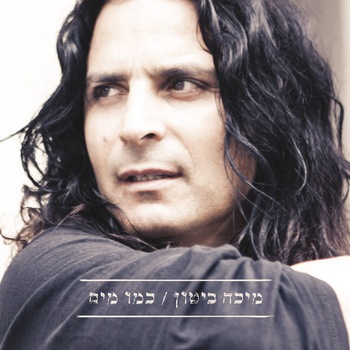
Micha Biton headlines the community’s Yom Ha’atzmaut celebrations April 22. (photo from Micha Biton via Jewish Federation of Greater Vancouver)

Seven years in the making, Laura Bialis’ documentary Rock in the Red Zone premièred last October at the Haifa Film Festival, and has since enjoyed several other prominent screenings in Israel. Less than a kilometre from the Gaza Strip, Sderot has been a favorite target of Hamas rocket fire for the last decade and a half – but it has also been the birthplace of a unique style of rock music, producing more than its share of popular bands and singers. One of the rock pioneers featured in the documentary steps off the Israeli silver screen and into Vancouver’s Chan Centre for the Performing Arts on April 22 to lead our community’s Yom Ha’atzmaut celebrations – Micha Biton.

JI: Your stop in Vancouver is part of a North American tour for Like Water. Are you traveling with a band? If so, who and what instruments?

MB: Exactly a year ago, my fifth album, Kmo Mayim (Like Water), was released in Israel and we performed a series of concerts around the country in celebration of the release – a tour that was very successful and drew attention from radio, television and media outlets. Subsequently, I performed in both San Francisco and New York and realized that, despite the fact that over half of the audience does not understand Hebrew, the music touched the hearts of those who heard it. For this concert in Vancouver, I am coming with five amazing musicians: Yossi Shitrit (electric guitar), Shir Yerushalmi (electric guitar), Hillel Shitrit (keyboards), Itamar Abohasera (drums), Shai Zrian (bass).

JI: In which other cities are you performing on this tour? For how long are you here?

MB: We are coming directly from Israel, and Vancouver is the first city on our tour. After Vancouver, I will perform in Los Angeles and San Francisco. I’ll be in North America for less than two weeks. Due to my heavy performance schedule in Israel, I couldn’t carve out more time to tour on this trip, but I always manage to make a little time to take in the atmosphere of the cities in which I perform. This is not my first time in Vancouver – last year, during the war between Israel and Gaza, I brought my whole family to Vancouver to visit my wife’s family and I fell in love with your beautiful city and people. I’m excited that on my second trip to Vancouver I will get to perform for the wonderful people that I met in Vancouver.

JI: Like Water is your fourth solo recording?

MB: Kmo Mayim is my fourth solo recording, but it is my fifth album. In 1997, I produced my first album, Tanara, with a group of talented musician and it received critical acclaim in Israel. Soon after, I became a solo artist and, over two decades, I recorded four albums of original music. For me, Kmo Mayim is a very personal album that I wrote about relationships – friendships, love, connection with God. Every song tells a different story, and every story has an open-ended moral attached to it. I’m very proud of this album and I’m happy that my audiences like it.

image - Kmo Mayim cover
Micha Biton’s latest CD is Kmo Mayim.

JI: You are one of the pioneers of the renowned rock music scene in Sderot. Could you share a bit about its development, how it has changed over the years?

MB: In the 1990s, I created a band called Tanara, a period that saw an incredible explosion in the Israeli music scene, especially in Sderot. Bands like Tippex, Knesiyat Hasechel and ours developed a new sound that was special and unique to Sderot, combining rock music with the Moroccan/ethnic sounds of our neighborhoods and our childhoods. In those early days, Sderot was underdeveloped and family-oriented. We didn’t have much to do, so music became our lives and we played and composed in the bomb shelters all of the time. (In those days, we used the shelters for writing music and rehearsing for concerts. Today, unfortunately, they are used as shelters from the rockets fired from Gaza.) In addition, it was a town where everyone knew everyone – there was no such thing as a stranger in our town, and the warmth created by this strong community significantly influenced our ability to create something unique musically.

JI: How about your own style? How would you describe it now versus when you first started out?

MB: My musical style hasn’t really changed much over the years. I’ve been very successful continuing to write ethnic rock in the style that I helped to create and I am lucky that my audience appreciates my style and my sensitivity. While my roots are strongly planted in Sderot, I am different than most of my fellow musicians from the area. At the age of 10, after my father died, I left my Moroccan biological family and was fostered by an Ashkenazi family in Jerusalem. From that early, tender age, I started to live between two cultures, understanding the beauty of each, and using both of them to influence the way I compose and the way I live. It turns out that my foster mother, Galila Ron-Feder, was a modestly successful author in Israel who shortly after my arrival chose to write an entire book based on my life and my journey (and I was only 10!). This book, El Atzmi (To Myself), became her most successful book. It became a series of books, and then a movie. It has been translated into 27 languages. The influence of Galila and her world, and the world of my parents together, helped me to create a new world of my own. My music and the lyrics that I write are very connected to the fact that I have lived most of my life straddled between these two worlds.

JI: A 2007 New York Times article refers to “Biton’s anthem for Sderot,” which was “I don’t leave the town for any Qassam.” What is it like living in Sderot these days? Are you hopeful for the future?

MB: In the quiet days of peace, we love living in this area. My nine brothers and sisters and their families live in Sderot, and my family and I live on the border between Sderot and Gaza in Netiv Haasara, a moshav where we can see Gaza from our backyard. This is my home, and we are very drawn to this place. For the past 10 years, we have lived with the reality that at any moment, day or night, the sirens will start and we have 15 seconds to run to our bomb shelters. Our children have grown up with the feeling that life is beautiful but uncertain. This past summer, and several times in the past, we have been forced to leave our homes and our community because of the imminent danger that the conflict caused. Rockets fell on our yard. A rocket hit my wife’s parents’ home, who live a block away from us, destroying precious family heirlooms. For every rocket that fell last summer, there are hundreds of rockets that have landed around us in the past 10 years that go unreported but, for us, they are very real. When we came to Vancouver last summer, my 4-year-old son looked at me and asked, “Abba, why don’t they have tzeva adom (warning sirens) here in Vancouver?” and I explained to him that not everyone has to deal with rockets falling on their heads all of the time. It was a very sad moment for me.

In 2007, when I wrote the song ‘I don’t leave the town for any Qassam,’ I felt that people were deserting Sderot and all of her beauty because of the situation. I wanted to give them strength and remind them that it was critical to stay and to fight for our hometown. Less than a year later, I wrote HaTzad HaMuar (The Lighted Side) from the same place in my heart. Despite all of the pain, I wrote, don’t forget the light, the hope, the optimism. Because that is really what Sderot is all about. Not a place where rockets fall, but a place of warmth and love and peace.

JI: In the same article, you speak about Hagit Yaso as a star almost certain to rise to the top. She has, of course. And she played here in Vancouver last year for Yom Ha’atzmaut. Are there any current young Sderot musicians for whom we should be keeping watch?

MB: Hagit is an amazing singer and an extraordinary human being. I’m proud to stay that she was one of my most talented students when I taught music and theatre in Sderot. I am so happy for her success and that she represents a new generation of musicians that has emerged from Sderot. The wonderful thing about this young generation is that they are succeeding to continue the tradition of Sderot, bringing exciting new musical projects to Israel and to the world. During one of my tours, I invited her to the stage to sing with me, and it was a really beautiful moment of connection between the pioneers of the music scene and the young musicians of this generation.

One of the new, talented musicians climbing up the ladder at the moment is my cousin Tzafrir Yifrach, who concentrates on world music. He has exceptional talent and is performing quite a bit these days around Israel, and musicians from all over Israel love coming to his recording studio in Sderot to work on their own projects with him. Another rising talent is Nir Vaknin, who is in the process of finishing his debut album.

JI: If there is anything else you’d like to add, please feel free.

MB: During the time that I was in production for Kmo Mayim, I started another project with a musician from the U.S., Lisa Tzur, who was the executive producer of Kmo Mayim. I’ve traveled a lot in North America and have performed at synagogues where the singing was so beautiful that I never forgot it. I wanted to be a part of that somehow. Taking words from the prayer service and from Psalms, as well as a few original texts, we recorded a project that is different than anything else that I have recorded. The idea was to create music that was accessible and singable by audiences that were not necessarily Israeli. Lisa comes from that world (as a lifelong member of the Reform Jewish movement and as an ordained rabbi) and together we created something very special that will be released this summer both in Israel and in the world.

The April 22 festivities at the Chan start at 7:30 p.m. For tickets ($18) and more information, visit jewishvancouver.com/yh2015.

A vision for the future

Rabbi Rick Jacobs, president of United Reform Judaism. (photo by Ian Spanier)

Temple Sholom is celebrating its 50th anniversary this year. As part of its continuing celebrations of this milestone, Rabbi Richard Jacobs, president of United Reform Judaism, and Paul Leszner, head of the Canadian Council for Reform Judaism, joined Rabbi Dan Moskovitz and the Vancouver congregation last Shabbat.

Rabbi Rick, as he is fondly known, is entering his third year as president of URJ. Throughout his rabbinate, he has been a social justice activist, whether setting up a homeless shelter in his hometown of New York City, or joining an international humanitarian mission to the Chad-Darfur border. Vibrant, welcoming and warm are some of the words that he uses to describe the movement, and it was not difficult to sense the enthusiasm as he discussed with the Independent his leadership philosophy, as well as the goals of Vision 2020, a URJ campaign to reach and inspire the 900 or so Reform communities across North America.

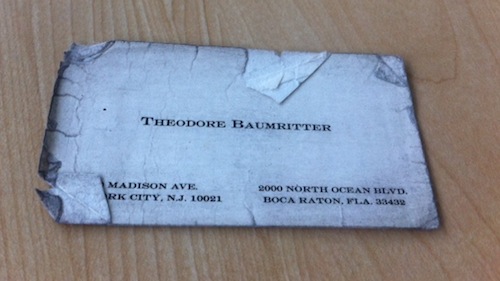
image - Rabbi Rick Jacobs carries with him a business card of his grandfather, Theodore Baumritter: “He taught me as much about life and Judaism as anyone I ever met.”
Rabbi Rick Jacobs carries with him a business card of his grandfather, Theodore Baumritter: “He taught me as much about life and Judaism as anyone I ever met.”

JI: I read about your personal mission and the fact that you carry around a business card of your grandfather, Theodore Baumritter. What does that say to you?

RJ: My grandfather was a person with such integrity and such goodwill that everywhere he went, people came to know and love him, people he met through business and through Jewish life. He taught me as much about life and Judaism as anyone I have ever met. Generational bonds are very important. To know where you come from and the people that helped you become who you are, they shape one’s character and aspirations.

My other grandmother emigrated from Eastern Europe when she was a teen. She was a seamstress on the Lower East Side and didn’t have the privilege of going to high school until she was a senior citizen. She went back and got her degree. She raised five children.

I feel very blessed to have the grandparents and parents I had, and hope that when we talk about ancestors they are not just vague theoretical people.

JI: What would you like readers, and Jews generally, to know about Reform Judaism?

RJ: Reform Judaism is large, passionate strong, dynamic, welcoming and truly inspirational. It can speak to lifetime congregation members and to those who haven’t tasted any of the rituals of the Jewish traditions. There may be people who at one point lived somewhere in a Jewish community and are open to finding a place for themselves.

JI: What are the specific goals of Vision 2020 and how do you propose to carry them out?

RJ: With guidance and help from rabbis and leaders across the U.S. and Canada, UJR envisions three major strategic priorities.

The first is to strengthen congregations, even congregations that are thriving and growing…. The world in which we live and the Jewish communities in which we find ourselves are having to change at an extraordinary rate. Congregations have to learn about how to engage in learning, spirituality and worship to nourish the soul. How do we ensure the synagogue is not frozen in one moment even though we have been growing steadily? How do we express chesed (loving kindness) in the congregation?

The second priority is called “audacious hospitality.” Audacious hospitality reaches beyond politeness…. Anyone who shows an interest in Judaism should not be turned away. If someone walks into the synagogue for the first time, it’s a very tentative moment. “Will I feel at home? Will I want to explore and get to know people?” Particularly a family with children. We want and need everyone to feel a genuine connection, rather than institutional – seniors, disabled, interfaith families; someone who has no knowledge of their Jewish faith; a traditional person who is now seeking something more contemporary. It’s about inclusion with no barriers. What’s important is building the bridges outside the walls and at the same time paying very close attention to those inside our walls.

JI: Low-income people or families may not have the means to afford membership or event costs. How do you propose to remove that barrier?

RJ: One of the barriers that keeps people outside the synagogue can be a financial barrier. Sometimes it’s a barrier or a priority they choose to avoid. Either way, we want to lower those because it’s not the finances that bind us together. We are bound together because we are part of a people, and we want to reduce ways in which you have to formally affiliate. Although, supporting something you care deeply about is a deeply held Jewish value. But, if someone wants to participate, it cannot be a barrier. Whether it’s participation in summer camp or Jewish day school, we have to remove those barriers.

JI: The third pillar of Vision 2020 is tikkun olam. Could you give me some examples?

RJ: Tikkun olam [perfecting the world] is a very large category to express a fundamental Jewish commitment. In the past 20 years, every study of the Jewish community [asks] … “What is the most compelling way you express your Judaism?” Pew Research [results] said: One, remembering the Holocaust. Two, standing up for equality and social justice. We use [tikkun olam] to actually express a fundamental Jewish commitment. When we pray or celebrate holidays, it is not instead of doing community work for people who have no home or food – tikkun olam is becoming a partner with G-d and making the world as God intended it to be. It’s primary. It is the pillar of Jewish life.

For us, tikkun olam also involves core Jewish values on a local and national level. It’s about helping immigrants, making sure that gun violence is not to the point that it inhibits our society. It also means making sure that public policy is responsible to [people’s] needs, whether it’s health care or caring for seniors. We don’t separate public policy and say, “That’s the government’s job.” We care about them. On a local and a national level, these are core Jewish values.

So, how do we lead and support the things that our Jewish tradition commands us to do? Young people tell us (whether they are involved or not) that, for them, the way that tikkun olam is practised is a serious, ongoing discipline, a way of life and a top priority.

JI: Is that where all the passion is to be found? What happens to the ritual and liturgy? Can these inspire people in these high-tech times?

RJ: Not only can we, but it’s happening. I recently attended a convention in Atlanta, Ga., where 1,000 of our own youth leaders attended, but also youth professionals who lead prayers, study. They [made] sure that we learned about the history of civil rights. Atlanta is where Martin Luther King preached. I use the example of young people because they have the fire burning in them. They speak Hebrew, they know how to pray, chant Torah and they have attended Birthrights. It is one thing to hear it from rabbis and educators. It is another thing to hear it from youth leaders.

We have 15 summer camps. Young people will talk about their expressions of Jewish commitment, such as meditating, praying and singing. They will stand up for Israel in their schools. This is the kind of Jewish engagement we are seeing. But this is also the time to be thinking about the young people who aren’t engaged.

JI: How do you reach them?

RJ: One method, which we can now use, is technology. We have, for instance, a website, reformjudaism.org. Last year, there were two million users on the website looking for Jewish learning and connection. Technology can be a connector but can’t have the same experience as a face-to-face real community, only virtual.

JI: What really excites you about your job?

RJ: I love traveling and getting to know Jewish communities all across North America. From a small little community in Mississippi or a large congregation in Arizona. Or, this weekend, Vancouver, Calgary and Edmonton. It’s a privilege getting to know the different communities and bringing a sense that we are part of something larger.

Jenny Wright is a writer, music therapist, children’s musician and recording artist.

A friendly, fun contest

Dr. Neil Pollock hands out some of the awards, as Larry Barzelai and student participants look on. (photo by Cynthia Ramsay)

Based on the numbers alone, the 27th Annual Public Speaking Contest on March 19 at the Jewish Community Centre of Greater Vancouver was a success. Participants: 120. Prizes: 30. Volunteer judges and moderators: 30.

Founded by Larry Barzelai in memory of his father, the event was co-sponsored by Jewish Federation of Greater Vancouver and State of Israel Bonds, with additional support from the J and the Isaac Waldman Jewish Public Library. As one of the volunteer judges, I witnessed a well-organized event that thrived on controlled chaos – almost all of those 120 student participants were accompanied by family and/or friends, and in the crowd were potential future speakers and their parents sussing out what participating next year might be like.

“My father, Morris Black, alav ha’shalom, would be very pleased to see the legacy he created,” Barzelai told the Independent.

Indeed, he would. Speakers were from grades 4 through 7, and they had their choice of topic from a list of 10, one of which was to choose their own. The most popular choices in the Grade 4 class I co-judged were to create a day to mark an event from Jewish history that is not currently being celebrated or commemorated; to describe an app that would enhance Jewish studies at your school; to explain why recycling is a Jewish concept; and to explain what you think is/are the best innovation(s) to have come out of Israel in recent years.

The enthusiasm of the competitions taking place in rooms around the J was corralled in the Wosk Auditorium afterward, and Alex Konvyes entertained the excited students and their guests while the results were being tallied. As each winner was announced, huge cheers went up. As some winners read their speeches, the auditorium came to a hush.

“Several parents in attendance this year had previously been public speaking contestants in their youth, so the legacy continues,” Barzelai noted.

While pleased that “the contest continues to be healthy” and that it is strongly supported by the principals and teachers of the three day schools – Vancouver Talmud Torah, Vancouver Hebrew Academy and Richmond Jewish Day School – Barzelai expressed concern about “the inability to attract students from Jewish supplementary schools and students that are not affiliated with Jewish schools. In former years, the contest had a wider cross section of students,” he said.

Barzelai credited Lissa Weinberger, JFGV manager of Jewish education and identity initiatives, for doing “all the work, with only occasional input from me. Her organizational skills are great. A few prospective judges dropped out close to the event, and she was able to recruit new ones at Shabbat services. Beware, synagogue attendees!”

2015 winners

In order of first, second and third, this year’s Public Speaking Contest winners in each contest were:

Hebrew: Omer Murad (Grade 4, VTT), Ofek Avitan (Grade 5, VHA), Yael David (Grade 4, VTT).

Grade 4: Rachel Marliss (RJDS), Mendel Bitton (VHA), Jesse Millman (VTT).

Grade 4: Zac Peter (VTT), Ellis Jackson (RJDS), Chase Dodek (VTT).

Grade 4: Aaron Guralnick (VTT), Cassie Porte (VTT), Devorah Leah Yeshayahu (VHA).

Grade 5: Ava Abramowich (VTT), Benjamin Gutman (VTT), Elana Robibo (VTT).

Grade 5: Sarale Bitton (VHA), Adin Tischler (VTT), Rubi Katz (VTT).

Grade 5: Alex Ritch (VTT), Shoshana Pollock (VTT), Tristan Georges (VTT).

Grade 6: Menachem Yeshayahu (VHA), Riva Berger (VHA), Mordechai Wolfson (VHA).

Grade 7: Eva Dobrovolska (VTT), Neev Mizrachi (VHA), Teah Bakonyi (VTT).

Grade 7: Avrel Festinger (VTT), Romy Ashkenazy (VHA), Elliot Pollock (VTT).

Modern Uncle Vanya

Robert Salvador, left, Anna Galvin and Jay Brazeau in Vanya and Sonia and Masha and Spike. (photo by David Cooper)

Ah, the trials and tribulations of brothers and sisters. It’s the few and far between who go through life without the experiencing them. But, as with all humans, the beauty of the sibling dynamic is that just when you think you know someone, they turn around and surprise you. They show a vulnerable side you never thought existed; come through in the crunch to do the right thing; or push you out of your comfort zone, enabling you to discover a life you didn’t think you could have.

Such is the story of Vanya and Sonia and Masha and Spike, a wonderful play by Christopher Durang that retells the story of Anton Chekhov’s Uncle Vanya in a contemporary setting.

In the modern-day version, rather than uncle and niece, Vanya (Jay Brazeau) and Sonia (Susinn McFarlen) are a brother and adopted sister left behind to look after ailing parents, while sister Masha (Anna Galvin) – representing Chekhov’s Prof. Serebryakov – has taken off to become a world-famous movie star. She gave up being a respected stage actress and is now known for playing a nymphomaniac serial killer in Sexy Killer, which has spawned five sequels.

Their parents, fans of Chekhov, gave them all names from the Russian’s works. In a nod to Uncle Vanya, the parents left the house to Masha, who hardly ever visits and has only come back this time to sell the home in which her brother and sister live, which would leave them homeless.

In Uncle Vanya, the professor arrives with a much younger second wife; in Vanya, Masha arrives with Spike (Robert Salvador), a much younger and even more self-absorbed male co-star. Masha flounces about the stage, callously rubbing her siblings’ noses in her successes and boasting about her studly lover, while Vanya and Sonia berate her for being absent when her parents were ailing and wallow in their own misery of unfulfilled lives.

Added to the mix is Cassandra (Carmen Aguirre), a clairvoyant who channels spirits, warning Sonia and Vanya of future evils. “Beware Hootie Pie,” she moans. “Beware of mushrooms in the meadow.” Her seemingly nonsensical visions turn out to have merit, although no one can actually interpret what she says in the moment for any practical purposes.

photo - From the moment Jay Brazeau entered the stage looking like Rip Van Winkle in a three-quarter-length nightgown and let out a big yawn (as Chekhov directed Uncle Vanya to do), I knew this was going to be a good play
From the moment Jay Brazeau entered the stage looking like Rip Van Winkle in a three-quarter-length nightgown and let out a big yawn (as Chekhov directed Uncle Vanya to do), reviewer Baila Lazarus knew this was going to be a good play. (photo by David Cooper)

While the play has consistent overtones of regret, jealousy and disdain, it’s not without its humor, due largely to the quips between the homebound brother and sister.

“I had a dream that I was 52 and not married,” laments Sonia at the play’s onset.

“Were you dreaming in documentary?” Vanya retorts.

As well, Vanya, who is gay, draws many laughs from the audience as he ogles Spike, particularly during a hilarious “non” strip-tease sequence.

And while Masha starts off as the uncaring evil stepsister, who won’t even let Sonia talk, it’s pretty clear how unhappy she is after five failed marriages and having never gotten to play her namesake on stage.

In the evening, the three siblings (Vanya and Sonia, reluctantly) and Spike head to a costume party, where Masha hopes to meet a realtor who will sell the house.

Sonia takes the one opportunity she has to upstage her sister by dressing in a beautifully sequined gown.

After they return, Masha finds out she has lost Spike to a younger woman, but, in Cinderella fashion, Sonia has met a man at the party, opening up possibilities for romance. Using “voodoo,” Cassandra causes Masha to have a change of heart.

In the epilogue of the performance, Vanya is presenting a play that he wrote, only to have Spike disrupt the flow by checking his cellphone. This sends Vanya into a rant of how things used to be, much like Chekhov’s doctor in Uncle Vanya. He grieves over the loss of simpler times and fumes, “There are 785 TV channels. You could watch the news that matches what you already think!”

Director Rachel Ditor’s experience with the playwright goes back to when she performed in Durang’s Beyond Therapy, in 1980. She calls his writing “fabulously subversive and hilarious” and rightly points out that rather than being quelled by mainstream culture, it is the mainstream that has picked up on his theatrical cues.

From the moment Brazeau entered the stage looking like Rip Van Winkle in a three-quarter-length nightgown and let out a big yawn (as Chekhov directed Uncle Vanya to do), I knew this was going to be a good play. While the secondary roles were somewhat overacted, they were entertaining, nonetheless, and the poignant portrayals of Vanya and Sonia combine with a great script to deliver a thoroughly enjoyable play from start to end.

Vanya runs at the Stanley Industrial Alliance Stage until April 19.

Baila Lazarus is a freelance writer media trainer in Vancouver. Her consulting work be seen at phase2coaching.com.

Anatevka brought to Abbotsford

Arne Larsen as Tevye and Ruth Kult as Golde in Gallery 7 Theatre’s production of Fiddler on the Roof. (photo by Dianna Lewis)

Growing up in a Jewish home, I always cherished Fiddler on the Roof and its Sholem Aleichem inspiration. I had a copy of the film in the entertainment room, but the recent Gallery 7 Theatre production was only the second time I have seen this classic as a live play, the first time being in high school.

Gallery 7 did an amazing job highlighting Jewish culture and tradition to audiences last month in Abbotsford, an area that is sparsely Jewish. The company’s executive and artistic director, Ken Hildebrandt, noted that all of the artists and technicians pursued the project with the utmost “passion, dedication and love,” and it showed.

Set in the fictional shtetl of Anatevka in czarist Russia, the musical’s subject matter isn’t for the faint-hearted. Tevye, Golde, their daughters and the other villagers experience the trauma of pogroms, the beauty of love and the strength of faith, offering lessons relevant to us even now.

What word best describes the play? Triumph. Triumph over poverty (the daughters married who they wish despite the lack of dowry) and adversity (antisemitism), and the triumph of women (including in the cast, as the fiddler was played by Abigail Curwen) and tradition (adapting to modernity).

Tevye is played with realism by Arne Larsen. Outside of the occasional accent slip, Larsen plays the role as if he were living in czarist Russia himself. He sings with honesty, and truly seems to wrestle with the Divine to honor his faith. Tevye is the papa, the one to be obeyed, but, as the play develops, he shows a remarkable love for his daughters, allowing them to marry who they wish – as long as they are Jewish. Even in the case of Chava (Anastasia McIntosh), who is “dead to him” because she marries Sasha (Sheldon Jeans), a non-Jew, Tevye wishes, “May G-d be with you.” Then there is Perchik (Kevin Hegeman), who turns everything into a political statement. At one point, he compares the biblical Laban to a modern employer in the socialist sense, one of the play’s many comedic moments.

The shtetl world was brought to life by the costume and set design of Rafaella Rabinovich, who has a BA from the Rafeket Levy Design School for the Performing Arts in Tel Aviv. She told the Independent that it was both a great privilege and a wonderful challenge to put together. (For a profile of Rabinovich, see the article “Relishing theatre life.”)

The play’s one main set, simple by theatre standards, was a very colorful depiction of a village house. The costumes accented some of the characters’ meanings. For example, the police outfits were distinguished for their detail and, when they appeared, one knew trouble was to follow. Tevye was costumed with tzizit and hat, which was used to great purpose at the end of the play when he notes that perhaps Jews wear hats because they are forced to move so often.

The rabbi in the play, however, more resembled a modern non-Orthodox rabbi in appearance with his clean shave and, at one point, he is caught drinking rather than praying. This bit of artistic licence contributed to Walt Derksen’s performance seeming less believable from a historical perspective. The play could have also used more attention to lighting.

While it wasn’t Broadway, Gallery 7’s Fiddler was a believable drama about triumph over adversity, and the strength of love. Many audience members were visibly moved. And, for this reviewer at least, the play brought a little welcome Yiddishkeit to his neighborhood.

Gil Lavie is a freelance correspondent, with articles published in the Jerusalem Post, Shalom Toronto and Tazpit News Agency. He has a master’s of global affairs from the Munk School of Global Affairs at the University of Toronto.

Conversation with Dr. Ruth

It was election week in Israel when I had the chance to speak with Ruth Westheimer. Though the noted sex therapist and celebrity Manhattanite served in the Haganah pre-state militia and is planning a trip to Israel in May, she didn’t want to talk politics. “It’s OK,” I told her on the phone, “just know that, as a political scientist, I don’t typically write about sex.”

She giggled in her contagious way, through her thick German accent – which, she told me, she’s lucky to have, since radio listeners always knew when Dr. Ruth was speaking.

Westheimer doesn’t like to talk politics, but in many parts of the world – and even in corners of North America – her topic of choice is a highly politicized issue. While completing her PhD in education and before training as a sex therapist, she worked at Planned Parenthood, an organization positioned on the front lines in the reproductive-choice wars in America.

Indeed, she had just returned from addressing a Planned Parenthood convention in Las Vegas when we spoke a few weeks ago. She said she was adamant that kids need to talk more about menstruation – especially since the onset of puberty is coming earlier for some – and nocturnal emissions. (Side note for the parents out there: My own personal introduction to the topics of periods and wet dreams was through Judy Blume’s excellent books.)

Talking is, of course, key to Westheimer’s trade – and she sees talking about sex as essential to overall sexual literacy. We’ve made great strides, she told me. In the United States and Israel, for example, there are now fewer women who are left unsatisfied due to not being able or willing to communicate their sexual needs to their partner. And, for men, premature ejaculation is also on the decline. Did she want to share advice for readers on that particular problem? It’s in her books, she told me. For those who are interested, I poked around (no pun intended) and found this entry on Dr. Ruth’s online encyclopedia of sex. Hint: It has to do with getting intimate with one’s “moment of inevitability.”

She had some strong words for the founder of psychoanalysis, Sigmund Freud, a favorite punching bag for postmodern intellectuals. “Freud said that any woman who doesn’t have an orgasm during intercourse is an immature woman,” said Westheimer. “He did not know that the clitoris needs to be stimulated in order to have an orgasm.” Instead, she added, “Freud should have taken a class with me.”

As she prepared to give a talk at the Israel Bar Association convention in Eilat, she said she was keeping in mind a talmudic adage: “A lesson taught with humor is a lesson retained.” She was pleased that after the seriousness of discussing legal matters, the conference delegates will be able to have some fun. But she “probably will not tell them to have good sex that night,” because “I don’t think they are there with their partners. I am old-fashioned and a square, and I’ve remained that way.”

Her squareness extends to trends like casual sex, which, she argues is not in people’s best interest, pointing to the increased risk of contracting HIV and other sexually transmitted diseases: “It’s dangerous.”

Yet, there is one area in which critics might call her politically incorrect: the hot-button issue of seeking overt consent before engaging in sexual activity.

“I do not believe that when partners are naked they can say at any time ‘I changed my mind,’” Westheimer planned to tell the lawyers at the convention. “In the Talmud, they say, when that part of the male anatomy is aroused, the brain flies out of the head.” In other words, she added: “It’s nonsense to suddenly, at the height of sexual arousal, say ‘I changed my mind.’ It will lead to many more problems. The idea of consent is nonsense – except consent before they are naked in bed.”

I didn’t press her on this point, except to ensure I’d heard correctly. But I did pause to mull over the current wave of youthful activism on this topic in my own province of Ontario, where a couple of teen spokespeople have been pushing the premier – with an apparently positive response so far – to add issues of consent to the new sex-ed curriculum.

Approaching 87, Dr. Ruth wants the world to know that she “feels great.” She has three new books coming out and she continues to teach courses at Columbia University, following a stint at Princeton.

What is her proudest accomplishment?

I ask. Her four grandchildren, she tells me. “Hitler lost, and I won.”

Mira Sucharov is an associate professor of political science at Carleton University. She blogs at Haaretz and the Jewish Daily Forward. A version of this article was originally published on haartez.com.

Campus, church extremism

Last week, students at the University of British Columbia rejected a referendum question that would have urged the student society to boycott Israeli businesses and products.

But the news was by no means all good when the results came in last Friday night. In fact, more students voted yes in support of BDS (boycotts, divestment, sanctions) than voted no. The question was defeated effectively on a technicality, with the number of students voting yes failing to reach quorum. Therefore the question failed.

Students were asked: “Do you support your student union (AMS) in boycotting products and divesting from companies that support Israeli war crimes, illegal occupation and the oppression of Palestinians?” The yes side received 3,493 votes, 2,223 students voted no and 435 registered their abstentions. To pass, the vote required 4,130 yeses, representing eight percent of eligible students.

In this, too, there is good news and bad news. The low turnout indicates that students at the university have better things on their mind than the conflict between Israel and its neighbors. It has become increasingly clear in recent years that the anti-Israel movement on college campuses in North America is comparatively small. Yet the damage this narrow group of extremists can do to the comfort and security of Jewish and Zionist students – and to the broader objective of an inclusive, welcoming environment – has been serious and detrimental.

The BDS movement has had few tangible successes and plenty of failures, if measured by their effectiveness at actually boycotting, divesting from or sanctioning anything. What they have been wildly successful at is spreading messages that single out Israel as the fountainhead of all things evil.

Also mixed news is the fact that, while campaigns like BDS are finding it difficult to rustle up serious numbers of equally agitated fellow travelers, Jewish students, too, are challenged in finding substantial numbers of allies when confronted with a campaign of targeted aggression against the Jewish homeland. There might be only a few thousand out of more than 50,000 students who succumb to anti-Israel messaging, but there are even fewer who observe that messaging and are moved to come to the aid of Israel – and/or Jewish students – when it is attacked in this fashion.

Which raises another issue facing our Vancouver community.

Later this month, Canadian Friends of Sabeel will hold a conference on “overcoming Christian Zionism.” Sabeel describes itself as an “ecumenical Palestinian liberation theology centre” that is “working for justice, peace and reconciliation in Palestine-Israel.” In reality, it is a group that promotes a misrepresentation of events in the Middle East. The conference slated for Vancouver is explicitly aimed at undermining Israel among its North American Christian supporters.

Conservative Christians have been among Israel’s most reliable bloc of friends in troubled times. Like any bedfellows, the Zionist-Christian alliance brings with it complexities. While some Christians use Zionism as a back door to evangelizing or view Christianity as a “successor” religion to Judaism, for example, there are also many in the Christian Zionist movement who respect the integrity of Judaism.

The upcoming conference is co-sponsored by three Christian churches.

The United Church of Canada, for decades but especially in recent years, has adopted a heavily anti-Israel approach to global affairs. Their sponsorship of this event is not surprising. The Presbyterian Church in Canada is also supporting this event, though this, too, is not shocking, given that the American branch of the Presbyterian Church has been beset by anti-Israel agitation and last year voted to divest itself of some Israeli holdings.

What is surprising – and worrisome – is the role of the Anglican Church of Canada as co-sponsor of this conference. Two years ago, the church passed a resolution that made some attempts at balance but was marred by typical anti-Israel boilerplate. With their co-sponsorship of this Sabeel event, the Anglican church has thrown itself unequivocally off the fence.

There are parallels between these two developments – the UBC vote and the involvement of erstwhile moderate Christian groups in a blatantly anti-Israel conference. The fact is, probably most active Anglicans, Presbyterians and United churchgoers have no idea what their national bodies are up to. Of the millions of Canadians represented by these three denominations, the vast majority probably do not have an opinion on – or do not agree with – the approach of this month’s conference. As we saw at UBC, the anti-Israel movement tends to be a small group of zealots who get involved in a legitimate body and turn it into a platform, a rabidly anti-Israel tail wagging an otherwise amicable dog.

Like the impact of anti-Israel extremism on campus, the involvement of mainline Christian groups in this anti-Israel conference shows how a small group of dedicated individuals can create nasty, lasting divisions in a multicultural community.

Biggest improbability?

In September of 1978, U.S. president Jimmy Carter was at his wit’s end after 12 days of face-to-face negotiations between himself, Egyptian president Anwar Sadat and Israeli prime minister Menachem Begin.

Neither party was at all inclined to make peace, both had legitimate grievances with the other nation, advisors were telling them peace was not possible and that the leader and the nation each man represented could not be trusted. Things got so heated that all three parties had packed their bags and prepared statements that the talks had failed. Cars were idling in the Camp David driveway and Marine One, the presidential helicopter, was being readied to return Carter to Washington empty-handed.

Failure then, in the midst of the Cold War, would have meant an opening for the further arming of Egypt by the USSR and the nuclearization of the Middle East, where ultimately the fanatical forces that were then lurking in the shadows could very well force the Superpowers into a feared nuclear standoff. This was much like what was happening in East and West Germany at the time, only in the hot desert sands of the Middle East, it was far more likely that tempers would boil over.

These were the stakes at Camp David. The proposition was that Israel give back the Sinai Desert, land it had captured in the Six Day War, land that served as their saving buffer zone in the Yom Kippur War just five years earlier. Land that contained settlements of Israeli citizens that Begin had pledged on his life never to abandon. To do all of that in exchange for a piece of paper that promised peace, signed by three men who did not trust each other.

No one thought it probable or possible, not between these three men, Begin and Sadat, who had spent a lifetime fighting each other, and Carter, who lacked power at home and credibility abroad.

And, yet, they signed a lasting peace treaty. Israel had been at war with Egypt in one form or another for literally millennia, since the days of Pharaoh. They have not been at war since and, next to Jordan, Egypt is Israel’s closest ally in the region today.

Mark Twain said, “History doesn’t repeat itself but it often rhymes.” No two eras or events are the same, but many if not all have similarities.

Three years before Camp David, president Gerald Ford had announced that the United States would be reevaluating its relationship with Israel because of Israel’s power play, along with France, in the Suez Canal. A crisis, if you recall, that nearly, like the Cuban Missile Crisis, was only a series of missteps away from another nuclear confrontation between the United States and the USSR.

You could not have had Camp David if you had not also had the sobering realization of the Suez Canal Crisis. Carter could not have pressured Begin to do the good and hard thing for the future of Israel if Ford had not created enough daylight between the United States and Israel for Begin to see the light at the end of the endless wars with Egypt tunnel.

“History doesn’t repeat itself but it often rhymes.” I am neither a politician, nor a political scientist – though in truth I have a degree in the latter and every rabbi must ultimately learn the skills of the former. I am a student and teacher of history, the history of our people both in the land and yearning for the Land of Israel – and in all that has happened in these past many years, really since the assassination of Yitzhak Rabin (alav ha’shalom), I hear the rhyme of history.

Call it “darkest before the dawn,” but while I am filled with worry, the seriousness of the matter gives me hope that it can no longer be ignored or put off. That the pressure of absolutes that made Camp David possible has returned to make peace between the Israelis and Palestinians possible, though still improbable once again.

The region and its people are under near-bursting pressure. But pressure such as faces Israel also clarifies priorities. The greatest achievements of diplomacy have often come in the face of the most extreme pressure or, as Carl von Clausewitz wrote, “War is diplomacy by other means.”

Let’s examine the pressures in play.

In Israel, the status quo between Israelis and Palestinians is set to devolve into a third intifada. Meanwhile, there is a seismic schism between the Jews in Tel Aviv who voted overwhelmingly for the left and the Jews in Jerusalem who voted overwhelmingly for the right. Israelis on left and right are living two different realities, and they want two different futures for themselves and for the Palestinians.

In the Arab world, the forces of fundamentalism have shaken what little remains of the nation-states from their complacency with and tolerance for radicalization. Arab armies are mobilized against radicalism and terror. Yes, there is a vacuum of leadership throughout the Arab world, including among the Palestinians – but that also creates space for a leader to emerge.

Outside of the Middle East there is a fundamental disagreement between Western democracies that want Israel to act more like them, and Israel that wants the West to see that the terrorist threat confronting its democracy today is coming to their shores tomorrow. And for much of Europe tomorrow is today.

Jews are under attack around the globe. Antisemitism has come out of hiding once again. Much of antisemitism is ignorance and, yet, where do we find it? Most shockingly in our institutions of higher learning, where, in the most distorted and twisted forms, they equate Jews with Nazis. We see this happening particularly in the BDS campaigns that are sweeping across North American university campuses and right here at the University of British Columbia. These same antisemites defend terrorists as “heroes,” inviting them as speakers on campus. The Talmud says, “olam hafouch,” the world is upside down. Indeed, bigotry masquerades as fairness.

The pressure is not only external; it is internal, as well. The relationship between Jews in the Diaspora and Jews in Israel is becoming a dysfunctional marriage. It’s not headed for divorce but maybe separate bedrooms, as each tries to focus on things they love about the other, even when they are disappointed in the other.

It seems hopeless, I know, this election result whether you are left or right – the winner of the election was “hopelessness” itself. As Binyamin Netanyahu declared, in his view, there will never be a Palestinian state while he is prime minister. Those who voted for him believe that to be true and those who voted against him believe that to be true. That is the very definition of being without hope.

There is no solution to this conflict in this neighborhood, in this region, in this time. And, with no Palestinian leader who can do the same, it’s just not possible.

And, yet, we said the same before Camp David. We never thought Rabin would shake Arafat’s hand or make peace with Jordan. That Sharon, who built the settlements in Gaza would dismantle them, and that it didn’t lead to civil war.

Begin, Rabin, Sharon. These were not peace seekers, these were warriors, evolved Hawks.

We are not ready for another Camp David today; Netanyahu is not anywhere near ready, and there is no leader on the other side who can be a Sadat or a King Hussein of Jordan, a warrior who has the credibility to make peace.

By the same token, the only one in Israel right now who has the credibility to make peace with the Palestinians is Netanyahu. If he signs off on it, the people will believe it.

We are in a dark period and it may get darker. The pressure on Israel will only increase. The choices the country will have to make are impossible to understand right now. Our own solidarity both with Israel and with each other as fellow Jews will be tested, and there will be cracks. But that is nothing new for us, or for Israel. We don’t always agree, as Jews here or there, past or present, we seldom agree. In the end, however, what we have always done is survive. There’s the biggest improbability of all: that we are still here.

Israel is 67 years old. By comparison, it took the United States 150 years to reconcile slavery, a process that included a civil war, incomprehensible social disorder and civil unrest. And the United States, which is almost 200 years older than Israel, is still not yet resolved on the issue of race, as Ferguson – among many other events – reminds us.

Canada could say some of the same about true reconciliation with First Nations. We are not yet there.

This election was part of the growing pains of a nation and, in the age of nations, Israel is barely a teenager. Israel is the bat mitzvah girl who stands proudly, if not ironically, before the congregation and declares, “Today, I am a woman!” And we all smile and say to ourselves, “Not yet, but today you gave us a glimpse of the woman you will one day be. It would be more accurate to proclaim, “Today, I will no longer act like a child.”

“The arc of history is long,” Martin Luther King Jr. preached, “but it bends toward justice.” That’s the history of the world and it’s the story of our people, a story we are telling again around our seder tables this week.

What do you take away from the seder? That Pharaoh was cruel? That slavery was terrible? Yes, but also that we were redeemed; that the pressure on Pharaoh ultimately helped him see the light.

La’yehudim hayta orah” we sang just recently on Purim and every week, as we end Shabbat with Havdalah. “The Jews enjoyed light and gladness, honor and joy. May we, too, experience these same blessings.” In another dark time, when all hope appeared lost, there was light. Let there be light once again!

Dan Moskovitz is senior rabbi of Temple Sholom in Vancouver.